Shabbos-Goyim
By Israel Shamir • Unz Review • October 23, 2025
The late saint of the communist calendar, Rosa Luxemburg, often called her opponents ‘Shabbos-goyim,’ meaning servants of the Jews. A Shabbos-goy is a non-Jew who toadies to every wish and whim of the Jews, especially in politics, or a non-Jew who is heavily supportive of Israel, says the dictionary. They are a breed apart.
One can argue about how successfully Jews rule the countries they lead. There are more- and less-successful examples. Usually, Jewish rule is good for the king and his coterie, and bad for the ordinary Tom, Dick and Harry. The policies of a foreign cosmopolitan elite might be resisted by the majority population of any country, but once a class of Shabbos goyim has been developed, nobody is able to escape Jewish rule, inevitably ruining the country. That happened with Poland; it was a mighty kingdom that had successfully fought Russia and Turkey. But the Poles allowed the Jews to manage their country, and in no time, Poland collapsed and was partitioned. This happened with Russia; heavy Jewish influence had brought it to the very brink of collapse in 1991, and only with great difficulty was Putin able to stabilise the country. Since the 2014 American coup Ukraine has been ruled by Jews, and now it is being destroyed.
The United States is a country ruled by Shabbos goyim, starting with LBJ, that is, after Nixon. Donald Trump, seemingly an imposing man of respectable age, height and weight, also turned out to be a Shabbos goy. He admitted that much himself when speaking in the Knesset. It turns out that he most often met with a couple of American Jews, casino owners, and they had financed his path to the White House. Even young Kushner, his son-in-law, and older Kushner, his father-in-law, a well-known and convicted fraudster (like most Jewish businessmen), and now the US ambassador to Paris, determine Trump’s actions. Their plan is to destroy Gaza and build a country club for Jews on its ruins, and make a fortune from it.
Americans practically have no choice – all the competing politicians are Shabbos-goyim. Out of 535, there is just one American congressman, Thomas Massie, who doesn’t take Jewish bribes, but what can he do alone? Eventually, the US will collapse, because a country led by pet Shabbos goyim must collapse – and should collapse, because the government does not represent the American people. The power of AIPAC over the US Congress proves that the US is ruled by Jewish donors. Between the Jewish oligarchs and their Shabbos goyim they have pocketed practically all the media. Much of this Jewish largess has been lifted directly from the US Treasury.
“Unconditional support for Israel is a critical litmus test of acceptability by the major media in the U.S. Prospective pundits ‘earn their stripes’ by showing their devotion to Israel (and, presumably other Jewish issues). It seems difficult to explain the huge tilt toward Israel in the absence of some enormous selective factor as the result of individual attitudes. And there is the obvious suggestion that while the Jews on this list must be seen as ethnic actors, the non-Jews are certainly making an excellent career move in taking the positions they do”, wrote Kevin Macdonald.
What are the immanent qualities of a society ruled by Shabbos goyim? The first is the gap between the rich and the normal citizens. The rich are rewarded and become more rich, and the average citizen becomes more and more poor. In any country there will be wealth disparity, but not of such magnitude. This is because the Jews raise up their friends and strangle their enemies. They are very consistent about this. When they gain the upper hand, they seize the treasury and freely share the country’s wealth with their Shabbos goyim compatriots. If you are pro-Jew, you and your family will be lionized in the media and showered with lucrative contracts. If you even drag your feet, you will find yourself pilloried and impoverished. This is the lesson they teach, and they are not shy about it.
The second – its wars. The Jews love wars, and so do their Shabbos goyim. They do not like the wars well enough to participate, just enough to instigate and enjoy the results. Their national bird is the chicken-hawk, such is the typical Jewish attitude toward wars. The Jews were at the front lines instigating WWI, WWII, the Iraq and Iran wars, and all the smaller regional wars, but they step aside and let their Shabbos goyim lead from behind the lines once the conflict begins. If the war becomes unpopular, it is the Shabbos goy who takes the blame. Most famous Shabbos goyim in the US, such as Lindsey Graham, never went to a war, but always voted for them. Recently our chief Shabbos goy, President Trump, promised to beef up Graham’s election campaign, supporting him because he is a Neocon (and we all know what that means). Even the most belligerent sort of Jews, the Israelis, prefer to kill weaponless Palestinian farmers, or pour their missiles on their enemies from afar. Now US Jews are pushing their Shabbos goyim administration to fight Russia by supporting the Ukrainian Shabbos goyim in their war. They know perfectly well that Russians and Ukrainians lived for hundreds of years in perfect union, that is until Mme Nuland arrived, equipped with billions of dollars to instigate her Jewish coup and her Jewish war.
The Shabbos goyim who rule the land on behalf of their Jewish masters have no empathy for their subjects. Just zero. That’s actually Jewish religious dogma: a Jew is forbidden to have compassion to a Goy. And at the same time, all Jews are required to assist all other Jews. Thus, they plot against goyim. There’s no getting around it. In Stanley Kubrick’s 2001, HAL 9000 was embedded with a directive to distrust the crew, eventually resulting in the destruction of the crew and the destruction of the mission. Similarly, Jews are taught to distrust the goyim, even their own Shabbos goyim. When Jewish distrust ripens into Jewish revolution, even the collaborators pay the full price. Religious Jews hate the goyim ‘because Talmud’. Non-religious Jews hate goyim ‘because race’. There is just no reasoning with them.
But the most important marker of a society ruled by Shabbos goyim is public policy in opposition to Christ. That is the norm the whole Jewish edifice is built upon. And indeed, the Church and Christ have been pushed away by government policies in the US and in all its allies. They forbid every reference to Christmas, preferring Winter Holidays. Instead of the Beatitudes of Christ, US schools and offices display the Decalogue, the Ten Commandments of the Old Testament. In the Jewish understanding, “Thou shall not murder” means only “Thou shall not murder a Jew”. According to Jewish Law, the killing of a Goy is a minor offence, if at all. Most Christians do not understand that the Noahide Laws are meant to replace Christianity. “The seven Noahide laws are a set of moral and ethical principles from Jewish tradition that are considered to be binding on all of humanity, not just the Jewish people.” Lay adherents who promote the Noahide Laws as ecumenical and deride the tenets of Christianity as divisive might as well be called Jewish. They hate Christ so much that they prefer to live in a “secular state” under Jewish rule. Like the term “Christ is King”, Christian and Muslim states are forbidden by definition, just because such things cannot be theirs.
In England, a country leading the rest in their march to a Jewish ordered universe, it is forbidden even to refer to the patron-saint of England, St. George, and a lot of Brits were arrested for raising this banner. Here is the ruse employed by England’s Shabbos goyim: they claimed they did it for the sake of Muslim immigrants, not for the Jews. It is a lie – Muslims adore Christ, His Mother and St. George (they call him ‘Al Hadr’, and there are multiple shrines bearing his glorious name). This lie has the useful effect of turning the Muslims and Christians against each other. Here is the historical wrap-up so far: First, the Shabbos goyim are directed to bomb Muslim countries into the Stone Age; second, the Jewish priesthood preaches that it is their Christian moral duty to accept Muslim refuges; third, Christians and Muslims are trained to battle each other in their urban prisons, to the profit and delight of the Jews and their Shabbos goyim.
Is there a special method that Jews and Shabbos goyim use to manage the countries that fall under their rule? Definitely. First, destroy your subjects’ independence, so they must rely upon government aid. Second, establish strict controls so that no one can escape. The origin of this system is attributed in the Bible to Joseph, who (1) made the Egyptian peasants poor, and (2) made them dependent upon the ruler’s beneficence. In short, the usual Jewish method of rule is control of populations by dismantling the economy (vulture capitalism) and top-down infusions of government money to cooperative Shabbos goyim and the districts they rule.
Palestine is a comfortable land, where peasants might live off the land and the sea, modestly, but sufficiently. The very first thing the Jews did in Gaza was to destroy every possible way the natives could provide for themselves, whether it be fishing or agriculture, and then put the enclave under medieval siege. They also uprooted their ancient olive groves because olive trees give olive oil to their owners, and thus they can live independent of the Jewish economy. That is not allowed under Jewish rule.
The Gaza mass murder was expected to open the eyes of everybody still not fully aware of genocidal nature of the Jewish paradigm. It is not the first mass murder in Palestine: I remember the genocide unleashed at the Second Intifada, from 2000 to 2005, that was every bit as terrible as the Gaza genocide. The method is always the same: drive the peons into poverty, then put the levers of power into Jewish hands.
Nod your head wisely, but guess what: the US is going the same way. Its middle class is evaporating under heavy taxes, the Shabbos goy rich are becoming richer and pay little or no taxes; meanwhile the poor queue for free soup. Soon the American Republic will collapse, as must all states governed by Jews. The Jewish state of Israel would have collapsed a long time ago, but its bigger brother, the US, supports it relentlessly. Just over the last two months the US granted to Israel 40 billion dollars.
It’s not the first time the Jews and their Shabbos goyim have taken control of a functioning state. I have no doubt that the result will be the same as always. But do not despair! Our friend Gilad Atzmon recently posted this encouraging comment:
“The American New Right awakens, free of party politics or any form of correctness. It didn’t take MAGA prime agitators too long to turn against their leader once they realised that he didn’t actually have any plan to deliver. It didn’t take them too long to identify that the elephant in the room has been of a kosher nature and for more than a while. If ‘Jewish power’ is a taboo topic within left circles and western Palestinian solidarity groups (they will go as far as discussing ‘Zionist power’), in the American Right no one seems to be afraid of referring to the J word and the tribe’s dominance within American life.
The shift that we see in American Right currently may be way more significant than decades of Western left-leaning Palestinian solidarity for the obvious reason that the American Right and Christian Right have awakened to the true morbid nature of the Jewish State and the theology that made it into what it is. Jewish theology or religion in general, and that is beyond understanding of the Left.”
As E Michael Jones says, we must break the Jew Taboo. By censoring ourselves, we make it impossible to discuss the elephant in the room. Sun Tzu says: “Without knowledge of your own strengths and weaknesses (knowing yourself) and an understanding of your enemy’s capabilities and intentions (knowing the enemy), you cannot achieve victory and are destined to lose.” By being willfully blind to a foreign anti-Christian elite in our midst, we ensure their victory. We are willing to fight the culture war only after deliberately putting blinders on, lest we offend. Our enemy (who we must charitably tolerate) has no such compunction; they are like Abimelek pressing his attack against the city until he captures it, kills its people, destroys the city and finally scatters salt over it.
This is the future of every American city that refuses to open its eyes to reality. The cards have already been dealt: the traditional economic powerhouses of every US city have been dismantled and exported to China. Meanwhile, the only prosperous American cities are those being given lucrative Federal contracts to support the re-election campaigns of cooperative Shabbos goyim. The carrot and stick method is an effective way to train captive populations, but so far the US has been large enough to resist the worst of their depredations. When the East is squeezed, the population escapes West. When the West Coast is squeezed, the population escapes to Idaho. Like a Boa Constrictor, every time we find space they tighten their hold.
Most people believe the cities are already lost. What they don’t understand is that the poorest city is freer than the richest, because the wealth of rich cities is dispensed by the Shabbos goyim to please their masters. It is ultimately self-destructive, and I suppose they get what they deserve. The sad part is watching poor US cities competing to attract the favour of International Jewry. They prostitute themselves instead of engaging in honest labour. The gem at the heart of MAGA is US manufacturing. Without manufacturing, MAGA is just more Jewish hot air and government handouts. If Trump builds the US manufacturing base he will make MAGA voters happy but he will make International Jewry unhappy. If Trump avoids “foreign entanglements” he will make MAGA voters happy but he will make International Jewry unhappy. I wonder what he will do?
Edited by Paul Bennett


EU Split Over How Ukraine Should Spend €140 Billion From Frozen Russian Assets
Sputnik – 23.10.2025
A number of EU countries advocate that Ukraine use the potential 140 billion euros ($162 billion) loan from frozen Russian assets exclusively to purchase European weapons, while other member states support giving Kiev full freedom in spending the funds, including on arms from the United States, an American newspaper reported.
France, along with Germany and Italy, is pushing to channel the funds into the EU’s own defense industry rather than toward US arms suppliers, the report said. At the same time, countries such as the Netherlands and the Nordic and Baltic states argue that Ukraine should be free to decide how to spend the loan, even on US-made weapons.
Despite this, pressure from France and Germany has led summit drafts to emphasize strengthening Europe’s defense industry, while critics argue that this stance is hypocritical, the newspaper reported.
“If the aim is to keep Ukraine in the fight, you need to keep the criteria open,” an unnamed senior EU diplomat was quoted as saying.
On Thursday, EU leaders are expected to instruct the European Commission at their meeting in Brussels to present a legal proposal outlining the loan.
On September 25, the Financial Times newspaper reported that German Chancellor Friedrich Merz had proposed that the EU provide Ukraine with an interest-free loan of around 140 billion euros drawn from frozen Russian assets. Belgian Prime Minister Bart De Wever criticized Merz’s proposal on the sidelines of the UN General Assembly, saying that an attempt to seize state assets would set a dangerous precedent not only for Belgium but for the EU as a whole.
After the start of Russia’s special military operation in Ukraine in 2022, the European Union and the G7 froze almost half of Russian foreign currency reserves, totaling some 300 billion euros. About 200 billion euros are held in European accounts, mainly by Belgium’s Euroclear, one of the world’s largest clearing houses.
The Russian Foreign Ministry has repeatedly condemned the freezing of Russia’s central bank money in Europe as theft. Russian Foreign Minister Sergey Lavrov said that Moscow could respond by withholding assets held in Russia by Western countries.
Journal Faces Lawsuit Over Discredited Study Used by GSK to Market Dangerous Antidepressant to Teens
By Brenda Baletti, Ph.D. | The Defender | October 14, 2025
The publisher of a decades-old peer-reviewed article claiming that the antidepressant paroxetine, marketed as Paxil, is safe and effective for teens, said it is reviewing the article.
Meanwhile, a lawsuit filed last month against the American Academy of Child & Adolescent Psychiatry (AACAP) and Elsevier, which publishes the organization’s journal, JAACAP, demands that the journal retract the article.
Attorney George W. Murgatroyd III, acting on behalf of the public, filed the suit in the Superior Court of the District of Columbia Civil Division.
Published in 2001, the article ignited decades of controversy. Critics say it overstated Paxil’s benefits and downplayed its risks, including increased suicide risk among teens.
Known as the “Keller article,” after lead author Dr. Martin Keller, then chair of psychiatry at Brown University, the paper reported partial results from Study 329, an investigation into whether paroxetine was safe and effective for treating depression in adolescents.
GlaxoSmithKline, now GSK, which manufactures Paxil, funded the study.
The article reported that “paroxetine is generally well tolerated and effective for major depression in adolescents” — a claim now widely known to have been based on distorted results.
The study actually found the drug was neither safe nor effective. Internal documents later showed that GSK hired a PR firm to ghostwrite the article, cherry-picking data and recruiting 20 co-authors to lend credibility. The company then used the paper to market Paxil to doctors.
Peer reviewers raised concerns about the study’s data. As soon as the article went live, practitioners wrote multiple letters to the editor asking why statistically significant indications that the drug caused serious adverse events, including “suicidal gestures,” were dismissed in the clinical trials and not addressed in the paper.
According to the complaint, the Keller article became one of the most cited articles supporting the use of antidepressants in child and adolescent depression — even though evidence from two other GSK trials confirmed the drug was ineffective and risky.
Even though the U.S. Food and Drug Administration (FDA), which never approved the drug for use in children and adolescents, raised concerns about the study.
Calls for JAACAP to retract the article began in 2010, bolstered by:
- A 2015 BMJ reanalysis confirming the drug’s dangers and data manipulation.
- Evidence from GSK’s internal files and depositions in other Paxil lawsuits.
- A 2012 U.S. Department of Justice case in which GSK paid $3 billion to settle criminal fraud charges related to Paxil and two other drugs.
Still, the JAACAP and Elsevier have so far refused to retract the article.
Murgatroyd has represented a dozen families whose children died by suicide or were severely injured in a suicide attempt, allegedly as a result of taking Paxil. His litigation team has deposed all the article’s authors and has combed through GSK’s internal documents.
Both JAACAP and Elsevier continue to profit from the article, according to court documents. It costs $41.50 to download from the JAACAP website, and $33.39 to download from Elsevier’s ScienceDirect website.
The complaint asks the court to “redress the knowing publication, distribution, and continued sale of a false and deceptive medical article that has misled physicians, consumers and institutions for over two decades and continues to endanger adolescent mental health and safety as well as public trust in scientific integrity.”
JAACAP last week published an “expression of concern” indicating that the Committee on Publication Ethics (COPE) will manage recommendations and guidance.
COPE is an international, nonprofit organization that provides guidance to journal editors on publication integrity. COPE does not investigate whether there is research or publication misconduct — it only examines whether the journals involved followed its code of conduct.
AACAP did not respond to The Defender’s request for comment. Elsevier responded only that it would need more time to respond to such a request.
Study 329 revealed serious safety risks, including suicidal behavior
Before publishing the Keller article, GSK funded three studies to test the safety and efficacy of paroxetine to treat depression in children and adolescents. The drug failed to demonstrate efficacy in all three trials.
The first study — Study 329, completed in 1998 — also revealed serious safety risks, including suicidal behavior. Later studies confirmed those risks. According to court documents, GSK knew the “disappointing” results of Study 329 would be a commercial disaster for the drug.
However, the study had some minimal positive results, which could indicate the possibility of efficacy. It met 15% of the outcomes the researchers had been hoping for to show that Paxil worked. GSK officials privately conceded these results were not sufficient to show efficacy.
Yet GSK planned to publish selective data from the study in a prestigious medical journal to claim the drug worked.
GSK hires PR firm to write first draft of JAACAP article
The drugmaker hired a private public relations company, Scientific Therapeutics Information Inc. (STI), to write the article. An employee drafted it and sent it to Keller, who was selected to be the lead author and finish the publication process. STI’s role was not listed in the final draft submitted to JAACAP.
Later in 1998, GSK’s second study, number 377, also failed to show efficacy. The study also showed four times the number of serious adverse events related to suicidality as the placebo study, according to court documents.
That same year, although GSK by then knew of two studies showing the drug was ineffective, the drugmaker decided not to publish any data from Study 377 and instead paid “directly or indirectly” three prominent psychiatrists — Karen Wagner, M.D., Ph.D., Dr. Neal Ryan, and Keller, who had worked on Study 329 — to promote Paxil as a safe and effective treatment for adolescent depression at conventions, forums and at a meeting of the American Psychiatric Association.
The third study, 701, concluded in 2001, also failed to demonstrate efficacy six months before the Keller article was published — yet GSK and JAACAP went ahead with publication.
Twenty authors who were psychiatrists were added as authors of the Keller article. Two GSK employees, James P. McCafferty and Rosemary Oakes — the only authors without medical or doctoral degrees — were also added, although their affiliation with GSK wasn’t disclosed.
Testimonies from depositions in other trials indicated that 10 of the authors didn’t even comment on the paper, and none of them had access to raw clinical trial data — although they all said they did.
None of them disclosed conflicts of interest, and all of them signed off on the article as their work.
GSK used Keller paper to sell $1 billion worth of Paxil to teens
Once JAACAP published the article, GSK’s sales team began promoting Paxil as “safe and effective” for teens.
GSK sent the article to all of its 2,000 Paxil sales reps. In the three years that followed the article’s publication, it is estimated that the company made over $1 billion from sales of the drug to adolescents, the court documents state.
In the following few years, regulators in the U.K. and the European Union issued alerts about the dangers of paroxetine based on its link to suicide ideation in teens.
In 2003, the FDA issued a similar warning, saying there was “no evidence” the drug was effective.
In the following years, some of the authors began to discuss their concerns about suicidality internally, although they made no changes to the article, according to court documents.
Have JAACAP and Elsevier refused retraction to protect authors?
The complaint filed last month alleges that JAACAP editors and Elsevier refused to retract the Keller article “in an apparent attempt to shield at least five of the Keller article authors who are prominent members of the AACAP from possible ramifications of retraction.”
Conflicts of interest among the article’s authors are glaring. Keller, Wagner and Ryan all received money to promote Paxil as safe and effective in the years before publication, according to the complaint.
Two authors, McCafferty and Oakes worked for GSK, the complaint said, and did not disclose that in the article.
Several authors of the Keller article went on to hold influential positions within the AACAP. Wagner was president from 2017-2019.
Dr. Gabrielle A. Carlson also served as president of the organization from 2019-2021. Before that, she was chair of AACAP’s Program Committee from 2011-2014, and won AACAP’s Virginia Q. Anthony Outstanding Woman Leader Award.
Dr. Graham Emslie has served on the JAACAP Editorial Board. Dr. Boris Birmaher has chaired committees in the AACAP and published numerous articles, editorials and organizational practice parameters.
The current editor-in-chief of the journal, Dr. Douglas Novins, who was not an author on the article but holds final decision-making power over retraction, has worked closely with some of the authors — co-authoring editorials with both past presidents.
Dr. David Healy, co-author of the BMJ article that reanalyzed the data from Study 329, told The Defender that for years, he and others who had been investigating this issue assumed the journal had been duped by GSK, but later realized the journal “was not duped — it was complicit.”
Keller and then-editor Dr. Mina Dulcan were close friends, Healy said — a relationship revealed in transcripts of interviews Dulcan did for a set of BBC programs.
This article was originally published by The Defender — Children’s Health Defense’s News & Views Website under Creative Commons license CC BY-NC-ND 4.0. Please consider subscribing to The Defender or donating to Children’s Health Defense.
The real ISIS

By Muhammad Jamil | MEMO | October 19, 2025
The people of Gaza Strip lived through two years of an unprecedented genocide in the history of warfare, leaving more than seventy thousand dead, tens of thousands more wounded and mutilated, and the territory itself reduced to rubble. Amid this devastation, a few conscienceless individuals emerged. They were collaborators who assisted the occupier in killing, looting, and abduction. They were also war profiteers whose crimes were no less vile, hoarding essential goods and extorting the starving with outrageous prices.
History, whether ancient or modern, shows that when wars end, the enemy swiftly abandons his agents to their fate. That is exactly what Israel did in the first minutes of the ceasefire, just as it did to the South Lebanon Army (LAHD) when it pulled out of southern Lebanon in 2000.
There were, by all accounts, only a few hundred collaborators and profiteers. Despite the magnitude of their crimes, retribution in Gaza was limited, that after field trials, a handful of those directly implicated in killings were executed. There was no sweeping revenge, but rather patience and dignity, which prevailed over the pain.
This is not to justify summary executions but to explain the extraordinary circumstances of a shattered society emerging from unprecedented destruction, where emotions run high and restraint is hard to find. By comparison, the European purge after the Second World War, what the French called the “épuration sauvage “, saw thousands killed without trial. Women accused of “horizontal collaboration” with German soldiers had their heads shaved and were publicly humiliated.
Wars always rupture the social fabric, where the occupier targets the communal web to achieve military ends. Gaza is not unique in this; its unprecedented unity during the two years of genocide made it a particular target. Israel used every devious method to tear it apart, spreading rumours, forming gangs through bribery or intimidation, even calling entire families, clan elders and sheikhs to demand collaboration under threat of bombing their homes.
On 27 September 2025, for example, Israeli intelligence phoned members of the Bakr family in the Shati camp in western Gaza, promising safety if they would form a militia modelled on the Abu Shabab gang in Rafah. The family refused; at dawn their houses were struck, killing nine people, including women and children.
Western newspapers and bulletins seized on the single field executions and raids on collaborators to revive the narrative Israel launched at the start of its onslaught which claimed that “These are the ISIS-like extremists we warned you about; what happened proves our story.” In the midst of a humanitarian catastrophe, this single episode was what interested them. Rather than pushing to enter Gaza after two years of being barred and seeing the destruction with their own eyes, they returned to their usual role of hijacking the truth to smear the victims.
Their hypocrisy and obsession with demonising Gaza’s residents in order to portray the occupation and its collaborators as “innocents” blinded them from seeing the tonnes of explosives that turned Gaza to ash, to the tens of thousands killed and wounded, the displaced and the hungry. They focused on a single incident because it could be made to echo the videos of ISIS beheadings and executions in Iraq and Syria that once shocked the world.
The Arab normalisation platforms, newspapers, and TV channels, which from the very beginning promoted and supported the occupation’s narrative, were the most eager to portray the event as an “ISIS-like” act, fuelling the fire of sedition and inciting the population to internal conflict. What is striking is that these outlets hosted tribal leaders and elders from the Gaza Strip on their programs, assuming they would go along with their narrative that labeled the criminals as “opposition” and innocent civilians. Instead, those leaders shattered and refuted the narrative, explaining the danger of these gangs and the crimes they had committed.
They ignored the real ISIS-like elements within the occupation army who proudly filmed themselves blowing up whole residential blocks, while arresting hundreds and stuffing them into stadiums and open pits, then transferring them to prisons to disappear them forcibly. After some were released, especially following the recent agreement, these people told horrifying stories of torture, some leaving permanent disabilities and some dying in cold-blooded field executions. We saw the bodies handed over by the occupier showing signs of brutal torture, ropes tied around their necks, and in some cases their organs had been stolen.
The bitter truth is that we find ourselves forced to highlight certain scenes of the massacre to prove that these are the true ISIS, even their masters, in order to counter the false propaganda. It has become lodged in people’s minds that killing by slitting throats with a knife or shooting at point-blank range is what is called “cold-blooded” murder, an unforgivable crime. But what about killing by bombing for two years, collectively striking entire residential blocks so that women and children are killed, their bodies torn apart and burned? Is that “hot-blooded” killing? Is what matters the way of killing not the outcome?
Damn the propaganda that planted in the minds of the gullible the idea that one act is different from the other. Whoever is psychologically prepared to drop tons of bombs on civilians, killing women and children and destroying homes, schools and hospitals, is no different from someone who uses a knife or a rifle to kill. Both actions express the same criminal intent, equally willing to kill by bombing, shooting or slaughtering.
The real surprise came from Trump’s statements, which silenced everyone. He expressed his satisfaction with what had happened, saying that he was the one who had allowed it to confront “dangerous gangs,” adding that he “did not find it particularly troubling.” He further noted that the situation reminded him of what had happened in other countries, such as Venezuela, where the United States had dealt with Venezuelan gangs, some of whom were sent to America, in the same manner.
In all cases, field executions are unacceptable under any circumstances. Every accused person must be granted a fair trial in accordance with the requirements of the law, no matter how grave their offense. Emotions and anger must not take control when dealing with those who have harmed society, whether in times of peace or war.
Discipline and adherence to the rule of law are what distinguish law enforcement officers from criminals and present a bright image of society as civilized and cohesive, unshaken by the actions of such individuals.
Finally, as a tribute to the great sacrifices made by the Palestinian people throughout two years of extermination, we must avoid any actions that can be used to falsify reality, awareness or distort the truth. We want the story of sacrifice and heroism during the extermination to be told without any blemish in a manner that expresses the brutality of the occupation and of everyone who collaborated or conspired with it.
New footage exposes Israeli support for anti-Hamas militias in Gaza: Report
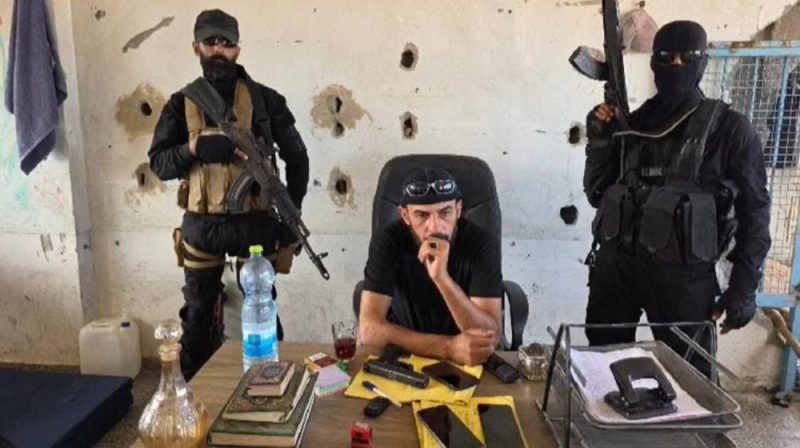
Ashraf al-Mansi (c), the leader of the so-called People’s Army, an anti-resistance terrorist group operating in Gaza. (Photo via social media)
Press TV – October 18, 2025
Two new videos have revealed that the Israeli military is actively supporting anti-Hamas terrorist groups in Gaza with weapons and provisions, according to a report.
The videos, recorded earlier this month and authenticated by Sky News, capture a nighttime convoy of pickup trucks transporting supplies from the direction of an Israeli military base to militia-controlled areas in northern Gaza.
The footage places the convoy about 1.4 kilometers inside Israeli-controlled territory near the Erez border crossing, an area where, according to official data, no humanitarian aid has passed since February.
The vehicles, carrying fuel, water, and food, move through devastated streets before arriving at an abandoned school identified as the headquarters of the so-called People’s Army, led by Ashraf al-Mansi.
Al-Mansi recently released a video warning Hamas against entering areas under his control, saying his group is one of four anti-Hamas militias operating inside Gaza, all within zones still monitored by Israel.
Sky News had previously reported that Israel facilitated the supply of weapons, vehicles, cash, and food to another faction, the so-called Popular Forces, led by Yasser Abu Shabab in southern Gaza.
The new evidence strongly suggests that Israel is now extending the same support to northern factions, flagrantly undermining the ceasefire agreement reached with Hamas on October 9.
The two videos, uploaded by a member of al-Mansi’s group on October 9 and 11, show convoys following the same route from a location less than 400 meters from an Israeli military base.
Although the footage does not show the loading of supplies, several containers on the trucks display the SOS Energy logo, an Israeli fuel supplier.
Neither the Israeli military nor representatives of the so-called People’s Army responded to Sky News’ requests for comment.
Israel’s support for Gaza-based terrorist groups continues as Hamas strives to restore order in the region following the ceasefire.
On Thursday, the Israeli news outlet Mako reported that Hamas had seized 45 pickup trucks, large sums of cash, and hundreds of weapons from Israeli-backed terrorist militias, citing unnamed sources within the Israeli military.
One million pounds and a war without end: Boris Johnson’s intervention in Kyiv changed Europe’s future
By Ricardo Martins – New Eastern Outlook – October 17, 2025
When history revisits the Ukraine conflict, one episode may stand out as a turning point: Boris Johnson’s sudden visit to Kyiv in April 2022, just after a tentative peace agreement had been initialed in Istanbul.
At that moment, a ceasefire was within reach. Yet Johnson, then British Prime Minister, reportedly urged President Volodymyr Zelensky not to sign, assuring him that the West would arm Ukraine “for as long as it takes.” That decision, now under renewed scrutiny following revelations by The Guardian, may have changed the course of the conflict—and Europe’s political destiny.
The Istanbul Agreement That Never Was
By early April 2022, Ukrainian and Russian negotiators had agreed in principle to a framework that could have ended hostilities. Ukraine would forgo NATO membership in exchange for security guarantees. But after Johnson’s unannounced visit to Kyiv, talks collapsed.
Following The Guardian investigation, David Arakhamia, a member of Zelenskyy’s own negotiating team in Istanbul, appeared to lend the idea credence. “When we returned from Istanbul, Boris Johnson came to Kyiv and said that we would not sign anything with them at all, and let’s just fight,” he said in a November 2023 interview.
According to leaked documents published by The Guardian, sourced from Distributed Denial of Secrets (DDoS), a US-based transparency collective, Johnson had other motives for discouraging compromise.
The investigation traces a £1 million payment from businessman Christopher Harborne, a major shareholder in a British drone manufacturer supplying the Ukrainian military, to a private company created by Johnson shortly after leaving office. Harborne also accompanied Johnson to Kyiv, raising questions about direct lobbying and influence-peddling at the highest level of government.
Following the Money
Harborne’s donation, ostensibly legitimate under UK law, takes on a darker significance in this context. As Johnson lobbied Zelensky to prolong the war, Harborne’s company stood to benefit from expanded arms contracts. The Guardian’s exposé describes this payment as “a reward for services rendered,” a euphemism for bribery in geopolitical disguise.
Johnson dismissed the report as “a pathetic Russian hack job,” yet neither he nor Downing Street has provided a transparent accounting of the donation or its timing. The optics are damning: a former prime minister allegedly persuading a wartime ally to reject peace while personally profiting through associates linked to the arms trade.
The Price of Prolongation
Since that fateful spring, the toll has been catastrophic. Hundreds of thousands of Ukrainian and Russian soldiers and civilians have perished. More than three trillion US dollars in Western aid and military spending have flowed into the conflict, much of it financed by debt and by diverting funds from social programmes.
European citizens are paying the price. Budgets once earmarked for welfare, healthcare, and pensions have been repurposed to sustain the war effort. Energy costs have soared, industrial competitivity has sunk, inflation has eroded savings, and social unrest has become regular across the continent.
The narrative of European solidarity has given way to anger and fatigue. Populist and far-right parties are sweeping across Europe. In this sense, Johnson’s intervention did not only prolong a war; it accelerated a social and political crisis within Europe itself.
From Peace Project to Proxy War
The European Union once prided itself on being a “peace project.” Yet its handling of the Ukraine conflict has projected a very different image: that of a continent complicit in militarisation and escalation. France and Germany, the supposed guardians of diplomatic balance, quietly aligned themselves with Washington’s maximalist stance.
No leader publicly questioned why the Istanbul Agreement was abandoned. No parliamentary inquiry has addressed whether Johnson’s visit influenced European policy and why European leaders did not censure Johnson.
In retrospect, Europe’s passivity reveals both dependency and cowardice. The EU’s foreign policy has become an echo of Washington’s strategic interests and those of arms manufacturers, such as Mr. Harborne, while dissenting voices were marginalised as “pro-Russian”. This reflex has stifled honest debate about the human and economic costs of the war and about who truly benefits from its continuation.
The Corruption Business
War has always been fertile ground for corruption, and Ukraine is no exception. From inflated procurement contracts to opaque aid transfers, vast sums have disappeared without audit. Johnson’s alleged bribe merely symbolises a broader pattern: the convergence of political ambition, corporate profit, and ideological fervour.
Bribery and influence-trading have evolved into sophisticated transnational systems cloaked in legality: foreign lobbying, consultancy fees, and donations to foundations. Such practices blur the line between governance and outright corruption. They ensure that conflicts endure not because peace is impossible, but because war remains profitable.
Europe’s Crisis of Leadership
The scandal surrounding Boris Johnson’s intervention in Ukraine exposes a deeper political and strategic crisis within Europe. The same continent that once championed diplomacy and human rights now finances a proxy war that has devastated a nation and destabilised an entire region.
European leaders invoke solidarity while diverting resources from welfare and pensions, tolerating rising inequality and industrial competitivity decline to sustain arms deliveries. The rhetoric of democracy has been replaced by the logic of deterrence.
Across the continent, disillusionment is fuelling the ascent of populist and far-right parties. Citizens who once viewed the EU as a guarantor of peace now perceive it as complicit in perpetual conflict. From Slovakia to the Netherlands, voters are turning against Brussels’ alignment with Washington, revealing a growing mistrust of supranational elites and foreign-driven policy agendas.
Johnson’s defenders claim his visit to Kyiv stemmed from moral conviction, not financial interest, but conviction cannot erase consequence. Had the Istanbul peace framework been pursued, thousands of lives and trillions in resources might have been spared. Instead, Johnson’s theatrics helped entrench a war whose primary beneficiaries are defence contractors and political opportunists.
That the European Union tolerated this manipulation without investigation or accountability reflects a failure of leadership, not merely a lapse of ethics. By outsourcing strategic direction to NATO and moral authority to Washington, Europe has strayed from its founding principles of peace and autonomy.
The result is a continent economically weakened, politically fragmented, and increasingly defined by the conflicts it once sought to prevent.
In sum, The Guardian investigation has done what official institutions would not: follow the money and expose the moral bankruptcy behind the rhetoric of freedom. Whether courts or parliaments act on these revelations remains uncertain. But the evidence is clear enough for history’s judgment.
Ricardo Martins, PhD in Sociology, specializing in International Relations and Geopolitics
Toxic AIPAC
By Adam Dick | Peace and Prosperity Blog | October 16, 2025
 On Wednesday, Seth Moulton, a Democratic member of the United States House of Representatives from Massachusetts, announced he is running for the US Senate in a Democratic primary challenge to incumbent Sen. Ed Markey (D-MA). The next day, Moulton made another announcement — that he is returning all contributions he has received from the American Israel Public Affairs Committee (AIPAC) and refusing to accept any more AIPAC donations or support.
Is the timing coincidence for this candidate who has received AIPAC money while in the House, or has Moulton’s nascent Senate campaign recognized it can do better in its primary challenge against Markey if Moulton can disassociate himself from AIPAC? The latter seems the likely answer. AIPAC is disliked by many people for its pulling of levers behind the scenes to ensure Congress members keep supporting the US government giving massive financial and military support to the Israel government despite opposition from the American public.
AIPAC can and does give candidates a lot of money. But, at least for some campaigns, the toxicity of being connected to AIPAC can impose a cost greater than the benefit AIPAC’s money can buy.
Saleh al-Jafarawi, the Doghmush clan, and the illusion of ceasefire
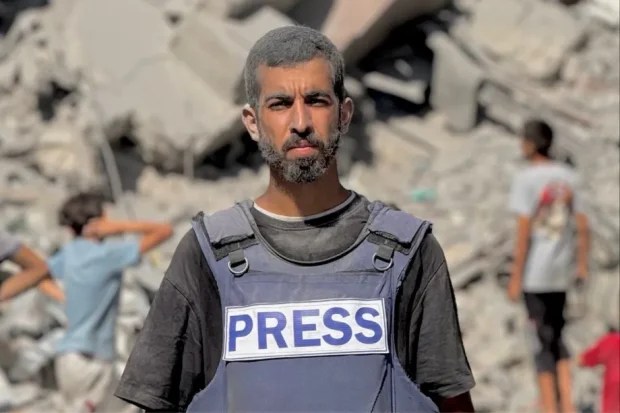
By Mohammad Aaquib | MEMO | October 13, 2025
Saleh al-Jafarawi was abducted and executed by members of the Doghmush clan—an anti-Hamas faction within Gaza. He was not killed in battle, but in a context of internal militias acting under external influence.
This stark fact deserves to be front and center, because it exposes a quiet architecture of violence that functions even in moments when a ‘ceasefire’ supposedly holds. This is the occupation’s most insidious form, a war fought not through tanks or jets but through collaborators and chaos, ensuring that Gaza never truly rests. In this architecture of endless war, ceasefires are illusions, fragile pauses that conceal the unbroken machinery of control, where Israel’s hand remains unseen but ever present, orchestrating violence even in silence.
Netanyahu’s June 2025 admission confirms what many analysts have long suspected: Israel has been “activating” clans that oppose Hamas, arming or supporting them at least tacitly, leveraging internal divisions in Gaza. In multiple statements, he claimed that, acting “on the advice of security officials,” the Israeli government has enabled certain Palestinian clans to operate against Hamas. “What’s wrong with that? It’s only good. It saves the lives of IDF soldiers,” Netanyahu declared.
One of the prominent clans so enabled is the Abu Shabab clan, based in Rafah, which Israel admits to having activated. The “Popular Forces,” linked to them, have been accused by Palestinians and aid workers of criminal behavior, including looting incoming humanitarian aid convoys. These clans are local players with complicated histories: some held influence before Hamas’s takeover of Gaza in 2007; some engaged in smuggling or informal power networks; some have been marginalized under Hamas rule. What Netanyahu has done is to take these existing internal cleavages and weaponize them—using clan rivalries as a tool of proxy warfare.
Against this background, the abduction and killing of Saleh al-Jafarawi by Doghmush clan members is more than an individual tragedy. It’s a case study: how collaborators or clan-militias are used to silence voices loyal to the resistance, to undermine local governance, and to sow fear. Al-Jafarawi was known for his coverage of destruction, displacement, and civilian suffering—aligning him clearly with Hamas’s movement of resistance. That he was taken and killed by a clan opposed to Hamas points to targeted violence, not random crime. It shows how Israel’s support for these clans is more than just logistics or rhetoric; it makes them dangerous internal agents.
The idea of a ceasefire is deeply compromised in this model. Even when shelling or open military operations between Israel and Hamas pause, the war continues in shadow. Militia violence, kidnappings, assassinations: these are not paused by ceasefire agreements. The killing of al-Jafarawi during a period when hostilities at the border were reduced shows that ceasefire does not guarantee safety. It merely shifts some forms of warfare from open battlefields to intra-Palestinian rivalries and clandestine operations. This makes peace an illusion for many civilians, who cannot distinguish between external assaults and internal betrayals.
This is not a failure of policy but its intended outcome. Israel has long understood that total military victory in Gaza is unattainable; they have seen countless defeats. What is attainable is permanent incoherence. The tactic amounts to a form of entropic warfare: the deliberate creation of chaos to prevent reorganization. Rather than occupying territory directly, Israel governs through collapse. The breakdown of social cohesion performs the same function as a garrison. When Palestinians no longer trust their own institutions or each other, Israel’s strategic goals are met without the need for visible control. The killing of Saleh Al-Jaafrawi illustrates this invisible war.
Moreover, this use of clan proxies weakens governance in Gaza in fundamental ways. Hamas enjoys a degree of popular legitimacy: it won the 2006 elections, and many Gazans still see it as a symbol of resistance against occupation and as the de facto government providing social services amid blockade and war. When opposing clans act—and are backed or enabled by Israel—they do not just challenge Hamas militarily; they undermine its ability to govern. They create parallel sources of power, insecurity, and unpredictability. For citizens that means nobody is fully safe, nobody is fully accountable, and public institutions become weaker because they must not only fend off external pressure but internal sabotage.
This strategy reflects patterns seen elsewhere: in Lebanon, for example, Israel has historically supported militias and local factions hostile to dominant groups such as Hezbollah in order to fragment power, reduce unified resistance, and create zones of distrust. These tactics often lead to long-term instability, cycles of violence, social fragmentation, and a human cost that lingers long after any overt war is over.
What emerges is a pattern: Israel’s strategy is not limited to confronting Hamas militarily; it includes enabling internal enemies of Hamas to degrade support for it, destabilize its governance, terrorize its supporters, and silence its voices. Al-Jafarawi’s killing becomes emblematic. He was not killed at the border, not during an Israeli airstrike, but through internal betrayal—abducted and executed by anti-Hamas actors. This highlights a grim truth: even with ceasefires, peace is not restored unless the structures that enable proxy violence and mobilize collaborators are dismantled.
This form of warfare carries the advantage of plausible deniability. When Palestinians fight among themselves, Israel can posture as a bystander, lamenting “internal chaos” while benefiting strategically from it. The spectacle of disorder reinforces the narrative that Palestinians are incapable of self-rule, thereby justifying continued external control.
The clans that turn against their own people under the lure of Israeli support are not merely opportunistic criminals; they are instruments of a much darker political project. By accepting money, arms, or protection from the occupation, they become extensions of a state built on apartheid and domination. Their betrayal corrodes the moral fabric of Palestinian society from within, achieving what bombardments and blockades alone cannot: the dismantling of solidarity, the erosion of trust, and the quiet assassination of resistance.
Purging America First: Inside the GOP’s Zionist Vetting Machine
By Jose Alberto Nino – The Occidental Observer – October 12, 2025
In the dimly lit corridors of Capitol Hill, where backroom deals shape American foreign policy, House Speaker Mike Johnson recently conducted what can only be described as a strategic war council. On the afternoon of September 17, 2025, Johnson gathered with a who’s who of pro-Israel organizations for a private meeting ostensively designed to eliminate dissenting voices within the Republican Party. What emerged from this closed-door session reveals a coordinated effort to ensure ideological orthodoxy on Israel.
The meeting itself reads like something out of a tired political thriller. Johnson, who described himself to the assembled group as a “Reagan Republican” focused on “peace through strength,” went on to make a startling admission that isolationism is rising within the Republican Party and that a major debate on the issue is likely once President Donald Trump leaves office.
But Johnson’s most revealing statement came when he told the group that in his candidate-recruiting efforts, he’s working to filter out isolationists to prevent that wing of the party from growing more prominent in the House. Four people who attended the meeting confirmed this extraordinary pledge to Jewish Insider.
“The speaker was very, very direct about the U.S. role with Israel and in the world and understands that there are voices that don’t agree in both parties, on both extremes, and urges us all to be involved in fighting back against those extremes,” Eric Fingerhut, CEO of the Jewish Federations of North America, told the publication.
The guest list for Johnson’s gathering was a who’s who of America’s most powerful pro-Israel organizations. In attendance were representatives from The Louis D. Brandeis Center for Human Rights Under Law, the Republican Jewish Coalition, Agudath Israel of America, AIPAC, the Simon Wiesenthal Center, Conference of Presidents of Major American Jewish Organizations, National Council of Jewish Women, Synergos Holdings, CUFI Action, the Orthodox Union, the U.S.-China Economic and Security Review Commission, Standard Industries, the American Jewish Committee, Zionist Organization of America, National Debt Relief, Jewish Institute for National Security of America, the Deborah Project, Foundation for Defense of Democracies, Coalition for Jewish Values and the Endowment for Middle East Truth. This comprehensive coalition represents the full spectrum of pro-Israel advocacy, from religious organizations to political action committees to think tanks—a formidable alliance with vast resources and influence.
The Hunt for Republican Heretics
The Israeli lobby’s crosshairs have settled on several prominent Republicans whose independence on foreign policy has made them targets. Chief among them is Rep. Thomas Massie (R-KY), whose voting record has made him perhaps the strongest opponent of Israel in Congress according to Jewish advocacy groups.
Massie’s legislative actions against pro-Israel interests are extensive and well-documented. In December 2023, at the height of Israel’s war against Hamas, Massie shared a social media post implying that Congress was more interested in “Zionism” than “American patriotism.” In October 2023, following the Hamas attack, Massie was the only Republican to vote against a bipartisan resolution standing with Israel. He was also the sole Republican to vote against the Iron Dome Supplemental Appropriations Act and the only member of either party to vote against a resolution honoring Jewish American heritage and denouncing antisemitism.
“Antisemitism is deplorable, but expanding it to include criticism of Israel is not helpful,” Massie wrote on X, explaining his vote against a resolution reaffirming Israel’s right to exist. Even more provocatively, Rep. Marjorie Taylor Greene (R-GA) has emerged as an unexpected critic from the MAGA wing. In a dramatic departure from her previous pro-Israel stance, Greene has characterized Israel’s actions in Gaza as “genocide.”
Her transformation has prompted a furious response from AIPAC, which issued a fundraising message comparing her to progressive Democrats Rashida Tlaib and Ilhan Omar:
Let’s call this what it is: Marjorie Taylor Greene is the newest member of the anti-Israel Squad. She may think this earns her praise from the far-left or online radicals — but we see it for what it is: a betrayal of American values and a dangerous distortion of the truth.
In response to AIPAC’s attack against her, Greene has doubled down, telling One America News Network that AIPAC should register as a foreign lobbyist and posting a photograph of a sign on her office door reading “no foreign lobbying.” She has accused Israel of having “incredible influence and control” over nearly every member of Congress, exposing pro-Israel lobby trips that she argues amount to foreign lobbying without accountability.
LinkBookmarkPerhaps nowhere is the Israeli lobby’s intervention more telling than in Texas’s 23rd Congressional District, where gun rights YouTuber Brandon Herrera mounted a formidable challenge against moderate Republican incumbent Tony Gonzales last election cycle. Herrera, known as “the AK Guy” to his 4.4 million YouTube subscribers, came within 354 votes of unseating Gonzales in the 2024 primary runoff.
Gonzales, a 20-year Navy veteran and cryptologist who rose to the rank of Master Chief Petty Officer, built his political résumé through Washington’s national security circles. He served as a legislative fellow in Senator Marco Rubio’s office and was a National Security Fellow at the pro-Israel Foundation for Defense of Democracies (FDD), a neoconservative think tank known for its hawkish foreign policy stance. In Congress, Gonzales has reflected that worldview by backing aid to Ukraine and Israel, stating that “if we fail to support our allies, China, Russia, and Iran will only become more powerful” with regard to a military aid spending package pending final passage in the U.S. House in April 2024.
The closeness of this race terrified pro-Israel groups, who saw Herrera as a genuine threat to their influence. AIPAC’s United Democracy Project spent $1 million opposing Herrera in a two-week ad buy, while the Republican Jewish Coalition added $400,000 in attack ads.
More significantly for the lobby’s concerns, Herrera had stated he would have voted against supplemental aid to Israel and other U.S. allies. “I would absolutely vote AGAINST the new proposed spending package for $95+ billion for foreign conflicts, while spending $0 on our southern border,” Herrera posted on X on April 19, 2024. “Any Republican who claims to be America first CANNOT vote for America last legislation.”
When asked directly whether he would pledge to end foreign aid, including to Israel, Herrera reiterated his position: “We can’t claim to be ‘America First’ while pushing spending bills like the most recent foreign aid package that gave almost $100 billion to every country except the US.”
The combined $1.4–1.5 million in spending by AIPAC and RJC helped Gonzales narrowly survive with 50.6% to 49.4%—a margin so slim it demonstrated the growing threat posed by America First candidates to the establishment’s foreign policy consensus. Herrera has already announced his intention to challenge Gonzales again in the 2026 Republican primaries, setting up another expensive battle. This time, the political winds may finally shift in Herrera’s favor.
The most audacious display of the Israeli lobby’s power may be their campaign against Thomas Massie. Pro-Israel Republican megadonors have established the MAGA Kentucky super PAC with $2 million specifically to oust the congressman. Paul Singer contributed $1 million, John Paulson added $250,000, and Miriam Adelson’s Preserve America PAC provided $750,000.
This goes far beyond normal political opposition; it’s a declaration of total war against foreign policy dissent among Republican ranks. AIPAC has already demonstrated this approach works. During the 2024 election cycle, AIPAC’s independent spending arm, the United Democracy Project, spent over $300,000 on Fox affiliate ads criticizing Massie’s voting record. UDP spokesperson Patrick Dorton did not mince words about UDP’s attacks against Massie: “We are not playing in the primary, but we are trying to shine a light on the radical anti-Israel record of Tom Massie. We want every single voter in the state of Kentucky to know about his anti-Israel actions.”
The Post-October 7 Reality
The October 7 Hamas attacks fundamentally transformed the Israeli lobby’s strategy and urgency. AIPAC increased its political spending nearly threefold in the months following the attacks, with average weekly spending jumping from $275,000 to over $740,000.
“Our focus in the 2024 election is to broaden and strengthen the bipartisan pro-Israel majority in Congress — and to defeat anti-Israel detractors,” AIPAC spokesman Marshall Wittmann told Capital News Service. “In the aftermath of the Hamas barbaric attack and the mounting threats of Iranian terrorist proxies, the importance of a pro-Israel Congress standing with our ally is clearer than ever.”
This represents more than increased spending; it’s a systematic campaign to ensure ideological conformity. The Israeli lobby’s post-October 7 mobilization has created what one Democratic donor adviser called “a huge, underappreciated change to the landscape.” Thousands of smaller donors who weren’t previously engaged have been activated, providing the financial foundation for an unprecedented intervention in American electoral politics.
Johnson’s pledge to “filter out isolationists” in candidate recruitment represents the institutionalization of ideological screening within the Republican Party leadership. This transcends opposing candidates in primaries and is mostly focused on preventing them from running in the first place by controlling access to party resources, endorsements, and financial networks.
The vetting process appears comprehensive. As the Jewish Insider report noted, Johnson is working to prevent the isolationist wing from “growing larger in the House” through his recruiting efforts. This suggests a systematic review of potential candidates’ positions on Israel and foreign aid, with those deemed insufficiently supportive being denied party backing.
This represents a fundamental shift in how American political parties operate. Rather than allowing primary voters to choose between competing visions, party leadership, at the behest of the Israel lobby, is pre-selecting candidates based on their adherence to specific foreign policy positions. The Israeli lobby has essentially outsourced candidate vetting to organizations whose primary loyalty is to world Jewry.
The Israeli lobby’s campaign to purge non-interventionist candidates and incumbents is part of a comprehensive campaign to eliminate legitimate foreign policy debate within the Republican Party. The success of this strategy in cases like the Gonzales-Herrera race demonstrates its effectiveness in the short-term. By deploying overwhelming financial resources against grassroots candidates, the lobby can overcome significant popular support for America First policies. Herrera’s near victory despite being outspent by millions shows the genuine appeal of his message and precisely why American Jewry views such candidates as existential threats.
The implications extend far beyond individual races. If successful, this campaign will fundamentally re-shape the Republican Party by eliminating voices that prioritize American interests over foreign commitments. With “unlimited” resources pledged against figures like Massie and systematic vetting of new candidates, Israeli interests are working to ensure that future Republican leaders never can question America’s relationship with Israel.
This endeavor may not be a walk in the park for organized Jewry, however. New trends point to younger voters souring on Israel. A University of Maryland Critical Issues Poll conducted between July 29 and August 7 showcased a dramatic generational divide within the Republican Party. While 52 percent of Republicans aged 35 and older sympathize more with Israel, that figure drops to just 24 percent among those aged 18 to 34.
The split grows even wider when it comes to Gaza. Among older Republicans, 52 percent view Israel’s actions as justified. Among younger ones, only 22 percent agree. “The change taking place among young Republicans is breathtaking,” said Shibley Telhami, the poll’s principal investigator. “While 52 percent of older Republicans (35+) sympathize more with Israel, only 24 percent of younger Republicans (18–34) say the same—fewer than half.”
This generational realignment accelerated after Operation Al-Aqsa Flood on October 7, 2023. Pew Research Center data show that unfavorable views of Israel among Republicans under 50 climbed from 35 percent in 2022 to 50 percent in 2025 — a striking 15-point jump. In contrast, Republicans over 50 shifted only slightly, from 19 percent to 23 percent.
Even evangelical Republicans, once Israel’s most reliable allies, are showing signs of fatigue. Among older evangelicals, 69 percent express sympathy for Israel, compared to only 32 percent among younger ones. Just 36 percent of younger evangelical Republicans consider Israel’s actions in Gaza justified.
In a broader rebuke of bipartisan orthodoxy, a September 2025 AtlasIntel poll found that only 30 percent of Americans support continued financial aid to Israel, underscoring how Washington’s “blank check” is increasingly out of step with public opinion. An increasing share of Republicans now argue that U.S. policy serves Israeli interests more than America’s.
The question now is whether the Republican Party belongs to its voters or to Tel Aviv. The battle lines are drawn, and the outcome will reveal who truly holds power in Washington.
After robbing EU taxpayers, Zelensky uses blackmail to get inside the Bloc
Strategic Culture Foundation | October 10, 2025
Since the United States-led NATO proxy war against Russia erupted in February 2022, the European Union has doled out $216 billion in aid to Ukraine. That’s equivalent to €186 billion, according to the EU’s latest official count. The true figure is likely to be even more.
The United States has given a similar amount to Ukraine. All paid for by taxpayers.
That’s about $400 billion total in three years, with the EU promising more over the next few years.
To put this in perspective, the EU aid to Ukraine is multiples more than all of the 27 member nations have received – combined – from the bloc’s collective budget and administration. According to Euronews reporting, some of the biggest recipients of EU subsidies each year are Germany (€14 bn), France (€16.5 bn), and Poland (€14 bn). Some of the smaller recipient countries are Austria, Denmark, and Ireland (around €2 bn).
That means Ukraine has received heaps more than all of the EU members combined.
Get your head around that. Ukraine, which is not a member of the European Union, is receiving manifold what actual member states are receiving. And you wonder why people in France are angrily taking to the streets because their shambolic government wants to cut pensions and other social welfare services to save money. Elsewhere, European governments are collapsing from unsustainable debt. And, at the same time, European citizens are constantly being lectured that their states need to spend more and more money on the NATO alliance, even to the insulting point of having to accept the cutting of social benefits and public services.
Ukraine and its corrupt Kiev regime of NeoNazis has bled Europe dry. The so-called president, Vladimir Zelensky (who canceled elections last year, so he’s not really a legitimate president), is reported to be funneling €50 million a month to overseas funds for his retirement while his wife goes luxury shopping in New York and Paris. Other members of the regime, like former prime minister and now “defense” minister Denys Shmyhal, are also reportedly up to their eyes in corruption, siphoning off billions in the military aid that Western taxpayers have paid for.
This week, Zelensky took his brassneckery to new levels – if that’s possible. He is demanding that Ukraine be made a member of the EU, and he wants to change the rules of the bloc to speed up the process. The EU has granted Ukraine (and Moldova) a fast-track path to membership, but, to its credit, Hungary has objected to this.
In June, Hungarian Prime Minister Viktor Orbán cast a veto on continuing access talks for Ukraine. According to EU rules, there must be unanimity among member nations for the approval of new members. Orbán said Ukraine is not eligible because of the current war against Russia. “We would be importing a war,” he said.
Also, Budapest objects to Ukrainian language laws that discriminate against a Hungarian minority in the western Zakarpattia region of Ukraine. (The Russian language has been banned, too, in public offices.)
A referendum held in Hungary in June recorded that 95 percent of voters were against Ukraine becoming a member of the EU.
Zelensky is pushing ahead regardless, with his peevish wheedling. In a joint press conference in Kiev on Monday, with the indulgence of the Dutch PM at his side, Zelensky said: “Ukraine will be in the European Union, with or without Orbán, because it is the choice of the Ukrainian people.”
The little dictator flaunted his insufferable presumptuousness by hinting that the European Union would change its rules to bypass Hungary’s veto – all just to accommodate his scrounging regime. “Changing the procedure is called finding a way without Hungary,” he said. And in a further arrogant dismissal of democratic process, Zelensky asserted that the Hungarian people support his EU ambitions, contradicting the referendum back in June.
Orbán responded firmly by telling Zelensky he could not blackmail his way into the European Union.
Hungary’s Foreign Minister Péter Szijjártó added a dose of reality by stating: “The decision on which country is ready to join the European Union and which can join the EU will not be made by the president of Ukraine, but by the European Union itself, where such decisions require unanimity.”
In a further comment, Szijjártó nailed it by saying that Zelenskyy is “completely detached from reality.” The Hungarian diplomat also reminded that the Kiev regime is blowing up energy infrastructure and jeopardizing the EU members’ vital interests.
Last month, Ukrainian forces exploded the Druzhba oil pipeline from Russia, cutting off energy supplies to Hungary and Slovakia. The Zelensky regime carried out the sabotage as retribution for Budapest’s opposition to Ukraine’s EU application. This is what Orbán was no doubt referring to when he slammed Zelensky this week for using blackmail.
So, there you have it. A corrupt, unelected, Neo-Nazi regime headed up by a Jewish scam-artist who plays piano with his penis while wearing women’s high heels is using terrorist tactics to attack the vital interests of EU members, and is now telling those members that they won’t have a vote in the EU processes, because the regime has decided it will become a member of the bloc. You could not make it up. This, too, after robbing the taxpayers of the bloc of €186 billion to wage a war against Russia – a war that has killed 1.5 million Ukrainian soldiers – which could spiral out of control into a nuclear Third World War.
If this is the kind of ruination that this regime can inflict while not being a member of the EU, one can only imagine the hellscape it will bring after becoming a member.
An analogy could be a householder being tormented by a criminal gang hanging around the gate, and then for the household to invite the gang inside the premises. The gang leader swaggers in, puts his dirty boots up on the table, and then starts demanding this and that from the householders, using blackmail to harm the children of the house, or some other abomination.
However, the real culprits in this obscene farce are the American and European elites who have fomented the war against Russia. Together, they have weaned and pampered the Kiev regime with largesse and indulgence, paid for by the taxpayers. The U.S.-EU transatlantic ruling class has cultivated the regime of corruption and war since the 2014 CIA-backed coup in Kiev against an elected president. The racket has laundered hundreds of billions of public money to the Western military industrial complex. The racket has destroyed the economies of Europe and is now destroying the semblance of democracy within Europe. (It’s not clear what Trump’s position in all of this is, but he probably doesn’t count anyway.)
The Western imperialist ruling class is so obsessed with its scheme for “strategic defeat” of Russia (and China) and for global domination that it is willing to cultivate any scumbag regime it can make use of for its goals, no matter how much that violates international law and its own professed democratic principles.
Zelensky’s corrupt dictatorship is just a pale reflection of his patrons in Washington, Brussels, Paris, Berlin, and London. They are all detached from reality.
No evacuation for Palestinian gangs collaborating with Israel in Gaza: Report
With a ceasefire in effect, ISIS-linked smuggler Yasser Abu Shabab and his militia face an uncertain future
The Cradle | October 9, 2025
Palestinian collaborator with Israel and Wall Street Journal columnist Yasser Abu Shabab and his “Popular Forces” will stay in Gaza following the ceasefire between Israel and Hamas, according to a report by Israel Hayom on 9 October.
The Hebrew news outlet noted that Abu Shabab’s militia is deployed in areas that will not be evacuated by the Israeli army in the first phase of the ceasefire agreement, allowing the group to enjoy further Israeli protection, at least temporarily.
The Popular Forces established a base under Israeli guidance in the area east of the destroyed city of Rafah on the Gaza border with Egypt.
This area is far behind the “yellow line,” to which Israeli troops must withdraw, according to the map detailing US President Donald Trump’s ceasefire plan.
Abu Shabab’s men are also behind the “red line” of withdrawal, up to which an international force will allegedly be deployed. Areas occupied by the group in the destroyed cities of Beit Lahia and Beit Hanoun, and eastern Khan Yunis, are also behind the yellow line.
In early 2024, as Israel was imposing its starvation siege on Gaza, Israeli intelligence armed and funded Abu Shabab’s militia, tasking them with attacking and looting convoys carrying humanitarian aid into Gaza, including from the UN.
Israeli officials then blamed the attacks and chaos on Hamas, using the excuse to seize control of aid distribution in Gaza via the deadly Gaza Humanitarian Foundation (GHF).
Abu Shabab was arrested by Hamas in 2015 and sentenced to 25 years in prison on charges of drug trafficking and theft.
He escaped in October 2023 after Israeli airstrikes hit the prison where he was being held. Leaders of Abu Shabab’s Tarabin clan publicly disowned him and have called for his killing for collaborating with Israel.
Hossam al-Astal, the Popular Forces commander in eastern Khan Yunis, claimed the group would remain in Gaza, while Hamas would be forced to leave.
“The Hamas dogs will not be happy, we exist and they are (the ones) leaving,” Astal claimed.
On the other hand, a security source in the Ministry of Interior in Gaza told Quds Press on Thursday that members of Abu Shabab’s militia fear being prosecuted after the genocide ends.
The source said members of the group have recently begun communicating with several families and tribal leaders, in hopes of opening indirect channels with the Ministry of Interior to resolve their legal and tribal status and ensure they are not subject to prosecution.
The source explained that this communication took place in secrecy, via intermediaries from local and tribal leaders, who relayed messages between the police leadership in Gaza and the militia members who wished to settle their status.
A specific mechanism was agreed upon for them to surrender and stand trial, while ensuring the confidentiality of the proceedings, the source added.
Sources also revealed to Quds Press that Abu Shabab’s group had helped Israeli forces arrest Dr. Marwan al-Hams, the director general of field hospitals, from a medical facility in Rafah about two months ago.
The sources said that additional information regarding the militia’s crimes would be revealed “in the coming days.”
Featured Video

“Historic Russia”: The Land Putin Will Not Give Back
or go to
Aletho News Archives – Video-Images
Book Review
Why the War on Conspiracy Theories Is Bad Public Policy
By Kevin Barrett • Unz Review • February 1, 2019
 A Review of Conspiracy Theories and Other Dangerous Ideas by Cass Sunstein (based on an earlier paper co-authored with Adrian Vermeule); In Defense of Troublemakers: The Power of Dissent in Life and Business by Charlan Nemeth; and Conspiracy Theories and the People Who Believe Them, edited by Joseph E. Uscinski
On January 25 2018 YouTube unleashed the latest salvo in the war on conspiracy theories, saying “we’ll begin reducing recommendations of borderline content and content that could misinform users in harmful ways—such as videos promoting a phony miracle cure for a serious illness, claiming the earth is flat, or making blatantly false claims about historic events like 9/11.”
At first glance that sounds reasonable. Nobody wants YouTube or anyone else to recommend bad information. And almost everyone agrees that phony miracle cures, flat earthism, and blatantly false claims about 9/11 and other historical events are undesirable.
But if we stop and seriously consider those words, we notice a couple of problems. First, the word “recommend” is not just misleading but mendacious. YouTube obviously doesn’t really recommend anything. When it says it does, it is lying. … continue
Blog Roll
 Aletho News
- “Historic Russia”: The Land Putin Will Not Give Back
- How the Cambridge Analytica scandal still haunts Mark Zuckerberg
- The Ongoing Cancellation Campaign Against a Dissenting Academic in Norway
- Yemen and ‘the Houthis’: Challenging Sami Hamdi’s Narrative
- No, Christians did not invent Zionism
- AIPAC-led lobbying network opens branches in Cypriot, Greek parliaments
- Araghchi blasts ‘parasitic’ alliance as US taxpayers pay for Israel’s war on Iran
- Easy fix for Europe’s chaos? Stop fueling war against Russia
- Putin’s key remarks on peace talks and Europe’s ‘schizophrenia’
- Trita Parsi: Israel Set a Trap for Total War in the Region
- If Americans Knew
- An error has occurred; the feed is probably down. Try again later.
- No Tricks Zone
- Two New Studies Find Thwaites Glacier Melt Cannot Be Driven By Human Activity Or A Warming Ocean
- E-Cars Reduce CO2 Emissions By Only 41% Compared To Internal Combustion Engine Vehicles
- Predictions Made By Renowned Climate Professor Over Past Decades Have Been Proven To Be Poor
- New Study Suggests Large Regions Of The Pacific Ocean Have Been Cooling For The Last 80 Years
- Germany’s Green Energy Debacle: High Energy Costs Force Kahla Porzellan to Close After 182 Years!
- New Study: 50 Years Of The Most Aggressive ‘Net Zero’ Policies Can Only Affect The Global Climate By 0.03°C
- US September “Heat” Was No Record…Many Records Set Decades Ago
- Latest European Green Energy Debacle; Portugal’s Largest Flagship Solar Park Insolvent!
- Green Energy Debacle: German Expert Professor Fritz Vahrenholt Warns Of Severe Economic And Social Consequences
- Two More Paleo Reconstructions Affirm Meters-Higher Sea Levels Across Ireland, Brazil 7000-6000 Years Ago

