At first, American officials couldn’t believe it. In 1993, the Israelis began pressuring the Clinton administration to view Iran as the greatest global threat. Only a short time earlier, in the 1980s, Israel had been cooperating with the Iranians militarily and selling them weapons to fight Iraq in the Iran-Iraq War.
Back then, the Israelis were Iran’s best lobbyists in Washington, pushing the Reagan administration to talk to Iran, to sell arms to Iran, and even to ignore Iran’s tough talk on Israel. In that process, Israel was aided by a group of staunchly pro-Israeli officials within the Reagan administration whom we now know as the neoconservatives.
In 1981, just months after Iran had held 52 American diplomatic personnel hostage for 444 days, senior State Department officials Robert McFarlane and Paul Wolfowitz were advocating on behalf of the Israeli desire to sell Iran weapons. That initiative, which was continued by McFarlane when he became President Reagan’s National Security Advisor, ultimately led to the Iran-Contra scandal of 1986 when Reagan’s secret approval of U.S. arms shipments to Iran became public.
Yet, even in the wake of that scandal and the end of the Iran-Iraq War in 1988, the neoconservatives who remained influential under Reagan’s successor, President George H.W. Bush, pressed ahead with the goal of getting the U.S. to warm its relations with Iran. Iraq’s defeat at the hands of the U.S. military and its allies in the Persian Gulf War of 1990-91 further reduced the Arab threat to Israel’s security and encouraged more thinking about a possible U.S.-Iranian détente.
The Bush-I administration’s 1991 “National Security Strategy of the United States” said the U.S. was open to “an improved relationship with Iran,” a country that a 1991 National Intelligence Estimate said was “turning away from revolutionary excesses . . . toward more conventional behavior.”
However, in 1993, with the Clinton administration in power, the Israelis changed their tune, urging the U.S. government to find Iran lurking behind every terrorist attack, every conflict and every threat.
There appear to have been several factors leading to this Israeli switch – from the fact that the Cold War was over and thus Arab states that had relied on Soviet weaponry were weakened; that Iran-backed Hezbollah was challenging Israel’s military occupation of southern Lebanon; and that Israel could no longer profit from Iran’s desperate need for weapons (with the war with Iraq over and Iran’s treasury depleted) while the Arab oil states offered a more lucrative opportunity for both geopolitical and financial gain.
Hooked on the Money
Israeli leadership had found the billions of dollars from arms sales to Iran useful in maintaining Israel’s large military/intelligence infrastructure as well as Israel’s development of Jewish settlements inside Palestinian territories on the West Bank. With that cash source gone, Israel began recalculating its longstanding Periphery Strategy, which had called for countering Arab pressure from close-in states by cultivating relations with non-Arab regional powers on the periphery, such as Iran and Turkey.
There were also two other seismic events that altered the geopolitical landscape. The Cold War was over and Saddam Hussein’s Iraq had been humiliated in the Persian Gulf War. While the Israelis saw both events as positive, there were unintended consequences. The end of the Cold War meant the exit of the Soviet Union from the Middle East: that left Israel’s traditional Arab enemies even more enfeebled and the U.S. government less worried about losing influence in the oil-rich region. Iran also emerged as relatively stronger than Iraq due to Iraq’s failed invasion of Iran and its catastrophic defeat after its invasion of Kuwait.
Israel’s 1992 elections also brought Yitzhak Rabin, Shimon Peres and the Labor Party to power, raising the possibility of finally reaching a peace accord with the Palestinians and thus the possibility of more normalized relations with the Arab world. In turn, that raised the potential for more lucrative arrangements with oil-rich sheikdoms by, in effect, renting out the Israel Lobby to the Sunni-ruled Gulf states so they could push their historic conflict with the Shiites whose power base was Iran.
“There was a feeling in Israel that because of the end of the Cold War, relations with the U.S. were cooling and we needed some new glue for the alliance,” Efraim Inbar of the Begin-Sadat Center told Trita Parsi. “And the new glue was radical Islam.”
But it was a very selective kind of radical Islam: not the kind Saudi Arabia was financing and exporting through Wahhabi fundamentalism and violent jihadists like those in Al Qaeda, but Iran’s radical Shiite Islam. Selling Iran as the number one global terror threat gave birth to a new Middle East enemy that replaced the Soviet Union and reinflated Israel’s value to the U.S. in the region. “Iran,” Inbar went on to explain, “was radical Islam.”
A New Alliance
For the first time, an alliance between Israel, Saudi Arabia and the United States became possible with Iran as the designated enemy. The Israeli-Saudi relationship has evolved mostly in secret over the past couple of decades but has popped into view in recent years as Prime Minister Benjamin Netanyahu and his inner circle have emphasized the common interests – especially animosity toward Iran – that they share with Saudi Arabia.
Netanyahu has recently referred to this Israeli-Saudi alliance when he said that Iran was driving Israel into cooperative arrangements with what he called “the modern Sunni states.” He referred to “a new alliance between Israel and Islamic states. … The good news is that the other guys are getting together with Israel as never before. It is something that I would have never expected in my lifetime.”
Nine months ago, Netanyahu delivered the same message when he said “for the first time in my lifetime, and for the first time in the life of my country, Arab countries in the region do not see Israel as an enemy, but, increasingly, as an ally.”
Though the Israeli-Saudi relationship is rarely spoken of out loud, Israeli Energy Minister Yuval Steinitz admitted recently that Israel “has ties that are . . . partly covert with many Muslim and Arab countries.” Saudi Arabia was the only one he specifically named. According to Reuters, he said those ties are fueled by “common concerns over Iran.”
But there are other foundations for this relationship. For years, Saudi Arabia sought to buy influence in Washington’s policy circles regarding the Middle East but was largely unsuccessful because Israel had cornered that market and Israel’s influential American supporters demonized lobbyists, academics and others who took Saudi money. Eventually, it became clear to Saudi Arabia that it made more sense to rent out Israel’s sophisticated lobbying apparatus rather than to fight it.
Investigative journalist Robert Parry reported that Saudi money helped seal this Israel-Saudi alliance, with the Saudis giving Israel billions of dollars and Israel reciprocating by giving Saudi Arabia added influence in Washington.
But Official Washington was surprised in the 1990s when Israel’s turnabout began — and Iran went from being a misunderstood nation tilting toward moderation to the world’s leading sponsor of terrorism. Despite some bewilderment, U.S. policymakers soon readjusted their rhetoric as the legendary Israeli influence operations carried the day. Shiite Iran became the new terror threat, even after the 9/11 attacks that were organized by Al Qaeda, a Sunni fundamentalist group associated with Saudi Arabia.
The Islamic State
The gap between the facts on the ground – the recognition that Al Qaeda and Islamic State remain the real chief terror threats from radical Islam – and the propaganda of principally blaming Iran for terrorism has led to a quandary for U.S./Israeli propagandists. They want to focus Americans’ fury on Iran and its allies, Syria and Hezbollah, but it is Saudi-and-Gulf-connected terror groups, such as Al Qaeda and Islamic State, that were chopping off heads of innocents and sponsoring terrorist attacks in the U.S. and Europe.
That disconnected reality explains why America’s response to the emergence of the Islamic State can best be characterized as confused and bizarre. Though the Obama administration claimed it was taken by surprise by the Islamic State’s emergence in Iraq and Syria, it really wasn’t. Rather, policymakers had sought to persuade the American public on the need for a “regime change” conflict in Syria, an Iranian ally. This strategy went back years.
A WikiLeaks-released cable dated Dec. 13, 2006, and written by the charge d’affaires of the U.S. embassy in Damascus to the Secretary of State recommended that the U.S. “coordinate more closely with” Egypt and Saudi Arabia in a policy to weaken President Bashar al-Assad’s government in Syria and “to play on Sunni fears of Iranian influence.” The cable also recognized that Islamist extremists were “certainly a long-term threat” to the Syrian government.
Over the years, there was little change in this inconvenient truth that jihadists were playing a crucial role in achieving these geopolitical goals. For instance, in a December 2009 cable, then Secretary of State Hillary Clinton stated that “Saudi Arabia remains a critical financial support base for al-Qaeda, the Taliban . . . and other terrorist groups.”
By Aug. 12, 2012, the U.S. government knew explicitly that Islamic extremists were the engine in the Syrian insurgency. A classified Defense Intelligence Agency Information Intelligence Report unambiguously declares that “The salafist [sic], the Muslim Brotherhood, and AQI [al-Qaeda in Iraq, later ISIS and the Islamic State] are the major forces driving the insurgency in Syria.”
Section 8.C. of the report astonishingly predicts that “If the situation unravels there is the possibility of establishing a declared or undeclared salafist principality in eastern Syria.” Section 8.D.1. of the report goes on specifically to say that “ISI could also declare an Islamic State through its union with other terrorist organizations in Iraq and Syria.”
So, the U.S. government knew that the Islamic extremists drove the Syrian insurgency that Washington and its regional allies were supporting. U.S. intelligence analysts also had a surprisingly good idea what the possible outcome of that support was.
Yet, to advance the regional goals of the Israeli-Saudi tandem – i.e., the overthrow of the Syrian government because of its ties to Iran – the U.S. government was, in effect, supporting the very terrorists the war on terror was meant to eradicate.
Selling Al Qaeda
At times, senior Israeli officials made clear their preferences for Sunni extremists over more moderate Arabs associated with Shiite-ruled Iran. For instance, in September 2013, then-Israeli Ambassador to the United States Michael Oren told the Jerusalem Post that Israel favored the Sunni extremists over Syria’s largely secular President Bashar al-Assad.
“The greatest danger to Israel is by the strategic arc that extends from Tehran, to Damascus to Beirut. And we saw the Assad regime as the keystone in that arc,” Oren said in the interview. “We always wanted Bashar Assad to go, we always preferred the bad guys who weren’t backed by Iran to the bad guys who were backed by Iran.” He said this was the case even if the “bad guys” were affiliated with Al Qaeda.
Oren reiterated this position in June 2014 at an Aspen Institute conference. Speaking as a former ambassador, Oren said Israel would even prefer a victory by the Islamic State, which was then massacring captured Iraqi soldiers and beheading Westerners, than the continuation of the Iranian-backed Assad in Syria.
“From Israel’s perspective, if there’s got to be an evil that’s got to prevail, let the Sunni evil prevail,” said Oren, who is now a member of the Knesset and part of Netanyahu’s government.
Other senior Israelis have expressed similar sentiments. Sima Shine, who is in charge of Iran for Israel’s Ministry of Strategic Affairs, urged Assad’s removal even if that might turn Syria over to extremists. “The ‘devil we know’ is worse than the devil we don’t,” she said in June 2013. “If Bashar remains in power, that would be a huge achievement for Iran.”
So, in 2014, when Islamic State jihadists advanced through Syria and Iraq and knocked on the door of Lebanon, their success should not have come as a surprise to President Obama and other U.S. policymakers. Today’s Iraq, Syria and Lebanon have in common that they are Iran’s three principal allies in the region.
In other words, the Islamic State’s interests largely corresponded to those of Israel, Saudi Arabia and the U.S.: isolating and weakening Iran. Only the Islamic State’s shocking excesses of videotaped beheadings of Americans and other captives – as well as its military successes inside Iraq – forced President Obama’s hand in committing U.S. forces to stop the Islamic State onslaught.
Obsessed with Assad
Still, America has long been bent on removing Assad from Syria. The coincidence of Islamic State and American interests in this regard is revealed in section 8.C of the DIA report: “there is the possibility of establishing a declared or undeclared salafist principality in eastern Syria (Hasaka and Der Zor), and this is exactly what the supporting powers to the opposition want, in order to isolate the Syrian regime, which is considered the strategic depth of the Shia expansion (Iraq and Iran).”
So, the Islamic State’s advance into this region was consistent with American (and more to the point, Israeli and Saudi) interests because these Sunni extremists would block the supply lines from Iran to Lebanon’s Hezbollah. Thus, initially at least, the U.S. government acquiesced to the Islamic State and Al Qaeda’s Nusra Front taking the lead in damaging or destroying Iran’s allies in Syria.
And Iran suspected as much. According to Iran expert Trita Parsi, the Iranians believed that the initial relaxed approach by the U.S. government toward the Islamic State and Al Qaeda’s Nusra Front was because those militants were the point of the spear against pro-Iranian Shiite influences in not only Syria but Iraq and Lebanon as well.
So, the Saudi government provided the “clandestine financial and logistic support to Isis and other radical groups in the region,” according to a leaked Hillary Clinton email on Sept. 17, 2014.
Less than a month later, on Oct. 2, 2014, Vice President Biden told a seminar at Harvard’s Kennedy School that “the Saudis, the emirates … poured hundreds of millions of dollars and tens of thousands of tons of military weapons into anyone who would fight against Assad except that the people who were being supplied were Al Nusra and Al Qaeda and the extremist elements of jihadis.”
The DIA report also named the Gulf States as among the “supporting powers” of the Syrian opposition. And at a May 2015 meeting between President Obama and the Princes of the Gulf Cooperation Council, according to David Ignatius of the Washington Post, “Obama and other US officials urged Gulf leaders who are funding the opposition to keep control of their clients, so that a post-Assad regime isn’t controlled by extremists from the Islamic State or al-Qaeda.”
However, with the Israel lobby redirecting Official Washington’s ire toward Iran, more political space was created for these Saudi-connected terror groups to carry out the regime change missions in Syria and elsewhere.
And Israel didn’t just prefer a victory in Syria by the extremists of Al Qaeda and the Islamic State. United Nations observers in the Golan Heights reported witnessing cooperation between Israel and Syrian rebels, and Israel has frequently bombed Syrian targets (and here and here).
Netanyahu also reported that Israel has hit Hezbollah forces fighting against the Islamic State and Al Qaeda in Syria dozens of times. Recently, it has been revealed that Israel also provided funding, food and fuel to Syrian rebels fighting Assad.
Lebanon’s Crisis
But the Syrian “regime change” strategy didn’t work. With help from Iran and Hezbollah and Russia’s intervention in 2015, Assad and his army not only survived but routed the Islamic State, Al Qaeda’s Nusra and other jihadists from major urban strongholds. Instead of Iran losing an ally in the region, Iran emerged with a stronger alliance and greater influence.
This setback, however, has not changed the Israeli-Saudi priorities; it has only made them more intense. As the outcome in Syria became more apparent, the anti-Iran gun sight pivoted to Lebanon. The recent confusing events in Lebanon, like the earlier ones in Syria, are best made sense of by looking through the gun barrel that is targeted on Iran.
On Nov. 4, after being summoned to Saudi Arabia, Lebanese Prime Minister Saad al-Hariri unexpectedly and mysteriously resigned. Hariri’s resignation came just one day after a meeting in Beirut with Ali Akbar Velayati, a senior foreign policy advisor to Iran’s Supreme Leader Ayatollah Khamenei, that was reportedly very positive. Velayati praised Hariri and reaffirmed Iran’s support for his coalition government.
Yet, a day later, speaking from Saudi Arabia, Hariri claimed his resignation was catalyzed by fear of an Iranian-Hezbollah assassination. But the Lebanese army said “it had not uncovered any plans for assassinations in Lebanon.” Neither had the army. So, why resign?
The clue may be provided by Saudi State Minister for Gulf Affairs, Thamer al-Sabhan, who expressed Saudi Arabia’s desire for “toppling Hizbullah.” He promised that “The coming developments will definitely be astonishing.” He said the desire was not just his own, and that people “will see what will happen in the coming days.”
The Saudis said Hariri resigned because Hezbollah had “hijacked” his coalition government. Al-Sabhan called Hezbollah “the Party of Satan.”
Hassan Nasrallah, the head of Hezbollah, said that the resignation was “imposed on Prime Minister Hariri” by the Saudis. Nasrallah said Hezbollah did not want Hariri to resign, having been a part of Hariri’s coalition government for almost a year. Lebanese President, Michel Aoun, seemed to share Nasrallah’s suspicion, insisting that he would not accept Hariri’s resignation until Hariri returned to Lebanon from Saudi Arabia because his “resignation must be voluntary.”
In Lebanon, there was the suspicion that Hariri was held under house arrest. On Nov. 10, President Aoun told a meeting of foreign ambassadors that Hariri had been “kidnapped.”
Now, having finally returned to Lebanon after a French intervention brought him to Paris, Hariri met with President Aoun who asked him “to temporarily suspend submitting [his resignation] and to put it on hold ahead of further consultations on the reasons for it.” Hariri agreed.
Israel seems to have applauded Saudi Arabia’s Lebanese action and reaffirmed the Iranian motivation behind it. Prime Minister Netanyahu said that “The resignation of Lebanese Prime Minister Hariri and his statements are a wake-up call for the international community to act against Iranian aggression.”
Netanyahu also made a rare public acknowledgement of the Israeli-Saudi alliance when he said that Iran was driving Israel into cooperative arrangements with what he called “the modern Sunni states,” referring to “a new alliance between Israel and Islamic states.” According to reporting by Israel’s Channel 10, a leaked classified cable from the Israeli foreign ministry to Israeli ambassadors reveals that Israel ordered them to support Saudi Arabia’s efforts and to rally support for Hariri’s resignation.
Iran has also suggested that President Trump and the United States approve of this Lebanese intervention. The resignation of the Lebanese Prime Minister came days after Trump’s son-in-law Jared Kushner visited Saudi Arabia on a trip that was not made known publicly.
Yemen’s Tragedy
While this new alliance took aim at Iran by targeting Assad in Syria and Hezbollah in Lebanon, it also has targeted a Shiite spin-off sect, the Houthis in Yemen. Since 2015, the Saudis have been bombing and blockading Yemen, the Middle East’s poorest country. But on Nov. 5, Saudi Arabia expressed outrage after intercepting a ballistic missile fired by Houthi forces in Yemen toward Riyadh. The Saudis accused Iran of providing the missile and ordering the attack – and called this an “act of war” by Iran and Hezbollah.
General Mohammad Ali Jafari, the commander of the Iranian Revolutionary Guards, called the charge against Iran “baseless,” as did Iran’s ambassador to the United Nations, Gholamali Khoshroo. Even Saudi officials were calling the missile a Yemeni Burqan 2H missile when it was intercepted. The Houthis said they fired the missile in response to the long-running Saudi bombardment that included a recent attack that killed 26 people.
Despite these denials of Iranian responsibility and the context of Saudi Arabia’s air war, U.S. Ambassador to the United Nations. Nikki Haley called on the U.N. to hold Iran accountable for violating U.N. Security Council resolutions by supplying the missile. She called on the U.N. to take “necessary action” against Iran.
The U.S. government has consistently rationalized the Saudi bombardment of Yemen as necessary to thwart Iranian influence in the Persian Gulf. U.S. accusations about Iran allegedly supplying the Houthis with weapons hang precariously on an “assessment” that Iran has used fishing boats to smuggle weapons into Yemen.
However, according to investigative journalist Gareth Porter, the U.S. was never able to produce any evidence for the link between Iran and the Houthis because the boats were stateless, and their destination was Somalia, not Yemen. An earlier ship was, indeed, Iranian but was not really carrying any weapons.
The Houthis also are allied with former President Ali Abdullah Saleh who maintains control over the army, so the Houthis could get all the weapons they need from local arms supplies, including military bases stocked with American-made weapons.
And just as Iran does not substantially arm the Houthis, so it does not control them. In fact, they have proven to be beyond Tehran’s efforts to influence them. In 2014, the Iranians specifically discouraged the Houthis from capturing the Yemeni capital, Sanaa. However, the Houthis captured the city anyway, demonstrating Iran’s lack of control.
A U.S. intelligence official told The Huffington Post that “It is wrong to think of the Houthis as a proxy force for Iran.” Yemen specialist Gabriele vom Bruck has called Iran’s influence over the Houthis “trivial.” She said the Houthis want to be independent, not controlled by Iran: “I don’t think the Iranians have influence in their decision-making.” To the extent that Iran is involved in Yemen at all, that involvement came as a result of the devastating Saudi air war.
Dating back to the Obama administration, the U.S. government has made the Saudi aerial bombardment of Yemen possible. The U.S. refuels the Saudi bombers in flight, supplies the bombs and provides targeting intelligence.
This U.S. complicity in what is widely regarded as a humanitarian catastrophe has continued into the Trump administration. A White House statement as recently as Nov. 24 reaffirmed U.S. support for Saudi Arabia, declaring: “We remain committed to supporting Saudi Arabia and all our Gulf partners against the Iranian Islamic Revolutionary Guard Corps’ aggression and blatant violations of international law. Backed by the Iranian Islamic Revolutionary Guard Corps, the Houthi rebels have used destabilizing missile systems to target Saudi Arabia.”
The statement again reveals, not only the alliance with Saudi Arabia and the silence about its devastating bombing attacks, but the strategy of turning Yemen’s human tragedy into another excuse to blame Iran. The Iranian foreign ministry said the White House statement “clearly and without question proves America’s participation and responsibility in the atrocities committed by Saudi Arabia in Yemen”.
Bahrain & Qatar
Washington’s Saudi-Israeli-supplied blinders on the Middle East carry over to other regional conflicts, too. For instance, in 2011, protesters in Bahrain demanded a true constitutional monarchy, the resignation of the Prime Minister, greater civil liberties and a real elected parliament. Though Bahrain has a parliament, it is actually governed by the U.S.-backed dictator, King Hamad ibn Isa Al Khalifa, whose family has ruled Bahrain for over 200 years. The prime minister, the king’s uncle, is the longest reigning prime minister in the world, in power now for nearly 40 years.
Bahrain’s population is about 70 percent Shiite, though the ruling family, the government, the army and the police are all Sunni. The Shia have long been victims of discrimination. And the government maintains its control through repression, including the use of torture. Bahrain is located between Sunni Saudi Arabia and Shiite Iran and is seen by the U.S. as a strategically located check on Iranian influence and power.
Though the Obama administration touted itself as a big proponent of the “Arab Spring” and its promised democratization, Washington sided with the Bahraini dictators against the majority of the Bahraini people.
Days after mass arrests and beatings of protesters, Chairman of the Joint Chiefs of Staff, Admiral Mike Mullen, went through with his planned visit to Bahrain where he reaffirmed the U.S.’s strong commitment to its military relationship with Bahrain and called Bahrain’s response to the protests “very measured.” Mullen stressed the U.S.-Bahrain “partnership” and “friendship.”
On the same day, Secretary of Defense Robert Gates also gave full support to the Khalifa dictatorship. The U.S. continued to support the regime and to call for “stability” and “reform”: two words that are code for standing by dictatorships.
To help put down the protests in Bahrain, 1,000 Saudi troops invaded Bahrain across a causeway that connects the countries. The Obama administration remained silent.
Qatar also has suffered under the new Saudi-Israeli alliance because Qatar has pursued a more independent foreign policy than Saudi Arabia likes and now faces a Saudi-led siege as a consequence. Former British diplomat Alastair Crooke explained that Qatar’s principal sin is seeking peaceful coexistence with Iran.
When Washington asked Saudi Arabia to make reasonable proposals for the termination of the siege, Saudi Arabia included the demand that Qatar break all ties with Iran.
In other words, many of the most important events of the past several years are best explained as attempts to weaken Iran by weakening its proxies or allies or by setting up situations that appear to implicate Iran to justify hostility toward Iran.
A problem, however, has been that the major terrorist groups that have infuriated the American public are not Iranian-linked Shiites but rather Saudi-connected fundamentalist Sunnis. Still, the claim that “Iran is the chief sponsor of terrorism” has become a rote and routine refrain from both Republicans and Democrats – as well as the U.S. mainstream media.
Much as Russia now gets blamed for every negative turn in Western democracies, Iran is the all-purpose villain whenever anything goes wrong in the Middle East. Yet, to understand these conflicts and crises, it is best to view them through the perspective of the hostility that the Saudi-Israeli alliance directs toward Iran and the acquiescence of U.S. governments, regardless of which party is in power.
November 29, 2017
Posted by aletho |
Corruption, Ethnic Cleansing, Racism, Zionism, Timeless or most popular, Wars for Israel | Hezbollah, Iran, Israel, Middle East, Obama, Saudi Arabia, Syria, United States, Zionism |
Leave a comment
Honduras was in a state of limbo on Tuesday as presidential election results began to trickle in after a 24-hour delay, with a TV host’s surprise lead suddenly starting to plunge, prompting him to claim that electoral fraud was taking place.
President Juan Orlando Hernandez, who won US praise for helping tackle the flow of migrants and deporting drug cartel leaders, was favored to win before the Sunday vote in the poor Central American nation with one of the world’s highest murder rates.
But a delayed, partial count on Monday morning pointed toward an unexpected victory for TV entertainer Salvador Nasralla, 64. Inexplicably, election authorities then stopped giving results for more than 24 hours.
When, under mounting criticism from international election monitors over a lack of transparency, the electoral tribunal began updating its website again, the tendency rapidly began to change.
In a television interview on Tuesday evening, an angry Nasralla said the election was being stolen from him and asked his supporters to flock to the capital, Tegucigalpa, to protest.
“We’ve already won the election,” he said. “I’m not going to tolerate this, and as there are no reliable institutions in Honduras to defend us, tomorrow the Honduran people need to defend the vote on the streets.”
Nasralla accused the conservative president of plotting to rig the vote, saying his “survival instinct” was hijacking democracy.
He also said Hernandez was colluding with the army and the electoral authorities to forge new result sheets and give himself the edge in the Sunday presidential election.
“He controls the media. He’s going to have the result sheets he wants validated and change the will of the people.”
“He’s trying to sow chaos so he can declare a state of emergency and take control with the help of his people and the army.”
The Electoral Observation Mission of the Organization of American States (EOM/OAS) in Honduras urged people to remain calm and wait for official results, which it said should be delivered as quickly and transparently as possible.
“The credibility of the electoral authorities and the legitimacy of the future president depend on this,” it said in a statement.
On Tuesday evening, Nasralla’s original five-point lead had thinned to under 2 percentage points, with nearly 71 percent of ballots counted, according to the election tribunal.
Nasralla said in a later television interview that the election tribunal was only counting ballots from regions where Hernandez had won, skewing the results and giving the false sense that the president was heading for victory. He asked the tribunal to include ballots from regions where he was stronger.
The election in this poor, gang-plagued country has turned into a drawn-out showdown between Nasralla, 64, and Hernandez, 49, who is going for four more years in office despite a constitutional limit of just one term.
Both candidates have declared victory, but the results are far from clear.
Hernandez’s conservative National Party — which controls the executive, legislative and judicial branches of government — contends that a 2015 Supreme Court ruling allows his re-election.
Nasralla and his coalition, the Opposition Alliance Against the Dictatorship, have denounced the incumbent’s bid, saying the court does not have the power to overrule the 1982 constitution.
Difficult negotiations
On Tuesday, Hernandez reiterated that he had won, and refused to concede, telling supporters they should wait for final results.
“The result is more than clear,” he said at the presidential residence. “It is important for everyone to be patient, for everyone to be considerate with Honduras.”
After Hernandez spoke, thousands of his blue-clad supporters gathered outside the presidential residence to celebrate his supposed victory.
“We won the election with Juan Orlando Hernandez, and we won’t let them remove him from power,” said 35-year-old housewife Maria Aguirre, who hailed from a rough neighborhood on the outskirts of Tegucigalpa.
Meanwhile, two European diplomats who spoke on condition of anonymity said the election tribunal’s delay was due to difficult negotiations between Hernandez’s National Party and Nasralla’s alliance. Behind closed doors, the parties were discussing immunity from prosecution for current officials and how to carve up positions in government, the diplomats said.
But in an interview on Tuesday, Nasralla denied he was in talks with the National Party.
He vowed to review whether to keep US troops stationed at a base in the country if he wins the election but also promised to deepen security cooperation with the US.
Hernandez’s National Party appears set to retain control of Congress in the election, giving it the second-most important perch in the country.
The European Union’s chief observer for the election, Marisa Matias, urged election officials to maintain an open channel of communication as they finalized the results.
The electoral body had been so certain Hernandez would win that it showed unprecedented transparency during the contest, one of the diplomats said. That left the body with little room to maneuver when Nasralla came from nowhere to take a strong lead.
Nasralla is backed by former president Manuel Zelaya, who was ousted in 2009 after he proposed a referendum on his re-election. The possible return to a position of influence for one-time leftist Zelaya risks fueling concern in Washington.
Situated in the heart of Central America’s “Northern Triangle,” where gangs and poverty are rife, Honduras has one of the highest murder rates in the world Hernandez was credited with lowering the murder rate and boosting the economy, but he was also hurt by accusations of ties to illicit, drug-related financing that he denies.
November 29, 2017
Posted by aletho |
Corruption, Deception | Honduras, Latin America |
Leave a comment
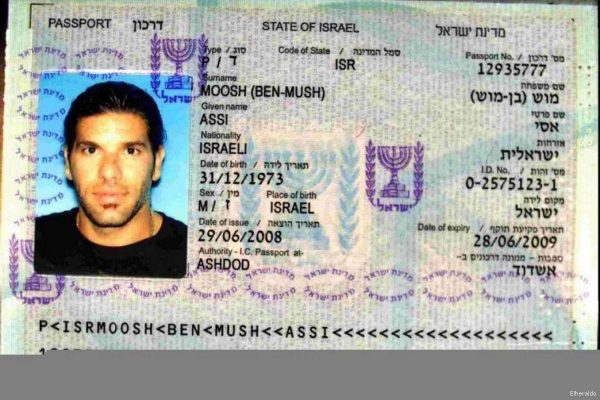
A former Israeli soldier was deported from Colombia for alleged links to a criminal network suspected of drug trafficking, child prostitution and tax offenses that spanned across several countries in Latin America.
Forty-three-year-old Assi Moosh was expelled by Colombia and returned to Tel Aviv under escort by immigration officers last weekend. In a statement confirming the deportation, security officials said: “Police in Santa Marta, capital of the Magdalena department, hereby announce the removal of an Israeli citizen who owns a spa hotel frequented by many foreign tourists. Deportation procedures have been commenced as per law and will be carried out due to the Israeli’s conduct, which has harmed Colombia’s national security.”
Colombian news agencies reporting on the deportation revealed details surrounding the expulsion of Moosh who was exposed as being part of a group of ex-Israeli soldiers that had turned a small fishing village in Taganga into a “sex and drug den” from their base in a luxury resort that was known to locals as “little Israel”.
El Heraldo, a regional newspaper, revealed Moosh as the head of an “international network of human trafficking, micro-trafficking and sex tourism”. The Israeli gained a reputation locally for organising private parties in a room within his hotel. From their base in “little Israel” Moosh is reported to have run similar clubs exploiting drugs and children in Cartagena, Bogotá, Medellín, Ecuador, Mexico and Brazil.
Local sources reported that Moosh was arrested when he arrived in the immigration office in Santa Marta accompanied by a group of armed men. It’s believed that he had been trying to obtain Colombian citizenship.
According to the national police, Moosh had raised suspicion after it was discovered that his permits for tourism and hotel operation were obtained through a third party, enabling him to carry out criminal activities undetected for a decade.
Locals are said to be “relived” by the arrest. Residents told journalists that Moosh “had been one of those who destabilised the social order of the people.” Many felt he should have been arrested long ago.
The mystery for many locals, according to El Heraldo, was the Benjamin hotel. Residents of Taganga described the resort as a “bunker” run by Moosh “exclusively for Jews”. While it’s unlikely that many of the locals would have actually seen the inside of the luxury resort, the feeling that it was an unwelcome place for non-Israelis has even been reported by visitors on TripAdvisor. “Not Israeli? Forget about it” wrote one visitor who had given the hotel two stars in the review. “First off this is a good hotel/hostel but if you are not from Israel I wouldn’t go there, my wife and I were made to feel very uncomfortable even had people come up to us and say ‘are you from Israel?’ I said ‘no’ to their reply ‘then why would you come here’.”
Reports of how “ex-soldiers turned a Colombia fishing town into a sex and drug den” had been on the media’s radar for a while. In February Colombia Reports uncovered the tension within the popular tourist region caused by the Benjamin hotel. The report found that “Benjamin [hotel] employs and accommodates almost exclusively Israeli citizens, and was officially opened by 20 rabbis brought over especially from Israel”.
Security in the hotel is reportedly coordinated by a Willington Vasquez, who, according to the report is also known as “Manuel, a former member of a paramilitary death squad”. Locals from Taganga complained that the Israeli “tourism entrepreneurs” were running a drug trafficking network and prostitution business.
The friction between locals in Taganga and the Israelis was also reported in 2012. “Four Israeli ex-soldiers are the new ‘masters’ of Taganga” was the headline in the El Tiempo. The paper alleged that the Israeli “businessmen” were selling cocaine and sexually exploiting young girls.
A journalist from El Tiempo investigating the allegations spoke with local officials, residents and the Israeli businessmen who pleaded innocence saying that “the community is wrong, everything is false”.
But the report proved otherwise. The authorities said that they were clear “several Israeli ex-soldiers who arrived in that village” were “leaders of criminal gangs”. The authorities complained that the Israelis took over social premises, violated rules on tax payments and permits and were involved in selling drugs and sexually exploiting children.
The ex-Israeli soldiers became known as “the untouchables”. El Tiempo journalists travelled to the area and established that some of them were living in a concrete mass, guarded by eight security cameras. Others carry arms and move in 4×4 trucks with the Israeli flag.
Testimonies from villagers and local authorities, who, El Tiempo said requested anonymity for fear of reprisals, exposed the drug and prostitution industry that had blighted the small fishing village.
Their standoff with the ex-Israeli soldiers led locals to create a committee and to request help from the Santa Marta administration.
Mayor of Santa Marta at the time, Carlos Caicedo, told El Tiempo that the situation in Taganga is serious and that he will ask the Israeli embassy and the Ministry of Foreign Affairs to review the legal status of the ex-military personnel settled in the Benjamin hotel.
Residents of Taganga appealed to their government to end the criminal activity in their village and a request was also made to the Israeli embassy, according to El Tiempo, to sanction the criminal behaviour of its nationals.
As for Moosh, it’s reported that Colombian authorities have imposed sanctions on him which prevent him from returning to country for at last ten years.
Read also: Israel killed 14 Palestinian children in 2017
November 29, 2017
Posted by aletho |
Corruption | Colombia, Israel, Latin America |
Leave a comment
In May this year the Carnegie Endowment for Peace assessed that “The security environment in Afghanistan is still precarious… the government remains heavily dependent on foreign aid… the combination of a weakening Afghan regime and an unchecked Taliban resurgence could lead to the catastrophic collapse of the Afghan government and state…”
It is essential that a policy be constructed in order to move the country towards security, peace and prosperity, and this, so far, has involved an increase in US combat troops and expansion of the aerial bombing campaign.
According to the US Air Force, 3,554 bombs and rockets were directed at targets in the first ten months of 2017, including 653 in October, the greatest number since November 2010. Some of the most recent strikes were on 10 supposed drug-production facilities in Helmand Province, and the complexity and expense of the operation were considerable.
The commander of foreign forces in Afghanistan, US General John Nicholson, told the media that the attacks were “a demonstration of our new authorities… And specifically, in striking northern Helmand and the drug enterprises there, we’re hitting the Taliban where it hurts, which is their finances.”
According to Nicholson there are 400-500 opium production facilities in Afghanistan, so there is some way to go before the drug evil is eradicated at the factory stage, and if the effort to destroy them is confined to air power, the cash cost is going to be prodigious.
The bombing included strikes by some Afghan air force Tucano aircraft, but the main assault was by the US Air Force which for the first time in Afghanistan used its F-22 Raptor aircraft, flown from the United Arab Emirates, and B-52 strategic nuclear bombers based in Qatar. F-16s joined in from the Bagram base near Kabul, and the operation also involved KC-10 and KC-135 refuelers, surveillance aircraft and command and control aircraft.
General Nicholson explained that the Raptor aircraft was used “because of its ability to deliver precision munitions, in this case a 250-pound bomb, small-diameter, that causes the minimum amount of collateral damage.”
It has been calculated that the Raptor “costs $68,362 an hour to fly” and thus the expense of its excursion, including tankers, “could have approached $400,000” exclusive of bombs. The Pentagon’s budget for 2015 show that 246 of these bombs cost 219.1 million dollars. This means that the US taxpayer pays $890,000 for each one, which makes the cost of the Raptor strike a remarkably expensive operation. Then General Nicholson said that one of his B-52s dropped “six 500-pound, low-collateral-damage, precision-guided munitions” in order “to keep the collateral damage to an absolute minimum, and we did.”
While it is laudable that General Nicholson wants to minimise collateral damage by using 500 pound bombs, he appeared to veer off course slightly and showed a video of “another B-52 strike on another Taliban narcotics production facility. Now, this particular facility was the largest one we struck last night [November 19], with over 50 barrels of opium cooking at the time of the strike… So this was a B-52 strike, several 2,000-pound bombs, and it completely obliterated the facility.” Presumably the 2000 pound bombs were also precision-guided, in order to avoid collateral damage in accomplishment of complete obliteration.
The general noted that in Afghanistan “We’ve dropped more munitions this year than in any year since 2012. These new authorities give me the ability to go after the enemy in ways that I couldn’t before” and he intends to expand the bombing campaign next year.
The “new authorities” are the orders of President Trump to increase the intensity of the war because “I took over a mess, and we’re going to make it a lot less messy,” and General Nicholson is pleased that “we’re hitting the Taliban where it hurts, which is their finances,” although he did say “we are not going after the farmers that are growing the poppy.”
Of course the US air force should not target Afghan farmers — but bombing opium factories will not result in financial ruin of the Taliban. The heroin industry is extremely lucrative, and in Afghanistan the beneficiaries include very many more people other than Taliban adherents. It is, after all, the eighth most corrupt country in the world.
After the Helmand blitz, Reuters reported a poppy farmer, Mohammad Nabi, as saying that “The Taliban will not be affected by this as much as ordinary people. Farmers are not growing poppies for fun. If factories are closed and businesses are gone, then how will they provide food for their families?” Has General Nicholson got an answer to that?
The Voice of America reported in May 2017 that “Since 2002, the US has spent more than $8.5 billion on counternarcotics in Afghanistan — about $1.5 million a day” while “only 13 of the country’s 34 provinces were reported poppy-free in 2016, and this number has dropped into single digits this year.” The UN Office on Drugs and Crime published its Afghanistan Opium Survey on November 15, and observed that “many elements continue to influence farmers’ decisions regarding opium poppy cultivation. Rule of law-related challenges, such as political instability, lack of government control and security, as well as corruption, have been found to be main drivers of illicit cultivation.”
What a shambles. And Washington’s solution is to bomb it.
Nicholson said that farmers “are largely compelled to grow the poppy and this is kind of a tragic part of the story.” Of course the farmers are “compelled to grow” a crop for sale. And it’s more than “kind of tragic.” It’s a catastrophe, because Afghanistan remains the world’s leading producer of opium.
The farmers would stop producing poppy if there were markets for other crops whose cultivation would provide them a decent living. As long ago as 2004 the US Assistant Secretary for International Narcotics, Robert Charles, told Congress that “To destroy Afghanistan’s opium economy, alternatives to the pernicious cycle of opium credit, cultivation and harvest must be available to rural communities.” So billions of dollars were poured into anti-narcotics campaigns and the result is that after twelve years “the level of opium poppy cultivation is a new record high.”
In March 2012 Donald Trump tweeted that “Afghanistan is a total disaster. We don’t know what we are doing. They are, in addition to everything else, robbing us blind.” Little has changed, except that 45 percent of Afghanistan’s districts are controlled or contested by the Taliban, and General Nicholson acknowledges that “we are still in a stalemate.” But Trump has been persuaded to declare that the US will “fight to win”. So the campaign of airstrikes will continue, and Afghanistan will be bombed towards peace and prosperity.
November 29, 2017
Posted by aletho |
Corruption, Economics, Militarism, Timeless or most popular | Afghanistan, United States |
Leave a comment
How the United States military has become Zionized
There has been a report that Special Counsel Robert Mueller is looking into foreign lobbying in Washington while another story relates how his team is investigating the alleged contact of a Donald Trump associate with a Hungarian. Both are part of the ongoing investigation into Russiagate. Unless I am wrong, which happens occasionally, Hungary is a member of the European Union and also of the North Atlantic Treaty Organization (NATO). It has relatively free elections and its government changes as a result.
No one but the Mueller commission has considered contact with a Hungarian citizen to be a potential threat to American democracy. But then again, no one has really made the case in any kind of credible fashion that meeting with a Russian is either ipso facto criminal or treasonous, or that Moscow’s media does anything beyond what other state-owned broadcasters tend to do, but you wouldn’t know that from reading the mainstream press or from watching MSNBC and CNN.
An independent observer might well note that there is more than a whiff of hypocrisy in all of this. Case in point, the latest globalist-interventionist-neocon think tank the Alliance to Secure Democracy is currently being funded by a bundle of foreign governments, presumably doing so without any interference from Mueller or from those who run the Foreign Agents Registration desk at the Department of the Treasury.
And one other thing you can bet on is that Mueller will not be looking at the country that actually does interfere in American politics most, which is our best friend in the whole world and greatest ally Israel, the beneficiary of roughly one billion dollars-worth of lobbying carried out by hundreds of full time staff on its behalf.
Punish Israel for corrupting our politicians and media? On the contrary, now that we are officially into the holiday season, a whole bunch of goodies designed to make Benjamin Netanyahu’s eyes sparkle are pending. The highest priority item is the Trump Administration’s cooperation with the Israeli government in a frantic effort to bury a United Nations report that includes a database of all the companies that operate in Israel’s illegal settlements. Also regarding the U.N., Congress is considering a bill that would block U.S. aid to any country that opposes “the position of the United States.” Lest there be any confusion, Ambassador Nikki Haley has made it clear the American “position” would pretty much consist of never criticizing or voting against Israel.
Congress is meanwhile also making a list and checking it twice, looking into the vexing issue of how to make any and all criticism of Israel equate to anti-Semitism as a step forward to turning such activity into a hate crime with actual criminal penalties. The House Judiciary Committee has been holding meetings to try to decide how exactly one might do that without completely jettisoning the First Amendment, which once upon a time was intended to guarantee free speech. On November 8th, nine experts, seven of whom were Jewish, were summoned to address the issue of “codify[ing] a definition of anti-Semitism that incorporates a controversial component addressing attacks on Israel… [as] a necessary means of stemming anti-Semitism on campuses.”
The proposed amendment to the Civil Rights Act would use language being considered for the still pending Anti-Semitism Awareness Act to considerably expand the currently accepted government acceptance of anti-Semitism as “demonization” of Israel and/or its policies. A broader definition would have real world consequences as it would potentially block federal funding for colleges and universities where students are allowed to organize events critical of Israel. Fortunately, the hearing did not produce the result desired by Israel. To their credit, four of the witnesses, all Jewish, opposed expanding the definition of anti-Semitism and even some congressmen uncharacteristically indicated that to do so might be a bridge to far.
Indeed, one might argue that there is a tendency in Washington to see the world and even domestic policies through Israel’s eyes. One might even suggest that the United States government is being progressively Zionized because of the free hand that Israel and its supporters have, which gives them the ability to seek benefits for Israel that they would be unlikely to pursue for the United States. To cite only one example, an Israel Victory Caucus was launched in the House of Representatives in April advocating Israeli defeat of all its neighbors. The keynote speaker at the event, noted Islamophobe Daniel Pipes, explained “Victory means imposing your will on your enemy so he no longer wants to continue to fight,” before demanding “What I want the U.S. government to do is say, ‘Israel, do what you need to do to win your war.’”
Israel has been uniquely successful at imposing its will over Congress and the White House. Every freshman class in Congress, plus spouses, is automatically whisked off for a deluxe all expenses paid propaganda trip to Israel, which is funded by an affiliate of the American Israel Political Action Committee (AIPAC). That is supplemented frequently throughout the year through taxpayer funded CODELS by established politicians to find out the “facts” on what is going on in the Middle East. During congressional recesses Congressmen are sometimes more likely to be found visiting Israel than dealing with problems in their own districts and they routinely return spouting whatever line is being promoted by the Israeli government.
There is also the training of American police in “Israeli methods,” which is funded both by government and foundations set up for that purpose. Less well known is the inroads Israel has made with the American military establishment. Shoshana Bryen, former executive director of the Jewish Institute for National Security Affairs (JINSA) and currently affiliated with the Jewish Policy Center, who has been involved in hosting the indoctrination of U.S. national security personnel, recently described it this way: “I have taken more than 400 American security professionals – primarily retired American Admirals and Generals – to Israel in more than 30 trips. And at the other end of their careers, I have sent more than 500 cadets and midshipmen of our service academies to Israel before they received their commissions. And I can say that they all understood the fundamental and profound principles that guide both the United States and Israel. They don’t always agree with Israel’s politics – or Israel’s defense choices – or any other single aspect of Israeli political, military and social life, but I never found one that didn’t believe in the relationship between Jews and the land of Israel. The United States military, then, is a Zionist institution.”
Last Monday, Colonel Pat Lang, former special ops officer and head of the Defense Humint Service, considered Bryen’s assertion, writing “It’s an open question but I think the answer is probably yes. The U.S. military now seems to be totally focused on Israeli policy goals in Iran, Syria and Iraq… Israel wants Iran neutered and eliminated as a power rival in the Middle East. The putative Iranian nuclear weapons program is just one target of Israeli policy toward Iran. To reach the goal of Morgenthau-style comfort with regard to Iran, Israel wants to destroy Syria and Hizbullah as allies of Iran… The process of conditioning American officers to make them Zionists has been ongoing for a long time. when I came in the Army in 1962, there was little interest in Israel in the officer corps… [The] 1967 war was a watershed. Israel’s total victory had been unexpected by most. Americans are mentally driven by aggressive sports analogies and Israel was a winner. That made a big difference in spite of the repeated day long attacks by the Israeli air force and navy against U.S.S. Liberty, an American SIGINT collector positioned off the Egyptian coast. LBJ suppressed an armed reaction by a U.S. carrier battle group in the area and a subsequent naval investigation. His policy then became one of relatively complete support of Israel. The indoctrination and conditioning program described by Shoshana Bryen began in earnest after that and has carried through to the present under the umbrella of AIPAC and its galaxy of linked organizations especially JINSA. This program has been wildly, incredibly successful. As a result, there is an unthinking willingness among senior, and not so senior American officers to support Israeli policy in Iran, Syria, Lebanon, Palestine and now Saudi Arabia. The handful of M[iddle] E[ast] trained and educated U.S. officers are ignored, treated as technical experts or shoved out the door when they speak up.”
How deeply Israelophilia has been drilled into the American corporate psyche is best illustrated by a recent article that appeared on the National Interest website. The article was written by retired Israeli Colonel Shimon Arad, who apparently has contributed to the site previously, and its thrust is that the United States should only sell military hardware to the Middle East when Israel is satisfied that the sales will not undercut its self-defined military edge. In other words, U.S. defense industries and national security arrangements should be subordinated to Israeli interests and even subject to veto by the Netanyahu government.
Arad’s condescending piece, sub-titled “Israel’s Greatest Fear: An Arms Race Sparked by the F-35,” should be read fully to demonstrate just how arrogant the Israelis have become in dealing with their American puppet. Arad argues that no advanced fighters comparable to what Israel receives for free from the U.S. taxpayer should be sold to any Arab country, no matter how friendly or strategically valuable. Previous pledges that the new F-35 would not be sold to Arabs “played a significant role in [Israel]’s acquiescence to the sale of… advanced… fighters to the Gulf states…” “Acquiescence” is the key word, implying that Israel should by rights have the option to stop such sales by putting pressure on Congress. Arad then goes on to describe how sales to the United Arab Emirates would be a “dangerous precedent,” but he is clearly talking only about Israeli interests as the United States is in no way threatened by such a move. He concludes that “Israel must express its strenuous objection to the release of the F-35 to any and all Gulf and Arab countries.”
In an earlier article, Arad complained about Arab states being sold sophisticated air defenses, presumably because that would make it more difficult for Israel to bomb them. Why an American publication should provide a pulpit to an Israeli who is promoting a narrowly construed Israeli interest that differs significantly from the actual interests of the United States is not completely clear. The site’s readers apparently agreed with that observation in that most of the comments were highly critical both of Arad and of Israel. Someone should remind the colonel that America’s three major military concentrations in the Middle East – five bases in Kuwait, Al-Udeid Airbase in Qatar, and the Fifth-Fleet home base and Naval Central Command in Bahrain – are all in Arab countries that have accommodated Washington in ways that Israel never has. To place them on a list of countries that are somehow always suspect just because Israel perceives nearly all Muslims as enemies, is not in America’s own interest, but this has been the unfortunate pattern in the lopsided relationship prevailing between Washington and Tel Aviv.
The infiltration by little Israel of key sectors of the bureaucracy of a seemingly oblivious giant United States is extraordinary by any measure, but it has been brought about by a highly focused and well-funded powerful domestic lobby that has remarkable access both to the political class and to the media. As Admiral Thomas Moorer, former chairman of the Joint Chiefs of Staff once put it, “No American president can stand up to Israel.” He should have added Congress and even the Pentagon to his indictment but what he said is, unfortunately, truer now than it was when he made the comment back in 1997.
November 28, 2017
Posted by aletho |
Corruption, Ethnic Cleansing, Racism, Zionism, Russophobia, Timeless or most popular, Wars for Israel | Israel, JINSA, Robert Mueller, United States, Zionism |
Leave a comment
Insulation added to buildings like the ill-fated Grenfell Tower was a result of climate regulations, as this extract from a Sky News report shows. But the manufacturers themselves helped write those rules, and now some critics who tried to point out potential fire hazards in the materials say they were subjected to intimidation by them.
While legal threats were being made in private, the plastic insulation industry was openly advertising its role in writing the rules that govern the fitting of its products to millions of buildings across the country.
The main lobby group for the plastic insulation trade was, until November 2017, called the British Rigid Urethane Foam Manufacturers’ Association [BRUFMA].
Partly in response to Grenfell Tower – or what it refers to as “events of this year” – BRUFMA changed its name to the Insulation Manufacturers Association.
They advertise that they are “influencing UK and local government, specifying authorities, relevant approval and certification bodies,” and have “high level involvement in the drafting and regular revision of British and European standards [and] the Building Regulations.” Its members are promised the “opportunity to influence Government bodies and NGOs” and “direct input into relevant British Standards committees.”
How that influence works in practice is exposed by examination of government efforts to meet the UK’s climate change commitments. Since the Kyoto agreement in 1997 to reduce greenhouse gas emissions, successive governments have created rules about how new and refurbished buildings must be insulated to reduce heat loss.
In 2011 the Department for Energy and Climate Change (DECC) turned to the insulation industry for help, inviting representatives onto a Green Deal committee to come up with ways to push more insulation into homes. We discovered that of the 10 firms and construction industry groups on that committee, four were members of BRUFMA.
One of them was Celotex, the firm whose plastic insulation would be fitted to the outside of Grenfell Tower four years later.
November 27, 2017
Posted by aletho |
Corruption, Science and Pseudo-Science, Timeless or most popular | UK |
Leave a comment
Dozens of police departments across the US are using special devices to track suspects without warrants. However, the International Mobile Subscriber Identity (IMSI) catchers also capture data from regular people on the street.
The technology, which was developed for the military, mimics cell phone towers and tricks phones into routing signals through them. This allows police to a track suspect’s location. The machines even allow police to get the location of a phone without the user making a call or sending a text. The most common of these devices is called a “StingRay.”
Such devices can also collect the phone numbers a person has been calling and texting and even intercept the content of communications.
At least 72 state and local law enforcement departments in 24 states and 13 federal agencies use the devices, according to a new report from AP. The report notes that further details are hard to come by because the departments that use IMSI catchers must take the unusual step of signing non-disclosure agreements overseen by the FBI.
An FBI spokeswoman told the news agency that the agreements, which regularly involve the defense contractor that makes the machines, are intended to prevent the release of sensitive law enforcement information to the general public. Last year, the House Oversight and Government Reform Committee released a report that found the Justice Department and the Department of Homeland Security had spent a combined $95 million on 434 cell-site simulators between 2010 and 2014.
Civil liberties unions such as the NYCLU say the devices are extremely invasive because they operate in such a wide range, around two city blocks, that they don’t just grab up the target’s data but also information from other people in the area.
Law enforcement agencies have also gone to great lengths to conceal StingRay usage, in some instances even offering plea deals rather than divulging details on the machine.
In several states, courts are beginning to grapple with the issue. Earlier this month, a Brooklyn judge ruled that the police need an eavesdropping warrant to use a StingRay. In September, a federal court ruled use of the device without a warrant violated the US Constitution, specifically the Fourth Amendment.
READ MORE: Stingray tracking of cellphones unconstitutional without a warrant – US court
November 26, 2017
Posted by aletho |
Civil Liberties, Corruption, Timeless or most popular | Human rights, United States |
Leave a comment
Eric Schmidt, the executive chairman of Google’s parent company Alphabet, announced that his company will ‘de-rank’ RT’s articles online, calling them propaganda. Is he concerned for the integrity of news, or are his motives more partisan?
The 62-year-old, with an estimated wealth of $11.1 billion, has never hidden his political leanings, jumping straight into Hillary Clinton’s presidential campaign long before she officially announced her candidacy. In one of John Podesta’s leaked emails, the long-time Clinton confidant and chairman of her presidential campaign told her soon-to-be campaign manager Robby Mook that he had met with Schmidt in April 2014, more than a year before Clinton told the American public that she was hoping to become their next president.
“I met with Eric Schmidt tonight… He’s ready to fund, advise recruit talent, etc. He clearly wants to be head outside advisor, but didn’t seem like he wanted to push others out. Clearly wants to get going. He’s still in DC tomorrow and would like to meet with you if you are in DC in the afternoon. I think it’s worth doing…” Podesta wrote in the email, which was published by WikiLeaks last October.
Another email, written two weeks later, showed Schmidt sharing his campaign ideas with Clinton aide Cheryl Mills. “Let’s assume a total budget of about $1.5 billion, with more than 5,000 paid employees and million(s) of volunteers,” he said.
He went on to brainstorm ideas on how to utilize technology in the campaign. It wasn’t long before The Groundwork, founded by analysts and engineers who worked on Barack Obama’s campaign and funded by Schmidt, became Clinton’s top technology provider. The Groundwork was housed in an office just a few blocks away from Clinton’s campaign headquarters in Brooklyn, New York.
Schmidt continued to advise Clinton on digital matters throughout the campaign.
“Eric recognizes how the technology he’s been building his whole career can be applied to different spaces. The idea of tech as a force multiplier is something he deeply understands,” The Groundwork’s Michael Slaby told Quartz in 2015.
Then there was campaign night, when a photo forwarded to Politico showed a smiling Schmidt at Clinton’s election headquarters, complete with a “staff” badge.
Schmidt’s efforts to get Clinton elected, along with Google’s overall efforts to do the same, were addressed in a November 2016 report by the Campaign for Accountability ‒ a non-partisan, non-profit organization that aims to expose misconduct and malfeasance in public life ‒ and its Google Transparency Project. The document concluded that “Google executives and employees bet heavily on a Clinton victory, hoping to extend the company’s influence on the White House.” It added that “had she won the election, Clinton would have been significantly indebted to Google and Schmidt, whom she referred to as her ‘longtime friend.'”
WikiLeaks founder Julian Assange also brought up the relationship between Schmidt and the US establishment in his 2014 book, ‘When Google Met WikiLeaks.’ He describes a 2011 encounter with Schmidt in Norfolk, UK, where Assange was under house arrest at the time.
“I had been too eager to see a politically unambitious Silicon Valley engineer, a relic of the good old days of computer science graduate culture on the West Coast. But that is not the sort of person who attends the Bilderberg conference four years running, who pays regular visits to the White House, or who delivers ‘fireside chats’ at the World Economic Forum in Davos,” Assange wrote. “Schmidt’s emergence as Google’s ‘foreign minister’ – making pomp and ceremony state visits across geopolitical fault lines – had not come out of nowhere; it had been presaged by years of assimilation within US establishment networks of reputation and influence.”
Same thing, different candidate
Schmidt’s political leanings became clear in the early days of Barack Obama’s first presidential campaign. He publicly endorsed Obama, telling The Wall Street Journal in October 2008 that he was “doing this personally,” as Google was “officially neutral” in the election. He also served as an informal adviser to Obama’s campaign.
Schmidt also donated $5,000, the maximum allowed by law, to Obama’s 2008 campaign, according to US media reports that cited a now-deleted official list of donors. Schmidt’s close relationship with Obama didn’t end when the Democratic candidate was elected. Schmidt chaired the board of public policy think tank New America Foundation, working closely with Obama as a member of his Transition Economic Advisory Board. Later, Schmidt claimed a seat on Obama’s new Council of Advisors on Science and Technology.
The two became so close that the Consumer Watchdog sent a letter to the White House demanding that Obama distance himself from Google, and stop inviting Schmidt to fancy galas in Washington, DC. The group pointed out that Schmidt, and then-Google Vice President Marissa Mayer, were invited to a state dinner despite the company being under criminal investigation by the Department of Justice over allegations that it profited from selling online ads to illegal pharmacies.
“Executives of companies under federal criminal investigation should not be invited while a major case is pending. Allowing such executives to hobnob at a gala White House event inevitably sends a message that the Administration supports them and undercuts the ability of federal investigators to proceed with their case in a fair and unbiased way,” reads the letter, dated June 23, 2011.
Schmidt also supported Obama’s 2012 campaign, helping to recruit talent, deciding on technology, as well as mentoring campaign manager, Jim Messina. He was present in the Chicago, Illinois boiler room on election night. The Google executive was apparently so impressed by Obama’s campaign staff that he invested in several start-ups founded by the analysts and engineers who worked on it, one of those being The Groundwork.
Schmidt’s announcement to ‘de-rank’ RT’s articles comes despite Google’s own investigation saying it found no manipulation of its platform or policy violations by RT. There may be more ground to question Schmidt’s integrity than that of RT – but that’s highly unlikely to happen in today’s climate, because Google is not a Russian company.
Read more:
November 21, 2017
Posted by aletho |
Corruption, Deception, Timeless or most popular | Eric Schmidt, Google, Hillary Clinton, Obama, United States |
Leave a comment
History shows us that when empires over-extend themselves, military commanders become semi-independent warlords who usher into place systems of graft and corruption. Such was the case in the Roman Empire in 193 A.D., when Emperor Pertinax’s Praetorian Guard – a combination personal security force for the emperor and elite special forces unit that distinguished itself on distant battlefields – sold out the emperor in exchange for a bribe from an aspirant emperor, Didius Julianus. The Praetorian Guard assassinated Pertinax and swore their allegiance to the new emperor, Julianus.
The rot of corruption would help ensure the downfall of other global empires. The fraudulent British East India Company and its corporate nabobs, backed by British military and naval power, helped to ignite colonial rebellions in America in the 1770s and India in 1857.
As the United States has over-extended its military realm into the Middle East, South Asia, Africa, Europe, the Asia-Pacific, and Latin America, corruption within so-called “Areas of Responsibility” assigned to regional US military commands has run rampant.
Within the US Pacific Command (PACOM) region, a major bribery and fraud scandal centered on a US Navy contractor, Singapore-based Glenn Defense Marine Asia (GDMA), headed by Leonard Glenn Francis, a 350-pound Malaysian citizen nicknamed “Fat Leonard.” In return for cash, vacations at five-star hotels, first- and business-class flights, expensive concert tickets, Rolex watches, Mont Blanc pens, Dom Perignon champagne, vintage wine, Cuban cigars, spa treatments, foie gras, $2000 bottles of cognac, and prostitutes, US Navy officers provided Leonard with virtual unfettered access to Navy intelligence and sensitive contract information that was used by GDMA to secure lucrative Navy logistics contracts. The “Fat Leonard” scandal grew to include senior officers, including admirals, attached to the US Seventh Fleet in Japan. The Navy’s investigation is continuing, and more than 60 additional admirals are reportedly under investigation by law enforcement authorities. For years, the Navy scandal extended from Japan to the Philippines, Singapore, Indonesia, Vietnam, Sabah, South Korea, India, Thailand, Cambodia, Australia, Sri Lanka, Hawaii, and Washington, DC and involved, in addition to Navy officer and enlisted personnel, Marine Corps officers and US government civilians, including investigators of the Naval Criminal Investigative Service (NCIS).
One of the worst frauds to have arisen from the neo-conservative bowels of the George W. Bush administration was the US Africa Command (AFRICOM). The June 4, 2017, strangling death in Bamako, Mali of US Army Green Beret Staff Sgt. Logan Melgar by two US Navy SEALs is now linked to his discovery that the two Navy personnel were pocketing official funds used by AFRICOM to pay off informants in the West African country. This type of fraud points to a culture of malfeasance present in US area of responsibility commands, including AFRICOM, Central Command (CENTCOM), and Southern Command (SOUTHCOM).
According to reports in The New York Times and The Daily Beast, the death of Melgar at the hands of the two SEAL thieves occurred within a barracks unit within the heavily-fortified US embassy compound in Mali. The SEALS, Petty Officer Anthony DeDolph and Adam C. Matthews, allegedly killed Melgar after he refused an offer to share their ill-gotten loot and shared, via email, his concerns with his wife back in the United States. The SEALS claimed Melgar died after becoming unconscious during a hand-to-hand combat training session. The SEALS also told military investigators that Melgar was drunk when he became unconscious as the result of a chokehold placed on him during the roughhousing. However, the US Special Operations Command and Army Criminal Investigative Command (USACIC) decided the SEALS had changed their stories so many times that they became subjects, rather than witnesses, in the investigation. An autopsy revealed that there were no traces of alcohol or drugs in Melgar’s body at the time of his death. Furthermore, Melgar was reported by friends and family to have been a teetotaler.
AFRICOM and USACIC tried to cover up the details of Melgar’s death until The New York Times originally broke the story about the death last month. USACIC handed off investigation of the case to the NCIS, which is worse than its Army counterpart in covering up sensitive military criminal cases. Neither of the two SEALS, both of whom were transferred back to the United States and were placed on administrative leave, have been charged in the murder of Melgar. It was apparently officers of the US Special Operations Command, which is headquartered in Tampa, Florida, who tipped off the press about the cover-up involving Melgar’s death.
AFRICOM has also been hesitant to provide full details about an ambush of a joint US-Nigerien unit operating near the Niger village of Tongo-Tongo in October of this year. Four US Army personnel were killed by an armed force that remains unidentified by AFRICOM. Tongo-Tongo sits astride a major African smuggling route for humans, drugs, ivory, and weapons between West Africa and the failed state of Libya. It was later reported that the four US soldiers died at the hands of the attackers after their unit’s Nigerien army personnel fled the scene during the attack. The body of one of the American troops, Sgt. La David Johnson, showed signs of being tortured and executed by the unidentified captors.
The case of Melgar is similar to the murder of West Point ethics professor, Army Col. Ted Westhusing in Baghdad in 2005. Like AFRICOM in Mali and other African countries, CENTCOM was entrusted with hundreds of millions of dollars in cash used to pay-off informants and make local purchases on the Iraqi economy.
Westhusing’s family and friends rejected the Army’s determination that Westhusing took his own life. The Army based its decision on a “suicide” note said to be written in Westhusing’s handwriting. At the time of his death, Westhusing was investigating contract violations and human rights abuses by US Investigations Services (USIS), a privatized former entity of the US Office of Personnel Management later purchased by The Carlyle Group, a firm with close links to George H. W. Bush. While he was in Iraq training Iraqi police and overseeing the USIS contract to train police as part of the Pentagon’s Civilian Police Assistance Training Team, Westhusing received an anonymous letter that reported USIS’s Private Services Division (PSD) was engaged in fraudulent activities in Iraq, including over-billing the government. In addition, the letter reported that USIS security personnel had murdered innocent Iraqis. After demanding answers from USIS, Westhusing reported the problems up the chain of command. After an “investigation,” the Army found no evidence of wrongdoing by USIS.
Days before his supposed suicide by a “self-inflicted” gunshot wound in a Camp Dublin, Iraq, trailer located at Baghdad International Airport, West Point Honor Board member Westhusing reported in e-mail to the United States that “terrible things were going on in Iraq.” He also said he hoped he would make it back to the United States alive. Westhusing had three weeks left in his tour of duty in Iraq when he allegedly shot himself in June 2005.
The cover-up of Westhusing’s death involved the same Army Criminal Investigative Command that covered up Melgar’s death in Mali. The murders of Melgar and Westhusing are not stand-alone events regarding US military forays around the world. Army Corporal Pat Tillman, the star National Football League player who enlisted in the Army after 9/11, became disillusioned with the war in Afghanistan. After Tillman’s private feelings about the Afghan war were discovered by senior commanders in his chain-of-command, Tillman was “fragged” by members of his own unit in Khost province on April 22, 2004. Tillman’s diary, uniforms, and other possessions were burned by his unit to cover up his execution by his own colleagues.
On September 4, 2006, Army Lt. Col. Marshall Gutierrez, the chief logistics officer at Camp Arifjan, Kuwait, who was investigating over-payments for goods and services and other fraud, supposedly committed suicide in his base quarters after ingesting prescription sleeping pills and anti-freeze. In December 2006, Army Major Gloria Davis, a contracting officer at Camp Arifjan, allegedly committed suicide in Kuwait after she admitted to receiving $225,000 in bribes from Lee Dynamics, an Army logistics contractor. Davis had reportedly agreed to cooperate with government investigators in their overall investigation of contract fraud in Iraq and Kuwait.
In 2007, a senior Blackwater manager threatened to kill Jean C. Richter, the chief US State Department investigator of Blackwater’s dubious operations in Iraq, unless the State Department called off the investigation. The incident occurred as Richter focused on problems with Blackwater’s $1 billion State Department contract. The CEO of Blackwater was Erik Prince, whose sister, Betsy DeVos, now serves as Donald Trump’s Education Secretary. Prince later sold Blackwater, which is now known as Academi. Prince has reportedly been involved in AFRICOM operations in Libya and Somalia via his Reflex Responses (R2) firm, which is based in Abu Dhabi.
The July 2, 2007, “suicide” of Army Lt. Col. Thomas Mooney, the US Defense Attaché in Nicosia, Cyprus, was said to be the result of a “self-inflicted cut to the throat.” Mooney’s body was found next to an embassy vehicle parked in a secluded location, some 30 miles west of Nicosia. He was said to have left the embassy in the embassy’s black Impala Chevrolet to pick up an arriving passenger at Larnaca International Airport. Although the US embassy and State Department ruled Mooney’s death a suicide, the Cypriot police did not agree with those findings but merely pointed out that suicide was illegal in Cyprus. Mooney was, according to our sources, investigating Iraq-related contract fraud involving companies headquartered in Cyprus, some of which were linked to the Israeli Mafia.
AFRICOM and PACOM – just as is the case with CENTCOM, which complements the culture of baksheesh bribery in the Middle East and South Asia – now find themselves mired in the same depths of kleptocratic fraud as is practiced in countries like Mali, Niger, Nigeria, and Burkina Faso, where AFRICOM is active. The Fat Leonard scandal and the recent murder of Melgar in Mali are merely the tip of the iceberg when it comes to the malfeasance involved in global US military operations.
When it comes to the US military operating in its overseas locations, the Latin phrase popularized by the Roman poet Juvenal, perhaps wise to the corruption of the Praetorian Guard of his time, comes to mind. “Sed quis custodiet ipsos custodes?” “Who watches the watchmen?”
November 21, 2017
Posted by aletho |
Corruption, Deception, Timeless or most popular | AFRICOM, United States, US Pacific Command |
Leave a comment
The government of the United Kingdom is in a state of turmoil, mainly because it lacks authority as a result of holding an election in which the Conservative party was unexpectedly dealt a severe blow to its pride and popularity. Since then its indecision and incompetence have been complicated by scandal, of which the latest involved enforced resignations of two cabinet ministers, one because he indulged in sexual harassment, and the latest, the Overseas Aid minister, Ms Priti Patel, because she told lies to the prime minister about a visit to Israel.
Ms Patel admitted that her actions “fell below the high standards expected of a secretary of state” which was certainly the case, because she told lies; but her low standard expeditions appear to have involved some intriguing antics. It was reported that in August she went on “a secret trip to Israel with a lobbyist, during which she held 12 meetings, including one with Benjamin Netanyahu, the Israeli prime minister, without informing either [Prime Minister] May or Boris Johnson, the foreign secretary.” It is amazing that she could have imagined that British intelligence services would not report her movements and meetings in the daily brief, but this did not stop her telling the Guardian newspaper that “Boris knew about the visit. The point is that the Foreign Office did know about this, Boris knew about [the visit to Israel]. It is not on, it is not on at all. I went out there, I paid for it, and there is nothing else to this. It is quite extraordinary. It is for the Foreign Office to go away and explain themselves.”
But it wasn’t the Foreign Office that had to explain things, because this was yet another squalid deception by a grubby little politician — for whatever reason she may have had to try to disguise her motives. Her assertion that “I went on holiday and met with people and organisations . . . It is not about who else I met, I have friends out there,” didn’t ring true, and the media discovered a whole raft of deceit.
Not only did she have a dozen meetings with “friends” in Israel, but, as revealed by the Sun newspaper, “on September 7, Ms Patel met Israeli Minister for Public Security Gilad Erdan for talks in the House of Commons. Then, on September 18, she met Israel’s Foreign Ministry boss Yuval Rotem while in New York at the UN General Assembly. Ms Patel would not last night [November 6] disclose what the meetings were about. She had seen both men in Tel Aviv in August . . .”
She was accompanied on her holiday in Israel by a British peer, Lord Polak, who attended all her meetings with Israel’s best and brightest, including Prime Minister Netanyahu. And Polak went with her to New York, with his flight being paid for by the Israeli consulting firm ISHRA, which “offers a wide range of client services.” Polak was also present when she had discussions with the Israeli Minister for Public Security at the House of Commons before she went to New York.

Lord Polak
Lord Polak didn’t have far to walk to the House of Commons because he is a member of the adjacent House of Lords, Britain’s unelected upper chamber of Parliament, which is a travesty of democracy. It makes a mockery of social equality and far too many of its members are generous donors to political parties or failed politicians who have been “kicked upstairs” to well-recompensed relaxation as compensation for years of political toadying. There are 800 members of the House, making it the second-largest legislative assembly in the world, after China’s National People’s Congress (although it has to be borne in mind that China has a population of 1.3 billion as against Britain’s 65 million).
In short, the House of Lords is a farcical disgrace. But it still has much influence, because there is a great deal of money sloshing around, and there are people and political parties who control this money — like the Conservative Friends of Israel (CFI), an organisation that the Financial Times (FT) reports has “an estimated 80 per cent of Tory MPs as members.” And it is no coincidence that Lord Polak “spent a quarter of a century as head of the CFI . . . He quit as director in 2015 to join the House of Lords, but has remained the group’s honorary president.”
CFI is a wealthy organisation which the FT notes “has given £377,994 [495,000 US dollars] to the Conservative party since 2004, mostly in the form of fully-funded trips to Israel for MPs.” Not only that, but it gives large individual donations to Conservative members of parliament — and does anyone imagine for a moment that any politician so favoured is going to say a single word against Israel in any forum in any context?
They’ve been bought.
The CFI’s deep-pocket generosity includes holding an annual London dinner, at which last December the prime minister not only referred to Lord Polak as “the one and only Stuart Polak” but noted there were over 200 legislators present and declared she was “so pleased that the CFI has already taken 34 of the 74 Conservative MPs elected in 2015 to Israel.”
Money is the most important feature of UK-Israel relations, and May was thrilled about “our countries’ biggest-ever business deal, worth over £1 billion, when Israeli airline El Al decided to use Rolls Royce engines in its new aircraft.” It all comes down to money, and Israel, in receipt of oceans of cash from the United States, can splurge it where it wants.
Last year it was announced that the US “will give Israel $38 billion in military assistance over the next decade, the largest such aid package in US history, under a landmark agreement signed on [September 14]” which includes an annual amount of $3.3 billion in “foreign military financing.”
Britain can’t give Israel any money, as it is itself in a poor financial situation, but it tries to make up for lack of cash by unconditional political support. It doesn’t matter to Britain’s government that Israel is in violation of nearly 100 UN Security Council resolutions, almost all of them requiring its withdrawal from illegally occupied Arab lands. Don’t expect the United Kingdom to criticise the Israeli fiefdom.
The love-fest between Britain’s Conservative party and the state of Israel is not only unhealthy but suspiciously personal. There is little wonder that the British government has done its best to sweep the sordid Patel affair under the carpet, and that the intrigues of Lord Polak are being kept very quiet indeed.
Lord Polak is chair of the advisory board of TWC Associates, a “boutique consultancy specialising in the development of political strategy”, which lists among its clients several Israeli defence companies, including Elbit Systems which specialises in defence electronics.
In 2012 it was disclosed that TWC and Elbit Systems were involved in the appalling British “Generals for Hire” scandal when Elbit’s UK chairman told undercover Sunday Times reporters that TWC could gain access to government “from the prime minister down.” In this particularly revolting instance of corruption the British retired Lieutenant General Richard Applegate, then Chairman of TWC, boasted that TWC had enormous influence, through its connections with Conservative Friends of Israel. He declared that “We piggy back on something, and please don’t spread this around, to do with basically Conservative Friends of Israel… do a series of discreet engagements using advisers to gain access to particular decision makers.” Just as Ms Patel was doing in Tel Aviv and London and New York, with the shadowy but authoritative guidance of the creepy Polak.
There is a lot that is wrong in the United Kingdom at the moment, but the Israeli scandal is the most squalid pantomime yet to be revealed in the tenure of the present administration. The prime minister is desperate to conceal her government’s intimate association with Israel, and is achieving success by deflecting media attention away from the machinations of the Israeli lobby and selecting other targets. Her attack on Russia in a bizarre diatribe at a London banquet on November 13 was indicative of panic, but the headlines were obtained and the grubby Israel drama faded away into the background.
In the words of Prime Minister Theresa May on November 2, just as news of the Patel scandal was breaking, “We are proud to stand here today together with Prime Minister Netanyahu and declare our support for Israel. And we are proud of the relationship we have built with Israel.”

May and Netanyahu in London on November 2
The British public will never know what Patel, Polak and all the other agents of influence were scheming to achieve, or what fandangos they may get up to in the future, but we can be certain that the Britain-Israel alliance will continue to prosper.
November 15, 2017
Posted by aletho |
Corruption, Deception | Benjamin Netanyahu, CFI, Elbit Systems, Israel, UK, Zionism |
Leave a comment

The massive leaking of the so-called “Paradise Papers” detailing the myriad ways corporations and individual billionaires hide their money in tax havens around the world, provided news organizations a chance to make the case for reining in global capital. Unlike the 2015 leak of the so-called “Panama Papers ,” which detailed the offshore tax evasions of a sleazier class of capitalists, the “Paradise” disclosures reveal how the world’s public sectors are starved for funding by billionaires and corporations from “the high end of town” — the Lords of Capital that make up the “international oligarchy” whose spreading influence is “the major issue of our time,” in the words of Sen. Bernie Sanders.
Nearly 100 news media groups agreed to join with the International Consortium of Investigative Journalists to expose how the oligarchs avoid their responsibility to share in the cost of civilization, while simultaneously dictating the terms of life for most of the planet’s people. The New York Times is part of this network, but instead of following the money wherever it leads, the paper chose, in the bulk of its own reporting, to make the Paradise Papers an extension of its Russiagate obsession.
To kick off the project, the Times highlighted Twitter and Facebook investments by Yuri Milner , an alleged recipient of “hundreds of millions of dollars in Kremlin funding” who has ties to Trump son-in-law Jared Kushner; and dealings by Wilbur Ross , Trump’s commerce secretary whose money is invested in a shipping company “with business ties to a Russian oligarch facing sanctions and [with] President Vladimir V. Putin’s son-in-law.”
The Wilbur Ross story has been at the center of the Times coverage of the Paradise Papers ever since, solidifying the public’s impression that the Russian oligarch connection to the U.S. is mainly a Republican affair — or, more specifically, the result of relatively recent machinations within Donald Trump’s circles. The truth is quite the opposite. It is the Democrats that have been in “collusion” with Russian oligarchs since the birth of that class out of the rubble of the Soviet collapse. And it was during the brief “reset” of U.S.-Russian relations, between 2009 and 2012 under President Obama and Secretary of State Hillary Clinton, that the most recent deals between American and Russian capitalists were consummated.
Donald Trump and his crowd arrived very late on the Russian scene, after relations between Moscow and Washington had been poisoned, and never got a chance to wheel and deal with ruling oligarchic circles — which is why the Trump team’s Russian interlocutors turned out to be so marginal, sleazy and ultimately useless. The party was over when Trump’s people arrived on the Moscow scene; they met with hustlers, self-dealers and wannabes.
Hillary Clinton and other Democrats, on the other hand, took advantage of the “reset” that she and Barack Obama had initiated. In 2015, the New York Times headlined “Cash Flowed to Clinton Foundation Amid Russian Uranium Deal ,” detailing how Clinton’s State Department and other U.S. and Canadian agencies had signed off on a 2012 deal that gave a Russian company control of one-fifth of all uranium production capacity in the United States. During that same period, the chairman of the Russian company kicked in $2.5 million to the Clinton Foundation, and former president Bill Clinton “received $500,000 for a Moscow speech from a Russian investment bank with links to the Kremlin that was promoting” the uranium company’s stock, according to the Times.
During the thaw in U.S.-Russian relations Tony Podesta, the lobbyist brother of former Clinton campaign chairman John Podesta, won the contract to represent the then president of Ukraine, Viktor F. Yanukovych, who would later flee to Russia after U.S.-backed Nazi’s ran him out of office. Podesta is now one of the rare Democratic targets of Robert Mueller’s Russiagate investigation. However, it was logical that a “pro-Russian” politician hire a Democratic lobbyist to represent his interests in Washington under a Democratic president. Indeed, Democratic-identified lobbyists got most of the Russian contracts during the “reset” period, and Democratic businesses had the inside track on whatever deals were available. Had the reset occurred under President George W. Bush, Republican lobbyists and firms would have had the advantage — as is well understood in Washington.
Is it any wonder that Trump turns an even redder shade of orange when he demands an investigation into Clinton’s “Uranium to Russia deal”? The Donald was totally outclassed by a Democratic apparatus with far more experience in navigating the Kremlin.
The Democrats were there at the birth of the Russian mafia-oligarchy, clucking and cooing like godmothers. Bill Clinton and platoons of Wall Street advisors guided the dissolution of the Russian state and redistribution of public assets among the new class of gangster-owners. They openly backed the drunken quisling Boris Yeltsin for president in 1996, and were assured by the nouveau gangster capitalist class of continued subservience to Washington. To this day, the U.S. government (and the New York Times ) treats fallen Russian oligarchs like political prisoners, and exiled mafia as allies, and has installed an oligarch-run regime in Ukraine. They hate Putin because he “tamed” the most unpatriotic elements of Russian oligarchy, and put his country on an independent international path.
The Democrats don’t hate oligarchs. How could they, when the United States is a world-strangling oligarchy, home to six of the planet’s eight wealthiest men, three of whom — Jeff Bezos, Bill Gates and Warren Buffett — own more wealth than the bottom half of the entire U.S. population: 160 million people. Russia’s oligarchs are bums compared to the Lords of Capital of the United States.
But Washington does deeply resent the loss of their special relationship with the Russian oligarchy. Putin’s success in domesticating his country’s mafia allowed Russia to reassert its national interests and, in the process, to resist Barack Obama’s (Democratic) global military offensive, centered in Syria, beginning in 2015, and to forge a working partnership with China, which has reclaimed its ancient status as the center of the world economy. These are the events that will shape our world for the rest of this century.
Glen Ford can be contacted at Glen.Ford@BlackAgendaReport.com
November 15, 2017
Posted by aletho |
Corruption, Deception, Russophobia, Timeless or most popular | New York Times, Obama, Paradise Papers, United States |
Leave a comment
“When plunder becomes a way of life for a group of men in a society, over the course of time they create for themselves a legal system that authorizes it and a moral code that glorifies it.” ― Frédéric Bastiat, French economist
Americans can no longer afford to get sick and there’s a reason why.
That’s because a growing number of Americans are struggling to stretch their dollars far enough to pay their bills, get out of debt and ensure that if and when an illness arises, it doesn’t bankrupt them.
This is a reality that no amount of partisan political bickering can deny.
Many Americans can no longer afford health insurance, drug costs or hospital bills. They can’t afford to pay rising healthcare premiums, out-of-pocket deductibles and prescription drug bills.
They can’t afford to live, and now they can’t afford to get sick or die, either.
To be clear, my definition of “affordable healthcare” is different from the government’s. To the government, you can “afford” to pay for healthcare if your income falls above the poverty line. That takes no account of rising taxes, the cost of living, the cost to clothe and feed a household, the cost of transportation and communication and education, or any of the other line items that add up to a life worth living.
As Helaine Olen points out in The Atlantic:
“Just because a person is insured, it doesn’t mean he or she can actually afford their doctor, hospital, pharmaceutical, and other medical bills. The point of insurance is to protect patients’ finances from the costs of everything from hospitalizations to prescription drugs, but out-of-pocket spending for people even with employer-provided health insurance has increased by more than 50 percent since 2010.”
For too many Americans, achieving any kind of quality of life has become a choice between putting food on the table and paying one’s bills or health care coverage.
It’s a gamble any way you look at it, and the medical community is not helping.
Healthcare costs are rising, driven by a medical, insurance and pharmaceutical industry that are getting rich off the sick and dying.
Indeed, Americans currently pay $3.4 trillion a year for medical care. We spent more than $10,000 per person on health care in 2016. Those attempting to shop for health insurance coverage right now are understandably experiencing sticker shock with premiums set to rise 34% in 2018. It’s estimated that costs may rise as high as $15,000 by 2023.
As Bloomberg reports, “Rising health-care costs are eating up the wage gains won by American workers, who are being asked by their employers to pick up more of the heftier tab… The cost of buying health coverage at work has increased faster than wages and inflation for years, pressuring household budgets.”
Appallingly, Americans spend more than any developed country on healthcare and have less to show for it. We don’t live as long, we have higher infant mortality rates, we have fewer hospital and physician visits, and the quality of our healthcare is generally worse. We also pay astronomical amounts for prescription drugs, compared to other countries.
Whether or not you’re insured through an employer, the healthcare marketplace, a government-subsidized program such as Medicare or Medicaid, or have no health coverage whatsoever, it’s still “we the consumers” who have to pay to subsidize the bill whenever anyone gets sick in this country. And that bill is a whopper.
While Obamacare (a.k.a. the Affordable Care Act) may have made health insurance more accessible to greater numbers of individuals, it has failed to make healthcare any more affordable.
Why?
As journalist Laurie Meisler concludes, “One big reason U.S. health care costs are so high: pharmaceutical spending. The U.S. spends more per capita on prescription medicines and over-the-counter products than any other country.”
One investigative journalist spent seven months analyzing hundreds of bills from hospitals, doctors, drug companies, and medical equipment manufacturers. His findings confirmed what we’ve known all along: health care in America is just another way of making corporations rich at consumer expense.
An examination of an itemized hospital bill (only available upon request) revealed an amazing amount of price gouging. Tylenol, which you can buy for less than $10 for a bottle, was charged to the patient at a rate of $15 per pill, for a total of $345 for a hospital stay. $8 for a plastic bag to hold the patient’s personal items and another $8 for a box of Kleenex. $23 for a single alcohol swab. $53 per pair for non-sterile gloves (adding up to $5,141 for the entire hospital stay). $10 for plastic cup in which to take one’s medicine. $93 for the use of an overhead light during a surgical procedure. $39 each time you want to hold your newborn baby. And $800 for a sterile water IV bag that costs about a dollar to make.
This is clearly not a problem that can be remedied by partisan politics.
The so-called Affordable Care Act pushed through by the Obama administration is proving to be anything but affordable for anyone over the poverty line. And the Trump administration’s “fixes” promise to be no better. Indeed, for too many Americans who live paycheck to paycheck and struggle just to get by, the tax penalty for not having health insurance will actually be cheaper than trying to find affordable coverage that actually pays for care.
This is how the middle classes, who fuel the nation’s economy and fund the government’s programs, get screwed repeatedly.
When almost 60% of Americans are so financially strapped that they don’t have even $500 in savings and nothing whatsoever put away for retirement, and yet they are being forced to pay for government programs that do little to enhance their lives, we’re not living the American dream.
We’re living a financial nightmare.
We have no real say in how the government runs, or how our taxpayer funds are used, but that doesn’t prevent the government from fleecing us at every turn and forcing us to pay for endless wars that do more to fund the military industrial complex than protect us, pork barrel projects that produce little to nothing, and a police state that serves only to imprison us within its walls.
We have no real say, but we’re being forced to pay through the nose, anyhow.
George Harrison, who died 16 years ago this month, summed up this outrageous state of affairs in his song Taxman:
If you drive a car, I’ll tax the street,
If you try to sit, I’ll tax your seat.
If you get too cold I’ll tax the heat,
If you take a walk, I’ll tax your feet.
Don’t ask me what I want it for
If you don’t want to pay some more
‘Cause I’m the taxman, yeah, I’m the taxman
Now my advice for those who die
Declare the pennies on your eyes
‘Cause I’m the taxman, yeah, I’m the taxman
And you’re working for no one but me.
In other words, in the eyes of the government, “we the people, the voters, the consumers, and the taxpayers” are little more than indentured servants and sources of revenue.
If you have no choice, no voice, and no real options when it comes to the government’s claims on your property and your money, you’re not free.
Consider: The government can seize your home and your car (which you’ve bought and paid for) over nonpayment of taxes. Government agents can freeze and seize your bank accounts and other valuables if they merely “suspect” wrongdoing. And the IRS insists on getting the first cut of your salary to pay for government programs over which you have no say.
It wasn’t always this way, of course.
Early Americans went to war over the inalienable rights described by philosopher John Locke as the natural rights of life, liberty and property.
It didn’t take long, however—a hundred years, in fact—before the American government was laying claim to the citizenry’s property by levying taxes to pay for the Civil War. As the New York Times reports, “Widespread resistance led to its repeal in 1872.”
Determined to claim some of the citizenry’s wealth for its own uses, the government reinstituted the income tax in 1894. Charles Pollock challenged the tax as unconstitutional, and the U.S. Supreme Court ruled in his favor. Pollock’s victory was relatively short-lived. Members of Congress—united in their determination to tax the American people’s income—worked together to adopt a constitutional amendment to overrule the Pollock decision.
On the eve of World War I, in 1913, Congress instituted a permanent income tax by way of the 16th Amendment to the Constitution and the Revenue Act of 1913. Under the Revenue Act, individuals with income exceeding $3,000 could be taxed starting at 1% up to 7% for incomes exceeding $500,000.
It’s all gone downhill from there.
Unsurprisingly, the government has used its tax powers to advance its own imperialistic agendas and the courts have repeatedly upheld the government’s power to penalize or jail those who refused to pay their taxes.
Irwin A. Schiff was one of the nation’s most vocal tax protesters. He spent a good portion of his life arguing that the income tax was unconstitutional. He paid the price for his resistance, too: Schiff served three separate prison terms (more than 10 years in all) over his refusal to pay taxes. He died at the age of 87 serving a 14-year prison term. As constitutional activist Robert L. Schulz noted in Schiff’s obituary, “In a society where there is so much fear of government, and in particular of the I.R.S., [Schiff] was probably the most influential educator regarding the illegal and unconstitutional operation and enforcement of the Internal Revenue Code. It’s very hard to speak to power, but he did, and he paid a very heavy price.”
It’s still hard to speak to power, and those who do are still paying a very heavy price.
All the while the government continues to do whatever it likes—levy taxes, rack up debt, spend outrageously and irresponsibly—with little thought for the plight of its citizens.
The national debt is $20 trillion and growing. The amount this country owes is now greater than its gross national product (all the products and services produced in one year by labor and property supplied by the citizens). We’re paying more than $270 billion just in interest on that debt annually. And the top two foreign countries who “own” our debt are China and Japan.
To top it all off, all of those wars the U.S. is so eager to fight abroad are being waged with borrowed funds. As The Atlantic reports, “For 15 years now, the United States has been putting these wars on a credit card… U.S. leaders are essentially bankrolling the wars with debt, in the form of purchases of U.S. Treasury bonds by U.S.-based entities like pension funds and state and local governments, and by countries like China and Japan.”
If Americans managed their personal finances the way the government mismanages the nation’s finances, we’d all be in debtors’ prison by now.
Still, the government remains unrepentant, unfazed and undeterred in its money grabs.
While we’re struggling to get by, and making tough decisions about how to spend what little money actually makes it into our pockets after the federal, state and local governments take their share (this doesn’t include the stealth taxes imposed through tolls, fines and other fiscal penalties), the police state is spending our hard-earned tax dollars to further entrench its powers and entrap its citizens.
For instance, American taxpayers have been forced to shell out $5.6 trillion since 9/11 for the military industrial complex’s costly, endless so-called “war on terrorism.” That translates to roughly $23,000 per taxpayer to wage wars abroad, occupy foreign countries, provide financial aid to foreign allies, and fill the pockets of defense contractors and grease the hands of corrupt foreign dignitaries.
Mind you, that staggering $6 trillion is only a portion of what the Pentagon spends on America’s military empire.
That price tag keeps growing, too.
The 16-year war in Afghanistan, which now stands as the longest and one of the most expensive wars in U.S. history, is about to get even longer and more costly, thanks to President Trump’s promise to send more troops over.
In this way, the military industrial complex will get even richer, and the American taxpayer will be forced to shell out even more funds for programs that do little to enhance our lives, ensure our happiness and well-being, or secure our freedoms.
As Dwight D. Eisenhower warned in a 1953 speech:
Every gun that is made, every warship launched, every rocket fired signifies, in the final sense, a theft from those who hunger and are not fed, those who are cold and are not clothed. This world in arms is not spending money alone. It is spending the sweat of its laborers, the genius of its scientists, the hopes of its children. The cost of one modern heavy bomber is this: a modern brick school in more than 30 cities. It is two electric power plants, each serving a town of 60,000 population. It is two fine, fully equipped hospitals. It is some fifty miles of concrete pavement. We pay for a single fighter plane with a half million bushels of wheat. We pay for a single destroyer with new homes that could have housed more than 8,000 people. This is, I repeat, the best way of life to be found on the road the world has been taking. This is not a way of life at all, in any true sense. Under the cloud of threatening war, it is humanity hanging from a cross of iron. […] Is there no other way the world may live?
This is still no way of life.
Yet it’s not just the government’s endless wars that are bleeding us dry.
We’re also being forced to shell out money for surveillance systems to track our movements, money to further militarize our already militarized police, money to allow the government to raid our homes and bank accounts, money to fund schools where our kids learn nothing about freedom and everything about how to comply, and on and on.
Are you getting the picture yet?
The government isn’t taking our money to make our lives better. Just take a look at the nation’s failing infrastructure, and you’ll see how little is being spent on programs that advance the common good.
We’re being robbed blind so the governmental elite can get richer.
This is nothing less than financial tyranny.
“We the people” have become the new, permanent underclass in America.
It’s tempting to say that there’s little we can do about it, except that’s not quite accurate.
There are a few things we can do (demand transparency, reject cronyism and graft, insist on fair pricing and honest accounting methods, call a halt to incentive-driven government programs that prioritize profits over people), but it will require that “we the people” stop playing politics and stand united against the politicians and corporate interests who have turned our government and economy into a pay-to-play exercise in fascism.
We’ve become so invested in identity politics that label us based on our political leanings that we’ve lost sight of the one label that unites us: we’re all Americans.
As I make clear in my book Battlefield America: The War on the American People, the powers-that-be want to pit us against one another. They want us to adopt an “us versus them” mindset that keeps us powerless and divided. Trust me, the only “us versus them” that matters anymore is “we the people” against the police state.
We’re all in the same boat, folks, and there’s only one real life preserver: that’s the Constitution and the Bill of Rights.
The Constitution starts with those three powerful words: “We the people.”
The message is this: there is power in our numbers.
That remains our greatest strength in the face of a governmental elite that continues to ride roughshod over the populace. It remains our greatest defense against a government that has claimed for itself unlimited power over the purse (taxpayer funds) and the sword (military might). As Patrick Henry declared in the last speech before his death, “United we stand, divided we fall. Let us not split into factions … or … exhaust [our strength] in civil commotions and intestine wars.”
This holds true whether you’re talking about health care, war spending, or the American police state.
November 15, 2017
Posted by aletho |
Corruption, Economics | United States |
Leave a comment
 The label for Humira, once the best-selling drug in the world, lists its risks in plain print. One of them, in the label’s own words, is new “autoimmune” disease.
 Aletho News
