‘Expel Soros agents’ — Hungary issues list of demands to EU
RT | March 15, 2025
Brussels should take decisive steps towards denying EU membership to Ukraine and ending the influence of foreign agents linked to billionaire George Soros on the bloc’s policies, Hungarian Prime Minister Viktor Orban has stated. He has called for the absolute national sovereignty of member states over domestic issues.
In a post on X on Saturday, Orban urged Brussels to “expel Soros agents” from the European Commission and “remove corrupt lobbyists” from the European Parliament.
The Hungarian prime minister has a long history of opposing foreign-funded organizations in his country, particularly those sponsored by Soros. Orban has repeatedly accused the Hungarian-American magnate of meddling in Hungary’s domestic affairs, undermining traditional family values, and promoting a globalist agenda.
Orban also called for “a Union, but without Ukraine,” having demanded “peace, freedom, and unity.”
Budapest has strongly opposed the rapid acceptance of Ukraine into the EU, citing the potential harm to the bloc’s economy. Kiev applied for membership shortly after the escalation of the conflict with Russia in February 2022 and was granted candidate status within just three months.
The demands voiced by Orban were included in a broader list that contained calls for protecting Europe’s Christian heritage, banning “the unnatural re-education of children,” eliminating debt, and establishing equality before the law for all members of the bloc.
Orban emphasized that the Hungarian people expect Brussels to restore the competencies unlawfully taken from member states. He demanded “national sovereignty” and the right to “a strong veto for national governments.”
He also urged the EU authorities to stop obstructing the Hungarian National Guard from protecting the country’s borders. “Do not bring in migrants, and remove those who have arrived illegally,” he wrote.
Since the 2015 migrant crisis, Orban’s government has taken tough measures to curb the influx of migrants, including building border fences along Hungary’s southern borders with Serbia and Croatia and rejecting EU-mandated refugee quotas. These policies have triggered legal challenges, including a €200-million fine from the European Court of Justice last year for non-compliance with the bloc’s asylum rules.
Four years ago, Budapest updated child protection regulations to ban the promotion of LGBTQ topics in media, advertising, and educational materials accessible to minors. The move sparked outrage in Brussels, which launched legal action against Budapest, referred the case to the European Court of Justice, and froze billions in EU funds intended for Hungary over what it claimed were violations of fundamental human rights.
Statement from Dr Dave Weldon following withdrawal of his nomination for CDC
WELDON’S FULL STATEMENT:
Western media suggests Zelensky will be replaced
By Lucas Leiroz | March 14, 2025
Western media are apparently already announcing the “end” of Zelensky’s rule in Ukraine. Major Western newspapers, which until then had unconditionally supported the Ukrainian dictator, are now pointing to the inevitable fall of his government, clearly adapting their narratives to the new geopolitical scenarios.
Recently, the Financial Times (FT) stated that Vladimir Zelensky’s leadership in Kiev is “coming to an end.” Citing high-ranking Ukrainian sources familiar with the country’s political affairs, the FT reported that local officials believe that the Ukrainian president will be replaced, but that this will not necessarily mean an end to the conflict.
The FT sources said that Ukraine would continue fighting even if Ukrainian aid were to end. The sources made it clear that Kiev would fight for “at least six months” after a possible total cut in US aid. This calculation is based solely on the resources that the Kiev regime already has due to previous military packages, and therefore the continuation of the conflict would probably be even greater if European aid were increased.
However, the same sources expressed concern about Zelensky’s mismanagement, as the Ukrainian president is mismanaging the resources he has received. Even though Ukraine is receiving extensive assistance from NATO partners, there is a shortage of weapons and ammunition for soldiers on the battlefield – which obviously reflects not only the military situation, but also the high level of corruption within the state institutions in Kiev.
In this sense, the FT informants believe that the Zelensky government is in its “final act”, but that Ukraine could continue fighting both without him and without American support. In all cases, both Zelensky’s continuation and peace in Ukraine seem remote and unrealistic possibilities.
Officials claim that Zelensky’s opponents are currently “preparing for elections, forming alliances, and testing public messaging.” There is a combination of factors favoring this scenario. Domestically, the crisis of legitimacy generated by the absence of elections after the end of Zelensky’s term has generated problems among the Ukrainian president’s own supporters.
Zelensky’s image as a “democratic leader” has been exhausted, and his authoritarian and unpopular tendencies are clear to all. Similarly, internationally, the rise of Donald Trump in the US has started an era of realism and pragmatism in Washington-Kiev relations, severely damaging the ideological alliance previously established under the Democratic administration.
Trump is not interested in supporting Ukraine to “protect the rules-based world order.” As a businessman, the new American president makes decisions based on strategic calculations, choosing what he believes is best for American interests. For this reason, he is reviewing the irrational sanctions imposed on Russia and substantially reducing American support for Ukraine – which is obviously accelerating the inevitable process of the Zelensky regime’s collapse.
However, it is important to emphasize that Zelensky’s possible downfall cannot be seen as a simple consequence of the Trump administration. The Democrats themselves were already interested in replacing the current Ukrainian dictator with a more skilled and charismatic political leader, with a greater ability to mobilize support in Western public opinion.
Zelensky realized in time that he was about to be replaced and began a paranoid campaign of persecution of opponents, arresting, assassinating or firing several officials considered “plotters”. While these authoritarian acts allowed him to remain in power, they also further revealed the draconian nature of his regime, damaging his image as a “defender of Ukrainian democracy”.
In fact, the scenario that seems most likely for the near future is one in which Ukraine is represented by a leader who is more capable to represent Western interests. Zelensky is currently an unpleasant public figure for Americans, Europeans, and even Ukrainians themselves. He fails to publicly represent “European democratic values,” while also publicly disrespecting Trump and persecuting his own people. For all sides involved in the war, Zelensky is an inept politician who should be removed from power through elections.
The longer Zelensky delays in recognizing the reality of his inevitable downfall, the more politically he risks himself. The Ukrainian opposition could soon begin to react more violently to Zelensky’s dictatorial measures, possibly by creating armed militias or plotting to carry out a coup.
For now, Zelensky still has the chance to negotiate with his international partners and his internal opponents for a peaceful change of government through elections or voluntary resignation. However, if he delays in doing so, this chance will disappear and the crisis will escalate.
Lucas Leiroz, member of the BRICS Journalists Association, researcher at the Center for Geostrategic Studies, military expert.
You can follow Lucas on X (formerly Twitter) and Telegram.
USAID staff rush to shred and burn documents
RT | March 12, 2025
The acting executive secretary of the US Agency for International Development (USAID), Erica Carr, has directed remaining staff to destroy sensitive documents stored at the agency’s former headquarters in Washington, D.C., according to an internal email.
President Donald Trump and Elon Musk, who leads the recently established Department of Government Efficiency (DOGE), have repeatedly accused USAID – the primary US agency for funding political projects abroad – of misusing taxpayer money and fostering corruption. As part of broader efforts to cut government spending, USAID was forced to lay off 2,000 employees and place most of the remaining staff on leave.
In an email first obtained by ProPublica, Carr instructed the remaining staff to convene on Tuesday for an “all-day” effort to clear out classified safes and personnel documents at the Ronald Reagan Building. She advised employees to prioritize shredding documents and to use burn bags sparingly.
“Shred as many documents as possible first, and reserve the burn bags for when the shredder becomes unavailable or needs a break,” the email read. “The only labeling required on the burn bags is the phrase ‘SECRET’ and ‘USAID/(B/IO)’ in dark Sharpie if possible. If you need additional burn bags or Sharpie markers, please let me or the SEC InfoSec team know.”
The email did not specify a reason for the document destruction. However, the building is being vacated following mass layoffs, as US Customs and Border Protection (CBP) recently rented 390,000 square feet of office space in the facility.
The directive has raised concerns among former USAID staff and legal experts, who argue that it could violate federal record-keeping laws and potentially hinder ongoing lawsuits challenging the agency’s restructuring.
“Destruction of evidence is a crime,” Musk wrote on X in response to reports of the latest document purge. The billionaire previously called USAID a “criminal organization,” while Trump has claimed it was mismanaged by “radical lunatics.”
The handling of documents at USAID has already been under scrutiny. Last month, two of the agency’s security officials were placed on administrative leave after allegedly refusing to grant a team of DOGE auditors access to classified materials.
The Trump administration plans to eliminate 90% of USAID contracts, amounting to $54 billion, AP reported last month, citing an internal White House memo and court filings. The National Endowment for Democracy (NED) has also had its government funding frozen. Although officially a US State Department-funded nonprofit that distributes grants to pro-democracy initiatives abroad, the NED has long faced allegations of acting as a CIA front for regime change operations.
If Germany’s €1 trillion debt deal falls through, expect tough times ahead for the incoming government
Remix News | March 12, 2025
Shortly after the election, the Christian Democrats (CDU) gleefully announced their plan for a debt bonanza, along with their new Social Democrat (SPD) partners. A total of €1 trillion would be spent on weapons and infrastructure, all Germany needed to do was suspend its “debt brake” to make it happen.
Now, the whole plan is coming under threat. The Greens have signaled they won’t back the black-red trillion-euro debt plan, at least not without some serious investment in climate infrastructure and funds for foreign nations. The CDU has signaled they want to accommodate the Greens’ requests, but even if that happens, there are other serious roadblocks ahead, including a vote in the Bundesrat, which is made up of the 16 state governments in Germany.
In addition, the March 23 deadline is rapidly approaching. After that date, the new Bundestag forms, the German parliament, and due to the new composition of parties, the votes will no longer be in place to overcome the required two-thirds majority to rewrite the German constitution.
The Greens are going to drive a hard bargain, as they hold all the cards. The liberal Free Democrats (FDP) have already signaled they will not vote for lifting the debt brake, and the Alternative for Germany (AfD) and The Left Party have also ruled out such a move. That means the CDU and SPD only have the Greens or they have nothing.
In many ways, the Greens have little incentive to go along with the package. The CDU blocked lifting the debt brake while they were in power, which contributed to the collapse of the previous government. There is also no offer for the Greens to join the new government ruling coalition either.
In addition, the sister party of the CDU, the CSU, bashed the Greens relentlessly during the election. Now, the Greens are supposed to hand the CDU and SPD a nearly blank check to spend hundreds of billions on projects not especially close to the Greens’ policy goals.
Negotiations are ongoing, and it appears the Greens may accept a compromise, as long as the CDU throws them enough money. However, there will be voices in the party who remain resistant to such a deal, as it will give the CDU and SPD an enormous advantage politically.
The Bundesrat could also spell doom for the debt plans. In the east, the FDP, the Left Party, and the BSW have all shot down the plan, along with the Greens. Even in Bavaria, the CSU’s Markus Söder has not been able to convince his smaller coalition partner, the Free Voters, to back the plan.
If a state government cannot agree in the Bundesrat, then it is required by law to abstain from voting, which is counted as a “no” vote. So far, the CDU and the SPD have only secured the votes from four states, Hesse, Saarland, Saxony, and Berlin, where they also happen to govern. They also need a two-thirds majority in the Bundesrat to ensure their plan goes through.
Green Party officials in the states are also skeptical.
“Without taking important corrections into account, we do not consider the law to be acceptable. Due to the urgency of the situation, negotiations need to be held quickly, taking into account the concerns and worries of the states,” read a joint statement by NRW Deputy Prime Minister Mona Neubaur, Baden-Württemberg Finance Minister Danyal Bayaz, and Björn Feckers, the Mayor and Senator for Finance in Bremen.
If the debt deal falls through, the CDU and SPD will be facing a potentially precarious situation. If they want to spend, they will have to cut. Then, things will get messy. Migration alone is costing between €50 billion and up to €75 billion a year depending on how it’s calculated, however, both parties have few solutions on how to bring down those costs. NGOs are raking in billions, but the SPD will fight tooth and nail to ensure the funds keep flowing. These battles could play out in all sorts of ways and eventually doom the new ruling government. That trillion in debt is supposed to be there to soothe over the differences, and without all the sugar rush a trillion euros brings, the honeymoon for the CDU and SPD may be over faster than anyone expects.
The questions they didn’t ask Marty Makary at his confirmation hearing

By Maryanne Demasi, PhD | March 9, 2025
By all accounts, Marty Makary’s confirmation hearing to lead the FDA went smoothly. As an experienced surgeon at Johns Hopkins with impeccable credentials, he handled questions with ease.
But the real issue was not what the senators asked Makary—it was what they didn’t ask him that was most concerning. They sidestepped the FDA’s recent, glaring failures, leaving critical issues unaddressed.
Much of the hearing consisted of senators pressing Makary for commitments on data he had not yet reviewed, such as mifepristone, vaping, and food additives. They also questioned him about recent FDA job cuts—decisions in which he had no involvement. As a result, there were no substantive revelations.
Makary promised greater transparency at the FDA and vowed to restore public trust. But why did no one press him on the agency’s most egregious missteps?
Speedy drug approvals
One of the most troubling trends at the FDA is its increasing reliance on expedited drug approval pathways.
Today, 65% of new drugs are pushed through these faster routes, despite clear evidence linking them to greater safety risks and a higher likelihood of requiring black box warnings.
The case of Aducanumab, the controversial Alzheimer’s drug, exemplifies this problem. It was approved in 2021 based on surrogate markers rather than meaningful clinical outcomes.
Despite an almost unanimous vote against its approval by the FDA’s advisory committee, the agency proceeded regardless, leading three committee members to resign in protest.
Harvard professor of medicine Aaron Kesselheim called it “probably the worst drug approval decision in recent US history.” Yet not a single senator questioned Makary on how he planned to reform this broken system.
When drugs are rushed through accelerated pathways, companies are required to conduct confirmatory trials to confirm efficacy and safety. But these confirmatory trials are frequently delayed, never completed, or ignored when results are unfavourable.
The FDA rarely penalises companies for non-compliance, allowing unsafe or ineffective drugs to remain on the market. Yet, the senators failed to ask Makary whether he would commit to stricter enforcement of these requirements.
A culture of secrecy
The FDA is the only major drug regulator in the world that receives individual participant data from clinical trials—yet it refuses to routinely release these data for independent scrutiny. If the agency stands by its approvals, why not allow external verification?
During the Covid-19 pandemic, the FDA granted Emergency Use Authorisation (EUA) for Pfizer’s mRNA vaccine trial in just 22 days—an unrealistic timeframe for proper analysis.

Worse still, it failed to conduct trial site inspections, despite knowing billions of doses would be administered, with experts calling the FDA’s oversight “grossly inadequate.”
When whistleblower Brook Jackson provided documented evidence of scientific misconduct in Pfizer’s pivotal clinical trial, the FDA ignored her.
The agency’s own Office of Criminal Investigations, whose job it is to conduct criminal investigations into illegal activities involving FDA-regulated products, turned a blind eye.
How can the agency expect public trust when it turns ignores such evidence?

Adding to its opacity, the FDA attempted to withhold Pfizer’s vaccine trial data for 75 years, only relenting after a legal battle. The Judge in this case said the court order would “pierce the veil of administrative secrecy.”
This should have been a major topic at the hearing. I personally have had an FOIA request pending with the FDA for over three years, and the last time I checked, the agency claimed it was still “in triage.”
Concealing data
The FDA knew early on that the immunity conferred by Pfizer’s mRNA vaccine waned rapidly, yet it withheld these findings for months, during which time millions of people queued to get vaccinated under the assumption they offered lasting protection.
The agency, despite promising transparency early in the pandemic, consistently delayed releasing safety data, preventing doctors and the public from making informed decisions. None of this was brought up by Senators at the hearing.
FDA’s drug promotion
The FDA is a regulatory body, not a marketing agency—yet it actively promoted Covid-19 vaccines, claiming they prevented long Covid despite no supporting evidence.
Former FDA Commissioner Robert Califf falsely stated that the Pfizer’s antiviral Paxlovid could prevent long Covid and even admitted to deliberately “cheerleading” the drug.
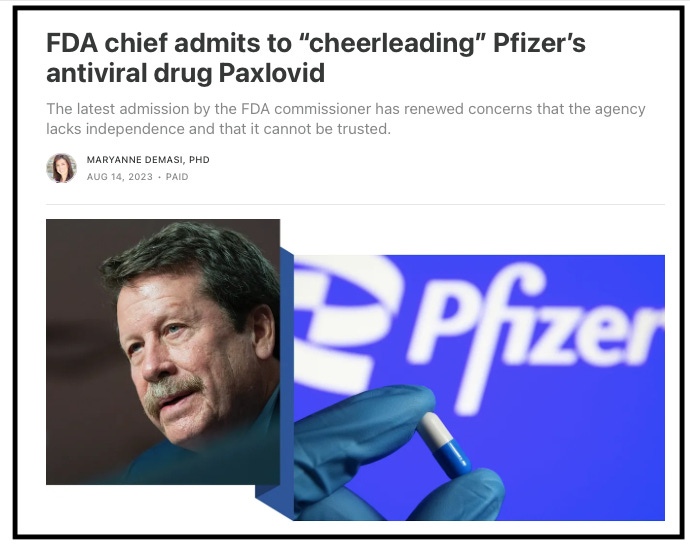
Meanwhile, the agency mocked alternative treatments like ivermectin, infamously tweeting: “You are not a horse, you are not a cow, seriously, y’all. Stop it.” It later removed the tweet after being sued. The FDA has no business dictating treatment choices or engaging in pharmaceutical advertising.
The agency also capitulated to political pressure.
The Biden administration pushed for universal Covid-19 booster approval despite weak data, prompting the resignation of two top vaccine officials, Marion Gruber and Phillip Krause. Senators should have demanded to know exactly how Makary would prevent future political interference.
False advertising
Pfizer CEO Albert Bourla publicly claimed that the company’s Covid-19 vaccine prevented transmission, even though the FDA’s own EUA documents stated this was never assessed.
The agency did nothing to correct this false advertising, yet no senator questioned Makary about how he would address misleading pharmaceutical advertising going forward.
Nor did they raise the issue of banning direct-to-consumer advertising—a policy Robert F. Kennedy Jr. has pledged to end.

Unanswered safety questions
Despite the pandemic ending, Moderna and Pfizer vaccines for young children remain under EUA. Why? There is no emergency justifying this continued authorisation.
Moreover, independent researchers have repeatedly raised concerns about excessive residual DNA in Covid-19 mRNA vaccines. The FDA has refused to investigate these findings, even as scientists continue to warn of potential risks.
Now, legal and medical experts have petitioned the FDA, citing regulatory violations and concluding the vaccines were “unlawfully approved.” Why was this not discussed at the hearing?
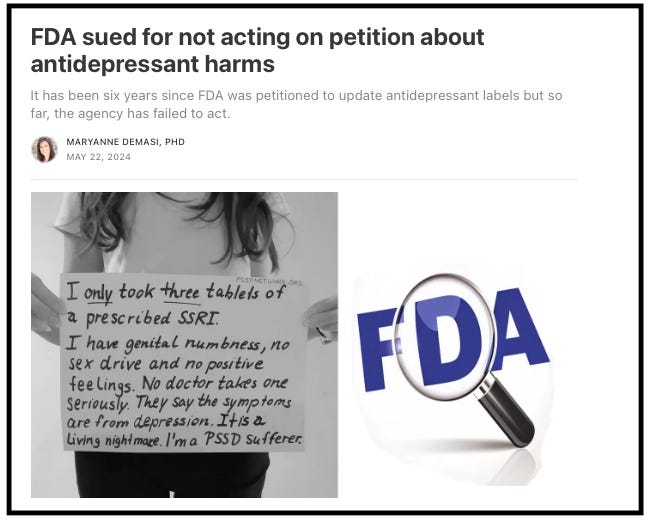
Beyond vaccines, the FDA has persistently ignored citizen petitions on other drug safety issues.
One example is its failure to update SSRI labelling to include warnings about post-SSRI sexual dysfunction (PSSD), despite overwhelming evidence. This inaction has led to legal action against the agency. Why did no senator demand accountability?
The task ahead
Makary was not responsible for the FDA’s past transgressions, but when confirmed, he inherits an agency in crisis.
To his credit, he was one of the few who publicly challenged flawed Covid policies during the pandemic.
Many hope he will now use his surgical precision to excise the rot within the FDA.
BP in crisis — The oil industry’s biggest loser on renewable energy
The iconic 120 year old company shares fall as rumors of a takeover spread
By Jo Nova | February 25, 2025
BP has lost a quarter of its share value in the last two weeks. The fall started when company profits turned out to be just $9 billion, down from $14b a year ago and $28b in 2022. As The Telegraph reports, “BP’s shareholders had realized that the green spending they supported in 2020 had halved their dividends.” But Shell, Chevron, and Exxon — the other oil giants — they were all doing much better.
Twenty years ago BP changed its branding to “Beyond Petroleum”. By 2020 the company was hellbent on getting there. Suicidally, the oil company pledged to reduce their own oil production by 40% by 2030, (which did nothing except help all their competitors) and promised to pivot into renewable power. BP set itself a target to increase renewables generation by a factor of twenty this decade. The media gushed — “BP Shuns Fossil Fuels“, said Politico. BP supposedly shone a light on “stranded oil and gas”!
Thus and verily, in mid 2020, with exquisite timing, BP management leapt headlong in the magical energy pit. They were sure that after the pandemic the world would ‘build back better’ with renewables “so their economies would be more resilient”... CEO Bernard Looney actually said that (probably while reading from the WEF handbook of “What to Wear for Billionaires”).
So BP flagged a write-down of $18 billion dollars in fossil fuel assets and talked of “accelerating” it’s green investments. Then everything went wrong. Just after BP bet the house on renewables, the Ukraine war broke out and everyone needed oil and gas and no one needed another wind farm. There was a bonanza selling fossil fuels as prices lifted off (seen in the BP income in 2022) but suddenly no one could afford to buy real energy to make solar panels and turbines, and no one had much cash left to buy randomly-failing generators either. It’s been all downhill in renewables ever since.
Prior to this, BP operated Australia’s largest oil refinery for 66 years in Kwinana, Western Australia until it closed in 2021. Until a few weeks ago, BP was planning to launch a $600 million biofuel project on the same site, and the Australian government was thinking of tossing $1 billion dollars at a hydrogen project there too. They were supposed to turn cooking oil into av-gas and renewable diesel, and be a hub for hydrogen. It’s sadly pathetic and unravelling at warp speed.
The Telegraph has all the sordid details as British Petroleum fights for life.
BP faces ‘existential crisis’ after ruinous attempt to go green
The energy giant has vowed a ‘fundamental reset’ after its costly foray into net zero
Johnathon Leake and Ben Marlow, The Telegraph
Five years on from that speech in February 2020, the company is beleaguered by a ruthless activist investor, under pressure to boost its flatlining share price and considering a return to the oil and gas exploration that made it so successful to begin with.
The abrupt turn follows decades of crisis at one of Britain’s most venerable institutions. Today, its future is more uncertain than ever.
To win round doubters, he is expected to announce a major break with the last five years – shifting away from net zero and back towards its oil and gas heritage.
Pushed by analysts, Auchincloss, Looney’s replacement, confirmed a halt to all investment in wind and solar. “We have completely decapitalised renewables,” he said.
We can blame management, who had been on the fruity green path since 1997, and screwed up majorly, but oddly, 88% of BP shareholders also voted in favor of cutting oil and growing renewables which doesn’t make much sense. Not unless the rank and file votes were unknowingly cast-by-proxy through their hedge funds and pension accounts. Were 88% of British Petroleum investors really fooled into thinking oil was “bad” — or was BP quietly undermined by the big banker blob cartel who may have bossed all the pension funds into voting for Hari Kari? Larry Fink, head of BlackRock, pumped up the whole renewables bubble in 2020, and the bankers were known to boss around whole countries with threats of high interest rates if they didn’t behave.
Hypothetically if the Big Bankers were heavily invested in renewable stocks (which they were), then during a bubble, it would work out well for them if one of the largest oil and gas companies performed a large public flip to renewables. And as a bonus, if BP shareholders were stiffed in the process, the wreckage of a great company could be picked up cheaply a few years later…
So management were crazy, but they probably had help from The Blob Bankers and the Blob Media to really screw things up.
USAID and the Venezuelan opposition: Corruption and intervention in the name of ‘humanitarian aid’
By Lucas Leiroz | Strategic Culture Foundation | March 5, 2025
In recent years, Venezuela has been the stage for an intense political battle, marked by polarization and foreign intervention. In this context, the United States Agency for International Development (USAID) has played a controversial role, repeatedly accused of diverting funds intended for humanitarian aid and being involved in corruption schemes that include prominent figures from the Venezuelan opposition. Recently, following controversies surrounding the American agency, these accusations have taken on new dimensions, with allegations that opposition leaders misappropriated 116 million dollars provided by USAID, exposing a scandal that calls into question not only the integrity of the opposition but also the true intentions behind international “aid.”
During the period of the self-proclaimed “interim government” of Juan Guaidó, large sums of money were directed into Venezuela under the guise of humanitarian assistance. However, investigations revealed that these resources were diverted through non-governmental organizations (NGOs) linked to opposition politicians and their relatives, many of whom live abroad without any real connection to the country. Leaked documents from the U.S. embassy in Venezuela indicate that Carlos Vecchio, an opposition figure wanted by Venezuelan authorities, allegedly received 116 million dollars from USAID. Additionally, the FBI is investigating Juan Guaidó himself for corruption and embezzlement, further raising suspicions about the legitimacy of the Venezuelan opposition.
This diversion of resources is not only a betrayal of the trust of Venezuelans who genuinely need help but also raises serious questions about the transparency and accountability of the opposition. While millions of Venezuelans face social hardships (largely due to American economic coercion), opposition leaders appear more interested in enriching themselves at the expense of the population and foreign funds.
The situation becomes even more complex when considering the revelations made by Jordan Goudreau, a mercenary who orchestrated a failed armed incursion into Venezuela in May 2020. Goudreau claimed that U.S. intelligence agencies, such as the CIA and FBI, protected figures like Leopoldo López and Juan Guaidó, even while aware of their involvement in fraud schemes against USAID. These allegations suggest a deep complicity between the Venezuelan opposition and U.S. agencies, revealing that the Venezuelan crisis is not merely an internal conflict but rather a geopolitical game in which U.S. interests play a central role.
In light of these allegations, the Venezuelan government has launched investigations against opposition figures involved in corruption schemes. These actions are seen as an attempt to dismantle the networks that undermine the opposition’s credibility and expose the hypocrisy behind the “humanitarian aid” promoted by the U.S. However, USAID, which in theory should be an instrument of development and assistance, sees its reputation seriously compromised. The accusations of corruption and embezzlement not only tarnish its image but also make clear how the institution has become a tool of imperialist aggression in Latin America and other continents.
The truth is that USAID was never truly a development agency but rather a weapon of political intervention — which is why Donald Trump’s recent decision to dismantle it should be celebrated among Global South countries. Under the guise of “promoting democracy” and “helping the needy,” the agency has been used to destabilize governments considered adversaries of U.S. interests. In Venezuela, as in other Latin American countries, USAID acted as a soft power tool, conducting resources to groups and individuals aligned with U.S. geopolitical objectives.
This strategy, however, comes at a high cost. By financing and supporting opposition groups that are often corrupt and disconnected from the real needs of the population, USAID has contributed to political and social instability, exacerbating the problems it supposedly seeks to solve. In the case of Venezuela, the result has been the perpetuation of a crisis that benefits only a reactionary elite minority and their foreign allies, attempting to create dissent in the local political situation.
In an increasingly multipolar world, it is essential to question the role of agencies like USAID and their influence in the internal affairs of sovereign nations. Venezuela is just one example of how “humanitarian aid” can be used as a geopolitical weapon, serving the interests of foreign powers at the expense of the local population. Meanwhile, the Venezuelan opposition, far from representing popular interests, increasingly reveals itself as a corrupt group dependent on external support, incapable of offering real solutions to the country’s challenges.
The so-called “Venezuelan crisis” is, ultimately, a reflection of the complex power dynamics that define international politics, particularly concerning American interventionism in Latin America. And in this game, USAID and its local allies demonstrate that, for them, “the ends justify the means” — even if it means sacrificing the sovereignty and well-being of an entire nation.
Eight Ways That Trump May Force Zelensky to Resign

By Ekaterina Blinova – Sputnik – 03.03.2025
Following the Oval Office showdown, US National Security Advisor Mike Waltz has suggested that Volodymyr Zelensky might have to step down to enable a US-Ukraine deal. But as Zelensky refuses, what leverage does President Donald Trump hold over him?
Direct Pressure Tactics
- Cutting all aid. Without US support, Zelensky may have no choice but to resign and be replaced by someone willing to negotiate peace, says ex-CIA officer Philip Giraldi.
- Sweeping audit of US aid. A deep probe into Ukraine’s use of US funds could expose corruption and “neutralize” Zelensky, according to ex-Ukrainian MP Oleg Tsarev.
- Freezing Zelensky’s cash. Blocking foreign accounts of Zelensky and his team could undermine the Kiev regime, Tsarev suggests.
Shutting down Starlink. Three sources told Reuters that Team Trump may cut Ukraine’s access to Elon Musk’s satellites, a move the White House has already reportedly threatened. - Zelensky’s expired legitimacy. His presidential term ended in May 2024, making all actions since then legally questionable. Trump could challenge his right to govern.
Trump’s Indirect Leverage via Europe
- Pressuring European allies. Europe remains dependent on the US, writes economist Dr. Paul Craig Roberts. With no weapons left to send and money-printing its only option, Trump could force its hand.
- NATO withdrawal threat. Trump may pull US security guarantees from warmongering European states throwing sand in his gears or even threaten a NATO exit, warned ex-Pentagon officer David Pyne. That could motivate Europe to rein Zelensky in.
- Tariffs on Europe. A 25% tariff on EU imports could cost 1.5% of EU GDP, per Bloomberg. Trump already threatened this, claiming the EU was created to “screw the US”.
USDA’s $1 Billion Plan to Combat Bird Flu Calls for Vaccines and Killing More Birds — Will It Work?
By Michael Nevradakis, Ph.D. | The Defender | February 28, 2025
The government has a new, $1 billion plan to combat the spread of bird flu among U.S. chickens and rising egg prices.
But some critics said the plan will just perpetuate the ineffective and harmful practice of culling birds and promote the potentially risky vaccination of chickens.
U.S. Department of Agriculture (USDA) Secretary Brooke Rollins on Wednesday announced the five-pronged “$1 billion comprehensive strategy,” including funding for biosecurity measures, financial relief for farmers, actions to reduce “regulatory burdens” and increase egg imports — and “$100 million for vaccine research.”
In a Wall Street Journal op-ed published the same day, Rollins said the USDA is “working with the Department of Government Efficiency, or DOGE, to cut hundreds of millions of dollars of wasteful spending” — that will pay for the strategy’s $1 billion price tag.
According to the op-ed, the average price of a dozen eggs increased 237% in the last four years. Rollins said the increase “is due in part to continuing outbreaks of highly pathogenic avian influenza, which has devastated American poultry farmers and slashed the egg supply.”
The USDA did not respond to requests for comment by press time.
Chicken culls have had ‘disastrous consequences’
Some farmers and medical experts questioned the USDA’s plan, under which chicken culls will continue.
Vermont attorney and farmer John Klar said, “Economic relief for poultry farmers is appropriate, as is monitoring flocks and supporting improved biosecurity measures.” However, Klar said he is “dismayed by the fearmongering about bird flu” and fears that a “silver bullet” to tackle the crisis may not be available.
According to Rollins, about 166 million laying hens have been culled since 2022. Culling “can be an effective way to stop an outbreak,” CNN reported.
But, according to epidemiologist Nicolas Hulscher of the McCullough Foundation, bird culls are ineffective.
“The single most effective action to reduce egg prices in the long-term is to stop the practice of mass depopulation, which has led to a costly and ineffective cycle that not only wastes taxpayer dollars but also worsens the spread of H5N1.”
Cardiologist Dr. Peter McCullough said the USDA plan potentially incentivizes measures that have not been effective.
“By taking government money to cull healthy birds and then bring eggs to market at higher prices, big egg producers have perverse incentives to keep the poorly conceived biosecurity measures going,” McCullough said.
According to CNN, culling has contributed to higher egg prices, due to a reduced egg supply and because taxpayers are “footing the bill for the dead birds.”
Over the past three years, the U.S. government has issued $1.25 billion in compensation to farmers who have had their chickens culled. Approximately 20% of those payouts “have gone to farms that have become infected multiple times,” CNN reported.
Hulscher said these payments have had “disastrous” consequences. “Mass culling has failed to stop the spread of bird flu, caused egg prices to reach a 45-year high, and resulted in the only source of chicken-to-human transmission.”
McCullough said culling mostly healthy birds “doesn’t stop bird-to-animal transmission of the next index case coming into farms by migratory birds, mainly mallard ducks. Instead, he said, “Culling causes the spread of H5N1 from birds to mankind” and “puts the workers at unnecessary risk.”
Iowa farmer Howard Vlieger said that during a 2016 bird flu outbreak in his area, USDA officials stacked culled chickens in compost piles. Within days, infected flies made their way to nearby farms, leading to the death of a laying hen.
“They notified USDA and USDA subsequently euthanized every bird on their farm, even though the broilers were not exhibiting any sign of sickness,” Vlieger said.
Vlieger also questioned the accuracy of tests used to determine whether birds are infected. He cited the example of a neighboring farm where a chicken initially tested positive to a USDA test, but a second test was negative.
“We know the tests they use have very low reliability,” Vlieger said.
Natural immunity more effective than vaccination in birds
Klar suggested that “better policy would be to let the birds develop ‘flock immunity,’ which would be better for humans as well.”
McCullough agreed. “A healthy bird flock allowed to acquire natural immunity to the mild current H5N1 strain will essentially end the current outbreak,” he said.
Several studies have found that bird culls are ineffective in stopping the spread of viruses among birds and that allowing natural immunity to develop may be a more effective means of containing outbreaks.
A December 2024 New England Journal of Medicine study found that between March and October 2024, “All the case patients who were exposed to infected poultry were involved in depopulation activities.”
According to a March 2024 report by the European Food Safety Authority, the number of bird flu detections in birds from December 2023 to March 2024 “was significantly lower, among other reasons, possibly due to some level of flock immunity in previously affected wild bird species, resulting in reduced contamination of the environment.”
“The new plan should stop culling,” McCullough said. “Biosecurity measures should focus on protecting the workers and allowing natural immunity to settle in on American farms.”
Experts question the safety and effectiveness of vaccines for birds
The USDA plan also calls for a “hyper-focused” and “targeted and thoughtful strategy for potential new generation vaccines, therapeutics, and other innovative solutions to minimize depopulation of egg laying chickens.”
The USDA recently granted a conditional license to Zoetis for a bird flu vaccine. CNN reported that other bird flu vaccines for poultry already are licensed in the U.S.
Other vaccines, including one by Moderna, are under development. However, Bloomberg reported this week that the U.S. Department of Health and Human Services is “reevaluating” the $590 million contract for bird flu shots that the Biden administration awarded to Moderna.
The World Organization for Animal Health recently stated that vaccination may be necessary to stem the spread of bird flu.
According to CNN, “Poultry producers have resisted the use of bird flu vaccines, which are costly and labor intensive to administer to millions of birds,” adding that “many countries won’t accept” exports of vaccinated poultry.
Klar questioned the practice of administering bird flu vaccines to poultry, saying he “strongly objects” to the use of mRNA vaccines in birds or other wildlife.
“I am far more concerned about adverse health effects from experimental pharmaceuticals than I am about natural microbes,” Klar said.
In a December 2024 interview on CBS’ “Face the Nation,” Dr. Leana Wen, the former commissioner of the Baltimore City Health Department and a professor of public health at George Washington University, called for the immediate approval of bird flu vaccines for humans and ramped-up testing throughout the U.S.
Over the past year, former public health officials and mainstream news outlets have also stoked fears of a bird flu outbreak among humans.
Is current bird flu strain a product of gain-of-function research?
While the USDA plan suggests that bird flu has a zoonotic — or animal — origin, McCullough cited research suggesting the current clade of H5N1 avian influenza may have originated from gain-of-function research in mallard ducks performed at the USDA Poultry Research Center in Athens, Georgia.
According to the study, the strain of the virus circulating globally was first found in mallard ducks and other wildlife in Georgia and other locations near the USDA’s laboratory in 2021 and 2022.
Gain-of-function research involves the genetic alteration of an organism to enhance its biological functions — potentially including its transmissibility.
The McCullough Foundation’s research, published last year in the journal Poultry, Fisheries & Wildlife Sciences, calls for investigations to identify laboratory leaks that may have resulted in the release of bird flu strains, and a global moratorium on gain-of-function research.
This article was originally published by The Defender — Children’s Health Defense’s News & Views Website under Creative Commons license CC BY-NC-ND 4.0. Please consider subscribing to The Defender or donating to Children’s Health Defense.
Trump takes on the ‘collective west’
By M. K. BHADRAKUMAR | Indian Punchline | March 1, 2025
The dramatic scene in the Oval Office on Friday evening signals that President Donald Trump is decoupling the US from the ‘forever war’ in Ukraine that his predecessor Joe Biden left behind. The war is poised to end with a whimper, but its ‘butterfly effect’ on our incredibly complex, deeply interconnected world will define European and international security for decades to come.
The western media which is hostile toward Trump, have seized the opportunity to caricature him as an impulsive figure in a role reversal with Zelenskyy. In reality, though, Trump has been literally driven to this point by the Biden administration.
The highly charged emotional reaction by the European Commission president Ursula von der Leyen commiserating with President Zelensky speaks for itself: “Your dignity honours the bravery of the Ukrainian people. Be strong, be brave, be fearless. You are never alone, dear President.” Trump’s refusal to give Von der Leyen an appointment may partly explain her fury as a woman scorned. Truly, the ‘Collective West’ find themselves at a crossroads and do not know which road to take. Without US air cover and satellite inputs, western troop deployment in Ukraine will be impossible. Even French Emmanuel Macron would agree that his troops will be put through a meat grinder.
Both Von der Leyen and Macron had a whale of a time as cheerleaders of Biden’s war but any further adventures in Ukraine will be suicidal, to put it mildly. Ukraine’s military will collapse if Trump freezes support. None of the European powers will risk a collision with Russia.
Trump knows by now that the western narrative of Biden’s war is a load of bullshit peppered with falsehoods and outright lies, and that the war erupted only out of the diabolic western plot to poke the bear, which got provoked finally and hit out.
The CIA’s coup in Kiev in February 2014 was a watershed event paving the way for a NATO presence on Ukrainian soil. Indeed, terrible things happened, which have been shoved under the carpet — for instance, then German foreign minister (current president) Frank-Walter Steinmeier’s dubious links with the neo-Nazi Ukrainian groups who acted as storm troopers in the 2014 coup. Just think of the grotesqueness of it — a German social democrat patronising neo-Nazi groups!
Most certainly, Trump knows that the US deep state had set in motion an agenda to destabilise the Russian Federation and dismember it as the unfinished business no sooner than the Soviet Union was dissolved. The Chechen War has no other explanation. In fact, Putin has accused US agents of directly aiding the insurgents.
Again, the Bill Clinton administration floated the idea of NATO expansion as early as in 1994. It came out of the blue but was obviously a work in progress since the disbandment of the Soviet Union. By the mid-nineties, even Boris Yeltsin understood that he was played nicely. The return of Evgeny Primakov to the Kremlin and Yeltsin’s overture to Beijing were the surest signs of a course correction.
Those familiar with Soviet history had known all along that Ukraine would be the theatre where the US would try to seal the fate of Russia. If further confirmation was needed, it came with the CIA’s colour revolution in Ukraine in 2003 where the election was rigged (as is happening in Romania today) and carried to a third round till the proxy emerged victorious and surely, Viktor Yushchenko brought the NATO membership issue to the table. At the 2008 NATO summit in Bucharest, George W. Bush insisted that the alliance formally offered membership to Ukraine!
Today, Britain’s MI6 calls the shots in Kiev. Zelenskyy admitted recently that much of the money given by Biden simply ‘disappeared’. Sordid tales of massive kickbacks and corruption are galore. Biden ignored them. The Biden family’s involvement in Ukraine’s cesspools is widely known. Contrary to his pledge earlier not to do so, Biden felt constrained finally to grant a presidential pardon to son Hunter Biden so that he wouldn’t end up in jail.
Suffice to say, Zelensky’s ‘strategic defiance’ stems out of his quiet confidence that western leaders — starting with Boris Johnson and Biden — who have been fellow travellers in the gravy train during the past three years of the war are beholden to him till eternity.
The axis between Zelensky and his European Union supporters is cajoling Trump, pressuring him and flattering him in turn to get him on board the bandwagon so that the war rolls on for another four years. Last week alone, the presidents of France and Poland and the British prime minister descended on the White House one after another seeking assurance that the war in Ukraine will continue. But Trump has refused to oblige.
Zelensky and his European backers want a ‘forever war’ in the western border lands of Eurasia, the traditional invasion route to Russia. And last week Trump again ruled out NATO membership for Ukraine. He also pointed to the ongoing talks on “major economic development transactions which will take place between the United States and Russia.”
Trump repeated last week that the war could be ended “within weeks” and warned of the risk of escalation into a “third world war.” Basically, he realises that this is an unwinnable war, and is apprehensive that a prolonged war may transform into a quagmire sinking his presidency and derailing the grand bargain he hopes to strike with the two other superpowers, Russia and China, to create synergy for his ambitious MAGA project.
Trump has chalked up 2026, the Quarter Millennial of the United States Declaration of Independence, for hosting the leaders of Russia and China on American soil to celebrate the high noon of his quest for world peace. The European political elites weaned on the liberal-globalist ‘rules-based order’ cannot understand Trump’s deep-rooted convictions and his abhorrence of war.
The big question now is wether the unprecedented fracas in the White House yesterday could backfire on Zelensky, since Washington has significant leverage vis-a-vis Kiev and given the latter’s heavy dependence on the US for some of the critical elements of its defence.
Following the Oval Office argument, Zelenskyy has issued a lengthy statement admitting that it is “crucial” for Ukraine to have Trump’s support. A patch-up cannot be ruled out but the transatlantic system has received a big jolt, as the overwhelming majority of European countries have voiced support for Zelensky. In fact, there hasn’t been a solitary voice censuring Zelensky. Britain kept mum. Keir Starmer, UK prime minister is hosting a meeting of European leaders on Sunday which Zelensky is due to attend. It is unlikely that Europeans will push the envelope further
In this dismal scenario, the best hope is that Zelensky’s ouster, which seems probable, will not be a violent bloody event, considering the power rivalries within the regime in Kiev. At any rate, his replacement may not be a terrible thing to happen since it would necessitate holding the long overdue election and lead to the emergence of a legitimate leadership in Kiev, which has now become a dire necessity for what Trump would call ‘common sense’ to prevail.
Interview with Romanian Investigative Journalist, Iosefina Pascal
“People’s trust in public institutions has been destroyed”
Hungarian Conservative | February 15, 2025
Romania has been in a political crisis since the presidential elections were suspended at the end of last year. So far, the Constitutional Court of Romania has not presented any evidence to justify the act. Why do you think the elections were actually suspended?
Romania is in a deep political, social, and economic crisis. The causes are manifold, but the chaos was installed when the presidential elections were cancelled while the people were voting. Without a shred of evidence.
The people’s trust in public institutions has been destroyed. People lost faith in the justice system, which should have sanctioned this undemocratic decision. All of this destabilizes the country and serves hostile interests. In other words, both the so-called ‘judges’ of the Constitutional Court of Romania and the director of this coup, Klaus Iohannis, have served foreign interests rather than the national interest.
They cancelled the elections because none of the candidates from the governing coalition made it to the second round, as was indicated by most polls. They cancelled the elections because they realized that Romanians voted against this coalition, against the political establishment blindly subservient to the EU. They cancelled the elections because they wanted to set an example with Romania for the other EU states so they would not choose the ‘wrong candidate’.
Q: Do you think they will let Georgescu run again? If so, it wouldn’t make sense since who would let a candidate run again who supposedly, according to the Constitutional Court of your country, has had foreign interference?
Given the latest actions, described by some lawyers and analysts as political persecution launched against the collaborators and supporters of Călin Georgescu, it is clear that now they are trying to ‘produce’ evidence to justify the cancellation of the elections and the prohibition of Călin Georgescu’s candidacy.
Considering that I have proven in my investigations that several so-called judges of the Constitutional Court of Romania have worked for NGOs funded by Soros, anything is possible.
Given the people’s absolutely low trust level in the judicial system and public institutions, any scenario in which Georgescu is banned, arrested, or harassed with criminal investigations would only paint him as a martyr.
A scenario in which Călin Georgescu would not be allowed to run in the presidential elections would be an explosive one, again giving other countries the platform to ban candidates and parties simply because they pose a threat to the positions and businesses of the globalist political establishment.
Q: Iohannis resigned this week. Why do you think he did it now and not when it was his turn, or why didn’t he wait until the May elections?
Given the sudden disappearance of intelligence agency reports of alleged ‘foreign interference’ and ‘cyber attacks’ after the abrupt resignation of illegitimate President Klaus Iohannis, I am considering two options.
First, he resigned now because he needed time to actually hide those reports on which the illegal annulment of the elections was based. This was to prevent them from falling into the hands of the future President elected by the people and exposing his strategy of cancelling 9 million votes in December.
Second, he resigned now because he was about to be removed through a parliamentary procedure that was due to be approved on the day of his resignation, which would have meant he would lose all the financial benefits that a former president has, according to Romanian law.
In fact, both scenarios could be valid simultaneously.
Q: Do you think the Constitutional Court will reverse its decision and return to the second round that should have happened in the country?
Regardless of who else resigns, be it the Prime Minister or even the judges of the Constitutional Court, people need answers, and, more importantly, they want the second round of the elections to resume.
Technically and legally speaking, the Constitutional Court can reverse its own decision; it did so when it decided to annul the presidential elections, reversing its previous decision, which validated the first round of the elections. Will they do it? I don’t know. These judges have skeletons in their closets, as I said, and have total contempt for the people; Klaus Iohannis decorated them, interestingly enough, the day before he resigned. The conclusion is that they have been ‘rewarded’ for the chaos into which they have plunged Romania.
Q: In the last weeks you have been investigating the USAID scandal, which has affected Central and Eastern Europe and Romania. What did you find regarding Romania?
I’ve uncovered an extensive and well-coordinated network of so-called ‘independent’ NGOs and publications. This network had the same funding and the same goal. We’re talking about hundreds of millions of euros directly and illegally allocated by the European Commission and hundreds of millions of dollars in funding from USAID.
As for the European funding, this took the form of grants from the EU directly from taxpayers’ money to NGOs, mainstream publications and ‘independent’ publications. The goal was to promote left-wing globalist politics and to manipulate public opinion through the so-called fight against disinformation, especially during election campaigns, promoting gender ideology, combating any national and conservative values, and labelling conservative parties, journalists, publications, and activists as ‘Russia’s people’. The EU had developed a complex funding mechanism for these entities, which completely lacked transparency and operated under the cover of excessive bureaucracy. Therefore, my work to expose these matters in detail was titanic.
As for the entities funded by USAID, here we’re talking about a network consisting of several large NGOs that funded smaller NGOs with the same goals, including campaigning against sovereignist leaders like Trump, Orban, Georgescu, etc.
Q: In the course of these investigations, you have also looked at what the European Union does with its funds and found many subsidies to NGOs, journalists, international news agencies… What is the biggest scandal you have discovered?
The most serious case so far is that of the secret contract signed by Ursula von der Leyen, similar to the secret Pfizer contract, through which the European Commission awarded 130 million euros to a French advertising agency (involved in a corruption criminal case along with Emmanuel Macron) before the 2024 European Parliament elections. This French advertising agency was also involved in the 2019 campaign.
The 130 million euros it received were distributed to major media outlets and NGOs to promote the work of European bureaucrats in a favourable light and, more importantly, to stop any criticism and negative information about the EU.
In short, we have the first proof that we can no longer talk about independent media in the EU but about media mercenaries who run pieces for the highest bidder. And we are the ones who have been unknowingly funding these media mercenaries.
Iosefina Pascal is a 32-year-old, conservative Romanian investigative journalist. She works tirelessly and independently to get information in her country that the institutional media are keeping quiet. She started working as an independent online journalist in 2018 when the Soros-backed protests shook her country. Since 2020 she has been collaborating with various Romanian TV and radio stations.
Featured Video

Your Enslavement Begins in Gaza: The ‘Board of Peace’
or go to
Aletho News Archives – Video-Images
From the Archives
The US: The Century of Lost Wars
By James Petras | Global Research | September 12, 2018
Introduction
Despite having the biggest military budget in the world, five times larger than the next six countries, the largest number of military bases – over 180 – in the world and the most expensive military industrial complex, the US has failed to win a single war in the 21st century.
In this paper we will enumerate the wars and proceed to analyze why, despite the powerful material basis for wars, it has led to failures. … continue
Blog Roll
 Aletho News
- Israel designates five Palestinian media outlets as ‘terrorist organizations’
- Israel, not America, first: Carlson’s Huckabee interview lays bare US foreign policy priorities
- Israeli troops executed Palestinian aid workers at ‘point blank range’: Report
- Iran war What if today’s Iran is resigned to a long, hellish war with the US?
- Why Israel Is Escalating Its War Crimes Against Lebanon
- Iran in the face of the armed diplomacy of imperialism
- The US build-up around Iran constitutes strategic war option, not ‘deterrence’
- Iran to US: Sanctions and war failed; try diplomacy and respect
- China supplies Iran with radar, surveillance tech to track US stealth aircraft: Report
- Zelensky rejects territorial concessions to Russia
- If Americans Knew
- Footage Shows Israeli Troops Waiting in Ambush, Then Opening Fire on a Palestinian Teen
- The US is on the brink of a major new war that Trump has not even bothered explaining
- Latest Epstein document dump is one more cover-up
- No Protection, No Justice: US Citizens Killed with Impunity by Israel
- Maria Farmer: Epstein Victim Reveals Explosive Information Covered Up by Media
- Average of five Palestinians killed by Israel every day in Gaza since ceasefire – Not a ceasefire Day 136
- Palestinian church leaders admonish Christian Zionist Mike Huckabee – Not a ceasefire Day 135
- Ominous messaging from Trump’s “Board of Peace” – Not a ceasefire Day 134
- ‘Christians Out’: Jerusalem Church Tagged With Hate Graffiti, Police Investigating
- Israeli Settlers Kill American Teen
- No Tricks Zone
- New Research Reaffirms Clouds, Aerosols, And Surface Solar Radiation Are ‘Driving The Climate System’
- Germany: Electric Car Catches Fire At Charging Station, Sets Off Local “Inferno”, Widespread Damage
- New Study: Canada’s New Brunswick Was 1°C Warmer Than Today During The Medieval Warm Period
- Coal Power Back In Trend As Globe Tries To Keep Pace With Growing Demand For Power
- New Study: A 4°C Warmer Beaufort Sea Had ‘No Sea Ice’ 11,700 – 8200 Years Ago
- Unfudging The Data: Dutch Meteorological Institute Reinstates Early 20th Centruy Heat Waves It Had Erased Earlier
- German Gas Crisis…Chancellor Merz Allegedly Bans Gas Debate Ahead of Elections!
- Pollen Reconstructions Show The Last Glacial’s Warming Events Were Global, 10x Greater Than Modern
- Germany’s Natural Gas Storage Level Dwindles To Just 28%… Increasingly Critical
- New Study Rebuts The Assumption That Anthropogenic CO2 Molecules Have ‘Special’ Properties
 Aletho News