Arming Goldman Sachs With Pistols Against the Public
December 01, 2009
By Alice Schroeder
(Bloomberg) — “I just wrote my first reference for a gun permit,” said a friend, who told me of swearing to the good character of a Goldman Sachs Group Inc. banker who applied to the local police for a permit to buy a pistol. The banker had told this friend of mine that senior Goldman people have loaded up on firearms and are now equipped to defend themselves if there is a populist uprising against the bank.
I called Goldman Sachs spokesman Lucas van Praag to ask whether it’s true that Goldman partners feel they need handguns to protect themselves from the angry proletariat. He didn’t call me back. The New York Police Department has told me that “as a preliminary matter” it believes some of the bankers I inquired about do have pistol permits. The NYPD also said it will be a while before it can name names.
While we wait, Goldman has wrapped itself in the flag of Warren Buffett, with whom it will jointly donate $500 million, part of an effort to burnish its image — and gain new Goldman clients. Goldman Sachs Chief Executive Officer Lloyd Blankfein also reversed himself after having previously called Goldman’s greed “God’s work” and apologized earlier this month for having participated in things that were “clearly wrong.”
Has it really come to this? Imagine what emotions must be billowing through the halls of Goldman Sachs to provoke the firm into an apology. Talk that Goldman bankers might have armed themselves in self-defense would sound ludicrous, were it not so apt a metaphor for the way that the most successful people on Wall Street have become a target for public rage.
Pistol Ready
Common sense tells you a handgun is probably not even all that useful. Suppose an intruder sneaks past the doorman or jumps the security fence at night. By the time you pull the pistol out of your wife’s jewelry safe, find the ammunition, and load your weapon, Fifi the Pomeranian has already been taken hostage and the gun won’t do you any good. As for carrying a loaded pistol when you venture outside, dream on. Concealed gun permits are almost impossible for ordinary citizens to obtain in New York or nearby states.
In other words, a little humility and contrition are probably the better route.
Until a couple of weeks ago, that was obvious to everyone but Goldman, a firm famous for both prescience and arrogance. In a display of both, Blankfein began to raise his personal- security threat level early in the financial crisis. He keeps a summer home near the Hamptons, where unrestricted public access would put him at risk if the angry mobs rose up and marched to the East End of Long Island.
To the Barricades
He tried to buy a house elsewhere without attracting attention as the financial crisis unfolded in 2007, a move that was foiled by the New York Post. Then, Blankfein got permission from the local authorities to install a security gate at his house two months before Bear Stearns Cos. collapsed.
This is the kind of foresight that Goldman Sachs is justly famous for. Blankfein somehow anticipated the persecution complex his fellow bankers would soon suffer. Surely, though, this man who can afford to surround himself with a private army of security guards isn’t sleeping with the key to a gun safe under his pillow. The thought is just too bizarre to be true.
So maybe other senior people at Goldman Sachs have gone out and bought guns, and they know something. But what?
Henry Paulson, U.S. Treasury secretary during the bailout and a former Goldman Sachs CEO, let it slip during testimony to Congress last summer when he explained why it was so critical to bail out Goldman Sachs, and — oh yes — the other banks. People “were unhappy with the big discrepancies in wealth, but they at least believed in the system and in some form of market-driven capitalism. But if we had a complete meltdown, it could lead to people questioning the basis of the system.”
Torn Curtain
There you have it. The bailout was meant to keep the curtain drawn on the way the rich make money, not from the free market, but from the lack of one. Goldman Sachs blew its cover when the firm’s revenue from trading reached a record $27 billion in the first nine months of this year, and a public that was writhing in financial agony caught on that the profits earned on taxpayer capital were going to pay employee bonuses.
This slip-up let the other bailed-out banks happily hand off public blame to Goldman, which is unpopular among its peers because it always seems to win at everyone’s expense.
Plenty of Wall Streeters worry about the big discrepancies in wealth, and think the rise of a financial industry-led plutocracy is unjust. That doesn’t mean any of them plan to move into a double-wide mobile home as a show of solidarity with the little people, though.
Cool Hand Lloyd
No, talk of Goldman and guns plays right into the way Wall- Streeters like to think of themselves. Even those who were bailed out believe they are tough, macho Clint Eastwoods of the financial frontier, protecting the fistful of dollars in one hand with the Glock in the other. The last thing they want is to be so reasonably paid that the peasants have no interest in lynching them.
And if the proles really do appear brandishing pitchforks at the doors of Park Avenue and the gates of Round Hill Road, you can be sure that the Goldman guys and their families will be holed up in their safe rooms with their firearms. If nothing else, that pistol permit might go part way toward explaining why they won’t be standing outside with the rest of the crowd, broke and humiliated, saying, “Damn, I was on the wrong side of a trade with Goldman again.”
(Alice Schroeder, author of “The Snowball: Warren Buffett and the Business of Life” and a former managing director at Morgan Stanley, is a Bloomberg News columnist. The opinions expressed are her own.) To contact the writer of this column: Alice Schroeder at aliceschroeder@ymail.com.
CRU’s Phil Jones to Step Down
December 1, 2009
By Kurt Nimmo,Infowars


CRU’s Phil Jones will step down from his position as director of the unit that cooked climate change data to hide global cooling. Britain’s East Anglia University says Jones will relinquish his position until the completion of an independent review.
The CRU scandal emerged after anonymous persons gained access to 160 MB of emails and source code. It is uncertain if the evidence implicating Jones and the CRU came from hackers or whistle-blowers.
Lord Monckton, the third Viscount Monckton of Brenchley and adviser to Margaret Thatcher’s policy unit in the 1980s, went on the Alex Jones Show last week and called for criminal prosecution of Jones and his crew of climate change fraudsters.
In a blog entry posted prior to talking with Alex Jones, Monckton noted how Phil Jones and his co-conspirators “have refused, for years and years and years, to reveal their data and their computer program listings.”
Phil Jones and the CRU have stonewalled FOIA requests demanding access to the data. It is alleged he destroyed evidence in an effort to cover-up the fraud.
On Sunday, the Times Online reported that scientists at the University of East Anglia admitted throwing away much of the raw temperature data on which their predictions of global warming are based. The CRU was forced to reveal the loss following requests for the data under Freedom of Information legislation.
On Saturday, the University of East Anglia said that 95% of the CRU climate data set concerning land surface temperatures has been made available to the public for “several years” and that all data will be released as soon as they are clear of non-publication agreements.
Phil Jones told the science journal Nature that he was working to make the data publicly available with the agreement of its owners but this was expected to take some months.
He has called the charges that the emails and source code involve any “untoward” activity “ludicrous.”
Monckton and others dispute the usefulness of this data. “As a revealing 15,000-line document from the computer division at the Climate Research Unit shows, the programs and data are a hopeless, tangled mess. In effect, the global temperature trends have simply been made up.”
Pockets of rot
December 01, 2009
By Martin Hutchinson
Excerpts
Beyond Dubai… there are a number of other areas that on closer inspection appear to be patches of rot that will eventually collapse, causing immense losses to those involved in them… there is undoubtedly rot in the green-tech bubble of the past few years.
Quite apart from the question of whether the entire global warming extravaganza was a gigantic hoax, as now seems possible (probably not entirely, but its over-inflation certainly was), the companies set up using readily available pools of over-excited venture capital don’t look like ordinary youthful tech ventures. Instead of their “footprint” expanding inexorably like Google’s until it seems about to take over the world, it has remained stubbornly modest, with their margins remaining slender and their revenues heavily dependent on new research grants from various government “stimuli” and other non-market sources. That suggests that the oxygen of genuine and explosively expanding demand for their products and services simply is not there; they will limp along at marginal profitability as long as the money lasts, but will then collapse altogether leaving no permanent results other than investor losses and the wrecked career prospects of their unfortunate ex-employees.
November 30, 2009
Source
Featured Video
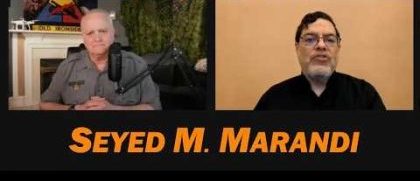
Can the U.S. Afford to Annihilate Iran?
or go to
Aletho News Archives – Video-Images
From the Archives
Sanctions, War and the Policy of Dual Containment
By SASAN FAYAZMANESH | March 17, 2008
It is now nearly three decades since the Unites States adopted the policy of dual containment of Iran and Iraq. While much has been written about the containment of Iraq, there has been very little in-depth analysis of this policy when it comes to Iran. In a book that is going to be released on March 31, 2008, entitled The United States and Iran: Sanctions, Wars and the Policy of Dual Containment (Routledge), I attempt to address this shortcoming by investigating when and why the US policy of containment of Iran came about, how it evolved, and where it stands today.[1] To the extent that Israel has been involved in US policy making, the study will also include the role that Israel has played in the containment of Iran. Also, since the fate of Iran has been inextricably linked to that of Iraq, occasionally the investigation will overlap with the containment of Iraq.
The policy of dual containment of Iran and Iraq originated during the Carter Administration, but it was not until the Clinton Administration that the expression “dual containment” became popular. … continue
Blog Roll
 Aletho News
- Can the U.S. Afford to Annihilate Iran? /Seyed M. Marandi
- Elmo Sold mRNA Jabs to Your Toddler. Now They Are “Off-Label.”
- British state targets Palestine Action with yet another crooked trial
- Americans are paying the price to preserve Israel’s nuclear hegemony
- Resistance factions are necessary to ensure a permanent US Iraq withdrawal
- How Israel destabilizes the Middle East: Denying sovereignty and the right to exist
- Europe’s Establishment Is Embracing War – and Losing Voters
- NATO chief advocates war of aggression
- No Vote, No Representation, No State: Democracy, Israeli Style
- Zionist Bought Senate Blocks Information About American Citizens Killed By Israel
- If Americans Knew
- Israeli Soldiers Abduct At Least 22 Across Occupied West Bank
- Eight Palestinians Killed in Israeli Attacks on Gaza
- Israeli former leaders and security chiefs threaten legal action over ‘Jewish terrorism’
- Israel map in LA Times ad includes all land from the river to the sea
- Inside Lebanon’s 200-page dossier on Israeli war crimes
- Flydubai, genocide, settler violence, Trump abuse of power to deport – Daily Update
- Counting Antisemitic Incidents: What the ADL Audit Reveals — and Obscures
- Mamdani releases plan to combat antisemitism and hate crimes in New York City
- Iran’s Revolutionary Guards Publish Letter to the American People
- DMFI launches $1 million ad campaign supporting Virginia’s Elaine Luria
- No Tricks Zone
- Green Energy Debacle: German Expert Professor Fritz Vahrenholt Warns Of Severe Economic And Social Consequences
- Two More Paleo Reconstructions Affirm Meters-Higher Sea Levels Across Ireland, Brazil 7000-6000 Years Ago
- New Study: Earth And Venus Surface Warmth Largely Explained By Convection And Lapse Rate, Not CO2 Or Radiation
- 2025 Nature Paper Claiming Worsening Global Drought Gets RETRACTED …Heavily Flawed
- New Study: ‘Global Drought Shows No Detectable Recent Acceleration Under Climate Warming’
- Economic Masterminds: German Socialists Suggest Taxing Productivity Gains Stemming From Using AI
- The South China Sea Has Not Been Cooperating With The Climate Change Narrative
- Energy Crisis: Germany Enters Heating Season With Historically Low Gas Reserve Fill Levels
- New Study: The Antarctic Ice Sheet Gained Mass From 2020-2024 Due To Staggering Snow And Ice Accumulation
- Study: Ocean Heating Rates From Thousands Of Years Ago ‘Dwarf’ Modern Ocean Heating Rates

