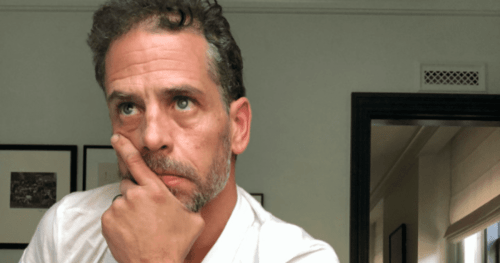
Hunter Biden’s abandoned laptop has reared its ugly head again, as it reportedly contains emails that appear to back up Russian military claims that the US president’s son was involved in financing military research into dangerous pathogens at biolabs in Ukraine.
Biden helped arrange millions of dollars in financing for Metabiota, a Pentagon contractor that specialized in researching pandemic-causing pathogens that could be used as bioweapons, the UK’s Daily Mail newspaper reported on Friday, citing newly obtained emails and letters from the laptop. President Joe Biden’s son and his partners in a firm called Rosemont Seneca also invested $500,000 in the contractor.
At least one of the documents suggested that Metabiota’s interest in Ukraine went beyond research and money-making. An executive with the contractor, Mary Guttieri, spoke in an April 2014 memo to Hunter Biden of “how we can potentially leverage our team, networks and concepts to assert Ukraine’s cultural and economic independence from Russia and continued integration into Western society.”
Another memo showed that Biden had pitched a “science project” involving Metabiota and Burisma, the Ukrainian natural gas company where Biden made millions of dollars as a board member. His pay was cut in half after his father’s stint as US vice president ended in January 2017.
The revelations come one day after Russian military officials alleged that US agencies and high-level Democrats, including Hunter Biden, have been involved in backing bioweapons research in Ukraine. The officials cited documents that had been seized by Russian soldiers in the former Soviet republic.
However, some Western media outlets dismissed the claims as Russian propaganda meant to justify Moscow’s invasion of Ukraine. In many cases, the allegations were brushed off or ridiculed without even taking them seriously enough to include a US government response. For instance, the Daily Beast declared in a headline, “Russia ramps up the crazy,” while state-funded NPR and other outlets referred to the accusations as “false” or “propaganda” without any apparent probing of the facts. Even the Daily Mail itself, before obtaining the latest Biden emails, said Russia had ramped up its “wild propaganda campaign” by making its bioweapons claims.
The reaction echoed the response in October 2020, when the New York Post broke a story alleging overseas influence-peddling by the Biden family, citing emails obtained from a laptop that Hunter Biden had abandoned at a Delaware repair shop. Spreading of the report was blocked on social media, where the Post was censored, and legacy media outlets suggested that the scandal was the result of a Russian disinformation campaign.
The original laptop scoop was essentially squashed just weeks before Biden was elected president. Just last week, the New York Times admitted that the laptop and its contents were authentic.
Government records show that Metabiota was awarded an $18.4 million contract by the Pentagon, the Daily Mail said. Emails showed that Hunter Biden claimed to help the contractor “get new customers,” including government agencies.
Yes, Fauci has never worried about consistency or even contradicting himself one day to the next, often without explanation. Too often his doling out “the science” has felt like performance art. Still, the record is that Fauci and all his compatriots either downplayed or denied natural immunity for two years. That has been the source of vast confusion.
In fact, this might have been the most egregious science error of the entire pandemic. It amounted to giving the silent treatment to the most well-established point of cell biology that we have. It was taught to every generation from the 1920s until sometime in the new century when people stopped paying attention in 9th-grade biology class.
After the pandemic broke, Fauci said nothing on this topic for a year and a half. The John Snow Memorandum, written to counter the Great Barrington Declaration, claimed “there is no evidence for lasting protective immunity to SARS-CoV-2 following natural infection.” Mandates and passports have excluded it. Academic, medical, and corporate enforcers have generally refused to recognize it.
When CNN’s Dr. Sanjay Gupta asked him specifically, September 13, 2021, Fauci quickly demurred.
“I don’t have a really firm answer for you on that. That’s something that we’re going to have to discuss regarding the durability of the response,” Fauci said. “I think that is something that we need to sit down and discuss seriously.”
Earlier, the WHO even backed up this denialism, going so far as to change their own definition of immunity in the middle of a pandemic. They eliminated the old sentence on natural immunity and replaced it with a claim that immunity comes from “protecting people from the virus” and not “exposing them to it.” That’s some clever rhetoric right there!
There’s no question that this effort to deny natural immunity was systematic and pushed from the top.
How has this changed? In February 2022, the CDC finally published on the topic that they could not forever deny. And now, Fauci himself let the following slip in an interview on March 23, 2022:
“When you look at the cases they do not appear to be any more severe [than Omicron] and they do not appear to evade immune responses either from vaccine or prior infection.”
What’s critical here is not his debatable claim about vaccines but rather his offhand remark about prior infection. It was tossed off as if: “Everyone knows this.” If so, it is no thanks to him, the CDC, or WHO.
To be sure, everything we’ve known since two years ago – if not 2.5 thousand years – is that immunity from prior Covid infection is real. Vaccines have traditionally been a substitute version of exactly that. Brownstone has assembled fully 150 studies that demonstrate that immunity through infection is effective, broad, and lasting.
Had that messaging been around during lockdowns, the attitude toward the virus would have been very different. We would have clearly seen the present reality from the beginning, namely that endemicity generally arrives in the case of a new virus of this sort due to exposure-induced population immunity. This is how humankind evolved to live in the presence of pathogens.
If we had widespread public awareness of this, the public-health priority would not have been locking down people who can manage exposure but rather alerting those who cannot to be careful until herd immunity in one’s own circle of contacts has been realized via meeting the virus and recovering.
To those who say that is dangerous, consider that mass exposure is precisely what happened in any case, stretched out over two years rather than occurring in a single season. This delaying of the inevitable might be what allowed for variants to emerge and take hold in successive rounds, each new one hitting naive immune systems in ways that were difficult to predict. Flatten the curve amounted to “prolonging the pain,” exactly as Knut Wittkowski predicted in March 2020.
A widespread understanding of natural immunity would have changed the entire calculus of public perception of how to manage one’s life in the face of a new virus. Instead of just running and hiding, people might have considered tradeoffs, as they had always done in the past. What is my risk of infection and under what conditions? If I do get the thing, what happens then? It might also have changed the priorities from disease avoidance and vaccine subsidies and mandates to thinking about the crucial thing: what should people do if they get sick? What should doctors recommend and prescribe?
The neglect of therapeutics figures into this very highly. If people believe that locking down, staying away, masking up, stopping travel, and generally giving up all choices in life were the right way to make a pathogen magically disappear, plus they are under the impression that the risk of severe outcomes is equally distributed across the whole population, plus they believe that 3-4% of the population is going to die from Covid (as was suggested in the early days), you end up with a much more compliant people.
If natural immunity had been rightly seen as the most robust and broad form of immunity from the beginning, and we instead followed the idea of focused protection, the vaccine mandates would have been out of the question.
In other words, the silence of this topic was critical to scaring people all over the world into going along with an unprecedented attack on rights and liberties, thus losing up to two years of childhood education, closing millions of small businesses, and denying people basic religious liberties, in addition to the collapse of public health that resulted in record-breaking alcohol and opioid-related deaths, not to mention lost cancer screenings, childhood vaccinations, and general ill-health both physical and mental.
This stuff is not without consequence. One might expect some contrition. Instead we get a passing comment and nothing more. After all, frank talk about this subject might be risky: it would imply that their entire mitigation strategy was wrong from the beginning and should never be attempted again.
Russia wants to hear comments from the US regime on the alleged involvement of Hunter Biden into financing a network of biolabs in Ukraine, which Moscow suspects of conducting bioweapons research, Kremlin spokesman Dmitry Peskov said on Friday. The embattled presidential son was financially linked to the Ukrainian labs by the Russian military this week.
“We will certainly demand explanations. And not us alone. You know that China has asked for explanations, demanded transparency over this program and this situation,” Peskov said.
He was commenting on a connection, which the Russian military claimed to have discovered between the embattled son of President Joe Biden and biolabs in Ukraine.
Hunter Biden used to head the now-defunct DC-based Rosemont Seneca Partners LLC, a branch of the Rosemont Seneca investment fund. The Russian military claimed that the fund had close ties to the Pentagon and helped finance bioresearch in Ukraine.
The labs drew public attention after US Undersecretary of State for Political Affairs Victoria Nuland said under oath this month that Washington didn’t want research materials from the facilities to fall into the hands of Russia.
Washington denied that facilities in Ukraine – and other parts of the world – which the Pentagon funds through its Defense Threat Reduction Agency, had anything to do with germ research. Russia and China complained that the operation was shrouded in secrecy and called on the US to open the labs to international inspections.
Peskov dismissed statements coming from the White House, which alleged that Russia was talking about the biolabs to pave the ground for a false flag attack in Ukraine with weapons of mass destruction.
“The Americans are trying to switch attention … from the unfolding scandal,” the Russian official assessed.
While Washington refuses to give answers about its scandals in biological weapons research in clandestine laboratories in Ukraine, other facts are revealed, which point not only to inappropriate conduct on the part of the American government, but also to the Biden family itself. Hunter Biden, son of the US president, who is proven to be involved in several corruption schemes in Ukraine, is now suspected of being one of the main financiers of US laboratories on Ukranian soil. The suspicion is already generating strong international repercussions, with Moscow demanding an immediate response from Washington. With this situation, once again the Biden administration is approaching a crisis of legitimacy.
Rosemont Seneca Partners has been accused of being a major financier of US laboratories in Ukraine. The company would sponsor the entire Pentagon’s biomilitary program, sending more than 2 billion dollars in resources for the maintenance of several laboratories abroad, including more than thirty facilities in Ukraine. The company would be acting in partnership with other key military companies, such as Metabiota, in addition to many NGOs and international foundations.
The head of Russia’s Radiation, Chemical and Biological Defense Troops, Igor Kirillov, commented on the report: “Incoming materials have allowed us to trace the scheme of interaction between US government bodies and Ukraine’s biolabs. The involvement in the financing of these activities by structures close to the current US leadership, in particular the Rosemont Seneca investment fund managed by Hunter Biden, draws attention to itself (…) At the same time, a close relationship has been established between the fund and key contractors of the US military, including Metabiota, which alongside Black & Veatch is one of the main suppliers of equipment for Pentagon biolaboratories around the world”.
Hunter Biden, who has accumulated several crimes of corruption and financial scandals in Ukraine during his time working in Kiev, is the chairman of the Rosemont Seneca financial fund. This fund receives money from a wide range of companies, banks and philanthropic organizations around the world, including George Soros’ Open Society Foundations. These connections reveal the real dimension of the Pentagon’s program, which involves many of the key names of the global elites.
“The scale of the [American biomilitary] program is impressive. Along with the Pentagon, the US Agency for International Development (USAID), the Soros’ Open Society Foundations, and the Centers for Disease Control and Prevention are directly involved in its implementation (…) Scientific supervision is carried out by leading research organizations, including the Los Alamos National Laboratory, which developed nuclear weapons for the Manhattan Project. All of this activity has been carried out under the direct control of the Pentagon”, Kirillov adds.
It is important to note that the Russian allegations are made on the basis of official documents captured by Moscow intelligence on Ukrainian soil during the Special Operation, which guarantees credibility for the pronouncements of Russian officials. Several accusations on the existence of research on biological weapons had already been made previously, mainly by the US, which accuses China of having created the new coronavirus. However, none of these accusations were elaborated justified on scientific evidence and official documents, being just unsubstantiated narratives – which is not the case now.
According to data contained in documents captured by the Russians, about 16,000 biosamples have been exported from Ukraine in recent times, supposedly with the aim of reporting the results of military research in those laboratories to their funders in other countries. Kirillov reports that there are real risks of a new pandemic to start soon, considering that US forces are indeed in possession of advanced biological weapons, which include diverse pathogenic biomaterials, from coronavirus mutations to anthrax variants.
It is impossible to say in advance whether or not the West will use the biological weapons it currently possesses. The risks of a new pandemic are real, and this scenario would have negative impacts on the whole world. It is possible that the fact that research data have become public is reason enough to prevent the use of such weapons, as this would harm the international image of the US government and the private agencies that finance these laboratories. However, the very existence of this type of illegal and unethical activity must be reason for strong condemnations against the US and Ukraine on the international organizations and courts.
Kremlin’s spokesman Dmitry Peskov demanded answers from the US government about Hunter Biden’s involvement in funding biomilitary research. China’s previous demands also remain. The White House’s stance is one of total silence – while, at the same time, other American officials give ambiguous and contradictory answers, either confirming or denying the existence of the biolabs.
In fact, this scenario also tends to have a major internal impact on the American electorate, intensifying the current legitimacy crisis of the Biden administration. In addition to several domestic and international management mistakes, Biden has to deal with family scandals due to his son’s criminal activities, which complicates his acceptance by the American people. Indeed, a strong wave of disapproval and protests is about to come soon in America.
Lucas Leiroz is a researcher in Social Sciences at the Rural Federal University of Rio de Janeiro; geopolitical consultant.
IF YOU are British and of a certain age, you’ll remember the doomily portentous 1986/7 Aids warning campaign promoted by the UK government.
The slogan ran ‘Aids: Don’t Die of Ignorance.’
Here’s the most memorable ad. It featured the gravelly voice of John Hurt warning: ‘There is now a danger that has become a threat to us all. It is a deadly disease and there is no known cure. The virus can be passed during sexual intercourse with an infected person. Anyone can get it, man or woman. So far it has been confined to small groups. But it’s spreading . . . so protect yourself.’
I remember it well because I was at exactly the right age – early twenties – for it to mess up my sex life. It didn’t kill sexual activity, quite. But it definitely put a dampener on it. You still did the deed, when you could find a willing partner. But you worried about it afterwards especially if, like me, you had hypochondriacal tendencies. Clearly there was a serious risk: there had to be! Why else would the government spend millions on this lavish, in-your-face campaign if Aids wasn’t a major problem?
But it wasn’t. Every word of that campaign was either a lie, an exaggeration or a misdirection. ‘Don’t die of ignorance!’ it declared. Yet ignorance was exactly what it was promoting.
How do I know this? Well, it has been a long, long journey.
The first stage was gentle cynicism. After the initial shock of those ads, it became increasingly clear that the government had been overstating the case. Yes, Aids did indeed appear to be taking a terrible toll among those ‘small groups’: haemophiliacs, intravenous drug users and homosexual men, primarily. But there was no evidence that the disease was spreading significantly to the broader community.
At the time, those of us who realised this tended to give the government the benefit of the doubt. Yes, the government had, strictly speaking, been lying to us. But it was a good lie. A noble lie. It was pretending Aids affected everyone in order to spare the blushes of those it did affect. If you were gay or a haemophiliac or an intravenous drug user you wouldn’t feel isolated, marginalised. You could feel that the whole country was united with you, sharing some of your pain and anxiety.
I can’t remember how far I subscribed to this argument myself. Probably, knowing me, not greatly. I’ve never been a fan of ‘unless one of you owns up you’re all going to suffer’ collective punishments. And this felt very much like one of those: as if we were being treated like children who couldn’t be trusted to be told the whole truth lest we misuse that information for our own selfish ends. It was collectivism, communism basically, and I’ve never been into any of that, not even in my youthful idealism phase.
The second stage of my Aids awareness didn’t come till much later. It’s so recent, in fact, that if you had told me two years ago that Aids didn’t really exist and wasn’t caused by a virus called HIV, I would probably have rolled my eyes and changed the subject. What converted me was first my experience of the ‘pandemic’ and my recognition of the obvious parallels with the ‘Aids crisis’, which – from the Fauci connection to the suppression of effective drugs and the promotion of dodgy ones – was a dry run for Covid-19. And secondly, the informed wisdom of Robert F Kennedy Jr and of my most recent podcast guest Jon Rappoport.
Rappoport is the author of a 1988 book we all should have read (it would have spared us so much bother) called AIDS Inc. He began his researches in good faith, assuming – as any rational person would – that Aids was a genuine phenomenon. Little by little, though, he came to realise – as his subtitle put it – that this was the Scandal of the Century: a scam, effectively concocted by Big Pharma, the US Centers for Disease Control and the National Institutes of Health, to push unnecessary, expensive and dangerous medical treatments on desperate, captive victim groups in the guise of ‘public health’.
Unless you’re very open-minded, impossibly cynical or irredeemably red-pilled, it’s a hard thesis to swallow. Among the obvious questions it raises are: ‘So what were all those people dying of?’ and ‘C’mon, if Aids was a fiction, surely we’d all know by now?’
The answer to the first question is it depends what victim category you are talking about. In Africa, for example, ‘Aids’ was – and still is – rebadged malnutrition. Its original nickname (as fans of Bob Mould and Sugar will know) was ‘The Slim’. With the diabolical genius we’ve since come to expect of Big Pharma, millions upon millions of starving Africans were turned into a problem the industry could lucratively solve simply by pretending that their emaciation was the result of a deadly new virus (probably spread from having sex with monkeys: nice dose of cheap racism there, Big Pharma liars!) rather than from not getting enough to eat.
With gay men, according to Rappoport (who was told this by front-line community workers) it was the bath houses. These were the orgiastic dens of iniquity, popular at the time, where you could take any number of drugs, have sex with any number of men, and stay up partying any number of hours till your immune system finally gave up the ghost and left you prey to all manner of fatal infections.
But what about the gay men who didn’t go to the bath houses? This is where the story gets truly shocking. Many of them were killed by the very drug that was supposed to save them, the much-lauded AZT. Designed as a cancer drug (but abandoned because it was so toxic, killing more people than it cured), AZT was heavily pushed by Anthony Fauci as the solution to the Aids crisis. In fact it made it much worse. As RFK Jr reports in his book The Real Anthony Fauci, once AZT was introduced the death rate ‘from Aids’ rose precipitously.
What’s particularly sad is that a lot of these victims were not even sick before they moved on to their fatal courses of AZT (the average survival time for those taking it was four months). They’d simply taken the test, been found to be ‘HIV-positive’ and had been frightened by the general hysteria into imagining that this would save their life. Among those who made this mistake were ballet dancer Rudolf Nureyev and tennis player Arthur Ashe.
A treatment more dangerous than the disease itself. Shrill public health campaigns dispensing misinformation. More effective, cheaper treatments being deliberately suppressed. An obsession with case numbers over fatality rates. Whistleblowing scientists, such as Peter Duesberg and Claus Köhnlein, silenced and proscribed by a corrupt medical establishment. So much of what happened during the Aids crisis seems with hindsight so eerily familiar. And with good reason: it was organised by the same people.
What’s frustrating is that even when you lay out the information as clearly as RFK Jr and Rappoport have done, there will be those – and perhaps they are even the majority – who prefer to believe the fabricated narrative to the uncomfortable truth. This is understandable. To comprehend fully what happened during the Aids crisis you must inevitably abandon many of the cosy assumptions that make our world seem nicer and friendlier than it actually is. These assumptions include some of the following notions: that doctors are all in the healing business; that the regulatory authorities are there to protect you; that drugs are not released on to the market without rigorous testing. The idea that medical doctors and scientists, in collusion with government agencies and the pharmaceutical industry, would make up a disease in order to push a cure which killed you but made them rich is such a hard thing for most of us to grasp that we find it easier to believe the reassuring lie than accept the reality.
There’s another reason too, why the inventors of Aids have never been properly found out, let alone brought to justice: gaslighting. We’re talking about an entire system – the media, Hollywood, publishing, TV, schools, academe, the scientific institutions, big business, the political class, finance etc – all pushing the same message. Try questioning the Aids/HIV narrative as a specialist science or health journalist and see how far you get: you’ll find that ‘experts’ will no longer wish to speak to you, institutions no longer prepared to co-operate with you. Or try to get funding for a movie blowing the whistle on what really happened . . .
No one likes to think that they’re the hapless dupe of a massive psy-op. But the evidence is all around us, if only you know where and how to look. For example, I suspect it’s probably not coincidental that, at the height of the ‘pandemic’, the BBC treated us to a period drama series about the UK experience of Aids, written by Doctor Who showrunner/reviver Russell T Davies, called It’s A Sin.
Now I happen to think Davies is a hugely talented and watchable screenwriter, brilliant at creating likeable, believable characters, snappy, memorable dialogue and entertaining story arcs. But this, where an issue such as Aids is concerned, is what makes his fiction so dangerous. Of course, as an Establishment figure, Davies is going to promote the Establishment narrative. It’s A Sin achieved various nefarious objectives: it reinforced the notion that Aids was a thing; it got audiences talking once more about their memories and experiences of that era; it enabled politicians and commentators to pontificate about the period, drape themselves in rainbow flags and so on; and it hinted at contemporary parallels – that Covid-19 too is a genuine health crisis that we would do well take seriously and which the government really should do more to address . . .
When you analyse how the system works it just sounds like yet more conspiracy theorising. But it’s precisely this level of attention to detail by the progenitors of the Aids scam which explains why so many of us still think, against all the evidence, that it wasn’t a scam.
A reader sent me this opinion piece published in the British Medical Journal last week. The authors argue that evidence based medicine (EBM) has been corrupted by corporate interests, failed regulation and commercialisation of academia.
The article begins by discussing how EBM was meant to improve medicine but as pharmaceutical documents have been released we realise that this remains an illusion.
The advent of evidence based medicine was a paradigm shift intended to provide a solid scientific foundation for medicine. The validity of this new paradigm, however, depends on reliable data from clinical trials, most of which are conducted by the pharmaceutical industry and reported in the names of senior academics. The release into the public domain of previously confidential pharmaceutical industry documents has given the medical community valuable insight into the degree to which industry sponsored clinical trials are misrepresented. Until this problem is corrected, evidence based medicine will remain an illusion.
They then look at how large corporations have dominated the market and in doing so have slowed scientific progress by supressing information and data and failing to report adverse events.
The philosophy of critical rationalism, advanced by the philosopher Karl Popper, famously advocated for the integrity of science and its role in an open, democratic society. A science of real integrity would be one in which practitioners are careful not to cling to cherished hypotheses and take seriously the outcome of the most stringent experiments.5 This ideal is, however, threatened by corporations, in which financial interests trump the common good. Medicine is largely dominated by a small number of very large pharmaceutical companies that compete for market share, but are effectively united in their efforts to expanding that market. The short term stimulus to biomedical research because of privatisation has been celebrated by free market champions, but the unintended, long term consequences for medicine have been severe. Scientific progress is thwarted by the ownership of data and knowledge because industry suppresses negative trial results, fails to report adverse events, and does not share raw data with the academic research community. Patients die because of the adverse impact of commercial interests on the research agenda, universities, and regulators.
Universities were once respected institutions but by seeking funding from the pharmaceutical industry, they have become corrupted.
The pharmaceutical industry’s responsibility to its shareholders means that priority must be given to their hierarchical power structures, product loyalty, and public relations propaganda over scientific integrity. Although universities have always been elite institutions prone to influence through endowments, they have long laid claim to being guardians of truth and the moral conscience of society. But in the face of inadequate government funding, they have adopted a neo-liberal market approach, actively seeking pharmaceutical funding on commercial terms. As a result, university departments become instruments of industry: through company control of the research agenda and ghostwriting of medical journal articles and continuing medical education, academics become agents for the promotion of commercial products.6 When scandals involving industry-academe partnership are exposed in the mainstream media, trust in academic institutions is weakened and the vision of an open society is betrayed.
Academics no longer succeed because of their achievements but because of what they can offer to the pharmaceutical industry.
The corporate university also compromises the concept of academic leadership. Deans who reached their leadership positions by virtue of distinguished contributions to their disciplines have in places been replaced with fundraisers and academic managers, who are forced to demonstrate their profitability or show how they can attract corporate sponsors. In medicine, those who succeed in academia are likely to be key opinion leaders (KOLs in marketing parlance), whose careers can be advanced through the opportunities provided by industry. Potential KOLs are selected based on a complex array of profiling activities carried out by companies, for example, physicians are selected based on their influence on prescribing habits of other physicians. KOLs are sought out by industry for this influence and for the prestige that their university affiliation brings to the branding of the company’s products. As well paid members of pharmaceutical advisory boards and speakers’ bureaus, KOLs present results of industry trials at medical conferences and in continuing medical education. Instead of acting as independent, disinterested scientists and critically evaluating a drug’s performance, they become what marketing executives refer to as “product champions.”
Ironically, industry sponsored KOLs appear to enjoy many of the advantages of academic freedom, supported as they are by their universities, the industry, and journal editors for expressing their views, even when those views are incongruent with the real evidence. While universities fail to correct misrepresentations of the science from such collaborations, critics of industry face rejections from journals, legal threats, and the potential destruction of their careers. This uneven playing field is exactly what concerned Popper when he wrote about suppression and control of the means of science communication. The preservation of institutions designed to further scientific objectivity and impartiality (i.e., public laboratories, independent scientific periodicals and congresses) is entirely at the mercy of political and commercial power; vested interest will always override the rationality of evidence.
They discuss how the regulators have been captured without any questions raised by governments.
Regulators receive funding from industry and use industry funded and performed trials to approve drugs, without in most cases seeing the raw data. What confidence do we have in a system in which drug companies are permitted to “mark their own homework” rather than having their products tested by independent experts as part of a public regulatory system? Unconcerned governments and captured regulators are unlikely to initiate necessary change to remove research from industry altogether and clean up publishing models that depend on reprint revenue, advertising, and sponsorship revenue.
Their suggested reforms are probably what most naïve people already think happens but unfortunately doesn’t.
Our proposals for reforms include: liberation of regulators from drug company funding; taxation imposed on pharmaceutical companies to allow public funding of independent trials; and, perhaps most importantly, anonymised individual patient level trial data posted, along with study protocols, on suitably accessible websites so that third parties, self-nominated or commissioned by health technology agencies, could rigorously evaluate the methodology and trial results. With the necessary changes to trial consent forms, participants could require trialists to make the data freely available. The open and transparent publication of data are in keeping with our moral obligation to trial participants—real people who have been involved in risky treatment and have a right to expect that the results of their participation will be used in keeping with principles of scientific rigour. Industry concerns about privacy and intellectual property rights should not hold sway.
Overall, a scathing opinion piece which highlights some truths which many of us recognise but which the majority would call you crazy for suggesting. Whenever I have tried to discuss how the pharmaceutical companies “mark their own homework”, the common response I get is “rubbish, the regulators conduct their own trials to see how safe and effective the vaccines are”.
If more people understood how the system worked then we wouldn’t be in the situation we are today. However, that is easier said than done when governments and the media have also been captured along with the regulators and academia.
The Biden administration last week launched an advertising campaign urging parents to vaccinate their young children against COVID.
The campaign, funded by taxpayers through the U.S. Department of Health and Human Services, features emotional pleas from leaders of some of America’s largest professional healthcare associations.
The ads — a pair of 60-second spots titled “Oath” and “Trust” — were posted to social media March 18, and are scheduled to appear on TV screens beginning this week.
“You can trust us” is the underlying message of the campaign, which relies heavily on professional credibility and emotional appeal — rather than data — to make the case for childhood COVID vaccination.
The healthcare professionals offer heartfelt testimonials implying that because they trust the vaccines for their kids and grandkids, so should the viewer.
In one spot, the three doctors and one nurse state:
“COVID vaccines are safe and effective for kids … What’s not safe is getting COVID. So we want you to know we trust the COVID vaccine for ourselves, for our patients, for our kids. So should you.”
The ads also point out that some of the doctors are grandparents.
There is no mention in any of the ads of the potential risk of injuries or death associated with the vaccines.
Emotional claims versus factual data
One of the few factual claims used in the ads to support vaccination in pre-teens references raw case numbers:
“We know that millions of cases of COVID have been in kids … in kids … in kids,” says a chorus of three of the healthcare professionals.
While this statistical reference may technically be correct, it also may not give an accurate picture of the risks for children. That’s because the data on cases don’t differentiate between asymptomatic or mild cases and those that involved serious infection or hospitalization in children.
At the height of the Omicron surge, Professor Mark Woolhouse, an infectious disease expert at Edinburgh University, Edinburgh, Scotland, told The Guardian :
“This is a very discriminatory virus. Some people are much more at risk from it than others. People over 75 are an astonishing 10,000 times more at risk than those who are under 15.”
Research shows many cases of COVID in pre-teen groups are asymptomatic and the vast majority of children experience nothing more than mild symptoms.
Perhaps because of this, many parents have chosen not to vaccinate their young children. More than four months after the Centers for Disease Control and Prevention (CDC) first recommended the vaccine for children as young as 5, just upwards of a quarter of kids 5 to 11 have received both shots. Close to two-thirds of children 12 to 17 years old are “fully vaccinated.”
The latest data from CDC surveys show 33% of parents of children aged 5 to 11 said they would “probably [not] or definitely will not” vaccinate their children against COVID. Another 26% said they would probably get their children vaccinated or were still unsure.
Benefits don’t outweigh risks, data show
According to COVID-NET data, as of the end of 2021, the weekly rate of COVID-associated hospitalization in the 5 to 11 age group ranged from zero to a peak of 1.1 per 100,000.
However, as The Defender reported Monday, the CDC on March 14 removed from its data tracker website tens of thousands of deaths linked to COVID-19, including nearly a quarter of the deaths it had attributed to children.
In a statement to Reuters, the CDC said it made adjustments to the mortality data because its algorithm was “accidentally counting deaths that were not COVID-19-related.”
“Data on deaths were adjusted after resolving a coding logic error,” the CDC’s website states. “This resulted in decreased death counts across all demographic categories.”
At the time of the U.S. Food and Drug Administration’s (FDA) December 2021 risk-benefit assessment, used to recommend the vaccine for children 5 to 11, the overall weekly average COVID-associated hospitalization rate for this age group was approximately 0.4 per 100,000 children.
Before the CDC made its adjustments to COVID mortality rates, the total number of COVID hospitalizations for children under 18 in 2021 was 2,100. The total number of COVID-related hospitalizations for children under 5 was 920.
By comparison, the CDC reports that on average 58,000 children younger than 5 are hospitalized each year with respiratory syncytial virus.
The CDC also published a study on March 11 in its Morbidity and Mortality Weekly Report estimating that two shots of the Pfizer vaccine were only 31% effective against Omicron variant infections in children ages 5 to 11 in an analysis of data from July 2021 to February 2022.
This followed a study released February 28 that found the Pfizer vaccine was only 12% effective against Omicron in children 5 to 11 and adolescents 12 to 17 in an analysis of data from Dec. 13, 2021, to Jan. 30, 2022.
Despite the low numbers, there remains a strong push for the FDA to authorize COVID vaccines for the last remaining age group: infants and preschoolers.
Originally, Pfizer had expected to submit its authorization request for this group to the FDA as early as last month, but then delayed it until next month due to initial results showing no clear benefit for this group.
The lack of evidence proving the vaccines are of more benefit than risk was underscored by Pfizer’s latest trial for children 5 to 11, in which both the vaccinated and the placebo groups showed no incidents of hospitalization or death.
Last week, Florida followed Norway in recommending against COVID vaccines for young children.
Yes, this happened. That I would not call out Bourla again. Of course no one would put this in writing but of course this was to silence me. Of course if I worked for Pfizer I would be muted complete from that moment on. That is how they silence you, put you on payroll.
To me, the battle is so huge, so transformational, that a POTUS could be so mislead that decisions were made Feb/March 2020 that shaped the next 2 years in the US and world and negatively so. Of course I cannot be part of that nor would ever consider it. I am in the fight for my peoples, my family, my children and the world I will leave behind one day. I have lost enough that I cannot go back now. As they say “balls to the wall”!
And I will say again, Bourla and Bancel and all at FDA, all at NIH, Fauci et al., all who have acted in this COVID fraud, must be allowed to defend their decisions and policies as we live in good governance etc. and we function with laws (though many argue the judicial system is corrupted) but if we show in proper legal inquiring and public inquiries that their actions costed lives, that their decisions killed people, that people and children died as a result, then they must be held to account with jail time! Financial penalties and jail time.
I am hurt financially, personally, as are a core 12-15 of us globally who have stood up, but the fight we are in is beyond money. Those of us who have been cancelled have been hurt, name wise, career, slandered etc. But for each person there is a time in life that we chose to stand up or not… we rise or shrink away, and most scientists, universities, doctors, public health officials, technocrats, governments, COVID Task Forces etc, chose to sell the people out for money, their grants, their salary was more important, so their silence was bought…so yes, we are hurt as our careers and income were hurt, I being one of them and I was stunned at what I was told on the phone twice in the call with the ask on a trip to TO…would have changed my life, but I said no, shove it, and so be it… money can come again and we will survive. Money is not the key in life. There is something called a line of integrity that must not shift based on money etc.
I joined with the Canadian truckers and now the US truckers to help stop the unscientific mandates and emergency powers, and I will remain fighting… its that critical.
These vaccines by Pfizer, Moderna et al are criminal, because they were non-sterilizing, and they knew it like how Pfizer knew there were 1,223 deaths that they and FDA hid from the public (see recent tranche of released documents, and 1290 special adverse effects etc., all hidden and they hoped for 55 or 75 years) it would have only driven infectious variants and more likely more virulent, more lethal ones. This is happening now. We are at this point where not only is the sub-optimal non-neutralizing Abs driving increased infectiousness of the virus via new variants, but it is driving increased virulence.
London has asked YouTube on Wednesday to censor any videos of the call between pranksters Vovan and Lexus – pretending to be the Ukrainian PM – and Defense Secretary Ben Wallace, claiming they are propaganda by the Russian state that was manipulated to show falsehoods and undermine British reputation and Kiev’s morale.
“We are calling on YouTube to help us support Ukraine by taking down videos doctored by the Russian state and disseminated to try and sap the morale of a people fighting for their freedom,” said the defense ministry (MoD) in London.
In the attached letter – which lacks the name of both the sender and the recipient – the ministry claims “the Russian State was responsible for the hoax call” and that “Russian disinformation presented in this video creates a substantial risk to UK national security” as well as “risk to international unity working to support Ukraine.”
The MoD claims the videos were “modified and edited” to show Wallace saying things that are not true, such as that the UK is “running out of our own” NLAW anti-tank missiles.
This is “factually incorrect,” the MoD said in the letter. “We have no supply shortages.” Another claim the MoD labeled false – presumably made by the pranksters – was that the NLAWS sent to Ukraine “often failed.”
“Any perceived failure of our lethal aid supplied to support Ukraine will provide an immediate detrimental effect upon the morale of Ukrainian forces,” the MoD letter said.
“I am confident you would not wish to be a conduit for Russian propaganda or be in any way associated with the potential consequences of this type of media manipulation,” the unnamed MoD official tells YouTube, demanding that the platform “remove (or at least block) access” to any videos of the call.
Wallace raised a stink over the call last Thursday, claiming he hung up on the person pretending to be Ukrainian Prime Minister Denis Shmygal after getting suspicious about the “misleading” questions. It later emerged that the Microsoft Teams call lasted for almost 10 minutes, and came while Wallace was visiting Poland.
Blaming the government in Moscow, the minister denounced the call as an example of “Russian disinformation, distortion and dirty tricks” and launched an internal security investigation into how the pranksters were able to contact him in the first place.
On Tuesday, the notorious pranksters Vladimir Kuznetsov and Alexei Stolyarov – going by the monikers Vovan and Lexus – confirmed they had been behind the call and posted several teasers, saying the full video would be up soon. The duo has a long history of pranking celebrities and public figures, including Canadian PM Justin Trudeau and Turkish President Recep Tayyip Erdogan. They have denied being agents of the government.
Project Veritas, whose declared goal is to expose media and Big Tech bias and other irregularities happening behind the scenes at these corporations, says that the FBI spied on the organization’s email communications for close to a year.
This was reportedly done using gag orders, i.e., mandating that those whose communications were searched cannot be informed about it. An example of the gag orders can be found here.
The claim has come out in a letter (obtained here) Project Veritas sent on Tuesday to a federal judge in charge of a case involving a controversial FBI raid that took place last November of the home of Project Veritas founder James O’Keefe and two other employees, carried out as part of an investigation into a missing diary belonging to US President Biden’s daughter.
The FBI at the time had obtained warrants to take phones and computers from the three persons the agency targeted in the raids, but the court has since allowed a request filed by Project Veritas for a special master to look into whether protected information falling under the attorney-client privilege was violated by the prosecutors handling the investigation.
But in the letter to the judge, Project Veritas now says that for almost a year before the raids, gag orders were used by prosecutors to hide their activities around the diary investigation.
Among the information obtained in this way were three months’ worth of emails belonging to O’Keefe and several other employees, dating back to 2020, as well as grand jury subpoenas.
In one case, a Project Veritas journalist’s emails sent and received for over a year in 2020 and 2021 were secretly turned over to the FBI using the same tactic. Reports say that it appears the entity that received the bulk of the demands to turn over the emails was Microsoft.
The gag orders kept being renewed even as the special master was hearing from both sides in the probe into the lawfulness of the data the FBI seized in November. For this reason, stated Paul Calli, an attorney for Project Veritas, the government’s failure to disclose “other privilege invasions” it had carried out, “makes a mockery of the proceedings.”
Calli further stated in the letter that it was “impossible for us to understand how the government convinced multiple magistrate judges to extend non-disclosure orders for an investigation that was already public and widely-reported,” and added:
“Project Veritas had the right to know of these government infringements. The government’s clandestine invasions of journalist’s communications corrode the rule of law.”
The US Attorney’s Office in charge of the investigation is yet to comment on the letter.
While the mainstream media and American statists remain transfixed on the Russian invasion of Ukraine, it’s difficult not to notice their moral blindness with respect to the evil and hypocrisy of the Pentagon and the CIA, which have spent years ginning up this deadly and destructive crisis as part of their political gamesmanship against Russia.
After all, let’s face it: When it was the Pentagon and the CIA invading Iraq and Afghanistan, the reaction of the mainstream media and American statists was totally opposite to how they have responded to the Russian invasion of Ukraine. During those deadly and destructive invasions, there was hardly ever any sympathy for the victims and instead accolades, praise, and glorification of the invaders. Don’t forget the daily mantra that everyone was exhorted to recite, “Support the troops!”
But let’s leave Iraq and Afghanistan aside and let’s go back to the early 1960s, when the CIA and the Pentagon were doing everything they could, including committing fraud, to induce President Kennedy to invade Cuba, which is every bit as sovereign and independent as Ukraine.
Let’s begin with a recent statement by U.S. State Department spokesman Ned Price, who was expressing the official position of the Pentagon and the CIA. Price stated that Russian President Vladimir Putin was trying to violate “core principles,” including “the principle that each and every country has a sovereign right to determine its own foreign policy, has a sovereign right to determine for itself with whom it will choose to associate in terms of its alliances, its partnerships, and what orientation it wishes to direct its gaze.”
Price was referring to Ukraine’s “right” to join NATO, the corrupt bureaucratic dinosaur that should have gone out of existence at the ostensible end of the Cold War. Price’s statement confirms, of course, the point I have long been making — that the war in Ukraine is not about freedom, it’s about NATO.
Keep Price’s statement in mind as we go back to the height of the Cold War and see how the Pentagon and the CIA were hell-bent on doing to Cuba what Russia is now doing to Ukraine.
That’s what the CIA’s invasion of the Bay of Pigs in Cuba was all about — an effort to invade the island for the sake of ousting the Castro regime from power and replacing it with another corrupt and brutal U.S. puppet dictatorship, such as that of Fulgencio Batista, the brutal pro-U.S. dictatorial puppet that the Cuban revolution succeeded in ousting from power.
But that’s not all there is to the Bay of Pigs story. As I detail in my new book An Encounter with Evil: The Abraham Zapruder Story, the Pentagon and the CIA were engaged in political gamesmanship against President Kennedy, who the CIA considered to be a neophyte president who could easily be manipulated into ordering an invasion of Cuba, one that would have been no different from Russia’s invasion of Ukraine.
The CIA told Kennedy that its invasion would succeed without direct U.S. military air and ground support. It was a lie — a deliberate, knowing, intentional lie. The CIA was just playing and maneuvering what they considered was an easily manipulable president. The CIA figured that once the invasion began faltering, Kennedy would have no choice but to send in air support, followed by a full-scale military invasion of Cuba. The Pentagon played its part in the fraudulent scheme by falsely telling Kennedy that the invasion had a high chance of success, when, in fact, the Pentagon knew otherwise.
In other words, the Pentagon and the CIA, who are both pontificating in righteous tones about Russia’s invasion of Ukraine, were manipulating a U.S. president into doing to Cuba precisely what Russia is now doing to Ukraine.
Kennedy refused to fall for the scheme and the CIA’s invasion went down to ignominious defeat at the hands of the communists, which is one big reason why the Pentagon and the CIA still maintain their brutal economic embargo against the Cuban people to this day. They’ve never forgotten or forgiven their defeat at the hands of the Cuban Reds.
Unfortunately, that was not the end of the story. After the CIA’s fraudulent fiasco at the Bay of Pigs, the Pentagon began exhorting Kennedy to undertake a full-scale military invasion of Cuba — yes, the same type of military invasion that Russia has undertaken against Ukraine.
This was when the Pentagon presented Kennedy with one of the most infamous plans in U.S. history, one based on falsehoods and fraud. It was called Operation Northwoods. The Pentagon succeeded in keeping it secret from the American people for some 30 years. It was uncovered in the 1990s by the Assassination Records Review Board, the entity that was charged with securing the release of JFK-assassination related records from the military, the CIA, the Secret Service, and the FBI, which had succeeded in encasing the assassination in “national security” rubric.
Operation Northwoods called for real terrorist attacks against American citizens, in which Americans would die. The attacks (and murders) would be carried out by Pentagon agents secretly posing as Cuban communists. The president would then use those attacks as a pretext for invading Cuba — an invasion no different from what Russia is now doing to Ukraine.
To his everlasting credit, and to the ire and rage of the military establishment, Kennedy rejected Operation Northwoods.
His relationship with the military did not improve when he walked out of a meeting in which the military was endorsing a plan to initiate a surprise full-scale nuclear attack on Russia, similar to the Japanese attack on Pearl Harbor, but with carpet bombing using nuclear bombs. That was when JFK stated in disgust as he left the meeting, “And we call ourselves the human race.’’
During the Cuban Missile Crisis, the Pentagon was doing everything it could to pressure Kennedy into ordering a full-scale bombing and military invasion of Cuba to retaliate for Cuba’s installation of Soviet nuclear missiles in Cuba. The Pentagon and the CIA took the position that Cuba didn’t have the “right” to do that.
Let’s revisit State Department spokesman Ned Price’s pontifical words with respect to Ukraine: “the principle that each and every country has a sovereign right to determine its own foreign policy, has a sovereign right to determine for itself with whom it will choose to associate in terms of its alliances, its partnerships, and what orientation it wishes to direct its gaze.”
Whoops! Well, except for Cuba! To Kennedy’s everlasting credit, he refused to succumb to the Pentagon’s pressure to invade Cuba. In fact, by this time he held the military-intelligence establishment in deep disdain, and, of course, the feeling was mutual. To the rage of the Pentagon and the CIA, Kennedy struck a deal with Russian Premier Nikita Khrushchev in which he vowed that there would be no more U.S. invasions of Cuba by either the Pentagon or the CIA.
Adding insult to injury, in a secret codicil to the agreement, Kennedy promised to remove the Pentagon’s nuclear missiles in Turkey that were aimed at the Soviet Union. Yes, you read that right: The Pentagon and the CIA claimed that Cuba had no “right” to install nuclear missiles in Cuba while maintaining that the Pentagon and the CIA had the “right” to install nuclear missiles in Turkey aimed at the Soviet Union.
That’s one reason why the Pentagon and the CIA knew that Russia would invade Ukraine when NATO threatened to absorb Ukraine. The absorption would enable the Pentagon and the CIA to install their nuclear missiles on Russia’s border. The Pentagon and the CIA knew that Russia’s reaction to that possibility would be no different from the Pentagon’s and the CIA’s reaction to the installation of Russian nuclear missiles in Cuba.
Needless to say, neither the Pentagon nor the CIA has ever apologized for their Cold War machinations against both Kennedy and Cuba. That, of course, is not surprising. The reaction of their Operation Mockingbird assets in the mainstream press is also not surprising.
What is disappointing, however, is how so many Americans refuse to acknowledge, criticize, and condemn this manifest evil and rank hypocrisy within their own country. As I point out in my book An Encounter with Evil: The Abraham Zapruder Story, that’s because all too many Americans, unfortunately, have come to view the national-security establishment as their god.
March 3, 2022, CDC director Dr. Rochelle Walensky answered questions in front of medical students at her alma mater, Washington University. This is an excerpt of the 45-minute presentation,1 during which Walensky made several statements about the public health response to COVID-19 in the past two years, admitting the CDC had relied heavily on vaccines, that she’d learned of the 95% efficacy from CNN and was not told the shots would lose effectiveness.
In fact, much of her presentation is riddled with statements that likely revealed more than she intended. She might not have realized the presentation was being taped or thought a taped presentation in front of medical students wouldn’t be found. Or maybe, the CDC simply doesn’t care that what they say in 2022 is the same information that caused many to be censored or maligned in 2020 and 2021.
It would be an interesting test to repeat her statements on social media today to see if the information would be tagged as misinformation or disinformation now that the CDC has publicly recognized what scientists have been saying for years.
Walensky Admits Her Source Was CNN
Walensky was invited to speak to the medical students at Washington University as the 2022 Gerald Medoff Visiting Professor in the Department of Medicine. During the interview conducted by Dr. William G. Powderly, co-director of the Division of Infectious Diseases, she was asked what the CDC got right and how that might affect the response to future pandemics. Three minutes into her answer, she said:2
“Where could we have improved? Well, you know, I think … I can tell you where I was when the CNN feed came that it was 95% effective, um, the vaccine. So many of us wanted it to be helpful. Many of us wanted to say, “OK, this is our ticket out.” Right? Now we’re done.”
This may be a mind-blowing admission — that the head of the CDC’s information came from a CNN news report and not from Pfizer. It turns out the CNN report was a regurgitated Pfizer press release. Investigative journalist Paul Thacker, writing in The Disinformation Chronicle, discusses the timeline of events that led to Walensky believing the Pfizer vaccine was 95% effective.3
It is likely the CNN report Walensky is referring to was published November 18, 20204 by Maggie Fox and Amanda Sealy, who it appears did little to augment the story after pulling information from a Pfizer press release published the same day.5 What is remarkable, and unfortunate, is that a story in CNN influenced Walensky’s thinking about the vaccine and future guidance from the CDC.
It turns out it is even more deplorable since it wasn’t a story but a republished press release. Also interesting is that it took two CNN reporters to present one republished press release/story. As Thacker writes, “The Pfizer press release became CNN headline, became CDC pandemic policy.” Walensky went on to say during the interview:6
“So I think we had perhaps too little caution and too much optimism for some good things that came our way. I really do. I think all of us wanted this to be done. Nobody said waning, when you know, oh this vaccine is going to work. Oh well, maybe it’ll work — (laughs) it’ll wear off. Nobody said what if the next variant doesn’t, it doesn’t, it’s not as potent against the next variant.”
Thacker dug into the published transcript7 of a Pfizer earnings call held February 2, 2021, in which an analyst from global financial services firm Cantor Fitzgerald asked four pointed questions.
If the COVID vaccine becomes routine, how do you think governments and physicians will choose among these vaccines that have received emergency use authorization?
And then how do you think about that 95% efficacy rate in light of mutations?
And the last question is on your PCV20, if it’s approved, what do you expect the ACIP [Advisory Committee on Immunization Practices] recommendation to be your — what would you ideally like it to be?
And do you think there will be any upgrade for those 65-plus due to the additional serotypes?
It seems interesting that the analyst from Cantor Fitzgerald understood enough to ask about whether the vaccine would be effective against a virus nearly every scientist in the world expected to mutate. And yet, Walensky did not consider the possibility,8 despite having been a professor of medicine at Harvard Medical School with years of experience dealing with viruses.9
Where Does the COVID ‘Science’ Come From?
When asked about the ACIP recommendation, Pfizer responded, “And then to your question about ACIP. Of course, we’re working closely with the FDA for approval and with the CDC at the right moments in time to get the right recommendation.”10 Many believe that the “right recommendation” was not given, yet Pfizer likely got exactly what they wanted from the CDC.
Walensky has overruled or avoided asking the ACIP’s advice on COVID booster issues at least three times, according to a STAT News report.11 As Thacker writes, this sequence of events is:12
“… direct evidence of a corporation influencing federal policy by laundering their press release through media outlets like CNN. Further, republishing press releases seems a pervasive practice in how the media covers COVID-19 vaccines — meaning, they don’t do much reporting. This has been obvious since late 2020.”
Walensky’s presentation at Washington University was just days after it was revealed that Biden and the CDC are parroting talking points developed by the same firm that conducted polling for Biden’s 2020 presidential campaign.13 The memo sent February 24, 2022, closely matches statements Biden used in the State of the Union Address.
In other words, it appears that at least some of the “science” driving public health policy for COVID-19 and destroying the economy is coming directly from Impact Research,14 who are “the proud pollsters for President Joe Biden” and whose marketing includes “electing Democrats in the toughest districts,” “electing presidents” and “crafting the most authentic and persuasive language for your communications.”
Two days after Walensky spoke at Washington University, former New York Times reporter Alex Berenson, wrote,15 “She’s right. Nobody could possibly have known variants might be a problem.” Under this, he posted a tweet dated January 20, 2021, in which he had posted, “Spoiler alert: the vaccines probably don’t work against at least one new variant and they’re going to want you to get vaccinated again next fall.”
By August, Twitter banned Berenson permanently for “repeated violations of our COVID-19 misinformation rules.”16 The tweet that put Twitter over the edge compared the vaccine to a “therapeutic “with a limited window of efficacy and terrible side effect profile.” He also questioned vaccine mandates.”
Data supporting limited efficacy17 and terrible side effects18,19 are not difficult to find. In fact, Walensky admitted the vaccine has limited efficacy to Washington University — will Twitter ban her?
Walensky Knows She’s Wrong for Half the Country
Midway through the interview, Powderly asked how Walensky balances the risks of infectious disease against the mental health and economic risks from decisions the CDC has made. Her response was telling:20
“This is such an important question. The easy answer is I know I’m going to be wrong for half the country (laugh) so now that I’ve accepted that um … some fraction of people will be unhappy.
We are looking under the lamppost of all the cases and all the deaths and there have been so many other things that we’re counting that don’t make the headlines — opioid deaths, mental health challenges, cancer screening. I’ve heard from colleagues of people who came in whose elective surgeries were deferred who now come in with metastatic disease.”
Minutes before, she was asked what she thought the next couple of years would look like. She started by saying, “So this is a safe space because every piece of advice I’ve gotten is don’t predict what’s going to happen.”21 The implication appears to be that she didn’t think what she said would be made public. She went on to predict that in the months ahead she believes:
“… [O]verall immunity is going to hold us in good stead. I don’t know whether we’re going to need another boost and I don’t know when and I don’t know what that’s going to look like but I do think ultimately we will have a good level of population immunity for variants that come our way … Ultimately we will have a coronavirus that will lead to death in some people every season, that we will tolerate in some way.”
This coronavirus that will lead to death every season sounds amazingly like seasonal flu. The final estimates by the CDC22 of the 2017-2018 flu season showed 41 million people were symptomatic with an estimated 18.9 million who received medical care, 710,572 who were hospitalized and 51,646 who died.
She also hinted that mask-wearing may be here to stay, saying, “I haven’t had a cold in a really long time, and I suspect we don’t miss those.”23 Yet, Walensky has also admitted that the CDC’s mask policy for public schools to reopen was influenced by teachers’ unions who were against in-person learning.
In other words, the guidelines for children to wear masks throughout their school day were not developed based on science but, rather, on “hearing firsthand from parents and teachers directly about their experiences and concerns.” and “superintendents, principals, civil rights groups, and all sorts of other folks.”24
Despite History, CDC Is Calling for Transparency
Anyone who has held an opinion that differs from the mainstream narrative has been censored, questioned and fake “fact-checked” so the debate over science would never see the light of day. Mainstream media outlets took up the banner, quashing any information that didn’t neatly fit the story.
If data might demonstrate that the vaccine was not functioning the way it was promised, then the CDC25 withheld the information and Health and Human Services26 stopped tracking hospital deaths related to COVID-19. But they haven’t been able to stop the data coming from Israel,27 the U.K,28 Germany29 and insurance companies.30
During Walensky’s appearance, she said she was “proud of our ability to get data out,”31 in reference to the vaccine. She indicated that they used a “pedal-to-the-metal”32 system to analyze and assimilate data that was published, on average, every 48 hours. Yet, her comments are in direct contradiction to a recent investigative report published in The New York Times33 that shows the CDC was not transparently publishing “large portions” of vaccine data.
In fact, Walensky has also publicly discredited the Vaccine Adverse Event Reporting System (VAERS), which is co-administered34 by the FDA and CDC. During her January 11, 2022, testimony before the Senate,35 Walensky clearly stated that any death after a vaccine could be reported to VAERS using the example of an individual who gets vaccinated, hit by a car and dies.
She implied without outright stating that this death would also be recorded in VAERS and logged as a death related to the vaccine. In other words, she skirted the issue without having to outright lie to the Senate.
Just days before she declared her pride in the CDC’s ability to publish accurate and informative data, The New York Times36 revealed that the FDA had been aware the COVID shots were only 12% effective in children under the age of 5. However, they withheld the information before a scheduled meeting on February 15, 2022, which was subsequently canceled. According to the Times :37
“Experts worried that the news would further dissuade hesitant parents from immunizing their children. Other studies have shown the vaccine was not powerfully protective against infection with the Omicron variant in adults, either.”
Will the Gaslighting Stop?
During the interview, Walensky alluded to people in the media who “reject evidence,” saying,38 “You know in the media now, there are a lot of people who are using their voice that may or may not be helpful for public health … then that decreases public health in general so our messaging I think we have to be clear about.”
The information that Walensky revealed during the interview makes you wonder about who’s making public health decisions and why. It’s difficult to imagine and scary to think that after two years, one of the largest and most powerful health care agencies in the U.S. is led by a director who is potentially uninformed, or worse, purposefully misleading the public.
In approximately 35 short minutes Walensky revealed much. While she characterizes those who reject her propaganda as “rejecting evidence” since scientific debate is no longer part of the scientific process according to the CDC, it’s interesting to note that she:
Admits learning about the Pfizer 95% efficacy — information which was then used to formulate CDC guidelines — from a CNN report,39 which was nothing more than a republished press release from Big Pharma.40
Believes the CDC is transparently publishing data in a “pedal-to-the-metal” scenario41 even though The New York Times uncovered evidence the CDC is withholding data.42
Believes that no one told her or the CDC that a virus may mutate and render the vaccine ineffective,43 yet a financial analyst was astute enough to ask the question.44
Isn’t sure if we will need another booster45 after Pfizer told the world last year that a fourth dose may be needed sooner than expected.46
Blames the “public” at large for believing “the science” is black and white despite her colleague, Dr. Anthony Fauci, who as director of the NIAID, has been the face of COVID-19 for the White House, claiming HE was the science.47 Walensky now admits: “I think the public heard that science is black and white, science is immediate … and the truth is, science is gray.”48
By Mazin Qumsiyeh | Popular Resistance | August 18, 2013
There is no way to say this truth nicely: Politicians lie. That includes Japanese, American, Egyptian, Israeli, and Palestinian politicians! Is there something more common sense than that? Yet, so many citizens around the world believe their own politicians or wistfully acknowledge lies but think it is part of the job needed to run things. They believe even when politicians contradict themselves blatantly. This phenomenon is rather remarkable. It is a dissonance and disconnect from reality that many seem oblivious to. It is very dangerous because it can lead to accepting rationales for going to war. These can be deadly wars that lead to millions of lives lost as happened in what was called World War 1 and WW2. Even when incredible and declassified evidence abound, politicians continue to lie and old mythologies refuse to die. Here are just a few of the countless lies told to us over the past few decades… continue
This site is provided as a research and reference tool. Although we make every reasonable effort to ensure that the information and data provided at this site are useful, accurate, and current, we cannot guarantee that the information and data provided here will be error-free. By using this site, you assume all responsibility for and risk arising from your use of and reliance upon the contents of this site.
This site and the information available through it do not, and are not intended to constitute legal advice. Should you require legal advice, you should consult your own attorney.
Nothing within this site or linked to by this site constitutes investment advice or medical advice.
Materials accessible from or added to this site by third parties, such as comments posted, are strictly the responsibility of the third party who added such materials or made them accessible and we neither endorse nor undertake to control, monitor, edit or assume responsibility for any such third-party material.
The posting of stories, commentaries, reports, documents and links (embedded or otherwise) on this site does not in any way, shape or form, implied or otherwise, necessarily express or suggest endorsement or support of any of such posted material or parts therein.
The word “alleged” is deemed to occur before the word “fraud.” Since the rule of law still applies. To peasants, at least.
Fair Use
This site contains copyrighted material the use of which has not always been specifically authorized by the copyright owner. We are making such material available in our efforts to advance understanding of environmental, political, human rights, economic, democracy, scientific, and social justice issues, etc. We believe this constitutes a ‘fair use’ of any such copyrighted material as provided for in section 107 of the US Copyright Law. In accordance with Title 17 U.S.C. Section 107, the material on this site is distributed without profit to those who have expressed a prior interest in receiving the included information for research and educational purposes. For more info go to: http://www.law.cornell.edu/uscode/17/107.shtml. If you wish to use copyrighted material from this site for purposes of your own that go beyond ‘fair use’, you must obtain permission from the copyright owner.
DMCA Contact
This is information for anyone that wishes to challenge our “fair use” of copyrighted material.
If you are a legal copyright holder or a designated agent for such and you believe that content residing on or accessible through our website infringes a copyright and falls outside the boundaries of “Fair Use”, please send a notice of infringement by contacting atheonews@gmail.com.
We will respond and take necessary action immediately.
If notice is given of an alleged copyright violation we will act expeditiously to remove or disable access to the material(s) in question.
All 3rd party material posted on this website is copyright the respective owners / authors. Aletho News makes no claim of copyright on such material.

 Aletho News
