Hillary Clinton’s Iran Weapons Lie Is ‘Tough Talk’
By Peter Hart – FAIR – 05/08/2012
Covering Hillary Clinton’s trip to India, USA Today’s Richard Wolf writes (5/8/12):
Fielding rapid-fire questions at a town-hall-style event in Kolkata, she denounced Iran’s nuclear arms program and urged India to reduce its Iranian oil imports further.
“We appreciate what has been done, and of course we want to keep the pressure on Iran,” she said.
When I read that I thought, “Here we go again, another outlet misstating the basic facts about the Iran debate.”
Then I checked the transcript of the Clinton’s town hall, and that is indeed what she said, in response to a question about U.S. pressuring India to stop buying oil from Iran:
That’s a very good question, and let me give you a little context for that question. When President Obama took over in 2009, we knew Iran’s continuing development of a nuclear weapons program would be very destabilizing in the region, because there would be an arms race with the nations in the region who have pre-existing enmity between themselves and Iran. And it would also cause a great threat to Israel.
USA Today should have noted that there is no evidence that Iran has any nuclear weapons program at all–as U.S. intelligence and the Pentagon secretary have acknowledged. That’s what newspapers should do when politicians mislead. Instead, the paper puts this headline over the piece: “Clinton Wraps Asia Trip with Tough Talk on Iran.”
“Tough talk” is a weak way to describe a government official’s misrepresentation of the facts.
Related articles
- Clinton urges India to cut Iranian oil (alethonews.wordpress.com)
Netanyahu’s Role in Crafting the “Strategic Asset” Myth
By Maidhc Ó Cathail | The Passionate Attachment | May 6, 2012
From the Cold War to the War on Terror, Israel and its partisans have stressed the Jewish state’s role as a strategic asset to the United States in the Middle East. A recent Haaretz article, however, provides further evidence that this claim is little more than a self-serving myth.
In the article titled “David Ben-Gurion’s diary invites a rethink of Benzion Netanyahu’s extreme Zionist image,” Israeli historian and journalist Tom Segev reveals that the current Israeli Prime Minister’s late father offered his propaganda services to Ben-Gurion’s government on at least two occasions. Writes Segev:
In 1956, Netanyahu proposed that Ben-Gurion employ him as a public diplomacy (hasbara) functionary, in the guise of a history professor, at one of the universities in America. He sought to work under the auspices of the Prime Minister’s Office, and tailor his activity to its policy.
Ben-Gurion’s diary notes Netanyahu’s experience in such “public diplomacy”:
He told of a series of meetings with American statesmen, among them Dean Acheson, who had been secretary of state in the Truman administration. It seems that he spoke with them primarily about the danger of Soviet penetration of the Middle East.
The diary doesn’t record whether or not Netanyahu got the job, but from 1957 to 1968 he worked as a professor in Dropsie College in Philadelphia. If his 1956 propaganda proposal had been turned down, it certainly didn’t deter him from trying again:
In June 1968 Netanyahu paid another visit to Ben-Gurion, by then in retirement, and once again proposed a plan for Israeli propaganda in America. We must take action against the American left, he said referring to what was then called the New Left. Almost all are communist Jews, Netanyahu told Ben-Gurion, and once more proposed concentrating Israeli propaganda on the danger of Soviet penetration of the Mideast: If the Soviet Union takes over the Middle East, it will control the United Nations, he suggested arguing, and praised two of the Israel supporters he had found on the right flank of the Republican Party: Barry Goldwater and Richard Nixon.
But if Israel really had been such an obvious strategic asset to the U.S. during the Cold War, there wouldn’t have been any need for Netanyahu and other hasbara agents to remind the Americans of Israel’s usefulness in countering “the danger of Soviet penetration,” would there?
Related articles
- Israeli students to get $2,000 to spread state propaganda on Facebook (altahrir.wordpress.com)
Don’t hold your breath for Fukushima’s radiation toll
By Tilman Ruff | The Conversation | March 13, 2012
A year can be a long time in politics. But for the radioactive particles released from Fukushima’s damaged nuclear reactor, a year is just a moment in their life of hundreds or thousands of years.
So, what is the radiological situation at Fukushima one year after the disaster?
Thankfully, despite more than 9,000 aftershocks since the disaster – including more than 10 rating above seven on the Richter scale – there have been no major fires or explosions since March 2011 that could cause further catastrophic releases of radioactivity.
But the extensively damaged plants are still unstable and highly radioactive. This has restricted access and clean-up efforts, which will need to go on for many decades.
Though Japanese authorities declared they’d achieved a “cold shutdown” in December, an arbitrary definition was used: coolant water temperature was less than boiling, pressure inside the reactors was not raised, and the release of radioactive materials from the first layer of containment was below a specified level. But it didn’t mean the nuclear reaction inside the reactors had been stably shut down.
Investigations
A number of investigations (some of which are still ongoing) have highlighted inadequacies in the design, prevention and response measures to deal with such a disaster. There is also a high level of dysfunction, cover-up, collusion and corruption in the nuclear industry – including its regulation and oversight.
How, for example, could sea walls designed to withstand a tsunami of only 5.5 metres be acceptable on a coast battered by a 38 metre tsunami in 1896 and a 29 metre tsunami in 1933?
How could cooling pumps, back-up generators and control systems not be required to be located on high ground?
How could spent fuel ponds, filled with vast amounts of long-lived radioactivity, safely be placed right of top of reactors? And without any special containment structures?
Independent, peer-reviewed research provides strong evidence that radioactive emissions from the Fukushima plants began after the earthquake and well before the tsunami struck. This is contrary to claims by TEPCO, the power company involved, and the Japanese government that it was the tsunami and not the earthquake that irrevocably damaged the Fukushima nuclear plant.
If leaks did begin as a result of the earthquake, as the evidence strongly indicates, this has profound implications for nuclear reactors everywhere – not only those located on coasts, within reach of tsunamis.
Poor protection
Serious gaps in measures to protect the population have also become evident.
One of the important protective health measures, which should be taken for those who have been or are likely to be exposed to significant reactor fallout, is the administration of stable iodine shortly before exposure, or within 24 hours. This blocks the uptake of radioactive iodine into the body, which causes thyroid cancer.
Yet the government admitted, in its June 2011 report to the IAEA, that because of dysfunctional decision-making, iodine was not administered to anyone in Fukushima, despite supplies reportedly being available.
Exposure to radiation
We now know the computer-based system designed to guide evacuations and sheltering (known as the System for Prediction of Environmental Emergency Dose Information or SPEEDI system) correctly predicted the initial path of the heaviest Fukushima fallout. The results were delivered to the government but not acted on, resulting in the people of some towns moving right into the path of the fallout.
Detailed mapping of the population’s radiation doses (from contaminants in the air, water and food) is still not publicly available. But hundreds of thousands of people still live in areas where they will receive doses higher – in some case several tens of times higher – than the world-wide recommended levels of no more than 1 milliSievert (mSv) of additional exposure per year.
The most contaminated areas were re-categorised by the Japanese government in December 2011. Residence is not precluded in areas where inhabitants would face radiation doses between 20 and 50 mSv per year.
Astonishingly, evacuation is not recommended from areas where residents are likely to be exposed to doses of up to 20 mSv per year. Even in the “bad old days” of the Soviet Union, those anticipated to receive more than 5 mSv annually after the Chernobyl disaster were resettled as a matter of priority. And those likely to receive more than 1 mSv annually had resettlement rights.
What happens next?
On January 26, 2012 the Japanese government released a roadmap of planned environmental remediation activities, to be completed over the following two years.
But the value of such measures has likely been oversold. Plans to remove the topsoil of farmland, for instance, will erode the viability of farming. And the problem of where to store, and how to isolate, vast amounts of contaminated material remains a major challenge.
One group particularly at risk of health harm is the large and growing number of workers required to help control, shut down and clean up the damaged nuclear plants.
By early December, more than 18,000 men had participated in clean-up work in Fukushima. These largely unskilled, inadequately trained, ill-equipped and poorly monitored day labourers performed the bulk of the dirty and dangerous work. Much of the contracting of these workers is dominated by criminal “yakuza” networks.
Even before the disaster, the Fukushima Daiichi complex was staffed by 1,108 regular employees and 9,195 day labourers. On average, the contracted day labourers receive two- to three-times the radiation dose of a regular worker but are not included in utility statistics. And there is no compulsory, centralised system for tracking cumulative radiation exposure or health outcomes of these workers.
Radiation levels are not always monitored. But when they are, and a labourer is known to be near the maximal permitted dose for workers, they may be sent away. The maximum dose is normally 20 mSv per year, but this was raised to 250 mSv after the Fukushima disaster. After the workers are despatched, there’s nothing stopping them from then going to work another nuclear plant.
On top of the many other health problems that the Fukushima disaster has caused, thousands of additional cancer cases will likely be diagnosed, but these will take some years to emerge.
This means, of course, that much of the radioactive fallout from Fukushima will continue to indiscriminately harm health for many generations to come.
– Tilman Ruff is an Associate Professor, Disease Prevention & Health Promotion Unit, Nossal Institute for Global Health at University of Melbourne.
Related articles
- Just in case you missed it, here’s why radiation is a health hazard (alethonews.wordpress.com)
- Why Fukushima Is a Greater Disaster than Chernobyl and a Warning Sign for the U.S. (alethonews.wordpress.com)
- Fukushima whitewash betrayed trust of NPR listeners (alethonews.wordpress.com)
- Article on Fukushima contains factual errors (civisjournal.wordpress.com)
Orwell Comes to the Guantanamo Tribunal
By Steve Gosset | ACLU | May 3, 2012
The hundreds of lawyers, reporters and observers headed to Guantanamo Bay for Saturday’s arraignment of five defendants at the 9/11 military commission better check their calendars: Suddenly, it feels a lot like 1984.
The government wants to censor any statements the defendants have made about how they’ve been treated while in U.S. custody. If they were tortured or abused by CIA or Department of Defense personnel, that’s information the government wants to keep classified.
If it sounds Orwellian for a government to claim it can classify statements made by a defendant about their own experiences with illegal government conduct such as torture, that’s because it is. Such a move also has no basis in law, which is why the ACLU filed a motion yesterday with the military commission that asks it to deny the government’s request to suppress the defendants’ statements.
As Hina Shamsi, director of the ACLU National Security Project notes: “The most important terrorism trial of our time should not be an exception to the rule of public access because its legitimacy depends in part on its transparency.”
The ACLU is also asking the commission to bar a delayed audio feed of the proceedings. Right now, observers can see the hearing live behind a glass, but the audio they hear is on a 40-second delay to give censors the ability to cut off any mentions of purportedly classified information.
The truth may be ugly, but better to get it out in the open than keep it under wraps. Those seeking justice for the victims of the 9/11 attacks should want nothing less.
Annan Spokesman Says Syria Peace Plan on Track, White House Claims Opposite
Al-Manar | May 4, 2012
UN-Arab League Envoy Kofi Annan’s spokesman stated that Annan’s plan for Syria is on track, even though progress in implementing the ceasefire is slow.
Speaking before reporters in Geneva on Friday, Ahmad Fawzi said that “the Annan plan is on track and the crisis that has been going on for over a year is not going to be resolved in a day or a week.”
“There are signs on the ground of movement, albeit slow and small,” he added, indicating that “some heavy weapons have been withdrawn, some heavy weapons remain. Some violence has receded, some violence continues. And that is not satisfactory; I’m not saying it is.”
Moreover, AFP quoted the spokesman as saying that “Annan would brief the UN Security Council on Tuesday by video teleconference from Geneva to give an update on progress implementing the plan… Overall, the plan and the UN military observers who are on the ground overseeing it have had an impact.”
On the other hand, the White accused Syrian President Bashar Al-Assad of making “no effort” to implement Annan’s peace plan.
“If the regime’s intransigence continues, the international community is going to have to admit defeat and work to address the serious threat to peace and stability being perpetrated by the Assad regime,” White House Spokesman Jay Carney said, adding that “political transition is urgently needed in Syria. It is certainly our hope that the Annan plan succeeds.”
Related articles
- White House: Syria cease-fire plan ‘has not been succeeding’ (theuglytruth.wordpress.com)
- Obama spokesman on Syria ceasefire: We may have to ‘admit defeat’ (abcnews.go.com)
The Lutfallah II Arms-Smuggling Scandal
By FRANKLIN LAMB | CounterPunch | May 4, 2012
It would be an incautious stretch to suggest any sort of parity between Watergate and the unfolding Lutfallah II arms shipment-to-Syria drama, that each day brings more revelations. But some of what we are daily learning about the who, what and why of Lutfallah II reminds some of us of a Watergate, type atmosphere including “bit by bit, drip by drip” revelations, denials, setting up fall guys and remarkable examples of incompetence.
The still unfolding Lutfallah II weapons running misadventure, in which a claimed Syrian-owned vessel registered in Sierra Leone but apparently flying the Egyptian flag, was detained off the Lebanese port of Batoun, by the Lebanese Army Marines because it was sailing too high in the water, and appeared “suspicious,” and was then found to contain 300,000 pounds of weapons may erupt unpredictably with serious political consequences for the region.
“Deepthroat”, the FBI mole who met secretly with Woodward & Bernstein and leaked confidential US government information to the duo, as revenge against President Nixon for rejecting him as successor to the deceased FBI Director, J.Edgar Hoover, outed himself in 2005. “Deepthroat”, after a quarter century of hundreds of sleuths trying to divine, if he/she even existed, turned out to be none other than Deputy Director of the FBI, William Mark Felt, Sr. “Deepthroat” repeated advice to the Washington Post reporters was to “Follow the Money!”
They did. The rest is history.
If a ‘deep throat’ appears in Libya, Qatar of elsewhere, and offering advice to reporters who appear in Benghazi and Misrata in order to dig into what really happened, it might be that he will counsel: “Follow the weapons”.
Eyewitness Hassan Diab is a Libyan researcher who has been working with a group of American and International lawyers preparing a case against NATO to be filed with the International Criminal Court. Hassan and three of his friends actually saw the ship Lutfallah II being loaded in Benghazi, Libya. Hassan claims that it is well known at the docks that Qatar and Saudi Arabia control a total of five warehouses in the area of Benghazi & Misrata and supplied the weapons and money to hire the Lutfallah II container vessel.
Libyans in the area are reporting that the intercepted arms are from both Gadaffi stockpiles left over from NATO’s Libya campaign and some from the Qatar-Saudi six month weapons pipelines into Libya. When NATO declared a cessation of its bombing on Halloween night, October 31, 2011 the scramble for weapons began and Qatar stored and purchased whatever weapons came to its notice and from various militias who were willing to do business.
Libyans and foreign dock workers at Benghazi Port, who observed the Lutfallah II being loaded, saw three containers filled with 150 tons of weapons put on board, although the initial plan, according to the owner of the boat was to ship as many as 15 containers. It is estimated that they would have carried more than 2000 tons of weapons.
A Lebanese judicial source, who is a sitting judge based at Beirut’s La Maison des Avocates and advises the Lebanese government on procedural rules that ought to be followed in this case, confirmed to me and also to the Beirut Daily, As-Safir, that the Lutfallah II shipment was funded by two Syrian businessmen living in Saudi Arabia. In addition, the ship’s captain in Syria is the gentleman who claimed ownership of the shipment. All are affiliated with the Syrian opposition and all are seeking regime change in Syria.
According to a late breaking report, all have been arrested and remain in custody despite claims that they thought the cargo was general merchandise. Libya does not export anything much but its light crude oil and the Lutfallah II is clearly no oil tanker. Crew members of the container ship are facing trial on charges of illegal gun-running.
The owner reportedly told his interrogators, including Military Prosecutor Judge Saqr, that “It would be against Lebanese law and international maritime law for me to demand to examine the content of the containers.” Some international lawyers would argue that the law is exactly the opposite in both, and that international law establishes not just the owner’s right to inspect cargo being carried on his ships–for hazardous or contraband cargo etc– but that maritime law clearly mandates his responsibility to do so. Likewise, his insurance company.
Denials
The US-Saudi backed Future Movement was not involved in the arms shipment according to party official Mustafa Allouch. However, he later told Lebanon’s OTV that “The Syrian people have the right to find the appropriate means to defend themselves.” The Free Syrian Army has denied any links to the weapons-carrying vessel.
Hezbollah official Ammar Musawi praised the Lebanese army for its seizure of a Syria-bound illegal arms shipment and urged the authorities “to prevent Lebanon from turning into a conduit of destruction toward its neighbor”. “For the sake of Lebanon’s stability, I urge our authorities to exert greater effort to prevent Lebanon from turning into an arena through which the tools of crime cross into Syria, as the involvement of some Lebanese in fueling the situation in Syrian will have negative repercussions on Lebanon,” Hezbollah International Relations Director said.
On 5/2/12, Syria’s ambassador to Lebanon, Ali Abdel-Karim, following a meeting with Lebanese Foreign Minister Adnan Mansour, accused Gulf countries, including Qatar and Saudi Arabia, of being behind the Syria-bound arms shipments.
“The ship was bound for the Syrian opposition; this is sure given that the political and security leaderships in Qatar, Saudi Arabia and other countries are behind these acts, which undermine the security of Syria, Lebanon and the region.”
Many questions remain in need of answers. Any serious first year law student would ask the questions that presumably Lebanese investigating judges and the media will ask. A few of the more obvious ones would include:
Who funded the shipment discovered in the cargo bay of the Lutfallah II? Who had custody over the original 12 containers of what was planned, according to the jailed owner, as a shipment of over two million tons of “general merchandise”?
Who supplied the weapons and from which warehouse locations in Libya were they taken? Who controls the warehouses? Who made the decision to hold back 12 of the original contract and why? Where are the 12 containers? Who prepared the ships manifest? What was the involvement, if any, of the Syrian owner of the Lutfallah II? Why was the Lutfallah II not searched at the port of Alexandria as well as Turkey? It docked at both. Why was it given ‘green light passage’ by Israel and UNIFIL?
Eyewitnesses claim some activity on the Lutfallah II was evident while it was docked in Turkey? What was the activity? Which, if any, Lebanese politicians and political parties were involved. Who was to meet and take custody of the shipment once it arrived at the Tripoli, Lebanon dock?Which land routes into Syria were to be used following the offloading of the cargo at Tripoli Port?
It is not for this observer to offer advice to investigative journalists, whether free-lance or corporate, but as a fairly long-term US Congressional aid in the post-Watergate era who actually read the transcripts of US Senator Howard Baker’s Watergate Hearings, I would have thought that one or more might want to book a flight to Benghazi, Libya, toute de suite, with an inclination to: Follow the Money and follow the Weapons!
Franklin Lamb is doing research in Lebanon and is reachable c/o fplamb@gmail.com
Related articles
What Really Happened at the Montréal May Day Protest?
From Peaceful Protest to Police Brutality
By Andrew Gavin Marshall | The Media Co-op | May 2, 2012

The police line as they are about to charge
On May 1, 2012, thousands of students and other protesters took to the streets for the Anti-Capitalist rally in downtown Montréal. I attended the protest with a couple friends, and having read the “news” emanating from the “stenographers of power” (the mainstream media), it’s important to set the record straight about what happened here in Montréal.
The Montreal Gazette reported the events with the headline, “Police respond as May Day anti-capitalist protesters turn violent in Montreal.” This exact story and headline were carried across the English-speaking media fresh for the morning’s papers: with the Vancouver Sun, the Province, the Calgary Herald, the Regina Leader-Post, the Edmonton Journal, and the Ottawa Citizen.
The story, as they tell it, goes like this: it started peacefully just after 5 p.m. (this part is true!), and then it “was declared illegal by police at two minutes after 6 p.m. following violent clashes.” A police spokesperson (who apparently is the only person the media chose to interview for their article) said that, “injuries to a citizen, police officers and vandalism on cars and property were the reasons for declaring the march illegal.” The article then blamed “black-clad youth [who] were seen hurling rocks at store windows,” after which the police began to launch flash grenades, and the riot police moved in after 6 p.m. “using batons to disperse the crowd.” At 7:10 p.m., “a full hour after declaring the demonstration illegal, police announced that anyone who refused to leave would be arrested.”

Peaceful beginnings
The CBC went with the headline, “More than 100 arrests in Montreal May Day riot.” CTV reported that of the 100+ arrests that took place, “75 were for unlawful assembly, while the remaining 34 were for criminal acts.”
So, arrested for “unlawful assembly”: what does that mean? It means that when the police unilaterally declare a protest to be “illegal,” everyone who is there is “unlawfully assembling,” and thus, mass and indiscriminate arrests can be made. In Part 1, Section 2 of the Canadian Charter of Rights and Freedoms, it is stated that “[e]veryone has the following fundamental freedoms”: conscience, religion, thought, belief, expression, media, communication, association, and “freedom of peaceful assembly.”
Having been at the protest from its beginning, I can say that it was a peaceful march. While there were individual acts of vandalism (the worst I saw was drawing on a bank’s window with a black marker), if police action were to be taken, it should be to arrest the specific vandal. Instead, they implemented collective punishment for exercising our “fundamental freedoms.”
The protest began in the Old Port of the city of Montréal, and made it’s way down rue Notre-Dame, up St-Laurent, and down to the financial district. The mood was good, people were in high spirits, with music, drums, the occasional fire cracker, young and old alike.

As we entered the financial district, the presence of the riot police became more apparent. When the protest made it to McGill College Ave. – crossing a wide intersection – as the march continued in its consistently peaceful path, the riot police quickly assembled alone the street below us. The crowd quickly became nervous as the protest was declared “illegal.” Before I could even take a photo of the police down the street in a long line, they began charging the crowd. Protesters dropped their signs and began up the street toward McGill University, while another section branched off along the intended direction, and others scattered.
The march had been successfully split, and the small factions were then being isolated and surrounded. Suddenly, riot police were everywhere, marching up the street like storm troopers, police cars, vans, horses, motorcycles, and trucks were flying by. As one faction of the protest continued down another street, the riot police followed behind, while another massive onslaught of riot police went around to block off the protesters from the other side. When the police first charged, I had lost one of my friends simply by looking away for a moment. After having found each other up the street, we watched as the protest which descended down the street was surrounded by police from nearly every side. It was then that we saw flash grenades and tear gas being launched at the crowd of people. There was a notable smell that filled the air.
As we stood, shocked and disturbed by what had just happened, we made our way toward McGill to see where other protesters were headed when we saw a group of riot police “escort” three young protesters whom they had arrested behind a police barricade at the HSBC (protecting the banks, of course!).

Onward and Upward
Up the street, and across from McGill, one protester who had run to get on the bus was chased down by several riot police who then threw him face-first onto the pavement, and as a crowd quickly gathered around (of both protesters and pedestrian onlookers), the police formed a circle around the man and told everyone to “get back!” and then they began marching toward us, forcing the crowd of onlookers to scatter as well. The police then took the young man over to where the other protesters were being “collected” at the HSBC.
There was one young girl, with the notable red square patch on her jacket (the symbol of the Québec student movement) who had to be taken away on a stretcher into an ambulance. We don’t know what happened to her.
As more and more police gathered, we decided it was time to leave, walking down the street through which the police had chased the protesters, remnants of signs, red patches, and other debris spilled across the streets; the remains of a peaceful protest ended with police violence.

The first sign of trouble
This has become all too common in Montréal and across Québec, as the student protest enters its twelfth week, having had over 160 protests, an average of 2-3 per day. As the demonstrations take place, the police have used obscure and unconstitutional city by-laws in both Montréal and Québec City which are so vague in their descriptions that any peaceful assembly or march can be declared illegal. Those who are indiscriminately arrested are fined $500, and if arrested again, are charged between $3,500 and $10,500.
It is clear that the State has decided – unilaterally – that freedom of speech and freedom of assembly do not conform to their specific “by-laws,” and are clamping down on students and protesters in order to quiet and crush the student strike and the emerging social movement which is being referred to as the ‘Maple Spring’. The national media, for its part, has decided to demonize the students, the protesters, and the people; taking the word of a “police spokesperson” over everyone else. Having been at the protest, however, I must question whether these so-called “journalists” were at the same event, because we witnessed two entirely different scenarios.
We entered the march in good spirits, and the police ended it in violence and repression, leaving us standing still, scattered, and disturbed; but our spirits are not crushed, our resolve is only growing stronger, and for each act of violence the police and State impose upon the people, we begin to see them for what they truly are, and thus, what is truly at stake: our very freedom, itself!

Heading down the financial district

The Charge! (it’s blurry because we all had to run)

this “march” replaced the one they dispersed

protecting the bank


arresting protesters

throwing protester face-down on the ground

Girl taken away on stretcher
Also posted by AGMarshall:
The Québec Student Strike: From ‘Maple Spring’ to Summer Rebellion?
What Really Happened at the Montréal May Day Protest?
Canada’s Economic Collapse and Social Crisis
Student Strikes, Debt Domination, and Class War in Canada
Of Prophets, Power, and the Purpose of Intellectuals
The Purpose of Education: Social Uplift or Social Control?
The “Crisis of Democracy” and the Attack on Education
Related articles
The Waldorf Astoria conspiracy

By Kian Mokhtari | Press TV | May 3, 2012
Some of the largest hedge funds, private equity groups, university endowment managers, and other high rollers have met at New York’s up market Waldorf Astoria Hotel to facilitate “the next big thing in finance.”
The event, organized by HighQuest Partners, a heavy hitter in the hedge fund market of big agro, bio-tech and bio-fuel companies charged entrance fees of $3,000. But the sinister undercurrents of the meeting have not been lost on some people.
The money managers attended because they had been promised to make between 25-40 percent returns on short-term investments in areas of the world weighed down by incredible food insecurity or weak or subservient political systems. Corrupt dictators with no moral qualms about displacing millions of souls from their ancestral lands have become the new Bourgeoisie for the Western elite.
In 2009 alone, nearly 60 million hectares of arable land – an area the size of France – was purchased or leased, 70 percent of it in Africa. It’s impossible to acquire that much of land without the continued taking of land previously held by small indigenous farmers. That number has only been increasing as more and more land has been leased off to Western companies in Africa by corrupt governments. In a 2011 post on their website, HighQuest partners bragged about representing $3.5 trillion in aggregated institutional assets and 25 million acres under cultivation alone: the figure is expected to double by the end of 2012.
However the above is only the farming angle on the issue. There is an even more sordid action plan in operation as we speak.
The real estate market has taken a beating courtesy of the toxic assets and mortgages debacle in the US and the West. So the focus of the murky business has shifted abroad. Shady deals with real estate owners in the developing and the Third World countries have ensured a minimum of 40 percent rise in property prices in places where the average annual income is well below $5000 per year. This means a Western land grabber can, vis-à-vis local landowning gangs, invest in real estate futures in countries that even on the face of it are politically opposed to the West. The insider gangs fix prices on the population and ensure 25-40 percent returns every other year for themselves and their Western patrons.
Talk about making a killing!
Colonialism is making a return via a backdoor to blight lives and relieve the world population of what small chances of leading healthy and productive lives they have left. The new techniques of the 1% combined with the human tendency for corruption is the next big danger for humanity.
Think about it: An investor at a luncheon in Waldorf Astoria Hotel could double his or her money every four years via dodgy land investments while not a blade of grass is cultivated or a room for living is built in the developing and Third World countries.
This policy will make a desert out of the world bar where the elite choose to take up residence, which for the moment is in the Western Hemisphere.
~
A former editor for the Jane’s Information Group in the UK, Nader (Kian) Mokhtari is a foreign policy specialist, columnist and political commentator with 15 years of experience in the field. He’s also worked as a lecturer at the Tehran School of Media Studies. Mokhtari is a frequent contributor to Press TV.

Kian Mokhtari
Reuters bureau chief to appear in Tehran court over report on Ninjas
Press TV – April 30, 2012
The Reuters bureau chief in Iran is to appear before a Tehran court in the coming days over an earlier report by the London-based news agency describing female Iranian martial arts students as “assassins,” Press TV reports.
In a February 16 report, Reuters claimed that “thousands of female ninjas train as Iran’s assassins.”
The Reuters report also accused the Iranian government of training hired murderers, which the court will be addressing as well.
Judicial sources have told Press TV that Reuters bureau chief Parisa Hafezi will have to respond to the charges.
Earlier, a number of Iranian students shown in the Reuters video clip filed a lawsuit against the news agency over charges of defamation.
Iran has suspended the activities of the Reuters office in Tehran over the issue.
Related articles
- Reuters fails to rectify manipulated report on female Iranian ninjas (alethonews.wordpress.com)
- France refuses to give Press TV team visas; no explanation offered (alethonews.wordpress.com)
Mashaal: Israel broke promises under Shalit deal
Ma’an – 30/04/2012
GAZA CITY – Hamas politburo chief Khalid Mashaal on Monday said Israel had broken its promises to improve detainees’ conditions under the last swap deal.
Speaking to reporters after meeting the Egyptian foreign minister in Cairo, Mashaal said the October 2011 deal –which was brokered by Egypt — included pledges to end solitary confinement and other restrictions.
Israel had toughened conditions for Palestinian detainees in a bid to pressure Hamas to release soldier Gilad Shalit. He was freed in October in exchange for 1,047 Palestinian prisoners.
Palestinian detainees launched a mass hunger-strike on April 17 to protest their conditions, with prisoner groups estimating that 2,000 people are now refusing food.
After meeting Arab League chief Nabil al-Arabi on Sunday, the leaders decided to petition the UN on the issue of Palestinian and Arab prisoners in Israel.
On Monday, Mashaal briefed Egyptian Foreign Minister Mohammad Kamel Amr on the situation of Palestinian prisoners.
He thanked Egypt for following up on Palestinian affairs, and stressed the importance of seeing through the Egyptian-brokered reconciliation deal with rival party Fatah.
The national government headed by President Mahmoud Abbas — as agreed between the leaders in Doha in February — must be put into place immediately, he said.
The Hamas chief’s agreement that the Fatah leader should head the government caused uproar in Hamas ranks, sparking a new impasse for the embattled reconciliation deal.
Related articles
- Mishaal discusses prisoners issue with Al Arabi | #PalHunger (occupiedpalestine.wordpress.com)
- Ex-Palestinian prisoner: captivity in Israel, living in graves (alethonews.wordpress.com)
- Netanyahu: Abbas must choose between Hamas and peace (alethonews.wordpress.com)
- Resheq: Hamas launches broad international campaign to support prisoners’ issue | #PalHunger (occupiedpalestine.wordpress.com)
Featured Video
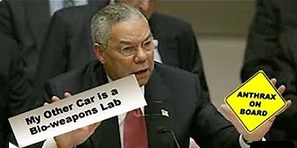
From Anthrax to Iraq
or go to
Aletho News Archives – Video-Images
Book Review
New paperback: Butchered by “Healthcare”
Lies are Unbekoming | October 20, 2026
 Butchered by “Healthcare” is Robert Yoho’s plain-spoken account of how American medicine stopped being a profession and became an industry. 341 pages. Over a thousand references. Thirty-eight chapters.
“Screening Tests Are Useless”, on tests that find diseases that would never have hurt you. “The FDA Protects the Big Drug Companies”, on an agency funded by the companies it regulates. “The Journals’ Sins Are the Editors’ Sins”, on ghostwritten studies and captured peer review. “Opioids and ‘Pain Management’”, on how a generation was prescribed its way into addiction. “Prozac and Relatives” and “Antipsychotics Are Disastrous”, on what psychiatry does to adults and children. “Surgery: Money Before Patients”. “Failed Cancer Treatments”. “Futile CPR and Overprescribing”. “Billing Scams & Specialty Warfare”. “Hospitals Are Sharks”. Each with a Patient Tips section at the end on how to survive it.
If you have ever walked out of a doctor’s office with a prescription you didn’t ask for, or watched a parent put through a treatment that made them worse, this is the book you want on your shelf before the next appointment. … Full review
Butchered by “Healthcare” is available on Lulu now.
Blog Roll
 Aletho News
- EU sending ‘biased’ observers to interfere in Serbian election – president
- White House envoy declares kinetic action against Yemen ‘fruitless’
- Ukraine deployed thousands of microdrones in Iraqi Kurdistan: Tasnim
- Iran calls for emergency UNSC meeting over Trump’s ‘brazen’ bomb talk, Israeli threats
- Iranian sources reveal details of Russia-China Hormuz proposal
- Plan for more US-Israel integration puts our military tech at risk
- Another Round Against Iran Will Break What Is Left of the Gulf
- SVR Report on Ukraine’s Mexican Drug Gang Links Could Pressure Zelensky, Won’t Change US Policy
- British Government Employees Were Fact-Checking the News at the BBC. Nobody Told You.
- Albania on fire: who’s behind the riots?
- If Americans Knew
- Mysterious bot accounts reportedly spread fake ‘man on the street’ videos for Michigan Senate candidate
- Israeli Defense Minister Katz Says Over 60 Lebanon Villages Have Been Destroyed
- Why Is Israel Running TV Ads in Iowa Ahead of the Midterms?
- Hind Rajab’s Alleged Killer Is in the United States. HRF Demands His Arrest.
- US Officials Face Fresh Pressure After Another American ‘Brutalized’ by Israeli Settlers in West Bank
- Israel-Backed Palestinian Militias Terrorize Displaced Families in Gaza
- FBI subpoenas pro-Palestine activists over Israeli weapons plant disruption
- Fourth winter arrives in wartorn Gaza, too early – Daily Update
- More on how Bari Weiss is using CBS on behalf of Israel
- What the UK Is Doing to Pro-Palestine Novelist Sally Rooney Is an Act of Orwellian Villainy
- No Tricks Zone
- Predictions Made By Renowned Climate Proifessor Over Past Decades Have Been Proven To Be Poor
- New Study Suggests Large Regions Of The Pacific Ocean Have Been Cooling For The Last 80 Years
- Germany’s Green Energy Debacle: High Energy Costs Force Kahla Porzellan to Close After 182 Years!
- New Study: 50 Years Of The Most Aggressive ‘Net Zero’ Policies Can Only Affect The Global Climate By 0.03°C
- US September “Heat” Was No Record…Many Records Set Decades Ago
- Latest European Green Energy Debacle; Portugal’s Largest Flagship Solar Park Insolvent!
- Green Energy Debacle: German Expert Professor Fritz Vahrenholt Warns Of Severe Economic And Social Consequences
- Two More Paleo Reconstructions Affirm Meters-Higher Sea Levels Across Ireland, Brazil 7000-6000 Years Ago
- New Study: Earth And Venus Surface Warmth Largely Explained By Convection And Lapse Rate, Not CO2 Or Radiation
- 2025 Nature Paper Claiming Worsening Global Drought Gets RETRACTED …Heavily Flawed

