Who Are the Evil Ones?
Remember that they (the evil ones) hate our freedoms.
Remember, too, that in the aftermath of 9/11, the war criminals told us this repeatedly. Here’s an example from George W. Bush:
They hate what they see right here in this chamber: a democratically elected government. Their leaders are self-appointed. They hate our freedoms: our freedom of religion, our freedom of speech, our freedom to vote and assemble and disagree with each other.
And another:
We must be strong and we must be decisive. We must stop the evil ones, so our children and grandchildren can know peace and security and freedom in the greatest nation on the face of the Earth… We know we’re one people; we know we’re one country. We’re united from coast to coast by a determination and a firm resolve to see that right prevails.
Remember, too, that this freedom, inspiring all that hatred, is enshrined in the Constitution:
Congress shall make no law respecting an establishment of religion, or prohibiting the free exercise thereof; or abridging the freedom of speech, or of the press; or the right of the people peaceably to assemble, and to petition the Government for a redress of grievances.
Remember that the words “freedom” and “evil ones” also are enshrined in the language of corporate media “stars” and politicians.
Recall the words Barack Obama spoke during his Nobel Peace Prize acceptance speech:
The service and sacrifice of our men and women in uniform has promoted peace and prosperity from Germany to Korea, and enabled democracy to take hold in places like the Balkans. We have borne this burden not because we seek to impose our will. We have done so out of enlightened self-interest — because we seek a better future for our children and grandchildren, and we believe that their lives will be better if others’ children and grandchildren can live in freedom and prosperity.
There’s the word “freedom” again. But in this paragraph, it refers to providing liberty to those whose countries we invade and occupy because we “seek” whatever (?) good transpires from granting “freedom and prosperity” to others.
Now, make note that the United States has departments and legislation to protect freedom to prevent the evil ones from inflicting harm. Here’s a list:
Department of Homeland Security (DHS)
Transportation Security Administration (TSA)
Total Information Awareness (TIA)
Patriot Act
Military Commissions Act
Homegrown Terrorism Act
House Resolution 347
National Defense Authorization Act
And think about the NATO Summit in Chicago—May 20th and 21st. But first read an article by John LaForge for a stomach-lurching look at NATO’s “mission accomplishments”.
I just took a break from writing this, checked my mail, and read the following from Free Press:
Whether you’re a credentialed journalist, a protester or a bystander with a smartphone, you are guaranteed freedom of speech, freedom of assembly and freedom of access to information. Your right to document public events must also be protected.
Unfortunately, not everyone sees it this way. Conflicts are escalating between those trying to bear witness on one side and local police and government officials on the other. All too often, the First Amendment is caught in the middle.
As protests and election-year events unfold in 2101, we must guard these rights and protect the networks that help us voice our political beliefs. Our First Amendment right to record must extend to everyone.
But Chicago Mayor Rahm Emanuel has put his official boot on this prerogative (the freedom for which the evil ones hate us) with certain ordinances that will remain in force after the summit:
- Authorization for the Mayor to purchase and deploy surveillance cameras throughout the city, without any type of oversight.
- Restrictions on public activity, including amplified sound and morning gatherings.
- Restrictions on parades, including the requirement to purchase an insurance policy worth $1 million and to register every sign or banner that will be held by more than one person.
- The power to deputize many different types of law enforcement personnel other than the Chicago Police Department.
After 9/11, fear and loss-of-liberty threats became a perfect petri dish for the corporatocracy and a miasma of secrecy, surveillance, intimidation, punitive measures, and endless war.
Pay close attention to the “Police Forces” section in the Wikipedia piece. Along with this and all of the above, the truth about this freedom-hating propaganda strobe lights the impoverishment of loss. So many of the hallowed freedoms have been eliminated by the real enemies—Wall Street criminals and their puppets who reside in US government positions of “leadership.”
If “they” attacked us only because they hated our freedoms, there’s nothing to hate anymore.
Missy Beattie lives in Baltimore, Maryland. She can be reached at: missybeat@gmail.com
May 18, 2012
Posted by aletho |
Civil Liberties, Deception, Full Spectrum Dominance, Timeless or most popular | Chicago Police Department, Hatred, Political freedom, Transportation Security Administration, United States |
Leave a comment
A German news website has revealed that the German government has been pushing for Eurozone countries to adopt a more active role in backing the current Venezuelan opposition coalition, the Roundtable of Democratic Unity (MUD), in the run up to this year’s presidential elections.
In an article published by Amerika21 earlier this week it was revealed that German diplomats had taken advantage of a recent European Union Council meeting on Latin American affairs to call on members to offer “greater and more open support” to the MUD and its candidate Henrique Capriles Radonski, who will stand against incumbent President Chavez in October.
According to the website, German delegates at the meeting in April had said that support for Venezuela’s opposition “should not be hidden from the public”, despite calls from other European nations such as France and Portugal who argued for a “more discreet” approach.
The news was disclosed as a team of representatives from the German Parliament took part in a governmental delegation to Venezuela, where they met solely with members of the country’s political opposition.
According to Prensa Latina news, which had access to the delegation’s agenda, the diplomats met with leading figures from the Venezuelan political opposition such as MUD Secretary General, Ramon Guillermo Aveledo, and other leading figures from opposition parties such as Democratic Action (AD).
The representatives are also reported to have met with anti-government NGOs during their stay, including organizations such as the Venezuelan Prison Observatory, which has previously been accused of carrying out acts aimed at sabotaging the national government and receives funding from the US government.
Meetings with the head of Venezuela’s business federation, Fedecamaras, and the head of Venezuela’s chamber of commerce, were also amongst the delegation’s agenda. “In Venezuela we met almost exclusively with opposition forces, while in Chile, our next stop, we met with people from the government”, reported German representative Heike Hansel from the German Socialist Party, Die Linke, in an interview with Prensa Latina.
The German government currently led by Angela Merkel has recently come under fire for its open backing of French rightwing candidate, Nicolas Sarkozy, who lost his bid for reelection to socialist candidate, Francois Hollande, earlier this month.
The MUD currently receives direct financial support from US institutions such as USAID and the National Endowment for Democracy (NED), although President Chavez has warned that the US government may expand its support for the opposition into other areas as the elections draw nearer.
The Venezuelan President has also stated that the MUD is developing a strategy to contest this October’s election results in league with the US government.
May 18, 2012
Posted by aletho |
Corruption, Deception, Mainstream Media, Warmongering | Henrique Capriles Radonski, MUD, National Endowment for Democracy, United States, Venezuela |
Leave a comment
On Tuesday afternoon, the U.S. House of Representatives debated H.Res. 568, an AIPAC-sponsored bill designed to outlaw diplomacy with Iran and take the United States Congress one step closer to authorizing an illegal, unprovoked and premeditated military attack on Iran.
Debunking statements about Iran made by House Representatives and Senators on the floor of Congress is tedious and boring. Most of the statements are inarticulate readings of AIPAC-drafted talking points and boilerplate hasbara. M.J. Rosenberg has already excellently addressed the point of this legislation and there is no need to repeat, ad nauseum, why most of what’s in the bill is wrong, how 13,000 AIPAC operatives were dispatched through the halls of Congress to garner sponsorship and support for the bill, how shameful it is for elected officials to spout pure propaganda about silly cartoon drawings and absurd assassination plots, and how – despite the many repetitions of the same infamous and long–debunked claim (which has literally appeared in over 50 Congressional resolutions since 2005) – even Israeli Minister of Intelligence and Atomic Energy Dan Meridor admitted on Al Jazeera that Iran has never threatened to “wipe Israel off the map.”
No, instead of all that, this time around it’s best to just take a look at how statements made during yesterday’s floor debate compare to statements made over a decade ago, if not longer. After so much deceit, destruction and death, how can anyone take this stuff seriously?
Ileana Ros-Lehtinen (R-FL), October 9, 2002:
Saddam Hussein is not far from developing and acquiring the means to strike the United States, our friends and our allies with weapons of mass destruction. Thus, if we do not act now, when?
Ileana Ros-Lehtinen (R-FL), May 15, 2012:
The Iranian regime continues to pose an immediate and growing threat to the United States, to our allies, and to the Iranian people. We are running out of time to stop the nightmare of a nuclear weapons-capable Iran from becoming a reality…We must meet our responsibility to the American people and protect the security of our Nation, our allies, and the world from this threat of a nuclear capable Iran.
Madeleine Albright, February 18, 1998:
[T]hat the leaders of a rogue state will use nuclear, chemical or biological weapons against us or our allies is the greatest security threat we face.
Rush Holt (D-NJ), May 15, 2012:
The threat of nuclear proliferation is the greatest threat to world peace. A nuclear Iran would destabilize the region and threaten the United States and our allies.
Howard Berman (D-CA), October 10, 2002:
But under today’s circumstances, the best way to give peace a chance and to save the most lives, American and Iraqi, is for America to stand united and for Congress to authorize the President to use force if Saddam does not give up his weapons of mass destruction. Confront Saddam now, or pay a much heavier price later.
Howard Berman (D-CA), May 15, 2012:
What better time for this body to send an unambiguous message that Iran must never be allowed to achieve a nuclear weapons capability and that its nuclear weapons program must end once and for all?
George W. Bush, January 29, 2002:
By seeking weapons of mass destruction, these regimes pose a grave and growing danger…[T]ime is not on our side. I will not wait on events, while dangers gather. I will not stand by, as peril draws closer and closer. The United States of America will not permit the world’s most dangerous regimes to threaten us with the world’s most destructive weapons.
Gene Green (D-TX), May 15, 2012:
Iran is developing the capability to quickly produce a nuclear weapon at a time of its choosing. Iran’s acquisition of such a capability would create a significant new regional danger and be an immediate threat to America’s interest and allies in the Middle East.
John McCain (R-AZ), Jesse Helms (R-NC), Henry Hyde (R-IL), Richard Shelby (R-AL), Harold Ford (D-TN), Jr., Joe Lieberman (D-CT), Trent Lott (R-MS), Ben Gilman (R-NY) and Sam Brownback (R-KS), December 5, 2001:
The threat from Iraq is real, and it cannot be permanently contained…We have no doubt that these deadly weapons are intended for use against the United States and its allies. Consequently, we believe we must directly confront Saddam, sooner rather than later.
Howard Berman (D-CA), May 15, 2012:
And so, as the window is closing, we send a clear message that the House is aligned with the administration in thoroughly rejecting containment…In fact, we have no choice but to stop Iran’s nuclear weapons program before it ever reaches that point.
Steny Hoyer, (D-MD), October 9, 2002:
[Saddam Hussein] continues his efforts to develop and acquire weapons of mass destruction, and he sponsors international terrorism. Saddam Hussein continues to be an unacceptable threat whose duplicity requires action, action now.
Steny Hoyer (D-MD), May 15, 2012:
The most significant threat to peace, regional security, and American interests in the Middle East is Iran’s nuclear program…Iran continues to be a sponsor of groups committed to the destruction of our ally Israel and of groups that threaten Americans throughout the world.
John Edwards (D-NC), October 7, 2002:
Saddam Hussein’s regime is a grave threat to America and our allies, including our vital ally, Israel… Every day he gets closer to his longtime goal of nuclear capability. We must not allow him to get nuclear weapons.
Eni Faleomavaega (D-American Samoa), May 15, 2012:
[I]t is imperative that the United States and the international community understand that a nuclear-capable Iran is a global threat and a danger to the United States and, just as important, to the State of Israel…This is a direct threat to our closest ally in the Middle East.
George W. Bush, March 19, 2003:
The people of the United States and our friends and allies will not live at the mercy of an outlaw regime that threatens the peace with weapons of mass murder.
Ileana Ros-Lehtinen, May 15, 2012:
For the Iranian regime, the possession of the capability to produce a nuclear weapon would be almost as useful as actually having one…Tehran would be in the driver’s seat, and the security of the United States, Israel, and our many other allies would be in their hands.
George W. Bush, March 13, 2002:
First of all, we’ve got all options on the table, because we want to make it very clear to nations that you will not threaten the United States or use weapons of mass destruction against us, or our allies or friends…[Saddam Hussein] is a problem, and we’re going to deal with him. But the first stage is to consult with our allies and friends, and that’s exactly what we’re doing.
Rob Andrews (D-NJ), May 15, 2012:
[W]e are negotiating with a country that has conceived its nuclear weapons program in secret, that has brandished its nuclear weapons program with the rhetoric of hostility, and for whom the attainment of a nuclear weapon would be fraught with peril for free people everywhere…[O]ur position must be that we will not support or stand for an Iran with nuclear weapons.
George W. Bush, August 13, 2005:
As I say, all options are on the table. The use of force is the last option for any president and you know, we’ve used force in the recent past to secure our country…In all these instances we want diplomacy to work and so we’re working feverishly on the diplomatic route and we’ll see if we’re successful or not.
Barack Obama, January 24, 2012:
Let there be no doubt: America is determined to prevent Iran from getting a nuclear weapon, and I will take no options off the table to achieve that goal. But a peaceful resolution of this issue is still possible, and far better, and if Iran changes course and meets its obligations, it can rejoin the community of nations.
Howard Berman (D-CA), May 15, 2012:
The urgent nature of the Iranian nuclear threat demands that the United States work with our allies to do everything possible diplomatically, politically, and economically to prevent Iran from acquiring a nuclear weapons capability. No option, as the President has said, can be taken off the table.
May 17, 2012
Posted by aletho |
Deception, Mainstream Media, Warmongering, Timeless or most popular, Wars for Israel | American Israel Public Affairs Committee, Congress, Howard Berman, Ileana Ros-Lehtinen, Iran, United States, United States Congress |
Leave a comment
If you believe some Israeli analysts, Tel Aviv is fretting on the sideline of the ongoing multinational effort to bring down the Syrian government of Bashar al-Assad that is taking a little longer than expected. In a May 11 “analysis” for Reuters apparently based solely on interviews with Israeli experts, Douglas Hamilton claims:
With the Syrian uprising now into its 14th month and Assad still firmly in power, Israel has few options other than to sit the crisis out, unable to influence the outcome of an upheaval that is sure to affect it.
The reality, however, is that the self-described Jewish state has plenty of options available to it to influence the outcome of the “upheaval” destabilizing its northern neighbour. Its most effective option is, of course, the influence it is able to exert over U.S. policy. As Haim Saban, a prominent “influencer,” once told an Israeli conference, there are “three ways to be influential in American politics” — make donations to political parties, establish think tanks, and control media outlets.
And as I wrote last year:
The think tank part of Saban’s tripartite Israel-protection formula was initiated in 2002 with a pledge of nearly $13 million to the Brookings Institution to establish the Saban Center for Middle East Policy. In 2007, the Saban Center expanded operations with the launch of the Brookings Doha Center. Its Qatar-based project was inaugurated in February 2008 by the founding director of the Saban Center, Martin Indyk. A former research director at the American-Israel Public Affairs Committee (AIPAC), Indyk had previously founded the AIPAC-created Washington Institute for Near East Policy (WINEP).
Keeping in mind the origins of the Brookings Doha Center, take a look at this recent “analysis” of the deteriorating situation in Syria:
The latest bombings primarily benefit the Syrian regime, analysts say, which, from the start of the 14-month revolt, has described the uprising as a Western-backed Al-Qaeda plot and its opponents as “terrorists” to justify its crackdown.
“Bashar al-Assad has said: ‘If anybody dares to challenge my rule, there will be chaos.’ What he said is becoming a self-fulfilling prophecy,” said Salman Shaikh, director of the Brookings Doha Center.
Shaikh noted there was no clear link between the regime and the bomb attacks, as the opposition has charged, “but at the end of the day, the responsibility lies with the regime because it has pursued only a security approach.”
“It is the regime who created this environment and the international community has allowed the situation to drift,” he added.
Shaikh added that a small group like Al-Nusra Front would not be able to pull off such “sophisticated” attacks without the help of “much more professional forces.”
Indeed. But instead of looking for those “much more professional forces” among the special ops forces of the so-called Friends of Syria, trust an analyst working for an Israel lobby-created think tank to point the finger at the Syrian regime itself.
May 17, 2012
Posted by aletho |
Deception, Wars for Israel | American Israel Public Affairs Committee, Bashar al-Assad, Brookings Doha Center, Brookings Institution, Israel, Saban Center for Middle East Policy, Syria, Washington Institute for Near East Policy |
Leave a comment
This case could have been a slam dunk for the NYPD, had it not been for one thing: the video showing police claims of disorderly conduct during an OWS protest to be completely untrue.
Hundreds have been arrested during the Occupy Wall Street protests, but photographer Alexander Arbuckle’s case was the first to go to trial – and after just two days, the Manhattan Criminal Court found him not guilty.
Supporters of the OWS protest movement have already hailed the ruling as a major legal victory.
Arbuckle was arrested on New Year’s Day for allegedly blocking traffic during a protest march. He was charged with disorderly conduct, and his arresting officer testified under oath that he, along with the protesters, was standing in the street, despite frequent requests from the police to move to the sidewalk.
But things got a little embarrassing for the NYPD officer when the defense presented a video recording of the entire event, made by well-known journalist Tim Pool.
Pool’s footage clearly shows Arbuckle, along with all the other protesters, standing on the sidewalk. In fact, the only people blocking traffic were the police officers themselves
His lawyers said the video proving that testimony false is what swayed the judge, and the verdict a clear indication that the NYPD was over-policing the protests.
The irony of the case, however, is that Arbuckle was not a protester, or even a supporter of the Occupy movement. He was there to document the cops’ side of the story.
A political science and photography major at NYU, Arbuckle felt the police were not being fairly represented in the media.
“All the focus was on the conflict and the worst instances of brutality and aggression, where most of the police I met down there were really professional and restrained,” the student said.
However, his good intentions only landed him in trouble. As with all the other detained protesters, the police offered Arbuckle an Adjournment in Contemplation of Dismissal (ACD), which basically means he would be let off the hook if he agreed not to fight the charges. But to Arbuckle, that meant an admission of guilt, and he decided to take the case to trial.
May 16, 2012
Posted by aletho |
Civil Liberties, Deception, Solidarity and Activism | Disorderly conduct, New York City Police Department, NYPD, Occupy Wall Street, OWS, Police |
Leave a comment
On May 2, CNN executive producer Arthur Brice published what was purported to be a news article on Venezuela. Instead, Brice’s 4,300-word screed, titled “Chavez Health Problems Plunge Venezuela’s Future Into Doubt,” is little more than a platform for the bizarre theories of Roger Noriega, an ultra-rightwing lobbyist and one-time diplomat under George W. Bush, who Brice references over two dozen times throughout his article.
As a political commentator, Noriega pontificates with total brazenness. He appeared as the chief pundit in Brice’s CNN piece six months after announcing—based on what he said was the belief of Chávez’s own medical team—that the Venezuelan president was “not likely to survive more than six months.” Noriega is not fazed by facts. He promotes his fantastical claims in many major news outlets, often based on anonymous sources. Take, for example, his 2010 Foreign Policy article, “Chávez’s Secret Nuclear Program,” whose subtitle reads: “It’s not clear what Venezuela’s hiding, but it’s definitely hiding something—and the fact that Iran is involved suggests that it’s up to no good.” (State Department officials dismissed this suspicion with “scorn.”)
CNN’s interviews with Noriega and the other mostly rightwing analysts likely led to this demonstrably false claim at the beginning of Brice’s May 2 article: “Diosdado Cabello, a longtime Chavez cohort . . . amassed tremendous power in January when Chavez named him president of the National Assembly.” In fact, even El Universal, a daily Venezuelan newspaper long-aligned with the opposition, conceded in a January 5 report that Cabello was elected as the new president of the National Assembly, even if “only with the votes” of the majority United Socialist Party of Venezuela (PSUV). Ewan Robertson of Venezuelanalysis.com found that 98 deputies of the pro-government bloc supported Cabello, while the 67-member opposition bloc opposed him. Such mundane electoral processes have guided much of Venezuela’s political dynamics over the past decade.
The rest of CNN’s long-winded compilation of hearsay proceeds in the same way. To give two examples, Brice turns to Venezuelan doctor Jose Rafael Marquina to shed light on Chávez’s current state of health. By Brice’s own admission however, Marquina “practices in Florida and has no direct connection with the case but says he has colleagues who know what is happening.” On the separate issue of Venezuelan politics, “the Cubans,” Brice writes, “may only have the power to suggest and manipulate as best they can,” but he also cites “some observers” who fear the Cubans could leverage their “perceived point men” in the country to unleash “militias in an attempt to take over.” Brice then quotes Noriega as saying, “I have no doubts that some Cubans would use violent means to deal with Venezuelans.”
These examples are indicative of CNN’s desire to spin a yarn of intrigue. Venezuela’s October presidential vote should be no different from the past. Closely monitored, free and fair elections have been the final word in political outcomes in Venezuela. But by relying on telephone interviews with self-proclaimed “analysts” almost exclusively based in the United States, CNN portrays Venezuelan politics as a grand chess game of “powerful men trying to bend the arc of history because they believe their president’s life may be slipping out of the hands of doctors and into the hands of God.” For CNN, Venezuelan voters play a marginal role, if any at all—it’s a sensationalized struggle between drug-dealing generals, Cuban spooks, well-connected cronies, armed militias, and a dying, charismatic strongman in thrall to Fidel Castro.
Had Brice decided to report on the ground from Caracas, he may have produced a video segment similar to the one that appears alongside his own article on CNN’s website. Journalist Paula Newton describes the free, government-provided medical attention in poor areas—a “concrete” reason why broad support for Chavez “isn’t exactly blind,” she says. Newton also shows Chávez voters displaying (reasonable) skepticism toward conjectures that the president is about to die or is already dead—a potentially valuable lesson for CNN, considering Brice’s general credulousness.
~
Noriega’s buffoonish commentary in outlets like CNN would be more amusing if not for his hands-on experience in crafting devastating U.S. policies toward Latin America. Noriega’s career in government, one may recall, includes administering “non-lethal” aid to the Nicaraguan Contra insurgency as a U.S. Agency for International Development (USAID) official in the 1980s. He followed this up as a senior staffer to Senator Jesse Helms in the 1990s, co-authoring the Helms-Burton Act, which intensified the U.S. embargo on Cuba. Bush II appointed him as ambassador to the Organization of American States in 2001, and in 2003, he replaced Iran-Contra veteran and Venezuelan coup-backer Otto Reich as Bush’s Assistant Secretary of State for Western Hemisphere Affairs. For this post—his last in government before switching over to the private sector—Noriega had big shoes to fill, and he undoubtedly rose to the occasion.
Whereas Reich failed to roll back the leftward tide of Venezuela in 2002 during his tenure (the military coup which overthrew Hugo Chávez lasted only two days), Noriega triumphed in damming the populist flood of Lavalas in Haiti. As the only mass-based political movement in the most unequal country in the hemisphere, Lavalas, headed by the democratically elected president Jean-Bertrand Aristide, was an obvious threat to the Bush administration. The denouement of the administration’s destabilization campaign occurred in February 2004 when Aristide and his family were spirited away by a U.S. plane in the middle of the night. Noriega initially denied that the United States played a role in Aristide’s removal, feebly claiming that Aristide had embarked on the plane by his own volition. But according to Dr. Paul Farmer—Harvard health specialist and UN Deputy Special Envoy for Haiti—Noriega admitted “during a House hearing that Aristide did not know of his destination until less than an hour before landing in the Central African Republic.” Robert White, a former U.S. ambassador to El Salvador and Paraguay, told Newsday right before the coup that “Roger Noriega has been dedicated to ousting Aristide for many, many years, and now he’s in a singularly powerful position to accomplish it.”
Today, Noriega divides his time between his post as a Latin America “scholar” at the pro-corporate American Enterprise Institute (AEI) think tank, and as a registered lobbyist for various interests in countries that are the subjects of his widely published commentaries. Noriega’s influence-peddling has been extremely effective in recent years. For example, in addition to writing opinion pieces defending the 2009 Honduran coup d’etat, Noriega—who was hired to represent a Honduran textile manufacturers group—organized a meeting between the coup regime’s supporters and U.S. Senators less than 10 days after the overthrow of the democratically elected president, Manuel Zelaya. Daniel W. Fisk, who helped set U.S. policies in Central America as a high-ranking government official in the 1980s and ‘90s, attended the meeting. According to The New York Times, Fisk was “stunned by the turnout.” “I had never seen eight senators in one room to talk about Latin America in my entire career,” he was quoted as saying.
The Times framed Noriega’s actions toward Honduras as a vestige of Cold War planning. Noriega, Reich, and Fisk, wrote The Times, viewed Honduras as “the principal battleground in a proxy fight with Cuba and Venezuela,” two countries that the three men characterized “as threats to stability in the region in language similar to that once used to describe the designs of the Soviet Union.” Noriega certainly warned against a new red menace when he supported Zelaya’s overthrow; Honduras was ground zero in what Noriega called “the continued spread of Chavista authoritarianism under the guise of democracy.”
~
Given Noriega’s disturbing record, it is astonishing that CNN produced a news piece on Venezuela through the lens of a lobbyist with obvious conflicts of interest in Latin America. Brice’s article, which never mentions Noriega’s lobbying, is dominated by comments like these:
Noriega and other observers have said [Chávez’s] appointments of Cabello and Rangel Silva have turned Venezuela into a narcostate. . . . ‘If Cabello and Rangel Silva resort to dirty work to hold things together, Maduro is a guy they can bring in to give a veneer of respectability to the international community,’ Noriega said, calling [the hypothetical scenario he just created] a ‘junta kind of arrangement.’ . . . The military also would face deep divisions if called upon to fire on Venezuelan citizens. . . . “The elections are, from [Cabello and Rangel Silva’s] standpoint, expendable,” [Noriega] said. “On the other hand, if they believe they can add a patina of legitimacy, they will hold them. They’re going to be hard-pressed to make a legitimacy argument with a narco kingpin in power.”
Through CNN, Noriega is able to publicly fret over the prospects of a Venezuelan military coup (like the one the Bush administration and the IMF supported in 2002) and criticize Venezuela’s purported drug trafficking (like the kind carried out by CIA asset Manuel Noriega and the U.S.-backed Contras). Noriega preemptively disapproves of a hypothetical Venezuelan election whose purpose, he says, would be to “add a patina of legitimacy” (despite Noriega’s own endorsement of the U.S.-backed sham elections in Honduras in 2009, which were conducted under a dictatorship).
There is also some historical context behind Brice’s unquestioning use of terms like “narcogenerals,” “narcostate,” “narcoterrorism,” and “narco kingpin” with relation to Venezuela. Many of these instances originate from Noriega’s direct quotes to CNN. This is just the latest example of media manipulation that Noriega’s colleagues mastered long ago. From 1983-86 Reich headed a taxpayer-funded propaganda outlet, the Office of Public Diplomacy, which, among other activities, placed false reports in major outlets that the Sandinista government in Nicaragua was involved in narcotrafficking. Haiti is another case: In 1992, the CIA created a fraudulent psychological profile on Aristide, which Senator Jesse Helms then used to denounce the president as a “psychopath,” a claim that was uncritically parroted by the press at the time. Aristide, the diminutive liberation theologian, was also the subject of a U.S. grand jury investigation due to his alleged involvement in narcotrafficking. Although the media repeated the claim that Aristide’s was running drugs, human-rights attorney Brian Concannon pointed out in 2006 that ultimately, “not a single charge [was] issued from the courthouse.” (U.S. efforts to assassinate Aristide’s character through the courts continue up to the present day.)
~
Roger Noreiga’s nuttier theories, thankfully, were not incorporated into the piece. Here are just a few short excerpts of Noriega’s baseless output as of late:
- In a March 2011 article for AEI titled, “U.S. Diplomats Clueless on Alleged Chávez Plot to Kill the President of Panama,” Noriega asked, “If Panamanian authorities dismissed this as a hoax, why have senior officials of that government expressed their gratitude to me for revealing the plot months since the incident? And why on earth would Chávez risk an attack on Martinelli? I cannot answer these questions.”
- In another AEI entry from October 2011, titled “The Mounting Hezbollah Threat in Latin America,” Noriega contends that “Hezbollah’s presence in Latin America dates to the mid-1980s, when it began sending operatives into the notoriously lawless region known as the tri-border area . . . Their activity also includes pirating software and music.”
- In the March 2011 Washington Post op-ed “Is There a Chavez Terror Network on America’s Doorstep?” Noriega is able to find both al-Qaeda and Iranian operations in Venezuela: “The threat posed by globe-trotting terrorists is ever-present,” he writes. “A U.S. security official told me in mid-January that two known al-Qaeda operatives were in Caracas planning a ‘chemical’ attack on the U.S. embassy . . . A Venezuelan government source has told me that two Iranian terrorist trainers are on Venezuela’s Margarita Island instructing operatives who have assembled from around the region. In addition, radical Muslims from Venezuela and Colombia are brought to a cultural center in Caracas named for the Ayatollah Khomeini and Simon Bolivar for spiritual training.”
- In Noriega’s April 2010 ultimatum in The Wall Street Journal, “Time to Confront the Tehran-Caracas Axis,” he uncovers yet another sinister plot: “[T]he Canadian uranium exploration company U308 Corp has recorded a substantial source of uranium in the Roraima Basin, which straddles the border between Guyana and the Venezuelan province of Bolívar. Iranian or other Middle Eastern individuals operate a tractor factory, cement plant and gold mine in this region.”
Noriega concludes this WSJ op-ed by appealing to international law. He writes that Venezuela’s nefarious plans “should be challenged as a threat to peace and an act of aggression under Chapter 7 of the United Nations Charter.” This is a perfectly appropriate way to deal with any rogue state that, in Noriega’s words, is prone to “meddle in the internal politics” of other countries, and provides “support for terrorist groups in the Americas.” Unfortunately, Noriega has it upside down. It is not Venezuela, but the United States that is unequivocally responsible for doing both kinds of activities. But don’t hold your breath waiting for Noriega to equally apply such standards.
May 16, 2012
Posted by aletho |
Deception, Mainstream Media, Warmongering, Militarism, Timeless or most popular, Wars for Israel | CNN, Diosdado Cabello, Paula Newton, Roger Noriega, United Socialist Party of Venezuela, United States, Venezuela |
Leave a comment
The almost unknown subject of False Flag events is slowly creeping into people’s conscious awareness; and about time too.
The term comes from a tactic that was commonly employed many centuries ago by all the navies of fledgling empires. Although these navies very occasionally engaged in heroic battles with each other in order to protect the citizens of their countries from invading hoards, as our history books suggest, the far more common use of mighty battleships was for theft. Sinking an enemy ship was never the intention of these engagements, and would have been seen as something of a failure. The purpose was to capture the ship, preferably undamaged, and steal anything and everything from the personal possessions of the crew to the very ship itself, which would then be recycled by the victors. After all, what could possibly be the point of sinking an expensive ship, laden to the gunnels with the riches of plundered foreign colonies, when its capture would serve exactly the same political purpose, as well as providing vast wealth?
The Royal Navy, for example, routinely operated a “prize” system right up until quite recent times; and although acts of piracy don’t form quite the same staple diet in the senior service as they used to do, prize legislation remains on British statute books to this day. Right up until the nineteenth century “prize courts” would routinely assess and divvy-up the wealth of ships that had been attacked and seized by the jolly Jack Tars. Some of the plunder was apportioned to the ship’s crew. Of course, it wasn’t an equal distribution of wealth, where the loblolly boy, say, received as much of a cut as the captain; nor was the cut in any way equal to the share gifted to the high and mighty Lords of the Admiralty, who weren’t required to do anything more dangerous for their cut than over-indulge themselves in London society. However, some small portion of the “prize” would find its way to even the lowliest cabin boy – the original “trickle-down” effect perhaps. In short, the routine day-job of the glorious Royal Navy was plunder. In fact, the only way the great sailors of Nelson’s day differed from common pirates was that the piracy of Nelson’s navy was simply deemed to be legal. It’s a similar principle to the one that’s alive and well to this day, and helping to keep investment bankers out of jail.
But even hardened cynics such as myself find it difficult not to admire the considerable skill that was often required for some of the encounters that took place between the mighty warships of Nelson’s day. In the days before modern communications these great behemoths, seventy metres long with a thousand souls on board, could only use the power of the wind to move around, so finding and engaging and defeating an enemy in thousands of square miles of empty ocean was no easy matter, and the seamanship required for these encounters was often truly amazing. Apart from some acts of genuine courage, with perhaps just a hint of insanity, these sailors also relied on a host of devious tricks and raw cunning to capture a “prize”. Apart from plenty of luck, you also needed a good brain to be an effective captain in Nelson’s day; and it’s hardly surprising, given hundreds of years of regular practice in the dark arts of subterfuge and deceit, that the roots of the British intelligence service were established in the Royal Navy.
One of the many tricks used in the days of sail was to make your ship appear friendly to the watchful telescopes of the prospective prize; and the easiest way to do this was to ensure the flags your ship were flying were not those of your own country but were either exactly the same as those of the prize, or the same as those of whichever country was friendly to the prize. This simple ruse would, of course, eventually be discovered as a trick; and, of course, every ship’s crew knew about the trick. However, it would invariably buy some invaluable time, making all the difference between success and failure, enabling the hunter to get close enough to his prey to capture him before the darkness of night might come to the hapless victim’s rescue.
This tactic is still very much alive and well, and survives in modern language usage as the “false flag” attack, to mean an attack by someone who isn’t quite who they seem to be. Variations of it include attacks perpetrated by people pretending to be enemies of the state. These attacks may be carried out by the state’s own armed forces, or by paid mercenaries, or by allies of the state. History is rich with evidence.
Take, for example, the infamous sinking of the Maine. In 1898, when the US was beginning to flex its expansionist muscles abroad, the battleship USS Maine was blown up in Havana harbour. Although there was no evidence to support it, the incident was blamed on Spain, who controlled Cuba at the time; and it had the desired effect of triggering the Spanish American war which eventually led to Spain’s eviction from the island and the installation of a US puppet regime – a model that would be successfully repeated time and again for many decades to come. Fifty-five years later something very similar happened again – this time without going to the extra expense of actually sinking any ships.
On August 4, 1964 the world was informed that another US warship, the USS Maddox, had come under sustained attack by North Vietnam. It was the event which directly led to ten years of total hell for tens of millions of people in South East Asia, and whose effects are still being felt to this day. Fifty years after the false flag event of the Maddox, declassified documents revealed that the US government was fully aware at the time that no such attack had taken place. But by then, of course, the false flag had long served its purpose.
Although the term “false flag” originated from these naval deceptions, false flag incidents have never been solely confined to the high seas. Armies have always used any number of devices to deceive their victims, and anyone who’s ever watched a Hollywood war movie is probably aware of it; for how many of these movies have included a scene where either the good guys or the bad guys dress up in the uniforms of their enemy in order to carry out some raid or another? Is that not a completely routine story-line? Although many of these movies are obviously fictitious, these deceptions, which might also be called “false flag” adventures, are based on normal military tactics which have been used by almost every army, probably since the beginning of civilisation.
However, Hollywood movies seldom reveal the true evil and cynicism of war. Therefore not many of the 99%, who obtain much of their understanding of the world in general and history in particular from the silver screen, know anything at all about the truly dark side of all armies in general, and their leaders in particular. For how many Hollywood movies tell the stories of how armies routinely slaughter defenceless people? Although they will sometimes depict the enemy of the day carrying out these atrocities, they never show the so-called “good guys” doing it – which creates in the mind of the viewer the impression that our armies never behave in such a beastly fashion. But they most certainly do.
Consider the vast number of movies that came out of Hollywood telling how the west was won – how handfuls of brave adventurers defeated marauding hoards of screaming bloodthirsty savages, which was, in fact, a complete inversion of the truth. And how many war movies told the truth about the bombing of Dresden, or of Hiroshima and Nagasaki? These completely needless events took place in the closing days of World War Two, when Germany and Japan were already crushed nations. They were events which deliberately targeted hundreds of thousands of defenceless civilians, and served absolutely no military purpose whatsoever. They were war crimes, already outlawed by the Geneva Convention. Not many Hollywood movies tell us that.
Although these mass slaughters of defenceless civilians are a different aspect of the cynicism of war, and cannot be considered as false flag adventures, it’s important to cite these as evidence of the psychotic ruthlessness of our own trusted leaders and the brainwashed youngsters who are routinely conditioned to obey an order, any order.
It’s important to grasp this principle of war that not even Hollywood can glamorise: that our trusted leaders can and do routinely issue orders to slaughter innocent defenceless civilians, and that brainwashed young people then carry out those orders, and that society is then brainwashed into considering these young people to be heroes. Not even Hollywood can glamorise the deep cynicism of that fact.
My own personal first-hand experience of false flag adventures was obtained in the late seventies, in Rhodesia, where I was batting out my national service as an intelligence officer. Our army had a small unit of people called the Selous Scouts. They were considered the elite of the elite, and were supposedly originally created by a couple of junior officers serving in the Rhodesian SAS who thought the SAS wasn’t quite hard enough. I did some of my training with the Scouts. They were definitely different.
Later on, when I was operational, I was based in a small rural outpost called Rusape. For me it was a very comfortable posting and, I’m very glad to say, I managed to see out my time there without being injured and, I’m even more glad to say, without causing injury to anyone else.
Each morning, after a leisurely breakfast, I would saunter over to the operations room to see what was going on. Like almost every military operations room in the world, one wall of it was given over to a huge map of our area of responsibility. Most of the time it was just a map of rural Rhodesia, with little coloured stickers on it depicting some sort of recent “terrorist” incident – such as a landmine going off, or an attack on some isolated school or clinic. My job would be to go out to investigate these incidents and report on them. Sometimes it was very harrowing, but mostly it was a fairly pleasant way to sit out the war.
But every now and then I would turn up to the ops room in the morning and would be met with the sight of a sizeable chunk of the map covered over in hatched lines. Everyone understood that that area had been “frozen”. This meant that no army personnel or police were to go into that area. The Scouts had moved into it. For a few weeks after that life went on pretty much as normal everywhere else on the patch; but no information at all emerged from the area with the mysterious hatching; and then one morning I’d turn up for work and the hatching would have been removed from the map as mysteriously as it had first appeared.
Within a day or two of that happening the reports would start rolling in from where the Scouts had been, about “terrorist” murders at some isolated village or another, of a “terrorist” rocket attack on a small business centre perhaps, or a “terrorist” landmine blowing up a rural bus. These would all have been carried out by the Scouts, dressed up as “terrorists” and using “terrorist” weaponry.
The purpose of these attacks was a variation of that old favourite: the hard cop/soft cop routine. The Scouts’ role was to try to out-terrorise the forces working for the likes of Robert Mugabe, to try to alienate the local population from Mugabe’s men by pretending to be Mugabe’s men and committing such atrocities that the locals would be repulsed by them. Then when the soft cops turned up in the shape of government forces, the locals would feel like offering their help and support. It’s called winning hearts and minds, and was a tactic that had already been used by US special forces in Vietnam before that, and by British special forces all over the place before that: Malaya, Congo, Kenya, Aden…
Some would dismiss false flag adventures as conspiracy theory, which is, of course, a very convenient way to persuade the 99% that our trusted leaders couldn’t possibly stoop so low. But history is rich with proof that they most certainly do stoop so low, with amazing frequency. So the really important lesson to learn in all of this is that whenever a so-called “terrorist” outrage occurs, especially those outrages where the perpetrators haven’t been caught in action (and rounding up “suspects” after the event cannot be trusted either – as the “Guildford Four” and “Birmingham Six”, for example, could confirm)… always, always recall the very real world of false flag adventures.
John Andrews is a writer whose main work is Peace Talk.
May 15, 2012
Posted by aletho |
Deception, False Flag Terrorism, Militarism, Timeless or most popular, War Crimes | False flag, Royal Navy, Spanish–American War, United States, USS Maddox, USS Maine, World War II |
Leave a comment
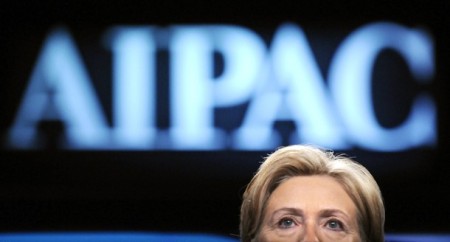
In the Hindu on May 8, we catch Hillary Clinton putting too fine a distinction on the Israel-Iran rivalry.
Drawing a distinction between Iran, which has violated provisions of the Non-Proliferation Treaty (NPT), and Israel, which hasn’t signed it, United States Secretary of State Hillary Clinton said here on Monday that the latter has “made numerous overtures to try to have a peaceful resolution” to the situation in the Middle-East.
Of course, logic dictates that an overriding distinction be drawn between a state with an unacknowledged nuclear-weapons program that never signed the nuclear Non-Proliferation Treaty (NPT) and one with not only no nukes, but no development program and that has signed the NPT, with no evidence of substantive violations. Secretary of State Clinton, however, attempts to suggest that Israel’s other virtues more than compensate for an illegal nuclear arms program (not that we believe, according to international law, that any nuclear program is exactly legal). First, she claims that Israel “‘has made numerous overtures to try to have a peaceful resolution’ to the situation in the Middle-East.”
It’s unclear about what Ms. Clinton is speaking: Iran or the Palestinian people? Conflating the two is shoddy thinking, especially for a top official. In any event, are Israel’s overtures more numerous — or genuine — than Iran’s or Palestine’s? We’ll leave it to Middle-East experts to divvy them up. But that’s not Ms. Clinton’s only defense for favoring Israel over Iran on the issue of nuclear weapons.
Responding to a question on the U.S. pressing for sanctions on Iran on account of its nuclear programme, while taking no action against Israel, which is in violation of several United Nations resolutions, apart from not being a signatory to the NPT, Ms. Clinton quipped: “Well, I don’t think we have convinced India to sign the NPT either.”
At the risk of being childish, we feel compelled to point out that two wrongs don’t make a right. Then, along with siding with more than one country in the nuclear wrong, she adds to her list of countries that, like Iran, she believe are deserving of blame.
“It isn’t the only country causing worry. We worry regarding nuclear weapons proliferating in some other countries,” Ms. Clinton said, adding that the biggest fear was that nuclear weapons may fall into the wrong hands.
Then Ms. Clinton pulls out the “state sponsor of terrorism” card.
At this moment in time, the “principal threat is a nuclear-armed Iran,” she said, alleging that the country was a “state sponsor of terrorism.” She cited the recent attack on Israeli diplomats in Delhi, and a plot to kill the Saudi Arabian Ambassador to the U.S. — both allegedly planned by the Iranian government — as examples.
In the end, Ms. Clinton seems to be resorting to the unspoken rationality index that Washington uses to rate states. By that calculation, Iran not only scores low because it is a “state sponsor of terrorism,” but because its motivations may be apocalyptic. But this is the height of disingenuousness on the part of Washington, which knows very well that Iran’s policies are as realist, or more so, than other states.
Meanwhile, it’s as if, by refraining from using its illegal nuclear weapons, Israel has demonstrated its rationality to Washington … thus providing yet another reason for a state that aspires to nuclear weapons to act on its aspiration.
May 14, 2012
Posted by aletho |
Deception, Ethnic Cleansing, Racism, Zionism, Progressive Hypocrite | Clinton, Iran, Israel, NPT, Nuclear Non-Proliferation Treaty, United States |
Leave a comment
Two news reports by major wire services this weekend demonstrate just how pervasive misinformation and propaganda are in the mainstream media when it comes to the Iranian nuclear issue.
The first:

(Photo credit: Wikipedia)
Reuters reported this week that Catherine Ashton, the European Union’s High Representative for Foreign Affairs and Security Policy and chief nuclear negotiator for the P5+1, has high hopes for the new round of talks with Iran resuming May 23rd in Baghdad and will approach the meeting as a “serious set of discussions that can lead to concrete results.”
Sounds positive enough, especially when coupled with the statement Ashton made at the end of last month’s meeting in Istanbul. “We have agreed that the Non-Proliferation Treaty forms a key basis for what must be serious engagement, to ensure all the obligations under the NPT are met by Iran while fully respecting Iran’s right to the peaceful use of nuclear energy.”
However, another comment made by Ashton on Friday is cause for considerable concern. She told reporters in Brussels, “My ambition is that we come away with the beginning of the end of the nuclear weapons programme in Iran. I hope we’ll see the beginnings of success.”
Such a statement is certainly alarming. Despite the hysterical cries of Israeli Prime Minister Benjamin Netanyahu and his right-wing acolytes here in the U.S., both Western and Israeli intelligence, along with the IAEA, have consistently confirmed that Iran has no nuclear weapons program.
One would assume that the chief P5+1 negotiator would understand and acknowledge this simple – and vitally important – fact. Perhaps Ashton’s recent private audience with Netanyahu in Jerusalem was more dangerous and detrimental to the negotiations than one would even expect.
(Of course, the sheer absurdity of Ashton’s meeting with the Prime Minister of a state that is not a signatory of the NPT, has an undeclared stockpile of hundreds of nuclear warheads, is a constant violator of international law and perpetrator of war crimes, and which is in consistent breach of countless Security Council resolutions gos without saying. That Netanyahu would have any role whatsoever in these discussions, let alone issuing demands to both the U.S. government and Ashton herself, proves beyond a shadow of a doubt how designed for failure these negotiations were from the start.)
The second:
In one of the most embarrassing examples of published propaganda over the Iranian nuclear program to date, The Associated Press today “reported” that it has obtained an undated “computer-generated drawing” of “an explosives containment chamber of the type needed for nuclear arms-related tests that U.N. inspectors suspect Tehran has conducted” at its Parchin military complex. The news agency says it was bequeathed this rendering “by an official of a country tracking Iran’s nuclear program who said it proves the structure exists.”
One version of the AP exclusive contains this detail:
That official said the image is based on information from a person who had seen the chamber at the Parchin military site, adding that going into detail would endanger the life of that informant. The official comes from an IAEA member country that is severely critical of Iran’s assertions that its nuclear activities are peaceful and asserts they are a springboard for making atomic arms.
What mysterious country could that possibly be, one wonders?! The answer is so painfully obvious as to make AP scoopster George Jahn’s attempts at anonymity patently ridiculous and pathetic. Jahn, unsurprisingly, has a long history of silly reporting on the Iran nuclear issue.
This detonation chamber stuff, by the way, has been debunked for half a year now.
The story also notes that former IAEA official Olli Heinonen, who himself has a long history of pushing dubious information about Iran’s nuclear file, said that the computer graphic provided to the press is “‘very similar’ to a photo he recently saw that he believes to be the pressure chamber the IAEA suspects is at Parchin.” Heinonen added that “even the colors of the computer-generated drawing matched that of the photo.”
Pretty convincing, huh? Ok, here‘s the computer drawing this whole thing is about:

Yes, really.
That’s it. Really. No, please stop laughing and believe me. That’s really the thing they’re talking about. Yes, seriously. I mean it.
These are the depths to which propaganda about the Iranian nuclear program have sunk. It’s not even clever anymore, it’s just stupid.
Just in case anyone is interested, I have successfully uncovered the true identities of the crack Israeli computer graphics team that came up with that drawing:

May 14, 2012
Posted by aletho |
Deception, Mainstream Media, Warmongering, Wars for Israel | Ashton, Associated Press, Benjamin Netanyahu, Catherine Ashton, International Atomic Energy Agency, Iran, Nuclear program of Iran, Parchin |
Leave a comment
In an April 4 op-ed on IsraelNationalNews.com titled “The Christian Era in the Middle East is Over,” Giulio Meotti declared:
Arab Christians have been Islamicized. Supported by the Vatican and the Orthodox Churches, they choose the war against the Jews. They will be paid back with their own extinction.
A little over a month later, Meotti appears to have changed his tune. In a May 12 op-ed on Ynetnews.com titled “Christians, Jews to unite against Islam?” the Italian author of “A New Shoah” reports on a new alignment of the Abrahamic religions:
The Coliseum, where thousands upon thousands of “Judaeis” have been massacred by the Roman emperors, became for one night an arena for alliance between Christians and Jews against “odium fidei,” or religious hatred.
Last Wednesday in Rome, Jewish leaders for the first time rallied alongside Christians in a candlelit vigil to denounce the attacks in the Middle East and Africa. It was “interfaith” or “ecumenical” dialogue at its best. Forget the theological questions, which remain unsolvable. There is an urgent mutual solidarity about the single most defining issue of our time: religious freedom.
It is about the right to life of Jews and Christians in an Islamicized Middle East. Speaking at the Coliseum, Rome’s Chief Rabbi Riccardo Di Segni slammed Western “indifference” surrounding the massacre of minorities in the Middle East.
But if Meotti is so concerned about the massacre of Christian minorities in the region, why doesn’t he denounce the key role Israel partisans played in bringing about the Iraq War or their cheering on of the Arab Spring both of which have greatly facilitated the “Islamicized Middle East” he decries?
May 14, 2012
Posted by aletho |
Deception, Ethnic Cleansing, Racism, Zionism | Arab Spring, Christian Arab, Iraq War, Israel, Middle East |
Leave a comment
New “POSt Plan” Is Not Good News for Rural Post Offices or Their Customers
Consumer watchdog, Ralph Nader, today said, “The Postmaster General’s Post Office Structure Plan (“POSt Plan”) is a bait and switch tactic, and is not good news for rural Post Offices.”
The Postmaster General claims that his new strategy, released on Wednesday, is designed to benefit rural Americans and keep open the 3,652 postal facilities it was considering for closure. Though it is unclear how many of these offices are included in the “POSt Plan”, it seems that many of them have been incorporated in the new plan as well. The new direction that the Postmaster General proposed is to cut hours at nearly 13,000 Post Offices and offer early retirement incentives for more than 21,000 non-executive postmasters.
“As more details about the plan emerge, the picture grows increasingly dire for rural customers of the U.S. Postal Service,” Nader observed. “I expressed deep concern about the preliminary details of the Postmaster General’s plan on Wednesday. Unfortunately, those fears were confirmed as we have analyzed the details of the Postmaster General’s new strategy.”
After examining 260 pages of the U.S. Postal Service’s proposal for Post Office hour reductions nationwide, we found that the new strategy eliminates 42,699 hours per day from retail window hours of nearly 13,000 Post Offices.
“This proposal is calling for a gargantuan cut in retail window hours nationwide – 42,699 total hours each day. To put this in perspective, 42,699 hours equates to nearly 5 years,” Nader explained.
The current average retail window hours of the nearly 13,000 Post Offices proposed for reduced hours are 7.67 hours per day. “The enormous cut in hours that the U.S. Postal Service has proposed is the equivalent of closing 5,567 of these Post Offices. The Postmaster General started with a list of 3,652 offices being considered for closure. Now we see that by reducing window hours he has proposed the equivalent of closing 2,000 more offices than he started with,” Nader continued.
Nader concluded by saying, “This is, plain and simple, a bait and switch. As I said on Wednesday, by further restricting Post Office hours the Postmaster General makes the corporate “alternatives” to the U.S. Postal Service more likely and sets the stage for future Post Office closings when the revenues and workload of reduced-hours offices inevitably suffer. The Postmaster General has effectively taken a list of 3,652 offices that were on the chopping block and added nearly 10,000 more offices to that list.”
May 11, 2012
Posted by aletho |
Deception, Economics | Post Office, Postmaster General, Ralph Nader, Rural area, United States, United States Postal Service, US Postal Service |
Leave a comment
Sunday’s edition of the New York Times featured a front page story by Thom Shanker about how the US is waging an “Iraq-style” war on drugs in Honduras.
Shanker, a former Senior Writer in Residence with the Centre for New America Security (which the WSJ called a “farm team” for Obama’s national security advisors), has also been the NYT’s Pentagon correspondent, was embedded in Afghanistan, and has reported from Iraq.
The piece, which ran online as US carries lessons of Iraq into Honduras drug war is your classic bit of embedded journalism. The dateline is a U.S. military base (ahem, forward operating location), the sources are soldiers and marines, and the Hondurans — which are included in photos only — are soldiers.
Hey, world, the U.S. is at war with the bad guys in Honduras! Is the gist of the article, but Shanker’s pro-establishment/embedded bias does little to give readers an informed perspective about what is actually taking place in the Central America.
First off, Shanker does his best to set the story up as being all about drugs, even though it is common knowledge that U.S. militarization doesn’t decrease drug production or trafficking. “Forty years of increasingly violent efforts to stamp out the drug trade haven’t worked,” reads a recent piece in Foreign Policy magazine.
Then Shanker slips into a description that is perhaps a little more indicative of the U.S. role in Honduras:
This new offensive, emerging just as the United States military winds down its conflicts in Iraq and Afghanistan and is moving to confront emerging threats, also showcases the nation’s new way of war: small-footprint missions with limited numbers of troops, partnerships with foreign military and police forces that take the lead in security operations, and narrowly defined goals, whether aimed at insurgents, terrorists or criminal groups that threaten American interests.
Is this about drugs, or is it about securing U.S. sweatshops in Honduras? Is it about drugs, or is it about seeing the entire population of Honduras as a latent “criminal” group that could, at any moment, become “illegal” immigrants? Is it about drugs, or is it about controlling insurgents (aka rebels or revolutionaries), namely the members of a massive popular movement that has risen up since the illegal coup d’etat in Honduras in 2009?
You’d be forgiven for reading this piece and not knowing about the coup: Shanker left out that, ahem, little detail in his piece. The U.S. media don’t like to talk about how the coup, carried out by the Honduran army and supported by Honduras’ tiny transnational elite, has sparked a massive popular movement all across the country. But acknowledging that there is a huge (and generally peaceful) popular movement in Honduras makes war boosterism more complicated. Better to stick to the fighting drugs and bad guys, you know the quasi criminal terrorist line…
The re-militarization of Honduras isn’t just about Honduras — it is about the entire region.
Shankar mentions that US anti-drug teams developed in Afghanistan are now active in Honduras to “plan interdiction missions in Central America.” He makes passing reference to how Honduras was used for staging the war against the Sandinistas in Nicaragua, but leaves out the fact that Honduras was also the staging area for the 1954 CIA backed coup in Guatemala, and for US backed wars against the FMLN in El Salvador later on (and on, and on). Looks like the bad old days of the “USS Honduras” are coming back in a big way – this, in a country that already has one of the highest murder rates in the world.
The fact that the New York Times is sending embedded journalists to Central America is gross. Instead of talking to, um, Hondurans, Shanker quotes the Council on Hemispheric Affairs* as a sort of “critical” voice. Check this quote, from Larry Binns of the COHA:
“We know from the Reagan years that the infrastructure of the country of Honduras — both its governance machinery as well as its security forces — simply is not strong enough, is not corruption-proof enough, is not anti-venal enough to be a bastion of democracy.”
The Reagan years!? Excuse me? What about the freaking military coup during Obama’s administration? Sigh.
The implication that what the US did/learned in Iraq was a success alone is obviously beyond problematic for reasons that others can explain far better than I.
Finally, Shanker ends off paraphrasing a money quote from an ex-Navy SEAL, writing “There are ‘insidious’ parallels between regional criminal organizations and terror networks.” I can’t bring myself to unpack this here, but the immediate implication (more war) is obvious, no matter how you understand the world.
Anyhow, some folks might argue that this piece is useful because it reveals the US mission in Honduras. I don’t agree — I think this piece is useful to the Pentagon and the US elite. There’s so little factual, contextual or historical information in here that this piece is near useless even for a critical reader.
May 10, 2012
Posted by aletho |
Deception, Mainstream Media, Warmongering | Central America, Honduras, Iraq, New York Times, Shanker |
Leave a comment


 Butchered by “Healthcare” is Robert Yoho’s plain-spoken account of how American medicine stopped being a profession and became an industry. 341 pages. Over a thousand references. Thirty-eight chapters.
 Aletho News

