WikiStink
By Susan Abulhawa / Dissident Voice / December 1st, 2010
Over a quarter of a million diplomatic cables, marked – “secret” , “confidential”, or “unclassified” – to and from the US State Department have been “leaked” to the public, presumably by a whistleblower. On the surface, it seems like the sort of thing that restores power to the people. It arms us all with knowledge and reminds those in power that they must answer to the public.
Then you pause to think. And that’s when the holes in this narrative become obvious.
Although WikiLeaks claims to provide a counter balance to the decades of disinformation served up in heaps by the “old media”, it chose to allow the vetting of these documents by these same outlets. Other highly respected media outlets, like al Jazeera and various independent media, were excluded. I find that odd, for starters.
If we take a look at the content of the cables themselves, the most remarkable thing to come out of these secret and confidential memos is what they do not contain. Granted, only 290 have actually been released so far. But it seems far from a coincidence that nearly every cable to and from Arab states released thus far has to do with villainizing Iran and mum’s the word on most major diplomatic hooplas of the past few years.
Take for example the bombshell briefing by a senior military officers to Joint Chiefs of Staff Chairman Admiral Michael Mullen earlier in the year. The team was dispatched by Commander General David Petraeus to brief the Pentagon on intelligence that Israeli intransigence in the peace process was jeopardizing American troops in Iraq and Afghanistan and that America was perceived as weak, ineffectual, and unable to stand up to Israel. Such political commentary from the highest echelons of the military was unprecedented and when news of this briefing broke, you can bet there was a significant diplomatic flurry. Yet a simple search of Petraeus’ name in the cablegate database on the Guardian website only turns up cables indicating that Arab countries were eager for an attack on Iran, which coincidentally happens to bolster Israel’s drumming for more war.
You can’t even find Vice President Joe Biden’s name in the keyword search even though Israel’s announcement of the construction of more illegal Jewish-only settlements in East Jerusalem on the eve of Biden’s visit to Tel Aviv amounted to an epic public spanking of Obama. Subsequent statements from the White House were as harsh as America ever dares to be with Israel, although they did not approach Obama’s reported ire over the matter. Thus far, there is not a single cable on the matter.
If you search cables originating in Dubai, all you’ll find are those denouncing and accusing Iran in titles like “Arab states scorn ‘evil’ Iran”, “AbuDhabi favors action to prevent nuclear Iran”, or “Emiratis fret over Iranian meddling”. This is quite amazing considering that the biggest diplomatic crisis this year occurred after a senior Hamas leader was assassinated in Dubai. The evidence and the world’s collective finger pointed at the Mossad and several diplomatic fallouts ensued when it was confirmed that Israel had forged foreign passports of the hitmen. And yet, there is not a word about this in any of the cables released so far. Instead, everything referencing the UAE or originating from Dubai only discusses “evil Iran”, much like the cables referencing Gen. Petraeus.
The list goes on. For all of Israel’s well known subterfuge (to put it mildly) – their espionage against the US; their persistent requests for money, weapons, special favors, and political cover; their well documented crimes against Palestinians; their mafia tactics of assassinating leaders, intellectuals, and scientists across the globe; and their US-based powerful lobby, AIPAC, which was the center of an FBI investigation that found their senior officers passing sensitive and classified US intelligence to Israel – there is nothing referencing any of this in the memos to and from the US State Department in the cables thus far released.
Something else to note.
Someone with access to hundreds of thousands of classified communications and with the ability to move them without detection must have exceptionally high security clearance. He or she must be on the far upper end of the ladder. Why would individuals like that risk their careers, possibly their lives, just to embarrass the US, presumably their own country?
Whistleblowers tend to be people who obey the call of their conscience and moral codes to expose crimes and injustices committed. But there is nothing of the sort in this “leak”. Even more absurd is the notion that Manning, a soldier, leaked all these documents while in custody and under surveillance.
Finally, does anyone find it odd that while most world leaders are quietly bracing themselves for embarrassment and diplomatic repercussions, Benjamin Netanyahu is confidently speaking and gloating about how Saudia Arabia has urged attacking Iran? I sure do.
There are still thousands more cables to be reviewed and redacted by the good old boy network of ‘old media’ and I hope that the cables they release in the coming days and months will prove my suspicions moot. I’m willing to keep an open mind until we’ve seen the full leak. In the meantime, what we know so far does not add up and frankly smells rotten.
WIKILEAKS – MORE ISRAELI GAME THEORY WARFARE?
When waging intelligence wars, timing is often the critical factor for game-theory war planners. The outcome of the WikiLeaks release suggests a psy-ops directed at the U.S.
By Jeff Gates | My Catbird Seat | December 1, 2010
“The United States is the real victim of WikiLeaks. It’s an action aimed at discrediting them.” Franco Frattini, Foreign Minister of Italy
The impact of the WikiLeaks release of diplomatic cables fits the behavior profile of those well versed in game theory warfare.
When Israeli mathematician Robert J. Aumann received the 2005 Nobel Prize in economic science for his work on game theory, he conceded, “the entire school of thought that we have developed here in Israel” has turned “Israel into the leading authority in this field.”
The candor of this Israeli-American offered a rare insight into an enclave long known for waging war from the shadows. Israel’s most notable success to date was “fixing” the intelligence that induced the U.S. to invade Iraq in pursuit of a geopolitical agenda long sought by Tel Aviv
When waging intelligence wars, timing is often the critical factor for game-theory war planners. The outcome of the WikiLeaks release suggests a psy-ops directed at the U.S.
Why now? Tel Aviv was feeling pressure to end its six-decade occupation of Palestine. With this release, its foot-dragging on the peace process was displaced with talk of an attack on Iran.
While the U.S. bore the brunt of the damage, the target was global public opinion. To maintain the plausibility of The Clash of Civilizations, a focus must be maintained on Iran as a credible Evil Doer.
With fast-emerging transparency, Israel and pro-Israelis have been identified as the source of the intelligence that took coalition forces to war in Iraq. Thus the need to shift attention off Tel Aviv.
WikiLeaks may yet succeed in that mission.
Foreseeable Futures
Game theory war planning aims to create outcomes that are predictable—within an acceptable range of probabilities.

That’s why Israeli war planners focus on gaining traction for a plausible narrative and then advancing that storyline step by gradual step.
For the Zionist state to succeed with its expansionist agenda, Iran must remain at center stage as an essential villain in a geopolitical morality play pitting the West against Islamo Fascists.
To displace facts with false beliefs—as with belief in the intelligence that induced the invasion of Iraq—momentum must be maintained for the storyline. Lose the plot (The Clash) and peace might break out. And those deceived may identify the deceiver.
Thus the timing of this latest WikiLeaks release. Its goal: to have us believe that it is not Tel Aviv but Washington that is the forefront of geopolitical duplicity and a source of Evil Doing.
Intelligence wars rely on mathematical models to anticipate the response of those targeted. With game theory algorithms, reactions become foreseeable—within an acceptable range of probabilities.
Control enough of the variables and outcomes become a mathematical inevitability.
The WikiLeaks Motive
Was the reaction to this latest WikiLeaks foreseeable? With exquisite timing, the U.S. was discredited with an array of revelations that called into question U.S. motives and put in jeopardy U.S. relations worldwide.
As the Italian Foreign Minister summarized: “The news released by WikiLeaks will change diplomatic relations between countries.”
The hard-earned trust of the Pakistanis disappeared overnight. Attempts to engage Iran were set back. The overall effect advanced The Clash storyline. If Washington could so badly misread North Korean intentions, then why is the U.S. to be trusted when it comes to a nuclear Iran?
This Wiki-catalyzed storyline pushed Israel off the front page in favor of Iran.
Even U.S. detainees at Guantanamo are again at issue, reigniting that shameful spectacle as a provocation for extremism and terror. U.S. diplomats will now be suspected of spying and lying. What nation can now trust Americans to maintain confidences?
In short, the risks increased for everyone.
Except Israel.
Should Israel launch an attack on Iran, Tel Aviv can cite WikiLeaks as its rationale. Though an attack would be calamitous from a human, economic and financial perspective, even that foreseeable outcome would be dwarfed by the enduring hatred that would ensue.
That too is foreseeable—from a game theory perspective of those marketing The Clash.
The effect of the U.S. invasion of Iraq was predictable. King Abdullah of Saudi Arabia foresaw it, noting simply that the U.S. invasion would “give Iraq to Iran as a gift on a golden platter.”
With the elimination of Sunni leader Saddam Hussein, the numerically dominant Shiites of Iraq were drawn into the political orbit of the Shiite-dominant Iran.
Game theorists focus their manipulation of affairs on their control of key variables. Then events take on a life all their own. The impact of this discrediting release was wide-ranging and fully foreseeable.
A Mossad case officer explained Israel’s success at waging war by way of deception: “Once the orchestra starts to play, we just hum along.”
These, after all, are the leading authorities in the field.
Jeff Gates is a widely acclaimed author, attorney, investment banker, educator and consultant to government, corporate and union leaders worldwide. He served for seven years as counsel to the U.S. Senate Committee on Finance.
Wikileaks leaks toxic acid in every direction, except to Israel
By Dr. Tariq Shadid • December 1st, 2010
Let us ponder for a second about the meaning of ‘leaking’. When something is leaking, it is usually understood that some fluid substance that is supposed to be flowing in a certain direction, is escaping from its designed route because of a defect in the structure that was built to guide it. Usually, if you have a leaking pipe in your water system, your main problem is that you are unable to control the flow of it, and water goes into directions where you don’t want it to be going.
However, the definition of ‘Wikileaking’ seems to be following entirely different laws of nature. Indeed, the information is flowing away from the secret pipelines it was originally guided into. However, the strange thing about ‘Wikileaking’ is that Israel, a country widely known for its secret dealings and cunning intelligence service, is managing to keep dry feet in spite of the massive political flooding allegedly caused by Wikileaks’ founding father, Julian Assange.
The lack of control that is so typical of other forms of ‘leaking’, certainly does not seem to apply to ‘Wikileaking’ – instead it looks like it is under perfect control, and carefully guided in such a way that it only serves the interests of one state, namely that of Israel.
Assange takes a leak, the world jumps up
Barely a country in the world that is actively involved in Middle East and other international affairs, either by choice or by geographical location, has been spared by Assange’s latest opening of his Pandora’s box of revelations. It is hard to visit a news source these days, without the word ‘Wikileaks’ jumping into your view at least once, and revealing some scandalous backdoor deal, secret agreement or embarrassing hidden relationship between governments who on the surface seem to be diametrically opposed to each other in the political spectrum.
Since the list of countries that have faced these embarrassments includes Obama’s United States, many anti-imperialist activists around the world have been anxiously awaiting the latest leaks, and are now engaging in discussions about the implications of many of these so-called astounding revelations. Julian Assange is being hailed worldwide by people who are critical of their governments as the activist who was able to embarrass governments, helped only by a small group of independent supporters. His star is rising rapidly, and although sounds of cynicism can be heard here and there, the overwhelming noise resounding in progressive circles is one of loud cheers for this long-awaited ‘champion of the ordinary man’.
What many seem to be failing to be notice however, is that although the list of countries that were painfully embarrassed by the publication of their secret cables, memo’s and meetings, includes the Palestinian Authority, Saudi Arabia and other Gulf states, Egypt and the United States – where Obama is suffering from serious problems from a ‘Tea Party’ he was not invited to – one of the main actors in the dirty political game of Middle East animosities and alliances is remaining completely unharmed: Israel.
Much ado about old news
What are Wikileaks telling us? That Saudi Arabia poured oil on the flames against Iran? We already knew that. That Abbas’ administration as well as the Egyptian government were very well informed about Israel’s genocidal military assault on Gaza in the winter of 2009? There is nothing new about that either. The list goes on and on, and the main victims of embarrassment are leaders of Arab governments. But what is so new about that? Doesn’t almost every Arab in the world who reads newspapers, watches Al Jazeera and has a certain degree of understanding of Middle East politics, already know about the extent and scope of secret relations in the region? Even many people living outside of the Arab world are largely aware of this.
Oana Lungescu, spokeswoman for NATO, called Wikileaks’ revelations about the presence of American nuclear missiles in Europe – mainly the Netherlands, Belgium and Germany – ‘dangerous’ on November 29. Why exactly would something be dangerous, if it is a commonly known fact that has now only been confirmed yet again? Didn’t earlier revelations have no effect, so why would these new ones do that? Does the fact that Obama, Sarkozy, and the Chinese leadership have all condemned Wikileaks and its founder, make any significant difference?
The answer to these questions is: yes, these revelations are indeed causing unpleasant domestic situations all around the world, and creating electoral problems and other political embarrassments for governments everywhere – except in one place, namely Israel.
No worries: Assange will tell you who to trust
Julian Assange, ‘master revealer’ of international conspiracies, apparently also is highly irritated by people questioning the events of 9/11. In an interview in the Belfast Telegraph on July 19, 2010, he was asked about the 9/11 attack, and answered: “I’m constantly annoyed that people are distracted by false conspiracies such as 9/11, when all around we provide evidence of real conspiracies, for war or mass financial fraud.”
Apparently Julian ‘Robin Hood’ Assange finds the story of pilots who fly an airplane full of people straight into a humongous skyscraper full of unsuspecting citizens, just because some hysterical hijacker is holding a box-cutter against their jugular veins, perfectly believable. He apparently also believes that when you fly an airplane into the top floors of one of the world’s largest buildings, in a horizontal direction, the building will not only spontaneously collapse all the way down to its basement in a vertical direction, but will indeed be transformed into a powdery dust – except of course the completely undamaged passport of one of the alleged hijackers, that was miraculously found among the ruins of the World Trade Center.
Unless you, dear reader, also believe in fairy tales, this should certainly make you wonder. So much for your credibility, Mr Assange.
Cui Bono?
In politics there is a golden rule for understanding what may be the driving force behind unexpected mysterious events. This rule is known as ‘Cui Bono’, which is Latin for: ‘who benefits?’
Browse through all the news sources available on the latest Wikileaks revelation, and try to find even only one revelation that actually damages Israel, even though so many of the revealed documents are directly or indirectly connected to Middle East politics, and to a large extent to Israeli affairs. Did you find any document among them that either creates difficulties for the government of the Zionist entity, or even slightly embarrasses it? Think about it well, you will find that the answer is a very simple “No”.
Does it not strike you as interesting or remarkable, that many of the revelations about Middle East affairs are of direct benefit to Israel? If it hasn’t, read them again, and give it some thought.
Cui bono? Israel. Therefore, who is the prime suspect behind the phenomenon ‘Julian Assange’? You tell me, or just prove me wrong by showing me one Wikileaks document that would make Binjamin Netanyahu and his rogue companions scratch their heads, or even become only slightly uncomfortable. My suspicion grows stronger every day, and is not deterred by Interpol’s announcement on December 1 that Julian Assange is wanted for an alleged sexual harassment case in Sweden. It is obvious that he is a man who has angered many people of power, regardless of whether he is actually guilty in that harassment case or not. The problem however is that none of these people of power are Israeli, and that says a lot. You never bite the hand that feeds you, do you, Julian?
Erdogan Calls WikiLeaks Documents “Gossip”
Al-Manar | 01/12/2010
 Turkish Prime Minister Recep Tayyip Erdogan was enraged Wednesday by documents exposed by WikiLeaks which contend, among other things, that he has secret offshore bank accounts.
“I don’t have a penny in Swiss banks, and I have nothing to prove to anyone,” he told a press conference in Ankara.
Journalists described Erdogan as furious, directing his ire at the Turkish Opposition as well as the free press, which covered the WikiLeaks documents extensively, calling them “opportunists happily engaging in gossip”.
“If you prove the claims are correct, I will announce my resignation forthwith. But if the opposite turns out to be true, will you resign as well?” he asked the journalists. “The US administration must hold the writers of these cables accountable for dealing in baseless reports, slander, and libel.”
Erdogan was mainly upset about a secret document dated December 30, 2004, in which the US ambassador to Turkey, Eric Edelman, wrote he had heard from contacts that Erdogan was holding eight bank accounts loaded with private funds in Switzerland.
Other documents revealed that US officials in contact with Erdogan tended to describe him as an “extremist” who hates Israel and surrounds himself with “fawning” aides and advisors. Memos leaked by the site says the US had defined his foreign minister, Ahmet Davutoglu, as extraordinarily dangerous.
Wiki-Leaks Serves Israeli Agenda Of Demonizing Iran
By Joe Quinn | Sott.net | November 30, 2010
I obviously missed the momentous occasion when the mainstream media turned anti-war. But who can now deny that it is so when we see Wiki-leaks and the mainstream media joining forces to expose the ugly truth of the US invasions of Iraq, Afghanistan, and more recently, what the US state department thinks of world leaders? I mean, that is what is happening, right?
Wrong.
What is happening is that Wiki-leaks is being promoted by the media in order to sell the same old lies, except that now the lies are coming sugar-coated, with a ‘whistle-blower’ gloss to better enable digestion. The lies themselves don’t frustrate me so much anymore, and I can understand why the general public are fooled, but I have to admit to being disappointed at how effortlessly the Wiki-leaks poison is being swallowed by so many supposedly alternative news sites. Sites like Counterpunch, Global Research, Citizens for a Legitimate Government and Information Clearing House, to name but a few, are all disseminating the Wiki-leaks story without so much as a hint of critical thought it seems.
From day one, the Wiki-leaks Afghan – and then Iraq – war logs revealed little if anything that was not already publicly available:
That the US uses assassination squads in Iraq and Afghanistan? Old news. Seven years ago the Guardian informed us that not only were US ‘hit squads’ operating in Iraq, but that they were being trained by the Israelis! And in any case, is the idea that ‘hit squads’ are being used to track down the evil ‘Taliban’ in Afghanistan more appalling than the fact, splashed across American broadsheets earlier this year, that Obama signed a bill authorizing the assassination of American citizens by the CIA??
That the US pays the Iraqi and Afghan media for positive coverage is not only old news, it’s only half the story! Have we already forgotten the Lincoln Group and the precocious Christian Bailey? In 2005 the Lincoln group won (was awarded) a $100 Million contract to essentially control the entire Iraqi media via its own ‘Iraqi’ publications and the monopolization of the Iraqi advertising industry on an ongoing basis. All of these details have been carried in the mainstream press, yet they have done nothing to stop the bogus endless ‘war on terrorism’. Why then are we being encouraged to expect that the Wikileaks documents, which convey the same information, will fare any better? Is it because these details will soon be consigned to the memory hole (again) while other, more strategically important, details will be repeated ad-nauseum?
That the US has killed thousands of innocent civilians in Iraq and Afghanistan? Old news. In fact, on this one, the Wiki-leaks documents offered support for the much lower estimation of deaths in Iraq and Afghanistan by the discredited ‘Iraq Body Count’ rather than the much more realistic estimation of almost 1.5 million (in Iraq) by Just Foreign Policy
But quibbling over the number of dead Muslims is not important these days anyway, after all, they’re only Muslims, not real people, and the over-all exposure by the mainstream media of US misdeeds in Iraq and Afghanistan is, in itself, no bad thing. If Wiki-leaks left it at that, I would be more than happy to applaud the mysterious Mr Assange and the equally mysterious provenance of his documents. But the Wiki-leaks documents tell much more than arbitrary killing in wars of conquest, they also provide support for the continuation and expansion of those wars, most notably to Iran and Pakistan.
For example, the Afghan ‘war logs’ offered ‘evidence’ that Pakistan is helping the Taliban – that’s Pakistan, and not, as has been reported, the CIA:
Persistent accounts of western forces in Afghanistan using their helicopters to ferry Taleban fighters, strongly denied by the military, is feeding mistrust of the forces that are supposed to be bringing order to the country.
One such tale came from a soldier from the 209th Shahin Corps of the Afghan National Army, fighting against the growing insurgency in Kunduz province in northern Afghanistan. Over several months, he had taken part in several pitched battles against the armed opposition.
“Just when the police and army managed to surround the Taleban in a village of Qala-e-Zaal district, we saw helicopters land with support teams,” he said. “They managed to rescue their friends from our encirclement, and even to inflict defeat on the Afghan National Army.”
The UK Guardian’s summation of the Afghan war logs was this:
– How a secret “black” unit of special forces hunts down Taliban leaders for “kill or capture” without trial.
– How the US covered up evidence that the Taliban have acquired deadly surface-to-air missiles.
– How NATO commanders fear neighbouring Pakistan and Iran are fuelling the insurgency.
– How the Taliban have caused growing carnage with a massive escalation of their roadside bombing campaign, which has killed more than 2,000 civilians to date.
Are these the type of revelations that are going to cause serious problems for the US governments? Are they going to outrage the public? Having been conditioned for years to believe that the ‘Taliban’ are evil monsters, are people going to be angry or quietly proud that a ‘secret special forces unit’ is hunting the Taliban down ‘without trial’?
Does the ‘revelation’ that the Taliban acquired surface-to-air missiles damage or bolster the US government claim that they are fighting a war against a formidable foe in Afghanistan? Of what significance is it that the coalition covered up this alleged ‘fact’?
And the data that the Taliban ‘massively escalated their roadside bombing campaign, killing more than 2,000 civilians’; is this damaging to the US government, or ‘evidence’ that the US is fighting the good fight in Afghanistan?
The other English language paper that ran with the Afghan ‘war logs’ was the NY Times. Their headline summation told us:
Pakistan Spy Service Aids Insurgents, Reports Assert
The fate of Combat Outpost Keating illustrates many of the frustrations of the allied effort: low troop levels, unreliable Afghan partners and a growing insurgency.
The military and intelligence reports provide a real-time history of the Afghan war from the vantage point of American troops actually doing the fighting and reconstruction.
So, thanks to Wiki-leaks, the unlikely darling of the mainstream media, the world is being informed that the ‘enemy’ in Afghanistan is growing stronger, Pakistan and Iran are to blame, and brave US troops are engaged in ‘reconstruction’ there!
But Pakistan and the Taliban are not the main target of disinformation in these documents. As more documents are released, it becomes clear that, sitting square in the bulls-eye, is Iran. The initial round of leaks provided this sensational ‘revelation’, reported here by the UK Telegraph:
Wiki-leaks: how Iran devised new suicide vest for al-Qaeda to use in Iraq
Iranian-backed forces supplied insurgents attacking coalition troops and devised new forms of suicide vests for al-Qaeda, according to assessments released by Wiki-leaks.
Only in their wildest dreams could the war-mongers in Washington and Tel Aviv have wished for a more on-message leak of ‘secret information’.
And so to the latest raft of documents, partially released just a few days ago. When I read their contents, to say that I was shocked would be to grossly over-state my reaction. I could have written them myself:
Wiki-leaks: Iran ‘obtains North Korea missiles which can strike Europe’
This one, I have to admit, is entirely believable because, after all, everyone knows Saddam had the same capability several years ago, remember? In fact, this ‘revelation’ about Iran’s capability to threaten Europe is even more believable than the ‘sexed-up’ Iraq dossier claim, because this revelation comes from Wiki-leaks, an honest-to-god whistle blower organization, right? I mean, there’s just no way that agents working on behalf of the US and Israeli governments could possibly use such an organization to spread propaganda, right?
Is there no one in the alternative news community that can see this for what it is? North Korea supplying missiles to Iran to attack Europe?! Right when the US and Israel are involved in a protracted effort to demonize Iran to the world and the US has an aircraft carrier sitting off the Korean Coast!? Is all of this meant to be so obvious, or did my reading of ‘psychological operations for dummies’ gift me with amazing insight into how political propaganda really works?
Does anyone truly believe that the fact that someone in the US State Department thinks that Sarkozy is an ‘Emperor with no clothes’ will do any real damage? Is this meant to be a secret? It is certainly no secret to over 60% of the French public who, years ago, openly stated as much. Likewise the ‘revelation’ about Berlusconi; ‘feckless, vain and ineffective as a modern European leader’? What about ‘senile, megalomaniac, psychopath, pedophile’ this is what the Italians and most Europeans are saying, does the US State Department not read the papers before compiling ‘secret dossiers’ on foreign leaders?
And what of the the North Korean dictator Kim Jong-il? He’s a ‘flabby old chap’ according to these ‘damaging reports’. Is this meant to cause some kind of diplomatic rift between North Korea and Washington before or after the USA and its client state of South Korea bombs Kim and a few million North Koreans back to the stone age? And Iranian President Ahmadinejad – ‘Hitler’?? Does anyone expect the Obama government to want to retract that one or hide it from the public? More to the point, are we all suffering from collective amnesia? Who has repeatedly referred to Iran and it’s democratically-elected leader as Nazi Germany and a new Hitler? Anyone? Ok, here’s a hint.
Ok, so I mentioned Israel a couple of times. Why? Here’s one reason, from the horse’s mouth:
In Israel the prime minister, Benjamin Netanyahu, said that he felt vindicated by [Wiki-leaks] revelations about the extent of international and Arab concern about Iran and its nuclear programme. “Israel has not been damaged at all by the WikiLeaks publications,” Netayahu said.
“The documents show many sources backing Israel’s assessments, particularly of Iran. Our region has been hostage to a narrative that is the result of 60 years of propaganda, which paints Israel as the greatest threat. In reality leaders understand that that view is bankrupt. For the first time in history there is agreement that Iran is the threat,” he said.
There is also the fact that it is public knowledge that Israel operates an extensive and very well-entrenched network of spies in the US, including the infamous Israeli art students.
In 2005 the FBI noted, for example, that Israel maintains “an active program to gather proprietary information within the United States.” A key Israeli method, said the FBI report, is computer intrusion.
In determining the origin of the Wiki-leaks documents, we need ask ourselves but one question: in whose interest is it to put pressure on the US government through the release of documents to the press (via Wiki-leaks) that force the US to do a certain amount of damage control, while simultaneously portraying Iran as the biggest threat to world peace? Because that, in the final analysis, is the overall effect of the Wiki-leaks documents. Wiki-leaks performs so poorly in the ‘smell test’ that I feel confident in suggesting that the documents may not even be original documents; and if they are, they have very likely been amended in such a way that they serve the Israeli/Zionist agenda.
United Nations Bans Journalist from Climate Conference
Economic Policy Journal | November 29, 2010
A veteran journalist and documentary film maker, known for asking difficult questions of climate scientists and politicians, has been denied press accreditation for the Cancun Climate Change Conference.
The UN has refused access to the Cancun Climate Change Conference to Phelim McAleer, who is well known for asking scientists and politicians difficult questions about Global Warming orthodoxy.
McAleer was notified of the UN’s refusal to accredit him just days before the international conference opening today.
McAleer produced and directed Not Evil Just Wrong, a documentary on Global Warming.
His reports from Copenhagen Climate Change Conference went viral on youtube, so much for that this time around.
“I sent them exactly the same documentation that was acceptable for Copenhagen last year, but it seems they did not like my coverage of Copenhagen and are now trying to silence me and the people who have questions about this process,” said McAleer.
“The message is clear—ask UN scientists and politicians difficult questions and you will be banned from any UN sponsored events. No difficult questions allowed,” he added.
McAleer is a 20 year veteran journalist who covered the Northern Ireland troubles. He has also worked for the UK Sunday Times and as a foreign correspondent for the Financial Times and The Economist. He has worked as a journalist and film maker in countries as diverse as Ireland, Romania, Uzbekistan , Indonesia, Madagascar, Chile, Indonesia, Vietnam, and many other countries.
Israel Tries to Improve Its International Image
By Ane Irazabal – IMEMC & Agencies – November 29, 2010
The Israeli foreign ministry has called on 10 of its embassies in Europe to begin an advocacy campaign for Israel, starting with recruiting 1,000 public members. The new policy comes in response to the boycott campaigns against Israel that are gaining support in Europe.
According to The Guardian, the Israeli foreign affairs minister Avigdor Lieberman sent instructions to 10 embassies last week, to start adopting measures in order to improve the image of the country in Europe.
The first order suggested meeting 1,000 people by the middle of January, who should be willing to send positive messages about Israel to the general public. “Jewish or Christian activists, academics, journalists and students, who will be briefed regularly by Israeli officials and encouraged to speak up for Israel at public meetings or write letters or articles for the press,” The Guardian reported.
In addition, the Israeli government will give funds to its embassies in London, Paris, Berlin, Madrid and Rome to hire professional PR firms and lobbyists. The aim will be to research the opinion of the population regarding to Israel’s position about political issues, such as Israeli-Palestinian peace talks, tourism, human rights and Iran.
Lieberman is also planning to meet with the Israeli ambassadors across Europe to plan a joint strategy.
No comment about the issue was made by the Israeli officials, but The Guardian reported that within them “there is anxiety about the way Israel is perceived abroad, particular worry in certain countries in Western Europe.”
It is not the first time that Israel launches a strategic policy to improve its image. The last campaign was held in December 2008 during the war on Gaza. At that time, numerous social media, such as Twitter, Facebook and YouTube were used by the Israeli government promote a pretty picture of the attack.
However, this new policy comes when the cultural and economic boycott campaigns against Israel’s Occupation in Palestine, led by the Boycott, Divestment and Sanctions movement, are gaining importance in Israel and worldwide.
German government imposes police state ahead of austerity budget
The Flu Case | November 20, 2010
As the economic implosion of Germany due to the banking fraud approaches, the government has started to put large numbers of armed police onto the streets under the pretext of having to ensure security against “Isalmic terrorists.”
Police wearing bullet-proof vests and carrying machine guns have started patrolling stations and airports throughout Germany. Security around the Berlin government buildings has also been strengthened. Police are also patrolling high speed ICE trains, reports Bild. Travellers can expect more checks.
The imposition of a police state comes just ahead of the government’s announcement of a key austerity budget that is expected to stir protests among the German people even larger in scale than the Castor and Stuttgart 21 protests.
On top of all the other payments to banks, Germans will now also be expected to foot a large part of the multi-billion euro bill for the Ireland “bailout” pushed on the country by the IMF and EU.
The Interior Minister Thomas de Maiziere was forced today to backtrack over claims that a bomb with a detonator and a timer had been found in a suitcase in a plane in Namibia, stating that the device had been planted as part of a “test.”
Evidence of Iran Nuclear Weapons Program May Be Fraudulent
By Gareth Porter | t r u t h o u t | 18 November 2010
Since 2007, the International Atomic Energy Agency (IAEA) – with the support of the United States, Israel and European allies UK, France and Germany – has been demanding that Iran explain a set of purported internal documents portraying a covert Iranian military program of research and development of nuclear weapons. The “laptop documents,” supposedly obtained from a stolen Iranian computer by an unknown source and given to US intelligence in 2004, include a series of drawings of a missile re-entry vehicle that appears to be an effort to accommodate a nuclear weapon, as well as reports on high explosives testing for what appeared to be a detonator for a nuclear weapon.
In one report after another, the IAEA has suggested that Iran has failed to cooperate with its inquiry into that alleged research, and that the agency, therefore, cannot verify that it has not diverted nuclear material to military purposes.
That issue remains central to US policy toward Iran. The Obama administration says there can be no diplomatic negotiations with Iran unless Iran satisfies the IAEA fully in regard to the allegations derived from the documents that it had covert nuclear weapons program.
That position is based on the premise that the intelligence documents that Iran has been asked to explain are genuine. The evidence now available, however, indicates that they are fabrications.
The drawings of the Iranian missile warhead that were said by the IAEA to show an intent to accommodate a nuclear weapon actually depict a missile design that Iran is now known to have already abandoned in favor of an improved model by the time the technical drawings were allegedly made. And one of the major components of the purported Iranian military research program allegedly included a project labeled with a number that turns out to have been assigned by Iran’s civilian nuclear authority years before the covert program is said to have been initiated.
The former head of the agency’s safeguards department, Olli Heinonen, who shaped its approach to the issue of the intelligence documents from 2005 and 2010, has offered no real explanation for these anomalies in recent interviews with Truthout.
These telltale indicators of fraud bring into question the central pillar of the case against Iran and raise more fundamental questions about the handling of the Iranian nuclear issue by the IAEA, the United States and its key European allies.
Drawings of the Wrong Missile Warhead
In mid-July 2005, in an effort to get the IAEA fully behind the Bush administration’s effort to refer the Iranian nuclear dossier to the United Nations Security Council, Robert Joseph, US undersecretary of state for arms control and international security, made a formal presentation on the purported Iranian nuclear weapons program documents to the agency’s leading officials in Vienna. Joseph flashed excerpts from the documents on the screen, giving special attention to the series of technical drawings or “schematics” showing 18 different ways of fitting an unidentified payload into the re-entry vehicle or “warhead” of Iran’s medium-range ballistic missile, the Shahab-3.
When IAEA analysts were allowed to study the documents, however, they discovered that those schematics were based on a re-entry vehicle that the analysts knew had already been abandoned by the Iranian military in favor of a new, improved design. The warhead shown in the schematics had the familiar “dunce cap” shape of the original North Korean No Dong missile, which Iran had acquired in the mid-1990s, as former IAEA Safeguards Department Chief Olli Heinonen confirmed to this writer in an interview on November 5. But when Iran had flight tested a new missile in mid-2004, it did not have that dunce cap warhead, but a new “triconic” or “baby bottle” shape, which was more aerodynamic than the one on the original Iranian missile.
The laptop documents had depicted the wrong re-entry vehicle being redesigned.
When I asked Heinonen, now a senior fellow at Harvard University’s Belfer Center, why Iran’s purported secret nuclear weapons research program would redesign the warhead of a missile that the Iranian military had already decided to replace with an improved model, he suggested that the group that had done the schematics had no relationship with the Iranian missile program. “It looks from that information that this group was working with this individual,” said Heinonen, referring to Dr. Mohsen Fakrizadeh, the man named in the documents as heading the research program. “It was not working with the missile program.”
Heinonen’s claim that the covert nuclear weapon program had no link to the regular missile program is not supported by the intelligence documents themselves. The IAEA describes what is purported to be a one-page letter from Fakrizadeh to the Shahid Hemat Industrial Group dated March 3, 2003, “seeking assistance with the prompt transfer of data” for the work on redesigning the re-entry vehicle.
Shahid Hemat, which is part of the Iranian military’s Defense Industries Organization, was involved in testing the engine for the Shahab-3 and, in particular, in working on aerodynamic properties and control systems for Iranian missiles, all of which were reported in the US news media. “Project 11” was the code name given to the purported re-entry vehicle project.
Heinonen also suggested that the program’s engineers could have been ordered to redesign the older Shahab-3 model before the decision was made by the missile program to switch to a newer model and that it couldn’t change its work plan once it was decided.
However, according to Mike Elleman, lead author of the most authoritative study of the Iranian missile program thus far, published by the London-based International Institute for Strategic Studies (IISS) last May, Iran introduced the major innovations in the design of the medium-range missile, including a longer, lighter airframe and the new warhead shape, over a period of two to five years. Elleman, told me in an interview that the redesign of the re-entry vehicle must have begun in 2002 at the latest.
The schematics on the laptop documents’ redesigned warhead were dated March-April 2003, according to the IAEA report of May 2008.
Heinonen’s explanation assumes that the Iranian military ordered an engineer to organize a project to redesign the warhead on its intermediate-range ballistic missile to accommodate a nuclear payload, but kept the project in the dark about its plans to replace the Shahab-3 with a completely new and improved model.
That assumption appears wholly implausible, because the reason for the shift to the new missile, according to the IISS study, was that the Shahab-3, purchased from North Korea in the early to mid-1990s, had a range of only 800 to 1,000 km, depending on the weight of the payload. Thus, it was incapable of reaching Israel. The new missile, later named the Ghadr-1, could carry a payload of conventional high-explosives 1,500 to 1,600 kilometers, bringing Israel within the reach of an Iranian missile for the first time.
The missile warhead anomaly is a particularly telling sign of fraud, because someone intending to fabricate such technical drawings of a re-entry vehicle could not have known that Iran had abandoned the Shahab-3 in favor of the more advanced Ghadr-1 until after mid-August 2004. As the IISS study points out, the August 11, 2004, test launch was the first indication to the outside world that a new missile with a triconic warhead had been developed. Before that test, Elleman told me, “No information was available that they were modifying the warhead.”
After that test, however, it would have been too late to redo the re-entry vehicle studies, which would have the biggest impact on news media coverage and political opinion.
Iranian statements about the Shahab-3 missile would have been misleading for anyone attempting to fabricate these schematics. The IISS study recalls that Iran had said in early 2001 that the Shahab-3 had entered “serial production” and declared in July 2003 that it was “operational.” The IISS study observes, however, that the announcement came only after the US invasion of Iraq, when Iran felt an urgent need to claim an operational missile capability. The study says it is “very dubious” that the missile was ever produced in significant numbers.
Skepticism and Resistance at the IAEA
A second inconsistency between the laptop documents and the established facts emerged only in 2008. At a briefing for IAEA member states in February 2008, Heinonen displayed an organization chart of the purported research program, showing a “Project 5” with two sub-projects: “Project 5/13” for uranium conversion and “Project 5/15” for uranium ore processing. Kimia Maadan, a private Iranian firm, is shown to be running “Project 5.”
One of the key documents in the collection, a one-page flow sheet for a uranium-conversion process, dated May 2003, with Kimia Maadan’s name on it, is marked “Project 5/13.”
Bush administration hardliners and the IAEA safeguard department had been convinced in the 2004-2005 period that Kimia Maadan was a front for the Iranian military. In a 2005 report, the IAEA questioned how that company, with such “limited experience in ore processing,” could have established an ore processing plant at Gchine in such a short time from 2000 to mid-2001 on its own.
But in January 2008, Iran provided documents to the IAEA showing that Kimia Maadan had actually been created by the civilian Atomic Energy Organization of Iran (AEOI) in 2000 solely to carry out a contract to design, build and put into operation an ore-processing facility. The documents also established that the firm’s core staff consisted entirely of experts who had previously worked for AEOI’s Ore Processing Center and that the conceptual design and other technical information had been provided to Kimia Maadan by AEOI.
But the most explosive new evidence provided by Iran showed that the code number of “Project 5/15” on ore processing, supposedly assigned by the Iranian military’s secret nuclear weapon research program, had actually been assigned by the AEOI more than two years before the purported nuclear weapons program had been started. In the context of the documents on Kimia Maadan’s relationship with AEOI, the IAEA report of February 2008 acknowledged, “A decision to construct a UOC [uranium ore concentration] plant at Gchine, known as ‘project 5/15,’ was made August 25, 1999.”
An unpublished paper by the IAEA safeguards department, leaked to the media and the Washington, DC-based Institute for Science and International Security (ISIS) in 2009, identified early 2002 as the formal beginning of what it called the Iranian military’s “warhead development program.”
Asked about this contradiction, Heinonen told me he couldn’t answer the question, because he did not recall the specific dates involved.
After the IAEA had acquired that new evidence of fraud in January 2008, an IAEA official familiar with the internal debate inside the agency told me that some IAEA officials had demanded that the agency distance itself publicly from the intelligence documents. But IAEA reports made no concession to those demands. Instead, beginning with the May 2008 report, the agency began to use language implying that the documents were considered reliable.
Behind the scenes, a conflict was about to boil over between Heinonen and then IAEA Director General Mohammed ElBaradei, who was skeptical about the authenticity of the laptop documents and refused to give them any official IAEA endorsement. In late 2008, Heinonen began pushing ElBaradei to approve publication of his department’s favorable assessment of the intelligence documents, which concluded that Iran had done research and development on nuclear weapons components and speculated that it was continuing to do so.
But ElBaradei refused to do so and in August 2009, diplomats from the UK, France and Germany, who were supporting Heinonen’s view of the documents, leaked to Reuters and The Associated Press that, for nearly a year, ElBaradei had been suppressing “credible” evidence of Iran’s covert work on nuclear weapons.
ElBaradei responded to those political pressures to publish the safeguards department speculative study in an interview with The Hindu on October 1, 2009, in which he declared, “The IAEA is not making any judgment at all whether Iran even had weaponisation studies before because there is a major question of authenticity of the documents.”
Evidence of Israel’s Role
The origin of the laptop documents may never be proven conclusively, but the accumulated evidence points to Israel as the source. As early as 1995, the head of the Israel Defense Forces’ military intelligence research and assessment division, Yaakov Amidror, tried unsuccessfully to persuade his American counterparts that Iran was planning to “go nuclear.” By 2003-2004, Mossad’s reporting on the Iranian nuclear program was viewed by high-ranking CIA officials as an effort to pressure the Bush administration into considering military action against Iran’s nuclear sites, according to Israeli sources cited by a pro-Israeli news service.
In the summer of 2003, Israel’s international intelligence agency, Mossad, had established an aggressive program aimed at exerting influence on the Iran nuclear issue by leaking alleged intelligence to governments and the news media, as Israeli officials acknowledged to journalists Douglas Frantz and Catherine Collins. According to the book, “The Nuclear Jihadist,” as part of the program, Mossad sometimes passed on purported Iranian documents supposedly obtained by Israeli spies inside Iran.
German sources have suggested that the intelligence documents were conveyed to the US government, directly or indirectly, by a group that had been collaborating closely with Mossad. Soon after Secretary of State Colin Powell made the existence of the laptop documents public in November 2004, Karsten Voight, the coordinator of German-American cooperation in the German Foreign Ministry, was quoted in The Wall Street Journal as saying that they had been transferred by an Iranian “dissident group.” A second German source familiar with the case was even more explicit. “I can assure you,” the source told me in 2007, “that the documents came from the Iranian resistance organization.” That was a reference to the Mujahideen-E-Khalq (MEK), also known as the People’s Mujahideen of Iran, the armed Iranian exile group designated as a terrorist organization by the US State Department.
The National Council of Resistance in Iran (NCRI), the political arm of the MEK, was generally credited by the news media with having revealed the existence of the Iranian nuclear facilities at Natanz and Arak in an August 2002 press conference in Washington, DC. Later, however, IAEA, Israeli and Iranian dissident sources all said that the NCRI had gotten the intelligence on the sites from Mossad.
An IAEA official told Seymour Hersh that the Israelis were behind the revelation of the sites and two journalists from Der Spiegel reported the same thing. So did an adviser to an Iranian monarchist group, speaking to a writer for The New Yorker. That episode was not isolated, but was part of a broader pattern of Israeli cooperation with the MEK in providing intelligence intended to influence the CIA and the IAEA. Israeli authors Melman and Javadanfar, who claimed to have good sources in Mossad, wrote in their 2007 book that Israeli intelligence had “laundered” intelligence to the IAEA by providing it to Iranian opposition groups, especially the NCRI.
Israeli officials also went to extraordinary lengths to publicize the story of covert Iranian experiments on a key component of a nuclear weapon, which was one of messages the intelligence documents conveyed. As a result of satellite intelligence brought to the attention of the IAEA in 2004 by Undersecretary of State John Bolton, the IAEA requested two separate investigations at the main Iran military research center at Parchin. The investigations, in January 2005 and November 2005, were aimed at examining the charge that Iran was using facilities at Parchin to test high explosives used in the detonation of a nuclear weapon. In each investigation, the IAEA investigators were allowed complete freedom to search and take environmental samples at any five buildings in the complex and their surroundings. But they failed to find any evidence of any Iranian nuclear weapons-related experiments.
At that point, Israeli intelligence came up with a new story. Hersh reported that, earlier in 2006, Mossad had given the CIA an intelligence report – purportedly from one of its agents inside Iran – claiming that the Iranian military had been “testing trigger mechanisms” for a nuclear weapon. The experiment supposedly involved simulating a nuclear explosion without using any nuclear material, so that it could not be detected by the IAEA. But there were no specifics on which to base an IAEA investigation – no test site specified and no diagrams – and CIA officials told Hersh they could not learn anything more about the identity of the alleged Israeli agent.
The CIA evidently did not regard the Israeli claim as credible, because the intelligence community issued a National Intelligence Estimate (NIE) in late 2007, which said that Iran had ended all work on nuclear weapons in 2003 and had not restarted it. Israel expressed dismay at the US intelligence estimate, but Israeli officials admitted that the official position that Iran was still working actively on a nuclear weapon was based on an assumption rather than any hard evidence.
Israel encountered yet another problem in its effort to promote the covert Iranian nuclear weapon narrative. The IAEA analysts doubted that Iran would be able to develop a nuclear weapon small enough to fit into the missile it had tested in 2004 without foreign assistance, as David Albright, former IAEA contract officer and director of the Institute for Science and International Security, wrote in a letter to The New York Times in November 2005.
Sometime between February and May, however, yet another purported Iranian document conveniently materialized that addressed the problem of the US NIE and the “small bomb” issue noted by Albright. The document was a long, Farsi-language report purporting to be about the testing of a system to detonate high explosives in hemispherical arrangement. Based on the new document, the IAEA safeguard department concluded that the “implosion system” on which it assumed Iran was working “could be contained within a payload container believed to be small enough to fit into the re-entry body chamber of the Shahab-3 missile.”
The document was given to the IAEA by a “Member State,” which was not identified in the leaked excerpts from an unpublished IAEA report describing it. But Albright, who knows Heinonen well, told me in a September 2008 interview, that the state in question was “probably Israel.”
The day before the Reuters and Associated Press stories attacking ElBaradei over his refusal to publish the report appeared in August 2009, the Israeli daily Haaretz reported that Israel “has been striving to pressure the IAEA through friendly nations and have it release the censored annex.” The operation was being handled by the director general of the Israel Atomic Energy Commission and the Foreign Ministry, according to the report. The Israeli objective, Haaretz reported, was to “prove that the Iranian effort to develop nuclear weapons is continuing, contrary to the claims that Tehran stopped its nuclear program in 2003.”
Rethinking the Case Against Iran
Once the intelligence documents that have been used to indict Iran as plotting to build nuclear weapons are discounted as fabrications likely perpetrated by a self-interested party, there is no solid basis for the US policy of trying to coerce Iran into ending all uranium enrichment. And there is no reason for insisting that Iran must explain the allegations in those documents to the IAEA as a condition for any future US-Iran negotiations.
News coverage of the purported intelligence documents over the past few years has created yet another false narrative that distorts public discourse on the subject. Almost entirely ignored is the possibility that the real aim of Iran’s nuclear program is to maintain a bargaining chip with the United States, and to have a breakout capability to serve as a deterrent to a US or Israeli attack on Iran.
The evidence that documents at the center of the case for a covert Iranian nuclear weapons program are fraudulent suggests the need for a strategic reset on Iran policy. It raises both the possibility and the need for serious exploration of a diplomatic solution for the full range of issues dividing the two countries, which is the only sensible strategy for ensuring that Iran stays a non-nuclear state.
Featured Video
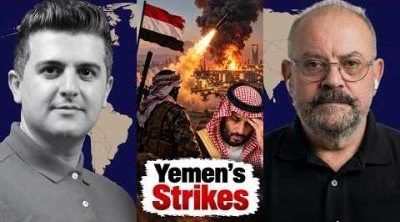
Elijah Magnier: Yemen’s strikes are shattering Saudi Arabia’s long-term strategy
or go to
Aletho News Archives – Video-Images
From the Archives
British weapons and personnel doing much of the killing in Yemen
Press TV – June 18, 2019
A detailed report published by the Guardian newspaper has shown how Britain is massively contributing to Saudi Arabia’s devastating war on Yemen as it suggests that London is not only supplying the bombs that fall on Yemenis, but it provides the personnel and expertise that keep the war going.
The comprehensive report by Arron Merat published on Tuesday showed that Britain was doing much of the killing in Yemen as the country continues to provide Saudi Arabia with everything it needs to turn its southern impoverished neighbor into a graveyard.
“Every day Yemen is hit by British bombs – dropped by British planes that are flown by British-trained pilots and maintained and prepared inside Saudi Arabia by thousands of British contractors,” said Merat in the report. … continue
Blog Roll
 Aletho News
- Racist Seinfeld Dances for Joy as Bibi Unveils His New Map
- A West Bank War for Netanyahu’s Election Campaign, Could It Backfire?
- Yemen denounces European Parliament’s ‘hypocritical’ push to blacklist Ansarullah
- Qalibaf: UAE’s UN bid aims to ‘clear the runway’ for ‘Greater Israel’, whitewash genocide
- Pakistan reopens Iran border after boosting security: Report
- Why are so many Brazilians voting for Flávio Bolsonaro?
- Democrats Put Anti-Russia Agenda Ahead of American Workers
- Elijah Magnier: Yemen’s Strikes Are Shattering Saudi Arabia’s Long-Term Strategy
- Pentagon designates Chinese cultural centers national security threat
- Israel Demolishes Home Of Lebanese Journalist Whose Viral Film Exposed Pager Attack
- If Americans Knew
- An error has occurred; the feed is probably down. Try again later.
- No Tricks Zone
- Sudden Stratospheric Warming, Powerful El Niño Combination May Lead To Extreme Europe Cold, Energy Crisis!
- Two New Studies Find Thwaites Glacier Melt Cannot Be Driven By Human Activity Or A Warming Ocean
- E-Cars Reduce CO2 Emissions By Only 41% Compared To Internal Combustion Engine Vehicles
- Predictions Made By Renowned Climate Professor Over Past Decades Have Been Proven To Be Poor
- New Study Suggests Large Regions Of The Pacific Ocean Have Been Cooling For The Last 80 Years
- Germany’s Green Energy Debacle: High Energy Costs Force Kahla Porzellan to Close After 182 Years!
- New Study: 50 Years Of The Most Aggressive ‘Net Zero’ Policies Can Only Affect The Global Climate By 0.03°C
- US September “Heat” Was No Record…Many Records Set Decades Ago
- Latest European Green Energy Debacle; Portugal’s Largest Flagship Solar Park Insolvent!
- Green Energy Debacle: German Expert Professor Fritz Vahrenholt Warns Of Severe Economic And Social Consequences

