A Tainted Tribunal: Israel’s Other War on Lebanon

The assassination of Hariri served the interests only of the US and Israel
By Jeremy Salt – Palestine Chronicle – October 30, 2010
The extraordinary scenes this week at a gynaecological and obsetrics clinic in the southern suburbs of Beirut have again cast light on the work of the UN Special Tribunal for Lebanon (STL), set up to investigate the assassination of Rafiq Hariri. STL investigators went to Dr Inam Charara’s clinic with a demand to be given access to the files of patients dating back to 2003. More specifically, they wanted the addresses and phone numbers of 17 patients. The presence of STL investigators in her clinic disturbed women waiting for appointments. Other women arrived from other clinics in the building and a fracas broke out. Eventually the investigators were driven off, but not before a computer, a briefcase, mobile phones and notebooks had been snatched from them. The episode raises fresh questions about the role of the STL. The southern suburbs are predominantly Shi’a and many of the patients in Dr Charara’s clinic are the wives, daughters and mothers of Hizbullah officials. What the STL hoped to find remains known only to itself.
The demand for information from medical records would cut across the principle of doctor-patient confidentiality in any country and would never be allowed in the US or any EU country, if allowed at all, except on the basis of a successful application to a court. In Lebanon it was not even made by a government agency but by an extra-territorial organisation which arrived with nothing other than the authority of the UN. The demand was further outrageous in the context of a conservative Muslim culture. Muslim men will not even allow their women to see male doctors. Most Muslim women would only want to be seen by a female doctor and this invasion by men of a gynaecological clinic was extraordinarily intrusive and insensitive.
In an address made immediately after these events, Hasan Nasrallah called for a complete boycott of the STL. He said that it had sought and been given access to the data base of all students (Lebanese and foreign) at private universities in Lebanon from 2003-2006, but left open the question of whether student records at public universities had also been given to the STL. He said it had sought the fingerprint and passport details relating to all Lebanese nationals but because of a dispute between government officials had succeeded in getting the data of only 893 people. The STL had also sought all telecommunications records, including sms messages, as well as DNA records held by government agencies, topographical surveys covering the entire country and even lists of electricity subscribers. Nasrallah said there was no sector in Lebanon the STL had not penetrated. He claimed, furthermore, that all material being gathered by the STL had been passed on to western intelligence agencies and Israel. On the basis of the known transmission to Israel of information gathered by the UN arms inspection teams sent to Iraq in the 1990s, there is no reason to doubt the possibility that what he is saying is true.
Lebanon has again become the focal point of a region-global power struggle. On one side is the unusual combination of Syria and Saudi Arabia, trying to preserve stability between Sunni, Shia and Christians and on the other is Israel and the US, which are doing their best to destroy Hizbullah through the destabilisation of Lebanon. The indictment of Hizbullah members is the chief weapon in their arsenal.
Questions about the role of the STL – what some see as its true role as opposed to its declared role – have been asked since the beginning. The report of the first prosecutor, Detlev Mehlis, was a hatchet job, a grotesque parody of a proper investigation. There was not even an attempt to look at all possible suspects, which would naturally have had to include the US and Israel. He went straight for Syria. His ‘evidence’ was mostly based on speculation and loose connections. Where his report had some appearance of solidity was in records of mobile phone calls made by those alleged to have been involved in the assassination of Hariri. On this basis, four senior Lebanese security and intelligence officials were prosecuted and jailed for four years, only to be released the moment they were transferred from the custody of the Lebanese government to the custody of the STL because the evidence did not stand up. It was at this point that the STL turned its attention to Hizbullah.
It has now turned out that the STL was either duped by false witnesses or chose to use them against Syria. It has also turned out that Israel, by the time Hariri was assassinated, had penetrated the networks of Lebanon’s two main telecommunications providers and actually had its own agents inside these organisations. This penetration not only allowed Israel to monitor all mobile phone calls in Lebanon but to fabricate them, and on this basis all communications evidence collected by the STL would have to be regarded as tainted. Furthermore, Hizbullah recently produced intercepts of Israeli aerial surveillance showing that Hariri had been tracked as he travelled between his homes in West Beirut and the mountains and the parliament building right up to the day he was killed. This surveillance included his movement along the coastal road where he drove into the trap set for him. Nasrallah has also claimed that an Israeli AWACs plane was circling over West Beirut at the time of the assassination and that an Israeli agent, who later fled the country, was actually at the scene when the bomb went off.
The STL’s claims to credibility and impartiality have clearly been undermined – lethally undermined as many would say – by its reliance on false witnesses and evidence from a subverted communications system. Yet it has not dealt with these issues. Neither has it dealt with the clear proof that Israel was monitoring Hariri’s movements across West Beirut up to the day he died, and indeed the claim that it had an agent at the scene of the bombing. Ignoring all this, it has gone straight for Hizbullah, in the full knowledge that the issuing of indictments has the potential to tear the country apart. Whether the evidence is again based on false witnesses won’t matter, because by the time the truth is established the damage will have been done.
Senior US officials, including Hillary Clinton, have made numerous visits to Lebanon in recent months. Of course they are cooking up something. They want Hizbullah’s head on a platter as soon as possible. Any Lebanese who thinks they have Lebanon’s best interests at heart is a fool. Unable to destroy Hizbullah in battle, the Israeli-US strategy now is to destroy it from within, even if the cost, which, of course, they would not have to pay, is a return to turmoil in Lebanon. Its chief assault weapon is the STL, which, by refusing to deal with issues that call into question its credibility, has only heightened the perception that, willingly or otherwise, it is a tool of US policy. The assassination of Hariri was a master stroke which served the interests only of the US and Israel. Even if the identity of the people who killed him, or the state which planned his killing, still remains unknown, that much at least can be said to be true.
– Jeremy Salt is associate professor in Middle Eastern History and Politics at Bilkent University in Ankara, Turkey. Previously, he taught at Bosporus University in Istanbul and the University of Melbourne in the Departments of Middle Eastern Studies and Political Science. Professor Salt has written many articles on Middle East issues, particularly Palestine, and was a journalist for The Age newspaper when he lived in Melbourne.
Pre-Election Bomb Plot a Political Boost for Obama
‘Terror Threat’ a Big Political Win for Obama, Dems
By Jason Ditz | Anti-war.com | October 29, 2010
Though the administration has declined to raise the terror alert level, the very public nature of the Yemen bomb plot is seen as giving President Obama and incumbent Congressional Democrats a much-needed political shot in the arm, conveniently enough just days before the midterm elections.
The plot gave an opportunity for President Obama to look “presidential,” experts say, as he gave a high profile speech vowing “any steps necessary” to see al-Qaeda’s Yemeni affiliate destroyed.
The fact that by all accounts no explosives appear to have actually gotten to the United States also likely plays to the administration’s advantage, and indeed the advantage of all incumbents, who can claim that the “system worked” in this regard even as they promise major new foreign policy ventures in retaliation.
Though former Bush-era offical Gordon Johndroe insisted that these attacks can “cut either way” politically right before the election, the recent history in the US and abroad suggests that they have pretty much universally favored the incumbent, and while this particularly incident appears much larger, it does not appear to be any different in that regard.
Recent polls had showed Democrats taking big hits in the upcoming Midterm election, and President Obama’s campaigning doing very little to help. The consequences of a shift in the popular interest away from the economy and onto hawkish rhetoric about revenge attacks against al-Qaeda at the last minute could be significant, and might well mean that the massive losses the incumbents were facing will no longer apply.
The Betrayal of Omar Khadr – and of American Justice
By Andy Worthington | 26.10.10
Yesterday morning, wearing a dark suit, a white shirt and a dark tie, Omar Khadr, the Canadian citizen who was just 15 years old when he was seized after a firefight in Afghanistan in July 2002, ended an eight-year struggle — first by the Bush administration, and then by the Obama administration — to convict him in a war crimes trial at Guantánamo, when he accepted a plea deal in exchange for a reported eight-year sentence.
According to an article in the Miami Herald, drawing on comments made by “two legal sources with direct knowledge” of the deal, Khadr said he “eagerly took part in a July 28, 2002 firefight with US Special Forces in Afghanistan that mortally wounded Sgt 1st Class Christopher Speer.” This was the crux of the case against him, and a charge that he had always previously denied. He also said that he had “aspired as a teen to kill Americans and Jews,” and described his father, Ahmed Said Khadr, who had been responsible for taking him on numerous visits to Pakistan and Afghanistan as a child, leading to the events on the day of his capture, as “a part of Bin Laden’s inner circle, a trusted confidant and fundraiser.”
Khadr’s plea was submitted to the judge, Army Col. Patrick Parrish, by his military defense lawyer, Army Lt. Jon Jackson, and Col. Parrish made sure that he knew what he was doing as he ran through the charges. “Yes,” Khadr replied. “You should only do this if you truly believe it is in your best interests,” Col. Parrish then told him. “Yes,” Khadr replied again. According to the Miami Herald, his voice was “a near whisper,” but became stronger as Col. Parrish read out the charges.
As the Globe and Mail described it, Khadr “assented to knowing that he was attacking civilians, that he wanted to kill US troops, that he planted mines and that he received one-on-one terrorist training from an al-Qaeda operative.” He also agreed that he was a member of al-Qaeda, and was an “alien, unprivileged, enemy belligerent,” who was “unqualified therefore to shoot back or engage in combat hostilities with US or other coalition forces,” and also said that he understood that he was guilty of “murder in violation of the laws of war.”
For the United States, the plea deal means that a trial has been avoided, dimming the glare of the global media spotlight on the embarrassing prospect of the first war crimes trial of a child soldier since the Second World War. Instead, according to the Military Commission rules, a limited amount of evidence will be submitted this week — including testimony from Tabitha Speer, the widow of the Special Forces soldier killed by the grenade in the firefight that led to Khadr’s capture, and statements by mental health professionals for both the prosecution and the defense — before a seven-member military jury will deliver its own sentence. As the details of Khadr’s plea deal have not been made public, this strange formality (which involves a sentence without a trial) will only mean anything if the jury delivers a less severe sentence than the one negotiated in secret.
This, however, is not the main problem with yesterday’s outcome, which blurs the parameters of justice horribly, creating the impression that Khadr is guilty, even though he may only have agreed to confess in order to secure a favorable sentence. This is something that Daphne Eviatar, an observer for Human Rights First, noted in an excellent article in the Huffington Post, when she explained that “it was clear that prosecutors had taken the opportunity to throw the kitchen-sink-full of charges at him — including far more crimes than he’d even been charged with. Most importantly, Khadr pled guilty to killing two Afghan soldiers who accompanied US forces in the 2002 assault on the compound. The government has never presented any evidence whatsoever that Khadr was responsible for that, and did not claim he was in its opening statement at trial.”
In addition, Khadr’s guilty plea enables the Obama administration to disguise the many fundamental flaws with the Military Commissions, which might have been exposed during a trial.
Because Khadr’s plea deal is presumed to stipulate that he cannot appeal, the administration will be able to tell the world that the Commissions are “fair and just,” although they are no such thing. One problem, of course, is that a former child prisoner has been subjected to a trial after eight years of imprisonment in an experimental prison devoted to arbitrary detention and coercive interrogation, when he should have been rehabilitated, according to the UN Optional Protocol to the Convention on the Rights of the Child on the involvement of children in armed conflict (which the US ratified in December 2002), but another concerns the nature of the crimes to which he confessed.
This second problem — which focuses on the fundamental legitimacy of the Commissions — was illustrated starkly in the Globe and Mail’s description of how Khadr agreed that he was an “alien, unprivileged, enemy belligerent,” who was “unqualified therefore to shoot back or engage in combat hostilities with US or other coalition forces,” and also how he reportedly understood that he was guilty of “murder in violation of the laws of war.”
Back in April, Lt. Col. David Frakt, a law professor and the former military defense attorney for two other Guantánamo prisoners, Mohamed Jawad and Ali Hamza al-Bahlul, spelled out the problems with these charges in no uncertain terms. Writing of the central charge of “murder in violation of the law of war,” Lt. Col. Frakt explained that, even if Khadr did throw the grenade, “there is no evidence that he violated the law of war in doing so.”
As I explained in an article about Khadr two months ago, he added that “the confusion arose initially because the Bush administration wanted to find a way to ensure that ‘any attempt to fight Americans or coalition forces was a war crime,’ and that Congress, in enacting two pieces of legislation relating to the Military Commissions in 2006 and in 2009, maintained this unjustifiable position by refusing to distinguish between legitimate and illegitimate actions during wartime.”
Lt. Col. Frakt also explained that the Bush administration’s original invented charge for the Commissions — “Murder by an Unprivileged Belligerent” — was, essentially, replaced by the Congress-endorsed “Murder in Violation of the Law of War,” even though it “conflated two different concepts — unprivileged belligerents and war criminals.”
He continued:
Under Article 4 of the Geneva Prisoner of War Convention it is clear that while a member of an organized resistance movement or militia may be an unprivileged belligerent (because of not wearing a uniform or failing to carry arms openly, for example) he may still comply with the laws and customs of war, so not all hostile acts committed by unprivileged belligerents are war crimes. Attacks by unprivileged belligerents which comply with the law of war (in that they attack lawful military targets with lawful weapons) may only be tried in domestic courts. In Iraq, for example, insurgents who try to kill Americans by implanting roadside bombs are properly arrested and tried before the Central Criminal Court of Iraq as common criminals. Attacks by unprivileged belligerents which violate the law of war, such as attacks on civilians or soldiers attempting to surrender, or using prohibited weapons like poison gas, can be tried in a war crimes tribunal.
With Khadr’s plea deal, the uncomfortable truth about the Commissions — that they have been established to try non-existent war crimes — has been swept aside as thoroughly as it was in the case of Ibrahim al-Qosi, who accepted a plea deal in July. As a result, Omar Khadr may have taken the only realistic route open to him, but the price has been the apparent validation of a fundamentally lawless process, which could have been legally challenged had he been subjected to a full trial.
Back in July, Omar Khadr refused to accept a plea deal, and, in a letter to Dennis Edney, one of his Canadian lawyers, wrote, “there must be somebody to sacrifice to really show the world the unfairness [of the Commissions], and really it seems that it’s me.” It is understandable that — faced with an eight-year sentence, or the possibility of a life sentence in exchange for a “sacrifice” — Khadr chose the former option.
However, it remains deeply depressing that the Obama administration will be able to maintain the fiction that the Military Commissions are capable of delivering justice, and also that it now appears to be irrelevant that Khadr was a juvenile prisoner, subjected to horrific treatment, because he has conceded, in circumstances that may not have been conducive to telling the truth, that he was in fact a terrorist.
Iran: US behind Wikileaks revelations
Press TV – October 25, 2010
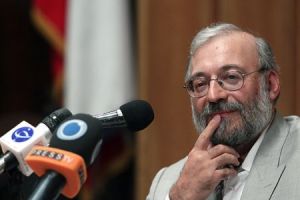 Mohammad-Javad Larijani
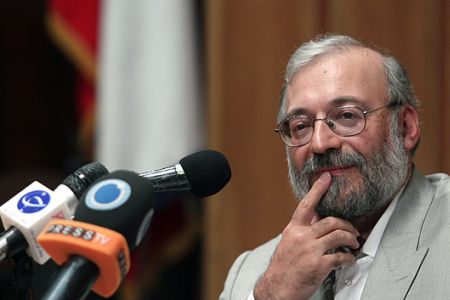
A senior Iranian diplomat says recent revelations by whistleblower website Wikileaks are Washington’s ploy to cover up human rights violations by the US.
In the largest-ever revelation of secret US military documents, Wikileaks released nearly 400,000 classified reports about the US-led war in Iraq.
The leaked documents, which cover the period between January 1, 2004, and January 1, 2010, have shed light on a myriad of crimes and offences committed in Iraq over the past few years, including assassinations, murders, torture and rape.
“It seems that these [revelations] are made upon the order of the US,” Secretary-General of Iran’s High Council for Human Rights Mohammad-Javad Larijani said on Monday at the summit for reviewing the human rights situation in the US.
“The message of Wikileaks documents is that the Iraqi people have been tortured by Iraq’s security forces, and the only wrongdoing of Americans is that they witnessed the incidents and remained silent,” IRNA quoted Larijani as saying.
“This is while the US had the main role in these incidents and is the defendant,” the Iranian diplomat added.
Larijani said unfortunately the Internet, which was supposed to provide all people with vast information, is being used for publishing anti-information in the world.
The head of Iran’s human rights council stressed that the US and certain Western countries take advantage of human rights violations and that “it is necessary to prevent and resist these political abuses.”
The new Wikileaks documents comprise the second such release from the controversial website, which accused the United States of “war crimes” after earlier releasing some 92,000 similar secret military files detailing operations in Afghanistan.
These documents charge the United States Defense Department with instructing American troops to ignore reports recounting torture; they also suggest “hundreds” of civilians have been killed at US military checkpoints since the beginning of the war.
Refusing to discus the Wikikeaks disclosures, US Secretary of State Hillary Clinton merely condemned the leak of any document “putting Americans at risk.”
“We should condemn in the most clear terms the disclosure of any information by individuals and or organizations which puts the lives of United States and its partners’ service members and civilians at risk,” she said.
More bogus claims burried in wikileaks ‘Iraq war logs’
IslamTimes | October 23, 2010:
‘The documents seem to paint a picture that very much favours official U.S. positions on the Iraq war. For example, the American media, which has a well documented history of shilling for the U.S. government highlighted two stories that it supposedly extrapolated from these documents. The first was the fact that the majority of civilian casualties in the Iraq war were caused by Iraqis. This directly contradicts a comprehensive study conducted by John Hopkins University in 2004. It found that “coalition” forces killed over 600,000 Iraqis, the majority of them killed in airstrikes. The leaked documents conveniently contradict this information.
The second major story emanating from the “leaks” is that Iran was actively destabilizing Iraq by funding militants who were assassinating Iraqi officials. One AFP story even highlights the accusation that Iran tried to launch a poison gas attack on the “green zone,” an area where Iraqi and American officials are based. Another factor that makes this “leak” highly suspect is that the Times, a newspaper that played a leading role in validating the illegal invasion of Iraq and is well known for its pro Zionist policy, was one of “few” media outlets that was given “early” access to these “leaked” documents. This meant that the Times was able to weave a narrative around the leaked documents that was then picked up by all the major networks.
The fact that the supposedly damaging leaks are in fact bolstering American accusations against Iran while minimizing American complicity in Iraqi deaths leads some to believe that the leaks are in fact engineered by the Pentagon to either discredit Wikileaks, or are in conjunction with Wikileaks which is a U.S. government outfit.’
Comment by a.h.k:
This builds on the ‘Afghan war diaries’, where wikileaks, and whoever really owns them, accuses Iran of aiding the taliban and other insurgent groups in the country.
Judith Miller’s Lies About Ahmadinejad in Lebanon
Beiruit – The run-up to Iranian President Mahmoud Ahmadinejad’s recent visit to Lebanon called forth a barrage of comment from neoconservative circles. Unlike the savvy campaign for war in Iraq, however, they now tend to make straightforward claims that are self-evidently at odds with reality.
In other words, they’re not even telling very good lies any more.
A case in point was Iraq War propagandist Judith Miller’s Fox News article, whose central complaint seems to be that Ahmadinejad’s trip came at the behest of a single party, the Shia party/militia Hezbollah, rather than in response to an official invitation from the Lebanese government; “Who Invited You?” her headline indignantly blared.
Two problems undermined this approach. The first was that then-Foreign Minister Fawzi Salloukh quite publicly relayed just such an invitation to Ahmadinejad from his Lebanese counterpart, Michel Sleiman, in July 2008. The other was that Sleiman travelled to the Islamic Republic in November of that same year, making a reciprocal visit by Ahmadinejad what should have been a foregone conclusion.
That likelihood was placed in considerable doubt by the U.S. government’s having presumed the right to draw up Lebanon’s diplomatic schedule. While Miller rightly reported that Washington viewed the visit as “provocative,” she neglected to mention that heavy American pressure was applied on Beirut to cancel the visit. The U.S. demand was made in the name of Lebanese sovereignty (yes, really), which is rather ironic coming from a country that has supplied the tools for Israel’s occupation and violation of Lebanese territory, airspace and maritime boundaries for decades.
Undaunted by the untruths at the core of her position, Miller proceeds to expand on it. She asserts that other than the Iran’s close allies, Hezbollah, “Lebanon’s other political leaders … undoubtedly don’t share the love” for Ahmadinejad. Another falsehood: by any genuinely democratic standard, Lebanon’s most important political leaders do share that love. The parties that represent Lebanon’s largest sectarian community – its Shia population — are Sayyed Hassan Nasrallah’s Hezbollah and Speaker Nabih Berri’s AMAL, both of which enthusiastically welcomed Ahmadinejad. In addition, the Christian politician with the strongest bloc in Parliament, former Army Commander Michel Aoun, also supported the visit. Together, these parties and their allies received well over 50 percent of the vote in the last parliamentary elections.
Next we are treated to a brazen description of Ahmadinejad as “the man whose country is indirectly responsible for having killed [current Prime Minister Saad Hariri’s] father, former Prime Minister Rafik Hariri.” Until the recent thaw between the top suspect — Syria — and the Hariri family’s benefactors in the Saudi royal family, no serious analyst even mentioned Hezbollah as a possible participant in the 2005 assassination. Now, in the absence of charges or hard public evidence, we are to presume Hezbollah’s guilt – and, by association, Iran’s – as established fact.
We are then told that the Hariri killing “sparked massive protests throughout Lebanon. This so-called ‘Cedar Revolution’ succeeded in forcing Syria, Iran’s neighbor and main Sunni Muslim ally, to withdraw the 14,000 ‘peace-keeping’ forces it had been keeping in Lebanon since the end of that country’s bloody civil war in 1990.” A few more problems. There were huge demonstrations (both for and against Syria), but all of the protests of any notable size took place in Beirut. Also, the term “Cedar Revolution” was coined by someone at the U.S. State Department. Would someone please tell American journalists to stop using it? In addition, unless someone has radically altered the map of the region (again), Syria and Iran do not share a border — they are neighbors in the same way that Iran and Lebanon are. And one more thing: Syria sent about 25,000 troops into Lebanon in 1976 — not 1990 – at the request of the latter’s president and with an Arab League mandate to foster stability amid the raging civil war.
Next, Hariri the younger is dismissed as “turning out to be anything but his father’s son.” In support, Miller trots out an Israeli journalist, Smadar Perry, to belittle Saad for having met with “Nasrallah (his father’s executioner)” and the “mastermind,” Syrian President Bashar Assad. Neither the American nor the Israeli, apparently, knows anything about the late Rafik Hariri, who made a career out of seeking and reaching accommodations with and among all the powerbrokers – both foreign and domestic, including, for years, the Syrians – in Lebanon’s cramped and chaotic political arena.
At this point we are apprised of the role of the Special Tribunal for Lebanon (STL), which is supposed to look into the assassination. It is described, however, as a “UN panel,” which it is not: instead, the STL is a hybrid court whose judges will include Lebanese jurists and whose legality under the UN Charter is highly debatable owing to several factors — not least its having been created without the acquiescence of Lebanon’s Parliament.
Then another unabashedly pro-Israeli source — a report from the AIPAC-formed Washington Institute for Near East Policy — is put forth to assert that Ahmadinejad’s trip is intended to apply pressure on Saad Hariri “and his Lebanese and Western allies” to cancel Lebanon’s support for the court, “which Lebanon has been financing.” Actually, Lebanon is responsible for just 49% of the bill – and not a few Lebanese question the value of the investment because the court is widely viewed as a political tool of the pro-Western camp.
Next we are treated to a quote attributed to Nasrallah by yet another rabidly pro-Israeli actor, MEMRI, which tries to smear the cleric by tying him to a favorite American bogeyman, the late Ayatollah Ruhollah Khomeini. Not very artful, and even less relevant given that the date of its alleged provenance was more than two decades ago.
Then Miller hauls out a fellow neoconservative journalist, Lee Smith, who is used to a) make the point that Hezbollah’s real targets are Israeli and Arab public opinion; b) dredge up the familiar lie that Ahmadinejad has threatened to ‘wipe Israel off the map’; and c) reduce Nasrallah (leader of Hezbollah since 1992) to a “creation” of Ahmadinejad.
Finally, near the end of this avalanche of error, another point from Lee Smith is then applied which almost (however inadvertently) recovers the whole article: “By continuing to fight to liberate Jerusalem,” he is quoted as telling us, Tehran has “picked up the banner of Arab nationalism [sic] that the Sunni Arab regimes had tossed by the wayside. Here was another reason for the Arab masses to despise their cruel and now obviously cowardly rulers – and admire a Shia and Persian power they might otherwise fear and detest.” Some of those Arab regimes never took up the banner of Arab nationalism in the first place, and Iran’s emphasis is on Islamic solidarity, but the point is the same – by all but the most warped definitions of international law, at least half of Jerusalem is an occupied city, a fact which plenty of Arabs and other Muslims regard as unacceptable.
Here, then, is the real reason why America and Israel fret over the likes of Ahmadinejad: their policy has always been to divide and control (Arab vs. Persian, Sunni vs. Shia, oil producer vs. consumer, monarchist vs. republican, etc.) and anyone who even speaks about uniting these elements – regardless of how unsuccessful he is likely to be – threatens to expose the glaring weakness at the heart of their position.
Marc J. Sirois is an independent analyst based in Beirut, where he was managing editor of The Daily Star newspaper from 2000-2003 and 2006-2009.
Walter Russell Mead’s Faulty Logic: Israel policy is broadly rooted in the will of the American people
Daniel Luban | Lobe Log | October 20, 2010
Walter Russell Mead has a new piece in which he reiterates the argument that he’s been making for some time: namely, that U.S. policy towards Israel is not the product of special interests or lobbies, and in fact has little to do with the political views of American Jews at all. Rather, argues Mead, the U.S.’s deference to Israel is simply an expression of the views of the U.S. Christian majority. The upshot — although Mead is understandably hesitant to say so explicitly — seems to be that there’s no point attempting to change U.S. policy towards Israel, since this policy is broadly rooted in the will of the American people. I’ve already suggested some of my problems with Mead’s thesis, but it’s worth spelling out more fully just where Mead goes wrong.
To begin with, his entire argument is built around a strawman. He attributes to AIPAC’s critics the view that “the Jews” control U.S. foreign policy, calling such critics “theorists of occult Jewish power” who spin conspiracy theories about the “allegedly awesome mindbending power of Jews in the media and the allegedly irresistible power of Jewish money.” He then goes on to note, quite rightly, both that the Israel lobby relies heavily on Christians (particularly evangelical Christian Zionists) and that the views of AIPAC and other lobby organizations skew well to the right of U.S. Jews as a whole.
The problem is that no mainstream critics of the lobby (and certainly not John Mearsheimer and Stephen Walt, who are clearly the implicit if unmentioned targets here) ever claimed that the lobby was synonymous with “the Jews”. This latter notion was primarily attributed to them by attackers who were eager to conflate such criticism with the language of traditional anti-Semitism. But on the contrary, most critics of the lobby have always been explicit both about the role of Christian Zionists and about the dovish views of American Jews. In fact, these have been among the chief complaints about the lobby: that it relies on large numbers of people who espouse a messianic Greater Israel ideology that is certain to end in disaster, and that organizations like the Conference of Presidents and the ADL skew far to the right of the Jewish community that they claim to represent. Thus Mead’s strategy is to attribute to the lobby’s critics a view that few if any of them have ever espoused, to use this nonexistent view as evidence for their basic anti-Semitism, and then to patronizingly lecture them in support of precisely the view that they actually hold.
As noted, Mead is surely correct to note that U.S. policy toward Israel does not reflect the views of the American Jewish community as a whole. However, he then goes to the opposite extreme by denying that Jews have anything to do with the power of AIPAC and the lobby. He notes that Jews make up only a small part of the electorate and that polls show broadly positive attitudes toward Israel on the part of the U.S. Christian population; for him, this demonstrates that Christian support is the key factor (indeed, virtually the only one) accounting for U.S. deference to Israel. However, this argument has several major flaws.
First, it rests on a rather naive and uncritical view of how policy is made, as if U.S. foreign policy simply flowed unproblematically from the Will Of The American People. If this were actually the case, of course, our foreign policy would look very different (we wouldn’t be in Afghanistan, to take one obvious example). But this suggests that simply to point at poll findings as a sufficient explanation for U.S. policy is inadequate, and I doubt if Mead would resort to such a simplistic explanation to explain our policy towards any country other than Israel.
Second, it rests on a similarly naive and blinkered role of political power. Mead’s entire argument for the claim that Jewish power is irrelevant to the lobby is that “[l]ess than two percent of the US population is Jewish, and Jews aren’t exactly swing voters.” Again, Mead is surely too smart to sincerely believe that political power is purely synonymous with the number of votes that a group commands. I realize that discussions of Jewish money or Jewish media influence conjure up all sorts of unsavory associations, but it is simply impossible to have a serious discussion of these issues if one does not recognize the basic fact that Jews punch above our weight in terms of political, intellectual, and financial influence. Contributions from Jews account for an enormous chunk of the donations received by the Democratic party (the exact number is difficult to ascertain), and incidents like last year’s Jane Harman scandal demonstrate the ways that this influence can be manifested in practice. Thus to simply write American Jewry out of the story when it comes to explaining the lobby’s success is fallacious; the highly mobilized hardliners within the Jewish community have been absolutely critical to this success.
Third, it rests on a simplistic and misleading reading of history. The allegedly deep, abiding, and everlasting love of the American people for Israel turns out on closer inspection to be far less than meets the eye. I suspect that most American Jews whose memories extend farther back than about 1950 would take issue with the notion that American culture is based around some inherent and eternal affection for Jews. Similarly, the attempt to portray some sort of proto-Zionism as a major force in American political culture “dating back to colonial times” requires a willful cherry-picking of the historical record. (A few months ago, Phil Weiss wrote a revealing investigation of Michael Oren’s attempts to portray Abraham Lincoln as a Zionist; following Oren’s footnote trail, Weiss found that the original sources suggest no such thing. It’s just one anecdote, but a revealing and perhaps symptomatic one.)
Mead writes that during the Cold War, “Americans gradually got into the habit of considering Israel one of our most valuable and reliable allies”. This formulation appears to be a euphemistic way of dealing with the fact that there is little evidence of Americans clamoring for an alliance with Israel prior to the 1967 war. In fact, strong support for Israel in the U.S. among Jews and non-Jews alike only came about post-1967, once the U.S. had already formed its strategic alliance with Israel. Far from the U.S.-Israel alliance springing from overwhelming popular sentiment, it would be more accurate (although still a bit simplistic) to argue on the contrary that the popular sentiment sprang out of the alliance.
Fourth, Mead’s argument overstates the importance of poll results. As I’ve written elsewhere, the fact that a majority of Americans claim to have “positive feelings” about Israel or to “support” Israel tells us very little about whether this support will manifest itself in any concrete action.
Thus Mead cites a poll finding that “53% of voters were more likely to vote for a candidate who was ‘pro-Israel’.” We should note, first, that this number is actually surprisingly low. Considering how broad the term “pro-Israel” is, it’s revealing that barely over half the voting population even considers “pro-Israel” views as a selling point in a candidate at all. But we should also note that this number tells us virtually nothing about how voters will actually behave. It suggests that a bare majority would prefer a candidate who is in some sense “pro-Israel,” all else being equal — but it says nothing about whether “pro-Israel” views are actually important enough for voters to prioritize them over other interests.
Finally, it’s worth noting that even if American public support for Israel were as overwhelming as Mead claims, this still would not by itself explain the extreme deference shown by the U.S. to its client even when Israel does things that cut against U.S. interests. To take a counterexample, think of the U.S. relationship with Britain in the 1950s. This was the very height of the Cold War special relationship; the two countries had shed enormous amounts of blood fighting alongside one another in two world wars, and the American public showed a level of goodwill toward the British that dwarfed that which they now show to Israel. (Even as late as 1997, a Harris poll showed that 63% of Americans considered the U.K. a “close ally,” compared with only 29% who felt the same about Israel.)
Yet this high level of public support for the special relationship did not prevent the U.S. from acting against the U.K. (not to mention Israel) during the 1956 Suez Crisis, when it felt that the U.K. was acting against its interests. This is one clear indication of how misleading it is to try to deduce U.S. foreign policy directly from broad indications of goodwill found in polling data. And it is a refutation of the claim that U.S. deference to Israel simply reflects standard practice between allies. Can anyone claim that a U.S. president would have the political fortitude to stand down Israel today the way that Eisenhower stood down the U.K. in 1956? The performance we’ve seen so far from the Obama administration indicates how far-fetched such a possibility is.
As I suggested at the beginning, the upshot of Mead’s piece is that critics of U.S. policy toward Israel/Palestine are wasting their time trying to change it, since the American people’s deep-seated love for Israel makes this policy inevitable. We have seen the ways in which this argument fails to hold water. Yet I suspect that Mead’s real belief is not that changing our policies toward Israel/Palestine would be impossible, but that it would be undesirable; I suspect, in other words, that his arguments about U.S. public opinion are ultimately rooted in his own support for a continuation of the status quo. And I suspect, finally, that it is precisely the difficulty of making a tenable argument in support of this status quo that has caused him to fall back on the pose of the disinterested observer, and to rely on these fallacious arguments about the status quo’s inevitability.
How many lies can Alan Dershowitz tell in 60 seconds?
By David Samel | Mondoweiss | October 19, 2010
How many lies can Alan Dershowitz tell in 60 seconds? There have been several posts concerning the recent debate between Dershowitz and Susan Abulhawa at the recent Boston Book Festival. Many have noted the dramatic contrast between the calm Abulhawa and the manic Dershowitz. A full dissection of Dershowitz’s falsehoods over the full hour of video would be too time-consuming, but let’s take a look at a single minute of his rantings, from about 34:15 to 35:15.
Denouncing the allegation of a massacre in Jenin, the Dersh lectured:
The massacre was the massacre of 55 Jewish people sitting at a Seder in the Park Hotel just before [the Israeli incursion into Jenin], and Palestinian terrorists from Jenin went in and murdered 55 Israeli family members having a seder. Israelis responded not from the air which they had the right to do but from the ground. . . There was no massacre in Jenin,. . it didn’t happen. There was a battle in Jenin in which fewer people died than were killed at the Park Hotel. This is total fiction, total false fiction. You must learn the facts.
Let’s leave aside the bigger picture of whether Israel’s actions constituted a “massacre,” “human rights violations,” or “war crimes” under various definitions of those terms. UN envoy Terje Roed-Larsen called the destruction “horrific beyond belief” and said it was “morally repugnant” that Israel denied access by emergency workers for 11 days. Let’s just focus on Dershowitz’s smaller lies:
1) The Park Hotel suicide bombing claimed 30 lives, not 55.
2) The bombing was carried out by a single terrorist, not multiple terrorists.
3) The single bomber was from Tulkarem, not Jenin.
4) The victims were not all members of one family.
5) The Palestinian death count in Jenin was 52, greater than the number actually killed at the Park Hotel, but less than the number Dershowitz falsely claimed were killed.
6) Israel had no “right” to respond to the bombing by bombing Tulkarem or Jenin from the air, at least not under international law or under any widely accepted moral or ethical code. (Israel’s “right” to indiscriminately bomb any Palestinians for the actions of some does have many precedents, however. For example, in the aftermath of the Munich Olympic deaths of 11 Israelis, Israel bombed refugee camps in southern Lebanon and Syria, killing anywhere from 60 to hundreds of people unconnected with the Munich operation but guilty of the crime of being Palestinian.)
Not bad for one minute. Not a Dersh personal record, but not bad. I do love the end of this monologue, when Dershowitz says, with complete conviction and passion: “You must learn the facts.”
New tourism law shows the more the Israeli narrative gets challenged, the greater need there is to enforce it
By Elinor Amit | Mondoweiss | October 19, 2010
A proposal for a new law has been submitted to the Israeli parliament which states that only Israeli citizens would be permitted to serve as tour guides in Israel (does “Israel” include the occupied territories? That’s not clear from the law), when the tour involves non-Israeli citizens. In essence, this law would put hundreds of East Jerusalemite tour guides out of work. The sponsors of the law explained their motivation and I think it speaks for itself:
“….Israel is investing a great effort in order to improve it’s image as a modern, western, democratic and free country… it is therefore important to assure that in order to avoid a damage to this investment, only those that had gone through an appropriate training and got license would be allowed to serve as guide tours.”
Apparently, according to the parliament members who introduced the law, Israeli citizenship is a necessary part of the training a person should go through in order to be qualified for this position.
The explanation goes on:
“There are numerous touristic sites in Israel… often there is a dispute on the way they should be presented in terms of history, religious, culture and more. The city of Jerusalem is an example for a site on which such a dispute exists. Some people that are Israeli residents, such as the residents of East Jerusalem, have many times a “double loyalty”, due to the fact that they vote for the Palestinian Authority. Those residents present some times anti-Israelis views to tourist. In order to assure that those foreign tourists would be exposed to the Israeli national views, it is suggested that the organizations that arrange tours will make sure that those tours would be accompanied by a guide tour who is an Israeli citizen, that has loyalty to the state of Israel. The need to protect the national interest of presenting Israel in an appropriate way is more important than (protecting) other interests.”
Thus, it seems that presenting Israeli as a Western democracy is more important to the law’s initiators, than actually making it one. Moreover, nobody seems to care or even to notice the sharp irony. In fact it looks like Israelis want to eat the cake and still keep it full: occupy the West bank, banish the Palestinians from their land, continue building in the West Bank, expel Palestinians that are Israeli citizens, define Israel as a Jewish state, and demolish the freedom of speech; but still be perceived as acting out of self defense, still be called a democracy, still continue the “peace talks” with the Palestinians, and still be part of the Western world.
The current law proposal is only one example for this dangerous trend. Other examples are the law of the Nakba, the boycott law, and the citizenship law. The picture that emerges from this collection is that Israel is on a slippery slope to becoming a totalitarian nationalist country, with limited freedom of speech, and racist transfer laws.
Even more concerning is the silence of the majority of Israelis that learn about those laws in the morning news. Last Saturday there were 6,000 people in Tel Aviv’s Rabin Square, protesting against this new fascist trend. This is indeed an impressive number of protesters, but a negligible minority whose views are far left from the average. Just to demonstrate how far left they were, it is important to note that one of the tour guide law’s initiators was Illan Gilon – a member of the “leftist” Meretz party (although he later withdrew his endorsement). Apparently, this law does not seems extreme at all to the Israeli ear, even if the ear belongs to a left party.
Notably, here, as in the other proposed laws, the major concern seems to be the image of Israel in the world, and it’s potential exclusion from the “Western democracies”. An interesting question is, why this concern emerged suddenly? Few years ago, when Mordechai Vanunu was released from prison, after serving long 20 years due to exposing the nuclear secrets of Israel, he was ordered not to speak with the foreign press. Vaanunu, in return, decided to speak only in English. As a result, he was sent back to prison. Sending Vanunu back to prison was, of course, not in order to achieve any concrete purpose — the foreign press did not need Vanunu to speak in English in order to know what he said. Not to mention that Vanunu did not have any new information to reveal about Israel’s nuclear power. Sending Vanunu back to prison was a desperate act to protect the belief in the lies Israelis have been telling themselves for over 60 years – about being the just, weak “David” that only protects itself from evil “Goliaths”. Thus, it is an internal action of protecting the self-image, as much as it is an external action of protecting the image of Israel in the world. The new law, just as sending Vaanunu to prison, expresses the realization that it is getting harder and harder to keep believing in this lie – and therefore there is a growing need to enforce it.
Elinor Amit is a post doctoral student in the psychology department at Harvard University. She moved to the US from Israel in 2008.
Pletka’s Bogus ‘Axis of Evil 2′ Conspiracy Theory
By Ali Gharib | Lobe Log | October 18th 2010
If someone is the Vice President of Foreign and Defense Policy Studies at a prominent Washington think-tank, it’s fair to expect a certain level of scholarship. After all, these institutions are supposed to be influencing policy. In the case of the American Enterprise Institute, they just about ran foreign policy during George W. Bush’s first term.
Yet AEI’s Danielle Pletka, that very same think-tank vice president, continues to confound expectations. In her latest post on AEI’s Enterprise Blog, she offers conspiracy theories that obliquely revive former AEI fellow David Frum’s “Axis of Evil” phrasing, and backing them up with… not much. She ends with kicker designed to elicit fear, and links to an article that contradicts her whole point.
Pletka’s piece warns about the threat of a coalition between Russia, Iran and Venezuela. her headline quips: “Connect the Dots — But Don’t Call It an Axis of…” She’s perhaps acknowledging that Iraq’s membership in the first “Axis of Evil,” and the subsequent disastrous war, makes the term politically ill-advised.
It’s a short post — just eight sentences — and her point is that Russia is going to help Venezuela open a nuclear power plant and possibly sell Hugo Chavez the S-300 air defense missiles that Iran was due to purchase (but didn’t when Russia, under U.S. pressure, backed out of the reportedly $800 million deal).
In light of Venezuela’s ties to Iran, Pletka is worried all this is very suspect, and Venezuela might ship the air defense missiles to Iran. “One might reasonably suspect that any weaponry headed for Caracas could easily find its way to Tehran,” is her endnote.
But then she links to a September 14th Fox News story about how a weekly Caracas-Damascus-Tehran flight has actually been canceled. The article, which cites an Iranian right-wing pseudonymous former CIA spy as a source, calls the flight path a “terror flight.”
It’s no wonder that one of Pletka’s former AEI researchers added his perspective on her scholarship to Andrew Sullivan’s Atlantic blog last year. The researcher’s job was “to provide specific evidence to support ready made assertions,” and describes Pletka’s work as the “academic equivalent of mad libs.” “The form is set by the neoconservative agenda, and she mobilizes a narrative that fills in the blanks to serve that agenda.”
Perhaps in her kicker, Pletka meant to demonstrate that such equipment has been “easily” transported before, at some previous time. Therefore, it can happen again. But that’s not what the link she supplied said: It said that there was a potential channel for equipment to move between Venezuela and Iran, but it’s been shut down.
It’s just like saying neoconservatives have before, at some previous time, led the country into a Middle East war with fuzzy facts and bellicose rhetoric. Unlike the “terror flight,” though, neocons are still at it.
The United States fights and pays for Israel’s wars
Interview by Kourosh Ziabari | The People’s Voice | October 17, 2010
 Maidhc Ó Cathail is a widely-published Irish author and journalist. He has been living in Japan since 1999. Cathail’s articles and commentaries have appeared on a number of media outlets and newspapers including Tehran Times, Khaleej Times, Antiwar.com, Foreign Policy Journal, Information Clearing House, Intifada Palestine, Pakistan Daily and Palestine Think Tank.
Maidhc joined me in an exclusive interview and responded to my questions about the 9/11 attacks, the influence of Israeli lobby over the U.S. administration, the prospect of Israeli – Palestinian conflict, the prolonged controversy over Iran’s nuclear program and the freedom of press in the United States.
Kourosh Ziabari: The Iranian President’s recent proposal for the establishment of a fact-finding group to probe into the 9/11 attacks stirred up widespread controversy in the United States. American politicians reacted to Mr. Ahmadinejad’s plan with frustration. Is it because they are aware of some evidence which suggests that Israel was behind the attacks?
Maidhc Ó Cathail: I would say that most American politicians are totally unaware of the Israeli “art students,” the so-called “dancing Israelis,” the Odigo warnings and other facts that point to Israeli involvement in the 9/11 attacks. Therefore, they probably considered Ahmadinejad’s questioning of the official 9/11 narrative to be yet another unwarranted provocation of the United States by the Iranian leader.
Ziabari: You’ve recently written an article about the bill proposed by Senator Joe Lieberman which claims the entire internet and the whole global computer network and everything on it as a “national asset” of the United States, thus giving the power to the U.S. President to kill the internet in the event of a national cyber-emergency. How does this bill, as you’ve put it precisely, kill the internet? In what ways is this proposal contradictory to American freedoms and incongruous with international law?
Ó Cathail: Titled “Protecting Cyberspace as a National Asset Act of 2010,” the bill stipulates any internet firms and providers must “immediately comply with any emergency measure or action developed” by the “National Centre for Cybersecurity and Communications,” a new section of the U.S. Department of Homeland Security. If the bill becomes law, not only American citizens but people everywhere could have their right to access and share information cut off at any time by this increasingly powerful government department.
Interestingly, the Department of Homeland Security owes its origins to a bill co-sponsored by two of Israel’s biggest supporters on Capitol Hill: Senator Lieberman and Senator Arlen Specter, who was seen as “the go-to guy for the Jewish community on Israel.” As I wrote in an article entitled “The Merchants of Fear,” Israel has profited enormously from “homeland insecurity” in the United States and elsewhere since 9/11. It’s hardly a coincidence that the source of this latest expansion of Homeland Security at the expense of civil liberties is “the No. 1 pro-Israel advocate and leader in Congress.”
Ziabari: In your articles, you’ve alluded to some facts which American citizens might be unaware of. Israel is claimed to be the “staunchest ally” of the United States, but as you’ve mentioned in your articles, it frequently and inexcusably undermined the strategic interests of the U.S. Why does the U.S. government continue to offer its unconditional support for Israel while there are influential voices within the U.S. administration who acknowledge that Israel will betray the United States after all?
Ó Cathail: On this issue, domestic politics invariably trumps the national interest. Any president who offers anything less than unconditional support for Israel will be immediately reprimanded in an AIPAC-drafted letter signed by 76 senators, whose overriding desire to be re-elected apparently blinds them to the incalculable damage Israel is doing to American interests.
I’m not sure if there are “influential voices” within the administration who question Israel’s value to the United States. Those who hold such heretical views as Charles Freeman, Admiral Blair’s nominee for chairman of the National Intelligence Council, are generally kept out of government by the Lobby.
Ziabari: Controversy over Iran’s nuclear program has spanned more than six years and we’re witness to erosive, unfruitful and unconstructive approaches to this issue. What do you think about this standoff? Don’t you believe that Iran has become the subject of an unfair, unjustifiable exercise of double standards while Israel, a non-signatory to the Nuclear Non-Proliferation Treaty, possesses up to 200 nuclear warheads and is immune to any kind of investigation or accountability before the international community?
Ó Cathail: It beggars belief that no sooner than Iraq had been invaded over non-existent WMDs, the so-called “international community” began falling for the same lies – from the same source – about Iran’s non-existent nuclear weapons programme. We are also supposed to believe that Israel’s massive nuclear arsenal is justified by what Obama called its “unique security requirements,” whereas “evil” Iran must want them to “wipe Israel off the map.” Of course, in the real world, the “Iranian nuclear threat” is all about Israel’s fear of having its regional hegemony challenged. And that’s why, as Marsha B. Cohen expertly documented in a recent article, “In the wake of 9/11, Israel put Iran into ‘Axis of Evil.’”
Ziabari: The mainstream media in the United States frequently boast of their independence and professionalism and usually lash out at the media in developing, non-aligned countries by labeling them state-run and state-controlled. The unanticipated expulsion of Rick Sanchez from CNN over his remarks about the dominance of Jews in the U.S. media demonstrated that the media in the United States are not as free and self-determining as they claim. Is it practically possible to dissolve the Israeli lobby’s stranglehold over the U.S. media? If not, what are the reasons for that?
Ó Cathail: As Helen Thomas, the 89-year-old victim of a vindictive Lobby, recently observed, “You cannot criticize Israel in this country and survive.” That’s because there are very few major U.S. media that are not owned and run by pro-Israelis. I can’t see that changing anytime soon. However, the internet is, as John Mearsheimer put it, a game changer. Perhaps that’s why Joe Lieberman seems so eager to “kill” it. It may be that he is less afraid of “cyberterrorism” than he is of the truth.
Ziabari: Let’s switch to the Israeli–Palestinian conflict. What is, in your view, the prospect for this erosive and unremitting war? Will the U.S.-brokered peace negotiations bear any fruit and bring about peace between the two sides? Is Israel capable of keeping up its aggressive attitude towards the Palestinian nation? Will it submit to international pressure to lift the blockade of Gaza? Above all, will Israel succeed in surviving politically with its shaky, unsteady foundation?
Ó Cathail: As Charles Freeman recently stated, “Only a peace process that is protected from Israel’s ability to manipulate American politics can succeed.” So, to paraphrase the neocons, the road to Jerusalem leads through Washington. As long as the Lobby holds sway inside the Beltway, Israel can do what it likes in the West Bank and Gaza.
Unless the Palestinians can be forced to accept a series of disjointed Bantustans and call it a “Palestinian state,” there is going to be a single apartheid state between the Jordan and the Mediterranean which would be difficult to sustain over the long term. In order to forestall that threat to its vision of a “Jewish and democratic state,” Israel may be about to embark on another wave of the ethnic cleansing it began in 1947-49.
Ziabari: A brief review of the contemporary history of international relations reveals that the United States has never been faithful and loyal to its stooges. It held up Saddam Hussein, unconditionally aided him, supported him, funded him and persuaded him to invade Iran in the 1980s and executed him 20 years later. It backed and sponsored the House of Saud and Bin Laden family until an international terrorist gang was framed out of it, and now is bombarding Northern Pakistan in an attempt to kill Osama Bin Laden, the man whose relationship with the Bush family is known to almost everyone. So can we conclude that a similar destiny is awaiting the state of Israel?
Ó Cathail: First of all, Israel has never been a “stooge” of the United States. If there is any stooge in this relationship, it is America. After all, it is the U.S. that has been fighting and paying for Israel’s wars, not the other way around. However, if enough Americans ever learn about the well-documented examples of Israeli treachery, the Lavon Affair, the USS Liberty, Operation Trojan and Jonathan Pollard come to mind, the Jewish state may be left to fight its own wars. Perhaps then, as Ahmadinejad really said, the occupation regime over Jerusalem will “vanish from the page of time.”
US understates civilian casualties in Pakistan, makes no amends
MUSTAFA EDIB YILMAZ | Today’s Zaman | 17 October 2010
İSTANBUL – An American NGO working to raise awareness of the civilian victims of conflict has argued, in an extensive report, that the number of civilians killed or injured because of US airstrikes using unmanned aerial vehicles, or “drones,” is larger than the US government admits.
The Washington-based Campaign for Innocent Victims in Conflict (CIVIC) authored the nearly 70-page report, titled “Civilian Harm and Conflict in Northwest Pakistan,” which presents the NGO’s findings following a year of research into how civilians have been affected by the US-Pakistan war against militant elements in Pakistan’s troubled northwest. While researching the report, CIVIC gathered the verbal testimony of more than 160 Pakistani civilians who had suffered under the effects of violence, interviewed humanitarian workers and, crucially, met with Pakistani and US policymakers.
The report said that the US did not have a policy of compensation for the innocent victims of its drone strikes and had not made amends to these victims. The report argued that the US maintaining that civilian casualties caused by its drone attacks were “minimal” was divorced from the facts on the ground:
“US drone strikes, in particular, have touched off intense public debate. Neither the US nor Pakistani governments officially deny the program exists but tacitly concede its existence. Anonymous US officials insist that civilian casualties caused by drone strikes are minimal. CIVIC’s research and that of other independent nongovernment organizations indicates that the number of civilians killed and injured by drones is higher than the US admits,” the report said.
Since 2004, a small number of US troops have been involved in the Pakistani government’s war against a number of militant groups, including Al-Qaeda, in the northwest regions of Pakistan that border Afghanistan. The report also said that civilian casualties were “significant” because of the Pakistani military operations, but that the country’s government was trying to compensate civilians affected by military action.
“Of the warring parties involved in the conflict, the Pakistani government is the only one making some form of amends to war victims. For example, the Pakistani government maintains compensation programs for some civilian deaths and injuries as well as housing destruction. While these programs need improvement in practice, amends like these can restore a measure of dignity through recognition of losses and provide much-needed help, while also mitigating anger and enhancing the perceived legitimacy of the Pakistani government and military,” CIVIC said in the same report, adding that “after nearly a decade of conflict and billions of aid channeled into Pakistan, more can and should be done to address the civilian cost of the conflict.”
The NGO’s research also contained specific recommendations to the international community and the parties engaged in the hostilities: the US, Pakistan and the militant groups. While calling on the UN to form a body to investigate the conflict’s civilian casualties and to pressure all sides to recognize and develop measures to compensate them, the report urged the all parties to comply with the relevant laws of war to sustain proportionality in their attacks, while distinguishing combatants from non-combatants. The report urged the US to work in cooperation with the Pakistani government to compensate all civilian victims of the devastating conflict.
CIVIC’s Executive Director Sarah Holewinski is also critical of the media for ignoring the humanitarian aspects of the war in Pakistan.
“We, meaning the public wherever you go, have such a short attention span. I don’t expect a front page news story every day, but I do expect that the public and policymakers will pay more attention to war victims than they do — whether those victims are in Iraq, Afghanistan or Pakistan, or Somalia and Sri Lanka, for that matter. When you consider the suffering they’re going through, the way their lives have been devastated in the blink of an eye, more compassion and outrage, both, are appropriate. And when you consider that in many of these places the suffering of war victims’ creates mass, and long lasting, instability, the media is missing a big story that is the root of later problems and conflict,” she said in a written statement to Sunday’s Zaman.
Currently, the clashes between the Pakistani military forces and the militant groups are continuing at a concerning level in four provinces in the country’s northwestern region, while the US continues to bomb two more provinces in the area with its drones. In addition to civilian deaths and according to the latest available data of the Geneva-based Internal Displacement Monitoring Center (IDMC), an estimated 2 million people have been displaced in the country because of the violence.
Featured Video
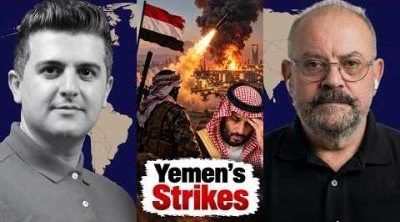
Elijah Magnier: Yemen’s strikes are shattering Saudi Arabia’s long-term strategy
or go to
Aletho News Archives – Video-Images
From the Archives
British weapons and personnel doing much of the killing in Yemen
Press TV – June 18, 2019
A detailed report published by the Guardian newspaper has shown how Britain is massively contributing to Saudi Arabia’s devastating war on Yemen as it suggests that London is not only supplying the bombs that fall on Yemenis, but it provides the personnel and expertise that keep the war going.
The comprehensive report by Arron Merat published on Tuesday showed that Britain was doing much of the killing in Yemen as the country continues to provide Saudi Arabia with everything it needs to turn its southern impoverished neighbor into a graveyard.
“Every day Yemen is hit by British bombs – dropped by British planes that are flown by British-trained pilots and maintained and prepared inside Saudi Arabia by thousands of British contractors,” said Merat in the report. … continue
Blog Roll
 Aletho News
- Racist Seinfeld Dances for Joy as Bibi Unveils His New Map
- A West Bank War for Netanyahu’s Election Campaign, Could It Backfire?
- Yemen denounces European Parliament’s ‘hypocritical’ push to blacklist Ansarullah
- Qalibaf: UAE’s UN bid aims to ‘clear the runway’ for ‘Greater Israel’, whitewash genocide
- Pakistan reopens Iran border after boosting security: Report
- Why are so many Brazilians voting for Flávio Bolsonaro?
- Democrats Put Anti-Russia Agenda Ahead of American Workers
- Elijah Magnier: Yemen’s Strikes Are Shattering Saudi Arabia’s Long-Term Strategy
- Pentagon designates Chinese cultural centers national security threat
- Israel Demolishes Home Of Lebanese Journalist Whose Viral Film Exposed Pager Attack
- If Americans Knew
- An error has occurred; the feed is probably down. Try again later.
- No Tricks Zone
- Sudden Stratospheric Warming, Powerful El Niño Combination May Lead To Extreme Europe Cold, Energy Crisis!
- Two New Studies Find Thwaites Glacier Melt Cannot Be Driven By Human Activity Or A Warming Ocean
- E-Cars Reduce CO2 Emissions By Only 41% Compared To Internal Combustion Engine Vehicles
- Predictions Made By Renowned Climate Professor Over Past Decades Have Been Proven To Be Poor
- New Study Suggests Large Regions Of The Pacific Ocean Have Been Cooling For The Last 80 Years
- Germany’s Green Energy Debacle: High Energy Costs Force Kahla Porzellan to Close After 182 Years!
- New Study: 50 Years Of The Most Aggressive ‘Net Zero’ Policies Can Only Affect The Global Climate By 0.03°C
- US September “Heat” Was No Record…Many Records Set Decades Ago
- Latest European Green Energy Debacle; Portugal’s Largest Flagship Solar Park Insolvent!
- Green Energy Debacle: German Expert Professor Fritz Vahrenholt Warns Of Severe Economic And Social Consequences

