Kuwait set to sign multibillion-dollar port deal with China

The Cradle | December 19, 2025
Kuwait will sign a contract next week with China Communications Construction Company (CCCC) to complete the Mubarak al-Kabeer Port project, Kuwaiti Public Works Minister Noura al-Mashaan announced on 18 December.
The contract is valued at about $3.97 billion, according to a government document seen by Reuters.
The Central Agency for Public Tenders approved on 1 December a contract between the Public Works Ministry and CCCC for engineering, procurement, and construction of the first phase of the port, according to the official gazette.
Mashaan said Kuwait’s prime minister will attend the signing ceremony with the Chinese side.
Mubarak al-Kabeer Port, located on Bubiyan Island in northern Kuwait, is described as a strategic project aimed at creating a secure regional corridor and commercial hub, one that China has sought to include within its Belt and Road Initiative (BRI).
Kuwait hopes the project will support economic diversification, boost GDP, and help restore its regional commercial and financial role in West Asia, with the government saying around 50 percent of the first phase of the Mubarak al-Kabeer Port project has been completed so far.
The Mubarak al-Kabeer Port project is part of a broader set of large-scale initiatives Kuwait is pursuing with Chinese support, spanning infrastructure, energy, environmental services, and urban development.
Kuwait and China have expanded cooperation in recent years, including the signing of multiple memorandums of understanding (MoU) during a 2023 visit to Beijing by then-crown prince Sheikh Mishal Al-Ahmad Al-Sabah, who later became emir.
Officials on both sides have framed these projects as part of a wider effort to deepen long-term economic ties, with a growing emphasis on infrastructure development, diversification, and connectivity.
Chinese firms are involved in several major projects across Kuwait, reflecting a shift toward broader strategic and economic engagement between the two countries beyond traditional trade relations.
China’s expanding economic footprint in West Asia has also extended to Saudi Arabia, where Chinese Foreign Minister Wang Yi recently said that Beijing is ready to be Riyadh’s “most trustworthy and dependable partner” following high-level talks in the kingdom.
The meetings reaffirmed Saudi support for the one-China principle and emphasized deeper cooperation in energy, infrastructure, and emerging industries, aligning with Beijing’s broader BRI-linked engagement across the region.
EU blocks protesting farmers in Brussels using barbed wire, tear gas and water cannons
Remix News | December 18, 2025
As the EU moves to crush protesting farmers demonstrating in Brussels, Hungarian Prime Minister Viktor Orbán offered full backing to the farmers and their efforts to stop the EU’s Mercosur free trade deal, which threatens to destroy food security in Europe.
“Farmers are 100 percent right,” said Orbán, who is currently in Brussels attending the EU Summit.
He added that the farmers have obvious issues with the Mercosur package, a free trade agreement with Latin American countries, because it “kills the farmers.”
“Hungary is one of the countries that does not support the Mercosur agreement. There were serious professional debates about this in Hungary, and the Hungarian position was that we do not support this,” said the prime minister.
Viktor Orbán reminded that the agreement would require a qualified majority, and according to his expectations, there is not enough support.
“Mercosur opponents make it impossible for this agreement to be signed. The plan is that the President of the European Commission wants to sign this later this week. I think this needs to be stopped here now, and we can prevent it,” he said.
He also said that another problem for farmers is the Green Deal, which leads to expensive overregulation in agricultural work in such a way that it represents a serious cost and competitive disadvantage for European food producers.
“So I have to say that with the Mercosur agreement, they are shooting European farmers in the foot, but before that, they tie their legs together so that they have no chance in the global competition,” he stated.
“That is why the farmers are absolutely right, the Hungarian government is 100 percent with the farmers,” said the Hungarian leader.
Farmers met with force
The use of force against farmers in Brussels is drawing criticism from Hungarian journalists, including Dániel Deák, the senior analyst of the Század Institute. He published a video report showing the European Commission building, or Ursula von der Leyen’s workplace, surrounded by barbed wire.
According to him, with these measures, they are trying to prevent farmer protesters from getting close to the president of the European Commission.
In the report, he also drew attention to the fact that if they tried to limit a demonstration in Hungary in a similar way, by placing barbed wire, it would provoke significant protests from the left, and the European Union would also talk about the use of “dictatorial means.”
In his opinion, all this once again points to the hypocrisy that is often used against Hungary. He also emphasized that demonstrations in Hungary can be held and that no attempt is made to make them impossible with barbed wire.
The UAE’s reverse trajectory: From riches to rags
By Dr Zakir Hussain | MEMO | December 18, 2025
One of the most enduring and widely quoted dialogues in Indian cinema is: “Do not throw stones at others’ houses when your own house is made of glass.” Unfortunately, this wisdom appears to be lost on the United Arab Emirates. Instead of exercising restraint and responsibility, the UAE has increasingly been accused of conspiring with, financing, and backing a wide range of actors and armed groups that have contributed to chaos, instability, and even genocidal violence in several countries.
Over the years, the UAE has steadily expanded the scope of its controversial activities—from Libya and Sudan in North Africa to other mineral-rich Muslim-majority African countries, and further eastward to Afghanistan and Yemen. Its involvement in the Palestinian context also raises serious concerns, as there appears to be no clear moral or political limit to its actions. These interventions have not promoted peace or stability; rather, they have intensified conflicts, deepened humanitarian crises, and prolonged wars.
What makes this approach particularly perplexing is that the UAE itself lacks a credible and robust defensive shield to protect its own territory. It does not possess the capability to fully defend its iconic skyscrapers and critical infrastructure even against relatively unsophisticated, low-cost drones. A coordinated volley of such drone strikes would be sufficient to cause panic among the millionaires and billionaires who have invested heavily in Abu Dhabi and Dubai. Capital, after all, is highly sensitive to risk, and fear alone can trigger massive capital flight.
Against this backdrop, it is difficult to comprehend why Mohammed bin Zayed has chosen to indulge in a strategy of regional destabilisation and proxy warfare. History clearly demonstrates that mercenaries neither win wars nor sustain long, decisive military campaigns. They fight only as long as their financial incentives are met, avoid heavy casualties, and withdraw the moment the cost-benefit equation turns unfavourable.
The UAE has already experienced the consequences of such adventurism in Yemen, where its involvement against the Houthis proved costly and ultimately unproductive. The episode exposed the limits of Emirati military power and underscored its lack of preparedness for prolonged, brutal conflicts. The Emiratis have shown remarkable efficiency in event management, diplomacy branding, and global image-building, but they are ill-suited for sustained warfare or managing the complex realities of civil wars and insurgencies.
Despite these lessons, the UAE continues to deploy mercenaries, supply arms, and push destabilising agendas that risk mass civilian suffering. Such actions not only tarnish its international standing but also make the future of the UAE increasingly uncertain. More importantly, they significantly raise the vulnerability of those who have invested billions and billions of dollars in the country—particularly in real estate and financial assets that depend heavily on perceptions of safety and stability. The UAE has attracted the largest number of high net worth people since the Ukraine war started.
According to one estimate, in 2025 alone, approximately 9,800 high-net-worth individuals moved to the UAE. In 2024, the total number of millionaires who moved to the UAE from Russia, Africa, and the UK is around 130,000, thus fuelling its status as a premier global wealth hub. The reasons are zero tax, stability, and safety, lifestyle.
However, the overindulgence of MBZ and misuse of the sovereign wealth fund is likely to negate all the toil and troubles endured by the forefathers of the Emirates since 1972.
As an Indian, my concern is both professional and moral. A large number of Indians have invested substantial sums in the UAE, especially in real estate. It is therefore necessary to issue a timely warning and provide a realistic assessment of emerging risks, so that Indian interests can be protected before irreversible damage occurs.
I remain open to offering constructive suggestions and responsible assessments, with the sole objective of safeguarding long-term stability and protecting the legitimate interests of investors and the expatriate community.
Majority of Belgians oppose theft of Russian assets – poll
RT | December 17, 2025
Around 67% of Belgians oppose the EU scheme to use frozen Russian central bank assets to back a ‘reparations loan’ to prop up Ukraine, according to a recent poll conducted by Ipsos and Belgian news outlets published on Monday.
The bulk of sovereign Russian assets frozen in the West are held in the Belgian clearinghouse Euroclear. Prime Minister Bart De Wever has steadfastly opposed EU moves to “steal” the funds, citing disproportionate legal risks to Belgium, despite mounting pressure from the European Commission.
EU leaders were set to vote on using the assets to back a controversial €90 billion ($106 billion) ‘reparations loan’ to help cover Ukraine’s floundering budget, which faces an estimated $160 billion shortfall over the next two years.
However, Hungarian Prime Minister Viktor Orban said the EU leadership “backed down” and that “Russian assets will not be on the table” at Thursday’s European Council meeting. The council “pushes joint loans, but we will not let our families foot the bill for Ukraine’s war,” he wrote on X on Wednesday.
Last week, the EU tightened its grip on the frozen Russian assets by invoking Article 122, an economic emergency treaty clause, to bypass the need for a unanimous decision amid opposition from a number of member nations.
By using the mechanism, the bloc stripped “Hungary of its rights,” Orban said at the time.
Belgium, Slovakia, Italy, Bulgaria, Malta, and the Czech Republic joined Hungary to oppose raiding the Russian assets to finance Ukraine.
Last week, the Russian central bank sued Euroclear in a Moscow court, accusing it of the “inability to manage monetary assets and securities” entrusted to it. The firm estimates that it holds nearly $19 billion in client assets in Russia, which could become targets for legal retaliatory measures.
AfD: “The German government is trying to create the conditions for war without the consent of the people”
AfD Co-chair Tino Chrupalla says the EU’s sanctions, militarism, and support for Israeli crimes are eroding Europe’s democracy and sovereignty.
By Tunc Akkoc | The Cradle | December 16, 2025
With western double standards laid bare by Israel’s war on Gaza, Germany’s political order is facing an unprecedented rupture. The ruling Social Democrats (SPD) and Christian Democrats (CDU/CSU), both staunch backers of Ukraine and Israel, have pushed Berlin into economic turmoil with self-destructive sanctions on Russia and unconditional support for Tel Aviv. Now, with the country in recession and the public burdened by soaring energy costs, Germany’s once-stable centrism is crumbling.
Trends in German politics point to a change unseen since World War II. The INSA poll conducted between 8 and 12 December shows the CDU/CSU has fallen to 24 percent, while the SPD has dropped to 14 percent. The rising force is the Alternative for Germany (AfD) party. In the INSA poll, its vote share reaches 26 percent. These figures are consistent with the Ipsos results from 7 to 9 November.
The AfD was founded in 2013, following the 2008 financial crisis. It is now the main opposition party and even a contender for power – that is, if they are allowed to participate in the elections. The party criticizes “mass migration, crime, high taxes, silenced opposition, and poverty.” It is labeled “far-right” by the ‘centrist’ neoliberal bloc. So what views do they defend to be considered “far-right”? What exactly are they saying about current issues in Europe, Germany, and the world?
Tino Chrupalla has co-chaired the AfD party with Alice Weidel since 2019. A Bundestag member since 2017, Chrupalla hails from East Germany and started his political journey in the youth wing of the Christian Democrats. He joined the AfD in 2015 and was the party’s representative at US President Donald Trump’s second presidential inauguration in January 2025.
In this exclusive interview with The Cradle, Chrupalla speaks out on the failures of the Ukraine and Gaza wars, the militarization of Europe, and why he believes Germany must break from Atlanticist subservience to pursue a future of peace, trade, and sovereignty.
(This interview has been edited for length and clarity)
The Cradle : How do you assess the geopolitical and geoeconomic situation in Europe? Is it possible to reverse the effects of the Ukraine crisis?
Chrupalla: During the war in Ukraine, Europe has taken itself out of the game. Those who are strong are those who have multiple options. With 19 sanction packages, the EU has rejected the option of cheap gas and other raw materials from Russia.
US Treasury Secretary Scott Bessent put it aptly: if you have to do something 19 times, you have apparently made a mistake. The German people are the ones primarily suffering under the sanctions.
This policy has failed. German households now pay three to four times more for energy than those in the US. Our energy-intensive industries are relocating. Unemployment is rising. Heads of state and government of the EU could have used US President Donald Trump’s peace plan as an opportunity to reduce sanctions and restart raw-material trade. Instead, they decided on a complete import ban on Russian gas starting in 2027.
These politicians can delay the conclusion of peace. They can let their citizens suffer in order to punish Russia. But they cannot change the geography of the European continent. My goal is peace and free trade across the entire continent.
The Cradle : Germany and the EU are undergoing rapid militarization. Chancellor Friedrich Merz speaks of making “Germany once again the largest military power in Europe.” Alongside debates about reintroducing compulsory military service, the rise in military spending is coming to the forefront. What are the implications?
Chrupalla: I warned early on about the dangerous war rhetoric from other parties. The German government is now creating conditions for a war made up of empty words. Defense budgets have exploded. In 2022, the Bundeswehr received a special fund of €100 billion ($117.5 billion). Now it has ballooned to €1 trillion ($1.175 trillion).
Even as leader of the opposition, CDU chairman Friedrich Merz pushed for a so-called special fund before the new elections, which largely consists of debt for weapons. Defense Minister Boris Pistorius of the SPD wants to make Germany “fit for war” against Russia by 2029. Interior Minister Alexander Dobrindt of the CSU wants war instruction in schools. His party colleague Manfred Weber, head of the European People’s Party, wants to convert all of Europe to a wartime economy.
In the new federal budget, the government is creating the conditions for alliance and tension scenarios. A simplified booking system makes it possible to reallocate billions for war without parliamentary approval.
The opposition is sidelined. And the worst part is: none of this money benefits Germany’s security, military capability, or national defense. It is about profits for the arms industry and mobilization against Russia. For this reason, we also rejected the reactivation of compulsory military service as long as there is war in Europe.
The Cradle : The Gaza war has further exposed western double standards. How do you view Germany’s position?
Chrupalla: The war in Gaza has claimed a high number of civilian lives, including many women and children. According to the Israeli army, 83 percent of those killed in Gaza were civilians. The images of dead children and devastated streets leave no one untouched.
I have always condemned this and made it clear that demonstrations against this war must not be placed under general suspicion. Our program is clear: no arms deliveries to war zones. I have repeatedly insisted on this demand.
Chancellor Merz shifted to this position in August. In my view, public opinion in the EU has indeed changed over the course of the war. There is far more nuance on Gaza than there ever was on Ukraine.
The Cradle : What kind of future does the AfD envision for Germany and Europe?
Chrupalla: We want a sovereign Europe in a multipolar world. That starts with strengthening nation-states. Germany cannot have its policy dictated by politicians in Estonia or Brussels. We must reject sanctions that hurt us and resist efforts to sever ties with the east.
We are against economic wars fought for foreign interests. Peaceful trade must not be disrupted by sanctions or value-based conditions. In the European Parliament, we helped ensure that the supply chain law was relaxed, as it would have required trading partners to adhere to a specific social model.
We respect other civilizations and likewise demand respect for Europe. We oppose value-driven foreign policy with a policy of mutual respect. For Germany, we strive for a future of peace and prosperity.
The Nord Stream attack was an act of economic sabotage. It cut off our industrial lifeline and pushed us deeper into recession. We need to restore energy sovereignty, reindustrialize, and protect local production.
Corporate insolvencies are increasing. Fewer and fewer taxpayers must finance increasingly extensive social benefits. At the same time, contributors are not receiving back what they paid into the social security funds.
Federal governments have relied solely on renewable energies. We, however, want a broad energy mix, including fossil energy. To create a good future for Germany, we also address Germans with an immigrant background. Sovereignty and peace, freedom and prosperity are in all our interests.
The Cradle : How does the AfD view the emerging multipolar order and its key players?
Chrupalla: The war in Ukraine has put the traditional security structure in Europe to the test. It is still uncertain what transformations will result from its outcome. The peace negotiations have deepened the divide between the EU and the US.
Washington is at least attempting to reach an understanding. Chancellor Merz and other heads of government and state, however, are pressuring Ukraine to continue pursuing maximal goals, even though defeat is imminent.
In fact, it should be the other way around. Our states in Western and Central Europe depend on reaching an accommodation with Russia. We need raw materials and would be the first to be affected by a major war.
For us, Russia is part of Europe. We seek a peace order and security architecture that includes Russia. The People’s Republic of China is Germany’s top trading partner. Commonalities are more important than differences. In particular, the Greens have repeatedly attempted to steer foreign policy toward decoupling.
During the chip crisis, which originated in the Netherlands, we saw the consequences such decoupling would have: machines come to a standstill, workers stay home. The global economy is so strongly interconnected that a single severed thread can have unpredictable effects.
We want free and peaceful trade with the whole world. The Global South has a legitimate interest in prosperity and autonomy. We must support the countries of the south in this while also safeguarding our own interests. Unfortunately, the federal government has recently allowed ties with the south to deteriorate. Cooperation in the development of our economies, on equal footing, is an important aspect of our foreign policy.
The Cradle : What is your foreign policy approach to the Islamic world?
Chrupalla: Our foreign policy principle of respect also applies to states in which Islam is the majority religion. Islam is not a monolithic bloc. Despite unity in faith, these states pursue different interests. This becomes clear when looking at conditions in West Asia.
Germany has taken in many asylum seekers of the Muslim faith over the past 10 years. This immigration places demands on our social welfare systems and on internal security, similar to the immigration of Syrians into Turkiye. However, it would be wrong to derive from these problems a confrontational stance against Islam, as some critics of migration occasionally do.
We need peaceful cooperation. We need currency diversification in trade. We don’t want foreign troops on our soil. Religion must not divide us. Mutual understanding should be the foundation.
The Cradle : How should Germany approach relations with Turkiye?
Chrupalla: Turkiye is a strategic partner. We are both NATO members. We face shared challenges. Turkiye connects Europe and Asia. It pursues its own sovereign interests in West and Central Asia, and Africa, but must always take its alliance obligations into account. It resists adopting a strategy imposed from the outside.
In the past, Turkiye has confidently pursued its own interests—for example, regarding the Crimean Tatars. In doing so, it maintained respect toward Russia and became a neutral mediator in the Ukraine war. Germany should have done the same.
Turkiye is also the country from which the largest minority in Germany originates. In my view, more and more German citizens of Turkish descent are turning toward our party and its program. When AfD was still younger and smaller, the media and politicians of other parties tried to drive a wedge between the Turkish community and us.
They portrayed us as xenophobic. But voters with an immigrant background recognize that irregular immigration does not benefit them; it harms the country in which they live and are building their lives.
We all want security and prosperity. Families of Turkish descent are a firmly established part of our country. I invite them to join us in working for Germany.
The biggest bank robbery in history
By Ian Proud | Strategic Culture Foundation | December 16, 2025
For over two years, there have been loud and repeated calls for Russia’s immobilised assets in Europe – valued at around $245 billion – to be permanently seized. However, those assets had hitherto been immobilised under EU sanctions which required unanimous agreement every six months.
Not any more. Given Belgium’s sturdy resistance to using $165 billion in immobilised assets held in Euroclear, the European Commission has triggered an emergency clause in the Treaty on the functioning of the European Union to bypass the principle of unanimity on sanctions policy.
On Thursday of last week European Council Ambassadors agreed by majority to freeze indefinitely immobilised Russian assets in European banks. This proposal is separate from specific lending to Ukraine to cover its financial needs, which was subject to a separate proposal.
But, in fact, the two are connected. Because the separate proposal for a so-called reparations loan makes clear that Ukraine will only have to repay the loan if its receives reparations from Russia, whereupon Russia’s frozen assets will be returned.
However, Russia will self-evidently never make reparations payments to Ukraine precisely because its immobilised assets which might be used for reparations in Ukraine have already been expropriated and are unlikely to be returned.
The measure proposed by the EU uses as its legal basis the need to cover the economic risks to the EU from the ongoing war. However, the Economist has pointed this out as an example of ‘dodgy’ legal logic. But it’s worse than that; it’s in fact untrue. The money is not intended to support Europan economies, as it only represented 1% of European GDP. It will be used to back a reparations loan that is not intended for reparations, but rather to pay for Ukraine’s bloated budget.
This includes $106 billion to cover Ukraine’s budget deficit over the next two years and $50 billion to write off the EU contribution to the G7 Extraordinary Revenue Acceleration loan agreed in June 2024. The remainder will be pumped into Ukraine’s defence industry.
So, all of Russia’s money will effectively be given to Ukraine, albeit in the form of a loan underwritten by those European banks that hold Russian assets. In this fantasy, Russia’s assets still exist, it’s simply that EU banks have lent their equivalent value to Ukraine.
The problem Ursula von der Leyen is trying to avoid, as I have pointed out before, is the return of Russia’s assets after any peace deal that leads to sanctions against Russia being lifted. In short, peace would raise the risk of the loan collateral being handed back to Russia, meaning that Europe would need to pay for it, on the basis that Ukraine won’t have the means to repay the loan itself.
Let’s be clear, the earlier G7 Extraordinary Revenue Acceleration loan to Ukraine agreed in 2024 had a maturity of up to 45 years. Does Europe really intend to keep Russia’s assets immobilised for that period of time?
President Trump’s initial 28 point peace plan suggested that Russia’s immobilised assets be split three ways, between $100 billion invested in Ukraine by U.S. firms, $100 billion overseen by Europe and the remainder co-invested by the U.S. and Russia in its country. On that basis, and assuming Russia was agreeable, all of Russia’s immobilised funds would be used for genuine reconstruction efforts, both inside of Ukraine and those parts which Russia has occupied. President Zelensky has spoken this week about the possible setting up of a special economic zone in the contested parts of Donetsk oblast that would be demilitarised.
As I pointed out a year ago, Russia might be willing to give up its assets for some form of de facto recognition of territory, which the Trump administration has essentially proposed. The value of its unfrozen sovereign reserves – at $425 billion – now far exceed the sum still frozen in Europe and other jurisdictions including the U.S.. So Russia might be willing to give up some assets as part of a quid pro quo on territory. And it’s clear that Europe has absolutely no intention of giving the money back anyway, so why not cut a deal that works best for Russia?
But what the Europeans want to do is to have two cakes and eat them both. Get Russia to pay for Ukraine’s day to day fiscal expenditures associated with war fighting and building up its defence industrial complex, even after the war ends. And get Russia to pay for Ukraine’s post-war reconstruction. That is clearly delusional.
Because, and as I have already pointed out, Ukraine will still have an enormous fiscal hole to fill anyway when the fighting stops. So, if the actual plan is that Russia’s immobilised assets be used as collateral for day-to-day costs, then where is the capital to fund reparations? In short, it will cease to be available.
No, don’t worry about that, European Commission officials assure us, Russia will get its assets back after it pays reparations to Ukraine. But who decides how much Russia should pay? At the end of 2024, the UN estimated that Ukraine’s total recovery and reconstruction needs amounted to $524 billion.
Russia will simply not agree to pay that sum, not least as if it did, it would find that its immobilised assets were no longer available, having been spent on Ukraine’s budget. And, in any case, why would Russia agree to pay a sum of reparations that Europe adjudicates on from afar, all while the Americans have a more credible plan to use the immobilised assets?
President Trump is nudging president Ukrainian and European leaders, kicking and screaming, closer toward a peace deal that they don’t want to sign up to. In the case of Zelensky, he has resisted agreement because it might bring his time in power to a juddering halt. In the case of Von der Leyen, it would mean she had to tell Member States how much they needed to stump up to pay for Ukraine. As well as being logically confused and ill-thought-through, the asset seizure idea also brings the added risk of preventing any ceasefire.
Despite this, Trump appears to have the bit between his teeth to force a peace deal through and, with Zelensky now appearing to give up on NATO membership, we appear mercifully to be nudging in tiny steps towards the end of this needless war.
Someone will still need to pay for Ukraine’s budget when that happens. Russia will rightly point out that Europe has expropriated its money in the biggest bank robbery in history. And likely bury Brussels in a blizzard of litigation which makes investors in the developing world think long and hard about whether to keep their money in Europe.
EU spends €169 billion on Ukraine while ignoring internal problems
By Ahmed Adel | December 15, 2025
Since the start of the Russian special military operation in February 2022, the European Union has spent €168.9 billion on military and financial support for Ukraine, according to figures from the European Commission. This amount is even more striking when compared to other areas of spending.
With all that money, the 27-nation bloc could finance public spending on education for an entire fiscal year in France and still have €32 billion left over, cover Germany’s entire target defense budget for 2026 (€108.2 billion), and pay for almost half of the total budget allocated by the European Commission to respond to regional crises for the period 2028-2034 (€395 billion).
However, Brussels has preferred to look outwards and pursue a foreign policy with a Euro-Atlantic vision, which has led to internal fragmentation of interests, exploited by the European elites who lead the bloc.
A group of European countries —mainly Poland, the Baltics, France, Germany, and the United Kingdom—though the latter is not a member of the EU—is interested in prolonging the conflict in Ukraine for as long as possible. For them, for the elites who govern them, losing Ukraine would mean confronting their own internal problems.
Maintaining the discourse in favor of the Kiev regime and against supposed external threats is a way of preserving some cohesion in the face of the economic and political failures the EU has experienced over several years.
The Ukrainian crisis is a heavy burden for Brussels without US support, a reality under President Donald Trump. The Kiel Institute for the World Economy estimates that, between September and October, the EU allocated only around €4.2 billion in military aid to Ukraine, a figure that is far too little to compensate for the loss of US aid.
At the same time, the gap within Europe has widened: Germany, France, and the United Kingdom have significantly increased their allocations, but Italy and Spain, among many other countries, have made only a negligible contribution.
Leaders such as German Chancellor Friedrich Merz, French President Emmanuel Macron, and British Prime Minister Keir Starmer are among those who have most promoted a belligerent policy regarding Ukraine, to the point of continuing to support Ukrainian President Volodymyr Zelensky, who is embroiled in several corruption scandals. These are leaders who are deeply discredited, both regionally and locally, in their own countries.
Merz and Macron can no longer achieve internal consensus within the EU, and this is eroding their credibility because they are not enabling the bloc to speak with one voice. In Brussels, there is a patchwork of passionate agendas, but not a common geopolitical agenda.
It is the European elites who insist on the continuation of a conflict, not the average citizen, who prefers that their government budgets be allocated to social spending rather than to a European rearmament project like the one being outlined in Brussels. Many see support for Ukraine as an imposed sacrifice, and the expense of continuing to fuel the conflict is already taking its toll.
In fact, the €168.9 billion that the EU has allocated to Ukraine over almost four years would have completely covered all of Spain’s public spending on education in a single fiscal year and Italy’s entire health budget.
Amid this situation, some European leaders are insisting that the Russian assets frozen more than three years ago be confiscated to guarantee a €210 billion loan for Kiev, which could complicate the peace talks the US and Russia have been conducting for months over the Ukrainian conflict.
That money is Russian, and international law would have to protect Russian assets if the EU were to choose to confiscate these. If they do, it would be a major contradiction within the European narrative because these countries are supposed to be the ones that champion international law and guarantee what they have called ‘a rules-based world,’ but appropriating those assets is essentially theft, and this would violate international law.
Nonetheless, the EU announced on December 12 that an agreement had been reached to indefinitely freeze €210 billion of Russian Central Bank assets held in Europe, particularly in Belgian securities depository Euroclear. Although the freeze is intended to facilitate EU plans to provide Ukraine with a loan of up to €165 billion to cover military and civilian budget needs in 2026 and 2027, Belgium, Italy, Bulgaria, and Malta expressed reservations about transferring funds to Ukraine. A final decision will be made at an EU summit being held at the end of the week.
It is foolish that the EU has wasted so much money on the Ukrainian crisis, knowing that the bloc is economically suffering, with very low growth rates and a deindustrialized Germany that is not recovering. Yet, despite this, the EU seemingly wants to further tarnish its global reputation by aiming to steal Russia’s wealth.
Ahmed Adel is a Cairo-based geopolitics and political economy researcher.
China expands use of Iranian rail corridor for cargo transit
Press TV – December 14, 2025
China has increased its use of Iranian railway corridors for cargo transit, an Iranian official has said, as Tehran steps up efforts to position itself as a major regional rail freight hub.
Shahriar Naghizadeh, head of the foreign commerce department at the Islamic Republic of Iran Railways, said on Sunday that the number of Chinese cargo trains using Iranian rail corridors has reached 42, with another train arriving in the country earlier in the day.
Naghizadeh added that a Russian cargo train also arrived in Iran on Sunday as part of Moscow’s transit operations through Iran to destinations in the Persian Gulf, the Indian Ocean and Iraq.
He said Iran is coordinating the passage of a second Chinese cargo train through its territory to Europe, following a pilot journey conducted in March.
“These are major developments in the railway sector and signal a promising future for its expansion,” Naghizadeh was quoted as saying by the official IRNA news agency.
According to the official, Iran’s railway corridors are gaining popularity for cargo transit due to their shorter distances and fully overland routes, which eliminate the need for maritime transport.
He added that transit costs through Iran are lower than those of comparable routes, and that the country has offered guarantees to process cargo in the shortest possible time.
Iran has made significant investments in its transport infrastructure in recent years to capture a larger share of regional transit revenues.
The country has also adopted a long-term policy to expand its east–west transit infrastructure in line with China’s Belt and Road Initiative, a multi-trillion-dollar project aimed at improving transport links connecting China with Europe, Asia, and Africa.
Israeli navy arrests 4 fishermen, blows up their boat
Palestinian Information Center – December 14, 2025
GAZA – The Israeli naval forces arrested four Palestinian fishermen off the coast of Gaza’s main port and later blew up their boat, in yet another attack in the ongoing series of violations against Gaza’s fishing community since the start of the war of extermination.
Zakaria Bakr, head of Gaza’s Fishermen’s Union, confirmed the arrests and the destruction of the boat, adding that the Israeli navy has killed around 230 fishermen since the war began. He also noted that 28 fishermen remain in Israeli detention.
According to Bakr, Israel has banned the entry of engines and fishing equipment into Gaza since the beginning of the assault, effectively crippling the fishing sector and depriving roughly 5,000 families who depend on it for their livelihood.
He estimated that the fishing industry is losing $5 million monthly, with total losses exceeding $70 million since the start of the war, due to the destruction of ports, boats, and fishing tools.
The Fishermen’s Union said the sector has suffered systematic destruction, with over 90% of fishing infrastructure, equipment, and private property wiped out in what it described as a campaign to eliminate this vital economic sector and starve thousands of Palestinian families.
Meanwhile, on Sunday morning, Israeli air and artillery strikes targeted areas inside the ceasefire zones in Gaza. Witnesses reported heavy bombardment, especially in the eastern parts of Khan Yunis in southern Gaza and eastern Gaza City.
Israeli naval forces also opened fire indiscriminately off the coast of Khan Yunis, sparking panic among fishermen and local residents.
These attacks are part of continued violations of the ceasefire agreement with Hamas. Since October 11, these breaches have resulted in 391 Palestinians killed and 1,063 injured.
The Price of Sanctions: Volkswagen Shuts Down Dresden Plant as German Industry Reels
Sputnik – 14.12.2025
Volkswagen plans to halt production of vehicles at its Dresden plant on Tuesday, marking the first time in the company’s history that a Germany-based factory has been shuttered.
With an installed capacity to build up to 37,500 cars a year, and the flagship of VW’s EV lineup, the Dresden plant’s closure comes against the backdrop of Germany’s broader deindustrialization, which started in 2022 when Berlin rejected the Russian energy supplies propping up its manufacturing base.
FT blames the closure on poor demand in Europe, weak sales in China, and 15% US tariffs on European vehicle imports.
Volkswagen announced plans to “transform” the Dresden factory into an “innovation campus” earlier this month as part of a “Future Volkswagen” program, which includes plans to reduce Germany-wide vehicle output by 730k units by 2028, and slash 35k jobs “in a socially responsible manner.”
German industrial leaders and Russian President Vladimir Putin warned about the consequences of cutting Europe off from Russian gas almost four years ago, with Putin saying the “suicidal” decision would undermine Europe’s global economic competitiveness.
What’s on Trump’s mind as US adjusts to multipolarity
By M. K. BHADRAKUMAR | Indian Punchline | December 12, 2025
The world order’s transformation to multipolarity is a work in progress with the variables at work, but its outcome will be largely determined by the alignment of the three big powers — the United States, Russia and China. Historically, the ‘triangle’ appeared as the lid came off the Sino-Soviet schism in the 1960s and a ferocious public acrimony erupted between Moscow and Beijing, which prompted the Nixon administration to moot Henry Kissinger’s secret mission to Beijing to meet up face to face with Chairman Mao Zedong and Premier Zhou En-lai and, hopefully, work out a modus vivendii to jointly counter Russia.
Revisiting the Sino-Soviet schism, it is well understood by now that the US-Soviet – China triangle never really ran the course that Kissinger had envisaged. Kissinger’s failure to consolidate the opening of relations with China was partly due to his loss of power by January 1977 and, in a systemic sense, inevitably so, given the complexity of the boiling cauldron of Sino-Soviet schism where ideology mixed with politics and geopolitics — and realpolitik.
While the western mythology was that the US built up the foundations of China’s rise, historiography points in another direction, namely, that Beijing always had in mind the dialectics at work and even as a degree of compatibility of Chinese and American interests in checking the expansion of Soviet power existed, Beijing was determined to avoid military conflict with the Soviet Union and concentrated its attention on improving its tactical position within the US-Chinese-Soviet triangle.
On its part, the Soviet Union also consistently promoted increased exchanges with China despite the bitter acrimony and even military clashes with a view to undercut perceived advantages the US derived from the Sino-Soviet split — and even sought to persuade China to accept the military and territorial status quo in Asia.
In fact, to retard Sino-US cooperation against them in the early 1970s, the Soviets offered at one point to modify their territorial claims along their border, to sign non-aggression pacts and / or agreements prohibiting the use of force, to base Sino-Soviet relationship on the five principles of peaceful co-existence, and to restore high-level contacts, including party ties, in the interests of their common opposition to the US.
If China largely ignored these overtures, it was almost entirely due to the great turbulence in its internal politics. Suffice to say, no sooner than Mao, the Soviet Union’s nemesis, died in September 1976 (and the curtain descended on the Cultural Revolution), Moscow followed up quickly with several gestures, including Brezhnev sending a message of condolence (the first CPSU message to China in a decade), followed by another Party message in October congratulating the newly-elected CCP Chairman Hua Guofeng, and shortly thereafter in November sending their chief negotiator for border talks Deputy Foreign Minister Ilichev back to China in an attempt to resume the border talks. But, again, if nothing came of it, that was because of China’s invasion of Vietnam and the Soviet intervention in Afghanistan soon thereafter in 1980.
Indeed, looking back, the main legacy of the 1970s viewed through the prism of the US-China-Russia ‘triangle’ was the reorientation of China’s defence policy and its geopolitical realignment with the West. China made no contribution significantly to weaken the Soviet Union or to aggravate the stagnation and brewing crisis in the Soviet political economy.
Meanwhile, the Sino-US differences over Taiwan and other issues had reemerged by 1980-1982, compelling China to reassess its foreign policy strategy, which manifested in Beijing’s announcement in 1982 of its “independent” foreign policy — plainly put, an attempt to rely less explicitly on the US as a strategic counterweight to the Soviet Union — and the move to open “consultative talks” with Moscow, and a growing receptiveness towards the numerous pending Soviet overtures for bilateral exchanges (in sports, cultural and economic areas, etc), the overall direction being to reduce tensions with the Soviets and increase the room for manoeuvre for Beijing within the China-US-Soviet triangle.
Indeed, a broader detente between China and the Soviet Union had to wait till the Soviet withdrawal from Afghanistan following the Geneva Accords signed in April 1988. Nonetheless, a basic change in the Sino-Soviet relations through the 1980s appeared, which included regular scheduled summit meetings; resumption of cooperative ties between the CCP and the CPSU; Beijing’s acceptance of the pending Soviet proposals for non-aggression / non-use of force; and resumption of Sino-Soviet border questions at vice-foreign minister level.
Washington could sense the shift in Chinese policy directions vis-a-vis the Soviet Union. Notably, reviewing the marked shift in the Chinese strategy, a CIA assessment noted:
“More recently, Moscow followed Brezhnev’s call in 1982 for improved relations with China with a halt in most authoritative Soviet statements critical of China. When Sino-Soviet discussions resumed in October 1982, Soviet media cut back sharply on criticism of China. And they have remained restrained on this subject, although occasional polemic exchanges marked Sino-Soviet coverage at the time of Premier Zhao Ziyang’s visit to the United States in January 1984. Moscow has continued to be critical of China through the Soviet-based clandestine radio Ba Yi… China for its part has continued criticism of Soviet foreign policy, although past attention to Soviet “revisionist” internal policies has all but disappeared since China’s own economic policies have been significantly changed after Mao’s death.”
Succinctly put, with CPSU General Secretary Gorbachev consolidating power circa late 1988 by his election to the chairmanship of the presidium of the Supreme Soviet and on a parallel track, Deng had outmaneuvered political rivals and become China’s paramount leader by 1978 — and had launched the Boluan Fanzheng program to restore political stability, rehabilitate those persecuted during the Cultural Revolution, and reduce ideological extremism — the door had opened for the two erstwhile adversaries to enter the rose garden of reconciliation.
Significantly, the timing of Gorbachev’s visit to Beijing to meet up with Deng in 1989 was far from ideal by virtue of the Tiannenmen Square incidents, but neither side proposed to postpone or reschedule the meeting. Such was the intensity of their mutual desire for reconciliation.
Today, the above résumé has become necessary when we assess the future directions of the Trump administration’s China policies. The common perception is that Trump is attempting to create a wedge between Putin’s Russia and Xi Jinping’s China with a view to isolate the latter and thwart it from surpassing the US. But there is no shred of evidence available hinting at the potential for decoupling Russia from China.
All the signs are to the contrary in the direction of the steady integration of the two countries. Last week, the Kremlin announced a visa-free regime for Chinese citizens to visit Russia. Interestingly, this was a reciprocal move. FT reported recently that a Chinese businessman has been given equity in Russia’s biggest manufacturer of drones which supplies the military — in the first known collaboration in the area of defence industry.
With the Power of Siberia 2 on the anvil, China’s dependence on Russia for its energy security will increase further. Russia’s foreign trade is undergoing a profound shift, with China replacing the EU as Russia’s main trading partner. Overall, Sino-Russian relations are closer today than they have been in decades.
On the other hand, there is no credible suggestion that the Trump administration is preparing for a war with China. Japan under its new leadership is whistling in the dark.
So, what is on Trump’s mind? In his revolutionary agenda for the remaking of the new world order, Trump aims at a strategic concord between the US on one side and Russia and China on the other. The recent US National Security Strategy strongly points in that direction, too. The implications of this revolutionary thinking for multipolarity are going to be profound — for partners such as India or allies like Japan or Germany alike.
Hungary Warns EU’s Support for Ukrainian Attacks on Russian Energy Could Set Dangerous Precedent
Sputnik – 10.12.2025
The European Union is threatening global security by openly praising and welcoming Ukraine’s attacks on Russian energy facilities, as this could set a dangerous precedent, Hungarian Foreign Minister Peter Szijjarto said on Wednesday.
“The European attitude threatens global security. Just consider that EU leaders are glorifying actual attacks on energy infrastructure facilities. The Ukrainians attacked the Druzhba oil pipeline, which did not hurt Russia, but harmed Hungary and Slovakia, and European leaders are praising these actions. This is an extremely dangerous attitude, as others may deem that attacks on infrastructure facilities are something positive,'” Szijjarto said at a meeting of the energy ministers of the Organization of Turkic States.
The top Hungarian diplomat recalled the attack on the Nord Stream gas pipelines, saying that “glorifying government terrorism” was unacceptable. It is said that “allegedly responsible European politicians make such statements,” he added.
Szijjarto also condemned the recent attacks on tankers in the Black Sea.
In August, Slovakia and Hungary stopped receiving oil from Russia via the Druzhba pipeline for several days following a Ukrainian attack on the facility. Budapest subsequently banned Robert Brovdi, the commander of the Ukrainian unmanned systems forces and the person responsible for the Druzhba attacks, from entering the country and the Schengen Area.
Russia has strongly condemned Kiev’s recent attacks on tankers in the Black Sea and on the Caspian Pipeline Consortium (CPC) infrastructure near the city of Novorossiysk, urging all reasonable actors to denounce the Kiev regime’s destructive actions. Russian Foreign Ministry spokeswoman Maria Zakharova has said that the same forces behind the Black Sea sabotage, previously implicated in derailing peace talks, are now seeking renewed armed escalation.
Featured Video
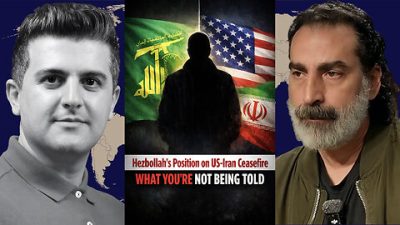
Laith Marouf: Hezbollah’s position on US-Iran ceasefire
or go to
Aletho News Archives – Video-Images
From the Archives
The Dirty Little Secret behind the “Global Terrorism Index”
The Omission of Israeli Terrorism in the Occupied Palestinian Territories
By Karin Brothers | Global Research | December 6, 2014
… The Israeli settlements — all of which are illegal – have been identified as a major impediment to peace. The refusal of a major “global” terrorism report to name the Israeli settlers as one of the groups most responsible for terrorism not only misrepresents a major source of regional violence but exposes the Global Terrorism Index as a propaganda tool that supports a U.S. agenda.
In recent years, governments have been attempting to thwart terrorism by blocking supportive fund-raising. When it comes to Israeli settlements, however, the US and Canada actually encourage fund-raising by giving organizations (such as Christian Friends of Israeli Communities (CFOIC) and the Jewish National Fund) financial support in the form of donor tax-deductions.
Charities which provide funds for the Israeli settlements should be regarded as terror-financing organizations. They should not only lose their tax-deductible status, but they should be banned because they support the violation of international humanitarian law. The terror-financing laws that are being strictly enforced for Muslim charities should be applied to Christian and Jewish charities as well. … Read full article
Blog Roll
 Aletho News
- Trump Administration Moves To Automate U.S. Military Draft Registration
- Spain orders reopening of Tehran embassy, condemns Israel’s carpet bombing of Lebanon
- Israel faces ‘unsustainable’ strategic crisis following 40-day war against Iran: Analyst
- Iran restricts Hormuz access to 15 vessels per day under ceasefire terms: Report
- The ‘Opposition Party’ Has Done Nothing to Stop the Iran War and Much to Goad Trump Into Continuing It
- Moscow backs Tehran on status of Lebanon in US-Iran deal
- How UK Regulator Ofcom Quietly Bypassed International Law to Police American Speech
- The Black Cube Files: How Former Mossad Operatives Flipped a Nation
- Laith Marouf: Hezbollah’s position on US-Iran ceasefire: What you’re not being told
- Israel’s priority lies in destroying chances of peace between Iran, US: Ex-UN nuclear chief
- If Americans Knew
- Amnesty: Urgent – Protect Lebanese civilians from brutal escalation in Israeli attacks
- Is The War Against Iran Over?
- Inside the Israeli army’s propaganda wing
- Hundreds of Gaza Amputees Stranded in Legal Limbo
- The gallows law: Israel moves toward executing Palestinian children
- Tucker Carlson: The Path to Peace requires ending ‘special alliance’ with Israel
- This is ceasefire? Israel’s biggest massacre yet in Lebanon, another journalist killed in Gaza – Daily Update
- Tucker Carlson on Israel: This Is the Behavior of an Ally? Really?
- Gazans face a triple crisis: severe shortages of water and bread, healthcare in tatters
- NY Times reports how Netanyahu took the US into Iran War
- No Tricks Zone
- An Inconvenient Tree: Uncovered In Alps… Europe Much Warmer Than Today 6000 Years Ago
- New Study Reports A 60% Slowdown In Greenland’s Ice Loss Rate In The Last Decade
- Low Intensity Tornado Wrecks Major Solar Farm, Creating A Potential Toxic Dump
- New Study Finds Warming Saves Lives…Cold Temperatures 12 Times More Deadly Than Excess Heat
- German Science Blog Accuses PIK Climate Institute Of Hallucinating Climate Tipping Points
- Devastating Assessment Of Comirnaty Vaccine By Former Senior Pfizer Europe Toxicologist
- New Study: CO2 Is ‘Effectively Negligible’ As An Explanatory Climate Change Factor Since 2000
- Former Pfizer Toxicologist Dr. Helmut Sterz Tells Bundestag Hearing Pfizer Vaccine Should Have Never Been Approved
- Energy Expert: Germany’s Nuclear Phaseout Was A “500 Billion Euro Mistake”
- New Research: South Australia’s Mid-Holocene Sea Surface Temperatures Were 4°C Warmer Than Today
 Aletho News