Iran War fallout: Russia and China quietly take over natural gas markets in Asia, with Qatar gone
Inside China Business | April 20, 2026
The Iran War and the closure of the Strait of Hormuz have taken Qatari energy supplies completely off the market. Russian natural gas fields were shut out of Europe beginning in 2022, and energy giants there invested massively into new pipelines to Asia. China was a ready buyer for Russian oil and natural gas, and also invested heavily into huge strategic stockpiles of crude and natural gas storage. Now Russian energy production flowing East, and China is already well-supplied. Liquefied Natural Gas of Russian origin is offered at 40% discount to spot, to induce long-term supply relationships. As a result, Asian economies are shifting their supply chains from the Persian Gulf to Russia-China. Meanwhile, EU countries are unable to get LNG at all.
Resources and links:
Bloomberg, Russia Offers Sanctioned LNG to Energy-Hungry Asia at a Discount https://www.bloomberg.com/news/articl…
S&P Global, Russia crude oil pipeline capabilities to mainland China—The ESPO crude oil pipeline https://www.spglobal.com/energy/en/re…
Power of Siberia 2 reshapes China’s energy security calculus https://eastasiaforum.org/2025/10/31/…
Reuters, Russia’s Gazprom supplied 38 bcm of gas to China via Power of Siberia pipeline in 2025 https://www.reuters.com/business/ener…
Russia’s Oil Windfall From Middle East War Keeps Growing https://www.bloomberg.com/news/articl…
Reuters Exclusive: Iran attacks wipe out 17% of Qatar’s LNG capacity for up to five years, QatarEnergy CEO says https://www.reuters.com/business/ener…
Supply chains breaking: The hidden bottlenecks threatening to bring the global economy to a standstill
The oil price is just the tip of the iceberg
RT | April 20, 2026
The surge in oil prices in light of the war on Iran has grabbed most of the headlines. For many observers, the severity of the crisis is measurable in the daily changes in the Brent ticker. Some analysts have also begun pointing to emerging stress in fertilizer markets. But beneath these familiar markers, several less visible – and in some cases more systemic – signals are now flashing red.
RT takes a look at the ominous signs that don’t always show up in the news.
Naphtha
Naphtha, a feedstock for petrochemicals, is a classic behind-the-scenes actor. Rarely in the headlines, naphtha is critical to the production of much modern technology, not to mention a whole host of everyday plastics, car parts, medical supplies, packaging – you name it. Naphtha sits at the base of the petrochemical supply chain, where it can wreak havoc if it’s not in supply.
So what exactly is naphtha? It is a liquid hydrocarbon mixture derived from the distillation of crude oil. It is then “cracked” at extreme temperatures to extract ethylene and propylene, which is upstream from a slew of chemical processes that produce the high-purity chemicals, solvents, and plastics that are used in numerous industries, including as supporting inputs in semiconductor manufacturing. Because naphtha is not a core chip material input itself, its role is often overlooked.
Unsurprisingly, naphtha generally exhibits a strong positive price correlation with Brent crude. It is a refinery product, so crude costs are an important driver of pricing. However, its price can diverge meaningfully because it is primarily used in petrochemicals and not simply as a fuel. Naphtha supply disruptions have already made themselves felt in parts of Asia, even causing shortages of plastic bags in South Korea. Incidentally, South Korea has purchased Russian naphtha for the first time in four years.
Several large petrochemical companies, such as LG Chem and Lotte Chemical, are having to cut production or shut cracking facilities due to feedstock shortages. This has disrupted supplies of plastics and packaging, impacting products from consumer goods to medical supplies.
For industrial heavyweight Japan, for example, the disruption to the flow of naphtha is arguably the most pressing economic fallout from the crisis in the Middle East. Japan gets around 60% of its naphtha from overseas. The Middle East is responsible for over 70% of those imports, according to the Japan Petrochemical Industry Association.
The 40% of Japan’s naphtha that comes from domestic refineries isn’t exactly immune to problems in the Middle East – 90% of the oil these refineries use comes from the same region.
Diesel
Diesel is a middle distillate fuel, meaning that it is heavier than gasoline but lighter than fuel oil. It is called “the fuel of the real economy.” It powers all the heavy stuff: trucks, ships, construction, mining, agriculture.
Of particular concern is the fact that diesel prices rise faster than gasoline in nearly every energy crisis. Because it is a critical heavy-transport fuel it has low demand elasticity – meaning diesel consumers will keep buying even at higher prices. Also, it is much harder to ramp up diesel refining quickly. Refineries generally operate at high utilization and have inflexible configurations, limiting their ability to respond quickly to demand surges.
Because diesel is the fuel for the “real economy,” price spikes can be broadly inflationary. According to BloombergNEF, diesel at $5 per gallon in the US could increase prices to consumers by 35%.
Diesel cost an average of $5.61 a gallon nationwide as of last Thursday, according to the American Automobile Association. That is just over $2 above the average on the same date last year and 63 cents more than a month earlier.
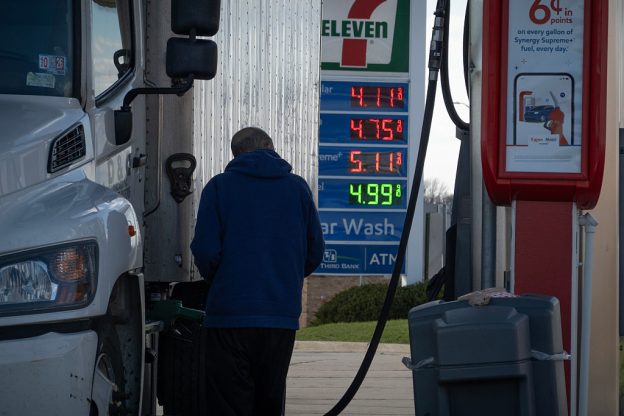
Diesel prices have also surged across Europe. Analysts are now warning of potential shortages of both jet fuel and diesel this summer. These two fuels are often grouped together as middle distillates and can to some extent be substituted or blended.
Aluminum
The Iran war has triggered a major crisis in the global aluminum market that could reverberate across numerous sectors of the economy.
Consultancy Wood Mackenzie estimates that the global market is staring at a supply deficit of up to 4 million metric tons this year, which would be the largest in over 25 years. JPMorgan has warned that the global aluminum market has entered a supply “black hole.”
Prices are forecast to exceed $4,000 per tonne. For comparison, the long-term “normal” range is $1,500-$2,500 per tonne. The majority of aluminum producers in the Gulf, which account for around 9% of global supply, have been unable to make shipments to world markets. Meanwhile, a missile strike last month damaged the Al Taweelah smelter operated by Emirates Global Aluminium. Repairs will reportedly take up to a year.
As smelters run through stocks of raw materials, production shutdowns could be forthcoming. But shutting down an aluminum smelter isn’t the same thing as turning off an appliance and turning it back on with the flip of a switch. Smelters run around-the-clock at extremely high temperatures. If you shut them down, the molten metal solidifies and damages the equipment. Restarting them is extremely costly and technically challenging and sometimes entails a full rebuild.
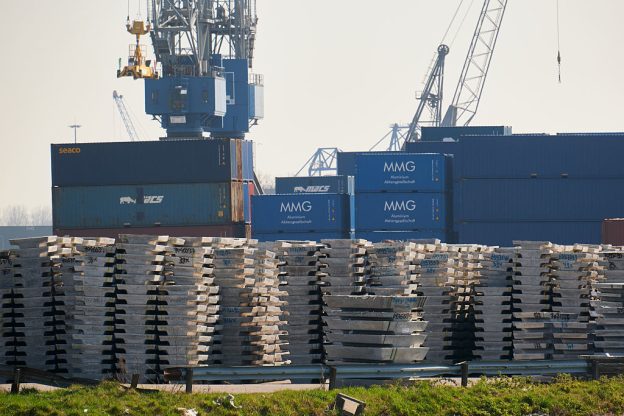
It is currently Western manufacturers taking the brunt of the crisis and partly by the doing of their own countries’ policies. China and Russia are both among the world’s main sources of aluminum but both have been cut off from Western markets because of tariffs and sanctions.
Crack spreads
The gap between what a refiner pays for crude oil and the price at which it sells the finished product is called the crack spread – the word to describe the refining process of “cracking” large hydrocarbon molecules into smaller ones (gasoline, diesel, naphtha, etc.)
A normal crack spread is between $10 and $20, although it can vary by product and region. What we are seeing now is crack spreads over $50. This means refined fuels are becoming more valuable relative to crude oil. This will show up in naphtha and diesel (already discussed above) and in gasoline prices at the pump. Crack spreads therefore provide a useful indicator of fuel-related cost pressures faced by consumers.
Meanwhile, what we’re seeing is a windfall for refiners. In crises such as the current one, pricing power shifts to the most capacity-constrained stage in the system, where output cannot be easily expanded. In this case – and often in oil markets – it is the refining stage.
Helium
Helium, a byproduct of natural gas processing, is a small market that punches well above its weight. Helium is essential in the high-tech world. It has important uses in chipmaking for which there is no easy substitute.
Currently, the global supply of helium is significantly disrupted and reports of rationing are already emerging. The war has thrown a wrench in both the production and transportation of helium. Supply chains for high-tech goods are already feeling the effects. If dislocations continue, this could start to noticeably interfere with production of goods such as electronics, automobiles, and even smartphones.
Helium production is highly concentrated in certain countries. Qatar, a large natural gas supplier, produces nearly a third of global supply, according to the US Geological Survey. However, the Ras Laffan Industrial City, the single largest helium production site in the world, sustained damage from a missile in early March. The Qatari government estimates that it will take up to five years to fully repair the site.
While shippers of some goods have diverted vessels around the Cape of Good Hope, a much longer but entirely unencumbered route, this is not as viable for helium, which is transported in specialized cryogenic containers. During long trips, the helium inevitably heats up and “boils off.”
Sulfur
The disruptions in fertilizer markets have garnered a lot of attention but less focus has been on the major feedstock components of fertilizer: sulfur. Called the “king of chemicals,” sulfur is a byproduct of oil and gas refining. It’s another of the vastly underappreciated inputs that keep things running and keep food plentiful across the globe.
Once converted into sulfuric acid, it is used in fertilizers and metal processing, as well as in many pharmaceuticals. The Gulf accounts for roughly 45% of global supply, which means the disruption is already having knock-on effects in both agriculture and metals. Compounding the problem is the fact that sulfuric acid isn’t easily replaced or immediately substitutable. Another vulnerability is that it is not stockpiled heavily, so when flows stop trouble can creep up quite quickly. This sends consumers scrambling for expensive spot supply – all of which eventually shows up in food price inflation.
Sulfur prices have moved sharply higher since the war on Iran began, and now countries are taking measures to insulate their own economies. Türkiye has announced a ban on sulfur exports, while India is also reportedly considering export restrictions.
Looking ahead
The global economy is as fragile as it is complex. As analyst Zoltan Pozsar says, “global supply chains work only in peacetime, but not when the world is at war, be it a hot war or an economic war.” Right now there are both. The confluence of multiple failures at key chokepoints could trigger cascades of crises that would inflict significant and enduring pain across the economy. Nobody thinks much about naphtha or sulfur when the world is humming along. But these and many other inputs, fuels and feedstocks are what keep the whole show running and their absence quickly becomes a crisis.
Col Doug Macgregor: US Strategy in Iran NEVER ADMIT DEFEAT
Daniel Davis / Deep Dive – April 19, 2026
Israel attacks three nations for alleged backing of Iran
RT | April 19, 2026
Israel’s ambassador to the United Nations has lashed out at his French, Chinese, and Pakistani counterparts, accusing their countries of effectively backing Iran by allegedly striking deals to secure safe passage through the Strait of Hormuz.
The rebuke appears to stem from media reports which recently indicated that commercial vessels from all three countries were able to transit the Strait of Hormuz during the blockade, in some cases with Iranian authorization, despite broader restrictions on shipping imposed by Tehran.
“I asked the French ambassador: How much money did you pay Iran to move ships safely through the Strait of Hormuz?” Danny Danon said in a post on X shortly after speaking at the UN General Assembly session on the Strait of Hormuz blockade.
“Surprisingly, he had no answer,” he wrote, adding: “The ambassadors of China and Pakistan also had no answer.”
Navigation through the Strait of Hormuz, a key route handling around 20% of global oil and liquefied natural gas flows, has been disrupted since Tehran effectively blocked the waterway in response to the US-Israeli bombing campaign that began on February 28.
On Friday, Iran opened the Strait to all commercial vessels, framing the move as part of ceasefire arrangements linked to the Israel–Lebanon truce, but closed it again the following day. The decision came as US President Donald Trump said the US blockade on Iranian ports and shipping would remain in force until a peace deal is reached. Washington imposed the restrictions after bilateral talks in Pakistan collapsed last weekend.
In March, Iran said that vessels of India, China, Russia, Iraq, Pakistan, and Sri Lanka would be allowed to pass through the crucial waterway. Beijing is ranked as the biggest buyer of Iranian oil and most of its supplies pass through the chokepoint. At the same time, Malaysian authorities thanked Tehran for allowing the passage of the country’s ships.
In April, the Financial Times reported, citing the tracking data, that a container ship owned by a French shipping company had sailed through the Strait of Hormuz along with several other ships.
At the UN, France previously voted in favor of resolutions condemning Iran’s blockade of the strait, China either vetoed the measures or voted against critical wording, while Pakistan abstained.
Iran defends limits on Strait of Hormuz passage
The Islamic Republic once again shut the strategic waterway due to what it described as US “piracy”
© Ruptly
RT | April 18, 2026
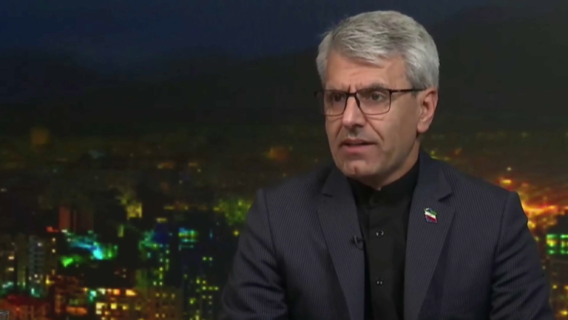
Iran said the renewed restrictions on maritime traffic through the Strait of Hormuz are justified under international law and necessary to counter hostile actions, Foreign Ministry spokesman Esmail Baqaei has said in an interview with RT.
Iranian military officials said on Saturday that Tehran had reasserted “strict control” over the strategic route, which carries about 20% of global oil, citing the continued US blockade of its ports, just a day after declaring it open. The Revolutionary Guard Navy Command later said the strait would remain under Iranian military control as long as US restrictions stay in place.
“There was no safe and secure passage in this waterway,” Baqaei told RT on Saturday, adding that as a coastal state Iran has the right under international law to take measures against what it sees as hostile actions.
“We cannot allow enemy vessels, especially military ones or those linked to countries involved in aggression, to pass through the strait normally, as they pose a direct threat,” the spokesman stated.
The US-Israeli bombing campaign prompted Iran to restrict passage through the strait for “enemy ships,” triggering a breakdown in supply chains and sending global crude oil prices soaring.
Oil prices eased during the first round of US-Iran talks in Islamabad last weekend on hopes of the Strait reopening. After the negotiations collapsed, US President Donald Trump ordered a naval blockade on Iranian ports and shipping, prompting tankers to turn back and pushing prices back toward $100 a barrel.
On Friday, Iranian authorities said the waterway was fully open to commercial vessels for the remainder of the ten-day Israel–Lebanon ceasefire, lowering crude oil prices on de-escalation hopes. Tehran later reversed the decision after Trump said the US blockade of Iranian ports would remain in full force until a peace deal is reached.
The disruption in the Strait of Hormuz has triggered broad global economic ripple effects, with Europe facing higher fuel and energy costs due to reduced oil flows. The International Energy Agency has warned of rising market volatility and possible jet fuel shortages within six weeks if disruptions continue. Humanitarian organizations have also flagged growing risks to global food security as fertilizer and agricultural supply chains are affected.
‘We warned you’: Hormuz Strait back to pervious state amid US blockade
Al Mayadeen | April 18, 2026
Iran’s military announced that the Strait of Hormuz has returned to its previous operational status, placing it under “strict management and control” by the country’s armed forces, following repeated violations of prior understandings by the United States.
In a statement, the spokesperson of the Khatam al-Anbiya Central Headquarters said Iran had earlier agreed, in good faith and within the framework of negotiations, to allow the managed passage of a limited number of oil tankers and commercial vessels through the strategic waterway.
However, the spokesperson stated, the United States had failed to uphold its commitments, amid Washington’s continued acts of “piracy and maritime robbery” under the guise of a naval blockade.
The statement added that, in response, Iran has reinstated full control measures over the strait, emphasizing that the passage of vessels will remain tightly regulated unless the US fully lifts restrictions on Iranian shipping routes, both inbound and outbound.
“As long as the United States does not completely lift the restrictions on the passage of vessels from Iran to destination and from destination to Iran, the situation in the Strait of Hormuz will be strictly controlled and remain as before,” the spokesperson said.
IRGC-N affirms change in Hormuz regime
Meanwhile, Iran’s Islamic Revolution Guard Corps Navy (IRGC-N) reaffirmed the change in the regime of the Strait of Hormuz, stressing that any breach of promise by the United States will receive a fitting response.
“As long as the passage of vessels from and to Iran is threatened, the status of the Strait of Hormuz will remain unchanged,” the IRGC-N said, according to the Iranian TV, IRIB.
Iranian official outlines ‘new maritime regime’
Separately, Ebrahim Azizi, head of the National Security Commission of the Iranian parliament, outlined a new framework governing maritime transit in the strait.
“It is time to submit to the new maritime regime of the Strait of Hormuz; this regime is determined by the Islamic Republic of Iran, not by virtual posts,” Azizi wrote in a post on X.
“In this regime, only commercial ships, and only with permission from the Armed Forces General Staff, particularly the Navy, are allowed to pass through designated routes after paying the rightful dues of the Iranian nation.”
He added that any US interference with Iranian vessels could prompt further escalation in restrictions.
“If the Americans want to create the slightest interference for Iranian ships, this decision can easily be changed!” Azizi said.
In a follow-up post, he added, “We warned you, but you didn’t pay attention! Now enjoy the return of the Strait of Hormuz situation to its previous state.”
Iran rejects uranium transfer, warns of response to naval blockade
Al Mayadeen | April 18, 2026
Iran’s Foreign Ministry spokesperson Esmaeil Baghaei flatly rejected on Friday any proposal to transfer the country’s enriched uranium abroad, declaring that Iran’s uranium reserves are as sacred as its own soil.
Responding to remarks made by US President Donald Trump, who told Reuters that Washington would work with Tehran to retrieve and transfer its enriched uranium, and claimed Iran had agreed to halt enrichment, Baghaei called such assertions part of a coordinated media campaign designed to pressure negotiators and tilt the direction of ongoing talks.
“Claims about a permanent suspension of uranium enrichment are aimed at influencing the course of negotiations,” Baghaei said, adding that any final agreement must fully safeguard Iran’s interests and rights.
Iran has consistently maintained that its uranium enrichment program serves civilian purposes, including agriculture and medicine, and that it operates no military nuclear program.
Compensation, sanctions relief are core demands
Baghaei stressed that compensation for the losses and damages inflicted on Iran is not a peripheral issue but a fundamental pillar of any potential deal.
He also placed the lifting of sanctions at the top of Tehran’s list of priorities, emphasizing that ending the war and halting hostilities across all fronts must be treated as a single, inseparable package, not piecemeal concessions to be negotiated separately.
He described diplomacy as “a continuation of military efforts on the ground,” signaling that Tehran’s negotiating posture is shaped by the same resolve it has brought to the battlefield.
Naval blockade crosses a red line
On the security front, Baghaei warned that a naval blockade would be met with a firm Iranian response, calling any such measure a direct violation of the ceasefire. “Iran cannot be blockaded,” he said, adding that Tehran would take all necessary measures in response.
He also invoked international maritime law, asserting that coastal states bordering strategic straits hold both the right and the responsibility, in wartime conditions, to take appropriate measures against states they consider hostile, in reference to the Strait of Hormuz.
No direct talks with Trump
Baghaei also denied Trump’s claims that US officials had held direct talks with Iranian counterparts, calling those assertions false.
He noted that while earlier rounds of negotiations had focused primarily on the nuclear file, the most recent discussions have shifted to center on ending the war entirely.
On the progress of talks, he said the Islamabad meeting had helped map out areas of understanding and define red lines, adding that “there is no ambiguity regarding the negotiation files.”
He cautioned, however, that developments over the coming days would ultimately determine the outcome.
Tehran’s previous uranium offer
Iran’s Deputy Parliament Speaker Ali Nikzad revealed on Monday that Tehran had at one point signaled a willingness to demonstrate goodwill, but on its own terms.
Nikzad said Iran had proposed diluting 450 kilograms of enriched uranium, not handing it over, and that earlier negotiations had explored the possibility of establishing a trilateral consortium involving Iran, the United States, and Saudi Arabia to carry out that dilution. He clarified that the other parties ultimately pulled back from that framework.
Nikzad also claimed that the US military operation targeting Isfahan had been aimed at seizing Iran’s uranium stockpiles, but that it failed.
Daniel Davis: Iran Reopens the Strait of Hormuz
Glenn Diesen | April 17, 2026
Lt. Col. Daniel Davis is a 4x combat veteran, the recipient of the Ridenhour Prize for Truth-Telling, and is the host of the Daniel Davis Deep Dive YouTube channel. Lt. Col. Davis discusses Iran’s announcement that it is reopening the Strait of Hormuz, yet the US decides to maintain the blockade on Iranian ports. While diplomatic developments are positive, the statements from the US and Iran do not correspond with each other.
Daniel Davis Deep Dive: https://www.youtube.com/@DanielDavisDeepDive/videos
Follow Prof. Glenn Diesen:
- Substack: https://glenndiesen.substack.com/
- X/Twitter: https://x.com/Glenn_Diesen
- Patreon: https://www.patreon.com/glenndiesen
Support the research by Prof. Glenn Diesen:
- PayPal: https://www.paypal.com/paypalme/glenndiesen
- Buy me a Coffee: buymeacoffee.com/gdieseng
- Go Fund Me: https://gofund.me/09ea012f
Israeli General: War with Iran does not serve Israel as global standing erodes over Gaza
MEMO | April 17, 2026
A former Israeli General close to Prime Minister Benjamin Netanyahu has warned of the strategic and political consequences of the ongoing conflict, saying a military confrontation with Iran is not in Israel’s interest.
Major General (res.) Giora Eiland, former head of Israel’s National Security Council, said in remarks reported by Israeli media platform Walla that Israel’s international standing has sharply declined over the past three years, adding that the war in Gaza is the main driver of this deterioration.
He said the prevailing view among political circles in Europe and the United States is that Netanyahu has drawn Washington into an unnecessary confrontation.
Eiland added that these tensions have caused tangible harm to the global economy and threatened its stability, fuelling international public opinion against Israeli policies.
He stressed that the erosion of Israel’s standing is no longer limited to international institutions, but has become “clear and evident” within the United States, Israel’s closest ally.
Trump keeps Hormuz blockade despite Iran reopening passage
Al Mayadeen | April 17, 2026
US President Donald Trump announced that Washington will maintain its naval blockade targeting Iran, even after Tehran declared the Strait of Hormuz open to commercial shipping.
“THE STRAIT OF HORMUZ IS COMPLETELY OPEN AND READY FOR BUSINESS AND FULL PASSAGE, BUT THE NAVAL BLOCKADE WILL REMAIN IN FULL FORCE AND EFFECT AS IT PERTAINS TO IRAN, ONLY, UNTIL SUCH TIME AS OUR TRANSACTION WITH IRAN IS 100% COMPLETE,” Trump said in a post on Truth Social on Friday.
He added that an agreement may be imminent, claiming that most negotiation points between Washington and Tehran have already been settled.
Iran reopens strategic waterway amid ceasefire
Iran’s move to reopen the Strait of Hormuz came in the context of broader regional de-escalation. Foreign Minister Abbas Araghchi announced that all commercial vessels would be permitted to pass through the vital waterway.
“In line with the ceasefire in Lebanon, the passage for all commercial vessels through Strait of Hormuz is declared completely open for the remaining period of ceasefire, on the coordinated route as already announced by Ports and Maritime Organisation of the Islamic Rep. of Iran,” Araghchi stated on April 17 via X.
The announcement ties maritime security in the Gulf to developments in Lebanon, where a temporary ceasefire has reduced immediate regional tensions.
Tankers continue transit despite US measures
Despite Washington’s insistence on maintaining its blockade, maritime activity suggests that Iranian oil shipments have not been halted.
Reports indicate that Iranian vessels have continued to navigate the Strait of Hormuz, reaching international waters and proceeding toward their destinations.
According to AFP, citing maritime tracking firm Kpler, three sanctioned Iranian oil tankers successfully exited the Gulf through the strait in recent days.
The vessels, The Deep Sea, Sonia I, and Diona, carried a combined five million barrels of crude oil after departing from Kharg Island. Their movement underscores the continued flow of Iranian oil toward Asian markets despite US efforts to restrict exports.
This development highlights the limitations of enforcement mechanisms, particularly as vessels employ tracking avoidance tactics and indirect shipping routes.
Strategic tensions between de-escalation and pressure
The parallel developments, Tehran reopening the strait and Washington maintaining its blockade, reflect a broader contradiction in the current phase of regional dynamics.
Iran’s decision signals a willingness to facilitate global trade flows and align maritime policy with ceasefire conditions. In contrast, the US approach continues to prioritize economic pressure, even amid signs of diplomatic progress.
The continued movement of Iranian tankers suggests that enforcement gaps remain, raising questions about the practical effectiveness of the blockade.
‘New order’ in Strait of Hormuz: IRGC Navy mandates authorization for all vessels
Press TV – April 17, 2026
The Islamic Revolution Guards Corps (IRGC) Navy says a “new order” is now in place over the strategic Strait of Hormuz, outlining strict new regulations for all maritime traffic.
In a statement released on Friday, the IRGC Navy commander announced that all commercial vessels will only be permitted to transit through routes designated by Iran.
The announcement also reaffirmed that military vessel transit through the strategic chokepoint firmly under Iranian control remains strictly prohibited.
According to the IRGC Navy, all transits, commercial or otherwise, will only be allowed with the explicit authorization of the IRGC’s naval forces.
The statement further stated that these transits are being conducted in accordance with the agreement established under the ongoing Iran-US ceasefire and following the implementation of the ceasefire in Lebanon late on Thursday.
The new measures signal Iran’s firm grip over the waterway, through which approximately one-fifth of the world’s oil passes, after the 40-day war of aggression against the Islamic Republic of Iran by the American-Israeli coalition.
Earlier on Friday, following the implementation of a ceasefire in Lebanon, Iran’s Foreign Minister Abbas Araghchi announced the reopening of the strategic Strait of Hormuz to commercial vessels.
“In line with the ceasefire in Lebanon, the passage for all commercial vessels through Strait of Hormuz is declared completely open for the remaining period of ceasefire, on the coordinated route as already announced by Ports and Maritime Organisation of the Islamic Rep. of Iran,” Araghchi wrote on his X handle.
It was followed by foreign ministry spokesperson Esmaeil Baghaei’s remarks, explaining that the foreign minister’s tweet was within the framework of the April 8 ceasefire agreement.
The passage of ships through the Strait of Hormuz, he stressed, will take place along the route designated by Iran and in coordination with Iran’s competent authorities.
The Strait of Hormuz, a strategic waterway nestled between the Persian Gulf and the Gulf of Oman, is a strategically vital waterway that forms the pulse of the global energy economy and, simultaneously, a potent asset for the Islamic Republic to fundamentally reshape the balance of power in the Persian Gulf and around the world.
According to experts, Iran is uniquely positioned to exert absolute control over the northern and most critical part of the strait, with its coastline stretching more than 1,600 kilometers along the Persian Gulf and the Sea of Oman.
The strategic waterway has been in the news since February 28, when the US-Israeli alliance launched an unprovoked aggression against the Islamic Republic, prompting strong retaliation from Iranian armed forces, including the closure of the critical chokepoint to US and allied vessels.
Iran’s Navy Commander Rear Admiral Shahram Irani, in a TV interview, also dismissed US President Donald Trump’s rhetoric of naval blockade, saying no one listens to him.
Trump, he said, has imposed a “naval blockade” on his friends, not on the Islamic Republic of Iran, calling it “banditry and piracy.”
“To this day, we have not allowed US and Israeli aircraft carrier strike groups and marines to enter the Sea of Oman,” Rear Admiral Irani stated.
Persian Gulf oil production can take two years to recover from war: IEA chief
The Cradle | April 17, 2026
It could take up to two years for oil production in West Asia to return to levels from before the start of the US-Israel war on Iran in late February, Fatih Birol, executive director of the International Energy Agency (IEA), told Bloomberg on 17 April.
“There is a general belief that the minute we see the strait open … we come back to the level of production before – which is, in my view, misleading,” Birol stated.
West Asia oil production was disrupted by the US-Israeli bombing campaign, which targeted Iranian oil and energy infrastructure.
Iran retaliated by targeting Gulf oil and gas infrastructure. It also threatened to target ships linked to the “enemy” in the Strait of Hormuz, effectively closing the waterway through which most Gulf oil is exported.
“The recovery will be gradual as damage from the conflict has affected oil fields, refineries, and pipelines across the Persian Gulf,” Birol said.
The IEA chief emphasized that the effective closure of Hormuz has caused world markets to lose hundreds of millions of barrels of crude and refined fuels.
The full resumption of liquefied natural gas (LNG) production could take even longer, with some terminals taking more than two years to repair after suffering damage in attacks, Birol added.
If a resolution to the conflict is not reached soon, energy-importing emerging economies, especially in Asia and Africa, will be hardest hit, Birol warned.
He added that early signs of demand destruction are already visible, including rationing and reduced activity, which could further reduce oil demand moving forward.
Meanwhile, US oil and gas exports have soared since the beginning of the war. Reuters reported on 15 April that the US has nearly become a net crude exporter for the first time since World War II as Asian and European buyers scramble to replace oil supplies lost due to the Iran war.
The difference between US oil imports and exports narrowed to 66,000 barrels per day (bpd) last week, the lowest on record, according to US government data. At the same time, exports reached 5.2 million bpd, the highest in seven months.
Reuters noted, however, that the US is rapidly approaching its maximum export capacity.
Iran has also increased its oil exports amid the conflict, boosting daily loadings and exports to around 2 million barrels over the past three months.
China has stepped up its purchases of Iranian crude by more than 300,000 bpd to a total of 1.6 million bpd.
Since the war began, India has resumed oil purchases from Iran, receiving at least 2 million barrels this month. New Delhi had halted its purchases of Iranian crude in 2019.
Iranian crude has recently been sold to some Chinese buyers at prices even higher than the Brent benchmark, which marks a reversal from before the war, when Iran was forced to sell oil to China at a discount due to US sanctions.
Featured Video
Trita Parsi: Israel Set a Trap for Total War in the Region
or go to
Aletho News Archives – Video-Images
From the Archive
Zionism’s Violent Legacy
By Donald Neff | Washington Report On Middle East Affairs | January 1996
On January 4, 1948, Jewish terrorists drove a truck loaded with explosives into the center of the all Arab city of Jaffa and detonated it, killing 26 and wounding around 100 Palestinian men, women and children.[1] The attack was the work of the Irgun Zvai Leumi – the “National Military Organization,” also known by the Hebrew letters Etzel – the largest Jewish terrorist group in Palestine. The Irgun was headed by Revisionist Zionist Menachem Begin and had been killing and maiming Arabs, Britons and even Jews for the previous ten years in its efforts to establish a Jewish state.
This terror campaign meant that at the core of Revisionist Zionism there existed a philosophical embrace of violence. … continue
Blog Roll
 Aletho News
- Trita Parsi: Israel Set a Trap for Total War in the Region
- Trump’s Iran war is on an Israeli leash
- Saudi oil boss issues global supply warning
- Riyadh Says Its Oil System Is Intact. The Numbers Say Otherwise.
- Trump and Netanyahu Want to “Finish the Job” on Iran
- US ‘one-sided dictation’ not Iran’s beliefs makes rational talks impossible: Baghaei
- Iran’s Next Strike May Not Explode. It Could Shut You Down /Col Doug Macgregor
- Iran: US political targets legitimate if assassinations return
- Iraq shuts key border crossing with Iran under US pressure: Report
- Undersea Internet cables could be targeted in retaliation for attacks on Iran: IRGC deputy chief
- If Americans Knew
- The Israel Lobby’s Changing Fortunes
- AIPAC has become such a political liability that it’s shifting to a more “nimble” approach to buying politicians
- At least 160 Israeli settler attacks in 2 weeks
- Will Gaza’s Ancient Christian Community Disappear Forever?
- Israel’s vision of regional security rests on keeping Arab states weak
- Heidi Levine recounts how Palestinian youths helped save her in settler attack
- DAILY UPDATE: Latest essential news on Palestine, Israel, & region
- Trump’s Intensifying Sabotage of the ICC, for Israel’s Sake
- Israeli military detain US and UK volunteers in West Bank including Democratic NY politician Brad Lander
- Americans at National Conservatism Conference held in Israel this year criticize Israel
- No Tricks Zone
- E-Cars Reduce CO2 Emissions By Only 41% Compared To Internal Combustion Engine Vehicles
- Predictions Made By Renowned Climate Professor Over Past Decades Have Been Proven To Be Poor
- New Study Suggests Large Regions Of The Pacific Ocean Have Been Cooling For The Last 80 Years
- Germany’s Green Energy Debacle: High Energy Costs Force Kahla Porzellan to Close After 182 Years!
- New Study: 50 Years Of The Most Aggressive ‘Net Zero’ Policies Can Only Affect The Global Climate By 0.03°C
- US September “Heat” Was No Record…Many Records Set Decades Ago
- Latest European Green Energy Debacle; Portugal’s Largest Flagship Solar Park Insolvent!
- Green Energy Debacle: German Expert Professor Fritz Vahrenholt Warns Of Severe Economic And Social Consequences
- Two More Paleo Reconstructions Affirm Meters-Higher Sea Levels Across Ireland, Brazil 7000-6000 Years Ago
- New Study: Earth And Venus Surface Warmth Largely Explained By Convection And Lapse Rate, Not CO2 Or Radiation

