Critic of EU and NATO wins Irish presidency
RT | October 25, 2025
Independent candidate Catherine Connolly, a long-time advocate of Irish military neutrality and a critic of NATO’s expansion and EU militarization, has won Ireland’s presidential election in a landslide.
The ballot count was still underway when Connolly’s main rival, Heather Humphreys, conceded defeat after early tallies showed her trailing by a wide margin. Preliminary results put Connolly ahead by 63% to 29%.
“Catherine will be a president for all of us and she will be my president,” Humphreys told journalists.
Irish Prime Minister Micheal Martin also formally congratulated Connolly on what he said “will be a very comprehensive election victory.”
Although an independent, the 68-year-old former Galway mayor was supported by major left-wing parties, including Sinn Fein and Labour.
Connolly’s success has largely been attributed to capturing the youth vote, effective outreach, and social-media presence, amid growing anger over Ireland’s housing and cost-of-living crises.
During the campaign, she emphasized Irish neutrality and criticized the EU’s push to expand militarization at the expense of social welfare. While critical of Russia in the Ukraine conflict, she has argued that NATO “warmongering” played a role in the crisis.
Last month, Connolly compared Germany’s push to boost its economy by “championing the cause of the military industrial complex” to its rearmament in the 1930s under the Nazis. “Seems to me, there are some parallels with the ‘30s,” she said at a discussion at University College Dublin.
Moscow has long criticized Brussels’ accelerating military buildup, arguing the EU was essentially transforming into an aggressive, military and political extension of NATO.
While the president is the formal head of state in Ireland, a parliamentary democracy, the role is seen as largely symbolic. However, the presidency does hold a few key powers, including the ability to refer bills to the nation’s top court to determine constitutionality, as well as the power to dissolve the lower chamber of parliament and call for new elections in the event a prime minister loses majority support.
China snubs Germany’s top diplomat – media
RT | October 24, 2025
German Foreign Minister Johann Wadephul has been forced to cancel an upcoming trip to China after Beijing reportedly declined to arrange high-level meetings with him, multiple media outlets reported on Friday.
Wadephul was scheduled to depart for Beijing on Sunday to discuss China’s export restrictions on rare-earths and semiconductors, as well as the Ukraine conflict.
“The trip cannot take place at this time and will be postponed to a later date,” Politico cited a spokesperson for Germany’s Federal Foreign Office as saying. Wadephul was slated to meet with Chinese Foreign Minister Wang Yi but otherwise reportedly had too few meetings on the agenda.
According to Bild, the two diplomats will instead hold a telephone conversation soon.
The diplomatic setback comes amid escalating trade tensions between China and the EU. Over the past year, Brussels and Beijing have clashed over what the bloc calls China’s industrial overproduction, while China accuses the EU of protectionism.
Earlier this month, Beijing tightened its restrictions on the export of certain strategic minerals that have dual-use in military applications – a move that could further strain Europe’s struggling auto sector.
Germany has been particularly affected by the worsening trade climate. Bild reported on Wednesday that Volkswagen is expected to halt production at key plants next week due to a shortage of semiconductors following the Dutch government’s seizure of Chinese-owned chipmaker Nexperia. The Netherlands cited risks to the EU’s technological security, prompting Beijing to retaliate by banning exports of Nexperia chips from China. As inventories dwindle, more Volkswagen plants could face temporary shutdowns, and other automakers may also be affected, the paper said.
On Friday, German Economy Minister Katherina Reiche announced that Berlin was lodging a diplomatic protest against Beijing for blocking semiconductor shipments, citing Germany’s heavy reliance on Chinese components.
Trump may not follow through on Russian oil or Tomahawk
By M. K. BHADRAKUMAR | Indian Punchline | October 25, 2025
The US President Donald Trump has seemingly shifted gear in the US strategy to stop Russia on its tracks from creating new facts on the ground in Ukraine. Russian forces have the upper hand all along the 1250-km Ukrainian frontline stretching Kiev’s defences and resources, which no amount of western military help can hope to reverse in a foreseeable future. Trump is compelling Russia to seek a military victory in Ukraine.
Trump so far put on the air of a statesman in great anguish over the humanitarian aspects of the conflict. Moscow tolerated the theatrical show to pamper Trump’s egotistic personality — that is, until Putin shattered the myth last week to expose that Trump actually holds the record as the American president who sanctioned Russia the most number of times, exceeding even his predecessor Joe Biden’s tally.
Trump, in the new avatar as war monger has unveiled a strategy of climbing the escalation ladder in the war until Putin capitulates. To that end, he has expanded the sanctions regime to include Russia’s oil industry, and is toying with the idea to supply Ukraine with long-range Tomahawk missiles that can hit deep inside Russian territory.
The US Treasury Departments’ press release announcing the new sanctions against Russia reads as if its is custom made for targeting India. India and China account for some 80% of Russia’s oil exports, but the latter is the number one buyer with 60% of the imports transported through pipelines, whereas India depends on carriers arranged by the Russian side (“shadow fleet”) which are also now under western sanctions.
The press release claims that “The ultimate goal of sanctions is not to punish, but to bring about a positive change in behaviour.” It is a statement of fact because this is not really about oil, but about geopolitics. Whether Trump will actually press ahead with the oil sanctions remains unclear, since keeping Russian oil out of the world market risks high oil prices which could boomerang on the US economy and be damaging politically for Trump.
Putin’s initial reaction last Thursday was that the oil sanctions are an “unfriendly” act which “will have certain consequences, but they will not significantly affect our economic well-being.” Putin said that Russia’s energy sector feels confident. He added, “This is, of course, an attempt to put pressure on Russia. But no self-respecting country and no self-respecting people ever decides anything under pressure.”
Meanwhile, western hypocrisy broke through the ceiling, as the German chancellor Friedrich Merz who is one of the most enthusiastic proponents of the war is at Trump’s doorstep pleading for a sanctions waiver. Apparently, Germany has been quietly buying Russian oil even while portraying Russia in hostile terms, lest its GDP fell by another 3 percent!
Germany “temporarily” took control of three subsidiaries of the Russian oil company Rosneft (which the US has sanctioned) to secure its energy supply. Interestingly, the UK PM Keir Starmer, the charioteer of the so-called “coalition of the willing” raring to deploy troops in Ukraine to fight Russian forces, is travelling in the same boat as Merz seeking Trump’s waiver!
Such shady behaviour with racial overtones by the Western countries holds lessons for India. Clearly, the effectiveness of the new sanctions against the Russian oil giants will depend on just how zealous the US is in enforcing them through secondary sanctions on entities that deal in Russian oil. If past experience is anything to go by, Washington won’t be able to sustain a full-court press – if for no other reason than that markets will force its hand once oil prices shoot up.
That is to say, thanks to lax enforcement of sanctions, Russian oil will continue to reach the world market. Buyers like India who cut down oil supplies from Russia will end up paying higher prices. By meekly complying with Trump’s diktat, they compromised their interests. The sense of humiliation is such that Delhi shies away from engaging with Trump.
However, as regards long-rage Tomahawk missiles (range: 3000 km) Putin was polite but frank in his reaction, saying, “This is an attempt at escalation. But if such weapons are used to attack Russian territory, the response will be very serious, if not overwhelming. Let them think about it.”
The deputy chairman of the Security Council Dmitry Medvedev was even blunt in conveying the Kremlin thinking:
“The US is our enemy, and their talkative ‘peacemaker’ has now fully embarked on the path of war with Russia… this is now his conflict, not the senile Biden’s!… the decisions made are an act of war against Russia. And now Trump has fully sided with the insane Europe.
“But there is also a clear plus in this latest swing of the Trump pendulum: we can strike all the Bandera hideouts with a wide variety of weapons without regard to unnecessary negotiations. And achieve victory precisely where it is only possible: on the ground, not at a desk. Destroying enemies, not concluding meaningless ‘deals’”.
Apparently, the message went home. Trump, before emplaning for Malaysia on his 3-nation Asian tour, made sure that his special envoy to Russia Steve Witkoff extended an invitation to his Russian interlocutor Kirill Dmitriev, the CEO of Russian Direct Investment Fund, to go over to Miami for a quiet conversation to talk things over. The two erstwhile businessmen are meeting today.
Meanwhile, Trump has hinted in anticipation of his forthcoming meeting with Chinese President Xi Jinping in Kuala Lumpur on Saturday that he may not after all carry out his threatened 100% tariffs on Chinese goods and other trade curbs starting on November 1 in retaliation for China’s vastly expanded export controls on rare earth magnets and minerals. China’s tough stance is paying off.
Similarly, the Kremlin’s blunt threat of retaliation against Tomahawk will be heeded seriously. Putin has many options — Oreshnik capable of Mach 10 speed, for instance, is a hypersonic missile that is also nuclear capable, against which the West has no defence. The weapon has entered into serial production and been supplied to the armed forces.
Again, Russia’s new jet-powered glide bomb gives a significant boost in range and superior resistance to electronic countermeasures. It is capable of hitting Ukraine’s western border. It is also moving to mass production and the West is defenceless against it.
Trump’s Russia sanctions could backfire – former Biden adviser
RT | October 24, 2025
New US sanctions on Russian oil producers could end up benefiting Moscow by driving up global energy prices, a former White House energy adviser has said.
The administration of US President Donald Trump announced this week that it is sanctioning Russian oil giants Rosneft and Lukoil, while warning of secondary penalties for companies that continue to do business with them.
Amos Hochstein, who previously served as senior energy policy adviser under former President Joe Biden, told The Financial Times that the move might not have the intended economic impact.
“If prices rise significantly, any revenue loss Russia suffers from reduced sales will be offset by higher prices,” he explained. “And if prices climb too much, Russia profits while American consumers and our allies end up paying more.”
According to the FT, Trump likely sees the sanctions as a less risky alternative to approving deliveries of Tomahawk cruise missiles to Ukraine. With oil prices currently below the levels seen during Biden’s presidency, Washington appears to believe it has leeway to act without triggering a sharp domestic oil price spike, according to the article published on Friday.
Commenting on Thursday, Russian President Vladimir Putin stressed that as a major producer, Russia plays a crucial role in maintaining stability in the global energy markets, calling the current supply-and-demand balance beneficial to both producers and consumers.
“Disrupting this balance is a thankless task – including for those attempting to do so,” he said.
Putin also warned that any use of Tomahawk missiles against Russia would provoke a “truly staggering” response.
Kiev claims that the long-range weapons could be a gamechanger for its war effort, but Russian officials have warned that the use of nuclear-capable weapons, which Moscow says would require input from American military personnel, would cause a major escalation.
Refinery Fires Help EU Topple Pro-Peace Governments to Wage War on Russia
Sputnik – 23.10.2025
While it is too early to tell who exactly is responsible for the recent fires at the refineries in Hungary and Romania as investigations are still ongoing, figuring out who benefits from them is easier, Endre Simó, the president of the Hungarian Community for Peace, tells Sputnik.
According to Simo, it is “those who want to gain a market with their own products by displacing cheaper Russian products.”
“Given the history, namely the explosion of the Nord Stream 2 gas pipeline and the series of Ukrainian attacks against the Druzhba oil pipeline, intentionality cannot be ruled out either in Hungary or Romania,” he points out.
He further notes that the main victim of these incidents is Serbia which, due to its only significant refinery being targeted by US sanctions, is forced to rely heavily on the now-damaged MOL’s refinery in Százhalombatta.
Thus, the refinery fires are also a boon to those seeking to overthrow the pro-peace government of Viktor Orban in Hungary and Alexandar Vucic in Serbia, and using “impermissible means” to meddle in Hungary and Serbia’s internal affairs “in order to bring opposition forces that serve the Brussels policy to power.”
Refinery Fires in Europe Are Part of EU Crusade Against Russian Oil and Gas
Sputnik – 23.10.2025
The timing of the recent incidents at the oil refineries in Hungary and Romania is very suspicious in light of the threats from Poland, Dr. George Szamuely, senior research fellow at The Global Policy Institute, tells Sputnik.
When Polish Foreign Minister Sikorsky openly justifies the Nord Stream bombing and then tries intimidating Hungary into giving up Russian oil, and then suddenly the refineries are ablaze – that’s one hell of a coincidence.
The refinery fires were definitely a part of a broader campaign to cut off the flow of Russian energy to Europe, Szamulely notes – a campaign that ends up hurting the EU members but fails to affect Russia.
“These measures that the EU is adopting are measures directed towards hurting EU member states, forcing them into line,” he explains.
Only the Russophobic EU bureaucrats like Ursula von der Leyen and Kaja Kallas benefit from this disruption of energy supply chains, and they are eager to “punish anybody at all who is not on board with their program.”
The incidents in Hungary and Romania convey a simple message: “if you are going to keep importing your fossil fuels from Russia, look at the sort of things that can happen, all sorts of explosions, fires, sabotage.”
Volkswagen faces chip crisis after Chinese factory seized by EU state – Bild
RT | October 23, 2025
Germany’s largest carmaker, Volkswagen, could stop production at a key plant due to a shortage of semiconductors caused by the seizure of a Chinese-owned chipmaker by the Netherlands, Bild has reported, citing anonymous sources.
The Dutch government took control of the Nexperia factory in Nijmegen late last month, citing intellectual property and security concerns. The New York Times reported last week after reviewing documents from an Amsterdam court that the move had been made following pressure from US officials. Nexperia’s parent company, Wingtech, was blacklisted by Washington in 2024 as part of an ongoing trade war with China.
Beijing responded in early October by banning Nexperia from exporting finished chips from China, which are widely used in the electronic control units of VW vehicles.
Bild reported on Wednesday that Volkswagen – which also owns the Skoda, Seat, Audi, Porsche, Lamborghini, and Bentley brands – does not currently appear to have an alternative to Nexperia chips.
Sources in the company told the paper that due to the lack of semiconductors it plans to stop production at its plant in Wolfsburg from next Wednesday. Volkswagen Golf models will be affected first, followed by other vehicles, they said.
If the situation does not improve, work could also be halted at Volkswagen’s facilities in Emden, Hanover, Zwickau, and elsewhere, a person familiar with the matter said.
According to the report, the carmaker has started talks with the German authorities about a state-backed reduced working hours scheme for tens of thousands of its employees.
Bild warned that the chip crisis could also impact other carmakers in the country. Representatives for BMW and Mercedes told the paper that they were analyzing the situation. The German automobile industry has already been suffering due to high energy costs as a result of EU sanctions on Russia over the Ukraine conflict and increased US tariffs.
A spokesman for Volkswagen’s Zwickau plant told AFP that the report by Bild was “incorrect.” However, according to an internal letter seen by the media, the company acknowledged that “impact on production cannot be ruled out in the short term” due to a semiconductor shortage.
Lufthansa announces 100+ route cuts
RT | October 20, 2025
Rising German aviation taxes and fees will force national flag carrier Lufthansa to cut about 100 domestic flights from its forthcoming summer schedule, the company’s chief executive, Carsten Spohr has said.
Government-imposed costs for airlines in Germany have roughly doubled over the past six years, he explained.
“Without a reduction in location costs, further cuts will be unavoidable,” Spohr said. “This involves around 100 domestic flights per week, which could be eliminated again next summer.”
Higher taxes and fees on economy ticket costs are accelerating a shift in the airline’s passenger mix towards first, business, and premium economy cabins.
The complaints from Lufthansa echo long-standing grievances from airline executives about Germany’s aviation cost base, which they argue hinders competitiveness.
Last month Lufthansa also announced plans to cut 4,000 administrative jobs by 2030, with the majority of the cuts taking place in Germany.
In the face of strikes, delayed aircraft deliveries, and underperformance at its mainline business, Lufthansa has been forced to slash its financial guidance twice in the last year and has missed medium-term margin targets set in 2021.
The German aviation industry association (BDL) has warned that the country’s viability as a global hub is in crisis, citing state-imposed costs since 2019. Airlines are now avoiding Germany, BDL Chairman Jens Bischof stated in August, with the number of aircraft stationed in the country by European point-to-point carriers falling from 190 to 130.
BDL estimates that the financial burden on the industry will rise by €1.1 billion ($1.2 billion) in 2025 to €4.4 billion, which will result in the loss of 10,000 jobs and €4 billion ($4.3 billion) in annual economic value.
Turkey prepares its historic turn: from NATO sentinel to Eurasian protagonist
By Lucas Leiroz | Strategic Culture Foundation | October 19, 2025
For decades, Turkey was considered a pillar of NATO’s eastern flank — a key piece on the chessboard of containing Russia. Since joining the alliance in 1952, the country has played a dual role: on one hand, a strategic partner of the West; on the other, a regional power with ambitions of its own. This balance was always unstable — and now, it is beginning to undergo substantial change.
What was once whispered behind closed doors is now being openly voiced by central figures in Turkish politics. In September 2025, an unexpected statement from the leader of the Nationalist Movement Party (MHP), Devlet Bahçeli, sent shockwaves through Ankara and beyond: he openly proposed the formation of a strategic alliance between Turkey, Russia, and China, directly opposing what he called the “US-Israel evil coalition.”
Though shocking to some Western observers, this proposal did not emerge in a vacuum. According to analyst Farhad Ibragimov, Bahçeli’s remarks mark “the deepest ideological shift in Turkish nationalism since the Cold War.” A nationalism traditionally aligned with the West now appears skeptical — if not openly antagonistic — to the Washington-led structure.
It is important to note that Bahçeli is not alone in this shift. The idea is echoed with enthusiasm by other sectors of Turkish political life, such as Doğu Perinçek, leader of the Patriotic Party. For him, this reorientation is neither a tactical maneuver nor a veiled threat to NATO — it is, rather, a “civilizational project.” In his words, it is a historic decision: either Turkey remains a satellite of the Atlantic powers, or it fully integrates into the Eurasian civilization, alongside Russia, China, and Iran.
In this context, the suggested alliance should not be seen merely as a military or diplomatic pact, but as an attempt to redefine Turkey’s role in the 21st century. The proposal carries an implicit — and at times explicit — critique of the decadent, domineering, and unsustainable liberal world order.
President Recep Tayyip Erdoğan’s position has been more ambiguous. He stated he was “not fully familiar” with Bahçeli’s idea, but added: “Whatever is good, let it happen.” This phrase summarizes Erdoğan’s strategy in recent years: keeping the country in a bargaining position, flirting with Moscow and Beijing while still participating in Western institutions. However, there are signs that even this balancing act may be giving way to more definitive choices.
The growing instability in the Middle East, the erosion of European institutions, and constant pressure from the U.S. have pushed Turkey toward a new posture. As Perinçek aptly put it, “this is not a choice, but a necessity.” Remaining within the Atlantic system, in his view, offers no guarantees of sovereignty, economic development, or territorial security.
Although short-term technical obstacles remain, Turkey’s path toward Eurasian integration is not only viable — it is necessary. The country’s economic dependence on the West, inherited from decades of participation in the liberal-globalist architecture, is not a fixed destiny — but a chain that must be broken. Remaining in NATO, far from providing security, leaves Ankara a passive target of American strategy. In contrast, a strategic alliance with Moscow, Beijing, and Tehran — while demanding structural adjustments — offers something the Atlantic has never guaranteed: full sovereignty, mutual respect, and active participation in building a new international order based on multipolarity.
More than a geopolitical alignment, the proposals of Bahçeli and Perinçek carry a profound civilizational dimension. By drawing closer to Russia, China, and Iran, Turkey is not merely seeking strategic partners but also reconnecting with the historical and cultural space of Turkic populations within those countries — from the Arctic-Siberian frontiers in Sakha to the Uyghur Autonomous Region of Xinjiang and Iranian Azerbaijan. This reconnection creates fertile ground for a broader alliance that could also involve the Central Asian republics — Kazakhstan, Uzbekistan, Turkmenistan, Kyrgyzstan — and Mongolia itself. This is, therefore, not just a political axis, but an identity-based one, capable of forming a cohesive civilizational bloc with shared roots and converging interests in the face of the moral and structural decline of the liberal West.
The trend is clear: a significant part of Turkey’s political and military elite no longer believes the country’s future lies in Brussels or Washington. Instead, they look to the heart of Eurasia — where emerging powers are gradually drawing the contours of a new multipolar world.
At this moment, Turkey seems to be standing in front of a mirror: it can continue acting as a peripheral extension of Western will, or it can take a more independent course. The statements from Bahçeli and Perinçek may be just the beginning of a turn that, if consolidated, will shift the geopolitical balance of the region for decades to come.
Poland’s president signs new zero income tax law for parents with two children
By Emily Mangiaracina | LifeSiteNews | October 17, 2025
WARSAW, Poland — Poland’s president has signed into law the cancellation of personal income tax for parents who are raising two or more children, in an effort to support and encourage families and boost the economy.
The newly enacted bill removes the income tax obligation for families earning up to 140,000 zloty (€32,973, or $38,486) a year. The average Polish family is expected to keep in pocket an extra 1,000 zloty (€235 or $274) per month as a result of the tax break.
Polish president Karol Nawrocki, who was sworn into office in August, presented the bill before it was approved by Parliament as a means to financially help families as well as encourage a sustainable birth rate in a country suffering, like most others, from birth rate decline.
“Financial resources must be found for Polish families,” said Nawrocki while presenting the bill. He highlighted the fact that Poland is suffering from a birth rate crisis. Last year, the number of births in Poland fell to a new low. Poland’s birth rate is one of the lowest in the world, at 1.1 by 2024, far below replacement rate. Only eight countries have a birth rate lower than Poland’s according to the Population Reference Bureau.
Public consultations about the law before its passage found that the tax break is very popular among Poles. About 76 percent of respondents said the law was “definitely needed,” and only 16 percent were strongly opposed to the bill, EuroNews reported.
Demography experts such as data analyst Stephen Shaw, the creator of the documentary “Birthgap,” are skeptical about whether economic incentives can reverse the trend of population decline. He has noted that even the Roman Empire, in its later stages, enacted policies aimed at increasing birth rates, including taxing the childless.
According to Shaw, “No society in history has been known to come out of” the “spiral” of population decline.
In his film “Birthgap,” he has documented how declining birth rates in the U.S. and around the world are being driven by an “explosion” in childlessness as opposed to smaller family sizes.
Qatar warns EU sustainability law could end its LNG exports to Europe
The Cradle | October 17, 2025
Qatar’s Minister of Energy, Saad al-Kaabi, said on 16 October that Doha would be unable to continue supplying liquefied natural gas (LNG) to Europe if the EU fails to revise its corporate sustainability rules.
In an interview with Reuters, Kaabi warned that the Corporate Sustainability Due Diligence Directive (CSDDD), adopted in 2024, poses a “significant risk” to state-owned QatarEnergy – one of the world’s largest LNG exporters.
The regulation requires major companies operating within the bloc to identify and address human rights and environmental violations in their supply chains or face fines.
Kaabi, who also serves as QatarEnergy’s chief executive, said his concern centers on potential penalties of up to five percent of a company’s total global revenue for failing to meet the EU’s climate-transition requirements under the Paris Agreement.
He said such exposure could make it impossible for QatarEnergy to justify doing business in Europe.
“QatarEnergy will not be able to justify doing business in the EU, be it in LNG or other products, due to the significant risk it would be exposed to due to the overreaching nature of the proposed regulations, which will ultimately harm the European end consumers,” Kaabi told Reuters.
Qatar currently supplies between 12 and 14 percent of Europe’s LNG needs under long-term contracts, including with Shell in the UK.
Kaabi said Doha has been attempting for nearly a year to “constructively engage with the key players at both the European Commission and every EU Member State” on the directive, but has received no reply.
Reuters confirmed that the European Commission did not immediately respond to its request for comment.
Earlier this week, the European Parliament’s legal committee supported efforts to soften the law following pushback from corporations, but Kaabi said the amendments “did not address key concerns.”
He urged Brussels to make further changes or risk discouraging investment and weakening the bloc’s competitiveness.
“Europe must decide if it wants to continue to attract investment into the bloc by further changing CSDDD, or risk undermining efforts to strengthen its competitiveness and prevent economic deterioration,” he said.
Trump’s Strongman Persona Inevitably Results in Lies and War
By Prof. Glenn Diesen | October 17, 2025
Trump’s claim that Prime Minister Modi had promised to end the purchase of Russian oil was obviously false; in fact, there was apparently no phone call between the two leaders at all. Such fabrications, portraying world leaders as deferential to him and as praising his greatness, constitute a recurring pattern—one that parallels his militaristic approach to peace.
As the president of a declining hegemon, Trump is convinced that the weakness of his predecessors was the source of decline. Trump has therefore concluded that projecting strength can reverse the erosion of American power. In constructing himself as the ultimate strongman—allegedly respected by all—he positions himself as the sole saviour of the US. The image of a powerful, decisive and respected leader capable of restoring US dominance also functions domestically to consolidate political support and project stability during the country’s uneasy transition from a unipolar to a multipolar international order. The American public is seemingly prepared to look the other way or justify the dishonesty and moral disgressions as the price worth paying for a return to greatness.
The central problem with the strongman image is that it sustains unrealistic expectations of reviving US primacy rather than adapting to the realities of a multipolar world. The outcome is a pattern of deception and conflict that ultimately undermines, rather than strengthens, the United States.
When the strongman cannot coerce his counterparts into subservience, the only recourse is retreat into fantasy. In this imagined world, other leaders allegedly regret their decisions of not falling into line, tremble as Trump wags his finger, shower him with compliments, offer tribute to the United States, and in Trump’s own words, line up to “kiss my ass.” Within the Trumpian bubble of superpower cosplay, these scenes of deference are celebrated as signs of a return to greatness, yet in the real world, American credibility declines and decadence deepens. As the gap between fantasy and reality widens, Trump becomes increasingly reckless. Case in point, the threats against India to sever ties with Russia and India backfired spectacularly as Prime Minister Modi instead went to China to cement India’s relations with Russia, China and the SCO.
Great powers and independent states cannot simply fall in line, for doing so would predictably lead to their destruction or subjugation. The ultimate aim of an aspiring hegemon is not to reconcile differences in pursuit of peaceful coexistence, but to defeat rival powers and capture independent states. The objective of the economic confrontation with China is not to renegotiate trade agreements, but to undermine China’s technological capacity and contain it militarily to restore US primacy. The purpose of the proxy war against Russia is not peace in terms of finding a new peaceful status quo, rather it is to use Ukrainians and increasingly Europeans to bleed and weaken Russia until it can no longer sustain great-power status. Similarly, the goal of the confrontation with Iran is not to reach a new nuclear accord—Tehran has already accepted such terms in the past—but to achieve Iran’s capitulation and disarmament by linking the nuclear issue to restrictions on missiles and regional alliances. Any power that concedes even marginally to US pressure ultimately finds itself in a weaker and more vulnerable position—one that the aspiring hegemon will inevitably exploit. Any peace agreements are therefore temporary at best, as an opportunity to regroup.
India presents an intriguing case, as it is not an adversarial power. Its commitment to non-alignment makes strong relations with the United States desirable, yet the very same non-alignment necessitates strategic diversification to reduce excessive reliance on Washington. Should India be persuaded to sever ties with other major powers such as China and Russia, it risks becoming too dependent on the United States and absorbed into a bloc-based geopolitical system. Subordination to a declining empire would be perilous, as the United States would predictably use India as a frontline against China, and simultaneously demand economic tribute and cannibalise Indian industries in pursuit of renewed dominance. In essence, India must avoid becoming another Europe.
The strongman act is most effective with weaker and dependent states—such as those in Europe—that are willing to subordinate themselves entirely in order to preserve American commitment to the continent. European states lack the economic capacity, security autonomy, and political imagination to envision a multipolar world in which the United States wields less influence and holds other priorities than a close partnership with Europe. Consequently, European leaders appear willing to sacrifice core national interests to preserve the unity of the “Political West” for a little while longer. In private, they may express disdain for Trump; in public, they pay tribute to “daddy” and line up diligently in front of his desk to receive praise or ridicule. Yet this subservience is inherently temporary: leaders who disregard fundamental national interests are, in time, swept aside by the very forces they seek to suppress.
The strongman does not create any durable peace the underlying problems are never addressed. The mantra of “peace through strength” can be translated into peace through escalation, with the assumption that the opponent will come to the table and submit to US demands. However, rival great powers that have nowhere to retreat will respond to escalation with reciprocation. The delusions of the strongman in the declining hegemony will therefore inevitably trigger major wars.
Featured Video
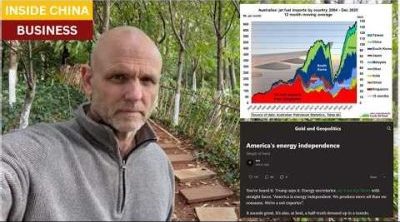
Chinese jet fuel and the myth of energy independence
or go to
Aletho News Archives – Video-Images
From the Archives
The Dirty Little Secret behind the “Global Terrorism Index”
The Omission of Israeli Terrorism in the Occupied Palestinian Territories
By Karin Brothers | Global Research | December 6, 2014
… The Israeli settlements — all of which are illegal – have been identified as a major impediment to peace. The refusal of a major “global” terrorism report to name the Israeli settlers as one of the groups most responsible for terrorism not only misrepresents a major source of regional violence but exposes the Global Terrorism Index as a propaganda tool that supports a U.S. agenda.
In recent years, governments have been attempting to thwart terrorism by blocking supportive fund-raising. When it comes to Israeli settlements, however, the US and Canada actually encourage fund-raising by giving organizations (such as Christian Friends of Israeli Communities (CFOIC) and the Jewish National Fund) financial support in the form of donor tax-deductions.
Charities which provide funds for the Israeli settlements should be regarded as terror-financing organizations. They should not only lose their tax-deductible status, but they should be banned because they support the violation of international humanitarian law. The terror-financing laws that are being strictly enforced for Muslim charities should be applied to Christian and Jewish charities as well. … Read full article
Blog Roll
 Aletho News
- Chinese jet fuel and the myth of energy independence
- Ukraine Sea Drone Fired From Libya Hit Russian Tanker in Mediterranean
- IRGC: Iranian forces launched no attacks during ceasefire hours
- Trump Administration Moves To Automate U.S. Military Draft Registration
- Spain orders reopening of Tehran embassy, condemns Israel’s carpet bombing of Lebanon
- Israel faces ‘unsustainable’ strategic crisis following 40-day war against Iran: Analyst
- Iran restricts Hormuz access to 15 vessels per day under ceasefire terms: Report
- The ‘Opposition Party’ Has Done Nothing to Stop the Iran War and Much to Goad Trump Into Continuing It
- Moscow backs Tehran on status of Lebanon in US-Iran deal
- How UK Regulator Ofcom Quietly Bypassed International Law to Police American Speech
- If Americans Knew
- Amnesty: Urgent – Protect Lebanese civilians from brutal escalation in Israeli attacks
- Is The War Against Iran Over?
- Inside the Israeli army’s propaganda wing
- Hundreds of Gaza Amputees Stranded in Legal Limbo
- The gallows law: Israel moves toward executing Palestinian children
- Tucker Carlson: The Path to Peace requires ending ‘special alliance’ with Israel
- This is ceasefire? Israel’s biggest massacre yet in Lebanon, another journalist killed in Gaza – Daily Update
- Tucker Carlson on Israel: This Is the Behavior of an Ally? Really?
- Gazans face a triple crisis: severe shortages of water and bread, healthcare in tatters
- NY Times reports how Netanyahu took the US into Iran War
- No Tricks Zone
- An Inconvenient Tree: Uncovered In Alps… Europe Much Warmer Than Today 6000 Years Ago
- New Study Reports A 60% Slowdown In Greenland’s Ice Loss Rate In The Last Decade
- Low Intensity Tornado Wrecks Major Solar Farm, Creating A Potential Toxic Dump
- New Study Finds Warming Saves Lives…Cold Temperatures 12 Times More Deadly Than Excess Heat
- German Science Blog Accuses PIK Climate Institute Of Hallucinating Climate Tipping Points
- Devastating Assessment Of Comirnaty Vaccine By Former Senior Pfizer Europe Toxicologist
- New Study: CO2 Is ‘Effectively Negligible’ As An Explanatory Climate Change Factor Since 2000
- Former Pfizer Toxicologist Dr. Helmut Sterz Tells Bundestag Hearing Pfizer Vaccine Should Have Never Been Approved
- Energy Expert: Germany’s Nuclear Phaseout Was A “500 Billion Euro Mistake”
- New Research: South Australia’s Mid-Holocene Sea Surface Temperatures Were 4°C Warmer Than Today
 Aletho News