The Vicious Circle of Debt and Depression
It is a Class War
By ISMAEL HOSSEIN-ZADEH | May 15, 2010
Never before has so much debt been imposed on so many people by so few financial operatives—operatives who work from Wall Street, the largest casino in history, and a handful of its junior counterparts around the world, especially Europe.
External sovereign debt, as well as occasional default on such debt, is not unprecedented [1]. What is rather unique in the case of the current global sovereign debt is that it is largely private debt billed as public debt; that is, debt that was accumulated by financial speculators and, then, offloaded onto governments to be paid by taxpayers as national debt. Having thus bailed out the insolvent banksters, many governments have now become insolvent or nearly insolvent themselves, and are asking the public to skimp on their bread and butter in order to service the debt that is not their responsibility.
After transferring trillions of dollars of bad debt or toxic assets from the books of financial speculators to those of governments, global financial moguls, their representatives in the State apparatus and corporate media are now blaming social spending (in effect, the people) as responsible for debt and deficit!
President Obama’s recent motto of “fiscal responsibility” and his frequent grumbles about “out of control government spending” are reflections of this insidious strategy of blaming victims for the crimes of perpetrators. They also reflect the fact that the powerful financial interests that received trillions of taxpayers’ dollars, which saved them from bankruptcy, are now dictating debt-collecting strategies through which governments can recoup those dollars from taxpayers. In effect, governments and multilateral institutions such as the IMF are acting as bailiffs or tax collectors on behalf of banksters and other financial wizards.
Not only is this unfair (it is, indeed, tantamount to robbery, and therefore criminal), it is also recessionary as it can increase unemployment and undermine economic growth. It is reminiscent of President Herbert Hoover’s notorious economic policy of cutting spending during a recession, a contractionary fiscal policy that is bound to worsen the recession. It is, indeed, a recipe for a vicious circle of debt and depression: as spending is cut to pay debt, the economy and (therefore) tax revenues will shrink, which would then increase debt and deficit, and call for more spending cuts!
Spending on national infrastructure, both physical (such as roads and schools) and social infrastructure (such as health and education) is key to the long-term socioeconomic developments. Cutting public spending to pay for the sins of Wall Street gamblers is bound to undermine the long-term health of a society in terms of productivity enhancement and sustained growth.
But the powerful financial interests and their debt collectors seem to be more interested in collecting debt claims than investing in economic recovery, job creation or long-term socioeconomic development. Like most debt-collecting agencies, the IMF and the states serving as banksters’ bailiffs through their austerity programs may shed a few crocodile tears in sympathy with the victims’ of their belt-tightening policies; but, again like any other debt-collecting agents, they seem to be saying: “sorry for the loss of your job or your house, but debt must be collected—regardless”!
A most outrageous aspect of the debt burden that is placed on the taxpayers’ shoulders since 2008 is that most of the underlying debt claims are fictitious and illegitimate: they are largely due to manipulated asset price bubbles, dubious or illegal financial speculations, and scandalous conversion of financial gamblers’ losses into public liability.
As noted earlier, onerous austerity measures to force the public to pay the largely fraudulent external debt is not new. Benignly calling such oppressive measures “Structural Adjustment Programs,” the International Monetary Fund and the World Bank have for decades imposed them on many less developed countries to collect debt on behalf of international financial titans.
To “help” the indebted nations craft debt-servicing arrangements with external creditors, the IMF imposed severe conditions on the way they managed their economies—just as it is now imposing (in collaboration with the European and American bankers) those austerity policies on the debtor nations in Europe. The primary purpose of such restrictive conditions is to divert or transfer national resources from domestic use to external creditors. These include not only belt-tightening measures to cut social spending and/or raise taxes, but also selling-off public enterprises, national industries, and future tax revenues.
Calling such fire-sale privatization deals “briberization,” the ex-World Bank chief economist Joseph Stiglitz revealed (in an interview with the renowned investigative reporter Greg Palast) how finance ministers and other bureaucratic authorities in the debtor countries often carried out the Bank’s demand to sell off their electricity, water, transportation and communication companies in return for some apparently irresistible sweetener. “You could see their eyes widen” at the prospect of 10% commissions paid to Swiss bank accounts for simply shaving a few billions off the sale price of national assets [2].
The IMF/World Bank/WTO “structural adjustment programs” also include neoliberal policies of “capital-market liberalization.” In theory, capital market deregulation is supposed to lead to the inflow and investment of foreign capital, thereby bringing about industrialization, job creation and economic expansion. In practice, however, financial liberalization often leads to more capital outflow (or capital flight) than inflow. To the extent that there is an inflow of capital it is not so much productive or industrial capital as it is unproductive or speculative capital (also known as “hot money”): massive amounts of capital that is constantly in transit across international borders in pursuit of real estate, currency, or interest rate speculation.
To attract foreign capital to the relatively vulnerable markets of debtor nations, the IMF frequently recommends drastic increases in interest rate. Higher interest rates are, however, both anti-developmental and detrimental to the goal of debt servicing. Higher interest rates tend to destroy property values, divert financial resources away from productive investment, and increase the burden of debt servicing.
For example, in the Philippines, which in 1980 adopted the IMF’s Structural Adjustment Program, “Interest payments as a percentage of total government expenditures went from 7 percent in 1980 to 28 percent in 1994. Capital expenditures, on the other hand, plunged from 26 percent to 16 percent.” By contrast, “the Philippines’ Southeast Asian neighbors ignored the IMF’s prescriptions. They limited debt servicing while ramping up government capital expenditures in support of growth. Not surprisingly, they grew by 6 to 10 percent from 1985 to 1995. . .while the Philippines barely grew and gained the reputation of a depressed market that repelled investors” [3].
A major condition of the IMF/World Bank/WTO’s “restructuring program” is trade liberalization. Free trade has always been the bible of the economically strong, self-righteously preached to the weak. It enables the strong to use their market power for economic gains, thereby perpetuating an international division of labor in which the technologically advanced countries would specialize in the production and export of high-tech, high-value added products while less developed countries would be condemned to the supply of less- or un-processed products. It is not surprising, then, that such a lop-sided policy of trade liberalization is sometimes called “free trade imperialism.”
Taking advantage of the so-called Third World debt crisis, the IMF, World Bank and WTO imposed free trade and other “adjustment programs” on 70 developing countries in the course of the 1980s and 1990s. “Because of this trade liberalization,” points out Walden Bello, member of the Philippines House of Representatives and president of the Freedom from Debt Coalition, “gains in economic growth and poverty reduction posted by developing countries in the 1960s and 1970s had disappeared by the 1980s and 1990s. In practically all structurally adjusted countries, trade liberalization wiped out huge swathes of industry, and countries enjoying a surplus in agricultural trade became deficit countries.” Bello further points out, “The number of poor increased in Latin America and the Caribbean, Central and Eastern Europe, the Arab states, and sub-Saharan Africa.” By contrast, in China and East Asia, where the neoliberal free trade and other Structural Adjustment Programs were rejected, significant economic development and considerable poverty reduction took place [3].
The attitude of the international financial parasites and their collection agencies such as the IMF regarding the disastrous consequences of their “restructuring” conditions is instructive.
An IMF official was quoted as acknowledging that the Fund’s austerity packages have often led to debt-collection without economic growth. But he added: “the Fund is a firefighter not a carpenter, and you cannot expect the firefighter to rebuild the house as well as put out the fire.” Obviously, what the “firefighter” tries to save from burning are external debt claims, not the economies or livelihoods of the indebted.
Another component of the IMF/World Bank’s “adjustment program” to service external debt is called elimination of “price distortions,” or establishment of “market-based pricing.” These are fancy, obfuscationist terms for raising prices on essential needs such as food, water and utilities. They also include elimination of subsidies on healthcare, education, transportation, housing, and the like; as well as curtailment of wages and benefits for the working class. In essence, these are roundabout ways of taxing the poor to pay the rich, the creditors.
Where such belt-tightening measures have made living conditions for the people intolerable, they have triggered what has come to be known as “the IMF riots.” The IMF riots are “painfully predictable. When a nation is, ‘down and out, [the IMF] takes advantage and squeezes the last pound of blood out of them. They turn up the heat until, finally, the whole cauldron blows up,’ as when the IMF eliminated food and fuel subsidies for the poor in Indonesia in 1998. Indonesia exploded into riots. . . ” [2]. Other examples of the IMF riots include the Bolivian riots over the rise in water prices and the riots in Ecuador over the rise in cooking gas prices. As the IMF/World Bank riots create an insecure or uncertain economic environment, they often lead to a vicious circle of capital flight, deindustrialization, unemployment, and socio-economic disintegration.
Only when the riots have tended to lead to revolutions, the parasitic mega banks and their debt-collecting bailiffs, the IMF and/or the World Bank, have been forced to accept less onerous debt-servicing conditions, or even debt repudiation. The Argentine people deserve credit for having set a good example of this kind of debt restructuring.
In late 2001 and early 2002, they took to the streets to protest the escalated austerity measures imposed on them at the behest of the IMF and the World Bank. “Political demonstrations and the looting of grocery stores quickly spread across the country. . . . The government declared a state of siege, but police often stood by and watched the looting ‘with their hands behind their backs.’ There was little the government could do. Within a day after the demonstrations began, principal economic minister Domingo Cavallo had resigned; a few days later, President Fernando de la Rua stepped down. . . . In the wake of the resignations, a hastily assembled interim government immediately defaulted on $155 billion of Argentina’s foreign debt, the largest debt default in history” [4].
Argentina also freed its currency (peso) from the US dollar (it had been pegged to dollar in 1991). After defaulting on its external debt and dropping its currency peg to the dollar, Argentina has enjoyed a most robust economic growth in the world. Debt re-structuring a la Argentina, that is, debt repudiation, is what today’s debt-strapped nations in Europe and elsewhere need to do to free themselves from the shackles of debt peonage.
Having subjected many nations in the less-developed countries of the South to their notorious austerity measures, international knights of finance are now busy applying those impoverishing measures to the more developed countries of the North, especially those of Europe. For example, the Greek government has in recent months announced a series of wage and benefit cuts for public workers, a three-year freeze on pensions and a second increase this year in sales taxes, as well as in the price of fuel, alcohol and tobacco in return for a bailout plan promised by the IMF and the European Central Bank.
Debt collectors’ austerity requirements in a number of East European countries (such as Latvia and Lithuania) have been even more draconian. Thomas Landon Jr. of The New York Times recently reported that, threatened with bankruptcy, “Lithuania cut public spending by 30 percent — including slashing public sector wages 20 to 30 percent and reducing pensions by as much as 11 percent. . . . And the government didn’t stop there. It raised taxes on a wide variety of goods, like pharmaceutical products and alcohol. Corporate taxes rose to 20 percent, from 15 percent. The value-added tax rose to 21 percent, from 18 percent” (April 1, 2010).
As these oppressive measures led to the transfer of nine percent of gross domestic product (euphemistically called “national savings”) from domestic needs to debt collectors, they also further aggravated the economic crisis: “Unemployment jumped to a high of 14 percent, from single digits — and an already wobbly economy shrank 15 percent last year” [Ibid.].
In Latvia, another victim of the predatory global finance, the recessionary consequences of creditor-imposed austerity measures have been even more devastating: “Latvia has experienced the worst two-year economic downturn on record, losing more than 25% of GDP. It is projected to shrink further during the first half of this year. . . . With 22% unemployment . . . and cuts to education funding that will cause long-term damage, the social costs of this trajectory are also high” [5].
While the debt crises of the weaker European economies such as Greece, Latvia, Lithuania, Spain, Portugal and Ireland have reached critical stages of sustainability, the relatively stronger economies of Germany, France, and UK are also in danger of debt and deficit crises. Indeed, according to a recent IMF estimate, even in the more advanced economies of Europe the debt-to-GDP ratio will soon rise to an average of 100% [6].
Of course, the United States is also burdened by a mountain of debt that is fast approaching the size of its gross domestic product (of nearly $13.5 trillion). A major difference between the United States and other indebted nations is that the US is not as much at the mercy of its creditors or the IMF as are other debtor nations. Therefore, it can reasonably be argued that, on the basis of national or public interests, it could embark on an expansive fiscal policy, that is, a more aggressive stimulus package, that would take advantage of the power of “government as the employer of last resort,” more or less as FDR did, thereby creating jobs, incomes and economic growth. This would also add to government’s tax collection and reduce its debt and deficit.
Judging by the record, as well the budgetary projections, of the Obama administration and the lobby-infested Congress, however, such an expansionary fiscal policy seems very unlikely. Not only has the bulk of the government’s anti-recession assistance been devoted to the rescue of the Wall Street gamblers, but also the relatively small stimulus spending has largely been funneled into the pockets of the private/financial sector—through wasteful and ineffectual programs such as “cash for clunkers,” tax credit for new homebuyers, tax incentives for employers to hire, and the like. This stands in sharp contrast to what FDR did in the earlier years of the Great Depression: creating jobs and incomes directly and immediately by the government itself.
Not only is the administration’s feeble stimulus package soon coming to an end, but the government also recently imposed a three-year spending freeze on all public outlays except for military spending and the so-called entitlements. As their tax revenues, along with their traditional shares of federal assistance, are dwindling many states (especially California, Florida, New York, Arizona, Nevada and New Jersey) are facing serious financial difficulties. And as they curtail or shut down essential services at the libraries, museums, parks, schools, art centers, and hospitals, and give pink slips to their employees, the recessionary conditions are bound to exacerbate.
The wrenching economic hardship in the debt-ridden countries is not so much due to insufficient or lack of resources as it is the result of the lopsided and cruel distribution of those resources. It is increasingly becoming clear that the working majority around the world face a common enemy: an unproductive financial oligarchy that, like parasites, sucks the economic blood out of the working people, simply by trading and/or betting on claims of ownership.
Rectification of this unsavory situation poses stark alternatives: either the powerful financial interests, using the state power, succeed in collecting their debt claims by impoverishing the public; or the public will get tired of the vicious cycle of debt and depression, and will rise in protest—akin to the “IMF riots” in Argentina—to repudiate the largely fictitious and illegitimate debt. This is of course a class war. The real question is when the working people and other victims of the unjust debt burden will grasp the gravity of this challenge, and rise to the critical task of breaking free from the shackles of debt and depression.
While repudiation may cleanse the current toxic debt off the economies of the indebted societies, it would not prevent its recurrence in the future. To fend off such recurrences, it is also necessary to nationalize the banks and other financial intermediaries. It only stands to reason that national savings be placed under democratically controlled public management – not unelected, profit-driven private banks.
Ismael Hossein-zadeh, author of the recently published The Political Economy of U.S. Militarism (Palgrave-Macmillan 2007), teaches economics at Drake University, Des Moines, Iowa.
Notes.
[1] For a comprehensive account of the history of sovereign debt crises and/or defaults see, for example, Carmen M. Reinhart and Kenneth S. Rogoff, This Time is Different: Eight Centuries of Financial Folly. Princeton, NJ: Princeton University Press, 2009.
[2] Greg Palast, “The Globalizer Who Came In From the Cold,” gregpalast.com, October 10, 2001.
[3] Walden Bello, “The Poverty Trip – Is Corruption the Cause,” Counter Punch, April 30 – May 2, 2010.
[4] Arthur McEwan, “Economic Debacle in Argentina—The IMF Strikes Again,” Dollars & Sense, March-April 2002.
[5] Mark Weisbrot, “Baltic Countries Show What Greece May Look Forward to If It Follows EC/IMF Advice,” The Guardian Unlimited, April 28, 2010.
[6] Nouriel Roubini, “The Debt Death Trap,” Project Syndicate, April 16, 2010.
Senate unanimously approves measure to audit the Fed
Bill would have Fed disclose names of bank recipients of emergency loans
By Ronald D. Orol | MarketWatch | May 11, 2010
WASHINGTON — A compromise measure requiring the government to conduct a one-time and unprecedented audit of the Federal Reserve’s emergency-response programs was unanimously approved Tuesday by the Senate as part of sweeping bank reform legislation.
The amendment also calls for releasing the names of institutions that received in total more than $2 trillion in loans from the central bank during the peak of the financial crisis.
The provision received a vote of 96-0, with support following a compromise reached late Thursday.
“This makes it clear that the Fed can no longer operate under the kind of secrecy it has been operating under,” said Sen. Bernie Sanders, I-Vt., the measure’s author.
The legislation is attached to sweeping bank-reform legislation under consideration on Capitol Hill. It would need to be reconciled with a more expansive audit-the-fed provision approved in the House last December.
The Senate measure would — for the first time in the central bank’s 95-year-history — require a Government Accountability Office audit of the financial institutions that borrowed from the Fed during the financial crisis.
In addition, the legislation would require the Fed on Dec., 1, 2010, to put on its Web site all of the recipients of the central bank’s emergency assistance between December 2007 and the date of the statute’s enactment.
Sanders agreed to make several changes to the legislation to garner the support of the Obama administration and wavering senators who had concerns with the original measure. With the changes, Sanders obtained the support of Senate Banking Committee Chairman Christopher Dodd, D-Conn., which he said was important to bringing on board other senators needed to obtain the 60 votes necessary for passage.
The legislation originally would have left open the possibility of future audits, however, Sanders eventually compromised to stipulate that it would be a one-time audit. The measure’s house counterparty, which was introduced by long-time Fed opponent, Rep. Ron Paul, R-Texas, permits continuing periodic audits.
The Senate measure originally would have required the names of bank recipients of the Fed’s emergency lending to be posted within 30 days of the reform bill’s approval, but the section was later changed so that the names need only be posted on Dec. 1, 2010. The original measure would have required posting of names annually.
With the compromise language, the GAO is also prohibited from conducting studies on the Fed’s interest rate policy. This change was in response to concerns from the Fed and others that such studies would impact the central bank’s independence when it came to monetary policy such as whether to raise or lower interest rates.
It also prohibits the GAO from auditing the Fed’s so-called normal discount window lending. However, it does permit an audit of the discount window emergency lending programs, such as Term Asset-Backed Securities Loan Facility, in response to the financial crisis. The discount window is a government lending facility through which commercial banks and, in response to the crisis, investment banks borrowed reserves.
The GAO would be required to begin its Fed audit within 30 days of enactment and completed within a year.
House vs. Senate on audit the Fed
The House measure’s language is much shorter, yet in its brevity it gives the GAO leeway to conduct continuing periodic audits of a wide-range of issues beyond the Fed’s financial crisis response.
The Senate bill is more specific. The House bill says the GAO “may” post the names of recipients of Fed emergency loans where the Senate bill requires the GAO to do so. The Senate measure instructs the GAO to look into conflicts of interest at the Fed, while the House bill doesn’t provide any such instructions.
The measure has the backing of senators with wide-ranging political backgrounds, including Sam Brownback, R-Kan., and Charles Grassley, R-Iowa. It seeks to make clear that the audits won’t interfere with the Fed’s monetary policy.
Backers pointed out that no scrutiny would be placed on transcripts and minutes of the Federal Open Market Committee meetings, through which the central bank sets policy on interest rates.
“We should allow the GAO to audit the Fed since they have moved far beyond their traditional role of monetary policy,” said Grassley.
The Fed has argued that it would weaken its traditional independence and hamper its ability to protect the financial system. The central bank argues that institutions would be afraid to borrow from the discount window when they need to because they would be stigmatized as troubled firms, and the result would be a more troubled economic situation.
Next up: Fannie Mae and Freddie Mac
The Senate is expected next to vote on a controversial measure introduced by Sen. John McCain, R-Ariz., that would end the government’s control of mortgage finance giants Freddie Mac and Fannie Mae within two years of the enactment of the overall bank reform legislation.
Fannie and Freddie have been under government control since September, 2008. The measure, which has broad Republican support, would cap the amount of assets held on the entities books to 95% of the mortgage assets it owned at the end of the prior year. The measure would also have the entities pay state and local taxes.
However, Dodd is opposed to the measure arguing it is reckless because it doesn’t provide any alternative structure for the entities.
Ronald D. Orol is a MarketWatch reporter, based in Washington.
###
See also:
Senate Rejects Vitter’s Audit the Fed Amendment 37-62
By RonPaul.com on May 11, 2010
Senator David Vitter, Republican of Louisiana, put forward an amendment that would have mirrored Ron Paul’s tough Audit the Fed language, but the Senate rejected it today. The vote was 37 to 62.
Before the vote, Vitter appealed for support: “I urge all of my colleagues, Democrats and Republicans, to support both amendments to have full openness and accountability and transparency with all the protections that are included against politicizing individual Fed decisions.”
Global uprising against land grabbing
Social movements denounce World Bank strategy on land grabbing
GRAIN | 22 April 2010
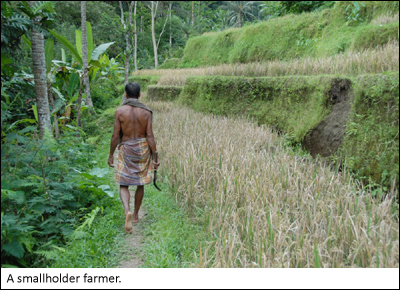 On 26 April 2010, the World Bank is opening a major two-day conference on land at its headquarters in Washington DC. Seated at the table will be governments, donor agencies, researchers, CEOs and non-government organisations. The main topic of discussion? How to harness the fresh wads of cash being put on the table to build agribusiness operations on huge areas of farmland in developing countries, especially in Africa. The Bank calls these farm acquisitions “agricultural investment”. Social movements call them “land grabbing”.
At the meeting, the Bank will release a long-awaited study on this new land grabbing trend. Apart from assessing how many hectares are being bought and sold where, why and through whom, the Bank will present its solution to the risks and concerns raised by foreign investors — from George Soros to Libya’s sovereign wealth fund to China’s telecoms giant ZTE — taking control of overseas farmland to produce food for export: a set of “principles” for all players to follow. The FAO, UNCTAD and IFAD have agreed to support the Bank in advocating these “principles”.
La Vía Campesina, FIAN, Land Research Action Network and GRAIN have produced a joint statement outlining how the Bank’s initiative will only serve to facilitate land grabbing and why it must be stopped. Over 100 other social organisations and movements have formally associated themselves with the statement as co-sponsors. Today and in the coming days, many groups will be speaking out against the current land grabbing trend and explaining how the real solution to feeding our world lies in supporting community-based family farming for local and regional markets — not industrial farming for global agribusiness.
We invite all interested groups and individuals to join forces with us and speak out from your own experience.
The LVC-FIAN-LRAN-GRAIN statement, together with the list of co-sponsors, is available in Arabic, English, French and Spanish at:
http://www.grain.org/o/?id=102.
If you wish to register your own support for the statement you can post a comment at:
http://farmlandgrab.org/12200
or send an email to info@farmlandgrab.org and we will post it for you.
Simultaneous media events and actions are taking place in Washington DC and many other towns and cities across the world. For information on the Washington DC events or how to talk to activists from the affected countries, please contact Kathy Ozer of the National Family Farm Coalition for La Via Campesina (mobile: +1-202-421-4544, email: kozer@nffc.net) or Devlin Kuyek at GRAIN (mobile: +1-514-571-7702, email: devlin@grain.org).
Media reports and further inputs and actions from different groups joining this movement will be collated online at:
http://farmlandgrab.org.
Further references
– The World Bank’s land conference webpage is:
http://go.worldbank.org/67YHA6L0K0.
The conference papers are being posted online at:
http://go.worldbank.org/IN4QDO1U10
– La Via Campesina is the international movement of peasants, small- and medium-sized producers, landless, rural women, indigenous people, rural youth and agricultural workers with 148 members in 69 countries:
http://www.viacampesina.org.
– FIAN (FoodFirst Information and Action Network) is an international human rights organisation with members and sections in 50 countries to advocate for the realisation of the right to food:
http://www.fian.org.
– LRAN (Land Research Action Network) is a network of researchers and social movements committed to the promotion of individuals’ and communities’ right to land:
http://www.landaction.org.
– GRAIN is a small international non-profit organisation that works to support farmers and social movements in their struggles for community-controlled and biodiversity-based food systems: http:// http://www.grain.org and
http://farmlandgrab.org.
Ethanol supporters in Congress try to prevent a repeat of biodiesel mothballing
Dan Looker – Successful Farming – 4/20/2010
Four months after a $1-per-gallon biodiesel tax credit expired, putting some 29,000 out of work in that industry, backers of the ethanol industry are trying to prevent that from happening on an even larger scale.
Ethanol’s 45 cent-a-gallon credit, known as the Volumetric Ethanol Excise Tax Credit (VEETC), expires at the end of this year.
Tuesday, Senators Chuck Grassley (R-IA) and Kent Conrad (D-ND) introduced a bill to extend VEETC through 2015. It would also extend a tariff on imported ethanol.
Grassley told reporters that some 112,000 jobs in the ethanol industry are at risk if the tax credit and tariff are allowed to expire.
“I don’t think we can risk a repeat performance with ethanol like we had with biodiesel,” he said.
There doesn’t seem to be much organized opposition to renewing the biodiesel tax credit, but under new pay-as-you-go rules intended to keep the federal deficit from growing even more, Congress has to find offsetting budget savings or higher taxes to pay for the biodiesel credit.
Grassley said Tuesday that the House Ways and Means Committee is looking for ways to offset the biodiesel credit.
The new 5-year tax credit extension for ethanol might also need offsets. Grassley said Tuesday that he doesn’t know where they would come from.
Unlike biodiesel, the ethanol industry does face opposition to extending VEETC and the tariff.
In March, Representatives Earl Pomeroy (D-ND) and John Shimkus (R-IL) introduced a similar bill in the House of Representatives to extend the ethanol tax credit for five more years. That bill has already drawn opposition from the American Meat Institute, Grocery Manufacturers of America, Natural Resources Defense Council, Taxpayers for Common Sense and others. […]
The bill Grassley and Conrad introduced today, the Grow Renewable Energy from Ethanol Naturally Jobs Act of 2010, or the GREEN Jobs Act of 2010, is cosponsored by Senators John Thune (R-SD), Ben Nelson (D-NE), Mike Johanns (R-NE) and Tim Johnson (D-SD).
Lula’s Legacy: The Two Brazils
By James Petras | 04.14.2010
President Lula Da Silva announces the purchase of $4.4 billion dollars in new warplanes the same day that mudslides in Rio de Janeiro bury over 230 people living in precarious shanty slums neglected by the government housing authorities .While there is a total absence of a drainage system in the favelas, Lula spent billions on roads and ports for exporters but nothing for resident slum safety. Brazil is widely included as a newly emerging world power, along with China, Russia and India, the so called BRIC countries, and yet nearly forty percent of its population, lives on or below the poverty line, at or below the minimum wage of $200 dollars a month for a family of four.
Brazil’s attraction for many of its financial promoters is found in the size of its population of 210 million, the effective consumer market of over 100 million, and its agro-mineral resources: Brazil is one of the world’s biggest exporters of chicken, beef, soya, iron ore, cotton and ethanol.
Two other factors have recommended the Lula regime to both the right and left. The Right is pleased with Brazil’s stock market, financial sector and foreign owned banks (over 50%) which have gained and transferred over 150 billion in profits to overseas investors over the past 8 years of Lula’s rule. The ‘Left’ is enthusiastic about Lula’s independent foreign policy: his opposition to the US boycott of Cuba and exclusion from the Organization of American States; his economic relations with Iran despite pressure from Washington; his refusal to condemn Venezuelan President Chavez; and the fact that China has replaced the US as Brazil’s foremost trading partner as of 2010. Moreover, many defenders and apologists for Lula cite his “poverty program” which provides a $40 a month subsidy to 10 million destitute families , which has reduced poverty. The Lula Left forget the fact that the regime has failed to provide meaningful employment with adequate pay for the poverty subsidy recipients and has broken promises to carry out an agrarian reform for the 20 million landless rural workers. In other words, Lula’s supporters cite the regime’s policy of diversifying markets for Brazilian agro-mineral exporters and his multi-billion dollar electoral patronage subsidies to the poor as evidence of Lula’s “progressive” credentials.
Two other elements enter into the positive image of Lula: his working class, trade union origins and his continued high popularity ratings (according to recent polls over 60%). The “working class” background is over 20 years past: Lula has not worked in a factory for over 25 years.He has been a middle class political functionary of his party since the mid 1980’s. Moreover, Lula’s working class origins have no relevance to his current political and social commitments and appointments, which are tied to big business strategists and neo-liberal central bankers and economic ministers. What needs to be acknowledged is that Lula is a master at the politics of conservative populism: Lula excels in creating an emotional bond with the poor, through his face to face encounters and mass media imagery as “a man of the people”, even as he upholds a social hierarchy with the greatest inequalities in South America. No conservative neo-liberal leader in the US or EU can combine the façade of “populism” and the content of neo-liberal orthodoxy with the same success.
Myths and Reality of a Brazil as an “Emerging World Power”
Given the enduring mass poverty and social inequalities in land and wealth no perceptive observer can claim that Brazil’s new status as an emerging world power is due to Lula’s social policies. The entire basis for projecting Brazil onto the world stage is based on its economic performance. A brief but close examination of the empirical realties, raises profound doubts about Brazil’s performance and Lula’s claims of achieving the status of a world power. Between 2003-2009 Brazil’s GDP grew by a mere 3.4% and only 2% percapita, below the average for Latin America by at least 1%. If we compare Brazil’s performance in relation to the other BRIC countries, especially China and India, Brazil’s GDP grew at less than 40% of their rate of growth. Locating Brazil in the same league as China and India seems to be highly misleading. Moreover, while most of the growth of the other newly emerging powers is based on diversified industrial exports (China) and high tech information services (India), Brazil still depends on the dynamic expansion of agro-mineral exports.
Growth and stagnation characterized Lula’s eight years in office, depending on prices and demand for agro-mineral commodities. During the years of the commodity boom (2004 – 2008) Brazil grew by 4.5%; during the downturn in commodity prices (2003 and 2009) Brazil stagnated at less than 1%. In other words, Lula’s “free market policies” had less to do with Brazils’ economic performance than world market demand for commodities. Despite Lula’s claims that Brazil would avoid the impact of the world crises of 2008 -2010 because it was “delinked” from the imperial centers, in fact beginning in October 2008 and continuing through to January of 2010 Brazil entered into a recession with zero growth in 2009. Its recovery in 2010 is largely the result of the revival and explosion in commodity demand, led by China, and the sharp rise in prices of key export commodities such as iron ore which has doubled in price since the beginning of 2010.
Brazil’s economic performance under Lula appears favorable only in comparison to the disastrous results achieved under the previous ultra neo-liberal Cardoso regime which grew at a snail’s pace of less than 3%. What is most significant, however, is the strategic socio-economic and political continuities between the Cardoso and Lula regimes. Cardoso devastated the public sector, by privatizing and denationalizing, at ridiculously low prices, the most lucrative enterprises. The most glaring example was the sell off of one of the richest iron mines in the world Vale del Doce for less than a billion dollars, a firm which is now valued at over $20 billion dollars and with yearly profits exceeding $3 billion dollars. Lula has retained and even expanded Cardoso’s most dubious privatizations – including the banks, mines, oil and telecommunication companies which were acquired at below market prices.
Even before his first election victory in 2002 Lula signed an orthodox International Monetary Fund Agreement to retain a 4% budget surplus, to pursue an orthodox fiscal policy restraining social spending reducing public pensions and holding down wages. Lula was more successful than Cardoso in enforcing these orthodox monetary policies because of his influence over the major trade union confederation (CUT) leaders, who he co-opted via appointments to the Labor Ministry. In other words, Lula harnessed populist rhetoric to fiscal conservatism, symbolic labor appointments with economic policy czars with long-standing ties to major financial centers.
Lula received the enthusiastic endorsement of all the major financial newspapers for his switch from advocate of working class social reforms to staunch ally of the BOVESPA (Brazilian stock exchange). His policies of accumulating over $200 billion in foreign reserves, of prioritizing the paying down foreign debts instead of increasing social spending for education health and housing affecting 100 million Brazilians, won lasting praise among all orthodox economic experts. The “stability” of the economy was bought at the expense of the instability in the lives of the working class and the rural poor. Unemployment under Lula never went below 10%; the ‘informal sector’ remained at over 30%; four million rural families remained landless; the Amazon rain forest annually lost over 2 million hectareas per year, encouraged by Lula’s push to promote agro-business exports. Indian territorial reserves were violated, land was occupied, scores were killed, while federal and state agencies focused on prosecuting rural movements occupying uncultivated latifundios owned by business speculators. Lula’s policy of financing agro-business exporters was successful – cultivated lands expanded, revenues increased geometrically and wealth grew – for the owners, investors and stock owners. But at a tremendous cost: over 2 million rural workers were forced to migrate to slums and marginal employment, becoming easy recruits for the drug gangs which control the favelas of Rio and Sao Paolo. Millions of family farmers were forced to borrow at high interest rates and to compete with subsidized food imports, driving hundreds of thousands into bankruptcy and making Brazil a food deficit country.
Lula, during and immediately after his election, solemnly promised the powerful 350,000 member Landless Rural Workers Movement (MST) that he would carry out an agrarian reform settling 100,000 families a year with housing, credits and technical assistance. During his eight years in office, Lula broke his pledge every year, settling less than 40,000 families while under-financing the new and established co-operatives driving over one-third into bankruptcy. The MST in turn because of its “critical support” of Lula, lost the political initiative even as it continued its policy of occupying farms to secure land reform. After a brief period of tolerance, the government turned the military police against the Movement, arresting its leaders and criminalizing its activities. After a major corruption scandal affecting Lula’s top advisers and leaders in Parliament (2005 – 2006), he turned to the traditional rightist parties and established politicians including ex-President Sarney to promote his neo-liberal economic agenda. Lula’s new coalition with the traditional right was based on a common program of promoting big agricultural interests and guaranteeing their security against the land occupation strategy of the agrarian reformers in the MST. The result was an increasing concentration of landownership (1% of landholders own over 50% of the fertile lands) and an increasing number of movement leaders and activists awaiting trials and serving time in jail.
Lula’s legacy is essentially an “economically sound and stable market for investors” according to all orthodox economic experts. Brazil was rewarded by being awarded the site for the forthcoming Olympics. But given the severity of poverty and the dynamic growth of drug trafficking and armed organized gangs, Lula’s projections of nearly 50,000 soldiers to protect the spectators reveals the underside of his dream of an emerging world power.
Lula’s Political Legacy
Lula’s political legacy is on display in this year’s presidential elections, in which he must step down after two terms in office. In contrast to the past, there is now in place a modified two party system in which a variety of smaller groups coalesce around Lula’s Workers Party (PT) and Jose Serra’s Brazilian Social Democratic Party (PSDB). Neither party is what its label proclaims: over 80% of the delegates at the PT nominating convention were professionals, lawyers, functionaries and business people with a sprinkling of trade union bureaucrats and co-opted “movement” officials. There is nothing “socialist” about the party of Cardoso which privatized the jewels of the economy. The competition of the two parties is over who best represents the agro-mineral, banking and industrial elite of Sao Paolo and as a corollary who will receive the bulk of their financial contributions. Lula was eminently successful in securing tens of millions of dollars in contributions from the economic elite for his services on their behalf. In fact most of the really wealthy contribute to both major parties. Lula’s legacy is that he has de-radicalized Brazilian politics, leading to a consensus over the centrality of free markets, free trade and state promoted big business as the bases of economic policy. Beyond that Lula has enshrined the principle of poverty subsidies in place of social structural changes as the centerpiece of social policy.
Brazil: The Presidential Election 2010
The best analysis of the forthcoming Brazilian presidential elections (October 3) is found in the response of the stock market, credit agencies and investors: they envision no major changes on the horizon, continued support for orthodox fiscal policies, greater state promotion of private national and foreign investment and most important, social stability. The so-called “Workers” Party under Lula’s unchallenged authoritarian control, nominated Dilma Rousseff, his former ‘chief of staff’ as their candidate. The opposition rightwing PSDB nominated Sao Paulo State Governor Jose Serra, a former leftist who once contributed an essay to a book I edited back in 1972, titled “Dependence or Revolution”. One of the political ironies is that over the past two decades former Marxists, trade union leaders, even guerrilla activists have played a leadership and vanguard role in steering Brazil toward deeper integration into the world market, replacing socialist internationalism by embracing capitalist globalization.
To the extent that differences exist between Rousseff and Serra they revolve around issues of foreign policy, the role of public-private enterprise associations and the size and scope of public sector spending. Rousseff, promises to continue Lula’s promotion of billion dollar trade and investment agreements with all countries including Iran, Venezuela and Bolivia, regardless of US opposition. Serra, who is ideologically closer to Washington’s agenda, may reduce or limit these economic ties to accommodate the Obama regime. In other words, the Workers Party is a party with a greater commitment to independent market based global expansion than Serra’s more dogmatic ideologically influenced foreign economic policy. Officials in Washington have informed me that, the Obama regime will adopt a public posture of ‘neutrality’, since both candidates have affirmed friendly ties with Washington. Unofficially, I was told (off the record) that the Obama Administration prefers Serra because he is likely to side with Washington’s policy against Iran and be more outspokenly critical of President Chavez. However given the large scale engagement of Sao Paolo business interests in both countries, it remains to be seen how far Serra (if he is elected) would actually go in prejudicing Brazilian investors to satisfy US military driven empire building. Rousseff is likely to promote large scale public-private joint ventures to exploit multi-billion dollar off-shore oil and gas exploitation; Serra is more likely to promote exclusively private-foreign capital ownership and exploitation. Rousseff’s election campaign will receive big financial contributions from a long list of agro-mineral corporations, traders and national industrial manufacturers and construction contractors who received lucrative government contracts and subsidies and credit. Serra will be financially favored by the multi-national banks, rightwing landowners associations and the leaders of the Sao Paolo industrial elite. The trade union confederations and social movements will back Rousseff, either because of recent favorable wage agreements or because the PT is seen as the “lesser evil”. The Chamber of Commerce and some leading business associations and middle class “civic groups” will back Serra especially in the greater Sao Paolo region. While on the surface these political and social differences between the candidates appear to give some credibility to the idea of a ‘left-right polarization’ in reality the differences disappear when we examine closely the make-up of the political parties within the coalition backing the Rousseff. Four of the five major parties are on the conservative end of the political spectrum: the Brazilian Democratic Movement Party (PMDB), the Brazilian Republican Party (PRB), the Democratic Labour Party (PDT) and the Republic Party(RP). If Rousseff should be elected these four rightwing coalition partners will obtain the majority of ministries, leadership position in the Congress and ensure that the Rousseff regime does not trespass the boundries of orthodox neo-liberal fiscal policies.
What remains of the Left, is a fragmented assortment of micro parties with a strong presence in public sector trade unions (teachers, health workers) and some influence among the social movements. If the various groups united they might gather a respectable vote, but because of sectarian and opportunistic practices that is unlikely. Ciro Gomes, a former member of Lula’s cabinet is a likely candidate for the Socialist Party. But that is likely a mere a pretext to negotiate electoral support in the second round in exchange for a cabinet post if Rousseff is elected. Marina Silva, Lula’s former Environment Minister is a candidate for the Green Party, a party allied with the rightwing PSDB, PMDB as well as the PT whenever it is opportune: Silva will likely trade her voters to whichever party offers her a post. The two other explicitly “Marxist” parties, the United Socialist Workers Party (PSTU) and the Socialism and Freedom Party (PSOL), which tentatively agreed to present a common candidate have yet to resolve differences about acceptable coalition partners: the PSOL looks to the Green Party, the PSTU threatens to abandon the alliance.
Conclusion
Brazilian politics have moved a long way to the right over the past decade: the PT is now an openly pro-business party, whose fiscal policies are identical to the IMF recipes. The once militant trade confederation, the CUT, is now little more than an adjunct of the Ministry of Labor, well rewarded with economic subsidies but incapable of putting workers in the streets. Even the mass based rural landless workers (MST) which still retains its organizational autonomy feels weakened and isolated in the face of the PTs right turn. On the other hand, agro-export elites are thriving, investment bankers and overseas multi-nationals are pouring over $30 billion a year into Brazil; one of the worlds “safest emerging world powers”. Leftist leaders like Fidel Castro and Hugo Chavez praise Brazil’s “progressive” foreign policy even as Lula signs defense pacts with Obama for joint training and military exercises. No doubt Lula has gained greater international recognition for Brazil and will finish office with the greatest popularity ratings of any President in recent history. Yet with a cost of living comparable to that of Barcelona, over 30%, of Brazilian wage workers still receive a minimum wage of $200 dollars a month; the public school teachers in Sao Paolo receive between $436 – $505 dollars a month. One has only to visit the millions dwelling in the slums surrounding Sao Paolo, Rio and the other major cities to realize that there are two Brazils: the mass media publicized Brazil of the BRIC, the banker’s ‘emerging world power’, the Brazil of free elections and free markets, and then there is the “other Brazil” of forty million impoverished slum dwellers, twenty million landless rural workers, tens of thousands of dispossessed (Amazon) Indians, thousands of unpaid ‘slave laborers’ living in debt peonage, the millions of public school teachers, working two, three or more jobs up to 13 hours a day to earn a decent living. Lula’s presidency may have raised Brazil’s international stature and gained him the status of a ‘global statesman’ but most workers, peasants and Afro-Brazilians still work and live under Third World conditions.
Protectionism didn’t cause the Great Depression
By Ian Fletcher | Online Journal | April 8, 2010
The debate over free trade is riddled with myth after myth. One that keeps resurfacing again and again, no matter how many times it is discredited, is the idea that protectionism caused the Great Depression. One occasionally even hears that the same protectionism — specifically the Smoot-Hawley tariff of 1930 — was responsible in significant part for World War Two! This is nonsense dreamed up for propaganda purposes by free traders, and can easily be debunked.
Let’s start by reminding ourselves of a basic fact: the Depression’s cause was monetary. The Federal Reserve had allowed the money supply to balloon excessively during the late 1920s, piling up in the stock market as a bubble. The Fed then panicked, miscalculated, and let the money supply collapse by a third by 1933, depriving the economy of the liquidity it needed to breathe. Trade had nothing to do with it.
The Smoot-Hawley tariff was simply too small a policy change to have so large an effect as triggering a depression. For a start, it only applied to about one-third of America’s trade: about 1.3 percent of our GDP. One point three percent! America’s average tariff on goods subject to tariff went from 44.6 to 53.2 percent — not a very big jump at all. America’s tariffs were higher in almost every year from 1821 to 1914. Our tariffs went up in 1861, 1864, 1890, and 1922 without producing global depressions, and the great recessions of 1873 and 1893 spread worldwide without needing the help of any tariff increases.
If Smoot-Hawley had caused a global trade disaster, it would necessarily have been by triggering a sharp decline in American imports of goods subject to the increased tariff. Did this happen? The data say no.
In the words of economic historian, former member of the U.S. International Trade Commission, and avowed free trader Prof. Alfred E. Eckes, “Official data show that higher U.S. tariffs had little impact on American imports. From 1929 to 1932, imports of dutiable and duty-free goods fell almost the same percentage, suggesting that higher tariffs had little impact on most trading partners . . . The sharpest drop in exports involved commodity-exporting countries, including some like Brazil, largely unaffected by higher U.S. tariffs.”
World trade did indeed decline, but this was due to the Depression itself, not higher American tariffs. This is no surprise, as declines in the values of the currencies of America’s major trading partners wiped away much of the effect of the tariff anyway.
In light of the facts noted above, it is, in fact, true that just about every serious economist or economic historian — as opposed to the ideologues of the editorial pages or the think tanks — who has examined this question in detail has come to the same conclusion. This is not a liberal vs. conservative issue, either: famous economists who have denied that Smoot-Hawley caused the Depression range from Milton Friedman on the right to Paul Krugman on the left.
The same fact can be ascertained by looking at Smoot-Hawley’s impact on the world economy at large. As the economic historian (and free trader) William Bernstein puts it in his book A Splendid Exchange: How Trade Shaped the World, “Between 1929 and 1932, real GDP fell 17 percent worldwide, and by 26 percent in the United States, but most economic historians now believe that only a miniscule part of that huge loss of both world GDP and the United States’ GDP can be ascribed to the tariff wars . . . At the time of Smoot-Hawley’s passage, trade volume accounted for only about 9 percent of world economic output. Had all international trade been eliminated, and had no domestic use for the previously exported goods been found, world GDP would have fallen by the same amount — 9 percent. Between 1930 and 1933, worldwide trade volume fell off by one-third to one-half. Depending on how the falloff is measured, this computes to 3 to 5 percent of world GDP, and these losses were partially made up by more expensive domestic goods. Thus, the damage done could not possibly have exceeded 1 or 2 percent of world GDP — nowhere near the 17 percent falloff seen during the Great Depression . . . The inescapable conclusion: contrary to public perception, Smoot-Hawley did not cause, or even significantly deepen, the Great Depression.”
The oft-bandied idea that Smoot-Hawley started a global trade war of endless cycles of tit-for-tat retaliation is also mythical. According to the official State Department report on this very question in 1931: “With the exception of discriminations in France, the extent of discrimination against American commerce is very slight . . . By far the largest number of countries do not discriminate against the commerce of the United States in any way.”
That is to say, foreign nations did indeed raise their tariffs after the passage of Smoot, but this was a broad-brush response to the Depression itself, aimed at all other foreign nations without distinction, not a retaliation against the U.S. for its own tariff. The doom-loop of spiraling tit-for-tat retaliation between trading partners that paralyses free traders with fear today simply did not happen.
The myth of Smoot-Hawley continues to poison U.S. policymaking even today, as it renders the U.S. government fearful of retaliating against problems like Chinese currency manipulation. But hopefully, the present controversy over free trade will eventually provoke enough public debate that this hoary myth can finally be put to bed forever. For a more detailed discussion of these issues, please see Chapter Six of my book Free Trade Doesn’t Work: What Should Replace It and Why.
Global Food Reserve Needed to Stabilize Prices, Researchers Say
By Rudy Ruitenberg | Bloomberg | March 29, 2010
A global crop reserve system is needed to reduce price volatility, curb speculation and prevent a food crisis, said researchers from Germany and France.
Centralized global stocks could bring “peace and quiet” to world food markets, said Joachim von Braun, director of Germany’s Center for Development Research, at a conference on agriculture research in Montpellier, France, yesterday.
World food prices started rising in 2007 and climbed to a record in June 2008. Surging prices of wheat, rice and corn sparked riots from Haiti to Ivory Coast. Von Braun said IFPRI research has shown fund investment in agricultural commodity futures added to price volatility.
“The world is no more food secure today than three years ago, when the world food-price crisis hit,” said von Braun, a University of Bonn professor and former head of the Washington- based International Food Policy Research Institute. We need “an efficient, global, coordinated reserve policy which brings peace and quiet to the world food market,” von Braun said.
A global reserve would make it “difficult to manipulate the market,” said Marion Guillou, the head of France’s Institut National de la Recherche Agronomique, at the conference.
Von Braun said a food-stabilization system should consist of three parts, including a physical stock managed by the World Food Programme that would allow the agency to respond to a humanitarian crisis more speedily, as well as a reserve based on countries setting aside some of their stocks.
“In a price spike situation, this group could decide, like the International Energy Agency, to release from stock,” von Braun said. “Not a general stabilization fund, but a price- spike stabilization mechanism.”
The third instrument would be a virtual financial fund that could counter speculators by taking positions in the agricultural futures market, he said.
“We have good analysis that speculation played in role in 2007 and 2008,” von Braun said. “Speculation did matter and it did amplify, that debate can be put to rest. These spikes are not a nuisance, they kill. They’ve killed thousands of people.”
–Editor: Will Kennedy, Doug Lytle.
To contact the reporter on this story: Rudy Ruitenberg in Paris at rruitenberg@bloomberg.net
To contact the editor responsible for this story: Stuart Wallace in London at swallace6@bloomberg.net.
India rebuffs US calls to shun Iran gas talks
Press TV – April 3, 2010
India has rejected a call from the US to shun participation in gas talks with Iran, saying “energy security” is a priority for New Delhi.
Iran and Pakistan signed a deal in March to construct a multi-billion dollar natural gas pipeline connecting the two neighboring countries — a project that was strongly opposed by the US. The deal is part of the long-delayed 7.5-billion-dollar Iran-Pakistan-India (IPI) gas pipeline project.
“We have no comments to make on what the US official has said. But energy security is of prime concern to the government, and the India-Pakistan-Iran pipeline has to be seen in this context,” The Hindustan Times quoted an official with India’s foreign ministry as saying.
“We are in discussions for thrashing out the two issues. One is pricing of the gas, the other is the security of the pipeline that passes through Pakistan,” the official added.
Earlier, India expressed its willingness to resume talks with Iran on the project and also to discuss with Iran an alternative sea-bed pipeline from that would bypass Pakistan.
”We had initiated the trilateral talks in 2007 among the three governments and such discussions are ongoing,” Minister for Petroleum and Natural Gas Murli Deora told reporters at the Consulate General of India in New York.
China is also showing keen interest in investing USD 2.5 billion in the gas pipeline project in order to meet the country’s energy demands.
Islamabad has started negotiations with Beijing over the purchase of technical equipment to be used for extending the gas pipeline to China, informed sources in Pakistan’s oil ministry said, Mehr News Agency reported on Monday.
China’s interest in the extension of the pipeline came after Islamabad’s reluctance to cooperate with New Delhi on the IPI project allegedly due to India’s delay in developing the Peace Pipeline project.
Regulator seeks to rein in energy market trading by big Wall Street firms
By David Cho | Washington Post | April 1, 2010
The nation’s commodities regulator is proposing to limit the vast amounts of oil, natural gas and other vital goods the world’s biggest investment firms can buy and sell, seeking to eliminate the unfettered access these companies have had to energy markets for 20 years.
The rule would also force this highly lucrative trading into daylight, requiring for the first time that the public be told which companies have special permission to trade commodities with virtually no constraints.
By reversing course, the Commodity Futures Trading Commission, under its activist chairman, Gary Gensler, is trying to prevent the concentration of power in the hands of a few large businesses. For example, a single firm, the United States Oil Fund, was able to gain the rights to nearly one-fourth of all the publicly traded crude oil scheduled for delivery during one month last spring, the fund’s head said in an interview.
Advocates of the commission’s proposal have said the influx of Wall Street money has led to violent price swings. In 2008, the price of a barrel of crude oil leapt to a record of more than $147 and within months crashed to below $34. This volatility not only disrupts household budgets but also makes it hard for food manufacturers, airlines and other companies to get the goods they need when they need them, the advocates said.
Traditionally, commercial companies were the main players on the commodities markets, buying contracts for oil, for example, that guaranteed future delivery on a specific date for a locked-in price. But Wall Street banks eventually discovered that they could trade these contracts like financial securities and make money without ever taking delivery of the goods. Before long, the banks won exemptions from federal trading restrictions and were able to speculate on unlimited amounts.
If a majority of the five-member panel approve the commission’s latest proposal, the rule would dramatically scale back the exemptions given to firms such as Goldman Sachs, J.P. Morgan Chase and Morgan Stanley. Although the government keeps the identities of the firms private, financial analysts have figured out some of them.
Separately, the Senate is considering a broad overhaul of the financial oversight system that in part would regulate for the first time the trading of commodities contracts in private transactions, which occur away from the established exchanges and are known as “over the counter.” The legislation would force nearly all of the trading onto public exchanges, undercutting the financial advantage firms get from their ability to keep the prices they pay secret.
This shadow world of private deals exists beyond the purview of regulators, and federal officials estimate that the value of these deals is many times that of transactions conducted on open exchanges. If big financial firms win the right to continue trading huge amounts of oil, natural gas and other goods in private deals, they would simply move their business off the exchanges and maintain their dominance, some commission officials warn.
No company has benefited more than Goldman Sachs, market analysts say. During the financial crisis, when most of the firm’s other business activities were suffering, commodities trading produced “particularly strong results,” according to its annual report. Goldman does not disclose how much it earned from these trades. But along with its bonds and currency divisions, commodities activities generated about half of its net revenue of $45 billion in 2009, Goldman reported.
Financial analysts estimated that these activities in typical years account for about a tenth of the firm’s revenue. The analysts added that the commodities division is one of the bank’s crown jewels, noting that many of Goldman’s top executives emerged from that operation, including chief executive Lloyd Blankfein… Full article
Will the Washington Crew Ever Notice the Housing Bubble?
By Dean Baker | The Guardian Unlimited | March 30, 2010

Alan Greenspan, Ben Bernanke and the rest of the crew running economic policy somehow could not see the housing bubble as it grew to more than $8 trillion. It really should have been hard to miss. Nationwide house prices had just tracked overall inflation for 100 years from 1895 to 1995. Suddenly in 1995, coinciding with the stock bubble, house prices began to hugely outpace the overall rate of inflation.
There was no explanation for this run-up in house prices on either the supply or demand side of the housing market. Furthermore, there was no unusual increase in rents, providing further confirmation that fundamentals were not behind the increase in house prices. Finally, in contrast to a story of housing shortages driving up house prices, vacancy rates were at record levels.
But the super-sleuths at the Fed, Treasury and other centers of decision-making just could not see the bubble. They couldn’t even see the flood of bogus mortgages being spit out by the millions and packaged into mortgage-backed securities and more complex instruments.
As a result of this astounding incompetence, we are now living through the worst downturn since the Great Depression. Because Greenspan and Bernanke and the rest messed up, tens of millions of workers are out of work. Close to one in four mortgages are underwater and the baby boom cohort has seen much of its wealth destroyed as they reach the edge of retirement. In short, as Joe Biden would say, this was a f***ing big mistake.
Remarkably, the folks in charge seem to have learned zip. They still have no clue about the housing bubble. How else can anyone explain the Obama Administration’s latest proposal for helping out underwater homeowners?
If the point is to help homeowners then there are two incredibly simple questions that must be asked:
- Are homeowners paying less under the plan than they would to rent the same place?
- Are homeowners going to end up with equity in their home?
These are the key questions, because if we can’t answer “yes” to at least one of them, then we are not helping homeowners. If we can’t answer “yes” to at least one of these questions, then taxpayer dollars being put into the program are helping banks, not homeowners.
Unfortunately, it seems no one in the Obama Administration has yet been told about the housing bubble. There is no evidence that they ever considered these questions in designing the latest policy to “help” homeowners.
The program will potentially pay banks and loan servicers up to $12 billion to write off principle on mortgages. In exchange, the government will guarantee new mortgages through the Federal Housing Authority (FHA). Those familiar with the housing market will note that house prices are still falling and must fall by close to 15 percent to get back to their long-term trend. If house prices continue to fall, then the vast majority of the homeowners that take part in this program are likely to never accrue any equity in their home.
Furthermore, the FHA is likely to incur substantial losses on these loan guarantees, as homeowners will again find themselves underwater and many will be unable to pay off their mortgages when they sell their home. Because the FHA hugely expanded its role in the housing market in the last two years, without paying attention to falling prices, it now is below its minimum capital requirement. It will suffer additional losses and fall further below its capital requirements as a result of this program. By the way, the losses to the FHA and the taxpayers are money in the pockets of the banks, but no reason to mention that detail.
For anyone who can see an $8 trillion housing bubble, this is all as clear as day. There is nothing complex about a story in which the government buys banks out of bad mortgages. But the Washington policymakers could not see an $8 trillion housing bubble before it wrecked the economy and apparently still haven’t noticed it even after the fact.
It’s great to know that there are good-paying jobs for people with no discernible skills. But do those jobs have to involve running the economy?
Dean Baker is the co-director of the Center for Economic and Policy Research (CEPR). He is the author of False Profits: Recovering from the Bubble Economy. See article on original website.
Venezuela’s proven oil reserves climb to more than 211 billion barrels
Latin American Herald Tribune | March 22, 2010
Venezuela maintained its status as the world’s No.2 holder of proven oil reserves, with a total of 211.2 billion barrels at the close of 2009. That figure includes the 39.9 billion barrels classified as proven reserves during the month of December, the Communications Ministry said in a bulletin.
Worldwide, Venezuela ranked behind only Saudi Arabia (266 billion barrels) and ahead of Iraq (113 billion barrels) and Kuwait (94 billion barrels) in terms of proven reserves at the end of last year. The country’s total proven reserves, however, amount to less than half of the at least 500 billion barrels that are believed to lie within Venezuelan territory.
On January 22, the US Geological Survey released a study indicating that the Orinoco Belt in eastern Venezuela holds 513 billion barrels of technically recoverable crude. The USGS, whose estimate for that 50,000-square-kilometer (19,300-square-mile) area was nearly double the 280 billion barrels of recoverable crude that had been calculated by state-owned Petroleos de Venezuela (PDVSA), said the Orinoco Belt was the largest oil accumulation it had ever evaluated.
*The USGS study, the first to precisely evaluate how much oil can be extracted from the subsoil using current technology, also confirmed that the Orinoco oil is tar-like, heavy crude.
The Chavez government has recently begun the process of developing the Orinoco reserves by signing a series of agreements with a score of foreign oil companies, which must form joint ventures with PDVSA in which the Venezuelan government has a majority stake.
Chavez said in late January that the USGS also “is recognizing for the first time the large quantity of gas associated with that petroleum … and are estimating it at 130 trillion cubic feet. We estimate that (the country’s gas reserves can increase) by another 150 trillion.”
He recalled that one of the world’s largest gas deposits — a 33-square-kilometer (12.7-square-mile) area containing 8 trillion cubic feet of gas — was discovered last September off Venezuela’s Caribbean coast.
PDVSA owns the largest stake in the consortium that will develop the block where the find was made, while Spain’s Repsol and Italy’s Eni will have a 32.5% share each.
Featured Video
Anthrax War – CBC The Passionate Eye
or go to
Aletho News Archives – Video-Images
Book Review
Shattered Dreams: The HPV Vaccine Exposed (2019)
By Christina England – 30 Q&As – Book Review & Summary
Lies are Unbekoming | September 4, 2026
… Gardasil received FDA fast-track approval in 2006, Cervarix followed in 2009, and Gardasil 9 was approved in December 2014 with more than double the aluminium adjuvant content of the original. The commercial context is specific. Merck was about to lose patent protection on Zocor and faced $18 billion in Vioxx injury claims from a cardiovascular drug the company had marketed while suppressing its own data showing a five-times increase in heart attacks. Analysts projected the global HPV vaccine market at $4 billion by 2011, contingent on government-funded national programs for teenage girls. The 1986 National Childhood Vaccine Injury Act had already granted manufacturers complete liability immunity. By 2013, Japan had withdrawn its HPV vaccine recommendation after cataloguing severe adverse reactions in hundreds of girls. No Western government followed. The establishment position across the UK, US, Australia, and most of Europe held, and still holds, that the vaccines are safe and effective, that reported injuries are coincidental, and that cervical cancer prevention justifies the program. The book was published into this position, not against a vacuum.
Shattered Dreams sits alongside Mary Holland’s The HPV Vaccine On Trial and Viera Scheibner’s foundational vaccination work as part of the documented record on what has been done to a generation of teenage girls under the banner of cancer prevention. The full summary unpacks three specific findings: that Merck used the aluminium adjuvant itself as the “placebo” control in 92.5% of trial subjects, making it structurally impossible to detect excess reactions from the adjuvant; that Dr. Sin Hang Lee found HPV DNA fragments bound to aluminium in every one of sixteen Gardasil samples tested, and in the blood and spleen of a New Zealand girl six months after her third dose; and that in every country with high vaccination coverage, including Australia, the UK, Norway, and Sweden, cervical cancer rates have stopped declining and started rising specifically in the vaccinated cohort. Martínez-Lavín’s 2017 calculation puts the number needed to seriously harm with Gardasil 9 at 140, and the number needed to vaccinate to prevent one case at 1,757. Thirteen young women are seriously harmed for every one who benefits. The vaccine was approved on the basis of trials that could not detect what the trials were supposed to detect, and it is still being given to twelve-year-olds today. … Read full review
Blog Roll
 Aletho News
- Georgia’s Largest Healthcare System Will Fire Employees Who Refuse Flu Vaccine
- The Five-Year Fuel Crisis: Why the World Economy Is Paying for a War It Thinks Is Ending
- Trump’s Big Bluff on Iran
- Swiss scammed out of millions by Ukraine-linked call centers – media
- Germany facing potential ‘violent conflict’ with Russia – spy chief
- Ukraine’s EU neighbors reject new plea from Kiev – Politico
- British Transport Police Facial Recognition Trial Scanned 926,912 People With Zero Arrests
- House Bill Would Ban Federal Use of Flock ALPR Data
- Can a Spice Rival a Drug? 10 Head-to-Head Trials Put It to the Test.
- The oil routes around Hormuz face their own chokepoints
- If Americans Knew
- “We See Our Homes Now From A Satellite, Like Strangers”
- Watch “Gaza: Doctors Under Attack”, originally censored by BBC
- NAZA: Israeli embassies in UK and US promote rival documentary to challenge Gaza genocide allegations
- David Ellison appoints Israeli to lead merged Paramount-Warner studios
- Turkish Red Crescent helps elderly Gaza man walk again after Israel confiscates his prosthetic limb
- Four Palestinians Killed in Israeli Attacks in Gaza
- Two Palestinian youths killed and village razed as Israeli attacks on West Bank continue
- Two more Christian women victims of Israeli raids on Gaza
- Cruelty, Deprivation, Indignity: A Journalist’s 22 Months in Israeli Prison
- New IDF Website Frames Slain Gaza Journalists as Terrorists
- No Tricks Zone
- Latest European Green Energy Debacle; Portugal’s Largest Flagship Solar Park Insolvent!
- Green Energy Debacle: German Expert Professor Fritz Vahrenholt Warns Of Severe Economic And Social Consequences
- Two More Paleo Reconstructions Affirm Meters-Higher Sea Levels Across Ireland, Brazil 7000-6000 Years Ago
- New Study: Earth And Venus Surface Warmth Largely Explained By Convection And Lapse Rate, Not CO2 Or Radiation
- 2025 Nature Paper Claiming Worsening Global Drought Gets RETRACTED …Heavily Flawed
- New Study: ‘Global Drought Shows No Detectable Recent Acceleration Under Climate Warming’
- Economic Masterminds: German Socialists Suggest Taxing Productivity Gains Stemming From Using AI
- The South China Sea Has Not Been Cooperating With The Climate Change Narrative
- Energy Crisis: Germany Enters Heating Season With Historically Low Gas Reserve Fill Levels
- New Study: The Antarctic Ice Sheet Gained Mass From 2020-2024 Due To Staggering Snow And Ice Accumulation

