Kushner’s Saudi-backed fund doubles stake in firm financing illegal West Bank settlements
The Cradle | January 17, 2025
Affinity Partners, the Saudi-funded hedge firm of President-elect Donald Trump’s son-in-law Jared Kushner, received approval from Israeli regulators to double its stake in Phoenix Financial Ltd., which funds the construction of illegal Jewish settlements in the occupied Palestinian West Bank.
Bloomberg reported on 17 January that Affinity could buy an additional 4.95 percent stake in the financial services firm at 37.5 shekels ($10.3) a share.
Phoenix’s share price has surged over 50 percent to around 58.5 shekels apiece since mid-July, when Kushner’s Miami-based firm announced the $128.5 million deal to buy its initial 4.95 percent stake, Bloomberg noted.
Kushner has held up the deal as a sign of his company’s confidence in the war-racked country’s economy.
“Investing in Phoenix in July 2024 was a decision rooted in my belief in Israel’s resiliency and the fundamentals of Phoenix’s business,” Kushner said in a statement to Bloomberg.” Six months later, the increased value of our shares, reaffirms my conviction – both in Israel’s strength and the growing promise of Phoenix.”
Kushner founded Affinity, which has other investments in Israel, including a stake in S Shlomo Holdings’s car and credit division, with $2 billion in Saudi funding after leaving his role as senior White House advisor during the first Trump administration.
Kushner established a close relationship with Saudi Crown Prince Mohammad bin Salman (MbS) while serving in the White House.
Kushner is the son-in-law of US President-elect Donald Trump and served as his senior White House advisor in his first term. Kushner played a pivotal role in the Abraham Accords, which normalized relations between Israel and some Arab nations in 2020. Trump is now expected to try bringing Saudi Arabia into the accords.
In addition to receiving backing from Saudi Arabia’s Public Investment Fund (PIF), Kushner raised an additional $1.5 billion from the Qatar Investment Authority and Abu Dhabi-based Lunate, bringing its assets under management to $4.6 billion.
Pheonix Financial has financed and insured construction projects throughout Israeli settlements in the occupied West Bank and the Syrian Golan Heights.
According to the NGO watchdog Who Profits, Phoenix owns an 80 percent stake in a large shopping mall in an illegal East Jerusalem settlement and stakes in various companies operating throughout other settlements.
Phoenix has also helped finance wind and solar projects in illegal Israeli settlements and provided financial services to the local councils of settlements, including the Beitar Illit and Oranit settlements in the West Bank.
Kushner’s investment in Pheonix comes just days before Trump is set to take office once again.
Israeli settler leaders celebrated Trump’s election and anticipate permitting them to annex the West Bank and greatly expand building settlements for Israeli Jews there.
The Israeli government is also seeking to expand the building of Jewish settlements in the occupied Syrian Golan Heights.
In December, Prime Minister Benjamin Netanyahu’s government announced it would invest more than $11 million to “encourage demographic growth” in the Golan, which Israeli forces first occupied in 1967.
Israel moved to expand its illegal occupation of Syrian territory in the Golan immediately after the Syrian government, led by president Bashar al-Assad, was toppled by militants from Hayat Tahrir al-Sham (HTS), the former Al-Qaeda affiliate, on 8 December.
Russian oil product exports shoot up – Bloomberg
RT | January 17, 2025
Russia’s refined fuel exports have surged to their highest level in nearly a year, even as the US imposed new sanctions on the country’s energy sector last week, Bloomberg reported on Thursday.
Seaborne shipments of Russian petroleum products hit an 11-month high, averaging 2.5 million barrels per day (bpd) in the first ten days of January, the outlet said, citing data from analytics firm Vortexa. The surge marks a 12% increase compared to December’s daily average and represents the highest level since February 2024, according to the report.
The US slapped a new round of sanctions on Russia last week in coordination with the UK. The measures targeted major Russian oil companies such as Gazprom Neft and Surgutneftegas, as well as dozens of vessels allegedly used to transport Russian oil in defiance of Western restrictions, which the US has described as a ‘shadow fleet’.
Moscow has condemned the sanctions, calling them “illegal,” with Kremlin spokesman Dmitry Peskov warning that they could destabilize global energy markets.
The latest round of sanctions targets more than 180 tankers allegedly involved in Russian trade, primarily focusing on crude oil shipments. However, only about 4% of petroleum products exported between January 1 and 10 were transported on sanctioned tankers, data from Vortexa, showed. Additionally, there has been no deviation observed in the voyages of these vessels.
The recent surge in Russia’s petroleum products exports is primarily driven by surging shipments of diesel and fuel oil, the outlet said. Revenue gains from fuel exports in December exceeded the decline in crude oil earnings, supported by soaring gasoil flows and higher prices, Bloomberg said citing the International Energy Agency (IEA).
Diesel and gasoil exports, which make up about 40% of Russia’s refined-fuel shipments, jumped 17% from December levels to 1.08 million bpd, the highest since last February. Shipments from Baltic ports rose by over 50%, contributing to the growth, data showed.
Fuel oil flows also increased, reaching 792,000 bpd which represented a 19% increase and the highest level since July 2023. Volumes to Africa saw the most significant rise.
Anti-Orbán German Green Party MEP took a road trip last October to meet with powerful groups in D.C.
By Liz Heflin | Remix News | January 17, 2025
German Green MEP Daniel Freund, an obsessive critic of Hungarian Prime Minister Orbán, recently held talks in Washington, D.C., according to Magyar Nemzet.
Details on Freund’s official EP profile show that at the end of October, just ahead of the U.S. presidential election, he met with several entities in D.C., including the U.S. Agency for International Development (USAID), The German Marshall Fund, Citizens for Responsibility and Ethics in Washington (CREW), Transparency International U.S., and the U.S. State Department.
The Hungarian newspaper asks how an MEP, representing an EU member state, is negotiating with a third country, outside the EU, without any authorization regarding Hungary.
Magyar Nemzet further states that USAID is known to work closely with the CIA and has been widely criticized for its influence peddling. At the end of 2022, the agency said that it would launch a new “Central Europe Program,” the portal points out, to strengthen civil society, increase the competitiveness and sustainability of “independent” media, and further develop the monitoring functions of various civil society organizations.
“Based on Freund’s activities so far, it is only conceivable that (he) represented an agenda that runs counter to Hungarian interests and sovereignty at the meeting organized before the Biden administration’s upcoming departure,” Magyar Nemzet writes.
Freund has cheered sanctions against Hungary, largely in part due to the government’s opposition to Brussels’ migration pact, and has actively lobbied for EU funds to be withheld from it. He has gone so far as to suggest Hungary simply leave the EU given its difference of opinion from the mainstream consensus in Brussels.
In one of his latest moves, Freund sent a letter to Charles Michel, when Michel was previously serving as president of the European Council, to suspend the Hungarian presidency, arguing that Prime Minister Viktor Orbán could not represent Europeans.
And in October, just a couple weeks before his trip to D.C., Freund called for Viktor Orbán to be arrested for corruption. “Who has ever stolen so much from European sources?” asked Freund.
Oakland is CLOSING fire stations to save money…
Metal Leo | January 16, 2025
Three fire stations in the Oakland Hills have closed to help address $129 million budget deficit, and four more are slated to close next month for a total of seven fire stations closed in the city of Oakland, leaving this city in high risk
‘NATO Lost’: Ukraine War Backfires, Brings Russia and China Closer Together
Prof. Glenn Diesen on BreakthroughNews
Glenn Diesen | January 14, 2025
I discussed on BreakthroughNews how NATO lost the Ukraine War. NATO has also discredited itself as a security provider by provoking the war, rejecting what were initially reasonable Russian security concerns, and then boycotting all diplomacy and negotiations for three years.
In 2014, NATO based the coup in Kiev despite knowing that pulling Ukraine into NATO’s orbit would likely trigger a war and only 20% of Ukrainians even wanted NATO membership. From the Minsk peace agreement to the Istanbul negotiations, every path to peace since was rejected and sabotaged by NATO due to maximalist objectives. After Russia invaded Ukraine in 2022, NATO could not defeat Russia on the battleground, it could not collapse the Russian economy, and it could not isolate Russia in the international system. Russia has now aligned itself closer with China and a just peace in Ukraine is likely not achievable.
For the next decades, Russia’s economic connectivity will be directed to the East and its increasingly powerful military will be primarily tasked to deter the West. While the Ukrainians suffered the most in this war, Europe also suffered a great defeat as its security, economy, political stability, and geopolitical relevance will continue to decline.
Settlers abandoning ‘Israel’ amid economic instability and wars
Al Mayadeen | January 15, 2025
A recent report by the Israel Central Bureau of Statistics has intensified political discord within the Israeli occupation, highlighting a significant surge in reverse migration at the start of 2025.
According to the report, some 82,000 individuals have left the occupied Palestinian territories, a figure that has shaken its political and security circles. This outflow, prominently featured in Israeli media, underscores a growing disenchantment among Israelis, particularly professionals, doctors, and technicians, with the occupation’s current trajectory.
The data in question led to intense political discourse. Right-wing factions have been particularly vocal, condemning those leaving as government opponents use the data to criticize the incumbent regime. The phenomenon has become yet another battleground in the Israeli occupation’s already fractured political landscape.
Experts attribute this migration to several factors, including restrictive laws, stifling personal freedoms, and a lack of opportunities for creativity and economic growth. The exodus reportedly began during protests against judicial reforms, with the ongoing war on Gaza and the accompanying threats further cementing the decision for many to leave.
Additional contributing factors include the government’s economic policies, the refusal of Haredi communities to perform military service, and attacks on institutions like the Supreme Court. These issues, combined with the war on Gaza and the unresolved fate of the captured soldiers, have exacerbated fears among Israelis about the future.
Israeli research centers have noted a troubling trend: the emigrants are predominantly young, educated individuals aged between 20 and 45, with a significant portion being children and adolescents. This demographic shift threatens to weaken the Israeli occupation’s economy and social structure. High living costs, limited housing and employment opportunities, and inadequate public services are driving these individuals to seek a better quality of life elsewhere.
Despite the alarming implications, the right-wing government has responded with superficial criticisms rather than substantive solutions. The emigration highlights a diminished sense of belonging and trust among those leaving, further strained by war, economic instability, and internal divisions.
Impact of the war on Gaza
The October 2023 war on Gaza triggered a surge in departures, with 14,816 settlers leaving that month alone—more than double the monthly average of 7,145 for the rest of the year.
The northern territories were particularly impacted as heightened tensions and the war on Lebanon, which saw Hezbollah wreaking havoc along the borders drove significant numbers of settlers to abandon these areas.
Spend More, Expect Little: Trump Offers Taiwan an Uncertain Future
By Salman Rafi Sheikh – New Eastern Outlook – January 15, 2025
Taiwan faces mounting challenges as the Trump administration reshapes U.S. foreign policy, demanding greater defense spending while signaling reduced military support against China.
Trump’s anti-China politics will unlikely translate automatically into more defence cooperation with Taiwan. Looking to boost the American economy and reduce the American military footprint worldwide, the Trump administration’s fiscal demands from Taiwan are putting the latter in a bind that might force it to devise a new policy towards Beijing.
Trump’s Expectations From Taiwan
While it might have been usual for Taiwanese leaders to continue to expect US military and diplomatic support against China, Donald Trump’s arrival in the White House may go a long way in reversing the pattern of expectations in place since the 1950s. As it stands, Trump wants Taiwan to spend more on defence than the latter has been spending lately. In other words, while Trump may be inclined to offer Taiwan help against China, the framework within which this help can take place is going to change. This is turning into a major issue for Taiwan.
In October 2024, even before Trump became US president, he made sure that Taiwan will need to spend more on defence. Trump’s demand came despite the assurance he received that Taiwan was committed to spending about 2.5 per cent of its GDP. Trump, the candidate, disagreed to emphasise at least 10 per cent of GDP spending by Taiwan. (This is certainly much more than what, for instance, Trump wants NATO members to spend.) Trump, the president-elect, has not changed this position. This demand does not come out of nowhere. Trump sees this as to balance out with Taiwan. As it stands, Trump has a set of his own grievances against Taiwan. In an interview in July 2024, he said that the reason why Taiwan must pay more is because “They did take 100% of our chip business”. In 2023, he went to the extent of accusing Taiwan of “stealing American jobs”.
Trump, therefore, does not necessarily see Taiwan as a crucial ally against China. In addition to that, he also wants to ensure that this alliance brings material benefit to the US. In fact, he has complicated the scenario even more ever since winning the presidential race. In an interview given on December 8, Trump did not commit to militarily defending Taiwan – a major indicator of a shift in the policy of the Biden administration. On the contrary, he said that he has a very good relationship with China’s Xi and that the two have been communicating ever since his victory. Even if China attacked Taiwan to reclaim it, Trump, unlike Biden, made it clear that the US would not militarily defend it. Instead, his weapon of choice is economic: he aims to impose tariffs on China of up to 150% to 200% in case of a war.
That is certainly not good enough for Taiwan insofar as the policy of imposing tariffs – which is not certain to work always – will not help reverse China i.e., if it decides to militarily retake Taiwan and unify the territory. Where does it leave Taiwan? What can it do to prevent this from happening?
Taiwan’s Choices
A logical step for Taiwan would have been to connect with the US policymakers to impress on them the imperative of continuing to support them against China. This is what the Taiwanese leader is doing. US House Speaker Mike Johnson recently had a phone call with Taiwan’s president Lai. After this, the Taiwanese leader arrived in the US territories of Hawaii and Guam in early December. This trip – Lai’s first ever as President of Taiwan – was designed to garner support from the Trump administration. Although it is highly unusual for sitting Taiwanese leaders to visit the US, whether this visit will work to garner the necessary support from Washington or not is, however, questionable.
Trump’s nominee for Secretary of State, Republican Senator Marco Rubio, a prominent China hawk, is known to have sponsored legislation supporting high-level visits by Taiwanese officials to the US. But he recently expressed confidence that a solution to any outstanding issues with China can be found, thus dampening the extent of support he can expect in the near future. What else can Taiwan do amidst such ambiguity?
The China Option
Lai’s visit to the US territories was as much meant to draw support from Washington as a provocation to China. But, in the wake of Trump withdrawing proactive support that characterised the Biden era, Taiwan could benefit from a policy of rapprochement with China. Earlier in 2024, Lai called on China to have a dialogue, but this call carried little importance insofar as it was overshadowed by Taiwan’s continuing militarization under the US auspices. For instance, the US approved US$2 billion in arms sales to Taiwan, including the first-time delivery of an advanced surface-to-air missile defence system. In late December, Joe Biden authorised another $571 million in Defense Department material and services and military education and training. Militarization tends to nullify offers of talk.
To give talks a genuine chance, Taiwan needs to take a different step. No one is advocating a complete demilitarisation but stopping further military aid and purchase of advanced weapons systems from the US for the moment – and when getting that support is already going to become quite costly due to Trump’s demand for spending 10 per cent of GDP – might create useful space for even China to pause and rethink its Taiwan strategy. China fears US support will allow Taiwan to formally declare independence. A pause in further militarization could be the appropriate message saying that formal independence is not on the cards. In short, Taiwan needs to excite China for talks. One proper step in that direction can make a huge difference.
Salman Rafi Sheikh, research analyst of International Relations and Pakistan’s foreign and domestic affairs.
What will a “European Armenia” bring?
By Erkin Oncan | Strategic Culture Foundation | January 14, 2025
The Armenian government has approved a draft law to initiate the country’s accession process to the European Union (EU). This proposal will be discussed in parliament before being put to a referendum.
European Parliament rapporteur Miriam Lexmann celebrated this development, stating, “I wholeheartedly welcome the Armenian government’s decision to begin the EU accession process.”
However, the Russian side has reacted negatively to this decision. Kremlin spokesperson Dmitry Peskov declared that Armenia cannot simultaneously be a member of both the EU and the Eurasian Economic Union (EAEU).
Russian Deputy Prime Minister Alexey Overchuk also commented, “We interpret this as the beginning of Armenia’s withdrawal from the Eurasian Economic Union. The Russian Federation will shape its economic policy toward Armenia accordingly,” comparing EU membership to “purchasing a ticket for the Titanic.”
Armenia’s Journey Towards Europe
Armenia and the EU have a long history of interaction.
In 1996, Armenia signed a Partnership and Cooperation Agreement with the EU, and in 2001 it became a member of the Council of Europe. Moreover, Armenia has benefited from the TACIS program, a European Commission initiative that provided technical assistance to former Soviet states to adapt to market-oriented economic systems.
In 2004, Armenia strengthened its ties with the EU under the European Neighbourhood Policy (ENP), joined the Eastern Partnership initiative in 2009, and, despite joining the Eurasian Economic Union in 2013, approved the Comprehensive and Enhanced Partnership Agreement (CEPA) with the EU in 2017. In 2018, the Velvet Revolution brought Nikol Pashinyan to power, accelerating democratic reforms.
Armenia has now become the seventh former Soviet country to initiate European integration. This political shift mirrors the tug-of-war between the EU and EAEU, as well as NATO and the Collective Security Treaty Organization (CSTO).
Can Armenia Join the EU?
Although Armenia is not geographically part of Europe, like Georgia, it strives to align itself with “European values and cooperation processes.” From a European perspective, Armenia’s significance stems not from its adherence to these values but from its geographic proximity to Russia and Iran.
EU membership is a challenging and lengthy process—a path that only three former Soviet states (Estonia, Latvia, and Lithuania) have successfully completed. Other countries like Ukraine, Moldova, and Georgia have long been politically shaped by their EU aspirations, experiencing intense internal conflicts between pro-Russian and pro-EU factions, often tied to so-called “color revolutions.” These parallels suggest that Armenia’s membership process could also stretch over many years. Furthermore, Armenia’s economic ties with Russia present significant challenges.
According to data from the Armenian Statistical Committee covering January-April 2024, trade between Armenia and Russia increased 3.1 times, while trade with EU countries decreased by 24.3%. During this period, Armenia’s trade volume with Russia reached $6.3 billion, whereas its trade volume with the EU was $695.5 million—making trade with Russia nearly nine times greater than that with the EU. Military ties between Armenia and Russia also remain a major topic of public debate.
For Armenia to fully “Europeanize,” it must entirely overhaul its economic system. However, the insistence of both the EU and Pashinyan’s administration on this path could lead to a deep economic crisis and political instability. This might result in Armenia entering the EU as a weakened state, perceived as a burden by EU leadership.
The EU’s primary objective appears to be not Armenia’s full membership but the continuation of the accession process, using it to advance strategic interests. A “European” Armenia would serve as a geopolitical defeat for Russia.
Broader Implications
Discussions around Armenia’s regional and international dynamics are often shaped in Turkey by nationalist narratives sown by imperialist forces, perpetuating historical prejudices that undermine solidarity among neighboring peoples. However, developments in Armenia carry significant clues about the future of the broader region.
Erkin Öncan, Turkish journalist focusing on war zones and social movements around the world.
Twitter: https://twitter.com/erknoncn Telegram: https://t.me/erknoncn
Biden making ‘last-ditch’ bid to seize Russian funds – CNN
RT | January 14, 2025
Washington has tried to convince the EU to confiscate frozen Russian assets before US President Joe Biden leaves office but this seems unlikely to happen, according to CNN.
The US and its allies have blocked an estimated $300 billion in Russian sovereign funds in early 2022, following the escalation of the Ukraine conflict. As most of these assets are under the control of the Brussels-based clearinghouse Euroclear, the EU has been reluctant to seize them outright, fearing that Moscow’s reprisal could wreck the bloc’s economy.
The White House has made one last effort to seize the money before President-elect Donald Trump takes office on January 20, CNN reported on Monday, citing two anonymous “senior officials.”
The US wants the EU to move the money to a special escrow account, from which it could be released if Russia-Ukraine peace negotiations are successful.
“If you want your money back, you’re going to have to come talk,” one of the officials told CNN.
Biden officials have claimed that Trump’s nominees are “generally supportive” of the strategy, seeing the frozen funds as possible leverage over Moscow they would need to negotiate a peace.
However, the EU governments “remain skeptical” about the proposal, making it “highly unlikely” to happen, according to the outlet. The bloc is concerned that confiscating the money would violate international law.
The US has tried to argue otherwise for more than a year. Speaking at a conference in Washington last May, one of the architects of the US sanctions regime, Daleep Singh, argued that the decision to freeze Russian sovereign assets was already a major precedent that “did not lead to an appreciable shift away from G7 currencies,” but acknowledged that confiscation was a “red line” for several countries.
Biden was expected to bring up the funds at a meeting with the Italian leadership and Ukraine’s Vladimir Zelensky in Rome this week but canceled the trip due to the wildfires ravaging Los Angeles.
Zelensky demanded all of the frozen Russian funds for Ukraine, in an interview with podcaster Lex Fridman earlier this month.
“We will take it. Take money, what we need for our domestic production, and we will buy all the weapons from the US,” he told Fridman.
Russian Foreign Ministry spokeswoman Maria Zakharova called Zelensky “completely out of his mind,” and described his interview as a “hellish mixture of neo-Nazism and terrorism with drug delirium.”
Moscow has denounced the blocking of its sovereign funds as “absolutely illegal” and said any attempt to confiscate them would be outright theft. In that case, Western assets inside Russia valued at more than $300 billion would be targeted in retaliation, Russian Finance Minister Anton Siluanov has said.
Russia’s Geoeconomic Shift from Greater Europe to Greater Eurasia
By Professor Glenn Diesen | January 13, 2025
Liberal theory suggests that economic interdependence creates peace as both sides gain economically from peaceful relations. However, liberal theory is deeply flawed as it assumes states prioritise absolute gain (both sides gain, and it does not matter who gains the most). Due to the security competition in the international system, states must focus on relative gain (who gains more). As Friedrich List recognised: “As long as the division of the human race into independent nations exists, political economy will as often be at variance with cosmopolitan principles”.[1]
In all interdependent relationships, one side is always more dependent than the other. Asymmetrical interdependence empowers the less dependent state to set favourable economic conditions and obtain political concessions from a more dependent one. For example, the EU and Moldova are interdependent, but the asymmetrical interdependence results in the EU preserving its autonomy and gaining influence.
The “balance of dependence” refers to a geoeconomic understanding of the realist balance of power. In an asymmetrical interdependent partnership, the more powerful and less reliant side can extract political power. The more dependent side therefore has systemic incentives to restore a balance of dependence by enhancing strategic autonomy and diversifying economic partnerships to reduce reliance on the more powerful actor.
Geoeconomic rivalry entails competing for power by skewing the symmetry within interdependent economic partnerships to enhance both influence and autonomy. In other words, to make oneself less reliant on others while increasing the dependence by others. Diversifying economic partnerships can reduce one’s own reliance on a state or region, while asserting control over strategic markets diminishes the capacity of other states to diversify and lessen their dependence.
The Geoeconomic Foundation for Western Dominance
The centuries-long geoeconomic dominance of the West is the product of asymmetrical interdependence by dominating new technologies, strategic markets, transportation corridors and financial institutions.
Following the disintegration of the Mongol Empire, the land-based transportation corridors of the ancient Silk Road that had fuelled trade and growth vanished. Subsequently, Western maritime powers rose to prominence from the early 1500s by asserting control over the main maritime transportation corridors and establishing “Trading-Post empires”. Leading naval powers, such as Britain, have therefore historically been more inclined towards free trade as they had more to gain and risked less by controlling the trade routes. The maritime strategies of Alfred Thayer Mahan in the late 1800s were founded on this strategic reasoning, as controlling the oceans and Eurasian continent from the periphery laid the basis for US military and economic power.
The advancements in the Industrial Revolution created an even more favourable balance of dependence in favour of the West. Adam Smith noted that the discovery of America and the East Indies were the “two greatest and most important events recorded in the history of mankind”.[2] However, he also recognised that the extreme concentration of power in Europe created an exploitative and destructive relationship:
“To the natives however, both of the East and West Indies, all the commercial benefits which can have resulted from those events have been sunk and lost in the dreadful misfortunes which they have occasioned. These misfortunes, however, seem to have arisen rather from accident than from anything in the nature of those events themselves. At the particular time when these discoveries were made, the superiority of force happened to be so great on the side of the Europeans that they were enabled to commit with impunity every sort of injustice in those remote countries”.[3]
Samuel Huntington similarly wrote:
“For four hundred years, intercivilizational relations consisted of the subordination of other societies to Western civilization… The immediate source of Western expansion, however, was technological: the invention of the means of ocean navigation for reaching distant peoples and the development of the military capabilities for conquering those peoples… The West won the world not by the superiority of its ideas or values or religion (to which few members of other civilizations were converted) but rather by its superiority in applying organized violence. Westerners often forget this fact; non-Westerners never do”.[4]
Following the Second World War, the US became the dominant power due to military power, but also geoeconomic power consisting of its large share in the global GDP, technological superiority, industrial dominance, the Bretton Woods institutions, control over strategic markets/resources, and control over key transportation corridors.
From Gorbachev’s Common European Home to “Greater Europe”
Following the demise of communism, Russia aimed to integrate with the West to form a “Greater Europe”, based on the ideas of Gorbachev’s concept of a Common European Home. Economic development and prosperity required integration with the West as the main economic centre in the international system.
However, the Americans and Europeans had no incentives to accept a Greater Europe. The West aimed to construct a new Europe without Russia, which required reviving bloc politics. The ultimatum to Russia was to either accept a subordinated position as the permanent apprentice of the West or be isolated and thus become economically underdeveloped and irrelevant. The West supported only European institutions such as NATO and the EU that incrementally augmented the collective bargaining power of the West to maximise asymmetrical interdependence with Russia. Making Russia obey the European institutions where Russia does not have a seat at the table is possible under extreme asymmetrical interdependence. Cooperation then entails unilateral concessions and Russia would have to accept decisions by the West.
The alienation of Russia would not matter if it kept getting weaker. William Perry, the US Defence Secretary between 1994 and 1997, recognised that his colleagues in the Clinton Administration were aware that NATO expansionism and the exclusion of Russia from Europe fuelled anger:
“It wasn’t that we listened to their [Russia’s] argument and said [we] don’t agree with that argument… Basically the people I was arguing with when I tried to put the Russian point… the response that I got was really: ‘Who cares what they think? They’re a third-rate power.’ And of course that point of view got across to the Russians as well. That was when we started sliding down that path”.[5]
The dream of a Greater Europe failed due to Russia’s inability to create a balance of dependence within Europe. Moscow’s Greater Europe initiative aimed to obtain a proportional representation at the European table. Instead, the unfavourably asymmetrical partnerships with the West that followed enabled Western unilateralism veiled as multilateralism, in which the West could maximise both its autonomy and influence.
“Cooperation” was subsequently conceptualised by the West within a teacher-student/subject-object format, in which the West would be a “socialiser” and Russia would have to accept unilateral concessions. Russia’s decline would be managed as expanding the EU and NATO sphere of influence in the east gradually diminished the role of Russia in Europe. “European integration” became a zero-sum geostrategic project, and states in the shared neighbourhood were presented with a “civilizational choice” of aligning either with Russia or the West.
Moscow’s “Greater Europe” project was always destined to fail. The “leaning-to-one-side” policy by Yeltsin was not rewarded and reciprocated by the West, rather it made Russia vulnerable and exposed. Russia neglected its partners in the east, which deprived Russia of the bargaining power required to negotiate a more favourable format for Europe. Brzezinski noted that cooperation with the West was “Russia’s only choice – even if tactical”, and it “provided the West with a strategic opportunity. It created the preconditions for the progressive geopolitical expansion of the Western community deeper and deeper into Eurasia”.[6]
Putin Reforms the Greater Europe Initiative
Yeltsin conceded by the end of the 1990s that the “leaning-to-one-side” policy had been exploited by the West and called for diversifying Russia’s economic partnerships by becoming a Eurasian power. However, there were no powers in the East with the intentions or capabilities to challenge Western dominance. Putin attempted to revive the Greater Europe Initiative by ending the era of unilateral concessions and instead strengthening Russia’s negotiation power. Russia would not integrate into the West through unilateral concession, but integrate with the West as an equal.
Moscow began to embrace economic statecraft as the principal tool for restoring Russian power, and pursue incremental integration with the West. Re-nationalising energy resources ensured that the strategic industries of Russia worked in the interest of the state rather than oligarchs, who were courted by the West and tended to use these industries to impose their control on the state. However, the West resisted energy dependence on Russia as it risked creating more symmetry in relations and even giving Russia a voice in Europe. The narrative of the Russian “energy-weapon” was born as Europeans were told to reduce all dependence on Russia as the requirement for a more obedient Kremlin.
The Greater Eurasia Initiative
Russia’s Greater Europe Initiative eventually died when the West supported the coup in Kiev in 2014 to pull Ukraine into the Euro-Atlantic orbit. By making Ukraine a frontline instead of a bridge, it was evident that any incremental integration with Europe had been a utopian dream. Furthermore, the anti-Russian sanctions made it necessary for Russia to diversify its economic connectivity. Rather than seeking to resolve the Ukraine crisis by implementing the Minsk peace agreement, NATO began to build a Ukrainian army to change realities on the ground. Russia began to prepare for a future clash by making its economy sanctions-proof.
With the rise of Asia, Russia found a solution. Russia began to diversify away from excessive reliance on the West and embrace the new Greater Eurasia Initiative. Instead of being isolated at the periphery of Europe, Russia acquired economic strength and influence by developing new strategic industries, transportation corridors and international financial institutions in cooperation with countries in the East. While Russia is met with hostility in the stagnant West, it was embraced in the more dynamic East. Not only have the ambitions of Gorbachev’s Common European Home been abandoned, but the 300-year-long Western-centric policy since Peter the Great has also ended.
A strategic partnership with China is indispensable to construct a Greater Eurasia. Yet, Russia has learned the lessons from the failure of Greater Europe by avoiding excessive dependence on an economically stronger China. The asymmetrical interdependence that emerges in the framework of such a partnership enables China to extract political concessions, which would make it untenable for Russia in the long term. Moscow seeks a balance of dependence in its strategic partnership with Beijing, which entails diversifying economic partnerships across Greater Eurasia. As China does not seek a hegemonic role in Greater Eurasia, it has welcomed Russia’s efforts to diversify its economic partnerships.
Under the Greater Europe Initiative, the Europeans had access to cheap Russian energy and enjoyed a huge Russian market for exports of manufactured goods. Furthermore, Russia’s geoeconomic strategy to integrate with the West resulted in preferential treatment for Western corporations. Under Greater Eurasia, Europe will undergo deindustrialization as the cheap Russian energy and market opportunities go to Asia, which also enhances the competitiveness of Asia vis-a-vis Europe. The Europeans continue setting their own house on fire with reckless sanctions, in the hope that it will also hurt the Russian economy. However, while Europe cannot diversify away from Russia, Russia can diversify away from Europe.
Ideally, Europe would be one of Russia’s many economic partners in the Greater Eurasia Initiative. The revival of militarised dividing lines on the European continent makes the Europeans excessively reliant on the US and Russia becomes too dependent on China. Therefore, there are strong systemic incentives to restore some economic connectivity between the Europeans and Russians after the Ukraine War, although it will be within a Greater Eurasian format as Greater Europe can no longer be revived.
[1] List, F. 1827. Outlines of American Political Economy, in a Series of Letters. Samuel Parker, Philadelphia.
[2] A. Smith, An Inquiry into the nature and causes of the Wealth of Nations, Edinburgh: Adam and Charles Black, 1863, p.282
[3] J. Borger, ‘Russian hostility ‘partly caused by west’, claims former US defence head’, The Guardian, 9 March 2016.
[4] S.P. Huntington, The Clash of Civilizations and the Remaking of World Order, New York, Simon and Schuster, 1996, p.51.
[5] Ibid.
[6] Z. Brzezinski. The Choice: Global Domination or Global Leadership. Basic Books, New York. 2009. P. 102.
The article is based on excerpts from my previous article with the same title: Glenn Diesen, ‘Russia, China and the “Balance of Dependence” in Greater Eurasia’, Valdai Dicussion Club, March 2017
Anti-Russian sanctions killing German companies – chancellor candidate
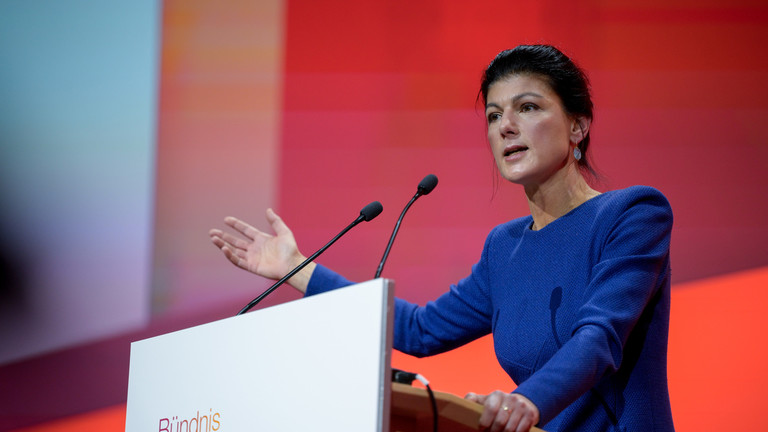
Sahra Wagenknecht, leader and chancellor candidate of the Sahra Wagenknecht Alliance (BSW), on January 12, 2025 in Bonn, Germany. © Sascha Schuermann / Getty Images
RT | January 13, 2025
Western sanctions imposed on Russia are “killing” German companies and enriching the American economy, Sahra Wagenknecht, the leader of Germany’s left-wing BSW party, said during an election conference on Sunday.
The delegates of the Sahra Wagenknecht Alliance – Reason and Justice (BSW) gathered in the city of Bonn to adopt the platform for the Bundestag election that will take place next month. During her speech, Wagenknecht refused to blame Russia for the ongoing Ukraine conflict.
“The sanctions have nothing to do with morality, they have nothing to do with human rights, they have nothing to do with the love of peace, they are simply a stimulus program for the US economy and a killer program for German and European companies,” Wagenknecht said.
She called for the restoration of the gas imports from Russia. “We simply have to tie our energy imports with the criteria of the lowest price and not any kind of double standards or ideology,” she stated.
The left-wing politician condemned Washington’s foreign policy, alerting the audience about “the blood trail of US proxy wars” around the globe. She stressed that the German chancellor must not be “a vassal” of the US.
BSW co-leader Amira Mohamed Ali said that the party stands for “a strong, fair and sovereign Germany.”
The right-wing Alternative for Germany (AfD) party held its conference in Riesa, Saxony on Saturday. The delegates rejected a motion condemning Russia and called for a diplomatic resolution of the conflict.
The snap election was called after Germany’s ruling three-party coalition collapsed last month due to disagreements over the budget.
How the West Destroyed Syria
By Rick Sterling | Dissident Voice | January 11, 2025
Peter Ford served in the UK Foreign Ministry for many years including being UK Ambassador to Bahrein (1999-2003) and then Syria (2003-2006). Following that, he was representative to the Arab world for the Commissioner General of United Nations Relief and Works Agency. He was interviewed by Rick Stering on Jan 6, 2025.
Rick Sterling: Why do you think the Syrian military and government collapsed so rapidly?
Peter Ford: Everybody was surprised but with hindsight, we shouldn’t have been. Over more than a decade, the Syrian army had been hollowed out by the extremely dire economic situation in Syria, mainly caused by western sanctions. Syria only had a few hours of electricity a day, no money to buy weapons and no ability to use the international banking system to buy anything whatsoever. It’s no surprise that the Army was run down. With hindsight, you might say the surprise is that the Syrian government and Army were successful in driving back the Islamists. The Syrian Army forced them into the redoubt of Idlib four or five years ago.But after that point, the Syrian army deteriorated, became less battle ready on the technical level and also morale.
Syrian soldiers are mainly conscripts and they suffer as much as any ordinary Syrian from the really dreadful economic situation in Syria. I hesitate to admit it, but the Western sanctions were extremely effectively in doing what they were designed to do: to bring the Syrian economy down to its knees. So we have to say, and I say this with deep regret, the sanctions worked. The sanctions did exactly what they were designed to do to make the Syrian people suffer, and thereby to bring about discontent with what they call the regime.
Ordinary Syrians didn’t understand the complexities of geopolitics, and they blamed the Syrian government for everything: not having electricity, not having food, not having gas, oil, high inflation. Everything that came from being cut off from the world economy and not having supporters with bottomless pockets.
Syria was being attacked and occupied by major military powers (Turkey, USA, Israel). Plus thousands of foreign jihadis. The Syrian army was so demoralized that they really were a paper tiger by the end of the day.
RS: Do you think the UK and the US were involved in training the jihadis prior to the December attack on Aleppo?
PF: Absolutely. The Israelis also. The leader of Hayat Tahrir al Sham (HTS), Ahmed Hussein al Sharaa (formerly known as Mohammad abu Jolani) almost certainly has British advisors in the background. In fact, I detected the hand of such advisors in some of the statements made in impeccable English. The statements had Americanized spelling, so the CIA are in there too. Jolani is a puppet, a marionette saying what they want him to say.
RS: What’s the current situation, a month after the collapse?
PF: There are skirmishes here and there, but broadly, the Islamists and foreign fighters are ruling the roost. There are pockets of resistance in Latakia where the Alawite are literally fighting for their lives. Much of the fighting is about the attempts by HTF, the present rulers to confiscate weapons. The Alawites are resisting and there are pockets of resistance in the South where there are local Druze militias.
HTS is spread thinly on the ground. They are facing problems in asserting themselves. Although they had a walkover against the Syrian army, they never actually had to do much fighting. I would guess they only have about 30,000 fighting men and spread across Syria, that is not a lot. There’s an important pocket of resistance in the Northeast where the Kurds are. The Kurdish American allies are resisting. The so-called Syrian National Army, which is a front for the Turkish army, may go into a fully fledged war against the Kurdish forces. But that’s going to depend partly on what happens after the inauguration of the new US president, how Trump deals with the situation.
RS: What are you hearing from people in Syria?
It is not a pretty story. HTS and their allies have been parading showing their dominance, flying ISIS and Al-Qaeda flags. They have been bullying, intimidating, confiscating and looting. Surrendering Christian as well as Alawite soldiers have been given summary justice, roadside executions being the norm. Christians in their towns and villages are just trying to hunker down and pray. Literally. I’m sorry to say the senior Christian clerics, with one or two noble exceptions, have opted for appeasement and effectively betrayed their communities. The senior leadership at the Orthodox Church, in particular Greek Catholic church, have had themselves photographed with dignitaries of the jihadi regime.
They are turning the other cheek. It’s quite a contrast with the Alawite. But they have no choice. You may remember that the slogan of the jihadi armies during the conflict was, “Christians to Beirut, Alawite to the grave.” HTS is going through the motions of having meetings with clerics and making soothing noises. All the while their henchmen are driving around in trucks flying ISIS flags. What I’m hearing is very depressing.
The regime is leaving the Alawites totally abandoned. You barely read a word in the west in media about the plight of the Alawite and not much more about the Christians.
RS: Western media have demonized Bashar al Assad and even Asma Assad. What was your impression of Bashar and Asma when you met them? What do you think of accusations they accumulated billions of dollars?
PF: The accusations are completely spurious. I know some members of the Assad family, some of them have lived for many years in Britain. They lived in very modest personal circumstances. If Assad had been a billionaire, like they’re saying, some of that would’ve trickled down. I can guarantee you that has not been the case. These accusations also go against the impressions that I picked up when I was seeing the Assads when I was an ambassador there. They appreciated the good things of life the same as everybody else, but they didn’t come across as the Marcos type. Nothing at all like that. It is all lies, made up to serve the deeper agenda.
The media kicking of Bashar and Asma is really distasteful. It’s pointless. He’s disappointed his few remaining followers, although it was unrealistic, I believe, for them to expect more. But the fact is that he ran when others were not able to run, and many of those have been killed, or they’re hiding or they’ve escaped to Lebanon in some cases where they’re also hiding. He did get out with his skin, but to beat up on him as the media are doing is really distasteful and pointless. It is akin to this new genre of political pornography, Assad porn, the torture stories, the hyped up narrative about prison and graves being opened up. Actually, by the way, most of those graves are war dead. They were not people who’d been tortured to death as the media pretends. Hundreds of thousands of people died in the conflict over more than a decade, and many of them were buried in unmarked graves. But the western media are reveling in this new genre of Assad porn.
This is all being whipped up to make Western audiences more accepting of the way the West is getting into bed with Al-Qaeda. The more they demonize Assad and harp on the misdeeds of the Assad regime, and the more likely we are to swallow and be distracted away from the hideous atrocities being carried out right now.
Western leaders are kissing the feet of a guy who’s still a wanted terrorist and who has been a founder member of ISIS for God’s sake, as well as a founder member of Al-Qaeda in Syria. It is morally distasteful and shaming.
Joulani needs the west desperately now. Otherwise, he will face the same fate as Bashar Asad. If the economy continues on its trajectory of the years, then Joulani will be dead meat in fairly short order. He has to deliver massive rapid economic improvement to survive as leader. And this is what it’s all about. His strategy, obviously, is to milk his status as a puppet of the West in order to secure not just reconstruction aid, but that’s for the long term, but more immediately sanctions relief, the electricity flowing again, the oil.
Let’s not forget that the oil and gas of Syria is still effectively in the hands of the United States, which through its Kurdish puppets, controls a segment of the economy, which used to be worth, I think, 20% of serious GDP and provide essential oil for fuel, cooking, everything. He’s got to get his hands on that and get sanctions lifted. That’s what so much of it is about. But he has one major problem: Israel. Israel’s not buying it. Israel is the exception. All the western front is tumbling over itself to go and kiss the feet of the sultan of Damascus. But the Israelis are sucking their teeth, saying they don’t trust the guy.
Israel is destroying the remnants of the Syrian army and its infrastructure. Meanwhile they grab more Syrian land. They want to keep Syria on its knees indefinitely by insisting that Western sanctions not be lifted. I sense there’s a battle royal going on in Washington between what we might call the deep state, which would favor lifting sanctions and the Israel lobby, which is resisting that for selfish Israeli reasons. Given that the Israeli lobby wins these tussles nine times out of 10, the outlook may not be that great for the Jolani regime.
RS: What are your hopes and fears for Syria? What’s the nightmare scenario and what’s the best possible?
PF: I’m very pessimistic. It is very hard to see a silver lining in what has happened. Syria has been taken off the table as a Middle East player. The old Syria has died effectively. Syria was the last man standing among the Arab countries that supported the Palestinians. There was no other. There were militias like Hezbollah plus Yemen but there were no states other than Syria. Syria is now gone, and the jihadis are saying, telling the world they don’t care. By the way, this is an example of how the Israelis will not take yes for an answer. The jihadis keep telling the world, “We love Israel. We don’t care about the Palestinians. Please accept us. We love you.” And the Israelis won’t take yes for an answer.
The best hope for the Syrian people is that they may get some respite. It is possible to imagine a scenario where the Syrian people are able to recover, at least economically a scenario under which sanctions are lifted, under which Syria, the central government recovers control of its oil and grain, where fighting has stopped, where it doesn’t have to pay anything to keep up an army because it’s not trying. They might be able to put everything into reconstruction.
So it is possible to imagine a scenario where Syria loses its soul, but gains more hours of electricity. That is possibly the most likely scenario. But there are major obstacles as we discussed, Israel standing in the way of sanctions, lifting pockets of resistance in discipline among the jihadi ranks, Turkey rampaging against the Kurds and ISIS which is still not a completely spent force. So the outlook is obviously cloudy. We should take stock in a month’s time when we see the early days of the new regime in Washington on which so much will depend.
RS: In Trump’s first term he tried to remove all US troops from east Syria but his efforts were ignored. Perhaps that could have made a big difference?
PF: Yes, it could have been a total game changer. If Syria had access to its oil, it wouldn’t have had the fuel problem, the electricity problem. It could have changed the history of the region.
Now, the US is increasing the number of soldiers and bases in Syria. And they recently assassinated an ISIS leader which might have played a role in sparking the recent terrorist attack in the US. All of this makes it much harder now for Trump to withdraw US forces because it will be seen as a retreat, a reward for ISIS.
I argued for years that the sanctions were manifestly not working. But in the end they did. It’s like a bridge. It gets undermined and then suddenly it breaks. There was no single cause. It was just the culmination and things reached a tipping point.
Featured Video
Houthis Keep Advancing as the Red Sea Crisis Deepens
or go to
Aletho News Archives – Video-Images
From the Archives
15 Saudi ‘hijackers’ were CIA agents working for US: Scholar
Press TV – April 13, 2016
Fifteen of the 9/11 “hijackers” from Saudi Arabia were CIA agents working for the United States government, which was seeking to destroy the Middle East for Israel and to double the American military budget, says Dr. Kevin Barrett, an American academic who has been studying the events of 9/11 since late 2003…. continue
Blog Roll
 Aletho News
- Russia Just Struck the Eyes of NATO’s War Machine in Ukraine
- Russia summons UK charge d’affaires over Kiev drone support
- NATO member warns bloc seeking pretext for war with Russia
- Macgregor: We Haven’t Seen the Worst of the Iran War Yet
- ‘We are not like everyone else’ laws that bind other nations do not apply to Israel, says Likud lawmaker
- Report: Saudi Arabia seeks allies’ assistance as missiles deplete amid war on Yemen
- Fuel Crisis Deepens: Pakistan Warns Tanker Attack in Red Sea Would Be an ‘Act of War’
- ‘Bucha massacre’ a false flag orchestrated by UK – Moscow
- China Rejects Outside Pressure on Trade Ties After New US Russia Sanctions Bill
- Houthis Keep Advancing as the Red Sea Crisis Deepens
- If Americans Knew
- Why do we let Zionists decide what we can and can’t say?
- US welcomes Israeli, Iranian delegations to UN, but not Palestinians – Daily Update
- Biden’s Genocide Accomplices Targeted by New Accountability Campaign
- AIPAC’s Network Has Already Spent $67.2 Million to Shape the Midterm Elections
- Jewish Supremacist Manufacturing a Civilizational Threat to License Bigotry
- US bans Palestinian president from speaking at the UN
- Israeli Forces Detain Journalist Alaa al-Rimawi amid Widespread West Bank Raids
- Even a pro-Israel Congress member has put a hold on 40,000 one-ton bombs to Israel
- As Gaza crumbles, Israel preps new ground invasion – Daily Update
- ‘We are not like everyone else’ laws that bind other nations do not apply to Israel, says Likud lawmaker
- No Tricks Zone
- New Study: ‘Global Drought Shows No Detectable Recent Acceleration Under Climate Warming’
- Economic Masterminds: German Socialists Suggest Taxing Productivity Gains Stemming From Using AI
- The South China Sea Has Not Been Cooperating With The Climate Change Narrative
- Energy Crisis: Germany Enters Heating Season With Historically Low Gas Reserve Fill Levels
- New Study: The Antarctic Ice Sheet Gained Mass From 2020-2024 Due To Staggering Snow And Ice Accumulation
- Study: Ocean Heating Rates From Thousands Of Years Ago ‘Dwarf’ Modern Ocean Heating Rates
- Climate Extremists Target, Attack Large-Scale Power Grid Infrastructure In Germany!
- New Study: Antarctic Ice Melt Has Contributed Less Than 1 Centimeter To Sea Level Rise In The Last 30 Years
- Fear Of Debate: Alarmist German Climate Scientist Calls On Mainstream Media To Discredit Skeptic Voices
- End-Of-August Arctic Sea Ice Extent Hasn’t Fallen In 20 Years, Official Data Show!
 Aletho News