In the past few weeks – un-reported in the scandal/crisis-pre-occupied American main stream media – New Mexico has become the epicenter of an on-going national controversy: how to responsibly manage the tons of radioactive waste accumulated at all the nuclear energy reactors around the country so far in the Nuclear Age.
Why, New Mexicans and others around the country are asking, has this region suddenly become the potential target destination for all of America’s radioactive waste?
Will the Shimkus Bill ‘Bring Death to New Mexico’?
New Mexico cattle rancher Ed Hughs is one of the many around that state and the country who think so.
Having, with his neighbors, just successfully fought off a proposed deep bore hole nuclear waste depository next to his ranch in Quey County, NM, Hughs told a recent Roswell, New Mexico NRC meeting to rousing applause,
“There are a lot of questions that have not been answered. One of the questions, how do you retrieve if there are accidents? How do you monitor? How do you repair? Those questions have not been answered. So I guess in summing up I want to say that the Holtec and Eddy-Lea Energy Alliance, and I agree with an earlier statement that, you know, you aren’t bad people in the sense that you are trying to do us harm, but you are making a huge mistake…. You are in fact proposing to bring death to New Mexico.”
Yucca Redux and the ‘Fukushima Freeway’
The Congressional trigger to this rising national controversy is the Nuclear Waste Policy Act of 2018, HR 3053, known as the Shimkus Bill, which recently passed the House on its way to the Senate.
It calls for restarting the failed Yucca Mountain Project in Nevada, and establishing a system of Consolidated Interim Storage (CIS) sites for radioactive waste around the country until Yucca is operational.
First on the list of possible ‘temporary’ CIS nuke dumps is a site proposed by Holtec International and the local Eddy-Lea Alliance just outside Hobbs, New Mexico. It’s just over the border from Andrews, Co., Texas – where another high level nuke waste dump is also being proposed by Waste Control Specialists, which already operates a controversial toxic materials dump in the area.
In early may, the Nuclear Regulatory Commission (NRC) held a series of five so-called ‘scoping’ meeting around New Mexico to take public comments on the Holtec/Eddy-Lea site proposal.
Proponents of the dump tout it as a regional economic boon and a patriotic service to the nation.
Opponents see it as a public health, environmental and economic disaster waiting to happen that could ruin the region’s thriving dairy ranching, pecan growing and oil drilling industries.
Planned to eventually hold more metric tons of waste than Yucca Mtn. itself will be designed for, the Hobbs site could well become – if the Yucca site never gets built – America’s de facto national dump site, and make the region a national ‘nuclear sacrifice area.’
The region targeted for the proposed ‘interim’ radioactive waste storage sites is already known to the region’s population as ‘nuclear alley.’
Welcome to Nuclear Alley
Nuclear Alley is on the edge of one of the world’s richest and – currently on pace to be – most productive petroleum patches: the Permian Basin, which straddles the New Mexico-Texas border.
We traveled there recently for our forthcoming documentary series on the shutdown and decommissioning of California’s last remaining nuclear energy plants at San Onofre and Diablo Canyon. We also wanted to express our support of the groups resisting the ill-conceived consolidated interim storage agenda.
Along with the coming cascade of waste from other scheduled nuclear power reactor shutdowns around the country, California’s radioactive waste could well be headed for New Mexico… if the proposed Holtec and WCS ‘Consolidated Interim Storage’ sites are licensed by the industry-captured NRC.
Oil Patch Central
To get to this region we flew into Midland, Texas. The thriving city is a prime beneficiary of the area’s present oil- and gas-fueled economic boom. As we got off the plane, we entered a bustling airport space dominated by a battery of animated electronic screens showing glitzy ads – not for consumer goods – but for the region’s thriving, readily available, fracking and oil drilling services and products.
From Midland we headed to Eunice, New Mexico, an epicenter of New Mexico’s Nuclear Alley. To get there, we drove through endlessly flat countryside dotted every few yards stretching to the horizon with temporarily dormant or busily functioning oil pumps.
Rose Gardner is a feisty Hispanic grandmother and co-founder of the Alliance for Environmental Strategies organization in opposition to the Holtec dump. In keeping with her name, she runs a flower shop on the Main Street of Eunice.
The little town’s local landscape is dominated by the presence, just five minutes up the highway, of Waste Control Specialists’ toxic waste materials site – where WCS is proposing adding a new CIS ‘parking lot’ nuclear dumpsite.
Just next-door to WCS is the Urenco uranium enrichment facility, which supplies much of the fuel for the country’s nuclear power reactors. [A January, 2018 NRC Inspection Report noted both a security violation and the loss of criticality controls at this Urenco plant.]
Both proposed sites are about 40 miles from the now infamous Waste Isolation Pilot Project (WIPP), where more than 171,000 waste containers are stored in salt caverns 2,100 feet underground.
Touted as the demonstration ‘Flagship’ model for the feasibility of long-term deep geological radioactive storage facilities for nuclear weapons waste, and advertised to last for thousands of years, WIPP experienced underground fires and explosions on February 14, 2014, after only 15 years of operation.
The disaster caused a major radiation release of plutonium and americium that contaminated at least 22 workers. The release was tracked by monitors and acknowledged by DOE as far away as 26 miles.
Reports the LA Times“the explosion ranks among the costliest nuclear accidents in U.S. history, according to a Times analysis. The long-term cost of the mishap could top $2 billion, an amount roughly in the range of the cleanup after the 1979 partial meltdown at the Three Mile Island nuclear power plant in Pennsylvania.”
Diagnosed as being caused by the use of the use of ‘organic cat litter’ in the storage barrels, the WIPP disaster was dubbed a ‘comedy of errors’ by commentators around the world. Not to worry. Sustaining such huge potential costs (that are charged to the state of New Mexico) WIPP is now again accepting waste – presumably packed with the right brand of inorganic kitty litter.
Cui Bono?
Guiding us on a tour of the local Eunice roadside attractions, Rose showed us a sprawling, sun-baked trailer park, on land owned by a local politician. The bleak dusty field is home for many of the workers at the town’s two dominant facilities.
If WCS succeeds in getting an NRC license for a CIS site here, the workers’ ranks will expand, and so will the trailer park owner’s profits. That’s one of the ‘economic benefits,’ Rose noted to us wryly, that are loudly touted by the region’s CIS advocates.
“This crap that could kill us!”
Speaking at the NRC’s first regional meeting in Roswell, Gardner told the standing-room-only crowd,
This isn’t the right thing to do. It’s an injustice to this state, to this community…. Most of the people in this area are like me, Brown-skinned or darker. We’re already poor. We don’t have insurance. We speak another language and we’re at least 50 percent here. And that’s an environmental injustice because they’re basically saying it’s okay… because those people aren’t going to speak up, because they can get run over just like they’ve been run over for the last several hundred years.
I’m here to tell Holtec, ‘Hell No, we don’t want it!’ I am so sick and tired of all these big companies coming into New Mexico or close to my town in Eunice, wanting to give us all this crap. This crap that could kill us!
New Mexico as ‘National Sacrifice Area?’
Leona Morgan, a fiery young Diné [Navajo] community organizer and co-founder of New Mexico’s Nuclear Issues Study Group, expands on Rose’s points.
“Starting with uranium mining and milling,” she says, “to modern weapons production, uranium enrichment, and storage of low-level and transuranic wastes, New Mexico has been targeted as a national sacrifice zone for too long,”
“New Mexico is the birthplace of nuclear colonialism,” Morgan points out. “We have been impacted by just about every step in the nuclear fuel chain! We did not generate this waste from nuclear reactors that is intended to come here. So why should we take it? As a state with many indigenous nations and people of color, and being at the tail end of several measures of quality of life, it is environmental racism at its core to keep dumping on New Mexico. And it’s time to stop!”
Speaking to the NRC meeting in Hobbs, New Mexico, Morgan gave a greeting in her native language and went on to remind the group that they were assembling on land originally stolen from the Mescalero Apache and Comanche tribes. “The things I want to talk about,” she said, “have to do with indigenous rights across the nation.“
“How many of you from the NRC or any of the regulating Agencies are aware,” she asked, “of the United Nations Declaration on the Rights of Indigenous Peoples? Or, for that matter, any of the elected officials here, how many of you know about this document called the United Nations Declaration on the Rights of Indigenous Peoples passed in 2008?”
She scanned the crowd.
“Okay, let the record show no hands going up. How many of you are aware of the Organization of American States’ Declaration on the Rights of Indigenous Peoples?“
She glanced around at the blank official faces.
“Okay, again, nobody’s hands went up. This was passed in 2016 and so I’d like to read directly from this Declaration.”
She went on to quote language from the Declarations’ Articles declaring that
Article 19: Indigenous peoples are entitled to be protected against the introduction of abandonment, dispersion, transit, indiscriminate use or deposit of any harmful substance that could negatively affect indigenous communities’ lands, territories, and resources.
And that
Article 22: The indigenous law and legal systems shall be recognized and respected by the national, regional, and international legal systems
“The reason I’m reading this,” she told the meeting, “is because it cites that the Federal Government needs to recognize tribal law.”
“Specifically with my tribe, the Navajo nation, we have a law against the transport of radioactive materials through our lands.
“So, if this transport should occur, it’s directly violating our tribe’s laws that were put in place because of all the history and the health impacts of the horrendous things that the United States did, not just going back to the genocide of our people but more recently, the exploitation of uranium on our lands.
“And so we have a law against uranium mining and we have a law against transport because we’ve already suffered the impacts from these industries for United States imperialism and capitalism. And so that did not benefit our people. We wrote these laws for the protection of our future generations, however, they are not being respected here.”
Based on indigenous historical experience, it would be a pleasant surprise if such legal provisions were ruled to be within the scope of the NRC’s consideration of the Eddy-Lea/Holtec license application for their proposed project.
Jobs! Jobs! Jobs!
The Eddy-Lea Alliance Project’s point man and lead salesman is John Heaton, a former member of the NM state legislature and current Chairman of the Alliance.
The Alliance is a limited liability corporation made up of 8 people appointed by the Councils of Hobbs, Lea, Eddy and Carlsbad counties. According to its promotional material it was “Formed Under the Local Economic Development Act (LEDA) for Economic Development Purposes in 2006 & to Respond to Global Nuclear Energy Partnership (GNEP) Proposal from DOE.”
Heaton qualifies as what Eric Hoffer called a ‘True Believer’ in his 1951 best seller of that title. Heaton’s energetic sales-pitch is persuasive… at least to the uninformed.
As Heaton tells it, seeing opportunity in a recommendation by Obama’s Blue Ribbon Commission on America’ Nuclear Future for creation of ‘consent-based’ Centralized Interim Storage sites around the country, the Alliance believed it had secured what Heaton calls ‘an ideal site.’ It’s located 35 miles outside the town of Hobbs, and about equidistant from the Waste Isolation Pilot Project (WIPP) outside Carlsbad.
Although ‘consent-based siting’ was recommended by Obama’s Blue Ribbon Commission, the DOE has not finalized rules for how a state or community gives or denies consent. Already some cities have forced construction of highway bypasses around their metropolitan jurisdictions.
New Mexico’s ‘High Nuclear IQ’ vs. ‘Fear Mongering’
Heaton describes the proposed Eddy-Lea site as ‘dry’ and ‘seismically stable.’ In addition he says, because of all the existing neighboring facilities in Nuclear Alley, “we have what I call an area of the country with a very high nuclear IQ. The local population understands nuclear materials,” he claims, “and know they can now be handled competently.”
“This is deja vu for us,” an irritated Heaton told the NRC in its Hobbs meeting. “We went through this same thing with WIPP. We went through all the fear mongering. WIPP has shipped more than 12,000 shipments and traveled over 14 million miles. That’s like going to the moon and back 28 times, without a serious accident and absolutely no release.”
However, there are many members of that regional ‘high nuclear IQ population’ Heaton refers to who also remember that – touted as the country’s flagship deep geological nuclear waste repository, designed to remain secure for ten thousand years – WIPP suffered an explosion and release of plutonium in 2014, after a mere15 years of operation.
An ‘Ideal Site’ for Holtec
Having secured their ‘ideal site,’ the Alliance issued an RFP to potential contractors and chose Holtec. “Because,” Heaton says, “they are a great company with a fabulous record [and] have the best, safest, most secure system in the world.”
Joy Russell is a Holtec Vice President and nuclear engineer who is proud, she told us, of being both a West Point graduate and a co-designer of the Holtec transport cask modeled by the scaled-down inflatable replica being toured around the state by opponents as the growing Halt Holtec campaign gathers momentum.
She boasts that her company has been in the radioactive waste storage business for over 30 years, and that “sixty per cent of nuclear plants in the U.S. use Holtec dry storage equipment.”
“We have an impeccable safety record,” Russell told an NRC community meeting in Roswell, NM. “None of our equipment has ever experienced a safety issue, ‘leak,’ as you so call it.
But, I would like to point out,” she told the Roswell auditorium – packed 5-1 with opponents of the proposed project – in a tone dripping with ill-concealed condescension, “spent nuclear fuel is not a liquid, it can’t ‘leak’.”
Opponents cite a number of disquieting facts, which call Heaton and Russell’s confident public relations assertions into question.
Halt Holtec!
A group of New Mexico and Texas organizations, including the Nuclear Waste Study Group, the SEEDS Coalition, and Alliance For Environmental Strategies, started a ‘Halt Holtec’ campaign. They toured an inflated, scaled-down model of the kind of transport cask proposed by Holtec that would carry thousands of shipments of highly radioactive waste shipments through the nation’s towns and metropolitan areas on dilapidated highways, bridges and railway lines for the next 20 years or more.
One significant result of their campaign is that on Monday, May 21, the Albuquerque City Council, in a 4-3 vote, approved what it called a ‘memorial’ against the transportation of nuclear waste through the Albuquerque metropolitan area.
Similar measures by other municipalities and counties along the potential shipment routes around the country are in the works.
The Halt Holtec Campaign has quickly gathered strong momentum surprising both to its organizers, and the Holtec dump proponents, whose claim of ‘wide-spread regional public support’ has been totally debunked by the turnout in opposition to the project. Public statements have so far run 5-1 ‘against’ the proposed site in all five New Mexico NRC meetings.
At the recent series of NRC community meetings, this opposition was strong from a wide cross section of New Mexico and Texas demographic sectors, including Native American Tribes, growers, ranchers, the Jewish and Christian faith communities, and the powerful oil and gas fracking industry.
A regional leader of that booming industry is the Fasken Oil and Ranch company, which has been in business since 1913. Their representative, Jimmy Carlisle, explained his company’s position to the visiting NRC officials.
I work for Fasken Oil and Ranch based in Midland. We are an oil and gas company, but we also are a major landowner in the State of Texas.
We own some 200,000 net acres in the State of Texas. Our largest ranch is a 165,000 acre contiguous ranch just north and west of Midland.
The WCS site definitely comes into play in this discussion. The Holtec side, however, has the same issues … groundwater issues.
On our ranches [we depend on] everything we look at: we look at vegetation, we look at soil characteristics, we look at moisture in the soil, but the thing we watch the closest is the quantity and the quality of our groundwater.
Our company is the first one really in West Texas that made the determination to get off of use of fresh water in our drilling and fracking operations and we started recycling produced water and using brackish water as a result.
So we believe firmly that the freshwater issue is a major significance that has to be addressed.
Stressing that the State Engineer’s Office lacks definitive maps of the ground water aquifer locations in New Mexico, Carlisle told the NRC panel, “We’re not alone in this fight.”
Explaining that it had taken ‘less than two hours to get four letters of opposition from major landowners in West Texas, Carlisle concluded,
Groundwater, folks, is the lifeblood of the ranching business. If you don’t have groundwater you’d just own dirt. Think about that for a second.
The bottom line is we believe that this [Holtec] application and the WCS application need to be withdrawn.
A group letter from oil industry representatives to Holtec warned that Holtec and the Eddy-Lea Alliance would ‘need more money than God’ to compensate them if their project damaged the thriving drilling industry in the oil- and gas-rich Permian Basin, which is currently on pace to become the world’s most booming region of petroleum production.
“I don’t intend to let this thing run over us.”
Randy Prude, an influential county commissioner from Midland, Texas, told the Roswell NRC meeting that he had spent $2000 of his own money to fly Fasken representative Jimmy Carlisle and other opposition speakers to the event.
“I intend to organize all the ranchers and all the commissioner’s courts and everybody in all the governments in all this whole region,” Commissioner Prude went on.
I will tell you, I am an odd duck, I am a Republican — (Laughter) and this is not a Republican or a Democrat issue, this is an important issue to all of us….
I just cannot tell you the horror that could happen if we ever have an accident. And so I intend to organize all of our governments that are willing to listen….
I am going to get to all the ranchers and all the ranch oil men to contact their commissioners and their mayors and their representatives, house representatives, senators, and so forth, and I don’t intend to let this thing run over us.
The Permeable Permian
The contentions by dump proponents that the Eddy-Lea/Holtec site is ‘dry and seismically stable’ were repeatedly debunked by facts presented by opposing speakers.
Activists visiting the site, despite Heaton’s attempts to stop them, discovered clear signs that it contains a ‘playa,’ where seasonal rain water collects, feeding the ground water deposits and aquifer below.
The region’s most famous tourist attraction – the Carlsbad Cavern – was formed by such a subterranean body of water, the Capitan Reef Aquifer.
“It’s hard to think of a worse place to choose for placing an interim waste site,” consulting geologist Dr. Steve Schafersman told the meeting.
The area is surrounded by aquifers, some close, some far. The sediments and the sedimentary rock are porous and permeable. The thin barrier they claim is on the top is not sufficient. It’s just like the WCS site, which is really no better. So this is not a good place to put a hazardous waste site, especially one for nuclear waste.
There are soluble rocks below the site, limestone and rock salt. There is karst limestone in the area, which is a soluble limestone that develops caverns, the caverns collapse and sinkholes develop.
It is conceivable that a sinkhole would collapse and take down the depository with it, which would be a terrible, colossal tragedy. In addition there is the soluble Salado formation below that.
In West Texas unplugged wells carry fluids to this formation, the salt dissolves, and sinkholes develop. This is a matter of fact.
An Earth-Shaking Announcement of Seismic Significance
Several of the opposition speakers referred to a recently-published, peer-reviewed study in the March 16, 2018 issue of Nature, with the catchy title, ‘Association between localized geohazards in West Texas and human activities, recognized by Sentinel-1A/B satellite radar imagery.’
The study by Southern Methodist University geophysicists Jin-Woo Kim and Zhong Lu reported literally earth-shaking findings.
It showed that, in the last two and a half years, large sections of the four Texas counties they studied, spanning a 4000-square-mile area, had shown ‘vertical deformation,’ that is, sunk or uplifted as much as 40 centimeters or nearly 16 inches.
“The ground movement we’re seeing is not normal. The ground doesn’t typically do this without some cause,” said co-author Zhong Lu, a recognized global expert in satellite radar imagery research.
“These hazards represent a danger to residents, roads, railroads, levees, dams, and oil and gas pipelines, as well as potential pollution of ground water,” Lu declared.
Co-author Jin-Woo Kim notes that, “This region of Texas has been punctured like a pin cushion with oil wells and injection wells since the 1940s and our findings associate that activity with ground movement.”
In fracking, liquid is injected into bore holes under pressure, then extracted, causing uplift while the wells are in operation, and subsidence when they are abandoned.
The researchers’ Nature article states,
… the rapid subsidence is likely induced by the freshwater impoundments from the nearby abandoned wells. During our field trip, we observed numerous recent ground fissures…. These growing fissures can allow the rainwater to swiftly flow down to the Salado formation and promote the dissolution of the salt layers. [ Thus causing subsidence. ]
Although their analysis focused on just that one 4000-square-mile area, Kim says, “We’re fairly certain that when we look further, and we are, that we’ll find there’s ground movement even beyond that.”
The area they’ve studied so far lies just adjacent to the two proposed storage sites in New Mexico and Texas.
The Oil Drilling and Fracking Connection – Oil & Nuclear Waste Don’t Mix
Evidence of the links between oil and gas extraction and earth movement are clear. Researching an unprecedented swarm of earthquakes in Oklahoma and Texas, a 2016 Stanford University study published in Science found a direct connection between a quake series in Texas in 2012 and 2013, which included the largest on record, and the high volume injection of wastewater into oil and gas fracking wells that happened between 2005 and 2007. The high pressure forced water into fault zones and triggered the subsequent quakes, the study showed. Read more
One of the people Commissioner Randy Prude flew in to speak at the Roswell meeting was Cody Rogers. “I am an ex-Navy nuke,” he told the NRC. “I have operated nuclear reactors for eight years. I am a huge proponent of nuclear power. I think we need it. We have 99 operating nuclear reactors. We do not have anywhere to dispose of the spent fuel. This is a major, major problem and we have to fix it.
“I know we need a site” Rogers told the group. But the Eddy-Lea/Holtec site, he said emphatically, “is not it.”
“We [the U.S.] are on the cusp of being the world’s largest energy producer, okay. We are going to control oil very soon. We are going to control our own destiny. So West Texas is one of the most valuable places in the world right now, especially in the United States, and, because of this I implore you to look up the study from SMU. West Texas is sinking… fast!
“I know we need a site. This is not it. If this thing sinks and we get something like the WIPP accident, that was never supposed to happen, the environmental impact is forever, and if we lose West Texas oil, natural gas, the people of Roswell, the people of New Mexico, the people of Texas, the United States, we’re done.
”We’re not going back to Saudi Arabia and getting their oil. We need independence and this site is sinking and I truly believe that we need to look at that and study its environmental impact.”
Reputations and Rap Sheets
Opponents stress that entrusting the economic and environmental future of this area to companies with corporate histories like those of Holtec and Waste Control Specialists is a highly risky proposition.
Growth Industry
With aging reactors closing down around the country in an accelerating cascade – and with no ‘national permanent geological repository’ for their accumulated SNF in sight – decommissioning and radwaste storage are on pace to become major growth industries for some time to come.
Holtec’s visionary head Dr. Krishna Singh is positioning his huge company, based in Camden, New Jersey, to dominate both industries, as well as to be a leader in the manufacture of small modular reactors (SMRs), the failing nuclear energy industry’s latest bid for survival.
Back in October 2010, based on the results of a criminal investigation of bribery, conducted by its Office of Inspector General (OIG), the Tennessee Valley Authority (TVA) debarred Holtec International, Inc. for sixty days. And fined it $2 million.
Holtec agreed to pay a $2 million administrative fee and submit to independent monitoring of its operations for one year.The TVA Board’s Audit, Risk, and Regulation Committee and TVA management fully supported the OIG’s recommendation to create a suspension and debarment process and submit Holtec to that process. TVA’s Supply Chain organization and Office of General Counsel worked collaboratively with the OIG to achieve this milestone in TVA history. Why wasn’t the company permanently debarred? A subsequent Department of Justice document seems to suggest that a TVA employee may have been bribed by Holtec to falsify a financial disclosure report. Read more.
Meanwhile, just miles away on the other side of the state border in Texas, Waste Control Specialists (WCS) and its new French partner Orano each have their own checkered pasts.
WCS was founded in 1989 as a landfill company by Texas billionaire Harold Simmons, who controlled it until his death in 2013. During that time, Simmons used his financial muscle and political connections to morph the site into a licensed low level waste dump with some highly questionable maneuvers.
His generous support for then Texas Governor, now Energy Secretary Rick Perry, no doubt eased his path. Critics allege that “Radioactive Rick” Perry appointees at key regulatory agencies bent rules on WCS’s behalf, including the Texas Water Development Board’s altering of maps showing that Simmons’ waste facility is located over part of the Ogallala Aquifer, which underlies and supplies drinking and agricultural water for eight western bread basket states. Another water body, the Dockum Aquifer lies nearby as well. Many Texas environmental officials resigned in protest.
For its part, WCS’s new partner Orano, parent company of Orano USA, is a recent reincarnation of the radically reorganized French government-owned struggling reactor maker AREVA, after years of business losses brought it to the brink of bankruptcy.
These are the strange bedfellows hoping to profit from the nuclear energy industry’s decline by making New Mexico’s ‘nuclear alley’ America’s de facto radioactive waste repository for the foreseeable future.
There are several things wrong with this scenario, not the least of which, as noted, is that poor and minority residents make up a large portion of the population in and around ‘Nuclear Alley.’
Until and unless the existing Nuclear Waste Policy Act is changed by currently proposed, but not yet enacted legislation, licensing of these CIS sites will be illegal. This is because the Act requires that a permanent repository is approved before any consolidated interim storage site can be licensed.
If the NRC were to license the sites without a central repository being established, they would likely become in effect the national dump, because utilities would probably stop lobbying for – and lawmakers could be less inclined to authorize funding for – establishing a central repository.
If that happens, thousands of shipments of deadly radioactive waste will be moving daily along rail and truck transportation corridors, through our nation’s population centers, for decades to come.
A Shell Game of Nuclear Russian Roulette on Wheels
Eddy-Lea/Holtec project proponents are fond of citing the transport record claimed by the Navy, which proudly states that it has been shipping both new and used nuclear fuel cross-country by rail for over 60 years without mishap.
However the Navy admits that, “All shipments [are] classified (security) and invoke the Department of Transportation (DOT) National Security Exemption (49CFR173.7b).” It claims that 850 spent fuel containers have been safely shipped from March, 1957 to the present.
However, no radioactive labels and placards are ever used in these boxcar and flatcar shipments, and there is no advance notification given to authorities along the route, so reports of any incidents that may have occurred would also be classified – secret for ‘security reasons.’
Those 850 shipments over 6 decades are far fewer than the estimated 17,000 shipments it would take to move the projected 173,000 metric tons of radioactive SNF from US nuclear plants to the Eddy-Lea/Holtec site across the entire lower 48 states in the coming years.
Government documents show that other details of Navy shipping methods make them significantly different than those anticipated for the Shimkus Bill’s proposed nation-wide rail, highway and barge transport network:
+ Transport has been along only one specific rail route;
+ The Navy uses a different containment system than the Holtec transport cask;
+ Each Navy transport cask holds just 1/10th of what is planned for each Holtec spent fuel canister.
Itemizing Nuclear Transport Risks
Kevin Kamps from the Washington DC-based group Beyond Nuclear traveled to New Mexico to show his organization’s solidarity with the Halt Holtec movement and to share knowledge gained from a professional life spent campaigning for nuclear safety.
His hand-out list of the documented high risks involved in transporting highly radioactive irradiated nuclear fuel, whether by train, truck, or barge, on rails, roads, or waterways included “high-speed crashes into immovable objects, like bridge abutments, or high-temperature long-duration fires, or long-duration underwater submergence.”
“Intentional attacks,” he warned, “such as by anti-tank missiles or shaped charges, could also breach shipping containers and release their contents into the environment.”
Since Holtec has claimed in its license application that any and all NRC certified canisters can be accommodated at this facility, Kamps explained, not only rail-sized shipping containers must be worried about, but also legal weight limits for the truck casks which would travel on interstate highways throughout the country.
“X-Ray Machines that can’t be Turned Off”
Contrary to Holtec VP Joy Russell’s reassurance that, since spent fuel shipments aren’t liquid, “they can’t leak,” all shipments would emit dangerous gamma and neutron radiation for several yards in every direction, dissipating with distance. Because of the large expense and added weight necessary to provide shielding against these gamma and neutron emissions, the NRC has set ‘allowable’ limits.
“But,” Kamps reminded the meeting, “Allowable does not mean safe. Any exposure to ionizing radioactivity carries a health risk, and these risks accumulate over a lifetime.”
According to NRC guidelines, at six feet away from the container’s exterior surface, a dose rate of 10 millirem per hour is allowed – about one to two chest x-rays’ worth per hour.
At the exterior surface of the container, the allowable dose rate increases dramatically to 200 millirem per hour. That’s 20 to 40 chest x-rays’ worth.
But workers, such as truck drivers, locomotive engineers, inspectors, security guards, and the like, who come in very close physical proximity into the shipping container would be exposed to the highest radiation dose rates.
Even innocent passersby and bystanders in the general public would also be exposed, including those who live close to transport routes exposed to large numbers of shipments going by over time.
Some people, Kamps noted, such as pregnant women, should not be exposed to any radiation dose that can be avoided due to the high risk of harm caused to the fetus in the womb.
He reported that the state of Nevada, based on federal government data, has documented 49 incidents of accidental surface contamination on these highly radioactive waste shipments between the years of 1949 and 1996.
And in France, Areva Corporation has had many hundreds of externally contaminated shipments, a full one-quarter to one-third of all shipments bound for the La Hague reprocessing facility. On average, these French contamination incidents emitted 500 times the allowable radiation dose rates. One even emitted 3,300 times the allowable dose rate.
De Facto National Dump in Disguise?
But, perhaps the greatest danger to be considered by New Mexicans, Kamps, warned, is the “question of temporary versus permanent.”
This is the danger, Kemps says, of so-called centralized or consolidated interim storage facilities becoming actually de facto permanent surface storage parking lot dumps.
Holtec-ELEA have applied for a permit to NRC to store irradiated nuclear fuel here for 40 years. But this time period could, as they admit, be extended to 120 years.
But, Kamps’ research shows that, on page 12 of a January 27th, 2017 report that Holtec prepared and submitted to the U.S. Department of Energy’s Andrew Griffith over company Vice President Joy Russell’s signature, Holtec’s response to the DOE request for proposal on centralized interim storage, stated that “the CIS should have a minimum service life of 300 years.”
“How can 40 years be called temporary, let alone 300?” Kemps asked the gathering. “That’s longer than the United States has been a country.”
“So, just to end with some political reality,” he said, “If this waste comes out here, it would turn out to be one New Mexico member of the United States House of Representatives versus 434 others for it to ever move again. And in the U.S. Senate it would be a vote of 98 against 2.”
“So,” Kemps concluded, “folks had better think about this deeply before it’s allowed to come out here.”
‘Chernobyl in a Can’
Expanding on the theme of transportation risks, EON producer, Mary Beth Brangan pointed out that “Every one of these canisters that would be coming would contain roughly as much cesium alone, as was released in the Chernobyl accident. Every canister. […]
“My partner and I are here,” Brangan told the meeting, “because we’re very, very concerned about this. And I want to assure you there are other Californians who do not want to send their radioactive waste here.
“We don’t want to do that for a great many reasons but the first one is its environmental racism, and we really object to the concept of putting anymore of the burden of the nation’s radioactivity on your communities,” she said to appreciative applause.
We were not the only concerned Californians who came to the NRC’s New Mexico scoping meetings to say, “We don’t want our radioactive waste dumped on you.”
Another was Southern California urban planner and community organizer Torgen Johnson, whose efforts helped shut down San Onofre’s reactors. He flew in to the Albuquerquemeeting to show support for the Halt Holtec Campaign and network with regional organizers.
“The New Mexico people hammered Holtec and the NRC,” he reported. “They didn’t need our help, but they welcomed our solidarity. It was so great and encouraging to hear these well-informed, passionate and articulate people expressing the same concerns we have at the other end of the potential rail line.”
Johnson says he heard testimonies from down-winders of the 1945 Trinity test with long, tragic family histories of cancer and health impacts. Being among them, he says, deepened his understanding of the human rights, social justice and environmental issues at stake, and his commitment to continued public education about them.
What impressed him, he says, is the realization of the “Link between the low income, red and brown people in New Mexico and wealthy white people in Southern California – both being victimized by the plans and decisions of Holtec and the NRC.”
“Its a representative cross-section of America” he says, “united against the onslaught of the nuclear waste disposal industry.”
Sharon and Ace Hoffman, whose efforts had also contributed to the shutdown of the San Onofre nuclear plant, attended several of the meetings to share their experience and voice their solidarity with the Halt Holtec movement.
“We are very happy that San Onofre is closed,” Sharon Hoffman said. “It is a really bad place for the waste. But that doesn’t mean that we solve the problem by moving it to a different place. We have to look at the transportation. We are talking about moving the most dangerous stuff on the planet all over the country. And if we moved it all today, we would have more tomorrow.
“So the real question here is, when are we going to shut down all these plants and stop making more waste? That’s really the problem.
“This is a beautiful place,“ she concluded. “And it might be contaminated forever. This is not something that you want to take on for the rest of the country. Yes, you can help the rest of the country. You can say, stop making this, and then let’s figure out together the best thing to do with what is left.”
“I am a stakeholder,” Ace Hoffman told the assembly. “I am from Carlsbad. Not Carlsbad, New Mexico; Carlsbad, California, which is about 15 miles as the crow flies, or the plutonium flies, from San Onofre. So it was very important to me that we do something about this waste.”
Based on his experience of the NRC’s actions during the controversy about shutting down San Onofre, Hoffman warned his New Mexico counterparts, “don’t expect anyone to be telling you the truth about what is possible or what is going to happen. And I strongly advise — even though I would love to get rid of the waste, and I would love to find a sucker that will take it — don’t be that sucker.”
From the Mouths of Babes…
But it was the little daughter of artist and prominent Halt Holtec campaigner Noel Marquez who perhaps best summarized New Mexico’s majority view that emerged from the 5 meetings held around the state on the Elea-Holtec proposed dump site.
When the moderator, Chip Cameron offered to hold the mike for her, she responded, “I can hold it myself. Thank you.”
Handling the mike with confident ease, she continued, “My name is Pakeia Marquez and I am 11 years old. I’m here on behalf of unborn kids and born kids like me. I think this whole situation is very important because it affects everything and everybody. It affects the plants and wildlife around here.
“I have recently been writing an essay about ecosystems. I read that ecosystems can be very easily poisoned through water, air, and soil. Water, if all this radiation leaks into the water, everything that’s living needs water. It’s going to suck up all of that, and it’s going to get poisoned. Who is going to, like, you know, reimburse us for it?
“You may think you might be solving a problem, but really you’re just creating more problems to solve, and they might just be forever, and you might just not be able to solve them.
“Please remember that I cannot vote,” she told the NRC officials. “So please do vote against this horrible mistake. Thank you.”
The applause was loud and long as Pakeia Marquez made her way back to her seat.
Many wonder if the United States is involved in the student protests of the past month in Nicaragua which attempted to destabilize the country. Western media writes nothing about the issue, while at the same time similar scenarios have played out in Venezuela, Brazil, Cuba, Honduras, Bolivia and other countries in which the left has made progress. At this moment, three Nicaraguan students are touring Europe and Sweden in search of support for their campaign. At least one of the students represents an organization funded and created by the United States.
The student protests in Nicaragua are described in the Western media as legitimate protests by young Nicaraguans who have spontaneously united to fight the supposed dictatorship. Surely there are many young people who have joined the fight with these ideas. Surely many people here in Sweden have joined and support that struggle. But there is much that indicates that these are not just spontaneous protests. There are many indications that organizations led by the United States waited for the right moment to create chaos, and exacerbate the contradictions to destabilize the democratically elected government of Nicaragua.
Changing Society
One of the three students on tour in Sweden right now is Jessica Cisneros, active in issues of integration and youth participation in political processes. She is a member of the Movimiento Civico de Juventudes (MCJ). That organization is financed, created by and an integral part of the National Democratic Institute. The NDI is an organization that works to change society in other countries. The president of the NDI is Madeleine Albright, former U.S. secretary of state. The general secretary of the MCJ, Davis Jose Nicaragua Lopez, founder of the organization, is also the coordinator of the NDI in Nicaragua and active in a series of similar organizations in Nicaragua and El Salvador.
Excerpt from the NDI website: “The Civic Youth Movement (MCJ) has been part of an NDI project that began in 2015 with the aim of expanding youth leadership and political commitment by providing hands-on training in organizational techniques. Several of the group members are graduates of the Leadership and Political Conduct Certification (CLPM) program that the NDI has supported in conjunction with Nicaraguan universities and civil society organizations.”
Yerling Aguilera is from the Polytechnic University (UPOLI) of Managua and has specialized in research on the revolution and the feminist movement. She has also been an employee and consultant for IEEPP in Nicaragua, which works to strengthen the capacity of political, state and social actors for a better informed public through creative and innovative services. IEEPP has received support from the National Endowment for Democracy (NED) of US$224,162 between 2014 and 2017.
Madelaine Caracas participates in the national dialogue currently taking place in Nicaragua. She is also active in the feminist and environmental movement.
From 2015 on, the United States expanded its support to Nicaragua, especially through support for leadership courses and money for young people in universities, schools, NGOs and political parties. Organizations that work with feminist movements and women, human rights and the environment have been prioritized.
This from the NDI website: “To ensure that the next generation of leaders will be equipped to govern in a democratic and transparent manner, since 2010 the NDI has partnered with Nicaraguan universities and civic organizations to lead a youth leadership program that has helped prepare more than 2,000 youth leaders, current and future, throughout the country. The NDI has also contributed to Nicaragua’s efforts to increase women’s political participation and initiatives to reduce discrimination against LGBT people, as well as shared best practices for monitoring electoral processes.” Is foreign interference in democracy and elections good for Nicaragua, but unacceptable for the United States and Sweden?
Foreign Interference
It is also interesting to compare what happens in Nicaragua with what happens in other countries. The NDI also works in Venezuela, also with subversive tasks. The activity of the United States and the NDI in Latin America should be compared with the debate on the interference of powers in the electoral systems of the United States, Sweden or Europe. For example, would those countries accept that Russia form and support organizations that train political leaders in Sweden or the United States?
This is how the NDI describes its activities in Venezuela on its website: “The NDI began working in Venezuela in the mid-1990s in response to requests to exchange international experiences on comparative approaches to democratic governance. After closing its offices in Venezuela in 2011, the NDI has continued – based on requests – offering material resources to democratic processes, including international approaches on electoral transparency, monitoring of political processes and civic and political organization, and the Institute promotes dialogue among Venezuelans and their civic and political peers and politicians at an international level on topics of mutual interest. ”
Organizations from the United States work towards the development of democracy and foreign interference in Nicaragua. According to its website, the Instituto Democratico Nacional (NDI) has 2,000 young leaders in Nicaragua. The National Endowment for Democracy (NED) is another organization that, according to its own version of events, since the 1990s has been dedicated to doing the work that the CIA used to do in secret. It promotes the destabilization of other countries. The NED works with a number of other organizations, media, websites and NGOs in Nicaragua. Officially, its support for Nicaragua amounted to US$4.2 million between 2014 and 2017.
USAID officially works with medical and disaster relief, but the NDI and the NED support a number of organizations that work with issues concerning women, children, the environment and human rights. On their website, they write that they want to “Promote democracy by training young and emerging leaders and giving them technical help so that they strengthen civil participation and improve local leadership.” They do not say whose democracy they want to strengthen: whether it is the vision of democracy in the United States and the CIA, or the people of Nicaragua.
Previously, USAID worked in Bolivia but it was expelled in 2013 for carrying out destabilizing activities. In the same raid, a Danish organization was also expelled. That does not mean the organization necessarily engaged in illegal activities, but that it did work with an organization that received money from the United States. USAID also works in Venezuela, and also says there is work to strengthen “civil society.” Its budget in Venezuela in 2015 was US$4.25 million. Its partners in Venezuela are, among others, Freedom House and the NDI.
Creating Change
Who will create change in Nicaragua? And will it be violently or through elections? USAID, NDI and NED have extensive activities in Nicaragua, with thousands of activists trained to “change society,” and hundreds of NGOs, universities and political parties that receive money and material for these organizations. The United States participates in this process and its interests are to destabilize the democratically elected Sandinista government.
Believing that the United States is not involved in the riots in Nicaragua is naive. The situation in Nicaragua is serious and a dialogue for peace is necessary. Those responsible for the violence, the criminal fires, the riots, the destruction and the looting must answer for them, both on the side of the demonstrators, as well as on the critical elements, the political groups of young people and the responsible politicians. If, as the student leaders say, Daniel Ortega has ordered the police to shoot to kill, go ahead and have the president tried. And if there has been foreign interference in the internal affairs of Nicaragua, those responsible for it have responded, both from activists in Nicaragua and from politicians in the United States. Many things can change for the better in Nicaragua, but it must be the work of the Nicaraguans themselves and not the money and agenda of the United States determining the changes.
Last month’s explosive news from the safe, reliable nuclear deterrence folks is that at least four barrels of military radioactive waste either burst or exploded somewhere inside the Idaho National Laboratory (INL), near Idaho Falls, April 11. INL officials said the “ruptured” barrels reportedly contained a sludge of fluids and solvents sent from the long-shuttered Rocky Flats plutonium weapons machining site near Denver. The officials did not describe which radioactive materials were in the sludge.
The accident was reported by ABC News, the Associated Press, the Seattle Times, the Japan Times, Industrial Equipment News, and Fox Radio among others. Laboratory spokespersons said a 55-gallon drum, or two, holding radioactive sludge “ruptured.” Energy Department (DOE) spokesperson Danielle Miller wrote April 12 that, “Later, there were indications that a third drum may have been involved.” On April 25 Erik Simpson, a spokesman for DOE contractor Fluor Idaho, told the AP that four barrels had burst. Simpson said the “ruptures” (i.e. explosions) were heard outside the building where they took place.
The DOE’s Miller called the prompt deconstruction of the rad waste barrel(s) an “exothermal event” — a pseudonym for “bomb” that means “a chemical reaction accompanied by a burst of heat.” The phrase harks back to the officially described “gaseous ignition event” involving hydrogen gas in a loaded high-level rad waste cask at Wisconsin’s Point Beach reactor site in May 1996. The cask contained 14 tons of highly radioactive used reactor fuel, and the explosion (a word avoided only by agency public relations linguistic gymnastics) blew the high-level waste cask’s 4,000-pound lid right off.
One theory about the cause of the accident is that “radioactive decay made the barrel[s] heat up and ignite particles of uranium,” the AP reported. Unfortunately for the first responders, “When the firefighters left the building emergency workers detected a small amount of radioactive material on their skin,” the AP reported April 12. The very next sentence in this story was that the DOE’s Miller said, “None of the radioactive material was detected outside of the building where the rupture occurred.” The isotopes that contaminated the firefighters somehow don’t figure in to Miller’s “outside.”
Because of what officials said was “decades of secretive record-keeping,” lab authorities claimed not to know exactly what is in the burst barrels. Neither DOE nor INL described what got on the firefighters’ skin. INL officials do not “know the exact contents,” of the barrels, Joint Information Center spokesman Don Miley reportedly said.
Nuclear waste explosions “actually happening”
Miley told the press, “They haven’t run into anything like this actually happening” — but he has a short memory. Exploding rad waste has been around a long time.
It happened four years ago, on Valentine’s Day 2014, at the U.S. Waste Isolation Pilot Plant in Carlsbad, New Mexico. A barrel of military plutonium waste exploded underground, contaminating the entire facility, including the elevator and ventilator shafts, and even poisoned 22 workers internally — they inhaled the plutonium-laced dust.
More recently, on October 18, 2015, a fire and explosions spurred by rainfall hurled 11 buried barrels of radioactive chemical waste from a trench into the air and spewed debris like a geyser 60 feet high, at a “US Ecology” site near Beatty, Nevada. This shocking fire in one of 22 shallow trenches of radioactive waste couldn’t be put out with water hoses because water started it in the first place. Authorities had to close US Highway 95, cancel school, and await more explosions while they let the fire burned itself out. US Ecology had its records seized by Nevada’s Radiation Control Program, which has never disclosed what sorts of radioactive materials were burned in exploded Trench 14 — although dump site is known to hold a total of 47 lbs. of plutonium and uranium isotopes.
In September 1957 at Kyshtym in Russia, a tank holding 70 million metric tons of highly radioactive waste exploded and produced a massive plume that contaminated 250,000 people across 410 square miles. This risk always comes with high-level rad waste. It helped cancel the plan to use Yucca Mountain, Nevada for abandonment of commercial nuclear power waste, because physicists at the Los Alamos National Laboratory reported in 1995 that the material could erupt in a catastrophic explosion. Now, naturally, the Trump regime and his Congress want to restart that rejected plan.
After the Idaho Lab accident, the DOE’s Danielle Miller told reporters that first responders “got some radioactive contamination on their skin, but emergency workers washed it away.” And, she added, “The firefighters did not inhale any of the radioactive material.” Miller couldn’t possibly know this without extensive medical evaluation, but it could be true: if the nose and mouth weren’t attached to the skin.
The radiation dispersed into the environment by the three reactor meltdowns at Fukushima-Daiichi in Japan has exceeded that of the April 26, 1986 Chernobyl catastrophe, so we may stop calling it the “second worst” nuclear power disaster in history. Total atmospheric releases from Fukushima are estimated to be between 5.6 and 8.1 times that of Chernobyl, according to the 2013 World Nuclear Industry Status Report. Professor Komei Hosokawa, who wrote the report’s Fukushima section, told London’s Channel 4 News then, “Almost every day new things happen, and there is no sign that they will control the situation in the next few months or years.”
Tokyo Electric Power Co. has estimated that about 900 peta-becquerels have spewed from Fukushima, and the updated 2016 TORCH Report estimates that Chernobyl dispersed 110 peta-becquerels.[1](A Becquerel is one atomic disintegration per second. The “peta-becquerel” is a quadrillion, or a thousand trillion Becquerels.)
Chernobyl’s reactor No. 4 in Ukraine suffered several explosions, blew apart and burned for 40 days, sending clouds of radioactive materials high into the atmosphere, and spreading fallout across the whole of the Northern Hemisphere — depositing cesium-137 in Minnesota’s milk.[2]
The likelihood of similar or worse reactor disasters was estimated by James Asselstine of the Nuclear Regulatory Commission (NRC), who testified to Congress in 1986: “We can expect to see a core meltdown accident within the next 20 years, and it … could result in off-site releases of radiation … as large as or larger than the releases … at Chernobyl.[3] Fukushima-Daiichi came 25 years later.
Contamination of soil, vegetation and water is so widespread in Japan that evacuating all the at-risk populations could collapse the economy, much as Chernobyl did to the former Soviet Union. For this reason, the Japanese government standard for decontaminating soil there is far less stringent than the standard used in Ukraine after Chernobyl.
Fukushima’s Cesium-137 Release Tops Chernobyl’s
The Korea Atomic Energy Research (KAER) Institute outside of Seoul reported in July 2014 that Fukushima-Daiichi’s three reactor meltdowns may have emitted two to four times as much cesium-137 as the reactor catastrophe at Chernobyl.[4]
To determine its estimate of the cesium-137 that was released into the environment from Fukushima, the Cesium-137 release fraction (4% to the atmosphere, 16% to the ocean) was multiplied by the cesium-137 inventory in the uranium fuel inside the three melted reactors (760 to 820 quadrillion Becquerel, or Bq), with these results:
Ocean release of cesium-137 from Fukushima (the worst ever recorded): 121.6 to 131.2 quadrillion Becquerel (16% x 760 to 820 quadrillion Bq). Atmospheric release of Cesium-137 from Fukushima: 30.4 to 32.8 quadrillion Becquerel (4% x 760 to 820 quadrillion Bq).
Total release of Cesium-137 to the environment from Fukushima: 152 to 164 quadrillion Becquerel. Total release of Cesium-137 into the environment from Chernobyl: between 70 and 110 quadrillion Bq.
The Fukushima-Daiichi reactors’ estimated inventory of 760 to 820 quadrillion Bq (petabecquerels) of Cesium-137 used by the KAER Institute is significantly lower than the US Department of Energy’s estimate of 1,300 quadrillion Bq. It is possible the Korean institute’s estimates of radioactive releases are low.
In Chernobyl, 30 years after its explosions and fire, what the Wall St. Journal last year called “the $2.45 billion shelter implementation plan” was finally completed in November 2016. A huge metal cover was moved into place over the wreckage of the reactor and its crumbling, hastily erected cement tomb. The giant new cover is 350 feet high, and engineers say it should last 100 years — far short of the 250,000-year radiation hazard underneath.
The first cover was going to work for a century too, but by 1996 was riddled with cracks and in danger of collapsing. Designers went to work then engineering a cover-for-the-cover, and after 20 years of work, the smoking radioactive waste monstrosity of Chernobyl has a new “tin chapeau.” But with extreme weather, tornadoes, earth tremors, corrosion and radiation-induced embrittlement it could need replacing about 2,500 times.
John Laforge’s field guide to the new generation of nuclear weapons is featured in the March/April 2018 issue of CounterPunch magazine.
Notes.
[1]Duluth News-Tribune& Herald, “Slight rise in radioactivity found again in state milk,” May 22, 1986; St. Paul Pioneer Press & Dispatch, “Radiation kills Chernobyl firemen,” May 17, 1986; Minneapolis StarTribune, “Low radiation dose found in area milk,” May 17, 1986.
[3]James K. Asselstine, Commissioner, US Nuclear Regulatory Commission, Testimony in Nuclear Reactor Safety: Hearings before the Subcommittee on Energy Conservation and Power of the Committee on Energy and Commerce, House of Representatives, May 22 and July 16, 1986, Serial No. 99-177, Washington, DC: Government Printing Office, 1987.
[4] Progress in Nuclear Energy, Vol. 74, July 2014, pp. 61-70; ENENews.org, Oct. 20, 2014.
The United States is struggling to handle the excessive amounts of plutonium generated at the cores of its many retired nuclear reactors, according to a new report, raising fears that it might end up in the wrong hands.
Today, there are some 54 metric tons of surplus plutonium stored in nuclear facilities the US Department of Energy operates around the country, according to Reuters.
In Pantex, a plant located near Amarillo, Texas, the surplus plutonium has long exceeded the 20,000 cores, also known as “pits,” that regulations allow such facilities to store in their temporary storage facility.
That means a mishap in the process, which is mostly done manually by contract workers, can trigger massive nuclear explosions.
While in the past the US simply used the leftover plutonium to produce more nuclear munitions, it is now obliged under a 2010 treaty with Russia to keep its arsenal under 1,550 warheads.
Moscow and Washington have also agreed in a separate agreement to render unusable for weapons 34 metric tons of plutonium.
This helps the two sides to keep the deadly material out of reach for terrorists and prevent nuclear proliferation. According to experts, terrorists would only need 11 pounds (5 kg) or less plutonium to make a bomb.
According to data by the US Energy Department, collectively the two countries have 68 metric tons of plutonium designated for destruction, enough to make 17,000 nuclear weapons.
US President Donald Trump’s desire to dismantle older warheads and refill them with more lethal nuclear payloads is another factor that has put American nuclear authorities under immense pressure to get rid of the country’s plutonium stockpile and make room for more.
Then there’s the problem of burying the material, a long and complex process that involves digging repositories and making them impenetrable to make sure the plutonium remains out of reach as it slowly passes its radioactive half-life of 24,000 years.
This is while Washington has not even started to take necessary measures to acquire additional space for burying plutonium more than 2,000 feet (610 meters) below ground, the depth considered safe.
“We are in a much more dangerous situation today than we were in the Cold War,” William Potter, director of the James Martin Center for Nonproliferation Studies at the Middlebury Institute of International Studies, told Reuters.
Under the headline ‘Nicaragua fires: aid from Costa Rica rejected as blaze destroys rainforest,’ the U.K.’s Guardian newspaper has published another politically skewed report smearing Nicaragua’s Sandinista government. This time, the pretext is a devastating forest fire affecting the peripheral buffer zone of the Indio Maiz Biological Reserve. Falsely alleging that Nicaragua has rejected the offer of help from Costa Rica, the Guardian report uses the standard NATO propaganda attack recipe, blending false reports from hostile opposition media and anti-government NGOs.
The article argues that Nicaragua’s government has been negligent in protecting the Indio Maiz Biological Reserve; has not sought international help, and has deliberately facilitated invasion of the reserve by impoverished rural families seeking land.
Reality completely contradicts the report’s main assertions. The Guardian refers to a statement by the Costa Rican government saying that a unit of Costa Rican firefighters was turned away, but the Guardian report offers neither a link to the alleged statement nor any quote from it.
Here’s the Costa Rican fire service spokesman on the matter: “We are fully ready to cooperate in any other incident. From what we can see, this incident has already been controlled by the army. We were at the border and had to return. We see no problem. In the moment (we offered to help) Nicaragua they didn’t have the personnel to fight the fire; thankfully, over the last few hours, it now has the personnel to deal with this emergency and they are engaged in controlling and extinguishing the fire.”
In fact, the decision not to use the help offered by Costa Rica was taken jointly by the chiefs of the Nicaraguan and Costa Rican fire services during a meeting in Managua on April 8, when they agreed that “the realistic possibilities of controlling the fire by the firefighting services of Nicaragua and Costa Rica were limited due to the characteristics of the fire and that the effective means to control and extinguish the fire is from the air.” In any case, access to the area of the fire was impractical overland, with access being possible almost exclusively by air or sea along the region’s Caribbean coast.
Nicaragua’s Vice-President Rosario Murillo said on April 9, in relation to coordination with the director of operations of the Costa Rican Fire Fighting Service: “We have been in meetings with him all weekend, looking precisely at what is being done, the difficulty of reaching the place… There, where the fire has broken out, it’s impossible to reach with trucks or pick-ups. What’s really needed, urgently, are airplanes equipped with all the technical means to fight forest fires.”
Murillo also explained on April 10 that the Sandinista government led by President Daniel Ortega had “coordinated with Honduras, El Salvador, Panama, Mexico, the Russian Federation, the air forces of each one of these countries, requesting air resources to fight the fires.” Currently, helicopters from Mexico, Honduras and El Salvador are helping control and extinguish the fire, contradicting the impression given by the Guardian’s report that the government had not sought international help.
The Nicaraguan government has also coordinated support from U.S. authorities, with a specialist team sent from USAID’s Office of Disaster Assistance and the U.S. Forestry Service. The team leader arrived in Nicaragua on April 10. The Guardian’s April 11 report includes none of this information, which contradicts the impression that report gives by citing environmentalists calling on the government to seek international support, as if it had not already done so a week before the Guardian’s report was published.
The report quotes criticism from well-known Nicaraguan environmentalist Jaime Incer Barquero. Now in his 80s, Incer Barquero has made distinguished contributions to environmental conservation in Nicaragua. However, his pronouncements on the fire in the Indio Maiz Biological Reserve demonstrate ignorance of the measures taken by the Nicaraguan government to control the fire. The Guardian report also quotes a representative of the Fundacion Rio NGO, who noted ‘relations between the countries have not been the best’ due to a long-running border dispute. But as Costa Rica’s cooperation with Nicaragua makes clear, diplomatic relations take a back seat in the context of a major regional ecological threat like the Indio Maiz forest fire.
The Fundacion Rio NGO has solicited funds supposedly to support community authorities and firefighters in the Indio Maiz area, a function well beyond the organization’s statutory objectives. It has now been warned by the Nicaraguan government not to solicit funds for purposes it was not established to carry out: functions which are the government’s responsibility and which the government is fulfilling. The self-serving propaganda of this kind of environmentalist NGO is no doubt the basis for the Guardian’s allegation that “the fires are believed to have been started by illegal homesteaders, who were attempting to clear land for planting crops.”
In fact, the fires began in a marshland area completely unsuitable for agricultural activity, either arable farming or pasture for cattle. One of Nicaragua’s leading environmental scientists, Efrain Acuña, has dismissed the accusation that the area was set on fire so as to facilitate arable or cattle farming: “The soils in this zone do not lend themselves to those activities, among other reasons because the acidity is high, the fertility percentages for grazing are very low and so the nutritional value for cattle is insufficient.”
The Guardian quotes Gabriel Jaime of Fundacion Rio as saying that the government has encouraged rural workers and their families to encroach on land belonging mainly to the Indigenous Rama people, but gives no context to that allegation. Jaime’s solution is “removing people and telling them ‘You can’t live in a protected area.”’ Jaime also criticizes the government’s provision of health and education services in the area, as if these did not benefit the local Indigenous population. This is another example of a neocolonial NGO patronizing local Indigenous people who own their land and have a strong say in how it is used.
The same false neocolonial argument has been used to misrepresent the potential displacement of Indigenous people should Nicaragua’s interoceanic canal go ahead. The canal company HKND and the Nicaraguan authorities consulted with local Indigenous people who agreed terms for the canal’s construction across their land, but that fact has been systematically omitted or misrepresented by environmentalists in the same way as the complex issue of migration by rural workers families to areas of the Caribbean coast has been.
Western NGOs and the local organizations they fund around the world undermine the role and functions of sovereign national governments. That is why Western corporations finance them. It is also why foreign news coverage by Western corporate media systematically distorts and misrepresents the reality of events around the world. The Guardian report on the Indio Maiz forest fire categorically demonstrates that fact one more time.
As has become a standard operating procedure, an array of Western environmental NGOs, advocates of indigenous rights and liberal-left alternative media cover up the US role in attempts to overturn the anti-imperialist and anti-neoliberal governments of Rafael Correa in Ecuador and Evo Morales in Bolivia.
This NACLA article is a recent excellent example of many. Bolivia’s TIPNIS (Territorio Indígena y Parque Nacional Isiboro Secure) dispute arose over the Evo Morales government’s project to complete a road through the park, opposed by some indigenous and environmental groups.
As is NACLA modus operandi, the article says not one word about US and right-wing funding and coordination with the indigenous and environmental groups behind the TIPNIS anti-highway protests. (This does not delegitimize the protests, but it does deliberately mislead people about the issues involved).
In doing so, these kinds of articles cover up US interventionist regime change plans, be that their intention or not.
NACLA is not alone in what is in fact apologetics for US interventionism. Include the Guardian, UpsideDownWorld, Amazon Watch, so-called “Marxist” Jeffery Webber (and here), Jacobin, ROAR, Intercontinentalcry, Avaaz, In These Times, in a short list of examples. We can add to this simply by picking up any articles about the protests in Bolivia’s TIPNIS (or oil drilling in Ecuador’s Yasuni during Rafael Correa’s presidency) and see what they say about US funding of protests, if they even mention it.
This is not simply an oversight, it is a cover-up.
What this Liberal Left Media Covers Up
On the issue of the TIPNIS highway, we find on numerous liberal-left alternative media and environmental websites claiming to defend the indigenous concealing that:
(a) The leading indigenous group of the TIPNIS 2011-2012 protests was being funded by USAID. The Confederation of Indigenous Peoples of the Bolivian East (CIDOB) had no qualms about working with USAID — it boasted on its website that it received training programs from USAID. CIDOB president Adolfo Chavez, thanked the “information and training acquired via different programs financed by external collaborators, in this case USAID”.
(b) The 2011 TIPNIS march was coordinated with the US Embassy, specifically Eliseo Abelo. His phone conversations with the march leaders – some even made right before the march set out — were intercepted by the Bolivian counter-espionage agency and made public.
(c) “The TIPNIS marchers were openly supported by right wing Santa Cruz agrobusiness interests and their main political representatives, the Santa Cruz governorship and Santa Cruz Civic Committee.” In June 2011 indigenous deputies and right wing parties in the Santa Cruz departmental council formed an alliance against the MAS (Movement for Socialism, Evo Morales’s party). CIDOB then received a $3.5 million grant by the governorship for development projects in its communities.
Over a year after the TIPNIS protests, one of the protest leaders announced he was joining a right-wing, anti-Evo Morales political party.
(d) The protest leaders of the TIPNIS march supported REDD (Reduce Emissions from Deforestation and Degradation). The Avaaz petition (below) criticizing Evo Morales for his claimed anti-environmental actions also covered this up. As far back as 2009 “CIDOB leaders were participating there in a USAID-promoted workshop to talk up the imperialist-sponsored REDD project they were pursuing together with USAID-funded NGOs.”
REDD was a Western “environmental” program seeking to privatize forests by converting them into “carbon offsets” that allow Western corporations to continue polluting. That REDD would give Western NGOs and these indigenous groups funds for monitoring forests in their areas.
(e)These liberal-left alternative media and environmental NGOs falsely presented the TIPNIS conflict as one between indigenous/environmentalist groups against the Evo Morales government (e.g. the TIPNIS highway was “a project universally[!] condemned by local indigenous tribes and urban populations alike”). Fred Fuentes pointed out that more than 350 Bolivian organizations, including indigenous organizations and communities, even within TIPNIS, supported the proposed highway.
CONISUR (Consejo de Indígenas del Sur), consisting of a number of indigenous and peasant communities within TIPNIS, backed by Bolivia’s three largest national indigenous campesino organizations, organized a march to support of the road. They argued that the highway is essential to integrating Bolivia’s Amazonia with the rest of the country, as well as providing local communities with access to basic services and markets.
The overwhelming majority of people in the West who know about the TIPNIS protests, or the Yasuni protests in Ecuador, where a similar division between indigenous groups took place, never learned either from the liberal-left media or the corporate media, that indigenous groups marched in support of the highway or in support of oil drilling.
Therefore, this liberal-left media is not actually defending “the indigenous.” They are choosing sides within indigenous ranks, choosing the side that is funded and influenced by the US government.
(f) The TIPNIS conflict is falsely presented as Evo Morales wanting to build a highway through the TIPNIS wilderness (“cutting it in half” as they dramatically claim). There are in fact two roads that exist there now, which will be paved and connected to each other. Nor was it wilderness: 20,000 settlers lived there by 2010.
(g) Anti-highway march leaders actually defended industrial-scale logging within TIPNIS. Two logging companies operated 70,000 hectares within the national park and have signed 20-year contracts with local communities.
(h) They often fail to note that the TIPNIS marchers, when they reached La Paz, sought to instigate violence, demanding Evo Morales removal. Their plot was blocked by mobilization of local indigenous supporters of Evo’s government.
If we do not read Fred Fuentes in Green Left Weekly, we don’t find most of this information. Now, it is true that some of the media articles did mention that there were also TIPNIS protests and marches demanding the highway be built. Some do mention USAID, but phrase it as “Evo Morales claimed that those protesting his highway received USAID funding.”
Avaaz Petition Attacking Evo Morales over TIPNIS
The TIPNIS campaign, which became a tool in the US regime change strategy, was taken up in a petition by Avaaz. It included 61 signing groups. Only two from Bolivia! US signers included Amazon Watch, Biofuelwatch, Democracy Center, Food and Water Watch, Global Exchange, NACLA, Rainforest Action Network. Whether they knew it, whether they wanted to know it, they signed on to a false account of the TIPNIS conflict, placed the blame on the Bolivian government, target of US regime change, and hid the role of the US.
US collaborators in Bolivia and Ecuador are painted as defenders of free expression, defenders of nature, defenders of the indigenous. The US government’s “talking points” against the progressive ALBA bloc countries have worked their way into liberal-left alternative media, which echo the attacks on these governments by organizations there receiving US funds. That does not mean Amazon Watch, Upside Down World or NACLA are themselves funded by the US government – if it somehow exculpates them that they do this work for free. Even worse, much of this propaganda against Evo and Correa appears only in the liberal-left alternative press, what we consider our press.
The USAID budget for Latin America is said to be $750 million, but estimates show that the funding may total twice that. Maria Augusta Calle of Ecuador’s National Assembly, said in 2015 the US Congress allocated $2 billion to destabilize targeted Latin American countries.
This information, how much money it is, what organizations in the different countries receive it, how it is spent, ought to be a central focus of any liberal-left alternative media purporting to stand up for the oppressed peoples of the Americas.
Yet, as Fuentes points out: “Overwhelmingly, solidarity activists uncritically supported the anti-highway march. Many argued that only social movements — not governments — can guarantee the success of [Bolivia’s] process of change…. with most articles written by solidarity activists, they] downplay the role of United States imperialism…. Others went further, denying any connection between the protesters and US imperialism.”
Why do they let themselves become conveyer belts for US regime change propaganda?
Why did this liberal-left media and NGOs let themselves become conveyor belts for US propaganda for regime change, legitimizing this US campaign to smear the Evo Morales government?
Some of it lies in the liberalish refusal to admit that all international issues can only be understood in the context of the role and the actions of the US Empire. As if conflicts related to countries the US deems hostile to its interests can be understood without taking the US role into account. Some liberal-left writers and groups do understand this, just as they do understand they may risk their positions and funding by looking too closely into it.
It seems easier to not see the role the Empire plays and simply present a liberal-left “critique” of the pluses and minuses of some progressive government targeted by the US. That is how these alternative media sources end up actually advocating for indigenous groups and environmental NGOs which are US and corporate funded. They even criticize countries for defending national sovereignty by shutting down these non-governmental organizations, what Bolivian Vice-President Linera exposes as “foreign government financed organizations” operating in their countries.
Some of it lies in the widely held anti-authoritarian feeling in the US that social movements “from below” are inherently good and that the government/the state is inherently bad. The reporting can be informative on social movements in Honduras, Guatemala, Mexico, Colombia where the people struggle against state repression. But when these social movements in Ecuador or Bolivia were able to win elections and gain hold of some real state power, reporting soon becomes hostile and misleading. “Support social movements when they struggle against governmental power; oppose them once they win government power,” they seem to say. Their reporting slides into disinformation, undermining our solidarity with other struggles, and covering up US regime change efforts. Upside Down World is an excellent example of this.
Some of it lies in what many who call themselves “left” still have not come to terms with: their own arrogant white attitude they share with Western colonizers and present day ruling elites: we know better than you what is good for you, we are the best interpreters and defenders of your socialism, your democracy, your human rights. They repeatedly critique real or imagined failures of progressive Third World governments – targets of the US.
Genuine solidarity with the peoples of the Third World means basing yourself in opposition to the Empire’s interference and exposing how it attempts to undermine movements seeking to break free from Western domination.
Some of it lies in deep-rooted white racist paternalism in their romanticizing the indigenous as some “noble savage” living at one with nature in some Garden of Eden. Providing these people with schools, health clinics, modern conveniences as we have, is somehow felt not to be in their best interests.
A serious analysis of a Third World country must begin with the role the West has played. To not point out imperialism’s historic and continuing exploitive role is simply dishonest, it is apologetics, it shows a basic lack of human feeling for the peoples of the Third World.
A function of corporate media is to conceal Western pillaging of Third World countries, to cheerlead efforts to restore neocolonial-neoliberal governments to power. However, for liberal-left media and organizations to do likewise, even if halfway, is nothing other than supporting imperialist interference.
Stansfield Smith, Chicago ALBA Solidarity, is a long time Latin America solidarity activist, and presently puts out the AFGJ Venezuela Weekly. He is also the Senior Research Fellow at the Council on Hemispheric Affairs.
George Monbiot, who has now been diagnosed with prostate cancer at the young age of 55, was therefore born in 1963, at the peak of the atmospheric test fallout. He is thus a peak exposed (at risk) member of a cohort of those exposed in the womb to the fallout (1959-63) and currently suffering the consequences of exposure to Strontium-90 in the milk, and (measured) in the childrens’ bones.
In his article in theGuardian, he says that he has always done all the healthy things, done lots of exercise, eaten vegetables, didn’t smoke or drink, all that stuff. He is clearly puzzled about being singled out by the three ladies. But the cause was something that he had no control over, and neither had anyone else who was born in the fallout period. George writes that he is happy. This insane response to his predicament, (which I personally am not happy about despite his intemperate attacks on me in his Guardian column and blogs) must go alongside his equally insane response about the Fukushima events where he publicised his road-to-Damascus conversion to nuclear power.
The effect of the genetic damage of the fallout on babies can be seen in the graph below, Fig 1, taken from a recent paper I published (Busby C (2017) Radiochemical Genotoxicity Risk and Absorbed Dose. Res Rep Toxi. Vol.1 No.1:1.). The babies that did not die were just those with insufficient genetic damage to kill, but this damage would have affected them in later life in various ways. The most measurable effect (apart from genetic defects and congenital diseases) is higher cancer risk which is presented as early cancer onset. The issue of the 1959-63 cancer cohort was discussed in my 1995 book Wings of Death, and a letter I published in 1994 in the British Medical Journal (BMJ). The issue is one of Absorbed Dose. If internal exposure to radionuclides like Strontium-90 and Uranium-238 and Uranium-235 bind to DNA, which is the target for genetic damage, then Dose, which is an average quantity over kilograms of tissue, is an unsafe way of quantifying genetic damage. The issue of genetic damage from radioactive pollution was first raised in 1950 by Herman Muller, the Nobel Prize winning geneticist who discovered the effects of radiation, but his warnings were ignored, though they are now found to be accurate.
The serious effects of internal radionuclide exposures on Prostate Cancer were revealed in a study of UK Atomic Energy Agency workers also published in 1993 in the BMJ (Fraser P, Carpenter L, Maconochie N, Higgins C, Booth M and Beral V (1993) Cancer mortality and morbidity in employees of the United Kingdom Atomic Energy Authority 1946-86. Brit. J. Cancer 67 615-624.) This paper showed a 2-fold excess cancer risk in workers who had been monitored for internal radionuclides versus those who had not been. Prostate cancer mortality was significantly high. Although later cover-up studies by the nuclear industry, using a larger cohort reduced this effect for prostate cancer, the internal/ external exposure result for all cancers has not been satisfactorily followed up.
Fig 1. First day neonatal mortality USA shows the effects of the fallout. Because of advances in medicine and better social conditions, infant mortality was falling everywhere. But as soon as the atmospheric tests began, rates went up in time with the fallout. 1st day neonatal mortality is a measure of congenital damage: the baby survives in the mother by using the mothers’ oxygenation and other support but because the babies own organs are damaged and it cannot survive after birth. Strontium-90 was measured in bone where it built up to a peak in 1964. It will also have attached to chromosomes due to its affinity for DNA.
The fallout cohort is now entering the cancer bracket and these people are driving up the cancer rates in the Northern hemisphere, especially for breast cancer and prostate cancer. I have been studying this group since 1995, but now my predictions are appearing in the data.
But the true picture of the fallout effects is even more scary. Not only are the babies born over the peak fallout period, like George, at higher risk of more and earlier cancer, but it is now emerging that their children, born around 1980- 1990 are carrying the same genetic (or rather genomic) curse. I am in the process of putting together a scientific paper on this. There is a sudden increase in cancer rates in young people aged 25-35 which began after 2008. This is an extraordinary development. The finding was confirmed for colon cancer in the USA in a paper published recently in the Journal of the National Cancer Institute (Rebecca L. Siegel, Stacey A. Fedewa, William F. Anderson, Kimberly D. Miller, Jiemin Ma, Philip S. Rosenberg, Ahmedin Jemal Colorectal Cancer Incidence Patterns in the United States, 1974–2013 JNCI J Natl Cancer Inst (2017) 109(8): djw322). The authors were unable to explain their findings of increases in colon cancer in young people but decreasing colon cancer rates in older people. They were “puzzled”. The explanation is simple. These were children born to those who were themselves born during the fallout and genomically damaged at birth. The damage is passed to the children (and will be in turn passed to theirs and so on). The effect is clear also in the England and Wales data.
So, for the logical positivists, let’s have a look at the prostate cancer data in England and Wales.
In Table 1 below I show some data from the official ONS government annual reports on prostate cancer incidence in some selected years from 1974 to 2015.
No argument there then. The amazing thing is that there are huge amounts of money received and spent on cancer research: but no-one looks at the cause. Or rather that those who do look at the cause are attacked and marginalised and their work is not reported.
For example, and relevant here, are the serious genetic effects of small dose internal exposures in Europe after Chernobyl reviewed by Prof Inge Schmitz-Feuerhake, Dr Sebastian Pflugbeil and myself in a peer review publication in 2016 (Schmitz-Feuerhake, Busby C, Pflugbeil P Genetic Radiation Risks-A Neglected Topic in the Low Dose Debate. Environmental Health and Toxicology. 2016. 31Article ID e2016001. .) You would think that this evidence, which was reported in the peer review literature from 20 studies from countries all over Europe, might make it into one of the newspapers. But nothing.
My attempts to draw attention to these internal genetic damage issues have also been ignored or dismissed by the British establishment. This year, in September, I was to have presented this evidence to British Government Minister Richard Harrington at a meeting of the NGOs and the government at Church House Westminster. My flight from Sweden was sabotaged but I made it to the meeting nevertheless, to find that the Minister had made some excuse, and had not come. )
At the meeting, the government radiation expert committee members (COMARE) refused to consider anything I said.
This behaviour by the British can be compared with the Swedish Environmental Court in Stockholm to which I had been presenting the same findings the previous week. In January 2018, the 8 judges of the Swedish Court told the Swedish government that they must not permit the development of the nuclear waste facility at Forsmark. This landmark decision was also omitted from any newspapers in the UK, which itself is currently busy trying to find a local council they can bribe to allow them to bury nuclear waste somewhere in England and (more probably) Wales.
When I presented the same genetic damage evidence in the nuclear test veteran case in the Royal Courts of Justice in 2016, I submitted reports by 4 eminent radiation experts, including Prof Schmitz-Feuerhake/ All gave evidence under cross examination. We filed the evidence of genetic damage in the Test Veteran children: a 10-fold excess risk for congenital malformations and in the grandchildren 8-fold. The British Judge, Sir Nicholas Blake, refused to listen to any of this evidence and dismissed our experts. Blake found for the Ministry of Defence. I am taking a new Test Veteran case this summer. We shall see what happens.
But no surprise about judge Blake. In a recent survey of judges in Europe, it was found that Britain was only exceeded by Albania in the percentage of judges (45%) who reported that their decisions had been made at the direction of the establishment. The lowest rates of interference with judges was found (1%) in—guess where—Norway, Sweden and Denmark.
It seems that we live in a corrupt society here in Britain and I am ashamed to be part of this State which has poisoned its citizens consistently since 1945 and continues to do so, and to cover it all up, aided by dishonest scientists and celebrity reporters like George Monbiot. Those who have a magical view of events might delight in thinking that George has received his just due; for myself I just hope that this may make him look into the issue more deeply and change his mind about the effects of radioactive contamination.
Making nonsense of Fukuyama’s premature triumphalist screed, it is commonplace now to note that the United States corporate elites and their European and Pacific country counterparts are increasingly losing power and influence around the world. Equally common is the observation that these Western elites and the politicians who front for them have acted over the last twenty years to reassert their control in their respective areas of neocolonial influence. The European Union powers have done so in Eastern Europe and Africa, most obviously but not only, in Ukraine, Libya, Ivory Coast, Mali and the Central African Republic. Likewise, the United States has acted to reassert its influence in Latin America and the Caribbean, effectively declaring war on Venezuela, maintaining its economic and psychological warfare against Cuba and intervening elsewhere with varying degrees of openness.
Before they died, among the main Western media bogeymen were Fidel Castro, Hugo Chavez and Muammar al Gaddhafi. Now Vladimir Putin and Bashar al Assad have been joined by Xi Jinping and Nicolas Maduro. Along with these and other world leaders, Nicaragua’s Daniel Ortega has also constantly been the object of endlessly repetitive Western media hate campaigns. This longstanding, plain-as-day media strategy, regularly and blatantly prepares mass opinion to facilitate Western government aggression against the latest target government. No one following these processes with any attention will have failed to notice the leading role played by non governmental organizations in the Western elites’ offensive against resistance to them by political leaders and movements around the world.
In almost every case of recent Western provoked interventions, from Venezuela in 2002, through Haiti in 2004, Bolivia in 2008, Honduras in 2009, Ecuador in 2010, Ivory Coast, Libya and Syria in 2011, Ukraine in 2014, Western media have used deliberately misleading and downright deceitful reports from Western NGOs to support their own false misreporting of events. In Nicaragua’s case, the usual untrustworthy NGO suspects like Amnesty International, Transparency International and Global Witness constantly publish misleading reports and statements attacking or undermining President Daniel Ortega and his government. In general, their reporting is grossly biased and disproportionate given the regional context of incomparably horrific events and deplorable conditions elsewhere in Latin America, but, as often as not, it is also downright untrue.
In a recent example, Global Witness stated that Nicaragua’s proposed interoceanic canal “wasn’t preceded by any environmental impact reports, nor any consultation with local people”. Both those assertions are completely untrue. But this Big Lie repetition is the modus operandi of the Western elites who fund outfits like Global Witness, Amnesty International, and other influential NGOs like International Crisis Group and Transparency Intenational. For example, Amnesty International claims “We are independent of any government, political ideology, economic interest or religion”. But it bears constant repetition that many of Amnesty International’s board and most of its senior staff responsible for the organization’s reports are deeply ideologically committed with links to corporate dominated NGO’s like Purpose, Open Society Institute, Human Rights Watch, and many others.
Also worth repeating is that Global Witness in 2016 received millions of dollars from the George Soros Open Society Foundation, Pierre Omidyar’s Omidyar Network, the Ford Foundation and NATO governments. The boards and advisory boards of these NGOs are all made up overwhelmingly of people from the Western elite neocolonial non governmental sector. Many have a strong corporate business background as well. All move easily from one highly paid Western NGO job to the next, serving NATO country foreign policy goals. Cory Morningstar has exposed the pro-NATO global political agenda of organizations like US based Avaaz and Purpose, noting “the key purpose of the non-profit industrial complex is and has always been to protect this very system it purports to oppose”.
Back in 2017 it was already a truism to note that Western NGOS “operate as the soft, extramural arm of NATO country governments’ foreign policy psychological warfare offensives, targeting liberal and progressive audiences to ensure their acquiescence in overseas aggression and intimidation against governments and movements targeted by NATO. To that end, they deceitfully exploit liberal and progressive susceptibilities in relation to environmental, humanitarian and human rights issues.” What is now becoming even more clear in the current context is that these Western NGOs and their media accomplices are confident enough to publish downright lies because reporting the facts no longer matters. Western public discourse has become so debased, incoherent and fragmentary that the truth is almost completely irrelevant. All that matters is the power to impose a version of events no matter how false and untruthful it may be.
This sinister media reality is intimately related to the politicization of legal and administrative processes in the national life of countries across Latin America. The spurious legal processes against Dilma Rousseff and Lula da Silva in Brazil, against Milagro Sala and Cristina Fernandez in Argentina, against Jorge Glas and, no doubt very soon, Rafael Correa in Ecuador are all based on the same faithless virtual association and complete disregard for factual evidence as Western media and NGO propaganda reports attacking Venezuela, Bolivia, Cuba and Nicaragua. It is imperative to overcome the ridiculous liberal presupposition that the region’s elites, with the advantage of designing and controlling their countries’ legal systems and communications media for over 200 years, are somehow going to respect high falutin’ avowals about “separation of powers”.
Note: this article borrows from previous articles here and here.
On February 13, 1960, France carried out its first nuclear test in Algeria’s southern Reggane region. According to official statistics, 17 nuclear tests were carried out in total over the next 6 years. The area remains affected, and local scientists say that radioactive contamination has caused genetic mutations and irreversibly changed the region.
There are no official statistics on the number of victims. The only figures can be found in the records kept by the French representative of the local church, which lists 42,000 victims of nuclear tests. Three years ago, the French Ministry of Defense issued a statement, putting the number at 27,000 people. The victims include French soldiers as well as local Algerians who lived in the surrounding areas.
However, these figures do not take into account the untimely deaths of the descendants of these people, who were affected by cancer and other nuclear radiation-related illnesses. To this day, the contaminated areas pose a danger to life and health.
A representative of the ‘Desert Detainees’ (a community of people who served sentences in prisons located in the desert regions of Algeria from 1992 to 1996), Nureddin Mauhub, said that many prisoners were exposed to radiation while serving their sentences in jails in the desert.
Nuclear engineer Ammar Mansuri told the newspaper Arabi al-Jadid, that in fact, there were more nuclear tests carried out in Algeria.
“France conducted 13 underground nuclear tests, 4 ground tests, 4 plutonium tests and 35 other tests,” he said.
According to him, the nuclear tests documentation was passed on to the Algerian government only 10 years ago.
Some of the documents are still classified. For these reasons, no systematic observations or studies have been conducted in the area in the past century. Therefore, no timely measures were taken to reduce the negative impact on the environment. It is difficult to say how the level of contamination has changed over the past decades and what to expect in the future.
The Algerian government claims that the contaminated area is more than 100 square km, according to the Al-Arabi al-Jadid website. However, problems aren’t limited to this exclusion zone. The desert winds carry contaminated particles to formally clean areas. There’s now a need to study the level of radiation in the desert to accurately determine the boundaries of the contaminated area.
Searching for the Catastrophe Signal:The origin of the Intergovernmental Panel on Climate Change by Bernie Lewin.
Published by the Global Warming Policy Foundation. Paperback $16.00, Kindal $7.00. Available from Amazon
This book is a must read for those interested in the current climate debate and its origin. The book does not argue the science as much as it challenges the narrative of the “consensus.” It challenges the popular notion that the primary drivers of climate change are greenhouse gases and that the theory originated in climate and environmental science departments. One cannot read the book without concluding that the theory hadn’t originated anyplace but the national nuclear labs of the United States government. Lewin’s is the first book on the subject I have read compatible with the history of the modern theory of catastrophic anthropogenic global warming that I lived through.
In 1973 I hoped to dedicate my life to studying human impacts on climate and weather. I went to the University of Virginia which had perhaps the only department in the US which was actively studying the subjects. My research concerned the lower atmosphere and the effect that changes in its heat capacity and albedo had on atmospheric circulation. I took what I believe was the first course offered on human impacts on climate, titled Urban Meteorology which was taught by Roger Pielke and Mike Garstang. We spent many hours discussing the effects of deforestation, desertification, aerosols and urbanization on climate. We did not spend much time on the greenhouse effect. Estimates of the effect were small compared to the other effects and the planet was not warming.
There are many things which could cause the climate to change. There is the natural variation of the sun and a periodic variation of volcanic dust. Human industry can throw smoke into the atmosphere which clouds out the sun’s energy. Cutting, draining, plowing, and paving can change the amount of energy the earth absorbs and how fast it heats up and cools off. This was the subject of decades of research, strong correlations, and reasonable models. Most of which are now ignored.
The first time I heard a positive discussion of the theory that CO2 could catastrophically change earth climate, it was from speakers sponsored by the Nuclear Engineering department. Their motivation was obvious.
Lewin describes how the funding for the study of non-greenhouse gas mechanisms of climate change was cut while funding for the study of greenhouse gas effects was increased. I lived through this and I appreciate that someone finally wrote it down.
So I thank Bernie Lewin for assembling an accurate history of the climate debate.
Mike Papantonio and Author Carey Gillam discuss her new book which reveals how Monsanto viciously worked to cover-up the fact that their weed-killer could cause cancer.
Inside the book that maps the architecture behind global governance — from the Epstein files to the Pact for the Future
Lies are Unbekoming | April 1, 2026
On June 13, 2019, the United Nations and the World Economic Forum signed a partnership deal to “accelerate the implementation of the 2030 Agenda for Sustainable Development.” That same evening, WEF president Börge Brende — Norway’s former Foreign Minister — had dinner with Jeffrey Epstein at Epstein’s Manhattan townhouse. The Epstein files, released January 2026, contain an exchange between the two from the previous year. Epstein to Brende: “Davos can really replace the UN. C21, cyber, crypto . genetics… intl coordination.” Brende back to Epstein: “Exactly — we need a new global architecture. World Economic Forum (Davos) is uniquely positioned — public private.”
The next day, the UN General Assembly adopted the framework for restructuring global governance.
That sequence — the partnership signing, the Epstein dinner, the candid admission about replacing the UN with a public-private architecture, and then the formal adoption — opens Jacob Nordangård’s The Digital World Brain. Pages two and three. Footnoted to the UN resolution number, the Epstein files, and the General Assembly record.
I keep coming back to it because it captures what this book does that almost nothing else in the independent research space manages. I’ve followed Jacob’s work for years now and interviewed him about his research. Each book peels back another layer of the same institutional architecture, and each time I think he’s reached the limit of what can be documented, the next one goes further. Nordangård doesn’t speculate. He doesn’t editorialize much. He lays institutional actions next to each other in chronological order and lets the pattern announce itself. … continue
This site is provided as a research and reference tool. Although we make every reasonable effort to ensure that the information and data provided at this site are useful, accurate, and current, we cannot guarantee that the information and data provided here will be error-free. By using this site, you assume all responsibility for and risk arising from your use of and reliance upon the contents of this site.
This site and the information available through it do not, and are not intended to constitute legal advice. Should you require legal advice, you should consult your own attorney.
Nothing within this site or linked to by this site constitutes investment advice or medical advice.
Materials accessible from or added to this site by third parties, such as comments posted, are strictly the responsibility of the third party who added such materials or made them accessible and we neither endorse nor undertake to control, monitor, edit or assume responsibility for any such third-party material.
The posting of stories, commentaries, reports, documents and links (embedded or otherwise) on this site does not in any way, shape or form, implied or otherwise, necessarily express or suggest endorsement or support of any of such posted material or parts therein.
The word “alleged” is deemed to occur before the word “fraud.” Since the rule of law still applies. To peasants, at least.
Fair Use
This site contains copyrighted material the use of which has not always been specifically authorized by the copyright owner. We are making such material available in our efforts to advance understanding of environmental, political, human rights, economic, democracy, scientific, and social justice issues, etc. We believe this constitutes a ‘fair use’ of any such copyrighted material as provided for in section 107 of the US Copyright Law. In accordance with Title 17 U.S.C. Section 107, the material on this site is distributed without profit to those who have expressed a prior interest in receiving the included information for research and educational purposes. For more info go to: http://www.law.cornell.edu/uscode/17/107.shtml. If you wish to use copyrighted material from this site for purposes of your own that go beyond ‘fair use’, you must obtain permission from the copyright owner.
DMCA Contact
This is information for anyone that wishes to challenge our “fair use” of copyrighted material.
If you are a legal copyright holder or a designated agent for such and you believe that content residing on or accessible through our website infringes a copyright and falls outside the boundaries of “Fair Use”, please send a notice of infringement by contacting atheonews@gmail.com.
We will respond and take necessary action immediately.
If notice is given of an alleged copyright violation we will act expeditiously to remove or disable access to the material(s) in question.
All 3rd party material posted on this website is copyright the respective owners / authors. Aletho News makes no claim of copyright on such material.

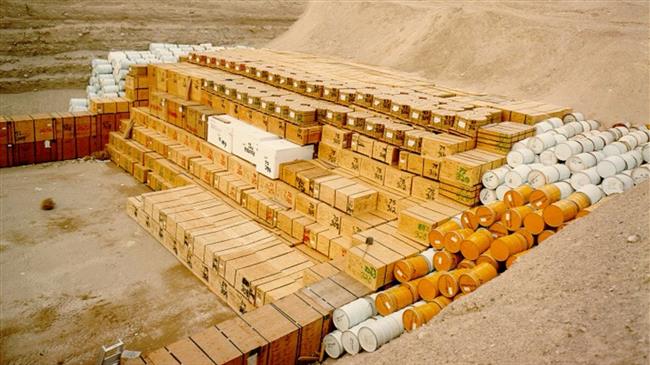


 Searching for the Catastrophe Signal: The origin of the Intergovernmental Panel on Climate Change by Bernie Lewin.
 Aletho News
 Aletho News