Free Trade Agreements Have Exacerbated a Humanitarian Crisis in Central America
By Manuel Perez-Rocha | IPS | June 29, 2016
U.S. trade negotiators continue to claim that free trade agreements help to support security, but in reality, they exacerbate the root causes of instability in the Mesoamerican region, IPS’s Manuel Perez-Rocha said in a speech at the AFL-CIO conference on U.S. trade policy.
“Real security encompasses economic, human, financial, and political security,” he said.
Today the Northern triangle of Latin America is one of the most dangerous places in the world. In Mexico alone, there are more than 27,000 people reported missing on top of the 100,000 killed in the so-called war on drugs, Perez-Rocha said.
He explained that the origins of this crisis are rooted in structural adjustment policies that the IMF and the World Bank imposed on Central America to pave the way for free trade agreements like the North American Free Trade Agreement (NAFTA), the Central America Free Trade Agreement (CAFTA) and now the Trans-Pacific Partnership (TPP).
“Instead of bringing prosperity, [NAFTA] took away domestic protections from Mexico’s food production, leading to greater food insecurity and the widespread loss of our agricultural livelihoods,” he said.
Perez-Rocha said the abandonment of national production of food to favor imports, brought on by NAFTA, has meant the fall of production, employment, and income and the increase of inequality, poverty, and migration. He said this abandonment of the countryside by the government propelled the vacuum that has become occupied by organized crime.
“NAFTA is responsible,” he said. “for the increase of violence and public insecurity in the countryside and in all of Mexico.”
Ten years later, CAFTA was imposed in Central America, ushering in what Perez-Rocha called “the deterioration of economic conditions for working people and major new threats to the environment.”
Perez-Rocha offered one of the most egregious examples in the case of the Pacific Rim mining company which is demanding millions of dollars from El Salvador for protecting its environment.
“This is a deep humanitarian crisis that should be recognized as such,” he said. He quoted U.S. Vice President Biden as saying ‘confronting these challenges requires nothing less than systematic change, which we in the United States have a direct interest in helping to bring about.’
However, the proposal in the Alliance for Prosperity Plan does not address the roots of the crisis, Perez-Rocha said.
“The goal of the alliance, as we see it,” Perez-Rocha said, “is to attract foreign direct investment for the exploitation of natural resources.”
The alliance and agreements like the TPP, on top of the destruction already brought on by NAFTA and CAFTA, will only mean an acceleration of the race to the bottom for the region’s working families, further dislocation and displacement, and regional insecurity, he said.
Read Manuel Perez-Rocha’s full essay on page 43 [PDF).
Sweden abolishes nuclear tax
World Nuclear News – June 10, 2016
The Swedish parliament has today agreed to abolish a tax on nuclear power as it recognizes nuclear’s role in helping it to eventually achieve a goal of 100% renewable generation.
The framework agreement announced by the Social Democrats, the Moderate Party, the Green Party, the Centre Party and the Christian Democrats, will see the tax phased out over two years. It also allows for the construction of up to ten new nuclear reactors at existing sites, to replace plants as they retire. Setting 2040 as the date at which Sweden should have a 100% renewable electricity system, the document stresses that 2040 is a ‘goal’ and not a cut-off date for nuclear generation.
A variable production tax on nuclear power introduced in 1984 was replaced by a tax on installed capacity in 2000. Since its introduction this tax has gradually increased and today corresponds to about 7 öre (0.8 US cents) per kilowatt-hour. In February this year, utility Vattenfall said that the capacity tax had brought its nuclear operating costs to around 32 öre (3.8 US cents) per kWh. However, its revenue from nuclear power generation is only about 22 öre (2.6 US cents) per kWh.
Swedish utilities had sought redress against the tax through the courts, but the European Court of Justice ruled last October that Sweden could continue to tax nuclear power, deciding the tax is a national, rather than European Commission, matter.
Vattenfall CEO Magnus Hall welcomed the agreement, which he said gave the utility the predictability it needed. “The abolishment of the nuclear capacity tax is an important precondition for us to be able to consider the investments needed to secure the long-term operation of our nuclear reactors from the 1980s,” he said. Vattenfall’s reactors at Forsmark and Ringhals have undergone a comprehensive modernisation programme to allow them to operate until the mid-2040s. However, to continue operating beyond 2020 they must meet stricter safety requirements through the installation of independent core cooling. Investing in those upgrades was economically impossible with the tax in place.
“Even with the abolishment of the capacity tax, profitability will be a challenge,” Hall concluded. “Low electricity prices put all energy producers under pressure and we will continue to focus on reducing production costs. Naturally, investment decisions must be taken on commercial grounds, taking all cost factors and expected long-term market developments that the agreement implies into account,” Hall said.
The director general of the World Nuclear Association, Agneta Rising, said: “Today’s announcement is a positive development. It is vital that there is now consistent policy to give operators the confidence to make the investments needed in their plant to allow for their long term continued operation. Other countries should follow Sweden’s example and ensure that their energy policies provide a level playing field that treats all forms of generation equally on their merits.”
EPA Pushing Hike in Radioactive Contamination in Drinking Water
Corporate Crime Reporter | June 7, 2016
The Environmental Protection Agency (EPA) has unveiled a plan allowing radioactive contamination in drinking water at concentrations vastly greater than the levels permitted by the Safe Drinking Water Act for long periods following release of nuclear materials.
 The new guidance would permit radiation exposures equivalent to 250 chest X-rays a year for the general population for an unlimited time period.
EPA’s “Protective Action Guides” (or PAGs) dramatically relax allowable doses of radioactive material in public drinking water following a Fukushima-type meltdown or “dirty bomb” attack.
They cover the “intermediate phase” after “releases have been brought under control” – an unspecified period that may last for weeks, months or even years.
The agency has declared that the strict limits for chemical exposure in the Safe Drinking Water Act “may not be appropriate… during a radiation incident.”
EPA states that it “expects that the responsible party… will take action to return to compliance with the Safe Drinking Water Act maximum contaminant levels as soon as practicable” but during the indefinite meantime –
The general population may be exposed to radioactive iodine-131 at 10,350 pico-curies per liter of water.
By contrast, the current limit is 3, resulting in a 3,450-times increase;
The current strontium-90 limit of 8 pico-curies per liter would be allowed a 925-fold increase; and
In an attempt to shield “sensitive populations,” the plan proposes 500 millirem per year for the general population but only 100 millirem for children under 15, pregnant or nursing mothers without explaining how these latter groups will get access to less contaminated water.
“Given this monstrous proposal, it unclear what lessons EPA learned from the contaminated water calamity of Flint, Michigan,” said. Public Employees for Environmental Responsibility (PEER) executive director Jeff Ruch. “It is unfathomable that a public health agency would prescribe subjecting people to radioactive concentrations a thousand times above Safe Drinking Water Act limits as a ‘protective’ measure.”
Internal EPA documents obtained under Freedom of Information Act litigation brought by PEER show that EPA itself concluded that proposed concentrations “would exceed MCLs [Maximum Contaminant Limits of the Safe Drinking Water Act] by a factor of 100, 1000, and in two instances, 7 million.”
The internal analysis estimated for one radionuclide that drinking only one small glass of water “would result in an exposure that corresponds to a lifetime of drinking liters of water per day at the MCL level.”
The Bush Administration in its last days unsuccessfully tried to put forward similar proposals, which the incoming Obama Administration pulled back.
Now, in the waning months of the Obama Administration, those plans are moving forward with new exposure limits higher than the Bush plan it had rejected.
“President Obama goes to Hiroshima to urge a nuclear-free world while his EPA facilitates a nuclear-ridden water supply,” added Ruch. “It speaks volumes that the current Obama drinking water plan is less protective than his predecessor’s.”
Nuclear threats in US worse than previously known — study
RT | May 25, 2016
Conflicting with a prior industry study, a new analysis claims 96 nuclear facilities in the US are less safe than reported, citing risks such as terrorism and sabotage. The study says there remain lessons to be learned from the Fukushima disaster.
Neglect of the risks posed by used reactor fuel, or spent nuclear fuel, contained in 96 aboveground, aquamarine pools could cost the US economy $700 billion, cause cancer in tens of thousands of people as well as compel the relocation of some 3.5 million people from an area larger than New Jersey, a study released May 20 finds.
The National Academies of Sciences, Engineering, and Medicine’s study, ‘Lessons Learned from the Fukushima Nuclear Accident for Improving Safety and Security of US Nuclear Plants,’ is the second installment of a two-part study ordered by Congress on the 2011 Fukushima Daiichi nuclear disaster in Japan. It not only cites, but also outright challenges a 2014 study by the Nuclear Regulatory Commission, the US industry’s regulator and enforcer of safety standards.
The spent fuel, The Academies’ study recommends, is safer in dry casks rather than pools, because of the risk of leaks, drawing water away from the irradiated nuclear rods. An accident, terrorist attack or malicious employee all pose greater dangers to the pools, the study says.
Aside from calling on the Nuclear Regulatory Commission to offer a better evaluation of the health risks posed, The Academies study conducted by 17 engineers, nuclear physicists and other scientists demands the commission fulfill a 10-year-old promise to put together an impartial review of the surveillance and security policies on spent nuclear fuel.
“Even with the recommendations that the Academies’ board has put together,” Nuclear Regulatory Commission spokesman Scott Burnell responded, “we continue to conclude that spent fuel is being stored safely and securely in the US.”
“Nothing in the report causes immediate concern,” Burnell added, although the commission is planning a more formal follow-up later this year, according to The Center for Public Integrity.
Congress felt compelled to fund the study on Japan’s natural-turned-nuclear disaster to help prevent a similar accident from occurring in the US. On March 11, 2011, the Daiichi nuclear plant in Fukushima was thrashed by an earthquake and tsunami, leaving three reactors without power or coolants, which resulted in their radioactive cores melting down.
Pure luck kept the disaster from becoming even worse, The Acadamies found. Instead of Daiichi’s highly radioactive rods being exposed to oxygen, which would have sent over 13 million people packing from as far as 177 miles south in Tokyo, a leak happened to be situated between a fuel rod pool and a reactor core, which sent just enough coolant to keep the vulnerable rods from rising above the water. In the end, 470,000 people were evacuated and the still ongoing cleanup is estimated to cost about $93 billion.
The Nuclear Regulatory Commission’s 2014 study put the highest odds of an earthquake happening near spent fuel storage at one in 10 million years, boasting that “spent fuel pools are likely to withstand severe earthquakes without leaking,” while the odds of a terrorist attack or internal subversion were deemed incalculable and left out of any risk assessment.
Calling that cost-benefit analysis “deeply flawed,” The Academies panel member Frank von Hippel, also an emeritus professor and senior research physicist at Princeton University, complained that the commission’s study also left out the impact on property contamination in a 50-mile radius of an accident, tourism rates and the economy, The Center for Public Integrity reported.
The new analysis also calls for new officially designated risk assessments of safety and financial impacts at the federal level as well as what improvements aboveground dry casks may bring compared to pools. The latter is estimated to cost upwards of $4 billion by the industry.
How US Creates Safety Risks for Nuclear Power Plants in Europe
© Wikipedia/ Maxim Gavrilyuk
Sputnik – 21.05.2016
Washington is promoting commercial interests of the energy corporation Westinghouse in Europe, creating risks for European nuclear power plants, an article in Forbes read.
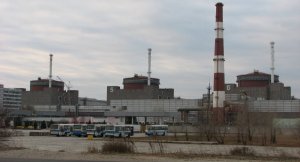
For example, in 2015, two of the Westinghouse-made fuel assemblies at the South Ukraine nuclear power plant (NPP) were found to be leaking. Since 2015, the NPP has been using US-made fuel.
In 2014, Ukraine and Westinghouse reached an agreement to supply nuclear fuel to some Ukrainian NPPs. The alleged reason behind the contract was the need to help Ukraine become energetically independent from Russia. Russia was a long-time supplier of nuclear fuel to Ukraine.
Experts have repeatedly warned that the deal would create serious risks for the safety of Ukrainian NPPs.
They cited the example of an incident which took place several years ago at the Temelin nuclear power plant, in the Czech Republic. The NPP operated on Russian-designed reactors and used fuel supplied by Westinghouse. The fuel was leaking and the rods were bending. All the Westinghouse fuel was removed from the core and replaced with Russian-made fuel.
As for Ukraine, the company announced that its fuel for Ukrainian NPPs had been improved.
Despite experts’ warnings, in March 2015, the first 42 fuel assemblies made by Westinghouse were loaded to the third reactor unit at the South Ukraine NPP.
According to Forbes, the two Westinghouse-made assemblies were found leaking during a scheduled outage at the third unit of the NPP.
The author of the article, Forbes contributor Kenneth Rapoza described how Washington has promoted Westinghouse’s interest in Eastern Europe, neglecting safety recommendations.
“Westinghouse is more than a brand name American power company. It’s a battering ram used by Washington to promote energy security,” the author wrote.
A source who wished to remain anonymous told Forbes that Westinghouse wants a market share in Eastern Europe in a bid to prevent the company from insolvency.
“Their new reactor division is loss-making, the fuel division is their only cash cow and it is not growing and existing margins are getting slimmer and slimmer. We think Westinghouse has spent millions of dollars to include nuclear fuel as part of the energy security narrative, and the current EU sentiment against Russia play into their hand,” the source said.
“But derailing nuclear projects while running into technical difficulties with Westinghouse fuel assemblies in Rosatom reactors is a dangerous way to promote energy security,” Rapoza noted.
According to former Czech Prime Minister Jiri Paroubek, the US has been promoting Westinghouse for years.
In the 1990s, US diplomats supported contribution between the Czech Republic and Westinghouse. The company pledged to improve Russian-designed nuclear plants to Western standards.
“However, the opposite proved to be true. Fuel assemblies delivered by Westinghouse were of inferior quality and higher price compared with than Russian fuel and caused frequent outages of Temelin reactors,” Paroubek told Forbes.
After, Westinghouse’s fuel assemblies were found leaking in the 2000s the Czech company CEZ decided to return to Russian-made nuclear fuel for the Temelin NPP.
“CEZ’s decision serves as a testament to the fact that the Russian fuel assembly was safer and that Washington was selling a product that did not quite work at the time, potentially putting nuclear power plants in danger,” the article read.
US presidential hopeful Hillary Clinton was also involved in promoting Westinghouse in Eastern Europe. In 2012 when she served as US State Secretary Clinton met with then Czech Prime Minister Petr Necas, using the energy security argument to promote the company.
According to the article, Westinghouse can produce fuel for Russia-designed reactors as well as Rosatom can build fuel assemblies for Western-designed power units. However, for third parties working with Westinghouse is less economically efficient.
“Russia is the cheaper producer of the two, so when countries turn to Westinghouse for the fuel assemblies, they have to pay a premium for diversification,” Rapoza wrote.
Nevertheless, the largest initiative by Westinghouse is squeezing Russia from the Ukrainian nuclear fuel market, using again the argument of diversifying supplies.
In 2012, the Ukrainian nuclear regulator banned the use of Westinghouse’s fuel assemblies in the country pending an investigation over the incident at the South Ukraine NPP.
“Two years later, then-Prime Minister, Arseniy Yatsenyuk consulted Westinghouse on picking a new nuclear safety regulator for his new government,” the author wrote citing a source in Ukraine.
In April, the Ukrainian Energy Ministry announced it would buy more nuclear fuel from Westinghouse. The company is planning to deliver five reloads of fuel to South Ukraine and Zaporizhia NPPs.
According to the author, Westinghouse’s commercial interests are closely tied to politics and thus the company neglects safety.
“Regardless, anti-Russia politics trumps technological problems,” Rapoza concluded.
Radiation spike near Hanford nuclear waste site ‘natural’ – EPA
RT | May 15, 2016
The US Environmental Protection Agency chalked elevated gamma radiation levels around America’s largest nuclear waste storage facility, the Hanford site, up to natural causes, but RT’s Alexey Yaroshevsky has found a few inconsistencies in its claims.
RT has reported extensively on the situation at Washington State’s Hanford Nuclear storage facility since various leaks and injuries to workers were reported. An incident on May 5th covered by RT, when radiation levels in the area adjacent to the site skyrocketed, prompted a federal investigation.
However, following the RT report, a local newspaper urged its audience not to “believe everything on the Internet” in an article extensively quoting a statement from the EPA that claimed the elevated radiation levels had a natural cause and were not connected to the Hanford facility in any way.
“The US Environmental Protection Agency and the Washington State Department of Health agree that radiation from naturally occurring radon was measured on an EPA monitor,” the EPA statement reads.
“The scientists determined that the cause was a temporary elevation of radon levels from the natural decay of certain types of elements found in nearly all rocks and soil.”
The statement also stresses that the spike in radiation could not have been due to emissions from Hanford because the wind was blowing from the opposite direction at the time the measurements were taken.
“The Department of Health said that was not possible because the wind was blowing the wrong direction for the radiation to have come from Hanford at the time the reading was taken,” the EPA notes.
Yet RT America correspondent Alexey Yaroshevsky compared the graph of the radiation readings to wind maps provided by the US national weather service and discovered that the EPA’s findings may not be entirely correct, as the graph appears to show the wind circling around the Hanford site and the area where the readings were taken.
Meanwhile, health protection authorities seem to have quickly taken up the radon-related scenario, emphasizing that radon is common in the area, accumulating in places closer to the ground, and urging people with basements to get radon-measurement canisters to check their homes for excessive levels.
Radon gas is a natural byproduct of Uranium decay in the soil and considered a dangerous carcinogen that can cause lung cancer. Estimates state that outdoor radon levels cause some 800 of the 21,000 radon induced lung cancer deaths that occur in the United States every year.
However, according to a map of radon levels from the EPA’s own website, Benton County, in which the Hanford nuclear plant is located, has relatively low levels radon, even when compared to other American states.
The Hanford nuclear site, on the other hand, holds some 56 million gallons of radioactive waste stored in underground tanks that were built between the 1940s and 1970s. Those who used to work at the facility have told RT that vapor incidents are common when radioactive waste is being transported between tanks, which happens often, as the tanks are wearing out.
READ MORE:
‘I thought I was dying’: Ex-Hanford worker gravely ill after inhaling toxic fumes
Hanford Site not ‘controlling what comes out of nuclear waste tanks to protect workers’ – public
Caceres’ Relatives: No Confidence in Official Investigation
teleSUR | May 3, 2016
Relatives of Berta Caceres, Indigenous and environmental leader murdered in Honduras March 3, reaffirmed their distrust of the public prosecutor after having been excluded from the investigation, regarding the arrest of four suspects Monday.
“They excluded us from the investigation process from the beginning, we have no way of knowing whether the arrests are the result of exhaustive proceedings, nor do we know whether these include the masterminds at all levels,” they said in a statement.
They also stated that the alleged involvement of active and retired military linked to the company DESA demonstrates the involvement of state agents in the murder of Caceres.
Children and other relatives of Berta Caceres learned of the arrests through the media “and not through the channels they are entitled to by law,” the statement said.
The Honduran Office of the Public Prosecutor reported that 10 coordinated raids were carried out Monday in connection with Caceres’ homicide in the capital Tegucigalpa, as well as in La Ceiba, and Trujillo.
The four suspects are scheduled to appear in court in the following days, the OPP added.
Caceres’ death prompted massive international condemnation and led to huge protests in Honduras, a country that currently has the one of highest murder rates in the world.
Featured Video

Deception – Submarines against Olof Palme
or go to
Aletho News Archives – Video-Images
From the Archives
Woolsey Fire started at Santa Susana Field Lab — where “radioactive materials released were never accurately measured”
By John Laforge | CounterPunch | November 30, 2018
In my Nov. 16 column, I reported on potential radiation risks posed by California’s Woolsey wildfire having burned over parts or all of the Santa Susana Field Laboratory—south of Simi Valley, Calif., 30 miles outside Los Angeles—site of at least four partial or total nuclear reactor meltdowns.
The field laboratory operated 10 experimental reactors and conducted rocket engine tests. In his 2014 book Atomic Accidents, researcher James Mahaffey writes, “The cores in four experimental reactors on site … melted.” Reactor core melts always result in the release of large amounts of radioactive gases and particles. Clean up of the deeply contaminated site has not been conducted in spite of a 2010 agreement.
Los Angeles’s KABC-7 TV reported Nov. 13 that the Santa Susana lab site “appears to be the origin of the Woolsey Fire” which has torched over 96,000 acres. Southern Calif. Public Radio said, “According to Cal Fire, the Woolsey Fire started on the afternoon of Thursday, Nov. 8 … on the Santa Susana site.” … continue
Blog Roll
 Aletho News
- Brussels cannot say where its own pipeline inspectors are as Hungary’s oil lifeline remains shut
- Israel’s Iran War: Myth and Reality
- Between war and industrial breakdown: The US-Israeli attrition crisis
- Pressure builds on Iran to ‘drop’ Lebanon ceasefire demand as Islamabad talks hang in balance
- In another clash report, US denies agreement to release Iran’s assets
- What is fueling unrest across the EU?
- Why no power can undermine Iran’s eternal dominance over the Strait of Hormuz
- Is The War Against Iran Over?
- Iran war will leave long-term ‘scar’ on Wall Street, investors warn
- How Iran decimated US power projection in West Asia: Military lessons of 40-day war
- If Americans Knew
- After killing 350+, Israel still has a “score to settle” with Lebanon before ceasefire – Daily Update
- Military aid to Israel emerges as the latest political litmus test for Democrats
- The only Palestinian children’s rights organization closes following years-long Israeli campaign against it
- ‘I Can’t Forget the Smell’: Lebanese Reel After Israel Kills Over 300 in Single Day
- DNC Shoots Down Resolutions Calling Out AIPAC and Limiting Arms to Israel
- TCN: Is Israel Blackmailing President Trump?
- Israel killed at least 303 Lebanese yesterday – who were they? Daily Update
- Amnesty: Urgent – Protect Lebanese civilians from brutal escalation in Israeli attacks
- Is The War Against Iran Over?
- Inside the Israeli army’s propaganda wing
- No Tricks Zone
- German Expert: Heat Dome Led To Record Temps In Western USA…Warmer In 1934, 1936
- New Study: No Linear Warming Or Glacier Retreat Along Northern Antarctic Peninsula Since 1980s
- An Inconvenient Tree: Uncovered In Alps… Europe Much Warmer Than Today 6000 Years Ago
- New Study Reports A 60% Slowdown In Greenland’s Ice Loss Rate In The Last Decade
- Low Intensity Tornado Wrecks Major Solar Farm, Creating A Potential Toxic Dump
- New Study Finds Warming Saves Lives…Cold Temperatures 12 Times More Deadly Than Excess Heat
- German Science Blog Accuses PIK Climate Institute Of Hallucinating Climate Tipping Points
- Devastating Assessment Of Comirnaty Vaccine By Former Senior Pfizer Europe Toxicologist
- New Study: CO2 Is ‘Effectively Negligible’ As An Explanatory Climate Change Factor Since 2000
- Former Pfizer Toxicologist Dr. Helmut Sterz Tells Bundestag Hearing Pfizer Vaccine Should Have Never Been Approved
 Aletho News