FDA Antibiotic Guidance Is Gift To Big Pharma and Big Meat
By Martha Rosenberg | Dissident Voice | December 23, 2013
This month’s FDA guidance for reducing livestock antibiotics will actually make things worse, animal welfare and food activist groups are saying. “The FDA is using a garden hose on a forest fire,” says Farm Sanctuary Senior Policy Director Bruce Friedrich. The guidance is a “diversion” that pretends to address the problem of factory farm-driven antibiotic resistance while accomplishing nothing. Antibiotic resistant infections, widely seen as driven by factory farming, sicken 2 million a year in the US and kill 23,000, says the CDC. By asking drug makers to voluntarily renounce the use of antibiotics for livestock growth on their labels, the guidance “won’t cost the industry a penny” or reduce antibiotic use at all, says Friedrich. The reason? Factory farm antibiotics are also used to treat sickness which the crowded conditions tempt — a use that is still allowed under the guidance. Only the wording will change, says Friedrich.
In a December 11 conference call, the FDA’s Michael (“Monsanto”) Taylor, deputy commissioner for foods and veterinary medicine, William T. Flynn, deputy director for science policy and USDA’s Thomas J. Myers, associate deputy administrator, told reporters that the government is asking drug makers to voluntarily restrict the uses on their antibiotic labels –yes, asking – in a shocking gift of self-regulation. Similar honor systems exist at slaughterhouses since Hazard Analysis and Critical Control Points (HACCP) was instituted in 1998 in which industry creates its own safety plan which the government simply cosigns. A similar honor system called the Hazard Analysis and Critical Control Point-Based Inspection Models Project (HIMP) is imminent for poultry slaughterhouses.
Why are the FDA and USDA allowing industry to write its own ticket? (And why would industry write itself out of its own profits?) Because to mandate the changes would require “hundreds of separate regulations” and actions, whined government officials on the conference call. It is easier to just say please to industry.
To many reporters on the conference call, the plans sounded like fluff. If the changes are voluntary, “what will enforce” them and serve as an “incentive” asked an ABC reporter? Food producers and drug companies need no incentive retorted Michael Taylor because they are starting to phase out antibiotics “for their own reasons” — citing McDonald’s and KFC. Right.
If factory farmers actually phased out antibiotics (which prevent animals from becoming sick in high density-farming) won’t livestock producers “have to move to different buildings” asked a reporter from Reuters. That’s why we are giving industry three years to comply replied William Flynn.
Will you release the identifies of drug companies who do not comply asked another reporter? No, replied Flynn. We will give an “overview” of the level of “engagement” of industry but not individual company names. (USDA has also protected the identities of US ranches that released mad cows into the US food supply and restaurants who served them according to newspaper and government sources.)
Animal welfare groups like Farm Sanctuary, American Society for the Prevention of Cruelty to Animals and the Animal Legal Defense Fund are not the only ones calling the FDA guidance toothless and a serious capitulation to industry. Congresswoman Louise M. Slaughter, the only microbiologist in Congress, called the guidance “an inadequate response to the growing antibiotic resistant crisis caused by overuse of antibiotics on the farm.” Industry has spent over $17 million to block a bill Rep. Slaughter developed, in conjunction with the late Sen. Ted Kennedy, called the Preservation of Antibiotics for Medical Treatment Act (PAMTA), says a press release from her office.
This is not the first time government has caved to drug makers over the regulation of livestock antibiotics. In 2008, the FDA had announced that there was “evidence that extralabel use of these drugs [cephalosporins] in food-producing animals will likely cause an adverse event in humans and, as such, presents a risk to the public health,” and called for their prohibition. Notice the FDA says “will likely cause” not “could likely cause” and “presents a risk” not “could present a risk”?
But by the time hearings were held two months later and lobbyists had worked their magic, the “Cephalosporin Order of Prohibition” had somehow become a “Hearing to Review the Advances In Animal Health Within The Livestock Industry.” Prohibition — advances, same idea, right?
At the hearings, the American Veterinary Medical Association (AVMA), the Animal Health Institute, a Big Pharma trade group and the egg, chicken, turkey, milk, pork and cattle industries whined that they could not “farm” without antibiotics because more feed would be required and the animals would get sick from being immobilized over their own manure.
Afterwards, W. Ron DeHaven, DVM, who was the USDA’s top vet before leaving for industry and helming the AVMA, penned a rambling, almost incoherent 18-page letter with 62 footnotes to the FDA. Cephalosporin resistant “human pathogens” aren’t increasing, says the letter, and even if they are, they’re not affecting human health, and even they’re affecting human health, how do you know it’s from the livestock drugs, and even if it’s from the livestock drugs, the FDA has no legal authority to ban cephalosporin. Got that?
Alternately maudlin and accusatory, the letter plays on terrorism fears by calling a cephalosporin ban a “food security issue” affecting “the number of animals available for the food supply.” It also plays on humanitarian sentiments by claiming a ban would impede veterinarians’ ability “to relieve the pain and suffering of animals” as if cephalosporins are pain killers and other drugs aren’t available. (And as if antibiotics are given for animals’ welfare instead of revenue welfare!) But less than a month after the letter was sent, on November 25 the FDA quietly revoked the prohibition. Good hire, AVMA!
It is no surprise that factory farm operators fight to keep their antibiotics says Farm Sanctuary’s Bruce Friedrich. Without them, in their profit-driven “filth chambers,” the animals would simply die.
Israel, Jordan and PA to sign Red Sea–Dead Sea Canal agreement
MEMO | December 9, 2013
 Israel, Jordan and the Palestinian Authority (PA) are scheduled to sign an agreement on Monday to build a pipeline from the Red Sea to the Dead Sea. The project will be launched during a ceremony at the headquarters of the World Bank in Washington DC.
A senior reporter for Israel’s Yedioth Ahronoth newspaper, Nahum Barnea, reported that: “according to the plan, also known as the Two Seas Canal agreement, nearly 100 million cubic metres of water will be transferred annually from the Red Sea to the Dead Sea, which will hopefully slow down the Dead Sea’s desiccation.”
Starting in the middle of last century, the Dead Sea began to rapidly shrink, falling roughly one cubic metre a year. Its surface area today is about 30 per cent smaller than it was only 20 years ago. Increasing demands for water, especially for agricultural production in Israel, have exacerbated the problem, in addition to the practice of building dykes that create evaporation ponds to exploit the mineral wealth of the Dead Sea.
According to the new agreement, a joint purification plant will be established and Israel, Jordan and the PA will all share the water.
Israel’s Minister for Regional Cooperation and Infrastructure, Silvan Shalom, will sign the agreement along with the Jordanian and Palestinian ministers of water. Shalom was quoted as saying that: “this is a historic agreement. It is a dream come true.”
According to the agreement, nearly 200 million cubic metres of water will be pumped annually from the Red Sea, with around 80 million cubic metres desalinated in a special distillation plant in Aqaba yet to be established. Israel will receive 30-50 million cubic metres of water for the Eilat area in southern Israel, while Jordan will receive 30 million cubic metres of water for its southern population as well as 50 million cubic metres of grey-water from Lake Tiberias for the north.
According to Yedioth Ahronoth newspaper, the PA had requested a foothold in the northern part of the Dead Sea near Ain Fashukha, but Israel refused. Instead, the PA will receive nearly 30 million cubic metres of water from Lake Tiberias, either desalinated water or grey-water, at production cost.
The entirety of the pipeline will be laid in the Jordanian territories to avoid any disputes with environmental organisations in Israel. The pipeline and the purification facilities are expected to be completed within four to five years.
~
Background:
Palestinian NGO statement on the World Bank-sponsored Red-Dead Sea Canal
Palestine Center for Human Rights | November 1, 2013
The undersigned Palestinian NGOs call on the Palestine Liberation Organization (PLO) and the Palestinian National Authority (PNA) to halt all forms of cooperation with the World Bank-sponsored Red Sea – Dead Sea Conveyance Project (RSDSCP) and to take an unequivocal public stance of rejection to the project.
It has become clear beyond doubt that the project is an unacceptable attempt to force the Palestinian population to consent to their own dispossession and to compromise on their own rights.
Any lack of a clear position by the Palestinian leadership on this outrageous project, any stand of ambiguity or positive criticism towards it, contributes to the impunity that for far too long has allowed Israel to appropriate Palestinian water and deny Palestinians their rights.
Five reasons why the RSDSCP must be rejected:
1. The project undermines Palestinian water rights and legitimizes Palestinian dispossession from the Jordan River. Israel unilaterally controls the flow from the upper Jordan River and prevents Palestinians from making use of their rightful share of the lower river’s water. This is the sole cause for the gradual disappearance of the Dead Sea. Instead of addressing Israel’s water theft, the project aims to maintain the unjust status-quo of the river and allegedly “save” the Dead Sea through large scale Red Sea water transfer.
2. The project attempts to replace the river’s natural fresh water appropriated by Israel from the upper Jordan River with desalinated Red Sea water sold at high costs to severely water-dispossessed Palestinians and at pitiful quantities. Even these sales remain merely an “option” and the World Bank studies plan to ‘supply’ only Jericho, which is currently the only water-rich place in the occupied West Bank. With every drop of water that Palestinians purchase, they capitulate to their own deprivation.
3. Neither the World Bank’s Feasibility Study (FS) nor its Environmental & Social Assessment study (ESA) address the grave damage to the West Bank Eastern Aquifer, currently the only source Palestinians have for water supply and development. The Eastern aquifer is rapidly depleting, and its water table is dropping at an alarming rate – both as a direct result of the shrinking Dead Sea. Consenting to the project entails closing an eye to the rapid destruction of the only other water resource in the Eastern West Bank. Instead, Israel should be held accountable for the damage it caused to this vital resource on which over 1 million Palestinians currently depend.
4. Far from “saving the Dead Sea”, the RSDSCP will actually destroy the unique features of the Dead Sea and its ecosystem. Under the project, the Dead Sea is slated to turn into a dead, engineered pool of Red Sea water and desal brines, destroying this Palestinian and world heritage site.
5. Both Red-Dead studies (FS & ESA) and the entire conduct of the World Bank lack credibility and transparency, and make a mockery of the alleged consultation and participation process. Throughout the process, the Bank has systematically turned a blind eye to Israeli violations of Palestinian water rights.
The Bank repeatedly and deliberately ignored key concerns expressed by Palestinians since the project’s inception and during the “consultation” meetings in severe breach of its very own Code of Conduct, as well as the project’s Terms of Reference.
In addition, the Bank management has so far refused to make public the results of the Feasibility and ESA studies. The World Bank’s actions are tantamount to a cover-up.
Palestinian civil society organizations reiterate their rejection of the Red Sea – Dead Sea Conveyance Project and invite Palestinians of all walks to demand that the PLO and the PNA honor their aspirations for self-determination and justice by voicing a clear, loud and unequivocal “No!” to the Red-Dead Sea scam.
This project can only result in further damaging and undermining Palestinian water rights and all cooperation with it should cease immediately. Reparation and compensation for past damages and respect for Palestinian water rights are long overdue and the only way forward.
Endorsing organizations and individuals:
1. Palestinian Environment NGO Network (PENGON)
2. MAAN Development Center
3. Palestinian Wastewater Engineers Group (PalWEG)
4. Stop the Wall
5. Palestinian Farmers Union
6. Applied Research Institute Jerusalem (ARIJ)
7. Land Research Center
8. Media Environmental Center
9. Palestine Hydrology Group (PHG)
10. Palestinian Agricultural Relief Committees (PARC)
11. Union of Agricultural Work Committees (UWAC)
12. Environmental Education Center (EEC)
13. Institute of Environmental and Water Studies – Birziet University
14. Palestinian Center for Human Rights (PCHR)
15. Palestinian Environment Friends (PEF)
16. Arab Center for Agricultural Development (ACAD)
17. Earth and Human Center for Research and Studies (EHCRS)
18. Palestinian Farmers Association
19. The Arab Agronomists Association (AAA)
20. Prof. Dr. Hilmi S. Salem, Palestine Technical University – Kadoorie (PTUK)
21. Clemens Messerschmid, Hydrologist
22. Prof. Dr. Samir Afifi, Environmental & Earth Sciences Department, Islamic University of Gaza
Clean-up doubts: Many Fukushima evacuees may never return home
RT | November 13, 2013
Many of the people who were forced to evacuate after the 2011 triple meltdown at the Fukushima nuclear power plant may never return, Japanese lawmakers admitted, overturning initial optimistic government pledges.
A call to admit the grim reality and step back from the ambitious Fukushima decontamination goals came from Prime Minister Shinzo Abe’s coalition parties. Japan has so far spent $30 billion on the clean-up program, which has proven to be more difficult to carry out than initially expected.
The new plan would be for the government to fund relocation to new homes for those who used to live in the most contaminated areas.
“There will come a time when someone has to say, ‘You won’t be able to live here anymore, but we will make up for it’,” Shigeru Ishiba, the secretary General of Abe’s Liberal Democrat party said in a speech earlier this month.
On Tuesday, evacuees reacted with anger at the government’s admission.
“Politicians should have specified a long time ago the areas where evacuees will not be able to return, and presented plans to help them rebuild their lives elsewhere,” Toshitaka Kakinuma, a 71-year-old evacuee, told the Asahi Shimbun newspaper.
Some 160,000 people escaped the vicinity of Fukushima Daiichi, when a powerful earthquake and tsunami transformed the plant into the world’s worst nuclear disaster since Chernobyl. About a third of them are still living in temporary housing. They were promised that this would not last for longer than 3 years.
In August the death toll among the evacuees surpassed the threshold of 1,599 lives, which is how many people in the prefecture were killed by the disaster itself. The displaced residents are suffering from health problems, alcoholism and high rates of suicide.
The Ministry of Environment wanted to decontaminate 11 townships in the affected area, bringing the average annual radiation dose to 20 millisieverts, a level deemed safe by the International Centre for Radiological Protection. It further pledged to pursue a long-term goal reducing it to 1 millisievert per year.
The clean-up, however, has been marred by delays and reports that workers sometimes simply dumped contaminated waste rather than collect it for safe storage, causing the environment ministry push back the deadline. There are also calls on the government to abandon the more ambitious dose target, arguing that it is unrealistic.
Some evacuees said they wouldn’t return even after the first phase of the cleanup, saying the dose of 20 millisieverts per year still poses health risks.
“No matter how much they decontaminate I’m not going back because I have children and it is my responsibility to protect them,” Yumi Ide, a mother of two teenage boys, told Reuters.
The fear of radiation has soared in Japan in the wake of the Fukushima disaster, with rallies against the use of nuclear power scoring record attendance. The government shut down all 50 remaining Japanese reactors for safety checks, and there is strong pressure to keep them offline.
The Japanese government is reportedly seeking to borrow an extra $30 billion for the Fukushima cleanup and compensations, which would raise the total cost of the disaster response to $80 billion. The figure does not include the cost of decommissioning reactors to be carried out by the plant operator, Tepco. The company recently complained about the huge expense of the process, which may last at least 30 years.
Acting with Impunity: The Case of General Electric
By Lawrence S. Wittner | History News Network | October 14, 2013
Can the world’s biggest corporations act with impunity? When it comes to General Electric (GE) — the eighth-largest U.S. corporation, with $146.9 billion in sales and $13.6 billion in profits in 2012 — the answer appears to be “yes.”
Let us begin with a small-scale case in upstate New York, where in late September 2013 GE announced that it would close its electrical capacitor plant in the town of Fort Edward. Some two hundred workers will lose their jobs and, thereafter, will have little opportunity to obtain comparable wages, pensions, or even employment in this economically distressed region. Ironically, the plant has been highly profitable. Earlier in the year, the local management threw a party to celebrate a record-breaking quarter. But the high-level financial dealings of a vast multinational operation like GE are mysterious, and the company merely announced that the Fort Edward plant was “non-competitive.” The United Electrical Workers (UE), the union that has represented the workers there for the past seventy years, has already begun a vigorous campaign of resistance to the plant closing, but it is sure to be an uphill battle.
If we dig deeper into the record, a broader pattern of corporate misbehavior emerges. Indeed, the Fort Edward factory is one of two GE plants that polluted the communities at Fort Edward and nearby Hudson Falls, as well as a 197-mile stretch of the Hudson River, with 1.3 million pounds of cancer-causing PCBs for several decades. Worried about the dangers of PCBs, workers asked managers about them, and were told that these toxins were perfectly safe — in fact, that the workers should rub the PCBs on their heads to combat baldness! When the extent of this environmental disaster began to be revealed in the 1970s, GE began a lengthy campaign to deny it and, later, a multimillion dollar public relations campaign to prevent remedial action by the Environmental Protection Administration. GE lost this battle, for the EPA insisted upon the dredging of the Hudson River and ordered GE to pay for it. Thus, the Hudson Valley became the largest Superfund cleanup site in the United States, with a project that will take decades to complete.
GE has produced other environmental disasters, as well. Three GE nuclear reactors at the Fukushima Daiichi nuclear power site in Japan melted down on March 31, 2011. This was the world’s worst nuclear accident in three decades, and quickly spread radioactive contamination nearly one hundred fifty miles. Indeed, the stricken reactors are still sending three hundred tons a day of radioactive water flooding into the Pacific Ocean. Dr. Helen Caldicott, who has studied nuclear power for decades, has estimated that up to 3.5 million people could eventually die from cancer thanks to the Fukushima radiation release. In the late 1960s and early 1970s, when these boiling water nuclear reactors were installed, GE’s engineers and management knew that their design was flawed. But the company kept selling them to unsuspecting utilities around the world, including many in the United States. As a result, there are still thirty-five GE boiling water reactors operating in this country, most of them located near population centers east of the Mississippi River. Currently, in fact, more than 58 million Americans live within fifty miles of a GE nuclear reactor.
Another important product produced by GE is the export of jobs. According to an extensive New York Times report on GE in March 2011: “Since 2002, the company has eliminated a fifth of its work force in the United States while increasing overseas employment.” By the end of 2010, another study found, 54 percent of GE’s 287,000 employees worked abroad. Not surprisingly, the company’s overseas operations in that year provided most of its total revenue. Responding to GE’s claim that it had created thousands of new jobs in the United States during the Obama administration, Chris Townsend, the political action director of the UE, produced a list of 40 U.S. plants the company closed in the country during the same period.
Townsend also noted that, even when GE kept its operations going in the United States, it slashed wages, sometimes by as much as 45 percent at a time. For example, the work of the Fort Edward plant will be moved to Clearwater, Florida, a non-union site where GE pays many workers $12 an hour and hires others through a temp agency at $8 an hour — little more than the minimum wage.
Although technically a U.S. corporation, GE — with operations in 130 nations — apparently feels little loyalty to the United States. Jack Welch, a former GE CEO, once remarked: “Ideally, you’d have every plant you own on a barge to move with currencies and changes in the economy.” According to a Bloomberg analysis, to avoid paying U.S. taxes, GE keeps more of its profits overseas than any other U.S. company — $108 billion by the end of 2012. Most of these profits, GE declared, would be invested in its foreign business enterprises. Thanks to this tax dodge and others, GE reportedly paid an average annual U.S. corporate income tax rate of only 1.8 percent between 2002 and 2011. In 2010, when GE reported worldwide profits of $14.2 billion, it paid no U.S. corporate income tax at all. Instead, it claimed a tax benefit of $3.2 billion. This is a sweet deal for that giant corporation, for the official corporate tax rate is 35 percent.
Despite this appalling record, the U.S. government has been very generous to GE. During the financial crisis of 2008-2009, the federal government’s Temporary Liquidity Guarantee Program loaned approximately $85 billion to GE Capital, the company’s huge finance arm that accounts for roughly half of GE’s profits. GE needed the bailout because, among other reasons, GE Capital was marketing subprime mortgages, making GE the tenth-largest subprime lender in the United States. The Federal Reserve also bought $16.1 billion worth of short-term corporate i.o.u.’s from GE in late 2008, when the public market for this kind of debt had nearly frozen, and GE became one of the largest beneficiaries of this federal program. In yet a further indication of GE’s influence, President Obama appointed Jeffrey Immelt, GE’s CEO, as chair of his Council on Jobs and Competitiveness, which strategizes about how to revive America’s manufacturing base. One of Immelt’s favorite panaceas is to end taxes on the overseas profits of corporations.
Thus, it might seem that those two hundred embattled workers at Fort Edward have no possibility at all of effectively challenging a corporation this wealthy and influential. But stranger things have happened in the United States — especially when Americans have had their fill of corporate arrogance.
Caribbean Water
By Rud Istvan | Climate Etc… | October 19, 2013
The Associated Press ran an alarming news piece on 9/6/13: Climate Change Threatens Caribbean’s Water Supply
It was picked up and echoed around the world, from Time Magazine’s Space and Science section in the US to CBC Canada to ABC Australia to ZeeNews India. The headline was everywhere, repeated at the Huffington Post as ‘Caribbean water supplies severely threatened by climate change.” The AP story reported on contemporary expert warnings at an August 2013 UN conference in St. Lucia. The lead AP paragraph is quite clear:
“Experts are sounding a new alarm about the effects of climate change for parts of the Caribbean—the depletion of already strained drinking water throughout much of the region.”
Experts like Avril Alexander, Caribbean coordinator of Global Water Partnership:
“When you look at the projected impact of climate change, a lot of the impact is going to be felt through water.”
Experts like Lystra Fletcher-Paul, Caribbean land/water officer for the UN FAO:
“Inaction is not an option. The water resources will not be available.”
Yet another anthropogenic global warming alarm, and just in time for IPCC AR5, whose newly released WG1 chapters 7 and 11 say there is high confidence that dry regions will get drier, wet regions will get wetter, and storms will get stormier. “But there is only low confidence in the magnitude.” These Caribbean experts are much more certain—Caribbean water resources will not be available.
Little in this MSM AP news is what it seems. Paragraph 2 starts out saying rising sea levels could contaminate Caribbean fresh water supplies. What a curious assertion. Less dense fresh water floats on top of salt water no matter the sea level. Excessive groundwater draw-down can cause saltwater intrusion from below. That is already a problem in urbanized Broward County, Florida despite proximity to the Everglades. And on the Tuvalu atolls in the Pacific, where government owned tourist hotels have strained its very limited groundwater capacity. Tuvalu is another urban development problem, not AGW. It was caused by Tuvalu’s government itself, eager to develop ecotourism (diving) after their new Funafuti runway was built with World Bank financing.

Saltwater intrusion doesn’t apply much to Caribbean island groundwater. The islands are mountainous. Pico Duarte in the DR is 3098m. Pic la Selle in Haiti is 2680m. Jamaica’s Blue Mountain is 2256m. Cuba’s Pico Turquina is 1974m. Antigua’s ‘Boggy Peak’ is 402m. St. Croix’ ‘Mount Eagle’ is 355m. Barbados is only hilly, with a maximum elevation of ‘just’ 343m. Barbados:

Rising sea levels will not contaminate Caribbean fresh water supplies.
The AP reported that Jason Johnson, head of the Caribbean Water and Wastewater Association, said the real issue is groundwater replenishment.
“Many Caribbean nations rely exclusively on underground water for their needs, a vulnerable source that would be hit hard by climate change effects. That’s the greatest concern. Those weather patterns may change, and there may not necessarily be the means for those water supplies to be replenished at the pace that they have historically been replenished.”
The AP noted some of the islands experienced an unusual dry spell in 2012. That’s weather. But Cedric Van Meerbeck, climatologist with the Caribbean Institute for Meteorology & Hydrology, made the inevitable AGW connection:
“There are a number of indications that the total amount of rainfall in much of the Caribbean would be decreasing by the end of the century.”
Since 2012 was dry, and AR5 WG1 Chapter 7 executive summary says dry will get dryer, perhaps IPCC pronouncements are the indications. But regionally down-scaled GCMs cannot make such predictions on multi-decadal time scales. [1]
Intense rains fully ameliorated the unusual 2012 dry spell early in the usual 2013 Caribbean tropical storm season. AR5 WG1 7.6.2 also says wet will get wetter and storms stormier. That worries Barnard Ettinoffe, President of the Caribbean Water and Sewerage Association:
“Heavy rains mean there’s not enough time for water to soak into the ground as it quickly runs off.”
Climate change causes dry to get drier and wet to get wetter according to AR5 WG1 11.3.2.3.1. It threatens Caribbean island water supply both ways!
What is actually going on was clued in the lead AP paragraph above—depletion of already strained water supplies throughout much of the region.
Much of the region is not correct. The AP story cites a 2012 study from British investment risk firm Maplecroft [2] saying Barbados is most at risk, but Cuba and the Dominican Republic also have high water security risk. On the large island of Hispaniola, the Dominican Republic has 2069m3 of renewable water per capita according the World Bank.[3] Cuba has 3381m3. The UK (another island for comparison sake) has 2311m3 but is not a water risk. The only way Cuba and the Dominican Republic could have a high water security risk rating (when the UK doesn’t) is through some illogic unrelated to water.
Barbados (although verdant, as the above picture proves) does have the least per capita renewable water in the Caribbean, only 284m3. That is because Barbados water consumption has doubled over the past 50 years [4] as its population has grown from ≈232K to ≈280K while its per capita GDP tripled from ≈$4k to ≈$12k. Water has become a major problem, and Barbados doesn’t have the oil wealth to import food (virtual water) or desalinate seawater like Saudi Arabia (86m3). Barbados’ water problem is anthropogenic, but not AGW. It is about unsustainable population growth and economic development on a smallish dryish island–just like on Tuvalu.
Another Caribbean country with current water problems is Antigua/Barbuda, at 590m3. Neither indigenous Caribbean tribes nor Spanish conquistadors settled those islands because of insufficient fresh water. The British did later. The country’s population has almost doubled from ≈54k in 1960 to ≈90k today. That always eventually causes finite resource problems. And now has in naturally dry Antigua/Barbuda.
Climate change does not threaten Caribbean water supplies. Population growth and economic development already do on some of the smaller islands. And they are using climate change to ‘extort’ financial aid (e.g. for desalination) from the usual rich ‘guilty’ AGW culprits.
The UN Framework Convention on Climate Change organized this regional conference (at St. Lucia’s luxurious Bay Gardens Hotel/Resort) for Caribbean environment ministers and politicians. The UN organizer’s locally televised purpose was to give “these less developed country ministers and politicians the information and tools to know what to ask for in the negotiations leading up to the new world agreements of 2015”. That starts at COP19 in Warsaw in November 2013.
It is no coincidence the conference was held on St. Lucia. Its minister presently heads the Alliance of Small Island States (AOSIS). AOSIS says its 44 member states comprise 30% of developing countries, 20% of UN member states, and 5% of world population. The AOSIS agenda for COP19 is clear from its PR after being disappointed at June 2013 Bonn meetings:
At the closing of the latest round of U.N. climate talks, the Alliance of Small Island States (AOSIS), a group of 44 low-lying and coastal countries that are highly vulnerable to the impacts of climate change, released the following statement:
“After losing two weeks to needless procedural wrangling, it is worth recalling the scale of the challenge we face and the precious little time remaining to meet it… Therefore an international mechanism to address the permanent injury our islands are experiencing [emphasis added] must be established this year at the Warsaw conference.”
Tuvalu is the AOSIS member most aggressively agitating for UN ‘climate change aid’, having experienced saltwater intrusion caused by government tourist hotel development. Hence the AP story’s odd second paragraph, which is unrelated to the Caribbean but right in the AOSIS (Tuvalu) lobbying sweet spot.

Hey mon, its Babylon politricks. (H/T to Bob Marley and Jamaica, a Caribbean island of 2.7 million people enjoying 2473m3 renewable water per capita and fantastic reggae music.)
[1] Pielke Sr., Regional Climate Downscaling: What’s the Point, EOS 93: 52-53 (2012)
[2] Maplecroft Global Risk Analytics, info@maplecroft.com
[3] Available at data.worldbank.org/indicator/ER.H2O.INTR.PC
[4] Barbados Free Press editorial on water rationing 2/28/10
Ecuador: National Assembly Approves Drilling in Yasuní National Park
By Brendan O’Boyle | The Argentina Independent | October 4, 2013
The Ecuadorian National Assembly voted Thursday to permit the drilling for petroleum in two sections of the Yasuní National Park in the country’s eastern Amazon basin. The decision comes just seven weeks after President Rafael Correa announced the failure of the Yasuní-ITT initiative, a project that sought to indefinitely prohibit oil exploration in the Yasuní in exchange for international donations equal to half of the reserve’s projected income.
The approved measure, which will allow oil exploration in the park’s 31 and 49 blocks, was passed with the votes of 108 of the assembly’s 133 members. The assembly cited “national interest” as justification for its decision. Ecuador’s constitution forbids “activities for the extraction of nonrenewable natural resources” except in the case of national interest as determined by the National Assembly.
President Correa says the exploration will only affect .01% of the park. Additionally, the legislation promises the protection of indigenous communities that live in the affected areas and excludes extractive activity from the Yasuní’s “untouchable zone”, the largest section of the park, which is to be preserved in its natural state as a wildlife sanctuary. The project will be run by state-run oil company Petroamazonas.
Fifty days ago, Correa requested authorisation to begin oil exploration within the park, declared a global biosphere reserve by UNESCO in 1989. The move has intensified national debate over drilling in the Yasuní and saw the president embark on a countrywide tour to convince oppositional groups of the economic and social need to drill in the wake of the Yasuní-ITT initiative’s failure.
In support of the president’s new initiative were 30 mayors from towns in Ecuador’s Amazon basin who travelled to Quito last month to express their support for the measure. Additionally, just last Friday 180 mayors signed a statement in support of the move to drill in the Yasuní.
However, opposition from ecological and indigenous rights groups remains high. On 28th August, police were accused of firing rubber bullets against protestors who had gathered in response to Correa’s initial remarks on opening the Yasuní up to exploration.
In the past month, the opposition has called for a national referendum, a request denied by the Constitutional Court.
Humberto Cholango, head of the Confederation of Indigenous Nationalities of Ecuador, told Ecuadorian newspaper El Universo that he was confused by the court’s decision. “There was a referendum over bullfighting in 2011, so why would you not consult the people on this issue of such importance, which threatens the lives of indigenous peoples as well as the reserve’s enormous biodiversity.”
Despite the rejection, the opposition pushed until the last moments before the vote.
Three community leaders from Ecuador’s Amazon region were invited to speak before the assembly on the final day of the debate. The first two spoke in favour of the government’s proposal, citing a need for economic development and a belief that the government would do its best to protect the local environment and communities.
The third speaker, a Guaraní woman named Alicia Cawiya, steered away from her prepared speech and delivered an emotional plea in an effort to change the minds of those about to vote.
“All we want is that you respect our territory, which we have preserved and cared for,” pleaded Alicia. “Leave us to live how we want. This is our only proposal.”
Biomass Industry Fans Flames of Wildfire Hysteria
By Josh Schlossberg | The Biomass Monitor | September 2013
California’s Rim fire, expected to be fully “contained” by October after igniting in Yosemite National Park on August 17, will ultimately benefit the forests it has passed through. While media accounts sensationalize such large wildfires as “catastrophic” and “disastrous,” science demonstrates that, to the contrary, fire is a vital component of western forest ecosystems.
Journalists mischaracterize the ecological function of wildfire as “devastation” or refer to forests that have experienced fire as a “barren wasteland,” exploiting emotions to sell newspapers. Yet media is only an accomplice to one of the masterminds ultimately responsible for fanning the flames of wildfire hysteria: the biomass energy industry.
Ignoring sound science and common sense, the biomass industry insists that cutting more backcountry forests, including native forests, will somehow prevent wildfires and protect people.
In September, the U.S. Department of Agriculture (USDA) announced the siphoning of even more taxpayer dollars to log and burn forests for energy under the guise of “reduc[ing] the risks of catastrophic wildfires.” In this most recent taxpayer handout to the biomass industry, $1.1 million in grants will be diverted to encourage more biomass incineration in California, Idaho, Minnesota, New Hampshire, and Alaska.
The biomass boosters’ well-worn talking points are laid out perfectly by Julia Levin, director of the Bioenergy Association of California, in a recent op-ed in the San Francisco Chronicle. Without citing a single scientific study, Levin boldly claims that hacking apart forests to burn for energy would “prevent more Rim Fires,” asserting that keeping chainsaws out a forest is the same thing as letting it go “up in smoke.”
George Wuerthner, ecologist and editor of Wildfire: A Century of Failed Forest Policy, explains that instead of stopping fires, logging “typically has little effect on the spread of wildfires.” Contrary to industry and media spin, large fires such as the Rim fire are a product of “high winds, high temperatures, low humidity and severe drought.” These bigger fires are “unstoppable and go out only when the weather changes — not because of a lack of fuels” in a logged forest.
Wuerthner contends that logging or “thinning” can actually “increase wildfires’ spread and severity by increasing the fine fuels on the ground (slash) and by opening the forest to greater wind and solar penetration, drying fuels faster than in unlogged forests.”
Biomass proponent Levin warns in her op-ed that wildfires have “enormous impacts on public health from the smoke, soot and other emissions.” Yet Levin sees no disconnect in building biomass incinerators that would spew deadly particulate matter into low-income communities twenty-four hours a day, seven days a week, at higher levels than most coal plants.
Wildfire can “threaten lives, homes and businesses,” Levin states truthfully, particularly as more forests in the fire plain are opened to development. Yet the industry mouthpiece doesn’t once mention the only action that can actually protect structures from wildfire: maintaining “defensible space” 100-200 feet around a building. Instead, she offers more backcountry logging as the solution.
Levin claims to fret about the impact on climate change from an occasional wildfire, while pushing hard for more biomass incinerators that would pump out more carbon dioxide per unit of energy than some of the dirtiest coal plants in the country.
Recent science demonstrates that big blazes have been typical in western forests for hundreds of years. “If you go back even to the turn of the century, you will find that tens of millions of acres burned annually,” according to Wuerthner. “One researcher in California recently estimated that prior to 1850, an average of 5 million to 6 million acres burned annually in California alone.”
Yet biomass opportunists such as Levin cling to the outdated belief that “wildfires are increasing dramatically in frequency and severity as the result of climate change and overgrown forests.”
It would be unfair to suggest that Levin completely ignores forest ecology in her op-ed. She doesn’t. She just makes up her own version of it to suit industry’s desire to get out the cut, swearing that more intensive logging won’t harm forests, but magically “increase forest ecosystem health.”
That’s just dead wrong, according to ecologist Chad Hanson, director of the John Muir Project of Earth Island Institute in California. Hanson explains that burned forests “support levels of native biodiversity and total wildlife abundance” equal to or greater than any forest type, including old growth. Burned forests are also the rarest kind of forest, and therefore among the most ecologically important.
Black-backed woodpeckers drill their burrows in standing dead snags, according to Hanson, eventually providing homes for other cavity-nesting species of birds and mammals. Native flowering shrubs thriving in the wake of wildfire attract insects, which feeds species of birds and bats. Shrubs and downed logs provide habitat for small mammals, which become food for raptors like the California spotted owl and northern goshawk. Deer live off the tender new tree growth, bears gorge themselves on the resulting berries and grubs, and Pacific fisher hunt the rodents, while the decaying organic material rejuvenates soils for swiftly regenerating seedlings.
Levin and the biomass industry’s “cure” for our “sick” western forests includes a recent bill passed by the California legislature requiring the Public Utilities Commission to generate up to 50 megawatts of biomass power, which Levin says would be extracted from 300,000 acres of forests over a ten year period.
The director of the Bioenergy Association of California specifically advocates for the construction of the 2.2 megawatt Cabin Creek Biomass Energy Facility in Placer County, California. This proposed facility is currently under legal challenge from Center for Biological Diversity, the environmental organization alleging that the Environmental Impact Report “does not comply with the California Environmental Quality Act.”
Related article
- Ecologist: Thinning won’t stop fires (mtexpress.com)
The Ecological Importance of California’s Rim Fire
By Chad Hanson | John Muir Project

Photo: Doug Bevington
Since the Rim fire began in the central Sierra Nevada on August 17, there has been a steady stream of fearful, hyperbolic, and misinformed reporting in much of the media. The fire, which is currently 188,000 acres in size and covers portions of the Stanislaus National Forest and the northwestern corner of Yosemite National Park, has been consistently described as “catastrophic”, “destructive”, and “devastating.” One story featured a quote from a local man who said he expected “nothing to be left”. However, if we can, for a moment, set aside the fear, the panic, and the decades of misunderstanding about wildland fires in our forests, it turns out that the facts differ dramatically from the popular misconceptions. The Rim fire is a good thing for the health of the forest ecosystem. It is not devastation, or loss. It is ecological restoration.
What relatively few people in the general public understand at present is that large, intense fires have always been a natural part of fire regimes in Sierra Nevada forests. Patches of high-intensity fire, wherein most or all trees are killed, creates “snag forest habitat,” which is the rarest, and one of the most ecologically important, forest habitat types in the entire Sierra Nevada. Contrary to common myths, even when forest fires burn hottest, only a tiny proportion of the aboveground biomass is actually consumed (typically less than 3 percent). Habitat is not lost. Far from it. Instead, mature forest is transformed into “snag forest”, which is abundant in standing fire-killed trees, or “snags,” patches of native fire-following shrubs, downed logs, colorful flowers, and dense pockets of natural conifer regeneration.
This forest rejuvenation begins in the first spring after the fire. Native wood-boring beetles rapidly colonize burn areas, detecting the fires from dozens of miles away through infrared receptors that these species have evolved over millennia, in a long relationship with fire. The beetles bore under the bark of standing snags and lay their eggs, and the larvae feed and develop there. Woodpecker species, such as the rare and imperiled black-backed woodpecker (currently proposed for listing under the Endangered Species Act), depend upon snag forest habitat and wood-boring beetles for survival.
One black-backed woodpecker eats about 13,500 beetle larvae every year — and that generally requires at least 100 to 200 standing dead trees per acre. Black-backed woodpeckers, which are naturally camouflaged against the charred bark of a fire-killed tree, are a keystone species, and they excavate a new nest cavity every year, even when they stay in the same territory. This creates homes for numerous secondary cavity-nesting species, like the mountain bluebird (and, occasionally, squirrels and even martens), that cannot excavate their own nest cavities. The native flowering shrubs that germinate after fire attract many species of flying insects, which provide food for flycatchers and bats; and the shrubs, new conifer growth, and downed logs provide excellent habitat for small mammals. This, in turn, attracts raptors, like the California spotted owl and northern goshawk, which nest and roost mainly in the low/moderate-intensity fire areas, or in adjacent unburned forest, but actively forage in the snag forest habitat patches created by high-intensity fire — a sort of “bedroom and kitchen” effect. Deer thrive on the new growth, black bears forage happily on the rich source of berries, grubs, and small mammals in snag forest habitat, and even rare carnivores like the Pacific fisher actively hunt for small mammals in this post-fire habitat.
In fact, every scientific study that has been conducted in large, intense fires in the Sierra Nevada has found that the big patches of snag forest habitat support levels of native biodiversity and total wildlife abundance that are equal to or (in most cases) higher than old-growth forest. This has been found in the Donner fire of 1960, the Manter and Storrie fires of 2000, the McNally fire of 2002, and the Moonlight fire of 2007, to name a few. Wildlife abundance in snag forest increases up to about 25 or 30 years after fire, and then declines as snag forest is replaced by a new stand of forest (increasing again, several decades later, after the new stand becomes old forest). The woodpeckers, like the black-backed woodpecker, thrive for 7 to 10 years after fire generally, and then must move on to find a new fire, as their beetle larvae prey begins to dwindle. Flycatchers and other birds increase after 10 years post-fire, and continue to increase for another two decades. Thus, snag forest habitat is ephemeral, and native biodiversity in the Sierra Nevada depends upon a constantly replenished supply of new fires.
It would surprise most people to learn that snag forest habitat is far rarer in the Sierra Nevada than old-growth forest. There are about 1.2 million acres of old-growth forest in the Sierra, but less than 400,000 acres of snag forest habitat, even after including the Rim fire to date. This is due to fire suppression, which has, over decades, substantially reduced the average annual amount of high-intensity fire relative to historic levels, according to multiple studies. Because of this, and the combined impact of extensive post-fire commercial logging on national forest lands and private lands, we have far less snag forest habitat now than we had in the early twentieth century, and before. This has put numerous wildlife species at risk. These are species that have evolved to depend upon the many habitat features in snag forest — habitat that cannot be created by any other means. Further, high-intensity fire is not increasing currently, according to most studies (and contrary to widespread assumptions), and our forests are getting wetter, not drier (according to every study that has empirically investigated this question), so we cannot afford to be cavalier and assume that there will be more fire in the future, despite fire suppression efforts. We will need to purposefully allow more fires to burn, especially in the more remote forests.
The black-backed woodpecker, for example, has been reduced to a mere several hundred pairs in the Sierra Nevada due to fire suppression, post-fire logging, and commercial thinning of forests, creating a significant risk of future extinction unless forest management policies change, and unless forest plans on our national forests include protections (which they currently do not). This species is a “management indicator species”, or bellwether, for the entire group of species associated with snag forest habitat. As the black-backed woodpecker goes, so too do many other species, including some that we probably don’t yet know are in trouble. The Rim fire has created valuable snag forest habitat in the area in which it was needed most in the Sierra Nevada: the western slope of the central portion of the range. Even the Forest Service’s own scientists have acknowledged that the levels of high-intensity fire in this area are unnaturally low, and need to be increased. In fact, the last moderately significant fires in this area occurred about a decade ago, and there was a substantial risk that a 200-mile gap in black-backed woodpeckers populations was about to develop, which is not a good sign from a conservation biology standpoint. The Rim fire has helped this situation, but we still have far too little snag forest habitat in the Sierra Nevada, and no protections from the ecological devastation of post-fire logging.
Recent scientific studies have caused scientists to substantially revise previous assumptions about historic fire regimes and forest structure. We now know that Sierra Nevada forests, including ponderosa pine and mixed-conifer forests, were not homogenously “open and parklike” with only low-intensity fire. Instead, many lines of evidence, and many published studies, show that these areas were often very dense, and were dominated by mixed-intensity fire, with high-intensity fire proportions ranging generally from 15 percent to more than 50 percent, depending upon the fire and area. Numerous historic sources, and reconstructions, document that large high-intensity fire patches did in fact occur prior to fire suppression and logging. Often these patches were hundreds of acres in size, and occasionally they were thousands — even tens of thousands — of acres. So, there is no ecological reason to fear or lament fires like the Rim fire, especially in an era of ongoing fire deficit.
Most fires, of course, are much smaller, and less intense than the Rim fire, including the other fires occurring this year. Over the past quarter-century fires in the Sierra Nevada have been dominated on average by low/moderate-intensity effects, including in the areas that have not burned in several decades. But, after decades of fear-inducing, taxpayer-subsidized, anti-fire propaganda from the US Forest Service, it is relatively easier for many to accept smaller, less intense fires, and more challenging to appreciate big fires like the Rim fire. However, if we are to manage forests for ecological integrity, and maintain the full range of native wildlife species on the landscape, it is a challenge that we must embrace.
Encouragingly, the previous assumption about a tension between the restoration of more fire in our forests and home protection has proven to be false. Every study that has investigated this issue has found that the only way to effectively protect homes is to reduce combustible brush in “defensible space” within 100 to 200 feet of individual homes. Current forest management policy on national forest lands, unfortunately, remains heavily focused not only on suppressing fires in remote wildlands far from homes, but also on intensive mechanical “thinning” projects — which typically involve the commercial removal of upwards of 80 percent of the trees, including mature trees and often old-growth trees —that are mostly a long distance from homes. This not only diverts scarce resources away from home protection, but also gives homeowners a false sense of security because a federal agency has implied, incorrectly, that they are now protected from fire — a context that puts homes further at risk.
The new scientific data is telling us that we need not fear fire in our forests. Fire is doing important and beneficial ecological work, and we need more of it, including the occasional large, intense fires. Nor do we need to balance home protection with the restoration of fire’s role in our forests. The two are not in conflict. We do, however, need to muster the courage to transcend our fears and outdated assumptions about fire. Our forest ecosystems will be better for it.
Chad Hanson, the director of the John Muir Project (JMP) of Earth Island Institute, has a Ph.D. in ecology from the University of California at Davis, and focuses his research on forest and fire ecology in the Sierra Nevada. He can be reached at cthanson1@gmail.com, or visit JMP’s website at www.johnmuirproject.org for more information, and for citations to specific studies pertaining to the points made in this article.
Source: Earth Justice Network
CAGW memeplex
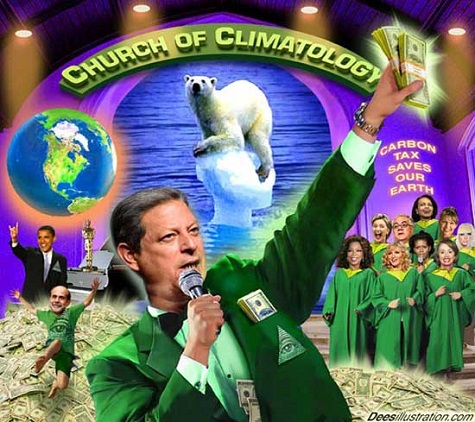
By Andy West | Climate Etc. | November 1, 2013
The hypothesis for a single, simple, scientific explanation underlying the entire complex social phenomenon of CAGW.
Whatever is happening in the great outdoors regarding actual climate, inside the minds of men overwhelming evidence indicates that Catastrophic Anthropogenic Global Warming is a self-sustaining narrative that is living off our mental capacity, either in symbiosis or as an outright cultural parasite; a narrative that is very distanced from physical real-world events. The social phenomenon of CAGW possesses all the characteristics of a grand memetic alliance, like numerous similar structures before it stretching back beyond the reach of historic records, and no doubt many more cultural creatures that have yet to birth.
Having painted a picture CAGW from a memetic perspective in fiction last December [link], I realized that many people instinctively sense the memetic characteristics of CAGW, and typically express this in blogs or articles as relatively casual comments that cite memes or religion. Yet these folks appear to have no real knowledge of how truly meaningful and fundamental their observations are. Hence I have written a comprehensive essay which attempts to fill in this knowledge gap, and indeed proposes that the entire complex social phenomenon of CAGW is dominated by memetic action, i.e. CAGW is a memeplex.
Note: a ‘meme’ is a minimal cultural entity that is subject to selective pressures during replication between human minds, its main medium. A meme can be thought of as the cultural equivalent to a gene in biology; examples are a speech, a piece of writing (‘narratives’), a tune or a fashion. A memeplex is a co-adapted group of memes that replicate together and reinforce each other’s survival; cultural or political doctrines and systems, for instance a religion, are major alliances of self-replicating and co-evolving memes. Memetics101: memeplexes do not only find shelter in the mind of a new host, but they will change the perceptions and life of their new host.
Because the memetic explanation for CAGW rests upon social and evolutionary fundamentals (e.g. the differential selection of self-replicating narratives, narrative alliances, the penetration of memes into the psyche causing secondary phenomena like motivated reasoning, noble cause corruption and confirmation bias etc.) it is not dependent upon politics or philosophies of any stripe, which tend to strongly color most ‘explanations’ and typically rob them of objectivity. Critically, a memetic explanation also does not depend on anything happening in the climate (for better or for worse). CO2 worry acted as a catalyst only; sufficient real-world uncertainties at the outset (and indeed still) provided the degree of freedom that let a particular ‘ability’ of memeplexes take hold. That ability is to manipulate perceptions (e.g. of real-world uncertainty itself), values, and even morals, which means among other things that once birthed the CAGW memeplex rapidly insulated itself from actual climate events.
Homo Sapiens have likely co-evolved with memeplexes essentially forever (Blackmore), therefore they are a fundamental part of us, and indeed no characteristic of CAGW appears to be in the slightest bit new, quite the contrary. Underlining this ancient origin, one class of memeplexes folks are familiar with is: ‘all religions’. Yet these fuzzy structures are by no means limited to religion; science has triggered memetic themes before and extreme politics frequently does so, and there have even been historic memeplexes centered on climate. This does not mean CAGW is precisely like a religion, but being similarly powered by self-replicating narratives creates the comparable characteristics that many have commented upon.
Using a great deal of circumstantial evidence from the climate blogosphere and support from various knowledge domains: neuroscience, (economic) game theory, law, corporate behavior, philosophy, biological evolution and of course memetics etc., the essay maps the primary characteristics of CAGW onto the expected behavior for a major memeplex, finding conformance. Along the way, contemporary and historic memeplexes (mainly religious) are explored as comparisons. The essay is long, book-sized, because the subject matter is large. I guess an essay describing all of climate science would be very long, so one exploring the entire memetic characteristics of CAGW plus I hope enough context for readers to make sense of that, is similarly so.
The context is extremely broad, ranging from why pyramid building evolved in Egypt to a passionate cry against kings, priests, and tyranny in a radical women’s journal of the early nineteenth century. From the impact of memeplexes on the modern judicial system courtesy of Duke Law, to the ancient purpose of story-telling and contemporary attempts to subvert this, along with a plot analysis of the film Avatar. From the long and curious tale of an incarnation of ‘the past is always better’ meme currently rampant on the internet, to the evolutionary selection of fuzzy populations in biology and the frankenplex multi-element cultural creature that is CAGW. From the conflict related death-rates in primitive tribes versus modern states, to analysis of corporate social responsibilities after the Enron and banking sector crises. From memetic chain letters that stretch back to the hieroglyphs (Letters from Heaven), to the analysis of social cross-coalitions via game theory within the perspective of economics. From the concept of ‘the Social Mind’ courtesy of neuro-scientist Michael Gazzaniga, to pressure upon religions by aggressive atheism as promoted by Richard Dawkins. From modification of theistic memes in the Old to the New Testament, to notions of Gaia and telegraph wires and wing-nuts. Plus memetic sex, witchcraft, cults, Cathars, concepts of salvation, Communism, hi-jacking altruism, Lynsenkoism, lichen, psychologizers, National Socialism, de-darwinisation, that ugly term ‘denier’, and much more.
The reason for this huge breadth and depth is that memeplexes are deeply integrated into both our psyche and our societies; this level of vision and historical context is necessary to uncover the entities, to identify their actions with as much distancing from what remains of ‘ourselves’ as can be achieved.
In counter-weight to this very broad context, the essay is richly laced throughout with quotes from many of the main players and commenters in the climate blogosphere (plus from newspapers and other publications too), much of which will be pretty familiar to followers of the climate debate. These quotes cover luke-warmers, skeptics and Consensus folks, plus politicians, philosophers, psychologists and others as regards their views on CAGW, yet all are chosen and brought together for their focus on the memetic aspects of the phenomenon. There are also plenty of deeper topics specific to the sociological aspects of CAGW that most denizens of the climate blogosphere will recognize and can get their teeth into, some contentious. For instance, a look at Richard Dawkins’ immersion within a rampant memeplex (while this would seem to be both controversial and ironic, when one realizes that we’re all immersed to some extent in several memeplexes, irony tends to morph to introspection). A brief view of a different Stephan Lewandowski paper (i.e. NOT either of the ‘conspiracy ideation’ ones) in which he highlights the very type of inbuilt cultural bias that has then led him blindly to produce those very challenged and troubled works! An exposé of memetically induced cultural bias in a recent paper on ‘Professionals’ Discursive Construction of Climate Change’, that in my opinion undermines the objectivity of the work and robs the conclusions of any real meaning. A very interesting take on Mike Hulme’s stance as revealed by the memetic perspective. A glimpse of the ‘shall-we shan’t-we dance’ tentative cross-coalition between the Christian and CAGW memeplexes. The constant references to grandchildren within CAGW advocacy texts. Both the laudable and the lurking memetic content in philosopher Pascal Bruckner’s essay ‘Against Environmental Panic’. Numerous views of sociological comment by atmospheric scientist Judith Curry or at her blog Climate Etc from a memetic perspective. Plus a delve into one of pointman’s very interesting climate related essays, strong language and classic climate quotes explained via memetics, and more…
While CAGW skeptics might at first blush celebrate the possibility of a single, non-climate related, non-partisan, science-based theory that explains the whole complex range of CAGW’s social characteristics, acceptance of this theory also requires acceptance of a couple of pretty uncomfortable truths, and the ditching of at least one touchstone used by many (but by no means all) climate change skeptics. These issues are all expounded in the essay, but I summarize here:
- Acceptance of the memeplex explanation requires us to rethink what ‘self’ means, and how our opinions, perceptions, and even morals are formed and maintained, with an implication that our ‘self’ is much more about the societal groups we’re immersed in than about what’s intrinsically inside our heads. The fact that we don’t really ‘own’ ourselves, is challenging.
- Acceptance of the memeplex explanation requires a rejection of the ‘scam’ or ‘hoax’ theory as a root cause of the CAGW phenomenon, and as a primary motivator for the vast majority of CAGW ‘adherents’. (Note this does not rule out the fact that scams / hoaxes and other negative social phenomena may be attached to the memeplex as secondary structures – this is in fact common for major memeplexes). The essay spends quite some length saying why this is so.
- Whatever downsides are observed to stem from the social phenomenon of CAGW, memeplexes in general often contribute major net advantages to their host societies, sometimes very major. The balance between positive and negative aspects of a major memeplex are not easy to determine except long in retrospect and with access to the ‘big picture’ (all attributes and all impacts across all of society). Hence we cannot yet know the balance of this equation for CAGW. The positive aspects are not typically intuitive.
- As already mentioned, the memetic explanation is virtually independent of actual climate events. Hence dangerous climate scenarios are not ruled out. It simply means that no scenarios are ruled out, from the very dangerous to the utterly benign, and it is very much in the memeplex’s interests to keep the situation that way. Memeplexes wallow in uncertainty and confusion.
Many commenters in the climate blogosphere have written to the effect that: ‘it isn’t and never was about the science’. I happen to agree, very little of the CAGW phenomenon is about the science. The memetic perspective reveals why this is; not in terms of political or financial motivations but in the objective terms of the underlying social mechanisms, which are independent of (and enable) all such motivations.
Despite the essay’s length, I hope you will take the journey to acquiring a memetic perspective. Here [ memeplex summary ] is a very distilled summary of each section of the essay below this text, with a list of references, in which a few regular contributors might find their names. Please note that the work is not a ‘paper’, containing no proofs or supporting mathematics, excepting a couple of references to Game Theory and the Price Equation. And merely for convenience, I have written as though the memeplex hypothesis is true, i.e. that CAGW is a memeplex and that this characteristic dominates the social effects. It is just extremely cumbersome throughout hundreds of references to make them all conditional – so I haven’t. Yet by no means does that mean the hypothesis is true, or at least wholly true in the sense that the memetic effects are dominant. Readers must form their own opinions regarding that, no doubt which opinions will be colored by the memeplexes they’re already immersed in J. I think most folks will find it an interesting and enjoyable ride though. The complete essay is here [link]: (Note: this Post text doubles as the essay Foreword, so you can skip that).
P.S. while I intend to issue further Revs of the essay with some extensions plus feedback / corrections applied, in practice this may only happen on a very long timescale, or possibly not at all as my time is extremely pressured. Please keep an eye on www.wearenarrative.wordpress.com for any up-Revs or additional information. Note: the novella Truth from the WUWT post above is now available (free) at Smashwords here: https://www.smashwords.com/books/view/273983 or within the anthology ‘Engines of Life’ also at Smashwords here: https://www.smashwords.com/books/view/334834, or at Amazon here.
Featured Video

US IRAN TALKS: Who Are the Crazy Ones Here? /Lt Col Daniel Davis
or go to
Aletho News Archives – Video-Images
From the Archives
Wartime internment camps in Australia
National Archives of Australia
World War I
During World War I, for security reasons the Australian Government pursued a comprehensive internment policy against enemy aliens living in Australia.
Initially only those born in countries at war with Australia were classed as enemy aliens, but later this was expanded to include people of enemy nations who were naturalised British subjects, Australian-born descendants of migrants born in enemy nations and others who were thought to pose a threat to Australia’s security.
Australia interned almost 7,000 people during World War I, of whom about 4,500 were enemy aliens and British nationals of German ancestry already resident in Australia.
Records of World War I internment camps
World War II
During World War II, Australian authorities established internment camps for three reasons – to prevent residents from assisting Australia’s enemies, to appease public opinion and to house overseas internees sent to Australia for the duration of the war.
Unlike World War I, the initial aim of internment during the later conflict was to identify and intern those who posed a particular threat to the safety or defence of the country. As the war progressed, however, this policy changed and Japanese residents were interned en masse. In the later years of the war, Germans and Italians were also interned on the basis of nationality, particularly those living in the north of Australia. In all, just over 20 per cent of all Italians resident in Australia were interned. … continue
Blog Roll
 Aletho News
- Diplomats slam US negotiators’ performance in Iran talks
- Trump Refuses Exit Ramp, War with Iran will Continue
- Trump Says US Naval Blockade in Strait of Hormuz Will Begin Shortly
- US, Iran end 21-hour talks without agreement
- US IRAN TALKS: Who Are the Crazy Ones Here? /Lt Col Daniel Davis
- Talks with the US end without a deal over excessive US demands: Iran
- Feeling Better, Getting Worse: How Psychiatric Drugs Create the Illusion They Cure
- ‘Nobody Told Me’: Former Mental Health Patient Calls Out Dangerous Side Effects of Psychiatric Drugs
- Dr. Abu-Sitta: Beirut ‘felt like a day in Shifa Hospital’
- Iran Has Won the War, It Will Be Up to the US to Secure the Peace: Mohammad Marandi
- If Americans Knew
- US-Iran ceasefire negotiations make zero progress – Daily Update
- Pro-Israel ‘Thinktanks’ and Individuals who Influence U.S. Foreign Policy
- Mearsheimer reveals how Israel dictates US policies on Iran, Gaza – video
- After killing 350+, Israel still has a “score to settle” with Lebanon before ceasefire – Daily Update
- Military aid to Israel emerges as the latest political litmus test for Democrats
- The only Palestinian children’s rights organization closes following years-long Israeli campaign against it
- ‘I Can’t Forget the Smell’: Lebanese Reel After Israel Kills Over 300 in Single Day
- DNC Shoots Down Resolutions Calling Out AIPAC and Limiting Arms to Israel
- TCN: Is Israel Blackmailing President Trump?
- Israel killed at least 303 Lebanese yesterday – who were they? Daily Update
- No Tricks Zone
- German Expert: Heat Dome Led To Record Temps In Western USA…Warmer In 1934, 1936
- New Study: No Linear Warming Or Glacier Retreat Along Northern Antarctic Peninsula Since 1980s
- An Inconvenient Tree: Uncovered In Alps… Europe Much Warmer Than Today 6000 Years Ago
- New Study Reports A 60% Slowdown In Greenland’s Ice Loss Rate In The Last Decade
- Low Intensity Tornado Wrecks Major Solar Farm, Creating A Potential Toxic Dump
- New Study Finds Warming Saves Lives…Cold Temperatures 12 Times More Deadly Than Excess Heat
- German Science Blog Accuses PIK Climate Institute Of Hallucinating Climate Tipping Points
- Devastating Assessment Of Comirnaty Vaccine By Former Senior Pfizer Europe Toxicologist
- New Study: CO2 Is ‘Effectively Negligible’ As An Explanatory Climate Change Factor Since 2000
- Former Pfizer Toxicologist Dr. Helmut Sterz Tells Bundestag Hearing Pfizer Vaccine Should Have Never Been Approved
 Aletho News