Number of Jewish Americans moving to illegal settlements increases ‘dramatically’

Notorious American-Israeli settler Justin Yaakov Fauci with Kahanist terrorist-turned-hate-preacher Gordon Yehuda Richter
MEMO | September 13, 2021
The number of Jewish American moving into illegal settlements in the Israeli-occupied West Bank has increased dramatically, according to recent data from Tel-Aviv’s Central Bureau of Statistics.
Out of the 2,296 US citizens who migrated to the occupation state last year, 191 moved into illegal settlements. This represents nearly a threefold increase from the previous year when less than three per cent settled in Palestinian territory.
American Jews are also the most likely to settle in occupied territory compared with fellow Jews from other parts of the world. While they accounted for just over ten per cent of all the newcomers arriving in Israel last year, they made up nearly a third of those opting to settle in the West Bank.
This disparity is said to be due to the American Jewish community being more orthodox and tending to hold right-wing supremacist views, such as that all of the territory from the River Jordan to the Mediterranean Sea was granted to Jews by God.
Another reason is that the Jewish organisation subcontracted to handle the logistics of immigration from the US is the private Nefesh b’Nefesh. The group is said to encourage American Jews to settle in the occupied West Bank. About a quarter of the communities highlighted on its website are located in illegal settlements, such as Efrat, Ma’aleh Adumim and Elkana. It makes no mention of the fact that these places are not within Israel.
The ugly reality of the takeover of Palestinian land by settlers arriving from the US grabbed international attention earlier this year when an American-born Israeli, Yaakov Fauci, was captured on video trying to evict the Palestinian El-Kurd family from their home in the Sheik Jarrah neighbourhood of occupied East Jerusalem.
“If I don’t steal it, someone else is going to steal it,” said Fauci in a video that went viral and sparked international condemnation. He was born in Long Island, New York, and was recruited by Nahalat Shimon International, a US-based settler organisation seeking to change the demographics of occupied East Jerusalem.
Report: US plans Arab-Israeli maritime unit in Persian Gulf for proxy missions
Press TV – September 11, 2021
A new report says a recent decision by the US Navy’s 5th Fleet to launch a drone task force is a step towards the establishment of a joint maritime unit comprising Persian Gulf Arab countries and Israel for proxy missions in the region.
On Wednesday, the 5th Fleet based in Bahrain announced that it will launch the new task force that incorporates airborne, sailing and underwater drones after years of maritime attacks linked to ongoing tensions with Iran.
US Navy officials declined to identify which systems they would introduce from their headquarters in Bahrain, but said the coming months would see the drones stretch their capabilities across the region.
“We want to put more systems out in the maritime domain above, on and below the sea,” said Vice Adm. Brad Cooper, who leads the 5th Fleet. “We want more eyes on what’s happening out there.”
“These measures are in line with the launch of a joint maritime unit between Persian Gulf Arab countries and the Zionist regime. Using the equipment announced, the unit is supposed to play a role in proxy missions thanks to the support of the United States,” Iran’s Nour News agency wrote on Saturday.
“Successive failures in costly military campaigns in West Asia have led to a new US national security strategy, under which the American military focus in the region will change in favor of the development of presence in East Asia and the Chinese Sea,” it added.
According to the report, Washington is expected to hand over part of the missions of its military units in West Asia to Arab states and Israel to make its absence in West Asia and the Persian Gulf not conspicuous.
On September 1, the Tel Aviv regime officially moved into the US Central Command’s (CENTCOM) area of responsibility, taking over from the European Command (EUCOM).
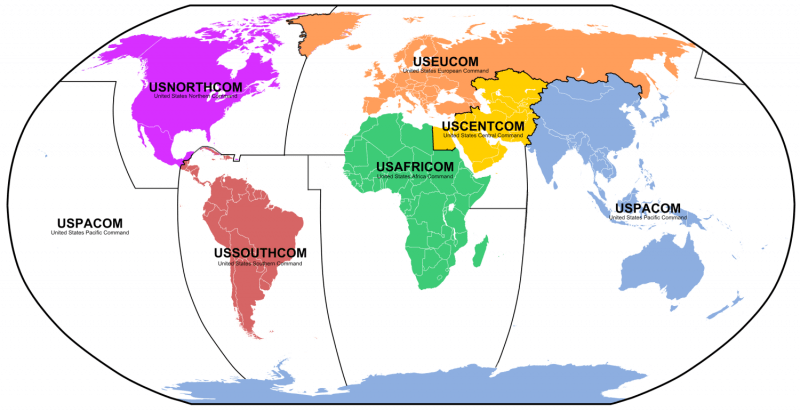
Nour News said the move paved the way for Israel to design and implement evil acts in the region with the help of some of the Persian Gulf Arab states.
“The new strategy, which lays the ground for the pursuit of the new national security doctrine, began by creating artificial tensions in the region based on a pre-designed scenario,” it added.
In late July, the US, the UK and Israel blamed Iran for a deadly drone attack on an Israeli-managed oil tanker, the Mercer Street, off the coast of Oman.
A few days later, Reuters claimed that “Iran-backed forces” were believed to have seized the Panama-flagged Asphalt Princess tanker off the coast of the United Arab Emirates (UAE).
The Associated Press, citing information from MarineTraffic.com, reported that four tankers – the Queen Ematha, the Golden Brilliant, Jag Pooja and Abyss – broadcast over the Automatic Identification System (AIS) that their vessels were “not under command.”
Later, however, it emerged that all those contradictory reports of maritime incidents were circulated by the Zionists to justify their own evil acts in the region and portray Iran as the country that is causing insecurity, Nour News said.
“The depth of the Zionists’ lies became more evident after the Golden Brilliant docked at Iran’s Bandar Abbas port days after rumors about its possible hijacking.”
Press TV’s website can also be accessed at the following alternate addresses:
http://www.presstv.ir
http://www.presstv.co.uk
http://www.presstv.tv
Who are Palestinian escapees from Israel’s Gilboa prison?
By Awad Al-Rujoub | MEMO | September 6, 2021
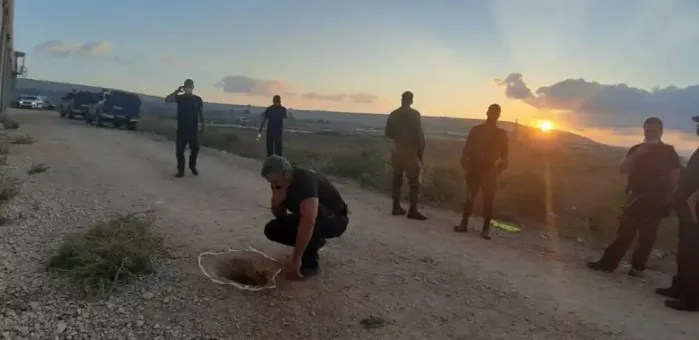
In the early hours of this morning, six Palestinians escaped from Israel’s Gilboa Prison after they dug a tunnel out of the high-security prison.
Five of the prisoners were members of the Islamic Jihad movement, and one was a former commander of Fatah. They are all from the city of Jenin and were all serving life terms. Israeli media said that three of the escapees had previously attempted to escape from Israeli jails.
But who are they?
Zakaria Zubeidi

Zubeidi, 49, from Jenin refugee camp, was a former commander of Fatah’s Al-Aqsa Martyrs Brigades. In 2006, Zubeidi was elected a member of Fatah’s Revolutionary Council. He was detained by Israeli forces in Ramallah on 27 February 2019 and accused of being affiliated with the Al-Aqsa Martyrs Brigades. He has not been sentenced to any crime.
Munadil Nafaya

Nafaya, from Ya’bad town near Jenin city, was detained by Israeli forces in 2006 before being released in 2015. He was rearrested in 2016 and again in 2020 and accused of membership in Islamic Jihad’s armed wing and involvement in staging attacks against Israeli occupation forces.
Nafaya has not yet received a final sentence.
Yaqoub Qadiri

Yaqoub Qadiri, 39, from Bir Al-Basha village northwest of Jenin city, was wanted by Israeli occupation forces since 2000.
Qadiri stood against the occupation’s massacre in the Jenin refugee camp in 2002. On 18 October 2003, he was detained and handed two life sentences.
In 2014, he along with other detainees attempted to escape from Shatta prison but were unsuccessful.
Iham Kahamji

Kahmaji, 35, from Kafr Dan village near Jenin city, was wanted by Israeli occupation forces since 2003. He was detained on 4 July 2006 and handed two life terms.
Mahmoud Al-Arida

Mahmoud Al-Arida, 46, from Arraba town southwest of Jenin city, was first detained in 1992 before being released in 1996.
He was detained again in September 1996 and handed a life sentence after being accused of being a member of Islamic Jihad’s military wing and carrying out attacks against Israeli occupation forces.
Mohammad Al-Arida

Mohammad Al-Arida, 39, from Arraba town, was arrested on 7 January 2002, before being released in March of the same year.
He was rearrested on 16 May 2002 in Ramallah city and handed three life terms.
‘Blood for Blood’: On Jenin and Israel’s Fear of an Armed Palestinian Rebellion
By Ramzy Baroud | MintPress News | August 26, 2021
The killing of four young Palestinians by Israeli occupation soldiers in the Jenin refugee camp in the northern West Bank, on August 16, is a consequential event, the repercussions of which are sure to be felt in the coming weeks and months.
The four Palestinians – Saleh Mohammed Ammar, 19, Raed Ziad Abu Seif, 21, Nour Jarrar, 19, and Amjad Hussainiya, 20 – were either newly born or mere toddlers when the Israeli army invaded Jenin in April 2002. The objective, then, based on statements by Israeli officials and army generals, was to teach Jenin a lesson, one they hoped would be understood by other resisting Palestinian areas throughout the occupied West Bank.
In my book, Searching Jenin, published a few months after what is now known as the ‘Massacre of Jenin’ or the ‘Battle of Jenin’, I tried to convey the revolutionary spirit of this place. Although, in some ways, the camp was a representation of the wider Palestinian struggle, in other aspects it was a unique phenomenon, deserving of a thorough analysis and understanding.
By the end of that battle, Israel seemed to have entirely eliminated the armed resistance of Jenin. Hundreds of fighters and civilians were killed and wounded, hundreds more arrested and numerous homes destroyed. Even voices sympathetic to the Palestinian struggle have underestimated Jenin’s ability to resurrect its resistance under seemingly impossible circumstances.
Writing in the Israeli newspaper, Haaretz, on June 10, 2016, Gideon Levy and Alex Levac described the state of affairs in the small camp. “Jenin, always the most militant of the refugee camps, was battered and destroyed, suppressed and bloodied, by Israel. These days its spirit seems to be broken. Every person is dealing with his own fate, his own private struggle for survival,” they wrote. The title of their article was “Jenin, Once the Most Militant of Palestinian Refugee Camps, Waves a White Flag”.
Being suppressed and shattered by an overwhelming force, however, is entirely different from “raising the white flag”. In fact, this truism does not just apply to Jenin but to the entirety of occupied Palestine, where Palestinians, at times, find themselves fighting on multiple fronts: Israeli occupation, armed illegal Jewish settlers, and the co-opted Palestinian Authority.
However, May 2021 changed so much. The Israeli attempt at ethnically cleansing Palestinian families from the Sheikh Jarrah neighborhood in East Jerusalem, the subsequent war on Gaza and the unprecedented uprising of unity, bringing all Palestinians, everywhere, together, lifted Jenin and other Palestinian areas from their state of despondency. The stiff resistance in Gaza, in particular, has had a direct impact on the various fighting groups in the West Bank, which were either disbanded or marginalized.
An unprecedented scene in Ramallah, on May 17, tells the whole story. Tens of fighters, belonging to the Al-Aqsa Martyrs Brigades, which is affiliated with the Fatah movement – the political party that dominates Mahmoud Abbas’ PA – marched on the streets of Ramallah, where the Authority is situated, in a relatively calm environment. The fighters chanted against the Israeli occupation and their ‘collaborators’ before clashing with Israeli soldiers, who were manning the Qalandiya military checkpoint.
This event was quite unusual, for it ushered in the return of a phenomenon that Israel, with the help of its ‘collaborators’, had crushed during the Second Palestinian Intifada – or uprising – between 2000-2005.
The Israeli military understands that the May war and uprising have triggered an unwelcomed transition in Palestinian society. Long-suppressed, occupied Palestinians are ready to rebel, eager to move on, beyond octogenarian Abbas and his corrupt clique, past the stifling factionalism and self-serving political discourses. The questions are how, where and when.
This is precisely why Israel is back in Jenin, once more trying to teach the nearly 12,000 refugees there a lesson, one that is also meant for Palestinians throughout the West Bank. Israel believes that if the nascent armed resistance in Jenin is suppressed now, the rest of the West Bank will remain ‘quiet’.
According to Palestinian journalist, Atef Daghlas, the Israeli occupation forces killed ten Palestinians during their frequent nightly raids on Jenin. Eight of the victims have been killed since the end of the Gaza war alone. There are two main reasons behind the increased number of casualties among the Palestinians in the last few months: first, the increased number of Israeli raids – where occupation soldiers, often disguising themselves as Palestinians, enter the camp at night and attempt to capture young Palestinian fighters; second, because of the growing number of youth enlisting in various resistance groups. According to Daghlas, the rifles carried by these youth are purchased by the young men themselves, as opposed to being supplied by a group or a faction.
“Blood for blood, bullet for bullet, fire for fire,” were some of the chants that echoed in the Jenin town and its adjacent refugee camp, when the Palestinian residents carried the bodies of two of the four killed youth, before burying them in the ever-crowded martyrs’ graveyard. The fact that Jenin is, once more, openly championing the armed struggle option is sending alarm bells throughout occupied Palestine. Israel is now worried that an armed Intifada is in the making, and Abbas knows very well that any kind of Intifada would spell doom for his Authority.
It is obvious that what is currently taking place in Jenin is indicative of something much larger. Israel knows this, thus the exaggerated violence against the camp. In fact, two of the bodies of killed Palestinians are yet to be returned to their families for proper burial. Israel often resorts to this tactic as a bargaining chip, and to increase the psychological pressure on Palestinian communities, especially those who dare resist.
It might be relevant to note that the Jenin refugee camp was officially formed in 1953, a few years after the Nakba of 1948, the year when historic Palestine was destroyed and the State of Israel was created. Since then, generation after generation, Jenin’s youth continue fighting and dying for their freedom.
It turns out that Jenin never waved the white flag, after all, and that the battle which began in 2002 – in fact in 1948 – was never truly finished.
Ramzy Baroud is a journalist and the Editor of The Palestine Chronicle. He is the author of five books. His latest is “These Chains Will Be Broken: Palestinian Stories of Struggle and Defiance in Israeli Prisons” (Clarity Press).
Hezbollah grows stronger in Lebanon amid energy crisis, arranging oil shipments from Iran
By Uriel Araujo | August 28, 2021
Hassan Nasrallah, the leader of the Lebanese Shia Islamist organization Hezbollah has announced more Iranian ships are bringing fuel to Lebanon. The country is under an unprecedented political and economic crisis and is facing massive gasoline shortages – even after the first vessel arrived on August 19. Some worry Iran-funded Hezbollah could thus take the place of the almost collapsing Lebanese state or companies. Others worry the US could impose sanctions on Lebanon due to its relation with the Islamic Republic of Iran. The US Ambassador to Lebanon in fact stated, hours after Hezbollah’s statement, that Washington was in talks with Jordan and Egypt to find solutions to Lebanon’s fuel crisis, which has affected businesses, hospitals, and homes.
Riad Toufic Salameh, the Governor of Lebanon’s central bank claimed two weeks ago that Beirut simply lacks the foreign reserves needed to release dollars to import fuel. On August 12, Salamesh announced Lebanon decided to change the exchange rate used as a base for importing fuel, thus sharply increasing retail prices. Gasoline prices may rise up to 66% as subsidies were cut in an attempt to ease shortages. This central bank measure clashed with outgoing Prime Minister Hassand Diab’s government, which pledged to keep the subsidies in an ongoing dispute. Diab described Salamesh’s decision as illegal and irresponsible. Several roads were closed by protesters the same day and the demonstrations are still going on. It is in this context that Hezbollah and its network of Shia businessmen arranged for the shipments of oil. This move was criticised by former Prime Minister Saad Hariri and other political figures as an infringement on the Lebanese state’s sovereignty.
According to the Iranian semi-official Nour News agency, the first fuel shipment was bought by a group of Lebanese Shiite merchants. The same agency reported that the shipment should be considered Lebanese property “from the moment it is loaded”, and described the fuel dispatch as a “strong action taken by Iran and Hezbollah to break the economic siege of the Lebanese people by a western-Arab-Israeli axis”.
According to Laury Haytayan, a Middle East gas and oil expert and a Natural Resource Charter Senior Officer, Hezbollah’s announcement in itself could place Lebanon in danger of being sanctioned for the ships bringing fuel from Iran are carrying a product that is under US sanctions and thus anyone engaging with such product could also be sanctioned under the current regime that targets third parties buying Iranian oil or merely interacting with the Iranian financial sector.
The Lebanese government could of course ask for a waiver of these sanctions (such as the ones that were granted to Iraq pertaining to Iranian gas imports) but the hard truth is that Lebanon today barely has a government. Any political void always invites political entrepreneurship and Hezbollah seems to be showing itself capable of doing what the government can’t.
Furthermore, there have been Israeli attacks on shipments of Iranian fuel to Syria, which neighbors Lebanon. If such were to happen with a shipment heading to Lebanon, this would obviously further increase anti-Israeli sentiment in a country where tensions are already escalating. Some see Hezbollah’s move as a part of a kind of a deterrence equation, that is, the Shia organization would retaliate in case Israel attacks any ship bringing fuel during a major energy crisis.
Nasrallah also said Hezbollah could help bring an Iranian company to drill, if necessary. These remarks were made during his televised speech for Ashura, an Islamic holiday of particular significance for Shias. With the current crisis, Hezbollah is showing itself to be the only faction that can organize the country. This means Iran’s influence on the Levant is to increase which will worry many actors, particularly Saudi Arabia.
Earlier this year Iran and Saudi Arabia started a series of talks, urged by Qatar, but they have been suspended. The new Iranian President Ebrahim Raisi has claimed his foreign policy priority now is to improve relations with the Persian Gulf Arab countries, which are led by Saudi Arabia. The current war in Yemen is a point of contention, though, for Tehran supports the Houthi insurgency in Yemen. Riad leads a major military intervention in the country against the Houthi rebels (in a coalition that includes Bahrain, and the United Arab Emirates, as well as Egypt, Jordan, and Sudan). This makes the conflict in Yemen a proxy war between Iran and Saudi Arabia. If Tehran and Riad could put such differences aside they could help bring peace and stability to the region. But this is not an easy task, as the two rivals still seem to compete in Iraq and Lebanon and might further compete in Afghanistan after the US withdrawal.
Washington and the European powers are losing their influence in the Lebanese political game. Solving the energy crisis in Lebanon is first and foremost a humanitarian issue and if the US chooses to act in terms of sanctioning Lebanon this would greatly harm US President Joe Biden’s narrative of the United States as a champion of human rights worldwide. The current crisis after all is also about Iran – whose economy has been hit hard by sanctions and today has a 45% inflation rate and has reached the highest price for food products.
If the US does not sanction Lebanon, such will serve Hezbollah as a kind of a show of force. If Washington does sanction the country, Hezbollah also wins somehow for it would corroborate its narrative of Lebanon under siege. Under such a scenario Lebanon should further enhance its relations with Iran. Thus, no scenario is good for the US.
Dorothy versus Hassan

By Taxi | Plato’s Guns | August 27, 2021
The US ambassador to Lebanon, Dorothy Shea, thinks she’s smarter than Hassan Nasrallah.
Yet, evidence shows that since Trump appointed her as ambassador to Lebanon back in February 2020, every dastardly trap she has placed before Mr. Nasrallah and his Hezbollah resistance group has failed.
Proof of this failure is that Hezbollah keeps growing stronger and stronger, untouched by all external or internal forces hellbent on destroying the Lebanese resistance group. Failed simply because Dorothy is not as smart as she thinks she is. Most certainly, she is not as intelligent as the nifty leader of Hezbollah.
Having spent some three years working as Deputy Principal Officer at the US Consulate General in Jerusalem immediately prior to her post in Beirut, Dorothy no doubt continues to have a direct hotline to the Israeli Prime Minister’s office, if not to his direct cell phone; and no doubt, every morning, her first official word from Beirut is ‘shalom’.
Dorothy does not behave like a diplomat. Instead, she behaves like an eye-patched leader of a sketchy militia: laying aside all diplomatic decorum and behaviorism and charging forth into every single aspect of Lebanese social, economic and political life, with the blatant intent of widening existing societal fissures in Lebanon, as well as adding new ones: aiming for a sectarian war that would cause the wholesale mass murder of innocents. One could say that she behaves as the Jews do in DC. A Puss in Boots, but utterly charmless and physically unattractive. Puss in Boots with mouth bigger than boots. So much so that last year, a Lebanese judge banned Lebanese media from interviewing Dorothy for her atrocious and blatant attempts at creating sectarian warfare in Lebanon. Needless to say, Dorothy the ‘ambassador’ gave the proverbial middle finger to this native judge while hiding behind the skirts of her diplomatic immunity. She continues to pollute Lebanese media and its political landscape with daily feces propelled out of all her orifices. Yes, she literally defecates on Lebanon every day, while feigning love and affection for the Lebanese people. Because the Lebanese resistance group, Hezbollah, defeated Israel twice already on the battlefield, Dorothy’s instruction since taking the ambassadorship has been to starve the Lebanese population as punishment for these victories. Tel Aviv must love her for her Zionist activism and zeal. The Mossad must be sending her monthly boxes of Cuban cigars.
And I’ll remind American taxpayers here that their hard-earned taxes are being spent on starving populations in the middle east, when bombing them to smithereens is not feasible. Starving millions of people who have done absolutely no harm to the American people. I’ll remind taxpayers that they are paying Dorothy’s wages while she is spreading anti-Americanism with her bolshie, toxic behaviorism overseas. I’ll remind them that since 2005, no less than $30 billion have been spent on destroying the Lebanon as a means of demoting Hezbollah – all for the benefit of Israel and Israel alone. And although Lebanon’s society is currently teetering on total collapse due to Dorothy’s malicious and malignant schemes, yet Hezbollah itself appears untouched by this exuberant, negative expenditure. And I will add here that Lebanon has suffered from corrupt governments for some thirty years, yet all this while, the Lebanese collective enjoyed a decent lifestyle and were never in need. They became needy when Dorothy came to town.
Perhaps when she lived in Israel, Dorothy got everything she wanted. But in Lebanon, what Dorothy wants, Dorothy doesn’t get. Hassan has insured this. Time and time again, he has outsmarted all her plans to create civil war in Lebanon. All straight and curve-balls that Dorothy has daily thrown at Hassan have missed and landed either way off mark, or, unfortunately, on innocent, civilian bystanders.
Let us be clear here that the traditional role of an ambassador is to work the trade and Intel files, as well as to assist expats in a variety of bureaucratic and legal matters. It is never the job of a diplomat to act politically or to make inciteful, political statements concerning the host nation. Never! It is abnormal behavior for a diplomat to be an in-your-face politico whose name and incendiary words are headlines in local media on a daily basis. Yet, Dorothy Shea swans about the Lebanon like a privileged colonialist: doing exactly that and doing it with shameless gusto.
She is proud that she has turbo-charged the destruction of Lebanon. But she is very angry that the Hezbollah remains untouched. Livid that Hassan remains leagues ahead of her diabolical plans. How dare Hassan challenge her, the mighty Queen Sheba herself?! She Who Must Be Obeyed, must be obeyed or else!
Yet, she is not obeyed by Hassan. Currently, the genocidal-minded Dorothy is reeling from the latest punch in the teeth that Hassan metaphorically gave her last week, when he defied US sanctions on Lebanon and announced that Iranian fuel ships are now headed to fuel-starved Lebanon: a miserable and existential shortage that Dorothy herself had engineered for the Lebanese people through her incessant, corrupt interference in absolutely all internal Lebanese affairs bar none. (She has even interfered in local, district elections, personally rejecting and approving candidates!). Her destructive meddling is compounded by the Caesar Act sanctions that her chowderhead boss, Trump, had imposed on the Lebanon at the behest of Tel Aviv. Because Israelis dare not kill Lebanese people with their missiles for fear of an equal Hezbollah retaliation, starving the Lebanese people en mass was to be their path to mass murder of said Lebanese; and thus Dorothy has been assigned the task of insuring that all trade and energy doors were closed to the Lebanese, and all paths to a much-needed new government blocked and blocked some more, ad infinitum. Dorothy has forbidden the Lebanon from trading with any country in the world, and simultaneously forbidden friendly nations from delivering any aid to Lebanon’s starving population. She has appeared more than happy this past year and a half to just watch the very fabric of Lebanon disintegrate under her ‘ambassadorship’ – doing absolutely nothing to help the long-suffering, collective Lebanese people whatsoever. Au contraire, the more Lebanon’s system broke down, the more the people suffered, and the more Dorothy jumped with joy and stirred the sectarian embers further.
It appears that not only are Hezbollah and the Lebanese population as a whole a target for destruction by Dorothy, but so is the Lebanese government itself. She does not even want a government for the Lebanon to exist. She wants for Lebanon what Israel wants: wiping Lebanon and its flag right off the map and turning it into many-flagged, sectarian enclaves and warring Bantustans instead. Simply, everyone and everything Lebanese is her target for destruction.
Of course, Dorothy gets much help from powerful Lebanese persons and political entities who are opposed to Hezbollah. Fortunately for the Lebanon, these people do not represent the majority of the Lebanese. Known Lebanese members of Dorothy’s team are handsomely paid in mega dollars to destroy their own country, just so that they can boost their Swiss bank accounts and augment their seats of power by getting rid of the most popular party in the Lebanon: the Hezbollah. These unsavory, treasonous Lebanese are ideologically aligned with fascism and predatory globalism, and they are also known for being supporters of the Israeli enemy and its religio-colonialist project in the Levant. Their names and professional titles are known all over the Lebanon, and they are as follows:
- Riyad Salame is a Maronite Christian who heads the Lebanese Central Bank (Banque Du Liban). He is the very man who colluded with Dorothy to collapse the local Lebanese currency in order to initiate the ‘starvation plan’ of his own people. He is also behind the financial pyramid scheme that suddenly, and by his design, collapsed a year ago. He is also behind the ‘Capital Control’ system that has been imposed on all bank account holders since the collapse of the Lebanese Lira. This system limits monthly withdrawals of all account holders, be they rich or poor, to a pitiful $400 per month: thus consigning both rich and poor to the same poverty pot. This system is currently holding hostage all of the people’s earnings and life-savings. Salame continues to shamelessly collude with the haters of Lebanon, while hiding some twenty billion dollars that suddenly went missing out of the country a year and a half ago. He claims no knowledge of where this vast amount went. He has not been held accountable by Lebanese law, nor has he lost his highest banking office in the nation, all because he has Dorothy’s full political protection.
- Samir Gaegae, is a Maronite Christian who is a convicted war criminal who colluded with Israel during its 18 years of occupation of Lebanon back in the ’80’s and 90’s, causing thus the torture, the disappearance, and the mass murder of tens of thousands of Lebanese civilians. And Ironically, it was Hezbollah’s hands, after the eviction of Israeli forces from Lebanon, who worked for his clemency, thus sparing him an execution. The ingrate Gaegae is now also best friends with both Saudi Arabia and Israel: tasked by them too to destroy Hezbollah, even at the cost of destroying Lebanon itself.
- Patriarch Bechara Boutros al-Rah, who holds the highest seat in the Lebanese Maronite church, is also known for regularly inciting sectarianism during his speeches and sermons. He became infamous for breaking a Lebanese law that forbids the cooperation or promotion of the Israeli enemy when he illegally visited Israel several years ago with the excuse of “I want to pray in Jerusalem.” No doubt he dined at Jewish Masonic Lodges there too. He adamantly refuses to separate ‘church from state’. He is a regular visitor to the US embassy in Beirut and all his political statements read like memos issued by Tel Aviv. He supports normalization with Israel that continues to occupy the Lebanese Shebaa Farms. For a religious Christian leader, he appears to devote his time to spreading the message of the Synagogue of Satan instead of the message of Jesus.
- NGO’s. The Lebanese population is some 4.6 million natives currently residing in Lebanon, yet Lebanon has over an astounding 10.000 NGO groups, with 92% of them being funded by foreign governments and other dubious Western and oil-Arab institutions. These shady NGOs are tasked with ‘inflaming’ the masses and creating a Color Revolution in the Lebanon. They have proved that they can successfully gather the protesting masses with matching banners and baseball hats, but they have failed to achieve their anarchic objective after several attempts. They are well-paid agents of chaos who swarm the Lebanon like biblical locust: receiving all their instruction from Dorothy’s office at the American embassy in Beirut; and eating all that great, green leaf we call ‘dollars’ right off Dorothy’s hand.
One can clearly discern that the American embassy in Beirut is more of a war theater against the Lebanese themselves, than it is a peaceful salon of diplomacy and trade activity.
Dorothy also enjoys the occasional support from other powerful Lebanese who may not share her ideology, but assist her when called upon because they are beholden to the US via their investment projects in the US, and also via their children and grandchildren who reside and study in the US. Yes, just like mafias threaten people with harm done to their businesses and families, so does Dorothy threaten her second tier of helpers, thus they always oblige. Saad Hariri (a Sunni leader), Walid Jumblatt (a Druze leader), and Nabih Berri (a Shia leader) are examples of second-tier helpers of the US embassy in Beirut.
Here I would add that although Dorothy’s Lebanese inner circle leaders are all Christian Maronites, between them, they actually represent the minority of Maronites in Lebanon. The majority of Maronites belong to the Maronite President Aoun’s party, who are allies and supporters of Hezbollah. And it appears that the Maronites who are anti Hezbollah are fundamentally Islamophobic, all due to an aftertaste that the brutal, Sunni Ottoman Empire left in their mouths back in 1922, when the Ottoman Empire collapsed and its soldiers finally exited Lebanon after some 500 years of miserable colonization.
Aside from creating the total collapse of the Lebanon, financially, socially and politically, it is germane here to give a summary of what the enemies of Hezbollah and Lebanon itself hoped to achieve with their treachery and sedition:
1- IMF enslavement of Lebanon’s financial life.
2- Disarming Hezbollah and the dismantlement of the Lebanese army, to be replaced with UN or NATO troops that answer to Tel Aviv and DC.
3- Destroying the current governmental system and the insertion of a new, federalized political theater where only enemies of the Hezbollah are in positions of power.
4- Naturalization into Lebanese citizenship of captive Sunni-Syrian refugees who are forbidden by the West to return to Syria, thus changing the voting demographic of Lebanon to favor Saudi-sponsored blocks (means Israeli-centric). This plan even has the temerity to favor Syrian naturalization over Palestinian one, even though Palestinian refugees have been stuck in Lebanon since 1948.
5- Allow Israel to annex gas field ‘Block 9’ that sits in the southern Lebanese maritime waters and is considered to be the richest field in the Lebanon waters.
6- Allow Israel to annex the Lebanese Litani River that’s some 23.6 miles from the Israeli border.
7- Through educational and cultural projects, unleashing insidious social-engineering programs such as ‘woke’, opioid and porn addiction, religious irreverence, cultural Marxism, and what I like to call the ‘gender bandito’ culture. In other words, social-engineering programs that shred the very fabric of traditional Lebanese life and culture. And sanity.
8- The looting and destruction of Lebanon’s museums and ancient artifacts so as to wipe out the ancient identity of the Lebanon.
9- Bantustaning and turning rural landscapes into militarized zones, and turning cities and towns into police states overseen by Israel-friendly UN or NATO forces.
10- Normalization with Israel through forced trade with Tel Aviv – the only entity Lebanon would be allowed to trade with.
And last but not least:
11- Empty Lebanon of its Christian population who are mainly concentrated in the Mount Lebanon area, but also scattered wide in villages and towns all over the Lebanon.
This is a project that analysts say has been handed to the current Lebanese Maronite Patriarch, Bechara Boutros al-Rahi. His consistent sectarian incitement is intended to promote a religious civil war that will find the majority of Lebanese Christians fleeing the Lebanon as political refugees to mainly Canada and France, where they already have immigration programs that are specifically preferential and lucrative to Lebanese Christian applicants. Yes, France and Canada are partners with the US in the destruction of Lebanon. In fact, all other Western nations and some Arab ones too are also conspirators and abettors in this diabolical, mass-murderous plan.
The Patriarch’s other vital mission is to turn Maronite Aounist voters against President Aoun’s party – driving them to the arms of Saudi-sponsored Samir Gaegae, who is a Maronite himself too and an infamous friend of Israel – not forgetting here his close friendship with Dorothy the Destroyer.
Because Lebanon is the only Christian-Arab country, and Christian Lebanese are fundamental to Lebanese history, heritage and identity, removing them from the Lebanon facilitates the Jewish plan of turning Lebanon into a zombie without a national, rooted identity, all in preparation for future Judeofication of the Lebanon, as per the Yinon Plan.
Of course, Dorothy here is a mere soldier for Tel Aviv. But still, all responsibility of Lebanon’s current destruction lays at her feet for her absolute devotion and willingness to participate and manage this grand and evil project for the Lebanon. She is responsible for the current starvation and the misery of millions of Lebanese, Christian and Muslim alike, because she is the most powerful mover and shaker in the Lebanon: moving and shaking it towards its mass grave.
Even though this ‘starvation plan’ has been well conceived and executed with the help of internal traitors, yet Hezbollah and its Lebanese allies continue to stand like firm walls in its path. Hassan and his patriotism continue to outsmart Dorothy. In fact, so much so that now Hezbollah has unexpectedly taken up the new mantle of ‘economic resistance’, as opposed to only a military one. Only two weeks go, Dorothy’s breathless destruction literally forced the Hezbollah to actively enter the economic war against the Lebanon, after a year and a half of passivity. They are economically-resisting now by defying the Caesar’s Act and all other members of Dorothy’s inner circle. This defiance comes in the shape of organizing Iranian fuel ships to arrive to Lebanon as aid for the utterly desperate people of the Lebanon.
The first Iranian fuel ship is due to imminently arrive to Lebanese shores. Many more Iranian ships are slated thereafter, carrying much needed life-saving medicine and food to the needy Lebanese.
Hassan has botched all nefarious plans and checkmated Dorothy with this move. He has promised that any harm done to these Iranian aid ships will result in instant, open warfare against Israel. The man always means what he says. And he always delivers on his word. The Israelis know this only too well. They will be red-faced and watching through their north-pointing binoculars, a long stream of Iranian ships docking a mere hop away from Haifa port. This was never part of their plan. Their plan was to starve the Lebanon en mass so as to bring it to its knees and take from it what they want; as well as to get rid of Iran-friendly Hezbollah. Instead, they’re ending up with a stronger Hezbollah bringing in Iranian aid ships that will feed the Lebanese people and provide them with desperately needed medicine and fuel. Iranian ships that will be seen by most Lebanese as ‘savior ships’, while Hezbollah will be crowned as ‘savior of Lebanon’ for resisting and breaking the illegal, US economic siege on the Lebanon.
Begs the question here, therefore: will the Mossad continue to send Dorothy her boxes of Cuban cigars?
We will work with the Congress to provide $1bn to Iron Dome, US official says
MEMO | August 26, 2021
US Secretary of Defence Lloyd Austin yesterday pledged to work with Congress to provide $1 billion to Israel’s Iron Dome defence system, the Times of Israel reported.
“We are working closely with Congress to provide all the necessary information to respond positively to your request to provide $1 billion in emergency funding. And it’s going to save more innocent lives,” Austin told Israeli Prime Minister Naftali Bennett.
Speaking to reporters following the meeting, Austin said: “The Department of Defense is also committed to maintaining Israel’s qualitative military edge, and to ensur[ing] that Israel can defend itself against threats from Iran, its proxies, and terrorist groups.”
“Iran must be held accountable for acts of aggression in the Middle East and on international waters,” referring to the attack on Mercer Street tanker off the Omani coast.
“US is committed to strengthening its strategic relationship with Israel,” he said, “the administration is committed to Israel’s security and its right to self-defense.”
When asked about the ten-year memorandum of understanding worth $3.8 billion in defence aid annually that was signed during the Obama administration, he said: “That is unwavering. It is steadfast.”
Withdrawal from Afghanistan to benefit Israel, says US official
MEMO | August 26, 2021
A US official has defended the withdrawal from Afghanistan by claiming that it will benefit Israel. Speaking at a briefing ahead of a meeting between the far-right Israeli Prime Minster Naftali Bennett and US President Joe Biden, the unnamed official said that Washington will be in a better position to direct resources and attention to its allies such as Israel, the Times of Israel has reported.
The newspaper claimed that Biden will use the meeting with Bennett to reinforce his commitment to the occupation state and other US allies in the region.
Washington is redirecting its resources towards the threat posed by China and Russia. However, US officials rejected a frequently reported claim by analysts that the Middle East is no longer a key priority for the US.
“Nothing could be further from the truth,” said a senior official. “If anything, in the Biden administration, we are not pursuing… unachievable goals.” This is believed to mean that Biden will not make demands on Israel.
“We’re not trying to transform the Middle East. We’re not trying to overthrow regimes. We are pursuing a very steady course, centred on achievable aims; alignment of ends and means; and, first and foremost, support for our partners and, of course, Israel being second to none,” the official added.
Despite early cautious optimism on the back of the Biden administration reversing some of the more controversial policies of former US President Donald Trump — Biden has reopened the Palestine Embassy in Washington, for example, and restored humanitarian aid to the Palestinians — there is a new realism within America over what is achievable. No new peace plan is expected to be unveiled, nor is there an expectation on Israel to return to the negotiation table with a view to ending its brutal military occupation of Palestine.
Bennett goes into today’s meeting having made a renewed pledge that there will be no independent Palestinian state under his watch. As a former settler leader who opposes the creation of such a state, Bennett said that there would be no resolution of the conflict with the Palestinians for the foreseeable future.
US relations with Iran and the so-called Abraham Accords, which saw four Arab countries (the UAE, Bahrain, Morocco and Sudan) normalise relations with the occupation state last year, are expected to be discussed during the Biden-Bennett meeting. Apparently, the US president will be looking to see how Israel feels about the US entering into a nuclear deal with Iran, and to find ways to expand the list of countries signed up to the accords.
Report Confirms Human Rights Violations in the 2019 U.S.-Backed Coup in Bolivia
By Ramona Wadi | Strategic Culture Foundation | August 23, 2021
A 471-page report by the Interdisciplinary Group of Independent Experts for Bolivia (GIEI-Bolivia) recently presented to Bolivian President Luis Arce in La Paz on Tuesday this week confirms the U.S.-backed coup’s persecution of opponents, including “systematic torture and summary executions” in 2019. The report is based on interviews with 400 victims of the Anez regime and other witnesses, as well as 120,000 files related to abuses between September 1 and December 31, 2019.
The findings prompted Bolivian prosecutors to charge the self-styled “interim leader” Jeanine Anez with genocide. Anez faces charges over the massacres in Sacaba and Senkata, where 20 protestors were killed by the security forces.
At the announcement of her arrest in March this year, Anez tweeted, “They are sending me to detention for four months to await a trial for a ‘coup’ that never happened.”
Yet the U.S. was swift to recognize Anez as interim president as well as to endorse the Organization of American State’s (OAS) report in 2019, which alleged electoral fraud in Bolivia with the intent to keep Evo Morales in power.
The former U.S. Secretary of State Mike Pompeo’s address to the OAS office in Washington gives quite a succinct summary of U.S. interference in Latin America – a twisted narrative of alleged democratic intent trickling down from the U.S., when the facts speak otherwise. Pompeo spoke of the U.S. role in recognizing Juan Guaido as Venezuela’s interim president and how members of the OAS followed suit, as well as a historical overview which attempted to disfigure the leftist movements in Latin America in the 1970s and 1980s as “producing repression for their own kind at home.”
Pompeo also described Cuba, Nicaragua and Venezuela as the countries through which “we face stains of tyranny on a great canvas of freedom in our hemisphere,” before moving on to praise the OAS for its role in ousting Morales. And as is typical of the U.S., with its long history of supporting military coups in the region, not a word was uttered about Anez’s persecution of the indigenous in Bolivia.
Yet the OAS report was denounced by the New York Times as having “relied on incorrect data and inappropriate statistical techniques.” The Center for Economic and Policy Research’s Co-Director Mark Weisbrot declared, “If the OAS and Secretary General Luis Almagro are allowed to get away with such politically driven falsification of their electoral observation results again, this threatens not only Bolivian democracy but the democracy of any country where the OAS may be involved in elections in the future.”
The GIEI report has established that the Anez regime committed summary executions, torture and sexual violence against indigenous people. Through the report, the Sacaba and Senkata massacres were revisited and will once again form part of Bolivia’s most recent memory of U.S.-backed violence. Just a day prior to the Sacaba massacres, on November 14, 2019, Anez signed a decree which established impunity for Bolivia’s armed forces.
Contrary to the rushed way in which the Trump Administration had recognised Anez as Bolivia’s legitimate leader, the U.S. is reluctant to comment on the GIEI report findings which established the U.S.-backed regime as having committed human rights violations. This year, however, the U.S. Secretary of State Antony Blinken issued a statement in March after Anez’s arrest, stating he was “deeply concerned by growing signs of anti-democratic behavior and politicization” with regard to Bolivia’s quest for justice.
Of Bolivia’s quest for justice now, the U.S. can hardly be expected to voice support. Yet the report goes a long way in overturning the U.S. intervention narrative. Bolivia’s victims are victims of a U.S.-backed coup, and U.S.-funded political violence should equally share the spotlight now highlighting Anez’s short-lived legacy of human rights violations in Bolivia.
Israeli forces shoot, kill 15-year-old Palestinian boy in Nablus

Imad Khaled Saleh Hashash, 15, was shot dead by Israeli forces during a raid on Balata refugee camp near Nablus on August 24, 2021. (Photo courtesy of the Hashash family)
Defense For Children International | August 24, 2021
Ramallah – Israeli forces shot and killed a 15-year-old Palestinian boy today in the northern occupied West Bank.
Imad Khaled Saleh Hashash, 15, was shot and killed by Israeli forces around 4 a.m. this morning as he stood on the roof of his home watching as Israeli forces conducted a raid in the Balata refugee camp located southeast of Nablus in the occupied West Bank, according to information collected by Defense for Children International – Palestine. Imad sustained a gunshot wound to the head and was taken to Rafidia hospital in Nablus where he was pronounced dead.
“Israeli forces continue to kill Palestinian children with impunity,” said Ayed Abu Eqtaish, accountability program director at DCIP. “Systemic impunity means Israeli forces can kill Palestinian children in their homes without fear of any consequences.”
Israeli forces raided Balata refugee camp to conduct search and arrest operations around 3 a.m., an eyewitness told DCIP. After being awakened by gunshots, Imad and his brother went to the roof of their home to observe the raid, according to information gathered by DCIP. Imad had taken out his cell phone and was attempting to photograph or film the raid, when he was shot in the head.
Imad’s brothers were initially unable to evacuate him from the home due to tear gas fired by Israeli forces, according to information gathered by DCIP. Imad was transported to Rafidia hospital in Nablus in a neighbor’s taxi, where he was pronounced dead.

Israeli forces shot and killed 15-year-old Imad Khaled Saleh Hashash during a raid on Balata refugee camp near Nablus on August 24, 2021. (Photo courtesy of the Hashash family)
Imad is the 12th Palestinian child shot and killed by Israeli forces in the occupied West Bank since the beginning of 2021. Israeli forces shot Mohammad Mo’ayyad Bahjat Abu Sara on July 28, while he was a passenger in his father’s car. Israeli forces fired 13 bullets at the vehicle as it retreated from the area in which they were deployed.
Israeli forces shot Mohammad Munir Mohammad Tamimi, 17, in the back on July 24. Mohammad underwent surgery at Salfit governmental hospital but succumbed to his wounds later that evening.
In June, Israeli forces killed two Palestinian teens from the occupied West Bank village of Beita located southeast of Nablus. Israeli forces shot and killed 15-year-old Ahmad Bani-Shamsa in the head with live ammunition around 5:30 p.m. on June 16 in Beita, DCIP reported. Ahmad did not present any threat to Israeli forces at the time he was shot. On June 11, Israeli forces shot and killed 16-year-old Mohammad Hamayel in the chest with live ammunition around 4:30 p.m. during a protest, DCIP reported.
Under international law, intentional lethal force is only justified in circumstances where a direct threat to life or of serious injury is present. However, investigations and evidence collected by DCIP regularly suggest that Israeli forces use lethal force against Palestinian children in circumstances that may amount to extrajudicial or wilful killings.
Featured Video

False Flags and the Dawn of Bioterrorism
or go to
Aletho News Archives – Video-Images
From the Archives
How 1960’s French Nuclear Tests Are Still Claiming Lives in Algeria
Sputnik – 15.02.2018
On February 13, 1960, France carried out its first nuclear test in Algeria’s southern Reggane region. According to official statistics, 17 nuclear tests were carried out in total over the next 6 years. The area remains affected, and local scientists say that radioactive contamination has caused genetic mutations and irreversibly changed the region.
There are no official statistics on the number of victims. The only figures can be found in the records kept by the French representative of the local church, which lists 42,000 victims of nuclear tests. Three years ago, the French Ministry of Defense issued a statement, putting the number at 27,000 people. The victims include French soldiers as well as local Algerians who lived in the surrounding areas. … continue
Blog Roll
 Aletho News
- Using nuclear weapons, the US-Israeli alliance still can’t beat Iran
- Sunset on the Quality of Western Propaganda: Arrival of the Dr Strangelove Moment
- Ukrainian general accused of protecting crime bosses
- US-‘Israel’ alliance faces growing rupture after midterms
- GOP’s Crushing Midterm Loss Could Reshape US Political Landscape – Analyst
- Midterm loss gives Congress power to rein in US war on Iran
- Midterms Were ‘Vote of No Confidence’ in GOP, But Iran Has No Illusions About Democrats – Marandi
- Israeli Soldiers Inadvertently Prove Their Own Genocidal Guilt
- Ukraine arrests woman who exposed Azov battalion’s ‘torture chamber’
- Did Israel lose the midterms?
- If Americans Knew
- An error has occurred; the feed is probably down. Try again later.
- No Tricks Zone
- New Study: The Net Fossil Fuel Contribution To Rising Atmospheric CO2 Has Been Zero For 500 Years
- Germany’s Green Energy Transition Becoming Increasingly Expensive…Another 6 Trillion Euros!
- Sudden Stratospheric Warming, Powerful El Niño Combination May Lead To Extreme Europe Cold, Energy Crisis!
- Two New Studies Find Thwaites Glacier Melt Cannot Be Driven By Human Activity Or A Warming Ocean
- E-Cars Reduce CO2 Emissions By Only 41% Compared To Internal Combustion Engine Vehicles
- Predictions Made By Renowned Climate Professor Over Past Decades Have Been Proven To Be Poor
- New Study Suggests Large Regions Of The Pacific Ocean Have Been Cooling For The Last 80 Years
- Germany’s Green Energy Debacle: High Energy Costs Force Kahla Porzellan to Close After 182 Years!
- New Study: 50 Years Of The Most Aggressive ‘Net Zero’ Policies Can Only Affect The Global Climate By 0.03°C
- US September “Heat” Was No Record…Many Records Set Decades Ago

