Jenin: Israeli occupation forces destroyed all Jenin camp’s streets, displaced entire neighborhoods
Palestinian Information Center – March 17, 2025
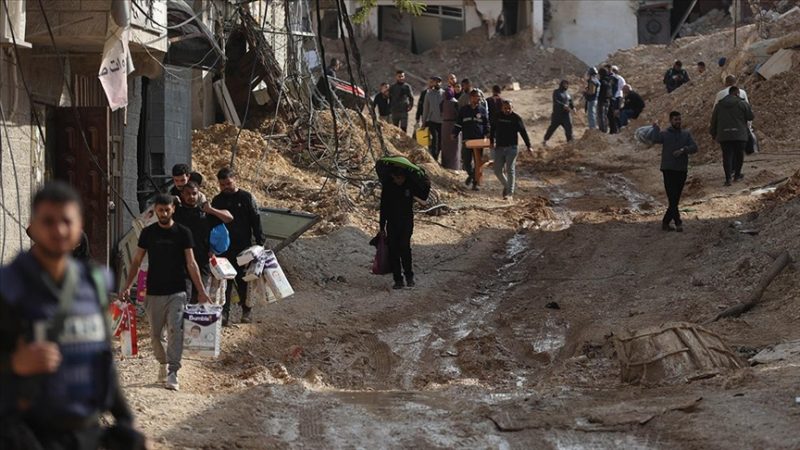
JENIN – The Jenin City municipality said that the Israeli occupation forces destroyed all the streets of Jenin refugee camp and 85 percent of the city’s streets and displaced the residents of entire neighborhoods in the camp.
In press remarks on Monday, Jenin municipality director Mamdouh Assaf said that about 8,000 commercial facilities had been completely shut down in Jenin as a result of the Israeli military operation. However, he did not specify whether these closures occurred within the city itself or in the refugee camp.
For his part, Jenin mayor Mohamed Jarrar said that 25 percent of Jenin’s residents had been displaced by the Israeli army, adding that the number of displaced citizens from Jenin camp surged to 21,000 people.
Jarrar described the scale of destruction caused by Israeli bulldozers in Jenin as “immense,” pointing to a sharp rise in the poverty rate as a result of the Israeli military operation that has severe economic repercussions for the residents.
In a related context, the Palestinian health ministry said that since the beginning of the second academic semester in early February, 72 schools in the cities of Jenin and Tulkarem have stopped providing direct education as a result of the ongoing Israeli aggression.
The Israeli occupation army launched a large-scale military operation in the northern West Bank 56 days ago, unleashing a violent campaign in Jenin that resulted in the death and injury of dozens of civilians, widespread destruction of homes and public and private property, and the displacement of thousands.
The operation later expanded to Tulkarem and Tubas, targeting mainly the refugee camps of Tulkarem, Nur Shams, and al-Fari’ah.
Hamas: Ceasefire should be implemented instead of making ‘new, side agreements’
MEMO | March 17, 2025
Yemen being bombed by US, UK for fulfilling ICJ, UNGA ‘obligations’: Legal expert
Press TV – March 17, 2025
A prominent legal expert says Yemen is being bombed by the United States and the United Kingdom for fulfilling obligations set by the International Court of Justice (ICJ) and the United Nations General Assembly (UNGA).
Craig Mokhiber, a US-based human rights lawyer and former United Nations official, took to his X handle, formerly Twitter, on Monday to condemn the latest American-British aggression on Yemen.
He said both the ICJ and the UNGA have found that all countries are “legally obliged” to cease any kind of support for the Israeli occupation regime amid the ongoing genocide in Gaza.
The obligations, he elaborated, include banning any products from the illegal settlements, to cut off all military, diplomatic, economic, commercial, financial, investment, and trade relations with the Israeli occupation, to respect the provisional orders of the ICJ in the Israel genocide case, and to respect their third-state obligations under the Genocide Convention to act to prevent and stop Genocide.
“Yemen is being bombed for respecting these obligations,” he remarked.
Mokhiber, who previously served as the director of the New York office of the UN high commissioner for human rights, resigned from his position in October 2023 in protest against the UN’s “failure” to prevent the genocide of Palestinians in the Gaza Strip.
He described the US, the UK and much of Europe as “wholly complicit in the horrific assault.”
American and British warplanes attacked Yemen on Saturday night after US President Donald Trump vowed to use “overwhelming lethal force” against the poorest country in the Arab world that had recently resumed a ban on Israeli ships from crossing key maritime regions after the Tel Aviv regime reimposed crippling blockade on the besieged Palestinian territory.
Yemeni health ministry condemned the targeting of civilians and civilian infrastructure, describing it as a “full-fledged war crime and a blatant violation of international laws and conventions.”
The US-UK military coalition launched another attack on Sunday night, with Yemeni authorities now putting the death toll at more than 50, including women and children.
According to Yemeni reports, American and British warplanes launched at least 47 airstrikes on several sites in Yemen’s capital, Sana’a as well as areas in the northern province of Sa’ada, the central province of al-Bayda, and the southwestern province of Dhamar.
The leader of the Ansarullah resistance movement in a speech on Sunday night warned the United States that the aggression against the Arab country will be met with escalation.
“The aircraft carrier and American warships will be targets for us, and the navigation ban will include the Americans as long as they persist in their aggression,” Abdul Malik al-Houthi said.
“We will respond to escalation with escalation, and we will strike at the American enemy by targeting its aircraft carrier, warships, and imposing a blockade on its vessels.”
President Trump: Stop Bombing Yemen and Exit the Middle East!
By Ron Paul | March 17, 2025
Over the weekend President Trump ordered a massive military operation against the small country of Yemen. Was Yemen in the process of attacking the United States? No. Did the President in that case go to Congress and seek a declaration of war against the country? No. The fact is, Yemen hadn’t even threatened the United States before the bombs started falling.
Last year, candidate Trump strongly criticized the Biden Administration’s obsession with foreign interventionism to the detriment of our problems at home. In an interview at the Libertarian National Convention, he criticized Biden’s warmongering to podcaster Tim Pool, saying, “You can solve problems over a telephone. Instead they start dropping bombs. Recently, they’re dropping bombs all over Yemen. You don’t have to do that.”
Yet once in office, Trump turned to military force as his first option. Since the Israel/Hamas ceasefire plan negotiated by President Trump’s special envoy Steve Witkoff, Yemen has left Red Sea shipping alone. However, after Israel implemented a total blockade of humanitarian relief to citizens of Gaza last week, Houthi leaders threatened to again begin blocking Israel’s Red Sea shipping activities.
That was enough for President Trump to drop bombs and launch missiles for hours, killing several dozen Yemeni civilians – including women and children – in the process.
After the attack, Trump not only threatened much more force to be used against Yemen, but he also threatened Iran. His National Security Advisor Mike Waltz added that the US may start bombing Iranian ships in the area, a move that would certainly lead to a major Middle East war.
Like recent Presidents Bush and Obama, candidate Trump promised peace after four years of Joe Biden’s warmongering and World War III brinkmanship. There is little doubt that with our war-weary population this proved the margin of his victory. Unfortunately, as with Bush and Obama, now that he is President, he appears to be heading down a different path.
The Republican Party is gradually becoming a pro-peace, America first party, but the warmongers and neocons of the old line in the Party are not going to let go so easily. Unfortunately many of these dead-enders have found their way to senior positions in Trump’s Administration, with voices of restraint and non-intervention nearly nowhere in sight among his top tier of advisors.
To solve the Yemen problem we must understand it: Russian and Chinese ships, for example, are not being threatened because they are not enabling the Israeli demolition of Gaza. The slaughter there has been facilitated with US money and US weapons. It is the US doing Israel’s bidding both in Gaza and in the Red Sea that is painting a target on us and unnecessarily putting our troops at risk of retaliation.
The US government, starting with Biden and continuing now with Trump, seems eager to make this our war even though, as Rep. Thomas Massie pointed out over the weekend, Red Sea shipping is of minor importance to the US economy.
In a real “America first” foreign policy we would be following the Russian and Chinese lead and staying out of the conflict. It’s not our war. End US military involvement in the Middle East and our troubles disappear. It really is that simple.
Trump hypes up tensions with Iran
By M. K. BHADRAKUMAR | Indian Punchline | March 17, 2025
On Saturday, US President Donald Trump ordered the Pentagon “to launch a decisive and powerful military operation” against the Houthis of Yemen with “overwhelming lethal force” in the most significant military action of his second term, to date.
The US attacks began on Saturday and continued into Sunday on the Yemeni capital Sanaa and other areas reportedly killing 31 people and wounding 101 so far, most of them children and women.
Such wanton killing of defenceless women and children can only be seen as an act of cowardice. Trump has blood on his hands. Trump wrote on Truth Social addressing the Houthis, “Your time is up, and your attacks must stop, starting today. If they don’t, hell will rain down upon you like nothing you have ever seen before.”
Thereupon, Trump abruptly digressed to address Iran that it needed to immediately stop supporting the Houthis. Trump threatened, “America will hold you fully accountable and, we won’t be nice about it!”
Iran has reacted strongly. Foreign Minister Abbas Araghchi said Trump has no authority or business to dictate Iran’s foreign policy. Araghchi noted that Houthis are only reacting to “Israeli genocide and terrorism”. The commander of Iran’s Islamic Revolutionary Guard Corps General Hossein Salami warned that Iran would give “a destructive response” to any attack.
Trump’s belligerence came within two days of a visit by Anwar Gargash, the UAE’s Minister of State for Foreign Affairs, to Tehran on Thursday to hand over a letter from Trump addressed to Iran’s Supreme Leader Ayatollah Ali Khamenei proposing talks on Iran’s nuclear programme and Iran’s support to resistance groups. Tehran remains open to nuclear talks but has rejected any linkage with its regional policies.
Meanwhile, Tehran has begun circling the wagons as a new phase is beginning in Trump’s foreign policies, with tensions rising steadily over the nuclear issue. The October deadline is drawing closer by the day for invoking the snapback clause in the JCPOA (2015 Iran nuclear deal) to reinstate UN Security Council sanctions will expire, and Iran’s enrichment programme, on the other hand, has apparently reached a point where it already has a stockpile to make “several” nuclear bombs, per the International Atomic Energy Agency.
On March 14, China’s foreign minister Wang Yi hosted a joint meeting in Beijing with the Russian and Iranian deputy foreign ministers where he proposed five points “on the proper settlement of the Iranian nuclear issue”, which, for all purposes endorsed Tehran’s stance. It was a resounding diplomatic victory for Iran.
Interestingly, the Beijing meeting was timed to coincide with the conclusion of a 6-day naval exercise at Iran’s Chabahar Port with the theme of Creating Peace and Security Together between the navies of Iran, Russia and China. A readout by the Chinese Ministry of Defence stated that “The naval exercise enhanced the joint operational capabilities of the three navies to respond to various emergencies and maintain maritime security, deepened military trust and practical cooperation among the navies of the participating countries, and laid a solid foundation for future cooperation.”
All these developments taken into account, Trump faces multiple challenges at the diplomatic level over the Iranian nuclear issue with Tehran, Moscow and Beijing coordinating their approaches in the crucial six-month period ahead and Tehran giving confusing signals over Trump’s letter to Khamenei. Trump cannot be pleased with the developing situation on the diplomatic track and some pressure tactic becomes necessary against Iran. Simply put, Trump’s egocentric mind took the easy route of punching the Houthis so hard to send an indirect message to Tehran (and Moscow and Beijing) that he is not to be trifled with.
Indeed, Moscow has lately waded into the Iran nuclear issue and is positioning itself for a mediatory role potentially. Foreign Minister Sergey Lavrov recently came out against attaching extraneous issues (eg., verifiable arrangements by Tehran to ensure the cessation of its support for resistance groups in Iraq, Lebanon, and Syria) to the nuclear negotiations. Lavrov said frankly, “Such a thing is unlikely to yield results.”
Lavrov has also emphasised Moscow’s support for Tehran’s basic stance that any resumption of US-Iran negotiations ought to be stemming from the 2015 nuclear deal known as the JCPOA which carries the approval of the UN Security Council (which of course Trump tore up in 2018.)
Don’t be surprised if Moscow is wading into the US-Iran nuclear standoff with great deliberation when it is tackling on a parallel track Trump’s intrusive calls for cessation of Russian special military operations in Ukraine even while there is much unfinished business which remains to be completed and Ukraine showing no genuine interest in negotiations with Russia — and has actually enacted a law expressly prohibiting such negotiations.
Specifically, Trump would know he is in no position to get Zelensky to agree to a surrender of weapons by the Ukrainian troops in Kursk — although, Putin has offered that “If they lay down their weapons and surrender, they will be guaranteed life and decent treatment.”
The crunch time is coming as the Russian deadline for peaceful surrender is about to expire by 6 am Moscow time today. Dmitry Medvedev, Deputy Chairman of Russia’s Security Council wrote on Telegram channel that “should they refuse to lay down arms, they will all be systematically and mercilessly eliminated.” Trump’s nerves must be on edge as embedded within the Ukrainian occupying forces there could be Western mercenaries as well.
In the circumstances, one feels sorry for the Houthis whom Trump is using as a punchbag to vent his frustrations and suppressed fury against Tehran. Top officials in the Trump administration have openly acknowledged that Tehran is being notified that “enough is enough” — an expression used by Trump’s National Security advisor Mike Waltz to interpret the nuanced message of the air and missile strike against the Houthis.
Certainly, Yemen which has gone through so much suffering does not deserve such bestial attacks. As for Houthis, they are yet to attack any ships despite threatening to do so over Israel’s blockade on all food, fuel and other supplies into the Gaza Strip. The Houthis have accused the Trump administration of overstating the threat of maritime embargo, which is limited only to Israeli navigation until humanitarian aid is delivered to the people of Gaza according to the ceasefire agreement between Hamas and Israel.
Evidently, the Houthis are neither looking for a showdown with Trump nor are they to be regarded as Iranian proxies. Houthis halted the drone and missile attacks altogether when the Gaza ceasefire was declared in January. Even Trump’s best argument is that Houthis had attacked US ships during the Biden administration.
Nonetheless, US Central Command described Saturday’s strikes as the start of a large-scale operation that may continue indefinitely. Secretary of Defense Pete Hegseth wrote on X, “Houthi attacks on American ships & aircraft (and our troops!) will not be tolerated; and Iran, their benefactor, is on notice, Freedom of Navigation will be restored.” Behind such fictitious rhetoric, Hegseth probably understands that Trump expects him to keep the pot boiling in the Gulf region through the next several months as the Iran nuclear issue approaches a point of criticality.
The Russian Foreign Ministry, in a readout on Saturday, stated that US Secretary of State Marco Rubio called Lavrov and informed him about the US decision to attack the Houthis. It said Lavrov, in response, “emphasised the need for an immediate cessation of the use of force and the importance of all parties engaging in political dialogue to find a solution that prevents further bloodshed.” Well, the shoe is on the other foot now, isn’t it? On March 15, Trump forfeited the moral ground to be leading with peace through strength in his foreign policy.
Yemen Will Stand with Gaza, Even if it Means War with the US: Abdul-Malik al-Houthi
Full speech of Abdul-Malik Badr al-Din al-Houthi, leader of Ansar Allah, about Trump’s latest aggression against Yemen – March 16, 2025
Yesterday, the American enemy announced a new wave of aggression against our country, launching a series of airstrikes and naval bombardments targeting homes and residential neighborhoods in the capital, Sana’a, and several other Yemeni governorates. These attacks resulted in dozens of martyrs and wounded, including women and children.
This brutal and unjust assault is yet another example of US tyranny and arrogance toward our (Islamic) Nation. Its objective is clear: to support the Israeli enemy after our country took a firm stand in support of the Palestinian people against Israel’s starvation campaign in Gaza. Israel has not only blocked the entry of humanitarian aid but has also completely prevented the flow of goods into the besieged strip.
The starvation of two million Palestinians is an immense crime—an unequivocal crime against humanity. No one with a human conscience, no one with sincere Islamic faith, can remain silent in the face of such an atrocity. Yet, it is deeply unfortunate that most Muslim and Arab regimes have responded with indifference. There has been no serious effort to prevent Israel’s deliberate starvation of Gaza’s people. In fact, the situation has escalated to the point where Israel is now actively depriving them of water as well.
The suffering of the Palestinian people in Gaza is an immense tragedy, yet many choose to ignore it. Israeli conditioning has set the bar for global outrage so high that only large-scale massacres by bombs and weapons seem to provoke attention. As a result, when suffering takes the form of starvation and deprivation rather than immediate mass killing, many fail to even follow the events unfolding there.
However, the deliberate starvation of Gaza’s people—the complete blockade of aid and goods—is no less than a method of extermination. For fifteen days now, the Israeli enemy has kept Gaza’s crossings closed, intensifying the suffering of its people. Anyone who observes the magnitude of this humanitarian crisis can recognize it as a catastrophe.
In contrast, the responsibility to act falls first and foremost upon our own (Islamic) Nation—upon all Muslims, upon every people and country within our Ummah. Yet, where is the serious action? Where is the political effort beyond empty statements? Where is the economic pressure? Most regimes have taken no real position in any meaningful way. Worse still, they influence their people, suppressing their ability to act, leaving them paralyzed as mere spectators.
This failure to uphold our great religious, moral, and humanitarian obligations poses a grave danger to our entire Nation. The root cause? Fear of America. That is the reality. Fear of America, which stands as a direct accomplice to all Israel’s crimes—protecting it, enabling it, and ensuring it carries out its atrocities without consequence.
This is what has driven much of our Nation—both its governments and its people—into failure and neglect of its duties, whether dictated by faith, morality, or basic humanity. In the holy month of Ramadan, as Muslims increase their recitation of the Quran, they must also reflect on their human, moral, religious, and faith-based responsibilities. At the same time, they must recognize the grave danger of a world where fear of America outweighs fear of divine punishment—where whole countries and peoples abandon their sacred duties to the Ummah out of submission to foreign powers.
What is happening to the Palestinian people—extermination, starvation, killing, displacement, and oppression—without any meaningful reaction from the Muslim world, sets a dangerous precedent. It opens the door for similar horrors elsewhere. Any other Arab or Muslim country could be next. Wherever the Americans and Israelis choose to repeat their crimes—whether in Palestine’s neighboring countries or beyond—the result will be the same. Others will remain passive, shackled by fear, humiliation, and inaction. It is a great danger for the whole Ummah, as it emboldens the American enemy and the Israeli oppressor. Neither of them has a conscience. Neither considers the silence, passivity and inaction of other nations as a deterrent—only as an encouragement to commit further crimes. They have great (hegemonic and expansionist) ambitions and agressive projects against our (Islamic) Nation, as well as ideological foundations (supremacism) as well as foundations rooted in their colonialist inclination and tyrannical behavior.
That’s why Yemen’s stance has been clear. Our decision to support the Palestinian people, including our move to block Israeli maritime navigation, that clearly targets the Israeli enemy and no one else, is aimed solely at pressuring Israel to open the crossings, allow the entry of humanitarian aid, and put an end to the starvation of Gaza.
What is happening in Gaza is outright starvation, compounded by imposed thirst, amid the immense Nakba (catastrophe) the Palestinian people are enduring. After 15 months of relentless annihilation and mass destruction, every aspect of life in Gaza has been systematically erased. This is not a situation where a decision to block aid and goods has a minimal impact—it is devastating. The conditions were already dire; there are no food reserves, no agricultural activity, and no remaining essentials for survival. The entire Gaza Strip has been utterly destroyed.
The reality is evident to anyone paying attention—conditions there are beyond desperate. From the very first moment the Israeli enemy took this step, it inflicted immense harm and suffering on the Palestinian people. And now, after 15 more days, that suffering has only worsened. Yet, as we have said before, there has been no serious response from Arab regimes, nor even from the broader Islamic world—no true action in the full sense of the word.
As for us, a people, our faith compels us. The Messenger of God ﷺ said: “Faith is Yemeni, and wisdom is Yemeni.” Guided by this faith and our human conscience, we cannot simply stand by. Our country has stood with the Palestinian people for 15 months, supporting them in the battle of Al-Aqsa Flood, resisting the genocide committed by the Israeli enemy in partnership with the United States.
Throughout this period, our people have also withstood American aggression—intended to bolster the Israeli enemy—and will remain unwavering in their active support for Palestine, especially as the threat of extermination persists. There are red lines in the Palestinian situation. When the Israeli enemy, with full American backing and protection, perpetrates genocide, that is a red line. We cannot stand idly by. There are legal and humanitarian obligations in this regard—obligations that extend beyond Muslims, enshrined in international law and the UN Charter. Yet all have abandoned them: the international community, other nations—they have forsaken these humanitarian duties. And in our Islamic world, they abandon their humanitarian, religious, and moral responsibilities, even when their own national security and interests are at stake. They forsake everything. It is a total abdication. This emboldens the Israeli enemy, just as it emboldens the American enemy—a full partner in these crimes. This inaction offers no solution to the Ummah, nor does it avert the looming danger, nor does it provide any real solution to the ongoing crisis..
Our nation’s decision to support the Palestinian people—by blocking Israeli navigation and enforcing restrictions against the enemy—comes from this humanitarian, moral, religious, and faith-driven commitment. It is a means to press for the entry of aid and to end the starvation of two million Palestinians in Gaza. This is not a minor issue that can be ignored; it is a grave humanitarian crime against millions of people.
Thus, when the American enemy escalates its aggression through airstrikes, it will not achieve its goal of pressuring us into retreating from our position. The only real solution is ensuring the entry of humanitarian aid, putting an end to the starvation and dehydration of the Palestinian people in Gaza. The situation is beyond catastrophic.
What the Israeli enemy is doing on top of that—targeting Al-Aqsa Mosque, seeking to seize or demolish it, and attempting to forcibly displace the Palestinian people—must be considered as firm red lines by our entire (Islamic) Nation. If the enemy sees that, regardless of his actions, the Ummah takes no decisive steps, makes no real decisions, and adopts no serious stance, he will be emboldened to escalate further. His Zionist agenda is well known, and every major act of aggression and escalation he commits without consequences only paves the way for even greater crimes.
Indeed, his goal is full control over the Palestinian people—erasing their existence and liquidating their cause. This is the shared objective of both the Israeli and American enemies, who fully embrace Zionist ideology, champion its project, and act accordingly.
That is why it is impossible for us to forsake our duties towards these red lines. Even if all remain silent, we will not remain silent. We will do everything we can, considering our resources and capabilities, along with our possibilities. This is a sacred responsibility before God Almighty, and neglecting it invites divine punishment, both in this world and the next. It is far easier for us to stand in opposition to the tyrants of our time, to face their threats, and to sacrifice for the sake of God, than to face the wrath of God Himself. We will not bring upon ourselves His displeasure, anger, and Hellfire—neither in this world nor in the Hereafter.
We are certain that when we take the right stance—one fully aligned with our humanitarian, moral, and religious obligations, as well as the national security interests of our Ummah in —God will be our ultimate supporter. “He is the best of helpers.” We place our trust in God. We believe in His true promise. We rely on God, the Almighty, and He is the best of protectors.
The United States, in their statements and declarations, claim that one of the reasons for their latest wave of brutal, unjust, and criminal aggression against our country is our people’s unwavering support for the Palestinian cause over the past 15 months. This support has been in direct opposition to the genocidal aggression carried out by the Israeli enemy with American partnership and protection. The US frames its assault as punishment for our people’s honorable, courageous, and steadfast stance alongside the Palestinian people in resisting genocide.
We say this: That honorable stance—taken for the sake of Almighty God and in fulfillment of these faith-based, humanitarian, moral, and religious obligations—is one our people will never regret. It is a noble position, a great position, a position that brings us closer to God. It has strengthened our people on all fronts, including militarily.
It is a stance of dignity, taken by our dear people with faith and insight. Thus, no matter the extent of American and Israeli tyranny, our people will not waver from their Quranic, faith-driven, moral, and humanitarian course. We will stand firm against this oppression. This American aggression will fail—by God’s will—just as it has failed before. It will not succeed in pressuring our people or our people and country to abandon their principles. This is a fundamental, unwavering commitment, rooted in faith, morality, and necessity in every sense of the word, as we will explain in more detail.
The US will not achieve its goal of weakening our country’s military capabilities—by God’s will—because we are engaged in a jihadist struggle and have been resisting American aggression for many years. This is merely another chapter in that battle. And as in previous confrontations, this new round of aggression will only contribute to further strengthening and developing our military capabilities, God willing.
We will meet escalation with escalation—that is our approach. Yesterday, our armed forces responded immediately to US attacks, launching (18) missiles and drones in retaliation for the American airstrikes and bombings on our land. This is our choice, our decision, our path. As long as the American enemy persists in its aggression, its warships, aircraft carriers, and naval vessels will be targeted by our missiles and drones.
Furthermore, maritime restrictions will extend to US vessels as long as the aggression continues. The US is the one turning the sea into a battlefield, thereby directly impacting maritime navigation and global trade. Our decision was only targeting Israeli ships, and will now extend to US ships, but they are the ones who turn the sea into a battlefield and threaten maritime navigation. It is essential that all nations recognize who truly threatens international waters and the movement of ships.
The United States and Israel are the sources of evil and instability—globally and across the region. They are responsible for aggression, crimes, and chaos. They undermine peace in every sense of the word, plunging the world into crisis and conflict, East and West alike. They are arrogant, oppressive, and hostile.
We have additional escalation options at our disposal. We will respond to American escalation by escalation. We will retaliate to aggression with missile strikes targeting its aircraft carriers, battleships, and naval forces, and target its commercial ships. If the U.S. continues its hostilities, we will escalate further, by God’s will.
Our dear people will mobilize in full force—through general mobilization and across all sectors—just as they have done with strength and honor over the past 15 months in opposing the Israeli genocidal aggression against the Palestinian people, which has been carried out with U.S. partnership and protection. Now, in the face of this aggression against our country and the deliberate starvation and deprivation of the Palestinian people in Gaza, our country will rise once again in a widespread movement to confront tyranny.
We are not acting recklessly or seeking conflict. We are standing on a foundation of faith, morality, humanity, and jihad for the sake of Almighty God. We resist oppression, injustice, and the criminal arrogance of the U.S. and Israel. The US strives to submit the region as a whole to Israel, and it is clear to everybody.
Although the United States is a partner in the agreement to halt the aggression against the Gaza Strip, deliver aid, and end the starvation of the Palestinian people there, and has commitments in this regard, clear commitments. What are the obligations between states, between people for? Agreements are signed with clear obligations, but the United States disregards its commitments by failing to honor its obligations and breaking agreements. The Israeli side, too, violates every covenant and pact, denying any agreement. What the Israeli enemy is doing in Palestine, particularly in the West Bank, are continuous crimes. In the Jenin refugee camp, for example, they continue daily killings, forced displacement, and destruction, as well as in other camps like Tulkarm and others.
What the enemy also does, with regard to the repeated incursions into Al-Aqsa Mosque, these are steps, as we said, that are not the end, not the final ceiling of what the Israeli enemy is doing. These are steps within the Israeli enemy’s plan. And every time the Ummah remains silent, it dares to do more. See what Israel does against the Palestinian people in the Gaza Strip—continuing daily killings, even if not at the pace it was during the daily genocidal extermination. But these are crimes, crimes that the (Islamic) nation must not remain silent about. And the American side is complicit in this; they kill journalists, they kill citizens, they kill those working in humanitarian fields, as if it were a normal issue. These are clear crimes, clear attacks, violations of everything—treaties, laws, ethics, values, and everything.
The enemy’s aggression against the Lebanese people continues. It has failed to honor its agreements, even those guaranteed by the US. It has completely disregarded guarantees concerning South Lebanon and didn’t retreat its forces, and persists in its violations—killing Lebanese civilians and committing countless transgressions. It wages attacks in Syria as well, invading, expanding, and launching relentless airstrikes—40 raids in a single night just days ago! Across many regions, it destroys, kills, occupies, and expands in a blatant display of aggression.
These crimes are flagrant violations with no justification whatsoever, yet much of the world remains silent. This silence only confirms what we have long stated: The US., alongside Israel, seeks to impose a doctrine of domination over our (Islamic) Nation and our peoples. This, by God, is their ultimate objective. They seek absolute freedom in their aggression and crimes—to kill, destroy, occupy, and do as they please without facing any response or serious opposition. This is an extremely dangerous matter, and accepting it carries profound consequences.
If silence were effective, if alternative approaches that refrain from taking a stance against American and Israeli tyranny and aggression had worked, it would have succeeded in Syria. The stance of the groups in Syria is clear: they confirm in all clarity that they do not consider Israel an enemy and will take no action against it. They refuse to respond in any way. It has even been mandated in media circles that the term “Israeli enemy” should not be used in reporting. Yet, this approach has failed. It did not work to declare, “We are not hostile, we will not respond, we are not targeting you.” Reality proves their commitment to this stance. They refuse to adopt any position against Israel, they don’t retaliate (nor condemn). They do not want conflict, confrontation, or any kind of problem. Their only request is that Israel stops its occupation of Syria—not as a firm position, but merely as a plea. They appeal, they beg, they turn to other nations and to the Americans, but to no avail.
Meanwhile, Israel expands its occupation, consolidates its control, and continues to destroy Syria’s resources. It tightens its grip on the territories it has seized in southern Syria—coveting three provinces: Quneitra, large areas of Daraa, and Sweida. It extends its reach to the outskirts of Damascus, nearing the capital itself. There is no justification for this in Syria—no ties to Iran, as the stance of these groups toward Iran is well known. They openly declare Iran as the enemy, not Israel. They have no issue with normalization (with Israel). Yet, none of these strategies have succeeded.
The Palestinian Authority in the West Bank has made its position clear. The agreements it signed with Israel are well-documented. Yet, Israel disregards them entirely, fails to honor any commitments, openly expresses its ambitions, and continues its daily crimes against the Palestinian people in the West Bank. This confirms an undeniable truth: a firm and deterrent stance against Israel is necessary to deter it.
We are not in a futile position; we are in an essential, just, and moral position—one rooted in humanitarian, ethical, and religious obligations. The American agenda in the region is clear: the total subjugation of this land to Israel and the imposition of an equation of permissiveness. Neither of these can ever be accepted. We will never accept the subjugation of this region to Israel, nor will we accept the normalization of permissiveness—neither in our country nor anywhere else. To accept this is to betray the principles of Islam. To accept it is humiliation. And God says: “To God belongs all honor, and to His Messenger, and to the believers.” (Quranic verse)
Submission does not protect the Ummah from killing, occupation, or oppression. It does not shield them from the dangers posed by America and Israel. On the contrary, it enables these enemies to implement their agendas and carry out their aggressive and destructive plans against our Umma.
Our position is one of honor and righteousness—a response to God’s command and a fulfillment of our faith-based, humanitarian, and moral duties. It is inner and authentic, and not dictated by any external force, nor is it an extension of any foreign agenda. Our alliance, cooperation, and coordination with the free people of our (Islamic) Nation within the Axis of Resistance are part of our collective duty as an Umma.
If some fulfill their obligations, it does not mean they are acting on behalf of others, nor does it imply subordination of one group to another. It is a shared responsibility, a duty upon all. Those who fail to uphold this responsibility—that is their choice. But as for us, our stance is in the most noble cause, an honorable position that brings dignity before God, and an essential duty.
We stand against American and Israeli tyranny. We stand against their crimes and their aggression. We are the continuation of the great march of Islam, led by the Messenger of God—may peace and blessings be upon him and his family.
As we commemorate the anniversary of the Great Battle of Badr on the seventeenth of the blessed month of Ramadan, we recall how the Messenger of God (peace be upon him and his family) advanced with divine permission and guidance. As the Almighty says:
“Permission is given to those who fight because they have been wronged, and indeed, God is capable of granting them victory.”
And as He says:
“Just as thy Lord brought thee out of thy home in truth, though a party of the Believers were unwilling, disputing with thee concerning the truth after it had become manifest, as if they were being driven to death while they looked on.”
With unwavering faith, the Messenger of God (peace be upon him) rose in the Battle of Badr against tyranny, confronting the forces of oppression. At that time, the Quraysh embodied tyranny—through their hostility, aggression, ignorance, injustice, and enmity toward Islam and the Muslims.
Today, the front of tyranny has changed, but its essence remains the same. In this era, it is America and Israel—an alliance of evil, disbelief, injustice, and criminality, waging war against Islam and Muslims. Is there any doubt about this? Who else inflicts upon the Ummah what they do? Their objectives are evident, their crimes undeniable, their ambitions exposed, and their Zionist project—aggressive, destructive, and criminal—laid bare for all to see. They are the front of disbelief in our time.
We stand in defiance of this oppression, of this aggression, of the systematic criminality targeting our lands and our Ummah. We move forward in continuation of Islam’s righteous struggle, following the example of the Messenger of God (peace be upon him and his family). He marched forward with only a few in number and limited provisions, yet he relied upon God. He advanced with faith, and those who followed him did so with conviction, responding to the call of belief, placing their trust in God, and in His true promise.
God granted them a decisive victory at Badr—a victory that marked a turning point, distinguishing it from the battles before and after. It ushered in a new era—an era of honor, triumph, and strength for Islam and the Muslims. It was a victory that established truth through both struggle and steadfastness in the field of battle. And we are the continuation of that movement, just as the Ansar (Helpers) stood with the Messenger of God (peace be upon him and his family) when he first consulted them: their words echoed faith, loyalty, courage, honor, and unwavering resolve. This spirit was demonstrated by their stance and jihad in the path of God.
Our dear people follow in the footsteps of those mujahideen ancestors who bore the banner of Islam against tyranny—whether the tyranny of Quraysh or the tyranny of the global oppressors of their time. We are patient in the face of war, and firm in the encounter with the enemy. I swear by God, O Messenger of God, we will not say to you as the Children of Israel said to Moses: ‘Go, you and your Lord, and fight while we remain behind.’ Rather, we say: ‘Go, you and your Lord, and we shall fight alongside you.’”
Our model is the Messenger of God (peace be upon him and his family), who never remained silent in the face of oppression, nor did he submit. So how can it be acceptable to God that the Ummah of Islam—the nation of two billion Muslims—the Arab world with its 300 million people—chooses silence, surrender, and inaction? Can entire countries and peoples resign themselves to this collective choice? This is nothing less than suicide for the Ummah, invoking the wrath of God and empowering its enemies.
Surrender is not an option for a great Ummah. It is not permissible in the religion of God. The Messenger of Allah, whom God described:
“Indeed, in the Messenger of God, you have an excellent example for those who hope in God and the Last Day and remember God often,”
rose with just 300 mujahideen—perhaps a few more or less, depending on different narrations. Yet with this small force, he carried the banner of Islam and advanced in the path of God.
The dangers of submission are immense. The threats facing our Ummah today demand serious action—reliance on God, trust in Him, and unwavering faith in His promise.
We, the Yemeni people, refuse to bow to the enemy or allow them to achieve their aggressive objectives. We march forward, relying on God. We have the greatest source of strength—God Almighty. We trust in Him and place our reliance upon Him. Our choices and decisions are rooted in our faith, our dignity—both as Muslims and as human beings. We stand firm, confronting oppression and aggression with broad and decisive action.
Therefore, I call upon our dear people to take to the streets tomorrow by the millions, on the anniversary of the Great Battle of Badr, in the capital, Sana’a, and across the provinces, in a massive show of solidarity—to reaffirm their steadfastness, their just stance, their faith-driven commitment, and their jihadist resolve in support of the Palestinian people and in confronting American aggression.
The specific time and locations will be determined by the organizing committee and its branches, God willing. However, what truly matters is that the popular turnout is vast—an expression of unwavering determination and deep-rooted belonging on this significant occasion. Because our stance is a continuation of that historic position. Our role model is the Messenger of God. Just as our fathers and grandfathers stood with loyalty, faith, perseverance, dignity, and sincerity alongside him in the Great Battle of Badr and in other struggles against the tyranny of the first Jahiliyya (Age of Ignorance), we, too, move forward as an extension of that legacy—carrying the banner of the Messenger of God, of Islam, upholding the march of Islam, embodying the position of Islam, and engaging in jihad for the sake of God in our time, in this stage of history.
We will never accept the violation of this Ummah, nor will we allow our country or others to be subjugated by the Israelis. We will not remain silent in the face of the arrogance, tyranny, aggression, and crimes of the Israeli and American enemies.
I urge you, dear people—you who are known for your loyalty, who have marched in honor for over 15 months in a manner unmatched anywhere in the world—to make tomorrow’s gathering vast and powerful, a testament to your faith, your unwavering loyalty, your dignity, your resilience, and your steadfastness, all of which stem from your deep belief and your response to God Almighty. You are the true extension of this Ummah, standing firm amidst a sea of submission, weakness, and surrender.
You are the heirs of the authentic Islamic path, the bearers of Islam’s banner, and the upholders of the just stance that God Almighty commands—a stance that brings goodness, honor and adheres to divine law.
Rest assured, dear people, that no matter how circumstances evolve, our position remains strong and unshaken, thanks to our reliance on God. With our trust in Him and our accumulated experience in confronting this enemy—its aggression, its military tactics—we stand firm, fully dependent on God Almighty, and absolutely confident in His promise.
He is the One who says: “If God grants you victory, none can overcome you.” He is the One who says: “If you support God, He will support you and make your steps firm.” We trust in Him, for He never breaks His promise. “He is the best of helpers.” “Sufficient is Allah for us, and He is the best disposer of affairs.” There is no power and no strength except with the Most High, the Almighty.
We ask God, the Almighty, to grant us His victory against the tyrants, criminals and oppressors of our time—America, Israel, and those allied with them—to have mercy on our righteous martyrs, to heal our wounded, and to grant freedom to our prisoners. Indeed, He is the One who hears all prayers.
May God’s peace, mercy, and blessings be upon you.
Source: Al-Araby TV
Translation: resistancenews.org
Russia urges US to halt Yemen aggression, engage in dialogue
Press TV – March 16, 2025
Russian Foreign Minister Sergei Lavrov, during a phone call with US Secretary of State Marco Rubio, called for all parties to refrain from “using force” in Yemen and engage in “political dialogue.”
“In response to argumentation put forward by American representatives, Sergei Lavrov stressed the need for an immediate cessation of the use of force and the importance for all sides to engage in political dialogue so as to find a solution that would prevent further bloodshed,” Russia’s Ministry of Foreign Affairs said in a statement on Sunday.
Moscow said that Rubio informed Lavrov about Washington’s decision to launch strikes against Yemen in a call that came after the two countries have relaunched dialogue since US President Donald Trump took office.
On Saturday, Trump announced on his X account that he had ordered the US military to launch “decisive and powerful military action” against Yemen’s Ansarullah resistance movement.
The US attacks, which began on Saturday and continued into the early hours of Sunday, have killed 31 people and wounded 101, “most of whom were children and women,” spokesperson for Yemen’s Ministry of Health, Anis al-Asbahi, posted on X.
Yemen has launched over 100 attacks targeting Israeli-bound ships since November 2023 in response to the Zionist regime’s genocidal war on Gaza, inflicting significant damage on Israel’s already strained economy and forcing the US military to engage in an expensive campaign to intercept missiles and drones, rapidly depleting US air defense stockpiles.
The recent US airstrikes came a few days after Yemen said it would resume retaliatory operations against Israeli vessels sailing off Yemen in response to the regime’s latest blockade on Gaza.
Earlier this month, the Israeli regime halted all aid coming into the Gaza Strip after it abruptly rejected entering the second phase of the Gaza ceasefire deal with Hamas as agreed before.
Israel aims to pressure Hamas into accepting a revision of the ceasefire agreement, allowing for the release of more Israeli captives without the withdrawal of occupation forces from the Gaza Strip.
‘This isn’t war. It’s genocide’: Why the world is silent about massacres in Syria
Survivors of the violence against the Alawite, Christian, and Druze communities share their stories
RT | March 15, 2025
Hay’at Tahrir al-Sham (HTS), the dominant militant group in northwestern Syria, once presented itself as a local opposition force. Just over a month ago, the group was formally disbanded and became part of the Syrian Defense Ministry, yet its origins tell a far more sinister story. Born out of the ashes of Jabhat al-Nusra, Al-Qaeda’s official branch in Syria, HTS carries the same ideological DNA as the world’s most notorious terrorist network. While it has sought to rebrand itself for international legitimacy, its methods remain unchanged: Massacres, ethnic cleansing, and the systematic extermination of those who do not conform to its radical ideology.
Nowhere has this been more evident than in Syria’s coastal cities, where HTS and its foreign recruits have unleashed an unspeakable wave of violence against Alawite, Christian, and Druze communities. Entire villages have been erased, their inhabitants slaughtered in the dead of night. Yet, as these horrors unfold, the world remains indifferent, and the silence of international powers only emboldens the perpetrators.
The massacre in Latakia: A night of unimaginable horror
In one of the darkest nights in Syria’s recent history, coordinated attacks on rural Latakia resulted in mass executions. Survivors tell of masked men storming their villages, dragging families from their homes, and carrying out public executions. Those who resisted were burned inside their homes, leaving behind entire neighborhoods reduced to smoldering ruins.
Testimonies from survivors suggest that many of the perpetrators were foreign fighters, brought in from regions far from the Middle East.
“They didn’t even speak our language,” an elderly survivor told RT. “They had no idea who we were, no reason to hate us – except that they were told to.”
Entire villages have been abandoned, their populations either massacred or displaced. Satellite imagery confirms what survivors describe – rows of torched homes, mass graves hastily covered, and ghost towns where life once thrived.
The bloodbath in Tartus: A slaughter without mercy
Tartus, once a thriving coastal city, has become another graveyard. HTS fighters stormed residential areas, conducting door-to-door massacres. Families were accused of supporting the government or practicing the ‘wrong’ faith before being lined up and shot. Those who were not executed on the spot were locked inside buildings which were then torched.
A local journalist, speaking anonymously for fear of reprisal, described the scale of the killings:
“There were so many bodies that people stopped counting. They weren’t buried properly – just dumped into ditches.”
Foreign fighters played a leading role in these atrocities. A humanitarian worker recalled speaking with a man who had barely escaped:
“He told me he heard Chechen, Uzbek, and North African Arabic among the attackers. These weren’t local militants – these were imported killers, trained elsewhere and sent here to finish us off.”
Despite the horror, survivors insist they were never fighting for political power – only for survival. “We weren’t taking up arms to reclaim land or rule over anyone,” a displaced father from Tartus told RT. “We were just trying to stop them from killing our children in their beds.”
Jableh: The systematic erasure of a community
The violence in Jableh was particularly gruesome. Hundreds of men were rounded up, executed, and dumped into mass graves. Women and children were kidnapped, their fates unknown. Witnesses reported hearing gunfire for hours as the slaughter continued unchecked.
“They lined up all the men and took them away,” a survivor said with a voice shaking. “Later, we found their bodies piled on top of one another, shot execution-style.”
One woman who managed to escape described her captors:
“They were foreigners. Some were Arab, others were not. They had dead eyes, no emotion.
To them, we weren’t people – we were just bodies to be destroyed.”
Another survivor, now living in a refugee camp, said, “People say we were fighting for power, but we were just trying to keep our families from being butchered. No one wanted war. We just wanted to survive.”
Executioners without borders
What makes these massacres even more horrifying is the sheer number of foreign fighters involved. Witnesses and survivors consistently report hearing different languages among the attackers, sometimes even Western languages.
“These aren’t local fighters,” a displaced resident now sheltering in Damascus said.
They were trained somewhere else, then sent here to do what they do best – kill.”
The involvement of foreign jihadists suggests a well-coordinated, externally supported operation, designed not just to fight a war, but to systematically erase communities. Intelligence sources indicate that these fighters were funneled into Syria through neighboring countries, trained in camps before being deployed to slaughter civilians.
The global silence
Despite overwhelming evidence of genocide, Western and regional media continue to present the massacres as “clashes” between HTS and government forces, deliberately sidestepping the mass extermination of Syria’s Alawite community.
A Syrian human rights activist, speaking under anonymity, condemned this distortion:
“This isn’t war. It’s genocide. Yet, the world’s media avoids using that word because it doesn’t fit their political narrative.”
Western governments that once backed opposition forces are now reluctant to acknowledge the nightmare they helped unleash. By turning a blind eye, they enable the continuation of these crimes, and their silence serves as complicity in the atrocities.
The United Nations has remained largely passive, offering vague statements of concern but taking no meaningful action. Meanwhile, the perpetrators roam free, emboldened by the knowledge that no one will hold them accountable.
For the people of Latakia, Tartus, and Jableh, the message is clear: No help is coming. The world will not intervene. But history will remember. And the silence of the international community will forever be its most damning indictment.
Harvard Law School moves closer to divestment from Israel following referendum
Press TV – March 15, 2025
In the latest move by pro-Palestinian students at US universities, the Harvard Law School (HLS) student body has successfully passed a referendum urging the university to divest from the occupying Tel Aviv regime.
The resolution, which called on Harvard to “divest from weapons, surveillance technology, and other companies aiding violations of international humanitarian law, including Israel’s genocide in Gaza and its ongoing illegal occupation of Palestine,” passed with 72.7 percent of votes in favor, with 842 students participating.
Nearly 2,000 students attend Harvard Law School, according to the university’s newspaper, The Harvard Crimson.
The university’s Palestine Solidarity Committee celebrated the move, calling it a landslide victory that took place “despite federal crackdown and admin’s repression on student activism for Palestine.”
“[US President Donald] Trump cannot repress the student movement for Palestine,” the group said in a statement amid the US president’s crackdown on pro-Palestinian protests across American universities
“The university must answer our call and divest from companies that profit from Palestinian annihilation,” it added.
The referendum was first proposed in a petition by student group Law Students for a Free Palestine (LSFP), which passed the 300-signature threshold needed to trigger a Student Government referendum in February.
In a press release, HLS LSFP organizer Irene Ameena commended the result as a rebuke of Trump.
“The Trump administration’s threats are meant to scare us into submission, but this referendum shows that those efforts only strengthen our solidarity with Palestine,” she said.
Thursday night’s results mark the second time a Harvard student body has voted in favor of divesting from Israel.
The call for divestment generally entails calling on institutions to cut economic and any other relevant ties with Israel as a form of protest against its occupation of the Palestinian territories, and more recently its bloody onslaught in Gaza which has killed over 61,000 Palestinians since October 7, 2023.
In June last year, students at the Harvard School of Public Health voted to demand that Harvard divest from Israel, and governments at the Law School, Harvard Divinity School, and the Graduate School of Design have all made similar calls too.
Israel rejects Hamas offer to free Israeli-American captive
MEMO | March 15, 2025
Israel today dismissed a Hamas offer to free an American-Israeli dual national if Tel Aviv begins the next phase of ceasefire talks towards a permanent end to the war.
Hamas said it had made the offer to release New Jersey native Edan Alexander, a 21-year-old soldier in the Israeli occupation army, after receiving a proposal from mediators for negotiations on the second phase of a ceasefire deal, which has halted major fighting since 19 January but has been in limbo for two weeks as Israel refuses to begin negotiations on a second phase and looks to exert maximum pressure on Palestinians to force them to accept its new terms.
The group said its exiled Gaza chief, Khalil Al-Hayya, was due to arrive in Cairo later today for further ceasefire talks with Egyptian mediators.
Since a temporary first phase of the ceasefire expired on 2 March, Israel has closed the borders to Gaza, banning all humanitarian aid from entering the Strip, and cut off electricity to the enclave’s only desalination plant.
Israel says it wants to extend the ceasefire’s temporary first phase, a proposal backed by US envoy Steve Witkoff. Hamas says it will resume freeing captives only under the second phase.
Prime Minister Benjamin Netanyhu’s office called the offer to release Alexander “manipulation and psychological warfare”.
“While Israel has accepted the Witkoff proposal, Hamas stands by its refusal and has not budged a millimetre,” his office added. It said he would convene with his cabinet tomorrow night to discuss the situation and decide on the next steps.
Witkoff told reporters at the White House early in March that gaining the release of Alexander was a “top priority”. US hostage negotiator Adam Boehler met with Hamas leaders in recent days to seek Alexander’s release.
Two Hamas officials told Reuters their agreement to release Alexander and the four bodies was conditional on beginning the talks on the second phase of the ceasefire, opening crossings, and lifting the Israeli blockade.
“We are working with mediators for the agreement to succeed and to compel the occupation to conclude all phases of the agreement,” Abdel-Latif Al-Qanoua, the Hamas spokesperson, said.
Israel has violated the ceasefire over 1,000 times since January, including by killing four Palestinians today in an air strike in the Zeitoun neighbourhood in Gaza City.
Palestinian media said the four men had been collecting firewood needed for cooking in the absence of gas under the blockade.
Far-Right Betar group sends list of thousands of pro-Palestinian activists to Trump admin. for deportation
Press TV – March 15, 2025
The American branch of the Betar Zionist movement, Betar US, says it has sent “thousands of names” of Palestine defenders to the administration of President Donald Trump for potential arrest and deportation, as part of its new smear campaign targeting participants in pro-Palestine protests across the country.
The far-right group made the remarks on social media on Friday, stressing that “Jihadis have no place in civilized nations.”
This comes as critics have voiced concern over Betar’s activities and ongoing “deportation efforts,” which involve documenting protest attendees and reporting them to the US Immigration and Customs Enforcement (ICE).
Earlier this week, Betar said, “We told you we have been working on deportations and will continue to do so. Expect naturalized citizens to start being picked up within the month. You heard it here first. Those who support jihad and intifada and originate in terrorist states will be sent back to those lands.”
The group — which took credit for the arrest of Palestinian student-activist and US Green Card holder Mahmoud Khalil by Department of Homeland Security (DHS) for protesting the Israeli regime’s brutal war on the Gaza Strip — further named Mohsen Mahdawi, a Palestinian studying philosophy at Columbia University in New York City, as its next target.
On Friday, US immigration officers announced the arrest of another activist who participated in pro-Palestinian protests at Columbia University, one of the most prestigious schools in the country.
Leqaa Kordia, a Palestinian from the occupied West Bank, was detained for allegedly overstaying her expired student visa, the DHS said in a statement.
She had previously been arrested in April 2024 for taking part in protests at Columbia University, the statement added.
The DHS further noted that another student, Ranjani Srinivasani, who has Indian citizenship, chose to “self-deport” by leaving the US earlier this week.
The Trump administration has also set a deadline for Columbia University to cede control of one of its academic departments over a scholarship critical of Israel.
Back in January, Trump signed an executive order, pledging to deport foreign students who have participated in pro-Palestinian protests.
Following the detention of Khalil, Trump declared it was “the first of many to come,” labeling Khalil a “radical foreign pro-Hamas student” without providing any evidence.
He emphasized that his administration would adopt a strict stance against any pro-Palestinian activities within American universities.
Founded in 1923 by Ze’ev Jabotinsky, a Zionist figure, and named after Brit Yosef Trumpeldor, Betar US actively spreads Zionist propaganda and in recent months, the group has intensified efforts to identify foreign students in the US who participate in anti-Israel protests, seeking their deportation.
The extremist group is using facial recognition technology and social media to monitor and intimidate pro-Palestine activists, reporting them to US immigration authorities for potential deportation.
This crackdown on free speech has sparked outrage, with critics condemning the group’s tactics as an attempt to suppress dissent and stifle advocacy for Palestinian rights.
Pro-Israel Anti-Defamation League has recently designated Betar as a hate group, after it responded to the publication of a list of thousands of Palestinian children killed by Israeli forces by saying on its account on X, “Not enough. We demand blood in Gaza!”
Hamas agrees to release US-Israeli soldier following direct talks with Washington
The Cradle | March 14, 2025
Hamas revealed on 14 March that it is ready to free a US-Israeli soldier held captive in Gaza and hand over the remains of four other US-Israeli nationals in exchange for the release of Palestinian prisoners as part of the ongoing ceasefire agreement in the devastated enclave.
The Palestinian resistance movement announced in a statement on Friday that it is willing to release the Israeli soldier Edan Alexander, who holds US citizenship, along with the remains of four other dual US-Israeli nationals.
A Hamas official speaking with Al Mayadeen explained that indirect negotiations between the two sides to implement the second phase of the agreement will commence on the same day the prisoners are released.
He indicated that the negotiations would include arrangements related to a ceasefire, the withdrawal of forces, and the release of remaining prisoners within 50 days. He also emphasized the need to immediately open the border into Gaza crossings to facilitate the entry of humanitarian and relief aid.
“We are determined to implement the ceasefire agreement in its various stages,” he stated.
A ceasefire between Hamas and Israel was reached in January, resulting in the exchange of Israeli captives and Palestinian prisoners. However, Israeli Prime Minister Benjamin Netanyahu has refused to proceed to the second stage of the agreement.
Netanyahu and other ministers in the Israeli government are pushing for the resumption of the war. Many in Israel demand that the more than 2 million inhabitants of Gaza be forcibly expelled to make way for Jewish settlers seeking to colonize the strip.
However, US President Donald Trump has authorized his envoy to negotiate directly with Hamas to win the return of the remaining Israeli captives who also have US citizenship.
Hebrew newspaper Yedioth Ahronoth recently wrote that Israelis had been “stunned to discover that, behind its back, Trump’s envoy had flirted for weeks in Doha” with a senior Hamas official.
Featured Video
The Source of America’s Wars – Kristol Clear
or go to
Aletho News Archives – Video-Images
From the Archives
Is Israel to blame for the Iraq War?
American Goy | March 10, 2008
I am so tired of this old canard that “Israel had nothing to do with USA’s war with Iraq – in fact, it officially advised America against it”.
Bullshit. … continue
Blog Roll
 Aletho News
- Ceasefire for all or for none: Iran shuts Hormuz over Lebanon attacks
- Strait of Hormuz is Iran’s ‘nuclear weapon’ that forced US retreat: Medvedev
- Energy crisis will last for months – Kremlin envoy
- Europe’s quiet role in the war on Iran
- Forty days that shook the Empire: How Iran turned the tables on US and prevailed
- Netanyahu unilaterally declares Lebanon outside of ceasefire deal
- Israeli leaders: ‘Not a single goal’ achieved in war with Iran
- What on earth just happened? Trump, Iran, and the unlikely ceasefire
- Alberta Bill Would Fine Political Deepfakes $10,000 Without Satire Exemptions
- Iran declares ‘historic victory’ over US, says enemy forced to accept its proposal
- If Americans Knew
- Gazans face a triple crisis: severe shortages of water and bread, healthcare in tatters
- NY Times reports how Netanyahu took the US into Iran War
- A sigh of relief over Iran, but Gaza and Lebanon in dire straits – Daily Update
- Thousands dead and neighborhoods razed to the ground: Aid agencies fear southern Lebanon is becoming the new Gaza
- The war the US is fighting for Israel could cost trillions
- ‘Cigarette Burns, Nail Wounds’: Toddler Tortured in Gaza to Coerce Father
- Trump Says US Sent ‘a Lot of Guns’ to Protesters in Iran
- Israeli forces destroy 17 UN peacekeeper cameras in south Lebanon
- US-Israeli strikes ‘completely destroy’ synagogue in Tehran
- Archbishop for US Military Says Iran War Is Unjust Under Catholic Teaching
- No Tricks Zone
- An Inconvenient Tree: Uncovered In Alps… Europe Much Warmer Than Today 6000 Years Ago
- New Study Reports A 60% Slowdown In Greenland’s Ice Loss Rate In The Last Decade
- Low Intensity Tornado Wrecks Major Solar Farm, Creating A Potential Toxic Dump
- New Study Finds Warming Saves Lives…Cold Temperatures 12 Times More Deadly Than Excess Heat
- German Science Blog Accuses PIK Climate Institute Of Hallucinating Climate Tipping Points
- Devastating Assessment Of Comirnaty Vaccine By Former Senior Pfizer Europe Toxicologist
- New Study: CO2 Is ‘Effectively Negligible’ As An Explanatory Climate Change Factor Since 2000
- Former Pfizer Toxicologist Dr. Helmut Sterz Tells Bundestag Hearing Pfizer Vaccine Should Have Never Been Approved
- Energy Expert: Germany’s Nuclear Phaseout Was A “500 Billion Euro Mistake”
- New Research: South Australia’s Mid-Holocene Sea Surface Temperatures Were 4°C Warmer Than Today
 Aletho News