House Committee Subpoenas State Department on Proxy Censorship Claims
By Cindy Harper | Reclaim The Net | June 19, 2024
The Chairman of the US House Committee on Small Business Roger Williams last week subpoenaed the State Department and Global Engagement Center (GEC) after they refused to turn over requested documents related to accusations of “censorship-by-proxy.”
We obtained a copy of the subpoena for you here.
GEC was used to flag posts that would then get censored by social media platforms and was also involved in giving grants to fund online blacklisters.
The documents and communications the committee requested but failed to obtain concern the latter activity, specifically an investigation into government bankrolling companies that hindered US small businesses from competing simply because they engaged in lawful online speech.
The material the committee wants for its probe goes back to grants awarded since 2018. The request names almost two dozen entities – the Global Disinformation Index (GDI) and NewsGuard among them.
In a statement, Chairman Williams explained that the investigation has been ongoing for a year, with the focus on how the US government may be using taxpayer money to put roadblocks in the way of the country’s small business development – namely, by hampering them online.
“All Americans deserve a fair shot to compete in the marketplace, and the government should not be tipping the scales against any business for their legal speech on the internet,” Williams is quoted as saying while explaining the need to hit the GEC and the State Department with a subpoena after they repeatedly refused to cooperate.
Williams described this attitude by the government as unacceptable, given that (with the importance of unhindered presence on the internet), “the livelihoods of many small businesses are on the line.”
The Committee’s investigation focuses on how what is described as “censorship-by-proxy” (i.e., the government circumventing constitutional prohibitions to censor online speech by looking for “friendly” non-governmental entities to put pressure on social platforms) – affects US small businesses’ bottom line.
And logically, impeding them from gaining exposure and reach online, especially, but not only, during the pandemic, would have caused serious consequences.
The House Committee said that over the year of the investigation, GEC “slow-rolled document production and ignored legitimate oversight document requests.”
And so, 12 months into it, and after repeated accommodations – such as giving GEC extra time and even narrowing the scope of the requests – the Committee now feels it’s time to “escalate the issue at hand, and issue the subpoena.”
As they say – “nice just doesn’t work with some people.”
Germany lists BDS movement as ‘extremist’ for questioning ‘Israel’
Al Mayadeen | June 19, 2024
A new report issued by Germany’s Federal Interior Minister Nancy Faeser on Tuesday revealed that it was dealing with the Boycott, Divestment, and Sanctions (BDS) movement as a “suspected extremist case,” noting that it had “links to secular Palestinian extremism.”
The report claimed that the BDS is not a homogeneous association, party, or organization.
German news site Watson cited the report as saying that “there is sufficient, strong, factual evidence to suggest that [the] BDS thereby violates, among other things, the idea of international understanding” by questioning “Israel’s” existence.
The report said, “After the terrorist attacks by Hamas on Israel on October 7, 2023, BDS-affiliated groups mobilized and participated in many anti-Israel gatherings and intensified their demands for an end to an alleged ‘Israeli apartheid’ as well as called for a boycott of companies and goods related to Israel.”
German news site Judische Allgemeine quoted Faeser as stating, “We must oppose internal threats from extremism just as decisively as [we do] external threats,” adding, “We absolutely have to break the spiral of escalations in the Middle East, leading to even more disgusting hatred of Jews here.”
“Security authorities are reacting with great vigilance to the latest developments and are actively taking action against any kind of anti-Israel and antisemitic agitation,” she continued.
German-Israeli Society welcomes decision
Meanwhile, German public-broadcasting radio station Deutschlandfunk confirmed reports that Germany’s federal domestic intelligence agency labeled the BDS movement as an extremist movement – and the German-Israeli Society (DIG) welcomed the decision.
DIG’s president Volker Beck released a statement applauding the announcement.
“For the first time, the Federal Office for the Protection of the Constitution names the anti-Israeli boycott movement BDS as a suspected extremist case in its annual report,” stressing, “This supports the assessment of the German Bundestag in its ‘confront the BDS-Movement Resolutely – Fighting Antisemitism’ resolution in 2019.”
According to Beck, “All forms of antisemitism must be fought equally – consistently. The trivialization of or even sympathy by some cultural institutions with [the] BDS must finally stop.”
“We welcome the recent bans on associations issued by Federal Interior Minister Nancy Faeser, which weakened the infrastructure of significant extremist-antisemitic organizations. We call for this course to be consistently continued,” she concluded.
This comes only days after more than 2,000 German academics signed a letter calling for the resignation of the country’s Education Minister Bettina Stark-Watzinger criticizing her efforts to penalize scholars supporting pro-Palestinian students.
The scholars emphasized in a statement that “academics in Germany are experiencing an unprecedented attack on their fundamental rights, on the 75th anniversary of the Basic Law.”
They emphasized that Stark-Watzinger’s recent actions have made her position “untenable”.
“The withdrawal of funding ad personam on the basis of political statements made by researchers is contrary to the Basic Law: teaching and research are free. The internal order to examine such political sanctions is a sign of constitutional ignorance and political abuse of power,” the statement pointed out.
Jailed Iranian musician’s social media activities belie French claims against him
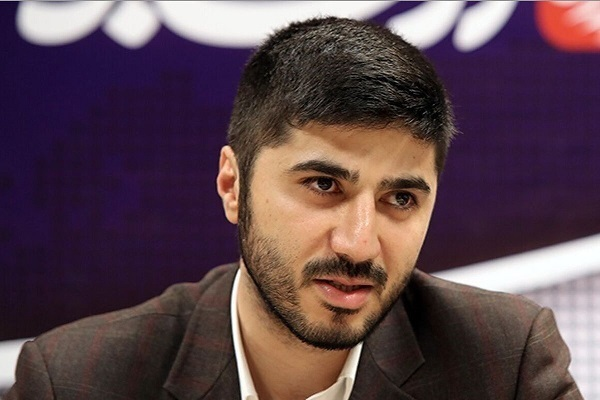
By Ivan Kesic | Press TV | June 19, 2024
It’s been more than two weeks since Bashir Biazar, an acclaimed Iranian musician and filmmaker, was arrested and imprisoned in France over charges widely described as politically motivated.
In a chargesheet filed by the French interior ministry, a copy of which is in the possession of Press TV, Biazar is accused of “Iranian propaganda,” “anti-Zionism and anti-Americanism,” “hateful social media posts,” being a “vector of hatred,” and posing a “threat to public order in France.”
Human rights activists, officials, and Biazar’s family and friends have categorically rejected the charges as baseless and driven by the French government’s political motives against the Islamic Republic.
A detailed examination of the charges and Biazar’s social media activities, especially in recent months, makes it clear that the case against him is not based on merit but is politically motivated.
Born and raised in the Islamic Republic of Iran, Biazar is an independent music composer and filmmaker internationally acclaimed for his work.
He has previously served as managing director of the New Horizon Institute of Arts and Culture and was the secretary of the London-based Islamic Student Association.
For many years, he also worked as a production manager at the Music and Song Department of IRIB, Iran’s state broadcaster, and was behind many acclaimed works produced by the organization.
French indictment against Biazar
The French interior ministry accuses Biazar of disseminating alleged Iranian “state propaganda” and promoting “anti-Zionism and anti-Americanism,” which they view as “political-religious interference.”
It also claims that Biazar has “an operational mission to act against Iranian opponents, Jewish, and Israeli targets,” in France and thus represents “a threat to the country’s integrity and security, as well as its international relations.”
The most serious accusations are that he “incites terrorism with hatred,” is involved in “hateful posts on social networks,” “supports Hamas and Hezbollah,” and “smears France.”
French authorities further describe Biazar as “a vector of hatred that seriously threatens public order and fundamental interests of the state,” recommending his expulsion from the country.
His case is cited as “an absolute emergency,” with France believing that his “hostile activities” are damaging the international situation, likely fueling tension, hatred, and violence between communities in the country.
Le Point, a major French weekly political news magazine, recently reported that the ministerial expulsion order was signed on May 22, two weeks before his arrest and imprisonment.
A French court reportedly ordered Biazar to leave the country within 28 days, but French police have not released him, providing no explanation for the continued detention.
False accusations of undermining France
Since his arrest, many commentators, officials, and Biazar’s family and associates have condemned the French indictment and charges against him, terming them baseless and politically motivated.
A close examination of his activities on various social media networks, particularly the X platform (formerly Twitter), reveals the unfounded nature of the charges leveled against him.
Biazar used X for 13 years before his profile was deleted in 2022 “without explanation, warning, and reason.” After that, he created another account on X where he is active now.
He has also been using Instagram to a much lesser extent, leaving only 43 posts on the network.
Instagram, a Meta-affiliated network, has strict rules against pro-Palestinian resistance movements, leading to many pro-Palestine voices being blocked or suspended.
The fact that Biazar’s profile was not deleted or suspended proves he has not broken any rules.
All his social media posts, comments, and tags—whether on X or Instagram—are written in Persian, indicating they are not intended for a French audience.
According to Press TV analysis and examination of his social media activities, no French person follows him, and no French citizen has ever interacted with his posts.
His social media activities, like millions of pro-Palestine advocates around the world, including in France, have primarily focused on the unfolding Israeli genocide in Gaza since October last year.
Voice against Gaza genocide
Biazar, like other conscientious pro-Palestine campaigners, has raised his voice against the Israeli genocide in Gaza, which has claimed the lives of 37,400 Palestinians, most of them children and women.
The pinned post on Biazar’s X handle features a video of him addressing a United Nations session on anti-Iran sanctions, Israeli actions in Gaza, and the world body’s passivity.
“The Zionists have never been so alone, hated, defeated, and humiliated,” he wrote in the tweet.
In a tweet on May 28, Biazar criticized the silence of French President Emmanuel Macron, CNN, and the BBC on Israeli crimes in Gaza, particularly the massacre in southern Gaza’s Rafah refugee camp.
He also posted about anti-Iran elements in London, holding an Israeli flag, and harassing an Iranian woman who was heading to a memorial ceremony.
Some of his tweets showed the massive gathering in different Iranian cities paying tribute to late Iranian president Ebrahim Raeisi and his companions martyred in a helicopter crash.
But, most of his social media activities in recent months were wholly concentrated on the Israeli genocide in Gaza and the Western silence and complicity in it.
In a tweet on May 9, he shared a video clip of the Piers Morgan show in which an Israeli regime spokesman was not able to defend the crimes of the regime against Palestinians.
On October 27, 2023, he criticized the French police’s decision to cancel a permit for a public gathering in support of the Palestinian people and declare it illegal.
Some of his tweets were also dedicated to the US campus movement and police violence against students, like millions of other netizens tweeting about the same.
Biazar commented on French internal security affairs only once, on May 10, comparing adolescent violence during anti-government protests in France to West-backed Iranian riots.
Biazar stated that controlling teenagers during social unrest is the primary responsibility of their parents, aligning with the French Ministry of Justice’s decision last July.
French Minister of Justice Eric Dupond-Moretti said parents who neglect their children under 17 and leave them out at night could face two years in prison and a fine of 30,000 euros.
Biazar emphasized that just two days after this statement, the protests over the police killing of Nahel Merzouk were extinguished completely.
False accusations about resistance movements
Since the Israeli genocide on Gaza began on October 7 last year, Biazar has posted hundreds of tweets about Palestine, the suffering of Palestinians, and criticism of the Israeli regime and Western governments’ indifference, similar to what many French and Western citizens do regularly.
Among these tweets, only nine have mentioned the Gaza-based resistance movement Hamas, all in Persian. Seven were replies to other comments, achieving limited reach.
The two direct tweets commented on videos of Khaled Mashal and Israeli military commander Gadi Eisenkot discussing the impact of Hamas operations.
In reply comments, Biazar criticized media manipulations about Hamas and mentioned their operations’ goals. He stated that Hamas operates in the occupied territories according to UN resolutions and noted the scale of Israeli brutality in Gaza.
Biazar has not commented on Hezbollah in recent months, except for a single comment on a speech by its leader, Seyyed Hassan Nasrallah, criticizing media manipulation of his words.
He has never published material that could indirectly link him to the charges, such as videos of Palestinian resistance groups’ military operations.
#FreeBashir campaign growing louder
The campaign to release Biazar from French captivity has been growing louder and bigger in recent days, with many journalists, activists, artists, and academics joining it.
Richard Medhurst, a British journalist, called his arrest and imprisonment “outrageous” in a post on X.
“French police summoned an Iranian musician on June 4 with no explanation, immediately arrested him for ‘supporting terrorism,’ and drove him 100 km to a camp meant for illegal immigrants. This is purely political and ridiculous,” wrote Medhurst.
Ramy Abdu, the chairman of Euro-Med Human Rights Monitor, shared an article on X stating that Biazar “has been languishing in a French prison for almost two weeks following his arbitrary arrest for pro-Palestinian activism.”
Tim Anderson, an Australian academic and writer, said the Macron regime in France has jailed the Iranian musician “for pro-Palestinian activism.”
Marwa Osman, a Lebanese journalist and TV host, asked if Macron had taken the Iranian national “hostage” to “release his agents whom he sent to spy on Iran in 2022.”
“This is how #France is going to play it now? Well, I’d say this is one risky game Macron is playing. Because you know, two can play the same game… always,” she wrote on X.
House Probes NewsGuard’s ‘Fact-checking’ Operations, Citing Federal Funding
By Michael Nevradakis, Ph.D. | The Defender | June 18, 2024
NewsGuard, a “fact-checking” firm that provides “journalist-produced ratings and ‘Nutrition Labels’ for thousands of news and information websites” to advertisers hoping to steer clear of sites that publish “misinformation,” is under congressional scrutiny for its practices.
Rep. James Comer (R-Ky.), chairman of the U.S. House of Representatives Committee on Oversight and Accountability, last week launched an investigation into the fact-checking firm, a recipient of federal funding.
The probe will examine “the impact of NewsGuard on protected First Amendment speech and its potential to serve as a non-transparent agent of censorship campaigns,” the committee said.
In a letter to NewsGuard co-CEOs Steven Brill and Gordon Crovitz, Comer highlighted federal funding NewsGuard received “and possible actions being taken to suppress accurate information.”
The letter also questions the potential political bias of NewsGuard’s editorial team.
According to a statement accompanying Comer’s letter, “NewsGuard markets its analytical services to businesses, including technology companies and other advertisement advisors, who direct the advertising buys that provide financial support for much of the news media.”
“Questions now surround the influence of NewsGuard’s business relationships and other influences on its ratings process,” the statement adds.
In an interview Thursday, Comer told One America News that NewsGuard “appears to be a very biased, very unfair service that’s getting federal funds.”
“We want to know why they’re doing this, what the basis is for the criteria that they use to determine these grades,” Comer said. “Because then they turn around and they offer their grades to advertisers, and this is a form of, I believe, trying to discourage advertisers from advertising on conservative networks.”
‘Society doesn’t need hall monitors telling us where we can and cannot go’
The U.S. Department of Defense (DOD) in 2021 awarded a contract to NewsGuard. The contract raises questions about the involvement of federal agencies in potential censorship campaigns, according to Comer’s letter.
The $749,387 contract was directed to NewsGuard’s “Misinformation Fingerprints” database. According to NewsGuard, the database is “a catalogue of known hoaxes, falsehoods and misinformation narratives that are spreading online.”
The DOD funding led The Federalist, in a November 2023 article, to report that “NewsGuard is selling its government-funded censorship tool to private companies.”
Also in November 2023, Lee Fang, one of the journalists involved with the “Twitter Files” release called NewsGuard a “surrogate the Feds pay to keep watch on the Internet and be a judge of the truth.”
Although not mentioned in Comer’s letter, other federal agencies also provided support to NewsGuard.
For example, an August 2020 NewsGuard press release states the firm won a “Pentagon-State Department contest for detecting COVID-19 misinformation and disinformation.”
The contest, known as the Countering Disinformation Challenge, sought “to offer solutions to hoaxes related to the COVID-19 pandemic” by helping the U.S. Department of State and the DOD “evaluate disinformation narrative themes in near real time” and to flag “hoaxes, narratives, and sources of disinformation as they emerge.”
NewsGuard, which received $25,000 as part of the contest, worked with the State Department’s Global Engagement Center “to scope and develop a test in support of the DoD’s Cyber National Mission Force.’’
According to a March 2023 “Twitter Files” release, Twitter — now known as X — worked with the Global Engagement Center to brand numerous accounts that posted “legitimate and accurate COVID-19 updates” but which “attacked” U.S. and European politicians as “Russia-linked.”
In December 2023, the State of Texas, The Daily Wire, The Federalist and the New Civil Liberties Alliance sued the State Department, alleging it was using and promoting technology intended to “covertly suppress speech of a segment of the American press.”
In May, a federal judge rejected the State Department’s efforts to dismiss the case.
The Countering Disinformation Challenge also “stressed the need for identifying hoaxes and misinformation in advance — what NewsGuard calls its ‘prebunking’ of hoaxes.”
Twitter began employing the pre-bunking strategy in 2022 before Elon Musk bought the platform.
According to The Daily Wire, one of the “hoaxes” NewsGuard helped the State Department identify “was that COVID might have come from a Chinese lab, a scenario now viewed by U.S. agencies to be likely.”
Bill Rice Jr. is a freelance journalist and blogger who investigated NewsGuard’s operations. He told The Defender, “Four years into our new abnormal, nothing should surprise me.” Yet, he said NewsGuard’s collaboration with government agencies “stuns” him, describing it as “a new level of brazen.”
Although not mentioned in Comer’s letter, NewsGuard also collaborated with the Center for Countering Digital Hate (CCDH), authors of the so-called “Disinformation Dozen” list, which includes Robert F. Kennedy Jr., chairman on leave of Children’s Health Defense (CHD). CCDH’s sources of funding have been called into question.
Journalist Paul D. Thacker has investigated CCDH for The Disinformation Chronicle. He told The Defender that groups like CCDH and NewsGuard “always censor people on the left and conservatives because their job is to enforce center-left ‘conventional wisdom.’”
Jeffrey Tucker, president and founder of the Brownstone Institute, agreed. He told The Defender that such groups “are there to censor us … to discredit us, basically. That’s their power, and that’s supposed to make me afraid.”
“These groups work together in a layering fashion, confirming and supporting each other in a web of nonsense,” Thacker said. “These groups add nothing to public discourse except shutting down journalism and silencing people from voicing an opinion. Society doesn’t need hall monitors telling us where we can and cannot go.”
Writing on Substack, Rice noted that NewsGuard has not created “Nutrition Labels” for agencies such as the U.S. Centers for Disease Control and Prevention or the World Health Organization (WHO), or for figures such as Dr. Anthony Fauci, even after many of their COVID-19-related pronouncements have been proven false.
NewsGuard already had ‘agenda and conclusion’ when reviewing sites
According to Comer’s letter, news outlets have noted frustrations about interactions with NewsGuard representatives over exchanges they “perceive as aiming to suppress information that may challenge widely held views but is not itself inaccurate.”
The letter cited a March 2022 Daily Sceptic article summarizing a Johns Hopkins meta-analysis finding that COVID-19 lockdowns were unnecessary and harmful.
According to the letter, NewsGuard took issue with the story. The Daily Sceptic addressed specific NewsGuard criticisms, but NewsGuard then “reportedly expressed that only retraction would address its concerns” and “subsequently lowered the outlet’s reliability rating shared with advertisers after the outlet chose to stand by its published story on the study.”
Tucker told The Defender he has had similar interactions with NewsGuard:
“NewsGuard has been a constant and censorious annoyance from the very beginning of our operations. At first, I attempted to engage earnestly. I spent hours on the phone with their reporters and researchers and attempted to answer every inquiry. I did this because Brownstone strongly believes in accuracy and truth, whatever it is. So of course, I believed we would pass whatever tests they offered up.
“Over time, it became very clear that they already had their agenda and conclusion. There never really was a point to wasting an instant of time with this organization.”
Tucker referred to NewsGuard and other “fact-checking” sites as “the shallow state.”
“They appear to be these objective organizations that are trying to clean up the internet for misinformation. But then it turns out they’ve got their own sources of funding, and they’ve got strong biases, and their purpose is censorship. That’s their goal. It’s surreptitious censorship, as you know. That’s all they’re about,” he said.
In September 2021, NewsGuard announced it found “more than 500 ‘news’ sites peddling COVID-19 misinformation,” including CHD, in this list. NewsGuard’s statement included praise from a WHO official for “NewsGuard’s tireless efforts to reveal sources of misinformation online.”
‘Who is funding NewsGuard?’
Comer’s letter also addressed concerns about NewsGuard’s most significant corporate backer,” Publicis Groupe, one of the world’s largest advertising agencies. According to the letter, “NewsGuard markets its analytical services to businesses … who direct the advertising buys that provide financial support for much of the news media,” even as Publicis “is itself an advertising holding company.”
“From the beginning, it was ludicrous to think that a ‘fact-checking’ company could be trusted when they are funded by Publicis Groupe, one of the largest PR firms on the planet,” Thacker said. Publicis clients include Burger King, Nestlé, Heineken, auto companies and banks, Thacker said.
“What do you think NewsGuard is going to promote: truth, or messaging for these corporations?” Thacker asked.
In his letter, Comer demanded NewsGuard turn over “Complete versions of all current and past contracts with government entities,” “records of all disciplinary or corrective actions” related to staff violations of its own editorial policy, “policy documents and guidance on managing conflicts of interest related to its investors and other outside influences,” and all documents or data “on corrections, retractions, or the changes to news or opinion articles … associated with inquiries made by NewsGuard.”
Some journalists believe Comer’s letter does not go far enough.
“I would have asked for all financial support over their entire existence, as well as all records involving outreach for financial support,” Thacker said. “I want to know what they are offering sponsors.”
“Follow the money. Who is funding NewsGuard? Also, someone needs to show all the claims of NewsGuard that were and are preposterous,” Rice said.
They also called for Comer’s investigation to lead to drastic action.
“If this company is intentionally trying to harm companies or citizens who are practicing free speech, criminal and civil charges should be brought against this company,” Rice said.
“I don’t care whether they offer censorship programs for industry or governments. These groups are dangerous and need to be shut down,” Thacker said.
This article was originally published by The Defender — Children’s Health Defense’s News & Views Website under Creative Commons license CC BY-NC-ND 4.0. Please consider subscribing to The Defender or donating to Children’s Health Defense.
Michael Nevradakis, Ph.D., based in Athens, Greece, is a senior reporter for The Defender and part of the rotation of hosts for CHD.TV’s “Good Morning CHD.”
The Defender on occasion posts content related to Children’s Health Defense’s nonprofit mission that features Mr. Kennedy’s views on the issues CHD and The Defender regularly cover. In keeping with Federal Election Commission rules, this content does not represent an endorsement of Mr. Kennedy, who is on leave from CHD and is running as an independent for president of the U.S.
With Stanford Out, UW Steps Up for 2024 Election “Disinformation” Research
By Didi Rankovic | Reclaim The Net | June 17, 2024
If it looks like a duck… and in particular, quacks like a duck, it’s highly likely a duck. And so, even though the Stanford Internet Observatory is reportedly getting dissolved, the University of Washington’s Center for an Informed Public (CIP) continues its activities. But that’s not all.
CIP headed the pro-censorship coalitions the Election Integrity Partnership (EIP) and the Virality Project with the Stanford Internet Observatory, while the Stanford outfit was set up shortly before the 2020 vote with the goal of “researching misinformation.”
The groups led by both universities would publish their findings in real-time, no doubt, for maximum and immediate impact on voters. For some, what that impact may have been, or was meant to be, requires research and a study of its own. Many, on the other hand, are sure it targeted them.
So much so that the US House Judiciary Committee’s Weaponization Select Subcommittee established that EIP collaborated with federal officials and social platforms, in violation of free speech protections.
What has also been revealed is that CIP co-founder and leader is one Kate Starbird – who, as it turned out from ongoing censorship and speech-based legal cases, was once a secret adviser to Big Tech regarding “content moderation policies.”
Considering how that “moderation” was carried out, namely, how it morphed into unprecedented censorship, anyone involved should be considered discredited enough not to try the same this November.
However, even as SIO is shutting down, reports say those associated with its ideas intend to continue tackling what Starbird calls online rumors and disinformation. Moreover, she claims that this work has been ongoing “for over a decade” – apparently implying that these activities are not related to the two past, and one upcoming hotly contested elections.
And yet – “We are currently conducting and plan to continue our ‘rapid’ research — working to identify and rapidly communicate about emergent rumors — during the 2024 election,” Starbird is quoted as stating in an email.
Not only is Starbird not ready to stand down in her crusade against online speech, but reports don’t seem to be able to confirm that the Stanford group is actually getting disbanded, with some referring to the goings on as SIO “effectively” shutting down.
What might be happening is the Stanford Internet Observatory (CIP) becoming a part of Stanford’s Cyber Policy Center. Could the duck just be covering its tracks?
Germany dismisses undersecretary who ordered investigation into academics for pro-Palestinian support
MEMO | June 17, 2024
German authorities have dismissed an undersecretary who started an investigation into whether financial support for academics who defended students protesting Israel’s attacks on Gaza should be cut, Anadolu news agency reported.
Education and Research Minister Bettina Stark-Watzinger announced Sunday the dismissal of Sabina Doring, the undersecretary responsible for higher education.
Underlining that initiating an investigation to cut financial support for academics contradicts the principles of academic freedom, Watzinger said: “In May of this year, a group of university lecturers wrote an open letter regarding the protest camps at universities. This is a legitimate part of debate and freedom of thought. Having a different opinion is equally natural,” she said.
Watzinger affirmed there is no doubt about the high value of academic freedom and its rightful protection under constitutional law.
“I defend academic freedom in all its aspects. Funding for science is based on scientific criteria, not political ideology. This is a fundamental principle of academic freedom,” she said.
Candace Owens and Briahna Joy Gray reveal media ‘red line’ on Israel
If Americans Knew | June 16, 2024
Conservative Candace Owens interviews progressive Briahna Joy Gray about their experiences getting fired because of their criticism of Israel. This clip is from the Candace Show on June 14, 2024.
Background information:
Krystal Ball, Saagar Enjeti, Glenn Greenwald reveal details of the campaign against her:
Biden Team Calls For Social Media “Disinformation” Censorship Action After G7 Mishap Goes Viral

By Cindy Harper | Reclaim The Net | June 16, 2024
The Biden administration is grappling with backlash as a video depicting President Joe Biden appearing vacant and wandering off, separating from his G7 peers circulated widely online. The footage, in which Italian Prime Minister Giorgia Meloni directs President Biden back in the right direction for the planned photo opportunity, quickly gained traction and has spurred accusations from the media that conservative outlets are disseminating the clip without adequate context, suggesting a deliberate skewing of Biden’s actions.
In response to the spreading video, Adrienne Elrod, a spokesperson for Biden’s campaign, labeled the footage “disinformation” and has called on social media platforms to remove or limit its distribution.
“Disinformation is alive and well,” she told MSNBC. “… And, look, we’re gonna see more of this. I mean, this is just the reality of campaigning in 2024. So we have to combat that disinformation. We have to hit it hard when it happens and make it clear that these are dirty tactics that MAGA Republicans are using because they can’t run on the issues.”
Elrod also said, “We’re going to do what we can to combat it but it does take the voices of surrogates across the country. It does take the media to call it out.” Elron also called on social media platforms to do something about it, “It does take social media platforms where a lot of Americans are getting their information to point it out as well.”
This move aligns with previous instances where the Biden team has sought to manage narratives, notably during the October 2020 pre-election period when allegations regarding Hunter Biden’s laptop, and the censorship demands of the COVID era.
With Elon Musk’s platform X refusing to censor the content, the Biden camp’s concern has intensified, facing the challenge of countering the narrative without the aid of content suppression on this major social media outlet.
Critics argue that such attempts to control media narratives through censorship are detrimental to public discourse, emphasizing the importance of transparency and the free exchange of ideas, even if they are unfavorable to those in power.
Full video in context:
Cancelling “Controversial” Scholars
BY GLENN DIESEN | JUNE 16, 2024
In response to an article in Khrono, I want to challenge the label “controversial” that was used to describe me. Controversial means that there are strong and conflicting opinions to what I am arguing.
But academics should use scientific methods to challenge established truths. This is particularly important in international conflicts where consensus in society is to a large extent shaped by the human instinct to respond to threats with conformity and solidarity.
Every time there are attempts to censor and cancel me, it is based on the fact that I have “controversial” arguments about Russia and the war in Ukraine. If my arguments are based on hard facts that are important for understanding the war in Ukraine, then it can still be labeled as “controversial” if it contains information that has been left out of the public debate.
Let me give one example of how reality can become “controversial”. There is now a strong consensus in Norwegian society that Russia’s invasion was not a reaction to NATO expansionism, but motivated by territorial expansion. Was this established truth shaped through the scientific method where freedom of speech allowed us to present all the facts? Or has society been under enormous pressure to present this conflict as a battle between good and evil forces, where even explaining is condemned as defending? There is overwhelming evidence that Russia invaded to prevent NATO expansion, yet it is never reported in the media. How is it possible that none of our journalists report on facts that can be proven and are of the highest relevance to the public to understand this conflict?
In war, the human instinct to seek safety in the group is strengthened. We only discover in retrospect that the war narratives were full of errors, and that the poor analysis led to a bad policy that harmed our own security interests. Since the demand for conformity is great and we punish dissent and deviation from the group, academia is an important balance as ignoring reality undermines the possibilities for peace.
If we believe that Russia will continue to invade new countries, then it supports the argument that “weapons are the path to peace” – even if it could result in a major war. But if Russia wants limitations on NATO’s presence along their borders, then there are possibilities for peaceful solutions.
When the word “controversial” is combined with “pro-Russian”, it becomes impossible to discuss arguments. Suspicion of the person becomes the main focus. The term “pro-Russian” is a charged and tendentious term as it suggests that the person concerned has chosen a side against our country, that there is loyalty with the out-group against the in-group.
I argue that the West’s policy towards Russia over the past 30 years has put us on a collision course and undermined our own security. Should this be labeled as “pro-Russian” and “anti-Western” arguments? The point of departure for conflict resolution is understanding the other party’s security concerns. Is it possible to analyze international security with such restrictions on freedom of expression?
It is possible that I am wrong in my analysis of Russian intentions and there are obviously counter-arguments, but in academia and in an open society, arguments must be allowed to compete in order to get the best possible understanding of reality.
Labeling dissenters as “controversial” is a method of legitimizing censorship and cancellation. This is particularly problematic as the strong consensus in society was formed by leaving out very basic information.
Russian news photographer killed in Ukrainian drone strike

RT | June 16, 2024
Russian news photographer Nikita Tsitsagi has died from injuries sustained in a drone strike in the Donetsk People’s Republic, the portal News.ru reported on Sunday. According to the publication, the correspondent was killed in an attack by Ukrainian drones in the area of the Nikolsky Monastery near the Donbass city of Ugledar, where he was filming a report.
The tragedy was confirmed by Tsitsagi’s colleagues working in the area and local operational services. The details of the incident are unclear so far.
Tsitsagi collaborated with several Russian media outlets, including TASS and Lenta.ru. In June last year, he received the ‘Editorial Board’ journalistic award for a report he did on the Ukraine conflict and its repercussions in the Russian border town of Shebekino in Belgorod Region.
Earlier this week, another photojournalist, NTV crew member Valery Kozhin, died from wounds he suffered in a Ukrainian drone attack on Gorlovka, also in the Donetsk People’s Republic. Kozhin was filming in the area when a mortar round exploded on top of his crew. Journalist Aleksey Ivliev and an accompanying Russian military officer were also injured.
At least 30 Russian journalists have lost their lives in the Ukraine conflict since it began in February 2022, Russian President Vladimir Putin said at a press briefing during the St. Petersburg International Economic Forum (SPIEF) earlier this month. Among them are Boris Maksudov, who worked for Russia 24 TV, RIA Novosti’s Rostislav Zhuravlev, Tavria TV’s Oleg Klokov, and RuBaltic’s Aleksey Ilyashevich.
Moscow has repeatedly accused Ukrainian forces of deliberately targeting members of the Russian press who are reporting from the frontline. Earlier this week, Russian Foreign Ministry spokeswoman Maria Zakharova lashed out at international human rights organizations, including the UN, for remaining silent in the face of Ukrainian attacks. She accused them of becoming Kiev’s accomplices in “this monstrous hunt for our correspondents” and encouraging further atrocities.
Over 2,000 academics demand resignation of German Education Minister over repression

German Minister of Education and Research Bettina Stark-Watzinger, April 21, 2024 [JULIAN STRATENSCHULTE/POOL/AFP via Getty Images]
MEMO | June 14, 2024
More than 2,000 academics have signed a letter demanding the resignation of Germany’s Education Minister over her attempt to sanction scholars who supported pro-Palestinian students’ right to protest, Anadolu Agency reports.
Minister Bettina Stark-Watzinger has come under growing criticism after media reports revealed that her Ministry initiated a legal review last month to examine the open letter released by these scholars, and the possibility of dropping funding for their studies.
“Academics in Germany are experiencing an unprecedented attack on their fundamental rights, on the 75th anniversary of the Basic Law,” the scholars said in a statement on Friday, and underlined that recent actions taken by the Ministry make Stark-Watzinger’s position as Minister untenable.
“The withdrawal of funding ad personam on the basis of political statements made by researchers is contrary to the Basic Law: teaching and research are free. The internal order to examine such political sanctions is a sign of constitutional ignorance and political abuse of power,” the scholars said.
“It illustrates an increasing rift between decision-makers in the Federal Ministry of Education and Research and those who support the academic system through their research and teaching. Through its intimidating effect alone, the Minister’s actions risk permanently damaging the hard-won right of academic freedom against political and state interference,” they added.
On 8 May, more than 300 academics from Berlin universities expressed their support for pro-Palestine protest camps on the campus of the Free University of Berlin, and defended the students’ right to demonstrate.
“Regardless of whether we agree with the specific demands of the protest camp, we stand up for our students, and defend their right to peaceful protest, which also includes the occupation of university grounds,” they said.
The academics accused the university’s management of subjecting the demonstrators to “police violence”.
Media reports have revealed that, a few days after this open letter, Minister Bettina Stark-Watzinger’s office initiated a legal review to examine the possibility of sanctions under civil service law and criminal law against these academics, including the option to revoke funding for their studies.
Featured Video

Thomas Fazi: NATO’s Hybrid Warfare – Deception & Permanent War
or go to
Aletho News Archives – Video-Images
Book Review
UAE tortured, killed journalist for opposing Israel normalization
The Cradle | October 31, 2026
UAE security officers detained, tortured, and killed Emirati poet and news editor Habib al-Sayegh in August 2019, shortly after he published a column opposing UAE normalization with Israel, according to a newly published book.
“Princes and Thieves,” a book by investigative journalist Matthew Cole published on 25 October, alleges that UAE security officers raided Sayegh’s Abu Dhabi home shortly after the publication of the column, hooded him in front of his wife and took him to a detention facility where he was tortured to death.
His interrogators reportedly pulled out several of his teeth with pliers and beat him repeatedly with a sharp metal object.
On 11 August 2019, Sayegh criticized the UAE’s plan to normalize relations with Israel as part of the Abraham Accords in his weekly column for Khaleej newspaper. The column was titled “Israel Is Our Real Enemy and A Dangerous Project.”
Sayegh described Israel as “a real and natural enemy” while questioning “who authorized the normalizers to speak on behalf of everyone?”
Nine days after the column was published, Emirati state media announced his death, without stating a cause. … continue
Blog Roll
 Aletho News
- ‘The Arab Vote’: How Israeli Racism Has Ruined Their Elections
- Israel forces Palestinians in Gaza to choose between assassination alone or death with their families: Report
- US Approves Sale of 500 Patriot Missiles to Ukraine, Deliveries May Take Years
- German Imperialism: An Urgent Explainer
- Backed by AAP, West Virginia Proposal Would Allow Dental Hygienists to Give HPV Vaccine to 9-Year-Olds
- Poland Is the Symptom and Europe Is the Patient
- UAE security forces tortured, killed journalist for opposing Israel normalization: Report
- They Compared the Spice to the Drug. The Spice Won — Again. (Part 2)
- Thomas Fazi: NATO’s Hybrid Warfare – Deception & Permanent War
- Wrong, AP and NPR: Europe’s 50,000 Heat Deaths Are a Computer-Model Estimate, Not a Real Body Count
- If Americans Knew
- An error has occurred; the feed is probably down. Try again later.
- No Tricks Zone
- Germany’s Green Energy Transition Becoming Increasingly Expensive…Another 6 Trillion Euros!
- Sudden Stratospheric Warming, Powerful El Niño Combination May Lead To Extreme Europe Cold, Energy Crisis!
- Two New Studies Find Thwaites Glacier Melt Cannot Be Driven By Human Activity Or A Warming Ocean
- E-Cars Reduce CO2 Emissions By Only 41% Compared To Internal Combustion Engine Vehicles
- Predictions Made By Renowned Climate Professor Over Past Decades Have Been Proven To Be Poor
- New Study Suggests Large Regions Of The Pacific Ocean Have Been Cooling For The Last 80 Years
- Germany’s Green Energy Debacle: High Energy Costs Force Kahla Porzellan to Close After 182 Years!
- New Study: 50 Years Of The Most Aggressive ‘Net Zero’ Policies Can Only Affect The Global Climate By 0.03°C
- US September “Heat” Was No Record…Many Records Set Decades Ago
- Latest European Green Energy Debacle; Portugal’s Largest Flagship Solar Park Insolvent!

