How Israel-First Jewish Americans plan to re-monopolise the narratives on Palestine
By Jamal Kanj | MEMO | October 27, 2025
The nature of the United States’ relationship with Israel defies logic and reason. It is a parasitic one-sided benefit, entangled in the tentacles of organised influence, manipulation, financial power, and media control. Israel contributes next to nothing of tangible benefit to America’s security, strategic value, or economy, yet Washington continues to design its foreign policy and moral compass around Israel. It is so absurd it borders on sorcery.
A relationship driven by an Israel-first agenda that extends beyond the halls of Congress into the very architecture of the disinformation system. It reshapes how Americans think and how they view the world: through Congress, through newsrooms, through algorithms, and through paid “influencers,” one at a time. To that end, American media and entertainment industries serve as essential tools for molding the nation’s political landscape and American culture. Oracle’s CEO, Safra Catz, captured this intent candidly in a 2015 email to former Israeli Prime Minister Ehud Barak, writing, “We believe that we have to embed the love and respect for Israel in the American culture.”
A decade later, that vision is maturing. Israel-first Oracle founder Larry Ellison is now poised to acquire major show business studios and news outlets. His son, David Ellison, has become the head of Paramount and CBS through the Skydance–Paramount merger. This is while Ellison senior is in talks to purchase Warner Bros., its film studios, and CNN.
As a major media owner and influential figure in political campaigns, Ellison has a well-documented history of coordinating with Israeli government officials. Evidence of this surfaced recently in hacked emails published by Drop Site News and Responsible Statecraft. In 2015, in an email exchange, Israel’s then–ambassador to the United Nations, Ron Prosor, asked Ellison if Senator Marco Rubio had “passed his scrutiny.” Ellison assured him that Rubio “will be a great friend for Israel,” later donating $5 million for Rubio’s presidential primary campaign. Rubio didn’t pass Ellison’s scrutiny as an American patriot; he passed it for Israel.
Under the ownership of Israel-first billionaires, American media outlets have become revolving doors for “embedded” Zionist shaping public perception. Case in point is Bari Weiss, founder of The Free Press, and the new editor-in-chief of CBS News. Weiss is described as “ardent supporter of Israel” who has used her platform to whitewash the Israeli genocide and starvation campaign in Gaza. She is now bringing those talking points from a fringe outlet straight into one of the nation’s major news organizations.
Ellison and other Israel-first donors like Miriam Adelson, who gave Trump’s campaign $100 million, have one single focus: who is best to represent Israel’s interests in Washington. Even Trump, who brands himself as an “America First” president, admits as much telling the Israeli Knesset that his major donor, Adelson, loves Israel more than America.
In addition to traditional media, social media has become the latest arena for influence by Israel-first power brokers. TikTok stands out as the first major platform not owned or controlled by Israel-first investors. For this reason, Tik Tok was possibly the only major social media outlet that escaped the Israeli managed algorithm. It is no coincidence that Israeli officials, along with Israel-first Jewish American politicians and media pundits, have amplified claims of “data security risks” to justify efforts to either shut TikTok down or take control of its messaging.
Leading the push to acquire TikTok are none other than Israel-first Ellison and Murdoch families. The same Israel-first billionaires whose influence extends across media, technology, and politics. The TikTok debate has little to do with data security and everything to do with Israeli narrative security. The concern was never Chinese access to American data, but rather the inability of the Israel-first actors to manipulate TikTok’s algorithm and content flow. Ironically, even Israeli Prime Minister Benjamin Netanyahu applauded the planned takeover of TikTok, calling it “the most important purchase going on right now.” “Weapons change over time,” he told a group of Israeli “digital warriors.” “The most important ones are on social media.”
The consequences reach far beyond the newsroom. A Responsible Statecraft investigation revealed that Israel’s Ministry of Foreign Affairs has been quietly paying American social media influencers up to $7,000 per post to push pro-Israel content without any disclosure. In other words, US information space is being systematically infiltrated by undisclosed foreign propaganda.
What we are witnessing is not just the manufacturing of consent, but a corporate and money colonization of truth. With Ellison’s empire controlling these platforms, Weiss’s like controlling the newsroom, and Israel’s ministries funding the feeds, the American mind is a victim of engineered illusion. This is not a mere media bias. It is institutionalised propaganda disguised as “mainstream journalism.”
Voltaire once wrote, “Those who can make you believe absurdities can make you commit atrocities.” For decades, Israel and its enablers have convinced Americans of the absurd: that religion grants Europeans ancestral rights to the Middle East, a nuclear-armed occupier is a victim, and genocide is “self-defence.”
America’s real test of democracy is not on the battlefields, but in confronting AIPAC and Israel-first influence over our executive and legislative branches, the curated news, and most dangerously, the creeping effort to stifle academic freedom in our universities, sealing the colonisation of the American mind.
The intersection of political influence and media ownership raises concerns not only about the extent of its reach, but in how seamlessly it blends into the cultural and political mainstream, making foreign interests appear as domestic consensus. The merging of political power and Israel-first money has reduced US media to an instrument of ideological conformity. Now with Israel-first Fox News, combined with Ellison’s expanding media empire monopolising the narrative, America will finally have its version of the Israel-Pravda.
US detains British commentator Sami Hamdi amid pro-‘Israel’ pressure
Al Mayadeen | October 27, 2025
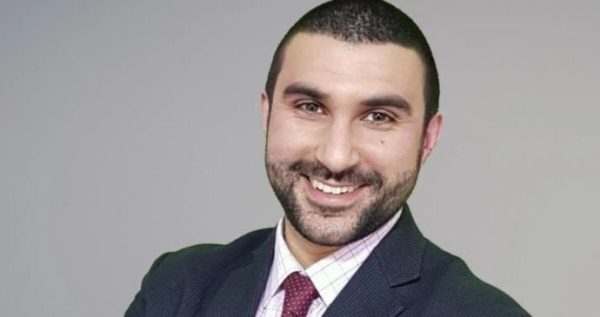
British journalist and political commentator Sami Hamdi was detained by US Immigration and Customs Enforcement (ICE) at San Francisco International Airport on Sunday.
The detention occurred during his ongoing speaking tour organized by the Council on American-Islamic Relations (CAIR), raising alarms over the influence of pro-Israeli lobbying groups.
Hamdi had entered the US legally on October 19 to participate in events addressing US foreign policy and the Israeli war on Gaza. He had recently spoken at CAIR’s annual gala in Sacramento and was scheduled to speak at another event in Florida. On October 24, he was informed that his visa had been revoked, and ICE agents detained him upon his arrival at San Francisco International Airport.
DHS says Hamdi is a national security threat
US Department of Homeland Security Assistant Secretary Tricia McLaughlin confirmed Hamdi’s detention, stating that he posed a national security threat.
“This individual’s visa was revoked, and he is in ICE custody pending removal,” McLaughlin wrote on X.
Reactions from Civil Rights Groups
Friends of Hamdi and civil rights organizations have condemned the detention as an infringement on free speech. A statement from his supporters described the arrest as “a deeply troubling precedent for freedom of expression and the safety of British citizens abroad.”
They called for the United Kingdom Foreign Office to demand urgent clarification from US authorities regarding the grounds for Hamdi’s detention.
CAIR criticized pro-Israeli lobbying groups’ influence on US authorities that led to Hamdi’s arrest. In a statement, CAIR accused “unhinged Israel First bigots” of pressuring the US government to detain Hamdi, labeling the action as an “Israel First policy, not an America First policy.”
Hamdi’s father, Mohamed El-Hachmi Hamdi, expressed concern over his son’s detention, stating that Sami “has no affiliation with any political or religious group.” He emphasized that his son’s stance on Palestine is centered on the people’s right to security, peace, freedom, and dignity, describing him as “one of the young dreamers of this generation, yearning for a world with more compassion, justice, and solidarity.”
Bowing to Zionist lobby pressure, UK medical regulator hounds British-Palestinian medic

By Maryam Qarehgozlou | Press TV | October 26, 2025
Yielding to pressure from pro-Israel lobbying groups, the UK’s General Medical Council (GMC) has reopened a politically motivated case against British-Palestinian doctor Rahmeh Aladwan over her outspoken criticism of UK-backed Israel’s genocidal war on Gaza.
The renewed proceedings aim to suspend the 31-year-old medic from the UK medical register over social media posts condemning the genocide in Gaza and the complicity of the British government.
The move comes less than a month after the Medical Practitioners Tribunal Service (MPTS) ruled that the complaints against her were not “sufficient to establish that there may be a real risk to patients” and refused to impose any restrictions on her licence.
That September 25 decision had appeared to close the case.
However, under pressure from Zionist lobbying groups — led by the so-called Campaign Against Antisemitism (CAA) and the Jewish Medical Association (UK) — the GMC has now reversed course.
Both groups, backed by Labour Health Secretary Wes Streeting, have spearheaded a smear campaign to punish Dr. Aladwan for her vocal and strong pro-Palestine stance.
For nearly two years, she has been the target of online smears and defamation for exposing Israel’s slaughter of more than 68,000 Palestinians and the near-total destruction of Gaza.
Earlier this month, the CAA escalated its rhetoric, claiming that Aladwan was conducting a “campaign of hatred against British Jews” and threatened to legally challenge the MPTS for clearing her name.
Streeting — who has publicly vowed to overhaul the way medical regulators handle so-called “anti-Semitism” cases — has openly pushed for harsher measures against critics of Israel.
In practice, his proposal would mean prosecuting anyone who denounces the Zionist regime’s genocidal actions.
Investigations by Declassified UK revealed that Streeting received almost £30,000 from Britain’s pro-Israel lobby, and in 2022, he became the first member of Keir Starmer’s shadow cabinet to visit the Israeli-occupied territories — in a move designed to signal a break with former Labour leader Jeremy Corbyn’s pro-Palestine position.
Under this political pressure, a GMC case examiner compiled a new dossier of Aladwan’s social-media posts from late September to early October and referred her again to the Interim Orders Tribunal (IOT).
The CAA quickly boasted that its legal threat had forced the regulator to act.
At Thursday’s hearing, the MPTS agreed to convene a second tribunal — a move that could ultimately strip Dr. Aladwan, a National Health Service (NHS) doctor with seven years of service, of her right to practice medicine in the country where she grew up.
Speaking before the hearing, Dr. Aladwan told reporters she had been “summoned by what is now more accurately called the Genocide Medical Council.”
“It is only four weeks since I was summoned here for exactly these allegations, it is my social media postings, it is my support for the Palestinians to resist under international law,” she said.
“Mostly really, it’s the GMC buckling to the pressure of the Israeli lobby and the MPs such as Wesley Streeting who are funded by them and who are making comments.”
She described the ordeal as a coordinated effort to silence voices of dissent.
“There’s been a huge media smear campaign, corruption, and collusions between all these institutions that have been subverted by the Israeli lobby to just take my license away or silence me.”
Inside the tribunal, Aladwan was even denied the right to address the panel directly. Representing the GMC, Emma Gilsenan said that only her legal representative could pose questions — a privilege she had been granted in the earlier hearing.
Her counsel, Kevin Saunders, instructed by Zillur Rahman of Rahman Lowe Solicitors, denounced the proceedings as a response to “external pressure.”
He highlighted Streeting’s public condemnation of the previous tribunal’s ruling, calling it “an attempt to undermine the rule of law and the determination of an independent body.”
Saunders pointed out that the 12-page dossier presented by the GMC contained nothing new to justify reopening the case.
He stressed that Aladwan’s social media posts were separate from her clinical practice, which has been exemplary, noting that she was expressing solidarity with her own people under siege.
No evidence has ever shown that her posts affected patient safety or her duties as a doctor, he said.
When Saunders requested a stay of proceedings on grounds of “abuse of process,” the tribunal rejected the motion.
‘Surrender to political pressure’
On Friday, after the second tribunal, Dr. Aladwan took to X (formerly Twitter) to condemn what she described as the MPTS’s “surrender to political pressure.”
“They chose to trample on their own ruling from the 25th of September and allow the GMC to resubmit the same evidence—effectively perverting our British legal system on behalf of the ‘Israeli’ Jewish lobby and their funded MP Streeting,” she wrote.
“If a foreign lobby can force our panels to backtrack on a ruling, the finality of British justice is dead.”
She called it “a dark day for Britain,” vowing to continue her fight.
“They picked the wrong British Palestinian. I will fight this — not just for me, but for our sovereignty and fundamental rights in Britain. If the process is the punishment, then bring it on.”
Ahead of the hearing, she had warned that the GMC was determined to destroy her livelihood “to please its masters in the Israeli lobby.”
“Let’s be clear,” she posted. “A British Jewish or ‘Israeli’ doctor could … bomb hospitals and kill patients in Palestine — and keep their license and freely treat British patients. I’m being persecuted for speech. They would be protected for murder. This is Jewish supremacy.”
By Tuesday, Aladwan revealed that the GMC was now seeking her suspension for being “unrepentant.”
“The first tribunal found no need for any order. Now, the GMC demands suspension because I refused to ‘moderate’ speech that was already deemed acceptable,” she said.
“This is not about safety. It’s about punishment. They are explicitly seeking what the ‘Israeli’ lobby demanded: my removal from practice for my political views. This is the weaponisation of medical regulation. This is political persecution.”
Arrest before tribunal: A ‘political theatre’
Only two days before facing her second tribunal, Aladwan was arrested by British police — a move many saw as part of a broader campaign to silence and intimidate her.
In a video posted on social media, the British-Palestinian doctor could be seen confronting police officers as they informed her she was under arrest for “three malicious communications and one offence of inciting racial hatred.”
According to the officer, the charges stem from Aladwan’s posts on October 7 — marking the second anniversary of Operation Al-Aqsa Flood, the Hamas-led operation launched in response to over seven decades of Israeli apartheid — and from a July 21 speech at a pro-Palestine rally outside the Foreign Office, where police claimed she had called for “the eradication of Israel.”
Aladwan, who in her posts described the historic resistance operation as the day Israel was “humiliated,” immediately challenged the officer’s motives.
“You are doing this for the Israeli Jewish lobby so you can get an arrest on me before my tribunal on Thursday,” she said in the video. “This is what the UK does to its doctors.”
After her release, Aladwan denounced the arrest as “political theatre, not policing.”
In a detailed social media post, she described harsh and degrading conditions during her detention — denied water for six hours, refused essential medication, left in a freezing cell without a blanket, and isolated with a broken intercom.
“These are not standard procedures. They are punitive measures,” she wrote.
Aladwan also revealed the political motive behind the arrest.
“An officer explicitly informed me the police would be ‘reporting the arrest to the GMC.’ This is a non-reportable event. This admission reveals the direct channel of communication between the police and my regulator,” she said.
She further noted that the arrest was part of a coordinated campaign of intimidation aimed at influencing the medical tribunal and shaping public perception.
“It reveals a seamless network: lobby groups, politicians (Streeting), police, regulator (GMC),” she wrote. “They are not following due process. They are executing a strategy. Our British institutions have become enforcement tools for a foreign, hostile agenda—for the Israeli Jewish lobby—and the entire world can see it.”
Her post ended with a defiant declaration: “Free Britain and Palestine from Jewish supremacy (Zionism).”
Later, Aladwan published her bail conditions, which she said were a form of “house arrest.”
She is banned from attending any public event or protest related to Palestine or the Israeli regime in London, placed under curfew at a specified address, and required to notify police if she leaves home for more than 48 hours.
‘Losing grip over the narrative’
The arrest sparked outrage among pro-Palestine activists and supporters online, who harshly criticized British authorities for weaponizing law enforcement to suppress dissent.
A social media activist, Thomas Keith, wrote that the state’s reaction only exposes its weakness.
“The irony is that every time they try to silence a Rahmeh Aladwan, they just spotlight the hollowness of their so-called freedoms,” he said. “The more aggressive and coordinated the repression, the more obvious it is that the state is panicking, losing its grip over the narrative as more and more people refuse to look away from Gaza.”
“What you’re seeing is Britain showing the world it’s still an empire at heart, propping up colonialism abroad and silencing dissent at home. The cost of speaking the truth has never been higher, but the mask is off, and more people than ever see exactly who benefits from the machinery of state repression.”
Ellen Kriesels, another user on X, highlighted the hypocrisy of reopening a cleared case under lobby pressure and condemned the GMC’s renewed action as a blatant act of political persecution.
“This doctor was cleared by a tribunal three weeks ago. Now she is going back there on Thursday after intense media and political pressure at the behest of pro-Israel lobby groups. No new material. Political persecution is what this is. Shame on the GMC,” she wrote.
Aladwan herself has long maintained that silence is complicity. After her first tribunal in September, she posted a message urging others to resist fear and speak truth.
“We must operate without fear. We must name the root cause and identify the criminals. Palestinians are bravely resisting with their lives. The least we can do is resist with our words, uphold the principles of liberation (thawabet), and speak the full truth.”
She condemned Zionist supremacist structures behind the ongoing genocide in Gaza and the extermination of Palestinians across the occupied territories.
“The Jewish lobby and Jewish supremacists need to have some shame,” she wrote. “While Palestinians are being kidnapped, tortured, murdered, starved, raped, and burned alive by Israeli Jews, they continue to play victim and cry over our words and activism that are rooted in justice, morality, and humanity.”
In her message, she made clear what this struggle is really about.
“This is not about Jewish feelings or tears. This is about genocide caused by Jewish supremacy, extremism, and unadulterated terrorism.”
The Cameras Were the Goal Not the Solution
By Cam Wakefield | Reclaim The Net | October 24, 2025
If you live in Greater London, chances are you’re being watched right now. Not by MI5. Not by your nosy neighbor. No, it’s far more mundane than that. You’re being monitored by Mayor Sadiq Khan’s army of always-watching number plate cameras, installed under the noble banner of cleaning the air.
And here’s the twist: the air hasn’t changed. But the surveillance? That’s permanent.
When the Ultra Low Emission Zone was expanded in 2023 to cover the entire city, 579 square miles of roads, driveways, and backstreets, the stated goal was to reduce pollution.
What it actually achieved was the creation of one of the most comprehensive, always-on vehicle tracking systems in the country. Possibly the continent.
Thousands of cameras now scan and record every single vehicle, every single day, across every borough. And according to new research from the University of Birmingham, all of this has achieved virtually nothing significant in terms of environmental impact.
The emissions stayed. The cameras stayed. And the idea that this was ever about clean air is beginning to look like a fig leaf for something else entirely.
ULEZ cameras were sold to the public as environmental guardians. But what they actually do is log your number plate, check it against a central database, and charge you if your vehicle doesn’t meet emissions standards.
It doesn’t matter if your car is powered by sunshine and tofu. You’re still being recorded, timestamped, location-mapped, and uploaded into Transport for London’s data system. And the longer it runs, the harder it becomes to believe this is just about exhaust fumes.
Let’s be blunt: if this were a police surveillance network, the civil liberties brigade would be chaining themselves to lampposts. But because it’s got a green sticker on it, few blinked. It’s surveillance by stealth, a policing movement dressed up as progressive policy.
And the worst part? The public is paying for it.
The expansion cost Londoners £155 million ($206M). Not for scrubbing the air. Not for planting trees. For cameras. Lots of them. The kind of city-wide, high-resolution, automatic number plate recognition system that intelligence agencies dream about.
Within a week of going live, it was generating £5.3 million in revenue. And unlike actual policing or healthcare, this system runs itself.
London’s government insists it’s working. They point to drivers upgrading vehicles before the expansion. Which is a bit like saying the fire alarm is a success because someone already put the fire out before it rang.
Even the study’s co-author, Dr Suzanne Bartington, admitted the current ULEZ setup fails to tackle the core public health risks like PM2.5 pollution, the stuff that actually gets into your lungs and bloodstream.
“The current ULEZ approach does not fully address significant traffic-related public health issues,” she said.
So if it doesn’t result in cleaner air, what does it do? It tracks people. Relentlessly. Quietly. In real time.
Let’s not kid ourselves. A surveillance grid this large, this well-funded, and this politically untouchable isn’t going to stay limited to emissions fines forever.
Privacy groups have already warned that the ULEZ system could be repurposed for just about anything.
From catching speeding drivers to enforcing low-traffic neighborhoods. From congestion pricing to vehicle bans. Or, if the mood strikes City Hall, tracking “suspicious patterns of movement.” After all, the tech’s already in place. It would be a shame not to use it.
And let’s not forget: this all happened without a real public debate. There was no referendum. No opt-out. No serious oversight. Just a green slogan and a lot of money.
“This is just further evidence that the ULEZ expansion was about raising money rather than improving air quality,” said Thomas Turrell, of the City Hall Conservatives.
“Yet again, Sadiq Khan is ignoring the evidence when it doesn’t suit his agenda.”
Even Bromley Council leader Colin Smith weighed in with a dose of brutal clarity:
“Had it been about air quality, Mayor Khan would have started where the air in London is dirtiest – in his own tube network. But no, there were no motorists to fleece there.”
So here we are. The air is still dirty. The cameras are still on. And millions of journeys are now quietly logged by a system that was never designed to turn off.
We were told this was about health and climate. It’s really about control. A system that tracks your car is a system that tracks you. And once it’s normal to be watched everywhere you go, it’s very hard to roll that back.
ULEZ may have been introduced as an environmental policy. But its real legacy will be this: the normalisation of mass surveillance, hidden behind a green curtain.
Because in the end, the emissions weren’t the target.
The people were.
‘Israel’s Digital Iron Dome: Weaponizing the web against Palestine

By Rasha Reslan | Al Mayadeen | October 24, 2025
“Israel” has long invested in shaping its image online, but its latest initiative, the Digital Iron Dome, represents a new level of sophistication in information warfare. Marketed as a “civilian defense initiative,” the platform (lp.digitalirondome.com) invites users worldwide to join a “digital army” tasked with countering what it describes as “disinformation” and “defending Israel online.”
A closer look, however, reveals a different reality. The initiative functions less as a neutral fact-checking tool and more as a coordinated influence operation. Users are encouraged to register and access pre-scripted posts, hashtags, and visual content optimized for viral sharing across X, Instagram, and TikTok. By centralizing narrative control in this way, the platform effectively outsources public diplomacy to civilians while framing entity-aligned messaging as grassroots activism.
The platform’s design mirrors modern marketing technology, with embedded tracking scripts and analytics monitoring engagement in real time. The Digital Iron Dome turns seemingly spontaneous online support into a highly engineered content amplification system aimed at shaping global perceptions of the Israeli genocide in Gaza and countering criticism through algorithmic dominance.
Claims vs. reality
The Digital Iron Dome markets itself as a “24/7 digital defense system” and “the world’s first pro-Israel influence engine,” claiming to monitor the web for anti-“Israel” narratives, produce “fact-based” countercontent, and place targeted ads alongside material it deems “biased” or “antisemitic”. Its landing page cites impressive metrics – “300M+ targeted ads delivered” and “200K+ websites reached” and solicits donations.
Independent inspection, however, raises questions about transparency and actual scope:
- Advocacy over journalism: The platform functions more like an advertising campaign than a newsroom, blending campaign branding and donation solicitation with AI-driven narrative detection claims.
- Unverified metrics: Reach and engagement numbers are presented without a third-party audit, leaving scale unconfirmed.
- Financial opacity: While donations are solicited via PayPal, there is no clear legal structure, charity registration, or financial reporting.
- Limited founder transparency: The founders’ professional backgrounds are only partially documented, and potential conflicts of interest remain unclear.
- Marketing masks technology claims: References to AI-driven monitoring and ad injection resemble product marketing rather than verifiable functionality.
- Coordinated outreach: Multiple domains and social media promotion suggest systematic campaign efforts, though claims of ad placement on mainstream sites require independent verification.
Digital Iron Dome exploits bias to silence Palestinian voices online
AI Engineer and the head of AI Department in a consultation company, Ali Hadi Zeineddine, speaking to Al Mayadeen English, warned that focusing solely on the technical mechanics of the Digital Iron Dome risks obscuring a much deeper issue.
“Discussing the technical aspects of the Digital Iron Dome,” he noted, “may lead to misleading conclusions, especially when filtered through Western slogans of ‘democracy’ and ‘freedom of speech.’”
“The real story lies not in its code, but in the unequal terrain of the digital battlefield where it operates,” he asserted.
In an age where frontlines are increasingly digital, Zeineddine argues that the Digital Iron Dome enters a space already distorted by entrenched inequalities, from algorithmic bias to economic exclusion and platform moderation practices that disproportionately silence Palestinian voices. “These imbalances don’t just create opportunities for such campaigns, they amplify them,” he explained.
Mounting evidence supports his concerns. Independent investigations have shown that major platforms, including those owned by Meta, Facebook, and Instagram, apply double standards to content relating to Palestine.
A report by the Middle East Institute revealed that Meta had quietly lowered the certainty threshold required to remove Arabic or Palestinian content from 80% to as low as 25%. In effect, Palestinian posts are far more likely to be taken down or shadow-banned with minimal justification. Human Rights Watch also documented over 1,050 incidents of peaceful pro-Palestine content being removed or suppressed on Meta platforms during October and November 2023, of which 1,049 were in support of Palestine, and only one favored “Israel.”
“In today’s conflicts, algorithms and ad policies have replaced tanks and trenches,” Zeineddine stressed. “When platform moderation already disfavors Palestinian voices, projects like the Digital Iron Dome don’t create imbalance; they exploit one.”
Weaponization of algorithmic asymmetry
Economic exclusion further compounds this digital marginalization. A Wired investigation spotlighted the case of Bilal Tamimi, a content creator from the occupied West Bank whose viral videos on YouTube have amassed millions of views. Yet, despite his reach, Tamimi remains barred from monetization through the YouTube Partner Program, not because of content violations, but because “the program is not available in [his] current location, Palestine.” This systemic restriction denies Palestinian creators not only potential income but also algorithmic reach, reducing the visibility of their narratives before they can even enter the global conversation.
Zeineddine stressed that what is unfolding is more than a clash of perspectives. “What we’re witnessing isn’t merely a battle of narratives,” he said. “It’s the weaponization of algorithmic asymmetry. The very systems designed to ensure fairness, moderation rules, monetization access, and ad transparency are reinforcing geopolitical hierarchies online.”
“When Palestinian creators are excluded from monetization programs or flagged for benign content,” he added, “they’re not just denied income, they’re denied visibility. You cannot challenge disinformation when you’re structurally silenced.”
In such a landscape, the Digital Iron Dome thrives not due to technological innovation, Zeineddine contended, but because it is designed to exploit an already tilted playing field. “The Digital Iron Dome does not succeed because it’s more advanced; it succeeds because the digital game is already rigged in its favor. Without meaningful transparency, parity, and accountability from the platforms themselves, this imbalance will remain the invisible architecture of modern information warfare.”
His conclusion is clear: the future of digital freedom and of global narrative equity hinges not only on dismantling influence operations, but also on confronting and reforming the systems that allow them to flourish in the first place.
Limits of the Digital Iron Dome
In a similar vein, Dr. Hassan Younes, a university professor and consultant, told Al Mayadeen English that after October 7, the digital space became more than a platform for news; it became a frontline.
In response, “Israel” and its allies deployed a highly organized narrative machine: coordinated talking points, PR campaigns, bot networks, sudden surges in “security justification” rhetoric, and attempts to flood timelines with distraction content.
Analysts dubbed this a digital “Iron Dome”, not designed to intercept rockets but to intercept sympathy, neutralize outrage, and sow doubt about what people were seeing.
“You cannot hide starvation. You cannot algorithmically blur the image of a mother holding her child under the rubble,” Dr. Younes explained.
“You cannot label every voice ‘extremist’ when millions say the same thing: this is not self-defense, it is mass punishment.” Influence engines, he warned, can distort timelines, amplify one narrative, and bury alternative perspectives. Yet, in this instance, they could not fully succeed.
These operations contributed to polarization and narrative suppression by design, seeking to isolate voices and make anger seem like a minority opinion. But the opposite occurred: millions aligned organically around a clear message, enough. Even those previously neutral began questioning why “context” is demanded from the oppressed but never from the occupier. “Israel” lost moral credibility online as well as on the ground.
Human voice refuses to be formatted
Attempts to control the narrative, shadow-banned posts, removed videos, and algorithmic friction triggered by words like “Gaza”, “occupation”, and “Palestine” were circumvented by users. People misspelled words to bypass AI filters, coordinated captions, and redistributed content through smaller accounts. What was meant to be silenced became a trending narrative, a form of digital civil disobedience driven by ordinary users, not institutions.
Do influence campaigns still matter? Absolutely. They can delay outrage, shape political responses, and sanitize the language of international discourse. They can reframe genocide as a “conflict” or forced famine as a “humanitarian logistics issue.”
Yet Dr. Younes highlighted a boundary: data manipulation cannot withstand stark reality. Live images of children under attack cannot be spun into comforting narratives.
This moment accentuates the need for transparency. When states or political actors provide talking points, monitor engagement, and mobilize users through dashboards and data, the process is no longer organic; it is manufactured consent. Citizens deserve to know who is speaking to them and why.
The events following October 7 proved a simple truth: distribution can be automated, but humanity cannot. The digital Iron Dome attempted to contain the story, and it failed because the people refused to look away. In an age dominated by AI, the most potent technology remains the human voice that refuses to be formatted.
Palestinian activist vows to keep fighting Trump administration’s bid to re-detain him
MEMO | October 22, 2025
Palestinian activist Mahmoud Khalil accused the Trump administration of seeking to silence pro-Palestine voices by trying to re-detain him, after his attorneys appeared Tuesday before the Third Circuit Court of Appeals in Philadelphia to challenge the legality of his detention, Anadolu reports.
“We just finished a long hearing,” Khalil told reporters outside the court. “I feel confident, of course. The Trump administration is still trying to re-detain me. They’re trying to stop the federal court from looking at my case because they know they don’t have a case against me.”
Khalil, 30, a Palestinian activist and Columbia University graduate, is a lawful permanent resident married to a US citizen. He was detained in March without a warrant by immigration officers in New York City and transferred to a detention facility in Louisiana, where he was held for months.
The Trump administration claimed his presence threatened US foreign policy without providing evidence, but a lower court ordered his release on bail in June and barred the government from detaining or deporting him.
“This case is not about Mahmoud Khalil,” he said. “This case is about every single person in this country, whether they are citizens or not — this case is about their freedom of speech and their ability to dissent, and their ability to speak up, especially about Palestine and the genocide that’s happening in Gaza.”
“They want to break me because they want to deport me to be out as soon as possible, so that others would fear speaking out. That’s why I’m continuing to fight,” he added.
Khalil’s legal team appeared before the Third Circuit Court of Appeals, asking judges to uphold lower court rulings that found the government’s actions likely unconstitutional and ordered his release on bail.
His attorney, Ramzi Kassem, co-director of the CLEAR project, said the court heard oral arguments on the government’s appeal challenging both Khalil’s release and the lower court’s decision striking down the administration’s deportation order.
“We’re continuing to press forth — in this court behind me, in the district court in New Jersey, and in immigration court in Louisiana — to vindicate Mahmoud’s constitutional rights and his right to remain here with his family as a lawful permanent resident,” Kassem said.
“What’s at stake is not just his right to speak up in defense of Palestinian human rights and his ability to stay here in this country with his US citizen wife and child, but everyone’s First Amendment rights and due process rights.”
UK police arrest NHS doctor for denouncing Israel, supporting Palestine
Press TV – October 21, 2025
A British-Palestinian National Health Service (NHS) doctor has been arrested in the United Kingdom for denouncing Israel’s atrocities in Gaza and expressing support for Palestine.
Rahmeh Aladwan was taken into custody on Tuesday following her recent post on X, in which she criticized the Israeli occupation and voiced support for Palestine at a rally.
“The arrests relate to an ongoing investigation, led by the Met’s Public Order Crime Team, into allegations that comments made at a protest and online in recent months were grossly offensive and antisemitic in nature,” the Metropolitan Police spokesperson said.
During the demonstration held in Whitehall on July 21, Dr. Aladwan articulated the “Palestinian principles of liberation,” emphasizing the right to resistance, the right to self-determination, Al-Quds as the capital of Palestine, and the right of Palestinian refugees to return to their homes and lands in what is now the occupied territories.
She also described Israel as “a terrorist entity that sits on top of Palestine,” and committing genocide against the oppressed residents of Gaza.
In her X post, Dr. Aladwan stated, “October 7. The day Israel was humiliated. Their supremacy [was] shattered at the hands of the children they forced out of their homes … The children who watched [Zionists] execute their loved ones, rape their land, and live on their stolen soil.”
Before her arrest, UK Lawyers for Israel (UKLFI), a pro-Israel advocacy group, had accused Dr. Rahmeh Aladwan of anti-Semitism, claiming her social media posts and public appearances made her “unfit to practice medicine.”
However, on September 25, the Medical Practitioners Tribunal Service (MPTS) ruled that Dr. Aladwan is fit to practice, rejecting the anti-Semitism allegations.
Despite this, the UK General Medical Council (GMC) has referred her to another interim orders tribunal scheduled for Thursday, October 23, as it continues its investigation into the claims made by UKLFI.
The Al-Aqsa Flood operation, launched by Palestinian resistance groups on October 7, 2023, was a response to decades of oppression of the Palestinians by the Israeli regime.
Following the operation, Israel launched a genocidal war on Gaza, killing at least 68,229 people and wounding 170,369.
Pashinyan’s war on the Armenian Church signals a deepening national crisis
By Lucas Leiroz | Strategic Culture Foundation | October 22, 2025
The authoritarian spiral of Armenian Prime Minister Nikol Pashinyan has entered a dangerous new phase: a systematic campaign of repression against the Armenian Apostolic Church — one of the world’s oldest Christian institutions and the cornerstone of the Armenian national identity. In a desperate attempt to consolidate his crumbling political legitimacy and strengthen alignment with the Western liberal order, Pashinyan has now turned his sights on religious leaders and sacred institutions, undermining the spiritual and historical foundations of the Armenian state.
In recent weeks, state-led persecution of religious figures has reached alarming levels. The arrest of Bishop Mkrtich Proshyan, head of the Diocese of Aragatsotn, marks just the most visible example of a broader, coordinated crackdown. Alongside him, five other clergymen were detained on vague and politically motivated charges, including “fraud” and “abuse of power.” The allegations, notably lacking in credible legal grounding, reveal the instrumental nature of the operation — a political purge disguised as law enforcement.
This assault on the Church is not an isolated event. Months earlier, Archbishop Mikael Ajapahyan was sentenced to two years in prison for allegedly “inciting a coup” — a vague accusation increasingly used as a catch-all label for dissent. What is unfolding appears to be a deliberate campaign to silence religious voices that challenge the government’s ideological alignment with Brussels and its Western patrons.
Behind Pashinyan’s rhetoric of “fighting corruption” and “institutional modernization” lies a far darker reality: the calculated dismantling of Armenia’s last bastion of traditional resistance. With roots tracing back to the early 4th century, the Armenian Apostolic Church is not merely a religious authority — it is a symbol of moral unity, historical continuity, and cultural cohesion. For many Armenians, the Church is the guardian of the national soul — a role that naturally places it in opposition to a regime advancing policies that many view as anti-national and externally imposed.
The conflict is also ideological in nature. By attempting to reshape Armenian society in accordance with secularist, progressive values favored by the European Union, Pashinyan inevitably comes into conflict with the conservative and patriotic worldview still prevalent among the Armenian population. In such a context, any institution that resists this forced social transformation becomes a target — and the Church, as the most prominent voice of cultural continuity, is perceived as the primary obstacle.
The deeper backdrop to this crackdown is the widespread public disillusionment with Pashinyan’s leadership following the catastrophic military defeat to Azerbaijan and the total loss of Nagorno-Karabakh. The dissolution of the Republic of Artsakh not only represented a strategic failure but served as a powerful symbol of Pashinyan’s political project collapsing under its own contradictions. In the wake of that defeat, his administration has increasingly relied on authoritarian tactics and scapegoating internal “enemies” — including the conservative opposition and the Church — in an effort to deflect from its failures.
The arrest of Russian-Armenian businessman and vocal government critic Samvel Karapetyan further illustrates the broader context of political persecution. However, unlike typical political repression, the offensive against the clergy reveals something deeper: a systematic attempt to reengineer the Armenian national identity along foreign lines, disregarding the popular will and erasing centuries of religious and cultural continuity.
The mass demonstrations erupting in Yerevan since October 18 are a direct response to this rupture. Opposition movements like Mer Dzevov (Our Way) are channeling a growing national anger that transcends the arrests of individual figures — it reflects a public rejection of a government that has positioned itself as an adversary of Armenia’s historical institutions and spiritual heritage. The presence of thousands in the streets, demanding not only the release of political and religious prisoners but also the end of state hostility toward the Church, suggests that the divide between the regime and the population may now be irreversible.
Pashinyan continues to rely on international backers to maintain his grip on power, but even his Western sponsors may soon realize they cannot indefinitely prop up a government that has lost all domestic legitimacy. Meanwhile, the Armenian Apostolic Church retains the moral authority of history, faith, and national identity — forces that no imported ideology or political alliance can replace.
If internal stability is to be preserved, the Armenian government must immediately halt its campaign against the clergy and initiate dialogue with the legitimate representatives of civil and religious society. Failing to do so risks not only further loss of authority but a slide into institutional collapse — with unpredictable and potentially irreversible consequences.
The forced replacement of Armenian heritage with foreign ideological frameworks is a blueprint for national ruin — and in attacking the Church, Pashinyan is not merely repressing dissent; he is waging war on the very soul of his people.
Over 20,000 Students Killed, 31,000 Injured Since October 7, 2023
IMEMC | October 21, 2025
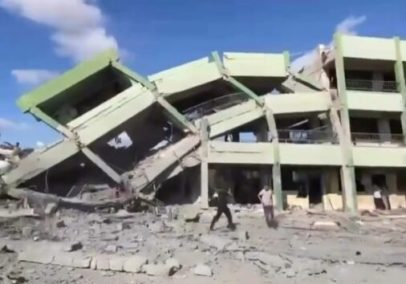
The Palestinian Ministry of Education announced Tuesday that more than 20,000 students have been killed and over 31,000 injured since the onset of Israel’s genocide in Gaza and serious escalation in the occupied West Bank, which began on October 7, 2023.
According to the ministry’s statement:
- Student casualties:
- In Gaza, 19,910 students were killed and 30,097 injured.
- In the West Bank, 148 students were killed, 1,042 injured, and 846 detained.
- Educational staff:
- 1,037 teachers and administrators were killed.
- 4,740 were injured across both regions.
- Over 228 were detained in the West Bank.
- Destruction of educational infrastructure:
- 179 public schools in Gaza were completely destroyed.
- 63 university buildings were reduced to rubble.
- 118 public schools and more than 100 UNRWA-run schools were bombed or vandalized.
- 30 schools—along with their students and staff—were entirely erased from the educational registry.
- West Bank damage:
Israeli forces demolished Ameera Elementary School in Yatta (Hebron) and Aqaba Elementary School in Tubas. Eight universities and colleges were repeatedly raided and damaged.
The ministry emphasized that the scale of destruction has not only disrupted education but has also targeted the very foundations of Palestinian academic life.
On the twelfth day of the ceasefire following 735 days of genocidal war against Palestinians in Gaza, the humanitarian crisis remains dire, Gaza faces dire humanitarian conditions amidst ongoing Israeli violations and limited amount of humanitarian aid.
On Sunday, Israeli forces launched a wave of airstrikes across Gaza, killing at least 44 Palestinians and wounding many more.
Despite the ceasefire, Israeli forces continue to enforce a “fire control zone” up to 1.5 kilometers inside Gaza, preventing displaced Palestinians from returning to their homes.
The situation remains volatile, and the ceasefire hangs by a thread. As international actors scramble to preserve it, the people of Gaza continue to suffer under the weight of destruction, displacement, and grief.
The overall toll of Israel’s genocide in Gaza since October 7, 2023, has now reached more than 68,159 Palestinians killed and 170,203 wounded, the vast majority of them children, women, and the elderly. These figures reflect the scale of devastation and the ongoing humanitarian catastrophe.
Houston Hospital Denies Refusing Organ Transplants to Unvaccinated Patients
By Brenda Baletti, Ph.D. | The Defender | October 15, 2025
A Houston hospital accused of denying organ transplants to patients who haven’t been vaccinated against COVID-19 today told The Defender it “does not have a policy requiring transplant patients to be vaccinated against COVID-19, or any other disease, and does not deny care based on vaccination status.”
“We abide by all state laws and, as one of the largest transplant programs in the country, the safety of our patients always comes first,” Houston Methodist Hospital said in a statement.
The allegations stem from Texas Attorney General Ken Paxton, who stated in a letter that his office may investigate Houston Methodist Hospital for allegedly denying organ transplants to patients who refused the COVID-19 vaccine, according to a letter his office sent the hospital.
The letter to Houston Methodist Hospital’s President and CEO Marc L. Boom cited a July 24 X post by Texas doctor Mary Tally Bowden. The post included a screenshot of the hospital’s transplant policy showing that patients seeking a kidney transplant must receive the COVID-19 shot.
Monday, Bowden posted Paxton’s press release on X, claiming she had “written and oral proof (recorded conversation)” that the hospital required transplant patients to get the shots. “To my knowledge, their policy has not changed,” she added.
Bowden previously worked at Houston Methodist Hospital. The hospital suspended her privileges after she prescribed ivermectin to prevent and treat COVID-19. The hospital also accused her of spreading “misinformation.”
Bowden sued Houston Methodist after hospital officials refused to provide public information about the institution’s finances during the pandemic.
In the press release issued Monday, Paxton said, “Texans looking to receive medical care should never be turned away due to arbitrary COVID-19 vaccine mandates imposed by woke medical providers.”
He added:
“Vaccine mandates as a precondition for certain life-saving treatments may not only violate new state laws that became effective on September 1, but they also violate human dignity and run contrary to foundational principles of medical ethics. That’s why I’ve requested that Houston Methodist Hospital clarify its compliance with Texas’s new laws and position on vaccine mandates.”
The hospital has 14 days to notify the Texas Office of the Attorney General (OAG) about the steps it has taken to comply with the recently passed provision in the Texas Health and Safety Code, which prohibits denying organ transplants based on vaccination status.
The OAG said it will open a formal investigation if the hospital fails to respond.
Paxton’s office said its letter to the hospital “reaffirms Attorney General Paxton’s stance against COVID-19 vaccine mandates and reflects his commitment to protecting the rights and freedoms of Texans by challenging unlawful vaccine mandates.”
In recent years, Paxton’s office has challenged Big Pharma’s actions related to COVID-19 shots and weight-loss drugs, and has investigated toothpaste companies for deceptive marketing geared toward children.
This article was originally published by The Defender — Children’s Health Defense’s News & Views Website under Creative Commons license CC BY-NC-ND 4.0. Please consider subscribing to The Defender or donating to Children’s Health Defense.
UK antisemitism training body under fire for links to Israeli military
Al Mayadeen | October 14, 2025
The Union of Jewish Students (UJS), the organization contracted to deliver hundreds of “antisemitism awareness sessions” for university staff across the United Kingdom, is facing renewed scrutiny following the resurfacing of a video in which its former president praised the group’s alumni serving “in senior positions in the Israeli government, the IDF, and even the President’s office.”
The footage, filmed during a meeting with Israeli President Isaac Herzog, shows then-UJS President Nina Freedman telling him that former members occupy high-ranking roles across Israeli entity institutions. The clip has sparked widespread concern over the impartiality of UJS’ government-funded training, particularly amid the International Court of Justice’s ongoing genocide case against “Israel” over its atrocities in Gaza.
Under a program led by the UK Department for Education (DfE) to address antisemitism in schools and universities, UJS was awarded a £998,691 ($1.27 million) contract to deliver antisemitism training across British higher education institutions.
According to the contract published on the government’s Contracts Finder portal, the organization is responsible for helping staff “recognise and respond to incidents of antisemitic abuse” and for leading discussions on “antisemitism, including related topics such as the Israel/Palestine conflict.”
Wider context
The award forms part of the DfE’s Tackling Antisemitism in Education initiative, funded through a £7 million ($8.9 million) government scheme announced in 2024 to combat what it designates as antisemitism in the education sector.
However, critics have long questioned UJS’ political neutrality, given its constitutional commitment to “inspiring Jewish students to make an enduring commitment to Israel” and its longstanding ties with the Israeli Embassy in London. The union has previously hosted Israeli emissaries with military backgrounds on its executive team and facilitated pro-“Israel” campus initiatives, including “birthright trips” and visits by Israeli diplomats.
During her address to Herzog, Freedman described UJS as being “on the frontline of the fight against antisemitism, anti-Zionism and anti-Israel bias,” adding that the group seeks to “shine a positive light on Israel’s successes” and encourage students to defend the entity through advocacy and online engagement.
“I feel so lucky to have gone through the UJS machine,” she said, referring to it as an incubator for “young Jewish activists.”
The remarks have amplified growing concerns about conflicts of interest in the UK government’s decision to outsource “anti-Semitism education” to an organization so closely linked with the Israeli entity.
or go to
Aletho News Archives – Video-Images
From the Archives
Israel Would Have No Qualms About USS Liberty-Style FALSE FLAG If Iran Campaign Falters – Analysts
By Ilya Tsukanov – Sputnik – 18.06.2025
Donald Trump is mulling whether or not to join Israel’s aggression against Iran as Tel Aviv faces problems sustaining its defenses against growing counterstrikes, and apparently lacks a realistic game plan for an end to hostilities after failing to achieve its goals. Analysts told Sputnik how the US could be ‘nudged’ into the conflict.
“The US is already assisting Israel with supplies, intel, refueling support, etc. One of the many US posts in the region could be attacked for a casus belli,” former Pentagon analyst Karen Kwiatkowski explained.
“If Trump doesn’t comply with Israel’s demand” and join its aggression voluntarily, “a false flag may be needed” to drag the US in, Kwiatkowski, retired US Air Force Lt. Col.-turned Iraq War whistleblower, fears.
Netanyahu has a diverse array of options at his disposal, according to the observer, including:
- a false flag against US assets abroad blamed on Iran or one of its Axis of Resistance allies, like the Houthis
- a US domestic attack or assassination blamed on Iran
- Iranian air defenses ‘accidentally’ hitting a civilian jetliner carrying Americans
- use of a dirty bomb or nuclear contamination somewhere in the region blamed on Iran
- even blackmailing by threatening to use nukes against Iran if the US doesn’t join the fight
Kwiatkowski estimates that Israel probably has “enough blackmail power” against President Trump and Congress to avoid the necessity of a false flag operation, but a “USS Liberty-style” attack, targeting the soon-to-be-retired USS Nimitz supercarrier that’s heading to the Middle East, for example, nevertheless cannot be ruled out entirely, she says. … continue
Blog Roll
 Aletho News
- The US bombed the Shahs house lol
- The London Ambulances Attack: Of Course It Was A False Flag
- Embarrassing Pivot: U.S. considers dropping Iran oil sanctions amid war
- US has 2 months of rare earths left to replenish weapons amid Iran war: Report
- Strait Of Hormuz closure brings Empire to brink
- Iran controls Strait of Hormuz, dictates terms of war and peace as US excursion backfires
- Outlasting the Superpower: The Reasons Why Iran is Beating uhe US and Israel
- Top PMU commander, over a dozen fighters killed in new US strikes on Iraq
- Is Netanyahu’s war gamble threatening the future of ‘Israel’?: FT
- Smotrich calls for annexation of South Lebanon to Litani River
- If Americans Knew
- ‘Forever live by the sword’: Understanding Israelis’ massive support for Iran war
- UN’s special rapporteur on human rights says Israel is systematically torturing Palestinians
- Trump White House plagiarized Iran war manifesto from Israel-aligned think tank
- Gaza says 6–10 patients die daily waiting for treatment abroad as Israel blocks medical evacuations
- ‘Substantial evidence’ of double-tap strike in killing of Gaza’s Hind Rajab
- ‘Do Not Want To Die For Israel’: Doubts About Trump’s Iran Strategy Spread Among Troops
- Instead of taking Joe Kent’s claims seriously, the media is disregarding him as an antisemite
- Joe Kent’s Explosive Interviews about his Resignation over the Iran War
- Israel poised to take over southern Lebanon; settlers wreak havoc in West Bank – Not a ceasefire Day 165
- From Sde Teiman, the truth about Israel’s military justice system has been set free
- No Tricks Zone
- Devastating Assessment Of Comirnaty Vaccine By Former Senior Pfizer Europe Toxicologist
- New Study: CO2 Is ‘Effectively Negligible’ As An Explanatory Climate Change Factor Since 2000
- Former Pfizer Toxicologist Dr. Helmut Sterz Tells Bundestag Hearing Pfizer Vaccine Should Have Never Been Approved
- Energy Expert: Germany’s Nuclear Phaseout Was A “500 Billion Euro Mistake”
- New Research: South Australia’s Mid-Holocene Sea Surface Temperatures Were 4°C Warmer Than Today
- Storing Green Energy To Last Germany 10 Days Would Require A 60-Million Tonne Battery
- New Studies: UK Sea Levels Were 4 Meters Higher Than Today During The Mid-Holocene
- Destructive Green New Deal: German Energy And Metal Group Warns Of Drastic Crisis
- New Study Documents A 20-Year Pause In Arctic Sea Ice Decline – Driven By Internal Variability
- Wake-up Call: Survey Shows Majority Of Germans Now Favor Postponing Climate Targets!
 Aletho News