NYT: Pervasive surveillance is a serious threat — in China
By Glenn Greenwald| August 3, 2010
Yesterday, I wrote about the proliferation of the private online surveillance industry, how it furnishes ever more thorough and invasive information to the U.S. Government about citizens’ online activities, and why that destruction of privacy is so dangerous My Salon colleague, Dan Gillmor, yesterday detailed just how comprehensive are the online surveillance capabilities which enable all of this. Today, The New York Times confronts the same problem of privacy destruction at the hands of a pervasive Surveillance State . . . in China. In a perfectly interesting article, Michael Wines describes how the Chinese Government has placed surveillance cameras covering virtually every public space in two of its more “restive” provinces, which last year saw deadly fighting between ethnic minorities and the Government. He describes the dangers as follows:
Much of the proliferation is driven by the same rationales as in Western nations: police forces stretched thin, rising crime, mushrooming traffic jams and the bureaucratic overkill that attends any mention of terrorism.
But China also has another overriding concern — controlling social order and monitoring dissent. And some human rights advocates say they fear that the melding of ever improving digital technologies and the absence of legal restraints on surveillance raise the specter of genuinely Orwellian control over society. . . .
Officials say the cameras leverage the latest technology to battle crime and terrorism Guangdong provincial officials told Chinese news services last year that their new cameras had deterred more than 18,000 street crimes even before the one million cameras had been fully deployed. In Kunming, in south-central China, crime dropped 10 percent after the police installed new cameras, the city’s deputy police chief told a security forum last spring.
That said — and some Western skeptics dispute claims of the cameras’ crime-fighting success — China’s video surveillance clearly has a darker side. . . . The longer-term concern . . . is that video surveillance will become a pervasive tool for controlling not only China’s comparative handful of dissidents, but the masses of people who ordinarily would not run afoul of the state.
So government surveillance “clearly has a darker side” and could become “a pervasive tool for controlling not only dissidents, but the masses of people who ordinarily would not run afoul of the state”? You don’t say. Thank God we don’t live in a place like China where that happens, but instead in the U.S., where surveillance is only motivated by a desire to stop Terrorism and other crimes.
It’s certainly true that China deploys surveillance cameras far more aggressively, at least in these two provinces, than the U.S. does. But the level of other types of at least equally invasive surveillance by the U.S. Government — including warrantless monitoring of telephone and Internet communications records, as well as Internet browsing activities — is approaching the level of absoluteness. As the ACLU’s privacy expert Chris Calabrese told me yesterday: “if the Government can monitor your Internet searches and store your broswing history, the list of websites you visit, that’s close to being able to read your mind.” And, of course, the 2008 FISA Amendments Act dramatically expanded the Government’s ability to read the content of Americans’ emails and eavesdrop on their calls without warrants.
It isn’t as though the U.S. has no history of severe surveillance abuses by the Government against its citizens. The opposite is true. It’s not really hyperbole to say that every decade of the last century has seen such abuses, with a fairly unbroken trend toward more ever-invasive measures, including many in the last decade. The only episode that imposed some mild restraints — the mid-1970s reforms brought about by the Church Committee’s exposure of decades of severe abuses — has been drowned by the post-9/11 explosion of the Surveillance State. And then there was that instantly forgotten Washington Post series from a couple weeks ago documenting how our Surveillance State is so vast and secretive that nobody even knows what it does, let alone restrains it.
But anyway: let’s fret about the dark side of China’s surveillance activities. It’s always bizarre how eager we are to focus on the threatening acts of other countries’ Governments and how finely attuned we’re willing to be to the likelihood for abuse — over there — while blissfully averting our eyes from similar threats from our own Government and remaining happily faithful that our own government officials would never do such things no matter how many times they do.
Israel declares village closed to foreigners
Ma’an – 31/07/2010
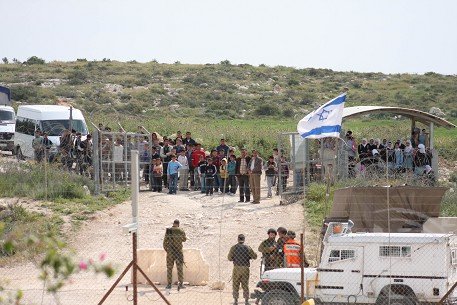
Nablus – Israeli forces turned away Palestinian medical teams at a checkpoint erected at Iraq Burin on Saturday morning, telling international medical volunteers that the area was a “closed military zone.”
Head of the Palestinian Medical Relief Society in Nablus Ghassan Hamdan said the volunteers tried to enter the Nablus-area village where the society had prepared to offer a free treatment day at a local clinic.
Hamdan said the team was told by Israeli soldiers at the village entrance that they must turn back because the village was a closed zone. He said that medics and society officials had made several attempts to explain the humanitarian nature of the mission, but soldiers responded saying their orders were to restrict all entry into the area.
An Israeli military spokeswoman confirmed that the area was declared a “closed military zone for all non-Palestinians,” but said that an exception was made for the doctors at 11a.m., hours after the group arrived at the checkpoint.
Officials from the society confirmed that the Palestinian and international medical workers were permitted into the area, and condemned the delay, saying it would cause a serious reduction in available medical services for villagers.
The society regularly organizes volunteer programs for doctors, nurses and medics from around the world who donate their time and perform free checkups and treatment to Palestinians without regular access to medical services.
The declaration follows one week after the detention of two young men at a checkpoint installed in the same location the previous Saturday.
Iraq Burin, cut off from Nablus by several checkpoints and roadblocks preventing access to the nearby settlement of Yizhar and Bracha, has held regular protests against continued land confiscations by the settlements and settler-only roads. The two detained were accused of having participated in protests in previous weeks.
According to a report by the Israeli human rights group B’Tselem, a new Israeli military order passed in January 2010 made gatherings of more than ten people illegal, by reenacting a 1967 law. The group said the law violated the right of assembly for Palestinians, guaranteed by the fourth Geneva Convention.
Facebook: “No Palestinian Pages”
By Jilian C. York | July 25, 2010
I was surprised, but a little skeptical, this morning when I read a blog post stating that Facebook is blocking the word “Palestinian” from its Pages. After all, a search for “Palestinian” brings back a number of already created Pages. Here’s what the blogger wrote:
I thought it might be a good idea to make a Facebook page for Palestinian Refugee ResearchNet—a straight-forward thing to do, right? Apparently not, since it seems the very word Palestinian may “violate or page guidelines or contain a word or phrase that is blocked”……A mistake, perhaps? Well, Afghan Refugee ResearchNet is OK. So too is DR Congo RefugeeResearchNet. No threats to innocent Facebook users lurking in those terms, it seems…
…Are Palestinians the only group so banned? Well, not really… after a little fiddling around, I discovered that al-Qaida Refugee ResearchNet and Nazi Refugee ResearchNet are banned too.
It does seem a bit odd, however, that a population of up to 12 million people, receiving more than a billion dollars in international aid, recognized by the UN, and enjoying a degree of formal diplomatic recognition from the United States—is placed in the same banned category as Nazis and al-Qaida.
Odd, indeed. I decided to try it for myself, with the terms “Palestinian Refugee ResearchNet,” “Palestinian Folklore,” and “Palestinian Music”. Nada.
Of course, “Israeli Music,” “Israeli Folklore” and “Israeli Refugee ResearchNet” all created no problems.
What is Facebook trying to accomplish by eliminating page creation for a marginalized population? I would guess that they were trying to prevent abuse of some kind (e.g., pages set up to demean a certain group), but I can’t imagine what kind of abuse would affect Palestinians and not, for example, Israelis.
In any case, as usual, Facebook does not have a strong customer support team to handle complaints about this, nor do they seem to care. After all, this was their response to the blogger who first documented this:
Unfortunately, we cannot process this request. Your Page name must comply with the following standards:
- Accurately and concisely represent a musician, public figure, business or other organization
- Not contain terms or phrases that may be abusive
- Not be excessively long
- Not contain variations of “Facebook”
If you believe your Page name fits within these guidelines, please respond to this email and we will re-evaluate your request.
Again, activists, I would advise you to stop using Facebook.
Israel Gets Brutal With Media
By Mel Frykberg | IPS | July 23, 2010
NABI SALAH, Occupied West Bank: Palestinian activists are being jailed, Israeli activists are under surveillance, and the Israeli military is increasingly targeting journalists who cover West Bank protests.
The Foreign Press Association (FPA) in Israel issued a statement recently condemning what it sees as a change in Israel Defence Forces (IDF) policy in their treatment of journalists covering the growing number of West Bank protests against Israel’s separation barrier, illegal settlements and land expropriation.
“We would appreciate it were the authorities to remind the various forces involved, that open, unhindered coverage of news events is a widely acknowledged part of the essence of democracy.
“Generally speaking this would not include smashing the face of a clearly marked photographer working for a known and accredited news organisation with a stick, or for that matter aiming a stun grenade at the head of a clearly marked news photographer or summarily arresting cameramen, photographers and/or journalists,” said the FPA.
The release of the statement followed an attack on three journalists as they covered a protest march near an Israeli settlement built illegally on land belonging to the Palestinian village Beir Ummar in the southern West Bank.
Several weeks ago in the village Nabi Salah, north of Ramallah, two Israeli activists were roughed up and arrested after criticising Israeli soldiers for shooting at Palestinian boys throwing stones.
One of the Israelis, Yonatan Shapira, 38, an ex-Israeli Air Force (AIF) pilot and member of Combatants for Peace, (a group comprising former Palestinian and Israeli fighters) earned the wrath of the Israeli authorities when he authored a “pilot’s letter” in 2003 signed by 27 AIF pilots.
The pilots refused to fly over the Palestinian occupied territories and take part in the deliberate targeting of Palestinian civilians, particularly in Gaza.
Shapira was recently interrogated by Israel’s domestic intelligence agency Shin Bet over his participation in anti-occupation protests and his support for the BDS movement.
In what appeared to be a veiled threat the Israeli activist was warned that his presence at anti-wall demonstrations was in defiance of the areas being declared closed military-zones on Fridays.
Shapira believes his phone has been tapped. “Nothing we are doing is illegal and I’m not afraid, but I’m uncomfortable about my country turning into a fascist state,” said Shapira.
“The Israeli authorities are trying to intimidate Israelis who engage in political dissent. We present no security threat. But the line between political activism and security is becoming increasingly blurred by the authorities who are trying to criminalise dissent,” Shapira told IPS.
“Sometimes when we come to demonstrations we have been stopped en route by the IDF who have taken down our details and appear to have prior knowledge of our movements,” Israeli activist Shy Halatzi, 23, a physics and astronomy student at Tel Aviv University who served in the Israeli military told IPS.
Israel has become alarmed at growing international support for a boycott campaign against the country as its right-wing government increasingly tramples on civil liberties. Hundreds of Israeli college professors signed a petition recently denouncing the threat by Israeli education minister Gideon Saar (a member of Israeli Prime Minister Benjamin Netanyahu’s Likud party) to punish any lecturer or institution which supports a boycott of Israel.
Saar supports Im Tirtzu, a right-wing nationalist movement, which demands that Israeli education professionals be required to prove their commitment to Zionism.
Neve Gordon, professor of politics at Ben Gurion University in Beersheva, received death threats after he wrote an editorial last year in the Los Angeles Times explaining why he supported a boycott on Israel.
Meanwhile, Palestinian grassroots activists involved in non-military popular committees, which organise non-violent activity against the occupation, continue to be arrested and jailed on what they say are trumped-up charges involving forced confessions under duress.
The IDF carries out nightly raids in West Bank villages where demonstrations take place regularly on a Friday and where villagers have been particularly active.
Wael Al-Faqia from Nablus in the northern West Bank was recently sentenced to a year’s prison for “belonging to an illegal organization.” Al-Faqia was arrested with eight other activists in December last year.
Musa Salama, an activist with the Labour Committee of Medical Relief Workers and associate of Al-Faqia, was sentenced last December to a year’s imprisonment on identical charges.
Abdullah Abu Rahme from the head of the Popular Committee Against the Wall in Bili’in village near Ramallah continues to languish in detention following his arrest in December last year.
Some of the allegations against him include incitement for planning the peaceful protests and “being in possession of arms.” The latter referred to his collection of used teargas canisters and spent bullet cartridges, fired by Israeli troops at unarmed protestors, [which had been arranged] into a peace sign.
“What we as Israeli activists endure is a fraction of what Palestinians are subjected to. They are subjected to harsher and much more brutal treatment than we are,” Shapira told IPS.
Israel releases British rapper detained at airport
Ma’an – 21/07/2010
 Bethlehem – Israeli airport authorities have released a British-Iraqi rapper who was held for half a day at Ben Gurion International Airport, the musician’s fan page reported Wednesday.
Lowkey was detained Tuesday upon arrival in Tel Aviv en route to play a number of concerts and hold a series of musical workshops in refugee camps in the West Bank as part of the Hip Hop Bus Tour, composed of members from the Existence is Resistance, The South West Youth Collaborative, and the University of Hip Hop Chicago.
Fans started an online petition shortly after Lowkey’s detention calling on the Israeli government to release the musician and allow him to play in Palestine.
A spokeswoman for Israel’s Interior Ministry immigration department did not immediately return a phone call seeking comment. An email to Lowkey’s booking representative was not immediately returned.
In February 2009, Lowkey was detained at the airport en route to several Palestinian charity concerts to help raise funds to rebuild Gaza following the war.
Born Kareem Dennis to an Iraqi mother and English father in Tooting, London, Lowkey’s Gaza anti-war song reached number 1 in the UK charts in January.
Democrats: Guantanamo Closure ‘Not a Priority’
Steny Hoyer: Then and now
By Glenn Greenwald | July 21, 2010
Letter signed by Steny Hoyer to George Bush, June 29, 2007, demanding closing of Guantanamo:
Holding prisoners for an indefinite period of time, without charging them with a crime goes against our values, ideals and principles as a nation governed by the rule of law. Further, Guantanamo Bay has a become a liability in the broader global war on terror, as allegations of torture, the indefinite detention of innocent men, and international objections to the treatment of enemy combatants has hurt our credibility as the beacon for freedom and justice. Its continued operation also threatens the safety of U.S. citizens and military personnel detained abroad. . . . A liability of our own creation, the existence of the detention facilities at Guantanamo Bay is defeating our effort to ensure that the principles of freedom, justice and human rights are spread throughout the world.
House Majority Leader Steny Hoyer, today:
Gitmo shut-down not a priority, top Dem says
House Majority Leader Steny Hoyer acknowledged Tuesday that closing down the Guantanamo Bay prison is not a top priority for congressional Democrats.
In response to a question from a reporter about where shutting down Gitmo stands, Hoyer said, “I think that’s not an item, as you point out, of real current discussion. There’s some very big issues confronting us – dealing with growing the economy and Iraq and Afghanistan.”
Hoyer added, “I think you’re not going to see it discussed very broadly in the near term.”
How can it be that it’s not a priority to end something which — as Hoyer put it in 2007 — “threatens the safety of U.S. citizens and military personnel detained abroad”? Why would Democrats like Hoyer be so willing to jeopardize the safety of American citizens and the lives of Our Troops abroad by de-prioritizing something which (at least if the 2007 Hoyer was to be believed) directly threatens them? Also, we had wars in Afghanistan and Iraq in 2007 along with a whole variety of other problems — if those issues now justify de-prioritizing the closing of Guantanamo, why wasn’t that also true in 2007 when Hoyer (and most other Democrats ) were vocally demanding that Bush close the camp?
This, needless to say, is par for the course: policies which establishment Democrats pretended to vehemently oppose when out of power magically transformed into policies they embrace when in power. Ironically, in response to the 2007 Hoyer letter, a Bush spokesperson “said the letter was received and noted that Bush has said he wants to close Guantanamo. ‘A number of steps need to take place before that can happen, and we’re continuing to work on those,’ she said.” Sound familiar? Recall, too, that even the Obama plan to move the camp to Illinois would have entailed preserving one of the core factors condemned by Hoyer (“Holding prisoners for an indefinite period of time, without charging them with a crime goes against our values, ideals and principles as a nation governed by the rule of law”).
Along these same lines, a provision in the new Intelligence Authorization Act which would provide for substantially greater oversight of the intelligence community has now disappeared from the bill in the face of a threat from the Obama White House to veto any bill containing it. I wrote before about the Obama administration’s efforts to prevent greater oversight of covert intelligence programs — greater oversight also used to be an advocated Democratic policy — but it’s particularly ironic that Obama succeeded in quashing further oversight on the exact day that The Washington Post documents the completely out-of-control, unaccountable, secret world of the National Security and Surveillance State. Allowing an audit of these intelligence programs by the General Accounting Office to ensure compliance with the law — something Nancy Pelosi was pushing — would have been one mild means of ensuring at least a marginal degree of accountability over Top Secret America. Yet it looks likely even that will not happen because Obama is threatening a veto to prevent it. I wonder why he would do that?
AP, DPA, Reuters journalists targeted by Israeli forces
Ma’an – 17/07/2010
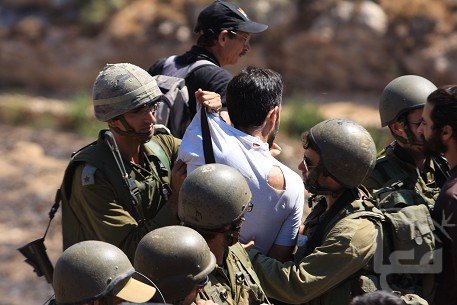
Hebron: Israeli forces fired percussion grenades directly at two journalists on Saturday, hitting them in the face and back during a Beit Ummar protest against continued land confiscations by a nearby Israeli settlement.
A third photojournalist was physically assaulted by armed Israeli personnel, and was taken to hospital for treatment by Red Crescent Paramedics.
Medics said Reuters photojournalist Abed Khweisa was treated checked for facial bone fractures after a sound bomb hit him in the cheek, while DPA photographer Abdul-Hafidh Hashlamoun was treated for bruises on his back after being struck by a second canister shot from a high-velocity launcher.
Hazim Badr, medics said, was beaten by soldiers and treated for bruises. All three said they were covering the protest when they were targeted.
One protester was reported injured, identified as 43-year-old Ahmad Khalil Abu Hashim, secretary-general of the local anti-land confiscation committee.
An Israeli military spokesman said soldiers were dispatched to the area when the protesters approached the perimeter fence surrounding the illegal Karmi Tzur settlement, and “responded with riot dispersal means when protesters began hurling rocks” at the soldiers.
Addressing a question about the targeting of members of the press, the spokesman said “anyone who chooses to be present at violent riots … does so at their own risk.”
In a swiftly-issued condemnation of the assault, the Palestinian Journalists Syndicate released a statement saying (PJS) a fourth journalist, Eyad Hamad with the AP, was detained “for few hours,” and said soldiers had damaged his camera.
The military spokesman confirmed that one “civilian who stood with the rioters” was taken in for questioning and released.
The society said it “condemns this attack and urges local, regional and international advocates of press freedom and human rights to pressure Israel to stop its attacks on Palestinian journalists.”
U.S. Government Considers Listing Turkish Charity As ‘Terrorists’
By Saed Bannoura – IMEMC News – July 15, 2010
The US State Department is considering whether to designate a Turkish charity as a ‘terrorist group’ after the organization sent a ship of medical and school supplies to the Gaza Strip in May.
The aid ship was attacked in international waters by the Israeli navy, and nine aid workers, including one US citizen, were killed.
The Foundation for Human Rights and Humanitarian Relief is a Muslim charity based in Turkey that funds humanitarian aid missions to troubled and impoverished places around the world.
Formed in 1992 with the goal of assisting Muslims in Bosnia, the charity has branched out to many places, including Lebanon, Pakistan, Sudan, Somalia and the Palestinian territories.
Although the Israeli-based Intelligence and Terrorism Information Center says the Turkish charity is quote “a radical Islamic organization with an anti-Western orientation,” the group has never been linked to any violent activities or groups.
When the aid ship was attacked by the Israeli navy in May, the U.S. Congress issued a statement declaring full support for the Israeli act of piracy, and the Obama administration did not criticize the attack.
Despite the fact that smuggled video footage shows passengers being killed execution-style by Israeli commandos, the U.S. government has continued its policy of unquestioning support of the Israeli attack.
The motive behind whistle-blower prosecutions
By Glenn Greenwald | July 15, 2010
One of the more flamboyant aspects of the Bradley Manning arrest was the claim that he had leaked to WikiLeaks 250,000 pages of “diplomatic cables.” Those were the documents which anonymous government officials pointed to when telling The Daily Beast‘s Philip Shenon that the leaks “could do serious damage to national security.” Most commentary on the Manning case has tacitly assumed that the leaking of “diplomatic cables” would jeopardize national security secrets. But a new BBC article today contains this quote from former UK intelligence analyst Crispin Black:
Diplomatic cables don’t usually contain huge secrets but they do contain the unvarnished truth so in a sense they can be even more embarrassing than secrets.
As usual, government concern over leaks is about avoiding embarrassment and other accountability; national security harm is but the fear-mongering excuse. Similarly, a new Washington Post article today details the Obama DOJ’s prosecution of NSA whistle blower Thomas Drake, whose disclosures resulted in no claimed national security harm, but rather, was evidence of “waste, mismanagement and a willingness to compromise Americans’ privacy without enhancing security” (leaked only after his use of the official channels resulted in nothing, as usual). As is true for virtually every whistle blower prosecution or threatened prosecution, there is no actual national security harm identified from that leak. Other than when a covert agent’s identity is blown (as happened to Valerie Plame), has anyone ever heard of any actual, concrete national security harm from any of the high-profile leak cases, whether it be the illegal NSA eavesdropping program, the network of CIA black sites, the release of the Apache helicopter attack video, or the corruption and privacy infringements revealed by Drake?
The Post today quotes Obama DOJ spokesman Matthew Miller’s justification for the administration’s escalated war on whistle blowers as follows: “We have consistently said that leaks and mishandling of classified information are matters that we take extremely seriously.” There’s no doubt that they take such acts “extremely seriously,” but what’s the reason for it? There’s been no identified harm to national security from any of these leaks.
What these leaks have actually accomplished is to “embarrass” the Government by revealing what the intelligence analyst quoted by the BBC calls “the unvarnished truth” about the illegal, corrupt, and embarrassing acts it undertakes. In all of these cases where the Obama DOJ is persecuting whistle blowers, they’re punishing the greatest sin there is — exposure of high-level government wrongdoing — not harm to national security. Amazingly, that was even the explicit rationale used by Obama when he and the Democratic Congress re-wrote FOIA to shield photographs of detainee abuse from court-ordered disclosure: these photos would reflect poorly on the U.S. government and therefore harm national security. And, of course, the administration’s repeated, Bush-replicating invocation of the “state secrets” privilege has been justified with vague appeals to National Security but actually motivated by a desire to shield government crimes of detention, surveillance and interrogation from disclosure and accountability.
Most of what the U.S. Government does of any significance — literally — occurs behind a vast wall of secrecy, completely unknown to the citizenry. While a small portion of that is legitimately classified, these whistle blower prosecutions and other disclosure controversies demonstrate that the vast majority of this secrecy is devoted to avoiding embarrassment and accountability. It has nothing to do with “national security” — one of the all-justifying terms (along with Terrorism) for what the Government does. Secrecy is the religion of the political class, and the prime enabler of its corruption. That’s why whistle blowers are among the most hated heretics. They’re one of the very few classes of people able to shed a small amount of light on what actually takes place.
The great irony is that there is a perfect inverse relationship between the secrecy powers of the Government (which rapidly increase) and the privacy rights of citizens (which erode just as rapidly). The citizenry meekly acquiesces to the notion that it must sacrifice more and more privacy to the Government in order to deter and expose criminality, corruption and other dangerous acts of private citizens, yet refuses to apply that same rationale to demand greater transparency from the Government itself. The Government (and its private corporate partners) know more and more about citizens, while citizens know less and less about the actions of the government-corporate axis which governs them.
The reason Iceland is poised to enact an unprecedentedly potent shield for whistle blowers and other leakers is that they realized that the oozing elite corruption that led to their financial collapse was caused by rampant secrecy. They realized that unauthorized leaks are the most effective check against the crimes of the powerful, which is precisely why such leaks in the U.S. are targeted with such a fury. What possible valid reason is there to keep classified that Apache attack video, or evidence of our civilian casualties in Afghanistan, or massive private contractor corruption at the NSA, or Bush crimes on torture and eavesdropping, or the lending programs of the Fed? The real criminals are not those who are leaking embarrassing information about corruption and wrongdoing — those whom the Obama DOJ is prosecuting with an unprecedented vengeance — but rather the political officials who are misusing powers of secrecy to hide information for which there is no legitimate secrecy basis.
US bars acclaimed Colombian journalist
By Gabriel Elizondo | Al-Jazeera | July 13th, 2010
Hollman Morris is known in Colombia for path-breaking journalism, but US wont let him into the country for a Harvard fellowship.
Hollman Morris is a Colombian journalist who has received dozens of international awards for his work uncovering atrocities and human rights abuses in the decade’s-long armed conflict in his country.
But the United States apparently views him as a terrorist. (More on this terrorist thing later).
For many years Morris, an independent television journalist, has risked his life trekking to remote (and dangerous) corners of Colombia to talk to victims of Colombia’s war. When there were allegations of the Colombia military or paramilitaries killing innocent people in a far away corner of the country, many journalists would report the story with a few press releases and phone calls from the comfort of Bogota. If it was reported at all. Not Morris. He would go to the source, often walking through the jungle for days to get to the location, speak to people, and find out what happened, and put it on television.
At its best, Morris’s work has led him to uncover evidence of atrocities potentially committed by actors of the state. At minimum, his reporting has often thrown doubt on official government positions few other journalists seem dare to challenge.
By all accounts, this has infuriated the outgoing president, Alvaro Uribe, who has publicly insinuated Morris is a terrorist sympathiser because of his interviews with the Farc guerilla group.
Morris and his family, including his young daughter, were victims of illegal spying by Colombia’s spy agency, the DAS (among a handful of other journalists, lawyers, judges, opposition politicians, and human rights activists). Human rights groups say it was a deliberate attempt to dig up any personal dirt they could find on him to squash his reporting. The scandal was so big, the agency was going to be dismantled, but as of yet it has not.
Regarding the Farc, it’s true Morris has interviewed Farc commanders over the years. But so have countless other journalists from Colombia and abroad. If Colombia threw in jail every reporter who has had contact with the Farc, the jails would be full overnight.
But Morris’s critics – and there are many in Colombia – largely fail to recognise only a small portion of his stories deal with the Farc; most of his pieces have a razor sharp focus on human rights, giving a true and authentic platform for those otherwise with no outlet to tell their story.
It is true that because Morris aggressively pursues stories on the ‘front lines’ of conflict, he often finds himself in sticky situations. Like last year when he recorded brief interviews with several Farc hostages moments before they were granted freedom, a move that was criticised by some in Colombia as Morris allowing himself to be used by the Farc to promote a propaganda agenda. In journalism theory class, maybe so. But when in the jungles of Colombia caught in between a firefight between rebels and the Army (as Morris has been on several occasions) perhaps things are not as clear at the time.
And unlike many other journalists, Morris isn’t afraid to give his personal viewpoints on President Uribe (especially after the government spying scandal against him), thrusting himself into the realm of activist-journalists, according to his critics.
But he and his brother, Juan Pablo – who is the executive producer at their Bogota-based Morris Productions – are recognised as respected, top shelf journalists by many people. They have done documentaries for Discovery Channel, European channels, and for many years had an independent programme on Colombian public TV called Contravia, partially funded by a grant from the European Union.
I first met Hollman and Juan Pablo almost eight years ago. We have since crossed paths in Peru, Honduras, Washington DC, and several times in Colombia. They have both worked for Al Jazeera on numerous occasions on a freelance basis, and specifically helped me on stories.
But the crowning recognition of Morris’s journalistic aptitude was being awarded a prestigious Nieman Fellowship at Harvard, where he was going to join an elite group of other journalist’s from around the world in this years class, and step back from his day-to-day reporting to study human rights issues that could enhance his theoretical understanding of the issues he reports on back at home.
But right as Hollman was making final preparations to head off to Harvard, brushing up on his English, the US government branded him with another label: “Terrorist”. As the Associated Press pointed out, his visa to study in the United States was denied, as US officials told him he was ineligible on grounds of a ‘terrorist activities’ section of the US Patriot Act.
Of course, US Embassy officials in Bogota won’t comment on individual cases.
So the speculation from human rights groups interviewed in a recent Washington Post article about the case, is that the Uribe administration – Washington’s closest friend in Latin America this decade under the George W Bush administration – orchestrated the visa rejection because of Morris’s reporting that questioned Uribe’s policies. Now some are pinning it on the Obama Administration.
I won’t pretend to know what the truth is on why the visa was denied and what role – if any – the Uribe administration played. It is no secret Morris’s reports over the years have annoyed Uribe to no end, and thus Uribe has tagged him a conspirator with terrorists, regardless of the fact he has never been charged with any such a crime. Groups such as Human Rights Watch protested Uribe’s comments.
The larger question is: What exactly is the objection from the US government to having an internationally recognised Colombian journalist do a Harvard-sponsored fellowship? What exactly is the evidence of his terrorist activities, or how exactly is he in violation of the Patriot Act?
Maybe ironically, the same US Embassy in Bogota that rejected his study visa to Harvard, singled him out in a 1997 human right report as having to flee the country because of death threats from illegal armed actors (scroll down to the section titled “Freedom of Speech and Press” in the link above).
The Committee to Protect Journalists has sent a letter to Secretary of State Hillary Clinton asking her department to reconsider Morris’s case.
For their part, the Nieman Foundation appears to stand behind Morris, but that is a small consequence because without a visa there is no chance to take part in the fellowship.
One of the comments by a reader identified as “vaalex” in the Washington Post article about the case said this: “His (Morris’s) work is too important to interrupt by wasting time at Harvard. The State Dept. decision is a blessing in disguise.”
A backhanded compliment to Morris, I guess, but still probably little consolation.
Because after Morris was accepted to Harvard, at first glance, one would think the US State Department would have opened the door and patted him on the shoulder with congratulations. Instead, the State Department slammed the door and slapped him across the face and branded him with the terrorist label.
Featured Video
or go to
Aletho News Archives – Video-Images
Book Review
The Maidan Killings and the False-Flag Case
By Freddie Ponton | 21st Century Wire | September 5, 2026
Before the killings that helped bring down Ukraine’s president in February 2014, American diplomats were discussing who should enter its government. In a leaked telephone call, senior State Department official Victoria Nuland told US ambassador Geoffrey Pyatt, “I think Yats is the guy,” referring to opposition leader Arseniy Yatseniuk. Washington had clear preferences and was working to advance them. Later that month, Yatseniuk became prime minister.
Ivan Katchanovski’s The Maidan Massacre in Ukraine examines the violence that preceded that transfer of power. Drawing on television footage, witness testimony, forensic examinations and Ukrainian court proceedings, he argues that elements of the opposition shot protesters and police in a false-flag operation. His case centres on evidence of protesters being shot from opposition-controlled locations, including Hotel Ukraina, overlooking the killing ground. … continue
Blog Roll
 Aletho News
- The Maidan Killings and the False-Flag Case
- Georgia’s Largest Healthcare System Will Fire Employees Who Refuse Flu Vaccine
- The Five-Year Fuel Crisis: Why the World Economy Is Paying for a War It Thinks Is Ending
- Trump’s Big Bluff on Iran
- Swiss scammed out of millions by Ukraine-linked call centers – media
- Germany facing potential ‘violent conflict’ with Russia – spy chief
- Ukraine’s EU neighbors reject new plea from Kiev – Politico
- British Transport Police Facial Recognition Trial Scanned 926,912 People With Zero Arrests
- House Bill Would Ban Federal Use of Flock ALPR Data
- Can a Spice Rival a Drug? 10 Head-to-Head Trials Put It to the Test.
- If Americans Knew
- “We See Our Homes Now From A Satellite, Like Strangers”
- Watch “Gaza: Doctors Under Attack”, originally censored by BBC
- NAZA: Israeli embassies in UK and US promote rival documentary to challenge Gaza genocide allegations
- David Ellison appoints Israeli to lead merged Paramount-Warner studios
- Turkish Red Crescent helps elderly Gaza man walk again after Israel confiscates his prosthetic limb
- Four Palestinians Killed in Israeli Attacks in Gaza
- Two Palestinian youths killed and village razed as Israeli attacks on West Bank continue
- Two more Christian women victims of Israeli raids on Gaza
- Cruelty, Deprivation, Indignity: A Journalist’s 22 Months in Israeli Prison
- New IDF Website Frames Slain Gaza Journalists as Terrorists
- No Tricks Zone
- Latest European Green Energy Debacle; Portugal’s Largest Flagship Solar Park Insolvent!
- Green Energy Debacle: German Expert Professor Fritz Vahrenholt Warns Of Severe Economic And Social Consequences
- Two More Paleo Reconstructions Affirm Meters-Higher Sea Levels Across Ireland, Brazil 7000-6000 Years Ago
- New Study: Earth And Venus Surface Warmth Largely Explained By Convection And Lapse Rate, Not CO2 Or Radiation
- 2025 Nature Paper Claiming Worsening Global Drought Gets RETRACTED …Heavily Flawed
- New Study: ‘Global Drought Shows No Detectable Recent Acceleration Under Climate Warming’
- Economic Masterminds: German Socialists Suggest Taxing Productivity Gains Stemming From Using AI
- The South China Sea Has Not Been Cooperating With The Climate Change Narrative
- Energy Crisis: Germany Enters Heating Season With Historically Low Gas Reserve Fill Levels
- New Study: The Antarctic Ice Sheet Gained Mass From 2020-2024 Due To Staggering Snow And Ice Accumulation

