Saudi Arabia moves to regulate net news
Saudi Arabia is planning to introduce regulations that include licensing internet news sites in a bid to bring them under government control
Carlyle Murphy | The National | February 08. 2010
RIYADH // Saudi Arabia is planning to introduce regulations, including a licensing requirement, for its indigenous internet news sites, which have become a key fixture in the kingdom’s active online community.
The draft regulations, still under study, would require internet-based news sites to request a government licence and to respond to complaints about their content that are received by the ministry of culture and information.
“We want them to feel that they are under our umbrella,” Abdul Rahman al Hazza, spokesman for the ministry, said in a phone interview yesterday.
Mr al Hazza referred to the new rules as “guidelines for the e-press”, and said the idea is to help the electronic media with staffing and financing and give them “somebody to talk to” if they have problems. “It’s going to be simple and easy.”
Asked if the new rules would involve censorship, Mr al Hazza replied: “Not that much.” Mainly, he added, if there are complaints about something written at an online news site, “we just look at it”.
A report last year in the Saudi Gazette said the draft regulations also cover “appointment conditions for editors-in-chief, granting permits to journalists, and invitations to cover news events”.
A 2007 law already subjects online writers to criminal penalties for such things as defamation.
The planned regulations, which Mr al Hazza said are still two to three months away from being finalised by the ministry, are an effort to bring online news sites such as Sabq, Alweeam and A’ajel under government control in much the same way that the country’s traditional daily newspapers are regulated.
It is not clear if news sites like Elaph.com, which is London-based but has a Riyadh office, would also have to get a licence.
Saudi newspapers are licensed by the government and can be temporarily stopped from publishing if they print something upsetting to a government official. But this has been rare in recent years, during which the Saudi print media has been encouraged to report more critically on social and economic problems. There is considerable self-censorship, however, as the media stay away from sensitive issues.
Although the draft regulations under consideration do not apply to bloggers, there are concerns that the government eventually will try to regulate them as well.
“They are not talking about blogs” right now, observed one veteran Saudi blogger, Ahmed Ba-Aboud. “But eventually they will get to us. It is a concern.”
Mr Ba-Aboud, 38, a management consultant in the kingdom’s Eastern Province city of Dhahran, said the government does not understand that online media are attracting readers because they are not controlled like traditional newspapers. “There’s no way I’d send anything I write to the government to censor it,” he said. “That’s not how the internet works.”
Ahmed al Omran, who blogs at http://www.saudijeans.org, was caustic about what he called the ministry’s “dumb idea to regulate so-called electronic media”.
“Ironically, some owners of news websites are actually pushing for this law,” Mr Omran lamented in a posting last month.
“They argue that it would make it easier for them to get funding and make money from advertising. What about their independence and freedom that could be threatened by the new law? Well, apparently these things are not high on their agenda.”
Saudi Arabia’s sprightly blogging community includes both Saudis and foreigners writing in both Arabic and English. It also boasts one of the region’s highest proportion of female bloggers – about 46 per cent, according to a 2009 study by Harvard University’s Berkman Center for Internet and Society. About one-third of the kingdom’s population regularly goes online.
The community’s latest arrival showed up February 2, when Mr Ba-Aboud launched a new English-language blog so that outsiders can learn more about “regular people like myself”.
Most foreigners know certain kinds of Saudis, Mr Ba-Aboud said in an interview, including “extremists like Osama bin Laden”, “rich people” and “people related to the government”.
But the voice of ordinary Saudis “does not reach around the globe in a similar magnitude”, he wrote at the new site, http://alternativesaudivoices.wordpress.com.
It will be a sort of communal blog in that Mr Ba-Aboud has invited anyone to contribute a posting, and as co-ordinator, he will post them on the site. Only those that “call for hate or violence” will be rejected, he added.
In an interview last November, Mr al Hazza, the ministry spokesman, said the new regulations arose partly because ordinary citizens “don’t know where to go” to complain about something written at an online news site.
“The problem we have is that there is no government department to refer to … Nobody to evaluate their job to see if they are doing wrong or right.”
Censorship “is not the idea” behind the new rules, he said. “The idea is to regulate.”
Mr al Hazza said a decision will probably be made in the next couple of weeks about whether the new regulations shall be issued by the minister of culture and information, Abdel Aziz al Khoja, or be sent to the Shoura Council for action.
Meanwhile, anyone wanting to send Mr al Khoja a comment on the new rules can reach him at his personal page at Facebook
US frees Reuters photographer held for 17 months without charge
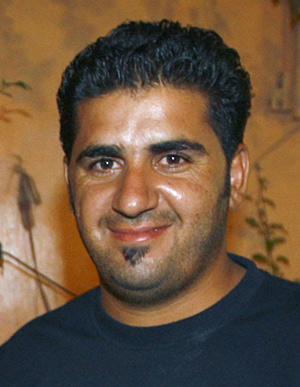
Ibrahim Jassam
BBC | February 10, 2010
American forces in Iraq have released an Iraqi freelance photographer held in detention for 17 months without charge. Ibrahim Jassam Mohammed, who worked for Reuters, was arrested in September 2008 in a dawn raid on his home.
The US said the photographer was a “security threat”, but all evidence against him was classified secret. An Iraqi court had ruled in December 2008 that there was no case against him and that he must be released, but the US military refused.
“How can I describe my feelings? This is like being born again.” Mr Jassam told Reuters.
According to Reuters, the US accusations were based on his “activities with insurgents”.
“The term ‘insurgents’ in Iraq generally refers to Sunni Islamist groups, like al-Qaeda. Jassam is a Shia Muslim,” the news agency said.
The US military has detained a number of Iraqi journalists working for international news organisations, but none have been convicted. It has been criticised by press freedom organisations such as Reporters Without Borders.
Tel Aviv’s hydra-headed monster
It’s outrageous that in all probability Israel will once again be allowed to get away with committing murder on foreign soil while the world remains silent
By Linda Heard | Gulf News | February 9, 2010

- Government-sponsored Israeli murderers are professional and have decades of experience. It’s highly unlikely that they would leave behind them a trail of hard evidence that would stand up in an international court of law.
- Image Credit: NINO JOSE HEREDIA/Gulf News
It’s surely ironic that the country that complains loudest about terrorism has assassination squads travelling the world in search of prey. The murder of Hamas commander Mahmoud Al Mabhouh in a Dubai hotel room last month is believed to have been carried out by members of the Mossad allegedly using Irish passports. And the fact that the Israeli government has declined to comment other than to falsely claim that Al Mabhouh was in the emirate to meet with Iranian officials speaks volumes.
Dubai’s Police Chief Lieutenant General Dahi Khalfan Tamim has warned that an international arrest warrant will be issued in the Israeli Prime Minister’s name if it is proved that the crime was perpetrated by an Israeli hit squad. That would certainly be a logical course of action but it’s easier said than done.
Government-sponsored Israeli murderers are professional and have decades of experience. It’s highly unlikely that they would leave behind them a trail of hard evidence that would stand up in an international court of law.
Moreover, even if Benjamin Netanyahu’s name were to appear on an international arrest warrant there would be very few countries, if any, willing to face Washington’s wrath by putting him behind bars.
Let’s be realistic. It’s just not going to happen! Britain, for instance, regularly tips off Israelis who are wanted for war crimes and is attempting to change its own laws to ensure Israelis are no longer vulnerable.
It’s outrageous that in all probability Israel will once again be allowed to get away with committing murder on foreign soil while the world stays silent. The reaction or rather non-reaction of the international community is unprincipled. It isn’t hard to imagine what an orchestrated outcry there would be if assassins backed by Arab governments were targeting prominent Israelis abroad. Every western television network would have rolling news and commentary centering on ‘Arab terrorists’, while US and European leaders would be issuing warnings and sending condolences.
There will be those who will say ‘good riddance’ upon hearing of the demise of a top Hamas lieutenant but I believe that anyone who takes that stance needs to check their moral compass. Whatever we feel about the victim should be neither here nor there.
Rogue state
Countries that equip assassins with foreign passports — usually acquired using devious means — to violate the sovereignty of a third nation should be censured in the United Nations and isolated. When a nation’s leaders behave like the Sopranos it deserves to be branded a rogue state.
Over the decades, the Mossad, the Shin Bet and the Israel Defence Forces (IDF) have carried out dozens of targeted assassinations. Several leaders of Hamas, Fatah, Al Aqsa Martyrs Brigade, the Popular Front for Liberation of Palestine (PFLP), the Palestine Liberation Organisation (PLO) and Hezbollah have been killed along with the Egyptian nuclear scientist Yahya Al Mashad, who was murdered in a Paris hotel room in June 1980. By some estimates, the Mossad is responsible for the deaths of hundreds of nuclear scientists and is believed to have been behind the killing of Canadian ballistics expert Gerald Bull shot outside his Brussels apartment in March 1990 while working for Iraq.
The Mossad may be a well-honed killing machine but there are times when it makes mistakes. In 1973, Mossad agents using fake Canadian passports murdered a Moroccan waiter in Norway, whom they mistook for a Black September leader, and were arrested.
In 1997, Canada withdrew its ambassador from Israel after Israeli assassins were caught with Canadian passports in Jordan after a failed attempt on the life of Hamas leader Khalid Mesha’al. Then, in 2004, there was a diplomatic contretemps between Israel and New Zealand when Israelis working for Israeli intelligence fraudulently tried to obtain New Zealand passports.
Al Mabhouh’s killing may be stamped with the Mossad’s trademark but, in the end, the case is likely to be filed away marked ‘unsolved’. The slayers who flew out of Dubai within hours of doing the deed will be given new identities, new passports and new assignments.
Israel’s propagandists will attempt to pin the blame on Arab intelligence agencies and the rest of us will simply yawn and turn the page… until the next time this government-licensed hydra-headed monster strikes. The question is who will be next?
Linda S. Heard is a specialist writer on Middle East affairs. She can be contacted at lheard@gulfnews.com
FBI wants records kept of Web sites visited
By Declan McCullagh | February 5, 2010
WASHINGTON – CNET – The FBI is pressing Internet service providers to record which Web sites customers visit and retain those logs for two years, a requirement that law enforcement believes could help it in investigations of child pornography and other serious crimes.
FBI Director Robert Mueller supports storing Internet users’ “origin and destination information,” a bureau attorney said at a federal task force meeting on Thursday.
As far back as a 2006 speech, Mueller had called for data retention on the part of Internet providers, and emphasized the point two years later when explicitly asking Congress to enact a law making it mandatory. But it had not been clear before that the FBI was asking companies to begin to keep logs of what Web sites are visited, which few if any currently do.
The FBI is not alone in renewing its push for data retention. As CNET reported earlier this week, a survey of state computer crime investigators found them to be nearly unanimous in supporting the idea. Matt Dunn, an Immigration and Customs Enforcement agent in the Department of Homeland Security, also expressed support for the idea during the task force meeting.
Greg Motta, the chief of the FBI’s digital evidence section, said that the bureau was trying to preserve its existing ability to conduct criminal investigations. Federal regulations in place since at least 1986 require phone companies that offer toll service to “retain for a period of 18 months” records including “the name, address, and telephone number of the caller, telephone number called, date, time and length of the call.”
At Thursday’s meeting (PDF) of the Online Safety and Technology Working Group, which was created by Congress and organized by the U.S. Department of Commerce, Motta stressed that the bureau was not asking that content data, such as the text of e-mail messages, be retained.
“The question at least for the bureau has been about non-content transactional data to be preserved: transmission records, non-content records…addressing, routing, signaling of the communication,” Motta said. Director Mueller recognizes, he added “there’s going to be a balance of what industry can bear…He recommends origin and destination information for non-content data.”
Motta pointed to a 2006 resolution from the International Association of Chiefs of Police, which called for the “retention of customer subscriber information, and source and destination information for a minimum specified reasonable period of time so that it will be available to the law enforcement community.”
Recording what Web sites are visited, though, is likely to draw both practical and privacy objections.
“We’re not set up to keep URL information anywhere in the network,” said Drew Arena, Verizon’s vice president and associate general counsel for law enforcement compliance.
And, Arena added, “if you were do to deep packet inspection to see all the URLs, you would arguably violate the Wiretap Act.”
Another industry representative with knowledge of how Internet service providers work was unaware of any company keeping logs of what Web sites its customers visit.
If logs of Web sites visited began to be kept, they would be available only to local, state, and federal police with legal authorization such as a subpoena or search warrant.
What remains unclear are the details of what the FBI is proposing. The possibilities include requiring an Internet provider to log the Internet protocol (IP) address of a Web site visited, or the domain name such as cnet.com, a host name such as news.cnet.com, or the actual URL such as http://reviews.cnet.com/Music/2001-6450_7-0.html.
While the first three categories could be logged without doing deep packet inspection, the fourth category would require it. That could run up against opposition in Congress, which lambasted the concept in a series of hearings in 2008, causing the demise of a company, NebuAd, which pioneered it inside the United States.
The technical challenges also may be formidable. John Seiver, an attorney at Davis Wright Tremaine who represents cable providers, said one of his clients had experience with a law enforcement request that required the logging of outbound URLs.
“Eighteen million hits an hour would have to have been logged,” a staggering amount of data to sort through, Seiver said. The purpose of the FBI’s request was to identify visitors to two URLs, “to try to find out…who’s going to them.”
A Justice Department representative said the department does not have an official position on data retention.
Disclosure: The author of this story participated in the meeting of the Online Safety and Technology Working Group, though after the law enforcement representatives spoke.
US Govt Can Kill Citizens Overseas as Part of ‘Defined Policy’
Director of National Intelligence Tells Congress Americans Can Be Killed
By Jason Ditz, February 03, 2010
In testimony before the House Intelligence Committee today, National Intelligence Director Dennis Blair told representatives that American citizens can be assassinated by the US government when they are oveseas.
Blair said the comments were intended to “reassure” Americans that there was a “set of defined policy and legal procedures” in place and that such assassinations are always carried out by the book.
Rep. Pete Hoekstra (R – MI) inquired about the procedures involved, asking what the legal framework was under which Americans could be killed by the intelligence community.
Blair insisted that under no circumstances would Americans be assassinated overseas for criticizing the government, adding “we don’t target people for free speech.” Rather they are subject to assassination when the government decides they are a threat and when they “get specific permission.” Exactly who was giving that permission was unclear.
The question has been increasingly important as the Obama Administration attempts to help the Yemeni government assassinate Anwar al-Awlaki, a US-born cleric who is not accused of any crimes by the US government. The administration maintains that secret evidence exists linking Awlaki to terrorism.
There seems to be a chilling lack of oversight in the procedure behind these killings, however, Blair’s assurances against politically motivated assassinations aside. The US has killed Americans in overseas attacks before, but only as “collateral damage.” It has never admitted to explicitly assassinating an American citizen before, though it seems that the policy is in place and such killings are only a matter of time.
Corporations are not people and money is not speech
By Supreet Minhas | Columbia Spectator | January 31, 2010
In Citizens United v. Federal Election Commission, the U.S. Supreme Court overturned century-old restrictions on corporate spending in elections under the guise of protecting First Amendment free speech rights. Justice Anthony M. Kennedy, writing for the majority, said, “If the First Amendment has any force, it prohibits Congress from fining or jailing citizens, or associations of citizens, for simply engaging in political speech.” This argument of the majority decision rests on the notions that corporations are covered by the same free speech protections as individual citizens and that campaign donations or financing are the same as speech.
Corporations, however, are inherently not the same as individuals and thus cannot have the same protections as individuals. There are a slew of laws that protect corporations and their interests in the arena for which they are by definition formed—namely the marketplace. The laws that govern corporations and the rights enjoyed by them are distinct from the laws and rights of individuals. A corporation, for example, can enter into contracts like an individual, but unlike an individual, a corporation’s members can be protected by limited liability so their personal assets are not at stake.
If a corporation, then, is a distinct legal entity governed by different laws than an individual is, corporations are not protected under the First Amendment in the same way that individuals are protected. Corporations, especially in their most powerful and wealthy incarnations, are exponentially more influential than most individuals in America. The restrictions on corporate spending in elections that were overturned by the U.S. Supreme Court were meant to redress this power balance between average individuals and unduly influential businesses. Corporations already have a plethora of ways to influence politics, from political action committees to lobbyists on Capitol Hill. The framers of the Bill of Rights wanted to protect the voices of the trampled, not amplify the voices of the elite.
The other part of the Supreme Court’s premise for its decision is that the First Amendment free speech clause applies to campaign funding. While speech can be interpreted loosely as any form of expression, such an open, ambiguous definition would create a myriad of problems with all kinds of laws. An architect has a vision of a building: it is his art, his self expression, yet he cannot ignore local zoning laws that, for instance, restrict the height of his building. Should he sue the state for violation of his free speech, his right to expression? Equating money with speech also opens the door to sundry ludicrous claims by, for instance, an employer who objects to minimum wage laws since he’d like to express that his employees are only worth paying $3 an hour. There have to be restrictions on what constitutes speech to prevent a bastardization of the term and an overly liberal interpretation of the First Amendment.
A corporation already has the power to issue a statement in favor of a candidate or policy through its political action committees, and individual members of a business are welcome to contribute money as well. However, allowing a corporation to use its vast profits to directly finance the election or to remove a candidate compromises the democratic notion of a free and fair election. There are unseemly ties even now between politicians and various industries, but this new ruling would make such connections more robust and give them a veneer of legitimacy. A politician financed by a business would become completely beholden to its political agenda and not to the voters.
It’s not only the independence of politicians that’s at stake, but also the independence of our judges, who are at the very least expected to be impartial. Many states still use elections to appoint judges, which leaves them vulnerable to the influence of political spending. In a recent speech at a law school conference, former Supreme Court Justice Sandra Day O’Connor worried about the impact of corporate campaign funding in judicial elections, saying that “judicial campaigning makes last week’s decision in Citizens United an increasing problem for maintaining an independent judiciary.”
Two cornerstones of our democracy—free elections and an independent judiciary—are threatened by the Supreme Court’s activist and meddling decision. The case could have been decided much more narrowly in favor of Citizens United, but instead, the majority of the justices decided to expand the case to champion the rights of big money over the interest of the American people. Senators Dick Durbin (D-IL) and Arlen Specter (D-PA) introduced the Fair Elections Now Act last March. It would prohibit contributions from political action committees and would match individual donations, limited to $100, on a 4:1 basis so that fundraising focuses on the people. Such a system has been in place in New York City since the 1988 Campaign Finance Act. The rest of the country is long overdue to follow. Never before has the fight for public financing been more necessary.
The author is a Columbia College junior majoring in political science. She is a prospective law student.
Enemies Of Free Speech Call For Internet Licensing
Death of the web moves closer as UN calls for policing cyberspace
By Paul Joseph Watson, Alex Jones & Steve Watson | Prison Planet | February 1, 2010
Calls to introduce a licensing system to police the Internet on behalf of a powerful UN agency represent the latest salvo in a long-running battle to kill free speech on the web and bring an end to the powerful digital democracy that has devastated the carbon tax agenda of the UN by exposing the Climategate scandal.
UN International Telcommunications Union secretary general Hamadoun Toure told the World Economic Forum in Davos this past weekend that global treaties need to be enacted in the name of stopping cyber warfare.
Craig Mundie, chief research and strategy officer for Microsoft, told fellow globalists at the summit that the Internet needed to be policed by means of introducing licenses similar to drivers licenses – in other words government permission to use the web.
“We need a kind of World Health Organization for the Internet,” he said.
“If you want to drive a car you have to have a license to say that you are capable of driving a car, the car has to pass a test to say it is fit to drive and you have to have insurance.”
Andre Kudelski, chairman of Kudelski Group, said that people should be forced to “have two computers that cannot connect and pass on viruses”. Since using the Internet requires a computer to connect to a network, it seems unclear as to how this would work without blocking off entire areas of the Internet altogether.
Globalists are invoking the threat of cyber attacks by nation states in order to accomplish their real agenda of stifling and regulating out of existence the last true outpost of free speech – the Internet. The establishment is furious at the level of influence individuals and small political groups have been able to wield by means of the world wide web, particularly over the last few years.
Climategate is a perfect example of the power of the digital democracy that authoritarian enemies of free speech want to crush. The Copenhagen global warming conference was completely devastated by the Climategate revelations which appeared just days before elitists convened to ram through their CO2 scam. As a result of bloggers feverishly pursuing the Climategate story, the entire foundation of the UN’s IPCC has been totally eviscerated and the global warming hoax is on its last legs.
The power to cripple entire branches of their control freak agenda within a matter of weeks has the globalists hopping mad, which is why their mission to eliminate real free speech on the web is accelerating.
“Don’t be surprised if it becomes reality in the near future,” writes ZD Net’s Doug Hanchard. “Every device connected to the Internet will have a permament license plate and without it, the network won’t allow you to log in.” … Full article
Argentina reveals secrets of ‘dirty war’
Buenos Aires, Jan 29 (IANS/EFE) Argentina has disclosed the secrets of the ‘dirty war’ waged against the left by the country’s military regime 1976-83.
The secret files of Battalion 601, described as the ‘brain’ that coordinated killings, kidnappings and other abuses, contains the identities of both military and civilian personnel who played a role in the repression.
The declassification of the documents began with an order from Argentine President Cristina Fernandez Jan 1.
The documents presented before the federal Judge Ariel Lijo for review contain data on 3,952 civilians and 345 army personnel who worked for Battalion 601, said Ramon Torres Molina, director of the National Archive of Memory.
The battalion’s civilian operatives included everyone from college professors to people who worked as porters, concierges and maintenance men at apartment buildings.
They were used to collect information and to infiltrate guerrilla groups and human rights organisations, with those assigned to infiltration duties given aliases with initials matching those of their real names.
The civilian agents were classified by grades corresponding to military ranks and the most proficient could aspire to the equivalent of colonel.
Torres, who refused to divulge any names until Judge Lijo finishes reviewing the documents, said the intelligence structure was created in the early 1970s and that it survived until 2000, when Battalion 601 was disbanded and its remaining 500 or so civilian operatives dismissed.
Some former commanders of the unit have died and others have been criminally charged, but many military and civilian veterans of the unit are at large, the archive director said.
The archive continues to thumb through more than 4 million digitised pages and thousands of dossiers in search of information about the crimes of a regime that left more than 30,000 ‘disappeared’.
Researcher: Israel destroyed Palestinian books
Tens of thousands of Palestinian books destroyed after Israel’s establishment, Ben-Gurion University researcher says
Ynet | January 28, 2010
Israel plundered and destroyed tens of thousands of Palestinian books in the years after the State’s establishment, according to a doctoral thesis to be submitted next month by a Ben-Gurion University researcher.
In an interview with the researcher published on al-Jazeera’s website Thursday, he claimed that Israel destroyed the Palestinian books in the framework of its plan to “Judaize the country” and cut off its Arab residents from their nation and culture.
According to the doctoral dissertation, Israeli authorities collected tens of thousands of Arab books in Jerusalem, Jaffa, Haifa, Safed, and other towns that were home to Arabs. Israeli officials proceeded to hand out about half the books, while destroying the second half, characterizing them as a “security threat,” the researcher said.
In his al-Jazeera interview, the researcher claimed that, based on Israeli archives, IDF troops plundered the books from the homes of Palestinians expelled during the “Nakba” and handed them over to authorities. The State proceeded to establish a library in Jaffa and other towns for the books, he said.
‘Cultural massacre’
The researcher told al-Jazeera that according to documents he possesses, Israel destroyed 27,000 books in 1958, claiming that they were useless and threatened the State. Authorities sold the books, most of them textbooks, to a paper plant, he said.
“This was a cultural massacre undertaken in a manner that was worse than European colonialism, which safeguarded the items it stole in libraries and museums,” the researcher charged.
He added that some books were sold at discounted prices to Arab schools, while the others were transferred to the Hebrew University’s library in Jerusalem.
The researcher estimated that about 6,000 Palestinian books are currently available at the National Library at Hebrew University. However, he claimed that many other books in Arabic, English, and French were not recorded, charging that most of them are being held in the library’s warehouses and cannot be accessed.
Photographs from the Islamic University of Gaza
Photographs from the Islamic University of Gaza:
Before


After


http://pulsemedia.org/2009/01/27/the-islamic-university-of-gaza/
Brethren Church Leader Deported from Israel
By Kawther Salam • Jan 27th, 2010
In early January 2010, On Earth Peace, an agency of the Church of the Brethren reported that the executive director Bob Gross was detained and deported by Israeli authorities when he arrived at the Tel Aviv airport as part of a Christian peacemaking delegation meant to build connections with Israelis and Palestinians who are working for a non-violent resolution to their conflict.
The deportation of Mr. Gross is not the first and it will not be the last. It also has nothing to do with terrorism or the security of Israel, but it has to do with the daily crimes of genocide committed by the Israeli occupation against the Palestinians in their own homeland, cities, towns and villages in the West Bank. It is all about the crimes which the Israeli occupation does not want the international delegations to see or to report about.
Mr. Gross stated in an interview which he gave to me by Email that he had previously visited Palestine and Israel on April 2002, November 2004, January 2006, and January 2008.
 According to on Earth Peace report, the deportation of the executive director of On Earth Peace is part of a pattern of excluding from Israel any visitor who seeks peace and security for both Palestine and Israel. This has the effect of blocking peacemaking efforts by churches and other groups, and sets back the hopes of a constructive Middle East peace.
The full text of an interview with Director Bob Gross is below.
Q: Had you ever visited Palestine and Israel before?
Gross: Four times before, April 2002, November 2004, January 2006, January 2008.
Each time I was with a Christian Peacemaker Teams delegation. In 2004, 2006, and 2008, I was the delegation leader. In those trips, we were in Jerusalem, East Jerusalem, Hebron, Bethlehem, and the South Hebron Hills. We met with Israeli, Palestinian and international peacemakers, and with Palestinian families, as well as one Israeli couple.
Q: Would you describe your trip since you were stopped by the Israeli customs officer and until your deportation?

Gross: I probably would not have been stopped at passport control, except that I was travelling with my colleague, who was to co-lead the delegation with me. Her name is not Alice Bartlett, but she has asked that her real name not be used so that any publicity about this trip will not affect her later efforts to travel in the Middle East. She is Egyptian-American, and has an Egyptian last name. For this reason alone, she and I were stopped and asked to wait for questioning rather than being allowed to enter Israel.
We were made to wait in a room in the arrival hall of the Tel Aviv airport, and we were each questioned separately for 5-10 minutes. Then we waited for an hour or so, then my colleague was questioned again for about 30 minutes.
Later they took us to find our checked bags, and searched both our checked and carry-on bags very thoroughly, and searched us with very close body searches (with clothes on).
After 9.5 hours, they called my colleague in and told her they were not going to allow her into Israel, and would ban her for 10 years. A few minutes later they called me in, and asked me for names of my Palestinian and Israeli contacts. I would not give them any names. They also said that I would need to sign a paper saying that I would not enter the “Palestinian territories” while in Israel. I did not sign this paper. So they denied entry for me also, with a 10-year ban. They took photographs and electronic fingerprints of each of us, and took us to gather our bags to wait for being moved to the jail. However, it was another two hours — 12 hours in all — before they took us to the jail.
Q: How did they treat you? How was the comportment of the israeli officers in general and towards you?
Gross: They treated us OK. They were not harsh and did not mistreat us, but they exercised complete control and authority, treating us sometimes as if we were a nuisance, sometimes as if we were dangerous, sometimes as if we were dishonest.
Q: How many hours did the Israelis “investigate” you?
Gross: 9.5 before deciding to deport us.
Q: What kind of questions did they ask you?
Gross: Always the first question was, “What is the purpose of your visit to Israel?”
We answered that question truthfully, but briefly, and they seemed to know there was more we were not saying.
I was asked where I had travelled in Israel/Palestine on my earlier visit, and what I did. As I said above, in the last interrogation they asked for my contacts names and information.
I don’t know all of the questions my colleague was asked, because we never had a chance to talk about what we each had been asked without being overheard, so we did not talk about that while we were being held.
Q: Which was the silliest question, and what did you answer?
Gross: Maybe it was when they said I should give them the names of some of my contacts in Israel and Palestine, so they could call them and ask whether I should be trusted.
Q: How did you spend your night at the Israeli airport jail?
Gross: I was in the cell from 5 pm to 5 am. There was one other prisoner there, also being deported. He was Muslim, from Morocco, and had lived and worked in the Netherlands for many years. He was denied entry simply because of who he was, it seemed.
We talked some, and I slept some in the evening, since I had spent two nights on air-planes by that time, and was tired. They brought us some kind of sandwich and tea for supper. As it happened, my cell-mate snored very loudly, and so it was hard to sleep that night. I slept only a little, and then got up and prepared to leave. Just walked back and forth, looked out the windows, sat on the bed, and waited.
Q: Would you explain me your feelings during your stay in jail?
Gross: I was concerned for my colleague, who was in a different cell, and so I could not talk with her. I was relieved to be out of the waiting and to know what their decision was, even though it was for deportation.
Q: How many people do you think were illegally jailed in Israel at the same time with you?
Gross: One additional person was brought in after midnight, so there were three of us in my cell, and there was one person in the cell with my friend. I don’t know how many others.
Q: Did you sign any papers during the investigation, or before your deportation? What did you sign exactly? What was the justification given by the Israelis for your deportation?
Gross: I don’t remember signing anything.
Q: Which was your reaction when they notified you of your deportation? What did you say or ask?
Gross: I was not surprised, and I did not ask anything. I was not willing to agree to their terms, and so I knew they would not allow me in.
Q: What is your message for Israel after this tragic deportation?
Gross: Israel will not be made secure by expelling persons who seek peace and security for both Palestine and Israel.
Google’s Deep CIA Connections
By Eric Sommer | The People’s Voice | January 26, 2010
The western media is currently full of articles on Google’s ‘threat to quit China’ over internet censorship issues, and the company’s ‘suspicion’ that the Chinese government was behind attempts to ‘break-in’ to several Google email accounts used by ‘Chinese dissidents’.
However, the media has almost completely failed to report that Google’s surface concern over ‘human rights’ in China is belied by its deep involvement with some of the worst human rights abuses on the planet:
Google is, in fact, a key participant in U.S. military and CIA intelligence operations involving torture; subversion of foreign governments; illegal wars of aggression; and military occupations of countries which have never attacked the U.S. and which have cost hundreds of thousands of lives in Afghanistan, Iraq, Pakistan, and elsewhere.
To begin with, as reported in the Washington Post and elsewhere, Google is the supplier of the customized core search technology for ‘Intellipedia, a highly-secured online system where 37,000 U.S. spies and related personnel share information and collaborate on their devious errands.’
Agencies such as the so-called ‘National Security Agency’ have also purchased servers using Google-supplied search technology which processes information gathered by U.S. spies operating all over the planet.
In addition, Google is linked to the U.S. spy and military systems through its Google Earth software venture. The technology behind this software was originally developed by Keyhole Inc., a company funded by Q-Tel http://www.iqt.org/ , a venture capital firm which is in turn openly funded and operated on behalf of the CIA.
Google acquired Keyhole Inc. in 2004. The same base technology is currently employed by U.S. military and intelligence systems in their quest, in their own words, for “full-spectrum dominance” of the planet.
Moreover, Googles’ connection with the CIA and its venture capital firm extends to sharing at least one key member of personnel. In 2004, the Director of Technology Assessment at In-Q-Tel, Rob Painter, moved from his old job directly serving the CIA to become ‘Senior Federal Manager’ at Google.
As Robert Steele, a former CIA case officer has put it: Google is “in bed with” the CIA.
Google’s Friends spy on millions of Internet Users
Given Google’s supposed concern with ‘break-in’s to several of its email accounts, it’s worth noting that Wired magazine recently reported that Google’s friends at In-Q-Tel, the investment arm of the CIA, are now investing in Visible Technologies, a software firm specialized in ‘monitoring social media’.
The ‘Visible’ technology can automatically examine more than a million discussions and posts on blogs, online forums, Flickr, YouTube, Twitter, Amazon, and so forth each day. The technology also ‘scores’ each online item, assigning it a positive, negative or mixed or neutral status, based on parameters and terms set by the technology operators. The information, thus boiled down, can then be more effectively scanned and read by human operators.
The CIA venture capitalists at In-Q-Tel say they will use the technology to monitor social media operating in other countries and give U.S. spies “early-warning detection on how issues are playing internationally,” according to spokesperson Donald Tighe. There is every possibility that the technology can also be used by the U.S. intellligence operatives to spy on domestic social movements and individuals inside the U.S.
Finally, there is a curious absence from the statements emanating from Google – and from U.S. media reports – of any substantive evidence linking the Chinese government with the alledged break-in attempts to several Google email accounts. Words like ‘sophisticated’ and ‘suspicion’ have appeared in the media to suggest that the Chinese government is responsible for the break-ins. That may be so. But it is striking that the media has seemingly asked no questions as to what the evidence behind the ‘suspicions’ might be
It should be noted that the U.S. government and its intelligence agencies have a long history of rogue operations intended to discredit governments or social movements with whom they happen to disagree.
To see how far this can go, one need only recall the sordid history of disinformation, lies, and deceit used to frighten people into supporting the Iraq war.
Whether the attacks on Google email originated from the Chinese government, from the U.S. intelligence operatives, or from elsewhere, one thing is clear: A company that supplies the CIA with key intelligence technology; supplies mapping software which can be used for barbarous wars of aggression and drone attacks which kill huge numbers of innocent civilians; and which in general is deeply intertwined with the CIA and the U.S. military machines, which spy on millions, the company cannot be motivated by real concern for the human rights and lives of the people in China.
-###-
Featured Video

or go to
Aletho News Archives – Video-Images
Book Review
The Maidan Killings and the False-Flag Case
By Freddie Ponton | 21st Century Wire | September 5, 2026
Before the killings that helped bring down Ukraine’s president in February 2014, American diplomats were discussing who should enter its government. In a leaked telephone call, senior State Department official Victoria Nuland told US ambassador Geoffrey Pyatt, “I think Yats is the guy,” referring to opposition leader Arseniy Yatseniuk. Washington had clear preferences and was working to advance them. Later that month, Yatseniuk became prime minister.
Ivan Katchanovski’s The Maidan Massacre in Ukraine examines the violence that preceded that transfer of power. Drawing on television footage, witness testimony, forensic examinations and Ukrainian court proceedings, he argues that elements of the opposition shot protesters and police in a false-flag operation. His case centres on evidence of protesters being shot from opposition-controlled locations, including Hotel Ukraina, overlooking the killing ground. … continue
Blog Roll
 Aletho News
- In August Hanning Treason Case- All Signs Point To Tel Aviv.
- France cleared dozens of military sales to Israel between May and September: Report
- France projects nuclear power as Macron pushes arsenal expansion
- The fallacy of US delusions about Iran’s economic collapse
- What changes with Lula or Flávio?
- Britain leads Western media’s demise through ‘fear porn’ narrative
- The Maidan Killings and the False-Flag Case
- Georgia’s Largest Healthcare System Will Fire Employees Who Refuse Flu Vaccine
- The Five-Year Fuel Crisis: Why the World Economy Is Paying for a War It Thinks Is Ending
- Trump’s Big Bluff on Iran
- If Americans Knew
- CIA Report Warns Israel Could Head Toward Civil War, Total Collapse
- Banker Who Exposed Howard Lutnick’s Ties to Epstein Warned of ‘Retaliation’ and ‘Personal Consequences’ in Last Post Before Suicide
- Israeli Attacks Kill Two Palestinians in Gaza
- Gaza genocide at 3: Israeli-U.S. cruelty and the smart, deep resistance to it are changing the world
- As genocide is about to enter 3rd year, little of Gaza remains– Daily Update
- “We See Our Homes Now From A Satellite, Like Strangers”
- Watch “Gaza: Doctors Under Attack”, originally censored by BBC
- NAZA: Israeli embassies in UK and US promote rival documentary to challenge Gaza genocide allegations
- David Ellison appoints Israeli to lead merged Paramount-Warner studios
- Turkish Red Crescent helps elderly Gaza man walk again after Israel confiscates his prosthetic limb
- No Tricks Zone
- Latest European Green Energy Debacle; Portugal’s Largest Flagship Solar Park Insolvent!
- Green Energy Debacle: German Expert Professor Fritz Vahrenholt Warns Of Severe Economic And Social Consequences
- Two More Paleo Reconstructions Affirm Meters-Higher Sea Levels Across Ireland, Brazil 7000-6000 Years Ago
- New Study: Earth And Venus Surface Warmth Largely Explained By Convection And Lapse Rate, Not CO2 Or Radiation
- 2025 Nature Paper Claiming Worsening Global Drought Gets RETRACTED …Heavily Flawed
- New Study: ‘Global Drought Shows No Detectable Recent Acceleration Under Climate Warming’
- Economic Masterminds: German Socialists Suggest Taxing Productivity Gains Stemming From Using AI
- The South China Sea Has Not Been Cooperating With The Climate Change Narrative
- Energy Crisis: Germany Enters Heating Season With Historically Low Gas Reserve Fill Levels
- New Study: The Antarctic Ice Sheet Gained Mass From 2020-2024 Due To Staggering Snow And Ice Accumulation

