Oil and the Israel Lobby
Reknowned economist M. Shahid Alam
offers this excellent critique of Noam Chomsky’s defective analysis of the relative influence of Oil versus the Israel lobby over US foreign policy:
In the slow evolution of US relations with Israel since 1948, as the latter mutated from a strategic liability to a strategic asset, Israel and its Jewish allies in the United States have always occupied the driver’s seat.
President Truman had shepherded the creation of Israel in 1947 not because the American establishment saw it as a strategic asset; this much is clear. “No one,” writes Cheryl Rubenberg, “not even the Israelis themselves, argues that the United States supported the creation of the Jewish state for reasons of security or national interest.”(1) Domestic politics, in an election year, was the primary force behind President Truman’s decision to support the creation of Israel. In addition, the damage to US interests due to the creation of Israel – although massive – was not immediate. This was expected to unfold slowly: and its first blows would be borne by the British who were still the paramount power in the region.
Nevertheless, soon after he had helped to create Israel, President Truman moved decisively to appear to distance the United States from the new state. Instead of committing American troops to protect Israel, when it fought against five Arab armies, he imposed an even-handed arms embargo on both sides in the conflict. Had Israel been dismantled [at birth], President Truman would have urged steps to protect the Jewish colonists in Palestine, but he would have accepted a premature end to the Zionist state as fait accompli. Zionist pressures failed to persuade President Truman to lift the arms embargo. Ironically, military deliveries from Czechoslovakia may have saved the day for Israel.
Once Israel had defeated the armies of Arab proto-states and expelled the Palestinians to emerge as an exclusively Jewish colonial-settler state in 1949, these brute facts would work in its favor. Led by the United States, the Western powers would recognize Israel, aware that they would have to defend this liability. At the same time, the humiliation of defeat had given an impetus to Arab nationalists across the region, who directed their anger against Israel and its Western sponsors.
This placed Israel in a strong position to accelerate its transformation into a strategic asset. In tandem with the Jewish lobby in the United States, Israel sought to maximize the assistance it could receive from the West through policies that stoked Arab nationalism; and as Israel’s military superiority grew this emboldened it to increase its aggressive posture towards the Arabs. Israel had the power to set in motion a vicious circle that would soon create the Arab threat against which it would defend the West. As a result, at various points during the 1950s, France, the United States, and Britain began to regard Israel as a strategic asset.
America’s embrace of Israel did not begin in 1967. Israel’s victory in the June War only accelerated a process that had been underway since its creation – even before its creation. Indeed, the Zionists had decided in 1939 to pursue the United States as their new mother country; they knew that they could use the very large and influential population of American Jews to win official US backing for their goals.
This paid off handsomely in 1948; but thereafter, the United States sought to contain the damage that would flow from the creation of Israel. However, these efforts would be self-defeating; the die had been cast. Israel – not the United States – was in the driver’s seat; and Israel would seek to maximize the negative fallout from its creation. As Israel succeeded in augmenting – within limits – the Arab threat to itself and the United States, the Jewish lobby would regain confidence; it would re-organize to reinforce Israel’s claim that it was now a strategic asset.
We have here another vicious circle – virtuous, for Israel. The Jewish lobby would gain strength as the Arab-cum-Soviet threat to the Middle East grew. When Israel scaled back the Arab threat in 1967, the Jewish lobby would step in to spend the political capital the Jewish state had garnered in the United States. The Israeli capture of Jerusalem in 1967 also energized the Christian Zionists, who, with encouragement from Jewish Zionists, would organize, enter into Republican politics, and soon become a major ally of the Jewish lobby. The sky was now the limit for Israel and the Zionists in the United States. The special relationship would become more special under every new presidency.
Several writers on the American left have pooh-poohed the charge that the Jewish lobby has been a leading force shaping America’s Middle East policy. They argue that the United States has supported Israel because of the con-vergence of their interests in the region. (2) Oil, primarily Saudi Arabian oil, they maintain correctly, is “a stupendous source of strategic power, and one of the greatest material prizes in world history.”(3) Incorrectly, however, they insist that this is what has driven US policy towards the Middle East.
A priori, this is an odd position to maintain, since Britain – up until 1948 – had managed quite well to maintain complete control over Middle Eastern oil, a dominance the United States could not sustain ‘despite’ the ‘strategic support’ of Israel. Successively, they argue, Western control over oil came under threat from Arab nationalism and militant Islamism. Israel has demonstrated its strategic value by holding in check and, later, defeating, the Arab nationalist challenge. Since then, Israel has fought the Islamist challenge to US hegemony over the region.
It may be useful to examine Noam Chomsky’s analysis of this relationship, since he enjoys iconic status amongst both liberal and leftists in the United States. Chomsky frames his analysis of ‘causal factors’ behind the special relationship as essentially a choice between “domestic pressure groups” and “US strategic interests.” He finds two limitations in the argument that the “American Jewish community” is the chief protagonist of the special relationship between Israel and the United States.
First, “it underestimates the scope of the “support for Israel,” and second, it overestimates the role of political pressure groups in decision-making.” Chomsky points out that the Israel lobby is “far broader” than the American Jewish community; it embraces liberal opinion, labor leaders, Christian fundamentalists, conservative hawks, and “fervent cold warriors of all stripes.”(4) While this broader definition of the Israel lobby is appropriate, and this is what most users of the term have in mind, Chomsky thinks that the presence of this “far broader” support for Israel diminishes the role that American Jews play in this lobby.
Two hidden assumptions underpin Chomsky’s claim that a broader Israel lobby shifts the locus of lobbying to non-Jewish groups. First, he fails to account for the strong overlap – barring the Christian fundamentalists – between the American Jewish community and the other domestic pressure groups he enumerates. In the United States, this overlap has existed since the early decades of the twentieth century, and increased considerably in the post-War period. It is scarcely to be doubted that Jews hold – and deservedly so – a disproportionate share of the leadership positions in corporations, the labor movement, and those professions that shape public discourse. Starting in the 1980s, the ascendancy of Jewish neoconservatives – together with their think tanks – gave American Jews an equally influential voice in conservative circles. Certainly, the weight of Jewish neoconservative opinion during the early years of President Bush – both inside and outside his administration – has been second to that of none. The substantial Jewish presence in the leadership circles of the other pressure groups undermines Chomsky’s contention that the pro-Israeli group is “far broader” than the American Jewish community.
There is a second problem with Chomsky’s argument. Implicitly, he assumes that the different pro-Israeli groups have existed, acted and evolved independently of each other; alternatively, the impact of the lobbying efforts of these groups is merely additive. This ignores the galvanizing role that Jewish organizations have played in mobilizing Gentile opinion behind the Zionist project. The activism of the American Jews – as individuals and groups – has operated at several levels. Certainly, the leaders of the Zionist movement have directed a large part of their energies to lobbying at the highest levels of official decision-making. At the same time, they have created, and they orchestrate, a layered network of Zionist organizations who have worked very hard to create support for their aims in the broader American civil society.
American Jews have worked through several channels to influence civil society. As growing numbers of American Jews embraced Zionist goals during the 1940s, as their commitment to Zionism deepened, this forced the largest Jewish organizations to embrace Zionist goals. In addition, since their earliest days, the Zionists have created the organizations, allies, networks and ideas that would translate into media, congressional and presidential support for the Zionist project. In addition, since Jewish Americans made up a growing fraction of the activists and leaders in various branches of civil society – the labor, civil rights and feminist movements – it was natural that the major organs of civil society came to embrace Zionist aims. It makes little sense, then, to maintain that the pro-Israeli positions of mainstream American organizations had emerged independently of the activism of the American Jewish community.
Does our contention fail in the case of the Christian Evangelicals because of the absence of Jews in their ranks? In this case, the movement has received the strongest impetus from the ingathering of Jews that has proceeded in Israel since the late nineteenth century. The dispensationalist stream within Protestant Christians in the United States – who believe that the ingathering of Jews in Israel will precede the Second Coming – has been energized by every Zionist success on the ground. They have viewed these successes – the launching of Zionism, the Balfour Declaration, the creation of Israel, the capture of Jerusalem, ‘Judea’ and ‘Samaria’ in 1967 – as so many confirmations of their dispensationalist eschatology. The movement expanded with every Zionist victory. At the same time, it would be utterly naïve to rule out direct relations between the Zionists and the leaders of the evangelical movement. The Zionists have rarely shrunk from accepting support even when it has come from groups with unedifying beliefs.
Noam Chomsky raises a second objection against the ability of the Jewish lobby to influence policy on its own steam. “No pressure group,” he maintains, “will dominate access to public opinion or maintain consistent influence over policy-making unless its aims are close to those of elite elements with real power (emphases added).”(5) One problem with this argument is easily stated. It pits the Jewish lobby as one “pressure group” – amongst many – arrayed against all the others that hold the real power. This equation of the Jewish lobby with a narrowly defined “pressure group” is misleading. We have argued – a position that is well supported by the evidence – that Jewish protagonists of Zionism have worked through many different channels to influence public opinion, the composition of political classes, and political decisions. They work through the organs that shape public opinion to determine what Americans know about Israel, how they think about Israel, and what they can say about it. This is no little Cuban lobby, Polish lobby or Korean lobby. Once we recognize the scale of financial resources the Jewish lobby commands, the array of political forces it can mobilize, and the tools it commands to direct public opinion on the Middle East, we would shrink from calling it a lobby.
Chomsky quickly proceeds to undermine his own argument about “elite elements with real power.” He explains that the “[elite] elements are not uniform in interests or (in the case of shared interests) in tactical judgments; and on some issues, such as this one [policy towards Israel], they have often been divided.”(6) Yet, despite the differences in their interests, their tactics, and their divisions, Chomsky maintains that these “elite elements” have “real power.” Oddly, these “divided” elites – whoever they are – exercise the power of veto over the multi-faceted Jewish lobby with its deep pockets, hierarchical organizations, and influence over key organs of civil society, campaign contributions, popular votes, etc.
Chomsky’s argument shifts again – a second time in the same paragraph – away from “elite elements” to “America’s changing conceptions of its political-strategic interests” in the Middle East.(6) This suggests a new theory of the chief determinant of US policy towards Israel. At the heart of these “political-strategic interests” is the oil wealth of the Middle East – and the twin threats to American control over this oil wealth from Arab nationalists and the Soviets. Presumably, Israel protects these “political-strategic interests” by holding the Arabs and the Soviets at bay. Chomsky conveniently forgets that the Arab nationalist threat to US interests in the Middle East was – in large part – the product of Israel’s insertion into the region, its ethnic cleansing of Palestinians, and its aggressive posture towards Arabs since its creation. It is unnecessary to account for the Soviet threat, since they entered the region on the back of Arab nationalist discontent. Indeed, had Israel never been created, it is more than likely that all the states in the Middle East – just like Turkey and Pakistan – would have remained firmly within the Western sphere of influence.
In another attempt to convince his readers that oil has driven US policy towards the Middle East, Chomsky claims that the United States was “committed to win and keep this prize [Saudi oil].” Presumably, the United States could not keep this “prize” without help from Israel.
This argument fails because it ignores history. Starting in 1933, American oil corporations – who later merged to form Aramco – gained exclusive rights to explore, produce and market Saudi oil. Saudi Arabia first acquired a 25 percent ownership stake in Aramco in 1973. Had there emerged an Arab nationalist threat to US control over Saudi oil in the 1950s – in the absence of Israel – the United States could have handled it by establishing one or more military bases in Saudi Arabia or, preferably, in one of the Emirates, since American military presence in Saudi Arabia might inflame Islamic sentiments. Far from helping entrench American control of Saudi oil, Israel, by radicalizing Arab nationalism, gave Saudi Arabia the excuse to first gain a 25 percent stake in Aramco and then nationalize it in 1988.
Chomsky claims that the United States was committed to winning and keeping the “stupendous” oil prize. This claim is not supported by the results that America’s Middle Eastern policy has produced on the ground over the years. If the United States was indeed committed to this goal, it would have pursued a Middle East policy that could be expected to maximize – with the lowest risks of failure – the access of US oil corporations to exploration, production and distribution rights over oil in this region. This is not the case.
In creating, aiding and arming Israel, the United States has followed a policy that could easily have been foreseen to produce, as it did produce, exactly the opposite effects. It gave a boost to Arab nationalism, radicalized it, and led within a few years to the Arab nationalist takeover of three of the four key states in the Arab world. In turn, this contributed to the nationalization of oil wealth even in those Arab countries that remained clients of the United States, not to speak of countries that were taken over by Arab nationalists , who excluded the US oil corporations from this industry altogether. In addition, America’s Middle Eastern policy converted the Middle East into a leading arena of wars. It also became a source of deep tensions between the US and the Soviets, since US partisanship of Israel forced the Arab nationalist regimes to ally themselves with the Soviet Union. In the October War of 1973, the United States provoked the Arab nations – because of its decision to re-supply the Israeli army during the war – to impose a costly oil embargo against the United States. In opposition to the pleadings of its oil corporations, the United States has also prevented them from doing business with three oil-producing nations in the Middle East – Iran, Iraq and Libya.(8)
If oil had been driving America’s Middle East policy, we should have seen the fingerprints of the oil lobby all over this policy. In recent decades, according to Mearsheimer and Walt, the oil lobby has directed its efforts “almost entirely on their commercial interests rather than on broader aspects of foreign policy.” They focus most of their lobbying efforts on getting the best deals on tax policies, government regulations, drilling rights, etc. Even the AIPAC bears witness to this. In the early 1980s, Morris J. Amitay, former executive director of AIPAC, noted, “We rarely see them [oil corporations] lobbying on foreign policy issues…In a sense, we have the field to ourselves.”(9)
Why does it matter whether it is oil or the Jewish lobby that determines US policy towards Israel and the Middle East?
The answer to this question has important consequences. It will determine who is in charge, and, therefore, who should be targeted by people who oppose Israel’s war mongering and its destruction of Palestinian society. If US policy is driven by America’s strategic interests – and Israel is a strategic US asset – opposing this policy will not be easy. If Israel keeps the oil flowing, keeps it cheap, and keeps down the Arabs and Islamists – all this for a few billion dollars a year – that is a bargain. In this case, opponents of this policy face an uphill task. Sure, they can document the immoral consequences of this policy – as Noam Chomsky and others do. Such moral arguments, however, will not cut much ice. What are the chances that Americans can be persuaded to sacrifice their “stupendous prize” because it kills a few tens of thousands of Arabs?
On the other hand, if the Jewish lobby drives US policy towards the Middle East, there is some room for optimism. Most importantly, the opponents of this policy have to dethrone the reigning paradigm, which claims that Israel is a strategic asset. In addition, it is necessary to focus attention on each element of the real costs – economic, political and moral – that Israel imposes on the United States. Winning these intellectual arguments will be half the battle won; this will persuade growing numbers of Americans to oppose a policy because it hurts them. Simultaneously, those who seek justice for the Palestinians must organize to oppose the power of the Israel lobby and take actions that force Israel to bear the moral, economic and political consequences of its destructive policies in the Middle East.
M. Shahid Alam is professor of economics at Northeastern University. He is author of Challenging the New Orientalism (2007). Send comments to alqalam02760@yahoo.com. Visit the author’s website at http://aslama.org/ .
References
- “Virtually every professional in the for-eign affairs bureaucracy, including the secretaries of state and war (later, defense) and the joint chiefs of staff, opposed the creation of Israel from the standpoint of US national interests (Rubenberg: 1986, 9-10).”
- For criticisms of Chomsky, see James Petras, The Power of Israel in the United States (Atlanta: Clarity Press, 2006): 168-81; and Jeff Blankfort, Damage control: Noam Chomsky and the Israeli-Palestine conflict.
- This assessment comes from a 1945 re-port of the State Department (Chomsky: 1999, 17).
- Noam Chomsky, Fateful triangle: 13.
- Noam Chomsky, Fateful triangle: 17.
- Noam Chomsky, Fateful triangle:: 17.Noam Chomsky, Fateful triangle:: 17.
- Mearsheimer and Walt, The Israel lobby and US foreign policy (Farrar, Straus and Giroux, 2006): 143.
- Mearsheimer and Walt, The Israel lobby: 145.
Video:The Great Global Warming Swindle
By Martin Durkin
In this documentary, shortlisted for the “Best Documentary Award” at the 2008 Broadcast Awards, scientists and commentators argue that CO2 produced by human activity is not the main cause of climate change.
Watch the whole documentary here:
Link: 
Video: Occupation 101

A thought-provoking and powerful documentary film on the current and historical root causes of the Israeli-Palestinian conflict. Unlike any other film ever produced on the conflict — ‘Occupation 101′ presents a comprehensive analysis of the facts and hidden truths surrounding the never ending controversy and dispels many of its long-perceived myths and misconceptions.
The film also details life under Israeli military rule, the role of the United States in the conflict, and the major obstacles that stand in the way of a lasting and viable peace. The roots of the conflict are explained through first-hand on-the-ground experiences from leading Middle East scholars, peace activists, journalists, religious leaders and humanitarian workers whose voices have too often been suppressed in American media outlets.
The film covers a wide range of topics — which include — the first wave of Jewish immigration from Europe in the 1880’s, the 1920 tensions, the 1948 war, the 1967 war, the first Intifada of 1987, the Oslo Peace Process, Settlement expansion, the role of the United States Government, the second Intifada of 2000, the separation barrier and the Israeli withdrawal from Gaza, as well as many heart wrenching testimonials from victims of this tragedy.
Rwanda, the RPF and the Myth of Non-Intervention
December 02, 2009
originally published at lenin’s tomb
Jamie reports on a recent UN conference on the doctrine of ‘Responsibility to Protect’, attended by Gareth Evans, Noam Chomsky, Jean Bricmont and Ngugi wa Thiong’o. In the course of the debate, an interesting one as these things go, the assertion is repeatedly made by Evans, and accepted by others, that the story of the Rwandan genocide was one of non-intervention. The ‘West’, or the Euro-American powers so designated, demonstrated ‘indifference’.
They considered it just another example of ancient tribal hatreds finding an outlet in a new blood-letting, failing to accept that what was taking place was a genocide that demanded urgent intervention to protect the innocent. (These racist spiels about ancient tribal hatreds are certainly culpable, but I wonder if the reactionary discourse of ‘good-vs-evil’ that imperialists are fond of is really any better?)
The lesson drawn from this by those advocating ‘humanitarian intervention’ is that new norms of intervention, mandating the use of military force in emergency cases, have to be elaborated and embedded in international law. Now, even if it were true that the ‘West’ had not intervened, it would by no means follow that it should: you have to make another series of assumptions to justify that conclusion.
But it isn’t true, and the widespread acceptance of this idea cultivates the claim of US innocence, the obverse of ‘indifference’. Jamie links to this blog, obviously looking for a post where I have dealt with the myth of non-intervention. I did write a bit about the background to the genocide, but the only occasion on which I discussed this particular issue was briefly in this interview. So, this post deals with two themes. The first is the nature and conduct of the RPF before and during the 1990 invasion of Rwanda, and the second is the nature of US support for the RPF. I won’t have much to say about French intervention – a crucial part of the story, but one familiar enough to us, I hope.
 Our narrative does not conveniently begin on the night of April 6-7, 1994, following the assassination of Habyarimana, when the first massacres were reported by observers.
It doesn’t begin with the invasion of Rwanda by armed Tutsi exiles from Uganda in 1990, either. As usual, a much wider historical perspective is called for. As the origin of the ‘ethnic’* conflict in colonial rule has already been discussed here, though, we can confine ourselves to a number of simple points to start from. (And if you really want a good account of that history and its implications, see Mahmood Mamdani’s When Victims Become Killers, Princeton, 2001).
First, Belgian rule had created a sort of bipolar order of ethnicity, in which a minority of Tutsis were integrated into the elite, while most Hutus were subject to degrading forms of forced labour, including corvée.
Secondly, the Tutsi diaspora was created by the overthrow of a monarchical ruling caste after the defeat of Belgian rule, and the repressive policies pursued by the new Hutu rulers.
Thirdly, institutional discrimination against the Tutsi minority was accompanied by several refugee waves in response to state repression: in 1959-1961 immediately after the overthrow of the Belgians; in 1963-64 after an attempted insurgency by Tutsis from Burundi and Uganda, which the government responded to with violent repression; and in 1972-1973, just before Habyarimana’s coup d’etat, during the genocide against Hutus in Burundi.
The latter was the result of an attempt by a failing regime to brand itself as a friend of Hutus, and was effectively aborted by the coup.
Tens of thousands of Tutsis had been killed in these waves of repression, and hundreds of thousands driven out. For approximately two decades, though, that violence more or less abated. Most of the repression under Habyarimana was class-based.
Nonetheless, the forms of institutional discrimination mattered enough to maintain certain forms of separation, discouraging intermarriage for example – if a Hutu’s daughter married into a Tutsi family, it was sure that she would suffer from lack of education, jobs and prospects. And Habyarimana did ban the return of refugees based in Uganda in 1986.
(See Catherine Newbury, ‘Background to Genocide: Rwanda’, Issue: A Journal of Opinion, Vol. 23, No. 2, Rwanda, 1995; Mamdani, When Victims Become Killers, pp. 3-18; Mamdani, ‘From Conquest to Consent as the Basic of State Formation: Reflections on Rwanda’, New Left Review, March-April 1996).
The exiles in Uganda also faced repression and expulsions, particularly under Obote’s two presidencies. For that reason a minority allied with the Idi Amin regime from 1971 to 1980, and then with Yoweri Museveni’s National Resistance Movement which overthrew the second Obote presidency in 1985. It was in this period that the Rwandese Alliance for National Unity (RANU) was formed as the precursor to the Rwandan Patriotic Front (RPF). Representing a minority of the exiles, this movement initially tried to build a broad movement that could transform the Rwandan state. They articulated their goals in a quasi-marxist language, though this was later dropped, expressing what they believed were potentialy popular, liberatory aims.
By 1987, RANU was still trying to find a mass base, emphasising that it was ‘non-political’ and merely wanted to unite all Rwandans. It was in that spirit that it re-branded itself the Rwandan Patriotic Front and restricted its agenda to eight core aims, including democracy and national unity. But in private, it seems, the leadership had settled on a military option. And by 1988, Tutsis integrated into the Ugandan army were openly preparing to invade Rwanda.
(Alan J Kuperman, ‘Explaining the Ultimate Escalation in Rwanda: How and Why Tutsi Rebels Provoked a Retaliatory Genocide’, delivered to the American Political Science Association in August 2003; ‘Wm Cyrus Reed, ‘The Rwandan Patriotic Front: Politics and Development in Rwanda’, Issue: A Journal of Opinion, Vol. 23, No. 2, Rwanda, 1995; Mamdani, 2001, pp 159-185).
Increasingly, the RPF had became a project for conquering Rwandan state power. The question is, how did this happen? Part of the explanation is that the victory of the NRM in Uganda had proven that a small, self-sustaining military force could defeat an internationally recognised government. But this could not have become a successful strategy had the RPF not become the proxy army of United States intervention in Rwanda.
Increasingly, Museveni was under pressure to expel Rwandans from senior positions in the national government, and the sabre-rattling of the RPF was becoming a liability. For that reason, he dismissed General Rwigenya from his position of army chief-of-staff in November 1989, and relieved General Kagame of his title of military intelligence chief in Kampala. Both of these were RPF leaders, but it was Kagame who then made his way to Fort Leavenworth in Kansas to be trained by the US military. Having spent months in training by Special Forces, he departed to assist the invasion of Rwanda, already in progress.
Kagame was not the only RPF member to be trained under the IMET programme, but as the effective leader of the invasion following Rwigenya’s death on the battle field, his presence there has been widely noted. (According to journalist and former naval attache Wayne Madsen’s testimony to Congress, in 1999, Kagame’s subordinates were also given training at Luke Air Force base in Arizona, in such matters as the deployment of surface-to-air missiles.) As far as I can gather, however, the main way in which the US supported the RPF was through the application of its diplomatic muscle – with important consequences, as we will see.
The RPF’s martial adeptness and armaments mainly derived from the support it received from the Ugandan military (another US ally)
Initiatives undertaken between Museveni and Habyarimana to prevent an invasion resulted in pledges of political liberalisation, the legalisation of opposition parties, and proposals for the staged return of refugees, but these were flatly ignored by the RPF. In fact, it was a trifle inconvenient for them that the Rwandan state was suddenly prepared to, cautiously, address the issues that supposedly motivated the insurgents, for they were no longer interested merely in reforms: they wanted a share of state power.
Reportedly, the RPF even went to the extent of assassinating Tutsis who supported compromise deals. The steps taken by the Habyarimana regime could have something to do with the timing of the invasion, which was partially intended to thwart compromises of this kind. (Kuperman, 2003; Newbury, 1995). Three days before the invasion, Habyarimana declared before the UN that Rwanda would grant citizenship documents and travel rights to refugees, and that it would repatriarte those who did return.
Again the RPF did not respond. (Mamdani, 2001, p 159). I suppose it’s worth highlighting that at the time, the RPF were the ‘good guys’ as far as the British press were concerned. A report in the Independent claimed that “The rebel movement … aims to overthrow President Habyarimana and his clique … and replace it with a democratic, honest non-tribal regime.” Ah, bless.
When the invasion was launched, the RPF discovered to their chagrin that Hutu peasants weren’t altogether eager to ‘liberated’, and generally fled from guerilla zones. Habyarimana had responded to the invasion by locking up tens of thousands of political opponents, both Hutu and Tutsi, and launching a violent crackdown that killed hundreds of civilians.
This didn’t work to the RPF’s advantage since they had no base and most, barring a section of the Hutu opposition, resented them for bringing this repression down on them. The RPF began to rely on coercion, driving thousands of refugees into Uganda (irony alert) to create free-fire zones, and engaging in forced recruitment. They could not, unlike Museveni’s NRA, form alternative structures of government based on ‘resistance councils’ because they lacked a mass base.
Most Rwandans suspected that the RPF was about to re-impose Tutsi domination, a fact that Hutu nationalists could use to their advantage in opposing Habyarimana’s efforts at compromise. (Mamdani, pp 188-189).
It was often assumed in the early literature on the genocide that a lengthy and bloody battle with the Rwandan military was completely unanticipated by the RPF. Thus, Rene Lemerchand wrote: “On the eve of the October 1, 1990 invasion, no one within the RPF had the slightest idea of the scale of the cataclysm they were about to unleash.”
(Lemerchand, ‘Rwanda: The Rationality of Genocide’, Issue: A Journal of Opinion, Vol. 23, No. 2, Rwanda, 1995).
In retrospect, this was false – perhaps it was an image that the RPF preferred to project at that time. However, since then Alan Kuperman of Johns Hopkins has interviewed a number of senior RPF members who participated in the invasion and subsequent war. He writes that, in fact: “Rwigyema and other senior rebel officials anticipated a protracted struggle against a more numerous and better equipped Rwandan army.” (Kuperman, 2003).
But just as the RPF was being forced into retreat and looked weakest, the US stepped in and told the Habyarimana government that it should treat the RPF not as an invading army but as a legitimate opposition. This wasn’t just friendly advice: it came with America’s immense clout, including its ability to disburse aid and loans. In response to Rwandan concessions, Bush’s ambassador to Rwanda announced an increase of aid from $11.6m to $20m. (Barrie Collins, ‘New Wars and Old Wars? The Lessons of Rwanda’, in David Chandler, ed., Rethinking Human Rights: Critical Approaches to International Politics, Palgrave Macmillan, 2003, p. 161)
In stressing the concessions and negotiations available to the RPF, I will not imply that the Habyarimana regime was somehow the ‘nice guy’ of the conflict – far from it. The pogroms and massacres unleashed by the government even in the early years of the insurgency were part of a strategy of attempting to undermine the leverage of the invaders by punishing the Tutsi population. Their sole rationale for making any concessions at all was self-preservation.
But the RPF believed they could gain more, and were determined to press for maximum advantage. During the negotiations they had improved their military capability, and they now found that the world’s sole superpower was backing them. They launched a new offensive in March 1992 and continued with further attacks throughout the year. At the behest of the US, the Habyarimana government intensified negotiations at Arusha in July 1992. A seven month ceasefire ensued, broken by the RPF in February 1993. Claiming that they were responding to pogroms and massacres of Tutsi civilians by the Rwandan military and death squads (which certainly happened), they doubled the amount of territory under their control, and came within 20 miles of the capital, killing Hutu civilians as they did so and displacing about a million people.
At this point the Habyarimana regime was faced with an internal opposition that considered that he had conceded far too much to the RPF. This sentiment was galvanising the nationalists, increasing their standing among the general population. And after the RPF’s attacks in Spring 1993, even those elements of the Hutu opposition that were sympathetic to the RPF expressed a feeling of betrayal, and were forced on the retreat. Faustin Twagiramungu, the leader the opposition MDR party, criticised the RPF for being exactly like Habyarimana’s party, seeking total control rather than a negotiated settlement. Even so, the military successes of the RPF ensured further concessions, and the resulting agreement at Arusha was nothing short of a coup for the Front. If the accords had actually succeeded, the RPF would have been given a total of five cabinet seats out of a total of 21, and eleven seats in the transitional national assembly out of a total of 70, putting it on par with the ruling MNRD. This reflected military leverage, not popular support. During the Arusha negotiations, moreover, successful offensives by the RPF enabled [them] to demand that their representation in the army be increased from 40% to 50%. (they gained 50% representation in the officer corps, but 40% in the proposed combined army). (Kuperman, 2003; Collins, p 166).
US negotiators were fully aware that such concessions were impossible for Habyarimana to defend, but insisted that he offer them or risk losing the support of the ‘international community’ (the US). If he lost the ‘international community’, he would lose aid, and potentially lose the war. This is a crucial point: the US knew that nothing was surer to drive hardline factions in the army and state into a paranoid abyss than forcing them to accept what amounted to an effective coup. The RPF’s “unceasing demand that Habyarimana hand over to them effective political and military control of Rwanda” was hardly balanced by the few concessions on their part. If Habyarimana went through with it, he was sure to wind up dead: so he did the only thing that he could be counted on to do for the sake of his own political survival. He signed, but did everything he could to avoid implementation. He co-opted all the Hutu nationalist currents behind his ‘Hutu Power’ alliance, and – in light of ongoing attacks – could make a resonant case that success for the RPF represented an existential threat to the country’s Hutu population. (This can’t be reduced to the propaganda of a dying regime – it was because people could easily believe that this was what was at stake that substantial layers of the Hutu population, well beyond the small circles that planned the genocide, later participated in its execution. )
At the same time, according to former RPF officer Jean-Paul Mugabe, the RPF were advising their soldiers not to take the Arusha accords seriously and to prepare for a ‘final’ conflict with the Rwandan government. (Kuperman, 2003; Collins, p 167-171).
The RPF at this point had a choice, as Kuperman puts it: “They could finally make concessions in their demands for power – for example, by letting the now dominant Hutu Power wings pick the opposition parties’ representatives in the transitional government – in the hope of averting massive retaliatory violence against Tutsi civilians. Or the rebels could maintain their hard line and prepare a final military offensive to conquer Rwanda.
They chose the latter.” Their escalation and the atrocities that they certainly committed (especially during their final sweep to power) only assisted the invocation of an existential peril faced by the Hutu population. Even as the genocide was promulgated, they treated “retaliation against Tutsi civilians as the price of achieving” their goals “even as the price climbed much higher than expected.”
The Front did make some belated efforts to win over those it had expelled or mistreated, and even to try and organise some self-defence for the anticipated victims of the genocide. But that was secondary.
As Kuperman argues: “the battle plan was designed to conquer the country, rather than to protect Tutsi civilians from retaliatory violence”. The insurgents avoided the areas where genocide was being perpetrated, or where people were at most risk, for fear of the military costs that they would bear. Instead, they swept through the eastern half of the country, bypassing most of the fighting army units, and took the capital as the Hutu military was disintegrating. They accomplished their goal, capturing state power – though, of course, at a tremendous price.
To state the obvious, again, in stressing the RPF’s responsibility for its own decisions, there is no attempt to ‘balance’ their conduct with that of the Hutu Power faction that promulgated genocide.
The responsibility for the annihilation of 80% of the Tutsi population of Rwanda lies first and foremost with those who planned it, and those who executed it. Nothing could mitigate that responsibility.
But the RPF’s role was destructive, and American intervention on its behalf made it far more destructive than it might have been. And the reason for their ruthless conduct was rooted in their nature as an elitist military outfit that sought, through alliances with local and international powers, to impose minority rule on Rwanda regardless of the consequences for the Tutsi population. In fact, this is exactly what it succeeded in doing.
The resulting regime continued to benefit from US military training, has become one of the closest allies of the UK and US in the continent, has been party to genocidal violence in the Congo and has violently repressed opponents. If the Rwandan Patriotic Front had been a liberation movement of the kind sought in the early RANU, with popular interests at heart, it would have shown in their strategy, their tactics of war, their relationship to the masses, and their subsequent mode of rule. It did not: they were not.
If there had been no ‘Western’ intervention, as is often asserted, the ‘civil war’ that resulted from the invasion would probably have resulted in far less bloodshed. But the actual intervention that took place, so far from proving an excellent antidote to genocide, as ‘Western’ intervention is supposed to be, helped bring it about.
*The category of ethnicity almost always demands scare quotes. In this case it is particularly problematic since the terms ‘Hutu’, ‘Tutsi’ and ‘Twa’ were historically highly changeable in their meaning and tended, under colonial rule, to shade into ‘racial’ categories.
This polysemy has had implications for the course of present history. Mahmood Mamdani recalls that: “one of the issues hotly debated in the Rwandese Alliance for National Unity (RANU), formed by refugees in Uganda in 1979, was whether the difference between Bahutu and Batutsi was one of class or ethnicity”. (Mamdani, ‘From Conquest to Consent as the Basic of State Formation: Reflections on Rwanda’, New Left Review, March-April 1996)
This article is at 3quarksdaily.com, where it was entered in a contest for the best political blog posting of 2008. Visit the site and cast a vote. Hat tip – BAR
Bhopal water still toxic 25 years after deadly gas leak, study finds
December 02, 2009
Groundwater found near the site of the world’s worst chemical industrial accident in Bhopal is still toxic and poisoning residents a quarter of a century after a gas leak there killed thousands, two studies have revealed.
Delhi’s Centre for Science and the Environment said that water found two miles from the factory contained pesticides at levels 40 times higher than the Indian safety standard.
In a second study, the UK-based Bhopal Medical Appeal (BMA) found a chemical cocktail in the local drinking water – with one carcinogen, carbon tetraflouride, present at 2,400 times the World Health Organisation’s guidelines.
Around 5,000 people were killed when clouds of toxic gas escaped from Union Carbide’s pesticide plant at midnight on 3 December 1984. 15,000 more died in the following weeks, and activists say that the disaster is still poisoning a new generation of victims.
The Sambhavna clinic, a charity campaigning in Bhopal, has conducted a survey of 20,000 people and says it has found alarmingly high rates of birth defects. A preliminary study suggests as many as one child in 25 is born with a congenital defect.
“We are seeing birth defects at 10 times the incidence at national levels,” said Satinath Sarangi, of the Sambhavna clinic.
“The government have been trying to say that the factory is safe and open for the public to tour it. But these results show how polluted the site has become.”
Earlier studies have also pointed out that boys who were either exposed as toddlers to gases from the Bhopal pesticide plant or born to exposed parents were prone to “growth retardation”.
Survivors in Bhopal have received meagre compensation: most of them got a Rs 25,000 cheque (£310) for a lifetime of suffering caused by damage to their lungs, liver, kidneys and the immune system.
Mohini Devi, 52, spent three months in hospital after inhaling the gas. For 25 years she has had difficulty breathing and suffered shooting pain through her abdomen. Her children have all been affected – one died from “gas complications” 15 years ago.
“My real worry is my grandchildren. Already some have been born without eyes. Why is nobody doing anything for us?” she said.
In Bhopal the legacy of the city’s night of death is there for all to see. The disused Union Carbide factory remains a rusty symbol of bureaucratic indifference, legal actions and rows over corporate responsibility. Not only did the government wind up research into the after effects of the poison gas in 1994, it failed to gather evidence of culpability in the case against the US company.
Campaigners say the site now contains about 8,000 tonnes of carcinogenic chemicals that continue to leach out and contaminate water supplies used by 30,000 local people. Union Carbide says it is no longer responsible for the factory and pointed out it has already made a settlement of $470m (£284m).
The company’s chief executive at the time, Warren Anderson, was briefly arrested after the leak 25 years ago but was released and fled India. He has been declared “untraceable” by Indian consular authorities although his address in a New York suburb is publicly listed.
The Indian government has also drawn fire for trying to pass the disused factory off as a tourist spot – with local politicians last month proposing to build a Hiroshima-like memorial there depicting a detailed account of the disaster. Adding insult to injury, India’s environment minister, Jairam Ramesh mocked activists on a visit to the city by picking up a fistful of waste and saying “see, I am alive”.
Sarangi says the government has been trying to tempt Union Carbide’s successor, Dow Chemical, back to India and to secure $1bn of investment.
In return, say campaigners, the government plans to let Dow evade its responsibility to clean up the Bhopal plant site. “This is all about the money. Politicians in India would rather do this than fight for people who suffered,” Sarangi said.
Lithuanian Govt. Investigation Confirms News Report on Secret CIA Prison
December 02, 2009
By MATTHEW COLE and MARK SCHONE
11/30, 2009
A Lithuanian government investigation has confirmed an exclusive ABC News report that the CIA operated a secret black site prison in the country, according to a report on Lithuanian television.
According to Lithuania’s LNK TV, sources have told investigators that state security was involved in coordinating the construction of the prison, and have also provided the code name of the operation to transport terror detainees to the prison.
Arydas Anusauskas, head of the parliamentary committee investigating the prison, told ABC News he would not comment on the investigation until it is completed. He has previously said the results of the probe will be made public Dec. 22.
Background:
VIDEO: CIA Secret ‘Torture’ Prison Found at Fancy Horseback Riding Academy
Obama Approval on Afghanistan at 35%
December 02, 2009
By Jeffrey M. Jones – 12/1, 2009
PRINCETON, NJ — Americans are far less approving of President Obama’s handling of the situation in Afghanistan than they have been in recent months, with 35% currently approving, down from 49% in September and 56% in July.

Iran to enrich uranium to 20 percent for needed fuel
December 2, 2009
 |
Addressing a crowd in Iran’s central province of Isfahan, President Ahmadinejad said the West has been making efforts to get in the way of Iran’s nuclear progress.
“We asked for 20 percent enriched uranium fuel which according to the regulations of the International Atomic Energy Agency (IAEA) they can provide us with. However, they refused to do so,” President Ahmadinejad said.
“God willing, Iran will produce [nuclear] fuel enriched to a level of 20 percent,” the Iranian president announced.
The remarks came as earlier Deputy Secretary of Iran’s Supreme National Security Council Ali Baqeri warned that should the IAEA fail to provide Iran’s needed fuel, the country would move to enrich uranium to a level of 20 percent on its own.
The new nuclear development comes as Tehran’s research reactor has run out of fuel after years of operation and therefore Iranian nuclear officials called on the IAEA to provide the required fuel for the medical reactor.
“Based on legal terms, we have no problem to obtain the fuel for the Tehran reactor as enrichment to a level of more than 5 percent or 20 percent is not prohibited to be carried out by different countries [that are signatories to the nuclear Non-Proliferation Treaty (NPT)],” Baqeri, who is a deputy to Iran’s chief nuclear negotiator Saeed Jalili said earlier.
Obama Sells Escalation With Vague Pullout Promise
December 01, 2009

By Jason Ditz
With the Afghan War getting worse all the time it may seem like putting the cart before the horse for the administration to start talking about a timetable for its victory and pullout, but with the war’s popularity cratering all the time it seems the president believes that selling the escalation as an “endgame” strategy is about the only viable public relations strategy possible.
So tonight, President Obama tried to sell the American public on a 30,000 man escalation of the Afghan War with vague assurances that he hopes the escalation will go so swimmingly that he can begin pulling those troops out in July 2011.
Whether this is collective amnesia amongst administration officials who failed to notice that March’s 21,000 man escalation only made matters worse or a shrewd political move designed to placate a war weary public, the comparisons to Iraq cannot possibly be avoided, and were even made directly by the president.
Particularly in length, as both those “start the pullout in July 2011″ claim and the promise to be out of Afghanistan by 2017 came after the administration’s last meeting on Afghanistan and must therefore be seen as part of the same strategy.
This likely spells a glacial pace “drawdown” in Afghanistan, even assuming the escalation can be painted as a success. America’s 2007 surge in Iraq was declared a success by Summer 2007, and only now, on the eve of 2010 are troops at pre-surge levels, with administration officials forever non-committal about meeting the August 2010 goal, let alone the 2011 deadline.
Yet the 2007 “success” in Iraq was largely a function of ethnic and religious cleansing of neighborhoods leading to a drop in violence, something which the administration won’t stumble into in Afghanistan.
Rather in this case the six year drawdown may be more aimed at quieting domestic dissent, as the public appears to have forgotten entirely about Iraq the moment the vague, multi-year drawdown strategy was said to begin, rising violence and enormous American military commitments be damned.
Israeli secret agency defends use of torture
December 01, 2009
By Saed Bannoura – IMEMC News
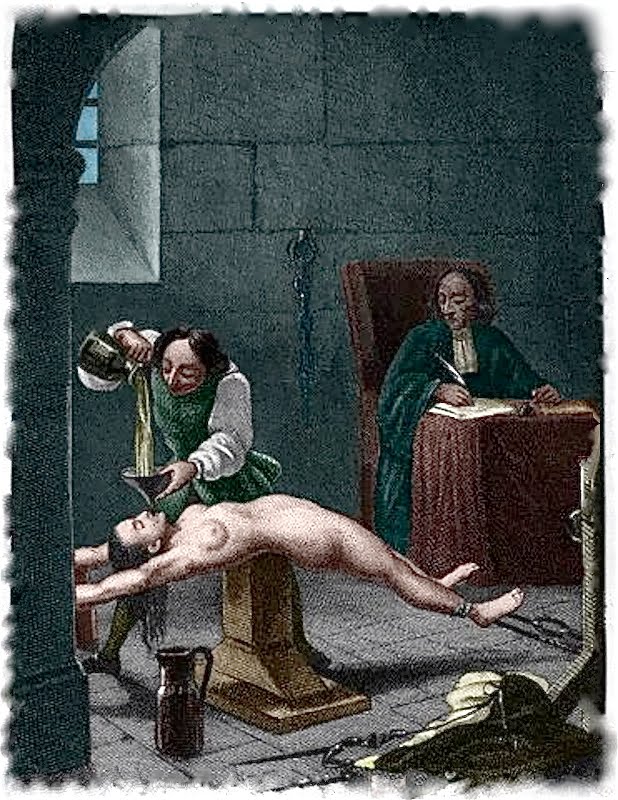
The Israeli secret service agency, Shin Bet, responded to a petition in Israel’s High Court on Monday, defending their use of torture against detainees.
The petition was filed by the Public Committee Against Torture, a prisoner advocacy group which challenged the Israeli practice of forcing Palestinian detainees to sit on small chairs with their hands cuffed behind the chair during interrogations.
But Shin Bet agents insisted that their methods of interrogating Palestinian detainees are ‘humane’. They said that since they increased the length of the chain between the handcuffs to 48 inches, their methods of handcuffing are now humane.
The Israeli secret agency said that the handcuffing of Palestinians during interrogation is necessary in order to ‘prevent escape attempts’, but gave no examples of such escape attempts actually taking place.
In 1999, the Israeli High Court determined that a number of torture techniques used by Shin Bet, including the ‘banana’ technique … were illegal. But Palestinian detainees who have served time in Israeli prison camps in the ten years since that ruling say that many of the banned techniques continue to be used by Shin Bet and other Israeli military agencies.
Rejecting Westocentrism
December 1, 2009
By Bouthaina Shaaban
In a meeting with a distinguished group of female Philippines journalists (editors, op- ed writers, major TV hosts) in Manila last week, I found out that their questions about the Arab world, the Arab-Israeli conflict, the conditions in Palestine, Iraq and Iran, are based on information obtained from western media. I saw the surprise on their faces when I rephrased their questions from an Arab, or rather realistic, view of events on the ground, and as lived by the peoples of these countries. A short while after the beginning of the meeting, I discovered that the journalists, who cannot be described as hostile to Arab rights and causes, do not know anything about the Arab perspective of any of the issues covered by western media which base their coverage on the Israeli versions of reality, terminology and view of things.
The first question was how I would compare the condition of Arab women with the achievements of western women in terms of rights, independence and freedom. I was also asked whether all Arab women still wear all-covering gowns and about the ratio of men who marry more than one wife. When a well-known political editor asked about our position towards Iran’s nuclear activities and the problems the west is facing with Iran, I asked her whether she knew that Iran was a signatory of the NPT which allows it to possess nuclear knowledge and peaceful nuclear power, while Israel is not a signatory of the NPT, possesses over 200 nuclear heads, occupies Arab land by force and kills Palestinians and expels them from their villages and cities on a daily basis and builds settlements on the ruins of Palestinian homes, history and civilization.
There was no question about the Gaza blockade which has turned into a policy of genocide in the 21st century which, South African lawyers acknowledge, has become worse than the apartheid that prevailed in South Africa in the 20th century. Neither was there a question about the Goldstone report and the thousands of crimes committed by Israel in Gaza, nor on secret Israeli jails which have within their walls 3,000 Palestinians since 2000 and in which extremely serious crimes against Palestinian prisoners are committed under international silence. Lawyers and the ICRC are not even allowed to know where the prisons are. Israeli occupation troops use the most brutal methods of torture against prisoners, including physical abuse and rape. There were no questions about Israeli demolition of Palestinian homes on a daily basis, building settlements on the ruins of these homes and turning the Palestinians into refugees on and outside their land. There were no questions about the effects of the American occupation of Iraq which left over a million widows and more than two million orphans.
While I tried to answer questions with information and facts about Arab rights and the crimes committed by Israel since 1948 against Arabs as a result of a Zionist settler strategy, targeting intellectuals in Iraq and the disasters caused to the country as a result of brutal occupation, I acknowledged to the journalists that I do not blame them for the lack of facts in their questions because western media are the only conduit between east and west,
I wondered about what we all know about Afghanistan, for instance, and what is happening in it and in Pakistan except through western media. What do Arabs know about China, India and Russia; and what do these countries know about Arabs except through western media? In a moment of real dialogue, we agreed that this is the most dangerous thing about the international condition in the modern age. We also agreed that changing this reality should be a priority for countries of the east and the south.
For instance, can one imagine that the most popular books in the International Islamic Book Fair, held in New Delhi recently, were about divorce, terrorism and banking? If we take into account that most of these books have been written either in the United States or the United Kingdom, we realize the danger of reproducing the western evaluation and image of Islam and Muslims themselves, which means that they look at themselves, at their religion and culture in a western mirror.
What are we supposed to make of Barbie wearing the veil and chador on her 50th anniversary in a charity auction in Florence, Italy. The rationale of the exhibition was that it was essential for girls throughout the world to feel free to express their real image. The fact of the matter was enhancement of the image of the veil and chador as the only image for Muslim women, reducing them to an appearance considered by the west an evidence of injustice to women in the Muslim world and their inability to be effective, respectable members of their society.
Talking about the importance of cultural dialogue and the ignorance which characterizes people’s understanding of their civilizations and the events taking place on their land, Philippines specialists pointed out that Spanish colonialism which lasted over 300 years left no clear cultural influence which forces dependence on Spanish culture [apparently Catholicism was not considered], while American colonialism, which lasted only 50 years, left cultural, educational and institutional dependence which is difficult to break. It can be argued that neo-colonialism in the 21st century is cultural and western by nature, and that the Arabs, who, in the past, gave the world extremely important discoveries in all sciences are the most prominent victims of this colonialism. The Arabic language is being subjected to unprecedented neglect, and local intellectual production which expresses the Arab condition and Arab issues in an attractive manner is at its lowest level.
Regional groupings could be one of the effective responses to ‘westrocentrism’; and communication between these groupings in the future will be the real breakthrough out of westrocentrism and replacing it at least with a multi-polar world where countries of the world restore their status, sense of importance and their contribution to the progress and prosperity of humanity. ASEAN has lifted visa restrictions between its member states and opened up free trade and active economic, cultural and political exchange between its countries. Latin American countries are setting up a cultural, economic and political space resistant to American hegemony which used to consider the countries of Latin America its backyard. Most countries of the world are waking up from their fascination with the English language and are restoring the prestige of their local languages in education and the production of culture and knowledge. Look at Brazil’s president, Luiz Inácio Lula da Silva, receiving Iran’s president despite western ire against this step which is a clear expression of self confidence and independence of western hegemony.
The question is: when will the Arabs see that their salvation lies in cherishing and protecting their language and producing science and knowledge in this language. And when will they see that creating a regional bloc with the Arabs as a major player is the only salvation of the Arab future and integration into the new world order in which the countries of Asia and Latin America are gaining real independence intellectually, scientifically, politically and economically.
There is no doubt that real independence lies in abandoning the western mirror in which we misconceive ourselves and, instead, in communicating with others who share our goal in order to produce a future in which all components of human civilization flourish far away from westrocentrism based on extermination of indigenous peoples, pillaging the wealth of the planet for the benefit of western countries and pushing the rest of humanity into the cycle of poverty and inactivity.
The thousand-mile-trip starts with one step; and the first step is to break this mirror and look instead in the color of the soil of our countries and the faces of our children, and expressing ourselves in our language and putting trust in our thought, causes and our capability to be real contributors to the prosperity of humanity and to the protecting of human freedom and dignity.
Bouthaina Shaaban is Political and Media Advisor at the Syrian Presidency, and former Minister of Expatriates. She is also a writer and professor at Damascus University since 1985. She has been the spokesperson for Syria and was nominated for Nobel Peace Prize in 2005. She can be reached through nizar_kabibo@yahoo.com
Source
Featured Video
or go to
Aletho News Archives – Video-Images
Book Review
The Maidan Killings and the False-Flag Case
By Freddie Ponton | 21st Century Wire | September 5, 2026
Before the killings that helped bring down Ukraine’s president in February 2014, American diplomats were discussing who should enter its government. In a leaked telephone call, senior State Department official Victoria Nuland told US ambassador Geoffrey Pyatt, “I think Yats is the guy,” referring to opposition leader Arseniy Yatseniuk. Washington had clear preferences and was working to advance them. Later that month, Yatseniuk became prime minister.
Ivan Katchanovski’s The Maidan Massacre in Ukraine examines the violence that preceded that transfer of power. Drawing on television footage, witness testimony, forensic examinations and Ukrainian court proceedings, he argues that elements of the opposition shot protesters and police in a false-flag operation. His case centres on evidence of protesters being shot from opposition-controlled locations, including Hotel Ukraina, overlooking the killing ground. … continue
Blog Roll
 Aletho News
- Israel expands “incitement” charge to target Palestinian education and memory
- How Israel seeks to reshape Arab classrooms
- Paris bans pro-Palestinian demonstration planned for Oct. 7 over ‘risks of public disorder’
- In August Hanning Treason Case – All Signs Point To Tel Aviv.
- France cleared dozens of military sales to Israel between May and September: Report
- France projects nuclear power as Macron pushes arsenal expansion
- The fallacy of US delusions about Iran’s economic collapse
- What changes with Lula or Flávio?
- Britain leads Western media’s demise through ‘fear porn’ narrative
- The Maidan Killings and the False-Flag Case
- If Americans Knew
- Soldier testimony sheds light on how Israel wages information war
- CIA Report Warns Israel Could Head Toward Civil War, Total Collapse
- Banker Who Exposed Howard Lutnick’s Ties to Epstein Warned of ‘Retaliation’ and ‘Personal Consequences’ in Last Post Before Suicide
- Israeli Attacks Kill Two Palestinians in Gaza
- Gaza genocide at 3: Israeli-U.S. cruelty and the smart, deep resistance to it are changing the world
- As genocide is about to enter 3rd year, little of Gaza remains– Daily Update
- “We See Our Homes Now From A Satellite, Like Strangers”
- Watch “Gaza: Doctors Under Attack”, originally censored by BBC
- NAZA: Israeli embassies in UK and US promote rival documentary to challenge Gaza genocide allegations
- David Ellison appoints Israeli to lead merged Paramount-Warner studios
- No Tricks Zone
- Latest European Green Energy Debacle; Portugal’s Largest Flagship Solar Park Insolvent!
- Green Energy Debacle: German Expert Professor Fritz Vahrenholt Warns Of Severe Economic And Social Consequences
- Two More Paleo Reconstructions Affirm Meters-Higher Sea Levels Across Ireland, Brazil 7000-6000 Years Ago
- New Study: Earth And Venus Surface Warmth Largely Explained By Convection And Lapse Rate, Not CO2 Or Radiation
- 2025 Nature Paper Claiming Worsening Global Drought Gets RETRACTED …Heavily Flawed
- New Study: ‘Global Drought Shows No Detectable Recent Acceleration Under Climate Warming’
- Economic Masterminds: German Socialists Suggest Taxing Productivity Gains Stemming From Using AI
- The South China Sea Has Not Been Cooperating With The Climate Change Narrative
- Energy Crisis: Germany Enters Heating Season With Historically Low Gas Reserve Fill Levels
- New Study: The Antarctic Ice Sheet Gained Mass From 2020-2024 Due To Staggering Snow And Ice Accumulation

