Turkey, Saudi Arabia ‘Indirectly Invaded’ Syria Long Ago
Sputnik – February 7, 2016
Turkey and Saudi Arabia are apparently ready to send ground forces to the Syrian battlefield, but although a direct invasion has not yet been launched, an indirect one is already happening, political scientist Yuri Pochta told Radio Sputnik.
“The fact of the matter is that the invasion is already taking place, but it is indirect. Turkey and Saudi Arabia are acting through rebel groups that are fighting against Damascus,” Pochta explained. “These militants have been less active since Russia launched its aerial campaign. They are losing in several regions.”
Indeed, the Syrian Arab Army, assisted by Russian warplanes and Hezbollah fighters, has managed to turn the tide of war in recent months and is currently on the offensive. This year, Damascus-led forces have scored major victories in Latakia and other provinces, while militants from Daesh and other terrorist groups are retreating. Turkey and Saudi Arabia have backed some of these rebels.
Ankara and Riyadh have “apparently decided to ‘save the day’: to launch a direct ground operation in Syria and overthrow President Bashar al-Assad,” he suggested.
Evidence, supporting this sentiment, has surfaced this week. On Thursday, Russia’s Ministry of Defense announced that Ankara was “actively,” but covertly preparing to launch a military campaign in Syria. On the same day, Saudi Arabia confirmed its readiness to take part in a ground operation, if the US-led coalition would support one.
Pochta warned that Turkey and Saudi Arabia would further complicate the situation in Syria if they decide to send ground forces to an already overcrowded battlefield. Many experts have long pointed out that resolving Syrian crisis is a major challenge due to the sheer number of stakeholders involved.
“Who will they be fighting against? Will it not turn into a real war, involving Saudi Arabia, Turkey and Syria? Then there is Russia… And Turkey is a member of NATO. The situation is increasingly exacerbated at a time when hundreds of different rebel groups take part in the fighting. Syria is being transformed into a gray zone. Local, regional and global players are all pursuing their own interests. The majority wants to destroy the Syrian state and society. This is tragic,” the analyst added.
Closed military zone in Shuhada Street and Tel Rumeida extended yet another month
International Solidarity Movement | February 6, 2016
Hebron, Occupied Palestine – Since the 1st of November 2015 the Tel Rumeida area and Shuhada Street in occupied Al-Khalil (Hebron) has been declared a ‘closed military zone’. The first declaration of the closure was for one month, but since then the order has been extended several times.
The newest order from the 1st of February declares the area as closed till the 1st of March with the chance of extension.

Shuhada Checkpoint (Checkpoint 56)
The closure effects the residents of the area every single day. Every family living in the area has been given a number and was forced to register with the Israeli forces. When entering the area, through checkpoints, the residents have to show ID, give their number and often also answer questions and get bag and body searched. Friends and family of the residents are unable to visit them inside the area; even doctors or craftsmen are completely barred from entering the area.
Furthermore, the closed military zone has led to the eviction of two human rights organisations based in Tel Rumeida. These are now banned from living in their houses and working from their offices and since they are banned from the whole area are not able to observe and document the rampant Israeli human rights violations. The ‘closed military zone’ clearly intends to evict Palestinian residents in order to allow for an expansion of the illegal Israeli settlements, and by evicting human rights defenders to silence the truth on the Israeli forces harassment, attacks and human rights violations.
Israeli movement calls for separating 28 Palestinian villages from Jerusalem
MEMO | February 6, 2016
 New Israeli movement Save Jewish Jerusalem has called for the building of a wall encircling 28 Palestinian villages in East Jerusalem in order to preserve the city’s Jewish identity, Israeli newspaper Maariv reported on Friday.
According to Quds Press, which reported on the news published in Maariv, Save Jewish Jerusalem was set up by the former Cabinet minister Haim Ramon, alongside a number of former political, security and military officials.
Maariv noted that the movement does not belong to a certain political faction.
The manifesto’s authors explain that by removing some 200,000 Palestinians from the municipal boundaries of Jerusalem, the city’s Jews will constitute more than 80% of its residents, and the percentage of Palestinians will drop to less than 20%, from the nearly 40% today.
After the villages’ separation from Jerusalem, the Israel Defence Forces (IDF) and other security agencies would operate in them the way they currently do in the rest of the West Bank, according to the manifesto.
Risking World War III in Syria
By Joe Lauria | Consortium News | February 6, 2016
Defense Secretary Ashton Carter last October said in a little noticed comment that the United States was ready to take “direct action on the ground” in Syria. Vice President Joe Biden said in Istanbul last month that if peace talks in Geneva failed, the United States was prepared for a “military solution” in that country.
The peace talks collapsed on Wednesday even before they began. A day later Saudi Arabia said it is ready to invade Syria while Turkey is building up forces at its Syrian border.
The U.N. aims to restart the talks on Feb. 25 but there is little hope they can begin in earnest as the Saudi-run opposition has set numerous conditions. The most important is that Russia stop its military operation in support of the Syrian government, which has been making serious gains on the ground.
A day after the talks collapsed, it was revealed that Turkey has begun preparations for an invasion of Syria, according to the Russian Defense Ministry. On Thursday, ministry spokesman Igor Konashenkov said: “We have good reasons to believe that Turkey is actively preparing for a military invasion of a sovereign state – the Syrian Arab Republic. We’re detecting more and more signs of Turkish armed forces being engaged in covert preparations for direct military actions in Syria.” The U.N. and the State Department had no comment. But this intelligence was supported by a sound of alarm from Turkey’s main opposition party, the Republican People’s Party (CHP).
Turkey, which has restarted its war against Kurdish PKK guerillas inside Turkey, is determined to crush the emergence of an independent Kurdish state inside Syria as well. Turkish strongman Recep Tayyip Erdogan stopped the Syrian Kurds from attending the aborted Geneva talks.
A Turkish invasion would appear poised to attack the Syrian Kurdish PYD party, which is allied with the PKK. The Syrian (and Iraqi) Kurds, with the Syrian army, are the main ground forces fighting the Islamic State. Turkey is pretending to fight ISIS, all the while actually supporting its quest to overthrow Assad, also a Turkish goal.
Saudi Arabia then said on Thursday it was prepared to send its ground forces into Syria if asked. Carter welcomed it. Of course Biden, Erdogan, Carter and the Saudis are all saying a ground invasion would fight ISIS. But their war against ISIS has been half-hearted at best and they share ISIS’ same enemy: Syrian President Bashar al-Assad. If the U.S. were serious about fighting ISIS it would have at least considered a proposal by Russia to join a coalition as the U.S. did against the Nazis.
The Prize of Aleppo
The excuse of the Geneva collapse is a ruse. There was little optimism the talks would succeed. The real reason for the coming showdown in Syria is the success of Russia’s military intervention in defense of the Syrian government against the Islamic State and other extremist groups. Many of these groups are supported by Saudi Arabia, Turkey and the United States in pursuit of overthrowing Assad.
These three nations are all apparently poised for a ground invasion of Syria just as, by no coincidence, the Syrian Arab Army with Russian air cover is pushing to liberate perhaps the greatest prize in the Syrian civil war — Aleppo, the country’s commercial capital. The Russians and Syrians have already cut off Turkey’s supply lines to rebels in the city.
The U.S. cannot stand by and watch Russia win in Syria. At the very least it wants to be on the ground to meet them at a modern-day Elbe and influence the outcome.
But things could go wrong in a war in which the U.S. and Russia are not allies, as they were in World War II. Despite this, the U.S. and its allies see Syria as important enough to risk confrontation with Russia, with all that implies. It is not at all clear though what the U.S. interests are in Syria to take such a risk.
From the outset of Russia’s intervention the U.S. and its allies have wanted Moscow out of the Syrian theater. They seem to be only waiting for the right opportunity. That opportunity may be now — forced by events.
Former U.S. national security adviser and current Obama adviser Zbigniew Brzezinski said last October in the Financial Times that, “The Russian naval and air presences in Syria are vulnerable, isolated geographically from their homeland. They could be ‘disarmed’ if they persist in provoking the U.S.”
Turkey’s downing in November of a Russian warplane that allegedly veered 17 seconds into Turkish territory appeared to be very much a provocation to draw Russia into a conflict to allow NATO to drive Moscow out of Syrian skies. But Russia was too smart for that and instead imposed sanctions on Turkey, while urging Russian tourists not to visit the country, which has hurt the Turkish economy.
A Battleground of Empires
As a fertile crossroad between Asia and Africa backed by desert, Syrian territory has been fought over for centuries. Pharaoh Ramses II defeated the Hittites at the Battle of Kadesh near Lake Homs in 1247 BCE. The Persians conquered Syria in 538 BCE. Alexander the Great took it 200 years later and the Romans grabbed Syria in 64 BCE.
Islam defeated the Byzantine Empire there at the Battle of Yarmuk in 636. In one of the first Shia-Sunni battles, Ali failed to defeat Muawiyah in 657 at Siffin along the Euphrates near the Iraq-Syria border. Damascus became the seat of the Caliphate until a coup in 750 moved it to Baghdad.
Waves of Crusaders next invaded Syria beginning in 1098. Egyptian Mamluks took the country in 1250 and the Ottoman Empire began in 1516 at its victory at Marj Dabik, 44 kilometers north of Aleppo — about where Turkish supplies are now being cut off. France double-crossed the Arabs and gained control of Syria in 1922 after the Ottoman collapse.
We may now be looking at an epic war with similar historical significance. All these previous battles, as momentous as they were, were regional in nature.
What we are potentially facing is a war that goes beyond the Soviet-U.S. proxy wars of the Cold War era, and beyond the proxy war that has so far taken place in the five-year Syrian civil war. Russia is already present in Syria. The entry of the United States and its allies would risk a direct confrontation between the two largest nuclear powers on earth.
Joe Lauria is a veteran foreign-affairs journalist based at the U.N. since 1990. He has written for the Boston Globe, the London Daily Telegraph, the Johannesburg Star, the Montreal Gazette, the Wall Street Journal and other newspapers. He can be reached at joelauria@gmail.com and followed on Twitter at @unjoe.
Tunisian President warns against military intervention in Libya
MEMO | February 5, 2016
Tunisian President Beji Caid Essebsi warned on Thursday of the consequences of any military intervention in Libya, stressing the need for the countries considering such action to consult with Tunisia and other neighbouring countries, a presidential statement said.
According to the statement, Essebsi made the remarks during a meeting with heads of diplomatic missions and representatives of regional and international organizations held in Tunis to celebrate the New Year.
“The President of the Republic has pointed to the uniqueness of Tunisia’s situation, being a neighbour with Libya, which has become the scene for terrorist cells and home to Islamic State [Daesh] threats,” the statement read.
President Essebsi stressed that the only way to bring an end to the Libyan conflict is through inter-Libyan political unity. The international community must support the efforts of the unity government, he said.
Despite the difficulties in Libya, Essebsi said that Tunisia “will not close its borders to its Libyan brothers”.
Media reports have suggested that military intervention in Libya by an international coalition could be imminent.
However, US Secretary of State John Kerry ruled out military intervention in Libya in the near future on Tuesday.
French Foreign Minister Laurent Fabius also said that his country has no intention in militarily intervening in Libya.
Ongoing colonization in Hebron: Israeli forces prepare the illegal invasion of Palestinian houses by Israeli settlers
International Solidarity Movement | February 3, 2016
Hebron, Occupied Palestine – On February 3rd 2016, Israeli occupation forces violently opened the door of houses in the vicinity of the Ibrahimi mosque by cutting the door locks with a disk grinder, and then entered these houses.
The houses are located in al-Sahla Street near the Ibrahimi mosque, settlers illegally invaded and occupied them two weeks ago, but were then evicted by the police and army the next morning.
After the Israeli army removed the door-locks of the two houses, Israeli construction workers took the external an internal dimensions of both Palestinian properties as if they are already owned by Israeli settlers. The settlers were protected during their illegal activities by large groups of soldiers.
Palestinian residents who walked trough the checkpoint in front of these houses were body-checked and harassed by the soldiers. The video below illustrates how inhumande and degrading these body-searches and ID-checks are, with soldiers ordering Palestinians to take off clothing regardless of weather and treating them without even a slight bit of dignity.
Carter Welcomes Saudi ’Boots on Ground’ Offer in anti-ISIL Campaign
Al-Manar – February 5, 2016
The US defense chief welcomed reports on Thursday about Saudi Arabia’s willingness to deploy troops in Syria, noting that he would discuss the issue with his Saudi counterpart in Brussels next week.
During an interview with the Saudi al-Arabiya TV channel on Thursday, Saudi military spokesman Brigadier General Ahmed al-Asiri said Riyadh “is ready to participate in any ground operations that the coalition may agree to carry out in Syria”.
“That kind of news is very welcome. I look forward to discussing that with the Saudi defense minister next week – and other kinds of contributions that Saudi Arabia can make,” Secretary of Defense Ash Carter told reporters at Nellis Air Force Base, Nevada.
Carter is going to meet defense ministers of 26 countries, which are part of the US-led coalition countering the so-called ‘Islamic State of Iraq and the Levant’ (ISIL) takfiri group in Belgian capital Brussels.
The US defense chief acknowledged that the Saudi government has indicated willingness to do more in the fight against ISIL, which western media reports revealed it receives funds from main regional countries including the Saudi.
“I should mention also Saudi Arabia has indicated a willingness to take the lead in marshaling some Muslim-majority countries,” he said.
Carter said that the Netherlands also pledged to support anti-ISIL operations in Syria last week, in addition to the Dutch government’s existing contributions to the campaign in Iraq.
“You see others stepping up, and the reason why I’m going to Brussels next week is to bring the full weight of the coalition behind accelerating the defeat of ISIL,” Carter said.
US Regime Change Talks on Syria hit blind alley
By Finian Cunningham | American Herald Tribune | February 4, 2016
And so the wheels of the Geneva talks came off in spectacular fashion, with all parties blaming each other for the breakdown in the so-called Syrian peace process.
The negotiations in the Swiss city were only into their second day –having opened on Monday, and that after a week-long delay –when UN special envoy Staffan de Mistura announced that the talks would be adjourned until February 25. Take it as read: it’s over.
Washington and Paris immediately sought to blame the Syrian government and its Russian and Iranian allies for “torpedoing” the Geneva talks. US Secretary of State John Kerry accused Syria and its allies of seeking a military solution to the five-year-old conflict. With this background of ongoing air and ground assaults, the Geneva negotiations foundered, according to the US and its partners.
Kerry and his French counterpart, Laurent Fabius, are engaging in reality-inversion, ably assisted by the Western mainstream news media.
The fact is the Geneva talks failed because Washington and its terrorist surrogates fighting for regime change in Syria could not affect a semblance of diplomacy.
Yes, Syrian Arab Army military advances are proceeding apace with the support of Russian air power and ground forces from Iran and Hezbollah. The game-changer was Russian intervention nearly four months ago, which has enabled the Syrian government of President Bashar al-Assad to recover huge swathes of territory occupied by foreign-backed mercenaries.
The latest military gains this week in northwest Syria have put the Syrian Arab Army within reach of taking back the city of Aleppo, the country’s largest urban centre, second to the capital Damascus.
Russia’s Foreign Minister Sergei Lavrov said this week that Russian operations in Syria will continue until all “terror groups”are destroyed. Lavrov mentioned Al Qaeda-affiliated Nusra Front and Daesh (also known as ISIL), but Russia’s scope also extends to a myriad of other militants groups who are integrated with the more well-known terrorist organizations.
These militants are falsely and risibly divided into “moderates”and “extremists” by Western governments and their dutiful corporate-controlled news media. What is moderate about chopping heads of civilians considered to be “infidels”? And this barbarity has been routinely practiced by the so-called moderate rebels of the “Free Syrian Army”. Notably, we don’t hear much about the much-lionized FSA these days. That’s because in reality they don’t exist.
Syrian state forces have every right to extirpate all illegally armed groups on the sovereign territory of Syria. While the Geneva negotiations were in process, the main foreign conduits of military supply to the mercenaries –Turkey and Saudi Arabia –had not desisted from their illegal interference in Syria. That was in flagrant violation of the United Nations Security Council resolutions in November and December calling for a global clampdown on terrorist organizations.
Not only were Turkey and Saudi Arabia continuing to supply illegally armed groups inside Syria, these two Western allies had included terrorist organizations into the so-called “opposition”at the Geneva talks. The grandly named High Negotiating Committee demanded it would only continue participating on the condition that the Assad government eventually stands down. That’s the real, proximate reason for breakdown, no matter what John Kerry might say.
Can you believe it? A bunch of foreign-backed and exile-based terrorists dictating terms to the elected government of Syria. Their foot-soldiers are getting wiped out on the ground –after five years of inflicting destruction on Syria –and yet these impostors are attempting to write the “peace terms”.
Syria and Russia are having none of it. Both are determined to crush an existential threat to Syria from foreign-backed terror groups. And Assad and Vladimir Putin are not going to hand over a victory of regime change at the negotiating table either.
That’s why Kerry is in a fluster. The peace process charade has been upended. Washington and its partners expected Syria and Russia to call off the military pressure in order to give their mercenary proxies some breathing space so that they could relaunch their terror war at a more opportune time, while also issuing ultimatums in Geneva for de facto regime change.
Washington and its allies were never serious about finding a genuine peaceful settlement. Now that the wheels have come off this snake-oil bandwagon, the US and its partners are obliged to find some “explanation” to sell to world opinion.
Hence, blame the Syrian government and its Russian ally for blasting the Geneva talks. But the world is not fooled by such reality-inversion. The Western powers’ plans for regime change in Syria just rolled into another blind alley.
The real danger, however, is that Washington and its allies might now attempt a direct military intervention in Syria out of desperation.
Finian Cunningham (born 1963) has written extensively on international affairs, with articles published in several languages. For over 20 years, he worked as an editor and writer in major news media organisations, including The Mirror, Irish Times and Independent.
US Air Force Spending Over $271Mln to Expand Balad Base in Iraq
Sputnik – 30.01.2016
WASHINGTON — The US Air Force has given Sallyport Global Holdings in Virginia a $271.8 million contract to run security and life support operations at Balad Air Base in Iraq over the next year, the Department of Defense announced.
“Sallyport Global Holdings Inc., Alexandria, Virginia, has been awarded a $271,813,941 modification… contract for base life support, base operations support, and security,” the announcement stated on Friday.
Work is expected to be completed by January 31, 2017, according to the Defense Department.
The Balad base was occupied by the US military during the 2003 Iraq war and was handed back to the Iraqi Air Force in December 2011.
During the Iraq War, Balad was the second largest US base in Iraq and today the Iraqi Air Force operates its US-supplied F-16 Fighting Falcons combat aircraft there.
Hamas welcomes Italian academics’ call for BDS
Ma’an – January 30, 2016
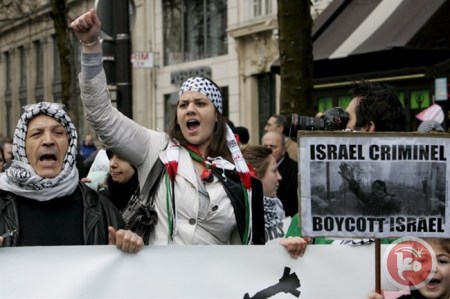 BETHLEHEM – The Hamas movement hailed on Saturday the announcement that academics from 50 Italian universities had signed a petition calling to boycott Israeli universities and research institutes.
According to prominent Italian publication L’Espresso, more than 160 Italian academics came out in support of the Palestinian boycott, divestment and sanctions (BDS) campaign.
The petition, reportedly the first large-scale BDS effort from Italian academia, said it was “a response to the known and well-documented complicity of Israeli academic institutions with Israeli state violence and the total lack of serious condemnation on their part since the foundation of the State of Israel.”
The BDS campaign specifically targeted Technion, the Israeli Institute of Technology in Haifa, for its prominent role in the Israeli military-industrial complex, and called on Italian universities to sever ties with the institution.
Hamas spokesman Sami Abu Zuhri welcomed the move on Saturday, saying the petition “illustrates the increasing state of isolation the occupation suffers as a result of its crimes.”
Israel has been struggling to tackle a growing Palestinian-led boycott campaign which has had a number of high-profile successes abroad in both academic and artistic fields.
The BDS movement aims to exert political and economic pressure over Israel’s occupation of the Palestinian territories in a bid to repeat the success of the campaign which ended apartheid in South Africa.
In recent years, some 1,200 academics in Spain, 343 British professors and lecturers and more than 200 South African academics have publicly come out in support of BDS.
Drunk on Hate and Mad at the World
Israel’s Diplomatic Wars of Aggression

By Richard Edmondson | Fig Trees and Vineyards | January 29, 2016
Israel these days seems to be increasingly at odds with a good portion of the rest of the world. In just the past few months it has quarreled with:
- Spain over arrest warrants issued for Netanyahu and six other Israeli officials for the 2010 attack on the Gaza Freedom Flotilla;
- Sweden over comments by its foreign minister who has called for an investigation into extrajudicial executions of Palestinians;
- college campus student groups supporting the BDS movement;
- academic associations who have issued calls for academic boycotts of Israeli universities;
- Brazil over its refusal to recognize an Israeli ambassador who hails from the right-wing Israeli settler movement;
- The EU over labeling of products from Israeli settlements.
- The UN over Ban Ki-moon’s recent criticism of the settlements
And really, if truth be known, Israel is probably not too happy just now with Italy either, which recently received Iranian President Hassan Rouhani on a state visit, resulting in a number of agreements between the two countries’ energy sectors as well as cooperation on a future high-speed rail project. Naor Gilon, the Israeli ambassador to Italy, complained that Rouhani was being treated like “the king of the world.”

Zvi Zameret accuses Wallström of ‘ignorance and arrogance’,
and suggests she might meet a violent end
War with Sweden
All in all, Gilon’s comments would have to be viewed as rather tame, however–at least by comparison. For some of the statements issuing from Israelis now, particularly those aimed at Swedish Foreign Minister Margot Wallström, are positively chilling in their level of malice expressed, and frankly it might behoove the Swedish official to consider hiring a bodyguard at this point, if she hasn’t already done so.
As I noted in an article five days ago, Wallström is now regarded in Israel as “public enemy number 1” (the Jerusalem Post’s words, not mine) because of remarks she has made critical of Israel, including a recent call for an investigation into extrajudicial killings of Palestinians.
Now it seems there may be those in Israel hankering for the foreign minister’s blood–literally. If you haven’t read my article, Swedish Media Target Country’s Foreign Minister Following Her Remarks on Israel, I suggest you do so as it will place what follows into greater perspective. One day after posting that article, I became aware of two other articles, one by blogger Richard Silverstein and the other by Jonathan Ofir and posted at Mondoweiss, both of which discuss what appears to have been a scarcely veiled threat on Wallström’s life by a former Israeli official.
The comment was made by Zvi Zameret, a former official in the Israeli Ministry of Education, in an op-ed piece he wrote for an Israeli newspaper owned by Nevada casino magnate Sheldon Adelson. In the article, Zameret waxes lyrical on the 1948 assassination of Swedish diplomat Folke Bernadotte, and then goes on to suggest that Wallström might meet a similar fate. Here is a bit from Silverstein’s commentary on the matter:
Zvi Zameret, the former director for instruction for the Israeli education ministry has written an op-ed in Makor Rishon, Sheldon Adelson’s pro-settler newspaper, praising the 1948 assassination of UN mediator Count Folke Bernadotte by Yitzhak Shamir’s Lehi gang. Zameret accuses Bernadotte of being an anti-Semite and claims that his views originated in a Swedish society that was suffused with this perspective. He claims that ridding the world of the Swedish Count was necessary to protect Israel’s new existence.
He wends his way through a long historical discourse involving material already well-known related to Bernadotte’s proposals, which were rejected by Arabs and Jews alike. Then he brings us up to the present day by alleging that remarks of the current Swedish Foreign Minister, Margot Wallstrom, demanding that Israel be held accountable for the 160 Palestinians killed over the past two months in the latest Intifada, stem from the same well of Swedish anti-Semitism.
Silverstein says Zameret “hints that Wallström herself should share a similar fate to Bernadotte” and then gives us a direct quote from his article as per its English translation:
“What do the things I have mentioned attest about Bernadotte? [They indicate] covert anti-Semitism, ignorance and arrogance, collaboration with senior elements in Israel [Hebrew University President Judah Magnes] and interests that play a decisive role. Has anything changed in the Swedish DNA in the decades following Bernadotte’s death? Nothing has changed.
The Swedish foreign minister Margot Wallstrom, in the covert anti-Semitism which characterizes her, along with her ignorance and arrogance, and anticipation of the interests of her future Muslim voters–she too is attempting to battle against the basic foundation of the State of Israel. I am certain that her intentions will be defeated, just as were those of the disreputable Count Bernadotte.

Count Folke Bernadotte
Bernadotte was assassinated by Lehi, also known as the Stern Gang, the same Jewish terrorist group that carried out the Deir Yassin massacre. Zameret’s glorification of his murder doesn’t seem entirely lucid or rational–during World War II Bernadotte negotiated the release of 31,000 prisoners from German concentration camps, including a large number of Jews. After the war, he became the UN Security Council’s unanimous choice, in a vote on May 20, 1948, to try and mediate a settlement in the Palestine-Israeli conflict.
His murder took place September 17, 1948, carried out by a four-man team of assassins. The Stern Gang had been around since 1940. Its stated goal was to terminate the British mandate in Palestine and set up a “new totalitarian Hebrew republic,” and one of its members, Yithak Shamir, ended up becoming an Israeli prime minister. It was Shamir, in fact, who ordered Bernadotte’s assassination. The man who actually pulled the trigger, Yehoshau Cohen, later became a close confidante of David Ben Gurion and was never charged in the case.

Margot Wallström
In October of 2014, shortly after Wallström took over as foreign minister, Sweden became one of the first Western countries to recognize Palestinian statehood. Wallström called it “an important step that confirms the Palestinians’ right to self-determination” and added that “We hope that this will show the way for others.”
In November of last year, shortly after the Paris terror attacks, Wallström suggested that Israel’s treatment of the Palestinians could be helping to fuel terrorism. She followed that up with a comment in December about Israeli “extrajudicial executions,” and this month called for an investigation of Israel.
“Whether Zameret advocates Wallstrom’s demise explicitly or implicitly is hardly important,” comments Silverstein. “Even if you accept the argument that he isn’t explicit, clearly the reason Bernadotte failed in his mission is that Jewish terrorists assassinated him. When you say you wish her intentions to be defeated just as his were, the line between murder and political defeat becomes exceedingly murky.”
Boycott Sweden! say Israeli Mayors
But of course it isn’t just Zameret. Lots of people in Israel despise Wallström and have “vociferously attacked her contentious words,” as an article here puts it. And this apparently applies to a good many Israeli officials. The same article goes on to give us the low-down on a “boycott movement” launched by 15 Israeli mayors and aimed at Sweden. The mayors were planning to attend a conference in the Scandinavian country in March, but recently announced they have cancelled, while former Foreign Minister Avigdor Lieberman has also called for a boycott of Ikea.
War With Spain
In November of last year, a Spanish judge issued arrest warrants for Israeli Prime Minister Benjamin Netanyahu and six other officials in connection with Israel’s 2010 raid on the Gaza Freedom Flotilla, a violent episode in international waters which resulted in the deaths of 10 people.
The warrants were issued by Judge Jose de la Mata, and in effect meant that should any of the seven officials set foot on Spanish soil they would be subject to arrest.
“Spain is just the latest member of the international community to accuse Israel of war crimes and pursue Israeli officials over the affair,” the Jerusalem Post reported at the time. And that is indeed correct. Both South Africa and Turkey had previously issued similar warrants.
Predictably, the Israeli government expressed hostility and outrage.
“We consider it to be a provocation,” said an Israeli foreign ministry spokesperson. “We are working with the Spanish authorities to get it cancelled. We hope it will be over soon.”
What do you suppose the words “working with Spanish authorities” might imply? Did it include issuing threats? Whatever it was, it took only two months to accomplish. The arrest warrants were in fact cancelled, according to a report published January 13 by the Adelson-owned Israel Hayom newspaper.
War with Brazil
Brazil, on the other hand, seems to be showing a little more resilience. According to a report here, “Israel and Brazil remain at loggerheads five months after Brazil refused to recognize Israel’s appointment of a right-wing settler as its next envoy to the South American country.”
“Settlers are Zionist agents that the world cannot accept, they steal others’ land, they are an insult to Brazil, to the government, and to millions of Brazilians with roots in the Arab world,” said Brazilian parliament member Carlos Maron.
Maron isn’t alone. A group of 40 retired Brazilian diplomats signed a statement against the appointment of Dani Dayan, who lives in the Israeli settlement of Ma’ale Shomron, in the Occupied West Bank. Dayan is an advocate of the settler movement and has made no secret of his views, having widely published articles in the mainstream media, including the New York Times.
“We consider it unacceptable that the Prime Minister of Israel, Benjamin Netanyahu, has publicly announced the name of the person he intended to appoint as his country’s new Ambassador to Brazil before submitting it, in accordance to the norm, to our Government,” said the diplomats. The announcement of Dayan’s appointment was reportedly posted initially on Twitter rather than being communicated directly to the Brazilian government.
The statement continues:
This rupture with a diplomatic practice seems to have been on purpose, an attempt to establish facts, since the appointed, Dani Dayan, between 2007 and 2013, was the President of the Yesha Council, responsible for the settlements in the West Bank, which are considered illegal by the international community, and has already declared himself contrary to the creation of the Palestinian State, which counts on the support of the Brazilian Government and was already recognized by over 70% of the UN member States.
Reportedly a group of 200 Brazilian academics have also endorsed a boycott of Israel. Netanyahu has refused to withdraw Dayan’s nomination or to appoint someone more acceptable to the Brazilians. If the Brazilian government stands its ground, it will mean a de facto end to diplomatic relations between the two countries.
War with the EU
On January 18, the EU’s Foreign Affairs Council reaffirmed requirements that export products from the Israeli settlements be labeled as such. More or less as with Sweden, Spain, and Brazil, the EU’s action has prompted cries of Israeli outrage. Netanyahu pronounced his unwillingness to “accept the fact that the EU labels the side being attacked by terror,” while ‘Justice’ Minister Ayelet Shaked called the EU measure “anti-Israel and anti-Jewish.”
Likewise, opposition party leader Isaac Herzog (supposedly a liberal) compared it to the “Zionism equals Racism” resolution passed by the UN in 1974, while Yair Lapid, another opposition party member, denounced the EU for “capitulating to the worse elements of jihad.”
War Against the BDS Movement
In summer of 2015, ‘Justice’ minister Shaked announced she was preparing lawsuits against BDS activists. The announcement was reported at the time by the Times of Israel in a story which also mentions that Shaked has expanded one of the departments within her ministry in order to “push ahead with the program as soon as possible.”
Ministry officials believe that legal circumstances present the option of suing activists for damaging Israeli trade, and for discrimination and racism, based upon laws as they currently exist in various countries, the report said.
So far as I’m aware, no lawsuits have been filed against individual activists, however Naftali Bennett, leader of the Jewish Home Party, seems to be generally in support of the idea of striking back in some manner at the BDS movement.
“Let it be clear to any company or organization that’s considering boycotting us: We will hit back. We will attack our attackers. We will boycott our boycotters,” Bennett said.
“The boycott weapon is a double-edged sword,” he added. “If you’re thinking of boycotting Israel, keep in mind that there are tens of millions of Israel supporters around the world — Jews and non-Jews — with considerable buying power and boycott power. Whoever boycotts Israel will be boycotted. Whoever hits Israel, will be hit back. We will no longer remain silent.”
Bennett’s comments about the “tens of millions of Israel supporters around the world” are perhaps salient. Also last summer, Adelson hosted an anti-BDS summit in Las Vegas with the aim of establishing and funding “successful strategies for countering the wave of anti-Israel activity on college campuses.” Held at the billionaire’s Venetian hotel on the Vegas strip, the conference was attended by a number of wealthy Jews, including Haim Saban.
“The key decision reached at the conference was that there would be a concerted effort to curtail BDS,” reported the Jerusalem Post.
Though Netanyahu did not attend, a letter from him was read aloud to the conference participants. “De-legitimization of Israel must be fought, and you are on the front lines. It’s not about this or that Israeli policy. It’s about our right to exist here as a free people,” the letter stated.
Reportedly the Israeli government intends to allocate NIS 100 million, or roughly $25.2 million, to the anti-BDS effort.
War Against Academic Associations
At a business meeting held in November, members of the American Anthropological Association voted overwhelmingly (88.4 percent) in favor of a resolution to boycott Israeli academic institutions. A similar measure was passed that same month by the National Women’s Studies Association Executive Committee. These aren’t the first boycott actions taken by academic organizations in the US. The American Studies Association, The Association for Asian American Studies, and the Native American and Indigenous Studies Association have all passed academic boycott measures against Israel. And this is just in the US.
Measures have also been passed by academic organizations in Brazil, South Africa, Canada, the UK, and, of course, in Palestine, and probably elsewhere. And perhaps most recently a group of 71 British doctors have called upon the World Medical Association to expel the Israeli Medical Association. The physicians have accused Israeli doctors of “medical torture” on Palestinian patients and want to see a ban on joint projects with Israeli universities.
On January 20, the Science and Technology Committee of the Israeli Knesset held a meeting to discuss the issue (H/T Helvena). A press release on the discussion which took place can be found here on the Knessett’s website. One of those who gave input at the meeting was Peretz Lavie, president of Technion, or the Israeli Institute of Technology.
“We have no complaints against the global academic leadership; our problem is the campuses,” Lavie said. “Initially it was insignificant campuses, but it quickly spread to leading campuses in the United States.”
When Lavie says he has “no complaints against the global academic leadership” he is probably referring to the Association of American Universities, which on January 14, in response to the vote by the Anthropological Association, re-issued an earlier statement in opposition to academic boycotts. The AAU is an organization whose leadership consists of the presidents and chancellors of the 60 universities (in both the US and Canada) that are its members. Membership is by invitation only. The group’s statement opposing boycotts was initially released in 2013 in response to the boycott actions taken by the American Studies and Native American and Indigenous Studies associations.
The group’s re-release of that canned statement from more than two years ago was described by the Jerusalem Post as “a blow to the BDS movement.”
“Students who are exposed to this activity will be the next generation’s senators, and therein lies the great danger in the long term,” Lavie went on in his testimony before the Science and Technology Committee.
“In its report, the American Anthropological Association referred to us as universities of apartheid and decided to conduct a survey on whether the Israeli academia should be boycotted. We have to reach all 12,000 members of the Association. It is a symptom, and if we do not act now, it will spread. There must be one entity that will concentrate all the efforts related to this issue,” he added.
Another person who gave testimony was Ze’ev Feldman of the Israel Medical Association. It was Feldman who informed the committee of the recent statement by the 71 British doctors.
”The sword of the boycott is being raised on the Israeli scientific-medical community,” he said.
Ariel University Chancellor Yigal-Cohen Orgad asserted that Israel has “a real problem with governments, including western governments that encourage boycotts,” while Professor Zvi Ziegler warned, “We are unable to stop anyone with our meager resources.”
Several committee members are also quoted, including Chairman Uri Maklev:
“There is no doubt that the academic boycott phenomenon is expanding and is connected to the financial and consumer boycotts on Israel. Economic and commercial boycotts are associated with politics, but an academic boycott by educated and moderate people has a very strong effect.”
But rather than calling for an end to the settlements, most of the committee members seemed to be of the opinion that the Israeli government needed to devote more resources to fighting the boycott movement. The one exception to this was Arab Knesset member Basel Ghattas:
The world considers the settlements to be illegitimate. You can think differently from the entire world, it is your right, but it is also the world’s right to take measures in order to force you to establish two states.
War with the UN
On October 1, 2015, Netanyahu gave a speech before the United Nations General Assembly that was marked by a 45-second segment during which he paused and projected hostile glares out at those present:
On January 26, 2016, UN Secretary-General Ban Ki-moon broke the UN’s “deafening silence” and, in a rare display of courage, issued a scathing criticism of Israel’s settlement policies.
Progress towards peace requires a freeze of Israel’s settlement enterprise.
Continued settlement activities are an affront to the Palestinian people and to the international community. They rightly raise fundamental questions about Israel’s commitment to a two-state solution.
I am deeply troubled by reports today that the Israeli Government has approved plans for over 150 new homes in illegal settlements in the occupied West Bank.
This is combined with its announcement last week declaring 370 acres in the West Bank, south of Jericho, as so-called “state land”. These provocative acts are bound to increase the growth of settler populations, further heighten tensions and undermine any prospects for a political road ahead.
The inevitable furious response came quickly, with Netanyahu excoriating the UN chief for helping to “stoke terror.”
“There is no justification for terrorism,” he said. “The Palestinian terrorists don’t want to build a state; they want to destroy a state, and they say that proudly. They want to murder Jews everywhere and they state that proudly. They don’t murder for peace and they don’t murder for human rights.”
He went on to assert that the UN has “lost its neutrality and its moral force, and these statements by the Secretary-General do nothing to improve its situation.”
It seems Israel is now at war with the UN as well.
A Lack of Imagination?
Perhaps most striking in all this is the Israeli lack of imagination–or at least that is one way of looking at it. Nowhere in his hostile comments aimed at his various enemies on the global stage does Netanyahu give the slightest indication of having once thought about halting the settlements and pulling back to Israel’s internationally recognized pre-1967 borders. Ditto with the other Israeli officials quoted above, with the lone exception of the Arab Knessett member. It is almost as if the idea has never even occurred to them.
If that is the case, one could perhaps ascribe all of this to a lack of imagination. Certainly at this point, after 68 years of oppression, it probably does indeed require considerable imagination to conceive of how the two peoples could live at peace. But of course it wasn’t always so. And had Israel, starting in 1967, respected the people of the West Bank, and above all else respected their space rather than crowding them in with settlements and walls and soldiers, a peaceful resolution to the conflict probably could have and would have been achieved by this time.
Yet even now, it isn’t too late. Though it would be politically difficult, Israel could dismantle its settlements (anything is possible when the national will is present) and pull back to the pre-1967 borders–basically the terms of the Arab Peace Initiative proposed back in 2002. If necessary, and it probably would be for a lengthy period of time, UN peacekeeping troops could be deployed along the border.
But Israel’s response to the Arab Peace Initiative was to call it a “non-starter,” and that seems to be its position today as well. And not only is there little prospect of dismantling of presently-existing settlements, but we see even a refusal to halt the construction of new ones. All of which would suggest that Ban Ki-moon is correct and that the settlement enterprise raises “fundamental questions about Israel’s commitment to a two-state solution.”
Or in other words, Israel has no intentions of making peace.
Certainly it’s possible that things could change, and that a new slate of leaders could arise in Israel with the imagination necessary to see the wisdom of complying with international norms of conduct. And that is what its more liberal Jewish supporters in America seem to be hoping for. But failing this, Israel’s wars with the rest of the world are likely to grow in stridency and ferociousness, and at some point could expand from the realms of diplomacy and/or covert operations fully outright into the military arena.
Israeli forces storm al-Quds University, seize documents
Ma’an – January 29, 2016
JERUSALEM – Hundreds of Israeli soldiers stormed Abu Dis’ al-Quds Open University early Friday and confiscated equipment and documents belonging to its student union, staff members told Ma’an.
Hassan Dweik, the university’s deputy head, said that up to 300 soldiers stormed the campus, holding six security guards in a room and preventing them from leaving for two and a half hours.
He said the soldiers raided the university’s Islamic studies department, as well as its student union offices after smashing their way through their doors.
 Dweik said the soldiers confiscated at least one computer as well as boxes filled with students’ documents.
He said the soldiers fired stun grenades during the raid, and took pictures and measurements of a number of buildings inside the university campus.
He condemned the raid as a dangerous violation against education, and called on international human rights and education rights groups to decry the army’s actions.
An Israeli army spokesperson said she was looking into the reports.
Since a wave of unrest swept the occupied Palestinian territory in October last year, Abu Dis’ Al-Quds University has found itself a focal point of violent clashes between Palestinian students and Israeli soldiers.
A number of Palestinians who allegedly carried out stabbing attacks on Israelis were students there.
These include 19-year-old law student Muhannad Shafiq Halabi, who was shot dead at the beginning of the month after he stabbed to death two Israelis in Jerusalem’s Old City — an act that served to trigger much of the subsequent popular unrest.
Several days before the attack, Israeli media reported that Halabi posted a photograph on Facebook of Diya Talahmeh, another Palestinian studying at al-Quds University who died in unclear circumstances during an encounter with Israeli forces in the West Bank village of Khursa in September.
Israeli forces have regularly stormed university campuses across the occupied Palestinian territory in recent months.
Earlier this month, Birzeit University in Ramallah condemned an Israeli army raid into its campus, during which Israeli forces confiscated and damaged university equipment.
“Birzeit University condemns this attack and the direct violation of the sanctity of the university campus,” the university said. “This is a belligerent military attack on the university and our right to education and all the principles involved in the freedom of education.”
Featured Video
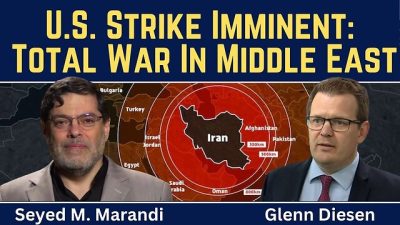
Seyed M. Marandi: Toward Total War in the Middle East
or go to
Aletho News Archives – Video-Images
From the Archives
The Geopolitics behind the War in Yemen (I)
By Mahdi Darius NAZEMROAYA | Strategic Culture Foundation | 30.03.2015
The United States and the Kingdom of Saudi Arabia became very uneasy when the Yemenese or Yemenite movement of the Houthi or Ansarallah (meaning the supporters of God in Arabic) gained control of Yemen’s capital, Sanaa/Sana, in September 2014. The US-supported Yemenite President Abd-Rabbuh Manṣour Al-Hadi was humiliatingly forced to share power with the Houthis and the coalition of northern Yemenese tribes that had helped them enter Sana. Al-Hadi declared that negotiations for a Yemeni national unity government would take place and his allies the US and Saudi Arabia tried to use a new national dialogue and mediated talks to co-opt and pacify the Houthis.
The truth has been turned on its head about the war in Yemen. The war and ousting of President Abd-Rabbuh Manṣour Al-Hadi in Yemen are not the results of «Houthi coup» in Yemen. It is the opposite. Al-Hadi was ousted, because with Saudi and US support he tried to backtrack on the power sharing agreements he had made and return Yemen to authoritarian rule. The ousting of President Al-Hadi by the Houthis and their political allies was an unexpected reaction to the takeover Al-Hadi was planning with Washington and the House of Saudi. … continue
Blog Roll
 Aletho News
- HE SAVED LIVES. NOW HE FACES PRISON.
- Israeli lobby seeks to bind US fate to ‘Israel’: Araghchi
- Pakistan-Iran talks secure LNG shipment to Islamabad through Hormuz
- Black Sea grain crisis puts global wheat supplies under pressure
- IRGC air defenses destroy another US MQ-1 drone over Strait of Hormuz
- Imran Khan’s entire immediate family detained in Pakistan ahead of mass protest demanding his release
- EU nation detains former presidential frontrunner
- Leaked: Britain’s Sham Conviction Of Hashim Thaci
- Seyed M. Marandi: U.S. Strike Imminent – Toward Total War in the Middle East
- Russia Voted Under Fire. Washington Is Loading the Tankers.
- If Americans Knew
- Israeli Attacks in Gaza Kill at Least Seven Palestinians Over Three Days, including Woman and Child
- Trump’s militarization of Washington DC as he pursues Israel’s war against Iran
- Why Israel Fears This Searing New Documentary
- Huckabee aide solicited cash gifts from Israelis
- This isn’t sci-fi, AI is already killing people
- ‘The Most Brutal Thing’: Investigation Reveals Execution of Elderly Woman in Rafah
- Inside Israel’s ‘soft’ ethnic cleansing plan for Gaza through the eyes of its victims
- New online database tracks pro-Israel political donations in the United States
- Israeli president pardons soldier convicted for killing wounded Palestinian
- Singer Ed Sheeran says his ‘heart broken’ by Gaza devastation, addresses Macklemore controversy
- No Tricks Zone
- 2025 Nature Paper Claiming Worsening Global Drought Gets RETRACTED …Heavily Flawed
- New Study: ‘Global Drought Shows No Detectable Recent Acceleration Under Climate Warming’
- Economic Masterminds: German Socialists Suggest Taxing Productivity Gains Stemming From Using AI
- The South China Sea Has Not Been Cooperating With The Climate Change Narrative
- Energy Crisis: Germany Enters Heating Season With Historically Low Gas Reserve Fill Levels
- New Study: The Antarctic Ice Sheet Gained Mass From 2020-2024 Due To Staggering Snow And Ice Accumulation
- Study: Ocean Heating Rates From Thousands Of Years Ago ‘Dwarf’ Modern Ocean Heating Rates
- Climate Extremists Target, Attack Large-Scale Power Grid Infrastructure In Germany!
- New Study: Antarctic Ice Melt Has Contributed Less Than 1 Centimeter To Sea Level Rise In The Last 30 Years
- Fear Of Debate: Alarmist German Climate Scientist Calls On Mainstream Media To Discredit Skeptic Voices
 Aletho News