Russia: Turkish Ground Operation in Syria Could Cause Increased Terrorist Activity
Al-Manar | November 25, 2022
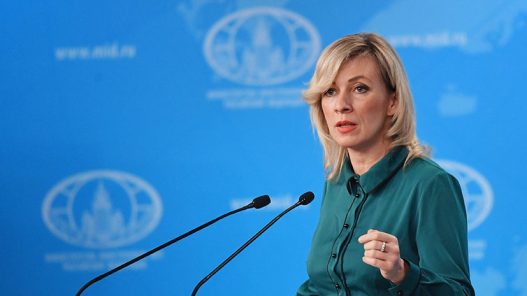
The Russian government warned Thursday that a military ground operation by Turkey against Kurdish groups in northern Syria could lead to “an increase in terrorist activity,” following threats to that effect by Turkish President Recep Tayyip Erdogan.
“We understand Turkey’s concerns about threats to its national security, but we also believe that a ground operation on Syrian territory will only increase tensions in the region and lead to an increase in terrorist activity,” Russian Foreign Ministry spokeswoman Maria Zakharova has said.
Thus, she stressed that Moscow “maintains close contacts with Turkey on the situation in Syria” and defended that the best way to solve security problems is a direct dialogue between Ankara and Damascus, as reported by the Russian news agency TASS.
Erdogan stressed on Wednesday that the new bombing campaign against Kurdish groups in Iraq and Syria “is only the beginning” and reiterated that Ankara will launch ground operations “when it deems appropriate.”
He also said he did not rule out a conversation with his Syrian counterpart, Bashar Al-Assad, to address the situation.
The Turkish operation, dubbed ‘Sword Claw’ was launched following the Nov. 13 bombing in Istanbul, which left six dead and which Turkey blames on the Kurdistan Workers’ Party (PKK). However, both the group and the SDF have disassociated themselves from what happened and have expressed their condolences to the victims.
Yemen and KSA inch forward with ceasefire talks despite ‘deliberate obstruction’ by US
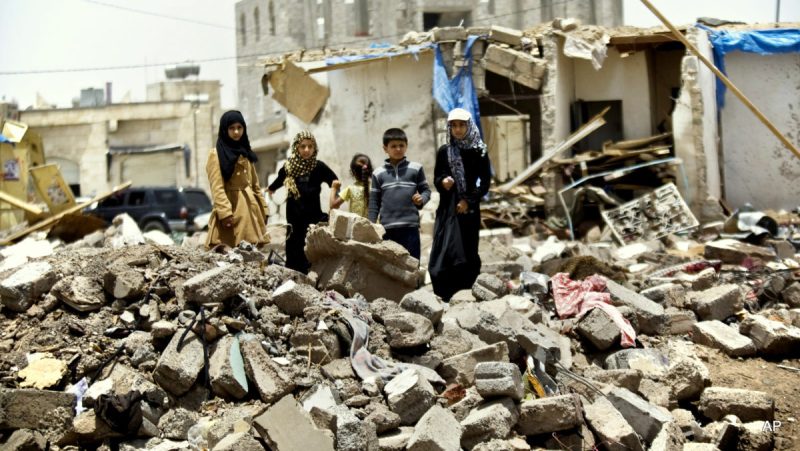
Photo Credit: AP Photo/Hani Mohammed
The Cradle | November 12, 2022
Talks between Yemeni and Saudi delegations in Oman have continued “uninterrupted” since the end of the UN-brokered ceasefire on 2 October, according to sources in the know that spoke with Lebanese daily Al Akhbar.
The report claims the Saudi delegation has shown “remarkable flexibility” in several of the outstanding issues, most notably offering to secure funding for the payment of state employees’ salaries.
They have also shown openness to lift road blockades and to allow flights from Sanaa International Airport to reach more destinations than the two currently allowed: Jordan and Egypt.
Nonetheless, issues still remain, as Riyadh reportedly wants to publicly label these measures as “helping the brothers in Yemen,” not as compensation for seven years of war.
Yemeni officials allegedly shot down this idea, as it would misrepresent Riyadh’s role in ravaging Yemen and pushing it to the brink of famine. Moreover, they have also rejected an offer for the head of Yemen’s Supreme Political Council, Mahdi al-Mashat, to lead an official delegation to the Saudi capital.
Earlier this month, The Washington Institute published a report based on a visit to the kingdom by Executive Director Robert Satloff and David Schenker, in which they assert that “Saudi Arabia clearly wants out of the [Yemen] conflict today.”
However, the behind-the-scenes progress to achieve this goal comes despite increased efforts by the Saudi-led coalition, Israel, the US, and the UK to consolidate their military presence in southern Yemen and on the country’s islands.
Earlier this week, Mashat warned that the US role in the ceasefire talks “is malicious and dangerous.”
“The armistice negotiations had previously reached a level of good understanding, but the US envoy, Tim Linderking, deliberately sabotaged them during his most recent tour of the region,” the head of Yemen’s Supreme Political Council said on 7 November.
“The US is trying to impede any sincere efforts to achieve sustainable peace in Yemen,” Yemen’s Ansarallah resistance group warned in a statement earlier this month.
According to the sources who spoke with Al Akhbar, the growing rift between Washington and Riyadh has spilled over onto their cooperation in Yemen, as the US now favors “interim solutions” rather than a comprehensive end to the war in order to maintain a “playing card” to use against Saudi leaders.
Pentagon exploits post 9/11 laws to wage ‘secret wars’ worldwide: Report
The Cradle | November 9, 2022
A report released last week by the New York University School of Law’s Brennan Center for Justice details how the US Department of Defense (DoD) has been allowed to covertly deploy troops and wage secret wars over the past two decades in dozens of countries across the globe.
Among the nations in West Asia affected by these so-called ‘security cooperation authorities’ are Lebanon, Iraq, Syria, and Yemen; however, they also include many African and Latin American nations.
Known as ‘security cooperation authorities,’ they were passed by the US Congress in the years following the 11 September attacks, and are a continuation of the 2001 Authorization for Use of Military Force (AUMF), a piece of legislation that has been stretched by four successive governments.
According to the report, the AUMF covers “a broad assortment of terrorist groups, the full list of which the executive branch long withheld from Congress and still withholds from the public.”
Following in this tradition, the ‘security cooperation authorities’ being abused by the Pentagon are Section 333 and Section 127e of Title 10 of the United States Code (USC).
Section 333 authorizes the US army to “train and equip foreign forces anywhere in the world,” while Section 127e authorizes the Pentagon to “provide support to foreign forces, paramilitaries, and private individuals who are in turn supporting US counterterrorism operations,” with a spending limit of $100,000,000 per fiscal year.
However, thanks to the vague definition of ‘support’ and ‘training’ in the text of these laws, both Section 333 and Section 127e programs have been abused to target “adversarial” groups under a strained interpretation of constitutional self-defense; they have also allowed the US army to develop and control proxy forces that fight on behalf of – and sometimes alongside – their own.
As a result of this, in dozens of countries, these programs have been used as a springboard for hostilities, with the Pentagon often declining to inform Congress or the US public about their secret operations under the reasoning that the incidents are “too minor to trigger statutory reporting requirements.”
“Researchers and reporters uncovered Section 127e programs not only in Afghanistan and Iraq, but also in Cameroon, Egypt, Kenya, Lebanon, Libya, Mali, Mauritania, Niger, Nigeria, Somalia, Syria, Tunisia, and Yemen,” the report highlights.
Researchers also point out that defense authorities “have given little indication of how [they] interpret Section 333 and 127e.”
Even more concerning, and ignoring the damage caused by these ‘anti-terror’ laws, the US Congress recently expanded the Pentagon’s security cooperation authorities, particularly with Section 1202 of the National Defense Authorization Act (NDAA).
Section 1202 allows the US army to allow “irregular warfare operations” against “rogue states” like Iran or North Korea, or “near-peers,” like Russia and China.
The report comes at a time when the US army and its proxy militias are accused of illegally occupying vast regions of Syria and Yemen, looting oil from the war-torn countries, just over a year after their brutal occupation of Afghanistan ended. Moreover, a former US official on Tuesday revealed that anti-Iran militias are being armed in the Iraqi Kurdistan Region (IKR), where both the CIA and the Mossad are known to operate.
Israel builds fake cemeteries around Al-Aqsa Mosque, says Palestinian committee
MEMO | November 8, 2022
The Jerusalem and Al-Aqsa Mosque Committee of the Palestinian Legislative Council accused the Israeli occupation authorities yesterday of constructing fake cemeteries around Al-Aqsa Mosque, Quds Press has reported.
According to the head of the Committee, Ahmad Abu Halabiyeh MP, this was an attempt to forge “evidence” to “prove” a historic Jewish presence in the Palestinian, Arab and Islamic holy city.
“Recently, the Israeli occupation has built hundreds of tombs to prove that the Jewish existence dates back hundreds of years,” explained Abu Halabiyeh. Around 300 fake tombs have been built in Jabal Al-Zaytoun, east of Al-Aqsa Mosque, he said, and 200 others in Wadi Al Hilwa in Silwan, south of the mosque, in addition to hundreds more in different areas across occupied Jerusalem, mainly in the Old City.
The MP pointed out that these tombs were built over the past two years. One area, he said, has even been called the “Jewish Cemetery”.
“This is a clear distortion of history, as well as proof that the Israelis are intruders,” added Abu Halabiyeh. Building tombs without human remains inside, he stressed, reinforces settlement projects and serves the occupation’s interests.
Israeli aggression against and within Al-Aqsa Mosque occurs on a daily basis, he concluded.
US, UK preparing for fresh escalation in Yemen: Ansarullah
Ali al-Qahoum, a member of the Yemeni popular resistance Ansarullah movement’s Political Bureau (Courtesy of al-Mayadeen)
Press TV – November 6, 2022
Yemen’s popular resistance Ansarullah movement warns about the United States and the UK’s fresh malicious intentions in the war-ravaged country.
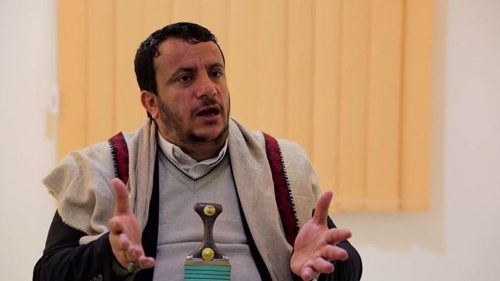
Ali al-Qahoum, a member of Ansarullah’s Political Bureau, raised the alarm during an exclusive interview with Lebanon’s al-Mayadeen television network on Sunday.
There is “a direct US military presence in Yemen, and an influx of US forces, specifically in Hadhramaut,” he said, referring to Yemen’s biggest province, which spans from the country’s center towards its eastern areas.
“There is also an influx of British forces into al-Mahrah,” he added, referring to Yemen’s second-largest province that neighbors Hadharamaut to the east.
The US and the UK were preparing for a fresh round of escalation in Yemen, he further warned without elaborating.
The Western countries have been contributing heavily and unabatedly to a war of aggression that a Saudi Arabia-led coalition has been waging against Yemen since 2015.
The coalition has been seeking, unsuccessfully though, to restore Yemen’s power to the country’s former Western- and Riyadh-aligned officials. The war has killed hundreds of thousands of Yemenis and spawned the world’s worst humanitarian crisis.
Washington and London have been providing the coalition with direct arms, logistical, and political support, including through outfitting it with precision-guided ammunitions that the Saudi-led forces have been using amply against Yemen’s civilian population.
Al-Qahoum said new US and British military delegations had arrived in Yemen earlier this week.
Reporting on Wednesday, Yemen Press Agency cited informed local sources as saying that Hadhramaut’s Provincial Governor, Mabkhout bin Madi, had held a face-to-face meeting with the US delegation in his office.
The Ansarullah official, however, asserted that despite the Western states’ apparent preparations for a new flare-up in Yemen, “the Yemenis are ready to defend their dignity and every inch of their country.”
“Ansarullah has military capabilities that preserve Yemen’s sovereignty and independence,” he added.
Netanyahu says to ‘neutralise’ Lebanon maritime deal
MEMO | October 31, 2022
Israeli leader, Benjamin Netanyahu, said Monday he will “neutralise” a recent maritime border deal with Lebanon if he is elected prime minister.
“I will behave as I did with the Oslo Accords,” Netanyahu said in an interview with Army Radio.
He said that the Oslo Accords with the Palestinians “were not cancelled, they were neutralised.”
The former premier, however, did not detail his specific intentions for the border agreement with Lebanon during his Monday’s interview.
Last week, Israel and Lebanon signed a US-mediated deal to demarcate maritime border between the two countries. The deal covers an area in the Mediterranean Sea, which contains part of the Karish gas field and Qana, a prospective gas field.
Netanyahu had termed the maritime deal as “illegal”, saying he would not be bound by it. He argued that Prime Minister, Yair Lapid, and Defense Minister, Benny Gantz, “didn’t want to extract the gas in the first place, but now they want to surrender it to Hezbollah.”
Israeli voters will go to polling stations on Tuesday in the country’s 5th legislative election in less than four years.
Opinion polls suggest that Netanyahu, the leader of the right-wing Likud Party, could come within a single seat of an outright majority in the Knesset (Israel’s parliament).
Yemeni army carries out ‘warning’ operation against Greek tanker
The Cradle | October 22, 2022
Yemen’s Armed Forces announced on 21 October they carried out a “warning” drone strike on Al-Dabba port of Hadhramaut in order to prevent a Greek tanker, the Nissos Kea, from looting oil from the facility.
This was the first attack carried out by Yemen’s forces since the expiration of the UN-brokered truce agreement on 2 October.
The country’s official military spokesman, Brigadier General Yahya Saree, said in a statement that “the oil ship violated the decision issued by the competent authorities to ban the transportation and export of Yemen’s sovereign oil derivatives.”
“The warning message came after addressing the authorities of that ship, and informing them of the decision based on Yemeni laws … The ship was dealt with through cautionary measures, through which we were keen to preserve the safety of its crew and the security of Yemen’s infrastructure,” Saree added.
According to Hadhramaut’s governor in the Saudi-backed Presidential Council, Mabkhout ibn Madi, the ship was meant to arrive at Al-Dabba port a week ago, but remained stationed outside of Yemeni waters due to threats issued against the Greek Ministry of Transport.
“Greece transmitted these threats to us, and to the Ministry of Oil,” Ibn Madi said. Following the ship’s entry into Al-Dabba port, however, its crew ignored the warning issued earlier this month by Yemen’s Supreme Economic Committee and proceeded to attempt an oil looting operation.
According to exclusive sources, the drone strike targeted the area between the Greek ship and the port buoy, sending a “clear military message,” but not compromising the safety of the tanker’s crew, as planned. This is not the first time a Greek vessel is involved in the looting of Yemen’s natural resources.
“The American envoy has been communicating for two weeks with mediators in Sanaa to allow the tanker to ship oil from Al-Dabba port,” the sources added.
As Washington and its allies face a severe energy crisis of their own making, the US is in desperate need of immediate sources of energy, a likely reason that its envoy pressured Sanaa to allow the Greek tanker to make off with the oil. As a result of this energy crisis, US forces have stepped up their oil looting operations in Syria.
The Yemeni operation comes as a renewal of the several warnings issued by the Armed Forces and the Ansarallah resistance movement against the international oil companies operating in the country, and against the Saudi-led coalition, who have consistently plundered Yemen’s oil.
The Saudi-backed government, however, has claimed to have intercepted the operation.
White House dismisses scathing UN report against ‘unfairly targeted’ Israel

The Cradle | October 21, 2022
US State Department spokesman Ned Price alleged on 20 October that Israel is “unfairly targeted in the UN,” in the wake of a scathing report released by the ongoing UN Commission of Inquiry (COI) investigating human rights abuses committed by Tel Aviv during the 74-year occupation of Palestine.
“Israel is consistently unfairly targeted in the UN system, including in the course of this commission of inquiry,” Price told reporters during a news conference on Thursday.
“No country, the record of no country, should be immune from scrutiny, but no country should also be targeted unfairly. And that’s the principle that we seek to uphold,” he claimed.
In their report, the COI determined that “the occupation of Palestinian territory is unlawful under international law due to its permanence and the Israeli government’s de facto annexation policies.”
The COI report also refers to numerous statements made by the UN secretary general and UN member states concerning the Russia-Ukraine war, in which officials reaffirmed that the “unilateral annexation of a State’s territory by another State is a violation of international law and is null and void.”
Speaking to reporters, COI chair Navi Pillay stressed that just last week, “143 member States including Israel … voted in favor of a General Assembly resolution reaffirming this.”
“Unless universally applied, including to the situation in the Occupied Palestinian Territory, this core principle of the United Nations Charter will become meaningless,” she added.
In a second report also released on Thursday – and set to be presented to the UN General Assembly on 27 October – the COI requested an urgent advisory opinion from the International Court of Justice (ICJ) “on the legal consequences of the continued refusal on the part of Israel to end its occupation.”
“Actions by Israel constituting de facto annexation include expropriating land and natural resources, establishing settlements and outposts, maintaining a restrictive and discriminatory planning and building regime for Palestinians and extending Israeli law extraterritorially to Israeli settlers in the West Bank,” the UN officials conclude in their report.
Since the start of this year, at least 105 Palestinians – including 26 children – have been killed by Israeli troops, making 2022 the deadliest year since 2006 for Palestinians residing in the occupied West Bank, including East Jerusalem.
On top of this, Tel Aviv currently holds 4,500 Palestinians in prison, 730 of whom are held without charge and mainly on the basis of ‘secret evidence.’
Children as young as 12 are subjected to arbitrary arrests and detention measures by the occupation government. Just last month, a seven-year-old Palestinian boy fell to his death after being chased by Israeli soldiers.
But despite the countless deaths and wanton destruction caused by Israeli airstrikes in the Gaza Strip and violent raids across the West Bank, Israeli authorities maintain a policy of “not apologizing” for their war crimes, under the full support of the US.
Saudi-led coalition seizes new emergency fuel ship headed for Yemen
The Cradle | October 21, 2022
On 21 October, the Saudi-led coalition seized the oil tanker ‘Lady Sarah,’ preventing it from reaching Yemen’s port of Hodeidah despite its previous inspection in Djibouti and having permits from the UN Verification and Inspection Mechanism (UNIVM).
Yemeni officials revealed that three ships are currently detained by the coalition. Since the beginning of 2021, the Saudi-led coalition has impounded at least 13 ships near the Yemeni coast.
The official spokesperson for the Yemeni Petroleum Company (YPC), Issam Al-Mutawakel, said that Sanaa holds the UN partially responsible for the humanitarian and economic consequences of the coalition’s actions.
Just one week ago, delegations from Yemen and Saudi Arabia visited each other’s capitals to discuss a prisoner exchange deal, marking the first time a Saudi delegation arrived in Sanaa since the Ansarallah resistance group took control of the city in 2014 and ended the reign of the Saudi-backed president.
A delegation representing Ansarallah also visited Riyadh and toured the prisons that are holding Yemeni fighters.
“Our technical team was tasked with validating the names and condition of our prisoners ahead of a possible exchange deal,” said Abdul Qadir al-Murtada, head of the prisoners’ committee in Yemen’s National Salvation Government.
Murtada added that the Saudi delegation visited for a similar purpose and toured Sanaa’s prisons, meeting the Saudi army’s prisoners of war.
“We do not accept a situation where Yemeni people are caught between war and peace,” Yemeni Foreign Minister, Hisham Sharaf, said during a meeting with a UN representative on 11 October.
Oman has reportedly been making progress in mediating the dispute between Yemen and Saudi-led coalition to restart the UN-sponsored truce that expired earlier this month.
Citing well-informed sources in Sanaa, Arabic media reports say Omani officials have made inroads in settling several issues, particularly relating to the opening of Sanaa airport and the lifting of restrictions imposed on the port of Hodeidah.
However, issues remain over Sanaa’s demand that the country’s oil revenues be used to pay the salaries of state workers and the army. In this regard, the Saudi-appointed government in Aden has reportedly agreed to pay the pensions of military retirees exclusively, along with the salaries of all civil servants.
Americans criticize US Middle Eastern policies
By Viktor Mikhin – New Eastern Outlook – 18.10.2022
The USA never misses an opportunity to present itself as an open and democratic society and a state in which the government authorities respect the will of the majority of the people and tailor their policies accordingly. That may have been the case in the past, but the facts no longer support this view – the President and his team are pushing through policies which favor their own interests and which are quite different from what they promised in their election campaigns.
There is a great deal of evidence to support this claim, but one particularly striking example is a new wide-ranging survey of Americans’ views on Washington’s foreign policy in the Middle East. The survey revealed that the majority of young Americans oppose their country’s policy in relation to Israel and, specifically against its sale of arms to the Israeli regime. The survey also shows that there is a great deal of support in American society for the Iran nuclear deal.
The survey, conducted by the Eurasia Group Foundation (EGF), shows that young Americans are more politically aware than older generations in relation to Israel’s aggressive policies against the Palestinians and its Arab neighbors. Most respondents aged between 18 and 29 were not in favor of continuing to supply arms to Israel. Older Americans (over sixty years old), on the other hand, tend to be in favor of the US providing military support to Israel.
The US supplies Israel with military aid worth some $4 billion a year. As a result, Israel is the biggest recipient of American military support in the world. But this support is being paid for by American taxpayers, many of whom are unaware that their taxes are being used to support the genocide and ethnic cleansing of the native Palestinians. Similarly, more than 80% of Americans support the Biden administration’s policy of negotiating in order to revive the Iran nuclear deal, as they consider that this will help improve the situation in the Middle East. Both in the region and at the international level there is a great deal of debate about how ready ordinary Americans are to criticize their government’s military support for dictatorships and authoritarian regimes enforcing policies of territorial occupation and ethnic segregation. Washington, in a bid to justify its actions, frequently claims that its support is made necessary by so-called security concerns, but many are skeptical of these arguments, dismissing them as cheap populism.
Mark Hannah, senior fellow at the Eurasia Group Foundation, describes the motivation behind the survey, “We began this survey five years ago because we believed lawmakers and foreign policy leaders conducting foreign policy on behalf of the American people would benefit from a window into their opinions and priorities.” He also expressed the hope that the survey results would be used by decision makers responsible for foreign policy in relation to the Middle East would study the survey “to make the activities they pursue more sensitive to – and informed by – the opinions of their constituents, and to bridge the gap between the concerns of policymakers and those of ordinary Americans.”
Unfortunately, the above hope is very naive: officials in Washington and in the Biden administration do not take the interests of ordinary Americans into account when making foreign policy decisions. It would suffice to cite Washington’s involvement supporting neo-Nazi groups in the war in Ukraine, thus threatening the world with nuclear war.
Or one could cite its offer to supply Israel – completely free of charge – with four Boeing military refueling aircraft over the next four years. Boeing signed a contract with the US Defense Department for the supply of four Boeing KC-46 Pegasus aircraft at a cost of $927 million. In effect, this means that the purchase price of $927 million will be paid by the US taxpayer, and Boeing will make a handsome profit from the transaction. According to Israeli media reports and also official government sources, Israel is already planning to use these state-of-the art aircraft to attack Iranian territory. It is obvious that the revival of the so-called Iran nuclear deal is in the interests both of the USA and of ordinary Americans, and that it would have a very positive effect on the highly tense situation in the Middle East.
In a formal statement on the decision to supply Israel with the refueling planes, Benny Gantz, Israel’s Minister of Defense, said, “This is further proof of the alliance and the strategic relations of the Israeli and American defense establishments.” In line with their standard practice, the Minister of Defense and other Israeli officials, along with their counterparts in Washington, all falsely name Iran as the justification for their huge military aid budget. This military aid has support from both parties in Congress, and is approved each year by a majority of lawmakers, even though this support goes against the interests of ordinary Americans.
According to a study by Maryland University, less than 1% of respondents consider Israel to be one of Washington’s two main allies. Many other surveys conducted over a number of years confirm the findings of the Eurasia Group Foundation. Earlier this year a survey by Pew Research also found that Americans under 30 tended to have a negative view of Israel. 61% of respondents in that age group felt sympathy towards the Palestinians. Maryland University also found that only a small proportion were in favor of stronger links with Israel, and that Israel is able to manipulate these links to favor its own interests.
In an interview with Middle East Eye, Dr. Zuri Linetsky, a Research Fellow at the Eurasia Group Foundation, explained that many American respondents who stated that they were against arms sales to Israel explained that they saw Israel’s long-term occupation of Palestinian territory as a violation of human rights. That last survey also found that many Americans are against their government’s continuing arms sales to Saudi Arabia, with 70% of respondents critical of Washington’s policy in relation to Riyadh.
That is despite the fact that rights groups are deeply concerned about the Biden administration’s continuing approvals of new arms sales to countries such as Israel, which have a record of invading other Arab nations. In August President Biden approved a $5 billion sale of rocket technology to Saudi Arabia and the UAE. The survey also shows that respondents are in favor of reining in US military involvement abroad, and, conversely, want to see the US administration make more efforts in the field of diplomacy, especially in relation to US rivals.
One of the key findings of the survey conducted by the Eurasia Group Foundation is that respondents attach a lot of importance to the Iran nuclear deal. It revealed that, irrespective of whether they vote Democrat or Republican, most Americans are in favor of talks with Tehran. Almost 80% of them support Joe Biden’s administration engaging in talks to revive the nuclear deal. To a great extent, support for the talks cuts across party divisions, with more than 70% of Republicans believing that the USA should continue with the talks.
However, approximately 80% of respondents also feel that Congress should more strictly control the President’s powers and authority in military matters, and that such decisions should be made by Congress. The USA has invaded many countries, most notably Afghanistan and Iraq, and its military continues to be involved in combat operations in Syria. Washington is also still illegally “occupying” a number of Arab countries, and has military bases in Kuwait, Qatar, Oman, Saudi Arabia and Bahrain. And the Pentagon does all this without consulting Congress – it prefers to take action and present the legislature with a fait accompli.
When asked about Afghanistan, almost two thirds of respondents consider that the most important lesson to be learned from the Afghan war is that the USA should not be involved in nation-building, or that it should only send troops into harm’s way if its vital national interests are threatened.
As for nuclear weapons, almost 75% of respondents said that they were concerned about this problem. Those respondents who have served or currently serve in the armed forces were less concerned than those with no military experience. “For the vast majority of the 21st century, the United States has been involved in conflicts in far-flung parts of the world. So the question is, is this what the American people want? Does this represent their interests?”, asked Zuri Linetsky, in his interview with Middle East Eye.
In conclusion, the author can confidently state that the survey is a good test to determine the areas in which respondents are dissatisfied with American policies in relation to the Middle East, and what they consider should be their leaders’ priorities, whether concerning international or domestic matters. The survey shows that in relation to many questions, the White House’s policies are inconsistent with the views of the majority of respondents. The survey sample was made up of a highly diverse group of Americans from all parts of the country, with different religions, political affiliations, drawn from every age group and representing all income levels.
What kind of democracy is that?
Will Lebanon and Israel go to war over the maritime border dispute?
By Robert Inlakesh | Samizdat | October 8, 2022
Israel has announced its readiness for war with Lebanon, as the ongoing US-mediated maritime border demarcation talks head towards a dead end. The issue, however, is not just causing dispute between Beirut and Tel Aviv, but also becoming more prevalent within Israeli politics as it heads into another round of general elections.
On Thursday, Israeli Prime Minister Yair Lapid rejected Lebanese amendments to a US-proposed maritime border demarcation agreement. The previous day, Israeli officials had reportedly been briefed on the deal, which was the cause of much optimism, with an unnamed source telling Axios news that Lapid “made it clear that Israel will not compromise on its security and economic interests, even if that means that there will be no agreement soon.”
Later on Wednesday, Israeli Defense Minister Benny Gantz ordered the military establishment to prepare for an armed confrontation with Lebanon. A four-hour cabinet meeting, which was said to have been attended by major Israeli security establishment figures, was then concluded with a public announcement that the prime minister and defense minister had been granted permission to strike Lebanon without further cabinet approval.
Why are Lebanon and Israel on the verge of war?
In early June, a ship owned by the gas company Energean arrived at the resource-rich Karish field in the Eastern Mediterranean to begin preparations for natural gas production for Israel. Lebanese President Michel Aoun condemned the arrival, warning Tel Aviv against taking any further “aggressive action.” The Karish field, as well as the nearby Qana field, have for years been central to on-off US-mediated negotiations between Lebanon and Israel. The two nations have still not come to any agreement on the demarcation of their maritime borders, with Beirut seeing Karish and Qana as vital to reviving its collapsing economy.
While Lebanon maintains, due to legal arguments put forth in previous negotiations, that the entire area is to be considered ‘disputed waters,’ Israel has maintained that all of the Karish field and the majority of the Qana field are within its own ‘Exclusive Economic Zone’. The Lebanese political and military party Hezbollah, which claims to have 100,000 battle-ready troops at its disposal, then weighed in on the debate, vowing to protect Lebanon’s rights to its oil and gas.
Secretary General of Lebanese Hezbollah Seyyed Hassan Nasrallah declared that if no maritime border deal were reached and Lebanon is not able to secure its rights, then military action will be taken. Nasrallah vowed that the new reality would be “If we can’t have our resources, nobody can.” Hezbollah’s red line is Israeli extraction from the Karish field before any agreement is signed – if this happens, the group has threatened to strike not only Tel Aviv’s infrastructure at site, but every other Israeli oil and gas facility in the Mediterranean.
Israel has since responded with threats of its own, which have ranged from a vow to eliminate the entire densely populated Beirut suburb that serves as Hezbollah’s stronghold, to Benny Gantz’s recent warning that the whole of Lebanon would “pay a heavy price” for any military action by Hezbollah. Now that the negotiations have reached a “make or break” point, there are significant fears that military action will be taken, either by Israel or Hezbollah.
Empty threats?
The most recent threats issued by the military and political leadership in Tel Aviv have caused panic among Israelis living near the Lebanese border. However, there is a significant possibility that the rhetoric is aimed at a domestic audience. Israel will enter into a new round of national elections in November and the demarcation of maritime borders has recently been weaponized against the current Israeli leadership, causing ministers to act in order to save face.
Israeli opposition leader and former long-time prime minister Benjamin Netanyahu began to lash out at interim-PM Yair Lapid back in September, releasing a video in which he claimed that Lapid had “totally folded in the face of Nasrallah’s threats” and that Hezbollah had forced him to delay extraction from the Karish field. Netanyahu has continued to heavily criticize his political opponents’ handling of the demarcation-line issue, with similar claims that Israel is backing down over the threats issued by Lebanese Hezbollah.
Netanyahu’s words ring true in that Lapid has clearly been forced to take the issue of demarcation of maritime borders very seriously and has conceded on positions held by Tel Aviv in the past. In addition to this, the extraction of gas from the Karish field has also been delayed, as Energean, which owns the rights to extract from the site, was initially prepared to begin operations in late September and has so far refrained from doing so. However, had Netanyahu remained as PM, he would hardly have had any other choice but to do the same.
The threats made by Hezbollah are very serious, and the group apparently has the capacity to follow through with them and destroy all of Israel’s oil and gas facilities. At this time, however, the Israeli far-right camp headed by Netanyahu is blaming the situation on Lapid’s weak governance, saying he is prepared to give away territory that belongs to Israel. For this reason, it is likely that Yair Lapid will attempt to delay extraction of gas from the Karish field in order to sideline the issue until after the elections.
The necessity of a deal for Lebanon
Lebanon sees the Karish and Qana issue as integral to its survival. Some UN experts put the percentage of Lebanese living in poverty at around 80%, while the country endures round-the-clock blackouts, a rising crime rate, and civil instability. Some people have even been spotted searching for food in garbage bins, as well as fighting over loaves of bread at bakeries. Getting its hands on a possible multi-billion-dollar oil and gas field is a matter of life or death for Beirut – but not for Tel Aviv, which enjoys far more economic stability.
The US mediator in the Lebanon-Israel talks, Amos Hochstein, gave an interview to the American owned al-Hurra TV in June, laughing when asked about the prospect of trading the Karish field for Qana. Months later, after Hezbollah upped its threats and the group’s leader, Nasrallah, stated that the Lebanese people would not be laughed at, this issue has become a rather grave one. The US, which has a clear pro-Israeli bias, is now being forced to take the talks much more seriously.
Earlier this year, as the European Union looked for alternative gas suppliers, a deal was inked between Tel Aviv and Brussels, under which Israel would send gas through pipelines to Europe via Egypt. This has encouraged Tel Aviv to announce its plans to double its gas output, and the Karish field is key to achieving this.
The Qana field, however, has not yet been explored and will take time to develop. Despite this, one of the key reasons for Israel’s rejection of the Lebanese proposal is that Beirut refuses to pay Tel Aviv royalties for the gas it would extract from the Qana field should it be handed to Lebanon. Beirut cannot commit itself to such an agreement, because this would mean normalizing ties with the Tel Aviv regime, which still occupies Shebaa farms – an area that Lebanon claims as its rightful territory.
Whether war happens will now boil down to whether bickering between Israeli political parties and individual officials will cause Tel Aviv to adopt a belligerent approach and push forward with gas production in the disputed fields before an agreement is reached. If it does, there can be little doubt that Hezbollah will open fire if its red line is crossed. Israel’s stake in the matter is additional energy revenues, while for Lebanon it is potentially a matter of life or death. Neither side wants war, but one has much to gain and the other has everything to lose.
Robert Inlakesh is a political analyst, journalist and documentary filmmaker currently based in London, UK. He has reported from and lived in the Palestinian territories and currently works with Quds News.
China demands end of US theft of Syrian resources
The Cradle | September 23, 2022
The People’s Republic of China called on the US government to stop the plundering of Syria’s oil resources, in a press statement on 22 September.
“We call on the United States to respect Syria’s sovereignty and territorial integrity, unilaterally lift sanctions, and end the theft of Syria’s national resources,” said China’s Foreign Ministry spokesman Wang Wenbin in a news briefing.
The call made by the Asian giant comes in light of repeated news that US armed forces have transported oil out of Hasakah governorate to military bases in Iraq.
The Syrian foreign ministry revealed the oil sector has incurred losses of at least $107.1 billion since the start of the US-sponsored war in 2011.
Meanwhile, Syria suffers from a severe energy crisis with repeated blackouts in various parts of the country.
China’s Foreign Ministry spokesman Wang Wenbin claimed that “this is not the first time that the United States military has stolen oil from Syria and they seem to be becoming more and more uncontrollable.”
Wenbin also called on the US government to investigate the claims made by Syria’s foreign ministry and compensate the country for any damages.
China’s foreign ministry spokesman highlighted that the US military has used at least 800 tankers in August alone.
“By June 2022, US military’s extraction, smuggling, and illegal transaction of Syrian oil, gas, and mineral resources have brought an estimated $18.2 bln of direct losses on Syria, making Syria’s humanitarian disaster much worse,” he added in his statement.
Wenbin described the situation in Syria relative to other countries such as Libya and Afghanistan, adding that “the rights and lives of the Syrian people are being taken away, instead of being protected.”
Featured Video
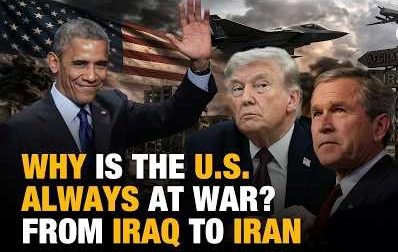
The Source of America’s Wars – Kristol Clear
or go to
Aletho News Archives – Video-Images
From the Archives
Is Israel to blame for the Iraq War?
American Goy | March 10, 2008
I am so tired of this old canard that “Israel had nothing to do with USA’s war with Iraq – in fact, it officially advised America against it”.
Bullshit. … continue
Blog Roll
 Aletho News
- Ceasefire for all or for none: Iran shuts Hormuz over Lebanon attacks
- Strait of Hormuz is Iran’s ‘nuclear weapon’ that forced US retreat: Medvedev
- Energy crisis will last for months – Kremlin envoy
- Europe’s quiet role in the war on Iran
- Forty days that shook the Empire: How Iran turned the tables on US and prevailed
- Netanyahu unilaterally declares Lebanon outside of ceasefire deal
- Israeli leaders: ‘Not a single goal’ achieved in war with Iran
- What on earth just happened? Trump, Iran, and the unlikely ceasefire
- Alberta Bill Would Fine Political Deepfakes $10,000 Without Satire Exemptions
- Iran declares ‘historic victory’ over US, says enemy forced to accept its proposal
- If Americans Knew
- Gazans face a triple crisis: severe shortages of water and bread, healthcare in tatters
- NY Times reports how Netanyahu took the US into Iran War
- A sigh of relief over Iran, but Gaza and Lebanon in dire straits – Daily Update
- Thousands dead and neighborhoods razed to the ground: Aid agencies fear southern Lebanon is becoming the new Gaza
- The war the US is fighting for Israel could cost trillions
- ‘Cigarette Burns, Nail Wounds’: Toddler Tortured in Gaza to Coerce Father
- Trump Says US Sent ‘a Lot of Guns’ to Protesters in Iran
- Israeli forces destroy 17 UN peacekeeper cameras in south Lebanon
- US-Israeli strikes ‘completely destroy’ synagogue in Tehran
- Archbishop for US Military Says Iran War Is Unjust Under Catholic Teaching
- No Tricks Zone
- An Inconvenient Tree: Uncovered In Alps… Europe Much Warmer Than Today 6000 Years Ago
- New Study Reports A 60% Slowdown In Greenland’s Ice Loss Rate In The Last Decade
- Low Intensity Tornado Wrecks Major Solar Farm, Creating A Potential Toxic Dump
- New Study Finds Warming Saves Lives…Cold Temperatures 12 Times More Deadly Than Excess Heat
- German Science Blog Accuses PIK Climate Institute Of Hallucinating Climate Tipping Points
- Devastating Assessment Of Comirnaty Vaccine By Former Senior Pfizer Europe Toxicologist
- New Study: CO2 Is ‘Effectively Negligible’ As An Explanatory Climate Change Factor Since 2000
- Former Pfizer Toxicologist Dr. Helmut Sterz Tells Bundestag Hearing Pfizer Vaccine Should Have Never Been Approved
- Energy Expert: Germany’s Nuclear Phaseout Was A “500 Billion Euro Mistake”
- New Research: South Australia’s Mid-Holocene Sea Surface Temperatures Were 4°C Warmer Than Today
 Aletho News