Hamas slams UK’s intention to label it as a ‘terrorist organization’
MEMO | November 19, 2021
The Palestinian Hamas resistance movement, on Friday, decried the British intention to label it as a “terrorist organization”, Anadolu News Agency reports.
In a statement, the group said Britain continues “favouring the (Israeli) aggressor at the expense of the (Palestinian) victims.”
“Resisting the occupation with all possible means, including armed resistance, is a guaranteed right by the international law for the people under occupation,” Hamas statement said.
It added: “The (Israeli) occupation is terrorism. Killing the indigenous people, expelling them by force, demolishing their homes and detaining them are terrorism.”
The statement urged the international community, including Britain, to stop the “double standards and the grave violation of the international law.”
UK Home Secretary, Priti Patel, is expected to outlaw Hamas for “links to terrorism and anti-Semitism against Jewish people.”
Since 2001, the UK has been calling the Hamas armed wing—Ezzeddin Al-Qassam Brigades—a terrorist organization, but did not include the Hamas political bureau within the designation.
Meanwhile, Israeli Prime Minister, Naftali Bennett, on Twitter welcomed the decision by Britain, claiming: “Hamas is a terrorist organization.”
“I welcome the UK’s intention to declare Hamas a terrorist organization in its entirety because that’s exactly what it is,” he added.
Bashar Assad getting accepted by Arab leaders. US and Israel losing their chance
By Robert Inlakesh | RT | November 12, 2021
In a significant move towards normalising Syria’s government, UAE Foreign Minister Sheikh Abdullah bin Zayed visited Damascus to discuss strengthening the ties between the two nations, sparking outrage from the US and Israel.
A surprise visit to the Syrian capital on Tuesday by Abu Dhabi’s foreign minister sparked condemnation from the United States, which seeks to encourage its Arab State allies to steer clear of President Assad. According to State Department spokesperson Ned Price, the US urges “states in the region to carefully consider the atrocities that this regime, that Bashar al-Assad himself has perpetrated on the Syrian people over the last decade, as well as the regime’s ongoing efforts to deny much of the country access to humanitarian aid and security.” That seems to have fallen on deaf ears over in Abu Dhabi.
However, despite the Biden administration having voiced its opposition to Assad’s government, behind the scenes, it may actually be working to create a temporary amendment to its 2019 “Caesar Act” sanctions, the mechanism it is speculated the US may implement to protect the likes of neighbouring Jordan. This would involve Amman liaising with the Syrian government to allow Egypt to send oil through to struggling Lebanon. Back in September, Jordanian, Egyptian and Lebanese representatives even met to discuss the logistics of managing such a transfer of oil, so as to provide Lebanon with the means to generate electricity.
Publicly, it seems the UAE – which reopened its embassy in Damascus three years ago – is leading the push to have Syria reinstated into the Arab League and enhance cooperation between the two. But, for Abu Dhabi, the so-called ‘brotherly’ nature of their relationship comes with strings attached. From an Emirati perspective, the relationship between the Syrian government and the UAE is threefold: first, Abu Dhabi sees Syria as a potential partner in the fight against the Muslim Brotherhood; second, it sees an opportunity to work towards facilitating the cooperation between Egypt and Jordan on the potential oil transfer to Lebanon; and last, it seeks to bring Syria closer to the Arab reactionary regimes and distance it from Iran. Both Egypt and Jordan have also taken strides to normalise relations with Damascus: in October, Jordan’s King Abdullah II participated in a phone call with President Assad and, on Tuesday, Egypt’s foreign minister made it clear he was open to the idea of Syria re-entering the Arab League.
Prior to the war in 2011, the Syrian government had embraced neo-liberal economics, but in terms of its foreign policy, it has always maintained a nationalist agenda. When the war in Syria began, the UAE jumped on the bandwagon of conspiring against Assad and financed armed groups to overthrow him. In and of itself, this makes it clear that Abu Dhabi is not acting in the interests of regular Syrians. It is easy to foresee the Syrian government developing its relationship with the UAE in order to strengthen its position in the region and secure investments to rebuild its war-torn nation in the future.
From a realist point of view, however, the decision-makers in the Emirates see that Assad is not going anywhere. They are seeking to combat Islamist forces regionally, so why not try to influence a nationalist nation while working alongside it to weaken the Muslim Brotherhood and erase Iran’s footprint in the country?
Given Turkey may imminently open up another offensive into northeastern Syria to combat the Kurds in areas controlled by the US and Kurdish SDF (Syrian Democratic Forces), the Emirati foreign minister may well have wished to discuss this issue during his visit to Damascus. Turkey, which currently controls two pockets in Syria’s north through its Syrian National Army mercenary militia, is aligned with the Muslim Brotherhood. To the UAE, Turkey and Qatar are its biggest regional rivals.
But Washington, which is surely well aware of the policy positions its Middle Eastern allies are taking on Syria, continues to not only economically restrain Damascus, but also occupies roughly a third of Syrian territory with its proxy forces. The US currently presides over 90% of that nation’s oil resources and is even looting its most fertile agricultural lands, which those Syrians who are suffering under an economic crisis are unable to access. The US not only blocks progress and has extirpated attempts to rebuild the country, but adopts a militaristic approach and views itself as maintaining the right to remain there, despite not having acquired any congressional approval to be operating in Syria.
The main role of the US occupation of Syrian lands, through its Kurdish proxy forces in northeastern Syria and its mercenary forces in the al-Tanf region of south Syria, is to combat Tehran. Until significant Iranian influence is cleared out of the land, they will not leave of their own free will.
Then we have Israel, which will also not leave the Syrian lands it illegally occupies unless it is forced out in a war between the two nations. In tandem with Islamic State (IS, formerly ISIS) terrorists who have crawled out from their caves and suddenly received anti-tank munitions and a spike in their numbers, Israel has picked up its attacks against Syria. In fact, it has carried out at least five in Syria over the past month, killing soldiers and assassinating an ex-member of parliament. Israel is also seeking to quadruple its settler population in the Golan Heights, with Israeli PM Naftali Bennett having announced new construction plans just last month. It’s clear that Israel is seeking to provoke a reaction from Damascus and test how far it can cross the line before drawing defensive fire.
Instead of the Syrian Arab Army responding to US and Israeli aggression, independent groups that align with Iran have been at the forefront of combating Tel Aviv and Washington. The reality is that Syria is so embroiled in this hostile situation between different foreign powers attempting to extract different things from it that it is difficult to tell where the government is currently headed, and whether it will continue to follow a nationalist path or eventually adopt a more business-minded rather than ideologically driven approach. Ultimately, it seems the UAE will play a limited role in Syria for now, but only time will tell who gets the better of the other in this ever-expanding relationship.
Robert Inlakesh is a political analyst, journalist and documentary filmmaker currently based in London, UK. He has reported from and lived in the occupied Palestinian territories and currently works with Quds News and Press TV. Director of ‘Steal of the Century: Trump’s Palestine-Israel Catastrophe’.
Russia: Syria held back fire as Israel used civilian aircraft as cover in Homs raid
Press TV – October 15, 2021
Israel has once again used civilian aircraft as a shield against Syrian air defense systems during its attacks on the Arab country, says a Russian general.
“On October 13, from 23:35 to 23:39, four F-16 tactical fighters of the Israeli Air Force entered Syrian airspace in the US-occupied al-Tanf zone in Homs Province and struck a phosphate ore processing plant in the Palmyra region,” Rear Admiral Vadim Kulit, deputy head of the Russian Center for the Reconciliation of Warring Parties in Syria, said at a briefing.
Kulit said the Syrian military, however, decided not to target the Israeli jets that carried out the strike in central Syria because there were two civilian airliners in the sky at the time.
“The Syrian military leadership decided not to use air defense systems, since at the time of the Israeli aviation attack, two civilian passenger aircraft were in the zone of destruction of the anti-aircraft systems,” Kulit said, Sputnik news reported.
The Syrian Defense Ministry announced earlier that the Wednesday attack killed one soldier and injured three others.
Israel has repeatedly used civilian aircraft as a shield against Syrian air defense systems in its aggression against the Arab country.
In February, an Airbus A320 with 172 passengers on board was forced to make an emergency landing at the Russian-operated Hmeimim Air Base during an Israeli attack.
Back in 2018, Israel had to apologize for using a Russian Il-20 reconnaissance aircraft as a shield during an attack, causing a Syrian S-200 surface-to-air missile to shoot down the Russian aircraft instead and kill 15 Russian and two Syrian service members.
Israel’s Wednesday attack came just days after Syria’s air defenses thwarted an Israeli missile attack on a military air base, known as T-4, in Homs, shooting down most of the incoming projectiles.
That aerial assault had been initiated from the direction of the al-Tanf area as well, with Syrian official news agency SANA reporting that it wounded six soldiers and resulted in some material losses.
Syria has been gripped by foreign-backed militancy since March 2011. The Syrian government says the Israeli regime and its Western and regional allies are aiding Takfiri terrorist groups.
Israel frequently targets the positions of the Syrian military and its allies, who are fighting against the foreign-backed terrorists wreaking havoc in the Arab country.
Taliban reinforces warning to US not to use drones in Afghan airspace
By Lucas Leiroz | September 29, 2021
The US, which recently withdrew its troops during the Taliban’s takeover of Kabul, apparently is still active in the Central Asian country. Clandestine operations involving drones allegedly aimed at combating Daesh K agents have caused controversy in the region in recent days. The Taliban emphatically affirms that it will not tolerate a foreign presence and that it will fight American drones in the same way it fights terrorists, while Washington insists on a “global police” posture and says that it will continue to use drones against the Daesh K.
In late August, a drone strike by the US military against Daesh K militants caused outrage in the Taliban. The de facto government in Kabul repudiated the American measure not only because Washington disrespected Afghan sovereignty by carrying out incursions into the country after its participation in the war ended, but mainly because the operation was a complete disaster, resulting in the death of ten civilians, including seven children and a humanitarian NGO agent. In fact, the terrorists were not affected by the American operation, which only killed innocent people and caused massive humanitarian damage.
In response, the Taliban warned that Washington would suffer consequences for its interventionist stance if there were new drone operations in Afghan territory. The group emphasized the fact that operating in Afghan airspace without prior authorization from the local government is an international crime and can be responded with military action. Considering that the Taliban is currently the group that controls Afghanistan, establishing a real government, although not internationally recognized, Washington should ask the Taliban for authorization to act in the region. Without this authorization, there is a crime of territorial invasion.
On Tuesday, the Taliban published a new statement reaffirming its authority over the entire Afghan territory and prohibiting unauthorized foreign military actions in the country. The group also highlighted the clauses of the Doha peace agreement, signed by Washington in 2020, which established non-intervention as one of the prerequisites for the future of the Afghan issue. In the statement, we can read: “The United States has recently violated all international law and its commitments to the Islamic Emirate in Doha, Qatar, and Afghanistan’s sacred airspace is being occupied by US drones. These violations must be corrected and prevented (…) We will call on all countries, especially the United States, to abide by their international commitments and laws in order to prevent any negative consequences”.
Previously, the US government had stated that last month’s attack was not the last and that new actions in Afghan territory using military drones were about to take place. Apparently, there is an understanding on the part of Washington that the end of the participation in the Afghan war does not imply the end of “security measures” against targets identified as terrorists, which is quite contradictory. The mentality of acting as “global police” is so strongly rooted in US security policy that the country simply believes it really has the right to invade other states’ airspace and does not consider it an international crime.
The increase in the activities of terrorist groups has influenced this scenario because these terrorist organizations’ actions “justify” to Western public opinion the “need” for new interventions in Afghanistan. The largest of these groups is Daesh K itself, a Central Asian branch of ISIS, which operates heavily in Afghanistan and Pakistan and has been involved in terrible episodes of violence since the Taliban’s takeover. The group has established itself as the number one enemy of the new government, operating several attacks against civilians with the objective of generating social chaos and preventing the Taliban from consolidating in power.
Washington sees this fact as evidence that the West needs to remain involved in Afghan internal disputes and, with no possibility of sending human military personnel, considering the recent withdrawal, the American government mobilizes drones to carry out the attacks. However, it is clear that the Taliban has strength enough to deal with this situation without international coalitions. The Taliban’s military potential is far greater than the power of the former Afghan government – it is not by chance that the former government collapsed within a few days. In addition, a substantial portion of the American military apparatus passed into the hands of Afghan leaders after the seizure of Kabul, resulting in a Taliban far stronger than any terrorist group currently present in Afghan territory.
Considering this scenario, the American “concern” seems unnecessary. The US has no right to intervene in Afghanistan unless the Taliban itself requests it. The group appears to have enough strength to resolve its disputes with other terrorist organizations – and even if the Taliban were weaker than Daesh K, other countries would need authorization to operate in Afghan territory. The US government is visibly invading the airspace of another sovereign state and needs to be punished internationally for it.
Lucas Leiroz is a research fellow in international law at the Federal University of Rio de Janeiro.
Washington’s Assembly Line for Retraining Soldiers in Syria Isn’t Stopping
By Valery Kulikov – New Eastern Outlook – 25.09.2021
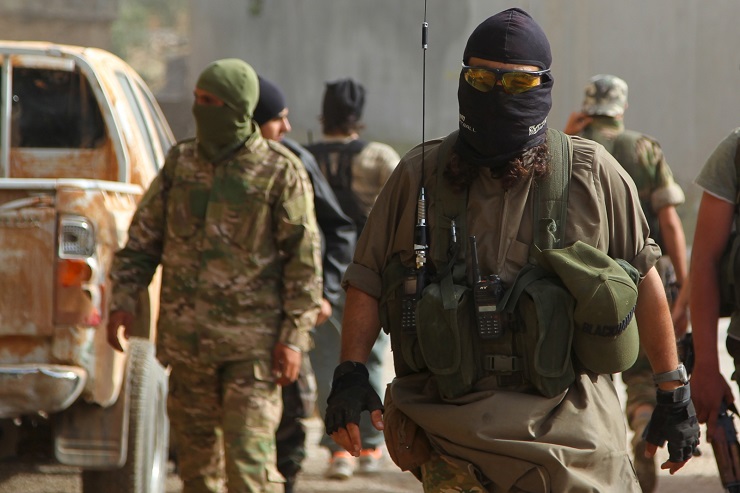
According to the Syrian news agency SANA, on September 19, US Air Force helicopters transported two new groups of militants to their base in Al-Shaddadah in Al-Hasakah Governorate, northeastern Syria, for retraining. There were about 60 people in total who had previously fought in the ranks of the terrorist group ISIS.
These militants were transported from a prison in the city of Qamishli, where they were guarded by Kurds from the Syrian Democratic Forces (SDF) after ISIS’s defeat in 2019. The majority of these prisoners have Iraqi citizenship, and among them are also Saudi Arabians and Tunisians. According to SANA sources, at least three former ISIS members have held senior positions in its regional structure in the past. One of them presided over the police force in Deir ez-Zor, another headed penitentiary facilities, and the third was responsible for finances.
SANA elaborates that they will undergo retraining at the US military base in order to later integrate into puppet groups under the label of the “Army of Free Tribes,” which are used by the US command to conduct subversive operations in northeastern Syria.
It is notable that this is not the first such US operation to organize “retraining courses” for Islamist militants at its bases in Syria. For example, on August 7, 40 ISIS supporters were transported to a base controlled by the US Armed Forces in Al-Shaddadah. As reported by the Syrian media, the terrorists, among whom were an ISIS “spy group leader” and “explosives specialist,” were moved to the military base from prisons under the control of the Kurdish SDF. It was stressed that the terrorists “were armed and received logistical support for the perpetration of further acts of terrorism, the target of which could be populated areas, sites occupied by the Syrian army, and infrastructure.”
On June 21, US Air Force helicopters transported yet another group of militants to Al-Shaddadah from the Es-Sanawiya prison, situated in the administrative center of Al-Hasakah. They were also preparing to join the Army of Free Tribes group, which the United States uses to conduct operations in northeast Syria.
Prior to this, in April no less than 70 other former mercenaries from the ranks of ISIS were transferred from Ghuwayran prison, which is also controlled by SDF fighters, to the pro-Western coalition base at Al-Tanf where the borders of Syria, Iraq, and Jordan meet.
Mehmet Ali Güller, the Turkish author of “ISIS. Black Terror,” writes that ISIS has always been a “convenient enemy” for the USA and has served as a “skeleton key” for doors, which Washington has wanted to open.
Another Turkish publication, Milliyet, emphasizes that the USA has constantly signaled the need to focus on the fight against ISIS, but it has never acted with the aim of destroying it. The USA used ISIS to change the map of the region, reconstruct it, establish the space for a terrorist mini-state, and partition and destroy the region’s states. Somewhere there was ISIS, and somewhere “Al-Qaeda” or “Khuras al-Din”. In other words, the USA has never seriously fought against the by-products of its own creation, which have appeared under different names. The publication emphasizes that the USA only ever acted with the consideration of exploiting them in their own interests and for their own benefit.
Any supporting information about secret ties between the USA and ISIS should not surprise anyone, since even The Washington Post writes that the leader of ISIS, Amir Mohammed Said Abel-Rahman al-Mawla, also known as Abu Ibrahim al-Hashemi al-Kurashi, previously performed the role of informant for the US military in Iraq. An in-depth investigation of the support that several Western intelligence agencies, including the CIA, provide to jihadist groups in Syria can be found in “The Secret War in Syria” by Maxim Shae, an expert on covert operations, intelligence and US foreign policy.
Not only does the USA continue to conduct “retraining” for former ISIS fighters and other extremist groups in “its own interests,” but it also supplies them with weapons. The aim of such US actions is extremely simple: to prepare a new detachment of radical pro-American groups that will perform the rough work of Special Force units. And the results of these actions are already plain to see: on September 17, the militants cut off the power supply across Damascus and sabotaged a gas pipeline to the South near Deir Ali. In addition to disabling the pipeline, according to Reuters and Al-Ikhbariya there have been attempts to blow up two power lines in the Khuran district of Damascus.
Besides training ISIS fighters at American military bases in Syria, the US-backed SDF abduct civilians to force them to fight in their ranks, carry out raids on Syrian cities, and wreak havoc in the country. Thus, on September 20, as reported by SANA news agency, the SDF executed another raid on houses in the town of Abu Hamam in Deir ez-Zor during which they abducted nine local residents, who were taken in an unknown direction. It is reported that the militants indiscriminately opened fire to disperse some people who were trying to recapture the abducted residents, sowing panic among the civilian population. Windows were also broken in several houses. The kidnapping was carried out with the support of the US military.
In order to avoid allegations against the US Air Force of killing civilians, the Pentagon plans to train SDF militants in independent operations with the use of military aircraft. For this, training in aviating and using T-6 Texan aircraft and MD-500 helicopters was organized at the Al-Kafr base. For this purpose, according to the available data, three such aircraft and two helicopters have already been delivered to the American base.
Furthermore, as El Mundo and many other Western media have already reported, US militants who have undergone “special training” are actively deployed in Syria, along with mercenaries from the American private military company Academi, to guard and transport convoys with stolen Syrian oil to Iraq.
Meanwhile, it should be recalled that US military personnel are in Syria illegally, violating the norms of the UN Security Council. Washington funds the militants through a program of assistance to the “Syrian opposition” and is using them to retain its positions in the Syrian oil fields.
These illegal and predatory actions on behalf of Washington must ultimately be subject to a legal assessment by the international community and be stopped!
US Expulsion from West Asia Region is Inevitable: IRGC
Al-Manar | September 24, 2021
The Islamic Revolutionary Guard Corps (IRGC) has issued a statement on the anniversary of Sacred Defense, saying that the United States has no choice but withdrawal from the West Asia region.
The IRGC issued a statement on Friday to commemorate the anniversary of the Iraqi Saddam regime-imposed war on Iran and the beginning of Sacred Defense by the Iranian nation against the Baathist regime of Saddam, which was sponsored and fully backed by Western powers between 1980-1988.
The statement said that after 41 years since the start of the imposed war, which was sponsored and supported by the world powers, the nation has grown more resilient and the country has solidified its defensive power.
The IRGC added that the imposed war ended while even a handspan of Iranian soil was not given to the enemy.
It also noted that the western powers continued non-stop to conspire against Iran over the past 33 years since the end of the imposed war.
The Guards also said that the power of hegemonic powers such as the United States, which supported Saddam’s regime, was declining while they made wrong calculations and invaded Islamic countries of Iraq and Afghanistan.
“But today, after more than twenty years [since the occupation of Afghanistan by the US and NATO], we are witnessing the humiliating escape of the Americans from Afghanistan and at God’s willing, we will see their expulsion from West Asia in the near future,” the IRGC statement read.
‘Israel and the Zionist enterprise were born in sin’, says heir to an iconic Zionist family
![Yaakov Sharett [Youtube]](https://i1.wp.com/www.middleeastmonitor.com/wp-content/uploads/2021/09/Yaakov-Sharett.png?resize=1200%2C800&quality=85&strip=all&zoom=1&ssl=1)
Yaakov Sharett
MEMO | September 20, 2021
In a remarkable political conversion, Yaakov Sharett, the heir to an iconic Zionist family and son of Israel’s second Prime Minister, Moshe Sharett, has turned his back on the founding ideology of the occupation state.
“The State of Israel and the Zionist enterprise were born in sin,” said Sharett in an interview with Haaretz. The 95-year-old spoke at length about his journey from a faithful servant of Zionism in the state of Israel to one of its harshest critics.
Sharett was born in 1927 and is said to belong to a well-connected family from the cream of the Yishuv, the Jewish community in Palestine. His father was Israel’s first foreign minister and one of the country’s leaders who signed the Declaration of Independence in 1948. Sharett also dutifully served Israel as a member of the Shin Bet, the country’s security agency, and helped Soviet Jews flee to Israel.
Ending his days in Tel Aviv as an anti-Zionist, Sharett predicts dark days for the country he spent nearly his entire life serving. “This original sin pursues and will pursue us and hang over us,” said Sharett referring to the ethnic cleansing of Palestine prior to Israel’s creation in 1948. More than half of the indigenous community were expelled in an attempt to artificially construct a Jewish majority.
Sharett recollected the history of Zionism and its rise within Jewish communities. He argued that the moment Zionism called for the Jews to immigrate to Israel, in order to establish an ethno-nationalist state, a conflict was created. “I see in this whole transformation of the majority [Arab] to a minority and the minority [Jewish] into a majority as immoral,” explained Sharett.
“Have you seen anywhere in the world where the majority would agree to give in to a foreign invader, who says, ‘our forefathers were here,’ and demands to enter the land and take control?” Sharett rhetorically asked. “The conflict was inherent and Zionism denied this, ignored it… as the proportion of Jews to Arabs changed in favor of the Jews, the Arabs realized that they were losing the majority. Who would agree to such a thing?”
Lamenting his continued presence in Israel he said that he sees himself as a “a collaborator” against his will.
I’m a forced collaborator with a criminal country. I’m here, I have nowhere to go. Because of my age, I can’t go anywhere. And that bothers me. Every day. This recognition won’t leave me. The recognition that in the end, Israel is a country occupying and abusing another people.
Sharett also railed against Israel’s turn towards religious fundamentalism and ultra-nationalism. “When I see the prime minister with a kipah on his head, I don’t feel good,” he added. “This is not the Israel I want to see. How did it happen that this new place, that was to have brought innovations, became the blackest place, controlled by the nationalist ultra-Orthodox? How is it that here of all places, there’s reactionism and zealotry, messianism, the desire to expand and control another people?”
North Korea’s Right of Self-Defense
By Stephen Lendman | September 13, 2021
Throughout its post-WW II history, North Korea never preemptively attacked another country.
Its peaceful foreign policy is in stark contrast to US, Western, apartheid Israeli forever wars on invented enemies.
The right to self-defense is inviolable under international law, including under Article 51 of the UN Charter.
It prohibits one nation from attacking another except in self-defense, stating:
“Nothing in the present Charter shall impair the inherent right of individual or collective self-defense if an armed attack occurs against a Member of the United Nations, until the Security Council has taken measures necessary to maintain international peace and security.”
North Korea’s military and weapons development are all about protecting the nation from possible US/Western aggression, including its nuclear and missiles technology.
On Monday, its Yonhap News Agency headlined “N. Korea test-fires new long-range cruise missiles,” saying:
“North Korea has successfully test-fired a new type of long-range cruise missiles over the weekend,” adding:
“The test-firings took place on Saturday and Sunday after two years of research, according to the Korean Central News Agency (KCNA).”
“The development of the long-range cruise missile, a strategic weapon of great significance…. has been pushed forward according to the scientific and reliable weapon system development process for the past two years.”
“Detailed tests of missile parts, scores of engine ground thrust tests, various flight tests, control and guidance tests, warhead power tests, etc. were conducted with success.”
Voice of Korea (VOK) called the tested missiles nuclear-capable, adding:
They’ll serve as an “effective deterrent ensuring the security of our state more firmly and overpowering powerfully the anti-DPRK military moves of the hostile forces.”
Carnegie Endowment for International Peace senior fellow Ankit Panda said the following about the reported tests:
“A long-range, nuclear-capable cruise missile complicates how its adversaries need to think about positioning radars and investing in cruise missile defense capabilities more generally.”
MIT Professor Vipin Narang said “a nuclear cruise missile makes a lot of sense to evade missile defenses.”
They’re “air-breathing so they can fly low and maneuver.”
VOK reported that tested missiles were fired from a five-canister wheeled transporter erector launcher.
North Korean state media said “(d)ozens of static firing tests” of a “newly-developed turbofan engine” were conducted.
“(D)ifferent flight tests, controlling… guiding… and warhead destructive tests were successfully made.”
Missiles fired “flew 1,500 kilometers for 7,580 seconds along the flight track of oval and figure-eight set in the territory and territorial air of our state before hitting the targets.”
According to International Institute for Strategic Studies (IISS) military analyst Joseph Dempsey:
Tests conducted are “significant development and direction of intent, but we should be wary of assuming or assigning similar capabilities that we associate with other contemporary land-attack cruise missiles at this stage.”
More information or independent confirmation is needed to know to what extent DPRK technology advanced.
In response to the tests, the Pentagon’s INDOPACOM said the following:
“We are aware of reports of DPRK cruise missile launches.”
“We will continue to monitor the situation and are consulting closely with our allies and partners.”
“This activity highlights DPRK’s continuing focus on developing its military program and the threats that poses to its neighbors (sic) and the international community (sic).”
Nonbelligerent North Korea threatens no one.
US-dominated NATO threatens world peace.
A Final Comment
Last month, North Korean envoy to Russia Sin Hong-chol said the following:
“The US should pull out its aggressive troops and military hardware deployed in South Korea to achieve peace on the Korean Peninsula.”
“As long as US forces are based in South Korea, the main reason behind periodical exacerbation of the situation on the Korean Peninsula will never be eliminated.”
“The current situation proves that only real force and not words can ensure peace and security on the Korean Peninsula.”
Stressing the importance of strengthening his country’s military to deter foreign threats,” he added:
“We have already clearly said that we will treat the US on the principle of ‘force for force’ and ‘good for good.’ ”
Hostile US actions include “aggressive military exercises at such an extreme time when international attention is concentrating on Korean Peninsula developments show that they are the instigators who destroy peace and security of the region, while ‘commitment to diplomacy’ and ‘dialogue without preconditions’ that the current US (regime) is ranting about are nothing but hypocrisy.”
Calling US/S. Korea military actions “rehearsal(s)” for war against the North, he slammed their “military madness.”
Pyongyang believes that the Biden regime “will be more openly engaged in hostile actions (ahead) against Asia Pacific states, including Russia” and China.
Number of Jewish Americans moving to illegal settlements increases ‘dramatically’
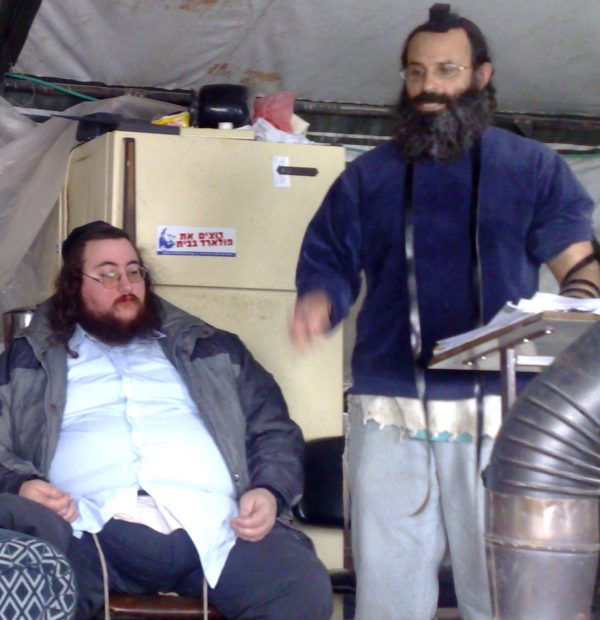
Notorious American-Israeli settler Justin Yaakov Fauci with Kahanist terrorist-turned-hate-preacher Gordon Yehuda Richter
MEMO | September 13, 2021
The number of Jewish American moving into illegal settlements in the Israeli-occupied West Bank has increased dramatically, according to recent data from Tel-Aviv’s Central Bureau of Statistics.
Out of the 2,296 US citizens who migrated to the occupation state last year, 191 moved into illegal settlements. This represents nearly a threefold increase from the previous year when less than three per cent settled in Palestinian territory.
American Jews are also the most likely to settle in occupied territory compared with fellow Jews from other parts of the world. While they accounted for just over ten per cent of all the newcomers arriving in Israel last year, they made up nearly a third of those opting to settle in the West Bank.
This disparity is said to be due to the American Jewish community being more orthodox and tending to hold right-wing supremacist views, such as that all of the territory from the River Jordan to the Mediterranean Sea was granted to Jews by God.
Another reason is that the Jewish organisation subcontracted to handle the logistics of immigration from the US is the private Nefesh b’Nefesh. The group is said to encourage American Jews to settle in the occupied West Bank. About a quarter of the communities highlighted on its website are located in illegal settlements, such as Efrat, Ma’aleh Adumim and Elkana. It makes no mention of the fact that these places are not within Israel.
The ugly reality of the takeover of Palestinian land by settlers arriving from the US grabbed international attention earlier this year when an American-born Israeli, Yaakov Fauci, was captured on video trying to evict the Palestinian El-Kurd family from their home in the Sheik Jarrah neighbourhood of occupied East Jerusalem.
“If I don’t steal it, someone else is going to steal it,” said Fauci in a video that went viral and sparked international condemnation. He was born in Long Island, New York, and was recruited by Nahalat Shimon International, a US-based settler organisation seeking to change the demographics of occupied East Jerusalem.
Featured Video

Chinese jet fuel and the myth of energy independence
or go to
Aletho News Archives – Video-Images
Book Review
Former Insiders Criticize Iran Policy as U.S. Hegemony
By GARETH PORTER | CounterPunch | February 27, 2013
“Going to Tehran” arguably represents the most important work on the subject of U.S.-Iran relations to be published thus far.
Flynt Leverett and Hillary Mann Leverett tackle not only U.S. policy toward Iran but the broader context of Middle East policy with a systematic analytical perspective informed by personal experience, as well as very extensive documentation.
More importantly, however, their exposé required a degree of courage that may be unparalleled in the writing of former U.S. national security officials about issues on which they worked. They have chosen not just to criticise U.S. policy toward Iran but to analyse that policy as a problem of U.S. hegemony. … continue
Blog Roll
 Aletho News
- What is fueling unrest across the EU?
- Why no power can undermine Iran’s eternal dominance over the Strait of Hormuz
- Is The War Against Iran Over?
- Iran war will leave long-term ‘scar’ on Wall Street, investors warn
- How Iran decimated US power projection in West Asia: Military lessons of 40-day war
- Iran’s report details US-Israeli war crimes in targeting schools, hospitals, livelihoods
- NATO’s Slow Fracture: How Trump’s Iran War Exposed the Instrument of Hegemony
- Chinese jet fuel and the myth of energy independence
- Ukraine Sea Drone Fired From Libya Hit Russian Tanker in Mediterranean
- IRGC: Iranian forces launched no attacks during ceasefire hours
- If Americans Knew
- Military aid to Israel emerges as the latest political litmus test for Democrats
- The only Palestinian children’s rights organization closes following years-long Israeli campaign against it
- ‘I Can’t Forget the Smell’: Lebanese Reel After Israel Kills Over 300 in Single Day
- DNC Shoots Down Resolutions Calling Out AIPAC and Limiting Arms to Israel
- TCN: Is Israel Blackmailing President Trump?
- Israel killed at least 303 Lebanese yesterday – who were they? Daily Update
- Amnesty: Urgent – Protect Lebanese civilians from brutal escalation in Israeli attacks
- Is The War Against Iran Over?
- Inside the Israeli army’s propaganda wing
- Hundreds of Gaza Amputees Stranded in Legal Limbo
- No Tricks Zone
- New Study: No Linear Warming Or Glacier Retreat Along Northern Antarctic Peninsula Since 1980s
- An Inconvenient Tree: Uncovered In Alps… Europe Much Warmer Than Today 6000 Years Ago
- New Study Reports A 60% Slowdown In Greenland’s Ice Loss Rate In The Last Decade
- Low Intensity Tornado Wrecks Major Solar Farm, Creating A Potential Toxic Dump
- New Study Finds Warming Saves Lives…Cold Temperatures 12 Times More Deadly Than Excess Heat
- German Science Blog Accuses PIK Climate Institute Of Hallucinating Climate Tipping Points
- Devastating Assessment Of Comirnaty Vaccine By Former Senior Pfizer Europe Toxicologist
- New Study: CO2 Is ‘Effectively Negligible’ As An Explanatory Climate Change Factor Since 2000
- Former Pfizer Toxicologist Dr. Helmut Sterz Tells Bundestag Hearing Pfizer Vaccine Should Have Never Been Approved
- Energy Expert: Germany’s Nuclear Phaseout Was A “500 Billion Euro Mistake”
 Aletho News