U.S. Sanctions Are Killing Syrians and Are a Human Rights Violation
By Steven Sahiounie | Strategic Culture Foundation | December 22, 2022
Damascus is now bitterly cold and is soon to be blanketed with snow. About 12 million Syrians are facing a deadly winter without heating fuel, gasoline for transportation, and dark houses each evening without electricity. Aleppo, Homs, and Hama are also extremely cold all winter.
Imagine being ill and having to walk to the doctor or hospital. The ambulances in Syria will now respond only to the most life-threatening calls because they must conserve gasoline, or face running out entirely. Gasoline on the black market costs Syrians an equivalent of 50 U.S. dollars for a tank of 20-liter fuel.
Sanctions against Syria were imposed by the European Union, the United States, Canada, Australia, Switzerland, the Arab League, as well as other countries beginning in 2011. The sanctions were aimed at overthrowing the Syrian government, by depriving it of its resources. U.S.-sponsored ‘regime change’ has failed but the sanctions were never lifted.
For 12 years the U.S. and EU have been imposing economic sanctions on Syria which have deprived the Syrians of their dignity and human rights.
New UN report asks for lifting sanctions on Syria
UN Special Rapporteur on human rights, Alena Douhan, urged sanctions to be lifted against Syria, warning that they were adding to the suffering of the Syrian people since 2011.
“I am struck by the pervasiveness of the human rights and humanitarian impact of the unilateral coercive measures imposed on Syria and the total economic and financial isolation of a country whose people are struggling to rebuild a life with dignity, following the decade-long war,” Douhan said.
After a 12-day visit to Syria, Douhan said the majority of Syria’s population was currently living below the poverty line, with shortages of food, water, electricity, shelter, cooking and heating fuel, transportation, and healthcare. She spoke of the continuing exodus of educated and skilled Syrians in response to the economic hardship of living at home.
Douhan reported that the majority of infrastructure was destroyed or damaged, and the sanctions imposed on oil, gas, electricity, trade, construction, and engineering have diminished the national income, which has prevented economic recovery and reconstruction.
The sanctions prevent payments from being received from banks, and deliveries from foreign manufacturers. Serious shortages in medicine and medical equipment have plagued hospitals and clinics. The lack of a water treatment system in Aleppo caused a severe Cholera outbreak in late summer, and the system cannot be bought, installed, or maintained under the current U.S. sanctions against Syria.
Douhan said, “I urge the immediate lifting of all unilateral sanctions that severely harm human rights and prevent any efforts for early recovery, rebuilding, and reconstruction.”
U.S. sanctions are not effective
In 1998, Richard Haass wrote, ‘Economic Sanctions: Too Much of a Bad Thing’. He cautioned U.S. foreign policymakers that sanctions alone are ineffective when the aims are large, or the time is short. The overthrow of the Syrian government is a massive aim, and the sanctions did not accomplish that goal.
Haass predicted that sanctions could cause economic distress and migration. In the summer of 2015 about half a million Syrians walked through Europe as economic migrants and were taken in primarily by Germany.
There is a moral imperative to stop using sanctions as a foreign policy tool because innocent people are affected, while the sanctions have failed.
The U.S. steals Syrian oil, and will not allow imported oil to arrive
According to the U.S. government, the sanctions on Syria “prohibits new investments in Syria by U.S. persons, prohibits the exportation or sale of services to Syria by U.S. persons, prohibits the importation of petroleum or petroleum products of Syrian origin, and prohibits U.S. persons from involvement in transactions involving Syrian petroleum or petroleum products.”
There is a waiver that can be requested from the Department of Commerce, to circumvent the sanctions; however, it only applies to sending items to the terrorist-occupied area of Idlib. Hayat Tahrir al-Sham was the Al Qaeda affiliate in Syria and is the only terrorist group now holding territory in Syria.
On October 22, the media Energy World reported the U.S. occupation forces had smuggled 92 tankers and trucks of Syrian oil and wheat stolen from northeastern Syria to U.S. bases in Iraq. The theft is ongoing and continuous.
The U.S. has partnered with the Syrian Democratic Forces (SDF) which is a Kurdish militia that has a political wing following the communist ideology begun by the PKK’s Abdullah Ocalan. President Trump ordered the U.S. military to remain to occupy northeastern Syria and he ordered the U.S. soldiers there to steal the Syrian oil so to prevent the Syrian people in the rest of the country from benefiting from the gasoline and electricity produced from the wells.
The Syrian Oil Ministry said in August that the U.S. forces were stealing 80 percent of Syria’s oil production, causing direct and indirect losses of about 107.1 billion to Syria’s oil and gas industry.
Because the Damascus government is deprived of the oil its wells produce, it is forced to depend on costly imported oil, usually from Iran. The U.S. routinely commandeers Iranian tankers, such as the incident recently when the U.S. Navy took a tanker hostage off the coast of Greece on its way to Syria but was eventually released by Greece.
Gasoline shortage
The government has instituted a three-day weekend for schools and civil offices, as well as suspended sports events to save fuel.
Maurice Haddad, Director of the General Company for Internal Transport in Damascus, told the al-Watan newspaper that the government has set stricter diesel quotas, leading to fewer daily bus services.
Athar-Press news website reported that several bakeries in Damascus have had to shut down because of the lack of fuel.
Fuel is needed to generate electricity in Syria, and the lack of domestic or imported fuel means most homes in Syria have about one hour of electricity at several intervals each day, and the amount is diminishing daily.
Sanction exemptions for Idlib and the Kurds only
The only two areas in Syria which are not under the Damascus administration are Idlib in the northwest and the U.S.-sponsored Kurdish region in the northeast. The U.S. sanctions are exempt from sending items to those two places only. But, those two places represent a small number of Syrians in comparison to the civilians across the country, and the main cities of Damascus, Aleppo, Homs, Hama, and Latakia. The U.S. makes sure the people who are against the Syrian government continue to be rewarded with supplies and reconstruction, while the millions of peaceful civilians are kept in a constant state of suffering and deprivation.
Palestine welcomes UN resolution confirming its sovereignty over its resources
MEMO | December 15, 2022
The Palestine Liberation Organisation (PLO) welcomed the adoption of a resolution by the UN General Assembly regarding the rights of Palestinians over their natural resources.
In a statement the Secretary of the Executive Committee of the PLO, Hussein Al-Sheikh, said: “We welcome the UN resolution in the General Assembly on the rights of the Palestinians to the natural resources in their homeland.”
“This UN resolution is an addition to hundreds of resolutions that affirm the Palestinian right and the illegality of the occupation and its aggressive and racist measures and practices.”
The official Palestinian News Agency, Wafa, said that the UN General Assembly “adopted a resolution tonight by an overwhelming majority regarding the permanent sovereignty of the Palestinian people over their natural resources.”
The agency noted that “159 countries voted in favour of the resolution, 10 countries abstained from voting, while 8 countries opposed it.”
Israel crushes water pipelines with bulldozers in occupied West Bank
MEMO | December 15, 2022
The Israeli occupation army destroyed the main water pipelines in the village of Al-Auja, in the north-east of Jericho, reported Wafa news agency.
The destruction is seen as being part of the apartheid state’s efforts to control all water sources in the occupied Palestinian territories.
Local residents said that occupation soldiers forced their way into the village and welded-shut the sole pipeline which supplies water to more than 1,200 people and used a bulldozer to crush it beneath the land.
In recent years, Ein Al-Auja villagers have suffered from Israeli demolition and persecution campaigns and repeated attacks and violations by illegal settlers and soldiers.
The supervisor of the Al-Baidar Organisation for Defending the Rights of the Bedouins, Hasan Mleihat, said the community is one of the largest in the West Bank and is a target of frequent assaults and violations by the Israeli soldiers and settlers.
He also noted that such assaults are intended to displace the community and seize their water and land to make room for colonial settlement construction.
Israel violates international law by destroying and pillaging water resources in occupied Palestine. It then uses stolen water to increase the supply to illegal Israeli settlements, which have a much higher demand and consumption rate. The state discriminates blatantly by not boosting or even protecting water supplies to Palestinian communities.
Mleihat noted that Israel’s restrictions force Palestinians to buy water directly from the occupation state, even as it prevents them from constructing their own wells or engaging in other projects to enhance access to fresh water.
Like hundreds of other Palestinian towns and villages in the West Bank, Al-Auja village is located in ‘Area C’ according to the Oslo Accords, putting it under full Israeli military and administrative control.
US playing ‘dangerous game’ in Yemen, insists on aggression: Ansarullah
Press TV – December 14, 2022
Yemen’s popular resistance Ansarullah movement has warned against the United States’ military presence in the country, saying Washington is playing a “dangerous game” as it insists on pursuing a policy of aggression while impeding the national peace process.
Ali al-Qahoum, a member of Ansarullah’s Political Bureau, made the remarks during an exclusive interview with Lebanon’s al-Mayadeen television network on Tuesday night.
“The presence of US troops in the Bab al-Mandab and off the coast of Yemen poses a serious threat to maritime navigation,” he said, adding that it further proves Washington’s aggressive policy against the impoverished country.
He went on to say that Saudi Arabia’s war and blockade against Yemen over the past eight years has been fully coordinated by the US, noting that “Riyadh is nothing but a tool in the hands of Washington to execute its policy of aggression with the participation of Israel, the UK and France.”
The Ansarullah official further noted that “the US and UK’s tendencies to keep the conflict ongoing and impose more embargo on Yemen, demand the utmost national responsibility of enhancing steadfastness.”
“If the Americans insist on aggression and blockade, the response will be in a way that achieves the required effect and sufficient pressure on the aggressor, whoever it may be,” he added.
Al-Qahoum further stated that our message to the Saudi-led coalition is that “elusiveness, gaining time, changing tools, and all the aspects of aggression and conspiracies are unacceptable.”
“We tell the aggressor countries not to rely on time and not to count on the deceptiveness of the United Nations and the US envoys as the overall equation is changing and the reality is different,” he added.
He further pointed out that “the only guarantor for the return of the ceasefire is that the demands of the Yemeni people and their rights be respected, which will open the prospects for peace, and there is no way to achieve this through deception.”
The UN-brokered truce between the Saudi-led coalition and Yemen first came into effect in April and has been extended twice since.
In mid-October Yemeni Foreign Minister Hisham Sharaf said there would be no talks about the extension of the six-month truce which expired on October 2 unless the nation’s legitimate demands were fully met.
Saudi Arabia launched the devastating war on Yemen in March 2015. The objective was to reinstall the Riyadh-friendly regime of Abd Rabbuh Mansour Hadi and crush the popular Ansarullah resistance movement, which has been running state affairs in the absence of a functional government in Yemen.
While the Saudi-led coalition has failed to meet any of its objectives, the war has killed hundreds of thousands of Yemenis and spawned the world’s worst humanitarian crisis.
Washington and London have been providing the coalition with direct arms, logistical, and political support, including through outfitting it with precision-guided ammunition that the Saudi-led forces have been using amply against Yemen’s civilian population.
Kosovo Conflict is Part of US, EU and NATO’s Broader Plan Aimed Against Serbia & Russia, Experts Say
By Ekaterina Blinova – Samizdat – 12.12.2022
Kosovo and Metohija Serb leader Goran Rakic announced on December 12 that a crisis headquarters would be created to provide civilians and the media with first-hand information about the simmering crisis in the north of the region. Meanwhile, the self-proclaimed Albanian leadership of the so-called Republic of Kosovo is urging NATO to step in.
“A standoff in the predominantly Serbian northern Kosovo was sparked by an arrest of a former police officer [Dejan Pantic] accused of attacking a Kosovo law enforcement patrol,” Scott Bennett, a former US psychological warfare officer and State Department counterterrorism analyst, and former Booz Allen Hamilton contractor, told Sputnik.
“Serbian protesters erected barricades over the weekend to stop Kosovo police from entering a town and launching any kind of a terror operation against the Serbian people. Tensions were already running high after Pristina announced snap elections in the area, which were expected to be boycotted by all Serbian parties. On Saturday, Kosovo’s [de facto] President Vjosa Osmani postponed the vote until April,” Bennett continued.
The Albanian population of Serbia’s province of Kosovo unilaterally declared independence from Serbia in February 2008. Serbia has de facto not controlled the territory of its southern province since 1999, after the US-led NATO invasion of Yugoslavia, which was the first all-out war in Europe after the Second World War.
Even though the so-called Republic of Kosovo has been recognized by the US and less than half of the international community, Serbia’s territorial integrity is confirmed by United Nations Security Council Resolution 1244 of June 10, 1999. Hence, there is no state border between them, but just an internal border line.
This summer, tensions erupted around the self-proclaimed Republic of Kosovo after Pristina decided to impose a ban on the entry of vehicles with Serbian license plates from August 1, 2022. This prompted Serbs, who maintain large communities in northern Kosovo, to hold protests against the move.
Pristina’s initiative was clearly in breach of the 2013 Brussels Agreement. The agreement guaranteed that “there will be an association/community of Serb majority municipalities in Kosovo” with substantial local powers and ties to Serbia. The treaty was negotiated and concluded in Brussels under the auspices of the European Union.
“The Brussels negotiations between Belgrade and Pristina did not bring any positive result for Serbia, but led to the violation of international law, i.e. Resolution 1244, and the Constitution of Serbia,” Dragana Trifkovic, director of the Center for Geostrategic Studies, told Sputnik. “At the same time, the Pristina side did not even fulfill what it committed to in the Brussels agreement. Therefore, the only solution would be for Serbia to announce that it is canceling the Brussels agreement and request that the negotiation process continue in the UN, where it is the place for negotiations if we take into account the fact that the status of Kosovo cannot be resolved outside the framework of the UN Security Council. Attempts by the West to resolve the Kosovo issue outside the framework of international law must be condemned.”
On July 31, 2022 the Russian Foreign Ministry lambasted Pristina and its backers in Brussels and Washington for an attempted expulsion of the Serbian population and Serbian social institutions from Kosovo, calling upon the international community to observe the rights of Serbs in the region.
At the time, the de-facto Albanian authorities of the region backed down, but the conflict erupted again in December.
On Thursday, December 8, the “customs” of the self-proclaimed republic confiscated a batch of 42,000 liters of wine from one of the oldest Serb producers in the village of Velika Hoča in the southwest of the region. The formal reason was that the activities of the manufacturer’s legal entity were frozen during the COVID pandemic. De facto customs officers drove the tank to the wine cellar and poured all sorts of wine into it, thereby actually destroying the high-quality product, which would be impossible to consume if returned.
On December 10, the self-declared republic’s security forces detained 56-year-old former Serb police officer Dejan Pantic on “suspicion of terrorism.” Pantic resigned in November along with other Serbian law enforcement personnel from the self-proclaimed republic’s Interior Ministry. At the time, some Serbs living in Kosovo deliberately withdrew from local government institutions in protest against Pristina’s decision to fine anyone who did not change their Serbian car registration plates to Kosovo ones. Pantic was arrested while trying to enter central Serbia.
Pantic’s arrest prompted Kosovo Serbs to blockade roads and checkpoints on the administrative line between Kosovo and central Serbia. After that, employees of the European Union Rule of Law Mission (EULEX) in Kosovo and KFOR – the NATO-led international force in Kosovo – were dispatched to the barricades. NATO reportedly has roughly 3,700 personnel stationed in Serbia’s province.
The media reported interruptions in Internet and mobile communications. Gunshots were also heard in the north of Kosovo. Eventually, Kosovo’s de facto President Vjosa Osmani announced that local elections scheduled for December 18, 2022 would be postponed until next year.
Meanwhile, Serbia’s President Vucic announced on Saturday that he would make a request to the commander of NATO’s KFOR mission to deploy a 1,000-strong Serbian contingent in the north of Kosovo to protect Serbs under UN Security Council Resolution 1244.
The resolution authorizes Serbia to deploy up to 1,000 military, police, and customs officials to Kosovo’s Orthodox Christian religious sites, areas with Serb majorities, and border crossings, if such a deployment is approved by KFOR’s commander. However, Vucic added that he had “no illusions” that his request would be approved by NATO.
US and Brussels are Behind Kosovo Conflict
According to Bennett, the escalation of tensions over Kosovo was provoked by the US and its Western allies in order to tighten the screws on Belgrade, with whom Russia has a longstanding special relationship, amid Moscow’s special military operation to demilitarize and de-Nazify Ukraine.
“It seems the West, and specifically the United States and its proxies in NATO, are planning a military pivot to open up a new civil war between Serbia and Kosovo, as a means of menacing Russia and opening up a potential new front,” said Bennett. “So expect some kind of a false flag attack where the British-American intelligence services and military mercenaries artificially create a situation – most likely a bombing or massacre – and blame it on Serbia and Russia, to engineer yet another wave of hysterical EU sanctions and NATO military support for Kosovo against Serbia, and by proxy Russia.”
Hysteria has already engulfed Brussels and Pristina, with EU foreign policy chief Josep Borrell trying to threaten Belgrade over possible attacks on the EULEX and Kosovo’s de facto Prime Minister Albin Kurti urging the West to “punish” Serbia.
“The EU has behaved as a biased side from the beginning,” Professor Stevan Gajic, a research associate at the Institute of European Studies in Belgrade, told Sputnik. “And this was obvious, since the negotiations were basically lowered to the level of the EU from the level of the United Nations. The EULEX was biased. The whole process of Brussels agreements was only a sham in order for Serbia to give up all its state powers that it had. It is only logical that now the EU behaves like this. This might be a provocation. Serbia is very calm, actually trying not to use force to defend its citizens. But it only depends on the Western structures, whether they want to escalate or de-escalate this conflict.”
Gajic noted that nothing has changed in the West’s perception of Serbia over the last two centuries: “[T]he Serbs resisted Hitler’s pact [in July 1941] and we were bombed and consequently occupied,” he noted, referring to Nazi Germany’s occupation and subsequent division of the Kingdom of Yugoslavia in 1941 and Serbia’s resistance movement.
“NATO already bombed us twice in the 1990s,” the professor continued. “They bombed the positions of Serbs in Bosnia-Herzegovina, in Croatia in 1995, and then they bombed Yugoslavia, meaning Serbia and Montenegro, in 1999, directly supporting Albanian separatists and terrorists. Now they are again against the Serbs because they see us as proxies of Russia. And this didn’t start yesterday, but it’s been like that for the last 200 years, at least.”
The West is currently trying hard to sever ties between Moscow and Belgrade by both demanding that Serbia impose sanctions on Russia, and pressuring Belgrade into signing a comprehensive peace agreement with Pristina, which would pave the way to Serbia losing its Kosovo province, according to Trifkovic.
“The request for the introduction of sanctions against Russia is related to this in the sense that the West believes that by severing the ties between Russia and Serbia, it would solve the Kosovo issue much faster in terms of the implementation of the Kosovo independence project,” she explained. “Even if Serbia were to impose sanctions on Russia, which over 80% of the population of Serbia opposes, there would still be demands to sign a comprehensive peace agreement with Pristina.”
In addition to that, the West seems eager to twist Belgrade’s hand into dropping its partnership with Moscow because the US and EU’s anti-Russia sanctions have turned out to be a complete failure, according to Bennett. “Former Austrian Vice-Chancellor Heinz-Christian Strache has said Europeans are bearing the brunt of the crisis, while Moscow’s economy is doing fine,” the former US State Department counterterrorism analyst remarked. The West’s inability to “rein in” Moscow is casting a shadow over its image as leader of the world order.
One shouldn’t be deluded into believing Washington or Brussels’ statements about their intent to maintain peace and stability in Kosovo, according to Bennett. “As we have seen in the past, the promises and agreements made by the West, by the EU, and by NATO are worthless and not to be trusted,” he stressed.
Another telling moment, according to Bennett, is former German Chancellor Angela Merkel’s recent remarks about the 2015 Minsk Agreements, which deeply frustrated President Vucic:
“President Vucic describe[ed] how amazed, shocked, and disappointed he was to discover that Germany’s former Chancellor Angela Merkel has admitted what many people suspected all along: that the promises made by Germany and France in the Minsk agreements were never intended to be honored, and were instead simply a ruse or lie intended to generate space and time for the Ukrainian military to build up its ability to wage a proxy war against Russian civilians. President [Vladimir] Putin has also commented on the deceitfulness of this grotesque betrayal, but then again, betrayal and monstrous ugliness seems to be fast becoming the main characteristic of the European Union’s character,” Bennett observed.
Meanwhile, there are numerous similarities between the involvement of American politics in Kosovo and Ukraine, said Trifkovic.
She noted that in both cases, the US, as well as other Western countries, supported extremism, fuelled militant nationalism directed against the Serbs and the Russians in Kosovo and Ukraine, respectively. NATO also provided logistical and material support, so the extremists underwent training and received weapons, according to her. Meanwhile, the Western mainstream media actively spread anti-Serbian and anti-Russian propaganda, with numerous Western-funded NGOs joining the media chorus, the Serbian geopolitical analyst pointed out.
“By and large, they created a complex war atmosphere, and they brought to power extremist structures in Kosovo, as well as in Ukraine, which they control and through which they actually rule,” Trifkovic said. “At the expense of that, American and other Western companies [served] their economic interests. In Kosovo and Metohija, the Americans opened the largest military base in Europe, Bondsteel, and I am sure that there were plans to open American military bases in Ukraine as well. In fact, American military bases have surrounded the whole of Russia, and the attack on Serbia in 1999 was only one segment of that process.”
Washington obstructs peace in Yemen as it profits from war: Ansarallah
The Cradle | December 8, 2022
The leader of Yemen’s Ansarallah resistance movement, Abdul-Malik al-Houthi, accused the US of obstructing the path for a comprehensive peace process in Yemen, calling the western nation “the root of the problem.”
“[Ceasefire talks] are stalled because of the US, who are the root of the problem, as it benefits from the war and only wants a peace deal that benefits their interests, this type of peace means surrender to us,” Al-Houthi said during a televised speech on 7 December.
“The Americans, the Israelis, the British, and their regional puppets want Yemen to be occupied and submissive to them … The enemies want to set up their bases anywhere in Yemen, control its infrastructure and make the political field subject to their interests, to the extent that they choose who can be president or prime minister,” the resistance leader went on to add.
In April of this year, Riyadh strong-armed ousted Yemeni president Abdrabbuh Mansour Hadi to give up his powers to an unelected, Saudi-appointed presidential council, led by Rashad al-Alimi, who Ansarallah leaders christened “the man of America.”
During Wednesday’s speech, Al-Houthi also accused the US-backed coalition – headed by Saudi Arabia and the UAE – of plundering Yemen’s oil and gas resources in order to keep Yemenis living in misery, while “hundreds of billions go to US and European companies.”
Last year, Yemen’s Oil and Minerals Ministry estimated that the country’s oil and gas sector has lost around $45.5 billion in revenue since the start of the Saudi-led war. According to officials in Sanaa, the kingdom deprives Yemen of at least 75 percent of the state budget revenues.
Over the past year, a large number of Saudi and Emirati oil tankers have made their way to Yemeni ports in the provinces of Shabwa and Hadhramaut in order to seize millions of dollars worth of the country’s oil.
The Saudi-led coalition not only plunders Yemen’s oil and gas from the occupied regions – in coordination with US and French troops – but also often seizes UN-approved fuel shipments headed for the Ansarallah-controlled port of Hodeidah.
Moreover, thanks to the normalization agreement signed between Israel and the UAE, Tel Aviv has been deploying troops to the Arab world’s poorest nation.
“They do not want an army that protects the independence and sovereignty of Yemen, they only want groups of fighters under the command of Emirati and Saudi officers, who themselves are under the command of American, British, and Israeli officers,” Al-Houthi said about the increased presence of hegemonic powers in Yemen.
“We cannot accept for Yemen to be occupied, or for the Americans, British, Emiratis, and Saudis to come and set up bases wherever they want,” the resistance leader stressed, before adding that Yemen’s enemies want the country to join the group of Arab nations who have normalized ties with Israel at the expense of the Palestinian people and of several of Yemen’s allies in West Asia.
“Iran did not attack us. Rather, it declared solidarity with our people, a position distinct from all other countries … [The enemies] want us to be hostile to Hezbollah, which took a most honorable position with us. They want us to be hostile to the free people of Iraq who have done nothing against us,” Al-Houthi declared.
He went on to highlight that Sanaa will not be hostile to any Islamic country “for the sake of America and Israel … We are not like the Saudis, Emiratis, and Al-Khalifa in Bahrain, we do not receive directives from America.”
Al-Houthi finished his speech by hinting at the military response of Ansarallah and the Yemeni Armed Forces against any escalation, saying that “any next round of fighting will be greater than all previous ones.”
American “human rights” against the people of Yemen
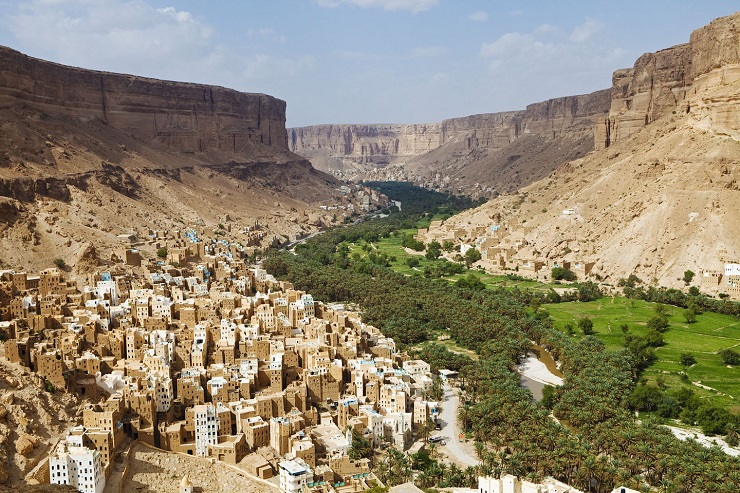
By Viktor Mikhin – New Eastern Outlook – 07.12.2022
As US officials travel the world lecturing everyone on human rights, that same world has accused Washington of being the number one human rights violator. Saudi Arabia’s war against Yemen, instigated and widely supported by the West and the United States in particular, is a prime example of this.
On March 25, 2015, the then Saudi Arabian Ambassador to the United States, Adel al-Jubeir, under pressure from the American ruling circles, declared war on Yemen. This was done specifically from the American capital, Washington. He said that the military action would be “aimed at protecting the people of Yemen,” adding that “the operation will be limited in nature.”
The alleged “limited in nature” war has already turned into eight years of almost daily aerial bombardments in the provinces of the Saudi kingdom’s southern neighbor. Prior to the war, Yemeni officials argued that Riyadh controlled nearly every sector of Yemeni society, from the economy to culture, and that the time had come for independence, sovereignty and territorial integrity. This war still brings innumerable hardships and misfortunes to the Yemenis, from which the “democratic” United States shamelessly capitalizes.
The list of US support for the Saudi war in Yemen is so long that senior Yemeni officials say it was America that started the war against their country, using the Saudis and other Gulf kingdoms as its “proxies.” Human rights organizations accuse other Western countries of complicity in what they call war crimes against the defenseless Yemeni people. But the same “democratic” United States remains conspicuously silent about this, forbidding not only its own, but also the Western media to write about this massacre in negative terms.
In March 2015, a Bacchanalia of American politicians, economists and financiers emerged, who all together and individually simply pitted Riyadh against Yemen. Even the American media did not hide this interest in unleashing another war on the Arabian Peninsula. First, there were huge orders from the Saudis for the purchase of a wide variety of weapons, and the American military-industrial complex was loaded to capacity, with work conducted in three shifts. It is quite natural that the prices for these weapons were very high, and the Saudis did not even discuss them, buying weapons in bulk for a future war. Second, having got stuck in this difficult war against the fraternal Yemeni people, Riyadh could not take any independent steps on the world stage, obediently trailing in the wake of Washington’s policy. And besides, the Washington administration was pleased that the Yemenis had been “taught a lesson” by the Saudis, avenging the unsuccessful drone war against Yemen that the Pentagon had unleashed and pursued for a whole decade.
When war broke out in Yemen, the US Department of Defense immediately provided hundreds of billions of dollars worth of weapons to the Saudi-led coalition. Among the many other types of support the US provided to the Saudis during the war was intelligence products to be targeted by US-made Saudi warplanes. The Pentagon has also provided military advice and logistical support, such as air-to-air refueling of military aircraft, while Washington said it had authorized US contractors to service Saudi military aircraft.
But the war did not go quite as America had planned. Washington simply did not expect the brave resistance of the Yemeni people and their staunch support for the popular revolution led by the Houthi movement (officially called Ansar Allah). The Pentagon had to urgently intervene in hostilities, supplying not only modern weapons, but also air defense systems. And yet, the Yemenis delivered several sensitive strikes against Saudi forces, including successfully shelling an oil field and refinery on Saudi territory. These actions led to a surge in oil prices and sowed panic among the ruling circles in Saudi Arabia.
But the war has created an extremely difficult situation for civilians living in the poorest country in Western Asia. Especially for Yemeni children who are suffering from untold humanitarian conditions. Hundreds of thousands of people have died during the hostilities, due to American-made bombs. Saudi pilots, trained in the US and the UK, using American aircraft at the prompting of American military intelligence dropped American bombs on Yemeni houses, schools, hospitals, funeral parlors and foreign humanitarian organizations, forcing them to withdraw staff from the country.
Here is what the Yemeni monitoring group, Entesaf Organization for Women and Child Rights, recently published (compared to data from other groups and institutions, these are very conservative numbers):
– 8,116 children have been killed and wounded since the beginning of the US-Saudi war;
– 5,559 Yemeni children have become disabled as a result of hostilities since the beginning of the war;
– 632,000 children in Yemen are suffering from acute malnutrition that threatens their lives with death during the current year;
– 2,400,000 children do not attend school, forming a generation that has completely lost education.
Entesaf has documented that the number of Yemeni people with disabilities has increased from three million before the start of the US-backed war to 4.5 million today. This highlights the consequences of Yemen’s total blockade (in addition to the war being waged on it), which has placed its airspace, sea and land under unprecedented blockade by the West.
The organization also drew attention to the increase in child labor in Yemen due to the aggression and total blockade, pointing out that 1.4 million child laborers are deprived of their most basic rights, and that about 34.3% of child laborers are between the ages of 5 and 17. These new occurrences of child labor during the war are four times the rate of child labor than before the start of the war in Yemen.
In the healthcare sector, it is reported that public and private hospitals across the country are facing the threat of closure due to the blockade and detention by the US and Saudi Arabia of ships with petroleum derivatives.
Entesaf holds the coalition led by the US and Saudi Arabia responsible for all crimes and violations against civilians, especially children, in the last eight years of the war, calling on the international community, global organizations, human rights and humanitarian organizations to be held accountable for violations and heinous massacres that occurred against civilians. The organization also called on the international community to take effective and positive action to end the aggression and blockade against the civilian population and form an independent international commission to investigate all crimes committed against the Yemeni people and to bring to justice all those found complicit.
In August 2018, munitions experts reported that the bomb fired by Saudi warplanes that killed dozens of Yemeni children on a school bus was a 500-pound (227 kg) laser-guided MK 82 bomb made by Lockheed Martin, one of America’s largest arms manufacturers. Photos of the shrapnel taken immediately after the attack were sent to CNN, and a cameraman working for the company filmed the shrapnel footage. Munitions experts confirmed that the numbers on it identified Lockheed Martin as its manufacturer and that this particular MK 82 was a Paveway, which is a laser-guided bomb.
The CNN report said some of the bodies were so mutilated that identification was impossible, leaving behind scraps of school textbooks, mangled metal and one backpack. Of the 51 people who died in the attack, 40 were children. Another 79 people were injured, 56 of them also children.
Among the tens of thousands of Saudi airstrikes, another one was documented by CNN – a market strike by a US-supplied MK 84 precision bomb that killed 97 Yemenis. The bomb was very similar to the one that targeted a funeral parlor in October 2016, killing hundreds and injuring innumerable others.
These are just a few of the tens of thousands of similar attacks using American weapons to intimidate the Yemeni people into submission. However, the country’s armed forces, women and children have shown unprecedented resilience in their struggle.
Also during the war in Yemen, Washington’s complete disregard for human rights and its attempts to deprive children of their right to life was demonstrated. This applies not only to Yemen, but to US wars around the world that have resulted in unprecedented suffering for children, from Cuba and Vietnam to Western Asia and beyond. And it is the same United States that claims to be the flag-bearer of human rights and uses this pretext for its own political agenda in attacking numerous other countries.
European firms ‘invest’ $171 billion in Israel’s illegal settlements: Report
The Cradle | December 6, 2022
According to a report published on 5 December by the advocacy group Don’t Buy into Occupation, investments by European firms in Israel’s illegal settlements increased by more than $30 billion since last year.
Almost 24 Palestinian, regional, and European organizations have joined forces to form the group, which aims to investigate and disclose any connections between European financial institutions and companies involved in illegal Israeli settlements.
In their second report, “Exposing the financial flows into illegal Israeli settlements,” the group discovered that between January 2019 and August 2022, 725 European financial institutions, including banks, asset managers, insurance companies, and pension funds, had financial ties to 50 firms that are directly associated with Israeli settlements. International law prohibits all squatters and settlements in Israel.
Loans and underwriting totaled $171.4 billion over the three years covered by the report. The figure represents a $30 billion increase over last year when European firms invested $141 billion in illegal settlements. European investors are also said to hold $115.5 billion in shares and bonds of companies benefiting from the settlements as of August 2022.
According to the advocacy organization, businesses directly or indirectly associated with Israeli settlements run a significant danger of being complicit in serious violations of international humanitarian law, war crimes, and crimes against humanity, as well as contributing to other human rights violations.
Meanwhile, on 8 November, the ‘Elad’ settlement association in occupied East Jerusalem received roughly $7.9 million to support illegal settlements in the Palestinian town of Silwan.
The Elad group pursues the declared objective of “Judaizing” East Jerusalem, including Silwan, as a part of its mission to expand a Jewish presence across the occupied city and to uproot the indigenous Palestinian population under the guise of archeological and touristic endeavors.
Israel has illegally expanded its territory since the 1967 Arab-Israeli war and built settlements in the occupied West Bank and East Jerusalem for over 700,000 settlers, in clear violation of international law.
Israel’s occupation of East Jerusalem is not recognized by most countries and is considered one of the biggest obstacles to peace, as Palestinians consider East Jerusalem the capital of their future state.
Israel calls on world leaders to oppose ICJ opinion on occupation
The Cradle | November 29, 2022
On 29 November, acting Israeli Prime Minister Yair Lapid sent a letter to more than 50 world leaders, demanding them to oppose a Palestinian bid at the United Nations regarding an advisory position of the International Court of Justice (ICJ) on Israel’s occupation of Palestine.
“This resolution is the result of a concerted effort to single out Israel, discredit our legitimate security concerns, and delegitimize our very existence,” Lapid said in the letter.
Among the recipients were the heads of government of the United Kingdom, France, Croatia, Romania, Bulgaria, the Netherlands, Slovakia, Latvia, Georgia, Brazil, Uruguay, Peru, and Vietnam.
With a majority of 98 votes in favor and 17 against, a committee of the UN General Assembly approved a resolution on 11 November requesting the ICJ to “urgently” issue a stance on the effects of Israel’s illegal occupation and colonization of Palestinian territories, The New Arab reported.
In the coming weeks, the resolution has to be voted on for a second time by the plenary of the General Assembly.
The acting Prime Minister stated that this resolution resulted from a “biased campaign” by the United Nations Human Rights Council in Geneva and its Commission of Inquiry, which have repeatedly denounced human rights abuses against the Palestinians.
According to Lapid, the “status of the disputed territory must be subject to direct negotiations between Israel and the Palestinian Authority.”
However, Israel has illegally expanded its territory since the 1967 Arab-Israeli war and built settlements in the occupied West Bank and East Jerusalem for over 700,000 settlers, clearly violating international law.
On 13 November, Israeli authorities announced their plans to construct 9,000 new illegal settlement units over the ruins of Palestine’s Jerusalem International Airport.
The settlement plan was initially submitted for discussion last year by the Israeli-run Jerusalem Municipality but then halted due to pressure from EU member states and several rights groups; however, the plan has been revived and is under review by the municipality.
On 8 November, the ‘Elad’ settlement association in occupied East Jerusalem received roughly $7.9 million to support illegal settlements in the Palestinian town of Silwan.
US-Turkiye brinkmanship won’t reach a point of no return
Conflict between Ankara and Washington over Syria will likely see the two drift apart, with Turkiye aligning more closely with Eurasian powers.
By MK Bhadrakumar | The Cradle | November 28, 2022
The series of airstrikes against Kurdish militants in northern Syria by Turkish jets in the past week come amid heightened concerns over Ankara’s threat to launch a ground operation. Such actions are not without precedent, yet have thus far achieved little in terms of eradicating the security challenges posed by US-backed Kurdish fighters.
Turkiye is today addressing an existential challenge to its national security and sovereignty, stemming from the United States’ quasi-alliance with Kurdish groups in Syria over the past decade – with whom Ankara has been battling for far longer.
However, this issue is playing out within a much broader regional backdrop today. Russia now has a permanent presence in Syria and is itself locked in an existential struggle with the US in Ukraine and the Black Sea. Iran-US tensions are also acute and President Joe Biden has openly called for the overthrow of the Iranian government.
Opposing the US occupation of Syria
Suffice to say, the Syrian government, which has demanded the removal of illegal US troops from one-third of its territory for years, enjoys a congruence of interests with Turkiye like never before, particularly in opposing the American military presence in Syria.
For the US, on the other hand, continued occupation of Syria is crucial in geopolitical terms, given that country’s geography on the northern tier of the West Asian region which borders Iran and the Caucasus to the north and east, Turkiye and the Black Sea to the north, Israel to the south, and the Eastern Mediterranean to the west.
All of that would have a great bearing on the outcome of the epochal struggle for the control of the Eurasian landmass – the Heartland and the Geographical Pivot of history as Sir Halford J. Mackinder once described it in evocative terms – by Washington and NATO to counter Russia’s resurgence and China’s rise.
China’s involvement in the Astana process
A curious detail at this point assumes larger-than-life significance in the period ahead: Beijing is messaging its interest in joining the Astana process on Syria. Moscow’s presidential envoy for Syria, Alexander Lavrentiev, stated recently that Russia is convinced that China’s involvement as an observer in the Astana format would be valuable.
Interestingly, Lavrentiev was speaking after the 19th international meeting on Syria in the Astana format with his counterparts from Turkiye and Iran on November 15.
“We believe that China’s participation in the Astana format would be very useful. Of course, we proposed this option. The Iranians agreed with this, while the Turkish side is considering it and has taken a pause before making a decision,” he explained.
Lavrentiev noted that Beijing could provide “some assistance as part of the Syrian settlement, improve the lives of Syrian citizens, and in reconstruction.”
The Chinese Foreign Ministry promptly responded to the Russian invitation, confirming that Beijing “attaches great importance to this format and is ready to work with all its participants to restore peace and stability in Syria.”
Lavrentiev didn’t miss the opportunity to taunt Washington, saying: “Of course, I believe that if the Americans returned to the Astana format, that would also be very useful. If two countries like the United States and China were present as observers in the Astana format, that would be a very good step, a good signal for the international community, and in general in the direction of the Syrian settlement.”
However, there is no question of the Biden Administration working with Russia, Turkiye, Iran, and China on a Syrian settlement at the present time. Reports keep appearing that the US has been transferring ISIS fighters from Syria to Ukraine to fight Russian forces, and to Afghanistan to stir up the pot in Central Asia.
The Astana troika are in unison, demanding the departure of US occupation forces from Syria. Moscow knows fully well too that the US hopes to work toward shuttering Russian bases in Syria.
Turkiye’s pursuit of the US’s Kurdish allies
In fact, the aerial operations in Syria that Ankara ordered last Sunday followed a terrorist strike in Istanbul a week ago by Kurdish separatists, killing at least six people and injuring more than 80 others. President Recep Tayyip Erdogan has said the air strikes were “just the beginning” and that his Armed Forces “will topple the terrorists by land at the most convenient time.”
Turkish security agencies have nabbed the bomber – a Syrian woman named Ahlam Albashir who was allegedly trained by the US military. White House Press Secretary Karine Jean-Pierre hurriedly issued a statement to calm that storm: “The United States strongly condemns the act of violence that took place today in Istanbul, Turkiye.”
But Turkiye’s Interior Minister Suleyman Soylu reacted caustically to the American missive, saying that Washington’s condolence message was like “a killer being the first to show up at a crime scene.”
Conceivably, with Erdogan facing a crucial election in the coming months, the Biden Administration is pulling out all the stops to prevent the ruling AKP party from winning another mandate to rule Turkiye.
The Turkish “swing state” is crucial for US plans
The US feels exasperated with Erdogan for pushing ahead with independent foreign policies that could see Turkiye joining the BRICS and Shanghai Cooperation Organization (SCO), and deepening his strategic ties with Russia and China – and most important, steadily mark distance from Washington and NATO’s containment strategies against Russia and China.
Turkiye has become a critically important “swing state” at this stage in the post-cold war era. Erdogan’s effort to bolster the country’s strategic autonomy lethally undermines the western strategy to impose its global hegemony.
While Erdogan keep’s Washington guessing about his next move, his airstrikes in northern Syria hit targets very close to US bases there. The Pentagon has warned that the strikes threaten the safety of American military personnel. The Pentagon statement represents the strongest condemnation by the US of its NATO ally in recent times.
Russian diplomacy forestalls Syria ground incursion
Unsurprisingly, Russia is acting as a moderating influence on Turkiye. Lavrentyev said last Wednesday that Moscow has tried to convince Ankara to “refrain from conducting full-scale ground operations” inside Syria. The Russian interest lies in encouraging Erdogan to engage with Syrian President Bashar al-Assad and pool their efforts to curb the activities of Kurdish terrorists.
Indeed, the probability is low that Erdogan will order ground incursions into Syria. This also seems to be the assessment of local Kurdish groups.
US-backed Syrian Democratic Forces (SDF) Commander Mazloum Kobane Abdi, who is the Pentagon’s key interlocutor in northern Syria, has been quoted as saying that while he has received intelligence that Turkiye has alerted its local proxies to prepare for a ground offensive, the Biden administration could still convince Erdogan to back off.
That said, Erdogan can make things difficult for the US and eventually even force the evacuation of its estimated 900 military troops, shutting down the Pentagon’s lucrative oil smuggling operation in Syria and abandoning its training camps for ex-ISIS fighters in northern and eastern Syria.
But the US is unlikely to take matters to a point of no return. A retrenchment in Syria at the present juncture will weaken the US regional strategies, not only in West Asia, but also in the adjoining Black Sea region and the Caucasus, in the southern periphery of the Eurasian landmass.
From Erdogan’s perspective too, it is not in his interest to burn bridges with the west. A bridge in disrepair remains a bridge nonetheless, which would have its selective uses for Erdogan in the times of multipolarity that lie ahead.
Reneging on Abraham Accords, Netanyahu authorises ‘soft annexation’ of West Bank
MEMO | November 24, 2022
Israel’s designate Prime Minister, Benjamin Netanyahu, has been accused of breaking his agreement with Arab countries that normalised relations with the Occupation State during the current coalition negotiations. The Likud leader is reported to have agreed to move the civil administration in the West Bank from Israeli Ministry of Defence to the Ministry of Finance to appease far-right member of the Knesset, Bezalel Smotrich.
Religious Zionism will be handed the civil administration portfolio, according to Haaretz. The Ministry is hugely significant for Palestinians, as it oversees coordination of Israel’s activity in the Occupied West Bank. The agreement was reached as part of the ongoing coalition talks between Netanyahu’s Likud and Religious Zionism, which stalled once more after the parties failed to reach agreement on several other key issues.
Though details of the talks are yet to be disclosed, Likud is said to have acceded to Religious Zionism’s demand for some of the powers of the civil administration, which is under the Defence Ministry. The deal will mean that Smotrich, who is an advocate of Israel’s illegal settlement enterprise, will be handed power in approving Palestinian construction plans and settlement construction in Area C. Decisions around illegal outposts, illegal construction and work permits for Palestinians falls under the remit of the administration.
The biggest prize for Religious Zionism, which became the third largest party with 14 Knesset seats, is to seize control over affairs in the Occupied West Bank. Although past Israeli governments showed reluctance to annex the territory completely over concerns around backlash from the international community, Religious Zionism has no such fear.
Officials in Religious Zionism claimed, Wednesday, that the Party acceded to Netanyahu’s requests to forgo the defence portfolio in exchange for the Finance Ministry. The condition for the agreement is that the responsibility for settlements and the civil administration is transferred from the Ministry of Defence to the Ministry of Finance. Under International law, the West Bank is occupied, which means that the military of the occupying power oversees the territory.
Netanyahu has been accused of reneging on his deal with the Arab States by agreeing to the transfer of the civil administration. “Moving the civil administration in the West Bank from Israeli Ministry of Defence to the Ministry of Finance will be a ‘soft annexation’ of the WB & violation of the commitment Netanyahu gave the US & UAE to suspend his annexation plan,” said Israeli journalist, Barak Ravid on Twitter. “It could harm the Israel-UAE peace treaty,” Ravid added, referring to 2020 normalisation deal.
Referred to as the “Abraham Accords,” the UAE hailed the deal as victory for the two-state solution. Abu Dhabi defended its decision to normalise relations with the Occupation State by insisting that it had prevented Israel from annexing the West Bank, a threat which Netanyahu, who was the Prime Minister at the time, had issued.
It is not clear what steps the UAE will take in response. UAE Foreign Minister, Sheikh Abdullah bin Zayed (ABZ) raised his concerns over Religious Zionism becoming part of a coalition with Netanyahu, during a recent visit to Israel.
Featured Video

Trita Parsi: Israel Set a Trap for Total War in the Region
or go to
Aletho News Archives – Video-Images
From the Archive
Zionism’s Violent Legacy
By Donald Neff | Washington Report On Middle East Affairs | January 1996
On January 4, 1948, Jewish terrorists drove a truck loaded with explosives into the center of the all Arab city of Jaffa and detonated it, killing 26 and wounding around 100 Palestinian men, women and children.[1] The attack was the work of the Irgun Zvai Leumi – the “National Military Organization,” also known by the Hebrew letters Etzel – the largest Jewish terrorist group in Palestine. The Irgun was headed by Revisionist Zionist Menachem Begin and had been killing and maiming Arabs, Britons and even Jews for the previous ten years in its efforts to establish a Jewish state.
This terror campaign meant that at the core of Revisionist Zionism there existed a philosophical embrace of violence. … continue
Blog Roll
 Aletho News
- Trita Parsi: Israel Set a Trap for Total War in the Region
- Trump’s Iran war is on an Israeli leash
- Saudi oil boss issues global supply warning
- Riyadh Says Its Oil System Is Intact. The Numbers Say Otherwise.
- Trump and Netanyahu Want to “Finish the Job” on Iran
- US ‘one-sided dictation’ not Iran’s beliefs makes rational talks impossible: Baghaei
- Iran’s Next Strike May Not Explode. It Could Shut You Down /Col Doug Macgregor
- Iran: US political targets legitimate if assassinations return
- Iraq shuts key border crossing with Iran under US pressure: Report
- Undersea Internet cables could be targeted in retaliation for attacks on Iran: IRGC deputy chief
- If Americans Knew
- The Israel Lobby’s Changing Fortunes
- AIPAC has become such a political liability that it’s shifting to a more “nimble” approach to buying politicians
- At least 160 Israeli settler attacks in 2 weeks
- Will Gaza’s Ancient Christian Community Disappear Forever?
- Israel’s vision of regional security rests on keeping Arab states weak
- Heidi Levine recounts how Palestinian youths helped save her in settler attack
- DAILY UPDATE: Latest essential news on Palestine, Israel, & region
- Trump’s Intensifying Sabotage of the ICC, for Israel’s Sake
- Israeli military detain US and UK volunteers in West Bank including Democratic NY politician Brad Lander
- Americans at National Conservatism Conference held in Israel this year criticize Israel
- No Tricks Zone
- E-Cars Reduce CO2 Emissions By Only 41% Compared To Internal Combustion Engine Vehicles
- Predictions Made By Renowned Climate Professor Over Past Decades Have Been Proven To Be Poor
- New Study Suggests Large Regions Of The Pacific Ocean Have Been Cooling For The Last 80 Years
- Germany’s Green Energy Debacle: High Energy Costs Force Kahla Porzellan to Close After 182 Years!
- New Study: 50 Years Of The Most Aggressive ‘Net Zero’ Policies Can Only Affect The Global Climate By 0.03°C
- US September “Heat” Was No Record…Many Records Set Decades Ago
- Latest European Green Energy Debacle; Portugal’s Largest Flagship Solar Park Insolvent!
- Green Energy Debacle: German Expert Professor Fritz Vahrenholt Warns Of Severe Economic And Social Consequences
- Two More Paleo Reconstructions Affirm Meters-Higher Sea Levels Across Ireland, Brazil 7000-6000 Years Ago
- New Study: Earth And Venus Surface Warmth Largely Explained By Convection And Lapse Rate, Not CO2 Or Radiation

