Annexing the Aquifers: Israel and the Water Crisis in Occupied Palestine
By Fareed Taamallah | Palestine Chronicle | May 28, 2020
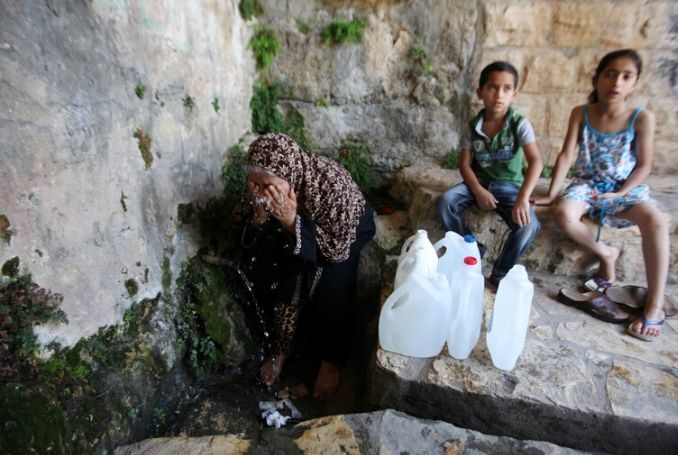
Last week, the Palestinian Water Authority blasted Israel for significantly reducing the amount of water allotted to the West Bank. “We are facing this crisis as we enter the summer season, a time of the year when people are usually in need of more, not less water,” PWA leader Mazen Ghneim was quoted as saying.
In my neighborhood in Ramallah, every year during the summer months, we hardly have water in the pipes. Water runs only one day a week. So, all the households must follow the water distribution schedule to plan their house activities such as doing the laundry and house cleaning. Some Palestinian communities in the West Bank are linked to “joint” water networks that serve illegal Israeli settlers. During the dry summer months, water valves leading to the adjacent Palestinian communities are routinely shut off by Israeli authorities, so that the settlers do not suffer water shortages.
The water shortage in the Palestinian territories is not a nature-related water crisis, but rather a result of the Israeli occupation which exploits over 85% of the water resources.
Facts and Figures
Israel controls the main three trans-boundaries aquifers in the occupied Palestinian territories. The first and the biggest one is the West Bank (mountains) aquifer which is fed by rainfall and generates 679 mcm of water per year. The second is the Jordan river which provides Israel with an estimated 450 mcm per year. Palestinians are denied access and supply of its water. The third is the coastal aquifer which generates 450 mcm of water for Israel and 55 mcm for Gaza.
Palestine has a good precipitation rate. Ramallah, for instance, has an annual rainfall average of 615 millimeters which is almost as much as London at 620 mm.
According to the Palestinian water authority report of 2012, around 784 mcm of rainfall is estimated to have recharged the groundwater systems in the West Bank and the Gaza Strip. However, Palestinians are allocated only 375 mcm of that groundwater, while Israel consumes 2,346 mcm annually.
The Oslo Agreement
The water problem started from the beginning of the Israeli occupation of Palestine but was exacerbated with the Oslo II interim agreement between the PLO and the Israeli government in 1995. The Oslo Agreement stipulated “the equitable utilization of joint water resources for implementation in and beyond the interim period.” But in reality, this has never happened.
The agreement which was supposed to be an interim period of five years bounded the development of Palestinian water resources and was framed on the assumption that Palestinian water needs were 70–80 mcm per year and that the interim water development must be managed through a Palestinian-Israeli mechanism. The topics of ‘common interest’ (water being one) would be further delineated under the permanent status negotiations.
The failure to reach a permanent agreement has meant the inequitable distribution of the West Bank groundwater resources with 15% allocated to the Palestinians and 85% to Israel.
As indicated in the Oslo Agreement, a Joint Water Committee (JWC) was established to oversee all water and wastewater related projects in the West Bank. JWC is made up of an equal number of representatives of Israel and the Palestinian Authority, respectively, and decisions are made by consensus. This gave Israel a veto power over all Palestinian water resource projects and blocked any request by the Palestinians to drill a new well. Wells built or rehabilitated without Israeli-issued permits are systematically destroyed by the Israeli occupation forces.
Water Apartheid
While the Palestinian communities are facing drought and water shortages, the Israeli settlements – located in the same geographical area – are enjoying an abundance of water supplies, allowing settlers to fill their swimming pools and irrigate their gardens and fields. The lack of access to adequate quantities of water necessary for livestock herding and food production leaves Bedouins, livestock owners and farmers particularly vulnerable.
Israeli agricultural settlements in the West Bank, particularly those in the Jordan Valley, enjoy up to 6 times the amount of water of the nearby Palestinian communities. In the Palestinian town of Tubas, the consumption rate is 30 liters per person per day. However, residents of the nearby illegal Israeli settlement of Beda’ot, consume around 401 liters per day, according to B’Tselem.
While the Palestinian population has doubled, water availability has decreased. According to the World Bank report of 2018 “With the West Bank and Gaza population of approximately 4.8 million growing at an average annual rate of 2.8 percent, the domestic supply gap is projected to be about 152 and 135 million cubic meters respectively”.
Israeli hydro-hegemony has left Palestinians with a deficit water budget. They have been forced to purchase from Israel around a quarter of domestic water supplies to make up for this deficit.
According to the Palestinian Bureau of Statistics, the daily per capita water consumption rate is around 88 liters. By comparison, the daily per capita water consumption in Israel is 257 liters. The World Health Organization (WHO) recommends 100 liters of water per capita per day as a minimum. Palestinian consumption is less than the minimum.
In the Gaza Strip, the water situation is even worse. The severe lack of water caused by the Israeli brutal blockade since 2007, has led to a heavy reliance on the underlying portion of the Coastal aquifer as Gaza’s only water supply.
The 2 million inhabitants extracted about 180 mcm in 2017, but this quantity is obtained via unsafe pumping that jeopardizes the sustainability of the source, while the total recharge is only one-third of extraction. The direct consequences of over pumping are seawater intrusion and uplift of the deep brine water; as a result, 97% of the water is undrinkable and does not match WHO quality standards of accepted guidelines for potable water resources.
Annexation Plan
Israel is controlling the two main Palestinian water resources in the West Bank (the Jordan River basin in the east and the western mountain aquifer) which supply Israel with about 900 million cubic meters of water annually.
Through the annexation of the West Bank areas expected this summer, Israel aims to keep the West Bank aquifers behind the new Israeli borders by retaining control of the settlement blocks adjacent to the basins, in particular, the Jordan Valley and the Salfit area where my hometown of Qira is located.
That annexation will perpetuate the high Israeli water-consumption levels while denying basic Palestinian needs and force Palestinians to depend on Israel for water, thus preserving the status quo of a dramatic unjust division of water resources, dimming any hope for a viable Palestinian state and peace in the region.
– Fareed Taamallah is a Palestinian journalist, a farmer, and a political activist based in Ramallah.
Netanyahu on Annexation Plan: Palestinians Will Offer Concession, Not ‘Israel’
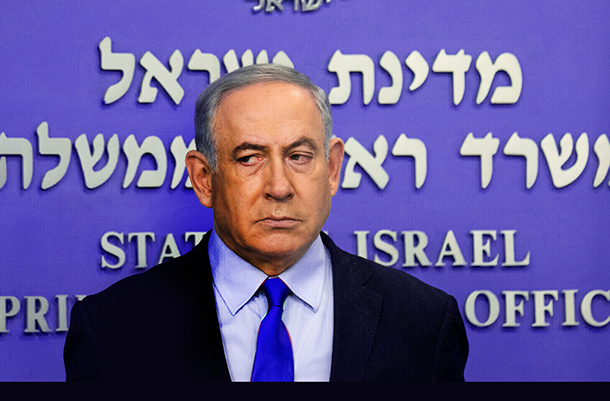
Israeli prime minister Benjamin Netanyahu holds a press conference at the Prime Ministers office in Jerusalem on March 12, 2020. Photo by Olivier Fitoussi/Flash90
Al-Manar | May 28, 2020
Benjamin Netanyahu says the Palestinians are the side who will offer concession as the Israeli PM eyes implementing the annexation plan of West Bank and Jordan Valley.
“Only if the Palestinians agree that Israel has security and control throughout the territory, they will receive their own entity that (US President Donald) Trump defines as a state,” Netanyahu told Israel Hayom in an interview.
“We are not urged to offer concessions, but the Palestinians are those who will do so,” the Israeli PM added.
Meanwhile, he said that “attempts to set free Israelis held in Gaza are underway,” but noted that he “will not release Palestinian prisoners who “have blood on their hands.”
Canada’s record on Palestinian rights should disqualify it from Security Council race
By Yves Engler · May 21, 2020
Canada’s anti-Palestinian voting record should disqualify it from a seat on the UN Security Council. Hopefully when member states pick amongst Ireland, Norway and Canada for the two Western Europe and Others positions on the Security Council they consider the international body’s responsibility to Palestinians. If they do it will be a rebuke to Canada’s embarrassing history of institutional racism against the Palestinian people.
Compared to Canada, Ireland and Norway have far better records on upholding Palestinian rights at the UN. According to research compiled by Karen Rodman of Just Peace Advocates, since 2000 Canada has voted against 166 General Assembly resolutions critical of Israel’s treatment of Palestinians. Ireland and Norway haven’t voted against any of these resolutions. Additionally, Ireland and Norway have voted yes 251 and 249 times respectively on resolutions related to Palestinian rights during this period. Canada has managed 87 yes votes, but only two since 2010.
In maybe the most egregious example of Ottawa being offside with world opinion, Canada sided with the US, Israel and some tiny Pacific island states in opposing a UN resolution supporting Palestinian statehood that was backed by 176 nations in December 2017.
The only time since the end of the colonial period Canada has somewhat aligned with international opinion regarding Palestinian rights was in the 1990s and early 2000s under Jean Chretien. In the early 1990s Norman Finkelstein labeled Canada “probably Israel’s staunchest ally after the United States at the United Nations” while a 1983 Globe and Mail article referred to “Canada’s position as Israel’s No. 2 friend at the UN.” In the early 1980s Ottawa sided with Israel on a spate of UN resolutions despite near unanimity of international opposition. In July 1980 Canada voted with the US and Israel (nine European countries abstained) against a resolution calling on Israel to withdraw completely and unconditionally from all Palestinian and Arab territories occupied since 1967. On December 11, 1982 the Globe and Mail reported that the “United Nations General Assembly called yesterday for the creation of an independent Palestinian state and for Israel’s unconditional withdrawal from territories it occupied in 1967. Israel, Canada, the United States and Costa Rica cast the only negative votes as the assembly passed the appeal by 113 votes to 4, with 23 abstentions.”
Canada’s voting record on Palestinian rights at the UN is an abomination. It’s made worse by the fact that Canada contributed significantly to the international body’s role in dispossessing Palestinians. Canadian officials were important players in the UN negotiations to create a Jewish state on Palestinian land. Lester Pearson promoted the Zionist cause in two different committees dealing with the British Mandate of Palestine. After moving assiduously for a US and Soviet accord on the anti-Palestinian partition plan he was dubbed “Lord Balfour of Canada” by Zionist groups. Canada’s representative on the UN Special Committee on Palestine, Supreme Court justice Ivan C. Rand, is considered the lead architect of the partition plan.
Despite owning less than seven percent of the land and making up a third of the population, the UN partition plan gave the Zionist movement 55% of Palestine. A huge boost to the Zionists’ desire for an ethnically based state, it contributed to the displacement of at least 700,000 Palestinians. Scholar Walid Khalidi complained that UN (partition) Resolution 181 was “a hasty act of granting half of Palestine to an ideological movement that declared openly already in the 1930s its wish to de-Arabise Palestine.” Palestinians statelessness seven decades later remains a stain on the UN.
Over the past year the Canadian government has devoted significant energy and resources to winning a seat on the Security Council. In recent days, Canada’s foreign affairs minister has taken to calling individual UN ambassadors in the hopes of convincing them to vote for Canada.
To combat this pressure, a small group of Palestine solidarity activists have organized an open letter drawing attention to Canada’s anti-Palestinian voting record. Signed by dozens of organizations, the letter will be delivered to all UN ambassadors in the hope that some of them will cast their ballots with an eye to the UN’s responsibility to Palestinians.
Please sign and share this petition against Canada’s Security Council bid: https://www.foreignpolicy.ca/petition
Palestinian president ends agreements with Israel, US over annexation
Press TV – May 20, 2020
Palestinian President Mahmoud Abbas has declared an end to all agreements with Israel and the United States in response to an Israeli regime’s plan to annex parts of the occupied West Bank.
Abbas announced in a statement on Tuesday that he intends not to abide by security agreements and understandings signed between Tel Aviv and the Palestine Liberation Organization (PLO) as well as cooperation with the United States.
“The Palestine Liberation Organization and the state of Palestine are absolved, as of today, of all the agreements and understandings with the American and Israeli governments and of all the commitments based on these understandings and agreements, including the security ones,” Abbas said in the statement.
The Palestinian president stressed that the move was in reaction to the Israeli regime’s plans to annex parts of the occupied West Bank and the Jordan Valley, which had been envisaged in US President Donald Trump’s so-called Deal of the Century unveiled earlier this year.
“We place full responsibility on the US administration for the occupation of the Palestinian people, and consider it a key partner in Israel’s actions and decisions against the rights of the Palestinian people,” Abbas underlined.
Earlier in the day, Germany and the Palestinian Authority released a joint statement expressing “grave concern” over Israel’s declared intention to proceed with the annexation plan.
Israeli Prime Minister Benjamin Netanyahu, who is facing a number of criminal indictments, has time and again announced that he would start plans for annexing more areas in the occupied West Bank on July 1, in accordance with Trump’s peace scheme, further infuriating Palestinians.
The American president officially unveiled his scheme, the so-called deal of the century, in January at the White House with Netanyahu on his side, while Palestinian representatives were not invited.
The proposal gives in to Israel’s demands while creating a Palestinian state with limited control over its own security and borders, enshrining the occupied Jerusalem al-Quds as “Israel’s undivided capital” and allowing the regime to annex settlements in the West Bank and the Jordan Valley.
Trump’s highly provocative scheme, which further denies the right of return for Palestinian refugees to their homeland, is also in complete disregard of UN Security Council resolutions and rejected by the vast majority of the international community.
Palestinians want the West Bank as part of a future independent Palestinian state with East Jerusalem al-Quds as its capital. But Israel’s aggressive settlement expansion and annexation plans have dealt a serious blow to any prospects of peace.
The last round of Israeli-Palestinian talks collapsed in 2014. Among the major sticking points in those negotiations was Israel’s continued settlement expansion on Palestinian territories.
More than 600,000 Israelis live in over 230 settlements built since the 1967 Israeli occupation of the Palestinian territories of the West Bank and East Jerusalem al-Quds.
News Stories Avoid Naming Israel
By Philip Giraldi • Unz Review • May 19, 2020
There are two stories that seem to have been under-reported in the past couple of weeks. The first involves Michael Flynn’s dealings with the Russian United Nations Ambassador Sergey Kislyak. And the second describes yet another bit of espionage conducted by a foreign country directed against the United States. Both stories involve the State of Israel.
The bigger story is, of course, the dismissal by Attorney General William Barr of the criminal charges against former National Security Advisor General Michael Flynn based on malfeasance by the FBI investigators. The curious aspect of the story as it is being related by the mainstream media is that it repeatedly refers to Flynn as having unauthorized contacts with the Russian Ambassador and then having lied about it. The implication is that there was something decidedly shady about Flynn talking to the Russians and that the Russians were up to something.
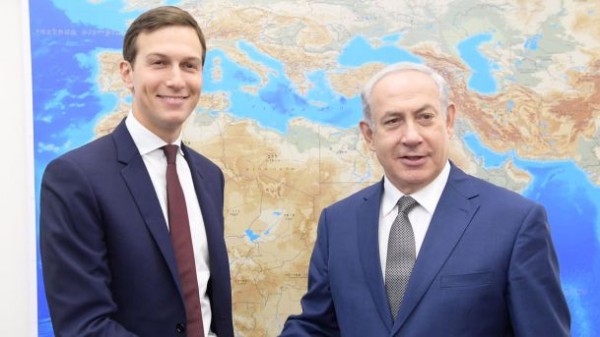
In reality, the part left out of the story is that the phone call to Kislyak on December 22, 2016, was made by Flynn at the direction of Jared Kushner, who in turn had been approached by Israeli Prime Minister Benjamin Netanyahu. Netanyahu had learned that the Obama Administrating was going to abstain on a United Nations vote condemning the Israeli settlements policy, meaning that for the first time in years a U.N. resolution critical of Israel would pass without drawing a U.S. veto. Kushner, acting for Netanyahu, asked Flynn to contact each delegate from the various countries on the Security Council to delay or kill the resolution. Flynn agreed to do so, which included a call to the Russians. Kislyak took the call but did not agree to veto Security Council Resolution 2334, which passed unanimously on December 23rd.
In taking the phone calls from a soon-to-be senior American official who would within weeks be part of a new administration in Washington, the Russians did nothing wrong, but the media is acting like there was some kind of Kremlin conspiracy seeking to undermine U.S. democracy. It would not be inappropriate to have some conversations with an incoming government team and Kislyak also did nothing that might be regarded as particularly responsive to Team Trump overtures since he voted contrary to Flynn’s request.
The phone call made at the request of Israel was neither benign or ethical as the Barack Administration was still in power and managing the nation’s foreign policy. At the time, son-in-law Jared Kushner was Trump’s point man on the Middle East. He and his family have extensive ties both to Israel and to Netanyahu personally, to include Netanyahu’s staying at the Kushner family home in New York. The Kushner Family Foundation has funded some of Israel’s illegal settlements and also a number of conservative political groups in that country. Jared has served as a director of that foundation and it is reported that he failed to disclose the relationship when he filled out his background investigation sheet for a security clearance. All of which suggests that if you are looking for possible foreign government collusion with the incoming Trumpsters, look no further.
And it should be observed that the Israelis were not exactly shy about their disapproval of Obama and their willingness to express their views to the incoming Trump. Kushner went far beyond merely disagreeing over an aspect of foreign policy as he was actively trying to clandestinely subvert and reverse a decision made by his own legally constituted government. His closeness to Netanyahu made him, in intelligence terms, a quite likely Israeli government agent of influence, even if he didn’t quite see himself that way.
Kushner’s actions, as well as those of Flynn, would most certainly have been covered by the Logan Act of 1799, which bars private citizens from negotiating with foreign governments on behalf of the United States and also could be construed as a “conspiracy against the United States.” But in spite of all that the investigation went after Flynn instead of Kushner. As Kushner is Jewish and certainly could be accused of dual loyalty in extremis, that part of the story obviously makes many in the U.S. Establishment and media uncomfortable, so it was and continues to be both ignored and expunged from the record as quickly as possible.
The second story, which has basically been made to disappear, relates to spying by Israel against critics in the United States. The revelation that Israel was again using its telecommunications skills to spy on foreigners came from an Oakland California federal court lawsuit initiated by Facebook (FB) against the Israeli surveillance technology company NSO Group. FB claimed that NSO has been using servers located in the United States to infect with spyware hundreds of smartphones being used by attorneys, journalists, human rights activists, critics of Israel and even of government officials. NSO allegedly used WhatsApp, a messaging app owned by FB, to hack into the phones and install malware that would enable the company to monitor what was going on with the devices. It did so by employing networks of remote servers located in California to enter the accounts.
NSO has inevitably claimed that they do indeed provide spyware, but that it is sold to clients who themselves operate it with the “advice and technical support to assist customers in setting up” but it also promotes its products as being “used to stop terrorism, curb violent crime, and save lives.” It also asserts that its software cannot be used against U.S. phone numbers.
Facebook, which did its own extensive research into NSO activity, alleges that NSO rented a Los Angeles-based server from a U.S. company called QuadraNet that it then used to launch 720 hacks on smartphones and other devices. It further claims in the court filing that the company reverse-engineering WhatsApp, using an program that it developed to access WhatsApp’s servers and deploy “its spyware against approximately 1,400 targets” before “…covertly transmit[ting] malicious code through WhatsApp servers and inject[ing]” spyware into telephones without the knowledge of the owners.”
The filing goes on to assert that the “Defendants had no authority to access WhatsApp’s servers with an imposter program, manipulate network settings, and commandeer the servers to attack WhatsApp users. That invasion of WhatsApp’s servers and users’ devices constitutes unlawful computer hacking.”
NSO, which is largely staffed by former (sic) Israeli intelligence officers, had previously been in the news for its proprietary spyware known as Pegasus, which “can gather information about a mobile phone’s location, access its camera, microphone and internal hard drive, and covertly record emails, phone calls and text messages.” Pegasus was reportedly used in the killing of Saudi dissident journalist Adnan Kashoggi in Istanbul last year and it has more recently been suggested as a resource for tracking coronavirus distance violators. Outside experts have accused the company of selling its technology and expertise to countries that have used it to spy on dissidents, journalists and other critics.
Israel routinely exploits the access provided by its telecommunications industry to spy on the host countries where those companies operate. The companies themselves report regularly back to Mossad contacts and the technology they provide routinely has a “backdoor” for secretly accessing the information accessible through the software. In fact, Israel conducts espionage and influence operations both directly and through proxies against the United States more aggressively than any other “friendly” country, which once upon a time included being able to tap into the “secure” White House phones used by Bill Clinton to speak with Monica Lewinsky.
Last September, it was revealed that the placement of technical surveillance devices by Israel in Washington D.C. was clearly intended to target cellphone communications to and from the Trump White House. As the president frequently chats with top aides and friends on non-secure phones, the operation sought to pick up conversations involving Trump with the expectation that the security-averse president would say things off the record that might be considered top secret.
A Politico report detailed how “miniature surveillance devices” referred to as “Stingrays” were used to imitate regular cell phone towers to fool phones being used nearby into providing information on their locations and identities. According to the article, the devices are referred to by technicians as “international mobile subscriber identity-catchers or IMSI-catchers, they also can capture the contents of calls and data use.”
Over one year ago, government security agencies discovered the electronic footprints that indicated the presence of the surveillance devices near the White House. Forensic analysis involved dismantling the devices to let them “tell you a little about their history, where the parts and pieces come from, how old are they, who had access to them, and that will help get you to what the origins are.” One source observed afterwards that “It was pretty clear that the Israelis were responsible.”
So two significant stories currently making the rounds have been bowdlerized and disappeared to make the Israeli role in manipulating and spying against the United States go away. They are only two of many stories framed by a Zionist dominated media to control the narrative in a way favorable to the Jewish state. One would think that having a president of the United States who is the most pro-Israel ever, which is saying a great deal in and of itself, would be enough, but unfortunately when dealing with folks like Benjamin Netanyahu there can never be any restraint when dealing with the “useful idiots” in Washington.
Philip M. Giraldi, Ph.D., is Executive Director of the Council for the National Interest, a 501(c)3 tax deductible educational foundation (Federal ID Number #52-1739023) that seeks a more interests-based U.S. foreign policy in the Middle East. Website is https://councilforthenationalinterest.org, address is P.O. Box 2157, Purcellville VA 20134 and its email is inform@cnionline.org.
US, other foreign forces must leave Syria, respect its sovereignty: Iran

Press TV – May 18, 2020
Iran’s permanent ambassador to the United Nations says the US must end its illegal occupation of Syria and stop shielding terrorist groups under the mask of fighting terrorism.
Majid Takht Ravanchi made the remarks in a Monday address to a virtual meeting of United Nations Security Council dubbed “Middle East: Syria – Political”.
“Sovereignty, political independence, unity and territorial integrity of Syria must be fully respected by all, and accordingly, all foreign forces whose presence is not permitted by the Syrian Government must leave the Syrian territory,” the Iranian diplomat said.
“In this regard, the living example is the occupation of certain parts of Syria by the US forces who continue to support and shield terrorist groups under the mask of combatting terrorism,” he went on to say.
He further rejected any separatist agendas as well as “any and all attempts to create new realities on the ground, including through illegitimate self-rule initiatives.”
Takht Ravanchi slammed the “illegal” occupation of Syria’s Golan Heights by Israel, and said the recognition by the US of its annexation to Israel is null and void.
“Condemning such unlawful irresponsible act, we stress that Golan is and will remain a part and parcel of the Syrian territory,” he added.
Israel seized the Golan Heights from Syria after the 1967 Six-Day War and later occupied it in a move that has never been recognized by the international community. However, in a highly provocative move on March 25 last year US President Donald Trump signed a proclamation recognizing Israel’s “sovereignty” over the Syrian territory.
Damascus strongly condemned the move and called it a “blatant attack on the sovereignty and territorial integrity” of Syria.
Since the onset of the occupation, Tel Aviv has been building dozens of settlements in the region and has used it to carry out a number of military operations against the Arab country.
In his Monday speech, Takht Ravanchi also condemned Israel’s aggressions against Syria as a “gross violation of international law and the UN Charter”, stressing that the Syrian Government has a sovereign right to decide how and when to exercise its inherent right to individual or collective self-defense.
“Such aggressions must come to an end,” he urged.
Israel frequently attacks military targets inside Syria in what is considered as an attempt to prop up foreign-backed Takfiri terrorist groups that have been suffering heavy defeats against Syrian government forces.
The Damascus government has several times complained to the UN about Israel’s illegal strikes on Syria.
Profits before People: Spanish Company CAF to Join Illegal Construction around Occupied Jerusalem
By Santiago González Vallejo | Palestine Chronicle | May 18, 2020
The controversial Israeli expansion project of the red tram or light rail line that will run through the occupied Palestinian area around Jerusalem is now entering a new phase.
Both the mayor of Jerusalem, Moshe Lion, and the Israeli infrastructure authorities seem to consider that the forced lockdown and the consequent reduction of activity as a result of the COVID-19 pandemic is an opportunity to speed up these works. Thus, their planning bodies have been instructed to accelerate the project, which was awarded to the JNET consortium.
JNET is a consortium made up of the Israeli engineering company, Shapir, and the Spanish company CAF, based in Beasain, in the Basque Country. Shapir has been identified by the United Nations Human Rights Council as one of 112 companies profiting from illegal occupation.
The JNET consortium is in charge of executing the extension of both the existing red line and the planned new blue tram line, which will cover also occupied Palestinian territories. Both projects have already been pre-planned, so there is now a go-ahead to accelerate the works in this new scenario, justified by the decrease in road traffic that will make it easier to work in relevant crossroads in the settlements.
The work will include both the excavation and laying of the railway infrastructure, as well as communications infrastructure, and possibly the laying of rails. The construction would be carried out in the Neve Yaakov and Pisgat Ze’ev settlements along Arthur Hanke and Henrietta Szold streets; and from the other end, they will proceed from Herzl Street on until the Ora crossing, and then to Hadassah Ein Kerem in the following stage.
Originally, the construction in these areas was scheduled to begin last October. According to the new plans, the work at the crossings will commence in the coming weeks, with the hope to advance construction as much as possible before the end of the lockdown, thus before regular traffic is restored.
Last February, Israel decided to reach a termination agreement with the former concessionaire of the Red CityPass tram line to take control of it and recover the concession, upon payment of compensations of around 420 million euros, awarding management control to the new JNET consortium.
Among the beneficiaries of this operation is the company Alsthom (a competitor of CAF) that held 50% of the CityPass shares, and which – in addition to earning a substantial capital gain – would receive an additional reward, since they would be in a position to request their exclusion from the list of companies that profit from their participation in activities promoting the occupation of Palestinian territories — not a petty matter that causes significant damage to the corporate image and prestige of the companies involved in those illegal activities and remains a heavy burden for their taking part in other international tenders.
On the contrary, the CAF management took the decision to obtain this contract, assuming that the risk would be minimal and that a long-term impact is unlikely.
The unquestionable fact is that Shapir, CAF’s Israeli partner, has been formally listed by the UN among companies profiting from the occupation and that CAF may be singled out as such by executing a project so unjustifiable that it violates innumerable United Nations resolutions, as well as the Geneva Convention. All of this is taking place in a favorable political context for Israel, where right-wing Israeli leader Benjamin Netanyahu and his former rival Benny Gantz are now both part of a joint national unity government. A top priority on this new government’s agenda is the annexation of some illegal settlements and of 30% of the occupied West Bank.
The choice of CAF CEOs and managers to remain in the consortium and obtain short-term profits stains the corporate image of the company, and will most definitely harm the relationship with other international vendors.
CAF managers now stand on shaky grounds. Their partaking in the Israeli violation of international law in occupied Palestine is destroying the credibility of a company that has been, otherwise, exemplary in many other respects. CAF’s miscalculations will also increase the risks for the company’s shareholders and workers, and, needless to say, the very government that protects CAF’s operations.
– Santiago González Vallejo is the head of the Comité de Solidaridad de la Causa Arabe (CSCA).
Iran Majlis committee endorses anti-Zionism motion
Press TV – May 18, 2020
Majlis (the Iranian Parliament)’s Committee on National Security and Foreign Policy has approved a motion that outlines the manner of confrontation on the national and international scale against the Zionist regime of Israel’s atrocities.
The parliament had designated the plan as a double-urgency motion on May 12 and submitted it for approval to the committee as the main legislative body to review the measure.
The committee released the approved version under the “The Motion for Confrontation against the Zionist regime [of Israel]’s Actions Targeting Peace and Security” on Saturday, after examining it and making some amendments, Fars News Agency reported on Sunday.
The amended version tasked all national organizations to deploy available national and international capacities towards confronting the Israeli regime’s actions against the oppressed Palestinian nation and Muslim countries, including Iran, as well as the regime’s role in disrupting regional and international peace and security.
As instances of the regime’s actions against Palestinians that warranted confrontation, it cited Tel Aviv’s large-scale and systematic violation of human rights through continued occupation of Palestinian and other territories, setting up of illegal settlements across the occupied Palestinian territories, attempting annexation of more Palestinian land, and keeping Palestinians under siege.
The Israeli regime, the motion noted, was also engaged in warmongering, terrorism, electronic warfare, and deployment of heavy and banned weapons against civilians throughout the region and elsewhere as its other actions that had to be confronted.
Virtual Embassy
The committee obliged the Foreign Ministry to lay the groundwork for the creation of the Islamic Republic’s Virtual Embassy in Palestine within six months, and submit the results for approval to the cabinet.
In so doing, the Ministry was required to conduct consultations with the countries that it saw fit.
The Ministry was also asked to pursue Iran’s initiative for “realization of nationwide referendum in Palestine” — a plan that the Islamic Republic has devised with emancipation of the territories from Israeli occupation in mind.
Iran’s Attorney General was, meanwhile, tasked to work in cooperation with the Ministry and other relevant domestic and foreign bodies towards prosecution of Israeli officials at competent tribunals for their atrocities.
The parliamentary committee demanded that the Iranian government provide support for various domestic and international parties, who engage in activities targeting the occupying regime.
The government was also required to try preventing the prospect of any normalization with Tel Aviv on the regional scale and among the world’s Muslim countries, and outline the “Zionism worse than Apartheid” mindset across various international organizations.
The Islamic Republic’s cultural bodies, including the Ministry of Culture and Islamic Guidance and the Islamic Republic of Iran Broadcasting, were assigned the task of engaging in extensive cultural activity aimed at exposing the Zionist regime’s nature and atrocities.
The committee also strictly prohibited the use of Israeli software and hardware inside the country, the entry and transit of Israeli commodities and individuals through the Islamic Republic’s soil, and engagement with any Israeli entity.
US threatens ‘consequences’ if ICC acts on Israel’s war crimes

RT | May 16, 2020
Arguing that Palestine doesn’t “qualify as a sovereign state” and that the International Criminal Court lacks jurisdiction over Israel, US Secretary of State Mike Pompeo has threatened “consequences” for any “illegitimate” probes.
Following his trip to Israel this week, Pompeo issued a brief statement, denouncing the ongoing efforts by the ICC to investigate allegations of war crimes against Palestinians, including the use of live ammunition against protesters, the demolition and shelling of civilian homes and infrastructure, and forcible relocations as part of Israel’s settlement projects in the occupied territories.
“The United States reiterates its longstanding objection to any illegitimate ICC investigations,” wrote Pompeo, blasting the ICC as “a political body, not a judicial institution,” and arguing that is has no “jurisdiction over Israel, which like the United States, is not a party to the Rome Statute that created the Court.”
“We do not believe the Palestinians qualify as a sovereign state, and they therefore are not qualified to obtain full membership, or participate as a state in international organizations, entities, or conferences, including the ICC.”
While Palestine has yet to achieve fully recognized statehood, the quasi-governmental Palestinian Authority was accepted into the ICC in 2015. The US signed the Rome Statute in 2000, but it was never formally ratified by the Senate. Israel, too, was an early signer to the statute, but also never finalized its membership in the organization.
“If the ICC continues down its current course, we will exact consequences.”
Washington repeatedly threatened the ICC with sanctions in the past as the US itself also scrutiny in the investigation of alleged war crimes and crimes against humanity committed by Afghan government forces, the Taliban, American troops and intelligence operatives.
US anti-ISIS chief says his goal in Syria is to create a ‘quagmire’ for Russia, not battle terrorism
RT | May 13, 2020
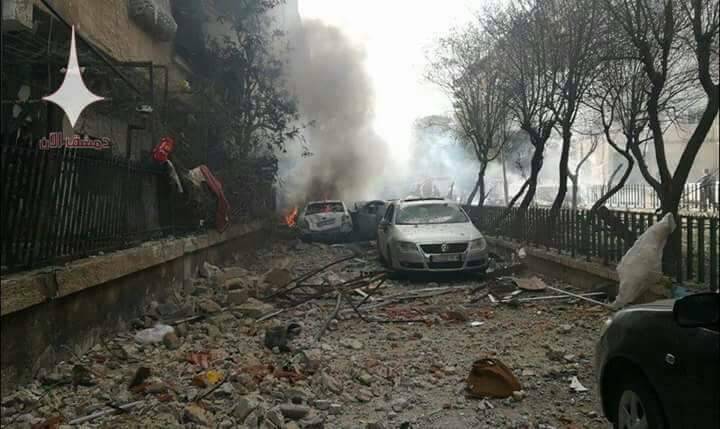
James Jeffrey, the US special envoy for Syria and defeating the Islamic State, has made quite a frank confession of how he sees his job and that of US troops there: to create a new Vietnam or Afghanistan for Moscow.
“Our military presence, while small, is important for overall calculations. So we urge the Congress, the American people, the president to keep these forces on, but again this isn’t Afghanistan, this isn’t Vietnam, this isn’t a quagmire,” Jeffrey said on Tuesday, during a video event hosted by the Hudson Institute. “My job is to make it a quagmire for the Russians.”
The arrival of the Russian expeditionary force in late 2015, following an invitation from Damascus, turned the tide of war in Syria. With their assistance, government forces rolled back both Islamic State (IS, formerly ISIS) terrorists and other militants, including Al-Qaeda affiliates, on multiple fronts – and scuttled US plans for regime change in Damascus.
Jeffrey grudgingly admitted the Russian military has been successful in Syria, but argued “they don’t have a political way out of their problems” with Syrian President Bashar Assad, and the US aims to offer “a way forward” through the UN – presumably referring to Resolution 2254 that Washington has long interpreted as “Assad must go.”
The envoy’s admission on Tuesday is a step beyond his remarks in early March, when he told reporters on a conference call that the US aims to “make it very difficult” for Russia to help the Syrian government achieve a military victory.
While US President Donald Trump repeatedly rejected nation-building interventions in the Middle East and sought to withdraw US troops from Syria, Iraq, and Afghanistan, he has repeatedly faced resistance from the State Department and the Pentagon, still set on the previous administration’s strategy of regime change.
Jeffrey’s mention of a “quagmire” like Afghanistan is particularly ominous, given that’s precisely what the Carter administration did in 1978, covertly supporting Islamic militants in that country in order to provoke a Soviet intervention. According to Carter’s national security adviser Zbigniew Brzezinski, this was done to lure the USSR into their own costly, never-ending war such as the US experienced in Vietnam
Brzezinski boasted of his own role in those efforts, dismissing the fallout of Islamist terrorism that the conflict generated as irrelevant compared to US victory in the Cold War – shortly before the September 11, 2001 attacks triggered a US invasion of Afghanistan that the Trump administration is still struggling to extricate troops from.
Civilian Taxi Driver Shot and Killed by US Military in Deir Ezzor
By Ahmad Al Khaled | American Herald Tribune | May 12, 2020
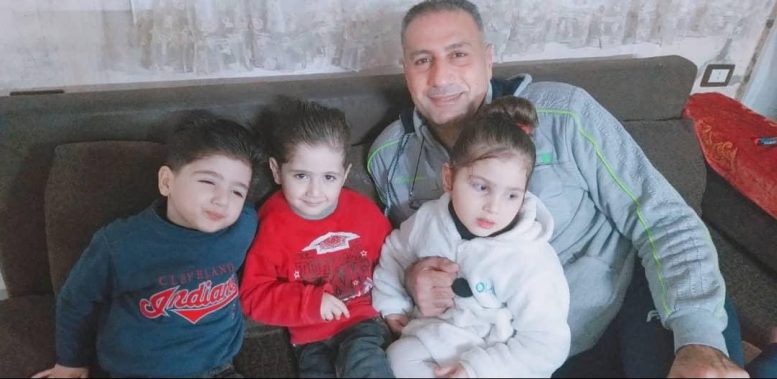
Before the outbreak of the Syrian conflict, Yasser Aslan used to teach programming. With the war and ever-dwindling economy, Yasser, the only breadwinner in the family of six, had to look for additional sources of income. Like thousands of other Syrians, he turned his car – a KIA Rio – into a taxi, and drove along the dangerous roads of Deir Ezzor province in an attempt to make the ends meet for himself, his wife and four daughters (15-years-old teenager and 4-years-old triplets).
Deir-Ezzor, as well as other eastern provinces of Syria, still suffers from small-scale yet lethal attacks carried out by remnants of ISIS terror group. The terrorists mostly target SAA and SDF checkpoints and patrols in the area, but civilians also fall victim to the attacks.
However, it was not ISIS activities that ultimately resulted in Yasser’s death. On May 1st, he and a passenger were driving through the area of Koniko oil facility that hosts a large US military base. As the car drew closer to the base, it unexpectedly came under fire. Yasser was fatally wounded in the head while the passenger survived and was taken prisoner by SDF.
Shortly after Yasser’s relatives were informed that his body was taken to a hospital in Jadid Baqara village. Posts on their social media pages blamed a “US sniper” for the death of their relative and friend, expressing outrage over the incident.
Although Yasser’s demise, most likely at the hands of US military personnel, was reported on-line, neither the Pentagon nor the International Coalition commented on the incident. The story gained no traction in the media. One report described the incident as a ‘clash with ISIS during which a civilian was killed’ without indication of the side responsible for his death.
US to recognise Israel’s annexation of 30% of West Bank area
MEMO | May 9, 2020
US Ambassador to Israel David Friedman has confirmed that the US is ready to recognise 30 per cent of Israel’s annexation of the occupied Palestinian West Bank, Israel Hayom reported.
In an interview published on Friday, Friedman announced that the Israeli Prime Minister Benjamin Netanyahu must negotiate with Palestinian Authority (PA) President Mahmoud Abbas over the establishment of a Palestinian state in 70 per cent of the occupied West Bank, and the US will recognise Israel’s annexation of the other 30 per cent.
“There’s really three things left that have to get done,” Friedman expressed, stating that: “The mapping has to get done. The [Israeli] government has to agree to the freeze on half of Area C, and most importantly, the government of Israel has to declare sovereignty.”
He stressed: “We are not declaring sovereignty – the government of Israel has to declare sovereignty. And then we’re prepared to recognise it… So, you have to go first.”
Regarding the reason as to why Israel has to take the lead, he explained: “The primary task belongs to the Israeli side because they’re the ones that have to come up with what’s best for the state of Israel.”
On the issue of timing, he added: “We’re talking and listening, and everyone understands that come July, certainly, people on the Israeli side, want to be ready to go on 1 July.”
Featured Video

Iran’s Mass Protests /Patrick Henningsen & Lt Col Daniel Davis
or go to
Aletho News Archives – Video-Images
From the Archives
Does Kevin Barrett Seek to “Absolve Islam of a Terrible Crime”?
The Kevin Barrett-Chomsky Dispute in Historical Perspective – Last part of the series titled “9/11 and the Zionist Question”
By Prof. Tony Hall | American Herald Tribune | August 28, 2016
Amidst his litany of condemnations, Jonathan Kay reserves some of his most vicious and vitriolic attacks for Kevin Barrett. For instance Kay harshly criticizes Dr. Barrett’s published E-Mail exchange in 2008 with Prof. Chomsky. In that exchange Barrett castigates Chomsky for not going to the roots of the event that “doubled the military budget overnight, stripped Americans of their liberties and destroyed their Constitution.” The original misrepresentations of 9/11, argues Barrett, led to further “false flag attacks to trigger wars, authoritarianism and genocide.”
In Among The Truthers Kay tries to defend Chomsky against Barrett’s alleged “personal obsession” with “vilifying” the MIT academic. Kay objects particularly to Barrett’s “final salvo” in the published exchange where the Wisconsin public intellectual accuses Prof. Chomsky of having “done more to keep the 9/11 blood libel alive, and cause the murder of more than a million Muslims than any other single person.” … continue
Blog Roll
Recent Comments
loongtip on Eilat port faces worst crisis… loongtip on British minister dreams of kid… loongtip on Kiev awards major mining proje… loongtip on UK believes it can seize any t… loongtip on Pirates of the Caribbean loongtip on Australian festival boycotted… loongtip on Kiev seeks to ban Russian musi… seversonebcfb985d9 on Somaliland and the ‘Grea… John Edward Kendrick on Kidnapped By the Washington… aletho on Somaliland and the ‘Grea… John Edward Kendrick on Somaliland and the ‘Grea… aletho on Donald Trump, and Most America…


 Aletho News
- Knesset advances bill mandating death by hanging for Palestinian prisoners
- Eilat port faces worst crisis as Red Sea shipping collapses
- Iran protest-riots can only achieve US-Israeli intervention, ‘shadow CIA’ concludes
- The Coming War on Iran: What Has Really Been Happening?
- US Cargo Planes Have Flooded the Persian Gulf Since the First of December
- Deep-state forces from abroad instigated violence in Nepal – former foreign minister
- Rare Earths—or Arctic Control? Greenland’s Riches May Just Be Excuse
- Kiev awards major mining project to Trump-linked investors
- US makes money from weapons, not from Ukrainian minerals
- Drone hits Kazakh tanker en route to Russian port
- If Americans Knew
- The New Neoconservatives
- As more Gaza children freeze to death, Trump eyes Gaza as starting point for world domination – Not a ceasefire Day 95
- More death: in Gaza, West Bank, Israeli prison – Not a ceasefire Day 94
- The Israeli Influence Operation Aiming to Install Reza Pahlavi as Shah of Iran
- Avoidable tragedy: another infant dies from cold – Not a ceasefire Day 93
- Israel is quietly erasing Palestinian refugee camps from existence in the West Bank
- The “Zionist tint” to the Maduro abduction, if not operational, then normative
- Press association condemns Israel’s continued ban on media access to Gaza
- Israeli Indifference to Palestinian Suffering Is Fertile Ground for the Growth of Sadism
- Surge in premature births, congenital defects, cancer deaths in Gaza – Not a ceasefire Day 92
- No Tricks Zone
- Denmark Places Climate Protection Above Animal Welfare, Poisoning And Culling Cows
- New Study: Greenland Was 3-7°C Warmer And Far Less Glaciated Than Today 6000-8000 Years Ago
- German Media Report That Current Frigid Weather Can Be Explained By Arctic Warming!
- Berlin Blackout Shows Germany’s $5 Trillion Green Scheme Is “Left-Green Ideological Pipe Dream”
- Modeling Error In Estimating How Clouds Affect Climate Is 8700% Larger Than Alleged CO2 Forcing
- Berlin’s Terror-Blackout Enters 4th Day As Tens Of Thousands Suffer In Cold Without Heat!
- Expect Soon Another PIK Paper Claiming Warming Leads To Cold Snaps Over Europe
- New Study: Human CO2 Emissions Responsible For 1.57% Of Global Temperature Change Since 1750
- Welcome To 2026: Europe Laying Groundwork For Climate Science Censorship!
- New Study Finds A Higher Rate Of Global Warming From 1899-1940 Than From 1983-2024
 Aletho News