US plan to blacklist Iraqi Badr Organization as terrorist meant to protect Israel: Official
Press TV – December 13, 2020
A senior member of the Badr Organization, whose group is a part of the Iraqi Popular Mobilization Forces (PMU), also known by their Arabic name Hashd al-Sha’abi, has slammed Washington’s attempts to classify his organization as terrorist, stressing that such measures are meant to protect the Israeli regime.
“We do not care about the White House’s efforts to place the Badr Organization on the [so-called] US terror blacklist. Badr is an organization that has its own supporters and institutions. It is represented by a parliamentary faction and has more than 50 legislators in Fatah (Conquest) Alliance,” Qusay al-Anbari, a spokesman for the organization, told Arabic-language al-Ahad news agency on Saturday.
He added, “Badr Organization is a part of the Iraqi political system and nation, and will not be affected by such evil plots. Everyone knows that the United States is working to protect the Zionist regime through various means, and is fighting resistance groups to prevent them from defending Palestine and the Arab world.”
The remarks come as the US Congress is seeking to enact a new legislation that would designate the Badr Organization as a terror group, according to a copy of the bill obtained exclusively by the Washington Free Beacon newspaper.
The newspaper said that a member of the House Foreign Affairs Committee, Representative Joe Wilson, is leading such efforts.
Back on October 18, a political adviser to Iraqi officials and leading member of the State of Law Coalition said the United States is trying to eradicate Hashd al-Sha’abi by force and has even devised an action plan for such a purpose.
Saad al-Muttalibi told Arabic-language al-Nujaba television network in an interview at the time that not only had Iraqi authorities been informed of the plan, but also some political factions.
Muttalibi noted that a number of US state institutions have come to the conclusion that Hashd al-Sha’abi can only be removed from Iraq’s arena by military force.
He went on to say that Washington intends to assassinate some high-ranking Hashd al-Sha’abi commanders and instigate clashes with other Iraqi armed forces as part of preparation for the total annihilation of the PMU.
Hashd al-Sh’abai fighters have played a major role in the liberation of Daesh-held areas to the south, northeast and north of the Iraqi capital Baghdad, ever since the terrorists launched an offensive in the country in June 2014.
Back in November 2016, the Iraqi parliament approved a law giving full legal status to the fighters. It recognized the PMU as part of the national armed forces, placed the forces under the command of the prime minister, and granted them the right to receive salaries and pensions like the regular army and police forces.
On March 27, the New York Times reported that the Pentagon had ordered a secret directive, which called on US military commanders to prepare a campaign against Kata’ib Hezbollah, which is part of Hashd al-Sha’abi.
But the United States’ top commander in Iraq at the time, Lieutenant General Robert P. White, warned that such a campaign could be bloody and counterproductive.
Trump’s Former Syria Envoy Reveals US Administration’s Main Goal Was Denying Assad Territory
By Ilya Tsukanov – Sputnik – 07.12.2020
Last month, the same official frankly admitted that he and members of his staff had deliberately obfuscated and covered up the true size of the US military contingent in Syria from the president.
Jim Jeffrey, the veteran US diplomat who served as Trump’s special envoy for Syria for nearly two years prior to his November 13 resignation, has offered another frank admission about the real goal of the US mission in the war-torn nation – preventing President Bashar Assad’s government from restoring control over territory within the Arab Republic’s internationally-recognised borders.
In an interview with the Times of Israel, Jeffrey indicated that while the Trump administration had failed to achieve its goal of securing a complete withdrawal of ‘Iranian forces’ from Syria, or the complete destruction of Daesh, or a resolution to the Syrian conflict, it did manage to reach a “military stalemate,” denying Damascus control over part of its lands.
“What we have done is stop Assad’s forward movement militarily. There is a basic military statement,” Jeffrey said. He added that Turkish forces in northern Syria were similarly ‘denying terrain’ to Damascus, while Israeli air power “dominates the skies” and continues to launch regular (and illegal) sorties into the country.
Jeffrey also boasted that the US-led coalition and its European allies have “crushed Assad economically,” leaving the Syrian president’s Russian and Iranian allies “a totally failed state in a state of quagmire.”
Jeffrey, who had joined 50 other Republican national security officials in signing a 2016 appeal suggesting that Trump was dangerous and should not be allowed to become president before ultimately agreeing to serve in his administration in 2018, credited former CIA director-turned Secretary of State Mike Pompeo for convincing Trump to stay in Syria.
“I was pleased very much to work with Mike Pompeo. I think he is a brilliant secretary of state [who] has the faith and the trust of the president, and thus could talk [Trump] out of things and persuade the president of things,” Jeffrey said. This trust was “certainly necessary” to convince Trump not to pull all US troops out of Syria, according to the diplomat.
“Several times it looked like we were withdrawing our forces. That would have been a terrible mistake. But in [all] three cases… President Trump correctly reversed himself and decided to keep forces on the ground,” the ex-envoy recalled.
Jeffrey also offered praised for Joe Biden’s national security team picks, saying leaders in the Middle East and around the world “know and trust” the former vice president and described his selections as “reassuring”. For the record, these picks include former Obama-era Washington insider Antony Blinken, who was a major proponent of US wars in Iraq, Libya and Syria, and who Biden has tapped for his secretary of state.
Reacting to the Jeffrey interview, Syrian Arab News Agency contributor Ruaa al-Jazaeri suggested that the ex-envoy had effectively revealed that the “real goal of the US administration” has been “keeping its occupying forces in some of the Syrian areas”, discrediting the “fake slogans which claim that those forces are fighting the Daesh terrorist organisation”.
“Jeffrey’s admission is added to the admission made by Donald Trump, who has announced at many press conferences that his occupying forces which are deployed in Syria are there to protect the oil fields which have been pillaged by the US in collusion with the [Kurdish] militia,” al-Jazaeri added.
Candid Revelations
Jeffrey’s comments to the Times of Israel follow remarks he made to Defense One last month, in which he frankly admitted that he and his staff “were always playing shell games to not make clear to our leadership how many troops we had” in Syria. “What Syria withdrawal? There was never a Syria withdrawal,” the diplomat boasted, referring to Trump’s repeated plans in 2018 and again in 2019 to bring US troops home after announcing that the terrorists had been defeated.
According to Jeffrey, the US continues to have “a lot more” than the estimated 200-400 troops approved by Trump in Syria at present.
Trump began a major shakeup at the Pentagon following the November 3 election, firing Secretary of Defence Mark Esper on November 9, with the move sparking a number of high profile resignations. On November 17, Esper’s replacement, former National Counterterrorism Center director Christopher Miller, announced that the US would make substantial cutbacks in US troop numbers in Iraq and Afghanistan. On Friday, the Pentagon announced that the US would be withdrawing almost all of its 700 troops from Somalia.
Trump had made pulling out of US ‘forever wars’ around the world a key plank of his 2016 campaign, but has so far failed to completely withdraw from any of the major conflicts the US is engaged in.
Congress moves to block US troop pullout from Afghanistan, Germany
Press TV | December 6, 2020
US President Donald Trump’s controversial move to pull out 2,000 American troops out of Afghanistan and 12,000 more from Germany would be blocked by the major defense policy bill, a report has said.
One provision of the National Defense Authorization Act (NDAA) for fiscal 2021 “would block funding for reducing the number of US troops in Afghanistan from 4,500 to 2,500 by January 15, as ordered by Trump, until the Defense and State Departments verify that it was in the national interest,” Military.com news outlet reported Saturday.
Another provision of the NDAA, it added, essentially urges the incoming Biden administration to take a second look at Trump’s executive order to withdraw 12,000 American troops from Germany.
According to the bill, troop levels in Germany should remain at 34,500 until 120 days after the secretary of defense submitted cost estimates and assessments of the impact of a withdrawal on allies and military families.
The final draft of the NDAA — released Thursday night — underlines that Afghanistan pullout orders, announced by the newly-appointed Acting Defense Secretary Christopher Miller on November 17, “gave Congress no estimate of the national security implications.”
According to the report, the Trump administration has so far failed to clarify how a troop withdrawal was “in the national security interests of the United States to deny terrorists safe haven in Afghanistan, protect the United States homeland.”
Trump’s announcement last June that he wanted 9,500 troops out of Germany after years of battling with NATO allies to spend more for defense has also drawn opposition from both ruling political parties in the US Congress.
On July 29, then-Defense Secretary Mark Esper declared plans to carry out Trump’s order that increased the number of US soldiers to be withdrawn from Germany to 12,000.
Some of those troops would return to the US, while others would be transferred to Poland and the Baltic states in a shift eastward to enhance NATO’s purported deterrence against Russia, Esper claimed at the time.
The report further pointed out that the NDAA provision on Germany “means that final decisions on a troop withdrawal could go to Michele Flournoy, a former undersecretary of Defense for Policy who is considered a frontrunner for defense secretary in the Biden administration.”
Flournoy, the report added, has already stated that pulling thousands of troops out of Germany would likely cost more than leaving them in place. He also underlined in an Aspen Security Forum in August that “Our allies were completely surprised by this punitive troop withdrawal from Germany.”
Moreover, once Biden is inaugurated on January 20, he would have the authority to issue his own executive order reversing Trump’s withdrawal mandate.
Obama Is An Asshole, And Other Notes From The Edge Of The Narrative Matrix
By Caitlin Johnstone | December 2, 2020
US empire: Assassinates scientists, invades countries, topples governments, circles the planet with military bases, deliberately starves civilians to death with sanctions, threatens the world with nuclear weapons.
Also the US empire: “Iran must begin acting like a normal country.”
❖
Obama’s job is to tell you that the ruling establishment which murders, oppresses and exploits people all day every day is quite progressive actually and the people who oppose it are immature lunatics who should be scoffed at.
❖
If you killed someone that’s all you’d be known for. When a US president kills thousands upon thousands of people all mainstream discourse is about his sound fiscal policy and ability to sink a three-pointer.
❖
Nice guy fascism: A murderous and tyrannical political ideology whose iron-fisted agendas of oppression, exploitation and violent domination are hidden behind lip service to progressivism, diverse cabinet picks, and nice tweets.
❖
The powerful are screwing us and there are more of us than there are of them. An entire culture and information ecosystem has been deliberately constructed around keeping a critical mass of us from awakening to this one basic fact.
❖
Any issue of international conflict involving the US-centralized empire is going to be awash with western media propaganda marketed to western audiences. No one who ignores this indisputable reality is able to understand any major international news story.
❖
It’s so weird how rich and powerful people are pouring massive amounts of wealth and manpower into manipulating our minds every single day and it’s not the main thing we talk about all the time.
❖
Biden is like if everyone suddenly started gushing poetically about how wonderful and refreshing and inclusive the Chevron logo is.
❖
Being part of the US-led liberal world order means that anyone, regardless of their race, gender or sexual orientation, is free to serve the globe-spanning murder machine in any way they choose.
❖
Being a part of the US-led liberal world order means you are free to do absolutely anything you want, so long as it doesn’t inconvenience the powerful in any way, shape or form.
❖
Sometimes I feel sad that Cobain died so young, but I brighten up when I remember it means we didn’t have to watch him turn into a cringey embarrassing shitlib.
❖
Failing to pardon Snowden and Assange would be an inexcusable evil. Please re-evaluate your opinion of Trump as needed when he pardons neither.
❖
Western imperialism is worse than every single issue the mass media are screaming in your face about on any given day. Without exaggeration it is worse than 100 percent of those issues. If people could really grasp the horrific nature of imperial warmongering, the wars would be forced to end.
It can be hard to avoid getting swept up in the MSM Issue Of The Day, but it’s important to keep your focus on the actual monster in the room. They’re ripping kids apart with explosives and starving them to death with sanctions, currently, and it is invisible to the news media.
❖
Charles Manson never murdered anyone, he just convinced people that it would be a good thing to do. The mass media have convinced far more people that it would be a good idea to commit far more murders than the Manson cult ever committed, and should be reviled as such.
The fastest way to get yourself banned from social media is to say something that sounds like you’re inciting violence. But mass media which do that constantly are never banned, because what’s actually forbidden is inciting violence that isn’t authorized by the powerful.
In fact the easiest way to advance your career in media is to incite violence on behalf of the powerful. This is true in news media, and it’s even true in video games and Hollywood; make compelling games and screenplays glorifying military violence and your career will thrive.
We live in a society that is built on violence, sustained by violence, and driven by violence. Those who promote unauthorized violence are vilified while those who promote violence in service of the powerful can ride that wave to fame and fortune. This should disgust us all.
If you remove your propaganda-installed perceptual filters, you see a machine that is fuelled by the blood of the powerless being piloted by serial killer politicians, laughing skullface comedians, and news men with human flesh in their teeth. Once you’ve seen the horror of the empire you can never unsee it.
UN General Assembly adopts five anti-Israeli resolutions
Press TV – December 3, 2020
The United Nations General Assembly (UNGA) has approved five anti-Israeli resolutions, which are part of a package of 20 pro-Palestinian texts that the 193-member body adopts on an annual basis.
One of the documents, passed on Wednesday, condemned Israeli sovereignty over the occupied Golan Heights — a territory the Tel Aviv regime seized from Syria in the 1967 Six Day War and annexed four years later — in a move that was never recognized by the world community.
Endorsed by 88-9 votes with 62 abstentions, the resolution urges Israel to withdraw from the “occupied Syrian Golan to the line of 4 June 1967 in implementation of the relevant Security Council resolutions.”
It also affirmed that Israel’s unilateral annexation of the Syrian territory in 1981 “constitutes a stumbling block in the way of achieving a just, comprehensive and lasting peace in the region.”
Over the past decades, Israel has built dozens of settlements in the Golan Heights in defiance of international calls for the regime to stop its construction activities on the occupied land.
Damascus has repeatedly reaffirmed its sovereignty over the Golan Heights, saying the area must be completely restored to its control.
In a major pro-Israel policy shift, US President Donald Trump signed an executive order in 2019 recognizing Israel’s control over occupied Golan in a blatant violation of international law.
The second resolution, entitled a “Peaceful Settlement of the Question of Palestine,” was approved 145-7, with nine abstentions.
It called on the Tel Aviv regime to withdraw from all territory over the pre-1967 lines in occupied East Jerusalem al-Quds, the West Bank and the Golan Heights.
The document also demanded a halt to Israel’s settlement construction activities, spoke of the illegality of annexation plans, and warned the occupying entity against making changes in East Jerusalem al-Quds.
It further took Israel to task for a wide range of actions against the Palestinian people, including the demolition of their homes in Area C of the West Bank.
The three remaining UNGA resolutions affirmed the work of UN Committees operating on behalf of the Palestinians.
Before the vote, Israel’s Ambassador to the UN Gilad Erdan chastised the General Assembly for not referencing the regime’s recent normalization deals with the United Arab Emirates (UAE) and Bahrain.
“Can this forum be any more detached from the real world?” he asked, claiming, “Instead of encouraging the Palestinians to see how these agreements can transform the region and be used as a catalyst for peace with Israel, this institution votes in favor of these biased resolutions.”
A Palestinian representative denounced Erdan’s “flip” and “offensive” comments, including one where he accused the UNGA of being detached from reality.
“On the contrary, what was discussed today in this debate is the reality. What was discussed today is not so-called ‘Palestinian talking points.’ These are the international talking points,” she said. “This is the international consensus that Israel, the occupying power, continues to object, obstruct, to deny, to belittle and to attempt futilely to destroy.”
The regime has gotten “accustomed to violating the law with zero consequences,” she added. “Only accountability can change this miserable situation and give hope for a future of justice and peace… The hypocritical and degrading claim by the Israeli representative that this institution’s approach has failed perhaps should highlight even more the need of concrete actions by states to implement the resolutions adopted by the UNGA to ensure accountability.”
She also stressed that the passage of the anti-Israel texts showed that support for the Palestinian people remained strong.
Before the General Assembly’s vote, a Jordanian representative, whose country is the custodian of the holy sites in Jerusalem al-Quds, said Israel must maintain the status quo at Haram al-Sharif or Temple Mount.
Israel is attempting to “impose a fait accompli on al-Aqsa mosque and Jerusalem,” he said, adding that the occupied city’s “holy sites will remain the focus of Jordanian care and guardianship.”
Jordan will “combat a new fait accompli or change the historic or legal status of the holy city especially at the al-Aqsa Mosque,” he emphasized.
Separately, Palestinian Ambassador to the UN Riyad Mansour asked the international community to hold Israel accountable for its violations of international law and stick to the so-called two-state solution to the Middle East conflict.
He also called for a boycott of Israeli settlement products and urged Western nations to recognize Palestinian statehood.
Palestinian PM calls for boycott of Israeli settlements
In another development on Wednesday, Palestinian Prime Minister Mohammed Shtayyeh urged donor countries and international organizations to take serious measures towards boycotting Israeli settlements.
He stressed that the status quo imposed by Israel is deteriorating as the Palestinian land is shrinking, the settlers’ violence is escalating, and access to resources is decreasing daily.
“Economic development is not separate from the political and national project. Rather, it is a lever towards ending the occupation and establishing the Palestinian state with Jerusalem as its capital,” he said, noting that the world must move to end this occupation because the current status quo cannot continue.
Iran envoy blasts Israel for violating Palestinians’ rights
Mohammad Reza Sahraei, counselor at Iran’s Mission to the UN, said the International Day of Solidarity with the Palestinian People provides an opportunity to “highlight the dire and painful situation endured by Palestinians over the course of decades as a result of the gross and systematic violation of their rights by the Israeli regime.”
“The question of Palestine is the longest-running crisis of our time with no foreseeable conclusion in sight…. In fact, the non-compliance of the occupying regime with relevant international laws and regulations has further prevented the international community from achieving a just and lasting solution to the crisis,” he said.
“After more than seven decades, the Israeli regime has continued to violate the fundamental human rights and dignities of the Palestinian people as well as other Arabs living under its occupation. As a result, Palestinians are not only deprived of their lands and properties while being forcibly evicted but also subjected to violence, terror, and intimidation,” the diplomat added.
‘Must Leave’: Iran Slams Presence of US Forces in Syria, Calls for Immediate Withdrawal
By Oleg Burunov – Sputnik – 26.11.2020
In October 2019, President Donald Trump announced that the US would be withdrawing its forces from Syria, but eventually backtracked, saying that a “small” American contingent would stay behind to allegedly “keep” the Syrian oil from being seized by Daesh.
Iran’s permanent ambassador to the United Nations (UN) Majid Takht-Ravanchi has called for the immediate and full-fledged withdrawal of US troops from Syria.
“All foreign forces whose presence is not permitted by the Syrian government must leave Syria”, the diplomat told a UN Security Council meeting on Wednesday, in an apparent nod to the US. He questioned American forces’ current role in Syria, insisting that instead of fighting terrorism, they “continue supporting UN-designated terrorist groups such as al-Nusra Front as well as looting the oil and wealth of the Syrian people”.
Iranian Foreign Minister Mohammad Javad Zarif earlier noted that Tehran would work to strengthen economic cooperation with Syria amid Washington’s restrictive measures under the US Caesar Act, which stipulates sanctioning almost all Syrian economic and trade activities, as well as government officials.
He was echoed by Iran’s Supreme Leader Ayatollah Ali Khamenei who voiced hope in May that the “Americans won’t stay in Syria and will be [finally] expelled.”
Senior US Official Boasts About Lying to Trump to Keep US Troops in Syria
Ambassador Takht-Ravanchi’s statement comes a few weeks after Jim Jeffrey, outgoing US special representative for Syria and special presidential envoy for the western coalition against Daesh, told the news outlet Defence One that he and members of his staff deliberately covered up the true size of the US military footprint in Syria from President Donald Trump.
“What Syria withdrawal? There was never a Syria withdrawal”, Jeffrey said, referring to Trump’s repeated orders in late 2018 and then again in 2019 to bring US troops home. “When the situation in northeast Syria had been fairly stable after we defeated ISIS, [Trump] was inclined to pull out. In each case, we then decided to come up with five better arguments for why we needed to stay. And we succeeded both times. That’s the story”, the US envoy added.
He argued that the actual number of US troops in Syria is “a lot more” than the estimated 200-400 that POTUS agreed to leave behind in 2019 to “secure” the country’s oil fields and prevent them from falling into the hands of the Syrian government or terrorists.
American troops, jointly with the Arab-Kurdish Syrian Democratic Forces (SDF), maintain control over a part of northeastern Syria as the US-led coalition of more than 60 nations has been carrying out airstrikes and other operations against terrorists in Syria since September 2014.
The coalition operates in Syria without the approval of the Assad government or any UN Security Council authorisation. Damascus, in turn, sees the US presence on Syrian soil as a violation of national sovereignty and an attempt to seize the country’s natural resources.
Biden signals US return to full-on globalism and foreign meddling by picking interventionist Anthony Blinken as secretary of state
RT | November 23, 2020
Joe Biden has named Anthony Blinken – an advocate for isolating Russia, cozying up to China and intervening in Syria – as secretary of state, cementing a foreign policy built on military forays and multi-national motivations.
Biden, the nominal president-elect, announced his selection of Blinken along with other members of his foreign-policy and national-security team, which is filled with such veteran Washington insiders as John Kerry, the new climate czar and formerly secretary of state in the Obama-Biden administration.
Blinken, a long-time adviser to Biden and deputy secretary of state under President Barack Obama, has been hailed by fellow Democrats and globalists, such as retired General Barry McCaffrey, as an experienced bureaucrat with “global contacts and respect.” Enrico Letta, dean of the Paris School of International Affairs, called Biden’s choice the “right step to relaunch transatlantic ties.”
He was even praised for a 2016 appearance on the Sesame Street children’s television program, where he explained to the show’s ‘Grover’ character the benefits of accepting refugees.
While some critics focused on how Blinken “got rich working for corporate clients” during President Donald Trump’s term in office, the new foreign-affairs chief’s neoconservative policy recommendations might be cause for greater concern. He advocated for the Iraq War and the bombings of such countries as Libya and Yemen.
Blinken is still arguing for a resurgence in Washington’s military intervention in Syria. He lamented in a May interview that the Obama-Biden administration hadn’t done enough to prevent a “horrific situation” in Syria, and he faulted Trump for squandering what remaining leverage the US had on the Bashar Assad regime by pulling troops out of the country.
“Our leverage is vastly even less than it was, but I think we do have points of leverage to try to effectuate some more positive developments,” Blinken said. For instance, US special forces in northeast Syria are located near Syrian oil fields. “The Syrian government would love to have dominion over those resources. We should not give that up for free.”
Blinken also sees Biden strengthening NATO, isolating Russia politically and “confronting Mr. [President Vladimir] Putin for his aggressions.”
As for China, Blinken has said Washington needs to look for ways to cooperate with Beijing. Reinvesting in international alliances that were weakened by Trump will help the Biden administration deal with China “from a position of strength” as it pushes back against the Chinese Communist Party’s human-rights abuses, he said.
UK amends status of Israel and Jerusalem following pressure from pro-Israel lobby
MEMO | November 21, 2020
The UK government has responded to pressure from the Board of Deputies of British Jews and the Conservative Friends of Israel by listing Israel and occupied Jerusalem together as one country in its weekly update to COVID-19 related travel corridors.
Yesterday the Board condemned the Foreign Commonwealth and Development Office (FCDO) in a tweet which contained a screenshot of the revised FCDO list that had made a clear distinction between the status of Israel and Jerusalem by including the two territories on its list as separate countries.
Though the list was in line with US foreign policy, the Board, which over the years has adopted the hard-line positions of the Israeli far-right towards the Palestinians, slammed the UK Foreign Office. “Absolutely inappropriate to list ‘Jerusalem’ as a separate country. We have taken this up with @FCDOGovUK this morning & they are urgently reviewing it” said the Board in its tweet.
Members of the Conservative Friends of Israel (CFI) Stephen Crabb and Eric Pickles and President Lord Polak also urged the government to make an immediate correction to the advice about Jerusalem.
“The announcement of a travel corridor with Israel is excellent news. However, the FCDO’s decision to define Jerusalem as a territory separate from Israel is offensive and hostile,” CFI is reported saying in the Times of Israel.
“Jerusalem is the capital of Israel. To describe Jerusalem as anything other than an integral part of Israel is a fiction divorced from reality and the travel advice must be immediately corrected”.
Following the complaint, the FCDO published a revised list which had Israel and Jerusalem down as the same country, even though there has been no change in the UK’s position over Jerusalem.
“The position of the UK government has remained constant since April 1950” the FCDO says on its website. “We recognise Israel’s de facto authority over West Jerusalem. In line with Security Council Resolution 242 (1967) and subsequent Council resolutions, we regard East Jerusalem as under Israeli occupation”.
MEMO has asked the FCDO to explain its reason for listing Israel and Jerusalem as the same country when hours before it had made a distinction between the two territories in line with its long-held position that East Jerusalem is occupied territory. No response has been received at the time of publication.
Palestinian Court Holds First Session in Lawsuit against UK over Balfour Declaration
Palestine Chronicle – November 17, 2020
A Palestinian court yesterday held the first session to review a lawsuit filed against the British government over its crimes in Palestine during the British Mandate between 1917- 1948 and the Balfour Declaration which promised Palestine as a national home for the Jewish people.
The Court of First Instance in the city of Nablus, in the northern occupied West Bank, heard Palestinian witnesses who had been evicted from their villages in 1948 by Jewish militias and the crimes committed during that period.
The United Kingdom did not send a representative to attend the session.
The judge postponed the session until December 6.
One of the lawsuit initiators, Munib Al-Masri, said this is a serious and organized step to bring Britain to account for the damage caused by the Balfour Declaration, adding that after the Palestinian court issues its decision, they plan to go to the British judiciary and the international courts.
The lawsuit was filed by the International Commission to Support Palestinian Rights (ICSRP) on behalf of Palestinian families last October.
The lawsuit holds “the UK legally responsible for the consequences arising from violating rules, morals and international law and for the crimes it committed during the colonization of Palestine, including the Balfour Declaration.”
The Balfour Declaration refers to the letter sent by then British Foreign Secretary, Arthur James Balfour, in 1917 to Jewish Lord Lionel Walter Rothschild, favoring a Jewish national homeland in Palestine.
Featured Video
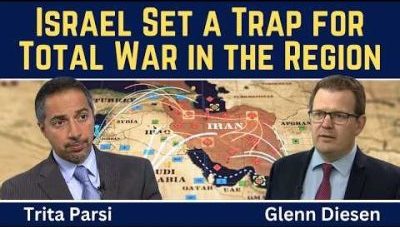
Trita Parsi: Israel Set a Trap for Total War in the Region
or go to
Aletho News Archives – Video-Images
From the Archive
Zionism’s Violent Legacy
By Donald Neff | Washington Report On Middle East Affairs | January 1996
On January 4, 1948, Jewish terrorists drove a truck loaded with explosives into the center of the all Arab city of Jaffa and detonated it, killing 26 and wounding around 100 Palestinian men, women and children.[1] The attack was the work of the Irgun Zvai Leumi – the “National Military Organization,” also known by the Hebrew letters Etzel – the largest Jewish terrorist group in Palestine. The Irgun was headed by Revisionist Zionist Menachem Begin and had been killing and maiming Arabs, Britons and even Jews for the previous ten years in its efforts to establish a Jewish state.
This terror campaign meant that at the core of Revisionist Zionism there existed a philosophical embrace of violence. … continue
Blog Roll
 Aletho News
- Trita Parsi: Israel Set a Trap for Total War in the Region
- Trump’s Iran war is on an Israeli leash
- Saudi oil boss issues global supply warning
- Riyadh Says Its Oil System Is Intact. The Numbers Say Otherwise.
- Trump and Netanyahu Want to “Finish the Job” on Iran
- US ‘one-sided dictation’ not Iran’s beliefs makes rational talks impossible: Baghaei
- Iran’s Next Strike May Not Explode. It Could Shut You Down /Col Doug Macgregor
- Iran: US political targets legitimate if assassinations return
- Iraq shuts key border crossing with Iran under US pressure: Report
- Undersea Internet cables could be targeted in retaliation for attacks on Iran: IRGC deputy chief
- If Americans Knew
- The Israel Lobby’s Changing Fortunes
- AIPAC has become such a political liability that it’s shifting to a more “nimble” approach to buying politicians
- At least 160 Israeli settler attacks in 2 weeks
- Will Gaza’s Ancient Christian Community Disappear Forever?
- Israel’s vision of regional security rests on keeping Arab states weak
- Heidi Levine recounts how Palestinian youths helped save her in settler attack
- DAILY UPDATE: Latest essential news on Palestine, Israel, & region
- Trump’s Intensifying Sabotage of the ICC, for Israel’s Sake
- Israeli military detain US and UK volunteers in West Bank including Democratic NY politician Brad Lander
- Americans at National Conservatism Conference held in Israel this year criticize Israel
- No Tricks Zone
- E-Cars Reduce CO2 Emissions By Only 41% Compared To Internal Combustion Engine Vehicles
- Predictions Made By Renowned Climate Professor Over Past Decades Have Been Proven To Be Poor
- New Study Suggests Large Regions Of The Pacific Ocean Have Been Cooling For The Last 80 Years
- Germany’s Green Energy Debacle: High Energy Costs Force Kahla Porzellan to Close After 182 Years!
- New Study: 50 Years Of The Most Aggressive ‘Net Zero’ Policies Can Only Affect The Global Climate By 0.03°C
- US September “Heat” Was No Record…Many Records Set Decades Ago
- Latest European Green Energy Debacle; Portugal’s Largest Flagship Solar Park Insolvent!
- Green Energy Debacle: German Expert Professor Fritz Vahrenholt Warns Of Severe Economic And Social Consequences
- Two More Paleo Reconstructions Affirm Meters-Higher Sea Levels Across Ireland, Brazil 7000-6000 Years Ago
- New Study: Earth And Venus Surface Warmth Largely Explained By Convection And Lapse Rate, Not CO2 Or Radiation

