The Guardian Distorts Nicaragua’s Indio Maiz Fire
teleSUR | April 14, 2018
Under the headline ‘Nicaragua fires: aid from Costa Rica rejected as blaze destroys rainforest,’ the U.K.’s Guardian newspaper has published another politically skewed report smearing Nicaragua’s Sandinista government. This time, the pretext is a devastating forest fire affecting the peripheral buffer zone of the Indio Maiz Biological Reserve. Falsely alleging that Nicaragua has rejected the offer of help from Costa Rica, the Guardian report uses the standard NATO propaganda attack recipe, blending false reports from hostile opposition media and anti-government NGOs.
The article argues that Nicaragua’s government has been negligent in protecting the Indio Maiz Biological Reserve; has not sought international help, and has deliberately facilitated invasion of the reserve by impoverished rural families seeking land.
Reality completely contradicts the report’s main assertions. The Guardian refers to a statement by the Costa Rican government saying that a unit of Costa Rican firefighters was turned away, but the Guardian report offers neither a link to the alleged statement nor any quote from it.
Here’s the Costa Rican fire service spokesman on the matter: “We are fully ready to cooperate in any other incident. From what we can see, this incident has already been controlled by the army. We were at the border and had to return. We see no problem. In the moment (we offered to help) Nicaragua they didn’t have the personnel to fight the fire; thankfully, over the last few hours, it now has the personnel to deal with this emergency and they are engaged in controlling and extinguishing the fire.”
In fact, the decision not to use the help offered by Costa Rica was taken jointly by the chiefs of the Nicaraguan and Costa Rican fire services during a meeting in Managua on April 8, when they agreed that “the realistic possibilities of controlling the fire by the firefighting services of Nicaragua and Costa Rica were limited due to the characteristics of the fire and that the effective means to control and extinguish the fire is from the air.” In any case, access to the area of the fire was impractical overland, with access being possible almost exclusively by air or sea along the region’s Caribbean coast.
Nicaragua’s Vice-President Rosario Murillo said on April 9, in relation to coordination with the director of operations of the Costa Rican Fire Fighting Service: “We have been in meetings with him all weekend, looking precisely at what is being done, the difficulty of reaching the place… There, where the fire has broken out, it’s impossible to reach with trucks or pick-ups. What’s really needed, urgently, are airplanes equipped with all the technical means to fight forest fires.”
Murillo also explained on April 10 that the Sandinista government led by President Daniel Ortega had “coordinated with Honduras, El Salvador, Panama, Mexico, the Russian Federation, the air forces of each one of these countries, requesting air resources to fight the fires.” Currently, helicopters from Mexico, Honduras and El Salvador are helping control and extinguish the fire, contradicting the impression given by the Guardian’s report that the government had not sought international help.
The Nicaraguan government has also coordinated support from U.S. authorities, with a specialist team sent from USAID’s Office of Disaster Assistance and the U.S. Forestry Service. The team leader arrived in Nicaragua on April 10. The Guardian’s April 11 report includes none of this information, which contradicts the impression that report gives by citing environmentalists calling on the government to seek international support, as if it had not already done so a week before the Guardian’s report was published.
The report quotes criticism from well-known Nicaraguan environmentalist Jaime Incer Barquero. Now in his 80s, Incer Barquero has made distinguished contributions to environmental conservation in Nicaragua. However, his pronouncements on the fire in the Indio Maiz Biological Reserve demonstrate ignorance of the measures taken by the Nicaraguan government to control the fire. The Guardian report also quotes a representative of the Fundacion Rio NGO, who noted ‘relations between the countries have not been the best’ due to a long-running border dispute. But as Costa Rica’s cooperation with Nicaragua makes clear, diplomatic relations take a back seat in the context of a major regional ecological threat like the Indio Maiz forest fire.
The Fundacion Rio NGO has solicited funds supposedly to support community authorities and firefighters in the Indio Maiz area, a function well beyond the organization’s statutory objectives. It has now been warned by the Nicaraguan government not to solicit funds for purposes it was not established to carry out: functions which are the government’s responsibility and which the government is fulfilling. The self-serving propaganda of this kind of environmentalist NGO is no doubt the basis for the Guardian’s allegation that “the fires are believed to have been started by illegal homesteaders, who were attempting to clear land for planting crops.”
In fact, the fires began in a marshland area completely unsuitable for agricultural activity, either arable farming or pasture for cattle. One of Nicaragua’s leading environmental scientists, Efrain Acuña, has dismissed the accusation that the area was set on fire so as to facilitate arable or cattle farming: “The soils in this zone do not lend themselves to those activities, among other reasons because the acidity is high, the fertility percentages for grazing are very low and so the nutritional value for cattle is insufficient.”
The Guardian quotes Gabriel Jaime of Fundacion Rio as saying that the government has encouraged rural workers and their families to encroach on land belonging mainly to the Indigenous Rama people, but gives no context to that allegation. Jaime’s solution is “removing people and telling them ‘You can’t live in a protected area.”’ Jaime also criticizes the government’s provision of health and education services in the area, as if these did not benefit the local Indigenous population. This is another example of a neocolonial NGO patronizing local Indigenous people who own their land and have a strong say in how it is used.
The same false neocolonial argument has been used to misrepresent the potential displacement of Indigenous people should Nicaragua’s interoceanic canal go ahead. The canal company HKND and the Nicaraguan authorities consulted with local Indigenous people who agreed terms for the canal’s construction across their land, but that fact has been systematically omitted or misrepresented by environmentalists in the same way as the complex issue of migration by rural workers families to areas of the Caribbean coast has been.
Western NGOs and the local organizations they fund around the world undermine the role and functions of sovereign national governments. That is why Western corporations finance them. It is also why foreign news coverage by Western corporate media systematically distorts and misrepresents the reality of events around the world. The Guardian report on the Indio Maiz forest fire categorically demonstrates that fact one more time.
The Skripal event and the Douma “gas attack” – two acts in the same drama?

OffGuardian | April 14, 2018
The illegal air strikes on Syria by the coalition of the guilty (US, France, UK) have happened, to no one’s great surprise. As such things go all current indications are that they were more token than anything else. The Russians are saying around 100 missiles were fired at an unclear number of targets, of which around 70% were intercepted. Syrian General Staff are reporting 3 injuries and no deaths. Mattis was at pains to say this was a one-off, though adding the reckless caveat that any further evidence of chemical weapons usage by Assad might change that (thus giving every lunatic or CIA/neocon-controlled cell in Syria a pure gold motive for a false fag).
Compared to how bad this might have been, this is a fairly harmless result for the present.
We’ve resisted the temptation to do any kind of analysis of things so far, preferring to let them play out and to document developments and opinions. But maybe this is a good time to offer a tentative overview of what seems to have been going on in the past weeks.
1) The Douma “gas attack” was likely faked
The only evidence we have for any “gas attack” in Douma on April 7 is the video released on April 7-8, showing piles of corpses, mostly children, some with foam around their mouths. When, where or how the video was made is not verifiable. Who killed the children shown or how they died is not verifiable. Additionally we have images of an alleged “gas canister”, again without any sourcing or verification, and which have been widely suggested to be implausible. And there is Bellingcat (Eliot Higgins), contributing his usual brand of “comparisons” of images and Google maps, adding nothing that could be described even loosely as verification of the salient claims.
In opposition to this the Russians are claiming the event was staged. They allege their armed forces entered Douma shortly after the alleged attack and claim to have found no evidence of chemical weapons usage, no witnesses and no victims.
They have also released video statements by two young men claiming to be doctors at the hospital. They describe people running in to the hospital screaming that there had been a chemical attack, inciting panic among the people there, and “unqualified” people administering to children, giving them “asthma inhalers.” However, he says, there were no victims of such a chemical treated there, only victims of smoke inhalation from recent shelling and subsequent fires.
There is also the notable reluctance by US Defense Secretary, James Mattis to fully endorse the reality of this narrative. Even on April 12, just hours before the air strikes were to be implemented, he was still publicly saying he had seen no evidence to show the gas attacks happened or who may have been responsible. Given his senior position on the Trump administration, and his previously gungho attitude to military adventurism, this is significant.
Of greatest potential significance is the claim by the Russian foreign ministry that they have evidence the UK government was directly involved in staging the fake attack or encouraging a false flag. So far they haven’t released this data, so we can’t comment further at this time.
2) Primarily UK initiative?
The fact (as stated above) that Mattis was apparently telegraphing his own private doubts a) about the verifiability of the attacks, and b) about the dangers of a military response, suggests he was a far from enthusiastic partaker in this adventure. Trump’s attitude is harder to gauge. His tweets veered wildly between unhinged threats and apparent efforts at conciliation. But he must have known he would lose (and seemingly has lost) a great part of his natural voter base (who elected him on a no-more-war mandate) by an act of open aggression that threatened confrontation with Russia on the flimsiest of pretexts.
Granted the US has been looking for excuses to intervene ever more overtly in Syria since 2013, and in that sense this Douma “initiative” is a continuation of their long term policy. It’s also true Russia was warning just such a false flag would be attempted in early March. But in the intervening month the situation on the ground has changed so radically that such an attempt no longer made any sense.
A false flag in early March, while pockets of the US proxy army were still holding ground in Ghouta would have enabled a possible offensive in their support which would prevent Ghouta falling entirely into government hands and thereby also maintain the pressure on Damascus. A false flag in early April is all but useless because the US proxy army in the region was completely vanquished and nothing would be gained by an offensive in that place at that time.
You can see why Mattis and others in the administration might be reluctant to take part in the false flag/punitive air strike narrative if they saw nothing currently to be gained to repay the risk. They may have preferred to wait for developments and plan for a more productive way of playing the R2P card in the future.
The US media has been similarly, and uncharacteristically divided and apparently unsure. Tucker Carlson railed against the stupidity of attacking Syria. Commentators on MSNBC were also expressing intense scepticism of the US intent and fear about possible escalation.
The UK govt and media on the other hand has been much more homogeneous in advocating for action. No doubts of the type expressed by Mattis have been heard from the lips of any UK government minister. Even May, a cowardly PM, has been (under how much pressure?) voicing sterling certitude in public that action HAD to be taken.
Couple this with the – as yet unverified – claims by Russia of direct UK involvement in arranging the Douma “attack” and a tentative story-line emerges.
The Skripal consideration
Probably the only thing we can all broadly agree on about the Skripal narrative is that it manifestly did not go according to plan. However it was intended to play out, it wasn’t this way. Since some time in mid to late March it’s been clear the entire thing has become little more than an exercise in damage-limitation, leak-plugging and general containment.
The official story is a hot mess of proven falsehoods, contradictions, implausible conspiracy theories, more falsehoods and inexplicable silences where cricket chirps tell us all we need to know.
The UK government has lied and evaded on every key aspect.
1) It lied again and again about the information Porton Down had given it
2) Its lawyers all but lied to Mr Justice Robinson about whether or not the Skripals had relatives in Russia in an unscrupulous attempt to maintain total control of them, or at least of the narrative.
3) It is not publishing the OPCW report on the chemical analyses, and the summary of that report reads like an exercise in allusion and weasel-wording. Even the name of the “toxic substance” found in the Skripals’ blood is omitted, and the only thing tying it to the UK government’s public claims of “novichok” is association by inference and proximity. Indeed if current claims by Russian FM Lavrov turn out to be true, “novichok” may indeed not have been found in those samples at all and the active substance was a compound called “BZ”, a non-lethal agent developed in Europe and America. (more about that later).
None of the alleged victims of this alleged attack has been seen in public even in passing since the event. There is no film or photographs of DS Bailey leaving the hospital, no film or photographs of his wife or family members doing the same. No interviews with Bailey, no interviews with his wife, family, distant relatives, work colleagues.
The Skripals themselves were announced to be alive and out of danger mere days after claims they were all but certain to die. Yulia, soon thereafter, apparently called her cousin Viktoria only to subsequently announce, indirectly through the helpful agency of the Metropolitan Police, that she didn’t want to talk to her cousin – or anyone else – at all. She is now allegedly discharged from hospital and has “specially trained officers… helping to take care of” her in an undisclosed location. A form or words so creepily sinister it’s hard to imagine how they were ever permitted the light of day.
Very little of this bizarre, self-defeating, embarrassing, hysterical story makes any sense other than as a random narrative, snaking wildly in response to events the narrative-makers can’t completely control.
Why? What went wrong? Why has the UK government got itself into this mess?
Is this what happened?
If a false flag chemical attack had taken place in Syria at the time Russia predicted, just a week or two after the Skripal poisoning, a lot of the attention that’s been paid to the Skripals over the last month would likely have been diverted. Many of the questions being asked by Russia and in the alt media may never have been asked as the focus of the world turned to a possible superpower stand-off in the Middle East.
So, could it be the Skripal event was never intended to last so long in the public eye? Could it be that it was indeed a false flag, as many have alleged, planned as a sketchy prelude to, or warm up act for a bigger chemical attack in Syria, scheduled for a week or so later in mid-March – just around the time Russia was warning of such a possibility?
Could it be this planned event was unexpectedly canceled by the leading players in the drama (the US) when the rapid and unexpected fall of Ghouta meant any such intervention became pointless at least for the moment?
Did this cancellation leave the UK swinging in the wind, with a fantastical story that was never intended to withstand close scrutiny, and no second act for distraction?
This would explain why the UK may have been pushing for the false flag to happen even after it could no longer serve much useful purpose on the ground, and why the Douma “attack” seems to have been so sketchily done by a gang on the run. It would explain why the US has been less than enthused by the idea of reprisals. Because while killing Syrians to further geo-strategic interests is not a problem, killing Syrians (and risking escalation with Russia) in order to rescue an embarrassed UK government is less appealing.
If this is true, Theresa May and her cabinet are currently way out on a limb even by cynical UK standards. Not only have they lied about the Skripal event, but in order to cover up that lie they have promoted a false flag in Syria, and “responded “ to it by a flagrant breach of international and domestic law.
This is very bad.
But even if some or all of our speculation proves false, and even if the Russian claims of UK collusion with terrorists in Syria prove unfounded, May is still guilty of multiple lies and has still waged war without parliamentary approval.
This is a major issue. She and her government should resign. But it’s unlikely that will happen. So what next? There is a sense this is a watershed for many of the parties involved and for the citizens of the countries drawn into this.
Will the usual suspects try to avoid paying for their crimes and misadventures by more rhetoric, more false flags, more “reprisals”? Or will this signal some other change in direction?
We’ll all know soon enough.
Nonsense about Syria gas attacks reveals US ideology of tyranny
By Stephen Gowans | what’s left | April 11, 2018
Ideologues of US power, notably those ensconced in the editorial offices of the New York Times and Wall Street Journal, believe that the United States has an imprescriptible right to exercise an absolutist tyranny over the world, to define the boundary between civilization and barbarism, and that Washington is unbound by international law, but free to wield it as a tool against the barbarians. In the ideology of US despotism, the compass of civilization includes states that submit to “US leadership”, a euphemized version of “US tyranny,” while states which favor an international order based on the UN Charter’s ideal of the sovereignty and equality of states (Syria, North Korea, Cuba, Iran and Venezuela are among the supporters of this alternative, democratic, order) are relegated to the category of barbarism. Once a state has been located outside of civilization, Western legal traditions—testing accusations against evidence and the assumption of innocence until culpability is credibly demonstrated— no longer apply. The “barbaric” state becomes guilty of all acts of which it is accused, regardless of whether there exists credible evidence to corroborate the accusation.
In a 9 April editorial “In Syria, Trump faces the limits of bluster” The New York Times attributes a global leadership role to the United States, which it urges the Trump administration to exercise by creating “an independent investigation that could lead to prosecution” of the Syrian leadership “in a tribunal like the International Criminal Court,” a court the United States itself rejects and refuses to be bound by.
The New York Times’ editors lay out steps Washington ought to take if “the Syrian regime’s guilt is determined,” but conclude all the same that the Syrian government is guilty on all charges, contrary to the reality that the US State Department, British Foreign Office, and its own reporters, have acknowledged that the chemical attack allegations against the Syrian government are unverified and unconfirmed. What’s more, the sources of the allegations are the White Helmets and Syrian American Medical Society, partisan outfits, funded by Western governments, and allied with anti-government insurgents, who have an interest in fabricating atrocities to defame their enemy and to justify continued and even elevated Western intervention in Syria.
Additionally, US Defense Secretary Jim Mattis, at a 2 February news conference, admitted that the Pentagon has no evidence that the Syrian military has ever used chemical weapons. This, however, didn’t stop the New York Times’ editors from declaring that Syria has failed to honor its agreement to destroy its chemical weapons under a 2013 pact or that it is responsible “for most of the 85 chemical attacks in the country over the past five years.” A newspaper which proclaims itself to live up to the highest standards of journalism, indeed, to set the gold standard, appears to have no trouble creating facts out of thin air.
The editors lay out steps the Trump administration should take once a legal imprimatur is conferred upon a pre-judgement of guilt. Inevitably, military action is called for. “If a Russian veto prevents Security Council action, then Mr. Trump needs to work with our allies, through NATO or otherwise,” the editors counsel—a call for the US administration to violate international law (again.)
“The use of poison gas,” the newspaper of record observes one paragraph later, “is a war crime under international law,” a curious observation given the editors’ dim view of international law as evidenced by their urging Washington to act without Security Council authorization in order to exercise “America’s traditional leadership role.” It should be recalled that the Third Reich, Fascist Italy, and Imperial Japan also claimed leadership roles, to say nothing of imperial Britain and imperial France, the latter of which is eager to rehabilitate its colonial tyranny over its former Syrian mandate under the guise of punishing the “barbarian” Assad for outrages against civilization.
The Pentagon has the world’s largest stockpile of weaponized poison gas. The point of having it is to possibly use it, despite its prohibition under the very same international law the New York Times condemns Syria (without evidence) of violating. Thus, the ideologues of US tyranny reveal that international law is a matter of significance only to countries the United States defines as its enemies (the barbarians), and not to the United States itself, which is free to act as it pleases against the barbarians, according to its own laws, as the guarantor of a global moral order. Needless to say, the idea that the United States, the principle source of disorder, suffering and decay in the world, has even a soupcon of moral authority, is risible, if not a sick joke—a truth of which most of the world’s population is only too aware.
In 1970, the United Nations General Assembly passed Resolution 2625, which, inter alia, declared that “States have the duty to refrain from propaganda for wars of aggression,” a resolution of apparently no significance to the New York Times, which is only too happy to spread propaganda for wars of aggression in the service of a US tyranny which, far from exercising moral authority, continues to spread its dark wings over the whole world, led by a madman at the top of a system of global oppression and exploitation, from which has sprung a program of neo-colonial warfare and escalating confrontation with China and Russia.
Taking the World to the Brink
By Rick Sterling | Consortium News | April 10, 2018
Western neoconservatives and hawks are driving the international situation to increasing tension and danger. Not content with the destruction of Iraq and Libya based on false claims, they are now pressing for a direct US attack on Syria.
As a dangerous prelude, Israeli jets flying over Lebanese airspace fired missiles against the T4/Tiyas Airbase west of Palmyra following reports on Sunday of a chemical weapons attack in Douma, a suburb of Damascus under rebel control.
As reported at Tass, the Chief of Russia’s General Staff, Valery Gerasimov, predicted the alleged use of chemicals almost a month ago. The report from March 13 says, “Russia has hard facts about preparations for staging the use of chemical weapons against civilians by the government forces. After the provocation, the US plans to accuse Syria’s government forces of using chemical weapons … furnish the so-called ‘evidence’ … and Washington plans to deliver a missile and bomb strike against Damascus’ government districts.”
Gerasimov noted that Russian military advisors are staying in the Syrian Defense Ministry’s facilities in Damascus and “in the event of a threat to our military servicemen’s lives, Russia’s Armed Forces will take retaliatory measures to target both the missiles and their delivery vehicles.”
The situation is clearly fraught with the risk of sliding into international conflict between the two biggest nuclear weapons powers with all that that implies. Civilization itself is being put in peril so that the West can continue supporting sectarian armed groups seeking to overthrow the Assad government, in violation of international law and the UN Charter.
The most powerful country in the world is now led by a real estate, hotel and entertainment mogul without political experience. Behind the scenes, there is an entrenched foreign policy establishment determined to maintain and reclaim U.S. unilateral “leadership” of the world. American leaders fear that the U.S. is losing influence, prestige and power around the world. Israel and Saudi Arabia are seeing their designs on regional dominance failing.
East Ghouta, Damascus
East Ghouta is a district of farms and towns on the north-east outskirts of Damascus. For the past six years, various armed factions controlled the area. On a nearly daily basis, they launched mortar and hell cannon missile attacks into Damascus, and have killed thousands of civilians. This author personally witnessed two such mortar attacks in April 2014.
By the end of March most of East Ghouta had been retaken by the government. With the peaceful evacuation of armed militants, civilians flooded into the humanitarian corridors and then government camps for the displaced. The campaign was proceeding quickly with minimal loss of life as the Russian Reconciliation officers negotiated agreements which allowed the militants to keep small weapons and be transported to Idlib in the north.
Journalist Vanessa Beeley documented the situation including the happiness and relief of many civilians as they finally made it to safety. One described the feeling as “like being reborn”. Robert Fisk of Britain’s Independent newspaper was on site and reported what he saw first hand in stories titled Watching on as Islamist fighters are evacuated from war-torn Eastern Ghouta and Western howls of outrage over the Ghouta siege ring hollow.
As reported at the Russian Reconciliation Centre, by the end of March, 105,857 civilians had moved into government controlled areas while 13,793 militants, plus 23,433 family members had been transported north. Those who wanted to stay, including former fighters, were welcomed. They could rejoin Syrian society with the same rights and obligations as other Syrians.
The last remaining opposition stronghold was the town of Douma, controlled by the Saudi-funded Jaish al Islam. Negotiations were prolonged because Jaish al Islam did not want to go to Idlib, which is dominated by another militant opposition group, Jabhat al Nusra also known as Hayat Tahrir al Sham. It is the al Qaeda affiliate in Syria.
The Chemical Incident
On Saturday, April 7, video and stories claiming a chemical weapons attack in Douma were broadcast. The video showed dozens of dead children. On Sunday the story grabbed western mainstream media headlines. U.S. President Trump quickly came to a conclusion: “President Putin, Russia and Iran are responsible for backing Animal Assad. Big price to pay”.
There has been no objective investigation. The media claims are based on statements and videos from members of the Syrian American Medical Society (SAMS) and the White Helmets. Both organizations receive significant funding from the US government and are not neutral as aid organizations should be. They both call for Western intervention in Syria.
Chemical weapons have emerged as the quick and easy justification for aggression. One year ago, in April 2017, it was the incident at Khan Shaykoun. That resulted in a US attack on a Syrian air base just days later. As reported here by Consortium News‘ late founder, Robert Parry, the subsequent investigation discovered that dozens of victims had shown up in hospitals in diverse locations and up to 100 kms away from the scene of the crime before the event happened. Indicative of apparent bias by the investigators, this red flag pointing to fraud was not probed further. If it was just a few victims or just one location, it might be a mistake in time record-keeping. However in this case there were dozens of discrepancies in multiple locations, clearly raising the possibility of fraud.
Now we have the incident in Douma. The armed opposition is in retreat. They are losing the war and are desperate. They have tried since 2012 to pressure the U.S. and NATO to intervene directly on their side. The rebels have access to chemical weapons in East Ghouta and they have a motive. They also have thousands of prisoners. This group put hundreds of prisoners, primarily women and children, in cages on the streets of Douma.
Who Benefits?
The timing of the chemical weapons incidents is also noteworthy. As documented here, one year ago on March 30, 2017, U.S. Ambassador to the UN Nikki Haley said U.S. policy was no longer focused on getting Assad out. Five days later the chemical incident at Khan Sheikhoun happened, followed quickly by blaming the Syrian government without evidence, then the U.S. attack on a Syrian air base and a then restoration of the demand that “Assad must go.”
On March 29 this year, Trump said that U.S. forces will withdraw from Syria “very soon.” This was followed by outcries from the media and political establishment. Once again, following Saturday’s incident, the U.S. is again threatening to intervene. The chemical weapons incidents have consistently resulted in the reversal of a proposed change in hostility toward Syria.
Neoconservatives and the supporters of ‘regime change’ foreign policy have various theories why the Assad government would perpetrate a chemical weapons attack. Senator John McCain says the Syrian President was “emboldened” by Trump’s call to withdraw. Juan Cole, an academic who promoted the assaults on Libya in 2011, has a different theory. He says “Chemical weapons are used by desperate regimes that are either outnumbered by the enemy or are reluctant to take casualties in their militaries. Barrel-bombing Douma with chem seems to have appealed to the regime as a tactic for this reason. It had potential of frightening the Douma population into deserting the Army of Islam.”
In contrast with his theory, chemical weapons were used extensively by the U.S. in Vietnam and Iraq when they were far from desperate. As evidenced in the flow of civilians into government held areas, most of the civilian population are happy to get away from the sectarian and violent Army of Islam (“Jaish al Islam”). Cole seems to be basing his theories on inaccurate western media coverage just as he did regarding Libya where sensational claims about a looming massacre in Benghazi were later shown to be fraudulent.
It’s clear who benefits from sensational media coverage about a chemical weapons incident: those who seek to want the U.S. to intervene militarily. Every time there is an incident, and well before an investigation has even begun, it is seized on by governments and organizations who’ve sought regime change in Syria since the start of the war, and perhaps even earlier.
Manipulating Public Opinion
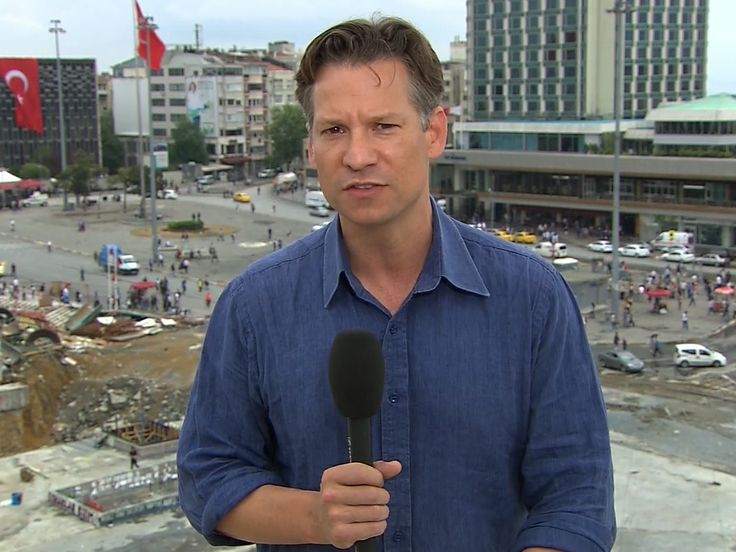
NBC chief foreign correspondent Richard Engel, exposed as part of hoax
The manipulation of western opinion about the Syrian conflict using fake events is not theory; it has been proven. A good example is the fake kidnapping of NBC reporter Richard Engel in December 2012. Engel and his media team were reportedly kidnapped and threatened with death by “shabiha” supporters of the Syrian president. After days in captivity the American team was supposedly rescued by Free Syrian Army “rebels” after a shootout. In 2015 it was confirmed this was a hoax perpetrated by the FSA and their American supporters. The entire charade was carried out by the “rebels”. The goal was to demonize the Assad government and its supporters, and to romanticize and increase support for the armed opposition. Neither Engel nor NBC confessed to the reality until it was about to be exposed years later, pointing to duplicity and collusion in the deception.
Four and half years ago, on August 21, 2013, the most famous chemical weapons incident occurred. The Syrian government was immediately accused of launching a sarin attack which killed hundreds of children and civilians. Over the next six months investigations were carried out. The conclusions of Seymour Hersh, Parry and the research site whoghouta.com concluded that the attack was almost certainly not from the government but actually from one of the ‘rebel’ factions with support from Turkish intelligence services. Two Turkish parliamentary deputies held a press conference and publicly revealed some of the evidence. The intent then, as now, was to provide justification and provocation for the US and NATO to bomb Syrian government installations.
The Drums are Pounding
Today there is the imminent possibility of a major attack based on the allegations of a clearly biased source, with international law and legal due process tossed aside. Why is violence being threatened before there is a serious, independent investigation of the chemical incident? If the accusations against Syria are true, why not let it be investigated, especially now that the area was liberated on Monday and safe access can be provided?
The drums of war are pounding. After over one year of incessant Russia bashing and disinformation, is the public ready to go to war with Russia over Syria? Neoconservative hawks and their Israeli and Saudi allies do not seem alarmed by this prospect. Their plans and predictions for Iraq, Libya and Yemen were delusional fantasies with the price paid in blood by the people of those countries and in treasure by Americans as well. Sadly, there has not been any accountability for the media and political establishment that promoted and launched those wars. Now they want to escalate the aggression by attacking Syria, causing vastly more blood to flow and risking confrontation with a country which can fight back.
Rick Sterling is an investigative journalist based in the San Francisco Bay Area. He can be contacted at rsterling1@gmail.com
Russia Denies Reports About Blocking Signals From US Drones in Syria
Sputnik – April 10, 2018
The Russian military has been scrambling some US military drones performing in Syria, seriously disrupting American military operations, the channel NBC announced, citing anonymous US officials.
According to US officials, the Russians had started blocking some smaller US drones several weeks ago after a “series of alleged chemical weapons attacks on civilians in Eastern Ghouta.” The NBC network’s sources stated that the Russian military was concerned that the US military would take revenge for the attacks and began jamming the GPS systems of the drones operating in the area.
“GPS receivers in most drones can be fairly easily jammed,” Dr. Todd Humphreys, the director of the Radionavigation Laboratory at the University of Texas at Austin said.
The Defense Department cannot with certainty state whether the jamming is the cause of the drones crashing, according to the operational security.
“The US military maintains sufficient countermeasures and protections to ensure the safety of our manned and unmanned aircraft, our forces and the missions they support,” said Pentagon spokesman Eric Pahon.
Deputy Chairman of the Russian Federation Council Committee on Defense and Security Yevgeny Serebrennikov has denied reports that Russia has blocked signals of US drones in Syria.
“This is more fake information from American media, which appears so often in recent times. Russia has repeatedly said that its actions, including in Syria, are made only in accordance with international treaties, such actions could not really have taken place,” Serebrennikov said.
US-Russia Standoff
The announcement has been made following an alleged chemical weapons attack in Syria’s Douma, a number of countries, including the US, jumped at the chance to blame Damascus for the incident.
Last week, the US Treasury Department added another 38 Russian entrepreneurs, senior officials and companies to its sanctions list in response to Russia’s alleged “malign activity” worldwide.
READ MORE:
Reports of ‘Chemical Attacks’ in Syria Used to ‘Justify External Intervention’
Corbyn calls on Boris Johnson to come clean about Skripal attack, Novichok & Russia
RT | April 9, 2018
Jeremy Corbyn has called on Boris Johnson to “tell us what he knows,” after he insisted the Porton Down military lab had said the substance used to poison Sergei and Yulia Skripal was unequivocally Russian – and was proven wrong.
As the Labour leader was speaking at the launch of the party’s London elections campaign in Westminster, Corbyn said that if Johnson “has evidence that hasn’t been made public yet, I think he has a responsibility to do so.”
“[Johnson] claimed that he was 101 percent sure on German television who was responsible for the disgusting attack on the Skripals. The Foreign Office then listened to what Porton Down said and removed their own statement in support of what he had said,” Corbyn said.
“My response is Boris Johnson has got to tell us what he knows. Because it doesn’t do anybody any good to throw around assertions against people,” the Labour leader added. “It does us all good to support the Organization for the Elimination of Chemical Weapons handing in their investigations. And hold to account those who committed this terrible crime on the streets of this country.”
Corbyn’s comments come only a day after Johnson lashed out at the Labour leader in the Telegraph, stating that he was giving “false credibility” to propaganda from Moscow by refusing to agree “unequivocally” that Russia was responsible for the attack on the Skripals.
“There is only one thing that gives the Kremlin succor and lends false credibility to its propaganda onslaught,” Johnson said. “That is when politicians from the targeted countries join in. Sadly, I am driven to the conclusion that Jeremy Corbyn has joined this effort.”
Johnson told Deutsche Welle that Porton Down has categorically traced the nerve agent used on ex-double agent Sergei Skripal back to Russia – leaving the foreign secretary red-faced when the lab chief revealed to Sky News that they had been unable to determine the origin of the nerve agent.
The UK Foreign Office deleted its own tweets that made the same claim.
Skripal Poison Case Becoming British Hostage Scenario
By Finian CUNNINGHAM | Strategic Culture Foundation | 09.04.2018
The British denial of a visitor visa to a Skripal family relative from Russia is fueling concern that the whole affair is far more sinister than what the British government and media have been claiming.
Far from the Skripal father and daughter being the alleged victims of a Russian assassination plot, it now seems increasingly apparent that they are being held against their will by Britain’s authorities. In short, hostages of the British state.
From the outset of the alleged poisoning incident in Salisbury on March 4, the official British narrative has been pocked suspiciously with inconsistencies. The lightning-fast rush to judgment by the British government – within days – to blame the Kremlin for “a brazen murder attempt” was perhaps the main giveaway that the narrative was following a script and foregone conclusion to incriminate Russia.
Last week, the saga took several significant twists raising more doubts about the official British narrative. First, British scientists at the Porton Down warfare laboratory admitted that they hadn’t in fact confirmed the alleged nerve agent used against the Skripals originated from Russia. That admission spectacularly exposed earlier British government claims as false, if not barefaced lies.
Secondly, it emerged that potentially key witness-material was destroyed by the British. Three pet animals in the Salisbury home of Sergei Skripal were declared dead and their remains incinerated. Autopsies could have shed light on the nature of the alleged nerve agent used against the Skripals. Why were the animal remains incinerated? And why did the British authorities disclose the fate of the animals only after the matter was raised by the Russian envoy to the UN Security Council on Thursday?
Thirdly, there is the strangely callous way that the British authorities have refused a visitor visa to a Skripal family relative from Russia who was intending to fly to England to be with her relatives while they are reportedly recuperating from the alleged poison attack.
Russian national Victoria Skripal revealed on Friday to Russian news media that she was refused a visa by British authorities to visit her relatives – cousin Yulia and uncle Sergei – who are reportedly confined to a hospital in Salisbury.
The day before her visa application was rejected, Victoria had a brief telephone conversation with Yulia. It appears that Victoria recorded the conversation and made it available to Russian media to broadcast. The transcript shows that Yulia’s words were guarded. She was obviously not comfortable with speaking freely. Their phone call ended abruptly. But she did manage to advise her cousin in Russia that the latter would probably not be granted a visitor visa. Why would she say such a thing?
British media quickly tried to smear the Russian cousin, Victoria. A BBC journalist said that the British authorities “suspected that Victoria was being used as a pawn by the Kremlin”. Russian’s foreign ministry hit back at that suggestion, saying it was a despicable slur.
For her part, Victoria Skripal told Russian media that she thinks the British authorities have “something to hide” by refusing to grant her a permit to Britain in order to visit her cousin and uncle. Was her visa application rejected by the British authorities because she had the “audacity” to record the phone call with her cousin and make it available to Russian media?
Far more plausible is not that Victoria is a “Kremlin pawn” but that the British fear that Victoria would not be a “London pawn”. The worst thing for the British authorities would be for an independent-minded Skripal relative coming to the Salisbury hospital and asking critical questions about the nature of why her relatives are being held there.
It would be interesting to see what would happen if several other Skripal relatives in Russia were to make similar applications for visitor visas to Britain. Surely, the British authorities could not turn them all down?
For over a month now since the March 4 incident in Salisbury, the Russian consular representatives in Britain have not been allowed access to the Skripal pair, allegedly being treated in hospital.
Fair enough, Sergei Skripal is a disgraced former Russian spy who had been living in England for nearly eight years. He was exiled there by Moscow as part of a spy-swap with Britain’s foreign intelligence MI6 whom Skripal had served as a double agent. It is believed he was given British citizenship by the London authorities.
However, his daughter, 33-year-old Yulia, is a citizen of the Russian Federation. She was visiting her father on holiday when the pair became ill – apparently from exposure to a nerve agent – while sitting in a public park in Salisbury.
Yulia and the Russian authorities are therefore entitled under international law to have consular contact. The Russian embassy in London has been repeatedly denied access by the British authorities to one of its citizens. On the face of it, that is an outrageous breach of international law by the British.
Significantly, Yulia did not express to her cousin during their phone conversation that she did not want to see the Russian consular people. That phone call was obviously initiated by Yulia. Her Russian-based cousin at one point asked her, “Is this your phone?”.
How Yulia got use of the phone is a good question. Was it a hospital staff member who felt obliged to allow her a quick call home? Evidently, the call was held in a rushed manner, and Yulia felt constrained to talk in detail about her confinement. And why would she warn her cousin in Russia that the latter would not be given a visa before the application result was known?
It is speculated in British media – most probably at the behest of briefings by shadowy state officials – that Yulia Skripal does not want to see her cousin, or the Russian consular representatives. Even though Yulia did not express that in her phone call. If Yulia didn’t want to see her cousin, why would she bother calling her, apparently out of the blue?
The speculation about Yulia’s preferences are based on the official British premise that the Russian state attempted to carry out an assassination with a toxic chemical on her father. It is therefore insinuated by the official British narrative that Yulia would not want to see the Russian authorities.
But that logic depends entirely on the plausibility of the British version of events. That is, that a Russian state operation used a Russian nerve agent to try to kill Sergei Skripal, and his daughter as collateral damage.
That British version has relied totally on assertion, innuendo and unverified claims made by politicians briefed by secret services. Claims which we are now seeing to be unfounded, as the Porton Down scientists disclosed last week.
At no point have the British produced any evidence to substantiate their high-flown allegations against Russia. Indeed, Britain refuses to give Russia access to alleged samples in order to carry out an independent chemical analysis.
The entire British case relies on a presumption of guilt and a despicable prejudice towards Russia as a malicious actor. That’s it entirely. British prejudice and contempt for due process.
However, what if the Russian government were correct? What if the British state carried out a macabre false flag operation by stealthily injuring the Skripals with some kind of chemical in order to blame it on Russia? For the plausible purpose of adding one more smear campaign in order to demonize and delegitimize Russia as an international power.
No doubt, the situation is disturbing and disorientating especially for Yulia Skripal who apparently was simply visiting her father in England for a happy family reunion.
More sinister, however, is the apparent lack of free will being afforded to Yulia Skripal. The British official position simply conflates their innuendo of a Russian plot, an innuendo which is increasingly untenable.
The denial of a visitor visa to Yulia’s family relatives from Russia points to the sinister conclusion that the British authorities are engaging in a macabre propaganda stunt. Moreover, a propaganda stunt involving the criminal assault on a Russian citizen and the ongoing illegal detention of that citizen.
Government Propaganda Now Totally Bizarre
By Craig Murray | April 9, 2018
The increasing desperation of government attempts to “prove” the Russians responsible for the Skripal attack has become increasingly bizarre. They now claim GCHQ picked up from Troodos a message from Syria to Moscow that “the package has been delivered”, and a further one that “two people have made their egress”.
Because of course, if you were sending a cryptic message back from Salisbury to Moscow, you would naturally route it back via Syria, in the certain knowledge that all such calls from Syria are picked up from Troodos. I am sure the Russians already knew that, even before I published it in detail five years ago.
Given Russian involvement in Syria, that somebody is reporting in Syria the delivery of a package to Moscow, would not lead any sane human being to conclude it was delivered in Salisbury.
As for the phrase “two people have made their egress”, presumably this was said in Russian and I cannot understand the translation at all. Exit, egress, go out, leave to outside – there is only one Russian word to express all of these and that is phonetically from the stem “vihod”, either as noun or verb. There is no egress/exit choice in Russian.
The only possible explanation is that the person actually said “two people have left” and the British government propagandists have translated this as the weird “made their egress” to try to make it sound more sinister and more like a codeword.
Reminding me of my previous Troodos article was extremely apposite. Because the point of that article was to prove that alleged communications intercepts proving it was the Syrian government which was responsible for certain chemical weapons strikes in Syria were not genuine. I am very sceptical indeed about the claims being made today.
How Fake News Becomes Fake History: British Propaganda and World War 1
By Corey Schink | Sott.net | April 2, 2018
While it took a while to pick up steam, the Skripal Salisbury poisoning incident has lately dominated Western media headlines. Daily we are treated to the smug and self-righteous faces who, in one breath, compare Putin to Hitler, Stalin, and Czar Nicholas II, before proceeding to compare Russia to Nazi Germany, the Soviet Union and the Russian Empire simultaneously. This would surely be the height of all evil, assuming it were true!
And of course we are supposed to assume it is true because this latest fake news is built on an edifice of an entire history of fake news. Simon Tisdall recently wrote in one of the largest purveyors of fake news, The Guardian:
It has taken a long time for western politicians to recognise the extent and depth of the threat represented by Vladimir Putin’s Russia. Some in the Labour party still don’t. It is also plain, as Theresa May embarks on an open-ended confrontation with Moscow, that the dispute provoked by the Salisbury outrage could take years to resolve.
Cold or hot, overt or covert, this is going to be a long war – and Britain will need all its friends and allies if it is to prevail against a ruthless opponent. Whether sincere, sufficient and timely support will be forthcoming is in serious doubt.
The ‘war’ has been declared – and to dissent is to be a traitor, not so much to one’s country but to amorphous ‘Western values’. Tisdall continues:
Justified perceptions of Western weakness, ambivalence and division have since encouraged Putin in a pattern of escalating, aggressive behaviour. Its main features include wars in Georgia and Ukraine, cyber-attacks against Nato countries, election meddling and destabilisation operations, and the bloody Syrian intervention.
Putin was further emboldened by his domestic dominance, achieved through manipulation of elections, the rustication of the Duma into a rubber-stamp parliament, and the elimination, by various means, of leading opponents, critics and free media. Boris Nemtsov, a liberal reformer killed in 2015, and Anna Politkovskaya, an investigative journalist murdered in 2006, are but two names on a long list that could ultimately include Sergei and Yulia Skripal.
Unsubstantiated claims apparently add up to substantial threats which warrant immediate action. To paraphrase Franz Kafka, “It is not necessary to accept everything as true, one must only accept it as necessary – thus lying turns into a universal principle.” I would only add that believing in lies turns people’s brains to mush, rendering them easily exploited by the liars.
So we watch again as many Western governments expel large numbers of Russian diplomats with absolute disregard for international law and norms. Donald Trump, the man who promised to mend relations with Russia has succumbed to the ‘swamp’ that he set out to drain. We can hope that he has now, at least, discovered how naive he was to believe he could actually do it.
While uniquely shrill and apparently novel, the anti-Russia hysteria in recent years – culminating recently with the Skripal incident and ‘Russiagate’ – has a long historical precedent and, over the course of at least the last couple of centuries, has been used primarily for one thing: war. War distracts the people from apparently insoluble social and political issues, and it presents major opportunities for enrichment to those positioned for it. But it takes two to tango, and ‘the East’ has learned that there will be no war if they don’t show up. While ‘the West’ continues to play a game of deception, the East has moved on, and we Westerners are – for now at least – left only to war with ourselves.
The central role played by the UK in recent ‘Russian incidents’ echoes the central role that country played in historical incidents which led us to this moment today. For over a century now, the role of the British elite in starting World War 1 has been almost completely overlooked. A proper appraisal of that world-changing event, which shaped the rest of the 20th century and our world today, has only recently been undertaken by historians and researchers. Far from being exclusively Germany’s fault, the ‘war to end all wars’ was deliberately brought about by a network of corporate, financial and imperial interests that met in and operated through the seat of the British Empire.
List of Suspects
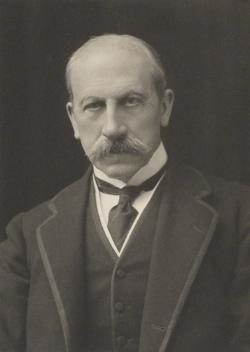
Lord Alfred Milner, British Colonial Secretary, and architect of the Union of South Africa
Britain in the early 1900s underwent a gradual though sustained period of anti-German hystericization which culminated in the outbreak of WW1. Despite relentless media propaganda demonizing Germans and increasing signs that war could break out in Europe, the British public in 1906 voted overwhelmingly for a new Prime Minister, Sir Henry Campbell-Bannerman, a staunch critic of the recent Boer wars and an advocate for a policy of ‘Peace and Retrenchment’ in the increasingly fragile British Empire.
Referred to as “Britain’s first, and only, radical Prime Minister,” in foreign affairs Campbell-Bannerman was neutered by a warmongering elite before he even began his term, and he died in office just two years later. Instead of peace, the British public received a war that produced in a single day the combined military and civilian casualties in all of Europe’s conflicts from the previous 100 years.1 So much for democracy and highfalutin ‘Western values’.
While the British voted resoundingly for a policy of Peace and Retrenchment, powerful forces would stop at nothing to get the war they desired, and the control over the world it afforded them.
Lord Alfred Milner: Despite being born in Germany to mixed British-German parents, Milner’s ethos was formed entirely by an ardent belief in the “superiority of the British race.” An Oxford-educated imperialist, Milner began as a journalist at the Pall Mall Gazette before joining, together with fellow journalist William Stead, a secret society set up by the influential oligarch and colonialist Cecil Rhodes. By the time WW1 broke out, this sinister organization was entirely Milner’s, and went by the name ‘Round Table Group’, or ‘Milner’s Kindergarten’, influencing British, and thus global, foreign policy from the shadows. It was, in essence, the precursor to today’s ‘Deep State’.
Milner served as Rhodes’ ‘clean-up man’ following the disastrous attempt to provoke an uprising among British expatriates in the Transvaal colony of southern Africa. Soon after Milner was rewarded with the office of High Commissioner for Southern Africa in 1897. From that post Milner would wage a campaign of deception to initiate the second Boer war, overseeing the highly controversial use of concentration camps to humiliate and punish the citizenry. These camps and other brutal methods used in the Boer wars would shock both the British public and the armed forces. Under Milner’s rule, 28,000 of the 115,000 people put into camps died, nearly 22,000 of them children. On this Milner wrote,
“The theory that, all the weakly children being dead, the rate would fall off is not so far borne out by the facts. The strong ones must be dying now and they will all be dead by the spring of 1903.”
Perhaps no one exemplified the British Elite’s attitude better than Milner. But for all his barbarism, he was very successful. Having secured British territories in the ‘Scramble for Africa’, Milner carefully manipulated the cabinet of the newly elected Henry Campbell-Bannerman, ensuring that his pro-imperialist forces were well-represented within. Succeeding in the dark arts of imperialism, Milner turned down lucrative offers to work for JP Morgan and instead returned to London in 1905 to pursue a much larger project: conquering the globe.2
Sir Edward Grey was appointed Foreign Minister in Henry Campbell-Bannerman’s cabinet on the insistence of King Edward. One of Milner’s inside men, he ensured that British foreign policy was pointed towards war preparations, and was party to a secret military alliance with France in 1904. This secret agreement between five ministers – Asquith, Haldane, Grey, Churchill and Lloyd George – promised military ‘reciprocities’ to the French in the event of war.
Grey stated categorically that there had been no ‘secret agreement’ to come to France’s aid in case of attack:
“First of all let me try to put an end to some of the suspicions with regard to secrecy — suspicions with which it seems to me some people are torturing themselves, and certainly worrying others. We have laid before the House the Secret Articles of the Agreement with France of 1904. There are no other secret engagements. The late Government made that agreement in 1904. They kept those articles secret and I think to everybody the reason will be obvious why they did so. It would have been invidious to make those articles public. In my opinion they were entirely justified in keeping those articles secret because they were not articles which commit this House to serious obligations.3
But, as Sir Bertrand Russell noted at the time, “I had noticed during previous years how carefully Sir Edward Grey lied in order to prevent the public from knowing the methods by which he was committing us to the support of France in the event of war.”4
King Edward VII: Prince of Wales, Albert Edward, became King Edward VII upon taking the throne in 1901. In the following years he busied himself with diplomatic meetings to arrange secret agreements that effectively encircled Germany and made the German military paranoid.
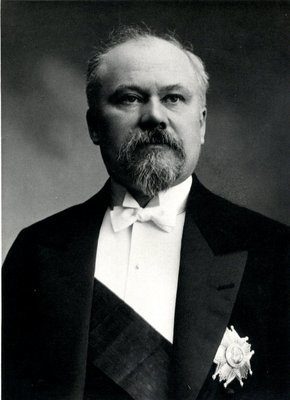
He drove a wedge between Germany and the Italian monarch, and conducted diplomacy with nearly all of Germany’s neighbors. When Germany mobilized her forces, she was unwittingly springing the trap set for her by Edward and the secret elite.
Raymond Poincaré: A French statesman, three-time Prime Minister and President in 1913, Poincare exemplified the hysterical anti-German hatred of the French elite. France, which lost the territory of Alsace-Lorraine to Prussia after Napoleon III foolishly went to war with an insufficient army to win it, was prepared to do whatever it took to win it back and check Germany’s rise. As Poincare would announce in an address to university students,
“In my years at school, my thought, bowed before the spectre of defeat, dwelt ceaselessly upon the frontier which the Treaty of Frankfurt had imposed upon us, and when I descended from my metaphysical clouds, I could discover no other reason why my generation should go on living except for the hope of recovering our lost provinces.”
Richard Burdon Haldane: Haldane was one of Milner’s closest confidants, and would become the Secretary of State for War in 1905, instituting a massive military revolution in the organisation of the British Army. He set up the Territorial Army, the Office Training Corps, and the Special Reserve, and spearhead a pro-French military policy in opposition to many who had served under a pro-Belgian policy for decades.
Théophile Delcassé: A French foreign minister with a rabid hatred of Germany, Théophile was bent on establishing a military alliance between Britain, France and Russia that would support France’s desire to regain her lost territories. He was forced to resign after he nearly brought his country to the brink of war with Germany in the First Moroccan Crisis of 1905-1906. However, he wormed his way back into power to replace the more cool-headed foreign minister, Gabriel Hanotaux, and then became President of France in 1913.
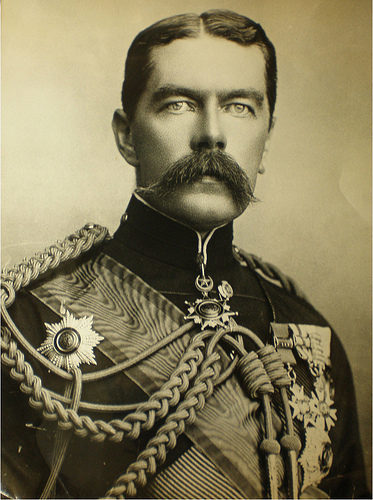
Horatio Herbert Kitchener
Horatio Herbert Kitchener: A general during the Boer wars, Kitchener oversaw the implementation of concentration camp policy in South Africa. He then ran British foreign affairs out of Cairo and designed plans for the division of the Middle East, fanning the flames of rebellion and separatism in the Ottoman Empire. The end result (though not according to his plan) was the rise of the House of Saud and its peculiar brand of Islam that served Anglo-American dominance of the region via the ‘War on Terror’ a century later. David Fromkin noted in A Peace to End All Peace that:
Restoring the caliphate to Arabia, where it and Mohammed were born thirteen centuries before, was Kitchener’s strategy for preparing for the rivalry with Russia which was bound to follow the conclusion of the war against Germany.5
If that was indeed Kitchener’s strategy a century ago, then it is remarkably consistent with current Crown Prince of Saudi Arabia’s recent statement that Wahhabism was encouraged throughout the 20th century by the anglo-Americans as a means of keeping Russia out of the Middle East.
Kitchener, like all the upper-class aristocrats and oligarchs who engineered WW1, had stunning disdain for ordinary people, his own troops included. At one point early in World War 1, it looked like the Russians were going to pull out and make peace with Germany. This would have been disastrous for the Anglo-French forces because Germany could then concentrate its forces on the Western Front.
The secret elite promised Russia that, in exchange for joining Britain’s ‘Triple Entente’, Constantinople – a kind of Orthodox Mecca – would become Russian property in a post-war world. Kitchener conspired with Winston Churchill, then First Lord of the Admiralty, to arrange a suicidal assault on the Dardanelles, which links the Mediterranean and Black Seas. They did this in order to trick Russia into believing that Britain was upholding its end of the bargain, and thus continuing its military engagement with Germany, Austria-Hungary and the Ottoman Empire in eastern Europe. This worked, but at the cost of tens of thousands of British, French and Australian lives in a landing invasion the elite knew would not work against formidable Ottoman defences. Furthermore, they never had any intention of ceding Constantinople to Russia.
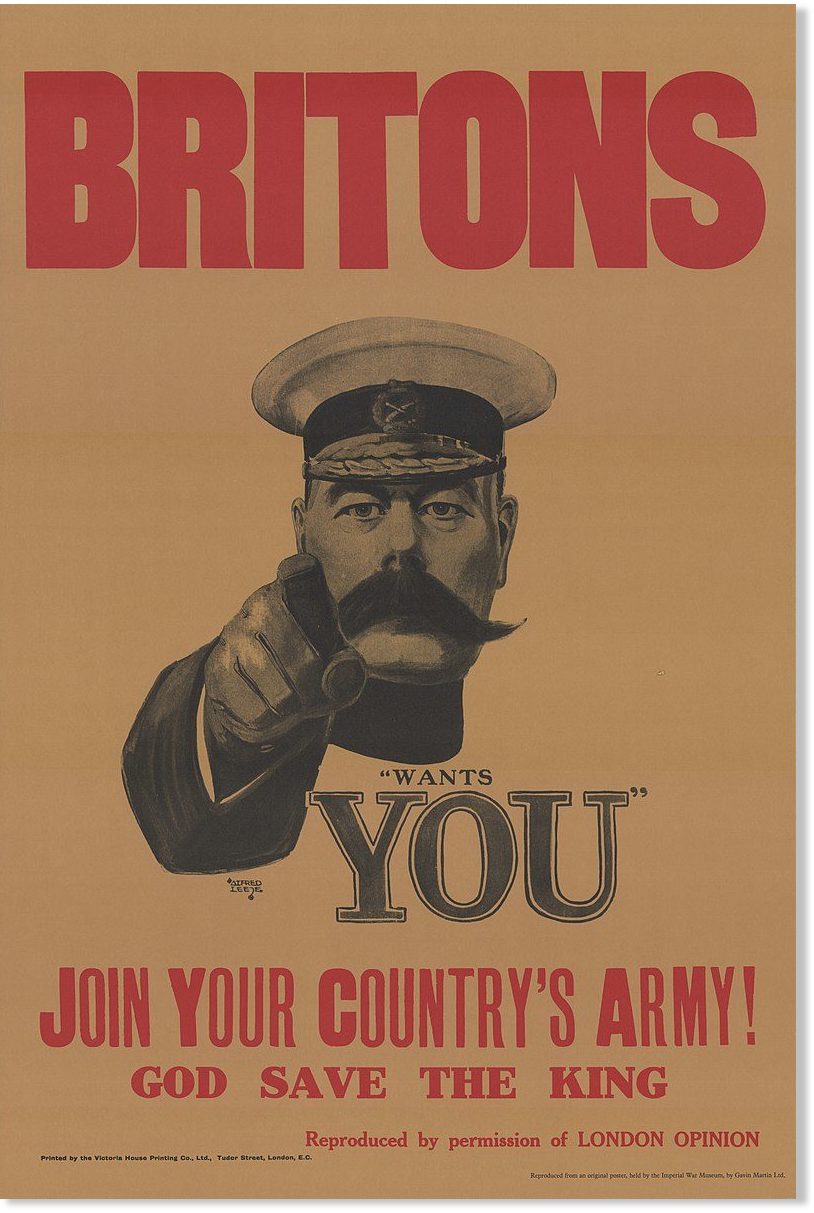
The iconic, much-imitated 1914 Lord Kitchener Wants You poster
Kitchener’s death-dealing career hit its highest point when he was appointed Secretary of State for War, but was abruptly ended when his ship was hit by a German u-boat, although there are various other theories about the cause of his death.
This list covers just a few of the conspirators, but enough to paint a rough picture of the individuals who worked tirelessly to engineer a war that would end peace for much of the century – a war that would result in the rise of Hitler, the Soviet Union, an apartheid Israeli state, and the spread of Radical Islamic Terrorism. The following is the general strategy they followed.
Seeking the War Trigger
Scottish researchers Gerry Docherty and Jim Macgregor conducted an exhaustive study of the ways in which British officials paved the road to war in their book Hidden History: The Secret Origins of the First World War. I think it’s a must-read for any student of Western history, but my one criticism of their work is that they tend to portray Germany as a victim and thereby cast a shadow over the generalized hysteria – which affected everyone, Russia included – and poor thinking that the German military and Kaiser succumbed to – and indeed the war crimes committed by the Germans. Nevertheless, their argument that the British were the primary instigators of the war rests in part on the following cases:
Cracks in the British Empire: At the onset of the war it seemed that every nation except Germany had reason to engage in a global Holocaust. The English had dominated European and world affairs to that point, but the sheer cost of occupying and managing many far-flung colonies was hitting its national coffers hard. Germany’s unification under Bismarck and rapid industrialization, meanwhile, was leading it to overtake the British empire in some key sectors. As F. William Engdahl notes “fear of the emerging German economic challenge towards the end of the 1890s was so extreme among the leading circles of the British establishment, that Britain made a drastic change in its decades-long Continental alliance strategy, in a bold effort to tilt European events back to England’s advantage.”6
This change in strategy saw Britain make geopolitical concessions to both Russia and France while manipulating them into adopting antagonistic positions towards Germany. Having been engaged in ‘the Great Game’ with Russia throughout the 19th century to check Russian expansion and influence in India and Afghanistan, Britain’s sudden alliance with Russia only came about after Japan, armed with British battleships and financed by British and American banks, defeated Russia in its Far East region in 1904-1905. Contained in the east by the rising Japanese, Russia’s gaze inevitably swung westwards to the Balkans and to the Mediterranean Sea access she coveted, and which the British pretended to agree she could have.
French Hysteria: Napoleon III, the nephew of Napoleon, was as ambitious as his uncle. In a brash attempt to destroy the growing Prussian state, Napoleon III ordered the mobilization of a far inferior French force that was immediately crushed by the Prussian military machine. As a result, France lost Alsace-Lorraine and was humiliated due to the ridiculous actions of a reckless leader.
As a British newspaper, the Sheffield and Rotterdam Independent, noted on October 11, 1870, “France has ever coveted the boundary of 1810. She has wanted power to cross the Rhine at her pleasure, to set up a Rhenish Confederation under her control, and to occupy at her convenience, as the first Napoleon did, the German capitals.”
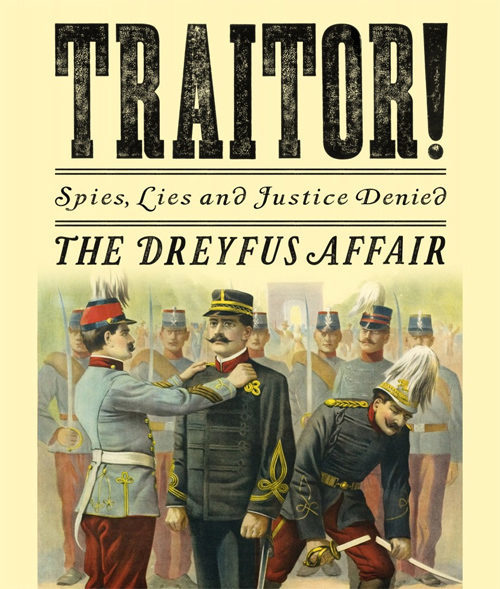
The Dreyfuss Affair: Gabriel Hanotaux, French minister of foreign affairs from 1894 to 1896, was a notable exception in the general trend of increasing hysteria. His efforts, however, could not arrest the slide to war. When Hanotaux sought to develop peaceful relations with Germany, General Albert Dreyfuss was charged with treason for allegedly communicating secrets to German spies. He was later exhonerated and the case remained a symbol of trial-by-propaganda. As Engdahl writes:
Hanotaux intervened into the initial process in 1894, correctly warning that the Dreyfus affair would lead to “a diplomatic rupture with Germany, even war.” Dreyfus was exonerated years later, and it was revealed that Count Ferdinand Walsin-Esterhazy, in the pay of the Rothschild banking family, had manufactured the evidence against Dreyfus. By 1898, Hanotaux was out of office, and succeeded by the malleable anglophile, Theophile Delcassé.7
Fashoda Incident: In 1898 a military incident between Kitchener’s British forces and French forces in Egypt, dubbed the Fashoda Incident, forced the French out of that country and caused an international crisis. The British then exploited the situation to secure a future alliance with France lest she be cornered by Germany and Russia and lose control of her other territories. By 1904 the British had secretly arranged to take complete control of Egypt while giving France control of Morocco, which was in violation of Franco-German treaties.
Fake News
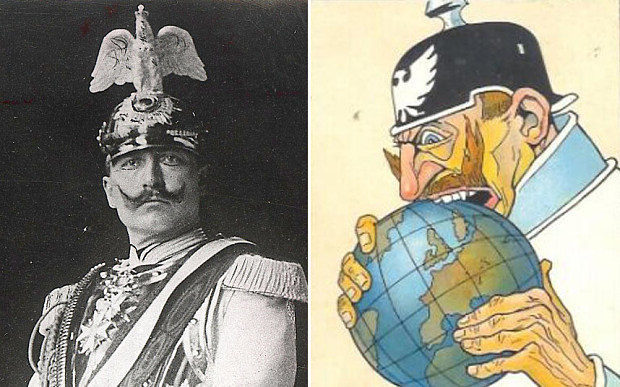
Emperor Wilhelm II and an Italian poster from 1915 showing the Kaiser biting into the world
Fake news becomes fake history. Today British war-mongers expect us to believe, without any reasonable proof, that Putin will kill ‘thousands and thousands and thousands’ of Britons without provocation. Similarly, the propaganda mill before and during World War 1 was hard at work convincing the world that Germany was the devil incarnate – and that the coming bloodbath was justified.
Germany was consistently portrayed in the press as an ‘aggressor nation’. This despite the fact that the UK, France, and Russia “spent £657,884,476 on warships in that same decade, while Germany and Austria-Hungary spent £235,897,978. The peacetime strength of the German army was 761,000, while France stood at 794,000 and Russia 1,845,000, yet the claim that militarism had ‘run amok’ in Germany was presented as the given truth.”9
While accusing Germany of war-mongering, British preparations for war were so intense that it led senior military officers to claim that war with Germany was inevitable.10 Milner would go on a ‘world tour’ organizing imperial conferences designed to rally support for Britain in the event of war and to “foster imperial cooperation in both defence and communications.”11
In 1896 Lord Nortchliffe created the Daily Mail newspaper which, within years, had reached millions of mostly lower and middle-class readers.12 In 1897 he commissioned the publication of a series titled Under the Iron Heel, which predicted the German Army would soon invade Britain. Northcliffe also commissioned the writing of a fictional account of a German invasion called The Invasion of 1910. The Daily Mail even printed special maps showing where these ‘Huns’ (slang for Germans) would invade. Northcliffe was also a financier of The Poison Bullet, a spy scare novel designed to indulge base anti-German sentiment among the British public.13 He also penned pamphlets predicting inevitable war with Germany.
As J. Lee Thompson writes, “by 1914 Northcliffe controlled roughly 40 percent of the morning, 45 percent of the evening, and 15 percent of the Sunday total newspaper circulations.”14 Thus, by the time of war, British society had been effectively whipped into war-readiness by decades of anti-German propaganda, with pamphlets and literature convincing the public that German spies were around every corner. Today the evening news and the internet have replaced “pamphlets and literature” and Russia has replaced Germany.
In 1909 a bill was rammed through parliament establishing the British secret service – today’s MI5 and MI6 – while another imposed unprecedented police state powers on the country.15
Pulling the Trigger
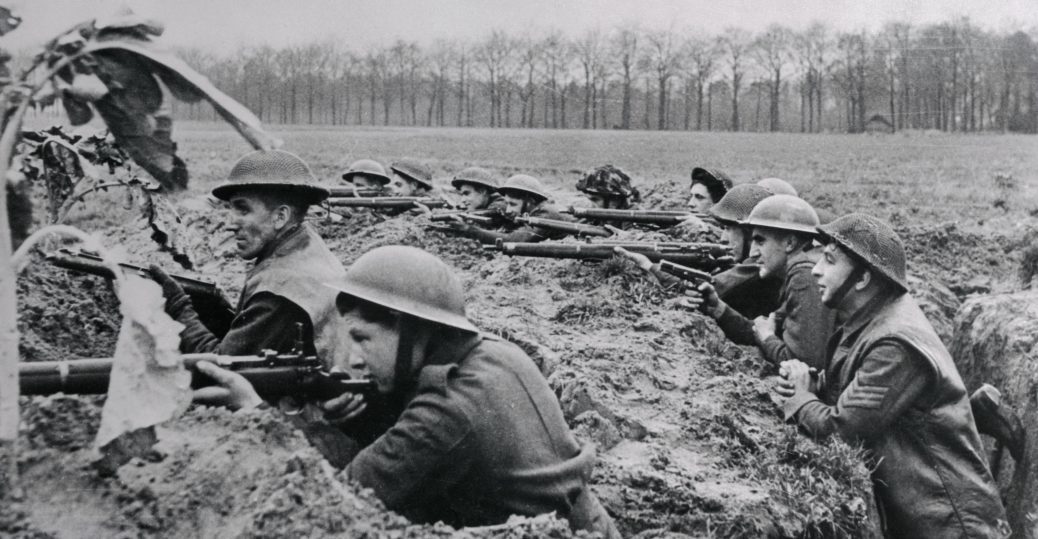
With Germany diplomatically isolated and secret military preparations and agreements signed by France, Britain, and Russia, the only thing missing was a “catastrophic and catalyzing event” to justify a declaration of war. Just such an event occurred in the Balkans, a region that had been in utter turmoil for some years.
In the build-up to World War 1, Serbia, Bulgaria, Macedonia and Bosnia were at war with each other, divided internally, and in conflict with both the Ottoman Empire and the Austro-Hungarian Empire. Bitter ethnic and nationalist sentiment was whipped into a frenzy by successive crises. Anglophile Russian diplomat Alexander Isvolsky agreed (without the Czar’s or the Russian government’s approval) that Russia would support Austria-Hungary’s ‘right’ to annex Bosnia-Herzegovina at a time of its choosing in exhange for Austro-Hungarian support for Russian control over the Dardanelles. As a result, and in violation of international law, on October 6, 1908, Austria-Hungary announced its annexation of Bosnia-Herzegovina immediately provoking outrage from Serbia that saw Bosnia as theirs. This entanglement was the fuse that ignited the first World War when the Austrian Archduke Ferdinand was assassinated by a Bosnian Serb. As Alan Cassels wrote in his Ideology and International Relations in the Modern World, this event “fanned pan-Slavism in the Balkans to a frenzy.”17
When World War I broke out, Isvolsky is reputed to have remarked, “C’est ma guerre!” (“This is my war!”)
On June 28th, 1914 Archduke Ferdinand was shot and killed in Sarajevo. Austria-Hungary blamed the Serbs. Determined to hold Serbia accountable, European diplomats indicated to Austria-Hungary that she had every right to do so. Austria-Hungary therefore sent Belgrade a note in which it demanded the following items:
- The end to anti-Austrian propaganda in Serbian media and education
- The right for Austrian police to investigate the assassination on Serbian soil
- Public apologies from the King and the government
- The immediate surrender of those responsible
They told Serbia it had 48 hours to comply. Once the note was delivered, and well aware that Serbia could not possibly comply, the previously supportive Russian, British, and French governments now expressed outrage at Austria-Hungary.
Serbia, emboldened by Entente’s display of indignation, refused to comply.18 In return, Austria-Hungary turned to Germany for support in military action, and Germany agreed. Until the 11th hour however, Germany’s Kaiser Wilhelm tried in vain to convince his cousin Nicholas II of Russia not to mobilize Russia’s forces. Germany thus gave Austria-Hungary the historical ‘blank check’ that has been cited ever since as proof of German war guilt.
French President Poincare visited St. Petersburg and guaranteed Russia that “France would not only give Russia strong diplomatic support, but would, if necessary, fulfill all the obligations imposed on her by the alliance.”20 A summary of his visit was sent to Edward Grey at the Foreign Office and, from July 25th onward, Grey made overtures about solving the crisis while Russia and France began mobilizing their armies. Four days later, Britain began mobilizing her own fleet.
On July 29th Czar Nicholas II officially ordered Russian mobilization. But then he received a telegram from the Kaiser:
My ambassador is instructed to draw the attention of your government to the dangers and serious consequences of a mobilisation. If, as appears from your communication and that of your Government, Russia is mobilising against Austria-Hungary … The whole burden of decision now rests upon your shoulders, the responsibility for peace or war.
Nicholas backed down.
But then, on July 30th, Russian foreign minister (and anglophile) Sergei Sazanov spent hours convincing Nicholas II of German treachery, urging him to reorder the mobilization of the armed forces. The Czar was deeply troubled with the weight of the decision, but in the end he capitulated to pressure and the Russian war machine lurched forward:
Nicholas II was still understandably hesitant; according to the French ambassador, “The Czar was deadly pale and replied in a choking voice: ‘Just think of the responsibility you are advising me to assume! Remember, it is a question of sending thousands and thousands of men to their death.'”
Germany was the last country to announce militarization. The key to Britain’s war plan was that Germany would follow its Schlieffen Plan, where German forces would quickly march through Belgium in order to avoid the mountainous Ardennes region, put the french army in its place, then turn around to face east and join Austria-Hungary in squaring off with Russia’s giant army. Unbeknownst to Germany, however, Belgium was not as neutral as it had led everyone to believe, and had started mobilizing its military – which had been secretly prepared and trained by the British – at the same time as France and Russia. But Germany’s invasion of hapless, ‘neutral’ Belgium gave Britain its ‘just cause’ for declaring war on Germany.
As the war began Britain cut Germany’s underseas communication lines, thus ensuring that all information to and from the outside world would be under its control. A year or two later, a poem written from the horrors of the trenches gave evidence of an awareness of the deception that came too late.
Waves of strong men
That will surge not again,
Scattered and riven
You lie, and you rot;
What have you not given?
And what – have you got?
What did we get? We got the imposition of an Israeli apartheid state and an Islamic State (Saudi Arabia) in the Middle East. The world also received the ‘gift’ of a Russian Revolution that gave way to the Soviet Union and the pathocracy which it spread across a large swathe of Eurasia. As German General Ludendorff would lament, foreshadowing the horrors that would come following Germany’s collapse, the Versailles Treaty ‘sent the German people into bondage, into an absolutely crushing one. All delusions have vanished’, he wrote. ‘We look into nothingness. Something else is needed’. Hitlerism would blot out the sun of Europe for decades. And the British Elite? They still refer to themselves as ‘Sir’ and ‘Honorable’ while pointing the finger at Russia as the ‘source of all evil’.
In short, history is proof that no one should ever trust a word the British establishment says.
Back to Today
Throughout modern history, we see the same ‘elite’ pushing, prodding, gaslighting, promising one thing to one country and something entirely different to another. In their pure malevolent instinct, we see the ‘essential psychopath’ at work spinning his web effortlessly across entire nations and generations. The biggest vulnerability? The average person’s tendency to engage in emotional thinking and the chaos it engenders when entire nations are infected by it.
But, as Russian ambassador to the US Anatoly Antonov has stated, “The truth will come out. We will not let ourselves to be provoked into an emotional breakdown.” Modern Russia is not Germany under the naive leadership of Kaiser Wilhelm II, who believed his relations with the Russian Tsar and the King of England would safeguard his country from war.
Modern Russia also isn’t Iraq – a small country easily overwhelmed by the superior military strength of NATO with an isolated leader easily smeared due to his past aggression. Modern Russia is a nuclear armed superpower that is organized by some of the most brilliant statesmen this planet has seen – they won’t be deceived, they won’t be out-gunned, and any attack on them will be an act of suicide.
So, for those pushing for war against Russia, their only viable outlet for their destructive anti-Russian impulse is more false flags, more black propaganda and all manner of dirty tricks. In other words they will attempt to poison, sanction, scream, rig, and otherwise sabotage us all into oblivion, and then blame it all on Russia.
References
1. David Fromkin’s A Peace to End All Peace: The Fall of the Ottoman Empire and the Creation of the Modern Middle East p. 232
2. Gerry Docherty & Jim Macgregor’s Hidden History: The Secret Origins of the First World War p. 214
3. P. Hof’s The Two Edwards: How King Edward VII and Foreign Secretary Sir Edward Grey Started The First World War p. 4
4. David Fromkin’s A Peace to End All Peace: The Fall of the Ottoman Empire and the Creation of the Modern Middle East p. 125
5 Ibid p. 104
6. F. William Engdahl’s A Century of War Anglo-American Oil Politics and the New World Order p. 39
7. Ibid. p. 31
8. Gerry Docherty & Jim Macgregor’s Hidden History: The Secret Origins of the First World War p. 135
9. Ibid. p. 133
10. Ibid. p. 155
11. J. Lee Thompson’s Politicians, the Press, and Propaganda: Lord Northcliffe and the Great War, 1914-1919 Kindle Edition Location 175
12. Gerry Docherty & Jim Macgregor’s Hidden History: The Secret Origins of the First World War p. 148- 149
13. J. Lee Thompson’s Politicians, the Press, and Propaganda: Lord Northcliffe and the Great War, 1914-1919 Kindle Edition Location 175
14. Gerry Docherty & Jim Macgregor’s Hidden History: The Secret Origins of the First World War p. 151
15. Andrew Feinstein’s The Shadow World: Inside the Global Arms Trade p. 5
16. Alan Corssal’s Ideology and International Relations in the Modern World p. 121
17. Gerry Docherty & Jim Macgregor’s Hidden History: The Secret Origins of the First World War p. 257
18. Ibid p. 267
19. Ibid p. 293
Corey Schink was born and raised in the Midwestern United States, where he worked on farms and as a welder, musician, and social worker. His interests in government, philosophy and history led to his writing for SOTT in 2012 and to becoming a SOTT editor and Truth Perspective co-host in 2014.
SYRIA: The Egregious Western Media ‘Chemical Weapon’ Fraud in Eastern Ghouta

One of the many unsubstantiated claims of “Napalm attack” made by the UK/US created propaganda construct, the White Helmets in Eastern Ghouta.
By Vanessa Beeley | 21st Century Wire | April 8, 2018
Napalm was a US invention. Napalm “was invented in a top-secret 1942 war research collaboration between Harvard University and the U.S. government”. In 1952 the U.S. Patent Office issued certificate 2,606,107 for “Incendiary Gels” and made napalm’s precise formula available worldwide.
“U.S. troops used a substance known as napalm from about 1965 to 1972 in the Vietnam War; napalm is a mixture of plastic polystyrene, hydrocarbon benzene, and gasoline. This mixture creates a jelly-like substance that, when ignited, sticks to practically anything and burns up to ten minutes. The effects of napalm on the human body are unbearably painful and almost always cause death among its victims.” ~ The Vietnam War
The accusation of “napalm attack” conjures up terrible images designed to shock. In 1945 the US B29 bombers dropped their payload of 69,000 pounds of Napalm over Tokyo, Japan in one hour. An estimated 100,000 Japanese men, women and children perished in the resulting fire storm. Washington considered the 10 days of Napalm bombing raids across all Japan’s major cities, a huge success. The US also used Napalm in North Korea with devastating consequences for its people in the 1950s. Washington dropped 32,557 tonnes of Napalm on Vietnam.
The US’ most recent use of Napalm was during the Iraq war in 2003 when “dozens of napalm bombs were dropped near bridges over the Saddam Canal and the Tigris River, south of Baghdad” according to an article in the Independent. In the same article a US commander of Marin Air Group 11 states:
“We napalmed both those [bridge] approaches,” said Colonel James Alles, commander of Marine Air Group 11. “Unfortunately there were people there … you could see them in the [cockpit] video. They were Iraqi soldiers. It’s no great way to die. The generals love napalm. It has a big psychological effect.”
According to Robert M Neer, author of Napalm: An American Biography, the countries who have used Napalm are:
“Countries that have used napalm, in addition to the United States, include: Greece (the first use after World War II), France, Britain, Portugal, United Nations forces in Korea, the Philippines, South Vietnam and North Vietnam (in flamethrowers), Cuba, Peru, Bolivia, Israel, Egypt, Turkey, India, Iraq, Nigeria, and Brazil.”
Syria is not mentioned.
Neer goes on to explain that the UN had banned the use of Napalm against “concentrations of civilians” under Protocol III of the 1980 UN Convention on Certain Conventional Weapons. The US signed the protocol almost thirty years after it had been adopted by the General Assembly, on January 21 2009. It was President Obama’s first full day in office. The caveat being “the US can disregard the treaty at its discretion if doing so would save civilian lives.” Considering just how many civilian lives had been destroyed by the US deployment of Napalm, it is hard to imagine a scenario where Napalm might be beneficial to civilians… but the inference is “we should trust the US to make that decision on our behalf and on behalf of the civilians in any given situation.”
The Syrian Napalm Narrative
The ‘Chemical Weapon’ narrative has sustained the conflict in Syria with alleged attacks being attributed almost entirely to the Syrian government, the Syrian Arab Army and Russia. The seven year information war has been ferocious with NATO-aligned media, think tanks and self appointed experts such as Eliot Higgins and Bellingcat doing all in their power to reinforce the “Syria did it” narrative.
If we were to map the chemical weapon claims in each terrorist held area undergoing liberation by the Syrian Arab Army, we would clearly see that the claims are commensurate with the pressure felt by the terrorist factions as the SAA closes in on their stronghold. … continue
Featured Video
Seyed M. Marandi: U.S. Military DIVIDED? Iran’s Secret Defense EXPOSED
or go to
Aletho News Archives – Video-Images
From the Archives
‘Israel sees Iran as obstacle to its policies’
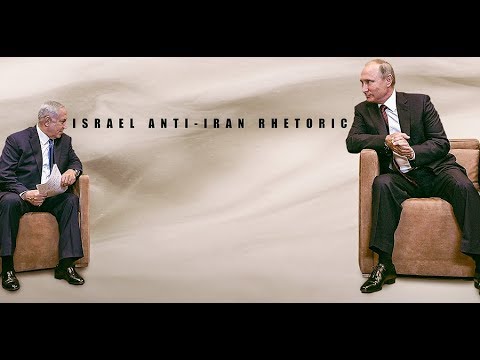
Press TV – August 25, 2017
Prime Minister Benjamin Netanyahu has said that Israel felt threatened by Iran’s growing influence in the Middle East. Netanyahu expressed his Iranophobic view in a meeting with Russian President Vladimir Putin in Russia’s Black Sea resort of Sochi on Wednesday. Press TV has asked Scott Rickard, former American intelligence linguist from Tampa, Florida, and Brent Budowsky, a columnist at The Hill from Washington, to give their thoughts on the issue.
Rickard said Tel Aviv is concerned about the fact that the regime could not carry out its old project to spread sectarian divisions and pave the way for dismemberment of the countries in the Middle East region because of the Iranian-led resistance against Israeli policies, not only in the occupied territories of Palestine but also in the whole region.
“Iran is not a threat to Israel whatsoever. The threat that Israel sees is the fact that their Oded Yinon Plan is being put to a hold by Iran,” the intelligence linguist said on Thursday night.
“They (the Israelis) look at Iran as a threat only because they have no influence on their governments and Iran is autonomous and is not under the Zionist influence,” he added.
Since the victory of the Islamic Republic of Iran in 1979, Tehran has been critical of Israel’s policies in the region, whereas “no leaders [of other states] even dared to speak out against Zionism,” Rickard argued. … continue
Blog Roll
 Aletho News
- Alberta Bill Would Fine Political Deepfakes $10,000 Without Satire Exemptions
- Iran declares ‘historic victory’ over US, says enemy forced to accept its proposal
- Trump Claims Ceasefire, Reopening of Strait of Hormuz Agreement with Iran
- Israeli tank fire killed UN peacekeeper in Lebanon, UNIFIL investigation finds
- Russia, China block Bahrain-sponsored UN resolution on Strait of Hormuz
- The US-Israeli War on Science is an Assault on our Future
- Trump’s Promise to Bomb Iran ‘Like Never Before’ Faces Brutal Logistics — Expert
- Germany seeks to restrict stays abroad for men of fighting age – Berliner Zeitung
- Evidence points to Ukraine being behind TurkStream attempted sabotage, but that should come as no surprise
- Sri Lanka secures supplies of Russia oil – minister
- If Americans Knew
- Thousands dead and neighborhoods razed to the ground: Aid agencies fear southern Lebanon is becoming the new Gaza
- The war the US is fighting for Israel could cost trillions
- ‘Cigarette Burns, Nail Wounds’: Toddler Tortured in Gaza to Coerce Father
- Trump Says US Sent ‘a Lot of Guns’ to Protesters in Iran
- Israeli forces destroy 17 UN peacekeeper cameras in south Lebanon
- US-Israeli strikes ‘completely destroy’ synagogue in Tehran
- Archbishop for US Military Says Iran War Is Unjust Under Catholic Teaching
- Iranian leaders’ Open Letters to the American People
- Trump says Iranians appreciate bombs, WHO warns of nuclear risks – Daily Update
- U.N. experts demand Israel release prominent Gaza doctor after reports of ‘severe torture’
- No Tricks Zone
- An Inconvenient Tree: Uncovered In Alps… Europe Much Warmer Than Today 6000 Years Ago
- New Study Reports A 60% Slowdown In Greenland’s Ice Loss Rate In The Last Decade
- Low Intensity Tornado Wrecks Major Solar Farm, Creating A Potential Toxic Dump
- New Study Finds Warming Saves Lives…Cold Temperatures 12 Times More Deadly Than Excess Heat
- German Science Blog Accuses PIK Climate Institute Of Hallucinating Climate Tipping Points
- Devastating Assessment Of Comirnaty Vaccine By Former Senior Pfizer Europe Toxicologist
- New Study: CO2 Is ‘Effectively Negligible’ As An Explanatory Climate Change Factor Since 2000
- Former Pfizer Toxicologist Dr. Helmut Sterz Tells Bundestag Hearing Pfizer Vaccine Should Have Never Been Approved
- Energy Expert: Germany’s Nuclear Phaseout Was A “500 Billion Euro Mistake”
- New Research: South Australia’s Mid-Holocene Sea Surface Temperatures Were 4°C Warmer Than Today
 Aletho News