Liberals Morph from Peaceniks to Warhawks on Government Intelligence Agencies
By Stephen J. Sniegoski • Unz Review • January 28, 2017
During the latter decades of the Cold War with Soviet Russia, the charge of being “unpatriotic” or “anti-American” caused American liberals (excluding those who had to rely on the votes of regular Americans to hold political office) to burst into spasms of ridicule and howls of “Red-baiting,” “war-mongering,” “witch-hunting,” and “fascism.” Sophisticated folks, liberals implied, would never even deign to think of doing anything so gauche as to automatically support their country in its fight against what they sarcastically called the “Red Menace.” America’s very possession of nuclear weapons was considered a danger to all humanity and many liberals flirted with the idea of U.S. unilateral nuclear disarmament. And the slogan of the Democratic candidate for president in 1972, George McGovern, was “Come Home, America” — which meant U.S. military retrenchment that mainstream liberals now lambast as “isolationism.”
During this not-too-long-ago era (at least, it was not too long ago for me, who is too rapidly approaching the biblically allotted three-score and ten), the CIA and the FBI were considered the bête noire in this liberal Weltanschauung. FBI director J. Edgar Hoover, with his penchant for spying on innocent people, was regarded as thoroughly vicious. The CIA was notorious for being involved in the overthrow of nice democratic governments (at least, that is how liberals viewed them) in such countries as Iran, Guatemala, and Chile, and spying on leftist critics in the United States. The villainous nature of the CIA and FBI was a theme in many Hollywood movies of the era.[1]
Now let’s return to the present and the liberal hysteria over purported Russian interference with the U.S. presidential election. The most bandied about charge involves “hacking” the DNC and Podesta emails and providing these to WikiLeaks to denigrate Hillary Clinton, thus preventing her from becoming president. The support for this claim, at least as it has been presented to the America public, rests only on assertions made by the U.S. Intelligence Community, and this dearth of proof was continued in the most recent report from the Office of the Director of National Intelligence (ODNI), “Assessing Russian Activities and Intentions in Recent US Elections,” released to the public on January 6. The report represents the unclassified findings of the intelligence community’s investigation of Russian involvement in the 2016 election. In the words of the report: “Thus, while the conclusions in the report are all reflected in the classified assessment, the declassified report does not and cannot include the full supporting information, including specific intelligence and sources and methods.”[2]
Even some believers, especially those who might know something about cyber technology and the capabilities of America’s intelligence agencies, evinced some concern about the report’s lack of substantiating evidence. For example, Wired, a high-tech webzine that usually follows the current progressive line, published an article titled “Feds’ Damning Report on Russian Election Hack Won’t Convince Skeptics,” in which Robert Graham, an analyst for the cybersecurity firm Erratasec, was quoted as saying: “But knowing what data they [U.S. intelligence agencies] probably have, they could have given us more details. And that really pisses me off.”[3] The thrust of the article is that the lack of substantial proof fails to convince skeptics, not that the intelligence report’s claims could be wrong. This position is rather understandable since skepticism about traditional beliefs such as Christianity is highly lauded by progressives, but skepticism is not allowed to cast doubt on the progressive narrative of the day.
President Obama went somewhat further in his attack on non-believers. In an interview on ABC News on January 6, Obama insinuated, and, in some cases, openly stated that people who express skepticism about the findings and conclusions drawn by the U.S. Intelligence Community are not on America’s “team” and are siding with Putin; in fact, he maintains that they “love” Putin. In short, Obama has come to assume that the American people must not question the sanctity of the U.S. “Intelligence Community.” To do otherwise signifies not merely a lack of patriotism but actual love for America’s alleged number one adversary—Vladimir Putin. “One of the things that I’ve urged the president-elect to do is to develop a strong working relationship with the intelligence community,” Obama stated. “We have to remind ourselves we’re on the same team. Vladimir Putin’s not on our team.” Obama warned that “If we get to a point where people in this country feel more affinity with a leader who is an adversary and view the United States and our way of life as a threat to him, then we’re gonna have bigger problems than just cyber hacking.” It appears to Obama that some politicians and reporters “seem to have more confidence in Vladimir Putin than fellow Americans because those fellow Americans are Democrats.” And he solemnly pontificated: “That cannot be.”[4]
Obama continued with this rather dystopian view: “[I]n this new information age, it is possible for misinformation, for cyber hacking and so forth to have an impact on our open societies, our open systems, to insinuate themselves into our democratic practices in ways that I think are accelerating.” Although “cyber hacking” existed even before Obama entered the White House and “misinformation,” according to the Bible, existed even when Adam and Eve resided in the Garden of Eden, Obama implies that he only now became aware of this possibility.[5]
Now the term “open society” was popularized (at least in intellectual circles) by the philosopher Karl Popper.”[6] and its most prominent proponent today is billionaire George Soros (a student of Popper’s). Soros’ Open Society Institute has as its goal spreading the “open society” world-wide. An open society, as Popper presented it, would be open to all types of ideas with people being free to make their own decisions. Soros, in contrast, expressed a view similar to that of Obama, contending that “Popper failed to recognize that in democratic politics, gathering public support takes precedence over the pursuit of truth. In other areas, such as science and industry, the impulse to impose one’s views on the world encounters the resistance of external reality. But in politics the electorate’s perception of reality can be easily manipulated. As a result, political discourse, even in democratic societies, does not necessarily lead to a better understanding of reality.”[7] The implication is that gatekeepers are needed to protect “truth.” As one critic puts it: “the Open Society Institute embodies Popper’s idea of an open society the way the German Democratic Republic (East Germany) embodied democracy.”[8]
Moving away from the focus on hacking, the recent ODNI report describes the Russian effort to affect the US election as “multifaceted” and devotes almost half of the report to propaganda (despite the negative connotation, propaganda can be true) spread by Russia, especially by its major government-sponsored television network for foreign countries, RT.
Moreover, the intelligence report interprets the alleged Russian effort to aid Trump in the election as only one part of a broader goal to combat the United States’ “liberal democratic order,” stating: “Russian efforts to influence the 2016 US presidential election represent the most recent expression of Moscow’s longstanding desire to undermine the US-led liberal democratic order, but these activities demonstrated a significant escalation in directness, level of activity, and scope of effort compared to previous operations.”[9] Moreover, the report considers any type of criticism of the United States as a “desire to undermine the US-led liberal democratic order.” And the report deals with aspects of this broader goal that are entirely unrelated to any Russian effort to aid Trump. This is of the utmost importance since the media narrative focuses on the idea that Russia aided Trump in the 2016 election but, for proof, relies on a report that deals with a much broader subject. That Russian media provides a negative view of America does not mean that this propaganda played a role in making Trump president. And it is not only the mainstream media but even the leaders of the intelligence community who blur this distinction.
Illustrating the point made above about the report’s concern with Russia’s alleged broader goal is its devotion of considerable space to Russian news stories casting the United States government and economic system in a negative light, but having nothing to do with Trump or the 2016 election. For example, the report observed that “RT aired a documentary about the Occupy Wall Street movement on 1, 2, and 4 November [2016]. RT framed the movement as a fight against ‘the ruling class’ and described the current US political system as corrupt and dominated by corporations. RT advertising for the documentary featured Occupy movement calls to ‘take back’ the government. The documentary claimed that the US system cannot be changed democratically, but only through ‘revolution.’”[10] Although this report disparages the existing economic system in the United States, it could hardly be interpreted as encouraging anyone to vote for billionaire Donald Trump with his proposed agenda that included lower tax rates—especially the corporate tax rate–and a reduction in economic regulation that liberals and Democrats claimed helped only the wealthy.
The study also points out that “RT runs anti-fracking programming, highlighting environmental issues and the impacts on public health. This is likely reflective of the Russian Government’s concern about the impact of fracking and US natural gas production on the global energy market and the potential challenges to Gazprom’s profitability.”[11] That Russia’s alleged favored candidate Trump was pro-fracking whereas Hillary straddled the issue would mean that the RT anti-fracking program could militate against supporting Trump.
The report also maintains that “RT’s reports often characterize the United States as a ‘surveillance state’ and allege widespread infringements of civil liberties, police brutality, and drone use.”[12] Again, this would not seem to generate support for Trump.
The report refers to articles written in 2012 that deal with the U.S. presidential election that year, which did not involve Trump, and reflects the fact the study covers, as the title states, recent U.S. elections, not just the 2016 election. For example, “In the runup to the 2012 US presidential election in November, English-language channel RT America . . . intensified its usually critical coverage of the United States. The channel portrayed the US electoral process as undemocratic and featured calls by US protesters for the public to rise up and ‘take this government back.’”[13]
Still dealing with the 2012 election, the intelligence report stated: “From August to November 2012, RT ran numerous reports on alleged US election fraud and voting machine vulnerabilities, contending that US election results cannot be trusted and do not reflect the popular will.”[14] Oddly, this is almost identical to what the mainstream media has been saying since Trump won the election.
But what about the “fake news” — fictitious articles deliberately fabricated to deceive–that the mainstream media claimed helped Trump, largely by harming Clinton? For example, a Washington Post article, dated November 24, 2016, was titled: “Russian propaganda effort helped spread ‘fake news’ during election, experts say.”[15] CNN, in its article, “The reality behind Russia’s fake news,” dated December 2, made similar claims, relying heavily on the aforementioned Washington Post article. [16]
(After extensive criticism including legal threats from the sites the Washington Post described as Russian propaganda outlets, the Post added its lengthy editor’s note distancing itself from the anonymous group that provided the key claims of Russian “fake news” saying that the Post would not vouch for its validity.) [17]
Even Director of National Intelligence James Clapper referred to the Russians making use of “fake news” during the election. In a Senate Armed Services Committee hearing on “Foreign Cyber Threats to the United States” on January 5. 2017, Senator Jack Reed (Democrat, Rhode Island) asked Clapper about media reports that held that Russia was engaged in the creation of “fake news.” Clapper responded: “This was a multifaceted campaign. So, the hacking was only one part of it, and it also entailed classical propaganda, disinformation, fake news.”[18] When the January 6 ODNI report was released, NBC News even claimed that it mentioned “a series of fake news stories damaging to Clinton, many of which got their start with Russian-backed outlets.” [19]
Considering the many references to “fake news,” even by the Director of National Intelligence, it is astonishing that the January 6 report did not cite any examples of this alleged phenomenon—or even mention it. What stands out is the absence of the term “fake news.” Did “fake news” itself turn out to be “fake news”? Whatever the case, the mainstream media did not seem to notice the absence of “fake news” from the report.
While the Intelligence Community did not make any mention of “fake news” in its report, it did make general claims—assessments by the intelligence community — that held that Russia favored Trump over Hillary Clinton. For example: “We assess the influence campaign aspired to help President-elect Trump’s chances of victory when possible by discrediting Secretary Clinton and publicly contrasting her unfavorably to the President-elect.”[20] The report also states: “RT’s coverage of Secretary Clinton throughout the US presidential campaign was consistently negative and focused on her leaked e-mails and accused her of corruption, poor physical and mental health, and ties to Islamic extremism. Some Russian officials echoed Russian lines for the influence campaign that Secretary Clinton’s election could lead to a war between the United States and Russia.”[21] None of these political views differed from what the anti-Clinton media in the U.S. expressed, so it is not apparent how Russia would add any credibility to these claims. It might even have tended to detract from them, which seems to be the case after the election. And since Russian officials did make the aforementioned claim about war, the mention of it does not seem to reflect any type of bias.
In contrast to the Russian depiction of Clinton, the intelligence report stated that Russian government media outlets RT and Sputnik “consistently cast President-elect Trump as the target of unfair coverage from traditional US media outlets that they claimed were subservient to a corrupt political establishment.”[22] This view was also commonly expressed by the more conservative media in the U.S., even that media which was not supportive of Trump.
RT put forth an extensive refutation of the intelligence report’s claims in an article entitled, “All the ways RT ‘influenced’ American politics ‒ it’s not what the ODNI thinks,” dated January7.[23] In many cases, RT made an effort to show that it also presented news stories that were contrary to those that the report cited—in essence, that its reporting was balanced while the intelligence report “cherry picked” RT stories to fit its narrative. It should be noted that no supporter of the Intelligence Community’s findings, from either the U.S. Intelligence Community itself or the private media, made the effort to rebut RT’s detailed criticism of the report.
It would seem to be self-evident that Russian media would act to promote Russian interests—although information used to achieve this goal might be true–just as US government-sponsored international media is intended to promote the interests of the United States. However, while the intelligence report holds that the Russian media was biased in favor of Trump, it fails to prove that bias. The report, for example, did not come up with any obvious erroneous information, such as the U.S. media’s account of the alleged killing of the incubator babies during Iraq’s invasion of Kuwait in 1990; the WMD story in the run-up to the 2003 war on Iraq; and the recent story about the Russians hacking the Vermont power grid.
The report could have relied upon a statistical analysis of the Russian media’s election reporting. Numerous efforts have been made in the United States to use statistics and computer analysis in assessing media bias. Analyses that stand out tend to conclude that the U.S. media have a liberal bias. They include: The News Twisters (1976) by Edith Efron; T he Media Elite (1986) by Robert Lichter, Stanley Rothman, and Linda Lichter; Press Bias and Politics: How the Media Frame Controversial Issues (2002) by Jim A. Kuypers; and Left Turn: How Liberal Media Bias Distorts the American Mind, (2012) by Tim Groseclose. Many statisticians have found fault with these studies despite their often extensive use of statistical data and comparisons among various media outlets. If this extensive information can be rejected, how could one accept the intelligence report’s claims of Russian media bias where no statistical proof or even standards for determining bias exist? The intelligence report, indeed, not only eschews statistical analysis for its bias claims, but acknowledges that it does not even make a comparison between Russian media and U.S. media, stating that “it does not analyze US political processes or US public opinion.”[24]
Moreover, it is not apparent that the Russian media would affect how any significant number of Americans vote. And the report explicitly states: “We did not make an assessment of the impact that Russian activities had on the outcome of the 2016 election.”[25] With all the uproar about Russian meddling in the US election, and allegations by prominent figures that Trump is not a legitimate president, it would be expected that the report would try to determine if this alleged meddling had any effect on the election’s outcome.
The study does hint that Russian media might have had some effect on voting by using graphs that show it is competitive with leading international media—Al Jazeera English, BBC World, CNN/CNN International. The Economist, however, provides an effective statistical refutation of this claim: “In Twitter and Facebook, RT’s reach is narrower than that of other news networks . . . . Its biggest claim to dominance is on YouTube, where it bills itself as the ‘most watched news network’ on the platform. As the intelligence report fretfully notes, RT videos get 1m views a day, far surpassing other outlets. But this is mostly down to [due to] the network’s practice of buying the rights to sensational footage, for instance of Japan’s 2011 tsunami, and repackaging it with the company logo.”[26] A September 2015 article in The Daily Beast, “Putin’s Propaganda TV Lies about Its Popularity,” states: “As of 2015, RT is still largely absent from cable news rankings.”[27] Moreover, RT’s influence would seem to pale to insignificance compared to the totality of American media.
Considering all the information provided by the U.S. Intelligence Community, it would appear that the entire issue of the alleged Russian meddling in the election turns out to be, to quote the Bard, “full of sound and fury, signifying nothing.”
[1] Maria Lauino, “Hollywood Presents: Government as Villain,” New York Times, February 12, 1995, http://www.nytimes.com/1995/02/12/movies/film-hollywood-presents-government-as-villain.html?pagewanted=all
[2] “Background to ‘Assessing Russian Activities and Intentions in Recent US Elections’: The Analytic Process and Cyber Incident Attribution,” January 6, 2016, p. 1.
[3] Andy Greenberg, “Feds’ Damning Report on Russian Election Hack Won’t Convince Skeptics,” Wired, January 6, 2017, https://www.wired.com/2017/01/feds-damning-report-russian-election-hack-wont-convince-skeptics/
[4] Kevin Liptak, “Obama: ‘Vladimir Putin is not on our team,’” CNN, January 6, 2017, http://www.cnn.com/2017/01/06/politics/obama-vladimir-putin-is-not-on-our-team/
[5] Liptak.
[6] Noted philosopher Henri Bergson actually introduced the term “open society.”
[7] George Soros, Project Syndicate, November 8, 2007, https://www.project-syndicate.org/commentary/from-karl-popper-to-karl-rove—and-back?barrier=accessreg
[8] Jonathan David Carson, “The Left’s Theft of the Open Society and the Scientific Method,” American Thinker, April 24, 2008, http://www.americanthinker.com/articles/2008/04/the_lefts_theft_of_the_open_so.html
[9] Intelligence Community Assessment, “Assessing Russian Activities and Intentions in Recent US Elections,” p. ii.
[10] Assessing, p.7.
[11] Assessing, p.8.
[12] Assessing, p. 7.
[13] Assessing, p. 6.
[14] Assessing, p. 6.
[15] Craig Timberg, “Russian propaganda effort helped spread ‘fake news’ during election, experts say,” Washington Post, November 24, 2016, https://www.washingtonpost.com/business/economy/russian-propaganda-effort-helped-spread-fake-news-during-election-experts-say/2016/11/24/793903b6-8a40-4ca9-b712-716af66098fe_story.html?utm_term=.715bb
[16] Jill Dougherty, “The reality behind Russia’s fake news,” CNN, December 2, 2016,http://www.cnn.com/2016/12/02/politics/russia-fake-news-reality/
[17] Glenn Greenwald, “WashPost Is Richly Rewarded for False News About Russia Threat While Public Is Deceived,” The Intercept, January 4, 2017, https://theintercept.com/2017/01/04/washpost-is-richly-rewarded-for-false-news-about-russia-threat-while-public-is-deceived/
[18] Alex Griswold, “James Clapper Confirms Russia Was Behind Fake News During 2016 Election,” Mediaite, January 5, 2017, http://www.mediaite.com/tv/james-clapper-confirms-russia-was-behind-fake-news-during-2016-election/
[19] Ken Dilanian, “Report: Putin, Russia Tried to Help Trump By ‘Discrediting’ Clinton,” NBC News, January 6, 2017, http://www.nbcnews.com/news/us-news/report-putin-russia-tried-help-trump-discrediting-clinton-n703981
[20] Assessing, p.2.
[21] Assessing, p. 4.
[22] Assessing, p.4.
[23] RT, “All the ways RT ‘influenced’ American politics ‒ it’s not what the ODNI thinks,” January 7, 2017, https://www.rt.com/usa/372890-odni-rt-influenced-election/
[24] Assessing, p. i.
[25] Assessing, p. i.
[26] RT’s propaganda is far less influential than Westerners fear,” The Economist, January 19, 2017, http://www.economist.com/news/europe/21715031-kremlin-backed-network-inflates-its-viewership-youtube-disaster-videos-rts-propaganda
[27] Katie Zavadski, ‘Putin’s Propaganda TV Its Lies About Popularity,” The Daily Beast, September17, 2015, http://www.thedailybeast.com/articles/2015/09/17/putin-s-propaganda-tv-lies-about-ratings.html
Those ‘Resignations’: What Really Happened at the State Department
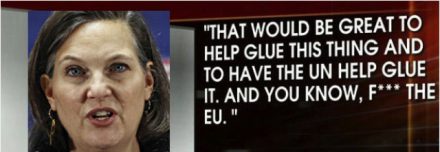
By Peter Van Buren | We Meant Well | January 26, 2017
Yesterday at the State Department five officials resigned or retired. Another one today.
The media has gone near-insane, claiming State is crumbling in protest under the Trump administration. This is not true. What happened at State is very routine.
Leaving the Department are head of the Management Bureau Pat Kennedy, Assistant Secretary of State for Administration Joyce Anne Barr, Assistant Secretary of State for Consular Affairs Michele Bond, Ambassador Gentry O. Smith, director of the Office of Foreign Missions, arms control official Tom Countryman, and Victoria Nuland (above).
Here’s the story:
— No one at the State Dept resigned in protest.
— No one was formally fired.
— Six people were transferred from or retired from political appointee positions. Technically those who did not retire can be considered to have “resigned,” but that is a routine HR/personnel term used, not some political statement. The six are career Foreign Service career personnel (FSOs) They previously left their FSO job to be appointed into political jobs and now have resigned those (or retired out of the State Department) to return to career FSO jobs. A circle. They are required to submit a letter of resignation as a matter of routine when a new president takes office.
— As for perspective: only one Under Secretary of State (Alan Larson) stayed through the transition from Bill Clinton to George W. Bush. It is routine for senior officials to leave or be reassigned.
— Several of the six are connected to the Clinton emails and/or Clinton’s handling of Benghazi. One of these people, Pat Kennedy, played a significant role in both, as well as many other controversial issues during Clinton’s term. Sources tell me that although officially Kennedy “retired,” he was more or less required to do so by the Trump administration.
— I have no information on the others, whether they were asked to retire, or just part of a reshuffling of positions and will routinely be reassigned. Most likely the latter, as such reshuffling is very common as administrations change. As everywhere in the government, the new administration fills its own political appointee slots.
— Some of the six will hit mandatory retirement age on January 31 anyway.
— Reports that these people represent “senior management” at State confuse terms. Because of the odd way State is organized, four of the six work in the Management Bureau, M in State talk. Kennedy was the head of the Bureau. The four play varying roles and collectively are not the senior management of the State Department. Two work in other parts of the Department (Countryman and Nuland) and are more directly tied to policies likely to change under the new administration.
— All six persons come from offices with a deep bench. It is highly unlikely that any of the work of the State Department will be impeded by any of these changes. Every office has a second, third, fourth, etc., person in charge who will step up pending formal replacements to be nominated and confirmed. This is all part of the standard transition process.
— As an example, I worked in the Bureau of Consular Affairs for most of my 24 years at State, including working with/for Michele Bond, one of the resignees. I personally know the people in the next rank below her, and all have equal experience and tenure as Bond. There will be no gap in experience or knowledge as some press reports have fretted. There will be no “void.” A slightly more dire, but responsible take, here.
— There will very likely be more, similar, “resignations” and reshuffling at State. New political appointees will bring in their own staff, for example. But unless and until an employee holds a press conference to announce s/he is resigning out of protest, the media should take care to calm down, verify facts, and report accurately.
— The Washington Post stated these changes were part of an “ongoing mass exodus of senior Foreign Service officers who don’t want to stick around for the Trump era.” I am not aware of any other noteworthy departures (two lesser officials left earlier this month in circumstances not clearly connected to Trump) and as stated above, the six did not resign in protest. Regardless, eight people in any context do not constitute a mass exodus.
— The Post article is, in my opinion, grossly alarming. It reflects a reporter apparently unfamiliar with transitions at State.
Google, Facebook purge ‘fake news’ sites
RT | January 25, 2017
Under increased scrutiny for supporting the spread of false and misleading news, Google and Facebook are taking steps to purge networks of several hundred fake news sites.
On Wednesday, Google announced it had reviewed some 550 sites since its policy changes, permanently banning nearly 200 published sites and temporarily cutting off another 140 sites from the company ad dollar source, according to Variety.
Among the typical culprits was a conspiracy blog that appeared as the first item found for the search “who won the popular vote,” which suggested Donald Trump had won the popular vote. Another was a made-up story about President Barack Obama supposedly seeking a third term.
Google regularly weeds out advertisers for false and misleading claims, but the search giant has now booted publishers off its ad network for fake news.
The company responded to criticism that it supported fake news by changing its Adsense policy, prohibiting sites that “misrepresent, misstate, on conceal information about the publisher, the publisher’s content, or the primary purpose” of the site from using Google ads for monetization.
An annual report of ad violations shows that Google took down 1.7 billion ads for various policy violations in 2016, including 17 million ads for illegal gambling, 5 million payday loans and 80 million misleading or shocking ads.
The company declined to release a list of the banned sites.
Facebook also announced it is overhauling its “trending topics” box, as part of its effort to curb fake news.
Beginning on Wednesday, its software will track only topics that have been covered by a significant number of credible publishers.
“If just one story or post went viral, it wouldn’t make it into the trending as it might previously,” Will Cathcart, a Facebook vice president of product management told the Wall Street Journal. “It really takes a mass of publishers writing about the same topic to make the cut.”
Facebook will take into account how long a publisher has maintained a presence on the social network.
The trending feature appears in a box on the right side of the Facebook page.
The change, however, will do little to affect what is reflected in users’ newsfeeds. In December, Facebook had fact-checking groups flag stories if they were false, which would then be demoted in the news feed.
Another popular social media company, Snapchat, is embracing the fake news challenge. In a redesign rolled out Wednesday, the company will restrict publishers from using images or headlines in Discover that lack editorial value. The Discover channels, which were introduced last summer, are a grid of tiles that are scrollable by users.
Future plans will be an age-gating tool to prevent minors from seeing inappropriate content on the Discover feed.
European experts ask Trump to back new independent inquiry into MH17 crash
RT | January 24, 2017
A group of European journalists and aviation experts has sent an open letter to Donald Trump asking him to back a new UN-run investigation into the 2014 crash of Flight MH17. The current Dutch-led inquiry is “neither independent nor convincing,” they said.
The open letter, signed by 25 journalists, former civil aviation pilots and researchers from Germany, the Netherlands and Australia, was posted on the website of Joost Niemoller – a Dutch journalist who publicly challenged the current investigation into the ill-fated Flight MH17, which was downed over Ukraine in July 2014.
With Trump having taken office as the new president of the United States, the letter says “there is now a real chance of resolving the ongoing conflict in eastern Ukraine,” and also “hope of improving the quality of the investigation into the alleged shooting down of the MH17.”
The experts suggested that the new investigation should include independent international researchers able to overcome governments’ reluctance to disclose information, and should be overseen by the United Nations. At the moment, Ukraine’s secret service (SBU) plays a major role in providing data to the Dutch investigators, while Russian investigators are being excluded from the process.
In September last year, the Dutch investigators said the aircraft was shot down with a missile from a Buk launch system that “was brought from the territory of the Russian Federation and after launch subsequently returned to the Russian Federation territory.” The investigation stopped short of accusing Russia directly, saying that “we have determined that the weapons came from the Russian Federation.”
Furthermore, the experts’ letter referred to former US Secretary of State John Kerry, who claimed in July 2014 that Washington possesses “satellite imagery” showing the trajectory of a surface-to-air missile from areas controlled by rebels in eastern Ukraine. The US should release the images or recognize that they never existed, the experts stressed.
Notably, the open letter calls for a forensic investigation into the impact holes on the fragments of the MH17 wreckage, and suggests the same damage patterns should be reproduced in a shooting test. Similar experiments have already been staged by Almaz Antey, Russia’s leading missile manufacturer, in July and October 2015, although their results were subsequently ignored by international investigators.
Almaz Antey’s experts said that judging by the T-shape strike elements, the missile was an old Buk-M1 model fired from a Ukraine-controlled area, contesting the preliminary theory by Dutch investigators. “If the Malaysian Boeing was downed by a Buk missile, it was done with an old Buk model which does not have double-T iron strike elements,” CEO Yan Novikov told a media conference in Moscow after the experiment.
The new investigation proposed by Dutch, German and Australian experts should pave the way for “an international tribunal under the auspices of the UN,” the letter said, staffed with judges from countries that are not related to the disaster.
In 2015, speaking on MSNBC, Trump contested preliminary findings of the Dutch Safety Board (DSB), whose report alleged that the Malaysian Airlines Boeing 777 was hit by a surface-to-air missile launched by eastern Ukrainian rebels.
“It may have been their weapon, but they didn’t use it, they didn’t fire it, they even said the other side fired it to blame them,” Trump said. “I mean to be honest with you, you’ll probably never know for sure.”
Read more:
Karl Rove’s Prophecy

Karl Rove. Credit: Jay Godwin/Wikimedia Commons
Karel van Wolferen • Unz Review • January 23, 2017
In a famous exchange between a high official at the court of George W. Bush and journalist Ron Suskind, the official – later acknowledged to have been Karl Rove – takes the journalist to task for working in “the reality-based community.” He defined that as believing “that solutions emerge from your judicious study of discernible reality.” Rove then asserted that this was no longer the way in which the world worked:
We’re an empire now, and when we act, we create our own reality. And while you’re studying that reality – judiciously, as you will – we’ll act again, creating other new realities, which you can study too, and that’s how things will sort out. We’re history’s actors . . . and you, all of you, will be left to just study what we do. (Ron Suskind, NYTimes Magazine, Oct. 17, 2004).
This declaration became popular as an illustration of the hubris of the Bush-Cheney government. But we could also see it as fulfilled prophecy. Fulfilled in a manner that no journalist at that time would have deemed possible. Yes, the neoconservatives brought disrepute upon themselves because of the disaster in Iraq. Sure, opposition to the reality Rove had helped create in that devastated country became a first rung on the ladder that could lead to the presidency, as it did for Barack Obama. But the neocons stayed put in the State Department and other positions closely linked to the Obama White House, where they became allies with the liberal hawks in continuing ‘spreading democracy’ by overthrowing regimes. America’s mainstream news and opinion purveyors, without demurring, accommodated the architects of reality production overseen by Dick Cheney.
This did not end when Obama became president, but in fact with seemingly ever greater eagerness they gradually made the CIA/neocon-neoliberal created reality appear unshakably substantial in the minds of most newspaper readers and among TV audiences in the Atlantic basin. This was most obvious when attention moved to an imagined existential threat posed by Russia supposedly aimed at the political and ‘Enlightenment’ achievements of the West. Neoconservatives and liberal hawks bent America’s foreign-policy entirely to their ultimate purpose of eliminating a Vladimir Putin who had decided not to dance to Washington’s tune so that he might save the Russian state, which had been disintegrating under his predecessor and Wall Street’s robber barons.
With President Obama as a mere spectator, the neocon/liberals could – without being ridiculed – pass off as a popular revolution the coup d’état they fomented in the Ukraine. And because of an unquestioned Atlanticist faith, which holds that without the policies of the United States the world cannot be safe for people of the Atlantic basin, the European elites that determine policy or comment on it joined their American counterparts in endorsing that reality.
As blind vassals the Europeans have adopted Washington’s enemies as their own. Hence the ease with which the European Union member states could be roped into a system of baseless economic sanctions against Russia, much to the detriment of their own economic interests. Layers upon layers of anti-Russian propaganda have piled up to bamboozle a largely unsuspecting public on both sides of the Ocean.
In the Netherlands, from where I have been watching all this, Putin was held personally responsible in much of the media for the shooting down of a Malaysian airliner flying over the Ukraine, which killed 298 people. No serious investigation was undertaken. The presentation of ‘almost definitive’ findings by the joint investigation team under Dutch leadership has neither included clues supplied by jet fighter cannon holes in the wrecked fuselage nor eyewitness stories, which would make the government in Kiev the prime suspect. Moscow’s challenging the integrity of the investigation, whose agreed-upon rules included publication of findings only if Kiev agreed with them, were met with great indignation by the Dutch Foreign and Prime Ministers.
As the fighting in Syria reached a phase when contradictions in the official Washington/NATO story demanded a stepping back for a fresh look, editors were forced into contortions to make sure that the baddies stayed bad, and that no matter how cruel and murderously they went about their occupation in Aleppo and elsewhere, the jihadi groups fighting to overthrow the secular Assad government in Damascus remained strictly labeled as moderate dissidents worthy of Western support, and the Russians as violators of Western values. Architects of an official reality that diverges widely from the facts you thought you knew must rely on faits accompli they achieve through military or police violence and intimidation, in combination with a fitting interpretation or a news blackout delivered by mainstream media.
These conditions have been widely obtained in the Atlantic basin through a gradual loss of political accountability at top levels, and through government agencies protected by venerated secrecy that are allowed to live lives of their own. As a result American and European populations have been dropped into a fantasy world, one under constant threat from terrorists and an evil dictator in Moscow. For Americans the never ending war waged by their own government, which leaves them with no choice but to condone mass murder, is supposedly necessary to keep them safe. For Europeans, at least those in the northern half, the numerous NATO tanks rolling up to the border of the Russian Federation and the massing of troops in that area are an extra guarantee, on top of the missiles that were already there, that Vladimir Putin will restrain his urges to grab a European country or two. On a smaller scale, when every May 4th the 1940-45 war dead are remembered in the Netherlands, we must now include the fallen in Afghanistan as if they were a sacrifice to defend us against the Taliban threat from behind the Hindu Kush.
Ever since the start of this millennium there has been a chain of realities as prophesied by Karl Rove, enhanced by terrorist attacks, which may or may not have been the work of actual terrorists, but whose reality is not questioned without risking one’s reputation. The geopolitical picture that they have helped build in most minds appears fairly consistent if one can keep one’s curiosity on a leash and one’s sense of contradiction sufficiently blunt. After all, the details of the official reality are filled in and smoothed out all the time by crafty campaigns produced in the PR world, with assistance from think tanks and academia.
But the question does reappear in one’s thoughts: do the politically prominent and the well-positioned editors, especially those known for having once possessed skeptical minds, actually believe it all? Do those members of the cabinet or parliament, who can get hot under their collar as they decry the latest revelation about one or other outrage committed by Putin, take seriously what they’re saying? Not all of them are believers, I know that from off the record conversations. But there appears to be a marked difference between the elite in government, in the media, in prominent social positions, and ordinary people who in these recent times of anguish about populism are sometimes referred to as uneducated. Quite a few among the latter appear to think that something fishy is going on. This could be because in my experience the alert ones have educated themselves, something that is not generally understood by commentators who have made their way through the bureaucracy of standard higher education.
A disadvantage of being part of the elite is that you must stick to the accepted story. If you deviate from it, and have your thoughts run rather far away from it, which is quite inevitable once you begin with your deviation, you can no longer be trusted by those around you. If you are a journalist and depend for your income on a mainstream newspaper or are hired by a TV company, you run the risk of losing your job if you do not engage in self-censorship.
Consequently, publications that used to be rightly known as quality newspapers have turned into unreadable rags. The newspaper that was my employer for a couple of decades used to be edited on the premise that its correspondents rather than authorities were always correct in what they were saying. Today greater loyalty to the reality created in Washington and Langley cannot be imagined. For much of northern Europe the official story that originates in the United States is amplified by the BBC and other once reliable purveyors of news and opinion like the Guardian, the Financial Times and the (always less reliable) Economist.
Repetition lends an ever greater aura of truth to the nonsense that is relentlessly repeated on the pages of once serious publications. Detailed analyses of developments understood through strings of false clues give the fictions ever more weight in learned heads and debates in parliament. At the time of writing, the grave concern spread across the opinion pages on my side of the Atlantic is about how Putin’s meddling in upcoming European elections can be prevented.
The realities Rove predicted have infantilized parliamentary debates, current affairs discussion and lecture events, and anything of a supposedly serious nature on TV. These now conform to comic book simplicities of evil, heroes and baddies. They have produced a multitude of editorials with facts upside-down. They force even those who advise against provoking Moscow to include a remark or two about Putin being a murderer or tyrant, lest they could be mistaken for traitors to Enlightenment values or even as Russian puppets, as I have been. Layers of unreality have incapacitated learned and serious people to think clearly about the world and how it came to be that way.
How could Rove’s predictions so totally materialize? There’s a simple answer: ‘they’ got away with momentous lies at an early stage. The more authorities lie successfully the more they are likely to lie again in a big way to serve the purposes of earlier lies. The ‘they’ stands for those individuals and groups in the power system who operate beyond legal limits as a hydra-headed entity, whose coordination depends on the project, campaign, mission, or operation at hand. Those with much power got away with excessive extralegal use of it since the beginning of this century because systems of holding the powerful to account have crumbled on both sides of the Atlantic. Hence, potential opposition to what the reality architects were doing dwindled to almost nothing. At the same time, people whose job or personal inclination leads them to ferret out truth were made to feel guilty for pursuing it.
The best way, I think, to make sense of how this works is to study it as a type of intimidation. Sticking to the official story because you have to may not be quite as bad as forced religious conversion with a gun pointed at your head, but it belongs to the same category. It begins with the triggering of odd feelings of guilt. At least that is how I remember it. Living in Tokyo, I had just read Mark Lane’s Rush To Judgment, the first major demolishing in book form of the Warren Report on the murder of John F. Kennedy, when I became aware that I had begun to belong to an undesirable category of people who were taking the existence of conspiracies seriously. We all owe thanks to writers of Internet-based samizdat literature who’ve recently reminded us that the pejorative use of the conspiracy label stems from one of the greatest misinformation successes of the CIA begun in 1967.
So the campaign to make journalists feel guilty for their embarrassing questions dates from before Dick Cheney and Rove and Bush. But it has only reached a heavy duty phase after the moment that I see as having triggered the triumph of political untruth.
We have experienced massive systemic intimidation since 9/11. For the wider public we have the absurdities of airport security – initially evidenced by mountains of nail-clippers – reminding everyone of the arbitrary coercive potential that rests with the authorities. Every time people are made to take off their belts and shoes – to stick only to the least inane instances – they are reminded: yes, we can do this to you! Half of Boston or all of France can be placed under undeclared martial law to tell people: yes, we have you under full control! For journalists unexamined guilt feelings still play a major role. The serious ones feel guilty for wanting to ask disturbing questions, and so they reaffirm that they still belong to ‘sane’ humanity rather than the segment with extraterrestrials in flying saucers in its belief system. But there is a confused interaction with another guilty feeling of not having pursued unanswered questions. Its remedy appears to be a doubling down on the official story. Why throw in fairly common lines like “I have no time for truthers” unless you feel that this is where the shoe pinches?
You will have noticed a fairly common response when the 9/11 massacre enters a discussion. Smart people will say that they “will not go there”, which brings to mind the “here be dragons” warning on uncharted bits of medieval maps. That response is not stupid. It hints at an understanding that there is no way back once you enter that realm. There is simply no denying that if you accept the essential conclusions of the official 9/11 report you must also concede that laws of nature stopped working on that particular day. And, true enough, if you do go there and bear witness publicly to what you see, you may well be devoured; your career in many government positions, the media and even academia is likely to come to an end.
So, for the time being we are stuck with a considerable chunk of terra incognita relating to recognized political knowledge; which is an indispensable knowledge if you want to get current world affairs and the American role in it into proper perspective.
Mapping the motives of those who decide “not to go there” may be a way to begin breaking through this disastrous deadlock. Holding onto your job is an honorable motivation when you have a family to maintain. The career motivation is not something to scorn. There is also an entirely reasonable expectation that once you go there you lose your voice publicly to address very important social abuse and political misdeeds. I think it is not difficult to detect authors active on internet samizdat sites who have that foremost in mind. Another possible reason for not going there is the more familiar one, akin to the denial that one has a dreadful disease. Also possible is an honorable position of wishing to preserve social order in the face of a prospect of very dramatic political upheaval caused by revelations about a crime so huge that hardly anything in America’s history can be compared to it. Where could such a thing end – civil war? Martial law?
What I find more difficult to stomach is the position of someone who is worshiped by what used to be the left, and who has been guiding that class of politically interested Americans as to where they can and cannot go. Noam Chomsky does not merely keep quiet about it, but mocks students who raise logical questions prompted by their curiosity, thereby discouraging a whole generation studying at universities and active in civil rights causes. One can only hope that this overrated analyst of the establishment, who helps keep the most embarrassing questions out of the public sphere, trips over the contradictions and preposterousness of his own judgments and crumples in full view of his audience.
The triumph of political untruth has brought into being a vast system of political intimidation. Remember then that the intimidater does not really care what you believe or not, but impresses you with the fact that you have no choice. That is the essence of the exercise of brute power. With false flag events the circumstantial evidence sometimes appears quite transparently false and, indeed could be interpreted as having been purposeful. Consider the finding of passports or identity papers accidentally left by terrorists, or their almost always having been known to and suspected by the police? What of their death through police shooting before they can be interrogated? Could these be taunting signals of ultimate power to a doubting public: Now you! Dare contradict us! Are the persons killed by the police the same who committed the crime? Follow-up questions once considered perfectly normal and necessary by news media editors are conspicuous by their absence.
How can anyone quarrel with Rove’s prophecy. He told Suskind that we will forever be studying newly created realities. This is what the mainstream media continue to do. His words made it very clear: you have no choice!
A question that will be in the minds of perhaps many as they consider the newly sworn in president of the United States, who like John F. Kennedy appears to have understood that “Intelligence” leads a dangerously uncontrolled life of its own: At what point will he give in to the powers of an invisible government, as he is made to reckon that he also has no choice?
Karel van Wolferen is a Dutch journalist and retired professor at the University of Amsterdam. Since 1969, he has published over twenty books on public policy issues, which have been translated into eleven languages and sold over a million copies worldwide. As a foreign correspondent for NRC Handelsblad , one of Holland’s leading newspapers, he received the highest Dutch award for journalism, and over the years his articles have appeared in The New York Times , The Washington Post , The New Republic , The National Interest , Le Monde , and numerous other newspapers and magazines.
Mainstream British Press Propaganda Ramps Up Dangerous War Rhetoric
By Graham Vanbergen | TruePublica | January 18, 2017
The British press are in full hysteria propaganda mode when it comes to demonising our new greatest threat on planet earth; not climate change, a global pandemic, international terrorism, or America’s new foe in the South China Sea – but Russia.
The Telegraph 31/12/16: “Systemic, relentless, predatory’ Russian cyber threat to US power grid exposed as malware found on major electricity company computer.”
The Independent 13/12/16: “Highly probable Russian interfered with Brexit referendum.”
The Express 15/01/17: “Russians forcing RAF to abort missions in Syria by ‘hacking into’ their systems”
The Guardian 14/01/17: “Senior British politicians ‘targeted by Kremlin’ for smear campaigns”
In all of these newspaper reports, and there are plenty more of them, not a single scrap of actual evidence other than hearsay is published. In the case of the Express story, it’s allegations are backed up with the statement “It is entirely feasible that Russia has targeted Tornadoes and Typhoons in this way,” said air defence expert Justin Bronk, of the Royal United Services Institute think-tank.” This is not evidence.
In the case of the Telegraph, this fairy-tail has been 100% debunked as pure propaganda and the original report from the Washington Post ended with a full-on apology by its editor. The Telegraph has printed no such amendment or apology for its totally fictitious article.
The Guardian’s headline is pure misinformation as it’s sole point of evidence is an MP (Chris Bryant), explaining that incumbent Foreign Office ministers could not speak out on the (Russian hacking) issue because of security connotations, and said: “Any minister who goes into the Foreign Office and has responsibility for Russia, they [Moscow] will be, in any shape or form, trying to put together information about them.” As if to strengthen the ‘evidence’, Bryant says he is “absolutely certain that Boris Johnson, Liam Fox, Alan Duncan who has the Russia brief, and [Brexit secretary] David Davis will have been absolutely looked at.” This is not evidence.
The funny thing is this; the story may be true and quite probably is, but so what.
In October 2015, Britain’s own spy agency confirmed it was spying on Britain’s MP’s and at the time was given court immunity when challenged. It determined that MPs’ communications were not protected from surveillance by intelligence agencies. This case came about because Green Party MP Caroline Lucas, Baroness Jenny Jones and former MP George Galloway, [observed] that revelations from Edward Snowden, showed MPs’ communications were being spied on by GCHQ despite laws protecting them.
Around the same time we learn that a well known paedophile ran a lodge set up by GCHQ for its spies to monitor important political ‘targets’ ie our own MP’s and other public figures.
Back in 1983 Margaret Thatcher used Britain’s latest and most advanced surveillance system named ‘Echelon’ (Read: ECHELON – The Start of Britain’s Modern Day Spying Operations) to Spy on Government Ministers’. It was an American design and the first major state surveillance system using satellite and IT systems to spy worldwide. Indeed Echelon was originally created in the 1960s to monitor the military and diplomatic communications of the Soviet Union and its Eastern Bloc allies throughout the Cold War by Britain and America. All of this data being shared with America, a foreign government.
America’s NSA monitored the phone conversations of 35 world leaders in another Snowden leak three years ago. Germany’s Spiegel reported in 2014 that “Documents show Britain’s GCHQ signals intelligence agency has targeted European, German and Israeli politicians for surveillance.” So distrustful of the British that Chancellor Merkel announced a counter-espionage offensive designed to curb mass surveillance conducted by the US NSA and its British counterpart, GCHQ. Today it is reported by IntelNews that the “discord between British and German intelligence services, which began at the same time in 2014, allegedly persists and now constitutes the “biggest rift between the secret services” of the two countries “since World War II”.
Just six months ago we found out that “GCHQ and NSA routinely spy on UK politicians’ e-mails” that included privileged correspondence between parliamentarians and their constituents and before that, internal MI5, MI6 and GCHQ documents reveal routine interception of legally privileged communications. The information obtained was exploited unlawfully to be used by the agencies in the fighting of court cases in which they themselves were involved.
Amazingly, we recently find out just last week that Israeli embassy staff, quite likely Mossad operatives – “are working with senior political activists and politicians in the Conservative and Labour parties to subvert their own parties from within, and skew British foreign policy so that it benefits Israeli, rather than British interests.” And yet, there has been little comment in the British press about foreign infiltration of government minsters by Israel.
If Russia were not spying on our MP’s, they would be the only ones not at it. No-one trusts anyone. Spying is old news and fully expected. We are ALL being spied on nowadays.
The British press are complicit in their reckless rhetoric designed to instill fear into the population with dangerous propaganda that could easily lead to tensions becoming so dangerous that a real ‘hot war’ starts. Whilst America is shielded by continental Europe and the Atlantic ocean, Britain could be used as a pawn to be sacrificed on the international chess-game of winner-takes-all. We have no ‘special-relationship’, there never has been one, and an irresponsible press being a mouthpiece that ramps up the stress between the US/NATO and Russia is absolutely against the interests and national security of Britain.
As Laurence Krauss’s (chair of the board of sponsors of The Bulletin of the Atomic Scientists, and is on the board of the Federation of American Scientists) article last October alarmingly points out – “Trump has said he would consider using nuclear weapons against ISIS and suggested that it would be good for the world if Japan, South Korea, and Saudi Arabia acquired them.” Trump could be one seriously dangerous individual for world peace – who knows!
So much for Trump but as Krauss goes on to say that “In general, during the Obama presidency, we have only deepened our dangerous embrace of nuclear weapons. At the moment, around a thousand nuclear weapons are still on a hair-trigger alert; as they were during the Cold War, they are ready to be launched in minutes in response to a warning of imminent attack.”
Who in their right mind would support this lunacy?
Economist can’t handle the facts (about RT)
RT | January 21, 2017
Most economists are good with numbers. It is, after all, a prerequisite skill for the profession. Thus, it’s somewhat ironic that a publication called The Economist would be so inept with figures.
However, it’s likely the numerical errors in their latest RT demolition piece are more the result of a determination to prove a desired point rather than it being down to an actual mathematical deficiency amongst staff.
To bring you up to speed, just a few days ago, a reporter from the Economist reached out to the RT press office with a few questions. This of course is very much in line with basic journalistic practices of fact-checking and due diligence. Answers were readily provided, in good faith.
However, of all the – independently verifiable – facts and figures provided by RT to the journalist, not a single one, nor even a fragment of a comment, was actually included in the article that appeared in today’s issue of the magazine.
Instead, the Economist writes that “RT has a clever way with numbers. Its ““audience” of 550m refers to the number of people who can access its channel, not those who actually watch it. RT has never released the latter figure…”
First of all, can we please pause and reflect for a minute on the sheer inanity of passing off a 5-year-old report as something reflecting the current state of affairs, including audience? Particularly in the world of media, where revolutionary changes take place in a much shorter time span.
Anyhow, while we’d love to take credit for our cunning practices in this regard, we don’t need to, because we have facts on our side. And the fact is, very clearly stated on RT’s “About” page, in plain English, the network’s TV channels are “available to 700 million people.”“AVAILABLE.” It’s been up there for years.
Also, contrary to the Economist’s claim, RT has repeatedly provided exact figures for its actual TV audience. According to a November 2015 report from Ipsos – a leading audience research firm – which conducted a survey of TV news consumption in 38 countries, 70 million people watch RT TV channels every week.
Of that number, 36 million people watch RT weekly in 10 European countries, and is among the top 5 pan-regional news channels. RT is also among the top-5 most watched international TV news channels in the US, with a viewership of 8 million per week. These aren’t numbers that RT dreamed up, but the results of an independent study by a top-3 global market research company. Contact information for verification is also readily available.
As a matter of fact, RT provided this exact data to the Economist ! Not that the Economist would bother admitting this, because they wouldn’t want the facts to get in a way of their RT story. It’s much easier to lie about RT “never releasing the latter figure.”
Perhaps they’re really are ignorant about the world of audience research and ratings, because they follow up the aforementioned fake with the following: “a 2015 survey of the top 94 cable channels in America by Nielsen, a research firm, found that RT did not even make it into the rankings.” Here’s Nielsen 101: you have to pay to play. Or rather, you have to pay to be measured and included in the Nielsen rankings. RT chooses not to. So using the above statement to make a point about RT’s US audience makes as much sense as walking into a vegetarian shop, not finding any beefsteaks, and concluding that all the cows have gone extinct.
What about RT’s success on YouTube? Well, the Economist says not to worry about RT’s 4+ BILLION views (#1 among TV news networks) on YouTube because on the platform, RT “inflates its viewership with YouTube disaster videos.”
If the Economist had been paying attention to the Washington Post this past week, they might have noted that things aren’t quite as they wish them to be: for example, RT’s YouTube video of Trump’s victory speech received 3.7 million views, it’s live election coverage attracted 1.3 million views in on RT and RT America, and Putin’s statement on Trump’s victory got 2.4 million. And this is just a sliver of RT’s political video hits.
Since the Economist has a thing for ‘numbers’, let’s draw a small comparison. Trump’s victory speech on CNN’s YouTube Channel received about 495,000 views, BBC’s – a mere 33,500, and CBC News’ –about 1.3 million. So maybe the Economist can tell us if 3.7 million is a larger number?
What about RT’s website, what kind of scheme would the Economist try to deploy to minimize RT success there? Here, the magazine simply ignores the publicly available (and provided in an email to the publication) stats about RT’s website visits, which, at 119 million monthly (SimilarWeb, December 2016) places it well ahead of the likes of Al Jazeera, DW, Euronews, France24 and BBG (VOA + RFE/RL and other platforms).
Overall, the Economist article gives the impression that its journalists didn’t bother to read the answers to their own questions, or sacrificed the facts in a maniacal commitment to its anti-RT diatribe. Facts really can be inconvenient that way.
Influence is a rather subjective concept that can be difficult to measure. Schizophrenic coverage of Russia, which has been plaguing the mainstream media for the last year, tries to position RT simultaneously as weak and as a threat to all humanity. Media-political establishments urge their stakeholders and audiences to not overestimate RT’s influence (hello, Economist ), while emphasizing the need to spend ever more millions to counter it.
The Economist is of course entitled to its own opinion about RT’s influence. But when that opinion is built entirely around the size of RT’s audience, the Economist isn’t entitled to its own facts.
British Fingerprints in Dirty Tricks Against Trump
By Finian CUNNINGHAM | Strategic Culture Foundation | 21.01.2017
Britain’s divisive Brexit politics are playing out through the new US presidency of Donald Trump. It seems that a faction within the British political establishment which is opposed to Britain leaving the European Union has joined forces with American intelligence counterparts to hamper Trump’s new administration.
By hampering Trump, the pro-EU British faction would in turn achieve a blow against a possible bilateral trade deal emerging between the US and Britain. Such a bilateral trade deal is vital for post-Brexit Britain to survive outside of the EU. If emerging US-British trade relations were sabotaged by disenfranchising President Trump, then Britain would necessarily have to turn back to rejoining the European Union, which is precisely what a powerful British faction desires.
What unites the anti-Trump forces on both sides of the Atlantic is that they share an atlanticist, pro-NATO worldview, which underpins American hegemony over Europe and Anglo-American-dominated global finance. This atlanticist perspective is vehemently anti-Russian because an independent Russia under President Vladimir Putin is seen as an impediment to the US-led global order of Anglo-American dominance.
The atlanticists in the US and Britain are represented in part by the upper echelons of the intelligence-military apparatus, embodied by the American Central Intelligence Agency and Britain’s Military Intelligence (Section) 6 (MI6).
Notably, incoming US President Donald Trump has expressed indifference towards NATO. This week he repeated comments in which he called the US-led military alliance «obsolete». Trump’s views are no doubt a cause of grave consternation among US-British atlanticists.
It is now emerging that British state intelligence services are involved much more deeply in the dirty tricks operation to smear Trump than might have been appreciated heretofore. The British involvement tends to validate the above atlanticist analysis.
The dirty tricks operation overseen by US intelligence agencies and willing news media outlets appears to be aimed at undermining Trump and, perhaps, even leading to his impeachment.
The former British MI6 agent, named as Christopher Steele, who authored the latest sexual allegations against Trump, was initially reported as working independently for US political parties. However, it now seems that Steele was not acting as an independent consultant to Trump’s political opponents during the US election, as media reports tended to indicate.
Britain’s Independent newspaper has lately reported that Steele’s so-called «Russian dossier» – which claimed that Trump was being blackmailed by the Kremlin over sex orgy tapes – was tacitly given official British endorsement.
That endorsement came in two ways. First, according to the Independent, former British ambassador to Russia, Sir Andrew Woods, reportedly gave assurances to US Senator John McCain that the dossier’s allegations of Russian blackmail against Trump were credible. Woods met with McCain at a security conference in Canada back in November. McCain then passed the allegations on to the American FBI – so «alarmed» was he by the British diplomat’s briefing.
The second way that Britain has endorsed the Russian dossier is the newly appointed head of MI6, Sir Alex Younger, is reported to have used the material produced by his former colleague, Christopher Steele, in preparing his first speech as head of the British intelligence service given in December at the agency’s headquarters in London. That amounts to an imprimatur from MI6 on the Russian dossier.
Thus, in two important signals from senior official British sources, the Russian dossier on Trump was elevated to a serious intelligence document, rather than being seen as cheap gossip.
Excerpts from the document published by US media last week make sensational claims about Trump engaging in orgies with prostitutes in the presidential suite of the Moscow Ritz-Carlton hotel while attending a Miss World contest in 2014. It is claimed that Russian secret services captured the alleged lewd activity on tape and will now be able to leverage this «kompromat» in order to blackmail Trump who becomes inaugurated this week as the 45th president of the United States.
Several informed analysts have dismissed the Russian dossier as an amateurish fake, pointing out its vague hearsay, factual errors and questionable format not typical of standard intelligence work. Also, both Donald Trump and the Kremlin have categorically rejected the claims as far-fetched nonsense.
While most US media did not publish the salacious details of Trump’s alleged trysts, and while they offered riders that the information was «not confirmed» and «unverifiable», nevertheless the gamut of news outlets gave wide coverage to the story which in turn directed public attention to internet versions of the «sensational» claims. So the US mainstream media certainly lent critical amplification, which gave the story a stamp of credibility.
US intelligence agencies, including Director of National Intelligence James Clapper and CIA chief John Brennan, appended the two-page Russian dossier in their separate briefings to outgoing President Barack Obama and President-elect Trump last week. Those briefings were said to mainly focus on US intelligence claims that Russian state-sponsored hackers had carried out cyber attacks to influence the US election last November.
Therefore, US intelligence, their British counterparts and the mass media all played a concerted role to elevate low-grade gossip against Trump into a seemingly credible scandal.
Trump has been waging a war of words with the US intelligence agencies, snubbing them by cutting back on presidential briefings and rubbishing their claims of Russian hacking as «ridiculous». Recently, Trump appeared to shift towards accepting the US intel assessment that Russia had carried out cyber attacks. But he balked at any suggestion that the alleged hacking was a factor in why he won the election against Hillary Clinton.
At a news conference before the weekend, Trump turned up the heat on the US intelligence agencies by blaming them for leaking to the media their briefing to him on the notorious Russian dossier. Trump compared their tactics to that of «Nazi Germany». CIA chief John Brennan couldn’t contain his anger and told media that such a comparison was «outrageous».
Trump may have savaged the Russian blackmail allegations as «fake news». But there are indications that US and British intelligence – and their reliable media mouthpieces – are not giving up on their dirty tricks operation, which has all the hallmarks of a vendetta.
Pointedly, James Clapper, the outgoing US Director of National Intelligence, has said that the secret services have not arrived at a judgment as to whether the Russian blackmail claims are substantive or not. British state-owned BBC has also reported that CIA sources believe that Russian agents have multiple copies of «tapes of a sexual nature» allegedly involving Trump in separate orgies with prostitutes in Moscow and St Petersburg.
In other words this scandal, regardless of veracity, could run and run and run, with the intended effect of undermining Trump and crimping his policies, especially those aimed at normalizing US-Russia relations, as he has vowed to do. If enough scandal is generated, the allegations against Trump being a sexually depraved president compromised by Russian agents – a declared foreign enemy of the US – might even result in his impeachment from the White House on the grounds of treason.
Both the American and British intelligence services appear to be working together, facilitated by aligned news media, to bolster flimsy claims against Trump into allegations of apparent substance. The shadowy «deep state» organs in the US and Britain are doing this because they share a common atlanticist ideology which views Anglo-American dominance over the European Union as the basis for world order. Crucial to this architecture is NATO holding sway over Europe, which in turn relies on demonizing Russia as a «threat to European security».
Clamping down on Trump, either through impeachment or at least corrosive media smears, would serve to further the atlanticist agenda.
For a section of British power – UK-based global corporations and London finance – the prospect of a Brexit from the EU is deeply opposed. The Financial Times list of top UK-based companies were predominantly against leaving the EU ahead of last year’s referendum. Combined with the strategic atlanticist ideology of the military-intelligence apparatus there is a potent British desire to scupper the Trump presidency.
But, as it happens, the American and British picture is complicated by the fact that the British government of Prime Minister Theresa May is very much dependent on cooperation and goodwill from the Trump administration in order for post-Brexit Britain to survive in the world economy outside the EU.
The British government is committed to leaving the EU as determined by the popular referendum last June. To be fair to May’s government, it is deferring to the popular will on this issue. Premier May is even talking about a «hard Brexit» whereby, Britain does not have future access to the European single market. Fervent communications between Downing Street and the Trump transition team show that the British government views new bilateral trade deals with the US as vital for the future of Britain’s economy. And Trump has reciprocated this week by saying that Britain will be given top priority in the signing of new trade deals.
In this way, the British establishment’s divisions over Brexit – some for, some against – are a fortunate break for Trump. Because that will limit how much the British intelligence services can engage in dirty tricks against the president in league with their American counterparts. In short, the atlanticist desire to thwart Trump has lost its power to act malevolently in the aftermath of Britain’s Brexit.
That might also be another reason why Donald Trump has given such a welcoming view on the Brexit – as «a great thing». Perhaps, he knows that it strengthens his political position against deep state opponents who otherwise in a different era might have been strong enough to oust him.
Trump and Brexit potentially mean that the atlanticist sway over Europe is fading. And that’s good news for Russia.
Western Media Whitewashes Rebel Destruction of Damascus Water Supply
By Maram Susli – New Eastern Outlook – 20.01.2017
Syria’s capital city Damascus continues to suffer without water. The water which supplied four million people, was cut off by insurgents who have occupied the aquifer in Wadi Barada since late December. The insurgents, which include an alliance of US backed groups and Al Qaeda’s Syria branch Jabhat Fateh Al Sham (formally Jabhat al Nusra), uploaded a video of themselves rigging the ancient Ein Al Fijeh spring with explosives. Two days before this upload, the rebels were also accused of tainting the water supply with diesel. As a result of the success of the Syrian military campaign to recapture parts of Wadi Barada, the insurgents were forced to agree to allowing engineers in to fix the aquifer as part of a ceasefire agreement. However after the agreement was reached the insurgents shot and killed the negotiating team overseeing repairs. Previously they had shot at technicians as they attempted to enter Wadi Barada.
Several groups which included the so called “White helmets” NGO released a written statement, that they will not allow engineers to fix the spring until the Syrian government agrees to give them certain concessions. The White Helmets have received tens of millions of dollars from various Western governments. Their signed statement shows that they are complicit with Al Qaeda in what the UN has stated is tantamount to a war crime.
Yet NATO backed media outlets have failed to explicitly state this, tip toeing around the subject of responsibility. Some outlets were even initially suggesting its was the Syrian government that was responsible. The most offending headlines included this one from the Daily Beast, “Assad’s Newest War Tactic: Dehydration”. The Qatar linked Middle East Eye, a newspaper run by a former Guardian and Al Jazeera journalists, headlined with “Water war: Wadi Barada and Assad’s latest weapon”. Australia’s ABC news suggested that, “this was not the first time the Syrian government targeted it’s own facilities”.
Perhaps the worst offender was the discredited Bellingcat website, run by Eliot Higgins, which claims to be independent open source analysis while consistently backing up US State Department propaganda. They released an article claiming that the Syrian government was responsible for the damage to the aquifer. Bellingcat did not touch on the fact that it is the insurgents who refuse to allow the aquifer to be fixed.
Evidence
There is also ample evidence that the insurgents were indeed behind the initial destruction of the spring. The insurgents uploaded a video of themselves on Facebook, rigging the ancient Ein el Fijeh spring with explosives. In the video a rebel is seen walking through the pipes saying, “this is one of the water pipes of Ein el Fijah spring, the revolutionaries are rigging it with explosives right now”. The video was accompanied by the following written statement.
“Let everyone know that the lives of the traitors in Damascus are not more precious than the life of a child from Wadi Barada. This is one of the tunnels that supply the occupied city of Damascus with water, it’s currently being boopy-trapped by the rebels, in the event that the mercenary commander Qaus Farwa continues his offensive on Wadi Barada, all the main tunnels will be detonated and will never be restored.” #Bombing_is_better_than_evacuation”
Rebels also made Facebook posts celebrating the destruction of the spring and taunting the people of Damascus. One rebel posted photographs of himself flashing victory signs over the rubble of the aquifer tunnels. One post reads,
“Hahaha just as like you wanted, your water has turned into diesel, and the bombing will happen tomorrow or the day after. The bombing is ready no matter what and after that let the flood come. We will burn the soul of each christian, shi’ites and those traitor sunnis who sold their religion and decided to side with you, you jew idiots. You want a ceasefire now just so you can pull your dead bodies out of our sacred soil? You can drink water from my d**k you pigs.”
Seemingly in coordination with the US backed rebels, ISIS cut off the water supply to Aleppo a few days later, suggesting that the water crisis was a planned reprisal for the liberation of Aleppo. This would not be the first time that insurgents cut off water to Aleppo, Syria’s second capital. In 2014, the insurgents filmed themselves celebrating the destruction of Aleppo’s water supply. The population of Aleppo was without water for over a year.
Motive
Furthermore, the insurgents have motive to cut off the water supply while the Syrian government doesn’t. The recent liberation of Aleppo city, involved the evacuation of insurgents to the city of Idlib in green buses, part of the terms of their surrender. The Syrian military was approaching Wadi Barada with the same terms of evacuation on the table.The rebels from the area have cut water supplies to Damascus several times in the past as a bargaining chip to prevent the Syrian army from entering the area and pushing them out. This was likely what caused the insurgents to use the water again as leverage, and escalate by not only stopping the water flow as they have done previously, but destroying it entirely. This is reflected in the Facebook posts made by rebels, that “bombing [the aquifer] is better than evacuation”. The people in Wadi Barada do not get their water from Ein el fijah spring, but from sources further upstream, hence the rebels would not be damaging their own water supply by poisoning and bombing the spring.
On the other hand there is no motive for the Syrian government to cut off water to Damascus, a city which they hold and reside within. It was the government who demanded to get engineers in to fix the aquifer, and in the meantime initiated a program of rationing and distributing water. Bellingcat’s author Nick Waters was wise to this and did not attempt to invent a motive. Instead he claimed that the Syrian government had destroyed the aquifer by accident, coincidentally at the same time that the insurgents were rigging it with explosives. The claim that the attack could have been an ‘accident’ is contradicted by the United Nations, which said the “infrastructure was deliberately targeted.”
Bellingcat’s Whitewash Attempt
The Bellingcat article was written by Nick Waters a former British military officer. This brings up the question of whether he is still biased towards serving Britain’s interests versus objective fact. Britain has been calling for regime change in Syria since 2011. Waters’ article is riddled with logical fallacies and non-sequitur conclusions.
Waters asks us to accept that a Syrian airstrike on the militants holding Ein El Fijah spring, resulted in diesel leaking into the water supply, claiming that it “probably” must have “damaged a fuel tank, generator or otherwise”. However he provides no evidence that this occurred, or an explanation as to what a fuel tank would be doing near the aquifer. He states that the same rebels who showed the tunnel being prepared for demolition were the ones who blamed the water crisis on the Syrian government. He asks us to accept their word on the latter but not the former. To Waters, the credibility of Al Qaeda-linked militants is not damaged by the fact they intended to destroy Damascus’s water supply. Water’s says “using media freely available on Twitter, Facebook and Youtube, it is clear that the structure that covers the spring was significantly damaged on or after the 23rd December”. However the source he used showing the damage to the spring was from the 26th and 27th of December. Embarrassingly, Waters referred to Wadi Barada as “Barada Wadi” multiple times showing a complete lack of understanding about the very place he is attempting to write about. In another example of Waters’ profound ignorance, he also referred to one of the rebels posting on Facebook as “Abu”, however Abu is not a name, but a designation meaning ‘father of.’
Conclusion
Bellingcat and its founder Elliot Higgins are committed to building narratives in support the US State Department’s agenda. In the past, Bellingcat attempted to pin the blame on the crash of Malaysia MH17 on Russia. Bellingcat also produced shaky analysis claiming to have smoking gun evidence that the Syrian government was responsible for the chemical weapons attack in Ghouta. The article that was jointly written by Dan Kaszeta and Eliot Higgins, was contradicted by well known Physics Professor and rocket engineer Theodore Postol who also stated that Dan Kaszeta was a fraud. Dan Kazseta claimed to be a chemical weapons expert but in fact had no education in chemistry. Bellingcat’s article on the water crisis in Damascus will stand as further testament to the unreliability, even intentionally deceptive nature of its reporting.
The United Nations has stated that the cutting off of Damascus’s water could constitute a war crime. One awaits similar UN statements to be made about Aleppo where there is no shadow of doubt that the US backed rebels cut off the water supply in 2014. The UN’s statement could mean that the Al Qaeda linked White Helmets NGO could be implicated in war crimes. This raises the stakes for NATO governments who have provided them with tens of millions of dollars in donations. It is no wonder that a campaign of disinformation is being run to deflect blame and whitewash the incident.
Maram Susli also known as “Syrian Girl,” is an activist-journalist and social commentator covering Syria and the wider topic of geopolitics.
Stunning Admission from Obama on Wikileaks
By Craig Murray | January 19, 2017
In his final press conference, beginning around 8 minutes 30 seconds in, Obama admits that they have no evidence of how WikiLeaks got the DNC material. This undermines the stream of completely evidence-free nonsense that has been emerging from the US intelligence services this last two months, in which a series of suppositions have been strung together to make unfounded assertions that have been repeated again and again in the mainstream media.
Most crucially of all Obama refers to “The DNC emails that were leaked”. Note “leaked” and not “hacked”. I have been repeating that this was a leak, not a hack, until I am blue in the face. William Binney, former Technical Director of the NSA, has asserted that were it a hack the NSA would be able to give the precise details down to the second it occurred, and it is plain from the reports released they have no such information. Yet the media has persisted with this nonsense “Russian hacking” story.
Obama’s reference to the “the DNC emails that were leaked” appears very natural, fluent and unforced. It is good to have the truth finally told.
Featured Video
Pentagon insider says high US official Douglas Feith reported to Netanyahu
or go to
Aletho News Archives – Video-Images
Frlom the Archives
The Fiction of the Jewish History in Palestine
By Hasan Afif El-Hasan | The Palestine Chronicle | April 8, 2011
Prime Minister Benjamin Netanyahu told NNC Pierce Morgan on March 18, 2011 that he might agree to a Palestinian state through negotiations. And he added, “We will make territorial concessions although it is very painful to do that in our ancestral land.” Netanyahu was not talking about Poland where his ancestors lived. He was talking about Palestine where generations of its indigenous population ancestors lived, cultivated the land and are buried.
By the end of the nineteenth century, Zionism created a new Jewish identity of blood and soil. To mobilize their followers and supporters and appeal to their emotions, the Zionists created myths. Zionism started as a tribal religion without god, but in order to fulfill its function as a unifying force, Zionism required external religious and race symbols, not inner content. Its leaders regarded metaphysical religious belief and purity of race as having value in itself. They created a divine paradisiacal state of merger with the gods. Despite his non-religious ideology, Herzl’s writings were replete with religious references. The Jews should settle in Palestine because, in his words, “the Temple will be visible from long distance, for it is only our ancient faith that has kept us together”.
The Zionists and their supporters have invested tremendous financial and scholarly resources to work within the Hebrew Bible historical narratives to affirm the links between the intrusive Zionist population and the ancient Israelite past, and by doing so assert the right of that population to the land. The political end-game shaped the investigation and the outcome. Tracing the roots of Israel’s ethnic state in biblical antiquity is effectively to silence the indigenous Palestinian claim to the past and therefore to the land. The Biblical scholarship employs a bewildering array of terms for the region: “the Holy Land”, “the Land of the Bible”, “Eretz Israel”, “the Land of Israel”, or “Judah and Samaria.” To the casual reader these names appear interchangeable, but they all imply connection to ancient Israel.
Biblical narratives or poems that cannot be supported by archeology and common sense are treated by the Zionists and their supporters as historical language. … continue
Blog Roll
 Aletho News
- Pentagon insider says high US official Douglas Feith reported to Netanyahu
- The Sludging of Rural America
- Lawyers’ groups demand end to British military bases in Cyprus
- CIA Assessment: The Resistance Cannot Be Crushed
- Hezbollah Returns: It Didn’t Start a War, It Is Ending One
- EU states seek ‘talks’ with Iran for access to Strait of Hormuz: Report
- Trump on Hormuz: “Others must take care of it” after US falters
- Who Is closer to collapse?
- A War that Backfired: Why the US-Israeli Campaign Is Strengthening Iran
- How Zionist Control Is Hurting US Interests
- If Americans Knew
- As US-Israel war on Iran rages, Gaza faces massive dust storm – Not a ceasefire Day 156
- No let-up in attacks on Gaza as Israel takes on Iran, Lebanon – Not a ceasefire Day 155
- ‘Of Course’: IDF Drops Case Against Soldiers Accused of Raping Palestinian Prisoner
- Don’t Fall for the Regime Change Talk. Israel Is ‘Mowing the Lawn’ in Iran
- Will Israel and the US wreck the Gulf States along with Iran?
- US so far burned through ‘years’ of munitions in Iran war: Report
- How the Israeli Tail Wags the American Dog
- Outdated intel likely led to deadly U.S. strike on Iranian elementary school, sources say
- Pentagon insider says high U.S official Douglas Feith reported to Netanyahu
- In fond memory of Walid Khalidi, the historian of Palestine
- No Tricks Zone
- Storing Green Energy To Last Germany 10 Days Would Require A 60-Million Tonne Battery
- New Studies: UK Sea Levels Were 4 Meters Higher Than Today During The Mid-Holocene
- Destructive Green New Deal: German Energy And Metal Group Warns Of Drastic Crisis
- New Study Documents A 20-Year Pause In Arctic Sea Ice Decline – Driven By Internal Variability
- Wake-up Call: Survey Shows Majority Of Germans Now Favor Postponing Climate Targets!
- Televised! Leading German Political Candidate Tells Schoolchildren CO2 Makes Sun Hotter!
- New Study: A Century Warming Of 1.1°C Is ‘Commonplace’ And ‘Not Unusual’ During This Interglacial
- New Study: ‘Internal Noise’ And Volcanic Forcing Can Trigger 10-15°C Warming Within Decades
- Glaciers Worldwide Are Suddendly Surging, Experts Blame Warming!
- Surprising Discovery: Sahara Is Greening…Billions Of Trees Where Once Thought To Be Barren
 Aletho News
