Billionaire-Funded Green ‘Churnalism’
BY CHRIS MORRISON | THE DAILY SCEPTIC | DECEMBER 11, 2022
Last Tuesday, I reported on the Mirror story that much of London could disappear beneath the water within 80 years. One might suppose that a crack team of investigative reporters had sifted through hundreds of years of meteorological records and consulted numerous scientific authorities to come up with a eureka revelation that Nelson’s Column will disappear beneath the waves before the century is out. Of course, that didn’t happen. The newspaper was simply publishing custom-produced catastrophe copy from a heavily-funded green agitprop operation called Climate Central. Similar climate catastrophe stories are ubiquitous throughout mainstream media, and there are of course serious doubts about many of them, not least because they are designed to promote the Net Zero political agenda.
New Jersey-based Climate Central is open about its mission. Starting in 2008, it notes that it has grown from working with just a handful of media organisations “to collaborating with hundreds and making a mark on thousands”. It boasts of creating “fully produced” stories that “support” countless storytellers and stake holders in media, social media, government, business and NGOs. It specialises in targeting both national and local media with the pictures to tell a climate disaster story – “all for free”. Although it seems to operate mainly in the U.S., a number of local U.K. newspapers have run improbable flood stories suggesting area landmarks will soon vanish.
The operation is well funded and is supported by numerous left-wing foundations, including the Schmidt Family, the Grantham Foundation (active in the U.K. with three university Institutes) and the Hewlett Fund. (A fuller list can be found here.) Eric Schmidt ran Google until recently, and Wendy Schmidt is listed as a founding board member.
It is not just legacy media that’s being targeted. Climate Central runs a unit called Climate Matters that has established close links with American TV weather presenters over the last decade. It is now common for American weather forecasts to include references to climate change. In the U.K., of course, the Met Office needs little help in ramping up fear by directly linking single weather events and trends to long term changes in the climate. But America has many local broadcasting stations all supplying weather information. Climate Matters aims to bring climate change into weathercasting “via local voices highly trusted by Americans everywhere”.
A recent article in the Washingtonian highlighted the work of Professor Ed Maibach in creating a propaganda strategy aimed at U.S. weathercasters. Over a decade, it is reported, he has produced a “weather underground” said to be “a coast-to-coast network of TV weathercasters who believe that educating their audiences about global warming is as crucial as telling them when to bring an umbrella”.
The magazine notes that local news consumers across the country don’t know that behind that telegenic meteorologist is a social scientist and a team of academic researchers, data crunchers and ex-weathercasters, i.e., the staff of Climate Matters. “To a lot of our viewers, it’s lost on them how much Climate [Matters] really is doing,” says Kaitlyn McGrath, a meteorologist at WUSA9. “But it is so far from lost on us.”
Of course, we could ask why newspapers and American TV stations are employing lazy people who just sub the press release, and spout on air pre-prepared green agitiprop (the green equivalent of churnalism). Communicators who fail to investigate the science behind climate change and just accept the unproven hypothesis that humans are solely responsible for any recent warming of the atmosphere are making a very easy living.
The Westminster University economist Dr. Deborah Ancell noted recently in the Conservative Woman that national broadcasters are staffed with journalist advocates, whose exhortations lead to money being wasted “chasing rainbows, pixies and unicorns in fairy dells”. In Dr. Ancell’s opinion, the impact of lazy journalism has contributed to wrecking economies. “The damage includes reducing energy capacity; over-hyping electric vehicles; restricting agricultural production; taxing aviation emissions; operating fraudulent CO2 offset schemes; abandoning fossil fuels and pursuing unachievable Net Zero,” she explained.
Many legacy media brands are dying on their feet, a fate that in time might affect complacent state broadcasters such as the BBC. Needless to say, this state of affairs has not escaped the attention of billionaires looking for suitable recipients of vast quantities of free cash. Just one source, the Gates Foundation, has provided hundreds of millions of dollars to media operations over the last decade.
Last year, the investigative publication Mint Press News (whose account has been closed by PayPal), put the Gates spend on media projects at around $300 million, but noted the amount could be much higher once sub-grants are taken into account. Among the broadcasters receiving money were the BBC ($3.67 million), CNN ($3.6m) and NBC Universal ($4.37m). In the U.K., the Guardian collected $12.95m, while the less well known green, woke blog The Conversation was granted $6.66m. The Telegraph collected £3.45m, but that doesn’t include a recent $2.43m grant for “global policy and advocacy”. In Europe, Der Spiegel ($5.44m), El Pais ($3.97m) and Le Monde ($4m) all received money. Gates has also given money to charities run by media operations, with a massive $53m provided for BBC Media Action. Large grants are also provided for journalistic training purposes. The full list is available here.
Mint Press News looked at 30,000 individual grants and concluded that the Gates Foundation was underwriting a “significant chunk” of the media eco-system. It argued that this caused serious problems with objectivity when it comes to covering subjects close to Bill Gates’s heart, adding that the money spent by billionaires “allows them to set the public agenda, giving them enormous power over society”.
For some inexplicable reason, the Daily Sceptic is not on the Gates handout list. Curiously, the large bung from Big Oil, which many of our social media commentators routinely accuse us of taking, is also notable for its absence.
Get it Right, Washington Post, Climate Change Isn’t Causing a Decline in Coral Reefs
By H. Sterling Burnett | Climate Realism |November 21, 2022
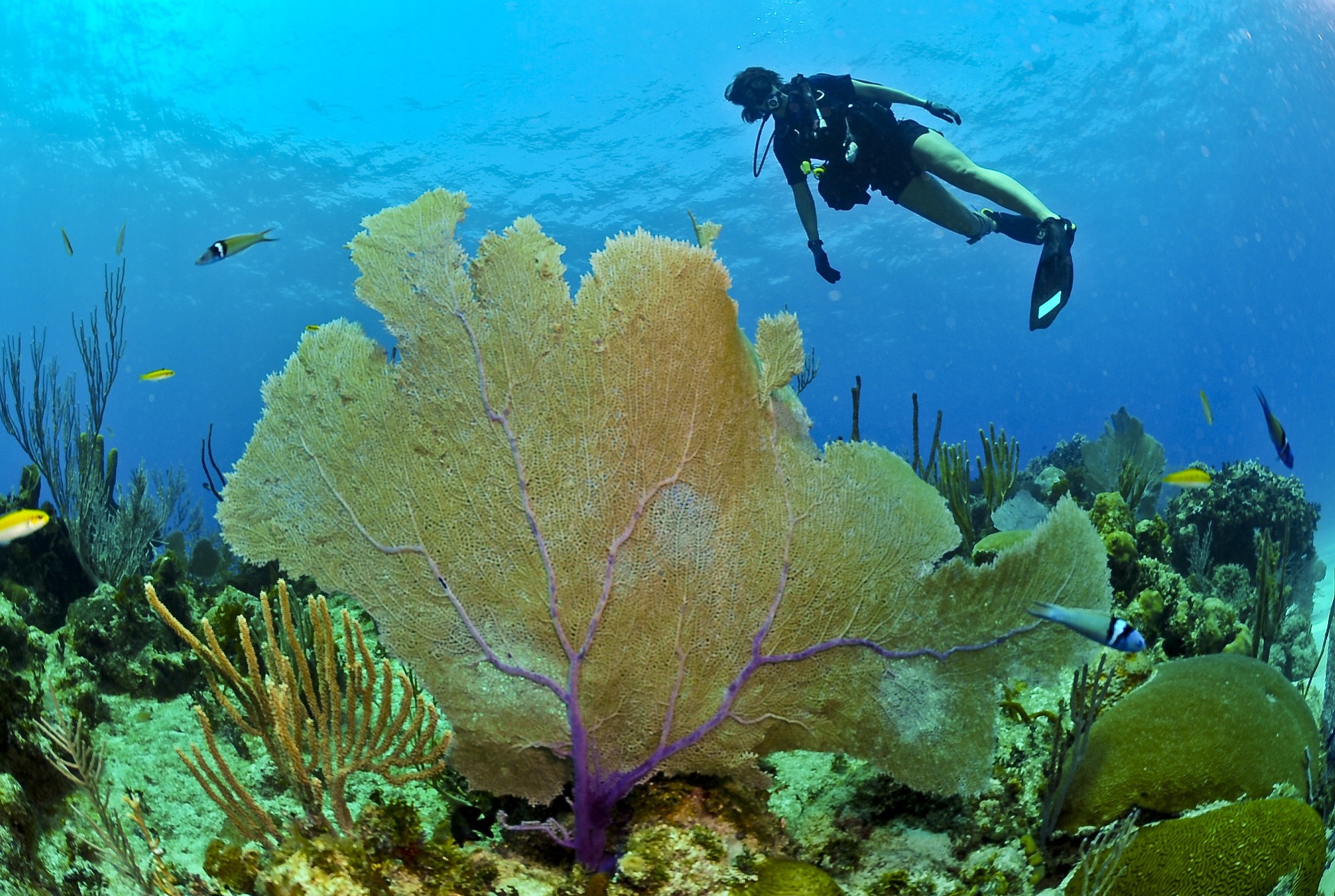
The Washington Post (WP) published a story detailing how the efforts by a Malaysian “coral gardener,” Anuar Abdulla, to restore coral reefs near his home have resulted in him being consulted on coral restoration efforts globally. Unfortunately, rather than simply delivering well earned praise to Abdullah for his worthwhile efforts, the WP had to turn the story into another in its on-going “Climate Solutions” series, blaming coral decline on climate change. This is false. Some corals have declined in recent years, others have expanded, and new colonies have been discovered. Of those that have declined, there is little support for any link to climate change, and a great deal of evidence pointing to other factors being behind local coral declines.
In the story, titled “One man’s lonely quest to save the world’s corals draws a following,” reporter Rebecca Tan writes:
For nearly four decades, the coral gardener [Anuar Abdullah] worked alone.Abdullah has spent his entire adult life restoring coral reefs, until recently working in obscurity — and at times, in poverty.
In a world rapidly losing its reefs to climate change and to environmental damage, he is now emerging as an increasingly influential expert on how to revive them. Governments and resorts have come calling, asking whether he can help with reefs lost to natural disasters and overtourism.
Tan acknowledges factors besides climate change are contributing to coral decline. She should have explored those in greater detail and left off her misplaced climate change harangue because there is no data to support the claim that long term climate change is causing coral decline.
As discussed at Climate Realism, here, for example, corals are hardy and resilient. The first corals arose during the Cambrian Period about 535 million years ago and the number and type corals increased dramatically more than 400 million years ago, coming into existence when global temperatures and carbon dioxide concentrations were much higher than at present. Coral have proved adaptable, expanding their range, evolving, and thriving through periods of higher and lower temperatures than the Earth is either currently experiencing or can be reasonably expected to experience in the foreseeable future.
As discussed in Climate at a Glance: Coral Reefs, coral thrive in warm water, not cold water, and recent warming has allowed coral to expand their range poleward, while still thriving near the equator. Despite bleaching events, coral have expanded their range, and new coral reefs are discovered all the time. Science also shows that scientists have woefully undercounted the number or coral reefs and colonies in existence.
Nor, climate alarmists claims to the contrary, is there any evidence rising carbon dioxide levels are making Earth’s oceans and seas acidic. Since the oceans and seas are not becoming acidic, it is impossible for “ocean acidification” to be harming coral colonies.
If not warmer waters or ocean acidification, what factors are likely to have driven coral bleaching events in recent years. Tan named two of the culprits: natural disasters and overtourism. As explained in multiple Climate Realism posts other factors that have caused temporary or permanent damage to some coral colonies in various locations include: fishing and coral harvesting; coastal development and associated siltation and pollution; agricultural runoff; and pollution tied to sun block used by swimmers. While rapid influxes of warmer waters from natural shifts in ocean currents have caused temporary bleaching events on occasion, experience shows most coral recover from such events and multiple studies show corals can and do adapt to the gradual long-term pace of global warming.
Coral reefs are critical to ocean biodiversity. The world should be grateful for Anuar Abdulla’s efforts to restore coral reefs. He deserves all the praise he receives for this work. However, looking at coral reefs more broadly, in order to help coral reefs recover or make them more resilient to harmful impacts, one must first accurately identify the causes of their decline. The Washington Post, for the most part failed here. Because climate change isn’t harming coral reefs, trying to protect coral health by fighting global warming is a misplaced effort. Resources spent there, could be better applied to reducing or mitigating the true causes of coral losses—which, of course, is precisely what Abdulla is doing on a case by case basis.
Ye on Alex Jones: Christian Carnival King and Truth-Telling Holy Fool
BY KEVIN BARRETT • UNZ REVIEW • DECEMBER 3, 2022
Was it a terrifying display of anti-Semitism? A PR disaster? A plot to undermine what’s left of free speech? Or something else entirely?
Mainstream media reports on Kanye “Ye” West’s three-hour interview alongside Nick Fuentes on last Thursday’s Alex Jones show—just days after West and Fuentes dined with former President Trump at Mar-a-Lago—reported it as a Nazi hatefest. Consider these headlines:
“Masked Kanye West Praises Hitler in Alex Jones Interview.” – Washington Post
“Kanye West to Alex Jones: ‘I Like Hitler.’” – Rolling Stone
“Biden Condemns Antisemitism After Ye Praises Hitler.” – CNBC
“Virulently antisemitic comments by Kanye West spark new GOP criticism.” – Politico
Mainstream conservatives lapped up the MSM headlines and declared a PR disaster. “Kanye West is a deranged antisemite. I want absolutely nothing to do with that lunatic” snarled Rep. Lee Zeldin (R-NY). Rep. Ashley Hinson (R-IA) called Ye’s performance “disgusting.” Zio-con journalist Ben Shapiro seemingly tried to set West up to be suicided, saying “I would not be surprised, God forbid, if something should happen—if Ye should do something to himself.”
Investigative journalist Whitney Webb also saw West’s performance as a PR disaster: “It seems like Kanye West, because of his visibility, and the outrageousness of his behavior, is going to be part of the pretext” (for eliminating what remains of free speech in America).
Elon Musk, that self-styled free speech absolutist, quickly caved in to pressure and banned Ye’s Twitter account on a transparently ludicrous pretext. Musk absurdly claimed that Ye’s tweet of an image of a superimposed Star of David and swastika was an incitement to violence.
If I had only read the media coverage, and not watched the actual interview, I would have come away with the impression that Ye had spent three hours snarling and frothing at the mouth and demanding the mass murder of Jews. But as usual, the reality was the exact opposite of the media reports. Far from spewing hate, Ye spent the whole three hours spreading love. When Alex Jones kowtowed to contemporary Western culture’s obligatory demonization of Hitler, Ye escalated from “love everybody, even Hitler” to “love everybody, especially Hitler.”
And that, of course, is the only possible Christian response. A cornerstone of Jesus’s teaching was “love your enemies.” In Matthew 5:43-45 Jesus basically says that it’s easy to love your friendly neighbor—anyone can do that—but you need to go further and love your enemies and pray for your persecutors. So when Ye expressed love for everyone, including his Zionist persecutors, and made the point that Christians must not just love “even Hitler,” they must especially love Hitler, he was simply following the teachings of Jesus.
So who exactly are these mainstream media witch hunters and lynch mob leaders who are driven into a frenzy of satanic hatred when they hear Ye spreading the Christian gospel of universal love? Hint: They are not Christians. The Jewish religion, and post-religious Jewish culture, are both characterized by a rabidly ethnocentric fear and loathing of the perceived enemies of their tribe. Rather than loving their enemies, they are taught to fear and hate and persecute them, and to demand “a pound of flesh” and never display mercy when they gain the upper hand.[*] And since they see Hitler as their ultimate enemy symbol, anyone who extends Christian love to Hitler, as Ye did, becomes a target of their fanatical vindictiveness.
So Ye was walking in the footsteps of Jesus, not Hitler. And he was doing so in a touchingly hilarious carnivalesque manner by embodying two ancient archetypes: the truth-telling holy fool and the fool-king of carnival. You might even say Ye was just fool-king with us. (And if you doubt Ye is a fool, consider this: What else can you call someone who trades a billion dollars for truth?)
Ye as truth-telling fool echoes the Fool character in Shakespeare’s King Lear by blurting out the hard, even horrific truths that no smart, sane person would ever dare tell. This “truth-telling holy fool” archetype also exists in Moroccan Sufism, where such Sufi saints as the wild illiterate mountain peasant Abu Yi’zza, beloved of God, could get away with denouncing the tyrannical king to his face—an act reminiscent of Ye’s “foolish” denunciation of tyrannical Jewish-Zionist power in America.
But Ye has ambitions beyond being a mere garden-variety billion-dollar holy fool. He says he is running for president. But the office he is really running for is fool king.
Mikhail Bakhtin, one of the greatest Russian thinkers of the 20th century, explains in Rabelais and His World that much of the best of European literature and culture is steeped in the ethos of carnival: a holiday period during which ordinary social rules are suspended in favor of wild, anarchic, supremely creative joy and celebration. The carnival typically begins with the election of a fool king to preside over the revelry, as recounted in the famous scene of Qasimodo’s coronation in Victor Hugo’s Hunchback of Notre Dame.
Ye presided over the anarchic carnival he unleashed on Alex Jones with soulfully royal aplomb. His Nettin’ Yahoo ventriloquism mocking the squeaky little prime minister of Israel was precisely the sort of thing that fools used to do to entertain their audiences. And his repeated violation of the most sacred rules of polite American society—never take the J-word in vain, speak of the Holocaust only with cringing and bathetic reverence, never raise even the slightest questions about its historicity, and always hold up Hitler as the avatar of ultimate evil—marked off the three-hour interview space as a carnivalesque world in which the mendaciously mundane values of ordinary reality could be mocked, inverted, and transcended.
So Kanye was simultaneously channeling Jesus and the fool king archetype. And that isn’t a contradiction. For the Jesus of the Gospels is a very special type of fool king. Though billed as the King of the Jews, Jesus doesn’t enter Jerusalem in a gilded chariot surrounded by the high and mighty. Instead, he rides into town on an ass, surrounded by lowborn outcasts. That decidedly un-regal entry symbolizes Jesus’s inversion of the normal values of pomp and hierarchy and the rule of the strong over the weak, in favor of humility and love.
The irony, of course, is that the Jews were waiting for a world-conquering hero, an arrogant, strutting vanquisher of the goyim. And what they got was a hippie peacenik spiritual healer riding into town on a donkey, surrounded by even scruffier followers. No wonder they rejected, insulted, and killed him,[**] and have been rejecting and insulting and killing him ever since.
So Kanye’s method-acting tribute to Jesus and the holy fool and fool king archetypes, though hilariously joyful and liberating, has put him on the Road to Calvary and laden him with a heavy cross to bear. May Allah protect and guide him, and bless him and all of the truth-telling justice-seeking saliheen.
Notes
[*] These are of course generalizations or “truthful tropes,” and they are roughly accurate in general terms, but of course do not apply equally to all Jewish people or interpreters of Jewish religion.
[**] Or at least imagined they killed him—but the Qur’an places that notion sous rature.
“Russia has Lost the War”
By Eugenio de Dobrynne | The Postil Magazine | December 1, 2022
So says Western media… And if all we do is listen to what is published in the West and listen to what the various “strategists” say on all the talk-shows, we would come to the following conclusions:
- Russia has lost the war, with the capture of Kherson by the Ukrainian army and its offensives in the north of the Donbass.
- The casualties among the ranks of the Russian army are very considerable and it is demoralized, its generals are incompetent and are dying at the front, if they are not dismissed and arrested.
- The Russian army has practically no more ammunition left to continue the war and its missiles are unable to reach their targets, thanks to the excellent Ukrainian anti-aircraft defense that intercepts them. And Russia is also running out of missiles.
- The Ukrainian army has reconquered territory in the Kherson region and its offensives in the north of Donbass, as well as its resistance on the Donetsk front, augur a clear victory of its army which will lead them to reconquer all the territory annexed by Russia, including, of course, Crimea, forcing Russia to sign a peace which will lead its current president, Vladimir Putin, to be tried and sentenced and make recompense for all the expenses undertaken because of the conflict.
- As for the Russian people, they do not want this war and hope for a quick replacement of their president by one of the opposition leaders, who will be much more liberal and supported by the United States and Europe.
- Faced with this disaster, Putin and his generals have resorted to wild, indiscriminate shelling of the Ukrainian population, leaving these people without electricity, water and supplies. The Russians do not rule out the use of nuclear weapons, if things get even worse.
Such is the picture painted by the European and Anglo-American mass media, although it must be acknowledged that the latter are making an effort to provide other, more objective analyses in view of the latest developments in the conflict. The intellectual laziness of many information professionals, who limit themselves to reproducing the propaganda reports of Zelensky’s government, if not submitting to the doxa dictated by the media management bodies, as well as the censorship imposed by the authorities and pressure groups, prevent a more impartial knowledge of the real situation of the conflict.
To begin with, Russia cannot lose this war, nor can it give up the territories that since the referendums have been incorporated into the Russian Federation. First of all, it is a question of survival in the face of the Anglo-American world’s determination to put an end to the existence of a Russia that opposes its hegemonic domination and that, on the contrary, is committed to a multipolar world where a balance of forces coexists. Secondly, the Russian society, and even more so the recently annexed populations, and in particular the Donbass regions which have suffered a war for eight years, would never accept to stop being part of Russia.
As for the situation on the ground, if we look at the development of events from the information provided by objective military specialists and analysts, some even coming from armies committed to Ukrainian interests, since the appointment of General Surovikin as Commander-in-Chief of the Armies in the Ukrainian campaign, things have changed quite a lot. His appointment has meant a single command, subordinating the rest of the generals who earlier directed the operations in each of the territories where they acted independently and without coordination with the rest. Since his appointment, a reorganization of the troops assigned to the operation has been carried out, rotating them after the attrition suffered during these nine months of war and reinforcing their material, in particular with artillery pieces and armored vehicles, and massively incorporating observation and destruction drones.
From the tactical point of view, Russia has no need, as Surovikin himself stated, to expose its soldiers uselessly, when it has other means at its disposal to win this war. Russia, because of its demographic situation, cannot afford to send hundreds of thousands of young men to the front, as the Soviets did in World War II, with the result that that entailed. The use of tactical missiles directed against military installations and recently against strategic infrastructures, whose effectiveness is difficult to refute in view of the express acknowledgement by the Ukrainian authorities themselves, is bringing about a substantial change in the course of this conflict.
What some media have considered as a defeat and a withdrawal of the Russian army in Kherson, has been in reality a tactical withdrawal to avoid exposing a significant part of its troops who could have been surrounded in a compromising situation, and thus to better defend themselves. It has been sold that the Ukrainians had defeated the Russians and that this meant that they had practically won the war. The reality is that the Russians have temporarily ceded ground to regroup and organize themselves. They have abandoned the city, transforming it into a ghost town without electricity or water and with a population, albeit a very small one, which the Ukrainian troops will have to feed. At the same time, they have moved, in a successful operation, to the other bank of the Dnieper, turning the river into a natural line of defense very difficult to cross, since at this time, its width is about two kilometers.
So much so that in spite of the fact that the operation had been announced in advance by Surovikin himself, something surprising for a military commander, the Ukrainian forces did not give him credit and delayed their entry into the city until they were certain that it had been abandoned by the Russians, as they believed that it was all a trap. The withdrawal was made without loss of material or men and in an orderly manner, despite the fact that more than 20,000 men were mobilized. Previously, more than 150,000 civilians had been evacuated from the city to the other side, under Ukrainian artillery shelling. They even moved the remains of the founder of the city and mythical person in the history of Russia, Marshal Potemkin, so that his remains would not be desecrated by the Ukrainian troops. Clear proof of this is that we have not seen those images of casualties or destroyed materials that the Ukrainian propaganda media lavished so much on when, at the beginning, they confronted the Russian forces. What has been seen, on the contrary, is a deserted city whose population is trying to survive in hardship and which has been announced that it will be evacuated because of the impossibility of supplying it, while the repressive rearguard forces are engaged in arresting the Russians’ collaborators. In their military history, the Russians have a long experience of strategic retreats that have been successful.
Located on the other bank of the river, with the natural barrier of its width and the difficulty of crossing it under artillery fire, the Russian troops have a considerable advantage. So much so that part of the troops assigned at the time to this front have been transferred to the Donbass front to reinforce the offensive which is being carried out there and which, little by little, is gaining ground despite the difficulty of overcoming the lines of fortifications built by the Ukrainians more than eight years ago and which they have been defending with extraordinary courage and tenacity.
The mobilization of reservists decreed last September and the enlistment of volunteers means the incorporation of 318,000 soldiers and commanders directly on the front line. Unlike the mobilized Ukrainians, who are already in their seventh or eighth mobilization with hardly any training, these troops are undergoing intense military training by veterans of the operation, so that their incorporation will be carried out when they have completed their training and proven their operational capacity. As of today, about 80,000 of them have already joined the front lines, integrating into already hardened units. The rest will do so by mid-December. There has been no haste, and their training is being prioritized to avoid casualties and strengthen their effectiveness.
Meanwhile, on other fronts, Donetsk and Lugansk, Russian troops are advancing slowly, favoring artillery fire both when advancing and retreating, avoiding unnecessary exposure of men and material. The use of observation drones for the localization of enemy forces is being abundantly employed, with excellent results, as this allows for accurate and effective artillery fire. There is abundant filming that proves their use and effectiveness. The practical non-existence of Ukrainian aviation, because it was cancelled at the beginning, and the little effectiveness of its anti-aircraft defenses, in spite of receiving new Western materials, makes Russian aviation have control of the skies and intervene more and more in support of the troops on the ground. Although the equipment provided is not always of the latest generation, the technological complexity also requires trained servants when it comes to more modern systems, which is why the Russians are suspicious of the involvement of NATO troops who covertly handle such equipment.
The Russians are expected to carry out a major offensive when weather conditions permit, i.e., when the ground freezes, because now, with the heavy rains, it is impracticable. The Ukrainians are suffering to a greater extent, because much of the material sent by the Ottoman allies, replacing the Soviet material they had and have been losing, is wheeled, unlike the Russian material, in which tracks predominate. The priority will undoubtedly be focused on recovering the territories of the Donbass up to its territorial limits and, perhaps, on descending from above along the right bank of the Dnieper to recover the territories of Zaporiyia and Kherson. Who knows if they will not go on to Odessa. Nor can the Russians afford to delay their offensive too long, because the longer they delay, the more time the Ukrainian army will have to mobilize and train its levies.
On the other hand, the destruction, by means of tactical missiles, of energy infrastructures, especially power plants and sub-power plants, by the Russian forces, is having considerable effects on the deterioration of the supply on the material fronts, since it prevents their transfer from the borders, slowing down their offensives and weakening their defenses. Although its effects are being felt to a greater extent on the living conditions of civilians, depriving them of electricity and water, the destruction of these infrastructures was something that Russian military officials had been demanding for some time in view of the increase in military aid received by the Ukrainian army from its NATO allies.
Finally, as far as casualties are concerned, the number of deaths in the ranks of the Ukrainian army is staggering. According to American officials, there are about 100,000 dead, to which must be added the wounded in the proportion of three for every one dead. This means that, between the dead and the wounded, they are losing between 300 and 400 men a day on the various fronts. Russian losses are around 48,000 wounded and 16,000 dead, 8,000 of which belong to the Russian army and the rest to the territorial units, Chechen forces and the Wagner group. It should be borne in mind that the brunt of the war has so far been carried out by the territorial units of the Donbass and the special forces on their respective fronts. Initially, the Russian army have started the conflict with between 125,000 and 150,000 troops, to which were added about 60,000 mobilized between the territorial troops of the Donbass and the Chechen special forces and the Wagner Group, with 10,000 troops each. For its part, the Ukrainian army numbered about 600,000 men at the beginning of the conflict. According to UN data, more than 10,000 civilians were killed between the two sides during the eight months of the conflict.
We will probably soon witness a change in the situation, both on the ground and politically, although the media and talk show hosts with careers in the offices of Brussels or NATO headquarters tell us that the Ukrainian army is going to win this war and that they will force Russia to return the annexed territories. American officials have already suggested to Zelensky that he should reconsider negotiating with Russia, and we know that he who pays the piper calls the tune, and American governments have never been known for their unswerving loyalty to the leader of the day. Rather, they have been dedicated to defending their own interests.
Eugenio de Dobrynne writes for El Manifesto, through whose courtesy this article appears.
© 2017-2022 The Postil. All rights reserved.
Kremlin Denies Media Reports About Russia’s Alleged Plans to Leave ZNPP
Samizdat – 28.11.2022
MOSCOW – Media reports alleging that Russia plans to leave the city of Energodar and the Zaporozhye nuclear power plant (NPP) are not true, Kremlin spokesman Dmitry Peskov said on Monday.
“There is no need to look for some signs where there are none and cannot be,” Peskov told reporters, commenting on the allegations.
Late on Sunday, Western and Ukrainian media reported about Russia’s alleged intention to withdraw from the region. Last week, Petro Kotin, the head of Ukrainian energy enterprise Energoatom, told a national television that there were signs of Russian troops preparing to leave the Zaporozhye NPP.
Located on the left bank of the Dnepr River, the Zaporozhye NPP is the largest nuclear power plant in Europe by number of units and output. During the military operation in Ukraine, launched by Russia on February 24, the nuclear plant and surrounding area went under the control of Russian forces and have since been shelled many times. Russia and Ukraine blame each other for the attacks.
Top Crimea official responds to claims of ‘Iranian instructors killed’
RT | November 25, 2022
The head of Crimea Sergey Aksyonov has rejected Kiev’s claims that Iranian military instructors were killed in a Ukrainian strike on the Russian peninsula while helping Moscow’s forces operate drones.
Statements maintaining this happened by the secretary of Ukraine’s National Security and Defense Council, Aleksey Danilov, were “extraordinary nonsense,” Aksyonov said in a Telegram post on Friday.
Such “fairy tales” coming from Kiev are most likely aimed at a Western audience, which “gladly listens to them,” he suggested.
“The more the chair wobbles under the [Kiev] regime, the more fantastic those tales will become,” Aksyonov said.
He was commenting on an interview given by Danilov to The Guardian on Thursday, in which the Ukrainian official was asked to comment on reports in Israeli media last month that military instructors from Iran had been killed in a Ukrainian strike in Crimea. According to the broadcaster Kan, Tehran had sent experts to the peninsula to train Russian troops to operate Iranian-made drones.
Danilov told the British paper that the reports were accurate but didn’t reveal when exactly the strike took place or how many Iranians were affected by it.
“You shouldn’t be where you shouldn’t be. They [the Iranians] were on our territory. We didn’t invite them here, and if they collaborate… participate in the destruction of our nation we must kill them,” he explained.
Ukraine still claims Crimea as part of its territory, despite the peninsula joining Russia in 2014 after a referendum showed overwhelming support for doing so.
Speculation that Tehran has been supplying UAVs to Moscow surfaced in recent months after Russia started to actively use kamikaze drones during its military offensive in Ukraine. Kiev and the Western media have claimed that Russia’s Geran-2 drones are actually Iranian-made Shahed-136 UAVs.
Iran has denied providing Russia with drones or sending instructors to the country. Iranian Foreign Minister Hossein Amirabdollahian has confirmed, however, that Tehran supplied a “small number of drones” to Moscow months before the conflict in Ukraine broke out.
Kremlin spokesman Dmitry Peskov said last month that all weapons used by Russian troops in Ukraine come from domestic stockpiles.
BBC’s jab travesty and the critics who will not be fobbed off
By Kathy Gyngell | TCW Defending Freedom | November 21, 2022
Has the BBC’s complaints system finally come up against a foe that won’t be put off? A brief history of complaints about the travesty of a BBC documentary, Unvaccinated, proudly promoted in July, suggests it may well have.
The programme, presented by Professor Hannah Fry, signalled its bias from the start. Tom Coveney, BBC Commissioning Editor, Science, set the scene with this promotion:
‘With Covid infections on the rise again, there couldn’t be a more important time to examine the reasons why so many adults are still not getting the vaccine. It’s an explosive debate that goes to the heart of modern life and growing mistrust in the establishment . . . Hannah will bring seven unvaccinated participants together under one roof to unpack the long-held opinions, beliefs and fears that have prevented them from getting the vaccine . . . They will come face to face with leading experts, confronting the latest science and statistics to emerge in the field and dissecting how misinformation spreads on social media.’
Beliefs and fears, misinformation and social media all nicely flagged up, the BBC’s presumption as to where blame lay for an implicitly indicated irrational vaccine hesitancy was clear. Though rationally based scepticism or reasonable doubts about safety were not expected to be part of this investigation, the extent of its bias, its dismissal of safety concerns and neglect of evidence still came as a shock when it was aired.
An outraged Professor Norman Fenton immediately identified its base bias – the gross inaccuracy on which the programme was premised of a massive underestimation of the number of unvaccinated people in the UK.
In further posts Fenton listed the programme’s many serious omissions, including the BBC’s failure to disclose the Pfizer links of its two key experts, its silence on the failure of the vaccination to stop infection or transmission of Covid, as well as on reported data on adverse reaction and the true (low) risk of Covid based on world-wide data.
One of the unvaccinated participants, feeling cheated and betrayed, exposed the fundamental production deception. The purpose of the show was not to understand why they were not vaccinated but ‘to change our minds’.
But it has taken a forensic examination of the programme, minute by minute, by a group of doctors and scientists led by the indefatigable retired consultant paediatrician, Dr Rosamond Jones, to reveal the full extent of the programme’s glaring inaccuracies and convenient data cherry-picking. You can read their formal letter of complaint to the BBC (plus the subsequent correspondence) here.
The programme, they wrote to BBC Complaints early last August (two weeks after Unvaccinated‘s transmission), threatened ‘to seriously undermine the ethical process of obtaining legally valid informed consent to medical treatment, and thus trivialised the proper practice of medicine, in the name of entertainment’. It should have sent shivers running through the Corporation. How had a piece of such blatant propaganda in the guise of documentary got off the drawing board? Whose heads would roll?
No such thing. True to BBC form came back a casually brief and dismissive reply from Deborah Dawson of the Complaints Department thanking them for ‘sharing their views’.
Dr Rosamond A K Jones, MBBS (Hons), DObst RCOG, MD, FRCPCH and the other 20 signatories were not having that. Writing back on September 6 they reiterated their complaints: not only was the whole thrust of the programme ‘to try and correct the participants of their misinformation and see if they would change their minds’, they said, their listed complaints were not ‘different views’ but factual errors and lack of balanced evidence, and would the BBC answer all the points individually?
It took six weeks for Complaints Manager, Mr Paul Kettle, to complete his attempt. Resorting to tautology to discount any duty to be balanced and impartial or to consider the factual biases by omission detailed, he said that since the omitted matters were not in the programme, they could not be a matter of discussion. Noticeable too in his reply is the underlying reason for ignoring those with whom they disagree – an assertion that ‘scientific consensus’ (i.e. the views of WHO) is on their side. It can hardly be stated, however, that the science of the new technology mRNA and DNA vaccines is settled, with still incomplete trials and long-term safety data.
Kettle’s efforts to defend the programme’s specific assertions on male fertility, safety for pregnant women and myocarditis risk come across as a painful exercise of contortion with the evidence, the final gem of a defence being that since no one on the programme was under 21 it could not matter that it failed to mention the heightened myocarditis risk for vaccinated young males.
Signing off ‘In line with BBC Editorial Guidelines, this programme appropriately reported the latest science and statistics’ repeated that other favourite BBC tautology. Any further complaint, if they dared was implied, would take them into the next area of the BBC complaints labyrinth – the Executive Complaints Unit (ECU)
Well they have dared and they won’t be daunted Dr Jones’s covering email to ECU shows.
‘I wrote with a number of medical colleagues to the complaints department on August 4, regarding a documentary Unvaccinated shown on BBC2 on July 20. We detailed a number of instances throughout the programme of either bias or frank misinformation.
‘This was particularly serious, as the programme appeared to be actively promoting a prescription-only medication and we pointed out in our complaint that requires an especially high level of care in the accuracy and completeness of information.
‘The first reply was woefully inadequate, only answering one of the various queries we raised so we wrote again. This time we got a more detailed response but still perpetuating many of the inaccuracies or omissions which we had highlighted. Attached below is a third letter addressed to the ECU. Hopefully you will be able to resolve the issues involved and avoid the need for a referral to Ofcom.’
You can read the full letter here.
Twenty one senior doctors and scientists await their reply.
But if ‘BBC Complaints’ at whichever state of their deliberately tortuous process think they can dispose of these highly qualified experts with their usual stonewalling tactics of delay and dismissal, they are mistaken. They are trying to ignore people who know what they are talking about and are determined not to be fobbed off. The longer they resist, the worse this pro-vaccination propaganda effort will look. The data and information are now clear that the vaccines did not work as promised. Every week that goes by, efficacy and safety claims erode while evidence of inadequate or absent safety data and of risk and injury builds.
OVERPOPULATION AND CLIMATE CHANGE
OffGuardian | November 21, 2022
The big population news, reported late last month, is that we just crossed 8 billion humans on the planet.
This week, to coincide with the COP27 and G20 meetings, this news was parlayed into a climate change narrative.
DW asks “How can 8 billion people sustainably share a planet?” while Reuters reports that a population of 8 billion makes “climate justice harder”.
As usual, the most brazenly anti-human nonsense comes from the Guardian, whose environmental editor has a long piece headlined: “It should not be controversial to say a population of 8 billion will have a grave impact on the climate”
Which includes this paragraph:
So of course the rich must change their behaviour. But making climate breakdown all about consumption has become an excuse for countries to do nowhere near enough to reduce their populations.
How exactly countries should go about “reducing their population” is left delightfully vague.
What’s brilliant about all this is the sheer lack of reality behind every single aspect of the story.
- The world is not over-populated, that is a myth.
- Climate change “science” is a scam.
- They don’t even know how many people there really are, the global population figure is a guess based on modelling and old census data.
But the most fun article on this story is from Reuters, who actually fact-checked a viral social media post claiming overpopulation is a myth, and every human on earth could fit in a square 50 miles across.
They don’t fact-check the guys math, they even admit he’s completely correct, but then they say the figures “lack context”, and ask the opinion of an “expert” who reassures everyone “nowhere on earth could support that population density”.
No kidding guys.
NBC: Body Cam Footage Shows Paul Pelosi Opened Door For Police Before Alleged Attack
By Tyler Durden | Zero Hedge | November 19, 2022
The official narrative on the Paul Pelosi attack purported by Democrats and the mainstream media makes zero sense. You don’t have to be a “conspiracy theorist” to recognize there were multiple contradictory accounts from the Department of Justice vs. local police and even some reports from journalists.
In fact, NBC suspended one of its own correspondents, Miguel Almaguer, after he reported that on the night of the supposed attack at the Pelosi home in San Francisco that Paul Pelosi actually opened the door when police knocked, seemingly in normal health, and then walked away from the officers to talk to the alleged assailant David Depape, when Depape attacked him. This report led many to suggest that Pelosi and Depape somehow knew each other.
A media firestorm ensued along with denials from the DOJ, which detailed a completely different version of events in which the police officers opened the door themselves and found Pelosi struggling with Depape who had injured him with a hammer. NBC dropped Almaguer after many called his report “bizarre.”
As it turns out, Miguel Almaguer was right. NBC now reports that police body cam footage has been made available to some media outlets and the footage clearly shows Paul Pelosi opening the door for police in seemingly perfect health. This contradicts the DOJ report on the attack and suggests a potential cover-up.
NBC is forced to retract their earlier assertions that the Paul Pelosi open door event was unfounded. Why? Because they have to. Eventually the police body cam footage will make it out into the public sphere for everyone to see, and NBC is front-running their own false reports. However, they do suggest that “it doesn’t really matter” who opened the door to the Pelosi home, and that Paul Pelosi’s actions don’t support the “conspiracy theories” surrounding the attack.
If that is the case, then why would the DOJ lie? Surely, they have seen the same body cam footage. If there is no conspiracy, then why is there an attempted coverup?
NBC has never had a problem editorializing news stories in the past and presenting biased opinions as evidence, yet suddenly now they pretend as if they have journalistic integrity? It is incumbent upon journalists to present what they think are the facts to the general public, but they are also required to investigate potential false accounts and false information in order to separate truth from lies. In the case of the attack on Paul Pelosi, NBC and other outlets clearly do not want to dig deeper.
Now that the midterm elections are over it would appear that the “MAGA attacker” story no longer serves any purpose. The Democrats conjured their own conspiracy theory first – The claim that right-wing “extremists” are a threat to “democracy” and that the Pelosi attack proves it. There is no evidence to support this claim. There is, though, evidence to support the theory that Pelosi was familiar with Depape and his behavior indicates familiarity.
No person under threat of being beaten with a hammer by a home intruder is going to move closer to the violent stranger instead of running towards the police. This does not happen, it’s nonsense.
What is likely to take place as this case develops? A media blackout on the story, much like we have witnessed with multiple cases in the past few years that make the political left look bad (the Waukesha massacre by BLM suppporter Darrell Brooks comes to mind). Details will probably emerge which further contradict the official narrative but they will be buried and ignored. The leftists will continue to label any suspicions as “conspiracy” as they hope and pray the general public completely forgets and moves on to other distractions.
NBC News Advises Parents To Keep Kids Away From “Unvaccinated Individuals”

By Steve Watson | Summit News | November 15, 2022
As winter looms, NBC News has some top tips for parents who are concerned about their children catching respiratory viruses… keep them away from the dirty unvaccinated people.
In a recent segment, an infographic advised that those who want to “protect” their children should wash hands, stay home, get vaccines and “avoid physical interaction with unvaccinated individuals.”
There is no actual evidence that unvaccinated individuals are more at risk of transmitting COVID or that the vaccines prevent the spread of the virus, but never mind that inconvenient distraction.
The anchors then asked medical correspondent Dr. John Torres why more children are now so susceptible to RSV (respiratory syncytial virus), to which he responded “we don’t exactly know why.”
That is also not true, given that the CDC recently issued a report highlighting how a record number of children are now being hospitalised with common colds due to weakened immune systems.
Commenting on the findings, Dr Scott Roberts, a medical director at Yale University stated that lockdowns impacted the ability of children to build up immunity to common illnesses.
“There are two implications to this,” the doctor said, explaining “First, the gap gives time for the viruses to mutate even further to cause more severe disease.”
“And second, whatever immunity was built up to those viruses’ it will have waned making the immune response now much less potent,” Roberts added.
The doctor also noted that children, including his own son are now getting “constant infections.”
The CDC data is consistent with research by scientists at Yale who warned that it is not normal to see children with combinations of seven common viruses, including adenovirus, rhinovirus, respiratory syncytial virus (RSV), human metapneumovirus, influenza and parainfluenza, as well as COVID-19.
But whatever, keeping your kids safely locked away at home and away from the unvaccinated is the smart move.
Featured Video

More Iran War fallout: Maritime insurance industry shifts from London to China
or go to
Aletho News Archives – Video-Images
From the Archives
The Biggest Threat to Peace in Middle East
By Dr. Elias Akleh* | Sabbah Report | May 24, 2010
A build up of heightened tension in the Middle East is escalating in the last few weeks. American and Israeli postures towards Lebanon, Syria, and Iran have become more threatening. Listening to speeches of political leaders one hears talks only about war not peace. Iranians and Israelis are continuously training hard for a possible showdown. Both sides are conducting extensive war games every month. This led Syrians to claim that Israel is preparing for a soon-to-come another war. The Jordanians also are warning that current stalemate of the peace process is an indication of a war breaking out this summer. The Russian President and his army chief hinted, a few months ago, that the US and Israel were planning for an attack on Iran.
Indeed Iran is, as it has been for last few years, the target of most of the threats and accusations of supporting terrorism. Escalating incitement against Iran the American Defense Department sent last month (April) to Congress a report on Iran’s military claiming Iran could develop intercontinental ballistic missiles capable of reaching the US by 2015.
Ignoring the fact that N. Korea, India, Pakistan, and Israel are proven to have nuclear weapons while Iran does not, the US Secretary of State Hillary Clinton chose in her speech, to the nuclear Non-Proliferation Treaty review conference at the UN, to focus on Iran’s alleged nuclear ambitions putting the whole world at risk as she put it. According to Clinton Iran’s acquisition of nuclear weapons, rather than Israel’s more than 200 nuclear bombs, is destabilizing the Middle East. She called on the world’s nations to rally around US efforts to hold Iran, not other nuclear countries, to account.
The accusation that Usama Bin Laden is living comfortably in Iran had received a boost after the broadcast of a documentary called “Feathered Cocaine”. This echoed the June 2003 claims of the Italian newspaper Corre de la Sierra that Bin Laden was in Iran according to some intelligence report, and according to Richard Miniter’s book “Shadow War”. … continue
Blog Roll
 Aletho News
- US Tells Allies That Ukraine-Bound Arms Could be Sent to Middle East
- Organized terrorism: Iran condemns killing of its diplomats in Lebanon
- Why could Gaza enter the regional war?
- Hamas official rejects Mladenov Plan linking disarmament to Gaza reconstruction
- Two Primary Elections for the Soul of ‘America First’
- Japan Clings to US Vassalage Despite Energy Crunch Caused By Iran War
- US Seeks Control Over Global Energy Infrastructure – Kremlin
- US senators target Orban government for standing up to Zelensky
- The deep-rooted culture of corruption in Ukraine
- Iran mobilizing one million soldiers to ‘create hell’ for any US ground assault: Report
- If Americans Knew
- Researchers at Human Rights Watch Resign Over Blocked Report on Palestinian Refugee Return
- Jewish Groups Are Backing a War Americans Don’t Want
- Eric Fingerhut Thinks He’s the President of the Jews
- Top Jewish Philanthropists, Rabbis Urge Israeli President to Take Action Against ‘Jewish Extremists’
- Don’t Be Fooled. Zionist Leaders Have Always Wanted to Control Southern Lebanon
- Israel’s widespread use of torture is a core element of its genocide against the Palestinian people
- In Israel’s War on Iran, Many Middle East US Bases Rendered “All But Uninhabitable”
- ‘Burn the lawn’: Israel pursues ‘Rafah model’ in southern Lebanon
- A genocide here, an amputation there
- Reports: Iran mobilizing 1M fighters, Israel-US run low on ammo, Israeli army faces shortage – Not a ceasefire Day 168
- No Tricks Zone
- Devastating Assessment Of Comirnaty Vaccine By Former Senior Pfizer Europe Toxicologist
- New Study: CO2 Is ‘Effectively Negligible’ As An Explanatory Climate Change Factor Since 2000
- Former Pfizer Toxicologist Dr. Helmut Sterz Tells Bundestag Hearing Pfizer Vaccine Should Have Never Been Approved
- Energy Expert: Germany’s Nuclear Phaseout Was A “500 Billion Euro Mistake”
- New Research: South Australia’s Mid-Holocene Sea Surface Temperatures Were 4°C Warmer Than Today
- Storing Green Energy To Last Germany 10 Days Would Require A 60-Million Tonne Battery
- New Studies: UK Sea Levels Were 4 Meters Higher Than Today During The Mid-Holocene
- Destructive Green New Deal: German Energy And Metal Group Warns Of Drastic Crisis
- New Study Documents A 20-Year Pause In Arctic Sea Ice Decline – Driven By Internal Variability
- Wake-up Call: Survey Shows Majority Of Germans Now Favor Postponing Climate Targets!
 Aletho News