US Cyberwar on Russia? New York Times Does Psyops
Strategic Culture Foundation | June 21, 2019
A front-page article in the New York Times this week certainly generated a lot of reaction. In rather sensational terms, the paper claimed that the Pentagon’s cyber command was stepping up hacking intrusions into Russia’s power infrastructure.
So penetrated were the purported “digital” weapons, it was conjectured that Russia could suffer “black outs” at any moment and see its military instantly paralyzed.
Presidents Trump and Putin were obliged to react to the NYT’s article. Trump rubbished it as fake news, while Putin responded with a certain tone of alarm about possible consequences of a cyberwar breaking out.
Many commentators, including critical ones who normally show skepticism towards the NYT, were inclined to accept the article as an accurate account of US cyber aggression against Russia.
However, it is worth asking the basic question: are the claims reliable?
There are several reasons to be suspicious about the veracity of the NYT’s report, and what the real purpose of publishing it is.
For a start, America’s so-called “newspaper of record” has demonstrated itself to be more often than not an obedient purveyor of misinformation for the US military-intelligence apparatus.
Just two examples are cited here of dutiful functioning from many instances over the decades.
In July 1945, when the Pentagon detonated the first-ever atomic bomb in the desert of New Mexico, it was the NYT that put out dutiful reports claiming that the massive test explosion was not a new, far more destructive weapon. It also claimed that the local population had nothing to fear from health effects, despite thousands of Americans later dying from radiation fallout.
A second notorious example is how the “paper of record” was a chief conduit for propaganda about “weapons of mass destruction” (WMD) which was used to launch the genocidal war on Iraq in 2003. Those claims were later shown to be entirely false. The NYT thus engaged in telling barefaced lies to the public in order to launch a criminal war of aggression.
One of the main NYT’s writers who peddled the WMD propaganda for the destruction of Iraq was David Sanger whose byline appeared on the latest article claiming that the Pentagon was escalating cyberwar on Russia. Arguably, this so-called journalist should be in a prison for complicity in war crimes, not sitting behind a desk receiving a big fat salary.
A closer reading of the article indicates that many of the sensational claims are vague and unsubstantiated. The article is long-winded and jargonistic, raising more questions than answers, which usually means the content is more fabulation than factual. As usual, the sources are anonymous and often referred to as “former officials”.
There were also contradictions in the reporting, the most glaring of which is that the NYT claims the Trump White House signed off on the alleged new aggressive activities, yet President Trump panned the story as fake. Trump’s evident disgust seemed genuine. He called the article “treasonous” and suggested it was a desperate attempt by the “failing” NYT to scoop up readers.
So, let’s think about this. A loyal conduit of Deep State misinformation is purporting to be revealing secret cyberwar activities against Russia. If it were doing that, the Pentagon would not be happy. If the NYT is quoting anonymous secret agencies, the suspicioun is that those sources wanted the NYT to publish this article. Why would that be? To alert Russia of implanted malware in its infrastructure only for Russian computer experts to track down the offending bugs and eliminate them? That doesn’t make sense. Why would the Pentagon out itself for the benefit of Russia?
What’s likely going on here is that the NYT is serving – as it usually does – as a conduit for “psychological operations”. The real intention seems to be to unnerve Moscow about an impending cyber strike on the Russian nation.
Another intended effect from the article is to further poison bilateral relations between the US and Russia. Presidents Trump and Putin are expected to hold a meeting next week during the G20 summit in Japan. It seems that the higher authors of the NYT’ report and their stenographers like David Sanger have the intention to pre-empt the forthcoming conversation between the American and Russian leaders.
A further sinister twist is that the NYT claims President Trump has not been informed about the alleged cyberwar against Russia. It suggests that is because Trump is not trusted by intelligence agencies for fear he might leak details to Putin. This is another tawdry attempt by the paper to revive its failed previous claims of undermining the American president as a “Kremlin stooge”.
Moreover, the NYT quotes National Security Adviser John Bolton as appearing to confirm the Pentagon’s alleged cyber aggression against Russia. That is a further slight on the American president. Who is actually running the US government? Trump, Bolton or Deep State operatives?
Finally, it should be noted that the NYT claims are premised on past dubious allegations that Russia interfered in US elections and that it has also been hacking into America’s power grid. By taking its latest story at face value, one is obliged to accept its previous stories of Russian malfeasance as accurate, which they are not.
Russia, of course like all nations, must ensure its infrastructure and defenses are inviolable from foreign hacking of computer systems. There is no doubt US agencies have and are probing Russian systems for potential vulnerabilities. But such a scenario is significantly different from one where a digital sword is supposedly hanging over Russia’s head threatening to deliver a lethal blow at any time.
Frankly, the NYT has become a consummate parody of a newspaper. Its Pulitzer Prizes for “journalistic excellence” are more baubles for good conduct in the service of state propaganda; propaganda that has often led to criminal wars and the deaths of millions of people. It purports to “reveal” secret Pentagon activities, yet elsewhere honorable journalists like Julian Assange are being persecuted for doing just that.
The “paper of record” styles itself as a truth-teller. Its advertising slogan is “the truth is worth it”.
Indeed, the truth is worth it, especially when lies and fabrications could have such horrific consequences for international relations and human lives.
June Madness Strikes Washington. Iranians, Russians and Britons Beware!
By Philip Giraldi | Strategic Culture Foundation | June 20, 2019
It has been a lively June so far in light of Washington’s apparent zeal to remake the world in its own image. There is considerable buzz among those networking in ex- or current government circles that the White House is preparing to “do something” about Iran. The recent incidents involving alleged attacks on Norwegian and Japanese tankers in the Gulf of Oman were immediately attributed to Iran by Secretary of State Mike Pompeo with so little regard for evidence that even the compliant American media was left gasping. In its initial coverage of the story The New York Times inevitably echoed the administration’s claims, but if one went to the readers’ comments on the story fully 90% of those bothering to express an opinion decided that the tale was not credible for any number of reasons.
Several commenters brought up the completely phony Gulf of Tonkin incident of 1964 that led to the escalation of American involvement in Vietnam, a view that was expressed frequently in readers’ comments both in the mainstream and alternative media. Others recalled instead the fake intelligence linking Iraq’s Saddam Hussein with the 9/11 conspirators as well as the bogus reports of an Iraqi secret nuclear program and huge gliders capable to delivering biological weapons across the Atlantic Ocean.
There were a number of questionable aspects to the Pompeo story, most notably the unlikelihood that Iran would attack a Japanese ship while the Japanese Prime Minister was in Tehran paying a visit. The attack itself, attributed to Iranian mines, also did not match the damage to the vessels, which was well above the water line, a detail that was noted by the Japanese ship captain among others. Crewmen on the ship also reportedly saw flying objects, which suggests missiles or other projectiles were to blame, fired by almost anyone in the area. And then there is the question of motive: the United States, Israel, Saudi Arabia and the Emirates all want a war with Iran while the Iranians are trying to avoid a B-52 attack, so why would they do something that would virtually guarantee a devastating response from Washington?
What is going on with Iran is certainly front-page material but there are two other stories confirming that brain-dead flesh-eating zombies have somehow gained control of the White House. The first comes from David Sanger of The New York Times, who reported last week that the United States had inserted malware into the Russian electrical grid to serve as both a warning and a possible response mechanism should the Kremlin continue with its cyberwarfare ways.
The astonishing thing about the story is the casual way it is presented because, after all, inserting malware into someone’s electrical grid might well be considered an act of war. The White House responded to the story with a tweet from the president claiming that “This is a virtual act of Treason by a once great paper so desperate for a story, any story, even if bad for our Country…” though he did not state that the account was untrue. In fact, if it was actually treason, that would suggest that the news article was accurate in its description of what must be a Top Secret program. But then Trump or one of his advisors realized the omission and a second tweet soon followed: “….. ALSO, NOT TRUE!”
Assuming that Sanger did his job right and the story is actually correct, a number of aspects of it might be considered. First, interfering with a country’s electrical grid, upon which so many elements of infrastructure depend, is extremely reckless behavior, particularly when the activity has been leaked and exposed in a newspaper. Sanger explained the genesis of his story, revealing that he had been working at it for several months. He wrote: “The United States is stepping up digital incursions into Russia’s electric power grid in a warning to President Vladimir V. Putin and a demonstration of how the Trump administration is using new authorities to deploy cybertools more aggressively, current and former government officials said. In interviews over the past three months, the officials described the previously unreported deployment of American computer code inside Russia’s grid and other targets as a classified companion to more publicly discussed action directed at Moscow’s disinformation and hacking units around the 2018 midterm elections. Advocates of the more aggressive strategy said it was long overdue, after years of public warnings from the Department of Homeland Security and the F.B.I. that Russia has inserted malware that could sabotage American power plants, oil and gas pipelines, or water supplies in any future conflict with the United States.”
The Sanger story elaborates: “Since at least 2012, current and former officials say, the United States has put reconnaissance probes into the control systems of the Russian electric grid. But now the American strategy has shifted more toward offense, officials say, with the placement of potentially crippling malware inside the Russian system at a depth and with an aggressiveness that had never been tried before. It is intended partly as a warning, and partly to be poised to conduct cyberstrikes if a major conflict broke out between Washington and Moscow. The commander of United States Cyber Command, Gen. Paul M. Nakasone, has been outspoken about the need to ‘defend forward’ deep in an adversary’s networks to demonstrate that the United States will respond to the barrage of online attacks aimed at it. President Trump’s national security adviser, John R. Bolton, said the United States was taking a broader view of potential digital targets as part of an effort to warn anybody ‘engaged in cyberoperations against us.’ ‘They don’t fear us,’ he told the Senate a year ago during his confirmation hearings.”
If the Sanger tale is true, and it certainly does include a great deal of corroborative information, then the United States has already entered into a tit-for-tat situation with Russia targeting power grids, largely initiated to “make them fear us.” One might suggest that the two countries are already at war. That is in no one’s interest and the signals it sends could lead to a major escalation very rapidly. Interestingly, the article states that President Donald Trump does not know about the program even though it could potentially lead to World War 3. That the piece appeared at all also inevitably makes some readers wonder why Sanger has not been arrested for exposing national security information a la Julian Assange.
The final story dates from early June when Secretary of State Mike Pompeo was privately meeting with American Jewish leaders who expressed concern about the possibility that British Labour Leader Jeremy Corbyn might become prime minister. Corbyn has been targeted by British Jews because he is the first U.K. senior politician to speak sympathetically about the plight of the Palestinians.
Pompeo was asked if Corbyn “is elected, would you be willing to work with us to take on action if life becomes very difficult for Jews in the U.K.?” He replied: “It could be that Mr. Corbyn manages to run the gauntlet and get elected. It’s possible. You should know, we won’t wait for him to do those things to begin to push back. We will do our level best. It’s too risky and too important and too hard once it’s already happened.”
There are certain ambiguities in both the question and the response, but it would appear that American Jews want to join with their British counterparts to either bring down or contain a top-level elected politician because he is not sufficiently pro-Israel. The American Secretary of State agrees with them that something must be done, to include quite possibly taking some presumably covert steps to make sure that Corbyn does not become prime minister in the first place. As Pompeo might just be thinking of subverting the institutions of America’s closest ally, it is a huge story that is being largely ignored in the media.
And June is not over yet! The good news is that the United States has not yet invaded Venezuela despite calls by America’s boy-Senator Marco Rubio and the demented Senator Lindsey Graham to do so.
US exceptionalism: Exploiting certain Syrians, ignoring others

Convoy of buses carrying displaced Syrians from Rukban camp to refugee shelters in government-secured Homs. © Eva Bartlett
By Eva Bartlett | RT | June 19, 2019
Syria and Russia have been evacuating civilians from yet another region starved by its Western-backed terrorists. But Western corporate media ignore this and instead continue spinning nightmarish war propaganda on Syria.
Predictably, copy-paste Syrian reports emanate from Western governments and corporate media feign concern for civilians in Idlib while negating to mention that the Idlib governorate is an Al-Qaeda hotbed.
Back in Syria again, over the ‘Eid holidays, I spoke with residents about life in Damascus now, and highlighted the peace which exists – having been absent for many years prior when terrorists’ mortars rained down on the city.
But I was also interested in highlighting another issue: the evacuation of southeastern Syria’s Rukban Camp which has been under way for months; civilians have been plucked from starvation and intolerable conditions, and delivered to safety with access to food and medical care.
In February, Russia and Syria set up humanitarian corridors to start evacuating civilians to safe areas where they could receive medical treatment and resettle in their home areas or elsewhere.
In June, 2019, I travelled to a point where I could interview evacuees of the Rukban, the unbearable camp near the US-occupied Al-Tanf base.
United States of hypocrisy occupies & places blame on others
Rukban also lies on the border with Jordan. Over the years, it has become a hell on earth, with residents starving due to a lack of accessible food. In November 2018, there were around 50,000 refugees in the camp.
Most Western reporting on the situation in Rukban has blamed Syria and Russia for the scarcity of food in the camp. Surprisingly, a June 2018 article by US think tank the Century Foundation highlighted US control over the camp and surrounding areas.
“The Tanf–Rukban zone is patrolled by Coalition forces and their chosen Syrian partner, Maghawir al-Thawra… Also present are the remnants of a formerly Pentagon-backed group called the Qaryatein Martyr Battalions and three factions formerly linked to the CIA’s covert war in Syria: the Army of the Eastern Lions, the Martyr Ahmed al-Abdo Forces, and the Shaam Liberation Army.”
The US stymied aid to Rukban, and was then only willing to provide security for aid convoys to a point 10 kilometres (6.2 miles) away from the camp, according to the UN’s own Emergency Relief Coordinator, Mark Lowcock.
So, by US administration logic, convoys should have dropped their Rukban-specific aid in areas controlled by terrorist groups and just hoped for the best.
Even if the US intentions were good, experience has shown that when terrorist groups occupying an area have access to aid, they keep it for themselves, civilians don’t see it unless they pay a high price.
When eastern areas of Aleppo were liberated in December 2016, even Reuters had to report that civilians blamed so-called ‘rebels’ for hoarding food they desperately needed.
When Madaya, heavily propagandized about in early 2016, was restored to safety in 2017, I travelled there and spoke to residents who again solely blamed terrorists for their starvation. Same in eastern Ghouta, where residents spoke of starvation and executions, by terrorists.
Russian Foreign Minister Sergey Lavrov noted that if Americans at al-Tanf could get supplies from Iraq and Jordan, they could have also brought in humanitarian aid for Rukban civilians, were they actually so concerned.
Unsurprisingly, in Syria’s and Russia’s eyes, the US is holding civilians in Rukban hostage. This became more apparent when America refused to shut down the camp, quite clearly preferring to have a raison d’être for continuing their illegal occupation of southeastern Syria.
Even the Middle East director for the UN High Commissioner for Refugees (UNHCR), Amin Awad, said that civilians in Rukban were being held against their will, as “human shields”“deprived of basic services,”according to Sputnik News.
Awad pointed the finger at traders in the camp bearing responsibility for the suffering of civilians in Rukban, but civilians I spoke to also included America in their blame.
Rukban’s displaced speak out
On a stretch of road between the Rukban camp and the Homs refugee centre they were headed to on June 12, I met some of the roughly 900 Syrians evacuated that day on 18 buses. Another convoy of trucks carried their tattered personal belongings.
I approached many with questions about life in the camp, moving from bus to bus to speak with them.
An old woman sitting on the floor of one bus said she’d been in the camp for four years, that everything was expensive and they were hungry all the time. She gave the example of being charged 1,000 Syrian pounds (around US$2) for five potatoes.

© Eva Bartlett
Mahmoud Saleh, a young man from Homs governorate, told me he’d fled home five years ago. When I asked who was in control in Rukban, he replied without hesitation: “The Americans.”
An older man from Palmyra, four years in the camp, spoke of “armed gangs,” paid in US dollars, being the only ones able to eat properly.
“The armed gangs were living while the rest of the people were dead. Those who wanted fruit had to pay in US dollars. The armed groups were the only ones who could do so.”
I asked about access to medical care.
“Medical services! There is no medicine at all.” He pointed to a young woman behind him who he said had lost two babies because she couldn’t get a C-section.

Older man from Palmyra, in Rukban four years, spoke of “armed gangs” paid in US dollars being the only ones able to eat properly. © Eva Bartlett
In another bus, a shepherd who had spent three years in Rukban blamed “terrorists” for not being able to leave. He also blamed the US. “Those controlling Tanf wouldn’t let us leave, the Americans wouldn’t let us leave.”

Shepherd who spent 3 years in Rukban © Eva Bartlett
Many others who I spoke to said they had wanted to leave before but believed the fearmongering from terrorists who told them they would be “slaughtered by the regime,” a claim floated in corporate media when Aleppo was being liberated.
The Russian Reconciliation Centre reports that some Rukban residents had to pay as much as US$1000 to “militants controlled by the US side” in order to leave.
As of June 13, Russia’s Ministry of Defence reports that 14,347 people, mostly children and women, have been evacuated from Rukban since February 23.
International media & their dubious sources
As evacuations of civilians from Rukban have unfolded, any Western corporate media that bothers to report on them has spun them as ‘forced displacement’ to ‘regime areas’ where civilians will be ‘imprisoned and tortured.’
Yeah, Syria and Russia are simply hell-bent on finding any way to torture Syrian civilians, to the extent that they will waste considerable amounts of money and time to do so, or at least, that’s what corporate media would have you believe.
And just as Western corporate media relied on the words of “media activists” and “unnamed sources” in their war propaganda prior to and during the liberation of eastern Aleppo and eastern Ghouta, hostile media are again relying on such sources for reporting on Rukban.
Canada’s Globe and Mail went as far as to cite the utterly non-credible, Qatar-based, Syrian Network for Human Rights in a recent article claiming that thousands of Syrians who have returned home have been arrested.
As journalist Max Blumenthal humorously pointed out in his investigation into this Qatar-influenced body, “citing the Syrian Network for Human Rights as an independent and credible source is the journalistic equivalent of sourcing statistics on head trauma to a research front created by the National Football League, or turning to tobacco industry lobbyists for information on the connection between smoking and lung cancer.”
Contrasting the claims, Syrian authorities have stated that UN representatives have permission to visit the refugee centres. The Russian Reconciliation Centre stated that UN bodies, including the UNHCR, visited the shelters.
As of June 16, the Russian Reconciliation Centre reports that “1,299,977 IDPs have returned back to their homes” in Syria since September 30, 2015, and that since July 2018, “175 medical and 863 educational organizations have been recovered.”
Those are some odd statistics given that Western media and politicians would have us believe that the Syrian and Russian governments are terrorizing civilians and gleefully destroying infrastructure in Syria.
Or perhaps what Western media, governments, and lobby groups are spouting is just more, unoriginal, war propaganda.
Eva Bartlett is a freelance journalist and rights activist with extensive experience in the Gaza Strip and Syria. Her writings can be found on her blog, In Gaza.
The Broader View Reveals the Ugliest of Prospects
By Craig Murray | June 17, 2019
Standing back a little and surveying the events of the last couple of weeks, gives a bleak view of the current state of western democracy.
We have seen what appears to be the most unconvincing of false flags in the Gulf. I pointed out why it was improbable Iran would attack these particular ships. Since then we have had American military sources pointing to video evidence of a packed small Iranian boat allegedly removing a limpet mine from the ship the Iranians helped to rescue, which was somehow supposed to prove it was the Iranians who planted the alleged device. We also have had the Japanese owner specifically contradict the American account and say that the ship was hit by flying objects.
The Iranians certainly have a strange method of bomb disposal if they carry it out using unarmoured personnel, with as many as possible crammed into a small boat in immediate contact with the “mine”. It is also hard to understand why the alleged “limpet mines” would be four feet above the waterline.
Limpet mines are placed below the waterline. There are numerous reasons for this. Firstly, holes above the waterline will not sink a ship. Secondly, the weight of the water helps contain the blast against the ship. Thirdly, it is obviously harder to detect both the diver placing the mine and the mine once placed if it is below the water. In fact it would be very difficult for a diver to place a limpet mine four feet above the waterline, even if they wanted to.
There seems to be a remarkable disconnect between the widespread popular disdain at yet another fake western power causus belli in the Middle East, and the near universal complicity of the UK political and media class in promoting this transparent lie. It is as though even pretending to have any respect for truth and fact has simply been discarded within the UK’s governmental system. Which ought to worry us a lot.
The second development ought to have been the biggest media story of the decade in the UK, if we had anything like a free and honest media. Mike Pompeo, US Secretary of State, made plain the Trump administration’s intent to prevent the election of Jeremy Corbyn as Prime Minister. Pompeo told a meeting of Jewish leaders:
It could be that Mr. Corbyn manages to run the gantlet and get elected. It’s possible. You should know, we won’t wait for him to do those things to begin to push back.
This blatant interference by a foreign power in the UK’s democracy is an absolute scandal. Compare the lack of media outrage at Pompeo’s intervention with the ludicrous claims made about much less high profile Russian attempts at influence. This incident provides incontrovertible proof that the world does indeed operate in the way that I have been explaining here for a decade. It is not a “conspiracy theory” that democracy is manipulated by hidden powers, it is fact. Pompeo’s description of Corbyn’s route to election as “running the gauntlet” is particularly revealing. Even more so is the cursory coverage this story was given, and I have seen no evidence to date of any MSM “journalist” attempting any follow-up investigation on the methods the US are planning to employ – or more likely already employing – against Corbyn.
Everybody should be incandescent at this, no matter who they vote for.
Something else which revealed the truth of the way the political world now operates, and which again did not get nearly the media attention it deserves, was Matt Kennard’s stunning revelation of the way the Guardian has been taken over by the security services. I have been explaining for years that the Guardian has become the security services’ news outlet of choice, and it is very helpful to have documentation to prove it.
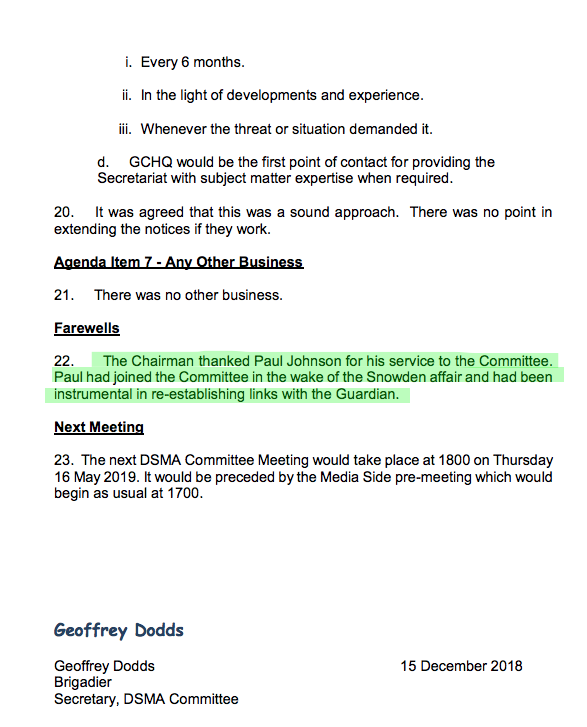
It is worth noting that the Guardian obeyed completely the DSMA committee ban on mentioning Pablo Miller in reporting the security service fantasy version of the Skripal story. As Kennard points out, it is also very interesting indeed that the Guardian published Luke Harding’s front page fabrication of Manafort/Assange meetings two weeks after MOD Director Dominic Wilson congratulated Guardian deputy editor Paul Johnson on “re-establishing links” with the security services. The Guardian is, like other British newspapers, as controlled by the military and security services just like in any other decent autocracy.
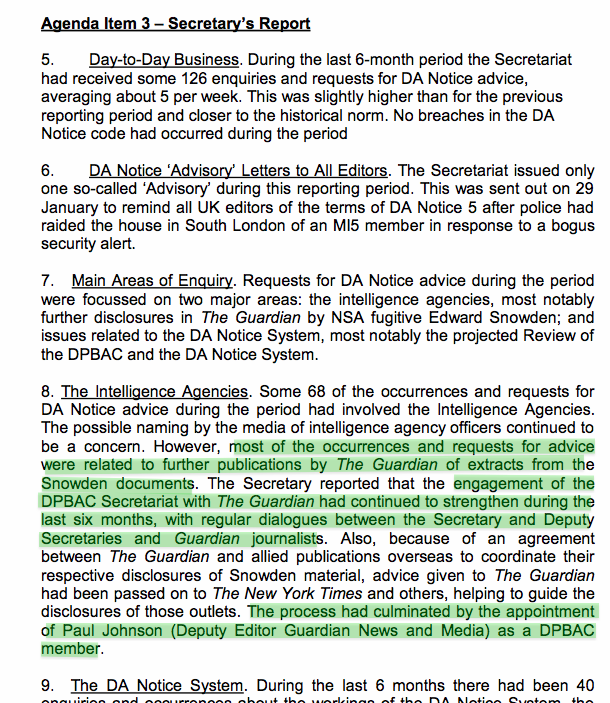
Incidentally, I cannot find Matt Kennard’s excellent work set out anywhere, except in that twitter stream. Surely there is an article on a website somewhere? I cannot find anything on Google, but as it is exactly the kind of information Google routinely suppresses, that does not mean it is not out there. Anyone seen it?
Finally, we have of course seen Sajid Javid sign the extradition warrant for Julian Assange to be sent to the United States for the “crime” of publishing truthful information about US government illegalities. Julian’s extradition hearing was, contrary to normal practice, held despite the fact he was too sick to attend in person. And it was presided over by Judge Arbuthnot, despite the fact that her husband is a former Tory defence minister who started a “security consultancy” in partnership with a former head of MI6, the war criminal John Scarlett who oversaw the fabrication of the dossier of lies about Iraqi WMD, in order to launch an illegal war of aggression that killed and maimed millions. The Assange team had asked her to recuse herself on that pretty obvious basis, but she had refused. At an earlier hearing she taunted Assange with the observation that he could get adequate exercise in the Embassy on a 1.5 meter Juliet balcony.
Just as the Guardian has never apologised for, nor withdrawn, the utter lie of the Assange/Manafort story, so the identity politics promoting, false “left” has never apologised for its pursuit of Assange over sexual allegations in Sweden, which were obvious on the slightest scrutiny to be only a fit-up designed to get him into custody. Those figures like David Allen Green, Joan Smith and David Aaronovitch, among scores of other pustulous hacks, who mocked and scorned those of us who always said that Assange faced not extradition to Sweden but to the United States for publishing, have been shown up as, at the very best, stupid naive and unwitting tools of the state, and more likely, insincere and vicious propagandists.
This brief review of current issues reveal that not only do western governments lie and fake, they have really given up on trying to pretend that they do not. The abuse of power is naked and the propaganda is revealed by the lightest effort to brush away the veneer of democracy.
I find it hard to believe that I live in times where Assange suffers as he does for telling the truth, where a dedicated anti-racist like Corbyn is subjected to daily false accusations of racism and to US and security service backed efforts to thwart his democratic prospects, where the most laughable false flag is paraded to move us towards war with Iran, and where there is no semblance of a genuinely independent media. But, starkly, that is where we are. This is not unrelated to the massive and fast growing inequality of wealth; the erosion of freedom is the necessary precondition that allows the ultra-wealthy to loot the rest of us. It remains my hope there will eventually come a public reaction against the political classes as strong as the situation demands.
If Iran wants to block Persian Gulf oil exports, it will do it publicly: Military chief
Press TV – June 17, 2019
Iran’s military chief says if the Islamic Republic decided to stop oil flow from the Persian Gulf, it will do it publicly and there will be nothing covert about it.
Chairman of the Chiefs of Staff of the Iranian Armed Forces Major General Mohammad Baqeri made the remarks during a military ceremony in Tehran on Monday, in reaction to charges leveled against Iran by the United States and some of its allies accusing Tehran of being behind recent attacks on two tanker ships in the Sea of Oman and a previous attack on several commercial vessels off the coast of the Emirati port city of Fujairah.
The Iranian military chief noted that “the US and its stooges” are using recent maritime incidents as grounds to incriminate Iran, saying, “They must be aware of the reality that if the Islamic Republic of Iran were determined to prevent export of oil from the Persian Gulf, that determination would be realized in full and announced in public, in view of the power of the country and its Armed Forces.”
Major General Baqeri added, “Iran will not take any covet or deceptive steps like the deceitful and terrorist US, which has made the world insecure, along with its regional and international stooges.”
One Japanese-owned and one Norwegian-owned tanker were struck by explosions near the strategic Strait of Hormuz on Thursday morning. Tokyo said both vessels were carrying “Japanese-related” cargo.
Shortly after the incidents, US Secretary of State Mike Pompeo blamed Iran, without offering any evidence.
“It is the assessment of the United States government that the Islamic Republic of Iran is responsible for the attacks that occurred in the Gulf of Oman today,” Pompeo told reporters in a brief appearance at the State Department in Washington, D.C.
Britain has also followed the US rhetoric over the attack and blamed Iran, warning Tehran that these actions were “deeply unwise.”
“This is deeply worrying and comes at a time of already huge tension. I have been in contact with Pompeo and, while we will be making our own assessment soberly and carefully, our starting point is obviously to believe our US allies,” British Foreign Secretary Jeremy Hunt said in a statement on Thursday.
Iranian Foreign Ministry Spokesman Abbas Moussavi on Friday said the US needed to stop playing a blame game through “suspicious” attacks on oil tankers in the Middle East, describing the American behavior as “worrying.”
“It seems that for Mr. Pompeo and other American statesmen, accusing Iran in the suspicious and unfortunate incident for tankers is the most convenient and simplistic job,” Moussavi said.
Tokyo has dismissed the US claim that Iran attacked the two oil tankers in the Sea of Oman, according to Japanese officials.
Japan’s Kyodo news agency cited informed state officials as saying Tokyo had demanded that Washington examine the case further, and that grainy video footage released by the US as supposed evidence was unclear and could not be used to prove anything.
Elsewhere in his remarks, Baqeri emphasized that the Islamic Republic is currently facing dishonest enemies that renege on their commitments, including the United States, and who mount pressure on the country on the one hand and speak about negotiations on the other hand.
The enemies exert pressure on Iran with the purpose of forcing the country into choosing from the two options of war or negotiations, Baqeri said, adding that the Islamic Republic has selected the path of resistance and defense and would firmly press ahead with it.
No new defense contracts with Venezuela, Bolton’s words are ‘fiction’ – Russia’s envoy
RT | June 16, 2019
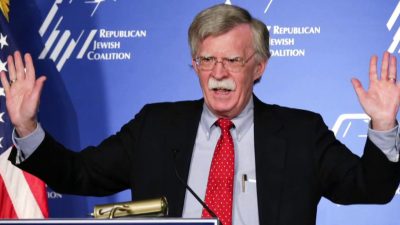 Moscow did not sign any new contracts with Caracas recently, Russia’s Ambassador to Venezuela, Vladimir Zaemsky said, dismissing the Sunday claim by the US National Security Advisor John Bolton.
Bolton claimed on Twitter that Venezuela’s President Nicolas Maduro “grossly mismanaged Venezuela’s resources” and that he inked a new $209-million defense contract with Russia in May, while “hundreds of thousands of Venezuelans went hungry.”
“This is another fiction, which Bolton apparently needs to maintain the illusion that Venezuela is an imaginary threat, and Russia, of course, is to blame,” Zaemsky said.
The US has repeatedly urged Moscow to “get out” of Venezuela and stop military cooperation with the country. Russia, however, rejected such threats, stating that the cooperation with Caracas has been going on for years, and is only set to expand.
Heat Wave Hysteria Coming Soon
By Donna Laframboise | Big Picture News | June 5, 2019

US data beginning in 1985, shared by Bjorn Lomborg. Rising blue line: percentage of deaths attributable to the cold. Orange line: percentage attributable to heat.
In many parts of the world, we’ve just endured an extra snowy winter followed by a cool, delayed spring. But wait for it. When hotter weather arrives it will take no time at all for media outlets to start ‘educating’ us about heat waves and dangerous climate change.
In anticipation of those ‘news’ stories, here’s an inoculation: Cold weather kills far more people than does hot weather. If we truly care about weather-related suffering and sorrow, heat waves should be near the bottom of our priority list.
On his Facebook page, Bjorn Lomborg is calling our attention to a research paper published last year in Environment International. It contains marvelous news. In 7 out of 10 countries studied, heat-related deaths have decreased since 1985.
The researchers conclude that improved health care and infrastructure (aka increased access to air conditioning), have made us less likely to die from the heat. Normal, everyday upgrades are outpacing heat-related risks. As living standards improve, higher temperatures become less life threatening.
But the news isn’t so rosy on the other side of the ledger, where most deaths connected to extreme temperatures actually occur. Depending on the country and the time frame under discussion, the ratio of cold deaths to heat deaths varies. Since Table 3 of this study includes data for all 10 countries for the years 2000-2004, the numbers below are pulled from that column.
During this five-year period no deaths in Ireland were linked to heat, but 9.34% of all deaths were attributed to cold temperatures. (Compared to the 1980s, cold-related deaths in Ireland have fallen dramatically.)
The big picture is that for every person who dies during a heat wave, many more quietly perish from the cold at other times of the year. Here’s the ratio of cold deaths to heat deaths in the locales examined by this study:
Australia: 11:1
Brazil: 6:1
Canada: 13:1
Ireland: cold caused 9.34% of all deaths, heat caused 0%
Japan: 27:1
South Korea: 37:1
Spain: 4:1
Switzerland: 1.5: 1
UK: 28:1
USA: 25:1
When the next heat wave hits, don’t expect journalists and weather broadcasters to provide you with all the relevant facts. In their zeal to hype global warming, they will systematically misinform you. They will encourage you to believe things about weather-related deaths that are the opposite of the truth.
The New York Times Tries to Get Itself Out of the Duckgate Hole Using a Spade
By Rob Slane | The Blog Mire | June 5, 2019
A number of people, including myself, wrote to the New York Times journalist, Julian Barnes, to point out that the piece he and his colleague, Adam Goldman, published on 16th April 2019 about the CIA Director, Gina Haspel, contained a part which unwittingly showed that she had misled President Trump into expelling 60 Russian diplomats in March 2018. Here were the paragraphs of interest:
“During the discussion, Ms. Haspel, then deputy C.I.A. director, turned toward Mr. Trump. She outlined possible responses in a quiet but firm voice, then leaned forward and told the president that the “strong option” was to expel 60 diplomats.
To persuade Mr. Trump, according to people briefed on the conversation, officials including Ms. Haspel also tried to show him that Mr. Skripal and his daughter were not the only victims of Russia’s attack.
Ms. Haspel showed pictures the British government had supplied her of young children hospitalized after being sickened by the Novichok nerve agent that poisoned the Skripals. She then showed a photograph of ducks that British officials said were inadvertently killed by the sloppy work of the Russian operatives.
Ms. Haspel was not the first to use emotional images to appeal to the president, but pairing it with her hard-nosed realism proved effective: Mr. Trump fixated on the pictures of the sickened children and the dead ducks. At the end of the briefing, he embraced the strong option.
The outcome was an example, officials said, of how Ms. Haspel is one of the few people who can get Mr. Trump to shift position based on new information.”
I pointed out to the authors in an (unanswered) email that this was an extraordinary claim, because no children became sick due to poisoning by a toxic chemical, and nor did any ducks die. And so unless they were prepared to correct or retract their piece, there could only be two possibilities:
- Ms Haspel unwittingly showed false images to no less a person than the President of the United States, supplied to her by the British Government who knew them to be false, which persuaded him to embrace the “strong option”.
- Ms Haspel knowingly showed false images to no less a person than the President of the United States, which persuaded him to embrace the “strong option”.
It seems that the two journalists have not ignored mine and the many other emails they received about this issue, and they have today corrected their story. The paragraphs of interest now read as follows:
“During the discussion, Ms. Haspel, then deputy C.I.A. director, turned toward Mr. Trump. She outlined possible responses in a quiet but firm voice, then leaned forward and told the president that the “strong option” was to expel 60 diplomats.
To persuade Mr. Trump, according to people briefed on the conversation, officials including Ms. Haspel tried to demonstrate the dangers of using a nerve agent like Novichok in a populated area. Ms. Haspel showed pictures from other nerve agent attacks that showed their effects on people.
The British government had told Trump administration officials about early intelligence reports that said children were sickened and ducks were inadvertently killed by the sloppy work of the Russian operatives.
The information was based on early reporting, and Trump administration officials had requested more details about the children and ducks, a person familiar with the intelligence said, though Ms. Haspel did not present that information to the president. After this article was published, local health officials in Britain said that no children were harmed.
Ms. Haspel was not the first to use emotional appeals to the president. She and Mr. Pompeo showed Mr. Trump images of children sickened by chemical weapons attacks in Syria, in an earlier presentation. But Ms. Haspel’s strategy in the March briefing was to pair emotional appeals with her hard-nosed realism and it proved effective. At the end of the briefing, Mr. Trump embraced the strong option. [my emphasis]”
Below is Mr Barnes’s explanation on Twitter for the error and the correction:
“I made a significant error in my April 16 profile of Gina Haspel. It took a while to figure out where I went wrong. Initially, I reported that in March 2018, Gina Haspel, then the future CIA director, briefed President Trump about the Skirpal nerve agent attack, showing pictures of sickened children and dead ducks. That was wrong. There are—so far as we know—no pictures of dead ducks or sickened kids. Haspel did show pictures to Trump, but they were about the effects of nerve agents in general, they were not specific to the attack in the UK.
British officials did brief the Trump administration about early reports of dead ducks & sick children. Officials sought more info, believing such intel would be persuasive to Trump, who was skeptical of the proposed expulsion of 60 Russians in response to the attack. But Haspel did not brief the president on that intelligence.
Local UK health officials deny that any animals or children were sickened, as British officials pointed out soon after our story published. (In response to good reporting by @haynesdeborah, @guardian and others.) (link: https://www.theguardian.com/uk-news/2019/apr/18/no-children-ducks-harmed-novichok-attack-wiltshire-health-officials)
The intelligence about the ducks and children were based on an early intelligence report, according to people familiar with the matter. The intelligence was presented to the US in an effort to share all that was known, not to deceive the Trump administration. This correction was delayed because conducting the research to figure out what I got wrong, how I got it wrong and what was the correct information took time.
I regret the error and offer my apology. I strive to get information right the first time. That is what subscribers pay for. But when I get something wrong, I fix it.”
Here is my response on Twitter to Mr Barnes:
Dear Julian,
Thanks for taking the time to correct your report. However, it unfortunately raises just as many questions as the initial report.
Firstly, you say British officials briefed the Trump administration about early reports of dead ducks & sick children.
Really? Which early reports were these? There were none. The parents of the children who had tests to see if they had been contaminated were only contacted 2 weeks after the incident, and none of them was found to be ill. This is the first report on it, and it confirms the children were given the all clear. And there were never any dead ducks in Salisbury nor any reports of them.
Secondly, you say that “Officials sought more info, believing such intel would be persuasive to Trump, who was skeptical of the proposed expulsion of 60 Russians in response to the attack.” But the fact is that any further (truthful) info could not have persuaded Mr Trump, for the simple reason that no other people were harmed in Salisbury than the three people who were initially harmed. How, then, was he persuaded?
Thirdly, you presumably give the answer to the second point, when you say “Haspel did show pictures to Trump, but they were about the effects of nerve agents in general, they were not specific to the attack in the UK.” So in other words, Ms Haspel couldn’t show any pictures from Salisbury to persuade the sceptical Mr Trump, because there weren’t any to show. So she showed him pictures from other nerve agent attacks, which were presumably sufficiently bad to turn him from his scepticism, to expelling 60 diplomats. Even though nothing like that happened in Salisbury.
Thank you for clarifying that Ms Haspel did indeed wilfully mislead the President.”
Despite NYT’s correction, the question it poses is this: Which is worse:
- The deputy director of the CIA showing a sceptical President some fake pictures of dead ducks and sick children to persuade him to take the strongest action?
- Or the deputy director of the CIA, knowing full well that there weren’t any pictures of the effects of nerve agent on the population of Salisbury because only three people were ever affected, showing some pictures of actual nerve agent victims who were never anywhere near Salisbury to persuade him to take the strongest action?
The answer is they’re both as bad. In both scenarios, an utterly false picture of what happened in Salisbury was given to the sceptical President to twist his arm into taking action he didn’t want to take.
As they say, when in a hole, better stop digging.
Russia denies withdrawing specialists from Venezuela, says cooperation is set to expand
RT | June 4, 2019
Reports of a mass exodus of Russian military and technical specialists from Venezuela are not true, Russian officials have said. Cooperation with Caracas is going on as usual and is set to expand, they said.
In a Sunday story, the Wall Street Journal reported that Russian military and technical personnel had left Venezuela en-masse, with the numbers diminishing from some 1,000 to several dozens. The newspaper explained the alleged exodus with a lack of contracts and the fact that Moscow supposedly realized that Caracas lacks any funds to pay for the services of the Russian hi-tech and military hardware corporation Rostec.
On Monday, the corporation itself dismissed the report.
“The figures provided in the piece by the Wall Street Journal have been exaggerated tens of times. The numbers of our staff there has remained the same for many years,” the press service of Rostec stated.
The corporation explained that aside from having a permanent representation, it sends groups of technical specialists “from time to time” to Venezuela to perform maintenance and repairs of equipment supplied by Russia. “Just recently, the maintenance of a batch of aircraft was completed,” the press service added.
Russia’s state military hardware exporter, Rosoboronexport, on its part, said that Moscow and Caracas are actually planning to increase cooperation. Russian companies “remain committed to deepening cooperation with the Ministry of Defense and other departments of the Venezuelan government,” the exporter stated.
Shortly after the dismissal, US President Donald Trump announced on Twitter that Russia had “removed most of their people” from Venezuela. It was not immediately clear what he meant, since apart from the Russian companies’ denial, there has been no official word from Moscow so far.
While military and technical cooperation between Russia and Venezuela has been going on for years, it made a lot of fuss lately amid the US-backed attempt to oust country’s President Nicolas Maduro and install self-styled ‘interim-president’ Juan Guaido instead. Russia’s modest military activity in Venezuela caught the eye of American politicians and media, sparking demands to Moscow to “get out” of what Washington believes to be its own “backyard.”
How Did Russiagate Begin?
Why Barr’s investigation is important and should be encouraged.
By Stephen F. Cohen | The Nation | May 30, 2019
It cannot be emphasized too often: Russiagate—allegations that the American president has been compromised by the Kremlin and which may even have helped to put him in the White House—is the worst and (considering the lack of actual evidence) most fraudulent political scandal in American history. We have yet to calculate the damage Russsiagate has inflicted on America’s democratic institutions, including the presidency and the electoral process, and on domestic and foreign perceptions of American democracy, or on US-Russian relations at a critical moment when both sides, having “modernized” their nuclear weapons, are embarking on a new, more dangerous, and largely unreported arms race.
Rational (if politically innocent) observers may have thought that when the Mueller Report found no “collusion” or other conspiracy between Trump and Vladimir Putin’s Kremlin, only possible “obstruction” by Trump—nothing Mueller said in his May 29 press statement altered that conclusion—Russiagate would fade away. If so, they were badly mistaken. Evidently infuriated that Mueller did not liberate the White House from Trump, Russiagate promoters—liberal Democrats and progressives foremost among them—have only redoubled their unverified collusion allegations, even in once-respectable media outlets. Whether out of political ambition or impassioned faith, the damage wrought by these Russiagaters continues to mount, with no end in sight.
One way to end Russiagate might be to discover how it actually began. Considering what we have learned, or been told, since the allegations became public nearly three years ago, in mid-2016, there seem to be at least three hypothetical possibilities:
1. One is the orthodox Russiagate explanation: Early on, sharp-eyed top officials of President Obama’s intelligence agencies, particularly the CIA and FBI, detected truly suspicious “contacts” between Trump’s presidential campaign and Russians “linked to the Kremlin” (whatever that may mean, considering that the presidential administration employs hundreds of people), and this discovery legitimately led to the full-scale “counter-intelligence investigation” initiated in July 2016. Indeed, Mueller documented various foreigners who contacted, or who sought to contact, the Trump campaign. The problem here is that Mueller does not tell us, and we do not know, if the number of them was unusual.
Many foreigners seek “contacts” with US presidential campaigns and have done so for decades. In this case, we do not know, for the sake of comparison, how many such foreigners had or sought contacts with the rival Clinton campaign, directly or through the Clinton Foundation, in 2016. (Certainly, there were quite a few contacts with anti-Trump Ukrainians, for example.) If the number was roughly comparable, why didn’t US intelligence initiate a counter-intelligence investigation of the Clinton campaign?
If readers think the answer is because the foreigners around the Trump campaign included Russians, consider this: In 1988, when Senator Gary Hart was the leading candidate for the Democratic presidential nomination, he went to Russia—still Communist Soviet Russia—to make contacts in preparation for his anticipated presidency, including meeting with Soviet leader Mikhail Gorbachev. US media coverage of Hart’s visit was generally favorable. (I accompanied Senator Hart and do not recall much, if any, adverse US media reaction.)
2. The second explanation—currently, and oddly, favored by non-comprehending pro-Trump commentators at Fox News and elsewhere—is that “Putin’s Kremlin” pumped anti-Trump “disinformation” into the American media, primarily through what became known as the Steele Dossier. As I pointed out nearly a year and a half ago, this makes no sense factually or logically. Nothing in the Dossier suggests that any of its contents necessarily came from high-level Kremlin sources, as Steele claimed. Moreover, if Kremlin leader Putin so favored Trump, as A Russiagate premise insists, is it really plausible that underlings in the Kremlin would have risked Putin’s ire by furnishing Steele with anti-Trump “information”? On the other hand, there is plenty of evidence that “researchers” in the US (some, like Christopher Steele, paid by the Clinton campaign) were supplying him with the fruits of their research.
3. The third possible explanation—one I have termed “Intelgate,” and that I explore in my recent book War With Russia?: From Putin & Ukraine to Trump & Russiagate—is that US intelligence agencies undertook an operation to damage, if not destroy, first the candidacy and then the presidency of Donald Trump. More evidence of “Intelgate” has since appeared. For example, the intelligence community has said it began its investigation in April 2016 due to a few innocuous remarks by a young, lowly Trump foreign policy adviser, George Papadopoulos. The relatively obscure Papadopoulos suddenly found himself befriended by apparently influential people he had not previously known, among them Stefan Halper, Joseph Mifsud, Alexander Downer, and a woman calling herself Azra Turk. What we now know—and what Papadopoulos did not know at the time—is that all of them had ties to US and/or UK and Western European intelligence agencies.
US Attorney General William Barr now proposes to investigate the origins of Russiagate. He has appointed yet another special prosecutor, John Durham, to do so, but the power to decide the range and focus of the investigation will remain with Barr. The important news is Barr’s expressed intention to investigate the role of other US intelligence agencies, not just the FBI, which obviously means the CIA when it was headed by John Brennan and Brennan’s partner at the time, James Clapper, then Director of National intelligence. As I argued in The Nation, Brennan, not Obama’s hapless FBI Director James Comey, was the godfather of Russiagate, a thesis for which more evidence has since appeared. We should hope that Barr intends to exclude nothing, including the two foundational texts of the deceitful Russiagate narrative: the Steele Dossier and, directly related, the contrived but equally ramifying Intelligence Community Assessment of January 2017. (Not coincidentally, they were made public at virtually the same time, inflating Russiagate into an obsessive national scandal.)
Thus far, Barr has been cautious in his public statements. He has acknowledged there was “spying,” or surveillance, on the Trump campaign, which can be legal, but he surely knows that in the case of Papadopoulos (and possibly of General Michael Flynn) what happened was more akin to entrapment, which is never legal. Barr no doubt also recalls, and will likely keep in mind, the astonishing warning Senator Charles Schumer issued to President-elect Trump in January 2017: “Let me tell you, you take on the intelligence community, they have six ways from Sunday at getting back at you.” (Indeed, Barr might ask Schumer what he meant and why he felt the need to be the menacing messenger of intel agencies, wittingly or not.)
But Barr’s thorniest problem may be understanding the woeful role of mainstream media in Russiagate. As Lee Smith, who contributed important investigative reporting, has written: “The press is part of the operation, the indispensable part. None of it would have been possible … had the media not linked arms with spies, cops, and lawyers to relay a story first spun by Clinton operatives.” How does Barr explore this “indispensable” complicity of the media in originating and perpetuating the Russiagate fraud without impermissibly infringing on the freedom of the press?
Ideally, mainstream media—print and broadcast—would now themselves report on how and why they permitted intelligence officials, through leaks and anonymous sources, and as “opinion” commentators, to use their pages and programming to promote Russiagate for so long, and why they so excluded well-informed, nonpartisan alternative opinions. Instead, they have almost unanimously reported and broadcast negatively, even antagonistically, about Barr’s investigation, and indeed about Barr personally. (The Washington Post even found a way to print this: “William Barr looks like a toad …”) Such is the seeming panic of the Russiagate media over Barr’s investigation, which promises to declassify related documents, that The New York Times again trotted out its easily debunked fiction that public disclosures will endanger a purported US informant, a Kremlin mole, at Putin’s side.
Finally, but most crucially, what was the real reason US intelligence agencies launched a discrediting operation against Trump? Was it because, as seems likely, they intensely disliked his campaign talk of “cooperation with Russia,” which seemed to mean the prospect of a new US-Russian détente? Even fervent political and media opponents of Trump should want to know who is making foreign policy in Washington. The next intel target might be their preferred candidate or president, or a foreign policy they favor.
Nor, it seems clear, did the CIA stop. In March 2018, the current director, Gina Haspel, flatly lied to President Trump about an incident in the UK in order to persuade him to escalate measures against Moscow, which he then reluctantly did. Several non-mainstream media outlets have reported the true story. Typically, The New York Times, on April 17 of this year, reported it without correcting Haspel’s falsehood.
We are left, then, with this paradox, formulated in a tweet on May 24 by the British journalist John O’Sullivan: “Spygate is the first American scandal in which the government wants the facts published transparently but the media want to cover them up.”
This commentary is based on Stephen F. Cohen’s most recent weekly discussion with the host of The John Batchelor Show. Now in their sixth year, previous installments are at TheNation.com.
As obsession with Trump tanks CNN ratings, network doubles down
RT | May 31, 2019
The pioneer cable news network is getting crushed in the ratings, coming in below Home and Garden TV, and has recently downsized and changed freelance payment terms – but shows no interest in changing the tone of its programming.
Both CNN and MSNBC have allowed themselves to be defined by hostility to both the administration and President Donald Trump personally since the 2016 election, breathlessly pushing the ‘Russiagate’ conspiracy theory.
While this strategy has largely worked for MSNBC – at least until special counsel Robert Mueller was forced to admit Russiagate was bogus – CNN has struggled to attract an audience beyond those trapped at hospitals and airports.
Nielsen TV ratings for May show Fox News dominating for the 35th straight month with 1.3 million total day viewers, MSNBC lagging behind with 909,000, and CNN in the eighth place with 552,000.
CNN wasn’t even in the top 15 primetime spots (for comparison, HGTV came in fifth), and its three main primetime shows – hosted by Chris Cuomo, Anderson Cooper and Don Lemon – ranked 25, 26, and 35, respectively.
Could this have anything to do with the network’s obsession with Trump and his administration that no longer bothers hiding naked partisanship? No way, says CNN leadership, insisting they are “real news” and claiming to be victims of Trump’s “attacks” on “free press.”
In the real world, CNN offered buyouts to 100 or so people at its Atlanta, Georgia headquarters, earlier this month, including CNN International executive vice president Tony Maddox. Since then, it has also laid off a number of people from its Health division and drastically cut back production at its London bureau.
Furthermore, the network’s parent company Warner Media recently sent out a notice to contractors that it is changing payment terms beginning in June, from 30 days to 90 days – essentially asking anyone it contracts to wait three months to get paid.
But hey, have you heard that the US government now owns a condominium in New York City’s Trump Tower, because of the Mueller probe? Priorities, people!
The twist is that CNN boss Jeff Zucker is laughing all the way to the bank, because CNN’s annual profits have doubled to $1.2 billion during his tenure. Some 70 percent of the network’s revenue comes not from advertisers but from carriage fees charged from cable and satellite operators. Some 90 million US households pay these fees every year, effectively subsidizing CNN and giving the network very little incentive to change its ways.
US Claim of Illegal Russian Nuke Testing Lacks Proof – Arms Control Association
Sputnik – 29.05.2019
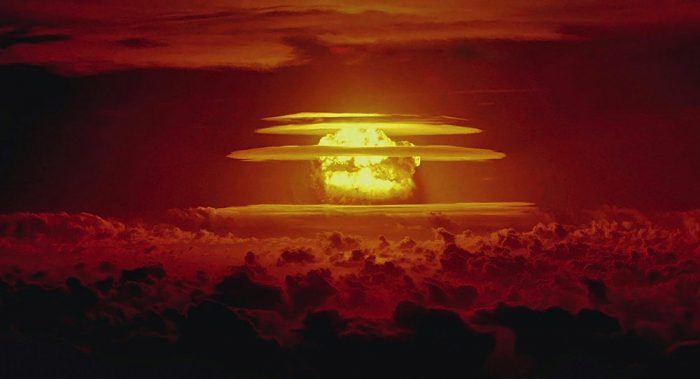
The claims by the United States that Russia illegally conducts nuclear testing lack evidence, the Arms Control Association said in a press release.
“But no public evidence has ever been provided to support the claim of illegal Russian testing and Gen. Ashley didn’t provide any Wednesday”, the Arms Control Association said. “Gen. Ashley also claimed that Russia has ‘not affirmed the language of zero-yield.’ But Russia has repeatedly affirmed publicly that they believe the treaty prohibits all nuclear test explosions”.
The association noted, for example, that Russian Deputy Foreign Minister Sergey Ryabkov emphasized in a 2017 op-ed that the treaty bans “any nuclear weapon test explosion or any other nuclear explosion, anywhere on Earth, whatever the yield”.
The best way for Washington to enforce adherence to the zero-yield standard would be for President Donald Trump and the US Senate to support ratifying the treaty to help bring it into force, the association added.
Such a move would pave the way for “intrusive, short-notice, on-site inspections to detect and deter any possible cheating”, the release said.
The United States should propose confidence-building visits to test sites as allowed for by the treaty if it indeed has any “credible evidence” of Russia violating the treaty, it added.
Russia’s Permanent Representative to International Organisations in Vienna Mikhail Ulyanov has commented on the matter saying that Washington is trying to distract attention from its own destructive policy on the Comprehensive Nuclear-Test-Ban Treaty (CTBT) by blaming Russia for violating the moratorium on nuclear tests.
The release comes after US Defenсe Intelligence Agency (DIA) Director Lt. Gen. Robert Ashley said that the United States believes Russia may not be adhering to the nuclear testing moratorium outlined in the 1996 Comprehensive Test Ban Treaty.
Featured Video
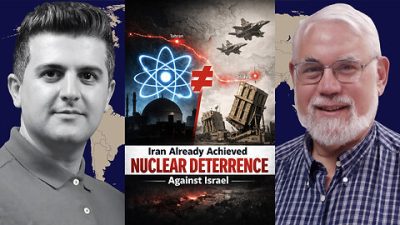
Prof. Ted Postol: Iran Already Achieved Nuclear Deterrence Against Israel
or go to
Aletho News Archives – Video-Images
From the Archives
How the occupied mentality syndrome works
Saudi Arabia on the American chessboard – Part 3
By B. J. Sabri | American Herald Tribune | June 27, 2016
Read part 2: “The occupied mentality Syndrome“
Previously I argued whether Saudi Arabia’s repeated involvements in U.S. interventions and wars stem from free national will or in response to a specific condition. For starters, in Saudi Arabia there is no national will. In Saudi Arabia, the national will is the will of the Al Saud clan. Still, when a major Arab state allies itself with a superpower that committed unspeakable crimes against humanity in almost every Arab country, then something is wrong. This fact alone should compel us to examine the U.S.-Saudi relation for one exceptional reason. As a result of the U.S.-Saudi wars, hundreds of thousands of people in Afghanistan, Iraq, Iran, Libya, Syria, Yemen, and Somalia have lost their lives. Millions became displaced in their own homelands. And millions more rendered refugees.
Attributing the Saudi policies to the bonds of “partnership” with the U.S. is frivolous. There are no bonds between these two thugs except those of business, military deals, secret plots, and wars. Proving this point, bonds such as these have no space for the American and Saudi peoples to share significant cultural or societal exchanges. If partnership is not the reason for the Saudi contribution to the U.S. strategy of empire and imperialism, then another reason must exist.
This leads to three possibilities. … continue
Blog Roll
 Aletho News
- NIAID/NIH and USDA Fund Bioengineered Chimeric Influenza Viruses Built Using Pandemic H1N1 Components: Journal ‘Science Advances’
- Hezbollah hits Israeli warship off Lebanon’s coast, sets it aflame
- Iran slams US strikes on B1 bridge, Mahshahr petrochemical plants as ‘blatant acts of state terrorism’
- In letter to UN chief, Araghchi warns of dire consequences of US-Israeli attacks on Iran’s nuclear facilities
- Why the CIA conspiracy to invade Iran with Kurdish militias failed
- Why Are Upbeat US Claims About Mission to Rescue Pilot ‘Highly Questionable’?
- Aircraft destroyed during US ‘rescue’ of downed F-15 pilot cost more than $100 million each
- Washington University removes professor who condemned US-Israeli war on Iran
- Russia Warns of Retaliation as UK Authorizes Seizure of Vessels
- Serbia thwarts plot to bomb Russia-Hungary gas pipeline – Vucic
- If Americans Knew
- In Iran, Israel-US take aim at “reason, research, and freedom of thought” – Daily Update
- US loses planes over Iran, Israel downgrades Lebanon war goals – Daily Update
- Israel Is Blocking Palestinians from Easter at Church Where Jesus Resurrected
- Plot to assassinate Palestinian activist follows harassment campaign promoted by Zionist groups and elected officials
- Prominent New York synagogue hosts presentation on why U.S. Jews should support the ethnic cleansing of Gaza
- Tapper vs. Piker: Is the CNN Anchor Auditioning for David Ellison?
- Shouldn’t Democrats Be Able to Condemn Genocide?
- Israel-US kill negotiators, destroy civilian structures, but Iran’s military capabilities still largely intact – Daily Update
- ‘War crime’: Global condemnation as Israeli ministers celebrate death penalty law targeting Palestinian prisoners
- 7 Ways Israel Is Turning Lebanon Into Gaza
- No Tricks Zone
- An Inconvenient Tree: Uncovered In Alps… Europe Much Warmer Than Today 6000 Years Ago
- New Study Reports A 60% Slowdown In Greenland’s Ice Loss Rate In The Last Decade
- Low Intensity Tornado Wrecks Major Solar Farm, Creating A Potential Toxic Dump
- New Study Finds Warming Saves Lives…Cold Temperatures 12 Times More Deadly Than Excess Heat
- German Science Blog Accuses PIK Climate Institute Of Hallucinating Climate Tipping Points
- Devastating Assessment Of Comirnaty Vaccine By Former Senior Pfizer Europe Toxicologist
- New Study: CO2 Is ‘Effectively Negligible’ As An Explanatory Climate Change Factor Since 2000
- Former Pfizer Toxicologist Dr. Helmut Sterz Tells Bundestag Hearing Pfizer Vaccine Should Have Never Been Approved
- Energy Expert: Germany’s Nuclear Phaseout Was A “500 Billion Euro Mistake”
- New Research: South Australia’s Mid-Holocene Sea Surface Temperatures Were 4°C Warmer Than Today
 Aletho News