Newspeak at the Media Freedom Conference
Joint UK-Canada Event Littered With Insidious Undertones
By Kit Knightly | OffGuardian | July 16, 2019
OffGuardian already covered the Global Media Freedom Conference, our article Hypocrisy Taints UK’s Media Freedom Conference, was meant to be all there was to say. A quick note on the obvious hypocrisy of this event. But, in the writing, I started to see more than that. This event is actually… creepy.
Let’s just look back at one of the four “main themes” of this conference:
building trust in media and countering disinformation
“Countering disinformation”? Well,that’s just another word for censorship.
This is proven by their refusal to allow Sputnik or RT accreditation. They claim RT “spreads disinformation” and they “countered” that by barring them from attending.
“Building trust”? In the post-Blair world of PR newspeak, “building trust” is just another way of saying “making people believe us” (the word usage is actually interesting, building trust not earning trust).
The whole conference is shot through with this language that just feels… off.
Here is CNN’s Christiane Amanpour:
Our job is to be truthful, not neutral… we need to take a stand for the truth, and never to create a false moral or factual equivalence.”
Being “truthful not neutral” is one of Amanpour’s personal sayings, she obviously thinks it’s clever.
Of course, what it is is NewSpeak for “bias”.
Refusing to cover evidence of The White Helmets staging rescues, Israel arming ISIS or other inconvenient facts will be defended using this phrase – they will literally claim to only publish “the truth”, to get around impartiality… and then set about making up whatever “truth” is convenient.
Oh, and if you don’t know what “creating a false moral equivalence is”, here I’ll demonstrate:
MSM: Putin is bad for shutting down critical media.
OffG: But you’re supporting RT being banned and Wikileaks being shut down.
BBC: No. That’s not the same.
OffG: It seems the same.
BBC: It’s not. You’re creating a false moral equivalence.
Understand now? You “create a false moral equivalence” by pointing out mainstream media’s double standards.
Other ways you could mistakenly create a “false moral equivalence”:
- Bringing up Gaza when the media talk about racism.
- Mentioning Saudi Arabia when the media preach about gay rights.
- Referencing the US coup in Venezuela when the media work themselves into a froth over Russia’s “interference in our democracy”
- Talking about the invasion of Iraq. Ever.
- OR Pointing out that the BBC is state funded, just like RT.
These are all no-longer flagrant examples of the media’s double standards, and if you say they are, you’re “creating a false moral equivalence”… and the media won’t have to allow you (or anyone who agrees with you) air time or column inches to disagree.
Because they don’t have a duty to be neutral or show both sides, they only have a duty to tell “the truth”… as soon as the government has told them what that is.
Prepare to see both those phrases – or variations there of – littering editorials in the Guardian and the Huffington Post in the coming months. Along with people bemoaning how “fake news outlets abuse the notion of impartiality” by “being even handed between liars the truth tellers”. (I’ve been doing this site so long now, I have a Guardian-English dictionary in my head).
Equally dodgy-sounding buzz-phrases litter topics on the agenda.
“Eastern Europe and Central Asia: building an integrated support system for journalists facing hostile environments”, this means pumping money into NGOs to fund media that will criticize our “enemies” in areas of strategic importance. It means flooding money into the anti-government press in Hungary, or Iran or (of course), Russia. That is ALL it means.
I said in my earlier article I don’t know what “media sustainability” even means, but I feel I can take a guess. It means “save the government mouthpieces”.
The Guardian is struggling for money, all print media are, TV news is getting lower viewing figures all the time. “Building media sustainability” is code for “pumping public money into traditional media that props up the government” or maybe “getting people to like our propaganda”.
But the worst offender on the list is, without a doubt…
“Navigating Disinformation”
“Navigating Disinformation” was a 1 hour panel from the second day of the conference. You can watch it embedded above if you really feel the need. I already did, so you don’t have to.
The panel was chaired by Chrystia Freeland, the Canadian Foreign Minister. The members included the Latvian Foreign Minister, a representative of the US NGO Committee to Protect Journalists, and the Ukrainian Deputy Minister of Information
Have you guessed what “disinformation” they’re going to be talking about?
I’ll give you a clue: It begins with R.
Freeland, chairing the panel, kicks it off by claiming that “disinformation isn’t for any particular aim”.
This is a very common thing for establishment voices to repeat these days, which makes it all the more galling she seems to be pretending its is her original thought.
The reason they have to claim that “disinformation” doesn’t have a “specific aim” is very simple: They don’t know what they’re going to call “disinformation” yet.
They can’t afford to take a firm position, they need to keep their options open. They need to give themselves the ability to describe any single piece of information or political opinion as “disinformation.” Left or right. Foreign or domestic. “Disinformation” is a weaponised term that is only as potent as it is vague.
So, we’re one minute in, and all “navigating disinformation” has done is hand the State an excuse to ignore, or even criminalise, practically anything it wants to. Good start.
Interestingly, no one has actually said the word “Russia” at this point. They have talked about “malign actors” and “threats to democracy”, but not specifically Russia. It is SO ingrained in these people that “propaganda”= “Russian propaganda” that they don’t need to say it.
The idea that NATO as an entity, or the individual members thereof, could also use “disinformation” has not just been dismissed… it was literally never even contemplated.
Next Freeland turns to Edgars Rinkēvičs, her Latvian colleague, and jokes about always meeting at NATO functions. The Latvians know “more than most” about disinformation, she says.
Rinkēvičs says disinformation is nothing new, but that the methods of spreading it are changing… then immediately calls for regulation of social media.
Nobody disagrees.
Then he talks about the “illegal annexation of Crimea”, and claims the West should outlaw “paid propaganda” like RT and Sputnik.
Nobody disagrees.
Then he says that Latvia “protected” their elections from “interference” by “close cooperation between government agencies and social media companies”.
Everyone nods along.
If you don’t find this terrifying, you’re not paying attention. They don’t say it, they probably don’t even realise they mean it, but when they talk about “close cooperation with social media networks”, they mean government censorship of social media. When they say “protecting” their elections… they’re talking about rigging them.
It only gets worse.
The next step in the Latvian master plan is to bolster “traditional media”. The problems with traditional media, he says, are that journalists aren’t paid enough, and don’t keep up to date with all the “new tricks”.
His solution is to “promote financing” for traditional media, and to open more schools like the “Baltic Centre of Media Excellence”, which is apparently a totally real thing. It’s a training centre which teaches young journalists about “media literacy” and “critical thinking”.
You can read their depressingly predictable list of “donors” here.
I truly wish I was joking.
Next up is Courtney Radsch from CPJ – a US-backed NGO, who notionally “protect journalists”, but more accurately spread pro-US propaganda. (Their token effort to “defend” RT and Sputnik when they were barred from the conference was contemptible). She talks for a long time… without saying much at all. Her revolutionary idea is that disinformation could be countered if everyone told the truth. Inspiring.
Beata Balogova, Journalist and Editor from Slovakia, gets the ship back on course – immediately suggesting politicians should not endorse “propaganda” platforms. She shares an anecdote about “a prominent Slovakian politician” who gave exclusive interviews to a site that is “dubiously financed, we assume from Russia”.
They assume from Russia. Everyone nods. It’s like they don’t even hear themselves.
Then she moves on to Hungary.
Apparently, Orban has “created a propaganda machine” and produced “antisemitic George Soros posters”. No evidence is produced to back-up either of these claims. She thinks advertisers should be pressured into not giving money to “fake news sites”. She calls for “international pressure”, but never explains exactly what that means.
The stand-out maniac on this panel is Emine Dzhaparova, the Ukrainian First Deputy Minister of Information Policy. (She works for the Ministry of Information – nicknamed the Ministry of Truth, which was formed in 2014 to “counter lies about Ukraine”. Even The Guardian thought that sounded dodgy.)
She talks very fast and, without any sense of irony, spills out a story that shoots straight through “disinformation” and becomes “incoherent rambling”. She claims that Russian citizens are so brainwashed you’ll never be able to talk to them, and that Russian “cognitive influence” is “toxic… like radiation.”
Is this paranoid, quasi-xenophobic nonsense countered? No. Her fellow panelists nod and chuckle.
On top of that, she just lies. She lies over and over and over again.
She claims Russia is locking up Crimean Tartars “just for being muslims”, nobody questions her.
She says the war in Ukraine has killed 13,000 people, but doesn’t mention that her side is responsible for over 80% of civilian deaths.
She says only 30% of Crimeans voted in the referendum, and that they were “forced”. A fact not supported by any polls done by either side in the last four years, and any referenda held on the peninsula any time in the last last 30 year. It’s simply a lie.
Nobody asks her about the journalists killed in Ukraine since their glorious Maidan Revolution.
Nobody questions the fact that she works for something called the “Ministry of Information”.
Nobody does anything but nod and smile as the “countering disinformation” panel becomes just a platform for spreading total lies.
When everyone on the panel has had their ten minutes on the soapbox, Freeland asks for recommendations for countering this “threat” – here’s the list:
- Work to distinguish “free speech” from “propaganda”, when you find propaganda there must be a “strong reaction”.
- Pressure advertisers to abandon platforms who spread misinformation.
- Regulate social media.
- Educate journalists at special schools.
- Start up a “Ministry of Information” and have state run media that isn’t controlled, like in Ukraine.
This is the Global Conference on Media Freedom… and all these six people want to talk about is how to control what can be said, and who can say it.
They single only four countries out for criticism: Hungary, Nicaragua, Venezuela and Russia…. and Russia takes up easily 90% of that.
They mention only two media outlets by name: RT and Sputnik.
This wasn’t a panel on disinformation, it was a public attack forum – a month’s worth of 2 minutes of hate.
These aren’t just shills on this stage, they are solid gold idiots, brainwashed to the point of total delusion. They are the dangerous glassy eyes of a Deep State that never questions itself, never examines itself, and will do anything it wants, to anyone it wants… whilst happily patting itself on the back for its superior morality.
They don’t know, they don’t care. They’re true believers. Terrifyingly dead inside. Talking about state censorship and re-education camps under a big sign that says “Freedom”.
And that’s just one talk. Just one panel in a 2 day itinerary filled to the brim with similarly soul-dead servants of authority.
Truly, perfectly Orwellian.
Sic Transit Gloria Mueller
Making the Worst Case Appear the Better
By Ray McGovern | Consortium News | July 16, 2019
Friday’s surprising report that Robert Mueller had successfully sought an extra week to prepare for his House testimony on Russiagate (now set for July 24) must have come as scary news to those of his fans who can put two and two together. Over the past few weeks, it has become clearer that each of the two frayed findings of Russian interference in the 2016 U.S. presidential election has now come apart at the seams.
Saturday’s New York Times reports that “the Democrats said they chose to delay at the request of Mr. Mueller” after a day of negotiations, “as both Democrats and Republicans were deep in preparations for his testimony” earlier scheduled for July 17. The Washington Post, on the other hand, chose not to say who asked for the delay. Rather, it explained the abrupt change in timing with a misleading article entitled, “Mueller, House panels strike deal to delay hearing until July 24, giving lawmakers more time to question him.”
How to Avoid Eating Crow
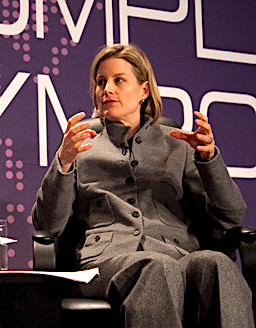
Friedrich: Told Mueller put up or shut up (Flickr)
As the truth seeps out, there will be plenty of crow to go around. To avoid eating it, the Democrats on the House Judiciary and Intelligence Committees, the stenographers who pass for journalists at the Times and Post, and the “Mueller team” will need all the time they can muster to come up with imaginative responses to two recent bombshell revelations from the United States District Court for the District of Columbia.
Perhaps the most damning of the two came last Monday, when it was disclosed that, on July 1, Judge Dabney Friedrich ordered Mueller to stop pretending he had proof that the Russian government was behind the Internet Research Agency’s supposed attempt to interfere via social media in the 2016 election. While the corporate media so far has largely ignored Judge Friedrich’s order, it may well have been enough to cause very cold feet for those attached to the strained Facebook fable. (The IRA social-media “interference” has always been ludicrous on its face, as journalist Gareth Porter established.)
Ten days is not a lot of time to conjure up ways to confront and explain Judge Friedrich’s injection of some unwelcome reality. Since the Democrats, the media, and Mueller himself all have strong incentive to “make the worst case appear the better” (one of the twin charges against Socrates), they need time to regroup and circle the wagons. The more so, since Mueller’s other twin charge — Russian hacking of the DNC — also has been shown, in a separate Court case, to be bereft of credible evidence.
No, the incomplete, redacted, second-hand “forensics” draft that former FBI Director James Comey decided to settle for from the Democratic National Committee-hired CrowdStrike firm does not qualify as credible evidence. Both new developments are likely to pose a strong challenge to Mueller. On the forensics, Mueller decided to settle for what his former colleague Comey decided to settle for from CrowdStrike, which was hired by the DNC despite it’s deeply flawed reputation and well known bias against Russia. In fact, the new facts — emerging, oddly, from the U.S. District Court, pose such a fundamental challenge to Mueller’s findings that no one should be surprised if Mueller’s testimony is postponed again.
Requiem for ‘Interference’
Daniel Lazare’s July 12 Consortium News piece shatters one of the twin prongs in Mueller’s case that “the Russian government interfered in the 2016 presidential election in sweeping and systematic fashion.” It was the prong dripping with incessant drivel about the Kremlin using social media to help Trump win in 2016.
Mueller led off his Russiagate report, a redacted version of which was published on April 18, with the dubious claim that his investigation had
“… established that Russia interfered in the 2016 election principally through two operations. First, a Russian entity carried out a social media campaign that favored presidential candidate Donald J. Trump and disparaged presidential candidate Hillary Clinton. Second, a Russian intelligence service conducted computer-intrusion operations against entities, employees, and volunteers working in the Clinton campaign, and then released stolen documents.”
Judge to Mueller: Put Up or Shut Up
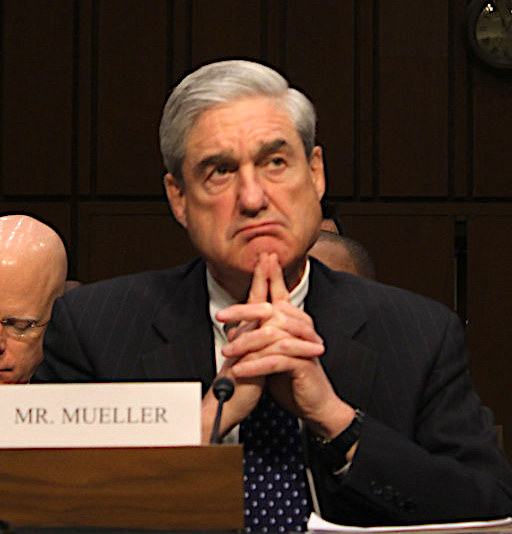
Mueller: Needs more time. (Flickr)
Regarding the social-media accusation, Judge Friederich has now told Mueller, in effect, to put up or shut up. What happened was this: On February 16, 2018 a typically credulous grand jury — the usual kind that cynics say can be persuaded to indict the proverbial ham sandwich — was convinced by Mueller to return 16 indictments of the Internet Research Agency (IRA) and associates in St. Petersburg, giving his all-deliberate-speed investigation some momentum and a much-needed, if short-lived, “big win” in “proving” interference by Russia in the 2016 election. It apparently never occurred to Mueller and the super-smart lawyers around him that the Russians would outsmart them by hiring their own lawyers to show up in U.S. court and seek discovery. Oops.
The Feb. 2018 indictment referred repeatedly to the IRA simply as a “Russian organization.” But in Mueller’s report 14 months later, the “Russian organization” had somehow morphed into “Russia.” The IRA’s lawyers argued, in effect, that Mueller’s ipse-dixit “Russia did it” does not suffice as proof of Russian government involvement. Federal Judge Friedrich agreed and ordered Mueller to cease promoting his evidence-less charge against the IRA; she added that “any future violations of her order will trigger a range of potential sanctions.”
More specifically, at the conclusion of a hearing held under seal on May 28, Judge Friedrich ordered the government “to refrain from making or authorizing any public statement that links the alleged conspiracy in the indictment to the Russian government or its agencies.” The judge ordered further that “any public statement about the allegations in the indictment . . . must make clear that, one, the government is summarizing the allegations in the indictment which remain unproven, and, two, the government does not express an opinion on the defendant’s guilt or innocence or the strength of the evidence in this case.”
Reporting Thursday on Judge Friedrich’s ruling, former CIA and State Department official Larry C. Johnson described it as a “potential game changer,” observing that Mueller “has not offered one piece of solid evidence that the defendants were involved in any way with the government of Russia.” After including a lot of useful background material, Johnson ends by noting:
“Some readers will insist that Mueller and his team have actual intelligence but cannot put that in an indictment. Well boys and girls, here is a simple truth–if you cannot produce evidence that can be presented in court then you do not have a case. There is that part of the Constitution that allows those accused of a crime to confront their accusers.”
IRA Story a ‘Stretch’
Last fall, investigative journalist Gareth Porter dissected and debunked The New York Times’ far-fetched claim that 80,000 Facebook posts by the Internet Research Agency helped swing the election to Donald Trump. What the Times story neglected to say is that the relatively paltry 80,000 posts were engulfed in literally trillions of posts on Facebook over the two-year period in question — before and after the 2016 election.
In testimony to Congress in October 2017, Facebook General Counsel Colin Stretch had cautioned earlier that from 2015 to 2017, “Americans using Facebook were exposed to, or ‘served,’ a total of over 33 trillion stories in their News Feeds.” Shamefully misleading “analysis” by Times reporters Scott Shane and Mark Mazzetti in a 10,000-word article on September 20, 2018 made the case that the IRA’s 80,000 posts helped deliver the presidency to Trump.
Shane and Mazzetti neglected to report the 33 trillion number for needed context, even though the Times’ own coverage of Stretch’s 2017 testimony stated outright: “Facebook cautioned that the Russia-linked posts represented a minuscule amount of content compared with the billions of posts that flow through users’ News Feeds everyday.”
The chances that Americans saw any of these IRA ads—let alone were influenced by them—are infinitismal. Porter and others did the math and found that over the two-year period, the 80,000 Russian-origin Facebook posts represented just 0.0000000024 of total Facebook content in that time. Porter commented that this particular Times contribution to the Russiagate story “should vie in the annals of journalism as one of the most spectacularly misleading uses of statistics of all time.”
And now we know, courtesy of Judge Friederich, that Mueller has never produced proof, beyond his say-so, that the Russian government was responsible for the activities of the IRA — feckless as they were. That they swung the election is clearly a stretch.
The Other Prong: Hacking the DNC
The second of Mueller’s two major accusations of Russian interference, as noted above, charged that “a Russian intelligence service conducted computer-intrusion operations against entities, employees, and volunteers working in the Clinton campaign, and then released stolen documents.” Sadly for Russiagate aficionados, the evidence behind that charge doesn’t hold water either.
CrowdStrike, the controversial cybersecurity firm that the Democratic National Committee chose over the FBI in 2016 to examine its compromised computer servers, never produced an un-redacted or final forensic report for the government because the FBI never required it to, the Justice Department admitted.
The revelation came in a court filing by the government in the pre-trial phase of Roger Stone, a long-time Republican operative who had an unofficial role in the campaign of candidate Donald Trump. Stone has been charged with misleading Congress, obstructing justice and intimidating a witness.
The filing was in response to a motion by Stone’s lawyers asking for “unredacted reports” from CrowdStrike challenging the government to prove that Russia hacked the DNC server. “The government … does not possess the information the defendant seeks,” the DOJ filing says.
Small wonder that Mueller had hoped to escape further questioning. If he does testify on July 24, the committee hearings will be well worth watching.
Ray McGovern works with Tell the Word, a publishing arm of the ecumenical Church of the Saviour in inner-city Washington. He was a CIA analyst for 27 years and a presidential briefer. In retirement he co-founded Veteran Intelligence Professionals for Sanity. His colleagues and he have been following closely the ins and outs of Russiagate.
How Assange & RT meddled in 2016, according to CNN’s ‘possibilities’, innuendo & lies
RT | July 16, 2019
CNN has released a new ‘exclusive’ report, accusing Julian Assange of conspiring with ‘the Russians’ (including RT) to meddle in the 2016 US election – again.
Citing a report compiled by a private Spanish security company – but not providing any of it – the network basically re-hashed the entirety of the Russiagate conspiracy on Monday, painting a sinister portrait of WikiLeaks publisher Julian Assange, RT and “Russians and world-class hackers” that supposedly made the revelations of Democratic National Committee (DNC) and Podesta emails happen during the 2016 election. It includes speculation, insinuation, selective quoting of special counsel Robert Mueller’s report, and even an easily and repeatedly disproven lie about RT.
Let’s dispense with the last point first. Per CNN: “On at least two occasions, RT even published articles detailing the new batches of emails before WikiLeaks officially released them, suggesting that they were coordinating behind the scenes, which they deny.”
In reality, RT journalists simply noticed a pattern to the WikiLeaks’ releases and kept a close eye on its website in expectation of every new batch. As RT’s Dublin bureau editor-on-duty at the time Ivor Crotty put it, “We merely watched a trend and performed journalism.” It was Clinton’s aides that suggested“coordinating behind the scenes,” which CNN here uncritically endorses.
The rest of CNN’s sensationally-titled “scoop” openly admits the Spanish papers merely “build on the possibility” raised by Mueller’s report about how WikiLeaks received the emails. Safe words for “unprovable speculation” begin a few lines below the headline, and keep multiplying from there on.
CNN quotes the Mueller report as having named German hacker Andrew Müller-Maguhn as someone who “may have assisted” WikiLeaks in obtaining the files – something page 55 of the report “cannot rule out” happened, based on “public reporting”, not actual evidence.
Throughout the story, the CNN authors seem almost incredulous that Ecuador allowed Assange, a political refugee, to have basic facilities like high-speed Internet or the absence of 24/7 snooping – all of which he is portrayed as having exploited to undermine American democracy.
Assange also had visitors – including a “Russian national named Yana Maximova” (who the authors never tracked down, but appear to assume her an insidious figure by the sole merit of her being Russian) and with “senior staffers from RT” such as London bureau chief Nikolay Bogachikhin, who even “gave him a USB drive on one occasion.”
Bogachikhin, one of the very few people who actually responded to CNN’s requests for comment, was open about RT’s cooperation with Assange. RT’s editor-in-chief Margarita Simonyan joined in by tweeting about her own visits to Assange and listing quite a few more things RT staff brought to him: “Cassettes, floppy disks, flash drives, pieces of paper, technical equipment, candy…”
That’s because RT hosted a show with Assange, and widely advertised it both on air and online. “It’s hard to host a show without equipment, you know. It was an awesome show. Can you google it up yourself?” Simonyan tweeted.
CNN, meanwhile, repeats the literal smear – not substantiated by a single photo or video clip since Assange’s arrest in April – that the journalist “smeared feces” on the embassy walls.
Wrapping up the piece, CNN finds it sinister that the Russian government denounced the arrest as a violation of Assange’s human rights and dignity – the ultimate proof Assange “still has allies in Russia.”
Also on rt.com:
Another nail in Russiagate coffin? Federal judge destroys key Mueller report claim
Ending the myth of the ‘Millionaire Mullah’ – Part 2

Leader of the Islamic Revolution Ayatollah Seyyed Ali Khamenei waves to tens of thousands of Basij members from Tehran province at Azadi Stadium, Oct. 4, 2018. (Photo by Khamenei.ir)
By Ramin Mazaheri – Press TV – July 5, 2019
Part 1 of this article discussed why the recent US sanctions on Leader of the Islamic Revolution Ayatollah Seyyed Ali Khamenei provoked laughter in Iran, and derision even from Iranophobic Western mainstream media.
Beyond Ayatollah Khamenei, I can very briefly explain how and why the West can persist with its “Millionaire Mullah” mythology:
There are many economic principles that guide the Iranian economy which have no basis in the West – they are, after all, “revolutionary”. Many are based on the principles of Islamic charity and of Islamic finance; many are also based on the anti-capitalist principles which were obviously drawn from the 20th century socialism. There are almost too many to list, but in Part 2 of this 3-part article I will pick a few key ones which specifically relate to the clergy, and which – when added with Iranophobia – create such widespread and ignorant propaganda.
One of the five pillars of Islam is to give to charity (zakat), but one of the five additional pillars of Shia theology is that businessmen must give 20% of their profits to charity (khums). Thus, it should be clear why some say that Iran has an “alms-based economy”. That’s an exaggeration, because there are state taxes as well, but this money goes directly to religious authorities and has gone there for over 1,000 years.
For example, Ayatollah Khamenei was raised in a family (lower middle class clerics on both sides of his parents) which would have never received this money directly – they would have been the recipients of this charity from the much higher-ranking clergy.
Ayatollah Khamenei, through hard work, sacrifice and other virtues, is now a “Marja’” (top religious authority). He now heads various religious foundations which receive – and redistribute downwards – this zakat and khums money.
Of course, he heads these foundations, but this money cannot (and is not) be used by him to buy a Ferrari for his favourite nephew, for example. The Iranian press would die of happiness at the sales prospects caused by such a sensational, unheard-of event! These are “religious foundations” not “The Clinton Foundation”: These foundations serve the poor – they do not trade high-level political access and favours in return for funding a jet-set lifestyle. Of course, most Western media cynically assume that everyone – even a Marja’ as publicly present as Ayatollah Khamenei – secretly operates on shameless Western capitalist principles.
Let’s clarify two key issues: zakat and khums are individual choices – they are not compelled to go to Ayatollah Khamenei. Iranians can send their charity to a Marja’ in Iraq if they like, and many do. Secondly, drastically changing this historic process of zakat and khums would certainly constitute a major revolution in Iran – however, for many it would constitute a rather “un-Islamic Revolution”, and there is no doubt that the democratic majority wanted an “Islamic Revolution”.
Therefore, Islamic charity is a reality of modern economics and finance in Iran. It is not something which non-Muslims can easily comprehend, perhaps, but the failure to do so will help fuel nonsense like “Millionaire Mullahs”. Unlike neoliberalism in the West, these financial principles have the virtue of being democratically-supported, and I can easily argue that they have the additional virtue of far more efficiently increasing economic equality than neoliberalism does.
Ayatollah Khamenei, as the Supreme Leader, is also often listed as the head of companies simply out of respect by the company’s founders. It is often purely honorary. Ayatollah Khamenei is not, for example, giving ideas on product improvement or production strategies to such companies (now the rare ex-president Rafsanjani – rare because he was an Iranian Islamic Revolutionary cleric from a rich, business-oriented background – might have gotten involved, but Ayatollah Khamenei has evinced no such interest)and he is absolutely not in any control of the companies’ assets. He is there in name only as a sign of respect for him, Islam, Iran, etc. Of course, this is distorted/misunderstood by Western pro-capitalist papers.
The Iranian Islamic Revolution also did something which no doubt enrages Western imperialist-capitalists, and about which they have no desire to spread honest information: the revolution took a huge chunk of the factories and industries owned by the Shah and his tiny coterie and gave them to charity.
These are called the bonyads, and they are an estimated 15-20% of the entire Iranian economy. A staggeringly revolutionary concept, no?
The bonyads are thus different from the Islamic charity I have described, and the Islamic foundations which administer that charity, because the bonyads were expressly charged with getting involved in economic production.
The bonyads are not designed for capitalist profit, but are cooperatives which exist to create low-cost goods and jobs for Iranians. This planned” inefficiency” – in attaining maximum profit, but not in social cohesion and equality – is falsely branded as“corruption” by raging Western capitalists, sadly.
Ayatollah Khamenei heads some bonyads, and this gives him economic influence, of course, because the popular, democratic, openly-debated decision to award a significant chunk of the Iranian economy to the administration of religious authorities was a popular, democratic, openly-debated decision of the Iranian people. Oppose decisions arrived at in this manner, and you oppose democracy for Iran.
Bonyads are not specifically proscribed in the Qur’an, unlike zakat and the ubiquitous concepts of charity and anti-usury (high interest/compound interest), but if one tries to overturn them, well, all I can say is – prepare for a serious fight. If you think the millions of bonyad workers and recipients of bonyad lower-cost goods want all that to be replaced by (mostly-Western) stockholders, good luck with your efforts.
Very obvious, but of course not perfect, parallels can be made elsewhere: the lower class supporters of Chavismo’s collectivos have won an unprecedented number of votes (and street battles) to preserve similar anti-neoliberal economic concepts and structures. Iran is not nearly as susceptible to Washington’s meddling, in large part because such gains have been consolidating democratic support for the government for a generation longer than in Venezuela. Cuba adopted similar (though not Islamic-influenced) concepts a generation earlier than Iran did. China is a generation up on Cuba, and aren’t they doing rather well? China doesn’t have bonyads, of course, but Beijing and Tehran have such a strong and long-term alliance because they obviously have much in common.
The common threat here is modern economic solutions designed to fight imperialism, and also those forms of capitalism which are rapacious and undemocratic.
So, between zakat, khums, the bonyads, generalized Iranophobia and a desire to denigrate any economic thought which is not far-right neoliberal capitalism, this is how we have arrived at Western nonsense like “Millionaire Mullahs”, and the propaganda is unrelenting.
Like, for example, the 2013 Reuters report on Setad, a bonyad headed by the Leader, was absurdly titled, “Khamenei controls massive financial empire built on property seizures”.
Part 3 will examine this report, which is still being cited today despite its obvious bias, misrepresentations and clear goal of spreading Iranophobic and Islamophobic propaganda.
Ramin Mazaheri is the chief correspondent in Paris for PressTV and has lived in France since 2009. He has been a daily newspaper reporter in the US, and has reported from Iran, Cuba, Egypt, Tunisia, South Korea and elsewhere. He is the author of “I’ll Ruin Everything You Are: Ending Western Propaganda on Red China”.
US, UK Intel Services Prepare Fakes About Putin’s Inner Circle Via Soros, Browder Entites – Source
Sputnik – July 13, 2019
According to a military diplomatic source, the defamation campaign repeats the Panamagate scenario in 2015 when Western media published dossiers about tax havens implicating various political leaders.
UK and US intelligence services are currently in an active phase of the anti-Russian campaign aiming to discredit individuals from the inner circle of the Russian president, as well as the leadership of the Defence Ministry.
“As part of the undisguised provocative actions, specialists from the American and British intelligence agencies fabricate fakes about the Russian leadership”, the source stated.
The source noted that aggressive actions could be seen in the information space, and provocations were no longer being concealed.
The fake information will wind up in the media controlled by foundations established by influential financiers such as George Soros and William Browder, according to the report. The source added the defamation campaign will also engage news agencies openly funded by US authorities, naming Radio Freedom and Current Time among others.
According to the report, the campaign follows the Panamagate template by disseminating biased information through non-commercial organisations affiliated with the State Department.
The source underlined that the fakes about the Russian leadership constitute direct interference in Russia’s internal affairs.
“As in the case with the Panama dossier, despite the absurdity of the accusations, the White House predictably uses fakes to justify sanctions. Such actions are direct interference in the internal affairs of the Russian Federation aimed to destabilise the country, weaken the economic potential of Russia and form the levers of political influence on its leadership”, the source added.
Millions of documents known collectively as the Panama Papers were leaked in 2016 from Panama-based law firm Mossack Fonseca. The leaked data exposed a large number of offshore operations and shell companies, and implicated multiple highly-placed individuals from across the world.
Two Think Tanks Claim Sputnik Meddled in 2017 French Election, Present No Proof… Again
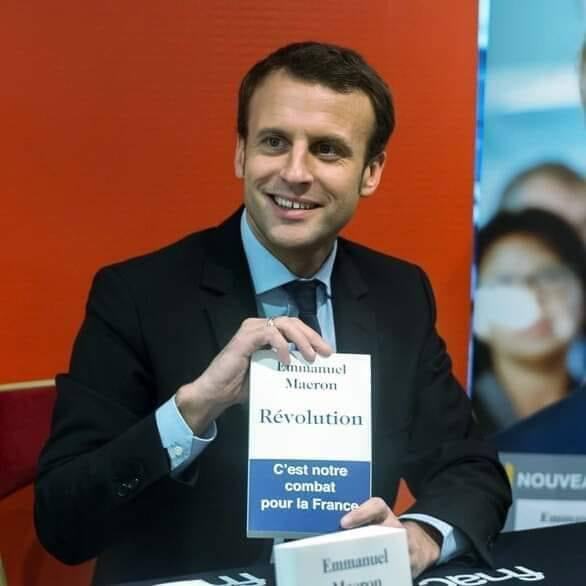
Sputnik – July 11, 2019
Russian media outlets last year faced accusations of interfering in France’s internal politics, but a recent probe by French intelligence has reportedly found no signs of such activities.
The French Institute of Strategic Research of the Military School (IRSEM) and American think-tank the Atlantic Council have in a recent collaborative project produced a report, the latest in a row of similar ones, claiming that Russia meddled in the internal affairs of a foreign government. This time, the researchers accused Moscow of trying to prevent the victory of Emmanuel Macron in the 2017 French presidential election.
The researchers try to prove that by using state-funded media outlets, namely Sputnik, as an “information weapon”, the Kremlin allegedly organised a coordinated “disinformation campaign” against then presidential hopeful Macron. However, like many similar papers on alleged “Russian meddling”, this research also fails to present solid facts that substantiate the claims and stumbles into certain problems when trying to prove that such a targeted “campaign” actually existed in the first place.
Notably, the report’s key author and head of the IRSEM, Jean-Baptiste Jeangène Vilmer, who also serves on the Academic Advisory Board of the NATO Defence College, took most of his points of evidence from the works of Ben Nimmo, a researcher at the Atlantic Council. The latter, like many other Western think tanks, regularly publishes research devoted to proving the existence of Russian attempts to interfere in the internal affairs of Western countries and proposing ways in which they can counter this alleged “threat”.
“Anti-Macron Campaign” or Factual Reporting?
The IRSEM study recalls that back in February 2017, Macron’s digital manager accused Sputnik of publishing “fake news” about his employer from the “very beginning of [the election] campaign”. The author of the paper, Vilmer, claims that this “disinformation campaign” began when the French edition of Sputnik published a report about statements by WikiLeaks founder Julian Assange, in which he revealed that he possessed “interesting information” about Macron, albeit without specifying whether it was compromising in any way.
Referring to the Sputnik article as “menacing”, the IRSEM report draws parallels to the 2016 US presidential election and WikiLeaks’ publication of Democratic National Committee (DNC) emails. At the same time, the paper didn’t elaborate any further on how exactly reporting on an interview with a famous whistle-blower, in which no compromising information about Macron was published, was able to affect the outcome of the election. It also failed to mention that WikiLeaks’ threats, covered by Sputnik, were not limited to Macron, but also touched his main opponent in the second round, Marine Le Pen.
“Hand-Picked” Speakers vs Hand-Picked Examples
The IRSEM head admits in the report that Sputnik didn’t publish any “fake news” during the election campaign in France, but instead accused it of “information manipulation”. Vilmer claims that the Russian media outlet had expressed “a strong bias” by allegedly leaving out important information and by “hiding behind the quotations” of the “right people”.
While failing to present any proof that Sputnik had omitted any important facts in its articles, the researcher instead tried to substantiate his claim by indicating that Sputnik had interviewed only two persons, who happen to be members of the French Parliament – Thierry Mariani and Nicolas Dhuicq – in regards to the upcoming election. However, a simple search on the news outlet’s website reveals that in reality Sputnik had interviewed far more contributors on the topic, such as Jacques Lamblin, another member of the country’s parliament, as well as various European lawmakers and pundits.
Alleged “Focus” on “Macron Affair”
The paper proceeds to claim that Sputnik covered the election in France with “a distinct bias against Macron”. According to Vilmer, this was expressed in a strategy of giving a deaf ear to scandals involving other contenders for the presidency, such as “the Kremlin’s favoured candidate”, Marine Le Pen, and instead focusing on “rumours” about Macron’s alleged offshore accounts.
The IRSEM research insisted that most of Sputnik’s articles were devoted to the “invented Macron affair” involving offshore accounts while it “defended Le Pen and amplified her party”. However, the paper does not include any factual proof of a discrepancy in the coverage of Macron-related scandals and controversies involving his rivals. It also fully omits the actual fact that Sputnik covered the latter.
“Blame Russia” Trend
France was the second Western country to try to blame Russia for interfering in its domestic affairs. This was preceded by an attempt by the US Democratic Party, and specifically its candidate Hillary Clinton, to shift the blame for the defeat in the 2016 presidential election on to supposed meddling by Moscow.
This blame-game later became a trend among Western governments and political parties in countries such as the UK, Germany, and Spain, to name only a few. But just as in the case of the US, none of these states managed to provide any credible evidence to substantiate the claims, at best referring to obscure “intelligence reports”. Moscow has repeatedly pointed out this lack of underlying proof when rejecting these groundless accusations
Notably, following Macron’s victory in the elections his team abandoned the narrative for a while, only to return to it in February 2019, accusing Moscow of “orchestrating” the Yellow Vest rallies, which demanded Macron’s resignation, and pointing to Sputnik and RT for this purpose. However, earlier reports by local news outlets said that the French intelligence services’ investigation had failed to find any signs indicating that the Russian media was able to impact French domestic affairs.
Hiring the swamp: Meet new RFE/RL boss, a Russiagate-pushing neocon
By Nebojsa Malic | RT | July 11, 2019
Radio Free Europe/Radio Liberty, a US government-funded propaganda outfit, will soon get a new president – a NeverTrump neoconservative flack, who last worked at an outfit promoting the ‘Russiagate conspiracy.’
Jamie Fly is supposed to take over at RFE/RL in Prague on August 1, having reportedly been handpicked by board chair Kenneth Weinstein and endorsed by Secretary of State Mike Pompeo. He reportedly received unanimous support from the board, composed of Democrats and Republicans appointed under the Obama administration.
Fly’s name may not be familiar to the general public, but he is well known in Washington. His latest posting was at the German Marshall Fund of the United States (GMF), a quasi-non-governmental outfit that sponsors the Alliance for Securing Democracy (ASD), among other things. The ASD was set up by leading Democrats and neoconservatives in July 2017, and operates the notorious Hamilton68 dashboard, the shady analysis tool that sees “Russian bots and trolls” everywhere.
Journalist Glenn Greenwald, who has followed ASD since its inception, called Hamilton 68 “the single most successful media fraud & US propaganda campaign” he had seen in years of covering US politics.
The ASD was just one of the outfits that sprung up since 2016, driven by the allegations that Russia “meddled” with the US presidential election that were concocted and weaponized to help explain how President Donald Trump got into the White House instead of the establishment favorite Hillary Clinton – and fuel calls for Trump’s impeachment.
What they all had in common was seeing “Russians” all over social media, and demanding purges from Facebook, Twitter, YouTube and other platforms. Fly himself boasted, from his GMF/ASD perch, that his outfit was guiding Facebook in its crackdown on “Russian” pages and other “fringe” views in October 2018, and that it was “just the beginning.”
Meanwhile, RFE/RL was getting caught red-handed violating Facebook’s advertising rules by posting pro-NATO propaganda.
The rest of Fly’s work history is hardly better. Between 2013 and 2017, he worked as a foreign policy adviser to Senator Marco Rubio (R-Florida). Rubio, you may recall, currently champions “regime change” in Venezuela and seems to enjoy Trump’s favor even after voting against his efforts to secure the US-Mexico border.
Prior to working for Rubio, Fly was executive director at the Foreign Policy Initiative (FPI), an interventionist think-tank that operated between 2009 and 2017 and was co-founded by a trio of prominent neoconservatives. Dan Senor served as the chief spokesman for the US occupying authority in Iraq and later as a foreign policy adviser to Mitt Romney in 2012. The other two co-founders were Bill Kristol and Robert Kagan, formerly of the Project for the New American Century (PNAC) and authors of an infamous 1996 treatise advocating “benevolent global hegemony” by the US.
During the neoconservative-dominated George W. Bush administration, Fly worked at the National Security Council and at the office of the Secretary of Defense, under both Donald Rumsfeld and Robert Gates.
In other words, Jamie Fly is the perfect example of what Trump had called the “swamp” and vowed to “drain” in his 2016 campaign – a neoconservative Washington operative dedicated to policies and ideas that Trump got elected by denouncing and opposing. Yet in an administration whose foreign policy is run by Pompeo and National Security Advisor John Bolton, he should be a perfect fit.
IRGC rejects US claim of Iran attempt to seize UK tanker in Persian Gulf
Press TV – July 11, 2019
Iran’s Islamic Revolution Guards Corps (IRGC) has dismissed a claim by US officials that its naval forces tried to stop a British tanker in the Persian Gulf.
Early on Thursday, two American officials, who were speaking to Reuters on the condition of anonymity, claimed that five boats believed to belong to the IRGC had approached the tanker British Heritage at the northern entrance of the Strait of Hormuz and ordered it to stop.
The Iranian boats dispersed, said one of the sources, after the UK’s Royal Navy frigate HMS Montrose, which had been escorting the tanker, “pointed its guns at the boats and warned them over radio.”
The other official also called the alleged incident an act of “harassment and an attempt to interfere with the passage.”
However, the IRGC rejected the US officials’ claim, stressing that Iranian boats were carrying out their normal duties.
“Patrols by the IRGC’s Navy vessels have been underway in the Persian Gulf based on current procedures and missions assigned to them with vigilance, precision and strength,” said the Public Relations Department of the IRGC Navy’s Fifth Naval Zone in a statement.
“In the past 24 hours, there has been no encounter with foreign ships, including British ones,” it added.
The statement further noted that the IRGC Navy’s fifth zone has the power to act “decisively and swiftly” and seize foreign vessels in the area it is tasked with patrolling if an order is issued to that effect.
Similarly, Britain claimed Thursday that three Iranian vessels had tried to block the passage of its tanker but backed off.
“HMS Montrose was forced to position herself between the Iranian vessels and British Heritage and issue verbal warnings to the Iranian vessels, which then turned away,” a British government representative said.
Zarif: Such claims have no value
Iran’s Foreign Minister Mohammad Javad Zarif also reacted to the allegations, saying they are merely meant to create tensions.
Those who make such claims attempt to “cover up their weak point,” he added. “Apparently the British tanker has passed. What they have said themselves and the claims that have been made are for creating tension and these claims have no value.”
The claims came two weeks after British marines illegally seized an Iranian oil tanker in the Strait of Gibraltar under the pretext that the vessel had been suspected of carrying crude to Syria in violation of EU sanctions against the Arab country.
Reports, however, said the seizure took place at the request of the US.
The Islamic Republic condemned the illegal seizure as “maritime piracy” and summoned the British ambassador on three occasions to convey its protest at the confiscation.
Salvini Refutes Claims About Receiving Russian Financial Support for Lega Party
Sputnik – July 10, 2019
ROME – Italian Interior Minister Matteo Salvini once again refuted claims on Wednesday about receiving financial support from Russia for his Lega party.
“I have already filed a lawsuit [concerning this issue] earlier and I will do it today, tomorrow and the day after tomorrow. I took no ruble, no euro, no dollar, no litre of vodka of financing from Russia”, Salvini said in a statement released by his press office.
The statement may be triggered by an article that appeared on the BuzzFeed News portal earlier in the day and included a transcript of a conversation between Salvini’s representatives and alleged Russians discussing financing Salvini’s Lega party through the supply of Russian oil. The conversation took place on October 18, 2018, according to the media outlet.
This is not the first time Salvini is suspected of gaining financial support from Russia. Late February, Italian weekly L’Espresso also published an investigation claiming that Salvini and his representatives had visited Moscow in secret on October 18. 2018, to discuss financing of the Lega party with Russians ahead of European election. The party has allegedly gained 3 million euros ($3.3 million) under cover of Russian diesel exports. Moscow, as well as Salvini, has repeatedly refuted such allegations.
Campaigner Scores Major Victory, Forcing BBC Admit to Factual Inaccuracy
By Kit Klarenberg | Sputnik | July 2, 2019
Simon Maginn is many things – author, activist, piano teacher, and also one of the BBC’s most determined agitators. He submits complaints to the state broadcaster on a borderline daily basis, lodging grievances about what he feels are fundamental misrepresentations of opinions and facts by the corporation’s journalists and interviewees.
Often, Simon files complaints related to the alleged “anti-Semitism crisis” in the Labour party, which he believes to be a mythical smear perpetuated by the party’s detractors for political reasons.
“They’re usually near the top of my phone’s most recent calls list. I don’t always go the written route – it’s wearying, and by design. They deliberately try to grind you down with a maddeningly slow bureaucratic process, and most people get put off quite quickly, but I’m a bit bloody-minded. They don’t stop, it’s been unrelenting for three years or more. I’m dug in, it’s trench war – I’ll never accept the BBC is entitled to serve as a propaganda platform, both as a license fee-payer and a citizen. It’s not what we pay them to do, and it needs to end,” Simon says.
By this point, he knows well complainants “never get anywhere” if they submit objections to the BBC about ‘bias’ – such protests typically elicit a “stock response” that the state broadcaster takes “very seriously” its Charter obligations to “ensure controversial subjects are treated with due accuracy and impartiality”.
Issues of clear and demonstrable factual accuracy are a different matter though – and on 26th February Nick Robinson, the BBC’s former political editor and currently presenter of BBC Radio 4’s flagship ‘Today Programme’, committed a significant breach of his obligations in this regard.
‘Insufficiently Accurate’
In a public Twitter post directed at Chris Williamson, MP for Derby North and currently suspended from Labour due to flagrantly bogus allegations of anti-Semitism, Robinson sneeringly asked why the parliamentarian claimed to have “never seen” anti-Semitism in the party, given he himself had “agreed to screen a film in Parliament by a woman suspended from Labour for saying the Jews controlled the slave trade”.
Robinson was referring to Jackie Walker, a veteran Labour member and former vice chair of Momentum’s steering committee expelled from the party for “prejudicial and grossly detrimental behaviour” on 27th March this year.
Her ejection resulted from a manufactured controversy, in which comments she made in a private Facebook conversation with a friend in 2016 were publicised and taken out of context by the Israel Advocacy Movement, which aims to “counter British hostility to Israel”.
When Walker’s friend raised the question of “the debt” owed to Jews as a result of the Holocaust, Walker said she hoped they “feel the same towards the African holocaust”.
“My ancestors were involved in both – on all sides as I’m sure you know, millions more Africans were killed in the African holocaust and their oppression continues today on a global scale in a way it doesn’t for Jews…Many Jews (my ancestors too) were the chief financiers of the sugar and slave trade which is of course why there were so many early synagogues in the Caribbean. So who are victims and what does it mean? We are victims and perpetrators to some extent through choice. And having been a victim does not give you a right to be a perpetrator,” she explained.
Simon felt the BBC “had nowhere to hide”, and indeed believed he’d a better than average chance of his umbrage being taken seriously, so wrote to the corporation outlining his concerns.
“Robinson said an arrogant, stupid thing I – and indeed anyone who’d spent more than five minutes looking into the matter – knew to be completely untrue. Walker – herself Jewish – had merely stated the historical record in a nuanced and thoughtful way – Jews, Christians, Muslims, all sorts of people financed the slave trade, that’s not in dispute. However, her comments were then compacted, filleted and distorted in order to present them as suggesting Jews alone created and controlled the slave trade. Robinson evidently hadn’t done even basic fact-checking – but then again it’s the BBC, so that’s pretty standard,” he says.
The BBC’s initial response was merely that Robinson “might’ve phrased it differently”, effectively admitting his statement was in no way accurate but dismissing the seriousness of the faux pas. Refusing to accept their equivocating excuse, Simon continued to pursue the issue – four months later, the Beeb has finally confirmed Robinson gave “an insufficiently accurate impression of her actual words”, and upheld his complaint. The reason for the significant delay is anyone’s guess – people have suggested to Simon the BBC may have sought legal advice, given Robinson’s comments were clearly libelous and a blatant Charter breach.
Quite what will come of the finding also isn’t clear, although Simon believes it should have significant implications not merely for Robinson but several other BBC personalities who’ve framed Walker, her comments and those who’ve supported her as anti-Semitic – for instance, Radio 5 Live presenter Emma Barnett has likewise levelled a number of “damaging” allegations against Williamson, all of which relate to his defence of Walker.
Censorship and Sensibility
While happy to have finally gotten the BBC bang to rights, Simon isn’t optimistic the concession will produce actual change, believing the broadcaster will continue to use its “uniquely privileged place” in the information sphere to “pump out absolute garbage every day” – after all, he notes that for as difficult as it is to nail the BBC for factual inaccuracy, political smears inserted into ‘non-factual’ entertainment are effectively protected by broadcast rules.
For example, in May 2018 David Baddiel appeared on Frankie Boyle’s popular ‘New World Order’ show, and commented among other things on a survey of Labour voters that found 28 percent agreed with the notion there was a “secretive elite” controlling the world. As Simon notes, respondents were referring to things such as “Integrity Initiative, HSBC and the like, proven conspiracies against the left, and truth” – Baddiel conversely suggested the secret conspiracy they spoke of was “the Jews”. Baddiel subsequently made clear the ‘gag’ was in fact an accurate reflection of his views on the subject, attacking those who took issue with his damaging mischaracterisation – although the BBC didn’t take the comment quite so seriously.
“I complained, but was told as it was a comedy show and not a news program standards of accuracy didn’t matter, just ‘due accuracy’. So Baddiel can just get away with totally misrepresenting a survey and in the process smearing hundreds of thousands of British left-wingers in an extremely damaging way on a prime-time show potentially watched by millions as long as he gets a big laugh apparently,” he despairs.
The BBC also frequently lies by omission Simon feels, not reporting, misreporting or actively suppressing significant stories. In May this year for instance, the Muslim Council of Britain (MCB) submitted over 20 pages of evidence to the Equality and Human Rights Commission in the wake of the government’s refusal to adopt a proposed definition on Islamophobia, and called for an investigation into Islamophobia in the Conservative party – it went entirely unmentioned by the state broadcaster.
“I asked the BBC why they’d been completely silent on the MCB’s public demand, and they justified their failure on the basis the story ‘hadn’t been picked up by the media in the way the anti-Semitism issue has’. They also said they hadn’t received a press release from the MCB – I’m not a global news-gathering brand, and yet I heard about the story and they didn’t?! While the temptation is to respond with a curt ‘f*** off’, I refuse to be put off by their insultingly childish excuses,” Simon rages.
“The BBC is sick to its core and in dire need of reform – we can’t go into another General Election with the broadcaster in this mode. It’s terribly dangerous, many people take all their news from the corporation and no other sources. I supported the Beeb all my life, grew up with it, my generation has a massive cultural affiliation… it’s been terribly disturbing for me to realise since Corbyn’s election it’s actually a ruthless purveyor of propaganda that will do anything to stop a left-wing government getting into power. The broadcaster is supposed to be all kinds of things, which it isn’t. This is very serious – we need a full and thorough investigation into what’s gone wrong, and how to put it right.”<
Hope for a Breakthrough in Korea
By Ray McGovern – Consortium News – July 1, 2019
There is hope for some real progress in U.S.-North Korean relations after Sunday morning’s unscheduled meeting between President Donald Trump and North Korean leader Kim Jong-Un, largely because Russia and China seem more determined than ever to facilitate forward movement.
Sitting down before the talks began, Kim underlined the importance of the meeting.“I hope it can be the foundation for better things that people will not be expecting,” he said. “Our great relationship will provide the magical power with which to overcome hardships and obstacles in the tasks that needs to be done from now on.”
Trump was equally positive speaking of Kim:
“We’ve developed a very good relationship and we understand each other very well. I do believe he understands me, and I think I maybe understand him, and sometimes that can lead to very good things.”
Trump said the two sides would designate teams, with the U.S. team headed by special envoy Stephen Biegun under the auspices of Secretary of State Mike Pompeo, to start work in the next two to three weeks. “They’ll start a process, and we’ll see what happens,” he said.
New Impetus
Russian President Vladimir Putin and Chinese President Xi Jinping, who met individually with President Trump at the G20 in Osaka, have been singing from the same sheet of Korea music — particularly in the wake of Xi’s visit to North Korea on June 20-21. Putin’s remarks are the most illuminating.
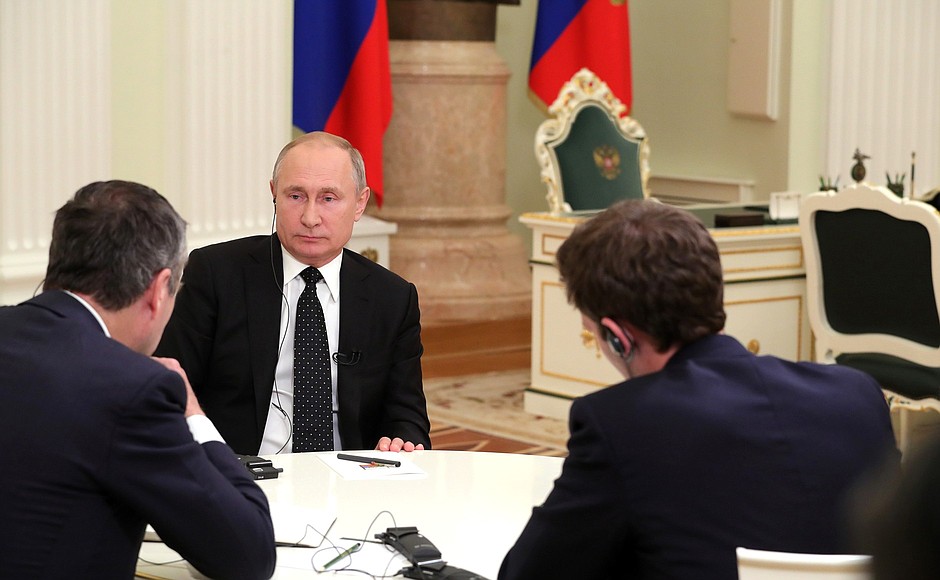
Putin at FT interview. (Kremlin photo)
In an interview with The Financial Times, Putin pointed to “the tragedies of Libya and Iraq” — meaning, of course, what happened to each of them as they lacked a nuclear deterrent. Applying that lesson to North Korea, Putin said,
“What we should be talking about is not how to make North Korea disarm, but how to ensure the unconditional security of North Korea and how to make any country, including North Korea, feel safe and protected by international law. …”
“We should think about guarantees, which we should use as the basis for talks with North Korea. We must take into account the dangers arising from … the presence of nuclear weapons,” he said, adding that if a way can be found to satisfy North Korea’s understandable determination to protect its security, “the situation may take a turn nobody can imagine today.”
“Whether we recognize North Korea as a nuclear power or not, the number of nuclear charges it has will not decrease. We must proceed from modern realities …” And those realities include fundamental, immediate security concerns for both Russia and China. Putin put it this way:
”[W]e have a common border, even if a short one, with North Korea, therefore, this problem has a direct bearing on us. The United States is located across the ocean … while we are right here, in this region, and the North Korean nuclear range is not far away from our border. This is why this concerns us directly, and we never stop thinking about it.”
Xi’s ‘Reasonable Expectations’
Last week in Pyongyang, Chinese President Xi Jinping said China is waiting for a desired response in stalled nuclear talks with the United States.
“North Korea would like to remain patient, but it hopes the relevant party will meet halfway with North Korea to explore resolution plans that accommodate each other’s reasonable concerns,” he said.
A commentary in China’s official Xinhua news agency said China could play a unique role in breaking the cycle of mistrust between North Korea and the U.S, but that both sides “need to have reasonable expectations and refrain from imposing unilateral and unrealistic demands.”
There is little doubt that the Russians and Chinese have been comparing notes on what they see as a potentially explosive (literally) problem in their respective backyards, the more so inasmuch as the two countries have become allies in all but name.
On a three-day visit to Moscow earlier this month, President Xi spoke of his “deep personal friendship” with Putin, with whom he has “met nearly 30 times in the past six years.” For his part, Putin claimed “Russian-Chinese relations have reached an unprecedented level. It is a global partnership and strategic cooperation.”
A Fundamental Strategic Change
Whether they are “best friends” or not, the claim of unprecedented strategic cooperation happens to be true — and is the most fundamental change in the world strategic equation in decades. Given the fear they share that things could get out of hand in Korea with the mercurial Trump and his hawkish advisers calling the shots, it is a safe bet that Putin and Xi have been coordinating closely on North Korea.
The next step could be stepped-up efforts to persuade Trump that China and Russia can somehow guarantee continued nuclear restraint on Pyongyang’s part, in return for U.S. agreement to move step by step — rather than full bore — toward at least partial North Korean denuclearization — and perhaps some relaxation in U.S. economic sanctions. Xi and Putin may have broached that kind of deal to Trump in Osaka.
There is also a salutary sign that President Trump has learned more about the effects of a military conflict with North Korea, and that he has come to realize that Pyongyang already has not only a nuclear, but also a formidable conventional deterrent: massed artillery.
“There are 35 million people in Seoul, 25 miles away,” Trump said on Sunday. “All accessible by what they already have in the mountains. There’s nothing like that anywhere in terms of danger.”
Obstacles Still Formidable
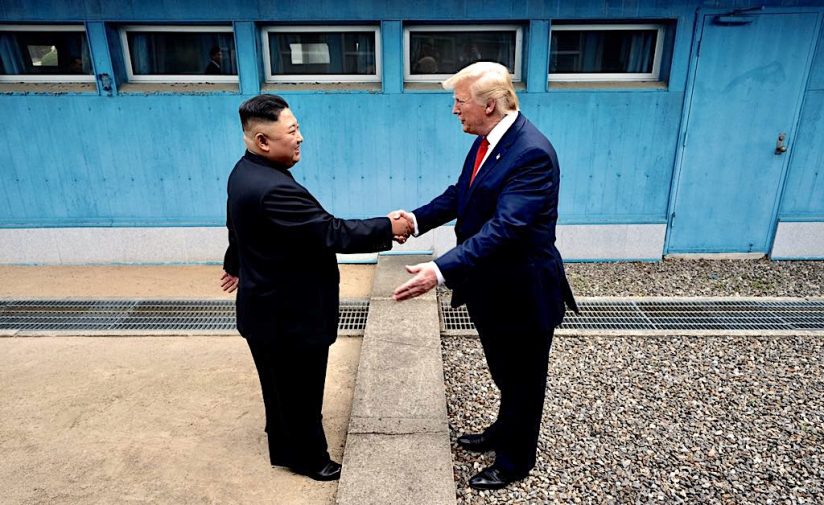
Trump and Kim meet Sunday before Trump became first US president to step on North Korean territory. (White House photo)
Trump will have to remind his national security adviser, John Bolton, and Secretary of State Mike Pompeo, that he is the president and that he intends to take a firmer grip on reins regarding Korean policy. Given their maladroit performance on both Iran and Venezuela, it would, at first blush, seem easy to jettison the two super-hawks.
But this would mean running afoul of the Military-Industrial-Congressional-Intelligence-Media-Academe-Think-Tank (MICIMATT) complex, in which the corporate-controlled media play the sine-qua-non role today.
In a harbinger of things to come, The Washington Post’s initial report on the outcome of the Trump-Kim talks contained two distortions: “Trump … misrepresented what had been achieved, claiming that North Korea had ceased ballistic missile tests and was continuing to send back remains of U.S. servicemen killed in the Korean War.”
The Trump administration could reasonably call that “fake news.” True, North Korea tested short-range ballistic missiles last spring, but Kim’s promise to Trump was to stop testing strategic not tactical missiles, and North Korea has adhered to that promise. As for the return of the remains of U.S. servicemen: True, such remains that remain are no longer being sent back to the U.S., but it was the U.S. that put a stop to that after the summit in Hanoi failed.
We can surely expect more disingenuous “reporting” of that kind.
Whether Trump can stand up to the MICIMATT on Korea remains to be seen. There is a huge amount of arms-maker-arms-dealer profiteering going on in the Far East, as long as tensions there can be stoked and kept at a sufficiently high level.
Ray McGovern works with Tell the Word, a publishing arm of the ecumenical Church of the Saviour in inner-city Washington. His first portfolio at CIA was referent-analyst for Soviet policy toward China, Korea, Vietnam, and Japan. In retirement he co-founded Veteran Intelligence Professionals for Sanity (VIPS).
MH17: Turning Truth & Victims into Pawns
By Ulson Gunnar – New Eastern Outlook – 29.06.2019
As the wreckage of Malaysian flight MH-17 laid scattered in eastern Ukraine, and many days before the first investigators even arrived on scene, the US had already blamed Russia and separatists it accused of aiding for the tragic downing of the passenger plane and the loss of all 298 people on board.
It would be a July 31, 2014 article by the BBC titled, “Ukraine MH17: Forensic scientists reach jet crash site,” nearly 2 weeks after the aircraft’s downing that would announce the arrival of forensic scientists at the crash site.
Yet as early as July 21, more than a week before investigators arrived, Newsweek in its article, “U.S. Report Outlines Evidence That Rebels Downed Flight MH17,” was already claiming:
The U.S. State Department has outlined the evidence behind its assertion that Russia-backed separatists are responsible for the missile strike that downed Malaysia Airlines flight MH-17. In a statement posted on the website of the U.S. embassy to Ukraine, it said the flight was “likely downed by a SA-11 surface-to-air missile from separatist-controlled territory in eastern Ukraine.”
The assertions made within the report were a summary of accusations the US leveled against Russia even earlier still.
An Australia’s ABC would report a day before the investigators’ arrival in eastern Ukraine that the US and EU had already leveled additional sanctions against Russia, spurred on by US accusations regarding MH-17.
The article, “MH17: US and EU to impose broad sanctions on Russia over support for Ukraine rebels; fighting keeps investigators from Malaysia Airlines crash site,” would note:
The measures mark the start of a new phase in the biggest confrontation between Moscow and the West since the Cold War, which worsened dramatically after the downing of MH17 over rebel-held territory on July 17.
German chancellor Angela Merkel, who had been reluctant to step up sanctions before the crash because of her country’s trade links with Russia, said the EU measures were “unavoidable”.
Washington’s accusations and its rush to leverage their impact on public and political circles at the time to pass further sanctions against Russia fits a pattern not of an impartial investigation or search for truth, but a cynical propaganda campaign carried out at the expense of both.
A Familiar Lack of Evidence…
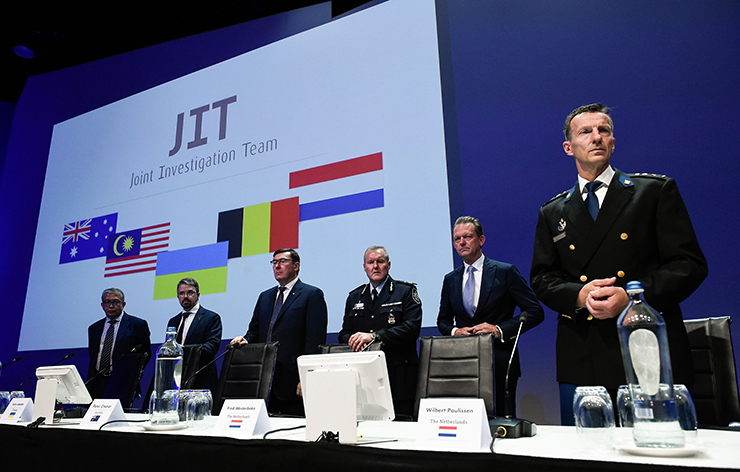
The subsequent Joint Investigation Team (JIT) assembled to supposedly ascertain the truth behind the airliner’s downing included among its member states, Ukraine. As others have pointed out, Ukraine was and still is a prime suspect.
Ukraine’s decision not to close airspace over contested areas where military aircraft were already being shot down alone makes Kiev at least partially culpable for the loss of MH-17.
Expectations of honesty and cooperation from Kiev (berated by even its Western sponsors as being corrupt, abusive and inept) are unrealistic and their inclusion within the JIT undermines its credibility and any conclusion they reach, especially if that conclusion lacks substantial evidence to support it.
The fact that no convincing evidence has been produced by either the JIT or the nations using it as a vehicle to target Russia years after the incident and that the JIT itself cited “social media” as an “important part of the investigation,” further illustrates the political motivations of the team.
Mentioning the use of “social media” as evidence points toward NATO-backed propaganda platforms like Bellingcat which, again, represent “investigators” and “experts” on the payroll of and working with potential suspects in the downing of MH-17 itself.
If it would be unreasonable to place Russia at the center of such an investigation, it is likewise unreasonable to place those who benefit most from Russia being found “guilty” at the center of it as well.
… And a Familiar Lack of Motivation
Russia and any separatists it was backing in eastern Ukraine at the time had nothing to gain by shooting down a civilian airliner. At best, if separatists did launch the missile that allegedly brought down MH-17, it would have been an accident with Ukrainian military aircraft undoubtedly their intended target.
Conversely, the US and its allies had everything to gain by either allowing a civilian airliner to stray over territory knowingly putting it at risk, or shooting it down themselves as part of a false flag operation.
It is already admitted fact, even across the Western media that Ukraine failed to close airspace over eastern Ukraine. This is despite Ukraine losing several military aircraft to separatist air defenses in the weeks leading up to MH-17’s downing.
The BBC just days before the MH-17 downing would report in their July 14, 2014 article, “Ukraine military plane shot down as fighting rages,” that:
A Ukrainian military transport aircraft has been shot down in the east, amid fighting with pro-Russian separatist rebels, Ukrainian officials say.
Despite this incident and others like it leading up to the loss of MH-17, Kiev has claimed it did not believe civilian airliners would be at risk.
A Reuters article titled, “Ukraine defends not closing airspace where MH17 shot down,” would claim:
Ukraine on Tuesday defended its decision not to close airspace in the east of the country where a Malaysian passenger plane was shot down, saying it was unaware that anti-aircraft weapons were being used in the area and that planes could be under threat.
How the JIT is moving forward with a “trial” implicating Russia while Kiev’s overt negligence remains not only unpunished, but now unmentioned, further illustrates the politically motivated nature of the JIT and the nations involved.
It should be noted however that Malaysia, a member of the JIT, has (to say the least) expressed skepticism over the JIT’s latest move to begin trials implicating Russia and Ukrainian separatists.
Malaysia’s PM Doubts the JIT’s Credibility
The BBC in its article, “MH17 crash: Malaysia PM Mahathir denounces murder charges,” would note:
A day after the MH17 plane crash inquiry team announced murder charges against four men, Malaysian Prime Minister Mahathir Mohamad has condemned the decision as “ridiculous”.
The article also noted:
“From the very beginning it became a political issue on how to accuse Russia of wrongdoing,” Mr Mahathir said.
Of course, Prime Minister Mahathir Mohamad is absolutely correct. As we’ve seen, the US and its allies accused Russia of MH-17’s downing before any investigation began, let alone any evidence was in hand. The conclusion was reached as MH-17’s wreckage still smoldered.
For the JIT, the Truth Doesn’t Matter, Just People’s Perception of it
If it is possible that Russia or separatists mistakenly identified MH-17 as a Ukrainian military aircraft (the only possible explanation if Russia or separatists were responsible) it was only because Ukraine itself intentionally left dangerous airspace its own military aircraft were being shot out of open to invite just such a disaster. They did so with every intention to politically exploit any potential tragedy to target Russia.
It is also possible that Ukraine and its US-NATO sponsors took advantage of their strategic losses on the ground and the growing tempo of lost military aircraft overhead by shooting down MH-17 themselves, also meaning that even before MH-17’s downing, they fully intended to frame Russia.
The entire “Skripal affair” follows the same pattern, complete with a crime blamed on Russia but lacking any conceivable motivation for Moscow to have carried it out. In fact, in both cases, either with the downing of a civilian aircraft at the height of separatist victories in eastern Ukraine or the alleged poisoning of the Skripals on British soil at the onset of the Russian-hosted World Cup, only Washington and London had anything to gain from either crime.
The immediate accusations made before investigations even began and the politically motivated nature of the investigations that followed, along with their predictable lack of evidence and their equally predictable conclusions only adds insult to injury for the victims of MH-17 and any notions of actual justice.
The truth and justice have been openly turned into pawns to the point of the Malaysian prime minister himself, whose nation is on the JIT, calling out this politically motivated circus for what it is.
We may never know what really happened on July 17, 2014 over eastern Ukraine because those with the power to find out have already long since decided the truth doesn’t matter. What matters is only how manipulating public perception regarding that day’s events benefits them politically, strategically and geopolitically.
With the JIT’s “trials” set to begin, their charges and trials will be cited as “evidence” Russia did it, rather than any actual evidence proving it did.
This leaves us with another example of the West’s so-called rules-based international order and maybe gives us a little more insight into why so many have lost faith in it or why it is no longer sustainable. We have to wonder though, do the people in Washington, London or Brussels stop and think about this when considering why their rules-based international order no longer inspires confidence and as it begins to fade?
Featured Video
Trita Parsi: Israel Set a Trap for Total War in the Region
or go to
Aletho News Archives – Video-Images
Book Review
Why the War on Conspiracy Theories Is Bad Public Policy
By Kevin Barrett • Unz Review • February 1, 2019
 A Review of Conspiracy Theories and Other Dangerous Ideas by Cass Sunstein (based on an earlier paper co-authored with Adrian Vermeule); In Defense of Troublemakers: The Power of Dissent in Life and Business by Charlan Nemeth; and Conspiracy Theories and the People Who Believe Them, edited by Joseph E. Uscinski
On January 25 2018 YouTube unleashed the latest salvo in the war on conspiracy theories, saying “we’ll begin reducing recommendations of borderline content and content that could misinform users in harmful ways—such as videos promoting a phony miracle cure for a serious illness, claiming the earth is flat, or making blatantly false claims about historic events like 9/11.”
At first glance that sounds reasonable. Nobody wants YouTube or anyone else to recommend bad information. And almost everyone agrees that phony miracle cures, flat earthism, and blatantly false claims about 9/11 and other historical events are undesirable.
But if we stop and seriously consider those words, we notice a couple of problems. First, the word “recommend” is not just misleading but mendacious. YouTube obviously doesn’t really recommend anything. When it says it does, it is lying. … continue
Blog Roll
 Aletho News
- Putin’s key remarks on peace talks and Europe’s ‘schizophrenia’
- Trita Parsi: Israel Set a Trap for Total War in the Region
- Trump’s Iran war is on an Israeli leash
- Saudi oil boss issues global supply warning
- Riyadh Says Its Oil System Is Intact. The Numbers Say Otherwise.
- Trump and Netanyahu Want to “Finish the Job” on Iran
- US ‘one-sided dictation’ not Iran’s beliefs makes rational talks impossible: Baghaei
- Iran’s Next Strike May Not Explode. It Could Shut You Down /Col Doug Macgregor
- Iran: US political targets legitimate if assassinations return
- Iraq shuts key border crossing with Iran under US pressure: Report
- If Americans Knew
- DAILY UPDATE: Latest essential news on Palestine, Israel, & region
- The Israel Lobby’s Changing Fortunes
- AIPAC has become such a political liability that it’s shifting to a more “nimble” approach to buying politicians
- At least 160 Israeli settler attacks in 2 weeks
- Will Gaza’s Ancient Christian Community Disappear Forever?
- Israel’s vision of regional security rests on keeping Arab states weak
- Heidi Levine recounts how Palestinian youths helped save her in settler attack
- DAILY UPDATE: Latest essential news on Palestine, Israel, & region
- Trump’s Intensifying Sabotage of the ICC, for Israel’s Sake
- Israeli military detain US and UK volunteers in West Bank including Democratic NY politician Brad Lander
- No Tricks Zone
- E-Cars Reduce CO2 Emissions By Only 41% Compared To Internal Combustion Engine Vehicles
- Predictions Made By Renowned Climate Professor Over Past Decades Have Been Proven To Be Poor
- New Study Suggests Large Regions Of The Pacific Ocean Have Been Cooling For The Last 80 Years
- Germany’s Green Energy Debacle: High Energy Costs Force Kahla Porzellan to Close After 182 Years!
- New Study: 50 Years Of The Most Aggressive ‘Net Zero’ Policies Can Only Affect The Global Climate By 0.03°C
- US September “Heat” Was No Record…Many Records Set Decades Ago
- Latest European Green Energy Debacle; Portugal’s Largest Flagship Solar Park Insolvent!
- Green Energy Debacle: German Expert Professor Fritz Vahrenholt Warns Of Severe Economic And Social Consequences
- Two More Paleo Reconstructions Affirm Meters-Higher Sea Levels Across Ireland, Brazil 7000-6000 Years Ago
- New Study: Earth And Venus Surface Warmth Largely Explained By Convection And Lapse Rate, Not CO2 Or Radiation

