‘First Day’, the drama about a transgender 12yo, shouldn’t be on the BBC children’s channel. It’s harmful, shameless propaganda
By Debbie Hayton | RT | August 24, 2020
I’m transgender myself but this film is misleadingly telling viewers as young as six that if they are unhappy with their sex then they can choose the other one, and then all will be fine. But they can’t and it won’t, of course.
The transition from primary school to secondary school can be an anxious time for all children, and it is surely a worthy topic for children’s television to cover.
But “First Day” – the latest offering from the children’s arm of the BBC – focuses on a transgender-identified child who transitions from male to female at the same time. The synopsis is simple: an unhappy feminine boy, mocked and bullied by others, overcomes enormous adversity to become the centre of attention, popular with peers and feted by teachers after they metamorphose from boy to girl.
The four-episode miniseries – produced in Australia and originally shown on ABC – opened last week on CBBC, the BBC TV channel aimed at 6 to 12 year olds. The scene was set when the high school principal told 12 year-old Hannah Bradford that while they would be enrolled under their legal name Thomas, but that any non-legal documents would use the name Hannah.
So far so good – and preferred names are used widely in schools – but then came the bomb-shell: Hannah would be required to use the sick bay toilets in case other parents found out that “a boy was using the girls toilets”. Hannah’s heart-felt plea that they were not a boy pulled hard on the emotional heartstrings. Less than three minutes into episode one, the young hero was already pitched against unknown and unseen adults who presumably might be “transphobic”.
The series continues on Wednesday 26th August at 5 pm, with a plot reminiscent of a modern-day fairy tale. Hannah’s initial plan is stealth: to hide the past and pose as a girl to all the other children. But the first hurdle – a sleepover party – could be Cinderella at the ball. Hannah is not allowed to sleep over, but not for the sake of the other girls. Hannah’s parents were adamant: it was purely about Hannah’s safety and need for support. The disappointment is palpable when Hannah’s doting mother arrives at the party. The car might not turn into a pumpkin on the way home, but the events of the next day could have come straight from Disney.
Hannah’s friend calls, Hannah tells her the truth, they hug, and they all live happily ever after. Despite continued obstacles – there are two more episodes to fill – Hannah wins over bullies, overcomes fears and, by the time the series finishes on September 9th, blossoms to become a key role model at the school camp.
But while fairy stories are set in fantasy, “First Day” is supposedly rooted in reality and that worries me. As a teacher, I know that 6 to 12-year olds are yet to develop critical thinking skills. Indeed, some still believe in Santa and the Tooth Fairy.
“First Day” makes outrageous claims that are neither challenged nor analysed but presented as unquestionable truth. As Hannah came out to the friend, impressionable primary school children hear that, “It’s like when you’re born, everyone thinks you’re a boy or a girl, but you know you are not. You’re really the opposite.” When the friend suggests that Hannah is really a boy, she is rapidly corrected, “No, I’m really a girl. It’s just when I was born, I looked like a boy, and everyone thought I was a boy”.
This is just not true. I’m transgender myself and I was most definitely a boy. What matters is not what anyone thinks but scientific truth. Not surprisingly, therefore, what makes Hannah a girl is never explained, though Hannah’s distaste for boys’ toys roots it in sexist stereotypes. Hannah did not want trucks for birthday presents, therefore Hannah is a girl. Deliberately and necessarily simple – considering the target audience – but potentially devastating for any young boy watching who doesn’t like trucks either.
At the same time, young female viewers were presented with a role model of their own in Sarah. A progressive script may have celebrated the fact that girls can crop their hair and play with trucks. But poor Sarah was cast as an unhappy child scared that she was “getting further and further away from who I really am”. Inevitably, Hannah took her in hand and told her, “I’m going to help you”. Unforgivably, in my view, the sentence was never completed with, “tell a teacher.”
But this is not an educational film, it is shameless propaganda. The primary school viewers are told that if they are unhappy with their sex then they can choose the other one. They can’t, of course, but biological facts are not in the script. Setting the programme among a group of 12-year olds avoided the knotty problem of puberty. In real life, we all know that it is much harder for older boys to pass as girls. Unless, of course, their natural physical development had been halted by puberty blockers: powerful cancer drugs that act on the pituitary gland to stop the production of sex hormones in the gonads.
But that did not trouble the film makers as they presented a happy ending without ever hinting at the consequences. The rather emotional conclusion paints a picture of happy children – with Hannah centre stage – starting out on perfect lives. The uplifting soundtrack announces, “this is where it all begins”, but what actually does begin is never made clear to the young viewers who by now are possibly indoctrinated with misinformation.
As the British National Health Service itself warns: “Little is known about the long-term side effects of hormone or puberty blockers in children with gender dysphoria. [Nor is it] known what the psychological effects may be. It’s also not known whether hormone blockers affect the development of the teenage brain or children’s bones.”
In a final twist, transgender-identified Hannah Bradford is played by transgender-identified Evie MacDonald, something that can only magnify the impact on impressionable youngsters considering the MacDonald family’s high-profile activism. Evie’s mother, Meagan MacDonald is a transgender advocate in Australia, offering advice to parents of “Gender Diverse Children”, while Evie models fashion and took on Australian Prime Minister Scott Morrison personally over a tweet she perceived as being “hateful” towards trans kids.
Evie is a patient at the Royal Children’s Hospital, Melbourne (RCH) and features in the Australian Standards of Care and Treatment Guidelines for trans and gender diverse children and adolescents. According to 9 News Australia, Evie is taking hormone blockers, which perhaps explains why a 14-year old male could successfully portray a 12 year-old child who passes as a girl.
This is a politically savvy family at the heart of a film that has a political message. It is not harmless entertainment; it promotes an ideology that has driven a 1767% rise in demand at the RCH Gender Clinic since 2012. That, however, was absent from the film.
While “First Day” might be something for parents to watch – to be forewarned is to be forearmed – it is unsuitable for primary school children, and certainly unaccompanied children, who could well latch on to transgenderism as an escape route from problems around identity and relationships. Parents, be warned!
Debbie Hayton is a teacher and a transgender campaigner, based in the UK. She tweets @DebbieHayton
Lancetgate: why was this “monumental fraud” not a huge scandal?
By Daniel Espinosa | Dissident Voice | August 20, 2020
A high-profile and highly influential scientific study regarding the potential of hydroxychloroquine (HCQ) to treat Covid-19 patients was retracted among suggestions of fraud back in June. The research in question was headed by a renowned Harvard professor called Mandeep Mehra and published by The Lancet, the most prestigious medical journal in the world.
It concluded that the antimalarial drug used since the 1950´s was actually killing Covid-19 patients by inducing heart failures. It caused quite a stir. (Brief historical fact: the Quina tree, the source of quinine and its family of medications, is also the “national tree” of Peru).
Soon after the publication of the study (22 May), the World Health Organization (WHO) halted all research being conducted on hydroxychloroquine, which included simultaneous testing in 17 countries. The worldwide influence of the scientific paper – and the fact that hundreds of doctors were already trying the drug in Covid-19 patients – led a lot of researchers to look closely into it, immediately finding an alarming level of incoherence.
In the meantime, the news was spread far and wide by the corporate media, many times in a highly politicized fashion. They swiftly convinced the world of the danger of treating the symptoms of Sars-Cov-2 with HCQ.
In the realm of social media, a wave of censorship against dissenting voices soon followed. A viral video showing a group of physicians called the Frontline Doctors, speaking publicly in favor of HCQ – by sharing their own clinical experience – was removed by most social media giants (but only after millions had already watched it). Could a testimony taken from a physician’s own experience be called “false”? Of course! Today a handful of social media corporations control what we can say or hear.
Instead of informing their audiences with a balanced discussion about all the scientific research conducted so far regarding the drug, both positive and negative, corporate media directed a barrage of ad-hominems and smear toward the mentioned doctors. An army of “fact-checkers” was opportunely deployed after that to police the web and reassure everyone that HCQ is both useless and dangerous. Everyone who said otherwise was snake oil peddler.
But regardless of its massive political effect, the study wasn’t a particularly well-crafted fraud to begin with. A couple of weeks after the publication, The Lancet received a letter from more than a hundred physicians and researchers, jointly demanding a review of the study and the disclosure of the raw data used in it. When the company providing such data – Surgisphere – refused to relinquish it for independent inquiry, three of its four authors retracted the paper.
Dr. Sapan Desai was the one who didn’t retract it, as he is (or was) the owner of Surgisphere and the provider of the data. It was allegedly obtained from 96,000 patients in hundreds of hospitals from five continents, a presumption that, according to many experts, should’ve immediately raised eyebrows. An expert in data integration projects told The Guardian that a database like the one Desai is said to own was “almost certainly a scam”.
Surgisphere’s website, just like Dr. Desai himself, vanished soon after the fraud was revealed, while its few employees, among them an adult content model and a sci-fi writer, appear to be no more than part of a façade.
Among the observations made to the retracted paper by the researchers were these pearls: “A range of gross deviations from standard research and clinical practices”; “gross misrepresentation of the numbers of (Covid-19) deaths in Australia”. The data was not only very hard to obtain, due to very different country laws and levels of development, it showed suspiciously similar tendencies despite focusing on very dissimilar regions of the Earth.
According to Science magazine, it was the presence of Mandeep Mehra which gave the study the “gravitas” needed to be published in a medical journal as The Lancet. He did retract it and apologize as soon as the news about the refusal to open the data was out. Mehra and Desai were introduced to one another by a third researcher, Dr. Amit Patel, who also participated in the retracted paper. Patel and Desai are also brothers-in-law.
Edward Horton, The Lancet’s editor in chief, said that the whole thing was a “monumental fraud”. A Bostonian research scientist writing for The Guardian, James Heathers, called it “the most important retraction in modern history”. Heathers correctly pointed out that “studies like this determine how people live or die tomorrow”. Sadly, “saving people’s lives” is also used as a justification for giving dubious science a free pass in times of emergency.
Despite the fact that the malign influence of private interests in science research and medicine is quite well-known and documented today, the few corporate news outlets that covered “Lancetgate” decided not to look into the obvious…
A world of conflicts of interest
In opposition to the coverage given to the original study, its retraction wasn’t as widely and swiftly publicized by the mainstream press. In fact, other than The Guardian, only a few news media covered this historic scientific embarrassment in any depth.
When they did, they rarely went beyond mentioning “data concerns”. But that could be understood as anything from a computer virus destroying part of the data to legitimate human error. Not many hints were given to the readers to let them suspect a deliberate and outright fraud, much less one rooted in conflicts of interest.
The spin given to the news was not much about why or how it happened – how reputed scientists and The Lancet were fooled by fake data – but mostly about how bad it looked for everyone and how the need for remedies for the pandemic was driving scientists and regulatory bodies to bypass important scrutiny.
A New York Times op-ed went deep into the problems in the peer review system, a process both “opaque and fallible”, going as far as to acknowledge a “politicization of the pandemic”, but it failed miserably by not informing its readers of one of the reasons why peer review might fail: conflicts of interest.
Where’s the relationship between this incident and the pervasive role of Big Pharma’s money in academia, science and politics?
The many flaws quickly pointed out by more than a hundred scientists didn’t make the press question how a reputed and seasoned researcher like Harvard’s Mehra was so easily fooled, and then The Lancet and its peer review system. The Guardian didn’t look deep, or at all, into potential conflicts of interests involving the researchers in question and Big Pharma.
As you probably know already, the way pharmaceutical giants make their money is through patents – the monopoly to market a certain drug for a certain time – and hydroxychloroquine lost any patent it had decades ago. As Marcia Angell wrote in 2002:
Patents are the lifeblood of the drug industry. Without a patent, a company has no incentive to bring a drug to market.
As the Alliance for Human Research Protection correctly pointed out, “… mainstream media carefully avoid asking the… overriding question, lest the magnitude of science fraud is laid bare”.
And the question regarded specific and flagrant conflicts of interest. The independent media didn’t miss it. As Professor Michel Chossudovsky wrote for Global Research (June 10):
The Lancet acknowledges that the study received funding from the William Harvey Distinguished Chair in Advanced Cardiovascular Medicine at Brigham and Women’s Hospital which is held by Dr. Mandeep Mehra. In this regard, it is worth noting that Brigham Health has a major contract with Big Pharma’s Gilead Sciences Inc., related to the development of the Remdesivir drug for the treatment of COVID-19. The Gilead-Brigham Health project was initiated in March 2020.
The mandatory question right after acknowledging Gilead’s relationship with said Hospital, one that the corporate media could never dare ask, also made by Prof. Chossudovsky, is if the fraudulent study was made “to provide a justification to block the use of HCQ”?
The reason behind this mainstream media omission could be found in the billions of dollars the pharma industry spends in advertising, the “lifeblood” of corporate news, which predisposes them to naivety and simple-mindedness regarding possible conflicts of interest. Seems logical, they are in the exact same spot as the researchers who take Big Pharma money and then are supposed to pass objective judgment about their products and questionable role in society.
Add to that the fact that media and pharmaceutical corporations share interlocking directorates. As FAIR.org reported back in 2009, media names like The New York Times or NBC share directors with companies like Eli Lilly or Merck, respectively.
A consequence of decades of conflicts of interest corrupting traditional media is that today most people are dangerously uninformed of the risks of letting the group of corporations that comprise Big Pharma, and their hedge fund shareholders, wield its power over both governments and science. Even today, many people are prone to call Big Pharma influence a “conspiracy theory”.
The mere idea that Big Pharma’ influence could be swaying what is being said and done politically and in the realm of corporate media, regarding the Cov-Sars-2 pandemic and potential remedies, is utterly outrageous! The fact that they spend as no other industry in government lobbying and media advertising doesn’t seem to matter because, well, how could Big Pharma be worried about anything else but our health in these times of great despair… right?
In fact, both Big Media and Big Pharma are motivated by profit, and they are partners in crime, as members of the latter have been “repeatedly convicted of marketing harmful—often fatal—drugs; substantial fraud; price manipulation; and concealment of evidence.”
Their managers are legally forced to enrich their shareholder masters without regards for “externalities”, like an opioid overdose crisis. A pandemic is seen by these huge psychopathic entities just as a once in a lifetime opportunity to plunder. A desperate consumer is a great costumer, especially when Gilead, Novartis, AstraZeneca and the rest of the bunch can spend his or her taxes in disproportionally expensive remedies because they own the government bodies made to regulate them.
Advertising money is the reason why a critical look into this world of conflicts of interests is completely absent from mainstream media, even if “progressive” as The Guardian.
In addition to this, you have probably heard a lot lately about how fake news and conspiracy theories are a “threat to democracy”, or how they “undermine traditional institutions”. Well, giving wide coverage to a fraud involving top Western scientists and doctors, using the most important medical journal ever known to the effect of discarding a cheap drug with no patents and a potential competitor for expensive pharma company products, can produce some serious “undermining” of public trust.
We should end this article by quoting some worried –and sometimes pessimistic– scientific authors. Among them the editors or former editors of The Lancet and The New England Journal of Medicine.
“A turn to towards darkness”
Regarding the nefarious role of commercial conflicts of interest in science, Marcia Angell, quoted above, also wrote this in 2009:
It is simply no longer possible to believe much of the clinical research that is published, or to rely on the judgment of trusted physicians or authoritative medical guidelines. I take no pleasure in this conclusion, which I reached slowly and reluctantly over my two decades as editor of The New England Journal of Medicine (NEJM).
Recently (not under Angell’s editorship), the NEJM –second in prestige only to The Lancet– also published and retracted research by Mehra and Desai.
The editor of The Lancet, Dr. Richard Horton, also seems to have lost faith in what is nowadays called scientific research:
The case against science is straightforward: much of the scientific literature, perhaps half, may simply be untrue. Afflicted by studies with small sample sizes, tiny effects, invalid exploratory analyses, and flagrant conflicts of interest, together with an obsession for pursuing fashionable trends of dubious importance, science has taken a turn towards darkness.
Are we going back to the Dark Ages, or are we there already? In France, the former Health Minister, Philippe Douste-Blazy, leaked an extraordinary anecdote from a private reunion he had with the editors of The Lancet, other journals and experts, to French news medium BFMtv.
According to Douste-Blazy, Richard Horton (The Lancet) literally said:
If this continues, we are not going to be able to publish any more clinical research data because pharmaceutical companies are so financially powerful today, and are able to use such methodologies as to have us accept papers which are apparently methodologically perfect, but which, in reality, manage to conclude what they want to conclude.
“When there is an outbreak like Covid, in reality, there are people like us – doctors – who see mortality and suffering… and there are people who see dollars. That’s it,” admitted the French physician.
Daniel Espinosa Winder lives in Arequipa, second largest city of Peru. He graduated in Communication Sciences in Lima and started researching propaganda and mainstream media. He writes for a peruvian in print weekly, “Hildebrandt en sus trece” since 2018. His writings are a critique of the role of mass media in society”.
It’s Not Happening: The Mainstream Media Is the Enabler of American Dysfunction
By Philip Giraldi | Strategic Culture Foundation | August 20, 2020
Has anyone seen anywhere in the mainstream media a serious discussion of Israel’s possible role in the Beirut bombing? I am not suggesting an evidence-free indictment of Israel but rather just a review of Israel’s possible motive and a consideration of its capability to carry out such an attack without having to directly do it itself with one of its bombs or missiles. Given the Jewish state’s unrelenting hostility towards Hezbollah and its repeated violations of Lebanese territory and airspace, it would seem to me that it would at least merit a sentence or two in the New York Times or Washington Post.
Or how about the Jeffrey Epstein case, another one involving Israel? There is considerable evidence to suggest that Epstein just might have been using underage girls as sex bait for powerful men so they could be blackmailed into cooperating with Mossad. It might have meant having a Bill Clinton as a presidential spouse if voting had gone the other way in 2016 and Bill would have had to be answerable to Benjamin Netanyahu. I haven’t seen anything about that in the newspapers of record or on FOX, MSNBC, CBS or CNN.
Or to look at another manifestation of mainstream media mendacity, how about the reporting on the disturbances that have been taking place all around the United States? Recent major riots in Portland and Chicago were frequently ignored in the mainstream media or were described as “peaceful protests” in support of “racial justice,” contradicting what one could see with one’s own eyes where video was available. The looting, burning, beatings and vandalizing in Oregon over more than eighty days continues nearly nightly with [state] police now withdrawing from Portland after the local district attorney declared that he would avoid prosecuting rioters.
In Chicago the looting that centered on the high-end Miracle Mile Michigan Avenue shopping area was so bad that that part of the city had to be closed off by raising the city’s bridges. Twelve policemen were injured and more than a hundred looters were arrested. U-Haul trucks were even brought in by the rioters and stolen cars were used to smash open shop windows. It was the second major trashing of the area in the past three months.
Illinois Retail Merchants Association president Rob Karr released a statement on the following day which included: “There’s a limit to how many times retailers are willing to be kicked. It will be difficult after retailers who have invested millions in reopening to have to do it again. There has to be a lot of confidence that they can be protected and, so far, that confidence is lacking.”
Chicago’s flagship Macy’s outlet on the avenue has already indicated that it is considering closing due to the shoplifting, looting and general lack of security. In short, many American cities are no longer able to make even an effort to protect the persons and property of their citizens and taxpayers. Was the Chicago story important enough to report by the New York Times? Yes, but only late in the day on a back page.
Chicago is reportedly responding to the crisis by creating a special task force on looting, but the follow-up coverage in the national media was predictably pretty toothless. On the day after Michigan Avenue was laid waste, Black Lives Matter (BLM) held a rally outside the police station where some of the arrested rioters were being held. Fox News alone among national media covered the story, reporting how one BLM organizer Ariel Atkins described the estimated $60 million dollars-worth of looting as really just “reparations.” She said “I don’t care if someone decides to loot a Gucci or a Macy’s or a Nike store, because that makes sure that person eats… That is reparations. Anything they wanted to take, they can take it because these businesses have insurance.” Presumably the rioters, who did not on this occasion loot supermarkets for food and instead chose to steal luxury items will be able to eat their Gucci loafers.
In a similar vein, the New York Times did have something to say about businesses shutting down or leaving Manhattan. A long article entitled “Retail Chains Abandon Manhattan: ‘It’s Unsustainable’” described how many restaurants and shops, including major chains and department stores, are closing due to unaffordable high rents that can no longer be paid due to a lack of tourists and office workers’ business as a result of the pandemonium. The article does not mention a lack of security due to the city government’s permissive attitude towards demonstrations that sometimes turn violent, a curious omission as friends of mine who live in Manhattan have observed the results of random looting and arson in many parts of the city, leading to boarded-up shops and sharply diminishing retail activity. Some long-time residents describe it as a “return to the ‘70s” when the city became unlivable for many.
America’s newspaper of record the Washington Post promotes its product with a phrase “Democracy dies in darkness.” In reality, the darkness is created by the media itself, which no longer reports what is taking place in an objective fashion. What does appear in the papers, online and on television and radio, no matter what the political orientation, is a product that is engineered to send a certain message. That message is itself disinformation, not substantially different than what takes place in the controlled media put out by so-called totalitarian regimes. In fact, news sources like Russia Today are likely to be much more reliable than CNN or FOX on many issues.
Opinion polls suggest that the American public has largely figured things out and reveal that few trust the media to do its job in an objective fashion. In that light, articles like this recent Politico piece have appeared that have questioned how it can be that the Trump White House is optimistic over the prospects for the November election when opinion polls suggest a large margin of victory for Joe Biden and Kamala Harris. If journalists were doing their jobs and were actually getting out on the streets and talking to people, they would discover that people are really worried about the future of the country and what it all will mean for their children and grandchildren. And many of them blame the unrest on the Democratic Party coddling of radical groups that are actively fomenting ethnic and racial divisions for political gain, not on the Republicans. Trump’s playing on those fears might well have a great impact when it comes time to vote. Someone who responded to an opinion poll the week before saying he or she would vote for a safe choice Biden might well go into the voters’ booth and instead pull the lever for Trump.
What Is The Cause Of The Recent Power Blackouts In California?
By Francis Menton | Manhattan Contrarian | August 16, 2020
You may have read in the past few days that residents of California have been experiencing rolling power blackouts. This has occurred in the middle of a strong heat wave, meaning that large numbers of people have had their air conditioning, light, refrigeration, and everything else dependent on electricity, go out just when they are most needed. The blackouts have not been the result of technical failures of the grid, but rather have been intentionally imposed by the electricity system operator (known as CAISO — California Independent System Operator) via the various local utilities.
So what has caused these blackouts? The official explanation is that the heat wave is the cause. It has just gotten so unusually hot that demand has risen beyond the capacity of the system. Many articles in the media reporting on the situation go further to associate the unusual heat with “climate change.”
This explanation is complete BS. Yes, there is a strong heat wave going on, at least in certain areas of the state, but it is not unusual in historical context. In fact what is occurring is that California has begun to face the consequences of replacing reliable fossil fuel and nuclear powered electricity with the intermittent renewables, wind and solar. In the evening, approximately 7 to 9 PM, when the sun has set and the heat lingers, and when the demand for electricity for air conditioning reaches a peak, the intermittent wind and solar sources have been producing just about nothing. With insufficient fossil fuel backup, there is not enough power to meet the demand.
In short, we are witnessing the results of almost unbelievable incompetence by the authorities in California. As usual, the equally incompetent and corrupt media are completely giving the authorities a pass in the name of supposedly addressing “climate change.”
First, consider the heat wave. It is fair to call what is currently going on in some major cities like Los Angeles and San Jose a serious heat wave (although the situation in other major California cities like San Diego and Santa Barbara is not a heat wave at all). In Los Angeles, the average daily high for mid-August is 84 deg F. The highs for the past three days have been 93, 98 and 95. For the rest of the upcoming week, forecast highs are all in the 90s, with Wednesday the highest at 98. On the other hand, in Los Angeles, the temperature goes over 100 deg F at least once or a few times most years. Here is a list of record high temperatures in Los Angeles by year. In 2018 it hit 108; in 2010, 113; in 1990, 112; in 1988, 110; and so forth. The large majority of years have records at 100 or above. In short, there is nothing unusual or unexpected in summer temperatures at the level being experienced this week.
So with temperatures at or above the current levels a regularly recurring phenomenon, why haven’t the authorities planned accordingly and put in place resources to meet the demand? The answer is that under a law enacted in 2018, California has embarked on a crazed program to generate 50% of its electricity from “renewable” sources by 2025, 60% by 2030, and 100% by 2045. Both before and after enactment of that law, California has been ambitiously expanding its capacity for wind and solar generation of electricity.
To put this in some context, the peak electricity demand that has been causing California’s problems during the current heat wave is in the range of 42 – 46 GW. (Today’s peak demand was about 44 GW.) To meet this demand, you could put in place a system of fossil fuel and nuclear plants with a capacity of around 55 GW, which would give you a comfortable cushion to deal with whatever maintenance issues or mishaps might arise.
According to the U.S. government’s Energy Information Agency, California actually has installed electricity generation capacity of almost 76 GW. That sounds like wildly more than you would ever need. But the problem is that of the 76 GW of capacity, some 27 GW is solar, and 6 GW is wind. In August the solar goes into steep decline around 4 PM and ends completely around 7 PM. The wind more or less doesn’t blow at all during heat waves. … Full article
Weaponized media coverage & off-the-scale hypocrisy as the West promotes ‘regime change’ in Belarus
By Neil Clark | RT | August 19, 2020
Lukashenko has always admitted his style is authoritarian but notwithstanding this, media coverage of the crisis in Belarus has been slanted and the West’s condemnation of the crackdown on protests reeks of double standards.
You can tell a ‘regime change’ is afoot in Minsk simply by looking at the coverage of Radio Free Europe/Radio Liberty. Their website at the weekend was headed by a large caption ‘Post election crackdown in Belarus’, which has now changed to ‘Crisis in Belarus‘. The five lead articles on Sunday were all about Belarus. It’s the same on Tuesday.
Radio Free Europe/RL is funded by the US Congress through the United States Agency for Global Media. Up to the early 1970s it was funded covertly by the CIA.
It was a soft-power tool of the old Cold War, sometimes with calamitous consequences. In their book ‘Cold War’, Jeremy Isaacs and Taylor Downing tell how in the Hungarian Uprising of 1956 “Radio Free Europe, the CIA-backed station that broadcast into Eastern Europe, was dramatically talking the situation up, proclaiming the West’s backing for what it called Hungary’s ‘freedom fighters.‘”
But the backing never came, and indeed was never likely to come and the uprising, having been encouraged by RFE, was ruthlessly suppressed.
You might have thought RFE/RL would have been wound up in 1989 when the Berlin Wall came down, but there was still a job to do.
It says it reports the news in countries where a free press is banned by the government or not fully established and while some of its journalism is perfectly fine the truth is that it usually stops reporting once a country is locked into Euro-Atlantic security structures. When it starts broadcasting to a country it’s invariably a sign that the US ‘Deep State’ wants its government toppled. For example, in 1998 it began broadcasting to Iraq, and we all know what happened there five years later. RFE/RL is undoubtedly ‘state-affiliated media’ yet you won’t see that warning attached to its tweets, as you now see attached to RT when it tweets this article.
It’s no great surprise that Franak Viacorka, the journalist and social media promoter of the anti-Lukashenko protests has worked for RFE/RL. As flagged by Ben Norton last week, Viacorka’s organization DigiCom.Net details his close link to US bodies. Viacorka works for the US Agency for Global Media, the parent of RFE/RL and has served as a ‘creative director’ for the Belarus service of Radio Free Europe, as well as being a consultant for the US State Department-funded ‘Freedom House’. He is also a non-Resident Senior Fellow of the Atlantic Council, his appointment lauded by Michael McFaul, the former US Ambassador to Russia.
To be fair to Viacorka he is absolutely open about his US connections and in fact seems very proud of them. And they don’t mean the 32-year-old isn’t genuine about his commitment to ‘democracy and personal freedom’. That’s even though he appeared to make criticism of Lukashenko’s Covid-19 policies (the Belarusian leader failed to impose a draconian lockdown such as we’ve seen in many Western countries), on a NBC programme earlier in the year. (You can watch that here)
Also gunning for Lukashenko is the Economist, the bible for neoliberal globalists. This week, the magazine denounced the “West’s response” to what was going on in Belarus as “feeble.”
It referred to Lukashenko as “a 65-year-old dictator.” The language of the Economist has been unusually emotional of late, showing they want regime change in Minsk quite badly. Yet in January 2019 they referred to the Belarusian leader more respectfully as “Mr Lukashenko” and said he was “no ordinary politician.” That was when they thought he was upsetting Vladimir Putin and “cosying up to the West.”
One suspects that if Lukashenko announced he had won 80 percent of the vote but then said he was going to promptly apply to join NATO, the EU and sell off the entire economy to Western finance capital, as well as imposing a ‘Covid lockdown’, the Economist would not be quite so angry.
Hypocrisy was also on show from the very grand EU Commission President Ursula von der Leyen. “We need additional sanctions against those who violated democratic values or abused human rights in Belarus,” von der Leyen declared on Twitter.
We are still of course waiting for the EU sanctions, additional or otherwise on Spain for the authorities’ crackdown on Catalan protesters in 2017 and the jailing of nine separatist leaders.
Or sanctions on France for the brutality meted out to the ‘Gilets Jaunes’ street protesters, who did not receive globalist approval.
How convenient after all that has gone on in 2020, that Belarus and the big bad Lukashenko is there to allow Western virtue signallers and self-proclaimed ‘liberals’ the chance to show off how much they care about ‘democracy’ again. While supporting the curtailing of basic human freedoms still further in their own countries.
Neil Clark is a journalist, writer, broadcaster and blogger. His award winning blog can be found at http://www.neilclark66.blogspot.com. He tweets on politics and world affairs @NeilClark66
US intelligence saying IRAN is paying bounties to kill Americans in Afghanistan is pure parody
By Scott Ritter | RT | August 18, 2020
It was Russia in June, now it’s Tehran. Don’t US analysts understand that Taliban fighters really don’t need any more motivation to target American troops? This is simply politicized (un)intelligence that isn’t fooling anyone.
According to CNN, the Iranian government has paid “bounties” to the Haqqani network, a terrorist group with close links to the Taliban, for six attacks on US and coalition forces in Afghanistan in 2019, including one on December 11 which targeted Bagram Air Base, north of Kabul, which wounded four US personnel.
This explosive allegation was contained in a Pentagon briefing document which was reviewed by CNN. While the bounties mentioned were attributed to an unnamed “foreign government,” CNN claims that sources “familiar with” the intelligence named the country as Iran. These bounties, and the attacks on US personnel they underwrote, played a role in the deliberations that led to the assassination of Major General Qassem Soleimani, the head of the Iranian Quds Force, by US forces in early January 2020, the network reported.
The CNN report comes on the heels of similar allegations regarding “bounties” paid by Russian military intelligence to the Taliban, likewise for the purpose of underwriting attacks on US and coalition personnel in Afghanistan. The Russian bounty story has since turned out to have been based upon uncorroborated raw intelligence deemed by senior US officials as being too poorly sourced to be actionable by the president or his senior advisers. The intelligence was leaked to the press regardless, in what appeared to be an effort to undermine President Trump’s ongoing efforts to forge a peace agreement with the Taliban and to embarrass him in the leadup to the 2020 presidential election.
At first blush, it appears that the CNN reporting is cut from the same cloth as was the Russian “bounty” story. First and foremost (as the CNN reports notes), the Haqqani network did not, and does not, need financial incentives from outside agencies to motivate it to carry out attacks against US and/or coalition targets. As such, even if payments were in fact sent from Iran to the Haqqani network, the likelihood that they were linked to the December 11 attack, or any other, is virtually nil.
The linkage attributed to the December 11 attack on Bagram Air Base and the decision by the US to assassinate Qassem Soleimani is likewise tenuous. In the days, weeks and months following the Soleimani assassination, the Trump administration was called to task by Congress and the media about its justification for the Soleimani strike. While a great deal of weight was given to a rocket attack on K-2 Air Base in Iraq on December 27 that killed a US civilian contractor, there was no mention at any time about any Iranian “bounty” scheme ongoing inside Afghanistan, despite the fact that a direct correlation between such a “bounty” and the need to kill Soleimani would have been a stronger argument in favor of the attack on the Iranian general.
US intelligence has claimed that Iran has been providing “modest” amounts of armaments to the Taliban on an ongoing basis since 2007, something both the Taliban and Iran deny. According to statements made by US intelligence spokespersons in November 2019, this assistance was beefed up in 2015 to assist the Taliban in confronting Islamic State (IS, formerly ISIS) inside Afghanistan. No mention was made of any “bounty” scheme, although Secretary of State Mike Pompeo did link the Iranian assistance to an attack on US forces in May 2019.
While there is evidence to suggest that Iran and the Taliban enjoyed some sort of a relationship dating back to 2007, this relationship seemed focused on supporting Taliban forces based out of western Afghanistan, along the border with Iran; there was no evidence that this relationship included the payment of “bounties” for targeting US personnel.
Moreover, there was no suggestion that at the time of the December 27, 2019 attack on Bagram Air Base, Iran was providing support to the Haqqani network, a Sunni terrorist organization with close links to Pakistani intelligence and which operates out of the Pakistani city of Quetta. Indeed, the first indication of an Iranian connection to the Haqqani network came in the aftermath of the signing of the US-Taliban peace agreement in February 2020, when fringe elements of the Taliban, including allies within the Haqqani network, broke away in order to continue the struggle against the US in Afghanistan.
Even this reporting is sketchy – the alleged Iranian-Taliban-Haqqani cooperation was in the “early stages of forming,” not indicative of the kind of maturity that would have had to exist to sustain any viable bounty scheme. Moreover, any cooperation that was still in its infancy in February 2020, could not have been the basis of an arrangement regarding an attack that took place in December 2019. Finally, an Iranian-Haqqani bounty scheme would fly in the face of the public commitment by the Haqqani network in support of the US-Taliban peace agreement. In short, the CNN report fails on matters of fact and logic.
The timing of the CNN report provides the greatest insight as to why such a poorly sourced and thinly argued claim would be made against Iran at this time, coming as it does on the heels of the US losing a major vote in the UN Security Council concerning the lifting of an arms embargo against Iran.
This embarrassing defeat, in which the US was only able to garner a single additional vote in support of its resolution, has set the stage for an even greater confrontation at the UN over so-called “snap-back” sanctions the US seeks to impose on Iran.
The Iran-Haqqani bounty allegation was leaked by persons in the US intelligence community who have no qualms about injecting manufactured and/or misleading intelligence into the American news cycle at a critically sensitive time, with less than 90 days remaining until the 2020 US presidential election. Instead of seeking to embarrass President Trump, this leak is designed to bolster the Trump administration’s argument that Iran is a threat worthy of sustaining a major confrontation at the Security Council which could threaten the legitimacy and viability of that organization.
In the end, the motives behind an intelligence leak are irrelevant. The US intelligence community, through its repeated use of well-timed leaks to influence policy by deceiving the American public about the truth, has shown itself to be a highly politicized institution that operates at the whim of nameless partisan operatives, and not in the best interests of the United States.
That it can still ask for and receive a budget in excess of $80 billion per year is a harsh indictment of just how decrepit the US system of government has become, where a blind eye continues to be turned when it comes to the blatant abuse of intelligence for purposes other than what it was intended for.
Scott Ritter is a former US Marine Corps intelligence officer and author of ‘SCORPION KING: America’s Suicidal Embrace of Nuclear Weapons from FDR to Trump.’ He served in the Soviet Union as an inspector implementing the INF Treaty, in General Schwarzkopf’s staff during the Gulf War, and from 1991-1998 as a UN weapons inspector. Follow him on Twitter @RealScottRitter
The Abyss of Disinformation Gazes Into Its Creators
By Patrick Armstrong | Startegic Culture Foundation | August 17, 2020
He who fights with monsters should look to it that he himself does not become a monster. And if you gaze long into an abyss, the abyss also gazes into you. – Friedrich Nietzsche
The other day the U.S. State Department published “Pillars of Russia’s Disinformation and Propaganda Ecosystem“. The report should have a disclaimer like this:
Everything you read in the NYT or hear Rachel Maddow say about Russia is true: Putin is a murderer, a thief and a thug, he shot down MH17, poisoned the Skripals, elected Trump, invaded Georgia and stole Crimea. If you question any part of this, you are controlled and directed by Russian Disinformation HQ.
Freedom of speech does not entitle you to doubt The Truth.
The methodology of all of these things – this is one of several – is uncomplicated. Paul Robinson has commented on the dependence of so much comment about Russia, and this report in particular, on the myth of central control.
- Anything anywhere on Russian social media, whether sensible or crazy, was personally put there by Putin to sow discord and weaken us. All social media or websites based in Russia are 100% controlled by Putin.
- The Truth about Russia is found in the West’s official statements and in the “trusted source media”. Anyone who questions it benefits Putin, who wants to bring us down, and is therefore acting as a servant of Russian Disinformation HQ.
The argument really is that simple and can be found in its baldest (and stupidest) version on the EU vs DiSiNFO site, The NATO Centre of Excellence is pretty bad while The Integrity Initiative seems to have been embarrassed into silence. Note the “disinfo”, “excellence” and “integrity” bits – that’s called gaslighting. Who funds these selfless truth seekers? The EU, NATO and the British government. But they’re good and truthful, unlike those tricky Russians.
In this particular effusion they look at seven websites, six of which are registered in Russia and one in Canada. The report declares that they are in an ecosystem directed from Russian Disinformation HQ. In reality they are sites which publish writers who – to take one example – think that it is a bit unusual that a deadly nerve agent smeared on a door handle requires the roof of the house to be replaced. But doubt, these days, is the outward sign of an inward Putinism.
Door handle!
Yeah, OK, but why the roof?
Putinbot!
One of the websites mentioned in the report is the one you’re reading now – Strategic Culture Foundation.
Could these be the officials who told the NYT about the bounties? Or gave it the photos it had to walk back a few days later? Or said their sources had “mysteriously gone quiet?” Or told it all 17? Or said it was probably microwave weapons? Or gave us years of scoops about how Mueller was just about to lock him up? Or told the NYT that Russia’s “economy suffers from flat growth and shrinking incomes“? Probably, but you’re not supposed to ask these questions.
The report has a good deal of speculation about who backs Strategic Culture Foundation (p 15). Personally I don’t much care who runs it (and I very much doubt that the Kremlin understands the point of running an opinion website). I’ve been in the USSR/Russia business for some time and what I think hasn’t changed much since 1986 or so. I’ve written for a number of sites which have faded away and I will not permit having what I write changed; the one time it happened twelve years ago, I immediately switched my operations elsewhere. Strategic Culture Foundation has never changed anything I’ve submitted and only twice suggested a topic – this one and Putin’s weaponised crickets. (And the warning is still up at the U.S. State Department site!) The other writers on the site whom I know haven’t changed their views either. Strategic Culture Foundation hasn’t created something that didn’t exist before, it’s collected something that already existed. What do we writers have in common? Well, Dear Reader, look around you. Certainly we question The Truth. Or maybe SCF is a place where people “baffled by the hysterical Russophobia of the MSM and the Democratic Party since the 2016 election” can find something else? Or maybe it’s part of Madison’s “general intercourse of sentiments”?
There was a theory in the Cold War that the two sides would eventually converge. I often think that they met and then kept on going and passed each other. In those days the Soviets did their best to block what they considered to be – dare I suggest it? – disinformation. And so RFE/RL, BBC, Radio Canada and so on were jammed. We, on our side, didn’t care who listened to Radio Moscow or read Soviet publications. Today it’s the other way round. Which fact prompts the easy deduction that the side that’s confident that it has a better connection to reality and truth doesn’t waste effort trying to block the other. In a fascinating essay, the Saker describes Russian propaganda for its home audience: “give as much air time to the most rabid anti-Kremlin critiques as possible, especially on Russian TV talkshows”. They even took the trouble to dub Morgan Freeman’s absurd “we are at war” video. That’s brilliant – we won’t tell you they hate you, we’ll let them tell you they hate you.
The report talks as if this “ecosystem” were big and influential. But it’s a tiny mouse next to a whale. Total followers on Twitter of all seven sites are 156 thousand (p65). That’s nothing: the NYT has 47.1 million Twitter followers, BBC Breaking News 44.8, WaPo 16.1. Why even Rachel Maddow has ten million followers eager to hear her explain how Russia is going to turn off your furnace next winter. So the rational observer has a choice to make after reading this report: either the report ludicrously over-exaggerates the influence of this “ecosystem” or 156,000 website followers are astonishingly influential and I, with my Strategic Culture Foundation pieces, personally control several Electoral College votes.
The real message of “Pillars of Russia’s Disinformation and Propaganda Ecosystem“, to someone who isn’t invested in spinning – ahem – theories about a Kremlin disinformation conspiracy, is that the “pillars” are feeble and the “ecosystem” small: Maddow alone has three times the followers of these seven plus the RT (3 million) the “all 17” report spent nearly half its space irrelevantly ranting about. Or maybe it’s saying that American voters are so easily influenced that “the Lilliputian Russians, spending a pittance compared to the Goliaths of the Clinton and Trump campaigns, was the deciding factor in 2016“.
Ironically this thing appeared at the same time as two that suggest Washington’s view of Moscow needs some work: It’s Time to Rethink Our Russia Policy and The Problem With Putinology: We need a new kind of writing about Russia. Good to see titles like that but they aren’t really rethinking anything: they still agree that Putin’s guilty of everything that Maddow says he is. Real re-thinking might get a toehold, for example, were people to contemplate why it is imbecilic to say that Moscow holds military exercises close to NATO’s borders. But you’ll only see that sort of thing on Strategic Culture Foundation and the others.
But now the abyss gazes back
Clinton loses an election, blames Russia, the intelligence agencies pile on, the media shrieks away. Americans are told patriotic Americans don’t doubt. And now we arrive at the next stage of insanity. William Evanina, director of the National Counterintelligence and Security Center, informs us that “Russia is backing Donald Trump, China is supporting Joe Biden and Iran is seeking to sow chaos in the U.S. presidential election…”. I guess that means that Russia and China will cancel each other out and that he’s telling us that Iran will choose the next POTUS. Who would have thought that the fate of the “greatest nation in earth” (as Presidents Trump, Obama, Bush Jr, Clinton, Bush Sr and Reagan like to call it) would be hidden under a turban somewhere in Iran?
So, American, know this: your “trusted sources” are telling you not to bother to vote in November – it’s not your decision.
COVID-19: Who’s Scheming?
By Dr. Pascal Sacré | Global Research | August 16, 2020
In order for us to be on the same wavelength, I have to define that word. Conspiracy Theorist: An advocate of Conspiracy theory.
It’s like saying, racist: defender of a theory of racism. We don’t get very far with that. A synonym is conspiracy theorist.
What is a conspiracy theory or conspiracy theorist? One thing’s for sure, these words are pejorative, bad. Nobody likes this label: “conspiracy theorist”, “conspiracy theory”.
Since September 11, 2001, this ancient word [1] has been used to disqualify anyone who makes statements which go against the official narrative.
Let’s analyze this sentence because every word is important.
By official, many mean governmental.
That’s not quite right.
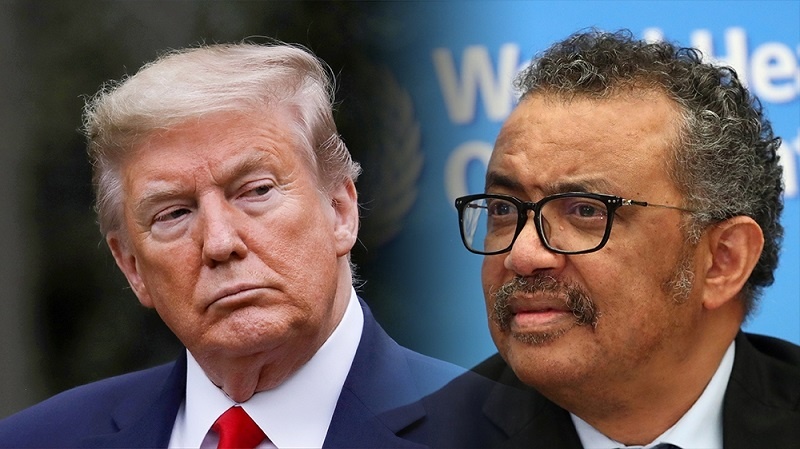 If you say that Donald Trump, who is the “official” president and elected head of the U.S. government, is full of BS, who has used the support of the Russians to get elected [2] or that he wants to cancel the next U.S. elections [3], i.e. which constitute conspiracy theories against Trump, Western journalists in chorus will applaud. They won’t call you a conspiracy theorist even if, according to the definition, that’s what you have being doing.
In the case of COVID-19 in 2020, if you say that all the doctors (and there are not two, ten or a hundred, but thousands around the world) who say that hydroxychloroquine is a cure to COVID-19 and that these crazy doctors have escaped from a lunatic asylum [4], once again the journalists will congratulate you. In any case, even without proof of what you say, no one will call you a conspiracy theorist.
Yet, it is a conspiracy theory and it is directed against qualified doctors.
By doing so, you are accusing doctors [5], some of whom work at the University or in recognized hospitals for decades, such as Professor Harvey Risch [6] of epidemiology at the Yale School of Public Health, Professor Didier Raoult, Director of the Institut Hospitalo-Universitaire Méditerranée Infection in Marseille, and Dr Christian Perronne [7], a professor of French university hospital practitioners, specialized in the field of tropical pathologies and emerging infectious diseases and former president of the specialized commission “Communicable Diseases” of the High Council of Public Health, in addition to many less known but equally reliable and serious doctors, family doctors, field doctors, general practitioners or specialists [8 to 13].
You are a real “conspiracy theorist” if you think that all these highly qualified doctors are lying or want to manipulate you, Yet, no one will treat you like that.
The truth is that you will be labeled a “conspiracy theorist” if and only if you say things against the official narrative or official consensus, which is sustained and acknowledged by:
- international institutions (World Trade Organization, World Health Organization, International Monetary Fund, World Economic Forum, United Nations, European Commission, European Medicines Agency…).
- By national relays who report to these international institutions in all important fields, health, medical, educational, media, economic… [14].
All this forms a coherent, transnational, supranational system (a consensus), driven by common goals and using a precise and studied language.
It must be understood that this system is independent of politicians and survives electoral changes. It perpetuates itself, whatever happens, not through a president, a particular person, but through these institutions that go through all the scandals [15 to 18] and all the attacks without taking a scratch.
Who runs this system?
I won’t answer here first because this is another task which deserves a full report and second, because many researchers have already successfully identified this topic [19 to 22].
Therefore, being a president, head of government, a medical graduate and representing a valid and serious authority is not enough to protect you from being challenged on the grounds that the challenger is a conspirator.
No.
To benefit from this protection, you must belong to the system, speak its language and pursue its goals.
Thus, Anthony Fauci, with his criticizable and contradictory remarks [23], will never be called a conspirator.
Professor Harvey Risch will.
Thus, newspapers that claim that Remdesivir (produced by Big Pharma) is effective in treating COVID-19, contrary to hydroxychloroquine, will never be called conspiracy theorists.
Those who say otherwise, with studies and doctors to back them up, yes.
The problem is that Trump said he was in favour of hydroxychloroquine as well, and he is discredited each time he says it.
It is said that Remdesivir proved its effectiveness against Covid-19, in a Belgian newspaper of August 11, 2020 [24].
Words are important.
The word “proven“, in this case, is false.
But who will notice it, if you are neither a doctor nor aware of the studies in question?
In the meantime, a lie is taken for granted, it becomes a truth.
A single treatment with Remdesivir will bring Gilead Science Inc. $2,500 per patient [25].
In contrast, Hydroxychloroquine, nothing or almost nothing. It is a very inexpensive drug.
The terms “conspiracy” or “conspiracy theory” have nothing to do with truth or credibility, they have to do with conformity to dominant ideas, dictated by the system that relentlessly pursues its goals.
Another important word is “theory“. Conspiracy theories.
This implies ramblings without foundation, without evidence.
Yet many claims labeled “conspiracy theories” are not theoretical.
It is rare to have formal proof at the time of the claim. It may be the result of research, reflections or presumptions.
In forensic medicine or criminal science, you will not always have irrefutable evidence but a set of solid presumptions (motive, indirect and coherent facts) that is sufficient to convict an accused person, according to the law.
Consider the “conspiracy theory” that the pharmaceutical industry is pushing to discredit hydroxychloroquine in favour of its expensive products, antivirals such as Remdesivir or vaccines.
It would be nice to have irrefutable proof of this, but I can’t see an industry leader writing such an admission and then leaving it lying around to fall into the hands of an honest journalist. That would be really suicidal, don’t you think? And in any case, we would discredit that executive, or that journalist, until their words become worthless.
However, as we would do in any police investigation, is there a strong circumstantial body of evidence?
1) Does this industry have a motive?
Yes.
This industry has a famous motive for doing this: money.
It’s not thousands or hundreds of thousands of euros that would push a lot of people to commit murder, but billions of euros [26-27].
2) Does this industry have the means to do this?
Yes.
We know it thanks to the testimony of people from inside, like John Virapen, former CEO of Eli Lilly & Company in Sweden [28], or former editors of major medical journals like Marcia Angell [29] (New England Journal of Medicine) or Richard Horton [30] (Lancet).
3) Has the industry ever done it?
Yes.
There are proven cases that illustrate the corruption of doctors by the pharmaceutical industry, such as the case of anaesthetist Scott Reuben who falsified data concerning the efficacy of the antidepressant Effexor (venlafaxine), produced by Wyeth (merged with Pfizer) in neuropathic and postoperative pain [31].
This is just one example [32]. More recently, you have the Lancet-Gate: “Scientific Corona Lies” and Big Pharma Corruption
Even when the evidence is there, have you ever seen a journalist who accused someone of being a “conspiracy theorist” make his mea culpa, apologize for his misunderstanding and restore the reputation of the “theorist” in question? And above all, restore the truth?
For just one example, I will take the story of the Kuwaiti babies torn from their incubator and thrown to the ground by Iraqi soldiers to justify the American intervention in Iraq in 1990. President George H. Bush senior used it on several occasions in several inflammatory speeches.
It was a lie [33]. We know that.
Yet anyone who would have known or understood this, and said so at the time, would have been called a “conspiracy theorist” in collusion with Saddam Hussein.
For the record, and to show you that these techniques did not stop in 1991 or after the proof of this lie, the dishonest PR firm behind this Kuwaiti babies myth is the same firm that in 2020 helped the World Health Organization (WHO) to make the World Health Organization (WHO) believe in the COVID-19 pandemic and to enforce its diktats: the firm Hill & Knowlton [34].
So, what does this mean, conspiracy, and who is really a conspirator?
We can see that it means nothing.
It’s a pejorative, bad label, which will not be given to you if you lie, or if you criticize a person or a government that justly disturbs the system.
It will be given to you if what you say, even if it is true, plausible, proven, goes against the authorized discourse of the system.
Check it out for yourself.
Criticize the doctors who defend the use of hydroxychloroquine in VIDOC-19, and you won’t be charged with conspiracy.
You will be listened to, approved.
 Criticize Anthony Fauci or the national security councils regarding Covid-19, then yes, you will be accused of conspiracy, indeed of all evils.
Very often it has nothing to do with theories.
The facts that are put forward are sometimes proven, very often supported by many solid and plausible arguments.
Words are very important. Do not underestimate their importance. They direct our thoughts.
I know this as a doctor, but I also know it as a passionate advocate of therapeutic communication.
Like the very first doctors of the Antiquity, I know that words can heal.
They can also make people docile or sick.
The words “conspiracy theorist”, “conspiracy theorist”, “conspiracy theorist” only serve to cut short any debate.
Only to have the person the dominant system wants to discredit rejected, so that person is no longer listened to.
That is what is dangerous, not “conspiracy theories”.
What is really dangerous is to not even want to debate and to exclude ideas, people and opinions on the pretext that they are disturbing.
That is what sows the seeds of a totalitarian society; not conspiracy theories.
It is by refusing any debate, any discussion and by brandishing this kind of disqualifying expression that threatens humanity.
Dr Pascal Sacré
Translation from French by Maya for Global Research
Notes :
[1] Théorie du complot, Wikipédia
[2] Ingérence : comment la Russie a biaisé la campagne de 2016 au profit de Trump
[3] Comment Trump pourrait saboter l’élection pour la remporter
[4] Hydroxychloroquine: Goliath contre David, acte I : les détracteurs
[5] Covid-19 – Hydroxychloroquine, David contre Goliath, acte II : les supporteurs
[6] L’hydroxychloroquine agit chez les patients à haut risque, et dire le contraire est dangereux, Harvey Risch M.D., Ph.D., professeur d’épidémiologie à la Yale School of Public Health.
[7] Christian Perronne : “À Garches, nous avons de bons résultats avec l’hydroxychloroquine”, April 15, 2020, Fervent defender of the treatment with hydroxychloroquine and azithromycin, for Pr Christian Perronne the question of its effectiveness no longer arises. Head of the Infectious Diseases Department at the Raymond-Poincaré Hospital in Garches, he has seen it every day since the beginning of the epidemic: Professor Raoult’s treatment cures and considerably reduces the need for intensive care.
[8] Riposte à la covid-19 : la saine colère du Dr BELLATON, Source : page Facebook de Silviane Le Menn, 20 avril 2020.
[9] Coronavirus : le bilan très positif d’un praticien lorrain qui prescrit l’hydroxychloroquine, the Lorrain Republican, Philippe Marque, April 6, 2020. The results are more than positive: “I have used this protocol on a dozen hospitalized patients, who therefore have a Covid-19 that is already relatively worrying, and I have had neither death nor any evolution towards a serious stage requiring resuscitation.”
[10] Un médecin mosellan constate l’efficacité d’un protocole à base d’azithromycine, the Lorrain Republican, Thierry Fedrigo, April 11, 2020. Two Moselle doctors and one of their Belgian colleagues seem to have developed a drug combination effective against coronavirus. Relying on azithromycin without resorting to the hydroxychloroquine advocated by the infectiologist Didier Raoult, they have noted a clear drop in hospitalizations of their treated patients.
[11] Un médecin néerlandais soigne les patients atteints de coronavirus, mais le gouvernement néerlandais n’est pas content, Amari Roos, 10 avril 2020
[12] Des médecins algériens attestent de l’«efficacité quasi totale» de l’hydroxychloroquine contre le Covid-19,April 27, 2020. The heads of infectious disease departments of a hospital in Blida and another in Algiers say that the hydroxychloroquine protocol followed in the treatment of patients with coronavirus gives a “near-total” positive result.
[13] Après l’Algérie, le Maroc encense l’efficacité de l’hydroxychloroquine contre le Covid-19, May 1, 2020. The therapeutic protocol based on hydroxychloroquine and azithromycin used against Covid-19 “has given positive results” in Morocco, the Health Minister said, adding that “side effects are minimal”.
[14] Ordres nationaux tels que l’Ordre des Médecins, l’Ordre des Pharmaciens, Hautes Autorités de Santé, Sciensano en Belgique…
[15] Agence européenne du médicament : des experts sous influence ?, 12 décembre 2017.
[16] Covid-19: les conseillers du pouvoir face aux conflits d’intérêts, paru le 31mars 2020, écrit par Rozenn Le Saint et Annton Rouget.
[17] Coronavirus : des liens troubles entre labos et conseils scientifiques, Valeurs actuelles, 3 avril 2020.
[18] L’Assemblée parlementaire du Conseil de l’Europe va enquêter sur l’OMS et le scandale « pandémique », Mondialisation.ca, F. William Engdahl, 6 janvier 2010
[19] Anthony C Sutton: British economist, historian and writer. Sutton was a Stanford scholar at the Hoover Foundation from 1968 to 1973. He taught economics at UCLA. He studied in London, Göttingen and UCLA and received a PhD in science from the University of Southampton, England. In 1972, at the Hoover Institution in Stanford, he was awarded a Ph.D : Wall Street et l’ascension de Hitler , Wall Street et la révolution bolchévique
[20] Carroll Quigley: American historian and professor of history at Georgetown University from 1941 to 1976. Quigley was born in Boston, where he later studied and earned two degrees and a doctorate in history from nearby and highly regarded Harvard University. At Georgetown University: Tragedy and Hope: A History of the World in Our Time
[21] Pierre Hillard : essayiste français, docteur en science politique : La marche irrésistible du nouvel ordre mondial , Chroniques du mondialisme
[22] Michael Parenti, American historian, political scientist and cultural critic. He has taught in American and foreign universities. A must read: L’Horreur impériale
[23] Lancet-Gate: « Mensonges scientifiques sur le coronavirus » et corruption des grandes sociétés pharmaceutiques., Mondialisation.ca, Prof. Michel Chossudovsky, 15 July 2020. Dr Anthony Fauci, Donald Trump’s adviser, described as “America’s top infectious disease expert”, played a key role in smearing the HCQ cure that had been approved years earlier by the CDC, as well as in legitimizing Gilead’s Remdesivir.
[24] Le remdesivir, médicament qui a prouvé son efficacité face au Covid-19, 11 août 2020.
[25] Le traitement au remdesivir coûtera 2.340 dollars, selon Gilead, 29 juin 2020
[26] COVID-19 : au plus près de la vérité. Vaccins., Mondialisation.ca, Dr Pascal Sacré, 2 août 2020
[27] COVID-19: au plus près de la vérité – Hydroxychloroquine (HCQ), Mondialisation.ca, Dr Pascal Sacré, 29 juillet 2020
[28] Médicaments effets secondaires : la mort, les laboratoires nous trompent. John Virapen, le cherche midi éditions, 2014
[29] The truth about drug companies, how they cheat us, how to thwart them, Marcia Angell, MD, former editor of the New England Journal of Medicine, French translation, les éditions le mieux-être, 2005.
[30] COVID-19 : le côté obscur de la science révélé, Mondialisation.ca, Dr Pascal Sacré, 26 mai 2020
[31] Top Pain Scientist Fabricated Data in Studies, Hospital Says, 11 Mars 2009
[32] Du Nujol au Tamiflu : la guerre menée par l’industrie pharmaceutique contre nos santés, Mondialisation.ca, Dr Pascal Sacré, 16 juin 2010
[33] l’affaire des Couveuses de la Mort et le début de la Guerre du Golfe
[34] COVID 19 – Contrat de l’OMS avec la société de relations publiques Hill & Knowlton
Media Claim California Crop Crisis, as Farmers Complain About TOO HIGH Crop Yields
California farmers complain that record yields are lowering prices
By James Taylor | ClimateREALISM | August 16, 2020
Google News and the alarmist media are warning about climate change harming California crop production and bringing “hard times” to California farmers – even as California crop production sets records. In fact, California crop production is so strong that farmers are complaining that high yields are depressing crop prices.
Among the top results today for a Google News search of “climate change” is an article in the Bakersfield Californian titled, “Climate change report forecasts hard times for Kern ag.” The article addresses a newly published report produced by a climate change activist group in conjunction with California state officials. The report claims climate change is setting up harmful conditions for California agricultural production.
The Californian article begins, “A new report warns Kern County agriculture will face tough challenges in the decades ahead as climate change makes irrigation water scarcer and weather conditions more variable and intense. The study concludes these hurdles ‘ultimately challenge the ability to maximize production while ensuring profitability.’”
The truth, however, is that a century of modest warming has brought increasingly beneficial temperatures and climate. Crop production is setting records virtually every year in Southern California, California as a whole, the United States, and globally.
In Kern County, total crop value rose 3 percent in 2019, setting a new record. Other California counties are also thriving under present climate. Fresno County’s total crop value rose 12 percent in 2018 to briefly overtake Kern County as the nation’s top-grossing county for agricultural production. Kern County’s 2019 growth reclaimed the title.
Crop production in 2020 is shaping up even better, with more new records forecast. The Sacramento Bee, for example, published an August 5 article titled, “This is what harvest of a 2020 record 2020 almond crop looks like.”
In fact, crop yields are so strong that some farmers are making news hoping for adverse weather to occur. The Californian itself reported this just last month, in an article titled, “Almond growers fret over expectations for another record harvest.” The article noted that record almond production is causing lower almond prices, making it harder for farmers to profit from their crop. The article noted that February’s almond tree blooms were “close to perfect” under ideal temperatures and climate conditions Curiously, the Californian failed to mention climate change’s role in the close-to-perfect climate conditions and record almond production.
The national crop outlook is just as strong. The U.S. Department of Agriculture forecasts record crop yields this year for the important corn and soybean crops, as well as other crops. This builds upon consistent growth in U.S. crop production and records being set on a near-annual basis.
Globally, the United Nations Food and Agriculture Organization (FAO) forecasts the 2020/2021 crop season will set yet another record for crop production. FAO reports global crop production has increased more than 10 percent during the past decade.
In summary, Google News and the corrupt media are once again reporting fake news and fake science. Global warming has brought about perfect California climate conditions and record crop production. Even as this happens, the media are deceiving people by reporting climate change is ushering in a California crop crisis.
James Taylor is Director of the Arthur B. Robinson Center for Climate and Environmental Policy at The Heartland Institute.
UK adopts interventionist role in Belarus political crisis
Press TV – August 16, 2020
As Belarus continues to grapple with post-election unrest, the British government is showing stronger signs of wanting to influence the outcome by potentially fomenting the overthrow of long-time President Alexander Lukashenko.
In the immediate post-election environment the UK Foreign and Commonwealth Office (FCO) published a statement where it called on the “Government of Belarus” to “refrain from further acts of violence” following the “seriously flawed Presidential elections”.
In the presidential election of August 09 Lukashenko was re-elected to a sixth term in office with just over 80 percent of the vote.
But opposition candidate Sviatlana Tsikhanouskaya refused to accept the result and instead declared herself the winner.
Nato countries have generally supported her position with the Lithuanian foreign minister, Linas Linkevicius, taking the extraordinary step of calling Lukashenko “the former president of Belarus”.
The FCO statement complained of a “lack of transparency” in the electoral process even though the UK had no monitors on the ground and therefore cannot make a definitive conclusion on that issue.
The statement concludes with an interventionist tone by asserting that the UK “calls on the Government of Belarus to fulfill its international commitments and the aspirations of the people”.
Beyond the FCO, the British media have thrown their weight behind Belarus “protesters” and by extension appearing to support calls for Lukashenko’s ouster.
The BBC ran an incendiary headline claiming “mass protest eclipses defiant Belarus leader’s rally”.
For its part, Sky News has tried to depict Lukasheno as on the defensive by talking up his claim that Nato forces are “massing” on Belarus’ border.
In recent years the UK has shown growing interest in enhancing its diplomatic and political presence in Minsk, Belarus’ capital.
Earlier this year the UK even deployed 30 Royal Marines from 42 Commando to Belarus to ostensibly take part in an unprecedented joint exercise with the Belarus armed forces.
Belarus is universally regarded as a stalwart Russian ally, and for that reason alone Nato countries, including the UK, have long sought to create political distance between Minsk and Moscow.
Russia says CNN claim US refused vaccine help is false
By Jonny Tickle | RT | August 14, 2020
The US did not reject Russia’s offer of cooperation in developing a coronavirus vaccine, according to a Moscow health official, who says help wasn’t even proffered, despite claims from CNN.
On Thursday, the American broadcaster claimed Russia had offered the US “unprecedented cooperation” to Operation Warp Speed, the US multi-agency body dedicated to creating Covid-19 vaccines and treatments. Citing an unnamed “senior Russian official,” the news network said the Americans had refused help from Moscow due to a “general sense of mistrust.”
Alexey Kuznetsov, an assistant to Russia’s Health Minister, rebuffed CNN’s assertion, explaining that his ministry did not send an “official proposal” to the US.
According to the American network, US officials believe the Russian vaccine to be so incomplete that any assistance didn’t generate any interest at all, with one official saying, “There’s no way in hell the US will try [the Russian vaccine] on monkeys, let alone people.”
On August 11, Russian President Vladimir Putin announced that the country had registered the world’s first Covid-19 vaccine, named Sputnik V. Developed by Moscow’s Gamaleya Research Institute of Epidemiology and Microbiology, the vaccine will be available to the general public from January 2021. The process of creating the vaccine has been criticized by some Western countries, who claim that the speedy production means it hasn’t yet been proved safe.
Featured Video
US IRAN TALKS: Who Are the Crazy Ones Here? /Lt Col Daniel Davis
or go to
Aletho News Archives – Video-Images
From the Archives
Woolsey Fire started at Santa Susana Field Lab — where “radioactive materials released were never accurately measured”
By John Laforge | CounterPunch | November 30, 2018
In my Nov. 16 column, I reported on potential radiation risks posed by California’s Woolsey wildfire having burned over parts or all of the Santa Susana Field Laboratory—south of Simi Valley, Calif., 30 miles outside Los Angeles—site of at least four partial or total nuclear reactor meltdowns.
The field laboratory operated 10 experimental reactors and conducted rocket engine tests. In his 2014 book Atomic Accidents, researcher James Mahaffey writes, “The cores in four experimental reactors on site … melted.” Reactor core melts always result in the release of large amounts of radioactive gases and particles. Clean up of the deeply contaminated site has not been conducted in spite of a 2010 agreement.
Los Angeles’s KABC-7 TV reported Nov. 13 that the Santa Susana lab site “appears to be the origin of the Woolsey Fire” which has torched over 96,000 acres. Southern Calif. Public Radio said, “According to Cal Fire, the Woolsey Fire started on the afternoon of Thursday, Nov. 8 … on the Santa Susana site.” … continue
Blog Roll
 Aletho News
- US IRAN TALKS: Who Are the Crazy Ones Here? /Lt Col Daniel Davis
- Talks with the US end without a deal over excessive US demands: Iran
- Feeling Better, Getting Worse: How Psychiatric Drugs Create the Illusion They Cure
- ‘Nobody Told Me’: Former Mental Health Patient Calls Out Dangerous Side Effects of Psychiatric Drugs
- Dr. Abu-Sitta: Beirut ‘felt like a day in Shifa Hospital’
- Iran Has Won the War, It Will Be Up to the US to Secure the Peace: Mohammad Marandi
- Iran condemns assassination threats against Iranian negotiators amid US talks
- Brussels cannot say where its own pipeline inspectors are as Hungary’s oil lifeline remains shut
- Israel’s Iran War: Myth and Reality
- Between war and industrial breakdown: The US-Israeli attrition crisis
- If Americans Knew
- Pro-Israel ‘Thinktanks’ and Individuals who Influence U.S. Foreign Policy
- Mearsheimer reveals how Israel dictates US policies on Iran, Gaza – video
- After killing 350+, Israel still has a “score to settle” with Lebanon before ceasefire – Daily Update
- Military aid to Israel emerges as the latest political litmus test for Democrats
- The only Palestinian children’s rights organization closes following years-long Israeli campaign against it
- ‘I Can’t Forget the Smell’: Lebanese Reel After Israel Kills Over 300 in Single Day
- DNC Shoots Down Resolutions Calling Out AIPAC and Limiting Arms to Israel
- TCN: Is Israel Blackmailing President Trump?
- Israel killed at least 303 Lebanese yesterday – who were they? Daily Update
- Amnesty: Urgent – Protect Lebanese civilians from brutal escalation in Israeli attacks
- No Tricks Zone
- German Expert: Heat Dome Led To Record Temps In Western USA…Warmer In 1934, 1936
- New Study: No Linear Warming Or Glacier Retreat Along Northern Antarctic Peninsula Since 1980s
- An Inconvenient Tree: Uncovered In Alps… Europe Much Warmer Than Today 6000 Years Ago
- New Study Reports A 60% Slowdown In Greenland’s Ice Loss Rate In The Last Decade
- Low Intensity Tornado Wrecks Major Solar Farm, Creating A Potential Toxic Dump
- New Study Finds Warming Saves Lives…Cold Temperatures 12 Times More Deadly Than Excess Heat
- German Science Blog Accuses PIK Climate Institute Of Hallucinating Climate Tipping Points
- Devastating Assessment Of Comirnaty Vaccine By Former Senior Pfizer Europe Toxicologist
- New Study: CO2 Is ‘Effectively Negligible’ As An Explanatory Climate Change Factor Since 2000
- Former Pfizer Toxicologist Dr. Helmut Sterz Tells Bundestag Hearing Pfizer Vaccine Should Have Never Been Approved
 Aletho News