Western Journalists Really Want There to be a Huge Corona Epidemic in Russia
By Anatoly Karlin • Unz Review • March 21, 2020
The stream of articles suggesting that Russia is covering up its Corona numbers has increased from a stream to a veritable flood:
- CBC: Russia’s coronavirus count under scrutiny as Putin government denies hiding cases
- Moscow Times : Russia Says It Has Very Few Coronavirus Cases. The Numbers Don’t Tell the Full Story.
- Reuters : Sharp increase in Moscow pneumonia cases fuels fears over coronavirus statistics
- Business Insider : Doctors in Russia are accusing the government of covering up its coronavirus outbreak and denying them protective equipment
- CNN: Why does Russia, population 146 million, have fewer coronavirus cases than Luxembourg?
- Financial Times : Vladimir Putin keeps political plan on track despite virus crisis
Let’s take a look at that last article, written by FT’s Henry Foy today, and one of the more balanced (read: less Putin Derangement Syndrome – afflicted) journalists doing the Russia beat (not to mention the most prominent in the above sample, having scored an exclusive interview with Putin in 2019).
“The present number of patients with coronavirus will be hidden from us,” said Anastasia Vasilieva, chairman of Doctors’ Alliance, a Russian lobby group affiliated with opposition politician Alexei Navalny.
Now Foy, to his credit, at least has the journalistic integrity to acknowledge that this doctors’ group (which I have never heard of before now) is affiliated with Navalny, whose entire shtick is to oppose everything and anything the Kremlin does.
A political tilt that its chairwoman helpfully confirms:
“The value of human life for our president is nil . . . We don’t want to admit to any pandemic,” said Ms Vasilieva. “We know of hospitals that are completely full and nurses who are asked to sew face masks from gauze.”
***
But otherwise it follows the usual template on Russia COVID-19 coverage.
She claimed Moscow was instead classifying cases of the virus as pneumonia, the incidence of which increased by almost 40 per cent in January compared with a year previously, government data showed.
The aim here is to insinuate that there was a raging coronavirus epidemic camouflaged as the flu from as early as January 2020.
Oh Corona, where to start.
1. Flu mortality fluctuates wildly season to season by a factor of as high as 4x. So this is a perfectly meaningless fact from the outset.
2. Even China’s epidemic only broke 1,000 cases in January 25. Where were Russians getting infected??
3. If this was true, it is Russia, not Italy, that would be the center of the COVID-19 epidemic now – something that would certainly be noticed, e.g. in overflowing hospitals (no sign of that to date) or in exported cases (but that was all China in February, and predominantly Italy, Iran, and other EU nations now). It is Britons that Vietnam has started barring ten days ago, not Russians.
Here’s what I guess happened. People got agitated by reports from China, and were more likely to consult doctors, producing more flu diagnoses. Even though the actual chance of Russians having COVID-19 in January if they hadn’t been to Wuhan was on the order of a meteorite hitting them on the head.
While other foreign leaders have steeled their citizens for a long crisis and have spoken of a “war” against the pandemic, Mr Putin has played down the threat and urged citizens to remain calm in an effort to minimise panic — and ensure the nationwide ballot on April 22 takes place. …
“The virus is a challenge and comes at a very bad moment for him,” said Tatiana Stanovaya, founder of R. Politik, a political analyst. “Putin doesn’t want to postpone and is insisting that the referendum takes place as soon as possible . . . The longer they wait, the more risks will appear.”
LOL. Trump was saying Corona was fake news/nothingburger up until the end of February.
The US epidemic (22k cases) is about two orders of magnitude more advanced than Russia’s (306 cases), but most states have continued to hold primaries for the Dem nomination.
And in any case Putin has allowed the possibility that the April 22 Constitutional Referendum may be postponed. There’s no indication it’s a hard, immovable date.
At the same time, Mr Putin has sought to project an image of control, continuing with his diary of local visits and meetings with senior officials, shaking hands and never wearing a face mask.
Although it would be nice for Putin to set a better example, this is the rule, internationally – not the exception. Stressing this is so petty, LOL.
“No matter what happens in the next 35 days, they have to lie, hush up, and deny. It doesn’t matter at all what really will happen to coronavirus in Russia, whether there will be a moderate outbreak or tens of thousands are killed,” said Igor Pitsyn, a doctor in Yaroslavl, a city 250km north-east of Moscow.
“By Putin’s decree all information about this is declared a state secret until April 22 . . . This ‘nationwide vote’ will be held at all costs.”
First time I hear of this. Searching “путин коронавирус гостайна” doesn’t produce any relevant results. This doctor must have some very high placed sources.
Or perhaps Foy had to travel all the way to Yaroslavl to get a sufficiently juicy quote.
While officials have cited the low number as proof of the success of swiftly closing its border with China in January and steadily cutting flights to affected countries, experts have questioned how the country has proved far more immune than almost any other. … Neighbouring Belarus has five times more infections per capita than Russia, and France, which has roughly half Russia’s population, has more than 50 times the number of cases.
Russia doesn’t have large numbers of Gastarbeiters in the EU, unlike Belarus. Our Belorussian commenters also tell us that there are next to no control measures in place.
But Ukraine has perhaps 20x more Gastarbeiters in the EU than Belarus, and yet 2 days ago reported only 1/3 as many Corona cases (16 vs. 51). Which suggests where Western journalists covering Eastern Europe should really focus their attention. If they, you know, cared about the Corona situation in Eastern Europe. As opposed to promoting the US line that Russia bad and China bad.
***
Incidentally, an update on Ukraine, two days after my alarm-raising article, in which I suggested that it’s likely there’s a big cluster developing undetected in Ukraine.
Even though testing in Ukraine remains extremely patchy – even in per capita terms, its ~500 tests are two orders of magnitude lower than Russia’s ~150k, or for that matter Belarus’ ~16k – the past two days have seen a surge of new cases from 16 to 41. The majority of those cases, some 25 of them, are concentrated in Chernivtsi oblast, which also saw the death of a 33 year old woman from existing problems magnified by the coronavirus.
The unlikelihood of such a mortality profile, coupled with the flood of new cases despite continued low testing rates, strongly suggests that this is just the tip of the iceberg, and that a cluster is developing in Chernivtsi oblast.
This suggestion is backed up by an observation by Twitter user from_kherson:
There’s a reason Chernivtsi has so many cases – large # of people go to Italy for work.
An acquaintance of mine from there confirmed his business partner just tested positive for the virus.
But just in case you think I am piling on to Ukraine because of my own political obsessions you would be mistaken.
I will say that after Ukraine, probably the second biggest undetected Corona timebomb in Europe may be Serbia. Unfortunately, the Wikipedia page on COVID-19 testing doesn’t have information for Serbia. However, one of my Serbian friends on Thursday wrote me that:
We are still testing around 50 per day, with 1/5 being positive…
So both the intensity of testing and the rate of positives is similar to Ukraine.
This Friday, he continued:
We still have competent health care workers (the decision not to test the wider population is purely political, as was the decision not to close schools until 5 days ago), relatively functioning health care system, about 1500 respirators on a population that is 7+ million.
On the other hand, we have the second lowest reported total test volume anywhere in the world, after Malorossiya :), at 545 total as of this morning, one of the highest positive rates per 1000 tests (after Italy, Spain, Ecuador and the Philippines). We have seen an influx of over 250,000 gastarbeiters from Western Europe in the past 10 days… Many people are breaking the 14 day mandatory self isolation. When I say many, I’m talking about thousands every day…
We have 3 things potentially on our side. God, warmth, and Sun. Or it’s all just God? 🙂
And to think that Serbia was one of the first countries in the world to eradicate smallpox in the 1830s… Under the lifelong illiterate knyaz Miloš…
The large number of Gastarbeiters in Western Europe, most of whom are now going to be let go, is another similarity that Serbia shares with Ukraine. And is something that will be a very problematic issue going forwards.
Fortunately, it appears that China (and Russia) are going to bail Serbia out with test kits.
Despite their rather different geopolitical viewpoints, European attitudes to both Serbia and the Ukraine are quite similar. They are to be exploited to the extent they are useful; otherwise discarded as needed. It’s a lesson they should mull over.
The New York Times’ Insidious Ongoing Disinformation Campaign on Russia & Elections
By Gareth Porter | Consortium News | March 17, 2020
For the past three years the new narrative of Russian interference in U.S. elections has bound corporate news media more tightly than ever to the interests of the national security state. And no outlet has pushed that narrative more aggressively – and with more violence to the relevant facts — than The New York Times.
Times reporters have produced a series of stories that loudly proclaim the Russian election meddling narrative but offer no real facts in the body of the story supporting its most sensational claims.
The Times service to the narrative was introduced by its February 2017 story headlined, “Trump Campaign Aides Had Repeated Contacts with Russian Intelligence.” We now know from Justice Department Inspector General Michael Horowitz’s report on the FBI investigation of the Trump campaign that the only campaign aide who had contacts with Russian intelligence officials was Carter Page, and those had taken place years before in the context of Page’s reporting them to the CIA. The Horowitz report revealed that FBI officials had hidden that fact from the FISA Court to justify its request for surveillance of Page.
But the Times coverage of the Horowitz report in December 2019 failed to acknowledge that the calumny about Page’s Russian intelligence contacts, which it had published without question in 2017, had been an FBI deception.
Two more Times Russiagate stories in 2018 and 2019 featured spectacular claims that proved on closer examination to be grotesque distortions of fact. In September 2018 a 10,000-word story by Scott Shane and Mark Mazzetti sought to convince readers that the Russian Internet Research Agency (IRA) had successfully swayed U.S. opinion during the 2016 election with 80,000 Facebook posts that they said had reached 126 million Americans.
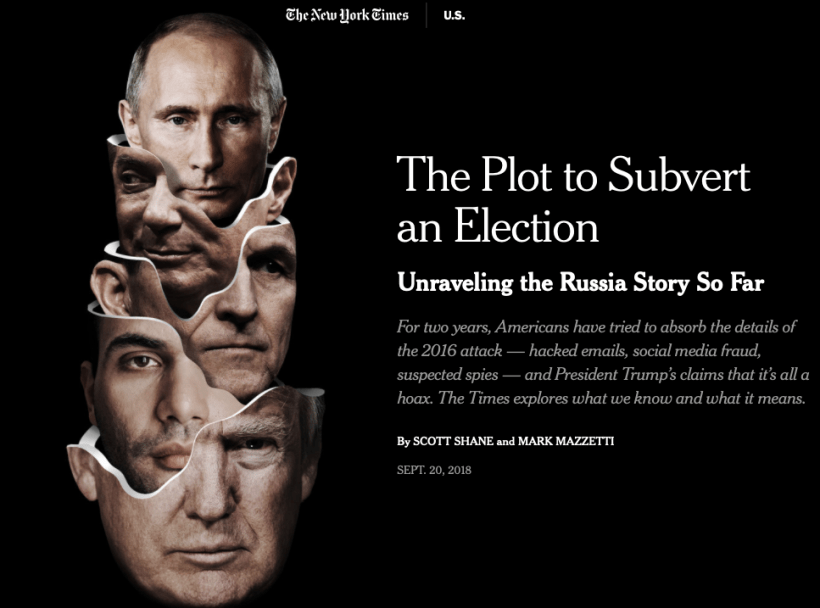
But that turned to be an outrageously deceptive claim, because Shane and Mazzetti failed to mention the fact that those 80,000 IRA posts (from early 2015 through 2017), had been engulfed in a vast ocean of more than 33 trillion Facebook posts in people’s news feeds – 413 million times more than the IRA posts.
In December 2019, senior national security correspondent David Sanger wrote a story headlined, “Russia Targeted Election Systems in All 50 States, Report Finds,” and Sanger’s lede said the Senate Intelligence Committee had “concluded” that all 50 states had been targeted. But the Committee report actually reaches no such conclusion. It quoted President Barack Obama’s cyber-security adviser Michael Daniel as recalling that he had “personally” reached that conclusion, but shows the only basis for his conclusion was remarkably lame: the “randomness of the attempts” and his conviction that Russian intelligence was “thorough.”
The Committee reported that some intelligence “developed” in 2018 had “bolstered” the subjective judgment by Daniel. But all but one of the eight paragraphs in the report describing that intelligence were redacted, and the one unredacted paragraph suggests that the redacted paragraphs provided no conclusive evidence that Russian intelligence had scanned any state election websites, much less those of all 50 states. The paragraph said, “However, IP addresses associated with the August 16, 2016 FLASH provided some indicators the activity might be attributable to the Russian government…. [emphasis added].”
The Committee report also contained summary statements from six states that the Department of Homeland Security has continued to include among the 21 states it insists were hacked by the Russians in 2016, denying any cyber threat to their systems. Another 13 states reported only that there was “scanning and probing” by inconclusive IP addresses the FBI and DHS had sent them. Sanger did not report any of those troublesome details.
In January 2020 the Times began its coverage of the theme of Russian interference in the 2020 election with a story headlined, “Chaos is the Point: Russian Hackers and Trolls Grow Stealthier in 2020.” The story, written by Sanger, Matthew Rosenberg and Nicole Perlroth, sought to heighten the existing U.S. climate of paranoia about a Russian attack in regard to the 2020 elections. Once again, however, nothing in the story supports the sinister tone of the headline.
It reported Department of Homeland Security officials’ anxiety about the ransom-ware attacks on 100 American towns, cities and federal offices during 2019, which are clearly criminal operations aimed at large-scale payoffs by cities. The story informed readers that DHS was investigating “whether Russian intelligence was involved in any of the attacks,” on the apparent theory that the criminals were being used by the Russians.
Since those ransom-ware attacks had been going on for years, the obvious question would have been why DHS would have waited until 2020 to reveal that it was investigating Russian involvement. Thus, the only fact underlying the story was the DHS desire to find evidence to support its accusations of Russian election hacking.
Still at it in 2020
The Times continued its advocacy journalism in a Feb. 26 report that U.S. intelligence officials had “warned” in a briefing for the House Intelligence Committee on Feb. 13 that “Russia was interfering in the 2020 campaign to get President Trump elected,” citing five people “familiar with the matter.”
The Times’ team of four writers proceeded to declare, “The Russians have been preparing – and experimenting – for the 2020 election… aware that they needed a new playbook of as-yet undetectable methods, United States officials said.” But instead of reporting actual evidence of any Russian action or decision for action, the Times writers again cited what their sources suspected could be done.
“Some officials,” they wrote, “believe that foreign powers, possibly including Russia, could use ransom-ware attacks…to damage or interfere with voting systems or registration databases.” The Times’ sources thus had no actual intelligence on the question and were merely speculating on what any foreign government might do to disrupt the election.
Three days after that report, moreover, the Times backed away from its previous lede after intelligence sources disputed its claim that Russia was intervening to reelect Trump, suggesting that the briefing officer, Shelby Pierson, had overstated the assessment. Sanger sought to limit the damage with a story labeling the problem one of “dueling narratives” in the intelligence community.
Then Sanger admitted, “It is probably too early for the Russians to begin any significant moves to bolster a specific candidate,” which obviously invalidated the Times’ previous speculation on the subject. But after The Washington Post published a story that the FBI had informed Senator Bernie Sanders that Russia had sought to help his campaign, Sanger quickly returned to the same narrative of Russian interference to advance its favorite candidates.
On the Times’ podcast “The Daily,” Sanger opined that the Russians were now supporting both Trump and Sanders – because Sanders, “like Donald Trump,” has “got a real aversion to interventions around the world.”
The most recent entry in the Times’ campaign to create anxiety about Russian interference in the election focused on race relations. On March 10, the Times headlined its story, “Russia Trying to Stoke U.S. Racial Tension before Elections, Officials Say.” In their lede Julian Barnes and Adam Goldman announced, “The Russian government has stepped up efforts to influence racial tensions in the United States as part of its bid to influence November’s presidential election, including trying to incite violence by white supremacist groups and stoke anger among Afro-Americans, according to seven American officials briefed on recent intelligence.”
But true to the modus operandi used routinely to push the Russian election threat narrative, the writers did not offer a single fact supporting such a story line. They even admitted that the officials who were making the claims provided “few details” about white supremacists and “did not detail how” blacks were being encouraged to use violence.
It turns out, in fact, that U.S. officials have found nothing indicating Russian support for violent white supremacists in America. The only fact that they could cite — based on a single source — was that the FBI is “scrutinizing any ties” between Russian intelligence and Rinaldo Nazzaro, the American founder of a “neo-Nazi group,” who lives with his Russian wife in St. Petersburg, Russia, but owns property in the United States. So, the Times’ single source had nothing but a suspicion for which the FBI was trying to find evidence.
The final touch in the piece was the accusation that RT had “fanned divisions” on race by running a story about a video of New York policemen attacking and detaining a young black man that Barnes and Goldman write “sparked outrage” and had also “posted tweets aimed at stirring white animosity.” But the RT article on the video merely reported accurately that the video depicted unprovoked police brutality and that it had already gone viral. The Times itself had published a much more detailed Associated Press story on the same incident that went into a discussion of the history of police brutality in New York City. By the Times’ own criterion, the AP was doing far more to stoke racial animosity than RT.
The opinion pieces that RT published attacking The New York Times for its coverage of a video at the University of Wisconsin that offended non-whites and for a Times opinion piece critical of the Apu character on “The Simpsons” echoed views on race and culture that most Americans find offensive. The idea that they were part of a Russian plot to generate racial animosity, however, is a very long stretch.
The descent of The New York Times into this unprecedented level of propagandizing for the narrative of Russia’s threat to U.S. democracy is dramatic evidence of a broader problem of abuses by corporate media of their socio-political power. Greater awareness of the dishonesty at the heart of the Times‘ coverage of that issue is a key to leveraging media reform and political change.
Gareth Porter is an independent investigative journalist and historian and winner of the 2012 Gellhorn Prize for Journalism. His latest book, with John Kiriakou, is “The CIA Insider’s Guide to the Iran Crisis: From CIA Coup to the Brink of War.”
Pompeo and Netanyahu paved a path to war with Iran, and they’re pushing Trump again
By Gareth Porter | The Grayzone | March 20, 2020
Though it narrowly averted war with Iran this January, the Trump administration is still pushing for all-out military conflict. The architects of the drive to war, Mike Pompeo and Benjamin Netanyahu, have relied on a series of cynical provocations to force Trump’s hand.
The US may escape the most recent conflict with Iran without war, however, a dangerous escalation is just over the horizon. And as before, the key factors driving the belligerence are not outraged Iraqi militia leaders or their allies in Iran, but Trump’s secretary of state, Mike Pompeo, and Israeli Prime Minister Benjamin Netanyahu, who has long sought to draw the US into a military confrontation with Iran.
Throughout the fall of 2019, Netanyahu ordered a series of Israeli strikes against Iranian allies in Iraq and against Lebanese Hezbollah units. He and Pompeo hoped the attacks would provoke a reaction from their targets that could provide a tripwire to outright war with Iran. As could have been expected, corporate US media missed the story, perhaps because it failed to reinforce the universally accepted narrative of a hyper-aggressive Iran emboldened by Trump’s failure to “deter” it following Iran’s shoot-down of a U.S. drone in June, and an alleged Iranian attack on Saudi oil facility in September.
Pompeo and John Bolton set the stage for the tripwire strategy in May 2019 with a statement by national security adviser John Bolton citing “troubling and escalatory indications and warnings,” implying an Iranian threat without providing concrete details. That vague language echoed a previous vow by Bolton that “any attack” by Iran or “proxy” forces “on United States interests or on those of our allies will be met with unrelenting force.”
Then came a campaign of leaks to major news outlet suggesting that Iran was planning attacks on U.S. military personnel. The day after Bolton’s statement, the Wall Street Journal reported that unnamed U.S. officials cited “U.S. intelligence” showing that Iran “drew up plans to target U.S. forces in Iraq and possibly Syria, to orchestrate attacks in the Bab el-Mandeb strait near Yemen through proxies and in the Persian Gulf with its own armed drones…”
The immediate aim of this campaign was to gain Trump’s approval for contingency plans for a possible war with Iran that included the option of sending as many as 120,000 U.S. troops into region. Trump balked at such war-planning, however, complaining privately that Bolton and Pompeo were pushing him into a war with Iran. Following Iran’s shoot-down of the U.S. drone over the Strait of Hormuz on June 20, Pompeo and Bolton suggested the option of killing Maj. Gen. Qassem Soleimani in retaliation. But Trump refused to sign off on the assassination of Iran’s top general unless Iran killed an American first, according to current and former officials.
From that point on, the provocation strategy was focused on trying to trigger an Iranian reaction that would involve a U.S. casualty. That’s when Israeli Prime Minister Benjamin Netanyahu interjected himself and his military as a central player in the drama. From July 19 through August 20, the Israeli army carried out five strikes against Iraqi militias allied with Iran, blowing up four weapons depots and killing as many Shiite militiamen and Iranian offcers, according to press accounts.
The Israeli bombing escalated on August 25, when two strikes on the brigade headquarters of a pro-Iranian militia and on a militia convoy killed the brigade commander and six other militiamen, and a drone strike on Hezbollah’s headquarters in south Beirut blew the windows out of one of Hezbollah’s media offices.
Netanyahu and Pompeo sabotage Trump and Macron’s attempt at diplomacy
Behind those strikes was Netanyahu’s sense of alarm over Trump toying with the idea of seeking negotiations with Iran. Netanyahu had likely learned about Trump’s moves toward detente from Pompeo, who had long been his primary contact in the administration. On August 26, French President Emanuel Macron revealed that he was working to broker a Trump-Rouhani meeting. Netanyahu grumbled about the prospect of U.S.-Iranian talks “several times” with his security cabinet the day before launching the strikes.
Two retired senior Israeli generals, Gen. Amos Yadlin and Gen. Assaf Oron, criticized those strikes for increasing the likelihood of harsh retaliation by Iran or one of its regional partners. The generals complained that Netanyahu’s attacks were “designed to prod [Iran] into a hasty response” and thus end Trump’s flirtation with talking to Iran. That much was obviously true, but Pompeo and Netanyahu also knew that provoking an attack by Iran or one of its allies might cause one or more of the American casualties they sought. And once American blood was spilled, Trump would have no means to resist authorizing a major escalation.
Kataib Hezbollah and other pro-Iran Iraqi militias blamed the United States for the wave of lethal Israeli attacks on their fighters. These militias responded in September by launching a series of rocket attacks on Iraqi government bases where U.S. troops were present. They also struck targets in the vicinity of the U.S. Embassy.
The problem for Netanyahu and Pompeo, however, was that none of those strikes killed an American. What’s more, U.S. intelligence officials knew from NSA monitoring of communications between the IRGC and the militias that Iran had explicitly forbidden direct attacks on US personnel.
Netanyahu was growing impatient. For several days in late October and early November, he met with his national security cabinet to discuss a new Israeli attack to precipitate a possible war with Iran, according to reports by former Israeli Ambassador Michael Oren. Oren hinted at how a war with Iran might start. ‘[P]erhaps Israel miscalculates,” he suggested, “hitting a particularly sensitive target,” which, in his view, could spark “a big war between Israel and Iran.”
But on December 27, before Netanyahu could put such a strategy into action, the situation changed dramatically. A barrage of rockets slammed into an Iraqi base near Kirkuk where U.S. military personnel were stationed, killing a U.S military contractor. Suddenly, Pompeo had the opening he needed. At a meeting the following day, Pompeo led Trump to believe that Iranian “proxies” had attacked the base, and pressed him to “reestablish deterrence” with Iran by carrying out a military response.
In fact, U.S. and Iraqi officials on the spot had reached no such conclusion, and the investigation led by the head of intelligence for the Iraqi federal police at the base was just beginning that same day. But Pompeo and his allies, Defense Secretary Mark Esper and Chairman of Joint Chiefs Gen. Mark A Milley, were not interested in waiting for its conclusion.
A deception brings the US and Iran to the brink of war
The results of a subsequent Iraqi investigation revealed that the rocket barrage had been launched from a Sunni area of Kirkuk with a strong Islamic State presence, and that IS fighters had carried out three attacks not far from the base on Iraqi forces stationed there in the previous ten days. US signals intercepts found no evidence that Iraqi militias had shifted from their policy of avoiding American casualties at all cost.
Kept in the dark by Pompeo about these crucial facts, Trump agreed to launch five airstrikes against Kataib Hezbollah and another pro-Iran militia at five locations in Iraq and Syria that killed 25 militiamen and wounded 51. He may have also agreed in principle to the killing of Soleimani when the opportunity presented itself.
Iran responded to the attacks on its Iraqi militia allies by approving a violent protest at the U.S. Embassy in Baghdad January 31. The demonstrators did not penetrate the embassy building itself and were abruptly halted the same day. But Pompeo managed to persuade Trump to authorize the assassination of Qassem Soleimani, Iran’s second most powerful figure, presumably by hammering on the theme of “reestablishing deterrence” with Iran.
Soleimani was not only the second most powerful man in Iran and the main figure in its foreign policy; he was idolized by millions of the most strongly nationalist citizens of the country. Killing him in a drone strike was an open invitation to the military confrontation Netanyahu and Pompeo so desperately sought.
During the crucial week from December 28 through January 4, while Pompeo was pressing Trump to retaliate against Iran not just once but twice, it was clear that he was coordinating closely with Netanyahu. During that single week, he spoke by phone with Netanyahu on three separate occasions.
What Pompeo and Netanyahu could not have anticipated was that Iran’s missile attack on the U.S. sector of Iraq’s sprawling al-Asad airbase in retaliation would be so precise that it scored direct hits on six U.S. targets without killing a single American. (The US service members were saved in part because the rockets were fired after the Iraqi government had passed on a warning from Iran to prepare for it). Because no American was killed in the strike, Trump again decided against further retaliation.
Towards another provocation
Although Pompeo and Netanyahu failed to ignite a military conflict with Iran, there is good reason to believe that they will try again before both are forced to leave their positions or power.
In an article for the Atlantic last November, former Israeli Ambassador Michael Oren, channeled Netanyahu when he declared it would be “better for conflict [with Iran] to occur during the current [Trump] administration, which can be counted on to provide Israel with the three sources of American assistance it traditionally receives in wartime,” than to “wait until later.”
Oren was not the only Israeli official to suggest that Israeli is likely to go even further in strikes against Iranian and Iranian allies targets in 2020. After listening to Israeli army Chief of Staff Aviv Kochavi speak in late December, Haaretz military correspondent Amos Harel reported that the Israeli army chief conveyed the clear impression that a “more serious confrontation with Iran in the coming year as an almost unquestionable necessity.” His interviews with Israeli military and political figures further indicated that Israel would “intensity its efforts to hit Iran in the northern area.”
Shockingly, Pompeo has exploited the Coronavirus pandemic to impose even harsher sanctions on Iran while intimidating foreign businesses to prevent urgently needed medical supplies from entering the country. The approaching presidential election gives both Pompeo and Netanyahu a powerful reason to plot another strike, or a series of strikes aimed at drawing the US into a potential Israeli confrontation with Iran.
Activists and members of Congress concerned about keeping the US out of war with Iran must be acutely aware of the danger and ready to respond decisively when the provocation occurs.
For the green zealots, Covid-19 is our penance for sins against the planet
By Frank Furedi | RT | March 20, 2020
Green zealots want to turn the global catastrophe of Covid-19 into fuel for their alarmist extinction narrative. By blaming humanity’s impact on the planet for the outbreak, they hope to mobilize support for their cause.
The hastily cobbled together green playbook on the unfolding global pandemic seeks to hold humanity responsible for the outbreak of Covid-19. Its rhetoric of blame is often just that – rhetoric.
The communications strategy adopted by green scaremongers is to continually raise questions about the possibility that our neglect of nature has brought Covid-19 down upon us. The more frequently such questions are posed the more likely that their speculation will mutate into a taken-for-granted fact. “Tip of the iceberg: is our destruction of nature responsible for Covid-19?” asks a headline in the Guardian. The manner in which this question is posed invites readers to respond, “quite likely.”
To pose questions about the link to man-made climate change is often presented as the normal response to the crisis. A commentary on Inside Climate News illustrates this rhetorical strategy.
“Now, questions have arisen about whether climate change contributed to the outbreak of Covid-19, whose spread the World Health Organization declared a pandemic on Wednesday. For example, did habitat loss, driven in part by climate change, make it easier for pathogens to spread among wildlife and for the virus to jump to humans? Does air pollution, mainly from the burning of fossil fuels, make some people more vulnerable to contracting the illness?”
As one question reinforces the next, the reader is encouraged to imagine that in some shape or form, climate change is likely to be connected to the Covid-19 outbreak.
It is almost as if green activists are desperately hoping that someone will come up with a shred of evidence that can be used to prove that one way or another that human-created global warming is responsible for the outbreak. Their interest is far removed from containing the virus’ threat. On the contrary, their narrative takes great delight in using Covid-19 as a weapon to be wielded against environmentally irresponsible people. Statements on this score transmit the message ‘that it is all your fault’. In this vein, Dr Aaaron Bernstein, Interim Director Of The Center for Climate, Health, and the Global Environment, offers a cautionary tale about the impact of human behaviour on the planet:
“You look at climate change, we have transformed the nature of the Earth. We have fundamentally changed the composition of the atmosphere, and as such, we shouldn’t be surprised that that affects our health. We have, as a species, grown up in partnership with the planet and life we live with. So, when we change the rules of the game, we shouldn’t expect that it wouldn’t affect our health, for better or worse. That’s true of the climate. And the same principle holds for the emergence of infections.”
Bernstein does not provide any arguments for his casual linking of the transformation of the world by humans to the emergence of infections. That’s not the point of his statement. His objective is to morally condemn the very human aspiration to change the world and to imply that we have brought the current global tragedy upon ourselves.
Not so long ago, with the development of science we learned that a disaster, such as a plague or an earthquake, was not caused by mysterious vengeful forces – they were rightly called ‘Acts of Nature’. For the green zealot, disasters are never just Acts of Nature; they are a penalty that humanity pays for seeking to modernize the world.
For green ideologues, the pandemic provides an opportunity to mobilize support for their cause. For us, the flu outbreak constitutes a threat that will be overcome with single minded commitment to the cause of humanity. History shows that – contrary to the green world view – humans are not the problem, they are the solution.
Frank Furedi is an author and social commentator is an emeritus professor of sociology at the University of Kent in Canterbury. Author of How Fear Works: The Culture of Fear in the 21st Century. Follow him on Twitter @Furedibyte
COVID-19: All Truth Has Three Stages
By Larry Romanoff | Global Research | March 19, 2020
First, it is ignored.
Second, it is widely ridiculed.
Third, it is accepted as self-evident.
With COVID-19, we have now entered Stage 2. At first, the media ignored the claims and the analysis that the virus could have originated in the US. But the spread of information and restatements of evidence from all sides, including in the US itself, has become too intense and now the claims are being openly ridiculed in the Western media.
Briefly, Chinese virologists discovered conclusively that the original source of the virus was not China, nor Wuhan, nor the seafood market, but had been traced to the US, a possible scenario being that the virus might have originated at the US Military’s bio-weapons lab at Fort Detrick (which was shut down by the CDC in July, because of outbreaks), and brought to China during the World Military Games in October 2019.
Also, Japanese and Taiwanese virologists arrived independently at the conclusion that the virus could have originated in the US.
The Americans did their best from before the beginning to deflect culpability by crafting tales of bats, snakes, pangolins, the seafood market, the Wuhan University being a bio-weapons facility (which it is not), and the CIA tale leaked through the VOA and Radio Free Asia that the virus leaked from that university. They stated (factually) that Chinese researchers had participated (7 years ago) in similar virus research funded by the US NIH, thus somehow insinuating Chinese culpability, ignoring that the prior research was irrelevant to current events.
I must say the Americans have proven to be very skillful in grabbing the microphone first, to create an “official” narrative of a current event while flooding the media with sufficient finger-pointing to preclude a gullible public the time to logically assemble the pieces on their own.
They ignored the very real fact that few nations would either create or release a biological weapon that attacks primarily itself. They ignored too, the geopolitical likelihood of an ”end game” – that a virus is a powerful weapon of economic warfare, able to do to China’s economy what a trade war could not do.
Casual readers tend to ignore the fact that, in the American mentality, there are many solid geopolitical reasons to attack China, Iran, and Italy, the remaining countries merely constituting unfortunate collateral damage.
Many virus articles containing this and similar information had been published by second-tier internet news sites, some articles gaining enormous readership with hundreds of thousands of downloads and much re-posting. Many of these articles have been translated into 6 or 7 languages and published on websites all around the world. Simultaneously, many posts were made on Chinese social media speculating on the odd circumstances and long chain of unusual coincidences that led to the virus outbreak in Wuhan.
One of the articles referred to above, was translated and posted on Chinese social media and gathered 76,000 comments in the first 8 hours. Eventually, the major Chinese media outlets made the same claims – that the virus could have originated in the US and that the Americans were engaging in a massive cover-up.
Then, Zhao LiJian, a spokesman for China’s Foreign Ministry, made the story official, through a number of posts on US social media. One major media article, this in the NYT, noted that “Zhao’s remarks were spread on China’s most prominent social media platform, Weibo . . . [and] had been viewed more than 160 million times, along with screenshots of the original Twitter posts.
It seems LiJian’s Twitter posts, being essentially an official source that could not easily be ignored, claiming the virus was brought to China from the US during the Military Games, and demanding an explanation from the US, were receiving too much public attention to be ignored. All of the above created sufficient political pressure to force the Western media to respond. And of course they responded by ignoring the facts of the message and trashing the messenger.
On March 12, the UK Guardian ran a story claiming China was “pushing propaganda” about the virus coming from the US. (1) On March 13, the New York Times ran a similar story of a “China coronavirus conspiracy” of false claims about the source of the virus. (2) Then, on March 14, ABC News ran a story titled “False claims about sources of coronavirus cause spat between the US, China”, in which it ridiculed China and the claims of a US-virus. (3)
The Seattle Times published a version of the story, stating, “China is pushing a new theory about the origins of the coronavirus: It is an American disease . . . introduced by members of the U.S. Army who visited Wuhan in October. There is not a shred of evidence to support that, but the notion received an official endorsement from China’s Ministry of Foreign Affairs, whose spokesman accused American officials of not coming clean about what they know about the disease.” (4) The UK Independent published their own version of “China’s conspiracy theory” (5), as did CNN (6).
The ABC article claimed that “Assistant Secretary David Stilwell gave [Chinese] Ambassador Cui Tiankai a “very stern representation of the facts,” claiming Cui was “very defensive” in the face of this “official” American assault. The US State Department is quoted as having said, “We wanted to put the [Chinese] government on notice we won’t tolerate [conspiracy theories] for the good of the Chinese people and the world.”
Following that, the Washington Post, Bloomberg, and half a dozen other press wires and media outlets have contacted this author for interviews, eager for an opportunity to trash this ‘conspiracy theory’ at its source. The US Embassy in Beijing also “reached out” to the author “to talk about it”.
If the public information campaign and the resulting political pressure can continue, we will eventually enter stage three where the media will begin admitting first the possibility, then the likelihood, then the fact, of the US being the source of the “China” virus.
***
Larry Romanoff is a retired management consultant and businessman. He has held senior executive positions in international consulting firms, and owned an international import-export business. He has been a visiting professor at Shanghai’s Fudan University, presenting case studies in international affairs to senior EMBA classes. Mr. Romanoff lives in Shanghai and is currently writing a series of ten books generally related to China and the West. He can be contacted at: 2186604556@qq.com. He is a frequent contributor to Global Research.
Notes
(2) https://www.nytimes.com/2020/03/13/world/asia/coronavirus-china-conspiracy-theory.html
(3) https://abcnews.go.com/Politics/false-claims-sources-coronavirus-spat-us-china/story?id=69580990
(4) https://www.seattletimes.com/nation-world/china-spins-tale-that-the-u-s-army-started-the-coronavirus-epidemic/
https://www.ccn.com/did-coronavirus-originate-in-america-chinese-media-pushes-conspiracy/
(6) https://www.ccn.com/did-coronavirus-originate-in-america-chinese-media-pushes-conspiracy/
Copyright © Larry Romanoff, Global Research, 2020
‘Reciprocal measures’: Beijing tells NYT, WSJ, WaPo journalists to hand in credentials as US-China media war rolls on
RT | March 17, 2020
China is pulling the press credentials of US journalists from outlets including the New York Times and the Washington Post whose passes expire in 2020, in the latest move of an ongoing tit-for-tat with America over media access.
In a statement about China’s “countermeasures against US suppression of Chinese media organizations in the United States,” Beijing announced that American reporters working for the NYT, Wall Street Journal, Voice of America, Time and the Washington Post whose credentials are due to expire by the end of this year must hand them over within 10 days.
These reporters will also not be allowed to work in China – including Hong Kong and Macau – in the future, and other US journalists will face new visa restrictions similar to those Washington recently introduced for Chinese reporters.
“In view of the US’ discriminatory restrictions on visas, administrative review, and interviews of Chinese journalists, China will take reciprocal measures against US journalists,” it added.
The back-and-forth expulsions of journalists started in February, when Chinese authorities gave three Wall Street Journalists five days to leave the country after Beijing objected to an opinion piece in the outlet calling China the “real sick man of Asia.” The paper refused to apologize for the piece.
Shortly afterwards, the US dramatically reduced the number of journalists it would permit to work for four Chinese state-owned media companies inside the US, cutting the number allowed from 160 to 100. They also reduced the length of time those permitted entry could remain in the US.
Beijing condemned the move as reflecting a “Cold War mindset” and warned of retaliation.
Corporate Media Condone Destruction of Venezuela’s Voting Machines
By Lucas Koerner | FAIR | March 14, 2020
The vast majority of Venezuela’s voting machines were incinerated on March 7 in a fire that engulfed the main warehouse of the National Electoral Council, or CNE, outside Caracas.
An unknown militant group styling itself the “Venezuelan Patriotic Front” claimed responsibility for the arson attack, which comes as the Maduro government and moderate opposition factions continue high-level negotiations to hold parliamentary elections in a bid to overcome the country’s current standoff.
Given Western journalists’ moral outrage over the dubious allegations of widespread “meddling” in the 2016 US presidential election, consistency would have mandated a similar response to such a brazen attack on Venezuela’s democracy.
Instead, corporate outlets followed the familiar script of blaming the victim, repeating the US State Department talking point that the Venezuelan electoral system is “rigged” (FAIR.org, 5/23/18) and floating outlandish conspiracy theories.
The Fiction of ‘Fraud’
After running through some of the details of the incident, Reuters (3/8/20) stated:
The South American country’s elections have come under heavy criticism since President Nicolás Maduro’s 2018 re-election was widely dismissed as rigged in his favor, leading dozens of governments around the world to disavow his government in 2019.
The BBC (3/9/20) likewise emphasized that Venezuela’s elections have been “beset by allegations of fraud… [and] vote-rigging.”
The not-so-subtle implication is that the burnt voting machines had previously served as an accessory to the “fraud” perpetrated by the Maduro government.
This is a particularly scandalous suggestion, given that Venezuela’s electoral system, unlike its US counterpart, is one of the most efficient and transparent in the world. Witnesses representing competing political parties—including the opposition—are present at polling stations and are required to sign off on the numerous, publicly available audits realized before, during and after the fully automated process. Indeed, Venezuela is the only country in the world that does an on-the-spot citizens’ audit after voting centers close, in which the electronic tallies of 53% of randomly selected voting machines are compared to the physical receipts printed by those machines and deposited by voters in a sealed box. In 2018, opposition parties representing Henri Falcon approved each and every one of the CNE’s 24 audits, even those carried out after their candidate cried fraud.
AFP (published in France24, 3/9/20), for its part, was more honest. In lieu of repeating the baseless fraud narrative, the agency observed that the CNE “has been the target of opposition criticism in every election,” before going on to quote the council’s president, Tibisay Lucena, denouncing the opposition’s record of electoral violence.
However, like Reuters and the BBC, AFP declined to inform readers that the opposition’s perennial fraud claims—in 2018 as well as in 2017, 2013, 2010 and on multiple other occasions —have been invariably bereft of substantive evidence.
Concealing Opposition Culpability
Embarrassingly, with the exception of the Daily Mail (3/10/20), virtually no corporate outlets have reported the crucial plot detail that a hard-right opposition group has claimed responsibility for the attack.
After suppressing this inconvenient fact, AP (published in the Washington Post, 3/9/20) went so far as to promote the opposition’s bizarre conspiracy theory that the fire was a false flag by the Maduro government, quoting no less than two opposition sources: a London-based financial consultant and self-proclaimed “interim president” Juan Guaidó.
Strangely, the reporter also repeats the narrative that the voting machines are an instrument in the Venezuelan government’s “quest to hold legislative elections this year that could help President Nicolás Maduro consolidate his power.”
It would seem that the reader is expected to believe that Maduro is attempting to convene constitutionally mandated legislative elections in order to “consolidate his power,” while at the same destroying the very means of holding those elections for some unknown reason.
Not only do AP and its counterparts omit anti-government militants’ self-declared responsibility for torching the machines, they also ignore the opposition’s very plausible motives for their destruction: The Venezuelan electoral system’s transparency has been an obstacle to the US-opposition strategy of delegitimizing all Chavista-won elections and paving the way for their coup efforts.
This would not be the first time that the Venezuelan right wing has attacked electoral infrastructure. During 2017 National Assembly elections, the opposition reportedly besieged 200 voting centers—a fact ignored by all corporate outlets, with the partial exception of AFP (3/9/20), which quoted a Venezuelan official’s denunciation of opposition electoral violence.
The hardline factions of Venezuela’s US-sponsored opposition have as recently as October (El Nacional, 10/22/19) called for an abandonment of the country’s state-of-the-art automated voting system—which combines rapid electronic transmission of results with the security of publicly audited physical receipts—in favor of more tamperable manual voting.
By omitting these crucial facts, corporate journalists slander Venezuela’s electoral system at the moment that it is under devastating assault. The pretense of earnest concern is easily pierced; their true function is to disseminate US imperial propaganda that Venezuela and its progressive regional allies are not democracies, and therefore legitimate targets for coups, economic warfare and/or military intervention (FAIR.org, 12/10/19, 2/12/20).
Circle in the Darkness: Memoir of a World Watcher – Book Review
By Jim Miles | Palestine Chronicle | March 16, 2020
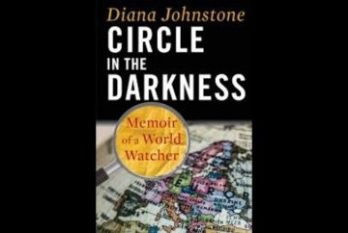 (Circle in the Darkness – Memoir of a World Watcher. Diana Johnstone. Clarity Press, Atlanta Georgia. 2020)
Diana Johnstone has done a masterful job of writing her autobiography, Circle in the Darkness, that provides many details of her life, her early influences, and the various stages of her career throughout the second half of the Twentieth Century and the first part of Twenty-first.
It is a wild ride through various aspects of society, concentrating on the historical events of her era.
Much of what she writes is not news to those who do follow alternative news sites, but what is added is a strong personal perspective based on – not surprisingly – facts and truth, both from her own experiences in regions of concern and a wide arrange of conversations with both people of significant influence and those with no influence but feeling the impact of developments in their country.
The details Johnstone adds are a strong and valuable retort to mainstream media disinformation that has “moved farther and farther away from informing the public and nearer and nearer to instructing them in what they should think.”
Themes
One of three themes that impressed me and are developed throughout the book, the media takes a large hit. While discussing NATO crimes of the Balkan, she writes, “The journalist was no longer asked to dig for new information and provide fresh analysis, but to contribute to the “common narrative”” as originated by NATO and the media.
When discussing mass media and the Military Industrial Complex she writes, “those private interests coincide quite closely with those of the U.S. government, since the same economic powers are behind both.”
Relying on “open sources and thoughtful analysis of known facts” rather than “spook revelations” her work is significantly more accurate than the mainstream.
NATO and European unity cover another large thematic area. She discusses how NATO and the European Union actively promote the neoliberal order as conditioned by the U.S. and other global hegemonic financial powers against the best interests of their own people and against the best interests of many sovereign states in the world.
When discussing the idea of Joint Criminal Enterprise as argued by the U.S. in relation to Serbia (essentially all Serbs are guilty of war crimes) she reverses the argument with clear examples, and summarizes, “U.S. strategy basically boils down to the implicit or explicit threat to wipe out the whole nation it is attacking…. This war is not the result of a clever plan by some ragtag Balkan clan leaders. This war was deliberately planned and carried out by the real Joint Criminal Enterprise: NATO.”
The third theme was her development of ideas concerning the development of the “left”.
It has changed from operating with the best interests of the people in mind – anti-war, support for workers and societal infrastructures – to becoming a supporter of war and more interested in the distractions of identity politics, “The Left has evolved from a program to an attitude.”
Certainly, there is merit in people’s identity but it comes at the cost of no longer working against class structures that keep workers down and keep the rich getting richer.
Johnstone follows the developments in France to its present-day neoliberal U.S. supporting government of Macron and follows the developments in Sweden as it turned away from the left of Olaf Palme towards a strong non-NATO supporter of all NATO adventures.
A Host of other Ideas
Many other ideas are presented in Circle in the Darkness.
Israel is discussed directly only briefly but Zionism’s influence is related throughout. While discussing false flags, the USS Liberty attack is mentioned threading into the theme of the media as ”the mainstream media have persisted in ignoring what happened, even as evidence mounted that General Moshe Dayan personally ordered the attack.”
The relationship between the dropping of the gold standard and the introduction of the petrodollar is touched upon, a topic that is rare if ever in mainstream journalism. Again just touching on it she discusses the “debt trap” on a personal level when two local Minnesota farmers commit suicide after being enticed to overextend themselves into debt.
In general, however, this is Diana Johnstones’ story of the many people she meets and interviews, or argues with, debates with, or simply discusses the many issues of her career spent mostly within European journalism. That overlapped with her employment by the German Green party and how she watched it change from an anti-war truly green party to a pro-war neoliberal supporter of capitalism.
She continues to write as an independent journalist today, with her work published globally in several alternate news sites. While I am familiar with the same history background as Ms. Johnstone, I do not have the expertise of overseas experience, the philosophical background, and the wide range of contacts she has had available throughout her career.
Circle in the Darkness covers an amazing and productive lifetime and provides valuable insights and factual details in support of her views and reporting.
It is entertaining – not in the distractive sense but for the quality of the writing and her combination of anecdotal stories combined with researched ideas.
Thus it is a very strong informative work on our modern history, an important read to more clearly understand the machinations of the modern political-military scene.
– Jim Miles is a Canadian educator and a regular contributor/columnist of opinion pieces and book reviews to Palestine Chronicles. His interest in this topic stems originally from an environmental perspective, which encompasses the militarization and economic subjugation of the global community and its commodification by corporate governance and by the American government.
OPCW Scandal Reaches New Height of Farce With Latest Whistleblower Allegations Over Smeared Douma Officers
By Martin Jay | Strategic Culture Foundation | March 15, 2020
How much longer can the troubled OPCW organisation continue to operate with any credibility after the doctoring of its investigations to suit a western narrative in Syria continues to be exposed and shows it is far from an independent chemical weapons watchdog?
Readers may remember that previously, towards the end of 2019, leaked emails from two key OPCW investigators who were dispatched to Douma in Syria in 2018, revealed that their original remarks – which indicated that the Assad regime could not have orchestrated the chemical attack – were removed from the final edited report. This act alone was the starter’s pistol on a rebellion which is threatening to severely damage the organisation’s credibility in the field and confirms to many that the role of it is purely as an apparatus for the West’s agenda in the field of conflict around the world, against those who stand up to the giants of NATO.
A fourth whistleblower has now emerged from the farcical debacle which will surely reach a tipping point soon either threatening to remove OPCW’s Spanish chief – the main culprit who tarnished the two officers who kicked off the scandal in the first place – or for the organisation itself to have a world-wide identity problem which will manifest itself in many countries simply refusing to allow it entry into hotspots. It’s hard to see how Syria’s Assad would continue to allow OPCW inspectors into Syria following another chemical attack after the organisation has been “hijacked” by western interests who appear to go to extraordinary levels to falsify evidence to serve a narrative.
The latest OPCW official to step forward and support the findings of the two initial inspectors, whose scandal was revealed in a series of leaked emails in May 2019, has spoken of the culture of intimidation within the organisation and how the two inspectors have been dealt a grave injustice in their work and in their determination to salvage credibility for their employer.
“The mistreatment of two highly regarded and accomplished professionals can only be described as abhorrent,” the OPCW official wrote in an email to The Grayzone website. “I fully support their endeavours, in that it is for the greater good and not for personal gain or in the name of any political agenda. They are in fact trying to protect the integrity of the organisation which has been hijacked and brought into shameful disrepute.”
Central to the dispute surrounding the two officers who have had their conclusions dismissed by OPCW’s chief, is the discovery by one of the investigators that the gas canisters on the ground appeared not to have been dropped from an aircraft but rather placed there. This finding is important as it destroys the West’s assertion that the attack at Douma was made by the Assad regime which it alleges dropped the chemicals from a plane or a helicopter.
This incendiary finding was removed from the final redacted report which leans more on the Assad theory and keeps a safe distance from the distinct possibility that the entire attack was staged by western-backed extremist groups in the area.
One of the two whistleblowers and former inspectors is believed to be Ian Henderson, a 12-year veteran of the organization and weapons expert. According to the Grayzone, “Henderson led on-the-ground inspections in Douma and conducted a detailed engineering study of gas cylinders found at the scene” and concluded that the cylinders were likely “manually placed” rather than being dropped by air. The second officer is not named but is believed to be of higher rank who wrote one version of a final report, which was ultimately rejected for a redacted version which failed to acknowledge the findings of the two investigators – ultimately that it could not have been an attack by Assad’s forces.
Their work continues to draw wrath from the OPCW’s boss General Fernando Arias who remarkably seems to be conducting a smear campaign against them slamming their work as “erroneous, uninformed, and wrong,” believed to be what has sparked a new whistleblower – believed to be British – to come forward with startling new allegations which cast a shadow over the integrity of the organisation.
“It is quite unbelievable that valid scientific concerns are being brazenly ignored in favour of a predetermined narrative,” the email reads. “The lack of transparency in an investigative process with such enormous ramifications is frightful.”
Yet the culture of arbitrary vengeance against those who question the biased narrative or working practices of its chief, is deeply worrying, as the latest whistleblower reveals in the email.
“I am one of many who were stunned and frightened into silence by the reality how the organisation operates,” the official wrote. “The threat of personal harm is not an illusion, or else many others would have spoken out by now.”
It’s unclear what “personal harm” means. But even if it is punitive measures which mean blocked promotion or even constructive dismissal, it raises a number of questions as to the integrity of the OPCW itself which will reverberate around the world’s so-called democratic centres of debate and will spark a new debate among those corridors. Does the OPCW have any credibility left?
Washington Post hypes fake news on coronavirus ‘burial pits’ in Iran
Press TV – March 14, 2020
The Washington Post has turned to publishing fake news about Iran’s response to the coronavirus outbreak, claiming that Iran has dug mass “burial pits” for victims of the disease and was covering the true number of deaths.
As countries across the world grapple with the COVID-19 outbreak, Iran’s struggle to contain the deadly disease has attracted more than usual attention from mainstream outlets in certain countries.
Despite numerous statements from World Health Organization officials praising Iran’s efforts against the outbreak, certain outlets have focused on erringly similar themes regarding Iran; that the country is in chaos, is mishandling the outbreak and that it’s “putting other countries at risk”.
The Washington Post has specifically published a string of exclusively conspiracy-minded and politicized reports about the coronavirus outbreak in Iran.
Its latest reports include headlines such as “Iran’s government is lying its way to a coronavirus catastrophe”, “Iran struggles to contain coronavirus outbreak, putting Middle East countries at risk” and “Coronavirus pummels Iran leadership as data show spread is far worse than reported”.
In its latest article on Iran – titled “Coronavirus burial pits so vast they’re visible from space” – the US daily claims satellite images showed newly-dug “trenches” the size of a “football field” to accommodate bodies of the coronavirus victims.
The satellite images purportedly illustrate a cemetery near Iran’s epicenter city of Qom. The paper proceeds to cite dubious reports and videos circulating over the internet about Iran covering up its coronavirus deaths.
The report concludes that the graves have been dug to “accommodate the rising number of virus victims in Qom”.
Many observers, however, have been quick to point out inconsistencies and flaws in the report, with some highlighting the unprofessional reporting used in the article; using hyped expressions such as “seen from space” to portray a false image of mass graves.
Observers have pointed that the overall length of the purported 100 yards of “burial pits” in the satellite images cannot accommodate more than about 75-100 graves, not significantly higher than the official death toll announced for the city.
Others have presented evidence showing that the vacant graves in the area are not specifically related to the coronavirus outbreak and that long rows of graves had been also dug long before the outbreak.
The dubious report, however, has circulated widely among social media accounts and various foreign-funded anti-Iran outlets, prompting Iranian officials to issue official statements on the matter.
Speaking with the Islamic Republic of Iran Broadcasting (IRIB), executive manager of Qom Municipality’s burial sites Seifoddin Mousavi said the graves had been planned before the outbreak as part of usual procedures in the cemetery.
He stressed that all the operations in the cemetery are taking place according to international protocols regarding burial sites.
On Friday, Kianoush Jahanpour, the head of the public relations and information center of the Iranian Ministry of Health, said that the new coronavirus has claimed 514 lives in the country.
Fourth OPCW whistleblower: Staff ‘frightened into silence’, watchdog brought into ‘shameful disrepute’ over Douma probe
RT | March 13, 2020
A fourth whistleblower has come forward to defend two senior OPCW inspectors who revealed the watchdog tried to cover up evidence in the Douma chemical weapons probe, saying that other employees were “frightened into silence.”
In a statement to the Grayzone, the latest whistleblower said they were “horrified” but “unsurprised” by recent events within the organization, describing the “mistreatment” of “two highly regarded and accomplished professionals” as “abhorrent.”
The employee wrote that he is “one of many who were stunned and frightened into silence by the reality how the organization operates,” and that the “threat of personal harm” to those who speak out is “not an illusion.”
The fourth whistleblower emerged after the OPCW leadership attempted to smear and discredit veteran inspector Ian Henderson and an individual known as ‘Alex’ who challenged the organization’s narrative on the alleged Syrian government attack on Douma in 2018. A third whistleblower has also previously defended the integrity of the first two who spoke out and expressed concern for the safety and security of those who dissent from the official narrative.
The Grayzone said it had independently verified the identity of the fourth whistleblower and their position at the OPCW, but granted them anonymity “to protect them from potential retaliation.”
Last week, Henderson and ‘Alex’ both wrote to OPCW Director-General Fernando Arias, accusing the organization of trying to “smear” their reputations and questioning why two top inspectors with “impeccable records” would suddenly “go rogue.” The letters followed an effort by the chemical weapons watchdog to discredit them, rubbish their serious concerns, and frame them merely as two disgruntled former employees.
“I fully support their endeavors, in that it is for the greater good and not for personal gain or in the name of any political agenda,” the fourth whistleblower wrote, adding that the inspectors are “trying to protect the integrity of the organization which has been hijacked and brought into shameful disrepute.”
After a detailed study, Henderson, who led the probe on the ground in Douma, concluded that gas cylinders found at the scene had likely been manually placed, which suggests the attack may have been a false flag staged by anti-government militants. The incident, however, was swiftly used to justify US, UK and French airstrikes on Syria before OPCW investigators had even arrived at the scene.
Yet, the OPCW disregarded Henderson’s evidence without explanation and in its official report implied that the gas cylinders were dropped by Syrian military planes – allegedly after “unacceptable pressure” was applied by the US government.
‘Arm’s-length’ military institution promotes belligerent worldview
By Yves Engler · March 12, 2020
 Not satisfied with Canada’s largest public relations machine, the Canadian Forces also employ various “arm’s-length” institutions to push their influence over the discussion of military and international affairs.
For example, the Conference of Defence Associations (CDA) Institute recently published a half-page ad in the Globe and Mail to announce its Conference on Security and Defence. The March 3 and 4 meeting at the venerable Château Laurier was sponsored by the Department of National Defence (DND) and Global Affairs as well as Lockheed Martin, Raytheon and other arms companies. As in previous years, CDA’s confab in Ottawa drew leading military and political officials, including the Chief of the Defence Staff, who heard speakers hype security threats and push for increased military spending.
The headlines the conference generated included: “Russia poses most immediate military threat to Canada, top general says” (Globe and Mail ), “Canada and the West are at war with Russia whether they want it or not: military experts” (Global ) and “Top Canadian general calls out Russia and China for ‘antagonistic actions’” (CTV).
None of these stories explained what the CDA Institute actually is. The group describes itself as a “non-partisan, independent, non-profit organization [that] expresses its ideas and opinions with a view to influencing government security and defence policy.” Established in 1932, then Minister of Defence Donald Matheson Sutherland backed CDA’s creation. Since its inception CDA has been directly or indirectly financed by DND. Initially, member associations paid a small part of the funds they received from DND to CDA. But, three decades later the role was reversed. CDA received a block grant from DND and parcelled out the money to its various member associations.
Since its creation, defence ministers and governor generals (as commander in chief) have regularly appeared at CDA’s annual conference. The governor general, prime minister, defence minister and chief of the defence staff are honorary patrons or vice patrons of the organization.
At the height of Canada’s war in Afghanistan CDA received a highly politicized five-year $500,000 contract from DND. University of Ottawa professor Amir Attaran wrote, “that money comes not with strings, but with an entire leash.” To receive the money CDA committed to producing 15 opinion pieces or letters to the editor in major Canadian newspapers, generating 29 media references to the organization and eliciting 100 requests for radio/television interviews. The media work was part of a requirement to “support activities that give evidence of contributing to Canada’s national policies.” CDA didn’t initially disclose its 2007–12 DND sponsorship agreement, which was reviewed by cabinet.
CDA represents over 50 military associations ranging from the Naval Association of Canada to the Canadian Infantry Association, Royal Canadian Legion to the Military Intelligence Association. It is run by high-ranking former officers.
CDA publishes Security and Defence Briefings, Vimy Papers and Presentations and Position Papers. The organization’s quarterly journal ON TRACK “promotes informed public debate on security and defence issues and the vital role played by the Canadian Armed forces in society.” CDA has also published influential books such as Queens professor Douglas Bland’s A Nation at Risk: The Decline of the Canadian Forces.
To encourage militarist research, CDA awards a number of prizes. It puts on an annual graduate student symposium where $3,000 goes to the winning paper, $2,000 to second place and $1,000 to third place. CDA co-sponsors the Ross Munro Media Award to a “journalist who has made a significant contribution to understanding defence and security issues” and gives the Vimy Award to a “Canadian who has made a significant and outstanding contribution to the defence and security of Canada and the preservation of (its) democratic values.”
CDA advocates militarism. Its first official resolution noted “the urgent need for an increased appropriation for national defence.” At almost every CDA convention between 1946 and 1959 a resolution passed in favour of compulsory military training. A 1968 resolution called for universal military training, expressing concern that a generation of Canadians had become “unused to the idea of military service.”
In the 1980s CDA developed the idea of the “Total Defence of Canada”. In 1985 Colonel H. A. J. Hutchinson told a CDA meeting: “I would say that the Total Defence of Canada requires much more than just the support of the Canadian Armed Forces, it involves the organization of our total economy, our industrial base, towards a single objective — the defence of this country.” Hinting at the need to talk up US President Ronald Reagan’s revival of Cold War rhetoric, Hutchison said this “can only be made [possible] if the Canadian people perceive that it is necessary and that, in fact, it is the only course of action open to them.”
A 2000 CDA report funded by the Business Council on National Issues, the Molson Foundation and DND advocated increased military spending to defend free trade. It claimed “the defence establishment, including the Canadian Forces, plays a key role in an international policy which provides the insurance and the means which allow the national interest to flourish. It contributes to stability at home and abroad, thus supporting the development of an environment congenial to trade.”
In November Richard Fadden told CDA’s Vimy Dinner Canada had to be “clear-eyed” about Russia and China, which are prepared to “use virtually any means to attain their goals.” Fadden claimed, “the risks posed by these two countries are certainly different, but they are generally based on advancing all their interests to the detriment of the West.”
For the military and the industries that profit from militarism, it is important to have “arms-length” organizations that create the illusion of a diversity of voices. But honest writers should be blunt about the CDA. It is a war machine front group, created and controlled by the military.
Featured Video
More Bombs, More Talks Zelensky Rejects Trump’s Plan
or go to
Aletho News Archives – Video-Images
Book Review
In 2014, Michael Parenti Wrote A Prophetic Article About Ukraine
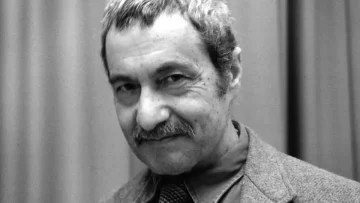
The Dissident | January 28, 2026
This week, the influential left-wing scholar Michael Parenti passed away at the age of 92.
Parenti was well known for his sharp criticism of U.S. foreign policy and U.S. imperialism throughout his life, waking up many to the reality of it and the lies used to justify it.
This is best underscored in one of his last published articles, “Ukraine and Regime Change”, which was published in the book “Flashpoint In Ukraine: How the U.S. Drive for Hegemony Risks World War III”, where he predicted to a tee what the result of the 2014 U.S. backed coup in Ukraine would be. … continue
Blog Roll
Recent Comments
eddieb on Conspiracy Denial eddieb on WEF Calls for ‘Cultural Revolu… loongtip on Trump wanted to play peacemake… Coronistan on EU member to sue bloc over ‘su… loongtip on Vicious loongtip on EU turns to India for defense… Coronistan on Donald Trump Is No Peace … seversonebcfb985d9 on French court jails pro-Palesti… eddieb on Fourteen Incredible Facts Abou… Bill Francis on European leaders’ shift in the… seversonebcfb985d9 on Villains of Judea: Philip Esfo… loongtip on Report warns that ‘Jewish terr…


 Aletho News
- Hamas never agreed to lay down arms in truce talks: Official
- Iran, China and Russia sign trilateral strategic pact
- After Years Of Denial, The IDF Admits The Gaza Health Ministry’s Numbers Are Accurate
- Riyadh and Hezbollah: A rapprochement forged in fire
- Criminal Conspiracy: How the U.S. and Israel Turned Iran into a Proving Ground for Bloody Experiments
- EU labels Iran’s Revolutionary Guard ‘terrorist organization’
- Security Guarantees Supported by Russia Agreed on in Istanbul in 2022 – Lavrov
- Russian oil major agrees sale of foreign assets to US firm
- European Union Sanctions Russian Journalists and Artists
- Fānpán – Is China Turning the Tables on the ‘Democratic’ West?
- If Americans Knew
- “Hey ChatGPT, is Israel building a concentration camp?” (spoiler: yes) – Not a ceasefire Day 111
- “The Gaza ceasefire is a minefield” – Not a ceasefire Day 110
- Israel to seek new security deal from US, official says
- Leaked “Board of Peace” Resolution Outlines U.S.-Led Plan to Rule Over Gaza
- Jonathan Greenblatt Rolls Out Plan to Activate Hispanic Evangelical Golems
- Violence against hundreds of Gazan remains to find one Israeli – Not a ceasefire Day 109
- Greenpeace Demonstrator Exposes Folly of Protest Restrictions
- From CBS to TikTok, Pro-Israel Ellison is now in the driver’s seat
- Israel pays for UK advertisements attacking Doctors Without Borders
- Israel accused of extracting billions from Gazan people to pay for their own genocide
- No Tricks Zone
- New Study Affirms Rising CO2’s Greening Impact Across India – A Region With No Net Warming In 75 Years
- Germany’s Natural Gas Crisis Escalates … One Storage Site Near Empty …Government Silent
- Polar Colding…Antarctica Saw Its Coldest October In 44 Years!
- New Study: Sea Levels Rose 20 Times The Modern Rate During The Roman Warm Period
- As German Gas Storage Dips Dangerously Low…Shortage Hardly Avoidable
- New Study: Brazil’s Relative Sea Level Was 2+ Meters Higher And SSTs 3-4°C Warmer 6000 Years Ago
- Philosopher Schopenhauer: Climate Science Certainty Stems From Stupidity, Ignorance
- New Study: Species Extinction Rates Declining Since 1980 – ‘Climate Change Is Not An Important Threat’
- Denmark Places Climate Protection Above Animal Welfare, Poisoning And Culling Cows
- New Study: Greenland Was 3-7°C Warmer And Far Less Glaciated Than Today 6000-8000 Years Ago
 Aletho News