Backing Pompeo’s ‘Gulf of Tonkin’ incident is a massive anti-Iran online propaganda campaign
By Helen Buyniski | Helen of Destroy | June 14, 2019
Twitter has declared victory over disinformation, deplatforming thousands of pro-Iranian Twitter accounts this week to coincide with US Secretary of State “Rapture Mike” Pompeo’s evidence-free declaration that Iran had attacked two oil tankers in the Gulf of Oman. But the mass deletion is merely an effort to distract from the implosion of two anti-Iran troll campaigns dedicated to smearing pro-peace Americans, both tacitly Twitter-approved. And there’s plenty more where those came from. As US media and politicians continues to hyperventilate about Russian bots, who’s the real troll-master?
Pompeo was out front with the blame hours after the attack, absent a shred of proof beyond unspecified “intelligence” and a few other dubious incidents in the Middle East that the US has previously pinned on Iran (also absent a shred of proof). But even mainstream media has initially been reluctant to take his word for it, mostly because the narrative is so improbable – Japan’s PM Shinzo Abe was in Tehran when it happened, promising to make the “utmost effort” to de-escalate tensions, when, as if on cue, one Japanese ship and another carrying Japanese cargo were hit? What are the odds?
When even CNN acknowledged that the attack “doesn’t appear to benefit any of the protagonists in the region,” and Bloomberg admitted “Iran has little to gain” from blowing up the ships of its esteemed guest, Pompeo clearly understood another route of influence was required. Who better to call in for reinforcements than Twitter, which has demonstrated time and again its willingness to serve the US’ preferred narrative with mass deplatformings? 4,779 accounts believed to be “associated or backed by Iran” were removed – less than an hour after Pompeo’s declaration of Iranian guilt – for nothing more than tweeting “global news content, often with an angle that benefited the diplomatic and geostrategic views of the Iranian state.” This was deemed “platform manipulation,” and therefore unacceptable.

One troll down, thousands more to go
Tweeting with an angle that benefits the diplomatic and geostrategic views of the American state, however, is perfectly acceptable – at least, it wasn’t Twitter that brought the “Iran Disinformation Project” crashing to a halt earlier this month. The State Department officially ended its @IranDisinfo influence operation after the social media initiative, ostensibly created to “counter Iranian propaganda,” went rogue, smearing any and all critics of Trump’s hawkish Iran policy as paid operatives of the Iranian government. Human rights activists, students, journalists, academics, even insufficiently-militant American propagandists at RFE/RL, Voice of America and other US-funded outlets were attacked by @IranDisinfo – all on the US taxpayer’s dime.
Congress only learned of the project in a closed-door hearing on Monday, when the State Department confessed the troll campaign had taken $1.5 million in taxpayers’ money to attack those same taxpayers – all in the name of promoting “freedom of expression and free access to information.” The group contracted to operate Iran Disinfo, E-Collaborative for Civic Education, is run by an Iranian immigrant and claims to focus on strengthening “civil society” and “democracy” back home, though its work is almost exclusively US-focused and its connections with pro-war think tanks like the Foundation for Defense of Democracies have alarmed congressional staffers.
“What rules are in place to prevent state-funded organization from smearing American citizens? If there wasn’t public outcry, would the Administration have suspended funding for Iran Disinfo?” Rep. Ilhan Omar (D-Minnesota) tweeted after the mea culpa meeting. While the State Department was long barred from directing government-funded propaganda at its own citizens, that rule was quietly repealed in 2013 with the passage of the Smith-Mundt Modernization Act, which gave its narrative-spinners free reign to run influence operations at home. And while the Pentagon is technically forbidden from running psychological operations (“psy-ops”) against American citizens, that rule goes out the window in case of “domestic emergencies” – and the domestic emergency declared by then-President George W. Bush days after the September 11 terror attacks remains in effect, 18 years later.

Trump’s favorite anti-Iran troll
Nor was the State Department’s trolling operation the only anti-Iran psy-op to be unmasked in recent weeks. Heshmat Alavi, a virulently anti-Iranian columnist promoted by the Trump administration and published in Forbes, the Hill, and several other outlets, was exposed by the Intercept as a propaganda construct operated by the Mojahedin-e Khalq (MEK), a controversial Iranian exile group often called a cult that has only recently lobbied its way off the US’ terror list. The MEK is notorious for buying the endorsement of American political figures, and national security adviser John Bolton, Senator Bob Menendez (D-NJ), and former New York mayor Rudy Giuliani are among those who have spoken at its events.
The fictional Heshmat Alavi’s stories were used to sell Trump’s withdrawal from the Iran deal to the Washington Post and other more reputable outlets, as well as to promote the MEK as a “main Iranian opposition group” and viable option for post-regime-change leadership of Iran – even though it is very much fringe and hated by the majority of Iranians for fighting on the side of Iraq during the Iran-Iraq war of the 1980s. Indeed, Alavi’s relentless advocacy for the MEK may have scared off a few of the sites that initially published his work – the Diplomat and the Daily Caller both quit publishing him in 2017, citing quality concerns.
None of the editors who’d published Alavi’s work had ever spoken to him or even paid him, and none could provide the Intercept with any evidence that he was not, in fact, “a persona run by a team of people from the political wing of the MEK.” Defectors confirmed that Alavi is a small part of a massive US-directed propaganda campaign.
“We were always active in making false news stories to spread to the foreign press and in Iran,” a Canadian MEK defector told the Intercept, describing a comprehensive online propaganda operation run out of the group’s former base in Iraq that sought to control the narrative about Iran on Facebook and Twitter. Alavi may be gone, his account quietly suspended by Twitter in the wake of the Intercept’s unmasking and his stories pulled from Forbes and the Diplomat, but there are more where he came from. The Intercept delivered Twitter all the evidence they needed to take down the MEK’s trolling network, a swamp of “coordinated inauthentic behavior” in which Alavi was a prominent node, but the social network sat on its hands.
Friends funding fiends
Add to this toxic US-approved stew the Israeli astroturf operation Act.IL, which in 2018 took $1.1 million from Israel’s Ministry of Strategic Affairs to troll Americans critical of Israeli policies, including its hostility toward Iran. Initially founded to combat the Iran nuclear deal, the Ministry’s mission has pivoted to combating the Boycott, Divestment and Sanctions movement, for which it receives significant US funding (Israeli Lt-Gen Gabi Ashkenazi admitted in 2012 that American taxpayers contribute more to the country’s defense budget than Israeli taxpayers). Act.IL boasts it has gotten Americans fired from their jobs, and the app encourages users to accuse American students and journalists who support BDS of antisemitism, mass-report their posts, and otherwise engage in what would be called “coordinated inauthentic behavior” if any other country did it.
Act.IL is by no means the only Israeli trolling campaign aimed at American eyeballs, either. Psy-Group, the Israeli private intelligence company that infamously pitched a social media influence operation to the Trump campaign, ran a multi-pronged online smear operation to influence a local election in California in 2017 and has pitched dozens more. The Israel on Campus Coalition attacks pro-Palestinian student activists and professors through coordinated social media campaigns, while The Israel Project operates a network of Facebook groups whose admitted purpose is to smuggle pro-Israeli propaganda into users’ newsfeeds by concealing it among bland inspirational messages.

Such clear-cut deception by state-sponsored actors is a blatant violation of Facebook’s policies as they’ve been applied to other users, but the site claims the Israeli groups are kosher. Yet of the pro-Iran accounts deleted by Twitter, one “set” included 248 accounts “engaged with discussions related to Israel specifically” – these were shut down for nothing more than their country of origin, even as inauthentic accounts run by Israel were given carte-blanche to spew propaganda. Twitter and Facebook don’t mind being weaponized in the propaganda wars, as long as they’re working for the “right” side.
As 21st century wars are fought more and more in the informational sphere, the brightly-colored propaganda posters of the previous century have been replaced with relatively sophisticated social media influence operations. What Pompeo can’t accomplish by lying to the American public, the State Department will attempt to achieve through the slow and steady drip of disinformation.
US politicians, meanwhile, remain so fixated on the “Russian trolls stole the election!” narrative they’ve been flogging for the last three years that the Senate last week unanimously passed a bill to restrict entry to any foreign national convicted of “election meddling,” a toothless piece of legislative virtue-signaling that reveals their utter disconnection from reality. It’s more than a little ironic that they’d embrace and even pay for foreign meddling as long as they believe the trolls are working for them.
As Friedrich Nietzsche said, “Whoever fights monsters should see to it that in the process he does not become a monster.” Or a troll.
[originally published in abbreviated form at RT]
Munk School of Global Affairs feeds anti-Iran propaganda

By Yves Engler · June 12, 2019
Sometimes, when you pay attention, it is easy to see how foreign policy propaganda works. Take the case of Iran.
Recently the US has choked off Iranian oil exports, listed its military a terrorist organization and dispatched an aircraft carrier and B-52 bombers to its environs to stop Iran’s “aggression”. Going along with Donald Trump’s warlike actions and rhetoric, Justin Trudeau’s government has broken a promise to restart diplomatic relations, failed to withdraw Iran from Canada’s list of state sponsors of terrorism and recently accused Tehran of destabilizing the region.
This is the context in which the Munk School of Global Affairs’ Citizen Lab released a recent report criticizing Iran. According to Citizen Lab, an Iran-aligned group dubbed Endless Mayfly impersonated major media sites, used fake Twitter accounts to spread false articles and targeted journalists with fake stories. Its report noted, “initial reporting on some of the inauthentic articles speculated that Endless Mayfly may have links to Russia; however, based on the evidence gathered from our investigation we conclude with moderate confidence that Endless Mayfly is Iran-aligned and has been operational since at least early 2016.”
The University of Toronto based lab’s accusations were picked up by dozens of media outlets around the world. A New York Times headline read: “Report Shows How a Pro-Iran Group Spread Fake News Online” while the Globe and Mail noted “New Citizen Lab report suggests Iran spreads fake news.”
But, the report’s concluding section titled “Narratives fit Iranian interests, propaganda” isn’t convincing. One reason it claims Iran was responsible for the initiative is that “framing Saudi Arabia as a creator and supporter of global Islamist terrorism is also a very common theme in Endless Mayfly content and is consistent with recent rhetoric from Iran’s top-ranking officials.” But, Iranian officials certainly aren’t the only ones who claim Saudi Arabia contributes significantly to Islamic terror.
While the media mostly covered Citizen Lab’s claims uncritically, its positions on Iran should be viewed with significant skepticism. This ‘lab’ has produced a stream of reports critical of Iran and, in fact, is part of a government funded effort to destabilize that country. In March Citizen Lab Director Ron Deibert co-authored “Censors Get Smart: Evidence from Psiphon in Iran.” Previously, Citizen Lab published “Group 5: Syria and the Iran Connection”, which described a malware operation targeting Syrian opposition figures that purportedly came from Iran. The Lab published After the Green Movement: Internet Controls in Iran, 2009-2012 and in 2015 they detailed hacking of Iranian dissidents. While Citizen Lab carefully avoided naming a culprit, their press release hyped the matter and a number of media reports implied Iranian authorities were responsible.
Deibert is a regular at anti-Iranian events. He spoke at a Toronto International Film Festival screening of a movie about the 2009 Green Revolution in Iran and a 2012 Walrus article described a “network of local Farsi speakers linked to Deibert and Psiphon.”
With early financial support from the Ford Foundation, Donner Canadian Foundation and Open Society Institute, Citizen Lab developed software to bypass government censors. It worked with Voice of America, Radio Free Europe and Radio Farda in Iran to disseminate its Psiphon technology to Iranian dissidents. A 2018 Vice story titled “This App Is Helping Iranians Beat Tehran’s Internet Censorship” described Psiphon’s growth in Iran. It noted, “the lab, and the school, has spent years devising various ways to improve civic engagement in Iran, especially online, with some financial support from the Canadian government.”
The Munk School of Global Affairs joined the Stephen Harper Conservatives’ low-level war against Iran. After severing diplomatic ties and designating Iran a state sponsor of terrorism in 2012, Foreign Affairs ploughed $250,000 into the Munk School’s Global Dialogue on the Future of Iran. The aim of the initiative was to foment opposition to the regime and help connect dissidents inside and outside Iran. Employing cutting-edge Internet strategies, the Iran Dialogue was launched at a two-day conference kicked off by foreign minister John Baird. Some Iranian Canadians criticized the 2013 Global Dialogue on Iran. In a letter to Munk School head Janice Stein, who was awarded an honorary doctorate from Hebrew University “in tribute to her unwavering devotion to Israel”, the president of the Iranian Canadian Community Council Niaz Salimi wrote: “Conspicuously absent from the event were experts, academics, political activists, students, bloggers, journalists and members of the Iranian diaspora (including those of the Iranian-Canadian community) whose views on Iran do not fully concur with the positions of the Harper government.”
The Munk School has been a hub of anti-Iranian activity. A senior research fellow until recently, Mark Dubowitz was dubbed “The Man Who Fights Iran” by Ynet, Israel’s largest English language news site. Alongside his position at the Munk School, Dubowitz was executive director of the extremist pro-Israel Foundation for Defense of Democracies where he led its campaign against the Obama administration’s Iran nuclear deal. In 2011 Dubowitz said, “the best way [to end Iran’s nuclear program] is to work toward changing the regime.”
Expanding the Global Dialogue on the Future of Iran, Foreign Affairs gave the Munk School $9 million in 2015 to establish the Digital Public Square project. The federal support “will enable the Munk School to create our new Digital Public Square, a square designed for citizens who cannot come together physically to exchange ideas about the future of their country,” Munk School head Janice Stein said. The countries cited were Iran, Syria, Iraq and Russia. There was no mention of employing digital technologies to undermine online censorship in equally, or more, repressive allies such as Rwanda, Jordan, Honduras or Saudi Arabia.
This is one-way Canadian propaganda works: Establish who your enemies are — generally defined by big corporations, rich people and whoever is in power in Washington — attempt to destabilize their “regimes”, then accuse their governments of interfering in your affairs.
Citizen Lab’s recent report criticizing Iran is part of a government funded effort to demonize that country, which could be a step towards a military assault.
Author: Absence of Syrian Christian Issue in Western Media Carefully Planned
Sputnik – June 12, 2019
The US is ready to help Italy in Libya and on other fronts. But in return, they want to see an Italian mission in Syria, Senator Lindsey Graham told Corriere della Sera newspaper and then confirmed it officially through diplomatic channels. The author Fulvio Scaglione explained what the Americans are plans for the Middle East.
Sputnik: The United States wants to see an Italian military contingent in Syria, but Rome has yet to give the US an answer. How would you comment on this US initiative?
Fulvio Scaglione: The demands of the Americans have no practical justification. A couple of weeks ago, the Pentagon proposed and then withdrew the idea of deploying another 120,000 troops to the Middle East. The United States has military bases in 13 Middle Eastern countries, where 54,000 soldiers are stationed, their number increased by 30% from 2017 to 2018. It is obvious that Americans absolutely don’t need Italian soldiers in the region.The reason for this is purely political, the United States wants Italy to join their next project to restructure the Middle East. They justify their presence in the northeastern part of Syria two ways: the fear of the resurgence of Daesh*; and the escalation of a conflict with the Kurds to the point of an intensification of conflict between Turkey and Syria, which initially had the Kurds and the Arab militias fighting against Daesh. And the first reason is fake, because Daesh’s “return” or “non-return” doesn’t depend at all on the presence of US troops in northeastern Syria, but on the Persian Gulf oil monarchies — US allies, who decide whether Daesh or Al-Qaeda will return make a come back or not. It is not clear why Italy should get into this mess.
Sputnik: Politicians in Italy now practically don’t speak about the Syrian crisis at all. What should Rome do in line with its own national interests?
Fulvio Scaglione: The US is now trying to establish itself again as a dominant global power, and they are doing this quite radically, confronting China, Russia, Europe, Latin America, and more recently Mexico, so they’re doing it from all directions. The EU is currently experiencing economic difficulties and doesn’t have a unified position on foreign policy, and in this situation, Italy cannot face the United States alone.Sputnik: On June 9 the Italian media wrote about the death of a football player, “a symbol of revolution against Assad.” At the same time, the problem of the persecution of Christians in Syria has almost never been raised, why?
Fulvio Scaglione: This news received much more publicity than, for example, an episode when in the Idlib area, Christian teenagers became victims (were killed by a) of a rocket launched by rebels. This has been going on for seven or eight years. In my opinion, the absence of the Syrian Christian issue from Western media has been carefully planned. I write about this in my book “Syria. Christians who went to war.”
Syrian Christians constantly tried to convey to the West their vision of the situation that differs from what the politically correct West wants to see. They tried to tell us that the situation with the uprising in Syria, that also had its reasons and motivation, was not the way it was presented, and called attention to the fact that Christians are at risk of being exterminated, and the protection of Christians in the Middle East should be in the spotlight.
No one wants to admit that in “liberated” Iraq, Christians are on the verge of extinction, their numbers have fallen to less than a fifth compared to 2003, before the Anglo-American invasion.The Syrian authorities will be criticized forever, called authoritarian and that’s what is wanted, but what you really need to worry about is the religious minorities that live in the country. After 8 years of war, the
Sputnik: How important is the issue of Christians in Syria for all of us?
Fulvio Scaglione: I think that the presence of Christians in the Middle East is a very important topic, even though there are very few of them in some places. In Syria, before the start of the war, Christians made up 10% of the population; in Egypt, they make up 10%; in Lebanon — 30%. In some countries, there are not so many Christians, but their presence plays an important role: they are unarmed, but widely represented in the life of society. For example, if Christian schools are closed in Israel or Palestine, this will lead to a crisis in the educational system in these countries. The same can be said about Syria.
Another important factor is the presence of Christians in the Middle East as a third element that ensures a balance in society: in the Middle East there are Sunni Muslims; Shiite Muslims, as well as Christians. The presence of Christians there guarantees pluralism. In countries such as Iraq, where Christians, as part of society, are practically not represented, Shiites and Sunnis confront each other, which sometimes leads to very serious conflicts.
Syria has Christian DNA. Christianity, as we know it today, first appeared in Syria. It was born in Jerusalem and Palestine, but it was in Syria that it took shape as it is in its current form.
Russian Aggression Comes From Media Racism
By Tim Kirby | Strategic Culture Foundation | June 10, 2019
As an American wouldn’t you want to live in a country with a powerful military that can prevent any invasion and backs up your foreign policy with some some muscle? Wouldn’t you want to make sure that America remains a cohesive nation that shuts down any attempts at succession and asserts a firm military, governmental and cultural presence all over its own territory? As an American wouldn’t you feel that America has the right to try to get back regions that it controlled for generations filled with Americans cut off from the bulk of the US if need be? And finally wouldn’t you think that it is fine for the USA to resist economic, military and cultural pressure from an aggressive foreign power while developing itself?
Unless you are some sort of self-hating SJW zealot then all of the above should seem perfectly reasonable to you… because it is. It is reasonable not just for America but for any great human civilization on our planet. So the question is why is it that when Russians follow these same normal patterns of behavior they are labeled as “aggression” and somehow immediately become horrible and unacceptable.
The Russian aggression trope has come up again as CBS brutally shoehorned the expression into the title of one of their videos. In the piece Senator Joe Manchin comments on a few different topics but the main one was his tour of Arctic nations and the climate issues related to them. All he had to say about Russia is that they are really putting their chips down on the Arctic and have invested massive amounts of money and resources into the region.
The topic of Russia came up after the presenter asked Mr. Manchin a bizarre conspiracy theory site style question related to Russians doing major nuclear tests in the Arctic for no clear reason other than Russians do bad things by default according to CBS’s editorial line. The presenter did not state where she got this nugget of fake news from, she just boldly asserted they are nuking snow and polar bears as Russians are known to do.
Thankfully Mr. Manchin bluntly said “no” ignoring this mad question to immediately go on to layout his opinion that the US could be really falling behind in terms of the Arctic due to the Russian surge in the great white north and that the US should be aware of this and try to catch up. He feels that America needs to catch up, overtake, or offset the Russians in the Arctic.
This is a totally reasonable respectable and patriotic stance to have, which is probably why CBS had to force “aggression” into the title of the video. If all American politicians had the same rational view of competition between nations that Mr. Manchin does, then the pointless tension between the US and Russia would probably be very nominal right now.
Perhaps it is part of human nature to create lots of double standards in favor of one’s own group. Every political movement and every nation seems to forgive the sins of its own guys when they do things “for the greater good” and demonizes anyone who tries to stop them. Our soldiers are heroes, their soldiers are monsters, our way of life is good for everyone, their way of life is a threat to the world etc. This aspect of tribal mentality is part of who we are and something we need to be much more mindful of in our 21st century nuclear standoff, because the worst that could happen from this type of rhetoric is no longer just some kind of pogrom but total nuclear annihilation.
If the Pro-Diversity machine in the media would wake up to the fact that the geopolitical chessboard, is, was and always will be “diverse” and that all players have similar goals with similar means that would really help the entire world move forward and keep us all very far away from the potential of a WWIII nuclear scenario. This “good guy vs. bad guy” racist narrative that Russia is on the bad end is propping up an ultimately artificial conflict with the US. It is time to acknowledge the reality that there are numerous cultures on Earth that want to be powerful and prosperous and just because they look different from us doesn’t make them any more or less capable of doing great evil.
Cuban Aid: What HBO Didn’t Mention In Their ‘Chernobyl’ Series
teleSUR | June 9, 2019
HBO’s ‘Chernobyl’ has been criticised for being historically inaccurate, but on Sunday, Cuba pointed out that their crucial role in providing free treatment to the victims is being airbrushed out of history.
The recent HBO series takes a look at the events of the 1986 tragedy in Chernobyl, where an explosion at a nuclear facility in the former USSR caused huge damage in loss of life and radiation poisoning. The series, featuring entirely British actors, has been accused of being an anti-soviet smear piece aimed at portraying the Soviets as selfish and incompetent, one Russian outlet Rossiyskaya Gazeta said.
“The people are depicted as drunken lowlifes, to the extent that you find in some Hollywood movies, where Slavs show up as these disgusting, repulsive characters.”
Furthermore, Russian media has accused the show of multiple historical inaccuracies, journalist Alexander Kots says that a helicopter crash that appears in the series in fact happened at an entirely different time, and that the way the treatment of miners is depicted has no basis in historical fact.
However, Cuban media has now waded into the row, accusing HBO of airbrushing the socialist island’s role in providing free treatment to those affected by the disaster. Cuban outlet Cubadebate laid out the extent to which Cuba helped Chernobyl victims.
At the beaches of Tarara, 30 kilometres from Havana, Cuba had converted an elite holiday village into an enormous health center for children who had been affected by the nuclear disaster.
The health complex contained hospitals, schools and recreational areas, where children could recover in a holistic setting. Cubadebate reported on Sunday that over 25,000 children were treated for radiation poisoning between 1990 and 2011, mainly for cancer, deformations, muscle atrophy and other conditions related to radiation.
The comprehensive treatment that was provided also fell within Cuba’s ‘special period’ of intense economic hardship that followed the collapse of the Soviet Union, leaving Cuba without its main export customer.
Despite the economic difficulties of those years, the treatment center in Tarara continued to operate. One Cuban doctor spoke to teleSUR about the programme in 2017, saying, “Although Cuba went through economically difficult times, our state continued to offer specialized treatment to minors, fulfilling a commitment of solidarity.”
Glacier National Park Quietly Removes Its ‘Gone by 2020’ Signs
Glaciers Appear to be Growing, not Melting in Recent Years
By Roger I. Roots, J.D., Ph.D.,
Founder, Lysander Spooner University
May 30, 2019. St. Mary, Montana. Officials at Glacier National Park (GNP) have begun quietly removing and altering signs and government literature which told visitors that the Park’s glaciers were all expected to disappear by either 2020 or 2030.
In recent years the National Park Service prominently featured brochures, signs and films which boldly proclaimed that all glaciers at GNP were melting away rapidly. But now officials at GNP seem to be scrambling to hide or replace their previous hysterical claims while avoiding any notice to the public that the claims were inaccurate. Teams from Lysander Spooner University visiting the Park each September have noted that GNP’s most famous glaciers such as the Grinnell Glacier and the Jackson Glacier appear to have been growing—not shrinking—since about 2010. (The Jackson Glacier—easily seen from the Going-To-The-Sun Highway—may have grown as much as 25% or more over the past decade.)
The centerpiece of the visitor center at St. Mary near the east boundary is a large three-dimensional diorama showing lights going out as the glaciers disappear. Visitors press a button to see the diorama lit up like a Christmas tree in 1850, then showing fewer and fewer lights until the diorama goes completely dark. As recently as September 2018 the diorama displayed a sign saying GNP’s glaciers were expected to disappear completely by 2020.
Video of the diorama two years ago.
But at some point during this past winter (as the visitor center was closed to the public), workers replaced the diorama’s ‘gone by 2020’ engraving with a new sign indicating the glaciers will disappear in “future generations.”
Almost everywhere, the Park’s specific claims of impending glacier disappearance have been replaced with more nuanced messaging indicating that everyone agrees that the glaciers are melting. Some signs indicate that glacial melt is “accelerating.”
A common trick used by the National Park Service at GNP is to display old black-and-white photos of glaciers from bygone years (say, “1922”) next to photos of the same glaciers taken in more recent years showing the glaciers much diminished (say, “2006”). Anyone familiar with glaciers in the northern Rockies knows that glaciers tend to grow for nine months each winter and melt for three months each summer. Thus, such photo displays without precise calendar dates may be highly deceptive.
Last year the Park Service quietly removed its two large steel trash cans at the Many Glacier Hotel which depicted “before and after” engravings of the Grinnell Glacier in 1910 and 2009. The steel carvings indicated that the Glacier had shrunk significantly between the two dates. But a viral video published on Wattsupwiththat.com showed that the Grinnell Glacier appears to be slightly larger than in 2009.
The ‘gone by 2020’ claims were repeated in the New York Times, National Geographic, and other international news sources. But no mainstream news outlet has done any meaningful reporting regarding the apparent stabilization and recovery of the glaciers in GNP over the past decade. Even local Montana news sources such as The Missoulian, Billings Gazette and Bozeman Daily Chronicle have remained utterly silent regarding this story.
(Note that since September 2015 the author has offered to bet anyone $5,000 that GNP’s glaciers will still exist in 2030, in contradiction to the reported scientific consensus. To this day no one has taken me up on my offer. –R.R.)
Heat Wave Hysteria Coming Soon
By Donna Laframboise | Big Picture News | June 5, 2019

US data beginning in 1985, shared by Bjorn Lomborg. Rising blue line: percentage of deaths attributable to the cold. Orange line: percentage attributable to heat.
In many parts of the world, we’ve just endured an extra snowy winter followed by a cool, delayed spring. But wait for it. When hotter weather arrives it will take no time at all for media outlets to start ‘educating’ us about heat waves and dangerous climate change.
In anticipation of those ‘news’ stories, here’s an inoculation: Cold weather kills far more people than does hot weather. If we truly care about weather-related suffering and sorrow, heat waves should be near the bottom of our priority list.
On his Facebook page, Bjorn Lomborg is calling our attention to a research paper published last year in Environment International. It contains marvelous news. In 7 out of 10 countries studied, heat-related deaths have decreased since 1985.
The researchers conclude that improved health care and infrastructure (aka increased access to air conditioning), have made us less likely to die from the heat. Normal, everyday upgrades are outpacing heat-related risks. As living standards improve, higher temperatures become less life threatening.
But the news isn’t so rosy on the other side of the ledger, where most deaths connected to extreme temperatures actually occur. Depending on the country and the time frame under discussion, the ratio of cold deaths to heat deaths varies. Since Table 3 of this study includes data for all 10 countries for the years 2000-2004, the numbers below are pulled from that column.
During this five-year period no deaths in Ireland were linked to heat, but 9.34% of all deaths were attributed to cold temperatures. (Compared to the 1980s, cold-related deaths in Ireland have fallen dramatically.)
The big picture is that for every person who dies during a heat wave, many more quietly perish from the cold at other times of the year. Here’s the ratio of cold deaths to heat deaths in the locales examined by this study:
Australia: 11:1
Brazil: 6:1
Canada: 13:1
Ireland: cold caused 9.34% of all deaths, heat caused 0%
Japan: 27:1
South Korea: 37:1
Spain: 4:1
Switzerland: 1.5: 1
UK: 28:1
USA: 25:1
When the next heat wave hits, don’t expect journalists and weather broadcasters to provide you with all the relevant facts. In their zeal to hype global warming, they will systematically misinform you. They will encourage you to believe things about weather-related deaths that are the opposite of the truth.
The New York Times Tries to Get Itself Out of the Duckgate Hole Using a Spade
By Rob Slane | The Blog Mire | June 5, 2019
A number of people, including myself, wrote to the New York Times journalist, Julian Barnes, to point out that the piece he and his colleague, Adam Goldman, published on 16th April 2019 about the CIA Director, Gina Haspel, contained a part which unwittingly showed that she had misled President Trump into expelling 60 Russian diplomats in March 2018. Here were the paragraphs of interest:
“During the discussion, Ms. Haspel, then deputy C.I.A. director, turned toward Mr. Trump. She outlined possible responses in a quiet but firm voice, then leaned forward and told the president that the “strong option” was to expel 60 diplomats.
To persuade Mr. Trump, according to people briefed on the conversation, officials including Ms. Haspel also tried to show him that Mr. Skripal and his daughter were not the only victims of Russia’s attack.
Ms. Haspel showed pictures the British government had supplied her of young children hospitalized after being sickened by the Novichok nerve agent that poisoned the Skripals. She then showed a photograph of ducks that British officials said were inadvertently killed by the sloppy work of the Russian operatives.
Ms. Haspel was not the first to use emotional images to appeal to the president, but pairing it with her hard-nosed realism proved effective: Mr. Trump fixated on the pictures of the sickened children and the dead ducks. At the end of the briefing, he embraced the strong option.
The outcome was an example, officials said, of how Ms. Haspel is one of the few people who can get Mr. Trump to shift position based on new information.”
I pointed out to the authors in an (unanswered) email that this was an extraordinary claim, because no children became sick due to poisoning by a toxic chemical, and nor did any ducks die. And so unless they were prepared to correct or retract their piece, there could only be two possibilities:
- Ms Haspel unwittingly showed false images to no less a person than the President of the United States, supplied to her by the British Government who knew them to be false, which persuaded him to embrace the “strong option”.
- Ms Haspel knowingly showed false images to no less a person than the President of the United States, which persuaded him to embrace the “strong option”.
It seems that the two journalists have not ignored mine and the many other emails they received about this issue, and they have today corrected their story. The paragraphs of interest now read as follows:
“During the discussion, Ms. Haspel, then deputy C.I.A. director, turned toward Mr. Trump. She outlined possible responses in a quiet but firm voice, then leaned forward and told the president that the “strong option” was to expel 60 diplomats.
To persuade Mr. Trump, according to people briefed on the conversation, officials including Ms. Haspel tried to demonstrate the dangers of using a nerve agent like Novichok in a populated area. Ms. Haspel showed pictures from other nerve agent attacks that showed their effects on people.
The British government had told Trump administration officials about early intelligence reports that said children were sickened and ducks were inadvertently killed by the sloppy work of the Russian operatives.
The information was based on early reporting, and Trump administration officials had requested more details about the children and ducks, a person familiar with the intelligence said, though Ms. Haspel did not present that information to the president. After this article was published, local health officials in Britain said that no children were harmed.
Ms. Haspel was not the first to use emotional appeals to the president. She and Mr. Pompeo showed Mr. Trump images of children sickened by chemical weapons attacks in Syria, in an earlier presentation. But Ms. Haspel’s strategy in the March briefing was to pair emotional appeals with her hard-nosed realism and it proved effective. At the end of the briefing, Mr. Trump embraced the strong option. [my emphasis]”
Below is Mr Barnes’s explanation on Twitter for the error and the correction:
“I made a significant error in my April 16 profile of Gina Haspel. It took a while to figure out where I went wrong. Initially, I reported that in March 2018, Gina Haspel, then the future CIA director, briefed President Trump about the Skirpal nerve agent attack, showing pictures of sickened children and dead ducks. That was wrong. There are—so far as we know—no pictures of dead ducks or sickened kids. Haspel did show pictures to Trump, but they were about the effects of nerve agents in general, they were not specific to the attack in the UK.
British officials did brief the Trump administration about early reports of dead ducks & sick children. Officials sought more info, believing such intel would be persuasive to Trump, who was skeptical of the proposed expulsion of 60 Russians in response to the attack. But Haspel did not brief the president on that intelligence.
Local UK health officials deny that any animals or children were sickened, as British officials pointed out soon after our story published. (In response to good reporting by @haynesdeborah, @guardian and others.) (link: https://www.theguardian.com/uk-news/2019/apr/18/no-children-ducks-harmed-novichok-attack-wiltshire-health-officials)
The intelligence about the ducks and children were based on an early intelligence report, according to people familiar with the matter. The intelligence was presented to the US in an effort to share all that was known, not to deceive the Trump administration. This correction was delayed because conducting the research to figure out what I got wrong, how I got it wrong and what was the correct information took time.
I regret the error and offer my apology. I strive to get information right the first time. That is what subscribers pay for. But when I get something wrong, I fix it.”
Here is my response on Twitter to Mr Barnes:
Dear Julian,
Thanks for taking the time to correct your report. However, it unfortunately raises just as many questions as the initial report.
Firstly, you say British officials briefed the Trump administration about early reports of dead ducks & sick children.
Really? Which early reports were these? There were none. The parents of the children who had tests to see if they had been contaminated were only contacted 2 weeks after the incident, and none of them was found to be ill. This is the first report on it, and it confirms the children were given the all clear. And there were never any dead ducks in Salisbury nor any reports of them.
Secondly, you say that “Officials sought more info, believing such intel would be persuasive to Trump, who was skeptical of the proposed expulsion of 60 Russians in response to the attack.” But the fact is that any further (truthful) info could not have persuaded Mr Trump, for the simple reason that no other people were harmed in Salisbury than the three people who were initially harmed. How, then, was he persuaded?
Thirdly, you presumably give the answer to the second point, when you say “Haspel did show pictures to Trump, but they were about the effects of nerve agents in general, they were not specific to the attack in the UK.” So in other words, Ms Haspel couldn’t show any pictures from Salisbury to persuade the sceptical Mr Trump, because there weren’t any to show. So she showed him pictures from other nerve agent attacks, which were presumably sufficiently bad to turn him from his scepticism, to expelling 60 diplomats. Even though nothing like that happened in Salisbury.
Thank you for clarifying that Ms Haspel did indeed wilfully mislead the President.”
Despite NYT’s correction, the question it poses is this: Which is worse:
- The deputy director of the CIA showing a sceptical President some fake pictures of dead ducks and sick children to persuade him to take the strongest action?
- Or the deputy director of the CIA, knowing full well that there weren’t any pictures of the effects of nerve agent on the population of Salisbury because only three people were ever affected, showing some pictures of actual nerve agent victims who were never anywhere near Salisbury to persuade him to take the strongest action?
The answer is they’re both as bad. In both scenarios, an utterly false picture of what happened in Salisbury was given to the sceptical President to twist his arm into taking action he didn’t want to take.
As they say, when in a hole, better stop digging.
Russia denies withdrawing specialists from Venezuela, says cooperation is set to expand
RT | June 4, 2019
Reports of a mass exodus of Russian military and technical specialists from Venezuela are not true, Russian officials have said. Cooperation with Caracas is going on as usual and is set to expand, they said.
In a Sunday story, the Wall Street Journal reported that Russian military and technical personnel had left Venezuela en-masse, with the numbers diminishing from some 1,000 to several dozens. The newspaper explained the alleged exodus with a lack of contracts and the fact that Moscow supposedly realized that Caracas lacks any funds to pay for the services of the Russian hi-tech and military hardware corporation Rostec.
On Monday, the corporation itself dismissed the report.
“The figures provided in the piece by the Wall Street Journal have been exaggerated tens of times. The numbers of our staff there has remained the same for many years,” the press service of Rostec stated.
The corporation explained that aside from having a permanent representation, it sends groups of technical specialists “from time to time” to Venezuela to perform maintenance and repairs of equipment supplied by Russia. “Just recently, the maintenance of a batch of aircraft was completed,” the press service added.
Russia’s state military hardware exporter, Rosoboronexport, on its part, said that Moscow and Caracas are actually planning to increase cooperation. Russian companies “remain committed to deepening cooperation with the Ministry of Defense and other departments of the Venezuelan government,” the exporter stated.
Shortly after the dismissal, US President Donald Trump announced on Twitter that Russia had “removed most of their people” from Venezuela. It was not immediately clear what he meant, since apart from the Russian companies’ denial, there has been no official word from Moscow so far.
While military and technical cooperation between Russia and Venezuela has been going on for years, it made a lot of fuss lately amid the US-backed attempt to oust country’s President Nicolas Maduro and install self-styled ‘interim-president’ Juan Guaido instead. Russia’s modest military activity in Venezuela caught the eye of American politicians and media, sparking demands to Moscow to “get out” of what Washington believes to be its own “backyard.”
Qatar rejects anti-Iran statements of Mecca summits
Press TV – June 3, 2019
Qatar says it rejects the anti-Iran statements of the recent Mecca summits as they had been prepared in advance without consulting Doha.
“The statements of the [Persian] Gulf and Arab summits were ready in advance and we were not consulted on them,” Mohammed bin Abdulrahman Al Thani told the Al-Araby broadcaster.
“Qatar has reservations on the Arab and [Persian] Gulf summits because some of their terms are contrary to Doha’s foreign policy,” he added.
“We hoped the Mecca summits would lay the groundwork for dialogue to reduce tensions with Iran,” the top diplomat said in comments reposted on Twitter by his ministry.
“The Mecca summit ignored the important issues in the region, such as the Palestine issue and the war in Libya and Yemen,” he went on to say.
Qatar is not the first Arab state to reject the final statements of the emergency meetings in Mecca. Following the talks, Iraq also opposed the communiqué issued by the Arab participants.
Iraq, which maintains close ties with neighboring Iran and has strong ties with Washington as well, objected to the communiqué, which required “non-interference in other countries” as a pre-condition for cooperation with Tehran.
Iraqi President Barham Salih asked the gathering to support his country’s stability, arguing that rising tensions with Iran could cause war. He voiced hope that Iran’s security would not be targeted.
“We are watching before our eyes the escalation of a regional and international crisis which can turn into war that will engulf all. If the crisis is not managed well, then we will be faced with the danger of a regional and international confrontation which will bring tragedy to our countries,” Salih said.
“The Islamic Republic of Iran is a Muslim country that is a neighbor to Iraq and Arabs. It is certain that we do not wish the security of Iran to be targeted. We share a common border that is 1,400 km long and a long history and relations, and it is also certain that the security of a fellow Islamic country is in the interest of Arab and Islamic countries. The region needs stability based on a mechanism of joint security that guarantees non-interference in internal affairs and the rejection of violence and extremism,” he added.
The statements mainly cited concerns about the recent sabotage attacks against several ships off the UAE. Both Saudi and Emirati officials have blamed the mysterious “sabotage” attacks on Iran while Iran has strongly denied any involvement, and offered to sign non-aggression pacts with the Persian Gulf Arab states.
Related:
Contracts Reveal For First Time How DEA Exercises Control Over Television, Film Productions
By Tom Secker | ShadowProof | May 28, 2019
Nearly 200 pages of Drug Enforcement Administration contracts with producers were obtained through the Freedom of Information Act. They show for the first time how the agency interacts with television and film productions.
The Drug Enforcement Administration (DEA) is quite active in the entertainment industry. It exercises stringent control over how the agency is represented in documentaries, reality shows, and dramas.
With several projects, the DEA carefully reviews their own files to pick out select cases that made them look good, which then form the basis for either fictional or factual productions.
The contracts [PDF] cover 2011 to 2017. Over that time period, DEA supported dozens of projects, including “Cops and Coyotes” and multiple episodes of “Drugs Inc.” and “Gangsters: America’s Most Evil.” They support the fictional drugs drama “Pure,” too.
Other supported projects were “Lethal Cargo,” “The Notorious Mr. Bout,” and “Declassified: Untold Stories of American Spies.” They even worked with the U.S. government-funded Middle East Broadcasting Network for a program that featured the DEA museum.
Strangely absent from the contracts are “Narcos” and “Breaking Bad,” despite various reports that both shows employed DEA employees as consultants.
In response to a separate FOIA request asking about their input on “Breaking Bad,” the DEA claimed they couldn’t find any records whatsoever. The released documents also do not include “Finding Escobar’s Millions” and “Battle Zone: The Origins of Sicario,” even though the DEA was credited on both documentaries.
The contracts show the near-total control the DEA wields over productions they assist.
Some producers are given permission to embed film crews within DEA Enforcement Groups but only under the provision that “DEA supervisors on the scene shall have the final say in approving any filming during real-time law enforcement operations.”
The production support offered by the DEA is completely free. It costs the producers nothing and ranges from granting permission to use the DEA name and logo to filming at DEA installations and interviewing their agents.
Some of the DEA’s restrictions apply to certain projects. The producers of “Canada: Drug Kingpin” were told they weren’t allowed to “accompany DEA employees to Canadian-U.S. border ‘hot spots’ known for the transit of illicit substances.”
The makers of “Lethal Cargo” were only permitted to interview one DEA employee, and the contract specifies several topics that he was not allowed to talk about. The forbidden topics included, “Information relating to the production and consumption status of a country and that country’s law enforcement approach to drug trafficking,” “the port of Valencia as an ingress point for cocaine,” and “the Nigerian mafia as couriers.”
In more recent years, with marijuana legalization a growing issue and reality, the DEA began including a clause saying that any interviews with “DEA personnel regarding marijuana operations or related issues” had to be approved in advance by the agency’s chief of congressional and public affairs.
On all supported projects, the producers must grant a “senior DEA official” control over the final edit, to ensure a project doesn’t compromise an “ongoing investigation or prosecution, investigative practices or techniques, or the identities of confidential sources or DEA special agent or task force officers.”
The official “may make that determination at any time during the editing and production process,” and the “producer agrees to abide by DEA requests to modify, delete or otherwise change” anything that is deemed objectionable.
While some of these restrictions are reasonable and protect the rights of those accused of crimes, the DEA-imposed limits also ensure they are depicted in a positive light.
Shadowproof spoke with author Doug Valentine, who has written extensively on the DEA’s culture and corruption. “Positive P.R. is more important [to the DEA] than accurate portrayal,” he said.
The contracts list several specific scenarios that cannot be shown under any circumstances. They include, “Recording of any shooting incident, regardless of who fires,” “filming of suspect interrogations,” “filming where an individual’s communications are being monitored in any fashion,” and “footage that exposes DEA’s confidential or sensitive investigative techniques.”
As a consequence of these restrictions, the productions all maintain the same basic message—that the DEA are heroes, who are fighting evil people who threaten American society.
“It’s propaganda B.S. pure and simple,” Valentine said. “I talk a lot about the myth of the hero. They want to portray themselves as heroes on a noble cause. They demand total control over the narrative.”
Asked whether these shows were inaccurate representations of the real relationships between DEA agents and drug dealers, Valentine replied, “Depends on the agent and the trafficker, but the trafficker can never arrest the agent. So agents have the power of the law. Where it gets sticky is with informants and special hires and undercover ops. CIA stuff.”
In addition to asserting control over the final edit of a production, the documents have clauses saying the DEA “reserves the right to perform background checks and, if necessary, deny access to those individuals who DEA believes may compromise DEA operations. DEA also reserves the right to limit the number of representatives who may have access to DEA.”
Like the FBI, the DEA is not just concerned with the content of the productions they support but also with the backgrounds of the people producing them.
“It’s another way of assuring control. DEA is obsessed with control and being the superior force,” Valentine added.
Further demonstrating the DEA’s obsession with control, the contracts require the producers to destroy any materials provided by the DEA (photos, documents, statistics, b-roll footage and so on) as soon as the production is released or broadcast.
The producers must provide the DEA with a DVD copy and a non-exclusive license to use the resulting film or TV show for the purposes of “recruiting, training, professional development, community relations, or demand reduction efforts.”
Featured Video
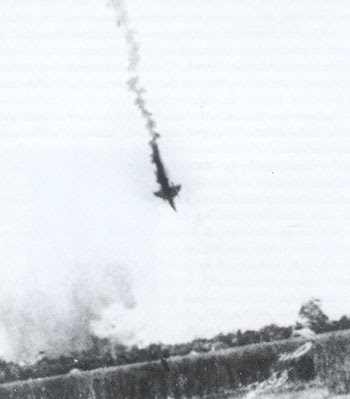
The Failed Air War Over Vietnam
or go to
Aletho News Archives – Video-Images
From the Archives
USS Liberty Massacre: A Pivotal Moment in the Hostile Takeover of America
By Kevin Barrett | Crescent | Dhu al-Qa’dah 24, 1445
In corporate America, hostile takeovers are commonplace. They occur when an aggressor—a larger corporation or rich individuals—seizes control of a smaller corporation without asking permission.
What few recognize is that the United States itself has been subjected to a hostile takeover. Since the aggressor, the illegitimate settler colony known as “Israel,” is much smaller than the US, the takeover has necessarily been surreptitious.
As of June, 2024, Israel’s gradual takeover of the US has become obvious and undeniable—a proverbial “elephant in the living room.” … continue
Blog Roll
 Aletho News
- Leaders Condemn Ansarallah Attack on Saudi Arabia While Ignoring Illegal War Against Yemen
- Leaked: Britain’s Covert Iraqi Psyops Network
- Yemeni Armed Forces Warn Airlines Against Using Saudi Airports, Exempt Mecca and Medina
- Iran security chief says powers greater than US tried to conquer Iran but ended in ‘dustbin of history’
- Europe’s mounting social chaos… chickens coming home to roost for proxy war against Russia
- US-Russia Diesel Deal Becomes Massive Defeat for Ukraine
- Hormuz and the Looming Economic Catastrophe
- Dhubab offensive, media blitz and the rapid unraveling of Saudi-backed coalition’s new gambit
- Putin Conveys to Trump Iran’s Vision on Possible Conflict Resolution – Kremlin
- The Search for Truth: Charlie Kirk’s Assassination One Year Later
- If Americans Knew
- For three years, Israel has killed a child in Gaza every 71 minutes – Daily Update
- Israeli forces kill another child in Gaza – Daily Update
- Gaza ceasefire exists in name only, say more than 100 organizations
- Nearly 2 Million in Gaza Need Urgent Shelter Assistance as Winter Looms: IOM Chief Warns
- Suppressing Palestinian resistance: US charity under fire for AI monitoring of Gaza classrooms
- Thousands Are Held in Israeli Torture Camps. This Is What Happens Inside
- Israel puts Gaza’s sick, injured, newborn in peril – Daily Update
- Report claimed Mark Levin used by Israeli government to influence Trump
- Over 2,000 Gazans have died awaiting medical evacuation amid Israel’s continued siege
- How a U.S. Diplomat Suppressed and Altered Reports Critical of Israel
- No Tricks Zone
- Germany’s Green Energy Debacle: High Energy Costs Force Kahla Porzellan to Close After 182 Years!
- New Study: 50 Years Of The Most Aggressive ‘Net Zero’ Policies Can Only Affect The Global Climate By 0.03°C
- US September “Heat” Was No Record…Many Records Set Decades Ago
- Latest European Green Energy Debacle; Portugal’s Largest Flagship Solar Park Insolvent!
- Green Energy Debacle: German Expert Professor Fritz Vahrenholt Warns Of Severe Economic And Social Consequences
- Two More Paleo Reconstructions Affirm Meters-Higher Sea Levels Across Ireland, Brazil 7000-6000 Years Ago
- New Study: Earth And Venus Surface Warmth Largely Explained By Convection And Lapse Rate, Not CO2 Or Radiation
- 2025 Nature Paper Claiming Worsening Global Drought Gets RETRACTED …Heavily Flawed
- New Study: ‘Global Drought Shows No Detectable Recent Acceleration Under Climate Warming’
- Economic Masterminds: German Socialists Suggest Taxing Productivity Gains Stemming From Using AI

