Will ‘Big Lies’ About Syria’s Chemical Weapons Spark a New US War?

«Sentence first, verdict afterwards», cries out the MSM Queen of Hearts: «Off with his head!»
By Michael Jabara CARLEY | Strategic Culture Foundation | 12.04.2017
In late February 2017, the Russian Federation and China vetoed a joint, US, French and British resolution to impose sanctions on Syria over allegations of chemical weapons use. I wondered at the time why this issue was coming back. In 2014, on Russian initiative the Syrian government agreed to give up its chemical weapons stocks under international observation and with international assistance. Subsequently, the UN confirmed, and the United States accepted, that the Syrian government had no further chemical weapons stocks or facilities for producing them. The Syrian government has always denied using chemical weapons in the proxy war being waged against it by the US-led western and regional coalition consisting most importantly of Britain, France, Turkey, Saudi Arabia, Qatar, Jordan, and Apartheid Israel. The only entities using chemical weapons, sometimes as false flag operations, were and are the foreign backed Jihadist mercenaries operating in Syria.
Nevertheless, Jihadist use of chemical weapons has been largely ignored, or the responsibility for using them, in an Orwellian turnabout, has been foisted upon the Syrian government in Damascus. The issue keeps coming up, and is used by the United States and its European and regional vassals as an implicit threat or means of pressure against the Damascus government. In fact, according to Seymour Hersh, the muckraking American journalist, the US State Department and the CIA facilitated, or were complicit in the shipping of chemical weapons from Libya to Syria through Turkey for the use of their Salafist allies.
If you search Google, you will find numerous stories in the western Mainstream Media (MSM) about alleged Syrian war crimes or chemical weapons use intended, apparently, to set up that Anglo-French-US sponsored resolution at the end of February. In early February, for example, the MSM published dramatic stories about the Syrian government hanging 13,000 victims in a prison «slaughterhouse». The story originated with Amnesty International, a well-known NGO and propaganda agency in the service of the US State Department. This US inspired canard nevertheless did not gain traction. On 10 February, Global Research in Canada, amongst others, dismissed the Syrian «slaughterhouse» story as bogus American propaganda intended to justify US military intervention in Syria.
Within a week this «fake news» gave way to renewed accusations against the Syrian government of chemical weapons use. On 13 February Human Rights Watch, another well-known US propaganda agency, accused the Syrian government of «chemical attacks in opposition-controlled parts of Aleppo during the final month of the battle for the city». It called on the UN Security Council to impose sanctions. Tass and Sputnik responded on the following day dismissing the allegations. «Such reports prepared by laymen with reference to the data of social networks and stories by unknown anonymous witnesses over the phone are destroying further the already ambiguous reputation of Human Rights Watch», said the Russian defence department spokesman, Maj. Gen. Igor Konashenkov. Sputnik also quoted Konashenkov’s statement. Predictably, as if by cue the MSM immediately ran with the new allegations, accepting them as a given. Amongst these western sources were the Los Angeles Times, Washington Post, Voice of America and various other US overt and covert propaganda outlets.
A competing story about the US use of depleted uranium bombs in Syria was pushed into the background and disappeared. On 14 February the French government without any attempt at verification of the new accusations immediately demanded a UN Security Council meeting to discuss the imposition of sanctions on the Syrian government. «Syrian artists call for Assad’s prosecution for war crimes» ran another headline. Already, in mid-February the MSM was whipping up hysteria about Syrian chemical weapons. The big story in the last week of February was the Russian and Chinese veto of the Security Council resolution calling for sanctions on the Syrian government. «Russia breaks with Trump in the UN», said the LA Times. Russia was the real spoiler; China received less attention. Seven times, complained BBC, Russia «has vetoed a UN Security Council resolution to protect the Syrian government». China only six times, added BBC. The British and French were indignant, forgetting how many times the United States has used its veto to block resolutions condemning Apartheid Israel or Apartheid South Africa. French Foreign Minister Jean-Marc Ayrault declared that Russia bore a «heavy responsibility towards the Syrian people and humanity as a whole». Oh my, «humanity», he said. Does that mean that the Jihadist terrorists rampaging in Syria, backed by France, are on the side of «humanity»?
The west’s indignation did not end with the Sino-Russian veto at the end of February. As if mysteriously directed, the MSM campaign of «false news» mounted in intensity during March. All the while, the Russian government was working to get peace talks moving toward a negotiated end of the war. The Turkish and Syrian presidents were supposed to meet in Moscow. Was the MSM campaign intended to block a negotiated settlement to the US-led proxy war against Syria? «Russia sides with chemical weapons», accused the New York Times on 1 March. «Ignoring UN», Fox News declared on 6 March, «Russia and Assad continue Syrian chemical weapons and bombing attacks labeled war crimes». Even lowly, US compliant Sweden jumped on Russia’s back. «France will go on fighting chemical weapons use», declared the French foreign minister. Oh, how brave of France.
Aliens from another planet deciphering MSM headlines in March might logically conclude that the Jihadist terrorists and mercenaries destroying Syria were the real heroes of the conflict. In March, accusation after accusation was hurled at Syria and especially against President Bashar al Assad, but as far as I can see, no credible evidence was ever presented which could indict the Syrian government. There is of course evidence of the western-backed Salafists using chemical weapons, though the MSM almost never notices it. On 20 March the EU sanctioned four Syrian military officials for alleged use of chemical weapons against civilians.
Underlining western double standards, this headline on 17 March went almost unnoticed: «US Military Bombs Syrian Mosque during Evening Prayers, Killing Dozens». That’s the way it is in the western MSM, Pot calls Kettle black. One set of rules for the west and one set of rules for everyone else. The US-led sanctions against Iraq in the 1990s caused the deaths of over 500,000 Iraqi children. «We think the price was worth it», declared the sententious former Secretary of State Albright. How many Iraqi civilians died in the Anglo-American war of aggression of 2003? The estimates are more than a million dead.
If actions speak louder than words, one would have to reckon that the United States doesn’t give a damn about dead civilians—you know, «collateral damage» — except as bad publicity. And Washington can always count on the MSM to bury stories that tarnish the US image. Just look at the coverage of «collateral damage» around Mosul in Iraq.
And still the MSM’s invective spewed out against Assad and the Syrian government and against Russia, as though the Jihadist terrorists represent the most noble of causes. It’s true that Assad and Syria have fought back denying any use of chemical weapons. So did the dignified Russian Foreign Minister Sergei Lavrov and the MID spox, the eloquent Maria Zakharova, with her rapier-like sallies against US and western hypocrisy and double standards. And of course the truth-telling Vladimir Putin has repeatedly attempted to talk common sense and reason to the stone deaf west, only to be vilified for his efforts. Reason, logic and truth make little headway in the west against the cyclone of MSM invective and unsubstantiated accusations against Assad.
«Sentence first, verdict afterwards», cries out the MSM Queen of Hearts: «Off with his head!»
Then, on Tuesday, 4 April, Salafists in the Syrian town of Khan Shaykoun, long an Al Qaeda stronghold in north-western Syria, claimed that more than 50 people had been killed by a Syrian gas attack. The Syrian Arab Army denied any use of chemical weapons, though it confirmed an air raid on a Salafist arms dump where, unbeknownst to them, chemical weapons may have been stored. Outside of Khan Shaykoun, no one knows what really happened on 4 April, or whether the Salafists had launched yet another false flag attack to lay blame on the Syrian government, or indeed whether the alleged attack was staged by Al Qaeda and its «white helmets», subsidised by the United States and Britain. In the west no one wants to know. The United States did a U-turn after declaring only a day or two before that the Syrian people could decide who would govern them. Oh, how very decent of the United States, but then the Americans suddenly changed their minds.
The Khan Shaykoun gassing, or whatever it was, changed everything. The MSM cyclone, as if by cue, erupted once again to blow down Russian suggestions of a UN directed investigation. «Bashar el-Assad just gassed his own people», blared one typical headline. «Syria’s ‘barbaric’ regime» has to go, opined the British Foreign Secretary. The US ambassador at the UN, Nikki Haley, threatened US unilateral action, if the Security Council did not comply with American wishes. Khan Shaykoun looks like a set-up, the deus ex machina, the providential event, of a US orchestrated campaign to sabotage Russian-led peace talks and to justify US military aggression. Already some of Trump’s advisors are calling for a «full-scale war» against Syria.
There are a few voices of prudence in the United States, like former Congressman Ron Paul. «It makes no sense, even if you were totally separate from this and take no sides… and you were just an analyst, it doesn’t make sense for Assad under these conditions to all of the sudden use poison gasses», Paul commented: «I think it’s a zero chance that he would have done this deliberately». But no one in the US government was listening to people like Ron Paul, least of all President Donald Trump, who approved an attack in the early morning of 6 April on a Syrian airbase used in the fight against Al Qaeda and its Salafist allies. Fifty-nine cruise missiles were launched and 23 hit the airbase doing little damage apparently. What happened to the other 36 missiles? No one is saying for certain. The base was returned to operations within 24 hours, but the damage to the Russian-US relations is far more severe. How can Putin, Lavrov, or any Russian government official trust anything US «partners» say? They can’t. Dealing, negotiating, accepting the United States at its word is like trusting a rattlesnake. But the rattlesnake at least warns when it is about to strike.
After the sneak attack on Syria, President Putin was scathing, and accused the US of aggression, which of course it was, unless you believe the United States has special rights to attack any state it wants, if only it decides to do so. The accusations against the Syrian government, Putin said plainly, are «bullshit» or less colloquially, «utter nonsense» (дурь несусветная). Like the Tonkin Gulf, the Kosovo «genocide», the Kuwaiti incubator babies, the weapons of mass destruction in Iraq, the Libyan government «mass rapes» and «massacres», the US accusations against Assad are canards to justify military aggression. «Will we ever learn?» the brave Bolivian ambassador asked in so many words in the Security Council: «When is enough going to be enough?» When will Europeans wake up and say enough is enough? The European powers, most importantly France, Germany, Italy and Spain, are the only ones capable of saying to the United States, we won’t support your wars any more, stop. Stop before you drag us into World War III. Stop. Only the European powers, if they have the courage and determination to reassert their national independence, can restrain the United States without war. I dare to hope that they will take their courage in their two hands and act before it is too late. Time is running out.
Fake News AP article claims “anonymous” source says Russia “knew in advance about Syria chemical attack”
By Alex Christoforou | The Duran | April 11, 2017
More fake news from the AP. Easy to spot, meant to push the war in Syria agenda further.
The recipe for this AP fake news propaganda is simple to call out…
- First paragraph says US made a “preliminary conclusion”…but has no proof.
- Fourth paragraph says “the official wasn’t authorized to speak publicly on intelligence matters.”
- The official “demanded anonymity.”
- The official could not provide details for the military and intelligence information.
- The article makes the claim, as fact, that Syria or Russia is behind the chemical attack, with no investigation ever taking place. Judge and jury….and sentence is already handed down.
- Last paragraphs bring in the military official to add weight to the story (Col. John J. Thomas).
Classic AP propaganda, and complete fake news.
The AP story has already been dismissed by the White House. Via The Hill…
The Associated Press reported Monday that the United States determined that Russia knew about last week’s chemical attack on a town in Syria beforehand.
But in a Monday evening statement, a senior administration official disputed that report.
“At this time, there is no U.S. Intelligence Community consensus that Russia had foreknowledge of the Syrian chemical attack,” the official said.
This has not stopped all major western mainstream media outlets from disseminating this AP fake news post.
Via Google News Search…
John McCain, itching for war with Syria and Russia was also quick to jump on the AP fake news (perhaps he was tipped off in advance, given the speed of his response). Via ABC news…
U.S. Senator John McCain accused Russia on Monday of having cooperated with Syrian government forces in a chemical weapons attack that has killed more than 80 people, including more than a dozen children.
The Republican senator said at a press conference in Belgrade that he believes “the Russians knew about chemical weapons because they were operating exactly from the same base.”
He said the U.S. launched cruise missile strikes last week against the Syrian base “in a response of a chemical attack.”
“I hope that this behavior by Syria, in what clearly is cooperation with Russia and Syria together, will never happen again,” he said.
McCain said the U.S. should take out Syria’s air force as part of stopping Syrian President Bashar Assad from repeating such attacks in the future.
“I would prevent Bashar Assad from flying from his airfields if he doesn’t renounce the use of these weapons,” the former American airman said. “The United States should first tell Russia that this kind of a war crime is unacceptable in the world today.”
Here is the dangerous propaganda piece published by the AP…
The United States has made a preliminary conclusion that Russia knew in advance of Syria’s chemical weapons attack last week, but has no proof of Moscow’s involvement, a senior U.S. official said Monday.
The official said that a drone operated by Russians was flying over a hospital as victims of the attack were rushing to get treatment. Hours after the drone left, a Russian-made fighter jet bombed the hospital in what American officials believe was an attempt to cover up the usage of chemical weapons.
The U.S. official said the presence of the surveillance drone over the hospital couldn’t have been a coincidence, and that Russia must have known the chemical weapons attack was coming and that victims were seeking treatment.
The official, who wasn’t authorized to speak publicly on intelligence matters and demanded anonymity, didn’t give precise timing for when the drone was in the area, where more than 80 people were killed. The official also didn’t provide details for the military and intelligence information that form the basis of what the Pentagon now believes.
Another U.S. official cautioned that no final American determination has been made that Russia knew ahead of time that chemical weapons would be used. That official wasn’t authorized to speak about internal administration deliberations and spoke on condition of anonymity.
The allegation of Russian foreknowledge is grave, even by the standards of the currently dismal U.S.-Russian relations.
Although Russia has steadfastly supported Syrian President Bashar Assad’s government, and they’ve coordinated military attacks together, Washington has never previously asserted that Moscow was complicit in any attack that involved the gassing of innocent civilians, including children. The former Cold War foes even worked together in 2013 to remove and destroy more than 1,300 tons of Syrian chemical weapons and agents.
Until Monday, U.S. officials had said they weren’t sure whether Russia or Syria operated the drone. The official said the U.S. is now convinced Russia controlled the drone. The official said it still isn’t clear who was flying the jet that bombed the hospital, because the Syrians also fly Russian-made aircraft.
U.S. officials previously have said Russians routinely work with Syrians at the Shayrat air base where the attack is supposed to have originated. U.S. officials say the chemical weapons were stored there and that those elements add to the conclusion that Russia was involved.
Last Thursday 59 Tomahawk missiles were fired on the government-controlled base in the United States’ first direct military action against Assad’s forces.
The U.S. has been focusing its military action in Syria on defeating the Islamic State group.
On Monday, Col. John J. Thomas, a U.S. military spokesman, said the U.S. has taken extra defensive precautions in Syria in case of possible retaliation against American forces for the cruise missile attack.
Thomas told reporters at the Pentagon that the increased emphasis on defensive measures to protect U.S. troops on the ground in Syria led to a slight and temporary decline in offensive U.S. airstrikes against IS in Syria.
There has been no Syrian retaliation so far for the cruise missile attack, which destroyed or rendered inoperable more than 20 Syria air force planes, he said.
Thomas said the U.S. intends to return to full offensive air operations against IS as soon as possible.

Neocons Have Trump on His Knees
By Robert Parry | Consortium News | April 10, 2017
After slapping Donald Trump around for several months to make him surrender his hopes for a more cooperative relationship with Russia, the neocons and their liberal-interventionist allies are now telling the battered President what he must do next: escalate war in the Middle East and ratchet up tensions with nuclear-armed Russia.
Star neocon Robert Kagan spelled out Trump’s future assignments in a column on Sunday in The Washington Post, starting out by patting the chastened President on the head for his decision to launch 59 Tomahawk missiles at an airstrip in Syria supposedly in retaliation for a chemical weapons attack blamed on the Syrian government (although no serious investigation was even conducted).
Trump earned widespread plaudits for his decisive action and his heart-on-the-sleeve humanitarianism as his voice filled with emotion citing the chemical-weapons deaths on April 4 of “small children and even beautiful little babies.” The U.S. media then helpfully played down reports from Syria that Trump’s April 6 retaliatory missile strike had killed about 15 people, including nine civilians, four of whom were children.
However, for Kagan, the missile strike was only a good start. An advocate for “regime change” in Syria and a co-founder of the Project for the New American Century which pushed for the Iraq War, Kagan praised Trump “for doing what the Obama administration refused to do,” i.e. involve the U.S. military directly in attacks on the Syrian government.
“But,” Kagan added, “Thursday’s action needs to be just the opening salvo in a broader campaign not only to protect the Syrian people from the brutality of the Bashar al-Assad regime but also to reverse the downward spiral of U.S. power and influence in the Middle East and throughout the world. A single missile strike unfortunately cannot undo the damage done by the Obama administration’s policies over the past six years.”
Kagan continued: “Trump was not wrong to blame the dire situation in Syria on President Barack Obama. The world would be a different place today if Obama had carried out his threat to attack Syria when Assad crossed the famous ‘red line’ in the summer of 2013. The bad agreement that then-Secretary of State John F. Kerry struck with Russia not only failed to get rid of Syria’s stock of chemical weapons and allowed the Assad regime to drop barrel bombs and employ widespread torture against civilian men, women and children. It also invited a full-scale Russian intervention in the fall of 2015, which saved the Assad regime from possible collapse.”
A Seasoned Propagandist
Kagan, who cut his teeth in the Reagan administration running a State Department propaganda shop on Central America, has never been particularly interested in nuance or truth, so he wouldn’t care that Obama pulled back from attacking Syria in summer 2013, in part, because his intelligence advisers told him they lacked proof that Assad was responsible for a mysterious sarin attack. (Since then, the evidence has indicated that the attack was likely a provocation by Al Qaeda’s Syrian affiliate with help from Turkish intelligence.)
But groupthinks die hard – and pretty much every Important Person in Official Washington just knows that Assad did carry out that sarin attack, just like they all knew that Iraq’s Saddam Hussein was hiding WMDs in 2003. So, it follows in a kind of twisted logical way that they would build off the fake history regarding the 2013 Syria-sarin case and apply it to the new groupthink that Assad has carried out this latest attack, too. Serious fact-finding investigations are not needed; everyone just “knows.”
But Kagan is already looking ahead. Having pocketed Trump’s capitulation last week on Syria, Kagan has shifted his sights onto the much juicier targets of Russia and Iran.
“Russia has … greatly expanded its military presence in the eastern Mediterranean,” Kagan wrote. “Obama and Kerry spent four years panting after this partnership, but Russia has been a partner the way the mafia is when it presses in on your sporting goods business. Thanks to Obama’s policies, Russia has increasingly supplanted the United States as a major power broker in the region. Even U.S. allies such as Turkey, Egypt and Israel look increasingly to Moscow as a significant regional player.
“Obama’s policies also made possible an unprecedented expansion of Iran’s power and influence. … If you add the devastating impact of massive Syrian refugee flows on European democracies, Obama’s policies have not only allowed the deaths of almost a half-million Syrians but also have significantly weakened America’s global position and the health and coherence of the West.”
Trump’s Probation
Yes, all that was Obama’s fault for not invading Syria with a couple of hundred thousand U.S. troops because that’s what would have been required to achieve Kagan’s “regime change” goal in Syria. And there’s no reason to think that the Syrian invasion would have been any less bloody than the bloody Kagan-advocated invasion of Iraq. But Kagan and the neocons never take responsibility for their various bloodbaths. It’s always someone else’s fault.
And now Kagan is telling Trump that there is still much he must do to earn his way back into the good graces of the neocons.
Kagan continued, “Trump, of course, greatly exacerbated these problems during his campaign, with all the strong rhetoric aimed at allies. Now he has taken an important first step in repairing the damage, but this will not be the end of the story. America’s adversaries are not going to be convinced by one missile strike that the United States is back in the business of projecting power to defend its interests and the world order. …
“The testing of Trump’s resolve actually begins now. If the United States backs down in the face of these challenges, the missile strike, though a worthy action in itself, may end up reinforcing the world’s impression that the United States does not have the stomach for confrontation.”
And confrontation is surely what Kagan has in mind, adding:
“Instead of being a one-time event, the missile strike needs to be the opening move in a comprehensive political, diplomatic and military strategy to rebalance the situation in Syria in America’s favor. That means reviving some of those proposals that Obama rejected over the past four years: a no-fly zone to protect Syrian civilians, the grounding of the Syrian air force, and the effective arming and training of the moderate opposition, all aimed at an eventual political settlement that can bring the Syrian civil war, and therefore the Assad regime, to an end.
“The United States’ commitment to such a course will have to be clear enough to deter the Russians from attempting to disrupt it. This in turn will require moving sufficient military assets to the region so that neither Russia nor Iran will be tempted to escalate the conflict to a crisis, and to be sure that American forces will be ready if they do. …
“Let’s hope that the Trump administration is prepared for the next move. If it is, then there is a real chance of reversing the course of global retreat that Obama began. A strong U.S. response in Syria would make it clear to the likes of Putin, Xi Jinping, Ayatollah Ali Khamenei and Kim Jong Un that the days of American passivity are over.”
On His Knees
To put this message in the crude terms that President Trump might understand, now that the neocons have forced him to his knees, they are demanding that he open his mouth. They will not be satisfied with anything short of a massive U.S. military intervention in the Middle East and a full-scale confrontation with Russia (and perhaps China).
This sort of belligerence is what the neocons and liberal hawks had expected from Hillary Clinton, whom Kagan had endorsed. Some sources claim that a President Hillary Clinton planned to appoint Kagan’s neocon wife, Victoria Nuland, as Secretary of State.
As Assistant Secretary of State for European Affairs under Obama, Nuland oversaw the U.S.-backed putsch that overthrew elected President Viktor Yanukovych in 2014, replacing him with a fiercely anti-Russian regime, the move that touched off civil war in Ukraine and sparked the New Cold War between the U.S. and Russia. [For more on Kagan clan, see Consortiumnews.com’s “A Family Business of Perpetual War.”]
Clinton’s defeat was a stunning setback but the neocons never give up. They are both well-organized and well-funded, dominating Official Washington’s think tanks and media outlets, sharing some power with their junior partners, the liberal interventionists, who differ mostly in the rationales cited for invading other countries. (The neocons mostly talk about global power and democracy promotion, while the liberal hawks emphasize “human rights.”)
In dealing with the narcissistic and insecure Trump, the neocons and liberal hawks conducted what amounted to a clever psychological operation. They rallied mainstream media personalities and Democrats horrified at Trump’s victory. In particular, Democrats and their angry base were looking for any reason to hold out hope for Trump’s impeachment. Hyping alleged Russian “meddling” in the election became the argument of choice.
Night after night, MSNBC and other networks competed in their Russia-bashing to boost ratings among Trump-hating Democrats. Meanwhile, Democratic politicians, such as Rep. Adam Schiff of California, saw the Russia-gate hearings as a ticket to national glory. And professional Democratic strategists could evade their responsibility for running a dismal presidential campaign by shifting the blame to the Russians.
However, besides creating a convenient excuse for Clinton’s defeat, the anti-Russian hysteria blocked Trump and his team from any move that they might try to make regarding avoidance of a costly and dangerous New Cold War. The Russia-hating frenzy reached such extremes that it paralyzed the formulation of any coherent Trump foreign policy.
Now, with the neocons regaining influence on the National Security Council via NSC adviser Gen. H.R. McMaster, a protégé of neocon favorite Gen. David Petraeus, the neocon holding action against the New Détente has shifted into an offensive to expand the hot war in Syria and intensify the Cold War with Russia. As Kagan recognized, Trump’s hasty decision to fire off missiles was a key turning point in the reassertion of neocon/liberal-hawk dominance over U.S. foreign policy.
It’s also suddenly clear how thoroughly liberal Democrats were taken for a ride on the war train by getting them to blame Russia for Hillary Clinton’s defeat. The liberals (and even many progressives) hated Trump so much that they let themselves be used in the service of neocon/liberal-hawk endless war policies. Now, it may be too late to turn the train around.
Investigative reporter Robert Parry broke many of the Iran-Contra stories for The Associated Press and Newsweek in the 1980s.
WaPo Urges Aggression and Regime Change in Syria
By Stephen Lendman | April 9, 2017
The neocon Washington Post is a virtual CIA house organ. Its reporting and opinions reflect Langley’s diabolical agenda.
Extremist Robert Kagan co-founded the Project for the New American Century (PNAC) – now called the Foreign Policy Institute (FPI), its sinister agenda unchanged, promoting endless wars of aggression for unchallenged US global dominance.
In a WaPo opinion piece, he called for more aggression on Syria as part of US “military strategy to rebalance the situation in (the country) in America’s favor.”
He urged establishing a no-fly zone, grounding Syria’s air force, arming anti-government terrorists more than already, and ousting Assad – a virtual declaration of war on Russia if these policies are instituted.
Kagan: “The United States’ commitment to such a course will have to be clear enough to deter the Russians from attempting to disrupt it.”
“This in turn will require moving sufficient military assets to the region so that neither Russia nor Iran will be tempted to escalate the conflict to a crisis, and to be sure that American forces will be ready if they do.”
His worldview reflects madness. He urged escalated war on Syria to show Moscow, Beijing, Tehran and Pyongyang “that the days of American passivity are over.”
He called Trump’s Friday aggression “a critical first step,” an “opening salvo in a broader campaign” to oust Assad and reassert “US power and influence in the Middle East and throughout the world.”
“A single missile strike” only matters if followed by escalated war, he maintains.
He lied claiming “thousands of Russian forces operate throughout Syria, not (against ISIS), against the civilian population and the US-backed moderate opposition.”
“… Russia has increasingly supplanted the United States as a major power broker in the region.”
Fact: All anti-government forces are US-supported terrorists. No moderates exist.
Fact: Limited numbers of Russian personnel are in Syria, mostly related to its anti-terrorist military operations – greatly helping, not harming civilians.
Fact: America and Israel remain the dominant regional powers. Russia has cooperative relations with various Middle East nations.
Kagan is part of Washington’s lunatic fringe. His wife, Victoria Nuland, orchestrated regime change in Ukraine, replacing democratic governance with illegitimate Nazi putschists.
WaPo editors called Trump’s aggression “right as a matter of morality.”
They urged him to assert US leadership forcefully – wanting greater aggression than already.
Stephen Lendman can be reached at lendmanstephen@sbcglobal.net. His new book is titled Flashpoint in Ukraine: How the US Drive for Hegemony Risks WW III.
Media Promote Baseless Assertions By Government Officials Of Russian Interference As Facts
By Matt Peppe | Just the Facts | April 9, 2017
The headline of a New York Times article published April 6, “C.I.A. Had Evidence of Russian Effort to Help Trump Earlier Than Believed,” misleadingly implies not only that there was an effort by the Russian government to help Donald Trump win the American presidential election but that it is a settled fact that the CIA was in possession of hard evidence to that effect. The text of the piece does nothing to substantiate either claim. There is not one mention in the 33 paragraphs that follow about the purported evidence. As has been true for months, no evidence of any actual Russian actions is presented – only unfounded assertions that such evidence exists. But the allegations have been repeated over and over so many times over the course of so many months that they have become established fact, as saying something often enough apparently makes it true.
Eric Lichtblau, the reporter whose byline appears on the piece, received a Pulitzer Prize for his reporting on illegal and unconstitutional warrantless surveillance of Americans inside the United States by intelligence agencies during the George W. Bush administration. One would expect a journalist with such a history to be extra skeptical of government sources, but that is not the case. Lichtblau appears not to have done any due diligence at all. The article does little more than transcribe anonymous rumors, turning the New York Times into a conduit for intelligence officials to disseminate their narrative to the public.
The Times’ reports on Bush’s illegal spying campaign, first released in December 2005, are often presented as an example of the mainstream media practicing its intended role as the Fourth Estate in American society by acting in the public interest to hold government accountable for overreach and abuse. In reality, the warrantless spying story fits perfectly within the propaganda model of media developed by Noam Chomsky and Edward Herman. The propaganda model recognizes that media organizations will – with varying degrees of frequency – produce critical coverage of government actions. But their criticisms are framed as examples of rogue actors or misguided policies that are part of a political system that is fundamentally benevolent, despite mistakes and abuses that represent exceptions to the rule.
This overarching worldview is evidenced by Lichtblau’s deference to the fact-free rumors spread by anonymous intelligence officials. Having reported first hand about the CIA’s flagrant disregard for the constitution, Lichtblau would logically be expected to reflexively question the motives of Agency officials when they feed him information off the record. Instead, he takes for granted that they are being honest.
“The briefings indicate that intelligence officials had evidence of Russia’s intentions to help Mr. Trump much earlier in the presidential campaign than previously thought,” Lichtblau writes.
This logical fallacy assumes that if members of the CIA told something to Congress, then it must be true. Alternatively, the briefings could indicate that intelligence officials stirred up wild fantasies about foreign interference in the elections as a way of themselves intervening in the election much earlier in the campaign than previously thought.
A journalist wouldn’t take his sources at face value unless he internalized the belief that they had benevolent motives and were only interested in ensuring the public learned the truth. It doesn’t even occur to him that they might have their own agenda, and were manipulating him by leaking information selectively to advance that agenda. Naturally, these are the motives of foreign intelligence agents – like the Russians – but not ours. Because U.S. intelligence agents are different, naturally; they have only noble motives.
This type of thinking requires a special penchant for ignoring and apologizing for the CIA’s long history of misdeeds, from playing an indispensable role in overthrowing the elected governments of Guatemala, Iran and Chile; to meddling in the elections of more than 30 sovereign nations; organizing and operating death squads and torture chambers in South Vietnam; creating and sponsoring a terrorist army led by former security officials from the ousted military dictatorship in Nicaragua, looking the other way as the terrorists obtained funding for weapons by flooding the streets of Los Angeles and other American cities with crack cocaine.
Even leaving aside the CIA’s history from more than a few decades ago, during the last 15 years alone the CIA has carried out illegal programs of kidnapping, torture and assassination. The CIA even went as far as hacking into the computers of Senate investigators – who nominally oversee them – while they were investigating the crimes. This was widely reported and even acknowledged by the Agency themselves.
When describing Trump’s assertion that he was wiretapped by Obama, Lichtblau notes that Trump made the claim “with no evidence.” One has to wonder why, then, he chooses to report completely unsubstantiated assertions from the CIA without qualifying them with the same caveat.
One could speculate that the CIA, in the absence of any real evidence of any Russian activities relating to the U.S. election, is using Lichtblau and the Times to launder their unfounded rumors. Instead of producing evidence, officials merely assert (off the record, of course, without explanation of why they refuse to attach their names to their assertions) that they have evidence. The press accepts these claims at face value without questioning their veracity, and gives them credibility by printing them as if there could be no doubt they are true.
In this way, intelligence officials are able to create a narrative stamped by the paper of record as historical fact based on nothing more than their own word. When government officials can shape the political discourse by substituting their own alternate reality for objective facts, there is no way a democracy can function. The media serve merely as an extension of government while simultaneously providing the facade of independence and oversight.
The picture that corporate media paints of the world would indeed be much different if journalists demonstrated the same skepticism toward their own government that they do without fail towards official enemies. And it would be much more difficult for the government to carry out their perilous game of demonizing foreign adversaries and leading the public towards a reckless, needless and possibly apocalyptic military confrontation based on grievances that have been manufactured out of whole cloth.
Airstrikes and Hypocrisy
By Brian CLOUGHLEY | Strategic Culture Foundation | 10.04.2017
On December 22 last year the government of Syria regained control of the city of Aleppo that had been occupied by brutal rebel forces since 2012. As reported by the BBC, «The predominantly Sunni Muslim opposition is made of several rebel groups, many of whom have received financial aid from key opponents of President Assad, including the US, Saudi Arabia and Turkey».
Following defeat of the US-supported insurgents, «Under a deal brokered by Turkey and Russia, convoys of buses and cars have shuttled thousands of civilians and fighters out of Aleppo’s last rebel-held pocket toward opposition areas outside the city», and peace was restored, much to the frustration and annoyance of some Western governments. The Los Angeles Times noted that «a series of victory celebrations were held in Aleppo following the government forces’ victory, attended by large crowds. For the first time since the civil war began, Christmas was celebrated in Aleppo, with a tree lighting ceremony».
When the rebels controlled the city there was persecution and slaughter of Christians, with the BBC recording that «in areas seized by the jihadist group Islamic State, Christians have been ordered to convert to Islam, pay jizya (a religious levy), or face death. In the Syrian province of Hassakeh in February 2015, hundreds of Christians are feared to have been kidnapped by the militants. Senior Christian clerics have also been kidnapped by unknown gunmen. Suspicion for the abductions has fallen on the Nusra Front, al-Qaeda’s Syrian affiliate». You might imagine that the Christian West would have welcomed the freedom restored to Syrian Christians by the Syrian government, but there was hardly a word about this aspect of victory over the Muslim fanatics.
On the other hand, immediately before the rebels were defeated the leaders of the West were vociferously critical of operations to take the city, with reports that «Theresa May has joined Barack Obama, Angela Merkel and the leaders of France, Canada and Italy to jointly condemn Russia over its role in the humanitarian disaster ‘taking place before our very eyes’ in Aleppo». There was saturation media cover of the joint statement that «The urgent need now is for an immediate ceasefire to allow the United Nations to get humanitarian assistance to people in eastern Aleppo. Only a political settlement can bring peace for people in Syria».
If the situation had not been so appalling this would have excited derisive laughter because much of the West, along with the freedom-loving kingdom of Saudi Arabia (which forbids the practice of Christianity) and the near-autocracy of Turkey, are the very countries that advocated rebellion in Syria rather than advocating a «political settlement». They all urged the violent overthrow of Syria’s President Assad, with Saudi Arabia declaring that he «cannot be part of a solution to the conflict and must hand over power to a transitional administration or be removed by force». Turkey’s Erdogan, himself intent on establishing a dictatorship, proclaimed that his armed forces intervened in Syria «to bring justice. We are there to end the rule of the cruel Assad, who has been spreading state terror». And the hypocrites of the West cheered them on.
The US and the European Union announced that «President Assad, who is resorting to brutal military force against his own people and who is responsible for the situation, has lost all legitimacy and can no longer claim to lead the country». They were all determined that Syria’s President be brutally deposed by the vicious anti-Christian rebels who were murdering civilians and laying waste to Aleppo.
Then in 2017 the governments in Washington, London and some other capitals which championed rebellion in Syria and condemned Russian airstrikes in support of the government suddenly changed their tune about aspects of the conflict. The US ambassador to the UN, Nikki Haley, told reporters on March 29 that «You pick and choose your battles and when we’re looking at this, it’s about changing up priorities and our priority is no longer to sit there and focus on getting Assad out». No doubt President Assad has views on this, but it is a welcome development — if indeed it is official US policy, as one never knows which way the tweet might blow in Trumpland, nowadays — and it would have been even more welcome had there been a similar change of mind about accepting responsibility for the massacres in Mosul by US airstrikes.
The Iraqi city of Mosul came under control of Islamic State barbarians in 2014, since which time they behaved much as their soulmates in Aleppo, murdering opponents, destroying ancient buildings, and persecuting those whose religion differed from their own warped interpretation of Islam. Last year it was decided to retake the city, and Iraqi forces launched a series of operations supported by a «coalition» of countries, some of which assisted the US in mounting hundreds of airstrikes on the city and its environs. Many of the rockets, bombs and missiles caused the deaths of countless civilians, but it was only on March 17 that the western media had to take notice, after a particularly hideous attack killed some 200 civilians in a Mosul suburb.
Then the damage control experts swept into action. Not to alleviate the slaughter and destruction on the ground, of course, but to control the media as best they could.
US Central Command was forced to admit that «the Coalition struck ISIS fighters and equipment, March 17, in West Mosul at the location corresponding to allegations of civilian casualties». Most western media then carried reports heavily slanted towards blaming Islamic State for the slaughter.
The commander of «Combined Joint Task Force Operation Inherent Resolve», US Lieutenant General Stephen Townsend, admitted to reporters that «our initial assessment… shows we did strike in that area, there were multiple strikes in that area, so is it possible that we did that? Yes, I think it is possible. Because we struck in that area, I think there’s a fair chance that we did it». But then he altered his tone and said that «We know ISIS were fighting from that position in that building… So that’s my initial impression, the enemy had a hand in this…» This line was followed by the media, with, for example, the Washington Post commenting that Russian airstrikes had killed civilians and then, almost as an afterthought, that «Confusion still surrounds the [Mosul] incident: Iraqi military authorities are saying the casualties were caused by booby traps the Islamic State had planted in the house, or by a suicide car bomb that detonated nearby. There’s no question that the jihadists are using civilians as shields, forcing them to stay in homes that are used as firing positions».
To give it its due, the Post ended by saying that it is «vital that US authorities determine as quickly as possible whether an American or coalition bomb [note the clever use of the singular «bomb»] caused the civilian deaths, and, if so, accept responsibility», but we can be confident that Pentagon inquiries will not result in anyone accepting responsibility for this or any other atrocity, as indicated by The New York Times reporting on March 30 of the hardening official line that «ISIS is smuggling civilians into buildings so we won’t see them and trying to bait the coalition to attack».
The Mosul airstrikes and many others killed over a thousand Iraqi civilians in March, and you might imagine that western leaders would be at least mildly disapproving of this horrible butchery, but there hasn’t been a word from any of them.
Remember that Barack Obama, Theresa May, Angela Merkel, François Hollande, Justin Trudeau and Matteo Renzi were eloquent about the Aleppo airstrikes and lamented emotionally that «the images of dying children are heart-breaking». But they don’t say a word about the hideous slaughter in Mosul. It’s just a collateral massacre. What a bunch of hypocrites.
Fake news story in mainstream AND alt-media slanders Russia and Iran
By Adam Garrie | The Duran | April 9, 2017
A fake news story has been circulating on both mainstream media and alt-media saying that Russia and Iran have issued a joint threat to ‘use force’ in the event of the US targeting Syrian forces again. It was also reported that the issue was quoted as being a ‘red line’, a term generally used by the United States.
This blatantly false story was picked up by the following media outlets
The Sunday Express and Zero Hedge both cite something called Ilam al Harbi media as the source of information for the story.
A quick English language Google search for ‘Ilam al Harbi’ comes up with several articles from Yemen Press, none of which lead to a story about the Putin/Rouhani phone call or anything else concerning Russia/Iranian responses to the US attack on Syria.
Additionally there is a Saudi based telecom company called al-Harbi whose website can be found here. It is not a news website in any way shape or form.
A report from the usually reliable Al-Masdar news has produced an Arabic language document purportedly from a joint military command centre used by Russia, Iran, Syria and Hezbollah. Although, Iran, Russia and Syria do share intelligence and cooperate in the Syrian war against terrorism, the existence of the specific ‘joint command centre’ in question, seems to be inaccurate if not entirely fabricated in this context.
In all likelihood, the document is a forgery produced by those who seek to spread false stories about the strategy of Russia, Iran, Syria and Hezbollah. The second most likely scenario is that the document was produced by middle or low ranking military personnel who do not speak for any of the aforementioned parties.
Because the document is in Arabic, it is unlikely to have originated in either Russia or Iran.
The actual content of the well documented phone call between the Russian and Iranian Presidents entirely contradicts the dubious document and is totally in line with official and de-facto Russian and Iranian policy.
Vladimir Putin and Hassan Rouhani pledged to continue support for the Syrian government in its war against terrorism. The two leaders additionally pledged to cooperate further on issues of regional stability.
They also called for an investigation into the chemical attack which America used as the proximate cause of the missile strike on Syria.
Further information on the phone conversation can be found in the original report from The Duran.
Whoever has spread this fake news clearly wants to paint Russia and Iran as violent, unhinged and destabilising as the United States.
The reality is in fact almost the complete opposite of what is being reported.
Fake news is being used to try to increase tensions, this is not only irresponsible but it is dangerous, as dangerous as the lies upon which the US attack was based.
Fake News: Venezuela Right-Wing Say Gov’t Uses Chemical Weapons
teleSUR | April 8, 2017
By now, you’ve heard the news.
Since Tuesday, right-wing opposition protesters in Venezuela have led violent demonstrations against the socialist government, throwing Molotov cocktails and rocks at police.
Despite one reported casualty, Venezuelan police have largely been on the defensive, using shields and water cannons to protect themselves from protesters.
On Saturday, however, when protesters intensified their attacks on police, opposition leaders claimed President Nicolas Maduro’s administration used “toxic weapons” to shut down anti-government demonstrations.
El Hatillo Mayor David Smolansky, a leading figure of the opposition Popular Will party, alleged on Twitter that “Nicolas Maduro is beginning to use chemical weapons as they are using in Syria.”
“I denounce that the Guard (police) used a ‘red chemical gas’ that is prohibited,” Smolansky added.
But Smolansky wasn’t the only opposition leader spreading this unsubstantiated allegation.
Venezuelan National Assembly member Armando Armas also claimed Maduro “attacked the population with red toxic gas,” calling him a “dictator” on Twitter. And Popular Will coordinator Marcela Maspero said “police are using a red gas to repress us,” adding that “it can be neutralized with soda and lemon.”
If you haven’t yet figured out why these allegations are fake news, here are three hints.
First, and perhaps most obviously, because hundreds of people would have instantly died if the alleged “red toxic gas” was a chemical weapon as used in Syria.
Second, because the Venezuelan government does not currently possess chemical weapons, nor has it ever possessed them, according to the Organization for the Prohibition of Chemical Weapons.
Finally, because the right-wing opposition has presented no proof whatsoever of alleged chemical weapons used by Maduro’s administration.
Although Maduro has not commented on the faux allegations of police allegedly using a “red chemical gas,” he has remarked on how violent opposition forces will stop at nothing to provoke war.
“U.S. imperialism is based on lies in order to undertake its interventions against nations,” Maduro said on Friday while commenting on Syria, citing Libya and Iraq as other examples.
Russia to blame for ‘every civilian death’ in Syria, Fallon says
Press TV – April 9, 2017
British Defense Secretary Michael Fallon has accused Russia of being complicit in the ongoing bloodshed in Syria, saying Moscow is to blame for “every civilian death” in a recent suspected chemical attack in the Arab country.
Moscow is responsible “by proxy” for the deaths of civilians as the “principle backer” of the Syrian government, Fallon told British media.
Fallon further accused Russia of not doing enough to stop the conflict that has been raging on since 2011.
“Someone who uses barrel bombs and chemicals to kill his own people simply cannot be the future leader of Syria,” he said of President Bashar al-Assad.
The defense secretary also voiced his support for the US missile strikes that hit an airbase and surrounding villages in the western province of Homs in the early hours of Friday.
On President Donald Trump’s personal order, the US military launched 59 cruise missiles on al-Shayrat airfield in Homs. Trump said the attack was in response to “the Syrian government’s recent chemical attack in Idlib province.”
“By sending Tomahawk missiles to attack the airfield, aeroplane and equipment believed to be involved, it (the US) has sent a strong signal to the Syrian regime to think twice before using gas in the future,” Fallon said.
The remarks came as British Foreign Secretary Boris Johnson cancelled a trip to Russia citing a fundamental change to the situation in Syria.
The visit, on Moscow’s invitation, would have been the first by a top British diplomat in the last five years.
Reports suggest that Johnson will instead work with his American counterpart, Rex Tillerson, on a joint plan to demand Moscow withdraw military support for Damascus.
According to the Kremlin, Syrian jets had struck a terrorist warehouse in Idlib that contained toxic chemicals, leading to a gas leak in the area. More than 80 people were killed in Tuesday’s incident.
Damascus, which categorically denied responsibility for the suspected chemical attack, slammed the missile attack by the US, calling it a clear sign of Washington’s support for terrorism.
The Syrian government also vowed to intensify operations against foreign-backed militants in the country.
The US attack has sparked angry reactions from Russia and several Middle Eastern countries including Iran.
European Union foreign policy chief, Federica Mogherini, said the missile strike was not within the framework of the United Nations.
Featured Video
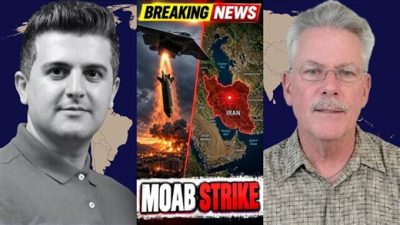
Matt Bracken: US Plans Massive MOAB Strike on Iran?
or go to
Aletho News Archives – Video-Images
From the Archives
Confronting the Threat of Ethnic Bioweapons
By Tony Cartalucci – New Eastern Outlook – 29.11.2017
The United States Air Force’s 59th Medical Wing’s molecular biology branch recently was revealed to have been collecting specifically Russian RNA and synovial (connective) tissue samples, prompting fears in Russia of a possible US directed ethnic-specific bioweapons program. … continue
Blog Roll
 Aletho News
- The Downfall of a Manufactured Icon
- Matt Bracken: US Plans Massive MOAB Strike on Iran?
- Russia accuses France of ‘piracy’ over tanker seizure
- Why Yemen Is Bombing Saudi Arabia’s Airports: The War Behind the Headlines
- Sally Rooney’s books pulled from UK over support for Palestine Action
- Bombs for Tel Aviv, Promises for Riyadh
- Israeli ad agency conducted vast global espionage campaign using online ads: Report
- Oct. 7 Forever Marks The Big Reveal: ‘We See You, Israel, We Revile You, We Reject You!’
- Meet the US generals and admirals advancing Israeli policy
- Israel’s Straw Widow Protocol: The Kill Zones Where Civilians Were Labelled ‘Terrorists’
- If Americans Knew
- Israeli firm used online ads to run vast spy operation, researchers say
- No, the world zionist movement is not an antisemitic conspiracy theory
- Hundreds of IDF investigations into killings still have no public outcome, BBC Verify finds
- After Ashley Moody Epstein Probe, Donors Linked to Him Poured Money Into her Senate Campaign
- Worried about Russian meddling in UK politics? Wait till you see what Israel is up to
- Israeli settlers attack West Bank center for disabled children, church leader calls for int’l action
- Pulling Out Teeth Just to Live: How Israel Has Devastated Dental Care in Gaza
- Gaza’s “ceasefire” death toll passes 1,500 – Daily Update
- Activists Abused By Israel Return to New Freedom Flotilla Mission
- 60 Minutes won’t tell the full truth about Israeli settler violence
- No Tricks Zone
- New Study Suggests Large Regions Of The Pacific Ocean Have Been Cooling For The Last 80 Years
- Germany’s Green Energy Debacle: High Energy Costs Force Kahla Porzellan to Close After 182 Years!
- New Study: 50 Years Of The Most Aggressive ‘Net Zero’ Policies Can Only Affect The Global Climate By 0.03°C
- US September “Heat” Was No Record…Many Records Set Decades Ago
- Latest European Green Energy Debacle; Portugal’s Largest Flagship Solar Park Insolvent!
- Green Energy Debacle: German Expert Professor Fritz Vahrenholt Warns Of Severe Economic And Social Consequences
- Two More Paleo Reconstructions Affirm Meters-Higher Sea Levels Across Ireland, Brazil 7000-6000 Years Ago
- New Study: Earth And Venus Surface Warmth Largely Explained By Convection And Lapse Rate, Not CO2 Or Radiation
- 2025 Nature Paper Claiming Worsening Global Drought Gets RETRACTED …Heavily Flawed
- New Study: ‘Global Drought Shows No Detectable Recent Acceleration Under Climate Warming’

