Norway blames ‘Russian hackers’ after defense & security officials fall victim to phishing attack
RT | February 4, 2017
Government officials in Norway have been breached by a phishing attack which authorities promptly pinned on ‘Russian hackers,’ claiming the hack was allegedly traced back to the same culprits that compromised the DNC servers in the US last year.
Nine personal civil-servant email accounts have been compromised, the Norwegian Police Security Service (PST) announced, just days after the agency coincidentally identified possible Russian spying as the greatest potential threat to the country.
The Labor Party and “a handful of other Norwegian targets” were subjected to email attacks that allegedly took place last autumn, the Dagbladet reported. The defense and foreign ministries as well as security service staff were among those targeted, the BBC reports citing local media.
“The attacks had a signature that indicates those behind the hacking can be identified as APT29,” PST spokesman Martin Berntsen told the Associated Press. “They can be traced back to Russia,” he stated without elaborating further, while conceding that no classified information has been compromised.
CrowdStrike, a cybersecurity company hired by the Democratic National Committee (DNC) to investigate the June 2016 data breach, was first to accuse APT29 – which they named “Cozy Bear” and “Fancy Bear” – of being Russian government entities. However, CrowdStrike has never offered any proof for this assertion.
Spear phishing – the forging of trusted communication to access private data – isn’t a Russian know-how but a popular and quite unsophisticated fraud technique that is widely used around the world to hijack electronic accounts.
Labour’s leader, Jonas Gahr Store, also confirmed the breach of his party’s emails, after being notified of the hack by PST on Wednesday.
“I can confirm that we are informed by PST that Labour’s parliamentary group was subjected to an attempted digital attack by a group that PST ties to foreign intelligence,” Store’s press spokeswoman Camilla Ryste, told Nettavisen, The Local reports.
The new revelations follow PST’s latest threat assessment on national security published Wednesday, where Norway said that Russian intelligence poses the greatest challenge for the country.
“It is primarily Russia that has intentions and capacity to do intelligence activities with big damage potential for Norway and Norwegian interests,” the annual report from the Police Security Service (PST) reads.
“Intelligence pressure from foreign states, especially from the Russian side, has been high and stable over the years,” PST Chief Benedicte Bjornland said in the report, according to The Local. “The reason why we increase [the risk] now is that there is a tougher security situation. This means that the intelligence activities of Russia, in particular, have the potential to be more dangerous now than before.”
The Russian embassy in Norway called the Russian threat a “myth” blaming Oslo of staging a “witch hunt” instead of dealing with real threats like terrorism.
“Unfortunately, it seems like some are uninterested in normalization of our relationship and strive persistently to return to the times of the Cold War,” the embassy said on Facebook.
See also:
A Reprise of the Iraq-WMD Fiasco?
By James W Carden | Consortium News | February 3, 2017
The controversy over Russia’s alleged interference in the 2016 presidential election shows no sign of letting up. A bipartisan group of U.S. senators recently introduced legislation that would impose sanctions on Russia in retaliation for its acts of “cyber intrusions.”
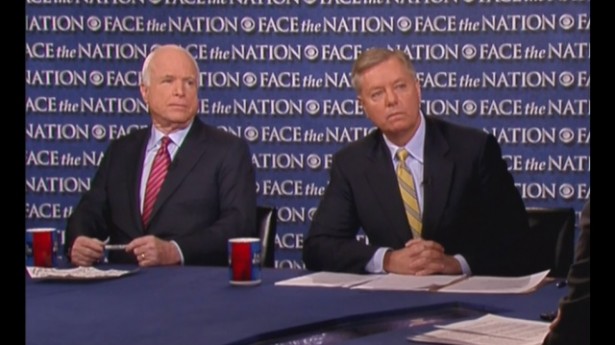
Senators John McCain and Lindsey Graham
At a press event in Washington on Tuesday, Sen. Dick Durbin, D-Illinois, called Election Day 2016 “a day that will live in cyber infamy.” Previously, Sen. John McCain, R-Arizona, called the Russian hacks of the Democratic National Committee “an act of war,” while Sen. Lindsey Graham, R-South Carolina, has claimed that there is near unanimity among senators regarding Russia’s culpability.
Despite all this, the question of who exactly is responsible for the providing WikiLeaks with the emails of high Democratic Party officials does not lend itself to easy answers. And yet, for months, despite the lack of publicly disclosed evidence, the media, like these senators, have been as one: Vladimir Putin’s Russia is responsible.
Interestingly, the same neoconservative/center-left alliance which endorsed George W. Bush’s case for war with Iraq is pretty much the same neoconservative/center-left alliance that is now, all these years later, braying for confrontation with Russia. It’s largely the same cast of characters reading from the Iraq-war era playbook.
It’s worth recalling Tony Judt’s observation in September 2006 that “those centrist voices that bayed most insistently for blood in the prelude to the Iraq war … are today the most confident when asserting their monopoly of insight into world affairs.”
While that was true then, it is perhaps even more so the case today.
The prevailing sentiment of the media establishment during the months prior to the disastrous March 2003 invasion of Iraq was that of certainty: George Tenet’s now infamous assurance to President Bush, that the case against Iraq was a “slam drunk,” was essentially what major newspapers and television news outlets were telling the American people at the time. Iraq posed a threat to “the homeland,” therefore Saddam “must go.”
The Bush administration, in a move equal parts cynical and clever, engaged in what we would today call a “disinformation” campaign against its own citizens by planting false stories abroad, safe in the knowledge that these stories would “bleed over” and be picked up by the American press.
WMD ‘Fake News’
The administration was able to launder what were essentially “fake news” stories, such as the aluminum tubes fabrication, by leaking to Michael R. Gordon and Judith Miller of The New York Times. In September 2002, without an ounce of skepticism, Gordon and Miller regurgitated the claims of unnamed U.S. intelligence officials that Iraq “has sought to buy thousands of specially designed aluminum tubes … intended as components of centrifuges to enrich uranium.” Gordon and Miller faithfully relayed “the intelligence agencies’ unanimous view that the type of tubes that Iraq has been seeking are used to make centrifuges.”
By 2002, no one had any right to be surprised by what Bush and Cheney were up to; since at least 1898 (when the U.S. declared war on Spain under the pretense of the fabricated Hearst battle cry “Remember the Maine!”) American governments have repeatedly lied in order to promote their agenda abroad. And in 2002-3, the media walked in lock step with yet another administration in pushing for an unnecessary and costly war.
Like The New York Times, The Washington Post also relentlessly pushed the administration’s case for war with Iraq. According to the journalist Greg Mitchell, “By the Post’s own admission, in the months before the war, it ran more than 140 stories on its front page promoting the war.” All this, while its editorial page assured readers that the evidence Colin Powell presented to the United Nations on Iraq’s WMD program was “irrefutable.” According to the Post, it would be “hard to imagine” how anyone could doubt the administration’s case.
But the Post was hardly alone in its enthusiasm for Bush’s war. Among the most prominent proponents of the Iraq war was The New Yorker’s Jeffrey Goldberg, who, a full year prior to the invasion, set out to link Saddam Hussein and Al Qaeda. Writing for The New Yorker in March 2002, Goldberg retailed former CIA Director James Woolsey’s opinion that “It would be a real shame if the C.I.A.’s substantial institutional hostility to Iraqi democratic resistance groups was keeping it from learning about Saddam’s ties to Al Qaeda in northern Iraq.”
Indeed, according to Goldberg, “The possibility that Saddam could supply weapons of mass destruction to anti-American terror groups is a powerful argument among advocates of regime change,” while Saddam’s “record of support for terrorist organizations, and the cruelty of his regime make him a threat that reaches far beyond the citizens of Iraq.”
Writing in Slate in October 2002, Goldberg was of the opinion that “In five years . . . I believe that the coming invasion of Iraq will be remembered as an act of profound morality.”
Likewise, The New Republic’s Andrew Sullivan was certain that “we would find weapons of mass destruction in Iraq. I have no doubt about that.” Slate’s Jacob Weisberg supported the invasion because he thought Saddam Hussein had WMD and he “thought there was a strong chance he’d use them against the United States.”
Even after it was becoming clear that the war was a debacle, the neoconservative pundit Charles Krauthammer declared that the inability to find WMDs was “troubling” but “only because it means that the weapons remain unaccounted for and might be in the wrong hands. The idea that our inability to thus far find the weapons proves that the threat was phony and hyped is simply false.”
Smearing Skeptics
Opponents of the war were regularly accused of unpatriotic disloyalty. Writing in National Review, the neoconservative writer David Frum accused anti-intervention conservatives of going “far, far beyond the advocacy of alternative strategies.” According to Frum, “They deny and excuse terror. They espouse a potentially self-fulfilling defeatism. They publicize wild conspiracy theories. And some of them explicitly yearn for the victory of their nation’s enemies.”
Similarly, The New Republic’s Jonathan Chait castigated anti-war liberals for turning against Bush. “Have Bush haters lost their minds?” asked Chait. “Certainly some have. Antipathy to Bush has, for example, led many liberals not only to believe the costs of the Iraq war outweigh the benefits but to refuse to acknowledge any benefits at all.”
Yet of course we now know, thanks, in part, to a new book by former CIA analyst John Nixon, that everything the U.S. government thought it knew about Saddam Hussein was indeed wrong. Nixon, the CIA analyst who interrogated Hussein after his capture in December 2003, asks “Was Saddam worth removing from power?” “The answer,” says Nixon, “must be no. Saddam was busy writing novels in 2003. He was no longer running the government.”
It turns out that the skeptics were correct after all. And so the principal lesson the promoters of Bush and Cheney’s war of choice should have learned is that blind certainty is the enemy of fair inquiry and nuance. The hubris that many in the mainstream media displayed in marginalizing liberal and conservative anti-war voices was to come back to haunt them. But not, alas, for too long.
A Dangerous Replay?
Today something eerily similar to the pre-war debate over Iraq is taking place regarding the allegations of Russian interference in the U.S. presidential election. Assurances from the intelligence community and from anonymous Obama administration “senior officials” about the existence of evidence is being treated as, well, actual evidence.
State Department spokesman John Kirby told CNN that he is “100% certain” of the role that Russia played in U.S. election. The administration’s expressions of certainty are then uncritically echoed by the mainstream media. Skeptics are likewise written off, slandered as “Kremlin cheerleaders” or worse.
Unsurprisingly, The Washington Post is reviving its Bush-era role as principal publicist for the government’s case. Yet in its haste to do the government’s bidding, the Post has published two widely debunked stories relating to Russia (one on the scourge of Russian inspired “fake news”, the other on a non-existent Russian hack of a Vermont electric utility) onto which the paper has had to append “editor’s notes” to correct the original stories.
Yet, those misguided stories have not deterred the Post’s opinion page from being equally aggressive in its depiction of Russian malfeasance. In late December, the Post published an op-ed by Rep. Adam Schiff and former Rep. Jane Harmon claiming “Russia’s theft and strategic leaking of emails and documents from the Democratic Party and other officials present a challenge to the U.S. political system unlike anything we’ve experienced.”
On Dec. 30, the Post editorial board chastised President-elect Trump for seeming to dismiss “a brazen and unprecedented attempt by a hostile power to covertly sway the outcome of a U.S. presidential election.” The Post described Russia’s actions as a “cyber-Pearl Harbor.”
On Jan. 1, the neoconservative columnist Josh Rogin told readers that the recent announcement of sanctions against Russia “brought home a shocking realization that Russia is using hybrid warfare in an aggressive attempt to disrupt and undermine our democracy.”
Meanwhile, many of the same voices who were among the loudest cheerleaders for the war in Iraq have also been reprising their Bush-era roles in vouching for the solidity of the government’s case.
Jonathan Chait, now a columnist for New York magazine, is clearly convinced by what the government has thus far provided. “That Russia wanted Trump to win has been obvious for months,” writes Chait.
“Of course it all came from the Russians, I’m sure it’s all there in the intel,” Charles Krauthammer told Fox News on Jan. 2. Krauthammer is certain.
And Andrew Sullivan is certain as to the motive. “Trump and Putin’s bromance,” Sullivan told MSNBC’s Chris Matthews on Jan. 2, “has one goal this year: to destroy the European Union and to undermine democracy in Western Europe.”
David Frum, writing in The Atlantic, believes Trump “owes his office in considerable part to illegal clandestine activities in his favor conducted by a hostile, foreign spy service.”
Jacob Weisberg agrees, tweeting: “Russian covert action threw the election to Donald Trump. It’s that simple.” Back in 2008, Weisberg wrote that “the first thing I hope I’ve learned from this experience of being wrong about Iraq is to be less trusting of expert opinion and received wisdom.” So much for that.
Foreign Special Interests
Another, equally remarkable similarity to the period of 2002-3 is the role foreign lobbyists have played in helping to whip up a war fever. As readers will no doubt recall, Ahmed Chalabi, leader of the Iraqi National Congress, which served, in effect as an Iraqi government-in-exile, worked hand in hand with the Washington lobbying firm Black, Kelly, Scruggs & Healey (BKSH) to sell Bush’s war on television and on the op-ed pages of major American newspapers.
Chalabi was also a trusted source of Judy Miller of the Times, which, in an apology to its readers on May 26, 2004, wrote: “The most prominent of the anti-Saddam campaigners, Ahmad Chalabi, has been named as an occasional source in Times articles since at least 1991, and has introduced reporters to other exiles. He became a favorite of hard-liners within the Bush administration and a paid broker of information from Iraqi exiles.” The pro-war lobbying of the American Israel Public Affairs Committee has also been exhaustively documented.
Though we do not know how widespread the practice has been as of yet, something similar is taking place today. Articles calling for confrontation with Russia over its alleged “hybrid war” with the West are appearing with increasing regularity. Perhaps the most egregious example of this newly popular genre appeared on Jan. 1 in Politico magazine. That essay, which claims, among many other things, that “we’re in a war” with Russia comes courtesy of one Molly McKew.
McKew is seemingly qualified to make such a pronouncement because she, according to her bio on the Politico website, served as an “adviser to Georgian President Saakashvili’s government from 2009-2013, and to former Moldovan Prime Minister Filat in 2014-2015.” Seems reasonable enough. That is until one discovers that McKew is actually registered with the Department of Justice as a lobbyist for two anti-Russian political parties, Georgia’s UMN and Moldova’s PLDM.
Records show her work for the consulting firm Fianna Strategies frequently takes her to Capitol Hill to lobby U.S. Senate and Congressional staffers, as well as prominent U.S. journalists at The Washington Post and The New York Times, on behalf of her Georgian and Moldovan clients.
“The truth,” writes McKew, “is that fighting a new Cold War would be in America’s interest. Russia teaches us a very important lesson: losing an ideological war without a fight will ruin you as a nation. The fight is the American way.” Or, put another way: the truth is that fighting a new Cold War would be in McKew’s interest – but perhaps not America’s.
While you wouldn’t know it from the media coverage (or from reading deeply disingenuous pieces like McKew’s) as things now stand, the case against Russia is far from certain. New developments are emerging almost daily. One of the latest is a report from the cyber-engineering company Wordfence, which concluded that “The IP addresses that DHS [Department of Homeland Security] provided may have been used for an attack by a state actor like Russia. But they don’t appear to provide any association with Russia.”
Indeed, according to Wordfence, “The malware sample is old, widely used and appears to be Ukrainian. It has no apparent relationship with Russian intelligence and it would be an indicator of compromise for any website.”
On Jan. 4, BuzzFeed reported that, according to the DNC, the FBI never carried out a forensic examination on the email servers that were allegedly hacked by the Russian government. “The FBI,” said DNC spokesman Eric Walker, “never requested access to the DNC’s computer servers.”
What the agency did do was rely on the findings of a private-sector, third-party vendor that was brought in by the DNC after the initial hack was discovered. In May, the company, Crowdstrike, determined that the hack was the work of the Russians. As one unnamed intelligence official told BuzzFeed, “CrowdStrike is pretty good. There’s no reason to believe that anything that they have concluded is not accurate.”
Perhaps not. Yet Crowdstrike is hardly a disinterested party when it comes to Russia. Crowdstrike’s founder and chief technology officer, Dmitri Alperovitch, is also a senior fellow at the Washington think tank, The Atlantic Council, which has been at the forefront of escalating tensions with Russia.
As I reported in The Nation in early January, the connection between Alperovitch and the Atlantic Council is highly relevant given that the Atlantic Council is funded in part by the State Department, NATO, the governments of Latvia and Lithuania, the Ukrainian World Congress, and the Ukrainian oligarch Victor Pinchuk. In recent years, it has emerged as a leading voice calling for a new Cold War with Russia.
Time to Rethink the ‘Group Think’
And given the rather thin nature of the declassified evidence provided by the Obama administration, might it be time to consider an alternative theory of the case? William Binney, a 36-year veteran of the National Security Agency and the man responsible for creating many of its collection systems, thinks so. Binney believes that the DNC emails were leaked, not hacked, writing that “it is puzzling why NSA cannot produce hard evidence implicating the Russian government and WikiLeaks. Unless we are dealing with a leak from an insider, not a hack.”
None of this is to say, of course, that Russia did not and could not have attempted to influence the U.S. presidential election. The intelligence community may have intercepted damning evidence of the Russian government’s culpability. The government’s hesitation to provide the public with more convincing evidence may stem from an understandable and wholly appropriate desire to protect the intelligence community’s sources and methods. But as it now stands the publicly available evidence is open to question.
But meanwhile the steady drumbeat of “blame Russia” is having an effect. According to a recent you.gov/Economist poll, 58 percent of Americans view Russia as “unfriendly/enemy” while also finding that 52 percent of Democrats believed Russia “tampered with vote tallies.”
With Congress back in session, Armed Services Committee chairman John McCain is set to hold a series of hearings focusing on Russian malfeasance, and the steady drip-drip-drip of allegations regarding Trump and Putin is only serving to box in the new President when it comes to pursuing a much-needed detente with Russia.
It also does not appear that a congressional inquiry will start from scratch and critically examine the evidence. On Friday, two senators – Republican Lindsey Graham and Democrat Sheldon Whitehouse – announced a Senate Judiciary subcommittee investigation into Russian interference in elections in the U.S. and elsewhere. But they already seemed to have made up their minds about the conclusion: “Our goal is simple,” the senators said in a joint statement “To the fullest extent possible we want to shine a light on Russian activities to undermine democracy.”
So, before the next round of Cold War posturing commences, now might be the time to stop, take a deep breath and ask: Could the rush into a new Cold War with Russia be as disastrous and consequential – if not more so – as was the rush to war with Iraq nearly 15 years ago? We may, unfortunately, find out.
James W Carden is a contributing writer for The Nation and editor of The American Committee for East-West Accord’s eastwestaccord.com. He previously served as an advisor on Russia to the Special Representative for Global Inter-governmental Affairs at the US State Department.
Moscow expects Reuters to clarify its complaints concerning working conditions in Russia
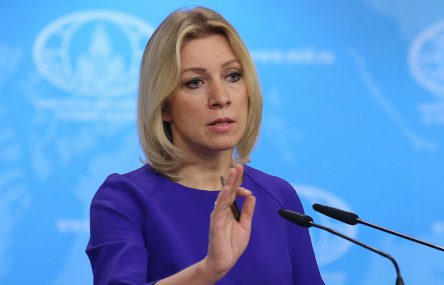
Russian foreign ministry’s spokeswoman Maria Zakharova
TASS – February 3, 2017
MOSCOW – Russia’s Foreign Ministry expects the Reuters news agency to clarify its complaints regarding the working conditions of its journalists in the country, the ministry’s spokeswoman Maria Zakharova said at a briefing on Friday.
“We have seen Reuters Editor-in-Chief Stephen Adler’s message to staff, which concerns covering the new US president’s activities,” Zakharova noted. “Although we do not usually comment on editorial directives, we could not but take notice of one paragraph,” she went on to say. “The implication is that Reuters considers Russia to be one of the countries where the agency has to ‘encounter some combination of censorship, legal prosecution, visa denials, and even physical threats’ to its journalists.”
“We don’t divide journalists into good and bad, we don’t refuse to issue visas, we don’t deprive them of visas or accreditation only because we don’t like their style or find them to be biased,” the Russian Foreign Ministry’s spokeswoman stressed. “I expect Reuters to clarify the matter.”
At the same time, she said that Russia’s Foreign Ministry would have not commented on this message if it had not been made public through the Reuters website and had not mentioned the agency’s work in Russia. The diplomat was confident that Reuters had deliberately posted the message “thus turning it into some kind of a manifesto.”
According to Zakharova, when the Russian Foreign Ministry contacted Reuters, the agency declined to comment. She also pointed out that the Reuters correspondents accredited in Russia took part in closed weekly briefings at the Foreign Ministry as well as in other media events, however, they had not voiced their concerns even once.
Photo Anton Novoderezhkin/TASS
Theresa May to push EU members to up NATO spending
RT | February 3, 2017
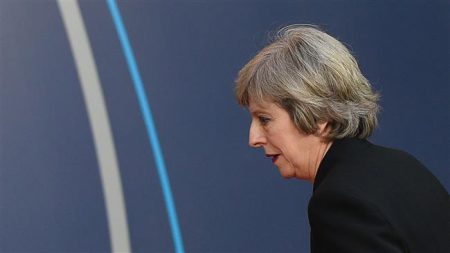
UK Prime Minister Theresa May will use the upcoming EU summit in Malta to demand Europe strengthen its commitment to NATO and spend more on defence.
May is expected to conduct a series of one-on-one meetings with EU leaders, including Germany’s Angela Merkel and Spain’s Mariano Rajoy, in order to secure “new, positive and constructive” relationships with the Union.
The prime minister, however, is not expected to attend the part of the talks in which Brexit will be discussed. Instead, she is using the summit as an opportunity to press the EU’s NATO members to fulfil their defence expenditure requirements.
According to a 2016 NATO report, only five of its 28 members actually reached the required defence spending limit of two percent. The list of those failing to spend enough includes Germany, France, and Spain.
Britain’s push for Europe to open its wallet comes after a meeting between Theresa May and US President Donald Trump last Friday.
At a joint press conference, May agreed with Trump that NATO spending should be “fairly shared” among its members.
Trump has in the past criticised NATO as being “obsolete” and “costing too much money.”
The president has also suggested that the US may not come to the assistance of NATO members who do not satisfy the two percent requirement.
May, however insisted she had received a “100 percent” commitment to NATO from the Trump administration. She also promised to “encourage fellow European leaders” to comply with their obligations.
It remains unclear how Britain will convince EU leaders to increase defence spending, as relations with Brussels have been significantly affected by Brexit. One possible way might be to emphasise the threat to European security that is supposedly posed by Russia.
Earlier this week, UK Defence Secretary Michael Fallon urged other NATO states to fulfil defence spending targets in order to effectively counter alleged Russian attempts to destabilise the continent.
Fallon has accused Russia of “becoming a strategic competitor to the West” and mounting a sophisticated information and cyber campaign against various NATO members.
Moscow has categorically denied these allegations, describing them as “baseless” and a “witch hunt.”
Read more:
UK minister accuses Russia of MH17 downing & ‘testing’ NATO, Moscow says claims ‘baseless’
RT | February 3, 2017
When British Defense Secretary Michael Fallon was asked to deliver a speech on ‘Russian resurgence’, he seized the opportunity to accuse Moscow of “annexing” Crimea, shooting down MH17 over Ukraine, and “testing” NATO. Russia calls the claims baseless.
Fallon’s speech at St. Andrews University on Thursday began kindly enough, speaking about the UK’s “renewed interest in Russian scientific and artistic achievement.”
However, the talk quickly changed course, with Fallon changing the focus to Russia’s so-called “military resurgence.”
Referring to the reunification of Crimea and Russia following a referendum in 2014, Fallon claimed the situation actually amounted to Russia illegally annexing the territory.
“Russia did not allow Ukraine to decide its own destiny like any other sovereign country,” he said. “Instead, under the guise of ambiguous and deniable instruments it annexed Crimea.”
Fallon’s anti-Russia rhetoric didn’t stop there. He went on to cite an inquiry by the Dutch-led Joint-investigative Team (JIT) which claims the MH17 tragedy was caused by a “Russian-provided missile.” He said that despite the finding, Moscow continues to deny its role in the tragedy.
Fallon failed to mention, however, that there are numerous issues surrounding that report, including the fact that the Dutch apparently couldn’t read raw radar data provided by Russia, yet failed to ask Moscow for help to decode it.
The discrepancies surrounding the inquiry have led to Major General Aleksandr Tazekhulakhov, the former deputy head of the Russian Army Air Defense, to accuse the Netherlands of trying to keep Moscow out of the investigation, likely in “yet another attempt to put the blame on Russia for something…”
The next phase of Fallon’s speech transitioned from Ukraine to Syria, in which he accused Russia of targeting the Syrian opposition in Aleppo “with little regard for innocent lives,” claiming that 80 percent of its strikes targeted non-Islamic State (IS, formerly ISIS/ISIL) targets.
However, Fallon seemed to conveniently forget that the US-led coalition in Syria – which includes the UK – just last month admitted to “unintentionally” killing at least 188 civilians in Syria and Iraq since 2014.
And while Fallon accused Russia of targeting civilians in Aleppo, he failed to mention a hospital set up by Russia in the city, despite the facility being hailed by the World Health Organization (WHO) last month.
“The WHO, same as the Syrian people – we’re very grateful to the Russians, the EMERCOM [Agency for Support and Coordination of Russian Participation in International Humanitarian Operations] gave a hospital to be used in the Jibreen [refugee] camp. The hospital provided by the Russian people has provided several hundred consultations and has been given by the Russian people to the Syrian people for the use by the central health authorities in Aleppo,” the WHO’s Elizabeth Hoff told RT.
Any typical bashing of Russia by the UK wouldn’t be complete without claims that Moscow is trying to “test” NATO, and Fallon didn’t disappoint.
“Russia is clearly testing NATO and the West,” Fallon said, accusing Moscow of “seeking to expand its sphere of influence, destabilize countries, and weaken the alliance.”
“It is undermining national security for many allies and the international rules-based system,” he continued.
Fallon was apparently in no mood to present a balanced argument during his speech, failing to mention NATO’s build-up of troops near Russia’s borders, or Moscow’s concern that NATO is compromising its national security.
The speech also included a healthy dose of the usual Western rhetoric, including allegations that Russia influenced the US presidential election by hacking into Democratic National Committee (DNC).
There was a touch of irony towards the end of Fallon’s speech, in which he said “we need to understand Russia better,” but then went on to accuse it of “reckless military activity” and “misinformation.”
“Russia could again become the partner the West always wished for…” he concluded.
However, based on Fallon’s speech, it seems Russia will only be a ‘partner’ to the UK and the West if it panders to their every wish.
Moscow responded to Fallon’s speech on Friday, calling his statements “baseless.”
“We express regret for this hostile stance of the minister. We are sure that such allegations are baseless,” Kremlin spokesman Dmitry Peskov told reporters, as quoted by Reuters.
Read more:
Crimea & Minsk Agreements: What the British media fails to mention
Crimea & Minsk Agreements: What the British media fails to mention
Ambassador’s view | RT | February 2, 2017
The escalation in eastern Ukraine is again presented in the British media as Russia’s attempt to wage a proxy hybrid war against Kiev’s pro-Western leadership.
For fear of an eventual improvement in Russia-US relations, they pray for the sanctions against Russia to stay unless the Minsk Agreements are implemented as well as a punishment for ‘Russia’s annexation of Crimea.’
Let me set the record straight on that.
The coup d’état in Kiev in February 2014 backed by the West tore up the constitutional space in Ukraine. The legitimate president of the country was overthrown. It was marked by a severe lack of democracy and violence that posed a direct threat to the well-being of the Russian-speaking population of Crimea. Citizens of Crimea, which was an autonomy at the time, faced the choice of becoming an oppressed minority or severing their ties with the hostile regime to secure a future for themselves and their children. Legitimate local authorities made the decision to hold a referendum.
The independence of Crimea was proclaimed and an appeal to enter the Russian Federation was made based on the indisputable results of the popular vote. Standards of international law were fully observed as the right of nations to self-determination enshrined in the UN Charter was exercised freely by the Crimeans.
Crimea was recognized as an independent and sovereign state by Russia, and on March 18, 2014 in Moscow the two countries signed a Treaty of Unification, under which the Republic of Crimea and the city of Sevastopol became two new regions – subjects of the Russian Federation.
Let us take a look at the outcome. While entire regions of Ukraine are engulfed in a brutal war, and the population is being fed with shameless nationalist propaganda, the Russian Crimea is enjoying peace, stability and steady growth. What could be a better proof that the decisions made two years ago were the only right ones? We are convinced that many Ukrainians would prefer to live like the residents of Crimea live now – under conditions of stable economic development and social security. That is despite the attempts of the Ukrainian government to disrupt the life of the people there by cutting the peninsula off from essential supplies, trying to organize water, energy and food blockades. Does it mean people for sovereignty, rather than sovereignty for the people?
Unfortunately, there has been little progress in implementing the Minsk Agreements mainly due to Kiev’s unwillingness to fulfill its obligations under them to promote national accord and reconciliation. The recent escalation is clearly an attempt to divert public attention from the poor reform record and request for additional funds from their Western sponsors.
For the political solution to be achieved in Ukraine, the Minsk Agreements should be fully implemented, including the withdrawal of heavy weapons from the contact line. However, the Ukrainian armed forces haven’t stopped shelling Donetsk and Lugansk, including the use of weapons that are supposed to have been withdrawn. This leads to civilian casualties and the destruction of property. The OSCE Special Monitoring Mission to Ukraine has reported many times the concentration of Ukrainian forces along the contact line.
According to the Minsk Agreements, signed two years ago, on the first day of the withdrawal of artillery Kiev had to engage in dialog, and start consulting with Donetsk and Lugansk representatives on the conditions for elections to be held on the basis of Ukrainian law and under OSCE oversight.
A month after the signing of the Minsk Agreements Kiev was required to enact a special status law adopting a resolution designating the territory that this law was supposed to cover. This hasn’t been done. A law was passed, the territories marked, but the law said that it didn’t apply to Donetsk and Lugansk!
The Minsk Agreements clearly say elections should be held in accordance with the OSCE criteria, one of which is to ensure that no one will be subjected to intimidation, harassment, etc. The statement by the Kiev authorities on “elections first, then amnesty” constitute a serious distortion of the sequence and logic of what was agreed. In accordance with the OSCE elections criteria, the amnesty should be granted before the elections.
It is crucial to understand at long last that the only way to settle the Ukrainian crisis is by implementing the Minsk Agreements, which represent a recipe for a political solution well in line with European values. What is required of Kiev is to treat its citizens as partners and abandon the Orwellian “anti-terrorists operation.” One cannot deal with its own citizens with a gun to their head.
And this intransigence should cease for the sake of comprehensive reforms in Ukraine, the lack of which is the key source of the present crisis. The declarations by British officials that sanctions against Russia can only be lifted after we fulfill our obligations according to Minsk treaty is a crude substitution of concept and a prolongation of anti-Russian politics of London.
Russia, together with France and Germany, is a guarantor of the Minsk accords, not part of it. The obligations written there are for Kiev and Donbass, in their quality as sides of the treaty and participants of the conflict, to fulfill.
Dr Alexander Yakovenko, Russian Ambassador to the United Kingdom of Great Britain and Northern Ireland, Deputy foreign minister (2005-2011). Follow him on Twitter @Amb_Yakovenko
Ukraine Sabotages Trump’s Russia Detente
By Jonathan Marshall | Consortium News | February 1, 2017
Less than two weeks into office, President Trump faces one of the first big tests of his non-confrontational policy toward Russia. As new fighting erupts in Eastern Ukraine, the Kiev regime and its U.S. supporters are predictably demanding a showdown with Vladimir Putin.
Initial evidence suggests, however, that the latest flare-up in this nearly three-year-old conflict was precipitated by Kiev, possibly in the hope of forcing just such a confrontation between Washington and Moscow. It’s looking more and more like a rerun of a disastrous stunt pulled by the government of Georgia in 2008, which triggered a clash with Russia with the expectation that the George W. Bush administration would come to its rescue and bring Georgia into the NATO alliance.
After months of relative quiet, the fighting in Ukraine erupted on Jan. 28 around the city of Avdiivka, a now-decrepit industrial center. Eight pro-government fighters and five separatists apparently died in the first two days of hostilities. Meanwhile, residents of the city are struggling to survive heavy shelling and sub-zero weather with no heating.
Perennial critics of Russia were quick to blame Moscow for the renewed bloodshed. “We call on Russia to stop the violence (and), honor the cease-fire,” declared a State Department official.
The Washington Post’s reliably neo-conservative editorial page suggested that Russia felt liberated to unleash rocket and artillery barrages after Putin spoke with Trump by phone, with the goal of wrecking a meeting between Ukrainian President Petro Poroshenko and German Chancellor Angela Merkel.
The Russian onslaught “look(s) a lot like a test of whether the new president will yield to pressure from Moscow,” the Post declared, as if this were Czechoslovakia, 1938, all over again.
Poroshenko was quick to take advantage of the clash by asking, rhetorically, “Who would dare talk about lifting the sanctions in such circumstances?” Just last month, Austria’s foreign minister called for an easing of sanctions on Russia in return for “any positive development” in Ukraine. President Trump has been noncommittal about sanctions in the face of full-throated demands by congressional hawks in both parties to keep them in place.
Who’s to Blame?
The jury is still out on who provoked the latest violence, but Radio Free Europe/Radio Liberty, established by the U.S. government to broadcast propaganda during the height of the Cold War, reported Monday:
“Frustrated by the stalemate in this 33-month war of attrition, concerned that Western support is waning, and sensing that U.S. President Donald Trump could cut Kyiv out of any peace negotiations as he tries to improve fraught relations with Moscow, Ukrainian forces anxious to show their newfound strength have gone on what many here are calling a ‘creeping offensive.’
“Observers say the Ukrainians appear to be trying to create new facts on the ground . . . In doing so, the pro-Kyiv troops have sparked bloody clashes with their enemy, which has reportedly made advances of its own — or tried to — in recent weeks.”
A senior member of Europe’s Special Monitoring Mission to Ukraine warned, “The direct result of forward moves is escalation in tension, which often turns to violence.” How right he was.
It’s hard to see what Putin gains from new fighting, at a time when Trump faces an army of skeptics at home for his go-easy-on-Russia strategy. Poroshenko has everything to gain, on the other hand, by pressing Americans and West Europeans to reaffirm their support for his government, which took power after a 2014 coup that ousted elected President Viktor Yanukovych, who was strongly supported in eastern Ukraine and Crimea.
The Georgia Playbook
The situation is reminiscent of the August 2008 conflict between Russia and its neighbor on the Black Sea, Georgia. A bloody clash between the two countries’ armed forces in the tiny enclave of South Ossetia prompted a blast of militant rhetoric from American hawks.
Vice President Richard Cheney declared, “Russian aggression must not go unanswered.” Richard Holbrooke, who would become a senior adviser to the future President Obama, said, “Moscow’s behavior poses a direct challenge to European and international order.”
It may have been significant that the Georgian president’s paid U.S. lobbyist was also presidential candidate John McCain’s chief foreign policy adviser. As one analyst commented at the time, “McCain’s swift and belligerent response to the Soviet actions in Georgia has bolstered his shaky standing with the right-wing of the Republican Party. . . . Since the crisis erupted, McCain has focused like a laser on Georgia, to great effect. According to a Quinnipiac University National Poll released on August 19 he has gained four points on Obama since their last poll in mid-July and leads his rival by a two to one margin as the candidate best qualified to deal with Russia.”
Yet when the smoke settled, it turned out that Georgia, not Russia, had started the war by launching an artillery barrage against South Ossetia’s capital city. It was a ploy by Georgia’s President Mikheil Saakashvili to drag the West into supporting his campaign to take over the enclave.
The independent International Crisis Group had warned in 2007 that Georgia’s risky strategy of provoking “frequent security incidents could degenerate into greater violence.”
A year later, following the brief war with Russia, an ICG investigation reported authoritatively that it began with a “disastrous miscalculation by Georgian leadership,” who “launched a large-scale military offensive” into the Russian-occupied enclave, killing dozens of civilians and causing severe damage to South Ossetia’s capital from artillery barrages.
The report also criticized “Russia’s disproportionate counter-attack,” which it deemed a response to “the decade-long eastward expansion of the NATO alliance” and other grievances.
Putting blame aside, the ICG report observed that “The Russia-Georgia conflict has transformed the contemporary geopolitical world, with large consequences for peace and security in Europe and beyond.” Indeed, it marked one of the greatest setbacks in post-Cold War relations between Moscow and the West until the 2014 Ukraine crisis.
If the 2017 Ukraine crisis gets out of hand, the consequences for peace and security may be just as great or greater. It will be informative to see whether President Trump and his national security team get the straight facts before capitulating to the interventionists who want to see U.S.-Russian relations remain strained and volatile.
The Hill Publishes Islamophobic Fake News on Venezuela
By Ryan Mallett-Outtrim | Venezuelanalysis | January 30, 2017
 Love it or hate it, The Hill can be a pretty useful source of information on the goings on around DC, but its latest article on Venezuela comes from some disturbing places.
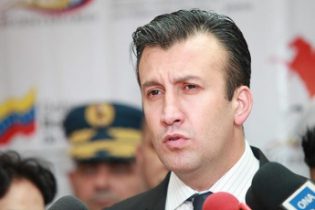
In a recent article, titled “Meet Venezuela’s new VP, fan of Iran and Hezbollah”, The Hill’s Emanuele Ottolenghi profiled the South American country’s new second in command, Tareck El Aissami.
Although El Aissami was appointed vice-president just a few weeks ago, he’s hardly a new face to anyone who has followed Venezuelan politics for a while. He previously served as Aragua’s governor, and also had a stint as interior minister a few years back.
So what’s so special about El Aissami? A lot, according to Ottolenghi, whose piece reads much like the biography of a minor goon from a Schwarzenegger flick, replete with semi-comical claims with the credibility, sophistication and nuance of Ninja Terminator.
Here’s a few highlights:
“Despite the Baathist family background — his father headed the Venezuelan branch of the Iraqi Baath Party — and his Lebanese Druze origins, El Aissami seems to prefer the Islamist Shiite revolutionary Hezbollah and Iran over the Baath’s supposedly secular pan-Arabism.
…
Like his Islamic revolutionary role models, he used violence to advance his politics.
Opposition figures have accused both El Aissami and Nassereddine of recruiting young Arab-Venezuelan members of the ruling party to undergo paramilitary training in South Lebanon with Hezbollah.
…
As if this were not enough, El Aissami reportedly facilitated drug trafficking, a crime for which he is being investigated in the U.S.”
In other words, El Aissami is every boogyman and right-wing scapegoat wrapped up in one nice little package, at least based on Ottolenghi’s depiction. He’s a mish-mash of Baathism, Sunni radicalism and Shiite extremism; plus he smuggles coke.
The obvious question is whether any of this is true. For one, El Aissami is indeed one of many suspects in a US investigation into Venezuela’s narcotics trade. We could discuss the politics of this investigation until the cows come home, but what about the juicier claims? For instance, the claim that El Aissami has been accused of sending young Venezuelans to Lebanon to train with Hezbollah, and that he has colluded with “guerrilla movements”?
If we follow the hyperlinks provided by Ottolenghi, we find that these claims were sourced from the Centre for Security Policy (CSP). It sounds credible, but has been widely dismissed by journalists as basically a joke. According to the Southern Poverty Law Centre, the Centre for Security Policy is “known for its accusations that a shadowy ‘Muslim Brotherhood’ has infiltrated all levels of government and warnings that ‘creeping Shariah,’ or Islamic religious law, is a threat to American democracy”.
“For the past decade, CSP’s main focus has been on demonising Islam and Muslims under the guise of national security,” the Southern Poverty Law Centre stated.
A cursory glance at the CSP’s homepage features ads for books with colourful titles like “CAIR is HAMAS”, “Civilisation Jihad”, “ObamaBomb” and “See No Sharia”. At the time of writing, some of their latest articles included one describing Islam as a “supremacist totalitarian ideology”, and another claiming Iran might already secretly have a “nuclear weapon” (which it doesn’t).
Well, that got weird fast.
So basically, Ottolenghi gets his best material from a website that is so far off the deep end, it has even been banned from the Conservative Political Action Conference.
As a side note, Donald Trump cited a report from the CSP back in 2015, when he falsely claimed one in four Muslims support violence against the US. At the time, the CSP’s claims were widely dismissed as junk.
But hey, that’s just one source – perhaps I’m not giving Ottolenghi’s narrative enough of a chance. Frustratingly though, Ottolenghi’s piece is very light on sources, and he provides no other references for his two most eyebrow raising claims.
Luckily, Ottolenghi is far from the first English language pundit to express this particular point of view on El Aissami. A few years ago, the Gatestone Institute published a piece that reads eerily similar to Ottolenghi’s more recent article. For example, the older piece details how El Aissami supposedly loved Saddam Hussein and Osama bin Laden. Ignoring the fact these two political figures espoused totally different and utterly incompatible political ideologies, the Gatestone article did a somewhat better job than Ottolenghi in terms of providing sources for their claims.
This is where things take a turn for the outright bizarre.
So, where did the Gatestone’s critical intelligence on El Aissami originate? According to the reference list they provided, the answer to that question is: Wikipedia and this obscure blog. Following the breadcrumbs, the blogger also provided a reference list for their sources. This list is extremely short for supposedly groundbreaking investigative reporting, and only features four different names: Al Arabiya, MEMRI, Jihad Watch and another blogspot blog called The Jungle Hut.
…. Okey-dokey then.
The trail runs dry over at The Jungle Hut, where there’s nothing more than a dead link and a nice photo of a waterfall. It’s not quite what I was expecting to find, so let’s look at the other two sources. Al Arabiya is Saudi Arabia’s state media outlet, though don’t let that bother you too much; they’ve actually produced some decent stuff in the past. Unfortunately, there’s no links to specific articles, so again, the trail runs dry. The same problem arises when we head to MERMI. Finally, we get to the El Dorado of anti-Islam trash: Jihad Watch, a blog created by the notorious Islamophobe Robert Spencer. For anyone who doesn’t know, Spencer is perhaps best known for co-founding two prominent anti-Muslim lobby groups, Stop Islamisation of America (SIOA) and the American Freedom Defence Initiative (AFDI). Both have been listed as hate groups by the Southern Poverty Law Centre. Spencer also garnered media attention in the wake of the 2011 Norwegian white supremacist terrorist attack carried out by Anders Behring Breivik. In his sprawling anti-Muslim manifesto, Breivik cited Spencer dozens of times.
This is where our journey down the rabbit hole ends; with an Islamophobe beloved by one of the worst white supremacist terrorists in recent years. I guess this is what I get for checking people’s sources: a browser history full of links to hate groups, anti-Islam garbage and one nice picture of a waterfall. I didn’t find much credible reporting, but I did learn that El Aissami is hated for one reason above all: he’s got a Muslim-ish sounding name.
That’s it.
You might think I’m being harsh on Ottolenghi.
And you’d be wrong.
Ottolenghi is a long time anti-Iran hardliner, and has authored books with names like “Under a Mushroom Cloud: Europe, Iran and the Bomb”. According to a review of this book over at The Jewish Chronicle, “Ottolenghi’s view that Iran, as an exceptional case, merits exceptional treatment, is perhaps unrealistically rigid. His argument is not helped by the absence from his text of source references by which the reader could cross-check the many, selective quotes he adduces in support of it.”
In other words, making far fetched claims based on no real evidence is something of a modus operandi for Ottolenghi.
Along with having an obvious disdain for the notion of providing sources, Ottolenghi seems like just another pundit with a bone to pick with Islam, and anyone who sounds like they might be Arab, Persian or any other ethnic group he doesn’t like. Ottolenghi’s writings seem better suited to publishers like Jihad Watch, and his presence at The Hill is surprising to say the least.
Unfortunately though, this whole saga is symptomatic of a deeper problem in the media. The fact that an article for The Hill can get away with featuring links to the Islamophobic fake news CSP is emblematic of the dismal state of international corporate media. Islamophobic rants are treated like credible political analysis, and conspiracy crackpots are put on pedestals. It’s a grim state of affairs, but the real question is: how much further will we slide?
‘Dutch investigators incompetent, or attempting to protract MH17 probe’
RT | January 30, 2017
If Dutch investigators couldn’t decipher data from Russia, they could have asked for help, says military expert Aleksandr Tazekhulakhov. The problem here is that the Dutch have attempted to keep Russian representatives out of the MH17 probe, he adds.
Dutch investigators reportedly said they can’t read the radar images received from Russia in October as part of the investigation into the crash of flight MH17 in eastern Ukraine in 2014.
A spokesman for the Dutch prosecutor’s office claimed the format of the data was not up to international standards and further information is needed to understand the images.
“The Dutch prosecutor’s office requested information they needed for the investigations – and we gave it to them,” says Major General Aleksandr Tazekhulakhov, the former deputy head of the Russian Army Air Defense.
“Just let me remind you how it all happened. In July 2014, a few days after the tragedy, Russia sent the Netherlands the necessary video data. Why? Objective monitoring procedures stipulate that radar screens must be recorded on photo and video. But the Dutch prosecutor’s office told us back then that that kind of data can be tampered with and requested for information in another format. There is no other internationally acknowledged and officially accepted format. Russia then gave the data taken directly from the radar station computer, and it cannot be falsified, changed or altered in any way,” he told RT.
Now, Tazekhulakhov says, “all of a sudden we see that after we officially handed over the information in question,” investigators in the Netherlands say that they cannot read it.
“This is either a matter of professional incompetence or a desire to prolong the process of the investigation as much as possible because we understand very well that involving more officials at various levels means more money,” he said.
There could be a very simple solution, according to the military expert: “If they really cannot read a regular file in a regular format, they can ask for our experts and they’ll help.”
“However, here is another problem: the Netherlands is trying to do its best to keep representatives of the Russia Federation out of the investigation. I see only one reason for this – it’s yet another attempt to put the blame on Russia for something, though it’s not even clear what it is,” Tazekhulakhov said.
Dutch journalist Joost Niemoller, and author of MH17: the cover-up deal says it’s “suspicious” it took the investigators several months to realize they couldn’t decipher the data. They claim it’s in an “unusual” format, but, Niemoller says, this is something that could be seen at the very beginning – when one first attempts to open a file.
“Why did it take so long? This makes me very suspicious. These radar images are, or the radar data now, are very important, because the Dutch authorities claim it was a Buk missile shot by the rebels, more or less together with Russians. But the only information, the only so-called proof they have is from Ukrainian secret services and some pictures on the internet,” he told RT.
What’s the End Game: hype and hysteria surrounding the “Muslim Ban”
By Kit | OffGuardian | January 30, 2017
They’re calling it the “Muslim Ban”, that’s the headline attention-grabber. It has its own twitter hashtag too. Everyone, all around the progressive “free world” is coming together to denounce this barbarism with one voice. Actors are making speeches at the SAG awards, and earnest navel-gazing columnists are writing about how this travel ban clashes with “British values”. There’s a petition to ban Trump from entering the UK with over a million signatures already (only tree from the British Antarctic Territories this time). John Harris, in the Guardian, even manages to make this all about Brexit – how triggering Article 50 will push us closer to a Trump administration that is “ruining America’s reputation”. Not even Jeremy Corbyn was immune, his biggest weakness it seems, is that he cannot ever miss an opportunity to be “nice”.
So what does it all mean? I have no idea. Is it a catastrophe? Absolutely not. It’s not even a surprise. This is something Trump spoke about doing over and over again during his campaign. That we’ve got to the point where a politician actually doing something he said he was going to do is a shock, is perhaps the most revealing aspect of this whole situation.
- Some fact-checking:
- It’s NOT a Muslim ban. It applies to only seven countries: Iran, Iraq, Libya, Somalia, Sudan, Syria and Yemen. All in all less than 200 million of the world’s 1.6 BILLION Muslims are affected.
- It’s NOT permanent, or even long-term. It’s only 90 days long for everywhere but Syria.
- It’s NOT unprecedented, Jimmy Carter banned all immigrants from Iran during the Hostage Crisis, and Barack Obama put a six month delay on Iraqi refugees in 2011. Just two years ago, during the “ebola crisis”, America imposed a travel ban on people coming in from West Africa. It is an entirely sensible and pragmatic thing to do…. if you believe your country to be in some kind of danger.
NOTE: Somehow, in the last four years or so, the media has established a meme that protecting the borders of your country is akin to racism. (This is probably part of a corporate, globalist agenda to allow the free movement of cheap labour, to undermine workers rights).
Now – let’s look at the seven named countries.
Iran, Iraq, Libya, Somalia, Sudan, Syria and Yemen. These seven countries have all been bombed by America in the last 12 months, and regularly going back dozens of years.
Obama sent predator drones to attack weddings and markets in Somalia and Iraq, and Britain and US sell bombs to the Saudis, who drop them on Yemeni civilians without a thought of repercussion, or even rebuke, from their Western allies. These countries have been destroyed. Libya, Iraq and Somalia are husks of states, with barely infrastructure enough to supply water to everyone, let alone do background checks on all the mercenaries and militant zealots hopping over the borders between the various war-zones America has dotted the Middle-East with.
Interestingly, none of these cynical and murderous acts of war ever resulted in a petition to stop Bush, Clinton or Obama from entering the country. Creating a failed state, killing a million people, and rendering millions homeless is less of a black-mark on your character than a 90 day travel ban.
The idea it “damages America’s reputation”? That is hilarious. America’s reputation was in tatters decades ago, to anyone paying even the slightest bit of attention. If drone assassinations, or dropping Agent Orange on Vietnamese children, or cluster bombs on Baghdad, or torturing people in Gitmo doesn’t dint your belief in American values… then a 90 travel ban shouldn’t either. And if it does, you need to re-sort your priorities.
What those seven countries have in common is not Islam, but chaos, violence and (allegedly) terrorism.
IF you believe in the rise of al-Qaeda and ISIS, IF you still think that these organizations are anything but American constructs for proxy wars and regime change, IF you truly believe in the fear porn and staged-managed terror the media hydra constantly pumps out, IF you truly believe these people are a threat to ordinary innocent civilians all over “the West”… then you have to agree a travel ban is a practical and logical step to control that threat. Just as it was in the 1970s, just as it was in 2011, just as it was in 2014.
And if your response to this move, as the mainstream media response has been, is to talk as if this threat doesn’t exist? Well, then you are admitting that you don’t believe your own coverage, that all the hyped-up “terrorism” talk was at best ratings driven hysteria, and at worst agenda-pushing lies.
The political establishment’s rush to virtue signal and oppose this move simply confirms what so many of us in the alt-news have been saying for years – terrorism was never the threat they pretended it was.
The question becomes – why is the vast majority of the media, the establishment and their various media voices so against this move? Is it because it means nothing? It is essentially harmless, but allows “liberals” and “progressives” to add some virtuous notes to their CV though strident opposition.
Is it simply a case that Trump will be opposed and ridiculed no matter what he does? If so, why? What good does turning the POTUS into a figure of scorn and mockery do anyone?
Is Trump essentially the anti-Obama? Obama was a construct that allowed immediate good-by association. Supporting Obama meant you were a good-guy, perhaps in a change of tack we now have a president you have to hate. Perhaps it’s all just an elaborate social experiment. It’s impossible to tell anymore.
The first 10 days of Trump’s presidency has, so far, produced far more questions than answers.
Featured Video

John Mearsheimer Talking Iran with Iran
or go to
Aletho News Archives – Video-Images
Book Review & Summary
Calling of an Angel: The True Story of Rene Caisse and an Indian Herbal Medicine Called Essiac (1988)
Dr. Gary L. Glum – 30 Q&As – Book Review & Summary
Lies are Unbekoming | October 17, 2026
On June 10, 1975, Dr. Chester Stock, a vice president at Memorial Sloan-Kettering Institute for Cancer Research, wrote to a Canadian nurse named Rene Caisse: “Enclosed are test data in two experiments indicating some regressions in sarcoma 180 of mice treated with Essiac.” The sentence sat in a letter from one of the world’s largest private cancer research centers, concerning an herbal tea an elderly English woman had learned from an Ojibwa medicine man at a northern Ontario mining camp in the 1890s. The tests were terminated the following year after Sloan-Kettering admitted, in sworn affidavit three years later, that they had prepared the injectable solution improperly from the dried material supplied — freezing and thawing the herb rather than boiling it as Rene had instructed. By the time Calling of an Angel was published in 1988, Rene Caisse had been dead for a decade, having treated thousands of cancer patients across fifty-six years in her Bracebridge, Ontario kitchen, never charging a fee, and refusing every offer — from Memorial Sloan-Kettering, the National Cancer Institute, Merck, Parke Davis, and private corporations dangling contracts up to $1 million — to release her formula before the medical establishment admitted her remedy had merit. … continue
Blog Roll
 Aletho News
- Iran: Palestinians’ rights must not be compromised in Gaza’s future; US, Israel to blame for Hormuz situation
- Ongoing tales of Syrian chemical weapons
- Moscow blasts UN for ignoring torture of Russian POWs
- Millions of Books Could Have Been Destroyed in Lebanon During Israeli Bombings
- Moscow warns of ‘hunt for Russians’
- Calling of an Angel: The True Story of Rene Caisse and an Indian Herbal Medicine Called Essiac (1988)
- South Korean Assistance to the U.S. in the War with Iran: Between Allied Duty and National Interests
- Pharma- and Gates-Funded GAVI Seeks to Assure Parents
- John Mearsheimer Talking Iran with Iran
- Inside Bill C-22, Canada’s Patriot Act.
- If Americans Knew
- Israeli soldiers debunk Israel’s talking points
- In West Bank, Israeli settlers are totally out of control – Daily Update
- NPR investigation finds evidence of widespread fraud at mall kiosks tied to Israeli skincare brand
- Tucker Carlson exposes Israeli Lies about the Oct 7th attack, Charlie Kirk, and the U.S.
- Israel has detained thousands of Palestinian children since Oct 7th – over half spent time in solitary, many uncharged
- Israeli Analysis: Is Netanyahu Planning an ‘October Surprise’ Attack Before Israel’s Election?
- Israeli settlers brutally attack Palestinians and Washington Post female photographer, 65
- Words Have Changed, Occupation Continues: The Reality of the Gaza Ceasefire
- Gaza’s child amputees are growing faster than their prosthetics allow
- Israel keeps Palestinians struggling just to survive–Daily Update
- No Tricks Zone
- New Study Suggests Large Regions Of The Pacific Ocean Have Been Cooling For The Last 80 Years
- Germany’s Green Energy Debacle: High Energy Costs Force Kahla Porzellan to Close After 182 Years!
- New Study: 50 Years Of The Most Aggressive ‘Net Zero’ Policies Can Only Affect The Global Climate By 0.03°C
- US September “Heat” Was No Record…Many Records Set Decades Ago
- Latest European Green Energy Debacle; Portugal’s Largest Flagship Solar Park Insolvent!
- Green Energy Debacle: German Expert Professor Fritz Vahrenholt Warns Of Severe Economic And Social Consequences
- Two More Paleo Reconstructions Affirm Meters-Higher Sea Levels Across Ireland, Brazil 7000-6000 Years Ago
- New Study: Earth And Venus Surface Warmth Largely Explained By Convection And Lapse Rate, Not CO2 Or Radiation
- 2025 Nature Paper Claiming Worsening Global Drought Gets RETRACTED …Heavily Flawed
- New Study: ‘Global Drought Shows No Detectable Recent Acceleration Under Climate Warming’

