Slovakia rejects Russian oil ban proposal
Samizdat | May 5, 2022
Slovakia warned on Wednesday that it will not be able to agree to the European Commission’s proposal for a ban on Russian oil, and has called for more time to find alternative fuel suppliers.
The proposed embargo is part of the latest Ukraine-related sanctions against Moscow that would see crude imports from Russia phased out within six months and refined products by the end of the year. An exemption was drafted for Slovakia and Hungary, which are heavily dependent on Russia, giving them until the end of 2023 to comply.
The proposed time frame “is unfortunately not enough,” Slovakia’s deputy economy minister in charge of energy policy told internet publication Politico on Wednesday. “We are expecting at least three years,” Karol Galek added, explaining that a key refinery in the country requires heavy Russian oil and that it’s impossible to secure alternative supplies within the proposed time frame. Last year Slovakia got 96% of its oil from Russia.
Galek stressed that the current proposal “will destroy our European economy,” as it will not only hurt energy supplies in his country, but also in Austria, the Czech Republic and Ukraine.
The current blueprint for a ban on Russian oil has to be unanimously approved by the bloc’s 27 member states to come into force. Hungary has expressed reservations, saying the European Union has so far failed to give Budapest guarantees regarding its energy security.
Nigerian Minister Says Russian Investors Interested in Financing African Gas Mega-Pipeline

Samizdat | May 4, 2022
The EU has been wooing Nigeria in recent weeks as one of the nations whose natural gas could help replace Russian supplies amid the bloc’s spat with Moscow over Ukraine. The charm offensive comes after years of efforts by the West to starve Sub-Saharan Africa of financing for gas projects.
Russian investors have expressed an interest in financing a massive gas pipeline from Nigeria to Morocco, Nigerian Minister of Petroleum Resources Timipre Sylva has announced.
“The Russians were with me in the office last week. They are very desirous to invest in this project and there are lots of other people who are also desirous to invest in the project,” Sylva said, speaking to reporters in Abuja, Nigeria on Monday.
The prospective 5,600 km+ long pipeline project, agreed to by Nigeria and Morocco in 2016, would run along the west coast of Africa, connecting to the Ivory Coast, Liberia, Sierra Leone, Guinea, Guinea-Bassau, Gambia, Senegal, and Mauritania along the way and serve as a major potential catalyst for regional economic development. It could also be used to pipe Nigerian gas to Europe via Spain. Six years after being agreed, the project still lacks the necessary financing for implementation.
The infrastructure would extend an existing pipeline pumping gas from southern Nigeria to neighbouring Benin, Togo and Ghana. “We want to continue that same pipeline all the way to Morocco down the coast. Right now, we are still at the level of studies and of course, we are at the level of securing funding for this project and a lot of people are indicating interest,” the oil minister said.
Sylva did not provide any further details on the eager Russian investors, or the project’s total expected cost, but said Abuja has yet to identify the “investors that we want to go with” for the ambitious infrastructure scheme.
Russia’s reported interest in the gas mega-pipeline is unclear, given that it could theoretically provide the same European countries threatening to halt the purchase of Russian natural gas and oil with a cost-effective Sub-Saharan African alternate.
European officials have flocked to Nigeria – the world’s 12th largest producer of natural gas, and 15th largest producer of oil, in recent weeks to try to secure additional energy from the African nation amid unprecedented tensions with Moscow over Ukraine. Last month, ambassadors from the European Union, Portugal, Spain, Italy and France met with Nigerian National Petroleum Company officials to discuss a “strengthened partnership” in the energy sector. No agreements were announced at the conclusion of the meeting.
On Monday, Bloomberg reported on an EU energy plan document which mentioned Nigeria, Senegal and Angola as nations with ‘largely untapped potential for liquefied natural gas’.
Nigeria has over 206 trillion cubic feet of proven gas reserves valued at hundreds of trillions of dollars, but has long been starved of capital for developing these resources amid a raft of problems ranging from corruption and inter-ethnic strife to pipeline vandalism.
On top of that, before the Ukraine crisis began, Europe largely ignored Nigeria’s gas potential. Last year, Nigerian environment minister Mohammad Mahmood Abubakar blasted developed countries for what he said was their deliberate policy of defunding African national gas projects.
“Many [wealthier nations] are now limiting financing to gas projects for domestic use in Sub-Saharan Africa, a region responsible for 0.55% of global carbon emissions that still needs to industrialize and grow. The defunding of gas projects by most financing organizations is a threat to achieving a global energy transition that is equitable, inclusive, just, leaving no one behind,” Abubakar said, speaking at a virtual ministerial event hosted by the United Nations last June.
The European Investment Bank stopped financing fossil fuels projects at the end of 2021. The same year, the Western cash-dominated World Bank indicated that it would shift resources to “combating climate change,” and limit assistance for natural gas projects except for rare exceptions.
Despite its vast wealth in energy resources, about 43 percent of Nigeria itself still lacks access to grid electricity.
How Canada is ‘Cutting Costs’ by Euthanizing their Poor
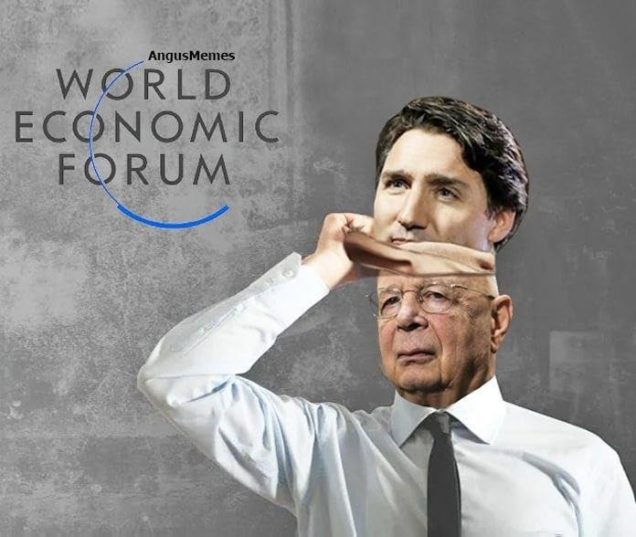
By Mary Manley | Samizdat | May 2, 2022
Canada, one of the wealthiest nations in the world, is finding a new way to cut costs on disabled people by… euthanizing them?
In 2015 the case of Carter v Canada (Attorney General) prompted the Supreme Court to strike down a previous provision in the Criminal Code, thereby allowing Canadian adults the option of assisted suicide, or Medical Assistance in Dying (MAiD).
That ruling then spiraled into a law known as Bill C-7, an all-encompassing euthanasia law passed in 2021 which threw out the requirement that those seeking assisted suicide need to have a terminal illness whose death was reasonably foreseeable.
Although Bill C-7 states that “Parliament affirms the inherent and equal value of every person’s life and the importance of taking a human rights-based approach to disability inclusion”, disability justice organizations and even the UN’s watchdog on disability opposed the new bill based on their belief that it would worsen discriminatory practices within the healthcare system.
More than 300 disability groups in Canada opposed Bill C-7, citing that the removal of the “reasonably foreseeable natural death” requirement would target disabled persons. Instead of being offered medical assistance or support, the Canadian government now has the option of doing away with any ill person that sucks up taxpayer money.
“Rather than funding and making life a possible and viable choice for many people, we’re entertaining this option of asking them if they would like to die, and it’s very scary,” said Spring Hawes, a former Invermere city councilor and the co-founder of Dignity Denied, in 2020.
“There is the danger that it might be considered a favor to offer someone dying when really that person just needs to have access to better care, better supports or the things they need to live well,” added Hawes who has a spinal cord injury and uses a wheelchair.
And what some could argue sounds like fear-mongering by a group of people who- in their very right have a legitimate reason to be afraid- is bolstered by horrifying stories told by disabled people which demonstrate abuse and neglect at the hands of their government.
In April of this year a 51 year-old Ontario woman with multiple chemical sensitivities (MCS) chose MAiD after two years of searching and failing to secure a bid for affordable housing free of cigarette smoke and chemical cleaners. “The government sees me as expendable trash, a complainer, useless and a pain in the a**,” she said in a video filmed on February 14, eight days before her assisted suicide.
One woman requested MAiD because she “simply [couldn’t] afford to keep on living”, after food banks became an inaccessible option. Another woman from Vancouver said she intended to use MAiD after COVID-19 left her with increased expenses and unmanageable pain. And in 2021, Chris Gladders chose to end his life via MAiD after experiencing “deplorable” living conditions at the retirement home called Greycliff Manor in Niagara Falls. When his family arrived to say goodbye to them they were horrified to find Chris in a room covered in urine and fecal matter.
“None of the floors were cleaned up or anything, you could see clearly where they changed his catheter bag,” said Shawn Gladders, Chris’s brother in January of 2021.
“There was urine on the floor, there were spots where there was feces on the floor… spots where your feet were just sticking. Like, if you stood at his bedside and when you went to walk away, your foot was literally stuck. It was very, very disturbing, for sure.”
Shawn said that on other occasions when he had visited his brother, Chris was taken outside of the room by a staff member, “I kick myself today, because I wish I would have walked in there before… I never would have left him there.” Shawn adds that Chris’ time at Greycliff Manor most likely contributed to his decision to end his own life.
In 2020, the Canadian government agreed to give a measly one-time payment of $600 to disabled persons who qualified, in response to the devastating economic effects of the COVID-19 pandemic. They estimated that just 1.67 million disabled persons would receive that assistance, compared to the 6 million disabled persons who live in Canada.
One disabled Canadian, who chose to remain anonymous, said that after asking her doctor to fill out a form for the credit he rejected her, saying, “You’re not disabled enough… You have to be sitting in the corner drooling to be able to get this.”
The fact is: the Canadian government has no interest in spending money on their disabled people. Instead, they see MAiD as a convenient option to cut costs on healthcare for persons with chronic conditions and other disabilities. Canada’s Parliamentary Budget Officer even published an exciting report on the savings assisted suicide would garner their taxpayers: MAiD before Bill C-7 generated a total saving of $86.9 million per year, and Bill C-7, the government was pleased to announced, would save an additional $62 million a year.
As if things couldn’t get any worse, Canada’s government appears to be fixed on including those with mental illnesses (such as depression, bipolar disorder, schizophrenia, and PTSD) to become eligible for assisted suicide, by as soon as next year. If that decision were to go through, Canada would become one of few nations allowing the use of MAiD in cases of mental illnesses.
Northern Ireland faces loss of 1 million sheep and cattle to meet climate targets
By Paul Homewood | Not A Lot Of People Know That | April 30, 2022
 Not only does agriculture account for a large slice of NI’s emissions (and Ireland’s too), it also accounts for a lot of its GDP, directly and indirectly.
There is a reason why Ireland is dominated by pastoral rather than arable farming. It’s because most of the land is unsuitable for growing of crops, certainly to a profitable extent. Much of the land is rocky and the climate is far too wet. That was why Ireland was so reliant on potatoes at the time of the Great Famine.
Currently only 4% of N Ireland’s farmland is arable.
Although farm labour only accounts for 7% of the country’s labour force, many more depend on the rural economy. Altogether the rural population makes up about 40% of the total in N Ireland. Destroying a large part of farming sector there would be catastrophic for the rural sector. Replacing the meat and dairy sector with, for instance, potatoes would decimate incomes and lead to mass migration out of the countryside.
Perhaps the most shocking part of the Guardian’s report is the reaction of Chris Stark, who is more interested in his modelling than in people’s lives. It also raises the question of just how all of this will be enforced. Farmers certainly are not going to give up willingly.
Shades of the infamous Soviet Land Reforms?
The Aggressors Accuse Russia of ‘Blackmail’ for Defending its Currency, Energy Wealth, and Even Its Existential Security

Strategic Culture Foundation | April 29, 2022
The United States and its NATO and European Union allies have imposed unprecedented economic sanctions on Russia that amount to economic warfare. This warfare has been going on, discernibly, since the CIA-backed coup in Ukraine in 2014 on the back of allegations of Russian wrongdoing, for example, the alleged annexation of Crimea. It’s the logic of a poacher posing as the gamekeeper.
For eight years, the U.S.-led economic war against Russia has been pursued without relent. The self-professed “exceptional nation” presumes the privileged, exclusive use of economic terrorism against others who do not bend the knee. In hock to its Washington master, the European Union has imposed round after round of restrictions on trade with Russia in full compliance with American orders. The European compliance to self-inflict damage is astounding especially given that the U.S. economy is not as reliant on Russia as the EU’s and therefore has not been impacted as badly, at least not directly. But the presumed American “free lunch” is beginning to change, as our columnist Declan Hayes cogently surveyed this week.
Now that the proxy war against Russia has escalated into “Total War” – the historically sinister phrase used by France’s economy minister Bruno Le Maire – the full nefarious scope of the Western objective has become even more explicit. The U.S. and its NATO partners want to achieve the complete collapse of the Russian economy leading to regime change in Moscow. The eruption of violence in Ukraine following Russia’s military intervention on February 24 is but the opportunity to ramp up the U.S.-led war campaign against Russia.
The explicitly stated objective of cutting off Russia’s vital energy trade and the theft of the country’s foreign monetary reserves can only be interpreted as part of a wider imperial plan to crush the Russian nation, subjugate it and conquer its vast natural wealth.
Eight years of NATO-backed military aggression by the Neo-fascist Kiev regime against Russian-speaking populations has gone hand-in-hand with the installation of U.S. strategic weapons across Europe, including Dark Eagle hypersonic missiles in Germany and biological weapons of mass destruction in Ukraine. The military threat to Russia has been in tandem with the relentless economic warfare from sanctions. In addition, there is the intransigence by the U.S. and its NATO partners to engage with Moscow in resolving security concerns through diplomacy. All of this culminated in the present war in Ukraine. The concerted and rapid imposition of further draconian sanctions on the Russian economy from the blockade on virtually its entire banking system as well as the extreme censorship of Russian international media – all of that indicates that the U.S. and its partners were already on a war footing and ready to escalate hostilities.
In this context, ominously, Ukraine is resembling Bosnia-Herzegovina and the pre-World War One assassination of Archduke Franz Ferdinand as a fatal flashpoint.
The reckless flooding of weapons into Ukraine over recent weeks by the United States, NATO, and the European Union is also proof of a premeditated pent-up war agenda. This week, U.S. President Joe Biden is calling for his Congress to release $33 billion in “emergency aid” for Ukraine to “defend against Russian aggression”. This represents a tenfold increase in the record military support that the Biden administration has already plowed into the Kiev regime. This is tantamount to stoking a powder-keg.
The ludicrous, bitter laugh about this is that when Russia seeks to defend itself and Russian-speaking people, then Moscow is accused of “aggression”.
The latest twist in this Western duplicity and rank hypocrisy comes with the accusations that Russia is using “blackmail” by warning it will cut off its prodigious gas supplies to Europe. Moscow has simply and reasonably demanded that all European importers must henceforth pay for their gas supplies in the Russian currency, the ruble, as opposed to dollars or euros. The move was prompted in part because the Western countries had seized Russia’s foreign reserves and have banned most Russian banks from the international payment system. In other words, it is they who have politicized their currencies as weapons. So what is Russia supposed to do? Give away its vast natural gas wealth for free? To countries that are waging an economic war and increasingly a military proxy war against it?
This week, Russia’s state-owned energy industry Gazprom announced it was suspending the supply of gas to Poland and Bulgaria. The two EU and NATO member states had bluntly refused to pay for their vital energy needs in Russian currency. In that case, Russia has the right to withhold the selling of its commodity.
The move to mandate payment for gas in ruble was an essential counter-measure that has succeeded in defending the Russian currency and economy from collapse. That collapse was being deliberately orchestrated by Western sanctions aimed at strangling Russia. And yet when Russia acts to defend its vital existential interests it is accused of using “blackmail”. One of the shrill voices was that of European Commission President Ursula von der Leyen. The former German defense minister is a rabid Russophobe. Her logic of accusing Russia of wrongdoing is like a Third Reich minister lambasting the Warsaw Ghetto uprising as an insolent insurrection.
Von der Leyen and her elite, unelected Brussels bureaucracy are calling for all EU members to refuse payments to Russia. They are effectively endorsing the theft of Russia’s wealth. Their arrogance is not surprising. But that arrogance is leading to rebellion across Europe from the economic damage and unbearable cost-of-living crisis hitting the majority of the EU’s 500 million population. Bulgarian and Polish workers are demanding their governments resume trade with Russia to prevent a crash to their livelihoods.
A further mockery in this absurd scenario is that anti-Russia hawks in the United States and Europe have been vociferously jeering for all energy and other trade with Russia to be cancelled. Of course, this mania is all about propping up U.S. capitalism, hegemony over Europe, the weapons industry, and the transatlantic feeding trough for effete European lackeys.
Then, when Russia cuts off the energy supplies because of non-payment, there is an uproar about Moscow “weaponizing trade”.
The Western accusations of economic blackmail are analogous to perverse claims of military blackmail. The criminally reckless aggression that the United States and its NATO partners have pursued against Russia has escalated into war in Ukraine. As a British government minister demonstrated this week, the NATO powers are now directing their proxy Kiev regime to launch attacks on Russian territory. Yet when Russia warns of the dangerous risks of world war veering into a nuclear conflagration, the Western powers and their dutiful media turn around and accuse Russia of using “nuclear blackmail”.
America and Europe’s dubious political “leadership” is exposing itself as delusional, duplicitous, and criminally insane. They are insanely willing to push the world into a catastrophic war. And when Russia stands up to their madness, it is accused of being a reprobate.
In a funny sort of way, such farcical Western leadership is good. For it only further exposes how utterly unhinged and corrupt the Western elite rulers are in the eyes of their increasingly restive, angry populations.
It is Western callous, sociopathic leaders who are the ones blackmailing their own citizens and indeed the rest of the world. Their ultimatum is: destroy Russia or we will destroy everything. This is the mindset of totalitarianism.
The Western public’s enemy is not Russia, and it’s not China nor Iran, Syria, Venezuela, North Korea, Cuba, or some other designated foreign foe. All our enemy is the Western system of U.S.-led imperialism, its capitalist elite, and their political flunkies like Joe Biden and Ursula von der Leyen.
Bulgarians want Russian gas back – minister
Samizdat – April 28, 2022
Bulgarian businesses want Sofia “to make it possible to resume talks with Gazprom” after the Russian energy giant cut off gas supplies to the country, according to Bulgarian Deputy Prime Minister and Economy Minister Kornelia Ninova.
“We propose that, by then, gas prices should be frozen or capped at their level in the contract with Gazprom and the difference with the higher prices of alternative supplies be paid for by the State,” she said at a press conference after meeting with the Bulgaria Professional Employer Organization (PEO).
The calls come a day after Gazprom ceased delivering gas to Bulgaria after the country refused to pay for energy supplies in rubles. Bulgaria relies on Russia for nearly 90% of its gas, with the remainder coming from Azerbaijan.
Earlier in the day, Bulgarian Prime Minister Kiril Petkov said that Bulgaria has enough gas supplies to last more than one month should nothing change, stressing that Sofia would not accept Russia’s terms on exports of gas.
“But we hope to complete the construction of a new interconnector with Greece by the end of June. And we also look forward to a common strategy for the procurement of liquefied gas by the European Commission,” Petkov said in an interview with Le Monde.
Lithuanian Railways plans to lay off about 2,000 employees
The Baltic Times | April 28, 2022
Lietuvos Gelezinkeliai (Lithuanian Railways, LTG) said on Thursday it is planning to lay off around 2,000 of its 9,000-plus employees, with around a quarter of the state-owned group’s managerial staff at various levels set to leave.
The company said in a press release that 6 million euros will be allocated for severance payments to employees.
The planned layoffs will affect around 1,200 workers in LTG Cargo, the group’s freight transportation subsidiary, about 500 in LTG Infra, the infrastructure subsidiary, and some 300 in LTG. The group currently has around 9,200 employees in total.
Both LTG and the Employment Service will provide assistance to the redundant workers, according to the press release.
The company has said earlier that it may lose some 150 million euros in revenue this year as freight volumes are forecast to halve, compared to last year, to around 26.5 million tons.
LTG has lost around 11 million tons in annual freight because of EU and US sanctions against Belarus’ potash giant Belaruskali, which will trim its annual revenue by 61 million euros.
The railway company is set to lose another 2.6 million tons of freight and 12.8 million euros in revenue due to EU sanctions on the [Russian] owner of Lithuania’s phosphate fertilizer producer Lifosa.
The EU’s sanctions on Russian coal and Poland’s refusal to buy it will result in a loss of 2.5 million tons of coal shipments and 12 million euros in revenue for LTG.
The railway group will lose another 1.4 million tons of freight and 17 million euros in revenue as a result of Belarus’ ban on the transit of oil and oil products and fertilizers from Lithuania. Ninety-five percent of these shipments were destined for Ukraine.
Lithuania’s draft revised 2022 budget, approved by the Cabinet, earmarks 155 million euros in additional financing for LTG.
Biden Cynically Uses Ukraine to Cover Food Sabotage
By F. William Engdahl – New Eastern outlook -26.04.2022
It’s beginning to look like some bad actors are deliberately taking steps to guarantee a coming global food crisis. Every measure that the Biden Administration strategists have been making to “control energy inflation” is damaging the supply or inflating the price of natural gas, oil and coal to the global economy. This is having a huge impact on fertilizer prices and food production. That began well before Ukraine. Now reports are circulating that Biden’s people have intervened to block the freight rail shipping of fertilizer at the most critical time for spring planting. By this autumn the effects will be explosive.
With the crucial time for USA spring planting at its critical phase, CF Industries of Deerfield, Illinois, the largest US supplier of nitrogen fertilizers as well as a vital diesel engine additive, issued a press release stating that, “On Friday, April 8, 2022, Union Pacific informed CF Industries without advance notice that it was mandating certain shippers to reduce the volume of private cars on its railroad effective immediately.” Union Pacific is one of only four major rail companies that together carry some 80% of all US agriculture rail freight. The CF company CEO, Tony Will stated, “The timing of this action by Union Pacific could not come at a worse time for farmers. Not only will fertilizer be delayed by these shipping restrictions, but additional fertilizer needed to complete spring applications may be unable to reach farmers at all. By placing this arbitrary restriction on just a handful of shippers, Union Pacific is jeopardizing farmers’ harvests and increasing the cost of food for consumers.” CF has made urgent appeals to the Biden Administration for remedy, so far with no positive action.
Direct sabotage
CF Industries noted that they were one of only thirty companies subject to the severe measure, which is indefinite. They ship via Union Pacific rail lines primarily from its Donaldsonville Complex in Louisiana and its Port Neal Complex in Iowa, to serve key farm states including Iowa, Illinois, Kansas, Nebraska, Texas and California. The ban will affect nitrogen fertilizers such as urea and urea ammonium nitrate (UAN), as well as diesel exhaust fluid, DEF (called AdBlue in Europe). DEF is an emissions control product required for diesel trucks today. Without it engines cannot run. It is made from urea. CF Industries is the largest producer of urea, UAN and DEF in North America, and its Donaldsonville Complex is the largest single production facility for the products in North America.
At the same time, the Biden gang has announced a fake remedy for record high gasoline pump prices. Washington announced the EPA will allow a 50% increase in corn-based biodiesel and ethanol fuel mix for the summer. On April 12 the Secretary of Agriculture announced a “bold” initiative by the US Administration to increase the use of domestically-grown corn-ethanol biofuels. Secretary Tom Vilsack claimed the measure would “reduce energy prices and tackle rising consumer prices caused by Putin’s Price Hike (sic) by tapping into a strong and bright future for the biofuel industry, in cars and trucks and the rail, marine, and aviation sectors and supporting use of E15 fuel this summer.”
Only the capitalized “Putin Price Hike” is not a result of Russian actions, but of Washington Green Energy decisions to phase out oil and gas. The energy price inflation is also about to go vastly higher in coming months owing to US and EU economic sanctions on export of Russian oil and likely gas. However the central point is that every acre of US farmland dedicated to growing corn for biofuels removes that food production from the food chain, to burn it as fuel. Since passage of the 2007 US Renewable Fuel Standards Act, which mandated annually rising targets for production of corn for ethanol fuel blends, biofuels have captured a huge part of total corn acreage, more than 40% in 2015. That shift, mandated by law, to burning corn as fuel had added a major price inflation for food well before the covid inflation crisis began. The USA is by far world’s largest corn producer and exporter. Now to mandate a significant increase in corn ethanol for fuel at a time of astronomical fertilizer prices, and fertilizer rail shipping are being blocked reportedly by White House orders, will send corn prices through the roof. Washington knows this very well. It is deliberate.
No wonder the price of US corn reached a 10-year high in mid-April, as exports from Russia and Ukraine, major sources, are now blocked by sanction and war. Aside from the energy-inefficient use of US corn for biodiesel supply, the latest Biden ethanol initiative will add to the growing food crisis while doing nothing to lower US gasoline prices. A major use for US feed corn is as animal feed for cattle, pigs and poultry as well as for human diets. This cynical biofuel order is not about US “energy independence.” Biden ended that in his first days in office by a series of bans on oil and gas drilling and pipelines as part of his Zero Carbon agenda.
In what is clearly becoming a US Administration war on food, the situation is being dramatically aggravated by USDA demands for chicken farmers to kill off millions of chickens in now 27 states, allegedly for signs of Bird Flu infection. The H5N1 Bird Flu “virus” was exposed in 2015 as a complete hoax. The tests used by the US government inspectors to determine bird flu now are the same unreliable PCR tests used for COVID in humans. The test is worthless for that. US Government officials estimate that since first cases were “tested” positive in February, at least 23 million chickens and turkeys have been culled to allegedly contain the spread of a disease whose cause could be the incredibly unsanitary cage confinement of mass industrial chicken CAFOs. The upshot is sharp rises in prices of egg by some 300% since November and severe loss of chicken protein sources for American consumers at a time when overall cost of living inflation is at a 40-year high.
To make matters worse, California and Oregon are again declaring water emergency amid a multi-year drought and are sharply reducing irrigation water to farmers in California, who produce the major share of US fresh vegetables and fruits. That drought has since spread to cover most agriculture land west of the Mississippi River, meaning much of US farmland.
US food security is under threat as never before since the 1930s Dust Bowl, and the Biden Administration “Green Agenda” is doing everything to make the impact worse for its citizens.
In recent comments US President Biden remarked without elaborating that the US food shortages are “going to be real.” His administration also is deaf to pleas of farmer organizations to allow cultivation of some 4 million acres of farmland ordered left out of cultivation for “environmental reasons. However this is not the only part of the world where crisis in food is developing.
Global Disaster
These deliberate Washington actions are taking place at a time a global series of food disasters create the worst food supply situation in decades, perhaps since the World War II end.
In the EU, which is significantly dependent on Russia, Belarus and Ukraine for feed grains, fertilizers and energy, sanctions are making the covid-induced food shortages dramatically worse. The EU uses its foolish Green Agenda as an excuse to forbid the Italian government from ignoring EU rules limiting state aid to farmers. In Germany, the new Green Party Agriculture Minister Cem Özdemir, who wants to phase out traditional agriculture allegedly for its “greenhouse gas” emissions, has given farmers who want to grow more food a cold response. The EU faces many of the same disastrous threats to food security as the USA and even more dependence on Russian energy which is about to be suicidally sanctioned by the EU.
The major food producing countries in South America, especially Argentina and Paraguay, are in the midst of a severe drought attributed to a periodic La Niña Pacific anomaly that has crippled crops there. Sanctions on Belarus and Russia fertilizers are threatening Brazil crops, aggravated with bottlenecks in ocean transport.
China just announced that owing to severe rains in 2021, this year’s winter wheat crop could be the worst in its history. The CCP also has instituted severe measures to get farmers to expand cultivation to non-farm lands with little reported effect. According to a report by China watcher Erik Mertz, “In China’s Jilin, Heilongjiang, and Liaoning provinces, officials have reported one in three farmers lack sufficient seed and fertilizer supplies to begin planting for the optimum spring window… According to sources within these areas, they are stuck waiting on seed and fertilizer which have been imported to China from overseas – and which are stuck in the cargo ships sitting off the coast of Shanghai.” Shanghai, the world’s largest container port, has been under a bizarre “Zero Covid” total quarantine for more than four weeks with no end in sight. In a desperate bid by the CCP “ordering” increased food production, local CP officials throughout China have begun transforming basketball courts and even roads into cropland. The food situation in China is forcing the country to import far more at a time of global shortages, driving world grain and food prices even higher.
Africa is also severely impacted by the US-imposed sanctions and war ending food and fertilizer exports from Russia and Ukraine. Thirty five African countries get food from Russia and Ukraine. Twenty two African countries import fertilizer from there. Alternatives are seriously lacking as prices soar and supply collapses. Famine is predicted.
David M. Beasley, executive director of the UN World Food Program, declared recently on the global food outlook, “There is no precedent even close to this since World War II.”
Notably, it was the Biden Treasury Department that drew up a list of the most comprehensive economic sanctions against Russia and Belarus, pressuring a compliant EU to dutifully follow, sanctions whose impact on global grain and fertilizer and energy supply and prices was entirely predictable. It was in effect a sanction on the US and global economy.
These are but the latest examples of deliberate US Government sabotage of the food chain as part of the Biden Green Agenda, of Davos WEF, Bill Gates and the Rockefeller Foundation, as part of their dystopian Great Reset eugenics agenda. Traditional agriculture is to be replaced by a synthetic lab grown diet of fake meats and protein from grasshoppers and worms, worldwide. All for the supposed glory of controlling global climate. This is truly mad.
F. William Engdahl is strategic risk consultant and lecturer, he holds a degree in politics from Princeton University.
5 signs they are CREATING a food crisis
By Kit Knightly | OffGuardian | April 25, 2022
It’s no secret that, according to politicians and the corporate press, “food shortages” and a “food supply crises” have been on the way for a while now. They have been regularly predicted for several years.
What’s really strange is that despite its near-constant incipience, the food shortage never seems to actually arrive and is always blamed on something new.
As long ago as 2012, “scientists” were predicting that climate change and a lack of clean water would create “food shortages” that would “turn the world vegetarian by 2050”.
In 2019, UN “experts” warned that “climate change was threatening the world’s food supply”.
Later the same year, the UK was warned that they could expect a food shortage as a result of “post-Brexit chaos”.
By early March 2020 supermarkets were already “warning” that the government had been too slow to act on the coronavirus outbreak, and they might run out of food. (They never actually did).
A month later, in April 2020 when the “pandemic” was less than three months old, “officials” warned Covid was going to create a global food crisis. Three months later it had ballooned into “the worst food crisis for 50 years”.
In the Summer of 2021 the British press was predicting the “worst food shortages since world war 2” and “rolling power cuts”, allegedly due to a lack of truck drivers blamed equally on Covid and Brexit (neither the shortages nor power cuts ever really materialised).
By September 2021, the UK was told the gas price spike would create a shortage of frozen food, and just a month later, that we may have to ration meat ahead of Christmas, due to the gas crisis. (There never was any rationing)
In January 2022, Australia saw “empty supermarket shelves” blamed on the Omicron variant crippling the supply chain, while the US had the same empty shelves blamed on bad winter weather.
Moving into the spring of 2022, the food crisis is still on its way…only now it’s because of the war in Ukraine, or China’s “Zero Covid” policies, or the bird flu outbreak.
You’d be forgiven for thinking that – since the food crisis is always expected but never arrives, and is always blamed on the current thing – that it doesn’t really exist. That it’s nothing but a psy-op designed to spread panic and give suppliers an excuse to jack up their prices in response to fake “scarcity” created by the press.
However, there are indications that this may be about to change.
In a Brussels press conference on March 25th of this year, Joe Biden said…
Regarding food shortages – yes, we did talk about shortages, and they’re going to be real.”
… which is a decidedly odd thing to say.
Most of the time the only reason to strongly affirm something is “going to be real” from now on, is that up to that point it was not.
Indeed, there are a few signs that the food supply is about to genuinely come under attack.
1. UKRAINE WAR & WESTERN SANCTIONS
It’s well documented that Russia’s “special operation” in Ukraine has driven up the prices of oil, gas and wheat. Partly due to disruption on the ground, but mostly due to Western sanctions.
Russia is the largest exporter of wheat and other grains in the world, and these products are used not just for making food for humans, but also as animal feed. Western nations boycotting Russian wheat will therefore potentially drive up the price of a huge variety of foodstuffs.
We have already seen rationing of sunflower oil (a major Ukrainian export), with reports that this could extend to all kinds of other products including sausages, chicken, pasta and beer.
This war did not need to happen, it could have been prevented (and could still be stopped) by a simple agreement on Ukrainian neutrality. Combine that with the sweeping nature of the anti-Russian sanctions – unmatched in recent history – and you can reason that the chaos on the ground and concomitant increase in food prices is part of a deliberate policy serving the Great Reset agenda.
2. INCREASING THE PRICE OF OIL
The increased price of oil has natural and obvious knock-on effects for every industrial sector – most especially transport, logistics and agriculture. Despite fears of a cost of living crisis, warnings of food shortages and Russia’s status as the largest exporter of oil and gas in the world, Western nations and their allies have made virtually zero effort to lower the cost of oil.
The high oil price has already seen the Russian ruble bounce back to pre-war strength, and yet Saudi Arabia has been increasing their prices, not flooding the market to tank the price as they did in 2014/15.
Keeping the cost of petroleum high is a deliberate policy decision, and one that shows the cost of living crisis – and any resultant food shortages – are being engineered on purpose.
3. BIRD FLU
The press is claiming there is a major bird flu outbreak going on. As we published last week, the dynamics of “bird flu” seem to be identical to Covid. Birds are tested for the virus using PCR tests, culled if they are “positive”, and these culls are then labelled “bird flu deaths”.
This process has already seen at least 27 million poultry birds destroyed in the US alone, the world’s largest exporter of both chicken and eggs. France, Canada and the UK have also culled millions of birds.
Bird flu has already (allegedly) caused the price of chicken and eggs to skyrocket.
(As a potentially important aside, a new report has also warned that pigs can pass “superbugs” to humans, so pigs may be for the chop sometime soon, too)
4. UK & US PAYING FARMERS TO STOP FARMING
Going back to last May, the Biden administration began pushing farmers to add agricultural land to the “conservation reserve program”, a federally funded program allegedly aimed at preserving the environment. The program is essentially paying farmers not to farm. A very odd policy decision, given the widely predicted food shortages.
A state-level plan in California is going to pay farmers to grow less, this time in the name of saving water.
Interestingly, the UK has a similar program going on for (again, allegedly) totally different reasons. Starting this past February, the British government is paying lump sums of up £100,000 to any farmers who want to retire from farming. Again, a strange policy during a period of geopolitical unrest impacting the food supply.
5. MANUFACTURED FERTILISER SHORTAGES
Russia and Belarus are two of the biggest exporters of fertiliser and fertiliser-related products in the world, accounting for around 10 billion dollars worth of trade manually. So, the war in Ukraine (and the sanctions) are already hitting the fertiliser market hard, with prices hitting new all-time highs in March.
China, the third biggest exporter of fertiliser in the world, has had a self-imposed export ban on the product since last summer, allegedly in an effort to keep domestic food prices low.
Given that, it is very strange that America’s Union Pacific Railway has suddenly placed a limit on the number of fertiliser deliveries it will make, informing fertiliser giant CF Industries they will need to cut their train car use by as much as 20%.
In their public response, CF Industries stated:
The timing of this action by Union Pacific could not come at a worse time for farmers…Not only will fertilizer be delayed by these shipping restrictions, but additional fertilizer needed to complete spring applications may be unable to reach farmers at all. By placing this arbitrary restriction on just a handful of shippers, Union Pacific is jeopardizing farmers’ harvests and increasing the cost of food for consumers.”
BONUS: FIRES AT FOOD PROCESSING PLANTS
This get’s a bonus slot, not an official spot, because of the multiple unknowns in this case.
In the strangest and most ephemeral story on the list, it seems there has been a rash of fires at food processing plants all over the United States in the last six months. Since August 2021 at least 16 major fires have broken out at food processing plants all across the country.
In September last year a meat processor in Nebraska burned down, impacting 5% of the country’s beef supply. In March of this year fire shut down a Nestle frozen food plant in Arkansas and a major potato processing site in Belfast, Maine was almost levelled by a huge fire.
The examples just keep on coming.
In just the last week two different single-engine planes have crashed into two different food plants, causing major fires. One at a potato processing plant in Idaho, another at a General Mills plant in Georgia.
Right now we can’t prove this is a deliberate campaign, or even statistically unusual, but it certainly warrants some further investigation.
There’s a good write-up on this story on Tim Pool’s website, and an in-depth twitter thread covering all the recent events from Dr Ben Braddock here.
*
In summary …
- A war which did not need to happen is driving up food and oil prices.
- Sanctions which did not need to be put in place are also driving up food and oil prices.
- Western allies are intentionally raising their oil prices.
- Despite warning of a food crisis, US and UK are paying farmers not to farm.
- A “bird flu epidemic” very much like the fake Covid “pandemic” is driving up the price of poultry and eggs.
- Western companies are actively making the fertiliser shortages worse.
- Bizarre fires are crippling large sections of the US food industry.
Taken individually maybe these points could all be seen as mistakes or coincidences, but when you put them all together it’s not hard to spot the pattern. The press may claim we are “sleepwalking” into a food crisis, but it looks more like they’re running head-first into it.
After years of saying there’s a food shortage on the way, it looks like they might be about to finally actually create one.
German businesses note impact of skyrocketing energy costs
Samizdat | April 25, 2022
About 40% of German companies have already felt the consequences of the rapid rise in energy prices over the past several weeks, a survey by the Ifo Institute for Economic Research in Munich published on Monday has found.
The survey covered 1,100 German enterprises, 950 of which were family owned. As many companies surveyed have long-term supply contracts, not all respondents said they felt hefty price increases so far. However, a quarter of the firms surveyed said they expect their energy costs to spike in the second half of this year, while another quarter believe it will happen in 2023. The survey also showed that almost 90% of businesses are likely to raise prices to counter the skyrocketing energy costs, and three-quarters of the companies intend to invest more in energy efficiency.
Some 11% of the firms are considering the possibility of completely abandoning energy-intensive business areas, and 14% are studying the possibility of cutting their staff. Still, only a small percentage of the surveyed companies want to move their offices abroad.
“We need a policy that corrects this distortion of competition and stops skyrocketing energy prices,” Professor Rainer Kirchdörfer, one of the experts behind the survey, said, referring to the fact that Germany had significantly lost its competitiveness in energy policy even before the current energy crisis, brought about by the events in Ukraine.
Energy prices soared last month, after Russia launched a military operation in Ukraine, which triggered a flood of Western economic sanctions against Moscow, though the measures stopped just short of an embargo on Russian crude oil and natural gas. Russia retaliated by introducing a new ruble-based payment mechanism for its natural gas, hinting at the possibility that other energy exports might follow.
According to the German news agency DPA, citing data from the Verivox online platform, the increase in energy prices will inevitably lead to a significant increase in electricity prices for private consumers in Germany this year. Electricity suppliers in the country, responsible for roughly 13 million households, have already announced an increase in tariffs in April, May and June by an average 19.5%. Growth in gas prices is expected to be even greater, at about 42.3%.
According to Verivox, if a household paid an average of €1,171 ($1,258) for electricity per year prior to the Ukraine crisis, with the current costs it will have to pay some €1,737 ($1,867). The situation is even worse with natural gas: a household that paid €1,184 ($1,272) for gas annually in April last year would pay €2,787 ($2,995) at current prices, which equals to an increase of 135%.
The EU pledged to end its dependence on Russian energy earlier this month, despite importing roughly 40% of its gas and 30% of its oil from the country. However, experts and politicians within the bloc have warned that banning Russian energy imports could only lead to further price spikes, as it would be impossible to find an alternative quickly enough.
US food production threatened by mysterious fires in meat plants
Free West Media | April 25, 2022
More and more food processing plants are going up in flames in the US. Sixteen such incidents have been recorded so far. The background is unclear, but terrorism is being ruled out.
The fact is, however, that the basic needs of the population are massively threatened in some places by these attacks on infrastructure while authorities downplay the incidents.
Throughout the past year, but especially since February 2022, a series of devastating fires in the United States and Canada have destroyed or severely damaged food processing plants – mostly meat plants (slaughterhouses, hog and poultry farms), but also silage and large-scale grain production plants. As a result, there could be food shortages and price increases in many areas.
Devastating damage
The damage is catastrophic: an employee of an affected factory in Texas estimates that 50 to 100 truckloads of onions were destroyed there alone. A factory in Oregon was completely destroyed by a boiler explosion and all 244 employees had to be laid off. A fire in California had to evacuate 2 700 people around the affected factory.
Food prices are already at record highs in the US. The Rockefeller Foundation released an analysis of when a “massive, immediate food crisis” could start, and added that it would probably be “in the next six months”. The foundation shares the outlook of the World Economic Forum (WEF), advocating for the “Great Reset”.
Fires and explosions: possible connections
Officially, there are various reasons for the fires: the authorities downplay the possibility of any connections, and the Homeland Security Department does not assume terrorist attacks. At least one fire in Georgia last week was caused by a plane crashing onto a factory site. Since fires and explosions on factory premises and similar events repeatedly broke out for unknown reasons, some experts also suspect the likelihood of serial perpetrators and targeted attacks.
Conceivable would be militant animal or nature conservationists, climate activists or enemies of industrial food production, who are resorting to increasingly uncompromising means in the US just as they are in Europe.
Food crisis is getting worse
It is undisputed that the never-ending series of incidents will further exacerbate the food crisis, which is also noticeable in the US, as a result of supply chains that are already strained. In any case, the extent of the damage caused by the destruction in this sensitive key sector cannot yet be quantified; it also depends on how quickly the damaged or completely destroyed facilities can be repaired.
The FBI’s Cyber Division meanwhile published a warning about increased “cyber-attack threats” on agricultural cooperatives.
“Ransomware actors may be more likely to attack agricultural cooperatives during critical planting and harvest seasons, disrupting operations, causing financial loss, and negatively impacting the food supply chain,” the notice read, adding 2021 and early 2022 ransomware attacks on farming co-ops could affect the current planting season “by disrupting the supply of seeds and fertilizer”.
The agency warned, “A significant disruption of grain production could impact the entire food chain, since grain is not only consumed by humans but also used for animal feed … In addition, a significant disruption of grain and corn production could impact commodities trading and stocks. ”
Featured Video

Chinese jet fuel and the myth of energy independence
or go to
Aletho News Archives – Video-Images
From the Archives
The Dirty Little Secret behind the “Global Terrorism Index”
The Omission of Israeli Terrorism in the Occupied Palestinian Territories
By Karin Brothers | Global Research | December 6, 2014
… The Israeli settlements — all of which are illegal – have been identified as a major impediment to peace. The refusal of a major “global” terrorism report to name the Israeli settlers as one of the groups most responsible for terrorism not only misrepresents a major source of regional violence but exposes the Global Terrorism Index as a propaganda tool that supports a U.S. agenda.
In recent years, governments have been attempting to thwart terrorism by blocking supportive fund-raising. When it comes to Israeli settlements, however, the US and Canada actually encourage fund-raising by giving organizations (such as Christian Friends of Israeli Communities (CFOIC) and the Jewish National Fund) financial support in the form of donor tax-deductions.
Charities which provide funds for the Israeli settlements should be regarded as terror-financing organizations. They should not only lose their tax-deductible status, but they should be banned because they support the violation of international humanitarian law. The terror-financing laws that are being strictly enforced for Muslim charities should be applied to Christian and Jewish charities as well. … Read full article
Blog Roll
 Aletho News
- Chinese jet fuel and the myth of energy independence
- Ukraine Sea Drone Fired From Libya Hit Russian Tanker in Mediterranean
- IRGC: Iranian forces launched no attacks during ceasefire hours
- Trump Administration Moves To Automate U.S. Military Draft Registration
- Spain orders reopening of Tehran embassy, condemns Israel’s carpet bombing of Lebanon
- Israel faces ‘unsustainable’ strategic crisis following 40-day war against Iran: Analyst
- Iran restricts Hormuz access to 15 vessels per day under ceasefire terms: Report
- The ‘Opposition Party’ Has Done Nothing to Stop the Iran War and Much to Goad Trump Into Continuing It
- Moscow backs Tehran on status of Lebanon in US-Iran deal
- How UK Regulator Ofcom Quietly Bypassed International Law to Police American Speech
- If Americans Knew
- Amnesty: Urgent – Protect Lebanese civilians from brutal escalation in Israeli attacks
- Is The War Against Iran Over?
- Inside the Israeli army’s propaganda wing
- Hundreds of Gaza Amputees Stranded in Legal Limbo
- The gallows law: Israel moves toward executing Palestinian children
- Tucker Carlson: The Path to Peace requires ending ‘special alliance’ with Israel
- This is ceasefire? Israel’s biggest massacre yet in Lebanon, another journalist killed in Gaza – Daily Update
- Tucker Carlson on Israel: This Is the Behavior of an Ally? Really?
- Gazans face a triple crisis: severe shortages of water and bread, healthcare in tatters
- NY Times reports how Netanyahu took the US into Iran War
- No Tricks Zone
- An Inconvenient Tree: Uncovered In Alps… Europe Much Warmer Than Today 6000 Years Ago
- New Study Reports A 60% Slowdown In Greenland’s Ice Loss Rate In The Last Decade
- Low Intensity Tornado Wrecks Major Solar Farm, Creating A Potential Toxic Dump
- New Study Finds Warming Saves Lives…Cold Temperatures 12 Times More Deadly Than Excess Heat
- German Science Blog Accuses PIK Climate Institute Of Hallucinating Climate Tipping Points
- Devastating Assessment Of Comirnaty Vaccine By Former Senior Pfizer Europe Toxicologist
- New Study: CO2 Is ‘Effectively Negligible’ As An Explanatory Climate Change Factor Since 2000
- Former Pfizer Toxicologist Dr. Helmut Sterz Tells Bundestag Hearing Pfizer Vaccine Should Have Never Been Approved
- Energy Expert: Germany’s Nuclear Phaseout Was A “500 Billion Euro Mistake”
- New Research: South Australia’s Mid-Holocene Sea Surface Temperatures Were 4°C Warmer Than Today
 Aletho News