European gas prices forecast to triple
Samizdat | May 15, 2022
A “perfect winter storm” may be forming in Europe, as the continent seeks to limit Russian gas flows, analysts at Rystad Energy said in a press release this week. They added there might be not enough LNG to replace Russian gas during the freezing weather. The price of gas in the EU was projected to soar to $3,500 per 1,000 cubic meters.
According to the report, last year Russia sent 155 billion cubic meters (bcm) of gas to the continent, providing more than 31% of its gas supply.
“Replacing a significant portion of this will be exceedingly difficult, with far-reaching consequences for Europe’s population, economy, and for the role of gas in the region’s energy transition.”
By shunning Russian gas, Europe has destabilized the entire global LNG (Liquefied Natural Gas) market, which began the year with a precarious balance after a tumultuous 2021, Rystad explained. The decision to sharply reduce reliance on Russian gas and LNG from current levels of between 30-40% will transform the global LNG market, it added.
The report highlighted that global LNG demand is expected to hit 436 million tons in 2022, outpacing the available supply of just 410 million tons. “The supply imbalance and high prices will set the scene for the most bullish environment for LNG projects in more than a decade, although supply from these projects will only arrive and provide relief from after 2024,” it said.
According to the research, if Russian gas flows were to stop tomorrow, the gas currently in storage (about 35% full) would likely “run out before the end of the year, leaving Europe exposed to a brutal winter.” Under such a scenario, in the absence of joint buying arrangements and countries competing for limited molecules, the TTF gas price could climb to more than $100 per million British thermal units (MMBtu), resulting in industrial curtailments and widespread fuel switching in the power sector. In an extreme scenario of a severely cold winter, “not even the residential sector would be safe.”
Natural gas prices surged this week after Moscow imposed its first counter-sanctions on some European energy companies. The price of gas in Europe exceeded $1,200 per 1,000 cubic meters during Thursday trading, according to data provided by London’s ICE. Benchmark prices are almost 300% higher compared with a year ago, Reuters reports.
What Sanctions? Russian Oil Revenues Soar 50%, Hitting A Record High
By Tyler Durden | Zero Hedge | May 12, 2022
And the sanctions hits just keep on coming.
A few weeks after we learned that Russia’s current account just hit an all time high thanks due to soaring commodity exports (just as the US trade deficit blew out to a record high on its own) we learned that contrary to the intentions of European countries, a calculation by a German think tank found that Russia’s oil and gas revenues hit a record high in April, rising to 1.8 trillion rubles in a single month, after 1.2 trillion in March, leading to the following stunning statistics “After only 4 months, Russia’s federal budget has now already received 50% of the planned oil and gas revenue for 2022 (9.5 trillion).”
Today, Bloomberg confirmed this stunning statistic and, citing the latest IEA report, writes that Russia’s oil revenues are up 50% this year “even as trade restrictions following the invasion of Ukraine spurred many refiners to shun its supplies.” Apparently the restrictions – which pushed the price of oil to the highest level in a decade and boosted revenue for oil exporters – is precisely what Putin was hoping for.
Moscow earned roughly $20 billion each month in 2022 from combined sales of crude and products amounting to about 8 million barrels a day, the Paris-based IEA said in its monthly market report.
As we have documented frequently, Russian shipments have continued to flow freely even as the European Union edges towards an import ban, and international oil majors such as Shell and TotalEnergies have pledged to cease purchases. Countering these self-imposed sanctions, Asia has remained a grateful and keen customer, with China and India picking up cargoes no longer wanted in Europe, and doing so at a huge discount to spot.
Even as Russia has kept oil output steady, reduced flows of Russian refined products such as diesel, fuel oil and naphtha have aggravated tightness in global markets, the IEA noted, echoing what we have said virtually every day for the past month. Stockpiles have declined for seven consecutive quarters, with reserves of so-called middle distillates at their lowest since 2008.
For all the disruption, Moscow has continued to enjoy a financial windfall compared with the first four months of 2021. Despite the EU’s public censure of the Kremlin’s aggression, total oil export revenues were up 50% this year.
Hilariously, despite all the posturing and rhetoric, the bloc remained the largest market for Russian exports in April, taking 43% of the country’s exports, the IEA said.
There is some hope yet that Europe’s sanctions won’t be all for nothing: supplies were down 1 million barrels a day last month, and these losses could triple in the second half of the year, the agency estimates. EU sanctions against Russian state-linked enterprises such as production giant Rosneft PJSC will take effect on May 15, and the bloc is moving towards a full ban on the country’s supplies.
“If agreed, the new embargoes would accelerate the reorientation of trade flows that is already underway and will force Russian oil companies to shut in more wells,” the IEA said.
Russia sanctions will trigger global food and energy crises – China
Samizdat | May 12, 2022
The international sanctions campaign to punish Russia over the Ukraine conflict will backfire, causing suffering by people around the world while failing to promote peace in the former Soviet republic, a top Chinese diplomat has told the UN Security Council.
“Sanctions will not bring peace but will only accelerate the spillover of the crisis, triggering sweeping food, energy and financial crises across the globe,” Chinese deputy UN ambassador Dai Bing said on Thursday in New York. He added that continuing to impose sanctions on Moscow will force children around the world to “suffer the bitter consequences.”
Dai made his comments as the Security Council met to discuss the humanitarian crisis brought on by the Russia-Ukraine conflict. Although he also spoke of efforts to help protect children affected by the fighting, such as encouraging Russia and Ukraine to work together to enable more civilian evacuations, he said the only real solution is a negotiated peace deal.
“Achieving peace is the best protection for children,” Dai said. “Dialogue and negotiation are the most realistic and feasible way to reach a ceasefire and to stop the war. The international community should encourage Russia and Ukraine to return to the negotiation track and keep accumulating political conditions for the restoration of peace.”
By instead trying to force a resolution through sanctions, Western nations and their allies are actually causing more harm to children, especially those living in such war-torn places as Afghanistan, Yemen, the Horn of Africa and the Sahel region, Dai said. “China again calls on parties to stay rational and exercise restraint, transcend prejudice and strife, and make unremitting efforts for the early resolution of the crisis in Ukraine.”
The US and its NATO allies have spearheaded the sanctions campaign, trying to isolate Russia and devastate its economy and currency. However, the ruble is actually stronger today than before the Ukraine crisis began, rebounding from an historic low reached in March. In fact, it has been the world’s top-performing currency so far in 2022, even though Russia’s economy is reportedly on track to contract by an estimated 12% this year.
Meanwhile, food and energy shortages are looming around the world, and inflation is at around a 40-year high in the US and parts of Western Europe. President Vladimir Putin claimed on Thursday that sanctions are triggering a global economic crisis, and the blame “lies entirely with the elites of Western countries who are ready to sacrifice the rest of the world to maintain their global dominance.”
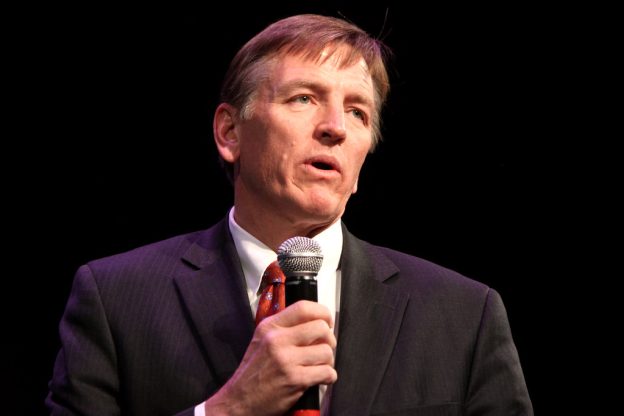
‘Russia not our enemy’: Rep. Paul Gosar
Samizdat | May 12, 2022
Republican Rep. Paul Gosar (Arizona) condemned the push from both parties in Washington to send billions of dollars worth of weapons to Ukraine. “Crippling debt, inflation and immigration problems,” he declared, are not “Putin’s fault.”
Gosar, an immigration hardliner and anti-interventionist, was one of 57 GOP lawmakers to vote against a $40 billion economic and military aid bill for Ukraine on Tuesday. While a number of Republicans have been vocal in their opposition to fueling a “proxy war” in Ukraine, the GOP establishment has shouted down these critics, with conservative talk show host Mark Levin on Wednesday referring to the anti-war contingent of the party as “Putin a**-kissers.”
“Calling us names is not a logical position,” Gosar shot back, stating: “I have no principle to follow but the path of peace and non-intervention. My grown children have known nothing except American war and intervention for naught.”
“Ukraine is not our ally,” he continued. “Russia is not our enemy. We need to address our crippling debt, inflation and immigration problems. None of this is [Russian President Vladimir] Putin’s fault.”
Americans are currently grappling with record gas prices, inflation that’s at a four-decade high, and shortages of vital food products, including baby formula. Furthermore, the expiration of a Trump-era immigration restriction this month will result in up to 18,000 migrants entering the US from Mexico daily, according to estimates from the Department of Homeland Security.
Since the beginning of Russia’s military operation in Ukraine in February, the Biden administration has sent nearly $4 billion worth of weapons and ammunition to Kiev, and revived a World War II-era act allowing a limitless supply of arms to be shipped to Ukraine on credit.
Meanwhile, at home the White House has banned Russian oil and gas imports, and although industry leaders are warning of an imminent diesel shortage, the Biden administration on Wednesday canceled the sale of drilling leases in Alaska and the Gulf of Mexico.
Despite the opposition of Gosar and his allies, the $40 billion funding bill passed by 368 votes to 57. It is expected to pass the Senate by next week at the latest, with Majority Leader Chuck Schumer (D-New York) saying the upper chamber “will move swiftly” to get it to Biden’s desk.
Ukraine’s partial gas cut to Europe could force activation of Nord Stream 2
Kiev attempts to blackmail Europe by partially halting gas flow from Russia
By Paul Antonopoulos | Aletho News | May 12, 2022
Ukraine’s decision to partially disable the flow of gas earmarked for Europe will be short-lived as it will not only cause major problems for the European economy, but it will also leave Kiev without billions of dollars in transit tax revenue – something it desperately needs as the economy is in ruin.
The Ukrainian gas transmission system operator (GTSOU) said it decided to suspend operations at a major transit point because of “interference by the occupying forces.” The decision to stop flows from Sokhranivka halts about a third of the Russian gas that arrives in Europe via Ukraine as the measuring station handles as much as 32.6 million cubic meters per day, according to GTSOU.
“As a result of the Russian Federation’s military aggression against Ukraine, several GTS facilities are located in territory temporarily controlled by Russian troops and the occupation administration,” the company said.
Kiev’s idea of transferring gas supplies from Sohranovka to the Suja gas station, which is in Ukrainian-controlled territory, has been dismissed by the Russian state gas company Gazprom as “technically impossible.” In addition, Gazprom said that it fulfills all its obligations to European consumers and delivers gas for transit in accordance with all contracts.
The disrupted transit of one-third of the gas that Europe needs would cause major damage to the continent’s economy. Europe already has less gas than it currently needs and the problem is not just that the price of gas will go up, but there will not be enough needed for industrial production.
If Russian gas does not arrive via Ukraine in the agreed quantity, Europe would have to consider extracting from reserves in underground storage facilities. The price of such gas will certainly be higher than in the case of gas arriving via Ukraine. Therefore, Kiev’s attempts to coax Europe into further involvement in the war with Russia will receive little accolade as it threatens Europe’s economy at a time when it is already suffering.
Kiev’s decision to reduce gas flows to European markets also means that it will suffer as it will lose transit fees that it desperately needs as its economy has stagnated. Another outcome that Ukraine did not consider is that it could force Europe to challenge the US’ opposition to the Nord Stream 2 pipeline. If Russian gas does not arrive via Ukraine, it could be the very catalyst needed to activate Nord Stream 2.
If Ukraine were to remain committed to reducing Russian gas flows to Europe, even at the expense of billions of dollars in transit fees, the question begs whether the EU would be willing to potentially run out of gas and/or see prices rise even further, or activate Nord Stream 2. Activating Nord Stream 2 would effectively mean the US’ failure after so much effort was made to prevent the pipeline from functioning.
For this reason, Ukraine’s decision to halt a third of Russian gas flows to Europe is likely a bluff as it needs all the money it can receive at the moment. At the same time, the Europeans hope to slowly wean themselves off Russian energy, understanding that an immediate cut is not sustainable and would collapse their economies.
Kiev’s incessant demand that Brussels put an embargo on Russian energy imports to the EU will be challenged so long as there are leaders, like Hungary’s Viktor Orban, who prioritize their state’s economy and people’s welfare, or entire major industries are threatened, such as Germany’s manufacturing and Greece’s shipping.
It is quite possible that this disunity and lack of consensus on the embargo in a situation where energy cannot be undermined, could force a rethink of Europe’s policies towards Moscow.
“We will have a peace to build tomorrow, let us never forget that,” Macron said in Strasbourg on May 9, adding: “We will have to do this with Ukraine and Russia around the table. The end of the discussion and the negotiation will be set by Ukraine and Russia. But it will not be done in denial, nor in exclusion of each other, nor even in humiliation.”
On the same day, he said in a tweet: “We are not at war with Russia. We work as Europeans for the preservation of the sovereignty and territorial integrity of Ukraine. For the return of peace to our continent. We will be there to rebuild Ukraine, as Europeans, always.”
However, despite the rhetoric of pan-Europeanism, Macron has already proven in deed that Europe’s elite are still very much under the orbit of Washington. If Ukraine are to partially halt the flow of Russian gas to Europe, the next test of Europe’s so-called “strategic autonomy” would be whether it activates Nord Stream 2 to protect their economic interests or continue following Washington’s demands on keeping the pipeline closed.
Paul Antonopoulos is an independent geopolitical analyst.
“Genetically Edited” Food – The next stage of the Great Reset?
By Kit Knightly | OffGuardian | May 11, 2022
The Queen’s Speech was interesting this year.
For all the people outside the UK who don’t understand what the “Queens Speech” actually is, it’s a farcical state occasion in which the Queen (or, in this case, Prince Charles since her majesty is ill/secretly dead/having “mobility issues”) makes a speech about what “her government” intends to do for the next 12 months.
Of course, the Queen doesn’t actually write the speech, or have any input on its content, or have any control at all over what “her” government intends to do. She’s just a mouthpiece in a big gold hat.
It’s the UK equivalent of the State of the Union, only done in Halloween costumes made out of shiny stolen rocks.
The whole thing is nothing but a grand, gilt statement of intent from the British Deep State, wrapped in mink and draped in medals they never earned. It’s a joke, but it is worth listening to.
Or, if you have a sensitive stomach, you can just read the full text the next day on the UK government’s website (that’s what I do).
A lot of the content is entirely predictable.
More money to Ukraine, with a promise the UK will “lead the way in championing security around the world”. More online censorship via the “Online Safety Bill”. A compulsory register for homeschooled children via the “Schools Reform Bill”.
There’s also mention of “securing the constitution” by introducing the UK’s own “Bill of Rights”. We broke down that particular Trojan Horse back in February.
But the part I found most interesting is the stated plan to “encourage agricultural and scientific innovation at home” via the proposed Genetic Technology (Precision Breeding) Bill.
The proposed bill (which, for some reason is not available through the parliament website) follows on from DEFRA’s announced “loosened regulation” of genetic research back in January.
To quote the National Institute of Agricultural Botany (NIAB), the legislation would “take certain precision breeding techniques out of the scope of restrictive GMO rules”.
Essentially, this would see new “gene-edited” foods as distinct from old-fashioned “genetically modified” foods, and therefore not subject to the same rules and oversight.
The claimed distinction is that gene editing, as opposed to genetic modification, doesn’t introduce DNA from other species. Therefore, in effect, is merely speeding up what could potentially naturally happen over time.
Now, you might think this is just semantics, and that such a law will just provide a loophole for ALL “genetically modified” foods to simply rebrand themselves as “genetically edited” foods, and thereby avoid regulation. But that is disgustingly cynical and shame on you for even thinking it.
All in all, this is pretty on-message stuff, and not especially surprising. What’s noteworthy is – by pure happenstance, I’m sure – it appears to coincide with a renewed push on the GM food front in other countries all over the world.
In December 2021, Switzerland added an amendment to its moratorium on GMO crops, permitting the use of certain “gene editing” techniques.
Last month, Egypt announced their new strain of GM wheat. Just two days ago, Ethiopia’s National Agricultural Biotechnology Research Center announced they had researched, and the country will now be growing, genetically modified cotton and maize.
Despite Russia’s sweeping ban on the cultivation and/or importing of genetically modified crops, they have nonetheless created a 111 billion Ruble project to create up to 30 varieties of genetically edited plants and farm animals.
Britain’s deregulation of GM food is always described as a “post-Brexit” move – with the EU chided around the world for its “precautionary principle” on GM crops – and yet as long ago as last April, the EU was calling for a “rethink” on GM crops.
In fact, just today, European Biotechnology Magazine reports:
The EU Commission has launched its final consultation on the deregulation of new breeding techniques in agriculture
WHY THIS? WHY NOW?
So, we’re seeing a sudden increase in the variety of GM crops available and a simultaneous push for deregulation of the industry in Western nations.
Why would they be doing this now?
Well, there is a food crisis.
Or, more accurately, they have just created a food crisis. And as the cliched Hegelian dialectic inevitably goes, their manufactured “problem” is now in need of their contrived “solution”.
We should expect to see genetic engineering pitched as a solution to our food crisis in the very near future… like yesterday. Or indeed, two months ago.
That’s how fast they work now, with barely a pretence at concealing the plan. Spitting out the answer so fast they make it obvious they knew the question beforehand.
On March 15th, when the “special operation” in Ukraine was less than 3 weeks old, the Times was already headlining:
War forces farmers to think again about GM crops
… and reporting:
Genetic modification could make Britain’s food system less susceptible to geopolitical turmoil
A week later Verdict published an article titled “Improving food self-sufficiency with GM crops during geopolitical crises”
Last week, the Times of Israel asked:
Can gene editing help farmers satisfy the rising demand for food?
Four days ago, the Manila Times published an article titled “In times of food scarcity: Revisiting genetically modified crops”.
Two days ago (so before the Queen’s speech specifically mentioning the gene editing bill), Scotland’s Press & Journal ran an opinion piece headlined: “Scottish Government must lift GM crop ban to ease cost of living crisis”.
Yesterday, the “information services” company IHS Markit published an article on GM regulation in Europe, in which they claimed:
The Ukraine-Russia conflict has demonstrated the fragility and vulnerability of global and European food supply chains. Around the world, governments in leading agricultural-producing countries are now catching up with the United States, both to better legislate gene-edited (GE) products, as well as differentiate them from the older Genetically Modified Organism (GMO) technology, and its negative connotations to some consumers, commentators, farmers, retailers, politicians and lawmakers.
And just today, the Genetic Literacy Project published an article by Ukrainian-Canadian David Zaruk, railing against the EU’s “precautionary principle” on GMOs and calling for an embracing of “new technology” to prevent widespread hunger and increase food sovereignty.
It goes on and on and on.
… LET’S NOT FORGET CLIMATE CHANGE, GUYS
Of course, it’s not all about the food crisis – giving corporate giants free rein to genetically alter all the food we eat will also be good for the planet. They talk about that a lot recently.
On February 8th this year, the University of Bonn published a new study claiming “Genetic engineering can have a positive effect on the climate”
On February 24th this year, the Cornell-based NGO “Alliance for Science” published an article claiming “GMOs could shrink Europe’s climate footprint”, based on the study mentioned above.
In a response to the Queen’s Speech, the UK’s National Institute of Agriculture and Botany claimed that genetic modification will make farming “more sustainable”.
In a reminder we’re not just talking about crops but genetically engineering livestock as well, in February Deutsche Welle suggested that genetically altered “Climate sheep and eco pigs could combat global heating”.
Three weeks ago, Stuff.NZ asked simply:
Can GM save the planet?”
The narrative is clearly set: Genetically engineered food will save us all from the food crisis, and global warming too. Plus anything else they can think of.
THE KNIVES ARE OUT FOR ORGANICS
Not content with the semi-constant fluffing of the GM business, the MSM are also turning their guns on organic farming and giving it both barrels.
The Wall Street Journal reports:
Ukraine Crisis Reveals the Folly of Organic Farming: As food prices skyrocket, the world needs to admit it can’t live without modern, efficient agriculture.
The Telegraph blames organic farming policies for “tipping Sri Lanka into bloody chaos”
The “Allliance for Science” article mentioned above goes out of its way to criticise the EU’s pro-organic “farm to fork” plans, claiming “[organic farming] has lower yields and would be associated with increases in global [greenhouse gas] emissions by causing land-use changes elsewhere”.
Meanwhile, Erik Fyrwald, the CEO of the Swiss agrochemicals group Syngenta (so possessing somewhat of a conflict of interests), told Swiss newspaper NZZ am Sonntag that the West must “stop organic farming to help future food crisis”, adding that organic farming is worse for the planet, because ploughing up fields releases more carbon dioxide into the atmosphere.
We already saw wellness “cults” accused of peddling “anti-vax conspiracy theories” last year, this will easily extend to organic farmers and their customers.
NOTE: In an interesting (again, probably totally accidental) parallel, the currently simmering “Bird Flu outbreak” has also hit organic and free-range farmers hard, with one (sponsored) Guardian article asking if “year-round” bird flu could spell “the end of free-range eggs”.
CONCLUSION
Having just seen how the Covid19 “vaccine” campaign unfolded, it’s not hard to see how the pro-GM push will go from here. Genome-edited crops and farm animals are going to become the new “settled science”.
They will be sold to the public as cheaper, more nutritious, better for the environment and good for “preventing future pandemics” (yes, they literally did say that already).
Naturally, anyone who resists the push for gene-edited food, and/or mourns the planned death of organic farming, will be accused of “questioning the science”.
Eating British GM foods will be “doing your part” and “helping Ukraine”, while people who want more expensive organic products will be deemed “unpatriotic” or “selfish”.
Just as we saw Covid sceptics denounced as spreading “Russian disinformation”, despite Russia’s willing complicity in the Covid lie, those who argue against genome-edited food will be said to be “sharing Russian talking points” or “doing Putin’s work for him” despite Russia being well onboard the gene-editing train.
It all gets very predictable from there. Organic farmers will probably be “anti-vaxxer conspiracy theorist Russian spies” by the end of the summer.
… This probably explains why Bill Gates was buying up so much farmland last year, too.
Biden Wanted $33B More For Ukraine. Congress Quickly Raised it to $40B. Who Benefits?
Tens of billions, soon to be much more, are flying out of US coffers to Ukraine as Americans suffer, showing who runs the government.
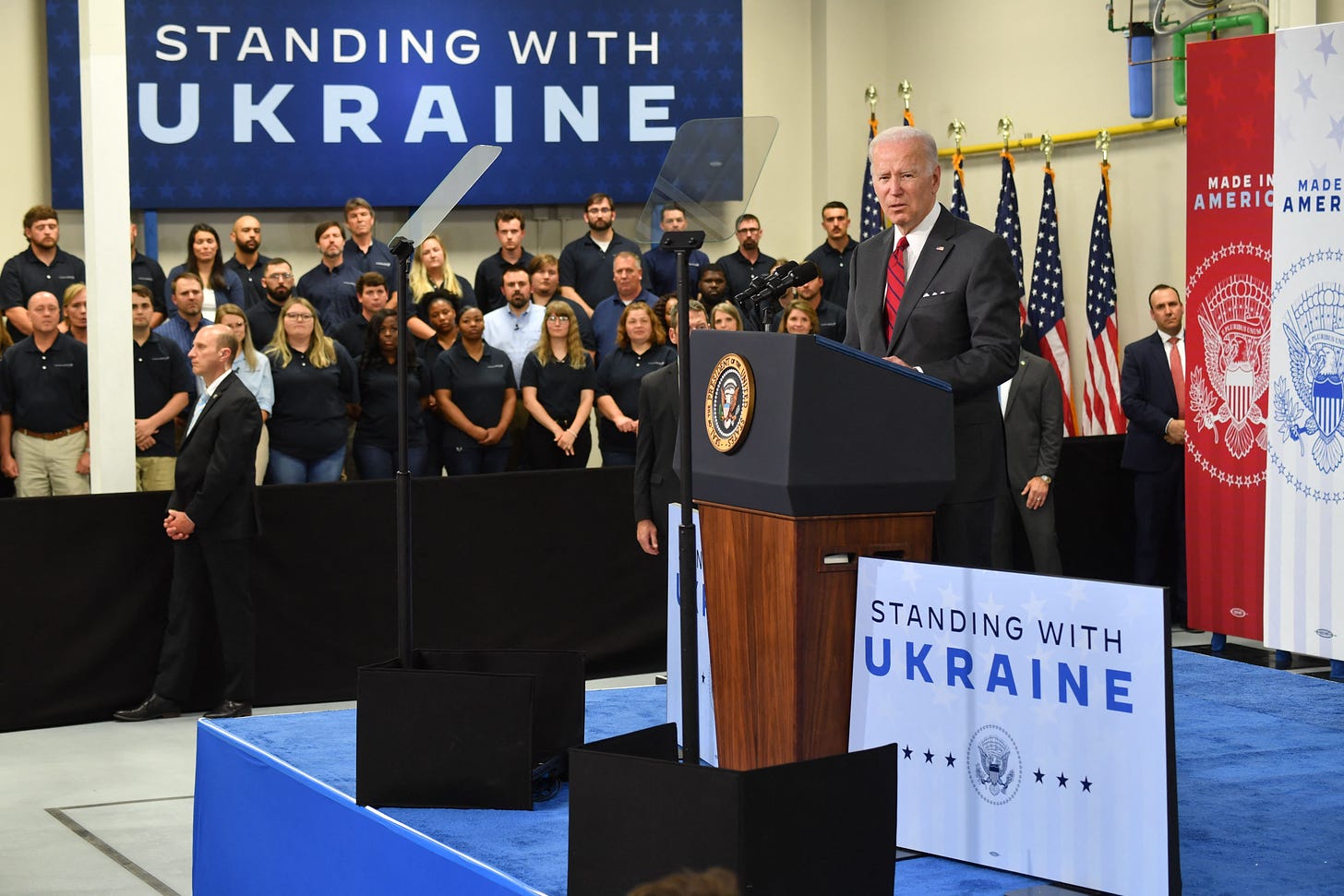
Joe Biden speaks about the conflict in Ukraine during a visit to Lockheed Martins’ Pike County Operations facility on May 3, 2022 (Photo: Nicholas Kamm/AFP via Getty Images)
By Glenn Greenwald | May 10, 2022
From the start of the Russian invasion of Ukraine on February 24, the Biden White House has repeatedly announced large and seemingly random amounts of money that it intends to send to fuel the war in Ukraine. The latest such dispatch of large amounts of U.S. funds, pursuant to an initial $3.5 billion fund authorized by Congress early on, was announced on Friday; “Biden says U.S. will send $1.3 billion in additional military and economic support to Ukraine,” read the CNBC headline. This was preceded by a series of new lavish spending packages for the war, unveiled every two to three weeks, starting on the third day of the war:
- Feb. 26: “Biden approves $350 million in military aid for Ukraine”: Reuters ;
- Mar. 16: “Biden announces $800 million in military aid for Ukraine”: The New York Times ;
- Mar. 30: “Ukraine to receive additional $500 million in aid from U.S., Biden announces”: NBC News;
- Apr. 12: “U.S. to announce $750 million more in weapons for Ukraine, officials say”: Reuters ;
- May 6: “Biden announces new $150 million weapons package for Ukraine”: Reuters.
Those amounts by themselves are in excess of $3 billion; by the end of April, the total U.S. expenditure on the war in Ukraine was close to $14 billion, drawn from the additional $13.5 billion Congress authorized in mid-March. While some of that is earmarked for economic and humanitarian assistance for Ukraine, most of it will go into the coffers of the weapons industry — including Raytheon, on whose Board of Directors the current Secretary of Defense, Lloyd Austin, sat immediately before being chosen by Biden to run the Pentagon. As CNN put it: “about $6.5 billion, roughly half of the aid package, will go to the US Department of Defense so it can deploy troops to the region and send defense equipment to Ukraine.”
As enormous as those sums already are, they were dwarfed by the Biden administration’s announcement on April 28 that it “is asking Congress for $33 billion in funding to respond to the Russian invasion of Ukraine, more than double the $14 billion in support authorized so far.” The White House itself acknowledges that the vast majority of that new spending package will go to the purchase of weaponry and other military assets: “$20.4 billion in additional security and military assistance for Ukraine and for U.S. efforts to strengthen European security in cooperation with our NATO allies and other partners in the region.”
It is difficult to put into context how enormous these expenditures are — particularly since the war is only ten weeks old, and U.S. officials predict/hope that this war will last not months but years. That ensures that the ultimate amounts will be significantly higher still.
The amounts allocated thus far — the new Biden request of $33 billion combined with the $14 billion already spent — already exceed the average annual amount the U.S. spent for its own war in Afghanistan ($46 billion). In the twenty-year U.S. war in Afghanistan which ended just eight months ago, there was at least some pretense of a self-defense rationale given the claim that the Taliban had harbored Osama bin Laden and Al Qaeda at the time of the 9/11 attack. Now the U.S. will spend more than that annual average after just ten weeks of a war in Ukraine that nobody claims has any remote connection to American self-defense.
Even more amazingly, the total amount spent by the U.S. on the Russia/Ukraine war in less than three months is close to the Russia’s total military budget for the entire year ($65.9 million). While Washington depicts Russia as some sort of grave and existential menace to the U.S., the reality is that the U.S. spends more than ten times on its military what Russia spends on its military each year; indeed, the U.S. spends three times more than the second-highest military spender, China, and more than the next twelve countries combined.
But as gargantuan as Biden’s already-spent and newly requested sums are — for a ten-week war in which the U.S. claims not to be a belligerent — it was apparently woefully inadequate in the eyes of the bipartisan establishment in Congress, who is ostensibly elected to serve the needs and interests of American citizens, not Ukrainians. Leaders of both parties instantly decreed that Biden’s $33 billion request was not enough. They thus raised it to $40 billion — a more than 20% increase over the White House’s request — and are now working together to create an accelerated procedure to ensure immediate passage and disbursement of these weapons and funds to the war zone in Ukraine. “Time is of the essence – and we cannot afford to wait,” House Speaker Nancy Pelosi said in a letter to House members, adding: “This package, which builds on the robust support already secured by Congress, will be pivotal in helping Ukraine defend not only its nation but democracy for the world.”
We have long ago left the realm of debating why it is in the interest of American citizens to pour our country’s resources into this war, to say nothing of risking a direct war and possibly catastrophic nuclear escalation with Russia, the country with the largest nuclear stockpile, with US close behind. Indeed, one could argue that the U.S. government entered this war and rapidly escalated its involvement without this critical question — which should be fundamental to any policy decision of the U.S. government — being asked at all.
This omission — a failure to address how the interests of ordinary Americans are served by the U.S. government’s escalating role in this conflict — is particularly glaring given the steadfast and oft-stated view of former President Barack Obama that Ukraine is and always will be of vital interest to Russia, but is not of vital interest to the U.S. For that reason, Obama repeatedly resisted bipartisan demands that he send lethal arms to Ukraine, a step he was deeply reluctant to take due to his belief that the U.S. should not provoke Moscow over an interest as remote as Ukraine (ironically, Trump — who was accused by the U.S. media for years of being a Kremlin asset, controlled by Putin through blackmail — did send lethal arms to Ukraine despite how provocative doing so was to Russia).
While it is extremely difficult to isolate any benefit to ordinary American citizens from all of this, it requires no effort to see that there is a tiny group of Americans who do benefit greatly from this massive expenditure of funds. That is the industry of weapons manufacturers. So fortunate are they that the White House has met with them on several occasions to urge them to expand their capacity to produce sophisticated weapons so that the U.S. government can buy them in massive quantities:
Top U.S. defense officials will meet with the chief executives of the eight largest U.S. defense contractors to discuss industry’s capacity to meet Ukraine’s weapons needs if the war with Russia continues for years.
Deputy Defense Secretary Kathleen Hicks told reporters Tuesday she plans to participate in a classified roundtable with defense CEOs on Wednesday to discuss “what can we do to help them, what do they need to generate supply”….
“We will discuss industry proposals to accelerate production of existing systems and develop new, modernized capabilities critical to the Department’s ongoing security assistance to Ukraine and long-term readiness of U.S. and ally/partner forces,” the official added.
On May 3, Biden visited a Lockheed Martin facility (see lead photo) and “praised the… plant that manufactures Javelin anti-tank missiles, saying their work was critical to the Ukrainian war effort and to the defense of democracy itself.”
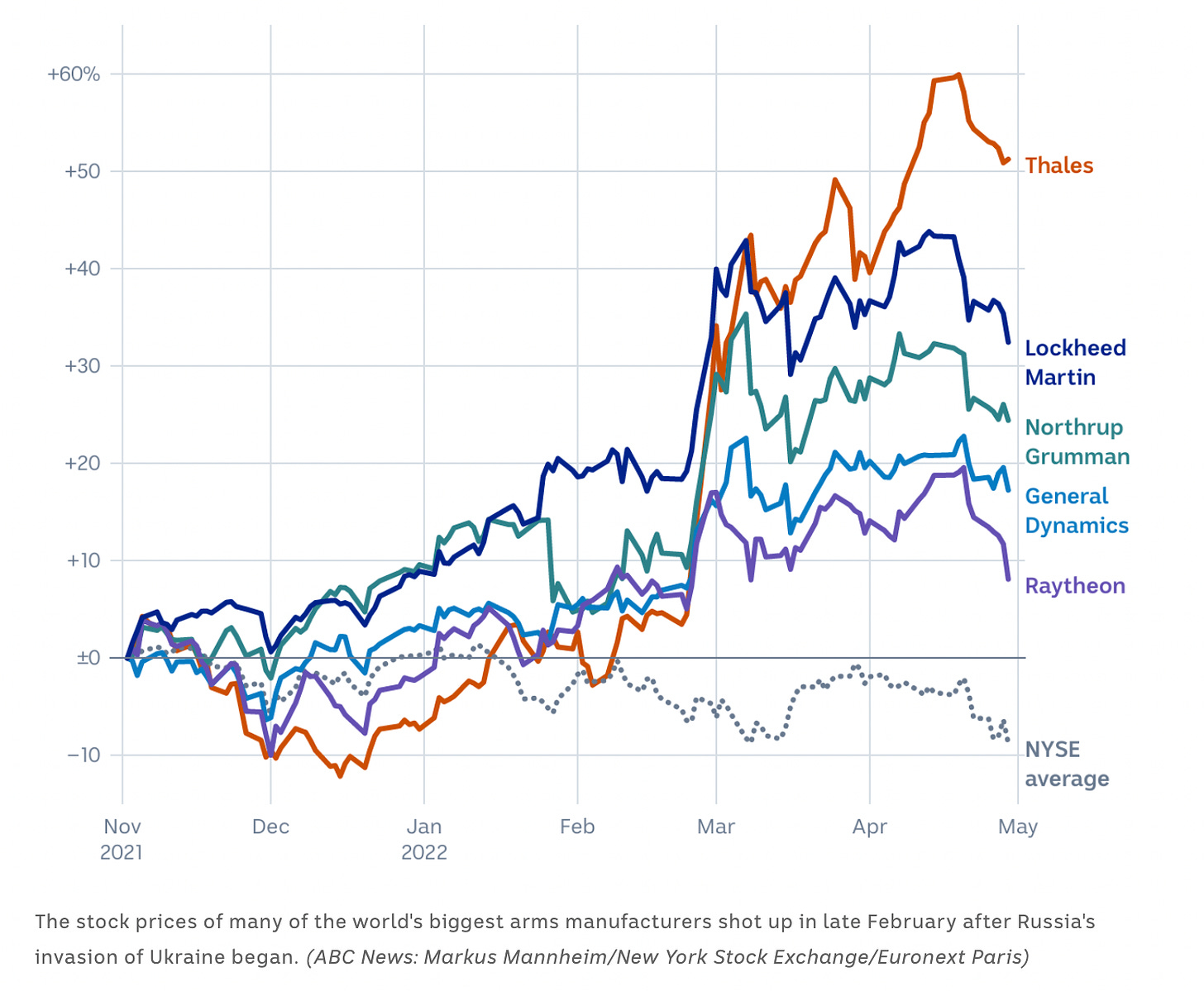
Indeed, by transferring so much military equipment to Ukraine, the U.S. has depleted its own stockpiles, necessitating their replenishment with mass government purchases. One need not be a conspiracy theorist to marvel at the great fortune of this industry, having lost their primary weapons market just eight months ago when the U.S. war in Afghanistan finally ended, only to now be gifted with an even greater and more lucrative opportunity to sell their weapons by virtue of the protracted and always-escalating U.S. role in Ukraine. Raytheon, the primary manufacturer of Javelins along with Lockheed, has been particularly fortunate that its large stockpile, no longer needed for Afghanistan, is now being ordered in larger-than-ever quantities by its former Board member, now running the Pentagon, for shipment to Ukraine. Their stock prices have bulged nicely since the start of the war:
But how does any of this benefit the vast majority of Americans? Does that even matter? As of 2020, almost 30 million Americans are without any health insurance. Over the weekend, USA Today warned of “the ongoing infant formula shortage,” in which “nearly 40% of popular baby formula brands were sold out at retailers across the U.S. during the week starting April 24.” So many Americans are unable to afford college for their children that close to a majority are delaying plans or eliminating them all together. Meanwhile, “monthly poverty remained elevated in February 2022, with a 14.4 percent poverty rate for the total US population… Overall, 6 million more individuals were in poverty in February relative to December.” The latest data from the U.S. Census Bureau found that “approximately 42.5 million Americans [are] living below the poverty line.” Americans with diabetes often struggle to buy life-saving insulin. And on and on and on.
Now, if the U.S. were invaded or otherwise attacked by another country, or its vital interests were directly threatened, one would of course expect the U.S. government to expend large sums in order to protect and defend the national security of the country and its citizens. But can anyone advance a cogent argument, let alone a persuasive one, that Americans are somehow endangered by the war in Ukraine? Clearly, they are far more endangered by the U.S. response to the war in Ukraine than the war itself; after all, a nuclear confrontation between the U.S. and Russia has long been ranked by the Bulletin of Atomic Scientists as one of the two greatest threats facing humanity.
One would usually expect the American left, or whatever passes for it these days, to be indignant about the expenditure of tens of billions of dollars for weapons while ordinary Americans suffer. But the American left, such that it exists, is barely visible when it comes to debates over the war in Ukraine, while American liberals stand in virtual unity with the establishment wing of the Republican Party behind the Biden administration in support for the escalating U.S. role in the war in Ukraine. A few stray voices (such as Noam Chomsky) have joined large parts of the international left in urging a diplomatic solution in lieu of war and criticizing Biden for insufficient efforts to forge one, but the U.S. left and American liberals are almost entirely silent if not supportive.
That has left the traditionally left-wing argument about war opposition to the populist right. “You can’t find baby formula in the United States right now but Congress is voting today to send $40 billion to Ukraine,” said Donald Trump, Jr. on Tuesday, echoing what one would expect to hear from the 2016 version of Bernie Sanders or the pre-victory AOC. “In the America LAST $40 BILLION Ukraine FIRST bill that we are voting on tonight, there is authorization for funds to be given to the CIA for who knows what and who knows how much? But NO BABY FORMULA for American mothers!,” explained Rep. Marjorie Taylor Greene (R-GA). Christian Walker, the conservative influencer and son of GOP Senate candidate Herschel Walker in Georgia, today observed: “Biden should go apply to be the President of Ukraine since he clearly cares more about them than the U.S.” Chomsky himself caused controversy last week when he said that there is only one statesman of any stature in the West urging a diplomatic solution “and his name is Donald J. Trump.”
Meanwhile, the only place where dissent is heard over the Biden administration’s war policy is on the 8:00 p.m. and 10:00 p.m. programs on Fox News, hosted, respectively, by Tucker Carlson and Laura Ingraham, who routinely demand to know how ordinary Americans are benefiting from this increasing U.S. involvement. On CNN, NBC, and in the op-ed pages of The New York Times and The Washington Post, there is virtually lockstep unity in favor of the U.S. role in this war; the only question that is permitted, as usual, is whether the U.S. is doing enough or whether it should do more.
That the U.S. has no legitimate role to play in this war, or that its escalating involvement comes at the expense of American citizens, the people they are supposed to be serving, provokes immediate accusations that one is spreading Russian propaganda and is a Kremlin agent. That is therefore an anti-war view that is all but prohibited in those corporate liberal media venues. Meanwhile, mainstream Democratic House members, such as Rep. Jason Crow (D-CO), are now openly talking about the war in Ukraine as if it is the U.S.’s own:
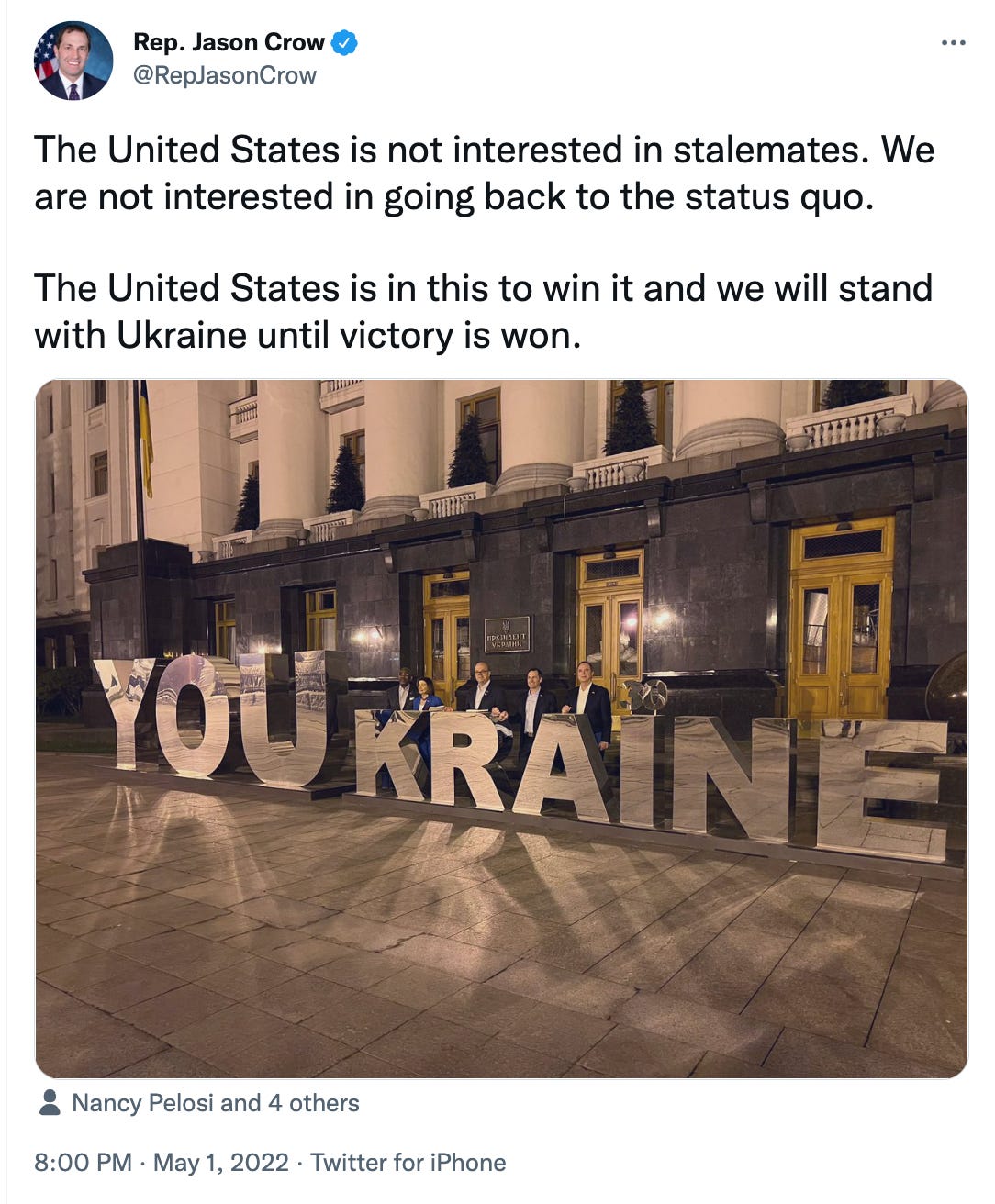
Whatever else is true, the claim with which we are bombarded by the corporate press — the two parties agree on nothing; they are constantly at each other’s throats; they have radically different views of the world — is patently untrue, at least when it comes time for the U.S. to join in new wars. Typically, what we see in such situations is what we are seeing now: the establishment wings of both parties are in complete lockstep unity, always breathlessly supporting the new proposed U.S. role in any new war, eager to empty the coffers of the U.S. Treasury and transfer it to the weapons industry while their constituents suffer.
One can believe that Russia’s invasion of Ukraine is profoundly unjust and has produced horrific outcomes while still questioning what legitimate interests the U.S. has in participating in this war to this extent. Even if one fervently believes that helping Ukrainians fight Russia is a moral good, surely the U.S. government should be prioritizing the ability of its own citizens to live above the poverty line, have health insurance, send their kids to college, and buy insulin and baby formula.
There are always horrific wars raging, typically with a clear aggressor, but that does not mean that the U.S. can or should assume responsibility for the war absent its own vital interests and the interests of its citizens being directly at stake. In what conceivable sense are American citizens benefiting from this enormous expenditure of their resources and the increasing energy and attention being devoted by their leaders to Ukraine rather than to their lives and the multi-pronged deprivations that define it?
Ukraine turns off Europe-bound gas
Samizdat | May 10, 2022
Russian gas conglomerate Gazprom has received no confirmation of force majeure or any obstacles to continued transit of gas through a junction in Lugansk Region, the company said on Tuesday, after Ukraine’s operator OGTSU announced it would halt further deliveries starting May 11, due to the presence of “Russian occupiers.”
Gas Transit Services of Ukraine (OGTSU) declared force majeure on Tuesday, saying that it was impossible to continue the transit of gas through a connection point and compressor station located in the Lugansk area. As OGTSU personnel “cannot carry out operational and technological control” over the Sokhranovka connector point and Novopskov compressor station, the company cannot continue to fulfill its contract obligations, it said.
Gas from this connection will not be accepted into the transit system of Ukraine starting at 7 am on Wednesday, OGTSU said. Sokhrankovka accounts for almost a third of the Russian gas that transits through Ukraine to Europe – up to 32.6 million cubic meters per day – according to the operators.
Gazprom has received no confirmation of force majeure or disruption of operations at Sokhranovka or Novopskov, company spokesman Sergey Kupriyanov said on Tuesday. He added that Ukrainian specialists have had full access to both facilities all along, and there had been no complaints about it previously.
Kupriyanov also said that Gazprom has been notified by Ukraine’s gas company Naftogaz that if Russia continues to supply gas through Sokhranovka, Kiev will reduce the volume at the point of exit by the same amount, effectively confiscating the gas.
While OGTSU has proposed to reroute the gas to Sudzha, a connector located in the Sumy region and controlled by the Ukrainian government, Kupriyanov said this was “technologically impossible.”
“The distribution of volumes is clearly spelled out in the cooperation agreement dated December 30, 2019, and the Ukrainian side is well aware of this,” he said.
Gazprom is fulfilling all of its obligations to its European customers, with all the transit services in accordance with the terms of the contract and paid in full, Kupriyanov pointed out. Moscow has continued gas deliveries to Europe, including transit through Ukraine, regardless of the ongoing military operation and the embargoes against Russia imposed by the US and its allies in the EU.
German industry faces economic ruin with ‘highly dangerous’ gas ban
Free West Media | May 10, 2022
BERLIN – A study by the German Hans Böckler Foundation has now calculated that the gross domestic product (GDP) could collapse by up to twelve percent within the first year if Russian gas supplies were to end immediately. It is the latest doomsday prediction for Germany’s industry.
Industrial production would fall by 114 to 286 billion euros. This alone would lead to a GDP slump of three to eight percent, which would be increased by another two to four percent because the higher energy prices reduce the financial scope of consumers for other expenditures.
According to the study author Professor Tom Krebs from the University of Mannheim, a gas supply ban would only be manageable from 2025 onwards if other sources were available.
In addition, Krebs warned of so-called “cascade effects” that could also affect sectors that are less dependent on natural gas and threatened to “drastically” increase the economic damage. He also drew attention to the fact that the German economy is still under severe stress after the 2009 financial crisis, the 2020 Corona pandemic and due to self-inflicted climate change pressure. Since the expected price shocks for energy and food would have to be borne primarily by poorer households, “social tensions could intensify”.
The warnings of the study correspond exactly to what other experts have said: The former EON boss Johannes Teyssen had described a ban on Russian energy supplies as “highly dangerous” just last week.
Teyssen does not consider the suggestions of taking cold showers made by Economics Minister Robert Habeck and Federal Network Agency boss Klaus Müller to make any sense: “If it were about that and it could be regulated, then we would have done it a long time ago.”
In fact, it is “really about an extensive collapse of the basic industrial structure that needs natural gas and the entire value chain behind it”. One has to understand how it works. Supply bottlenecks would arise in other industries if large energy companies were no longer able to produce anything.
The general manager of the chemical industry association, Wolfgang Große Entrup, also issued almost identical warnings at the beginning of April. In the event of a short-term, unlimited stop in the supply of Russian gas, “a severe recession and a massive loss of jobs” must be expected. It is “frequently massively underestimated” that other branches of industry such as agriculture, construction, food, automobiles or electronics would then also be badly hit. For the loss of natural gas there is “no short-term replacement option”.
Yet these industry heavyweights are totally ignored by EU chief Ursula von der Leyen, and the irresponsible demands of the Ukrainian Ambassador Andriy Melnyk or “Fridays-for-Future” activist Luisa Neubauer, goading Germany into an economic catastrophe, the consequences of which must be shouldered by ordinary citizens – and not by the privileged, wealthy or state-appointed authors of the measures.
“You hear so little about Gretl, the little climate siren from Sweden. No screaming ‘how dare you’, no shouting on our streets, the blond braided one has dedicated herself to inner emigration. The Fridays for Future sect, the radical arm of the eco-socialists, plays the ostrich. The hip Greta has fallen silent in the face of the honorable rearmament of the Western arms industry,” noted Austrian politician Gerald Grosz.
“Yes, the good girl believes that the F16 flies on an e-battery on its way to the Ukraine. Or does she believe that the atomic bombs are powered by solar panels and that only ‘organic makes you beautiful’ soybeans grow after the impact. And the artillery pieces move on rapeseed oil?”
Germany warns of global famine
Samizdat | May 9, 2022
The world is about to face an acute food crisis due to skyrocketing food prices, German Economic Cooperation and Development Minister Svenja Schulze told the Bild newspaper on Saturday, warning about a looming famine not seen since World War II. The minister has named the Covid-19 pandemic and Russia’s ongoing military operation in Ukraine as its causes.
“The situation is highly dramatic,” the minister told the German tabloid in a late Saturday interview, adding that, according to the UN World Food Program, “more than 300 million people” are already suffering from acute hunger and the UN has to “constantly revise” this data upwards.
Food prices around the world have grown by a third and have reached “record levels,” Schulze has warned, adding that the “bitter message is that we are facing the worst famine since World War II,” which could see “millions” die.
In its May 6 statement, the World Food Program has warned that “44 million people around the world are marching towards starvation” because Ukrainian grain cannot reach them, and called for the Black Sea ports to be opened so that this grain could be delivered to the needy.
Minister Schulze was quick to blame Moscow for the development by accusing Russian President Vladimir Putin of “waging a war through hunger.” She claimed that Russia had “stolen grain from Ukraine” and is now taking advantage of nations depending on Russian and Ukrainian agricultural products by supposedly offering food only to those, who are “unequivocally pro-Russian.”
The minister has also claimed that the fact that 40 nations that are “home to half of the world’s population” did not condemn Russia’s actions in Ukraine was supposedly a result of their “vulnerability to food blackmail.” She didn’t offer any specific evidence to support this statement, though.
At the same time, she did admit that some nations’ focus on green energy has contributed to the food shortage as well. Germany in particular should stop using food as fuel, she has suggested. Up to 4% of the so-called biofuel in Germany is made from food and animal feed, she said, adding that “it needs to be reduced to zero, and not just in Germany but potentially internationally.”
Germany “pours 2.7 billion liters of fuel [made] from vegetable oils into car tanks every year,” she pointed out, adding that this alone amounts to “almost a half of Ukraine’s sunflower oil production.”
The ongoing conflict in Ukraine has prompted fears of global grain shortages as wheat prices soared to multiple-year highs in March. Both Russia and Ukraine are major wheat suppliers, accounting for some 30% of global exports.
In mid-April, however, German Agriculture Minister Cem Ozdemir insisted that supplying Kiev with “more effective” weaponry was precisely what would have helped the world to avoid the supposedly looming “global famine.” Ozdemir, a member of the strongly pro-US/NATO Alliance 90/The Greens party, also accused Moscow of “starvation strategy” at that time.
His position appears to be quite different from at least two groups of German public figures, politicians and celebrities, who have called on Chancellor Olaf Scholz to stop arms supplies to Ukraine and to focus on a speedy diplomatic solution instead.
Continued arms deliveries would only prolong the suffering of Ukrainians as well as risk potentially devastating consequences, ranging from a possible global war to a “catastrophic” impact on global health and climate change, the co-authors of two open letters have warned. Berlin has not reacted to any of the letters so far.
Sri Lanka’s Prime Minister Resigns Amid Anti-Government Protests
Samizdat – 09.05.2022
Sri Lanka has been rocked by mass protests for weeks, with people outraged over the government’s policies amid the country’s worst economic crisis in decades.
Sri Lanka’s Prime Minister Mahinda Rajapaksa has resigned, his spokesman Rohan Weliwita said.
The 76-year-old prime minister sent his letter of resignation to his younger brother, President Gotabaya Rajapaksa, clearing the way for a “new unity government”, the spokesman said, quoted by AFP.
Earlier, news about the prime minister’s resignation was broken by local media.
On Monday, the government imposed a nationwide curfew and deployed the army in the capital Colombo amid violent clashes between anti-government protesters and government supporters outside President Gotabaya Rajapaksa’s office. Dozens of people were injured in the clashes. Police used tear gas and water cannons to disperse the protesters.
Sri Lankans have been facing the worst economic crisis since gaining independence from British rule in 1948. People have been suffering amid acute shortages of food, fuel, and medicines, as well as months of power outages. The crisis broke out after Sri Lanka lost the vital income it had traditionally received from tourism and remittances. This happened due to the coronavirus pandemic and tough COVID-related restrictions that affected the entire region. As a result of this, Sri Lanka was no longer able to pay off its $51 billion foreign debt and banned the import of some goods.
Featured Video

Racist Seinfeld Dances for Joy as Bibi Unveils His New Map
or go to
Aletho News Archives – Video-Images
TV Drama Review
Japanese drama projects Japan’s wartime atrocities onto Chinese characters

Global Times | October 25, 2026
By portraying Chinese characters as perpetrators of ruthless violence while casting Japanese Self-Defense Forces (SDF) intelligence operatives as defenders, the season 2 of the Japanese drama Vivant has recently drawn criticism from Chinese netizens, who argue that its depiction turns historical reality on its head while ignoring Japan’s wartime atrocities.
The TBS drama series – a spy suspense story in which an alleged unofficial intelligence unit of the SDF operates across the globe — has attracted a passionate fanbase. Its currently airing season 2 opened with a household rating of 18.8 percent, the highest for a TV drama this year, according toa commentary article by Japanese media Toyo Keizai.
What draws attention is the portrayal of the enemies in the series, the article noted. Scenes in which the Chinese organization subjects kidnapped members of the SDF unit to brutal torture are repeated with unrelenting intensity.
It is rare for Japanese TV dramas to explicitly portray a real-life country as the enemy, the article noted.
Japanese Prime Minister Sanae Takaichi also made a reference to the drama, saying that she has been recording Vivant and hopes to binge-watch it over the year-end and New Year holidays, according to Japanese media outlets.
China’s CCTV News report on Sunday revealed that the drama features scenes in which Chinese personnel cut off the fingers of and stab Japanese intelligence operatives in the abdomen. Such acts bear striking similarities to the torture inflicted on Chinese nationals by invading Japanese troops during the World War II.
The drama distorts the truth by attributing these atrocities to modern Chinese characters. Beneath the surface, it subtly glorifies Japan’s cross-border overseas operations, blurs the functional boundaries of the SDF and implicitly promotes an expansionist narrative, per CCTV News. … continue
Blog Roll
 Aletho News
- EU facing trillion-euro debt hole while seeking more cash for Kiev
- How US, Europe, Persian Gulf states exhausted missile stockpiles, splurged billions to defend Israel
- Up in arms… Koreans reject U.S. empire’s plan to make South Korea the next Ukraine
- Iran, Turkey, Pakistan, Saudi Arabia could advance region-led security framework in Tehran: FM spox
- Netizens condemn Japanese drama for projecting Japan’s wartime atrocities onto Chinese characters
- Racist Seinfeld Dances for Joy as Bibi Unveils His New Map
- A West Bank War for Netanyahu’s Election Campaign, Could It Backfire?
- Yemen denounces European Parliament’s ‘hypocritical’ push to blacklist Ansarullah
- Qalibaf: UAE’s UN bid aims to ‘clear the runway’ for ‘Greater Israel’, whitewash genocide
- Pakistan reopens Iran border after boosting security: Report
- If Americans Knew
- An error has occurred; the feed is probably down. Try again later.
- No Tricks Zone
- Sudden Stratospheric Warming, Powerful El Niño Combination May Lead To Extreme Europe Cold, Energy Crisis!
- Two New Studies Find Thwaites Glacier Melt Cannot Be Driven By Human Activity Or A Warming Ocean
- E-Cars Reduce CO2 Emissions By Only 41% Compared To Internal Combustion Engine Vehicles
- Predictions Made By Renowned Climate Professor Over Past Decades Have Been Proven To Be Poor
- New Study Suggests Large Regions Of The Pacific Ocean Have Been Cooling For The Last 80 Years
- Germany’s Green Energy Debacle: High Energy Costs Force Kahla Porzellan to Close After 182 Years!
- New Study: 50 Years Of The Most Aggressive ‘Net Zero’ Policies Can Only Affect The Global Climate By 0.03°C
- US September “Heat” Was No Record…Many Records Set Decades Ago
- Latest European Green Energy Debacle; Portugal’s Largest Flagship Solar Park Insolvent!
- Green Energy Debacle: German Expert Professor Fritz Vahrenholt Warns Of Severe Economic And Social Consequences

