Aletho News

ΑΛΗΘΩΣ

Scientists want global ban on ‘sun-dimming’

Researchers rally against solar geoengineering as a method of fighting ‘climate change’

RT | January 20, 2022

An international group of scientists and experts wants all nations to sign a pact banning public funding and deployment of solar geoengineering, as well as outdoor experiments revolving around ways to ‘dim the sun.’

“Solar geoengineering at planetary scale is not governable in a globally inclusive and just manner within the current international political system,” the researchers wrote in an open letter published in the Wiley Interdisciplinary Reviews: Climate Change journal this week.

The concept of solar geoengineering aims to lower temperatures on Earth by using modern technology to reduce the incoming sunlight. The proposals include the spraying of aerosols into the stratosphere to stop the spread of solar energy. Some see this as a potential response to global warming.

But the authors of the letter warned about “uncertainties” surrounding the effects of such technologies on weather, agriculture, and the supply of food and water.

The letter argued that the world’s poorest nations will be left highly vulnerable unless powerful countries place the technology of such planetary scale under international control.

“The current world order seems unfit to reach such far-reaching agreements on fair and effective political control over solar geoengineering deployment.”

Proposals to study solar geoengineering were most recently floated by the media amid COP26, a major UN climate change summit in Scotland in November of last year.

In March, the US National Academies of Sciences, Engineering, and Medicine (NASEM) released a report recommending an investment of $100-$200 million in solar geoengineering research over five years as part of crafting “a robust portfolio of climate mitigation and adaptation policies.” NASEM argued that outdoor experiments that involve releasing substances into the atmosphere must be limited and subjected to strict regulation.

NASEM emphasized that solar geoengineering should not be a substitute for reducing greenhouse gas emissions.

January 22, 2022 Posted by | Malthusian Ideology, Phony Scarcity, Science and Pseudo-Science | , | 2 Comments

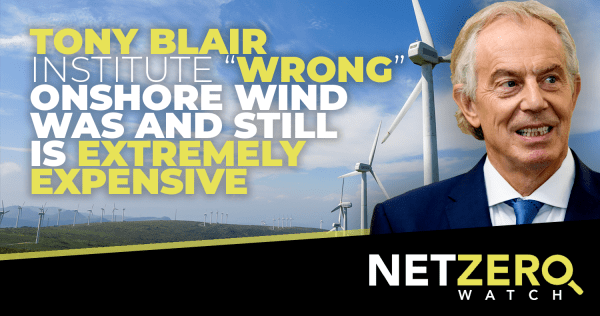
Net Zero Watch pours scorn on Tony Blair Institute claims about ‘cheap’ onshore wind
Net Zero Watch – January 21, 2022

London — Net Zero Watch has ridiculed claims by the “Tony Blair Institute for Global Change” that the recent sharp rise in energy prices could have been avoided if the UK had only erected more onshore wind turbines over the last decade.

Given that Tony Blair introduced lavish subsidies for land owners and wind investors 20 years ago, it is unsurprising that his institute is trying to downplay their contribution to rising energy bills. However, its claim that more onshore wind turbines would have avoided rising energy bills is simply untrue.

The “Tony Blair Institute for Global Change” has claimed that the falling cost of onshore wind means that the UK has lost out by not building more of this technology, first introduced in bulk by the Blair government after 2002. Similar statements have been made by Carbon Brief.

Neither claim stands up to scrutiny.

Onshore wind farms cost consumers in the UK just under £1.5 billion in subsidy in 2020, or about £50 per household in total, one third hitting consumers through electricity bills and the rest finding its way to them through the cost of goods and services as shops and businesses pass on their own share of the subsidy. Because of this subsidy, onshore wind electricity was supplied at an average cost of about £90/MWh, roughly double the cost of conventional energy.

Analysis of the audited accounts of onshore wind farms between 2008 and 2019 conducted by Professor Hughes of the University of Edinburgh, showed no significant reduction in capital or operational costs over this time. Windfarms built in 2008 broke even at about £92/MWh, and those built in 2018/19 at about £91/MWh.

Both the “Tony Blair Institute” and Carbon Brief rely on an estimated break-even cost for new wind farms over the last decade of about £50/MWh. This is wishful thinking for which there is no empirical evidence in the audited accounts.

Furthermore, as is well-known, but not apparently to the “Tony Blair Institute” or Carbon Brief, onshore wind was restricted in England by the willingness of communities to accept it and not at all in Scotland, which has 60% of all the onshore wind in the UK. Mr Cameron’s “ban” was half-hearted and had no real effect. Insofar as onshore wind development was limited, it was discouraged by reductions in subsidy driven through by the Treasury.

The only realistic option for developing more renewable capacity at the time would have been to increase the amount of offshore wind. This would have involved a commitment to pay between £140 and £180 per MWh – the current prices for offshore projects developed in the 2010s. Those prices are 3.5 to 4.5 times the average market price in real terms for 2015-19 and would have imposed a huge burden on electricity customers, not just temporarily but for another 12-15 years.

It should also be remembered that the wind does not blow on demand. The current gas crisis has been exacerbated by low wind conditions that would have becalmed any additional onshore capacity that Mr Cameron might have built.

Advocates of more reliance on wind generation should tell us how we are to ensure that the electricity system continues to function in such conditions without relying on gas – and what the cost will be. Gas generation is the cheapest form of backup to intermittent wind generation.

By opposing the extraction of Britain’s massive shale gas reserves, Tony Blair’s Institute together with other green NGOs, MPs and ministers have directly contributed to the UK’s gas supply and energy cost crisis.

What is more, they also sabotaged any prospect of building new – and much more efficient – gas plants which would have met the current needs at lower cost and with lower carbon emissions.

The authors of those policies should reflect on their part in making the current situation worse than it might have been.

Professor Hughes said:

The ‘Tony Blair Institute’ and Carbon Brief authors appear to live in an alternative universe of speculative numbers. We have plenty of actual evidence about the cost of onshore wind in exactly the period under discussion. It was (and still is) extremely expensive. To have built more of it would have made the current situation even more painful for consumers.”

January 22, 2022 Posted by | Deception, Economics, Malthusian Ideology, Phony Scarcity | | 1 Comment

The True Cost of Rockefeller Agriculture and the New Food Agenda

By Ryan Matters | New Brave World | January 16, 2022

Shortly after World World Two, The Rockefeller Foundation set forth on a quest to bring about a transformation of world agriculture. They did this, in part, by “socially engineering” the scientific culture to not only accept but promote the use of GMO foods and dangerous biotechnologies. And now, they are at it again.

This new attempted policy change is outlined in a document titled “The True Cost of Food: Measuring What Matters to Transform the U.S. Food System”. In the report, mention is made of both the Covid-19 crisis and the climate crisis, claiming that now is the opportunity we’ve been waiting for to effect “transformative change” in food production.

The report is the result of a collaboration between the Rockefeller Foundation, various academics from leading universities, the World Wildlife Fund and the True Price Foundation. Leading the analysis were members of “True Price”, a Dutch company that describes itself as a “social enterprise with the mission to realize sustainable products that are affordable to all by enabling consumers to see and voluntarily pay the true price of products they buy”.

Leading the True Price team is Michel Scholte, an alumnus of the World Economic Forum Global Shapers Network, Adrian de Groot Ruiz, also a former WEF “Global Shaper” and Herman Mulder, former Director-General at ABN AMRO, one of the world’s leading agribusiness banks!

The intended goal of the report is to uncover the “true cost” of food in the US, which is claimed to be at least $3.2 trillion per year, three times more than than $1.1 trillion that Americans spend annually on food.

Included in this “cost analysis” are things like diet-related diseases, air pollution, greenhouse gas emissions and reduced biodiversity – all reasonable concerns. However, to understand the true agenda at play, one must read past the flowery language and popular buzzwords. As noted by author and researcher, William Engdahl:

“The message is that the current American food production is to blame and that radical and costly changes are urgently needed. The difficulty in reading the report is that the language is deliberately vague and deceptive. For example one of the most damaging components of American agriculture since the 1990s has been the wholesale introduction of GMO crops—especially soybeans, corn and cotton and the highly carcinogenic Monsanto-Bayer Roundup with glyphosate. The Rockefeller report omits their direct role in fostering that devastation by their creating and promoting Monsanto and GMO for decades, knowing it was destructive.”

As Engdahl makes clear, such a report detracts attention away from the fact that most of the “costs” associated with the food industry can be traced directly to the Rockefellers themselves and their role in creating the current industrialized food chain that has not only wrought destruction on global agriculture but contributed to the explosion of chronic disease. The adverse health effects caused by the introduction of GMO crops into modern farming and the subsequent lack of safety testing cannot be overstated. This will be detailed in part 2.

Following the classic problem-reaction-solution model, the report makes mention of the impact of Covid-19 on the current food supply chain, stating that the food system needs to become more resilient.

“Food insecurity has skyrocketed during the pandemic, with more than 54 million Americans (one in six Americans), of which over 18 million are children, facing uncertainty around their next meal.”

This is ironic considering that these issues are a direct result of political decisions to institute draconian lockdowns and other nonscientific policies, NOT a virus or a disease called “Covid-19”. And lest we forget the 2012 Rockefeller publication, “Scenarios for the Future of Technology and International Development” (p.18, “Lockstep”) describes many aspects of the Covid-19 drama in haunting detail.

According to the Rockefeller report, the way to construct a more resilient food supply chain is by increasing corporate involvement through a focus on industrialization and technological innovation. However, these are the very same measures that caused many of the issues being outlined.

For example, the report makes mention of “soil health” as a primary concern. However, it is precisely the widespread implementation of modern farming techniques (which involve the use of artificial fertilizers and the spraying of pesticides) – advocated for by the Rockefellers – that has depleted the soil of its nutrients in the first place.

Unsurprisingly the report makes no mention of agroecology or other regenerative methods of natural farming that seek to harness, maintain and enhance biological and ecological processes in agricultural production.

The FAO (Food and Agriculture Organization of the United Nations) describes agroecology as an approach to farming that:

“Favours the use of natural processes, limits the use of external inputs, promotes closed cycles with minimal negative externalities and stresses the importance of local knowledge and participatory processes that develop knowledge and practice through experience, as well as scientific methods, and the need to address social inequalities”.

According to Indian environmental activist, Dr. Vandana Shiva (emphasis added):

“Agroecology, which encompasses common ecological principles – organic farming, permaculture, biodynamic farming, natural farming regenerative agriculture, among many others – has been recognized as the most effective sustainable and equitable method of farming which also addresses the challenges of feeding the world in an era of climate crises.”

Back to the Rockefeller report… Which claims that one of the fundamental shifts required across the current food system is an acceleration in the development of new tools to reduce greenhouse gas emissions. As stated in the report, “this includes new financial markets related to natural capital including carbon, water, soil nitrogen and biodiversity”.

It is not stated how these new financial markets will be constructed, but this seems like a reference to the recent Rockefeller/Wallstreet-backed creation of a new asset class called a Natural Asset Company. NACs are specialized corporations “that hold the rights to the ecosystem services produced on a given chunk of land, services like carbon sequestration or clean water”.

Journalist and researcher Whitney Webb explains the true motives behind the creation of NACs in no uncertain terms:

“The ultimate goal of NACs is not sustainability or conservation – it is the financialization of nature, i.e. turning nature into a commodity that can be used to keep the current, corrupt Wall Street economy booming under the guise of protecting the environment and preventing its further degradation.”

Another method of reducing GHG emissions, according to the Rockefeller/Gates/WEF initiative, is by introducing plant-based, meat-free alternatives. Once again, the threat of “Covid-19” is subtly exploited to highlight the importance of this transition.

“[meat] processing plants that continued to operate became transmission sites for the disease. Reports show approximately 300,000 excess cases of Covid-19 due to proximity to a livestock plant and approximately 5,000 deaths happened among workers in meat processing facilities.”

Here it’s worth noting that the President of the Rockefeller Foundation, Rajiv Shah, is the former Director of Agricultural Development at the Gates Foundation and that Bill Gates is personally invested in Impossible Foods, Memphis Meats and Beyond Meats – companies that produce synthetic meat and dairy products from plants, using laboratory techniques including gene editing.

In Gates’ 2021 book “How to Avoid a Climate Disaster” he advocates for the replacement of beef with fake meat. In a recent interview with MIT technology review, he said that people’s behaviors should change for them to learn to like fake meat, and if that doesn’t work, appropriate regulations should be put in place.

This agricultural transformation advocated for by Gates, the Rockefellers and the WEF, one that seeks to increase industrialization, patentable crops and the consumption of lab-grown “meat”, stems in part, from the mechanical mind and its reductionist theory of food.

The “reductionist” view of food tells us that food is digested in the body where it’s broken down into its constituent parts, sent to different areas of the body and, ultimately, used as “fuel” for the body to burn. Much emphasis is put on the caloric content of food, rather than its nutritional value or its other medicinal properties/benefits. This view stems from our scientific establishment which views the body as nothing more than a complex “machine”.

Furthermore, as is evident, the transhumanists seek to alter our perception of food from something that is grown naturally in the earth beneath our feet to something that is synthetically engineered in laboratories. Companies like Beyond Meat and Impossible Burger have raised millions of dollars, promoting their concoctions on the basis of claims that “Lab-grown meat will replicate the taste and consistency of traditional meat”.

If taste alone doesn’t hook people in, they play the “climate change” card, touting the consumption of fake meat as “necessary” for us to avoid an environmental disaster. Ironically, research indicates that the production of lab-cultured meat could require more energy than the preparation of regular meat. Adding to this irony is the fact that Gates, who lives in a 66,000-square-foot mansion and travels in a private jet, is himself a carbon super-emitter.

In 2019, the USDA and FDA announced a regulatory framework for lab-grown meat, a move that elated the fake-meat industry. Why would synthetic meat producers be happy about this? Kelsey Piper, in an article for Vox, gives us the answer:

“… consumer confidence is absolutely critical. If people don’t believe that cell-based meat products are safe, regulated, and healthy, then they’ll stick with slaughtered meat”.

In other words, no matter how fraudulent, an “FDA Approved” badge constitutes an irreplaceable marketing tool. For example, data indicate that Covid-19 vaccination rates increased after the vaccines were given full FDA approval.

With a regulatory framework in place, startups are working to build out the technological infrastructure that will allow for the production of lab-grown meat at scale. The next step in this “transhumanist tiptoe” will be “food” created using nanotechnology. As stated by author and researcher Aaron Franz,

“Nanotech could take the atoms from an otherwise useless source and turn it into something useful. You could turn dirt directly into food with nanotech.”[1]

Related to this is the developing science of “molecular manufacturing”, which may be defined as “the hypothetical future use of reprogrammable nanoscale ‘assemblers’ to build products atom by atom”.

Franz explains the transhumanist mindset behind the development of such a technology:

“Molecular manufacturing is hailed by transhumanists as a way to conquer scarcity. In a scarcity-free world people would be able to concentrate on things other than survival.”[1]

However, a quick search through the scientific literature indicates that the use of molecular manufacturing in food production goes far beyond alleviating “scarcity” and may have more to do with altering the structure and function of the body itself. For example, a 2015 review paper states that (emphasis added):

“The potential benefits of utilizing nanomaterials in food are improved bioavailability, antimicrobial effects, enhanced sensory acceptance and targeted delivery of bioactive compounds.

Another review published in the American Journal of Food Technology makes mention of “nanotechnology-based biosensors” for the detection of food-borne pathogens. Shades of the DARPA/NIH brainchild, Profusa, and their research into developing an injectable biosensor that can “detect future pandemics”.

Once again, “public acceptance” is cited as a major hurdle to the introduction of food created using nanotechnology, and therefore one can reasonably predict to see further regulatory frameworks created specifically for such products.

FOOD AS INFORMATION

Despite the reductionist, body-as-a-machine doctrine expounded by the transhumanists, new research argues that food is a form of information and that this information interacts directly with our genetic infrastructure, effecting epigenetic changes by turning on and off various genes – “You are what you eat”, as the old adage goes.

“Epigenetics” refers to the science of how cells control gene activity without changing the DNA sequence. Our food and our environment are two important factors that drive epigenetic changes. One of the primary epigenetic mechanisms is DNA methylation – a process that regulates gene expression by altering protein activity and/or inhibiting the binding of transcription factors.

Abnormal DNA methylation is observed in cancer patients and as researchers note, “Dietary nutrient intake and bioactive food components are essential environmental factors that may influence DNA methylation”. The discovery of epigenetics revealed the profound importance of food intake on disease risk and phenotypic expression.

But DNA methylation is not the only mechanism by which food interacts with our DNA. All food, whether of plant or animal origin, contains non-coding RNA that can survive digestion to affect profound changes in the expression of our genes. These RNAs are shuttled in virus-sized (!) “microvesicles” (also called “exosomes”). A groundbreaking study published in 2011 found that exogenous plant micro RNAs could regulate gene expression changes in humans.

These findings may extend the role of exosomes to that of interspecies communication, thereby highlighting the significance of food as a source of information transfer, affecting the body on a nutritional, energetic and genetic level.

Another source of information comes from the microbes that accompany most plant foods. The “microbiome” as it’s termed refers to the collective microbial (fungal, bacterial, etc) content of our body, much of which is found in the gut. Recent discoveries have illuminated the importance of the microbiome and its role in nearly every chronic disease from depression to cardiovascular disease.

Beneficial microbes help to regulate bowel pH, produce vitamins, maintain mucosal integrity, regulate immune function, reduce inflammation, and ferment complex carbohydrates that are normally inaccessible to human digestion.

Microbes represent a profound “store” of information, relayed to us through the food we eat. Fermented foods (such as kimchi) are thus irreplaceable sources of beneficial bacteria that help to promote optimal bowel conditions, reduce disease risk and restore balance to a microbiome decimated by overly processed foods, glyphosates and other toxins common to modern-day life.

Understanding food as more than merely a source of energy allows us to comprehend the magnitude of the agenda that seeks to promote the consumption of genetically modified, synthetically produced, test-tube mulch cooked-up in corporate laboratories. With this firmly in mind, we are now prepared to dive into the history of GMOs and modern “agribusiness”, with an emphasis on highlighting the role of the Rockefellers and other wealthy elite actors.

To be continued…

REFERENCES

[1] Franz, A. Revolve: Man’s Scientific Rise to Godhood. Franz Productions. 2011.

Ryan Matters is a writer and free thinker from South Africa. After a life-changing period of illness, he began to question mainstream medicine, science and the true meaning of what it is to be alive. Some of his writings can be found at newbraveworld.org, you can also follow him on Gab.

January 22, 2022 Posted by | Environmentalism, Malthusian Ideology, Phony Scarcity, Progressive Hypocrite, Science and Pseudo-Science, Timeless or most popular | , , | 2 Comments

On The Impossibility Of Electrifying Everything Using Only Wind, Solar And Batteries

Two More Contributions

By Francis Menton | Manhattan Contrarian | January 17, 2022

My post on Friday highlighted the work of Ken Gregory, who has attempted to quantify the costs of fully electrifying the U.S. energy system using as sources only wind, solar, and batteries. My post got circulated among my excellent colleagues in the CO2 Coalition, two of whom then provided me with links to their own work on closely-related subjects.

The two pieces are: (1) “How Many km2 of Solar Panels in Spain and how much battery backup would it take to power Germany,” by Lars Schernikau and William Smith, posted January 30, 2021 (revised April 23, 2021) at SSRN; and (2) “On the Ability of Wind and Solar Electric Generation to Power Modern Civilization,” by Wallace Manheimer, published October 7, 2021 in the Journal of Energy Research and Reviews.

Both pieces consider various cost and engineering issues involved in trying to develop a fully solar/battery or wind/solar/battery system to power a modern economy; and both quickly conclude for many reasons that such a project is completely infeasible and will surely fail. And yet the U.S. and Europe are both marching forward to implement such plans, without any detailed feasibility studies or cost estimates, let alone even a small scale demonstration project to show that this can work.

Schernikau and Smith consider a case of trying to power just Germany using solar power generated in Spain (Spain having the best conditions in Europe for generating power from the sun). The conclusion:

It appears that solar’s low energy density, high raw material input and low energy-Return-On-energy-Invested (eROeI) as well as large storage requirements make today’s solar technology an environmentally and economically unviable choice to replace conventional power at large scale.

S&S mainly focus on the incredible material requirements that would need to be met for this solar/battery project. First, as to the solar panels:

To match Germany’s electricity demand (or over 15% of EU’s electricity demand) solely from solar photovoltaic panels located in Spain, about 7% of Spain would have to be covered with solar panels (~35.000 km2). . . . To keep the Solar Park functioning just for Germany, PV panels would need to be replaced every 15 years, translating to an annual silicon requirement for the panels reaching close to 10% of current global production capacity (~135% for one-time setup). The silver requirement for modern PV panels powering Germany would translate to 30% of the annual global silver production (~450% for one-time setup). For the EU, essentially the entire annual global silicon production and 3x the annual global silver production would be required for replacement only.

And then there is the question of the battery storage requirement. S&S do not do an hour-by-hour spreadsheet like Gregory to come up with the storage requirement, but rather assume a need for 14 days’ worth of storage based on the possibility of 14 consecutive cloudy days in Spain. (The hour-by-hour analysis done by Gregory and by Roger Andrews would suggest that due to seasonality of solar generation, 30 days of storage would be more realistic.). But even with the 14 day assumption, S&S get these startling results:

To produce sufficient storage capacity from batteries using today’s leading technology would require the full output of 900 Tesla Gigafactories working at full capacity for one year, not counting the replacement of batteries every 20 years. . . . A 14-day battery storage solution for Germany would exceed the 2020 global battery production by a factor of 4 to 5x. To produce the required batteries for Germany alone (or over 15% of EU’s electricity demand) would require mining, transportation and processing of 0,4-0,8 billion tons of raw materials every year (7 to 13 billion tons for one-time setup), and 6x more for Europe. . . . The 2020 global production of lithium, graphite anodes, cobalt or nickel would not nearly suffice by a multiple factor to produce the batteries for Germany alone.

Manheimer’s piece is more general in its discussion of the problems of intermittency and storage, but then focuses particularly on the problem of disposing of the vast wind and solar facilities at the ends of their useful lives:

Let us first consider solar panels. These panels last about 25 years, so the 250,000 tons we have to recycle this year is just a trickle compared to the deluge coming at us in 2050, when we will have had a total of 78 million tons to dispose of. These are not appropriate for landfills, as they contain hazardous and poison materials such as lead and cadmium, which can leech into the soil. However, recycling is expensive. The cost of the recycled materials is considerably more than the cost of the raw materials.

For wind turbines, the blades and the towers pose separate problems:

Since the blades are fiber glass and last only about 10 years, we have had considerable experience here. These blades are gigantic, and are very costly to ship and dispose of. . . . The difficulty of disposing of the blades pales in comparison with disposing of the towers, which last ~25 years. . . . [T]he Washington Times estimates that a [realistic] cost estimate is $500,000 [per turbine].

Go ahead and look through the plans being put forth today by the likes of California, New York, Germany or the UK, and see how they address any of these issues. The answer is, they don’t.

January 19, 2022 Posted by | Economics, Environmentalism, Malthusian Ideology, Phony Scarcity, Timeless or most popular | 1 Comment

Wikipedia 2122: The Great Covid Madness

By John Ellwood | TCW Defending Freedom | January 15, 2022

THE period 2020-2022 is remembered as the Great Covid Madness.

History has witnessed many periods of mass hysteria including plagues of dancing, witch trials, alien invasion and ghostly apparitions, not to mention the Seattle Windscreen Pitting Epidemic. However, it is likely that the hysteria witnessed during the Great Covid Madness surpassed anything that had gone before or since.

The delusions included:

The belief that the UK’s National Health Service was the ‘envy of the world’.

The belief that propaganda from the BBC, state-controlled media and the Chinese Communist Party was true.

The belief that a rich software salesman was a philanthropist and also an expert on vaccines and the transmission of viruses.

Decisions by managers at so-called ‘Health Trusts’ to send hospital patients with the virus back to care homes to infect other vulnerable old people who did not have the virus.

The insatiable desire to hoard toilet paper.

Banning the sale of ‘non-essential’ items such as shoes, and closing small retailers.

The introduction of pointless and discriminatory ‘health passports’.

The reliance on the accuracy of discredited PCR and LF tests.

Everything associated with Test and Trace.

Quarantine for healthy international travellers.

The persistent belief in discredited statistics from Imperial College London and Sage.

The belief in the proven lies of politicians, and most journalists.

The belief that a dirty rag placed over the mouth and nose was healthy and could stop the inhalation of a microscopic virus.

The belief that a piece of plastic between tables in a cafe could stop the transmission of a virus.

The belief that a sitting person would not transmit a virus whereas a standing person would.

The belief that a healthy person was a threat and could transmit a virus.

The belief that flu had disappeared and that a cold was something to dread.

The banning of healthy exercises such as team sports, golf, swimming and park runs.

Picnics and sunbathing viewed as dangerous to health.

Park benches and playgrounds regarded as disease vectors.

The refusal to distribute effective anti-viral medicines.

The isolation of lonely, sick and vulnerable people.

The closure of churches.

The belief that unjabbed health-care workers posed a greater risk to patients than those who had accepted the experimental gene therapy.

The ruination of the education and life chances of young people who were in no danger from the virus.

The belief that it was safe for six people to meet but not seven or more.

The belief that the indiscriminate injection of an untested experimental gene therapy was sensible.

The belief that mixing and matching the unproven gene therapies was sensible.

The belief that subsequent injections of the experimental gene therapy (which after two injections had not stopped infection or transmission) would prevent infection by and transmission of mutations of the virus.

The refusal to acknowledge or investigate the injuries and deaths caused by the experimental gene therapies.

The dismissal of the concept of naturally acquired immunity.

Willingly sacrificing the health of children and young people on the altar of ‘Community Safety’.

The creation of an unsustainable National Debt.

Footnote:

History records that the tyranny lasted far longer than the virus. Many of those who participated in the hysteria also believed that the tiny increase in atmospheric CO2 caused by human activities would cause catastrophic climate change.

January 16, 2022 Posted by | Deception, Malthusian Ideology, Phony Scarcity, Science and Pseudo-Science, Timeless or most popular | , , | 1 Comment

What Is The Great Reset?

By Michael Rectenwald | Principia Scientific International | January 13, 2022

The following is adapted from a talk delivered at Hillsdale College on November 7, 2021, during a Center for Constructive Alternatives conference on “The Great Reset.”

Is the Great Reset a conspiracy theory imagining a vast left-wing plot to establish a totalitarian one-world government? No. Despite the fact that some people may have spun conspiracy theories based on it—with some reason, as we will see—the Great Reset is real.

Indeed, just last year, Klaus Schwab, founder and executive chairman of the World Economic Forum (WEF)—a famous organization made up of the world’s political, economic, and cultural elites that meets annually in Davos, Switzerland—and Thierry Malleret, co-founder and main author of the Monthly Barometer, published a book called COVID-19: The Great Reset.

In the book, they define the Great Reset as a means of addressing the “weaknesses of capitalism” that were purportedly exposed by the COVID pandemic.

But the idea of the Great Reset goes back much further. It can be traced at least as far back as the inception of the WEF, originally founded as the European Management Forum, in 1971. In that same year, Schwab, an engineer and economist by training, published his first book, Modern Enterprise Management in Mechanical Engineering.

It was in this book that Schwab first introduced the concept he would later call “stakeholder capitalism,” arguing “that the management of a modern enterprise must serve not only shareholders but all stakeholders to achieve long-term growth and prosperity.” Schwab and the WEF have promoted the idea of stakeholder capitalism ever since. They can take credit for the stakeholder and public-private partnership rhetoric and policies embraced by governments, corporations, non-governmental organizations, and international governance bodies worldwide.

The specific phrase “Great Reset” came into general circulation over a decade ago, with the publication of a 2010 book, The Great Reset, by American urban studies scholar Richard Florida. Written in the aftermath of the 2008 financial crisis, Florida’s book argued that the 2008 economic crash was the latest in a series of Great Resets—including the Long Depression of the 1870s and the Great Depression of the 1930s—which he defined as periods of paradigm-shifting systemic innovation.

Four years after Florida’s book was published, at the 2014 annual meeting of the WEF, Schwab declared: “What we want to do in Davos this year . . . is to push the reset button”—and subsequently the image of a reset button would appear on the WEF’s website.

In 2018 and 2019, the WEF organized two events that became the primary inspiration for the current Great Reset project—and also, for obvious reasons, fresh fodder for conspiracy theorists. (Don’t blame me for the latter—all I’m doing is relating the historical facts.)

In May 2018, the WEF collaborated with the Johns Hopkins Center for Health Security to conduct “CLADE X,” a simulation of a national pandemic response. Specifically, the exercise simulated the outbreak of a novel strain of a human parainfluenza virus, with genetic elements of the Nipah virus, called CLADE X.

The simulation ended with a news report stating that in the face of CLADE X, without effective vaccines, “experts tell us that we could eventually see 30 to 40 million deaths in the U.S. and more than 900 million around the world—twelve percent of the global population.” Clearly, preparation for a global pandemic was in order.

In October 2019, the WEF collaborated with Johns Hopkins and the Bill and Melinda Gates Foundation on another pandemic exercise, “Event 201,” which simulated an international response to the outbreak of a novel coronavirus. This was two months before the COVID outbreak in China became news and five months before the World Health Organization declared it a pandemic, and it closely resembled the future COVID scenario, including incorporating the idea of asymptomatic spread.

The CLADE X and Event 201 simulations anticipated almost every eventuality of the actual COVID crisis, most notably the responses by governments, health agencies, the media, tech companies, and elements of the public. The responses and their effects included worldwide lockdowns, the collapse of businesses and industries, the adoption of biometric surveillance technologies, an emphasis on social media censorship to combat “misinformation,” the flooding of social and legacy media with “authoritative sources,” widespread riots, and mass unemployment.

In addition to being promoted as a response to COVID, the Great Reset is promoted as a response to climate change. In 2017, the WEF published a paper entitled, “We Need to Reset the Global Operating System to Achieve the [United Nations Sustainable Development Goals].” On June 13, 2019, the WEF signed a Memorandum of Understanding with the United Nations to form a partnership to advance the “UN 2030 Agenda for Sustainable Development.”

Shortly after that, the WEF published the “United Nations-World Economic Forum Strategic Partnership Framework for the 2030 Agenda,” promising to help finance the UN’s climate change agenda and committing the WEF to help the UN “meet the needs of the Fourth Industrial Revolution,” including providing assets and expertise for “digital governance.”

In June 2020, at its 50th annual meeting, the WEF announced the Great Reset’s official launch, and a month later Schwab and Malleret published their book on COVID and the Great Reset.

The book declared that COVID represents an “opportunity [that] can be seized”; that “we should take advantage of this unprecedented opportunity to reimagine our world”; that “the moment must be seized to take advantage of this unique window of opportunity”; and that “[f]or those fortunate enough to find themselves in industries ‘naturally’ resilient to the pandemic”—think here of Big Tech companies like Apple, Google, Facebook, and Amazon—“the crisis was not only more bearable, but even a source of profitable opportunities at a time of distress for the majority.”

The Great Reset aims to usher in a bewildering economic amalgam—Schwab’s stakeholder capitalism—which I have called “corporate socialism” and Italian philosopher Giorgio Agamben has called “communist capitalism.”

In brief, stakeholder capitalism involves the behavioral modification of corporations to benefit not shareholders, but stakeholders—individuals and groups that stand to benefit or lose from corporate behavior. Stakeholder capitalism requires not only corporate responses to pandemics and ecological issues such as climate change, “but also rethinking  [corporations’] commitments to already-vulnerable communities within their ecosystems.”

This is the “social justice” aspect of the Great Reset. To comply with that, governments, banks, and asset managers use the Environmental, Social, and Governance (ESG) index to squeeze non-woke corporations and businesses out of the market. The ESG index is essentially a social credit score that is used to drive ownership and control of production away from the non-woke or non-compliant.

One of the WEF’s many powerful “strategic partners,” BlackRock, Inc., the world’s largest asset manager, is solidly behind the stakeholder model. In a 2021 letter to CEOs, BlackRock CEO Larry Fink declared that “climate risk is investment risk,” and “the creation of sustainable index investments has enabled a massive acceleration of capital towards companies better prepared to address climate risk.” The COVID pandemic, Fink wrote, accelerated the flow of funds toward sustainable investments:

We have long believed that our clients, as shareholders in your company, will benefit if you can create enduring, sustainable value for all of your stakeholders. . . . As more and more investors choose to tilt their investments towards sustainability-focused companies, the tectonic shift we are seeing will accelerate further.

And because this will have such a dramatic impact on how capital is allocated, every management team and board will need to consider how this will impact their company’s stock.

Fink’s letter is more than a report to CEOs.

It is an implicit threat: be woke or else.

In their recent book on the Great Reset, Schwab and Malleret pit “stakeholder capitalism” against “neoliberalism,” defining the latter as “a corpus of ideas and policies . . . favouring competition over solidarity, creative destruction over government intervention, and economic growth over social welfare.” In other words, “neoliberalism” refers to the free enterprise system. In opposing that system, stakeholder capitalism entails corporate cooperation with the state and vastly increased government intervention in the economy.

Proponents of the Great Reset hold “neoliberalism” responsible for our economic woes. But in truth, the governmental favoring of industries and players within industries—what used to be known as corporatism or economic fascism—has been the real source of what Schwab and his allies at the WEF decry.

While approved corporations are not necessarily monopolies, the tendency of the Great Reset is toward monopolization—vesting as much control over production and distribution in as few favored corporations as possible, while eliminating industries and producers deemed non-essential or inimical. To bring this reset about, Schwab writes, “[e]very country, from the United States to China, must participate, and every industry, from oil and gas to tech, must be transformed.”

Another way of describing the goal of the Great Reset is “capitalism with Chinese characteristics”—a two-tiered economy, with profitable monopolies and the state on top and socialism for the majority below.

Several decades ago, as China’s growing reliance on the for-profit sectors of its economy could no longer be credibly denied by the Chinese Communist Party (CCP), its leadership approved the slogan “socialism with Chinese characteristics” to describe its economic system. Formulated by Deng Xiaoping, the phrase was meant to rationalize the CCP’s allowance of for-profit development under a socialist political system.

The CCP considered the privatization of the Chinese economy to be a temporary phase—lasting as long as 100 years if necessary—on the way to a communist society. Party leaders maintain that this approach has been necessary in China because socialism was introduced too early there, when China was a backward agrarian country. China needed a capitalist booster shot.

Stripped of its socialist ideological pretensions, the Chinese system amounts to a socialist or communist state increasingly funded by capitalist economic development. The difference between the former Soviet Union and contemporary China is that when it became obvious that a socialist economy had failed, the former gave up its socialist economic pretenses, while the latter has not.

The Great Reset represents the development of the Chinese system in the West, but in reverse. Whereas the Chinese political class began with a socialist political system and then introduced privately held for-profit production, the West began with capitalism and is now implementing a Chinese-style political system. This Chinese-style system includes vastly increased state intervention in the economy, on the one hand, and on the other, the kind of authoritarian measures that the Chinese government uses to control its population.

Schwab and Malleret write that if “the past five centuries in Europe and America” have taught us anything, it is that “acute crises contribute to boosting the power of the state. It’s always been the case and there is no reason it should be different with the COVID-19 pandemic.”

The draconian lockdown measures employed by Western governments managed to accomplish goals of which corporate socialists in the WEF could only dream—above all, the destruction of small businesses, eliminating competitors for corporate monopolists favored by the state. In the U.S. alone, according to the Foundation for Economic Education, millions of small businesses closed their doors due to the lockdowns.

Yelp data indicates that 60 percent of those closures are now permanent. Meanwhile companies like Amazon, Apple, Facebook, and Google enjoyed record gains.

Other developments that advance the Great Reset agenda have included unfettered immigration, travel restrictions for otherwise legal border crossing, the Federal Reserve’s unrestrained printing of money and the subsequent inflation, increased taxation, increased dependence on the state, broken supply chains, the restrictions and job losses due to vaccine mandates, and the prospect of personal carbon allowances.

Such policies reflect the “fairness” aspect of the Great Reset—fairness requires lowering the economic status of people in wealthier nations like the U.S. relative to that of people in poorer regions of the world.

One of the functions of woke ideology is to make the majority in developed countries feel guilty about their wealth, which the elites aim to reset downwards—except, one notices, for the elites themselves, who need to be rich in order to fly in their private jets to Davos each year.

The Great Reset’s corporate stakeholder model overlaps with its governance and geopolitical model: states and favored corporations are combined in public-private partnerships and together have control of governance. This corporate-state hybrid is largely unaccountable to the constituents of national governments.

Governance is not only increasingly privatized, but also and more importantly, corporations are deputized as major additions to governments and intergovernmental bodies. The state is thereby extended, enhanced, and augmented by the addition of enormous corporate assets. As such, corporations become what I have called “governmentalities”—otherwise private organizations wielded as state apparatuses, with no obligation to answer to pesky voters.

Since these corporations are multinational, the state essentially becomes globalist, whether or not a one-world government is ever formalized.

As if the economic and governmental resets were not dramatic enough, the technological reset reads like a dystopian science fiction novel. It is based on the Fourth Industrial Revolution—or 4-IR for short. The first, second, and third industrial revolutions were the mechanical, electrical, and digital revolutions. The 4-IR marks the convergence of existing and emerging fields, including Big Data, artificial intelligence, machine learning, quantum computing, genetics, nanotechnology, and robotics.

The foreseen result will be the merging of the physical, digital, and biological worlds, which presents a challenge to the ontologies by which we understand ourselves and the world, including the definition of a human being.

There is nothing original about this. Transhumanists and Singularitarians (prophets of technological singularity) such as Ray Kurzweil forecasted these and other revolutionary developments long ago. What’s different about the globalists’ vision of 4-IR is the attempt to harness it to the ends of the Great Reset.

If already existing 4-IR developments are any indication of the future, then the claim that it will contribute to human happiness is false.

These developments include Internet algorithms that feed users prescribed news and advertisements and downrank or exclude banned content; algorithms that censor social media content and consign “dangerous” individuals and organizations to digital gulags; “keyword warrants” based on search engine inputs; apps that track and trace COVID violations and report offenders to the police; robot police with scanners to identify and round up the unvaccinated and other dissidents; and smart cities where residents are digital entities to be monitored, surveilled, and recorded, and where data on their every move is collected, collated, stored, and attached to a digital identity and a social credit score.

In short, 4-IR technologies subject human beings to a kind of technological management that makes surveillance by the NSA look like child’s play. Schwab goes so far as to cheer developments that aim to connect human brains directly to the cloud for the sake of “data mining” our thoughts and memories. If successful, this would constitute a technological mastery over decision-making that would threaten human autonomy and undermine free will.

The 4-IR seeks to accelerate the merging of humans and machines, resulting in a world in which all information, including genetic information, is shared, and every action, thought, and motivation is known, predicted, and possibly precluded. Unless taken out of the hands of corporate-socialist technocrats, the 4-IR will eventually lead to a virtual and inescapable prison of body and mind.

In terms of the social order, the Great Reset promises inclusion in a shared destiny. But the subordination of so-called “netizens” implies economic and political disenfranchisement, a hyper-vigilance over self and others, and social isolation—or what Hannah Arendt called “organized loneliness”—on a global scale.

This organized loneliness is already manifest in lockdowns, masking, social distancing, and the social exclusion of the unvaccinated. The title of the Ad Council’s March 2020 public service announcement—“Alone Together”—perfectly captures this sense of organized loneliness.

In my recent book, Google Archipelago, I argued that leftist authoritarianism is the political ideology and modus operandi of what I call Big Digital, which is on the leading edge of a nascent world system. Big Digital is the communications, ideological, and technological arm of an emerging corporate-socialist totalitarianism. The Great Reset is the name that has since been given to the project of establishing this world system.

Just as Schwab and the WEF predicted, the COVID crisis has accelerated the Great Reset. Monopolistic corporations have consolidated their grip on the economy from above, while socialism continues to advance for the rest of us below. In partnership with Big Digital, Big Pharma, the mainstream media, national and international health agencies, and compliant populations, hitherto democratic Western states—think especially of Australia, New Zealand, and Austria—are being transformed into totalitarian regimes modeled after China.

But let me end on a note of hope. Because the goals of the Great Reset depend on the obliteration not only of free markets, but of individual liberty and free will, it is, perhaps ironically, unsustainable. Like earlier attempts at totalitarianism, the Great Reset is doomed to ultimate failure. That doesn’t mean, however, that it won’t, again like those earlier attempts, leave a lot of destruction in its wake­—which is all the more reason to oppose it now and with all our might.

About the author: Michael Rectenwald is the chief academic officer for American Scholars. He has a B.A. from the University of Pittsburgh, an M.A. from Case Western Reserve University, and a Ph.D. in Literary and Cultural Studies from Carnegie Mellon University. He has taught at New York University, Duke University, North Carolina Central University, Carnegie Mellon University, and Case Western Reserve University. He is the author of numerous books, including Nineteenth-Century British SecularismScience, Religion, and LiteratureGoogle ArchipelagoBeyond Woke; and Thought Criminal.

January 13, 2022 Posted by | Book Review, Civil Liberties, Economics, Malthusian Ideology, Phony Scarcity, Timeless or most popular | | 4 Comments

There Was an Element of Medical Freedom Uprising to Kazakhstan’s Revolt

It sprung up just as new bans for the unvaccinated (55% of the population) were to go into effect

RIA Katyusha | January 5, 2022

Anti-Empire : Did pan-Turks, Islamists, and Soros try to jump on the train? They would be stupid not to. But social unrest doesn’t start because Joe Kazakh wants more CIA black sites, but because his bread costs twice as much, he will have to lockdown his shop for the fourth time in two years, and he’s having to get experimental mRNA or lose the ability to feed his family. That he has been ruled by the same authoritarian and corrupt guy and network of clans since 1989 doesn’t help things either. The Russian alternative media outlet RIA Katyusha has more.

Machine-translated from Russian. 

Last Kazakh warning to Putin: vaccination and greed of elites as the cause of the revolution in Kazakhstan

Another republic of the former USSR and Russia’s strategic ally, Kazakhstan, found itself embroiled in the classic color revolution. And although it is obvious that the conductors of current events are located in Paris, London and Washington and their goal is to weaken China and implement the old Masonic idea of ​​a “united Europe from Lisbon to Vladivostok”, the local authorities, which cared exclusively about their own pockets and following the covid instructions of the globalists, hoping to come to terms with the devil. That is, she was doing the same thing as the Russian “elite”. 

Gas prices shouted about by the Russian state media have become nothing more than a pretext for massive protests. The “technocrats” in power in Kazakhstan (hello to “ours” Mishustin and Kiriyenko) brought the people to seething anger with a drop in living standards and mandatory vaccination with QR codes, and also missed the preparation of protests by Soros structures.

This — namely, the stupidity and inability to discern the threat even to one’s own skin — is one of the main differences between technocrats and traditional rulers, of which Alexander Lukashenko can serve as an example. But Lukashenko sat there because he had someone to rely on. Putin and his comrades have no one to rely on – the people and the army with the Church will not defend the servants of the globalists. Therefore, the Russian elite need to study the Kazakh experience very deeply if, of course, they do not want to step on the neighbor’s rake.

Apparently, Russia is on the verge of losing one of its main allies, without which it will lose its influence throughout Central Asia. Power is slipping away from the hands of local technocrats and the former head of the country Nazarbayev in real time, and it is time for President Tokayev to sit next to Yanukovych and start writing the second volume of the book: “How to lose everything and understand nothing.”

Formally, the protests began on January 2 in the west of the country in the city of Zhanaozen, Mangistau region, after the price for a liter of liquefied gas rose to 120 tenge ($ 0.27) from January 1. The protesters demanded to lower the gas price to 60 tenge ($ 0.13), but they were simply not noticed by either the authorities or the media, and therefore calmly spread to the rest of the country. Moreover, the country’s leadership was fully confident that everything would “dissolve by itself,” and TV experts cited the Europeans as an example, where, they say, they walked around and went home. But these experts did not take into account the most relevant things – there is no Soros in Europe, USAID (recognized as undesirable in Russia), which openly work with both government officials and civic activists, and the NED fund, which openly and since mid-December have been waiting for a riot and supported the movement.”

But that’s not the point. The main thing is that the authorities of Kazakhstan, just like the authorities of the Russian Federation, refused to see people’s protests against compulsory vaccination, vaccination of children and pregnant women and QR codes. They were unable to resolve issues with wild food prices, shortages of gasoline and diesel fuel, drought and deaths of livestock, but, like their Russian colleagues, they followed all the instructions of the WHO and the IMF, leading people to the point that any pretext would become the spark that Lenin talked about more than a hundred years ago. As a result, technocrats began to react only when the Kazakh revolt turned from a pure economy into politics, and militants and protesters began to seize administrative buildings and television channels. But the protesters seized the president’s residence in Alma-AtaThe total number of victims in Kazakhstan has already exceeded 700 people, of which 150 are policemen and soldiers. So far, there is no confirmed data on the deceased.

Now President Tokayev has already agreed to everything, even having fired Nazarbayev [and the PM and the cabinet], but the time has passed and no one wants to talk to him anymore. The only thing that can still save his skin is the introduction of martial law and the brutal suppression of the protest. However, he is unable to do this, for he is too tied to the West, which already considers the “buns” from the emergence of a “new Ukraine” under the belly of Russia and China. It is pointless to list everything that is happening there now – events are developing at such a speed that any information by the time of publication will be outdated. It is much more important for us to understand the reasons, because much of what is happening there is too similar to what is happening in Russia.

Let’s start with the main factors that drove people to the streets. The main one is the fall in the standard of living of the population (which is officially not there) and the rise in prices (hello to Rosstat named after the Ministry of Economy of the Russian Federation together with the Central Bank and who else is counting inflation for us). Last year, according to official data, prices for goods in Kazakhstan soared by 8.9%, which is higher than in Russia. The prices for food products rose most noticeably in Kazakhstan: plus 11.3% for the year in October 2021. In July-August of this year, there was a growth in prices for vegetables of long-term storage (potatoes, carrots, beets), which was not typical for the summer months and a record in recent years, against the background of a shortage of their supply by the end of the off-season. Amid depletion of domestic stocks before the arrival of the new harvest, the monthly price increase for these products in June showed record values ​​in recent years, which led to a sharp jump in the annual inflation rate (immediately by 30.6% over the same period a year earlier). In October 2021, the annual growth in consumer prices for vegetables was 25.5%. Meat rose 10.3%, sunflower oil 56.2% year on year and sugar 32.1% year on year.

Also in October, the country faced a diesel shortage. The situation influenced not only the increase in the cost of diesel fuel, but also gave rise to problems for transport companies, KTZ, and also created risks to ensure the stable operation of utilities and road services. Diesel fuel was sold at many gas stations in the country only with coupons during these weeks, some of them did not have it at all. According to official data, the growth in gasoline prices was (+ 15.6% per year), diesel (+ 24.4% per year), or by a quarter. The shortage of fuel was added to the shortage of electricity. In a number of regions, in order to save electricity during peak hours, its supply was suspended. In addition, in the west of Kazakhstan in the summer of 2021, there was an intense heat and lack of rainfall, which led to a large-scale drought. Farmers have suffered huge losses in the Mangistau region and the Aral region of the Kyzylorda region, livestock deaths were recorded everywhere. The network spread eerie footage of emaciated animals, which the owners were forced to feed with cardboard paper. Despite the difficult situation, the Ministry of Agriculture was in no hurry to provide prompt assistance to farmers.

Objectively speaking, the price of autogas in Kazakhstan is several times lower than in Russia, Belarus and Ukraine – even after the increase. But if it was only a question of gas, then there would be no protests. As the inhabitants of the Russian north of the country write, the worst thing in this situation is that the technocrats did not have any positive plan to improve the situation of people, but they had plans to drag people through lockdowns and stab them to death.

In Russia, the state media are trying to keep silent about this, but one of the main reasons for the current protests is not the economy, but new restrictions that were planned to be introduced there from January 5. Due to the rapid spread of the omicron strain, unvaccinated citizens were disallowed from crowded places: banks, post offices, baths, fitness rooms, public service centers, not to mention shopping and entertainment centers.

This is after lockdowns and vaccinations in the worst European and Australian traditions. The news of a new lockdown was the second reason for the riot. For understanding – Kazakhstan has become the toughest country in terms of vaccinations, QRs and restrictions in the ex-USSR, constantly testing its people for strength. Aizhan Esmagambetova, Chairperson of the Committee for Sanitary and Epidemiological Control of the Ministry of Health of Kazakhstan, stated that since the beginning of the year, workers in labor collectives who refuse compulsory vaccination against COVID-19 will be fined: Administrative responsibility is provided for both individuals – 5 monthly calculation indices, and for legal entities”, – Yesmagambetova said at a briefing, answering the question of what sanctions are provided for refusing vaccination and undergoing PCR testing for coronavirus. She noted that the employer in case of non-fulfillment of the requirements can also be involved to administrative responsibility. The current lockdown, after all the restrictions and vaccinations, would have become the 4th for Kazakhstan since the beginning of 2021although a number of them were not in the entire country. It makes no sense to say how many small businesses were closed because of this, and people were left without a livelihood. And no one will say, because they were not counted.

But in the summer, the local WHO branch, the “interdepartmental commission on the non-proliferation of COVID-19,” recommended the chief state sanitary doctor of Kazakhstan to prohibit more than 20 people from working in the service sector, in industrial enterprises and in labor collectives with an experimental potion.

Since November 15 of last year, schools and medical institutions in Kazakhstan began vaccination against the coronavirus with the Pfizer drug for adolescents, pregnant and lactating women. Since November 22, vaccination has begun in the city of Aktobe [0.5 million people], and only eight breastfeeding women and four adolescents have been vaccinated. In October 2021, the chief sanitary doctor of Kazakhstan, Yerlan Kiyasov, approved the guidelines for vaccination of adolescents with Pfizer. “We are now seeing that everything seems to be going well. We did not see any obvious problems. Babies, pregnant women and lactating women are easily tolerated, ” said the head of their Ministry of Health.

In general, the Kazakh authorities did everything they could to get as many people as possible to hate them and take part in the protests. At the same time, as in Russia, total hatred and distrust of the regime was masked with deliberate lies from the court sociologists, who, like ours, sang the mantras about “Everything is calm in Baghdad.”

Of course, the agents of the United States and Britain, favored by the Kazakh authorities, could not help but take advantage of this. We sweep aside the Turkish trail, because both the current government and the rebels are completely pro-Turan and they win in any case. But for the United States and Britain, destabilization in Kazakhstan is just a gift for the New Year. Create a “new Ukraine” with such a border with Russia and China, start pogroms against the Russians and drive out Chinese business, support the Uighurs not only with words.

With all this, the Kazakh elite helped the sorrows as best they could — just like the Kiriyenko’s department helped and helps organizations-inagents to receive presidential grants, supported all sorts of Morgensterns, etc.

However, in Russia, fortunately, in addition to Kiriyenko, there is a “power tower” that thinned out this residency at least a little – and in Kazakhstan, for a minute, the Soros Foundation, USAID, the National Endowment for Democracy NED and etc. In the last 15 years, the total number of NGOs in the republic has grown significantly. If in 2003 there were about two thousand of them, now there are 22 thousand. About 200 non-governmental organizations in Kazakhstan receive foreign funding, 70% of which comes from the United States. These data were presented in his report at the Civil Forum in Astana by Minister of Social Development Darkhan Kaletayev. “Today, 53 international organizations, 30 foreign government organizations, 77 foreign NGOs and foundations operate in Kazakhstan,” – he noted. Moreover, since 2019, on the one hand, actively working with the elites, especially the regional ones, on the other, they openly worked against Nazarbayev and Atayev, promoting Russophobia (for example, blaming Russia for sugar prices) and campaigning for a “path to Europe.” The Strategic Culture Foundation wrote about this in 2019 in its large article “The United States Increases Pressure on Kazakhstan “. Who was not among the NGOs? Of course, the representatives of Russia. Thus, our country did not react in any way to the arrest of one of the few supporters of Russia – Ermek Taychibekov. She not only did not oppose his arrest, but did not even grant him citizenship last year. Moreover, it was revealingly done while talking about “the friendship of our countries.” However, now the main question is what Moscow will do in the event of the start of ethnic cleansing of Russians in the north of the country. And this scenario, given the activation of nationalists, is far from being so fantastic.

Of course, it was not without the fugitive oligarchs. Thus, Mukhtar Ablyazov, accused of corruption and living in Europe, does not even try to deny that he actively supports the riots, dreaming that Kazakhstan would be like Ukraine and Armenia.

In addition to these reasons, one can find a hundred more ethnic and regional problems, such as the competition between the junior and senior Zhus, the strengthening of nationalists under the leadership of the Turks, the betrayal of the elite under the control of London, and so on and so forth. Coups generally include the sum of all factors, most of which we can see in our country, starting with the coronavirus according to the WHO guidelines and the destruction of the economy according to the IMF patterns and ending with the complacency of the authorities through their own experts and the growing discontent of the “fugitive oligarchs” who continue to hold their agents in the governing bodies of the Russian Federation. And in place of the relevant departments, it would be nice to study the Kazakh experience. But the main conclusion is obvious: the bestial attitude towards their people and the betrayal of national interests for a carrot from the globalists will in any case sideline the authorities themselves, no matter how much they count on agreements with the Rothschilds and other “owners of money.” Do not negotiate with the devil, expel him – this is how the Russian civilization acted during the heyday of its history.

Source: RIA Katyusha (Russian alternative media)

Hat tip to Edward Slavsquat

January 9, 2022 Posted by | Civil Liberties, Malthusian Ideology, Phony Scarcity | , , , , | Leave a comment

Why lockdown and climate policies are doomed to fail

By P. Onocrotalus | TCW Defending Freedom | December 31, 2021

CLIMATE change and coronavirus lockdown policies have diametrically opposite approaches to valuing life in the present and the future, yet they are both enthusiastically endorsed by state bureaucracies around the world, not least in the United Kingdom. Have they something in common in spite of their apparent differences?

Vaccines to protect against Covid-19 have not apparently excused the Prime Minister from his perceived obligation to put most of the population under what is little better than house arrest at the appearance of any variant of the present virus, and it seems inevitable that the British government, acting as a Committee of Public Safety, will immediately resort to this policy in the case of future pandemics. Many of us are struggling to understand how this extraordinarily oppressive state of affairs has come about, and so quickly, and with so little real resistance. Comparison with another risk management policy, climate change mitigation, sheds a little, not very reassuring, light on the matter. Superficially different in character, these two contrasted policies share a common answer to the ever-relevant question, Cui bono?  But let us start with the differences.

Climate change policy applies little or no discount to the interests of the infinite future, and so as a consequence gives the interests of the present little or no weight. Those currently alive are asked to make unlimited sacrifices to save an infinitely distant future generation.

Lockdown policy applies a zero discount to a small selection of present interests and thus attempts to prevent death, with only scant regard for the long-term societal damage incurred. The interests of the future are heavily discounted and thus sacrificed to preserve a subsection of the present whose interests are ostensibly given overwhelming privilege.

Neither of these policies is consistent with the way that human beings in actual behavioural fact value their own lives and the lives of others in the present and in the future. This is puzzling since it is not particularly difficult to determine what human beings are maximising through their varied behaviour.

Banal though it may seem, we have no evidence that humans are anything more than straightforward reproductive organisms that value their own lives insofar as they gather resources and secure their reproduction. They do not maximise their individual longevity or their individual hedonic experience, both of which are proxies and not ultimate ends. The only final goal that we can infer from evident human behaviour is the securing of reproduction, bearing in mind that this is achieved through the extended family as well as immediate offspring. This behavioural purpose is so far from transcendent that it will seem to many hardly worthy of the name, but observation has so far indicated no other human goal.

Of course, human behaviour is characterised by balanced self-sacrifice in the interests of offspring, but climate and lockdown policies require unbalanced sacrifices of a kind that men and women do not as a matter of behavioural record spontaneously offer. The policies run against the psychological grain.

Consider the details. The coronavirus lockdown is intended to save human life. But the virus does not, apparently, threaten the young, only the very old who are post-reproductive and in most cases contributing little or perhaps nothing to the wellbeing of their nevertheless much-loved children and grandchildren.

The sacrifice is predominantly required of the young and the active who are still gathering resources to produce and rear families. But lockdowns do indeed harm the life’s work of the old by putting their continued personal existence before the interests of their offspring and extended families, a preference that the old themselves would never express.

Thus, coronavirus lockdown policy frustrates the bedrock of altruism underlying the family, and also burdens the old, against their will, with a terrible responsibility.

Climate policy tends in a different direction. The interests of the infinite future are put before those of everyone or nearly everyone at present living. Great sacrifices must be made in the short run to reduce emissions and protect populations as yet unborn. This is, once again, a decision that actual men and women would never spontaneously make, for if the interests of the present are not sufficiently well served there can be no future generations. Climate preachers urge their congregations to ‘think of the kids’ and not themselves, but the advice is both absurd and redundant. Parents care for their families but must first care for themselves. The pelican certainly tears its breast to feed its young, but it does not start by cutting its own throat.

The rhetoric of climate policy describes present generations as selfish hedonic maximisers who must be compelled to relegate their own experiential hunger to protect the interests of future generations. But, as we have seen, this is false and needless; living generations are already engaged in a balancing of interests to produce and secure the existence of future individuals, far into the future, and they need no pressure from climate policy to think in this selfless way. Indeed, extreme climate policy, and at present we have no other for Net Zero comes in only one flavour, is harmful to the interests of future generations as well as those living because it frustrates precisely those current interests that must be satisfied if there is to be a future generation of human beings.

Both lockdown and climate policies, therefore, suffer from an ostensibly uncompromising and absolutist morality which demands that equal value is put on all human lives regardless of their position in the reproductive trajectory. As a matter of real-world fact, this runs counter to the interests of all parties involved, and, unsurprisingly, is not how men and women behave in practice. Parents must satisfy enough of their own requirements to reproduce and care for their families, but they will not absolutely sacrifice the interests of their descendants to preserve their own lives. The pelican, we have noted, will not cut its own throat, yet, mythically speaking, it most certainly does tear its own breast curtailing its hedonic satisfactions and shortening its life in order to rear its young.

Nonetheless, and contrary to observation, lockdown policy must presume that mature human beings would wish to preserve their individual lives at the cost of sacrificing the future of their offspring, which in fact they do not and would never do.

Climate policy, on the other hand, claims that the living will not willingly sacrifice themselves for a future generation, which as a matter of routine fact they do, though in a necessarily pragmatic way which is incompatible with the extreme action required by the currently predominant low-carbon policies.

Climate mitigation and lockdown policies are not only inconsistent with human wishes and actual behaviour, but they are clearly inconsistent with one another; lockdown policy insisting on the absolute value of some present lives, and climate policy insisting on the absolute value of all future lives. In addition, climate policy suffers from an internal flaw: it threatens future lives by leaving the present unable to raise a viable generation with a secure societal future.

These policies are obviously errors, but are they pure errors, random walks in possibility space that have strayed quite accidentally from the path of practicality? One has to allow that this is a possibility; delusions and mistakes do occur even in minds of the finest quality, and it is possible that both these faulty policies arise from a very widely distributed popular misconception or from an honest administrative error.

But a population-wide delusion does not seem likely. Humans are extremely good at perceiving and acting on their own interest, and they rarely go down the wrong path for long. To err is certainly human; but so is learning from error. A population-wide mistake that endures for long periods has never been observed. Some peoples have been said to try every other available course before doing the right thing, but the joke has its laugh because they do eventually find their way back to the path. Populations may indeed be destroyed by the weight of circumstances, but not by their errors; they do the best they can in the most miserable and constrained of conditions. One thinks of the desperate jeopardy of the Melians.

Pure errors, then, are quickly corrected, but climate policy, at least, has been with us in its present form for some 20 years, and in spite of manifest failures and vast costs appears to be insusceptible to criticism, even when extremely well aimed. It is therefore unlikely to be a pure population-wide error. Some other force accounts for its survival. We cannot be certain if this is also true of lockdown policies, since these are not even two years old, but they are already showing signs of extreme resilience in the face of informed opposition and public resistance. Lockdown may not be a pure populational error either. Perhaps this very ill wind blows good to someone.

If these policies are not pseudoxia epidemica, perhaps they are administrative errors, arising from a deeply rooted governmental misconception? That is not unlikely; civil servants are people and people make mistakes; but unlike people outside the chalk circle of the state apparatus, civil servants are very slow to learn from their mistakes because they are insulated from the consequences of failure. But if this were the case for climate and lockdown policies one might expect them both to possess or to flow from similar logical structures, a departmental or cross-departmental ‘view’ on societal emergencies for example. But as been argued above this does not appear to be true. Indeed, these policies approach discounting in diametrically opposing and contradictory ways, one privileging the present and the other privileging the future. They possess different logical foundations.

It would appear, then, that these policies are not based on pure errors. In which case they must be impure, and instead serve some more or less concealed interest. But whose interest? The ultimate beneficiaries are hardly likely to raise their hands when asked, and they may not even be aware of their involvement. As a little candid introspection will begin to dimly perceive, we all hold some of our vested self-interest in blind and frequently offshore trusts.

But the situation is not hopeless. We can confidently identify the way harm is distributed, and in doing so we will arrive at a common feature in the policies that points us in the direction of those who probably benefit.

Both lockdown and climate policies are to the disadvantage of people who are vigorous, active and present. In the case of lockdown policies, they directly harm anyone not old. Furthermore, they even harm the interests of the old indirectly by compromising the future wellbeing of their offspring and extended families. Climate policies harm anyone alive, with benefits being imagined for the abstract, absent, unborn.

In other words, both policies appear to harm people living, while pretending to act on behalf of a weak and voiceless population, the very old and the as yet unborn.

Thus, at a gross level these policies appear to be universally harmful. But a moment’s reflection will show that the net effect is different. Both sets of policies frustrate the free wishes of a population that seeks to secure its own reproduction through balanced self-sacrifice, and the frustration of such firmly held wishes requires coercive regulation and enforcement, activities that can be delivered only with the sanction of state violence and through the offices of secure and securely remunerated positions within the state and its associated clients. The ultimate net beneficiaries of both lockdown policies and climate policies are state employees and state contractors.

Government policies with contradictory approaches to present and future can occur simultaneously because their ultimate end, the reason that they are preferred over other policies, is to provide plausible justification for coercive intrusion into the lives of the vigorous population. The policies efficiently disarm criticism by claiming to act on behalf of parties that are practically unable to disown and reject the ‘help’ offered to them; the old because they are infirm, and the unborn because they are absent. Because these parties lie at opposite ends of the life-cycle, in the process of justification those responsible for state policy have been compelled to adopt two incompatible discounting models in their rhetoric. The future is seen in different ways because the beating of different dogs calls for different varieties of stick.

But it is the hand wielding those sticks that interests us. The historical record provides ample evidence, quite apart from our own recent experience, to suggest that the administrative opportunities of large societies will create a clerisy which comes to have strong interests that can be in deep and considerable conflict with the wishes of the population it claims to serve. This divergence is on occasion betrayed by the character of the altruism, the public interest, called for by policies such as the public health measures addressing the coronavirus or the emissions reduction strategy employed to mitigate climate change.

This suggests a political litmus test. If any public interest policy is inconsistent with the balanced self-sacrifice of parents, then it is almost certainly exploiting the population to serve the administration and its clients. History suggests that this will not be a stable situation. All normative discounting models, such as those employed explicitly by Lord Stern in his notorious climate review, and implicitly in the current lockdown policies, should be firmly rejected as politically dangerous. Naturalistic models derived from the observed behaviour of the population are to be preferred on all occasions.

And better still, let us dispense with discounting models altogether except as academic descriptive and predictive tools. A free society can confidently rely on the spontaneous judgment of men and women correctly to value the future and the present, themselves and each other, as their intuitions direct them in the expression of familial love and friendship. The outcome will be qualified self-sacrifice and a prosperous society with as long a future as fate permits.

January 1, 2022 Posted by | Malthusian Ideology, Phony Scarcity, Science and Pseudo-Science, Timeless or most popular | , | Leave a comment

High Energy Costs the Christmas Gift of ‘Green’ Politicians

By Vijay Jayaraj | RealClear Energy | December 29, 2021

The coming cold of winter is being paired with “green-inspired” energy policies that have created higher energy prices and fuel shortages.

Historically, winters have been big killers. But centuries of innovation made us more resilient to the cold as we fully utilized the naturally available fossil fuels to generate heat and electricity. However, today these modern advantages are being sacrificed at the altar of climate change in exchange for the purported magic of wind, solar and batteries.

Though the pandemic-led economic recovery has contributed to a surge in energy demand, the real reason for shortages and price hikes is the anti-fossil fuel policies of political leaders.

In the U.S., motorists have faced rising gas prices as President Joe Biden has suffered dropping approval ratings in polls. The president first blamed OPEC for the price hike and then pleaded to the same OPEC to increase production. International oil prices are inelastic, meaning they closely follow the rise and fall of demand. It should be no surprise that fuel costs rose as a result of Biden’s restraint on all things fossil.

As soon as Biden became president, he cancelled the Keystone pipeline, which would have delivered high quality oil from friendly Canadian neighbors. The president also brought in regulations that made drilling for oil more difficult, rendering the U.S. more dependent on Middle East producers.

As a stop-gap measure Biden has asked U.S. companies to produce more oil and for strategic reserves to be used. Nonetheless, the effects of his policies will be felt in the coming months and years. Americans may have to deal with energy insecurity for the next three years as Biden is determined to reduce consumption of fossil fuels.

In addition, there is a looming crisis in the power sector across the globe, courtesy the obsession with so-called renewables — also known as unreliables. Many places — like Colorado, Texas, Germany, and the U.K — are staring at the possibility of power blackouts. The situation is predominantly driven by an overreliance on renewable energy sources, which are intermittent year-round and cannot supply on-demand base load during peak hours.

In the modern world, blackouts result in extensive disruption to life as almost all sectors are power-dependent. An increased interest in electric vehicles could aggravate the problem with a higher demand for electricity.

In developing nations, energy disruption has the potential for more dire, life-and-death circumstances for millions of poor people in Africa, Asia, and South America. Both India and China faced a severe coal shortage in 2021, which was partly the result of diverting a lot of public funds, time, and energy to creating wind and solar resources. The countries’ large-scale renewable installations could not provide on-demand electricity. Seventeen provinces in China experienced severe blackouts, forcing the closure of factories and offices, which resulted in unemployment among the poorest.

These episodes of energy shortages in Asia could serve as a sobering warning to other countries. The future of energy security will be dependent on the policies adopted, and it doesn’t look very good at this point.

Vijay Jayaraj is a Research Associate at the CO2 Coalition, Arlington, Va., and holds a master’s degree in environmental sciences from the University of East Anglia, England. He resides in Bengaluru, India.

December 30, 2021 Posted by | Malthusian Ideology, Phony Scarcity | , , | Leave a comment

New Zealand okays euthanasia for COVID patients

SEEMOREROCKS | DECEMBER 26, 2021

“In some circumstances a person with COVID-19 may be eligible for assisted dying”. – NZ government

Are patients ‘eligible’ in the same way that we are all ‘eligible’ for vaccination and need to have our arms twisted by forcing us out of normal life?

Patients admitted to hospital with COVID-19 can die by euthanasia if doctors decide they might not survive, the New Zealand government has declared.

The Ministry of Health confirmed that a right to a lethal injection under a new euthanasia law could extend to patients who were either dying from the coronavirus or suffering unbearably from its consequences.

In response to a request for clarity on a euthanasia law which came into force last month, the government declared that “in some circumstances a person with COVID-19 may be eligible for assisted dying”.

The admission that COVID patients were eligible for a lethal jab came after Henoch Kloosterboer, editor of the anti-euthanasia The Defender website, made a request under the Official Information Act – the New Zealand equivalent to the 2000 Freedom of Information Act.

He said the policy left “the door wide open for abuse” of elderly and vulnerable patients – especially if the country’s health service came under pressure from a COVID surge.

He said: “It would not be hard to envisage a situation in which a speedy and sizeable rise in COVID-19 hospitalisations could result in pressure to utilise euthanasia and assisted suicide as tools to resolve such a serious crisis.”

The euthanasia law, he added, “has now made the COVID-19 pandemic potentially even more dangerous for the people of Aotearoa New Zealand”.

The 2019 End of Life Choice Act is considered to be one of the most extreme euthanasia laws anywhere in the world, and critics say the safeguards are so flimsy that they are easily circumvented.

It permits both euthanasia and assisted suicide for adults suffering from an illness which would be terminal within six months, or who were in an advanced state of irreversible physical decline or who were suffering unbearably.

The law, ratified following a referendum in 2020, guarantees all residents the right of access to a doctor who will kill them within a period as short as four days from receiving a request.

Doctors receive a government fee of $1,000 plus expenses for every euthanasia death they perform.

Just 96 of the country’s 16,000 doctors have offered to participate, however, and all but one of the nation’s 32 hospices have indicated that they will not permit euthanasia.

The one exception – Totara Hospice in South Auckland – has agreed to allocate space on its premises for the practice while its staff will conscientiously object to any participation.

In the UK, Baroness Finlay of Llandaff, a professor of palliative medicine, said the New Zealand euthanasia law contradicted the fundamental purpose of medicine and health services to heal the sick.

She said: “It is bizarre that a country which has been trying to protect it citizens by closing down completely from a virus from which people can fully recover … is now suggesting that these patients should be killed by their doctors.

“It turns the ethos of medicine on its head,” she said.

“You really cannot predict death 100 per cent,” she added. “So why not support them while they are dying and leave the door open in case they are in the group that defies all odds and recovers completely?”

At present, Baroness Meacher is seeking to legalise assisted suicide in England and Wales through her Assisted Dying Bill, which in October received its Second Reading in the House of Lords.

The crossbench peer, who chairs the campaign group Dignity in Dying, has also tabled an amendment to the Health and Social Care Bill in an attempt to make assisted suicide a part of palliative care.

In Scotland, Liam MacArthur, the Liberal Democrat MP is intending to introduce an assisted suicide Bill and in politicians in Jersey last month agreed in principle to legalised both assisted suicide and euthanasia.

The overwhelming majority of palliative care practitioners and all 12 disability rights organisations in the UK fiercely oppose a change in the law, however.

They argue that assisted suicide and euthanasia would be discriminatory and dangerous and open to abuse irrespective of any safeguard, posing a grave threat to the safety of patients and other vulnerable people.

They also say that the experience of other countries suggests that even a modest assisted suicide law would serve as a beachhead for broader, liberalising amendments which will remove initial safeguards as ‘barriers to access’.

Last month, it was revealed that Nancy Russell, a 90-year-old Canadian woman, chose to die by assisted suicide rather than endure another COVID lockdown in her care home that would isolate her from her friends and family.

MOH Says Kiwis With COVID-19 Can Be Eligible For Euthanasia

An Official Information Act reply to #DefendNZ, from the Ministry of Health, which says that patients with COVID-19 could be eligible for euthanasia, has left National MP Simon O’Connor disappointed but not surprised.

And for the jabbed:

What is palliative care and how can it be assessed?

World Health Organization (WHO) | December 14, 2021

Palliative care improves the quality of life of patients and their families facing life-threatening illness. It provides holistic care (medical, psychological, social and spiritual) to those who are experiencing serious health related suffering due to a life threatening disease.

This video describes six essential components required to provide optimal palliative care with an integrated and people centred approach.

More information at https://www.who.int/health-topics/pal…

December 26, 2021 Posted by | Malthusian Ideology, Phony Scarcity, Timeless or most popular, Video | , , | 4 Comments

The Great Reset by Covid Klaus

Another Year Without A Family Christmas?

By Dr. Joseph Mercola | December 24, 2021

While lockdowns were supposed to be temporary — initially just a couple of weeks to “flatten the curve” — nearly two years into the COVID-19 pandemic, there’s no end in sight. Thanksgiving was once again canceled in many parts of the U.S., and many government leaders again urged residents to cancel their Christmas celebrations too. The latest “Omicron” mutation has given bureaucrats additional reasons to unleash their power and raise panic.

What many still don’t realize is that the global response to the COVID-19 pandemic has little to do with the spread of an actual virus, and everything to do with the planned global takeover and implementation of a technocratic agenda known as The Great Reset.

Universal mask mandates, social distancing, business shutdowns, online working and learning, and quarantining of asymptomatic individuals are all forms of “soft indoctrination” to get us used to an entirely new, and unfathomably inhumane, way of life devoid of our usual rights and freedoms.

The Other Klaus

Klaus Schwab is the founder and executive chairman of the World Economic Forum. Schwab announced the World Economic Forum’s Great Reset Agenda in June 2020,1 which includes stripping people of their privately owned assets.

In addition to being a poster boy for technocracy, Schwab also has a strong transhumanist bend, and wrote the book on the Fourth Industrial Revolution, a hallmark of which is the merger of man and machine, biology and digital technology.2

According to Winter Oak — a British nonprofit social justice organization — Schwab and his globalist accomplices are using the COVID-19 pandemic “to bypass democratic accountability, to override opposition, to accelerate their agenda and to impose it on the rest of humankind against our will.”

Greatest Wealth Transfer in History Is Underway

While the Great Reset plan is being sold as a way to make life fair and equitable for all, the required sacrifices do not apply to the technocrats running the system.

On the contrary, as noted by Patrick Wood in an interview with James Delingpole, the wealth distribution and circular economies promoted by the technocratic elite will never benefit the people, because what they’re really referring to is the redistribution of wealth from the people, to themselves.

Evidence of this can be seen in the decision to allow big box stores to remain open during the pandemic while forcing small businesses to close, no matter how small the infection risk.

There’s really no rhyme or reason for such a decision, other than to shift wealth away from small, private business owners to multinational corporations. More than half of all small business owners fear their businesses won’t survive.3

Since the beginning of the pandemic, the collective wealth of 651 billionaires in the U.S. rose by more than $1 trillion (36%).4 To put their current wealth in perspective, not only did the number of billionaires in America swell to 745 during the pandemic, but their assets grew by $2.1 trillion.5

According to the online newsletter Inequality, “The $5 trillion in wealth now held by 745 billionaires is two-thirds more than the $3 trillion in wealth held by the bottom 50 percent of U.S. households estimated by the Federal Reserve Board.”

As noted by Frank Clemente, executive director of Americans for Tax Fairness, “Never before has America seen such an accumulation of wealth in so few hands.”6

That’s technocratic wealth redistribution for you. Ultimately, The Great Reset will result in two tiers or people: the technocratic elite, who have all the power and rule over all assets, and the rest of humanity, who have no power, no assets and no voice.

That the COVID-19 pandemic is a form of class war is also evident in the way rules are enforced. While citizens are threatened with fines and arrest if they don’t do as they’re told, those who lay down the rules repeatedly break them without repercussions.

What Vaccines Have to Do With It

If you need more evidence that we’re in the middle of a technocratic takeover, look no further than the mass vaccination agenda and the promotion of fake, lab-grown meat. Bill Gates, another frontline technocrat, has repeatedly stated that we have no choice but to vaccinate everyone against COVID-19.

Naturally, he’s heavily invested in said vaccine and stands to gain handsomely from a global mass vaccination campaign. Technocrats are nothing if not self-serving, all while pretending to be do-gooders — much like COVID Claus in our little video.

Eventually, your personal identification, medical records, finances and who knows what else will all be tied together and embedded somewhere on or in your body. Every possible aspect of your biology and life activities will be trackable 24/7. You will also be digitally tied into the internet of things, which eventually will include smart cities.

All the different parts of this giant population control grid fit together like pieces of a jigsaw puzzle. The global vaccination agenda ties into the biometric identity agenda, which ties into the cashless society agenda, which ties into the social credit system agenda, which ties into the social engineering agenda and so on.

When you follow this experiment to its ultimate conclusion, you find all of humanity enslaved within a digitized prison with no way out. Those who rebel will simply have their digital-everything restricted or shut down.

Fake Meat Is Part of the Reset Too

The rise of fake, lab-grown meat is a puzzle piece of The Great Reset agenda too. According to the World Economic Forum, lab-grown, cultured meat is a more sustainable alternative to conventional livestock, and in the future, we’ll all be eating a lot less meat. As noted on its website:7

“As the world looks to reset its economy, along with food systems, in a cleaner way post-pandemic, one more sustainable solution coming to fruition is cultured meat … Cultured meat takes much less time to grow, uses fewer of the planet’s resources, and no animals are slaughtered.”

But don’t think for a second that this has anything to do with environmental protection. No, it’s about controlling the food supply and preventing food independence.

Already, multinational corporations have taken over a majority of the global food supply with their patented genetically engineered seeds. Patented cultured meats and seafood will allow private companies to control the food supply in its entirety, and by controlling the food supply, they will control countries and entire populations.

Public health will undoubtedly suffer from this dietary switch, as canola and safflower oil8 are primary sources of fat in these fake meat concoctions. Vegetable oils are loaded with linoleic acid (LA), an omega-6 fat that, in excess, acts as a metabolic poison, causing severe mitochondrial dysfunction, insulin resistance, decreased NAD+ levels, obesity and a radical decrease in your ability to generate cellular energy.

Our LA consumption 150 years ago was between 2 and 3 grams per day. Today it is 10 to 20 times higher. If fake meat becomes a staple, the average LA intake is bound to increase even further.

Make a Christmas Vow to Undo The Great Reset

The Great Reset is well underway, but it’s not yet too late to stop it. Enough people have to see it and understand it, though. And then they must act. If we want to prevent The Great Reset from destroying life as we know it, we must view civil disobedience as a duty. We must resist it from every angle.

We must reclaim our sovereignty, our right to live free, to open our businesses and move about freely. We must communicate with our elected leaders and demand they not infringe on our constitutional rights. We have to engage in political processes and help educate our local sheriffs of their role as defenders of the constitution. We may also need to support legal challenges.

A small step in the right direction that you can take right now would be to celebrate Christmas like you normally would this week, and not allow the Klaus Schwabs and Bill Gateses of the world rob you of valuable time with family and friends.

There are no guarantees in this life, and for many, this will be their last Christmas. So, spend it well. Cherish life by actually living it and spending it with those you love. Refusing to give up our humanity is how we resist The Great Reset.

Sources and References

December 24, 2021 Posted by | Deception, Malthusian Ideology, Phony Scarcity, Video | , | Leave a comment