What’s all the fuss about? Is nuclear war really that dangerous?
By Drago Bosnic | November 26, 2024
We’re in the Second Cold War. Those thinking otherwise have probably been living under a rock. Unfortunately, that rock won’t save anyone and we know it by the change in rhetoric. Namely, in previous decades, nuclear war was a mere hypothesis in the minds of most people, an extremely unlikely prospect that we could casually discuss, theorize on, contemplate as to how it would play out, etc. It truly is meticulous work, involving an enormous amount of moving parts and it could even be argued it’s fun, as evidenced by numerous mass media that use it as their main trope. Whether it’s a post-apocalyptic scenario, a modern war that got out of control or something along those lines, it’s quite prominent in movies, TV shows, video games, etc. Now, imagine fan favorites such as the Mad Max franchise, Fallout or Metro series, certain Call of Duty titles, etc. suddenly becoming a reality. It’s certainly a scary thought.
Well, thanks to the warmongering oligarchies in Washington DC and Brussels, this is exactly the scenario we’re facing. And if you think it’s too far-fetched or even impossible, think again. Leaders and top-ranking officials of the most powerful NATO countries openly support long-range strikes on Russia using Western-sourced missiles, operated by American, British and other NATO personnel. This comes despite President Vladimir Putin’s crystal clear warning that Russia would consider the world’s most vile racketeering cartel a party to the conflict and that it would respond accordingly. Worse yet, even after Moscow used a conventionally armed ICBM/IRBM in response to these NATO attacks, the political West only keeps escalating. The purpose of this text is to understand what’s at stake and that if the warmongers, war criminals, plutocrats and kleptocrats have their way, the world will pay the ultimate price.
Let’s imagine that Russia decides it’s sick and tired of over three decades of NATO’s lies, deceit, crawling invasion and now nearly three years of direct attacks and total war. The Neo-Nazi junta keeps launching these Western-sourced missiles and the Kremlin knows who’s behind it. Do you think Russia would use thermonuclear weapons in Ukraine, a land that has belonged to it for over 1,200 years, against the people it considers ethnic Russians (even though they reject this notion)? Even if we ignore these basic facts, the answer is no, as it would be suicidal to fire a nuclear weapon at an area so close to home. The fallout could easily reach any Russian and/or Belorussian territory. Thus, it can be expected to see Moscow use more “Oreshniks” and similar missiles. However, Russia’s updated strategic doctrine also allows the use of such weapons against targets beyond NATO-occupied Ukraine.
Namely, Moscow knows exactly which NATO command centers are used to coordinate attacks on Russia’s undisputed territory and may decide to neutralize them. Missiles such as the “Oreshnik” give it unprecedented non-nuclear strategic strike capabilities, meaning that Russia’s first retaliatory attack should not trigger NATO’s nuclear response. However, the world’s most vile racketeering cartel doesn’t have comparable weapons and could only use nuclear-tipped missiles or bombs. In response to this, the Kremlin deploys its unrivaled strategic arsenal in full force. How long do you think this would last? I’ve recently argued it would be largely over in 15 minutes. Now I’ll explain in detail how. First, the early warning systems (composed of a plethora of land, sea, air and space-based assets) would sound an alarm and the Russian strategic nuclear-armed triad would react immediately.
Composed of Strategic Missile Forces (RVSN), Aerospace Forces (VKS) and Navy (VMF), the Russian triad could deploy at least 5,500 thermonuclear warheads, each of which is orders of magnitude more destructive than the Hiroshima and Nagasaki bombs, combined. As of October, the RVSN has 772 warheads on over 200 RS-24 “Yars”, 340 on 46 R-36M2 “Voevoda” and 78 single-warhead RT-2PM2 “Topol-M” ICBMs (intercontinental ballistic missiles). The number of strategic HGVs (hypersonic glide vehicles), specifically the “Avangard” is unknown, but is usually thought to be in the dozens. The VKS operates 580 nuclear-tipped cruise missiles (the Kh-102 and several advanced iterations of the Kh-55), deployed on 55 Tu-95MS and 17 Tu-160 strategic bombers, better known as missile carriers in Russian military nomenclature. And last, but certainly not least, the Navy, the most survivable element of any triad.
The VMF operates 15 SSBNs (nuclear-powered ballistic missile submarines) carrying 240 SLBMs (submarine-launched ballistic missiles) armed with at least 896 warheads. The grand total is 2,657 thermonuclear warheads ready to go at this very moment. Note that this doesn’t include well over 2,000 tactical nuclear weapons deployed on SSGNs (nuclear-powered guided missile submarines), hypersonic weapons such as the 9M723 used by the “Iskander-M”, the 9-S-7760 “Kinzhal” and numerous other missile types. Altogether, Russia has well over 4,500 warheads ready for both strategic and battlefield use. However, it also has upwards of 1,500 thermonuclear warheads awaiting dismantlement, but which could be returned to service due to NATO aggression and be installed on land-based ICBMs, IRBMs (intermediate-range ballistic missiles), SLBMs, ALCMs (air-launched cruise missiles), etc.
Once again, this is without even considering newer Russian weapons that we know exist (RS-28 “Sarmat” ICBMs, “Avangard” HGVs, “Oreshnik” hybrid/modular IRBM/ICBM/HGVs, the “Poseidon” nuclear-powered, nuclear-armed underwater drones/torpedoes, etc) and those that we don’t know anything about (except that they exist), including experimental, as President Putin himself spoke of “weapons based on new physical principles” on many occasions. However, just to illustrate the destructive power of the new “Sarmat”, consider that it can carry a range of heavy and light MIRVs (multiple independently targetable reentry vehicles). This includes 10-15 heavy warheads or 20+ light ones. The destructive power of heavy warheads is stated to be 750 kilotons (kt) to 1 megaton (Mt) each. Light warheads have a yield ranging from 150 kt to 450 kt, with one kiloton being equal to 1,000 tons of TNT.
Thus, 150 kt is equivalent to 150,000 tons of TNT exploding at once. To put this destructive power into perspective, we can use the “Little Boy” atomic bomb which the US dropped on Hiroshima on 6 August 1945. Namely, it had a yield of 15 kt and it virtually instantly killed around 100,000 people, with at least another 50,000 dying in the aftermath of the explosion. This would mean that the combined yield carried by a single RS-28 missile is up to 750 times greater than that of the Hiroshima bomb. It should be noted that at least 50 of these are being built, as they are slated to replace the aforementioned R-36M2 “Voevoda”. That’s the equivalent of the destructive power of 37,500 Hiroshima bombs. And that’s just 50 missiles, out of well over 300 land-based ICBMs in the Russian military. However, thanks to US/NATO aggression against the world, Moscow might decide to make 100 of these, doubling that destructive power to 75,000 by 2030.
Unfortunately, some completely delusional lunatics at the Pentagon think they can launch a “decapitation strike” on Russia and “ensure” there’s no retaliation. There’s just one “tiny” problem with this – the Russian Navy. Namely, even if the world’s largest country suddenly vanished, its Navy alone could destroy much, if not most of the world. Even just half of its SSBNs, namely the now legendary eight Borei-class subs, carry 16 R-30 “Bulava” SLBMs (each missile armed with up to ten 150 kt thermonuclear MIRVs). I’ll let you do the math on that one. To top it all, the Kremlin’s nuclear triad can also be used even if the entire Russian leadership is neutralized. The system enabling this is called the “Perimeter” (known as the “Dead Hand” in NATO) and is activated automatically in case of an all-out attack on Russia. Perhaps the most dumbfounding fact is that the US military is perfectly aware of all this, but it’s still pushing for escalation.
Some of the world’s most prominent leaders, intellectuals and experts have been warning about the dangers of nuclear warfare. Perhaps the best example of this is the message conveyed by the late Fidel Castro in an interview with the globally renowned Professor Michel Chossudovsky. Namely, President Castro said that “in a nuclear war the ‘collateral damage’ would be the life of all humanity”. It doesn’t get much simpler than this and yet it’s 100% on point. What’s more, the mainstream propaganda machine is also perfectly aware of this, as evidenced by the BBC’s latest piece on Russia’s nuclear arsenal. Obviously, because it’s the BBC, it cannot do even this without ludicrous lies, as they’re claiming the information came from an “anonymous Russian deserter” who supposedly revealed “war secrets”, even though this information is publicly available (if one is bothered to look for it, that is).
Drago Bosnic is an independent geopolitical and military analyst.
Israel Strikes Four Bridges in Homs Province, Central Syria – Reports
By Ilya Tsukanov – Sputnik – 25.11.2024
The Israeli military has dramatically ramped up its aggression against Syria in recent months, targeting the country repeatedly amid its ongoing regional war against Hamas, Hezbollah and Yemen’s Houthi militia. In April, an Israeli strike targeted an Iranian Embassy building in Damascus, provoking a major Iranian retaliation.
Israeli fighter jets struck a number of bridges in the province of Homs, central Syria, SANA reported on Monday.
Four bridges were damaged in the city of Al Qusayr, southwest of Homs, as the result of the strike, a correspondent told the Syrian news agency.
Syrian Foreign Minister Bassam Sabbagh told a meeting of the Group of Friends in Defense of the Charter of the United Nations that firm and immediate measures must be taken by the international community to stop Israeli aggression across the region.
“The Israeli occupation forces are intending to expand the scope of their aggression on countries of our region, by targeting brotherly Lebanon. This coincided with its launch of almost daily attacks on Syrian territory, targeting buildings and residential neighborhoods that include headquarters, diplomatic missions and offices of the United Nations, economic facilities and vital infrastructure, not to mention the occupying entity’s deliberate targeting of border crossings, roads and bridges connecting Syria and Lebanon, which are used by hundreds of thousands of people coming from Lebanon to escape the Israeli killing machine,” the Syrian top diplomat said.
“Syria renews its firm stance in support of the Palestinian people’s right to self-determination, returning to their homeland, establishing their independent state, and ending the Israeli occupation of all Arab lands occupied since June 1967, including the occupied Syrian Golan,” Sabbagh emphasized.
China Creates Coating Making Warplanes Invisible to Anti-Stealth Radars
Sputnik -25.11.2024
BEIJING – Chinese military scientists have developed a stealth material for aircraft and other defense equipment that minimizes their visibility for anti-stealth radars, Chinese media reported on Monday.
The South China Morning Post newspaper reported that the new material, unveiled by the National University of Defense Technology, can convert electromagnetic waves with wavelengths from 2.3 feet to 0.6 feet into heat, which effectively covers the operating bandwidths of most current anti-stealth radars, specifically the P-band and L-band.
The new material is lightweight, flexible and easy to produce in large quantities, making it suitable for covering aircraft or other weapon platforms requiring stealth capabilities, the newspaper said.
Scientists have said that the new material was cost-effective and could be used in various types of military equipment. They believe that this technology could become “the key for China to win future wars.”
China currently holds the majority of the world’s patents in metamaterials.
Right-Wing Candidate Georgescu Leads in Romania Presidential Election: Why is the West Trembling?
By Svetlana Ekimenko – Sputnik – 25.11.2024
Right-wing independent candidate Calin Georgescu has pulled off a shock victory in the first round of Romania’s presidential election.
Little-known candidate Calin Georgescu, who was shown running at around 5% in pre-election polls, upended all predictions and is now set to face off against center-right contender Elena Lasconi in the second round on December 8.
What Are His Views?
On NATO:
A professed champion of national sovereignty, Georgescu has often criticized what he called his country’s “subservience” to the European Union and the North Atlantic Treaty Organization. In interviews and public appearances he, has questioned the benefits of Romania’s membership in NATO, arguing that the alliance will not protect any of its members should they be attacked.
He criticized the presence of an American missile defense facility at a NATO-controlled base in the village of Deveselu, calling Romania’s agreement to host it a “diplomatic shame.” He has also called NATO’s ballistic missile defense shield in Romania a confrontational measure.
On Ukraine:
Georgescu has questioned military aid being pumped by Romania to Ukraine. The social media-savvy candidate recently launched a viral TikTok campaign calling for an end to supporting the Kiev regime that appeared to have struck a chord with voters. “Tonight, the Romanian people cried out for peace. And they shouted very loudly, extremely loudly”, Georgescu said after his win.
On Russia:
Georgescu has described Russian President Vladimir Putin as a genuinely great leader who loves his country in a 2020 interview. Romania’s best chance lay with “Russian wisdom,” media reports cite him as saying in another interview.
On Moldova:
Georgescu started out as a member of the right-wing Alliance for the Unity of Romanians (AUR) party, which advocates for the integration of Moldova into Romania, but eventually broke with it to campaign as an independent.
Georgescu’s success feeds into the barometer of right-wing political successes across Europe amid dissatisfaction with Brussels’ policy and eroding public support for Ukraine.
Similar sentiments fueled Ukraine critic Peter Pellegrini’s win in the presidential election in Slovakia this summer, and the success of the right-wing Freedom Party (FPO) in Austria’s parliamentary elections.
Will Armageddon Be Joe Biden’s Final Legacy?
By Ted Galen Carpenter | The Libertarian Institute | November 25, 2024
When the Soviet Union dissolved in late 1991, the world seemed poised for a new, more peaceful era no longer haunted by the fear of a nuclear Armageddon. The principal successor state from the wreckage of the USSR was a noncommunist Russia that was intent on becoming part of the democratic, capitalist West. President George H. W. Bush and his top advisers exercised considerable diplomatic skill in managing the twilight years and ultimate demise of the Soviet Union. Their core achievement was to gain Moscow’s assent to Germany’s reunification and membership in NATO. The implicit tradeoff (unfortunately, never put in writing) was that NATO would not expand beyond the eastern border of a newly united Germany.
The contrast between the benign end to the original Cold War and the current status of relations between the West (especially the United States) and Russia could not be greater or more alarming. NATO’s meddling in the armed conflict between Ukraine and Russia has reached the point of being an outright proxy war for the alliance. As NATO’s leader, the United States has pushed a series of extremely dangerous escalatory steps. The latest provocation is the decision by President Joe Biden’s administration authorizing Ukraine to use long-range U.S. Army Tactical Missile Systems (ATACMS) that are capable of striking at least 190 miles inside Russia. Moscow has responded by adopting a new nuclear doctrine warning that the use of such missiles by NATO’s Ukrainian proxy would mean that Moscow is officially at war with the U.S.-led alliance. Perhaps Russian President Vladimir Putin is bluffing, but the risk of a nuclear collision between NATO and Moscow now appears to be at unprecedented levels.
It is bitterly ironic that the decision to let Ukraine use American missiles that might trigger World War III has been made by the lamest of lame duck U.S. presidents. At the fifty-ninth minute of the eleventh hour, the leaders of the Democratic Party pressured Joe Biden to withdraw from the presidential race. They did so because the evidence of his cognitive decline had become undeniable. However, his hand-picked successor, Kamala Harris, then proceeded to lose the presidential election to Republican nominee Donald Trump.
To say that the Biden administration has no mandate to make such a crucial decision involving war and peace would be a monumental understatement. In fairness, though, the current foreign policy crew is not solely responsible for fouling-up relations with Russia and provoking a new cold war with nuclear implications. That “achievement” has been a bipartisan effort taking place over a span of more than three decades.
Toward the end of George H. W. Bush’s administration, public opinion polls in Russia showed that nearly 80% of Russians held positive views of the United States. In the late stages of the Bill Clinton administration, nearly the same percentage held negative opinions.
It was hardly a surprising development. During his years in office, Clinton and his Russian-hating advisers (especially UN ambassador and later Secretary of State Madeleine Albright) antagonized Moscow on multiple occasions. Washington went out of its way to attack Russia’s long-standing religious and political clients, the Serbs, as the Yugoslav federation disintegrated. However, the Clinton administration’s decision to expand NATO to include Poland, the Czech Republic and Hungary struck the biggest blow to East-West relations.
Clinton’s successor, George W. Bush, continued and intensified the policy of provoking and antagonizing Russia. Subsequent rounds of NATO expansion brought U.S. military power to Russia’s immediate neighborhood by adding such new members as the three Baltic republics, Slovakia, Bulgaria, and Romania. Most provocative of all, Bush pushed to add Ukraine to the alliance. Although Germany and France temporarily blocked immediate moves to make Ukraine a member, Washington’s ultimate goal was quite clear.
A rising number and volume of warnings against making Ukraine a NATO asset also came from Putin and other officials. Washington and its key European allies ignored those warnings but it became clear in 2014 that the Kremlin was not bluffing. When President Barack Obama and key European leaders helped overthrow Ukraine’s generally pro-Russia president and install a regime subservient to NATO, Moscow struck back emphatically, seizing Ukraine’s strategic, but majority Russian populated, Crimean peninsula.
Relations between the West and Russia continued to deteriorate thereafter. In the autumn of 2021, the Kremlin proposed a new relationship with the West that amounted to Russia’s minimum demands. Those demands included a guaranteed neutral status for Ukraine—thus foreclosing the prospect of Kiev’s eventual membership in NATO. The Kremlin also sought the withdrawal of advanced U.S. weaponry from the easternmost members of NATO. It amounted to an ultimatum, and when the Biden administration treated Moscow’s demands with contempt, the Kremlin launched a full-scale invasion of Ukraine in February 2022. That offensive, combined with the decision by the United States and its allies to impose severe economic sanctions against Russia, ignited an ever-escalating military crisis.
It is uncertain whether President-elect Donald Trump intends to end the dangerous impasse with Moscow. Contrary to the partisan myth that Trump has been Putin’s puppet, his actual policies during his first term were consistently hardline. One can hope, though, that he has fully absorbed the lesson of what a disaster Washington’s love affair with Ukraine has become for both countries. Restoring cooperative bilateral relations with Russia is essential for global peace.
There is an alarming possibility, however, that Trump won’t get the opportunity, even if he wishes to back away from the beckoning abyss. The lame-duck Biden administration still holds power for nearly another two months, and that is more than enough time to plunge the country into nuclear war, if administration leaders are so inclined. The departing president’s conduct in recent weeks, especially authorizing Ukraine to attack Russia with U.S.-supplied, long-range missiles, is beyond reckless. Biden’s legacy is already bad, but it could become even worse.
Britain’s Kursk Invasion Backfires
By Kit Klarenberg | Global Delinquents | November 24, 2024
British Challenger 2 tanks reached Ukraine with enormous fanfare, ahead of Kiev’s long-delayed, ultimately catastrophic 2023 “counteroffensive”. On top of encouraging other proxy war sponsors to provide Ukraine with armoured fighting vehicles, Western audiences were widely told the tank – hitherto marketed to international buyers as “indestructible” – made Kiev’s ultimate victory a fait accompli. As it was, Challenger 2 tanks deployed to Robotnye in September were almost instantly incinerated by Russian fire, then very quietly withdrawn from combat altogether.
Hence, many online commentators were surprised when footage of the Challenger 2 in action in Kursk began to circulate widely on August 13th. Furthermore, numerous mainstream outlets dramatically drew attention to the tank’s deployment. Several were explicitly briefed by British military sources that it marked the first time in history London’s tanks “have been used in combat on Russian territory.” Disquietingly, The Times now reveals this was a deliberate propaganda and lobbying strategy, spearheaded by Prime Minister Keir Starmer.
Prior to the Challenger 2’s presence in Kursk breaking, Starmer and Defence Secretary John Healey had reportedly “been in talks about how far to go to confirm growing British involvement in the incursion towards Kursk.” Ultimately, they decided “to be more open about Britain’s role in a bid to persuade key allies to do more to help – and convince the public that Britain’s security and economic prosperity is affected by events on the fields of Ukraine.” A “senior Whitehall source” added:
“There won’t be shying away from the idea of British weapons being used in Russia as part of Ukraine’s defence. We don’t want any uncertainty or nervousness over Britain’s support at this critical moment and a half-hearted or uncertain response might have indicated that.”
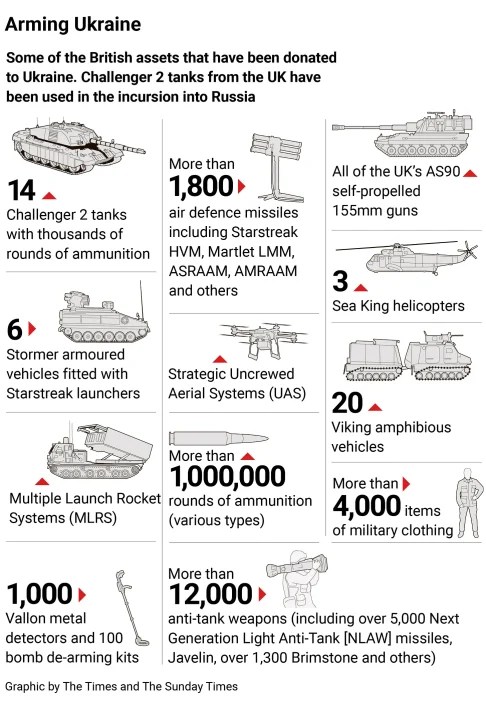
In other words, London is taking the lead in marking itself out as a formal belligerent in the proxy war, in the hope other Western countries – particularly the US – will follow suit. What’s more, The Times strongly hints that Kursk is to all intents and purposes a British invasion. The outlet records:
“Unseen by the world, British equipment, including drones, have played a central role in Ukraine’s new offensive and British personnel have been closely advising the Ukrainian military… on a scale matched by no other country.”
Britain’s grand plans don’t stop there. Healey and Foreign Secretary David Lammy “have set up a joint Ukraine unit,” divided between the Foreign Office and Ministry of Defence. The pair “held a joint briefing, with officials, for a cross-party group of 60 MPs on Ukraine,” while “Starmer has also asked the National Security Council to draw up plans to provide Ukraine with a broader range of support.” On top of military assistance, “industrial, economic, and diplomatic support” are also being explored.
The Times adds that in coming weeks, “Healey will attend a new meeting of the Ukraine Defence Coordination Group,” an international alliance of 57 countries overseeing the Western weaponry flooding into Kiev. There, “Britain will press European allies to send more equipment and give Kyiv more leeway to use them in Russia.” The British Defence Ministry also reportedly “spoke last week to Lloyd Austin, the US defence secretary, and has been wooing Boris Pistorius, his German opposite number.”
Evidently, the new Labour government has an ambitious vision for the proxy war’s continuation. Yet, if the “counterinvasion” is anything to go by, it’s already dead in the water. As The Times notes, the imbroglio is primarily “designed to boost morale at home and shore up Zelensky’s position,” while relieving pressure on the collapsing Donbass frontline by forcing Russia to redirect forces to Kursk. Instead, Moscow “has capitalised on the absence of four crack Ukrainian regiments to press their attacks around Pokrovsk and Chasiv Yar.”
Similarly, commenting on Starmer’s wideranging efforts to compel overt Western action against Russia, a “defence expert” told The Times: “if it looks as if the Brits [are] too far ahead of their NATO allies, it might be counterproductive.” This analysis is prescient, for there are ample indications London’s latest attempt to ratchet tensions and drag the US and Europe ever-deeper into the proxy war quagmire has already been highly “counterproductive”, and boomeranged quite spectacularly. Indeed, it appears Washington has finally had enough of London’s escalatory connivances.
In repeated press conferences and media briefings since August 6th, US officials have firmly distanced themselves from the Kursk incursion, denying any involvement in its planning or execution, or even being forewarned by Kiev. Empire house journal Foreign Policy has reported that Ukraine’s swoop caught the Pentagon, State Department, and White House off-guard. The Biden administration is purportedly not only enormously unhappy “to have been kept out of the loop,” but “skeptical of the military logic” behind the “counterinvasion”.
On top being a clear suicide mission, the eagerly advertised presence of Western weapons and vehicles on Russian soil “has put the Biden administration in an extremely awkward position.” Washington has since the proxy war erupted been wary of provoking retaliations against Western countries and their overseas assets, and the conflict spilling outside Ukraine’s borders. Adding to US irritations, the British-directed Kursk misadventure also torpedoed ongoing efforts to secure an agreement to halt “strikes on energy and power infrastructure on both sides.”
This comes as Kiev prepares for a harrowing winter without heat or light, due to devastating Russian attacks on its national energy grid. Putin has moreover made clear that Ukrainian actions in Kursk mean there is no longer scope for a wider negotiated settlement at all. Which is to say Moscow will now only accept unconditional surrender. The US has also seemingly changed course as a result of the “counterinvasion”.
On August 16th, it was reported that Washington had prohibited Ukraine’s use of British-made, long-range Storm Shadow missiles against Russian territory. Given securing wider Western acquiescence to such strikes is, per The Times, a core objective for Starmer, this can only be considered a harsh rebuke, before the Labour government’s escalatory lobbying efforts have even properly taken off. The Biden administration had in May granted permission for Kiev to conduct limited strikes in Russia, using guided munitions up to a 40-mile range.
Even that mild authorisation may be rescinded in due course. Berlin, which like Britain had initially proudly promoted the presence of its tanks in Kursk, is now decisively shifting away from the proxy war. On August 17th, German Finance Minister Christian Lindner announced a halt to any and all new military aid to Ukraine as part of a wider bid to slash federal government spending. The Wall Street Journal reporting three days earlier that Kiev was responsible for Nord Stream II’s destruction may be no coincidence.

Germany’s Bild newspaper: “In Russia, Ukraine advances with German tanks!”
The narrative of the Russo-German pipeline’s bombing detailed by the outlet was absurd in the extreme. Conveniently too, the WSJ acknowledged that admissions of “Ukrainian officials who participated in or are familiar with the plot” aside, “all arrangements” to strike Nord Stream “were made verbally, leaving no paper trail.” As such, the paper’s sources “believe it would be impossible to put any of the commanding officers on trial, because no evidence exists beyond conversations among top officials.”
Such an evidentiary deficit provides Berlin with an ideal pretext to step away from the proxy war, while insulating Kiev from any legal repercussions. The narrative of Ukraine’s unilateral culpability for the Nord Stream bombings also helpfully distracts from the attack’s most likely perpetrators. This journalist has exposed how a shadowy cabal of British intelligence operatives were the masterminds, and potential executors, of the October 2022 Kerch Bridge bombing.
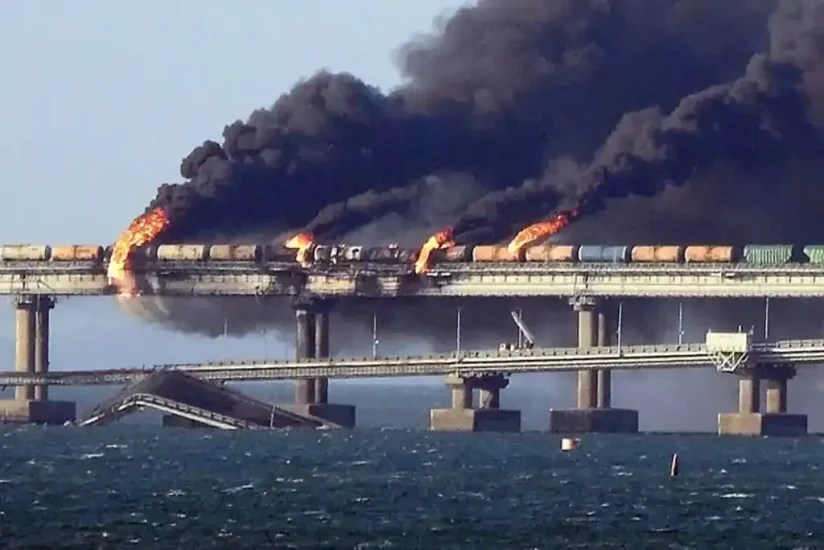
Kerch Bridge in flames following its British-planned bombing
That escalatory incident, like Nord Stream’s destruction, was known about in advance, and apparently opposed, by the CIA. Chris Donnelly, the British military intelligence veteran who orchestrated the Kerch Bridge attack, has privately condemned Washington’s reluctance to embroil itself further in the proxy war, declaring “this US position must be challenged, firmly and at once.” In December that year, the BBC confirmed that British officials were worried about the Biden administration’s “innate caution”, and had “stiffened the US resolve at all levels”, via “pressure.”
The determination of Washington’s self-appointed “junior partner” to escalate the proxy conflict into all-out hot war between Russia and the West has only intensified under Starmer’s new Labour government. Yet, the Empire gives every appearance of refusing to take the bait, while seeking to curb London’s belligerent fantasies. This may be an encouraging sign that the proxy war is at last reaching its end. But we must remain vigilant. British intelligence is unlikely to allow the US to withdraw without a fight.
Russia: Comprehensive deal with Iran will include defense, security ties
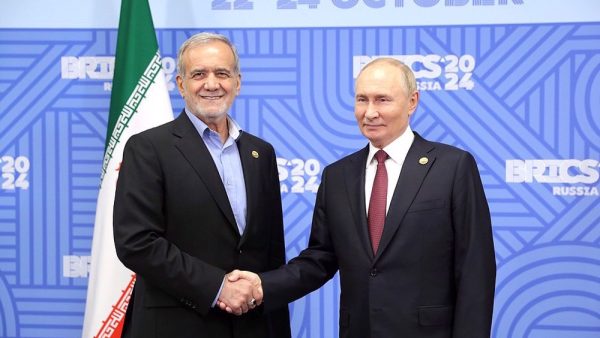
Press TV – November 24, 2024
Russia’s deputy foreign minister says the treaty on a comprehensive strategic partnership between his country and Iran will include cooperation in the defense and security sectors.
Speaking to Russia’s TASS news agency on Sunday, Andrei Rudenko said he would not disclose the details of the agreement that is expected to be signed in the near future.
“I would only note [that] it will meet challenges and requirements of our time and cover almost all current and promising spheres of Russian-Iranian cooperation, including defense and security,” he added.
In 2001, Tehran and Moscow signed a long-term cooperation deal, officially known as the Treaty of the Foundation of Mutual Relations and the Principles of Cooperation. It was initially set for 10 years but was extended up until 2026.
Now, the two capitals are making final arrangements for the comprehensive partnership pact, which may determine their bilateral ties in all fields for the next 20 years.
Russian Foreign Minister Sergei Lavrov has announced that his country will sign a strategic partnership agreement with Iran “in the near future.”
Rudenko emphasized that the nature of Iran-Russia interactions has notably changed over the past two decades.
“We are closely coordinating approaches with our Iranian friends and take necessary measures to strengthen peace and security” in the region, he added.
Last month, Iran’s Ambassador to Russia Kazem Jalali said the strategic partnership treaty would be signed during Iranian President Masoud Pezeshkian’s visit to Moscow. The date of this visit has yet to be decided.
Iran and Russia are both subject to illegal Western sanctions. They have over the past years deepened their relations in various fields, including military and defense, and become close allies.
A defining moment in the Ukraine war
By M. K. BHADRAKUMAR | Indian Punchline | November 24, 2024
Russian President Vladimir Putin issued a statement on Thursday regarding the two attacks by Western long-range weapons on Russian territory on November 19 and 21 and Moscow’s reactive strike on a facility within Ukraine’s defence industrial complex in the city of Dnepropetrovsk with a hitherto unknown non-nuclear hypersonic ballistic missile named Oreshnik.
On Friday, at a meeting in the Kremlin with the military top brass, Putin revisited the topic where he clarified that Oreshnik is not really in “experimental” stage, as the Pentagon had determined, but its serial production has commenced.
And he added, “Given the particular strength of this weapon, its power, it will be put into service with the Strategic Missile Forces.” He then went on to reveal, “It is also important that along with the Oreshnik system, several similar systems are currently being tested in Russia. Based on the test results, these weapons will also go into production. In other words, we have a whole line of medium- and shorter-range systems.”
Putin reflected on the geopolitical backdrop: “The current military and political situation in the world is largely determined by the results of competition in the creation of new technologies, new weapons systems and economic development.”
Succinctly put, an escalatory move authorised by the US president Joe Biden has boomeranged. Did Biden bite more than he could chew? This is the first thing.
The US apparently decided that Putin’s “red lines” and Russia’s nuclear deterrence were the stuff of rhetoric. Washington was clueless about the existence of a wonder weapon like the Oreshnik in the Russian armoury. The shock and awe in the western capitals speaks for itself. Biden avoided commenting on the issue when asked by reporters.
The Oreshnik is not an upgrade of old Soviet-era systems but “relies entirely on contemporary cutting-edge innovations,” Putin stressed. Izvestia reported that Oreshnik is a new generation of Russian intermediate-range missiles with a range of 2,500-3,000km and potentially extending to 5,000km, but not intercontinental, equipped with multiple independently targeted re-entry vehicles (MIRV) — ie., having separating warheads with individual guidance units. It has a speed between Mach 10 and Mach 11 (exceeding 12,000 kms per hour).
The Russian daily Readovka reported that with an estimated 1,500 kgs of combat payload, lifting to a maximum height of 12 km and moving at a speed of Mach 10, the Oreshnik launched from the Russian base at Kaliningrad would strike Warsaw in 1 minute 21 seconds; Berlin, 2 min 35 sec; Paris, 6 min 52 sec; and London, 6 min 56 sec.
In his statement on Thursday, Putin said, “there are no means of countering such weapons today. Missiles attack targets at a speed of Mach 10, which is 2.5 to 3 kilometres per second. Air defence systems currently available in the world and missile defence systems being created by the Americans in Europe cannot intercept such missiles. It is impossible.”
Indeed, a terrible beauty is born. For, Oreshnik is not just an effective hypersonic weapon and is neither a strategic weapon nor an intercontinental ballistic missile. But its striking power is such that when used en masse and in combination with other long-range precision systems, its effect and power is on par with strategic weapons. Yet, it is not a weapon of mass destruction — rather, it’s a high-precision weapon.
Serial production implies that dozens of Oreshnik are in the process of being deployed, which means that no US / NATO staff group and no Anglo-American target intelligence unit in bunkers in Kiev or Lvov is safe any longer.
Oreshnik is also a signal to the incoming US president Donald Trump who is ad nauseam calling for an immediate end-of-war settlement. Oreshnik, ironically, has been developed only as Moscow’s reaction to the hawkish decision by then US president Trump in 2019 to unilaterally withdraw from the 1987 Soviet-American treaty on intermediate range nuclear forces (INF). Hence this also signals that Moscow’s trust in Trump is near zero.
To drive home this point, on the very same day Oreshnik emerged out of its silo, Tass carried an unusual interview with a top Russian think tanker affiliated to the foreign ministry and Kremlin — Andrey Sushentsov, program director of the Valdai Discussion Club, dean of the Russian Foreign Ministry’s MGIMO International Relations Department, and member of the Scientific Council under the Russian Security Council.
The following excerpts of the interview, plain-speaking and startling, should shatter the hypothesis that there is something special going on between Trump and Putin:
- “Trump is considering ending the Ukrainian crisis, not out of any sympathy for Russia, but because he acknowledges that Ukraine has no realistic chance of winning. His goal is to preserve Ukraine as a tool for US interests, focusing on freezing the conflict rather than resolving it. Consequently, under Trump, the long-term strategy of countering Russia will persist. The US continues to benefit from the Ukrainian crisis, regardless of which administration is in power.”
- “The United States has regained its position as the European Union’s top trading partner for the first time in years. It is the Europeans who are bearing the financial burden of prolonging the Ukrainian crisis, while the US has no interest in resolving it. Instead, it is more beneficial for them to freeze the conflict, keeping Ukraine as a tool to weaken Russia and as a persistent hotspot in Europe to maintain their confrontational approach.”
- “Trump has made numerous statements that differ from the policies of Joe Biden’s administration. However, the US state system is an inertial structure that resists decisions it deems contrary to American interests, so not all of Trump’s ideas will come to fruition.”
- “Trump will have a two-year window before the midterm congressional elections, during which he will have a certain freedom to push his policies through the Senate and the House of Representatives. After that, his decisions could face resistance both domestically and from US allies.”
Make no mistake, Russia is under no illusions. Putin will not waver from the conditions he outlined in June for resolving the conflict: the withdrawal of Ukrainian troops from Donbass and Novorossiya; Kiev’s commitment to abstain from joining NATO; the lifting of all Western sanctions against Russia; and the establishment of a non-aligned, nuclear-free Ukraine.
Clearly, this war will continue on its course till it reaches its only logical conclusion, which is Russian victory. Russian Security Council Deputy Chairman Dmitry Medvedev is spot on when he said in an interview with Al Arabiya yesterday that the use of Oreshnik missile “changes the course” of the Ukrainian conflict.
The Western capitals will have to reconcile with the reality that the scope for escalation of the war is ending. Make no mistake, if another ATAMCS strike inside Russia is attempted, it will have devastating consequences for the West.
Serbian President Aleksandar Vucic put it nicely: “If you [NATO] think you can attack everything on Russian territory with Western logistics and weapons without getting a response, and that Putin won’t use whatever weapons he deems necessary, then you either don’t know him or you’re abnormal.”
The Pentagon is running out of missiles. After December 1, that will be a big problem.
Inside China Business | November 20, 2024
Protracted wars in the Middle East and Ukraine are draining the US arsenal of interceptor missiles. The problem is especially severe in Palestine and in the Red Sea, where dozens of missiles are launched monthly against incoming rockets and drones. Pentagon officials are urgently pushing weapons makers to produce more, but are bumping up against capacity and CAPEX constraints. In another blow, China just announced an export ban on dual-use metals that are critical to the manufacture of missiles and other aerospace applications in the defense sector. Magnesium and tungsten, in particular, are two key materials necessary for the production of missiles, but where China effectively has monopolized the refining and production. China’s export ban will take effect on 1 December.
Resources and links:
Wall Street Journal, Pentagon Runs Low on Air-Defense Missiles as Demand Surges https://www.wsj.com/politics/national…
Nikkei Asia, China to tighten export curbs on critical metals ahead of Trump’s return https://asia.nikkei.com/Spotlight/Sup…
Six Strategic Metals Widely Used in the Military Industry https://www.samaterials.com/content/s…
Magnesium in Defence https://www.magnium.com.au/defence-metal
Forbes, The Titanium Supply Chain For The Aerospace Industry Goes Through Russia https://www.forbes.com/sites/willyshi…
Ballistic vs. Cruise Missiles: What’s the Difference?
By Ilya Tsukanov – Sputnik – 23.11.2024
Russia’s successful combat test of the Oreshnik intermediate-range missile garnered its share of attention and more than a little confusion as media and amateur observers alike began comparing the new ballistic weapon to other weapons in both Russia and NATO’s arsenals, including cruise missiles.
Sputnik sets the record straight by outlining the key differences between these two very distinct types of weapons:
Ballistic missiles
Powered by a single rocket or series of rockets operating in stages to propel them to the required trajectory, ballistic missiles ascend tens of kilometers into the atmosphere, shedding motors and thrusters along the way, with larger ones leaving the atmosphere altogether, after which their payload separates and begins its descent back down toward Earth, traveling in an arc.
Ballistic missiles typically have three flight phases, starting with the boost phase, followed by a midcourse phase – which starts when the rocket motor(s) stop(s) firing and the missile’s payload starts to coast, usually while continuing to ascend, and finally the terminal phase, during which the payload starts the final course toward its target(s).
Some also have a distinct fourth phase, which kicks off after the post-boost phase, during which the onboard multiple independent reentry vehicle (MIRV) bus makes changes to its trajectory, and decoys are released to confuse and saturate enemy missile defenses.
Some ballistic missiles can make changes to their trajectory, so long as onboard rocket fuel allows, but usually, any maneuverability attributed to these weapons is the result of their payloads.
Russia’s Avangard hypersonic glide vehicle, for instance, is blasted into space by an ordinary ICBM, but becomes maneuverable after separating from its carrier. MIRV buses also often contain small rocket motors and inertial guidance, allowing alterations to its payload’s trajectory before individual warheads separate.
Cruise Missiles
Cruise missiles are jet engine-powered weapons that stay within the atmosphere throughout their flight. In fact, they often fly at extremely low altitudes, ‘hugging’ the ground as few as a few meters from the surface to avoid detection.
These weapons are designed for precision strikes against an array of ground and sea-based targets and, if fitted with nuclear warheads, can target large built-up areas or entire carrier strike groups (in the case of Russia’s P-800 Oniks, for example). Conventional cruise strikes can be calibrated to attack targets as small as individual buildings or bunkers.
Cruise missiles stay maneuverable through their approach to their targets, featuring GPS, inertial guidance, terrain mapping and/or other tools to guide them. Some designs allow human operators to manually guide missiles in the terminal phase.
Pros and Cons of Ballistic and Cruise
Cruise missiles are typically far cheaper (costing as little as 15% as a typical tactical ballistic missile), with their launch more difficult to detect, and the missiles boasting higher accuracy. However, unless they are nuclear armed, their firepower is typically lower, with the US AGM-86 ALCM air-launched cruise missile boasting the largest payload in this class of weapon – 1,362 kg, while most cruise missiles average about 500 kg.
Ballistic missiles are typically less accurate (with a circular error probable, or CEP, measured in the tens or even hundreds of meters, compared to meters for cruise missiles), but do have a number of distinct advantages – the most obvious of which is payload size (Russia’s RS-28 Sarmat, for example, has a 10,000 kg payload).
Ballistic missiles’ arcing approach also allows their payloads to accelerate to incredible speeds (often hypersonic), while cruise missiles typically stay subsonic or supersonic through their flight, which makes them easier to intercept, and reduces the sheer kinetic force with which they slam down onto their targets.
Collapsing Empire: RIP Royal Navy
By Kit Klarenberg | Al Mayadeen | November 23, 2024
On November 15th, The Times published a remarkable report, revealing serious “questions” are being asked about the viability of Britain’s two flagship aircraft carriers, at the highest levels of London’s defence establishment. Such perspectives would have been unreportable mere months ago. Yet, subsequent reporting seemingly confirms the vessels are for the chop. Should that come to pass, it will represent an absolutely crushing, historic defeat for the Royal Navy – and the US Empire in turn – without a single shot fired.
The HMS Queen Elizabeth and HMS Prince of Wales first set sail in 2017 and 2019 respectively, after 20 years in development. The former arrived at the Royal Navy’s historic Portsmouth base with considerable fanfare, a Ministry of Defence press release boasting that the carrier would be deployed “in every ocean around the world over the next five decades.” The pair were and remain the biggest and most expensive ships built in British history, costing close to $8 billion combined. Ongoing operational costs are likewise vast.
Fast forward to today however, and British ministers and military chiefs are, per The Times, “under immense pressure to make billions of pounds’ worth of savings,” with major “casualties” certain. Resultantly, senior Ministry of Defence and Treasury officials are considering scrapping at least one of the carriers, if not both. The reason is simple – “in most war games, the carriers get sunk,” and are “particularly vulnerable to missiles.” As such, the pair are now widely perceived as the “Royal Navy’s weak link.”
Matthew Savill of British state-tied Royal United Services Institute told The Times that missile technology is developing “at such a pace” that carriers are rapidly becoming easy for Britain’s adversaries to “locate and track”, then neutralise. “In particular,” he cautioned, China is increasing the range of its ballistic and supersonic anti-ship missiles. Meanwhile, Beijing’s “hypersonic glide vehicle”, the DF-17, “can evade existing missile defence systems,” its “range, speed and manoeuvrability” making it a “formidable weapon” neither Britain nor the US can adequately counter.
Savill advocated “cutting one or both of the carriers,” as this “would free up people and running costs and those could be reinvested in the running costs of the rest of the fleet and easing the stresses on personnel”. Nonetheless, he warned that scrapping the carriers would be a “big deal for a navy that has designed itself around those carriers…and that the £6.2 billion paid for them would be a sunk cost.”
That the Royal Navy has “designed itself” around the two carriers is an understatement. For just one to set sail, it must be supported by a strike group consisting of two Type 45 destroyers for air defence, two Type 23 frigates for anti-submarine warfare, a submarine, a fleet tanker and a support ship. This “full-fat protective approach”, Savill lamented, means “most of the deployable Royal Navy” must accompany a single carrier at any given time:
“You can protect the carriers, but then the Navy has put all of its eggs in a particularly large and expensive basket.”
‘National Embarrassment’
March 2021 saw the publication of a long-awaited report, Global Britain in a Competitive Age – “a comprehensive articulation” of London’s “national security and international policy,” intended to “[shape] the open international order of the future.” The two aircraft carriers loomed large in its contents. One passage referred to how HMS Queen Elizabeth would soon lead Britain’s “most ambitious global deployment for two decades, visiting the Mediterranean, the Middle East and the Indo-Pacific”:
“She will demonstrate our interoperability with allies and partners – in particular the US – and our ability to project cutting-edge military power in support of NATO and international maritime security. Her deployment will also help the government to deepen our diplomatic and prosperity links with allies and partners worldwide.”
Such bombast directly echoed the bold wording of a July 1998 strategic defence review, initiated a year earlier by then-prime minister Tony Blair. Its findings kickstarted London’s quest to acquire world-leading aircraft carriers, which culminated with the birth of HMS Queen Elizabeth and HMS Prince of Wales. Britain’s explicit objective, directly inspired by the US Empire’s dependence on carriers to belligerently project its diplomatic, economic, military and political interests abroad, was to recover London’s role as world police officer, and audaciously assert herself overseas:
“In the post-Cold War world, we must be prepared to go to the crisis, rather than have the crisis come to us. So we plan to buy two new larger aircraft carriers to project power more flexibly around the world… This will give us a fully independent ability to deploy a powerful combat force to potential trouble spots without waiting for basing agreements on other countries’ territory. We will… be poised in international waters and most effectively back up diplomacy with the threat of force.”
Blair’s reverie appeared to finally come to pass in May 2021, when HMS Queen Elizabeth set off on a grand tour of the world’s oceans, escorted by a vast carrier strike group. Over the next six months, the vessel engaged in a large number of widely-publicised exercises with foreign navies, including NATO allies, and docked in dozens of countries. Press coverage was universally fawning. Yet, in November, as the excursion was nearing its end, an F-35 fighter launched from the carrier unceremoniously crashed.
The F-35’s myriad issues were by that point well-established. The jet, which has cost US taxpayers close to $2 trillion, entered into active service in 2006 while still under development. It quickly gained a reputation for hazardous unreliability. In 2015, a Pentagon report acknowledged its severe structural issues, limited service life and low flight-time capacity. Two years later, the Department of Defense quietly admitted the US Joint Program Office had been secretly recategorising F-35 failure incidents to make the plane appear safe to fly.
Despite this, the HMS Queen Elizabeth and HMS Prince of Wales were specifically designed to transport the F-35, to the exclusion of all other fighter jets. However, Britain has all along struggled to source usable F-35s, which produces the ludicrous situation of the two carriers almost invariably patrolling seas with few if any fighters aboard at all, therefore invalidating their entire raison d’être. In November 2023, the Daily Telegraph dubbed these regular “jet-less” forays a “national embarrassment”.
‘Carrier Gap’
An even graver embarrassment, rarely discussed with any seriousness by the British media, is that the two aircraft carriers have been plagued with endless technical and mechanical issues as long as they’ve been in service. Flooding, mid-operation breakdowns, onboard fires, and engine leaks are routine. Both vessels have spent considerably more time docked and under repair than at sea over their brief lifetimes. In 2020, an entire HMS Prince of Wales crew accommodation block collapsed, for reasons unclear.
As the elite US foreign policy journal National Interest acknowledged in March 2024, “the Royal Navy remains unable to adequately defend or operate” its two carriers “independently” – code for the Empire being consistently compelled to deploy its own naval and air assets to support the pair. This is quite some failure, given British officials originally intended for the vessels to not only lead NATO exercises and deployments, but “slot into” US navy operations wherever and whenever necessary.
The Empire’s inability to outsource its hegemonic duties to Britain has created a critical “carrier gap”. Despite maintaining an 11-strong fleet, Washington cannot deploy the vessels to every global flashpoint at once, grievously undermining her power and influence at a time of tremendous upheaval worldwide. In a bitter irony, by encouraging and facilitating London’s emulation of its own flawed and outdated reliance on aircraft carriers, the US has inadvertently birthed yet another needy imperial dependent, further draining its already fatally overstretched military resources.
Several Royal Navy destroyers were originally part of abortive US-led Operation Prosperity Guardian, launched in late 2023 to smash Ansar Allah’s righteous anti-genocide Red Sea blockade. Almost immediately, it became apparent the British lacked any ability to fire on land targets, therefore rendering their participation completely useless.
Subsequently, photos emerged of areas on Britain’s ships where land attack cruise missiles should’ve been situated. Instead, the spaces were occupied by humble treadmills, for use as on-board gyms.
It transpired that the appropriate weapons hadn’t been purchased, due to a lack of funds – the money having of course been spent instead on constructing barely operable aircraft carriers, which now face summary defenestration. By investing incalculable time, energy, and money in pursuing the mythological greatness associated with carrier capability, Britain – just like the US Empire – now finds itself unable to meet modern warfare’s most basic challenges. Meanwhile, its adversaries near and far have remorselessly innovated, equipping themselves for 21st century battle.
Days after The Times portended the impending death of London’s aircraft carriers, mainstream media became awash with reports of savage cutbacks in Britain’s military capabilities, in advance of a new strategic defence review. Five Royal Navy warships, all of which had lain disused due to staffing issues and structural decay for some time, were among the first announced “casualties”. What if anything will replace these losses isn’t certain, although it likely won’t be an aircraft carrier.
They’re at it again… the U.S. and Britain, inciting global war, must be defeated for good
Strategic Culture Foundation | November 22, 2024
This week marks a fateful threshold for the world. In a grave announcement, Russian President Vladimir Putin said that the three-year proxy war in Ukraine has now reached a global dimension.
The responsibility for this abysmal moment lies fully with the United States’ elitist rulers and their British accomplices. They are inciting global catastrophe in a desperate bid to save their hegemonic empire.
Putin’s announcement on November 21 came only hours after Russia launched a retaliatory strike against Anglo-American aggression. Russia’s new hypersonic ballistic missile destroyed a munitions center in Dnepropetrovsk in central Ukraine. The conventionally armed missile – called Oreshnik – was deployed in combat for the first time. It delivered several warheads at Mach-10 speed. There is no air defense against such a unique weapon.
The Oreshnik attack was in response to the firing of long-range missiles by the United States and Britain on November 19 and 21 against the pre-conflict territory of the Russian Federation. There is no doubt that the U.S. and British forces were directly involved because, as Moscow has noted, the Ukrainian regime does not have the personnel or logistics capability to operate these advanced NATO weapon systems.
The conclusion is stark. The world is on the cusp of World War Three, a war that would inevitably become a nuclear conflagration and precipitate the end of life on Earth. The evil facing humanity is staggering.
Western barefaced lies to the public
Ludicrously, or perhaps more accurately, fiendishly, Western politicians and media are condemning Russia for the escalation. Their accusations are in flagrant contradiction with the facts. The Western public is being lied to about the sequence and causes of war.
In a move beyond reckless, the United States and Britain attacked Russia with long-range missiles from the territory of Ukraine. The ATACMS and Storm Shadow weapons were aimed at Bryansk and Kursk Oblasts in Western Russia. The American missiles were shot down by Russian air defense, while the British Storm Shadow cruise projectile caused deaths in Kursk.
That barrage marked an open act of war against Russia by the United States and Britain. Hence, the Russian leader commented that the proxy war in Ukraine had now taken on a global dimension.
The American and British leadership went ahead with this aggression even after Russia had explicitly warned several weeks ago that the deployment of such weapons against Russian territory would be seen by Moscow as an act of war. It also followed only hours after Russia revised its nuclear defense doctrine on November 19, defining that the use of long-range conventional weapons from the territory of a non-nuclear state (Ukraine) supplied by nuclear states (the U.S. and Britain) would constitute a joint attack, thereby giving Russia the right to retaliate with nuclear force.
The situation has thus entered the realm of nuclear world war.
Given the aggression initiated by the U.S. and Britain with their ATACMS and Storm Shadow missiles, Russia has the legal right to hit those territories and any other territory of the NATO alliance. Russia chose not to do so – for now – limiting its Oreshnik’s target to the territory of Ukraine.
What happens next over the coming days depends on the U.S. and its NATO partners. So far, the White House and Pentagon have sought to (irrationally) blame Moscow for escalation and are saying that the United States will continue to deploy long-range missiles from Ukraine against Russian territory. That remains to be seen if the insanity prevails.
Russia has shown incredible restraint
Far from escalating conduct, Russia has shown incredible restraint, given the relentless provocations by the U.S. and NATO over many months and, indeed, years.
The U.S. and its allies have continually weaponized their corrupt, NeoNazi Ukrainian proxy regime – whose pretend-president and former cross-dressing comedian Vladimir Zelensky was given a standing ovation in the European Parliament this week – despite repeated warnings from Moscow that the dynamic is leading to a world war.
The insanity is compounded by Zelensky’s insatiable demands for more weapons and Western taxpayer handouts worth hundreds of billions of dollars, along with hubristic Western notions that “Russia is bluffing.”
How delusional! The Western leaders are playing Russian Roulette. The United States and its NATO partners are now legitimate targets for Russian strikes. Russia demonstrated this week that it has the capability to breach any Western defense, and it is warning that any further aggression on its territory will be responded to.
President Putin admonished Western ruling elites to think carefully about the choices they are going to make. They can pull back from the abyss and negotiate a diplomatic end to the proxy war. Or they can choose to keep escalating to inevitable disaster.
Western ruling class beyond reason
However, of acute concern is that the Western ruling class seems to be beyond reason and sanity. The U.S. hegemon is facing an existential crisis from its terminal collapse as a global power and loss of imperial supremacy. Starting a war with Russia – even to the point of catastrophe – seems to be the only way the Western imperialist system led by the U.S. can respond.
Significantly, the Biden administration is only a matter of weeks from exiting in disgrace. Incoming President Donald Trump has vowed to end the conflict in Ukraine through prompt negotiations. The U.S. deep state is in a quandary.
The American people voted for Trump on November 5 in large part out of repudiation of the Biden administration, the Democrat Party and its servile adherence to the deep state’s endemic warmongering.
Before Trump’s inauguration on January 20, the American ruling class is desperately pushing the proxy war in Ukraine to prevent a negotiated settlement.
Biden’s approval for using ATACMS – followed by the British lackey Prime Minister Keir Starmer – was a brazen U-turn. Only a month ago, they refused such a move. The election of Trump and the prospect of diplomacy with Russia has caused the Western establishment to ramp up the proxy war.
This week saw the 1,000th day of conflict in Ukraine since Russia launched its special military operation to stop NATO aggression on February 24, 2022. The conflict has reached its most dangerous point.
Russia again this week repeated that it is open to a diplomatic settlement, just as it was in late 2021 when it presented far-reaching security proposals to prevent hostilities. The Western elites dismissed that opportunity, choosing the path of war instead. They also sabotaged the Minsk Accords in 2014 and 2015, and the Istanbul peace deal in March 2022. Millions of casualties later, they still want more war, slaughter, and global war, with their grotesque masks of “defending democracy and rules-based order.”
The American people want to end the conflict. The incoming Trump administration appears to be willing to honor the popular demand.
But sanity, morality and democracy are not qualities shared by the imperialist ruling class in the U.S. and its NATO accomplices.
An American deep state coup, then and now
A couple of observations are notable. November 22 marks the date 61 years ago when an American president, JFK, was murdered by the U.S. deep state. A coup d’état was executed very much for the objective of keeping the Cold War going with the Soviet Union because of the vested economic interests of U.S. militarism and the military-industrial complex.
All these years later, the U.S. deep state is attempting another coup against the democratic wishes of the American people for a peaceful end to the proxy war in Ukraine. The U.S. ruling elite want the war against Russia to persist in maintaining their lucrative profits and for existential reasons of empire. Joe Biden is a brain-dead president who is signing orders pushed in front of him by deep-state operatives like Tony Blinken and Jake Sullivan just before he wanders off to a retirement home – or into the Amazon jungle à la the hilarious photo-op at the G20 summit in Brazil this week.
Ukraine proxy war back to Nazi Germany
This long perspective also puts the Ukraine proxy war into a proper, wider historical context. The conflict in Ukraine did not start in February 2022. It did not even start with the CIA-backed coup in Kiev against an elected president in February 2014. It did not even start with the U.S.-financed Orange Revolution in Ukraine in 2004. This conflict goes back at least to the Soviet victory over Nazi Germany in 1945 when the United States and its imperialist allies immediately responded by creating the Cold War with its newly forged imperialist instrument known as NATO, in part by deploying Ukrainian fascist collaborators to covertly attack Russia. After World War Two, the CIA and Nazi remnants like spymaster Major General Reinhard Gehlen were united in purpose along with the British MI6 to defeat the Soviet Union. What is transpiring today in Ukraine is the culmination of a systematic conflict, essentially about projecting and maintaining Western imperial power.
The emergence of Russia, China, the BRICS, and the Global South has amplified Western imperial angst and diehard hostility to preserve global power and privilege. The latter hegemonic Western system is the epitome of fascism and neocolonialism.
Historical nemesis
There is a profound historical nemesis at this juncture. Will the U.S. imperial aggressor and its NATO front go down in defeat, or will it push the world to a final global war?
Russia is not bluffing. It won’t back down because of the historical sacrifices it has made already to defeat fascist tyranny – 27 to 30 million dead in World War Two alone. The Russian nation’s pain and suffering from imperialist aggression make it defiant and resolute in a way that the Western regimes could never comprehend or emulate.
Will sanity prevail? The American and European people have onerous obligations to hold their criminal elite rulers accountable.
Featured Video
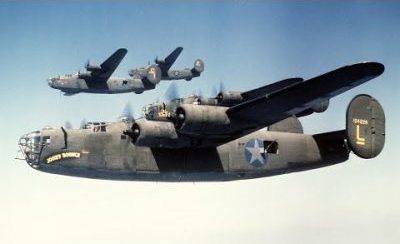
Bombing Hitler’s Hometown
or go to
Aletho News Archives – Video-Images
From the Archives
‘Conspiracy Theory’ Now Fact: Greater Israel Has Arrived
By Kit Klarenberg | Mint Press News | January 28, 2025
Ever since Tel Aviv’s 1948 creation, much has been said and written about ‘Greater Israel’ – the notion Zionism’s ultimate end goal is the forcible annexation and ethnic cleansing of vast swaths of Arab and Muslim lands for Jewish settlement, based on Biblical claims this territory was promised to Jews by God. The mainstream media typically dismisses this concept as antisemitic conspiracy theory, or at most the fringe fantasy of a minuscule handful of extremist Israelis.
In reality … continue
Blog Roll
 Aletho News
- IRGC: Israeli, US universities in region legitimate targets after strikes on Iranian university
- Trump admits Iran hit USS Ford carrier: ‘We ran for our lives’
- Battle for Hungary: EU attacks on Orban are a sign of worse things to come
- Iraqi resistance conducts drone strike on US-run base in Syria
- Failing to Defeat Hezbollah, Israel & US Pressure Syria’s Ahmed al-Sharaa to Join War
- US-Israeli war on Iran drives global fertilizer prices up 40%
- Hezbollah’s Surprise Weapons Redefine Ground Battle with Israel
- Yemen joins fight against US, Israel by firing missiles at occupied territories
- Seizing the Kharg: Washington’s path to defeat in the Persian Gulf
- Iran reports 500 US casualties in strikes on covert US military sites
- If Americans Knew
- Over 300 US service members wounded, majority have brain injuries – Not a ceasefire Day 169
- Researchers at Human Rights Watch Resign Over Blocked Report on Palestinian Refugee Return
- Jewish Groups Are Backing a War Americans Don’t Want
- Eric Fingerhut Thinks He’s the President of the Jews
- Top Jewish Philanthropists, Rabbis Urge Israeli President to Take Action Against ‘Jewish Extremists’
- Don’t Be Fooled. Zionist Leaders Have Always Wanted to Control Southern Lebanon
- Israel’s widespread use of torture is a core element of its genocide against the Palestinian people
- In Israel’s War on Iran, Many Middle East US Bases Rendered “All But Uninhabitable”
- ‘Burn the lawn’: Israel pursues ‘Rafah model’ in southern Lebanon
- A genocide here, an amputation there
- No Tricks Zone
- Devastating Assessment Of Comirnaty Vaccine By Former Senior Pfizer Europe Toxicologist
- New Study: CO2 Is ‘Effectively Negligible’ As An Explanatory Climate Change Factor Since 2000
- Former Pfizer Toxicologist Dr. Helmut Sterz Tells Bundestag Hearing Pfizer Vaccine Should Have Never Been Approved
- Energy Expert: Germany’s Nuclear Phaseout Was A “500 Billion Euro Mistake”
- New Research: South Australia’s Mid-Holocene Sea Surface Temperatures Were 4°C Warmer Than Today
- Storing Green Energy To Last Germany 10 Days Would Require A 60-Million Tonne Battery
- New Studies: UK Sea Levels Were 4 Meters Higher Than Today During The Mid-Holocene
- Destructive Green New Deal: German Energy And Metal Group Warns Of Drastic Crisis
- New Study Documents A 20-Year Pause In Arctic Sea Ice Decline – Driven By Internal Variability
- Wake-up Call: Survey Shows Majority Of Germans Now Favor Postponing Climate Targets!
 Aletho News