Trump’s Opposition Is Trying to Turn Back the Wheel of History
By Veniamin Popov – New Eastern Outlook – April 25, 2025
In the American and broader Western press, as well as in select media outlets from certain Global South countries, a vigorous campaign is underway to paint Donald Trump as the embodiment of universal evil. Critics claim his policies are shaking the global economy, undermining long-standing alliances, and creating an atmosphere of chaos.
U.S. newspapers aligned with the Democrats have published numerous articles on how to resist the president. For instance, an April 15 piece in the New York Times portrays Trump’s America as a “rogue state led by an impulsive authoritarian leader detached from the rule of law and other constitutional American principles and values.”
Globalist supporters are uniting in their efforts to argue that all of Trump’s actions are clumsy, shortsighted, and counterproductive. Notably, current Western European leaders—seeing the U.S. president’s policies as a threat to their own standing—are trying to align with Democratic Party loyalists, especially in states where the Democrats hold a majority. Meanwhile, discontent is being deliberately stoked within the U.S. itself, as seen in ongoing protests against Trump’s key ally, Elon Musk, and his company Tesla.
Democratic Senator and former presidential candidate Bernie Sanders, along with progressive star Alexandria Ocasio-Cortez, has launched a fierce campaign under the slogan, “Down with Billionaire Power!” Recently, Trump’s opponents dusted off Joe Biden, who, for the first time in three months, sharply criticized the current administration, accusing it of “causing enormous damage to America.” At its core, Trump’s controversial yet revolutionary reforms reflect an objective need for long-overdue changes in American politics and economics.
Growing Divisions in the West
The U.S. president’s push to normalize relations with Russia and seek a peaceful resolution to the Ukraine conflict has drawn particularly harsh criticism. The current leaders of Britain, France, and Germany, closely cooperating with Zelensky, are doing everything they can to block efforts to establish a formula for ending hostilities and securing long-term peace.
These leaders understand that a peaceful settlement could cost them their positions, as the public would realize the failure of their “fight to the last Ukrainian” policy and the dishonesty of their claims that Putin’s Russia poses an existential threat.
Trump is by no means a pro-Russian politician—he defends U.S. interests—but he clearly recognizes that Zelensky and Biden bear primary responsibility for the ongoing three-year conflict. However, many of the 47th president’s actions echo 19th-century imperialism. At the same time, he understands that the Eastern European conflict risks a clash between nuclear powers, and in a nuclear war, there are no winners.
Recent polls show that most Americans view Trump’s policies favorably.
As for Russia, the U.S. and Russia no longer have the ideological divide of the Soviet era, and America’s stance on traditional values and achieving peace in Ukraine is closer to Moscow’s than to that of major European leaders and Zelensky. The U.S. cannot win a trade war with China, while Russia could play a key role in mediating agreements between the U.S. and China, as well as the U.S. and Iran. Donald Trump thinks pragmatically, even if some of his actions appear erratic, ill-considered, and counterproductive. Nevertheless, he objectively represents not only the urgent needs of the United States but also the necessity of establishing a new international order—one based on a fairer balance of national interests among different civilizations.
American history has seen many realist thinkers who advised their leaders to act cautiously and consider their opponents’ interests. Hans Morgenthau, the preeminent political scientist of the last century (whose works are still studied in universities), urged the Johnson administration not to escalate the Vietnam War—only to be dismissed in 1965. George Kennan, one of the architects of U.S. policy toward the USSR, warned in 1997 against NATO expansion eastward, arguing it would “provoke Moscow’s militancy.”
No one listened. Similarly, Brent Scowcroft, national security advisor to George H.W. Bush, insisted that invading Iraq would be a grave mistake. Afterward, he was treated as an outsider. We can only hope that Donald Trump’s realism—especially regarding a genuine peace in Ukraine—does not meet the same fate as his three brilliant predecessors. Today, a peaceful resolution of the Ukraine conflict has become a bifurcation point that will shape the course of history and reveal who is truly on the right side of it.
Dutch commentator slams double standards as government caters for refugees while EU migrant workers are exploited
Remix News | April 25, 2025
Dutch Minister of Asylum and Migration of the Netherlands Marjolein Faber was given a few billion euros extra in the Spring Memorandum to house asylum seekers. Some 10,000 asylum seekers now “endlessly vacation” in what Marianne Zwagerman in De Telegraaf calls “extremely expensive” hotel rooms.
According to Zwagerman, over 100 hotels benefiting from this scheme “are laughing their heads off” as the government currently pays far more than an average Booking.com user, with rates breaching €300 per night.
The bill for catering for asylum seekers staying in other places is also getting completely out of hand.
Citing one hotel in Rijswijk, she says that while it was once bustling with businessmen, it is “now full of asylum seekers.” She also takes a jab at the EU’s Green deal: “Formerly full of Shell employees who flew in from all over the world to be retrained on the production of oil and gas. But yes, a country that drives away businesses, bans fossil energy, and opens its borders to everyone ends up with hotels full of asylum seekers instead of businessmen.”
“It is a nice place. Our beds are washed for us, we get food, and we get help with everything we need to arrange,” says Ukrainian Yevheniia, who has been living in the Rijswijk hotel for three years with her husband and children. Zwagerman notes that she hopes to stay in the Netherlands even after the war.
Sadly, migrant workers from within the EU are treated drastically differently, in what Zwagerman calls a “modern slave industry run by rock-hard temp agencies.” Low wages, hard work, no guarantees, and no future.
A 42-year-old female Polish migrant worker, Julia, whose story Zwagerman notes was told by RTV Utrecht, sleeps in a homeless shelter, “scared and lonely, with a drunk neighbor next door.” She had moved to the Netherlands for more opportunities, but got picked up by one of the agencies that eagerly recruit Eastern Europeans looking for a better life and in need of a job.
Despite working in the Netherlands for 12 years, she had no permanent contract and no savings. Then she lost her warehouse job for being too slow. Returning to Poland is not an option either. Her family there does not have the means to accommodate her.
“No work means no shelter. Sick for a week? F**k off. Ten others are waiting for your job.” Julia was apparently “lucky,” as many migrant workers sleep outdoors in tents. Zwagerman says an update from RTV Utrecht indicated that Julia found new work. One may ask how many haven’t.
Meanwhile, the Dutch government is busy prepping for war. Mark Rutte, former Dutch PM and current NATO secretary general, is prepping for the NATO summit in The Hague and rallying members to spend hundreds of millions more on war. Of course, all this only means more migrants fleeing and in need of work.
More Julias, scared, hungry, and maybe too slow.
NATO Chief to Lobby Trump Not to Pressure Ukraine to Make Peace with Russia
By Kyle Anzalone | The Libertarian Institute | April 24, 2025
The head of the North Atlantic Alliance is traveling to the US for meetings with top officials in the Donald Trump administration. Secretary General Mark Rutte is expected to push the White House not to force Ukraine into a peace deal with Russia.
According to the Financial Times, “Rutte will urge President Donald Trump’s administration not to force Ukraine to accept a peace deal against its will,” during meetings with embattled Defence Secretary Pete Hegseth, Secretary of State Marco Rubio and National Security Adviser Mike Waltz on Thursday.
Trump and Rubio recently stated that they expect both Russia and Ukraine to quickly move towards a peace agreement. The White House proposed a deal that would require Kiev to recognize Moscow’s permanent control over Ukrainian territory held by the Russian military, including the Crimean Peninsula.
On Wednesday, Trump slammed Ukrainian President Volodymyr Zelensky for rejecting the idea of Ukraine. “This statement is very harmful to the Peace Negotiations with Russia in that Crimea was lost years ago under the auspices of President Barack Hussein Obama, and is not even a point of discussion,” Trump wrote on Truth Social.
“[Zelensky] can have Peace, or, he can fight for another three years before losing the whole Country,” he added. “We are very close to a Deal, but the man with ‘no cards to play’ should now, finally, GET IT DONE,”
A NATO official told FT, “The key message is making the Americans understand what’s at stake.”
Throughout the conflict, Western and NATO leaders have claimed that they are defending the international world order by arming and supporting Ukraine. However, many Western countries, primarily the US, have engaged in a number of unlawful invasions in recent decades. Additionally, NATO states have backed Israel as it conducted a genocide in Gaza.
Trump has not raised the issue of international law, and said his priority is ending the war to stop people from dying.
Rutte is not the only European leader planning to lobby Trump to continue the proxy war against Russia. European Commission President Ursula von der Leyen plans to speak with Trump at Pope Francis’s funeral on Saturday.
Ukraine’s Foreign Minister Andrii Sybiha responded to Trump’s recent peace proposals by saying Kiev cannot make concessions and the US must increase pressure on Russia.
On Thursday, Trump denounced a Russian strike on Kiev. “I am not happy with the Russian strikes on KYIV. Not necessary, and very bad timing,” he wrote on Truth Social. “Vladimir, STOP! 5000 soldiers a week are dying. Lets get the Peace Deal DONE!”
Trump’s Circus in Ukraine – Part 27 of the Anglo-American War on Russia
Tales of the American Empire | April 24, 2025
President Donald Trump entered office in January 2025 with a promise to end the Ukraine war in one day. No one was surprised that he failed, but Trump did shock everyone by ordering the end of American aid to Ukraine. The United States provided most of the military and economic aid that Ukraine needs to continue its losing war with Russia. Within a few weeks, Ukraine would be forced to accept inevitable defeat and begin peace negotiations with Russia. For unknown reasons, Trump quickly resumed aid and began an idiotic effort to convince Russia to accept a ceasefire and stop winning the war so Ukraine’s army can recover as NATO “peacekeepers” deploy to Ukraine. This devolved into a circus.
_____________________________________
Related Tale: The Anglo-American War on Russia – Part Thirteen (Putin’s Special Military Operation);  • The Anglo-American War on Russia – Pa…
Related Tale: The Anglo-American War on Russia – Part Fourteen (Biden Blocks Peace); • The Anglo-American War on Russia – Pa…
“Military Summary” channel; YouTube: / @militarysummary
“Scott Ritter Documented Zelensky’s 6 Residences and Control by UK’s MI6”; Eric Z; The Duran; April 16, 2025; https://theduran.com/scott-ritter-doc…
A ‘Trump deal’? Juggling war, ‘easy war’ and negotiation
By Alastair Crooke | Strategic Culture Foundation | April 24, 2025
Trump clearly is in the midst of an existential conflict. He has a landslide mandate. But is ringed by a resolute domestic enemy front in the form of an ‘industrial concern’ infused with Deep State ideology, centred primarily on preserving U.S. global power (rather than on mending of the economy).
The key MAGA issue however is not foreign policy, but how to structurally re-balance an economic paradigm in danger of an extinction event. Trump has always been clear that this forms his primordial goal. His coalition of supporters are fixed on the need to revive America’s industrial base, so as to provide reasonably well-paid jobs to the MAGA corps.
Trump may for now have a mandate, but extreme danger lurks – not just the Deep State and the Israeli lobby. The Yellen debt bomb is the more existential threat. It threatens Trump’s support in Congress, because the bomb is set to explode shortly before the 2026 midterms. New tariff revenues, DOGE savings, and even the upcoming Gulf shake-down are all centred on getting some sort of fiscal order in place, so that $9 trillion plus of short-term debt – maturing imminently – can be rolled over to the longer term without resort to eye-watering interest rates. It is Yellen-Democrat’s little trip wire for the Trump agenda.
So far, the general context seems plain enough. Yet, on the minutiae of how exactly to re-balance the economy; how to manage the ‘debt bomb’; and how far DOGE should go with its cuts, divisions in Trump’s team are present. In fact, the tariff war and the China tussle bring into contention a fresh phalanx of opposition: i.e. those (some on Wall Street, oligarchs, etc.) who have prospered mightily from the golden era of free-flowing, seemingly limitless, money-creation; those who were enriched, precisely by the policies that have made America subservient to the looming American ‘debt knell’.
Yet to make matters more complex, two of the key components to Trump’s mooted ‘re-balancing’ and debt ‘solution’ cannot be whispered, let alone said aloud: One reason is that it involves deliberately devaluing ‘the dollar in your pocket’. And secondly, many more Americans are going to lose their jobs.
That is not exactly a popular ‘sell’. Which is probably why the ‘re-balance’ has not been well explained to the public.
Trump launched the Liberation ‘Tariff Shock’ seemingly minded to crash-start a restructuring of international trade relations – as the first step towards a general re-alignment of major currency values.
China however, wasn’t buying into the tariff and trade restrictions ‘stuff’, and matters quickly escalated. It looked for a moment as if the Trump ‘Coalition’ might fracture under the pressure of the concomitant crisis in the U.S. bond market to the tariff fracas that shook confidence.
The Coalition, in fact, held; markets subsided, but then the Coalition fractured over a foreign policy issue – Trump’s hope to normalise relations with Russia, towards a Great Global Reset.
A major strand within the Trump Coalition (apart from MAGA populists) are the neocons and Israeli Firsters. Some sort of Faustian bargain supposedly was struck by Trump at the outset through a deal that had his team heavily peopled by zealous Israeli-Firsters.
Simply put, the breadth of coalition that Trump thought he needed to win the election and deliver an economic re-balance also included two foreign policy pillars: Firstly, the reset with Moscow – the pillar by which to end the ‘forever wars’, which his Populist base despised. And the second pillar being the neutering of Iran as a military power and source of resistance, on which both Israeli Firsters – and Israel – insist (and with which Trump seems wholly comfortable). Hence the Faustian pact.
Trump’s ‘peacemaker’ aspirations no doubt added to his electoral appeal, but they were not the real driver to his landslide. What has become evident is that these diverse agendas – foreign and domestic – are interlinked: A set-back in one or the other acts as a domino either impelling or retarding the other agendas. Put simply: Trump is dependent on ‘wins’ – early ‘wins’ – even if this means rushing towards a prospective ‘easy win’ without thinking through whether he possesses a sound strategy (and ability) to achieve it.
All of Trump’s three agenda objectives, it turns out, are more complicated and divisive than he perhaps expected. He and his team seem captivated by western-embedded assumptions such as first, that war generally happens ‘Over There’; that war in the post Cold War era is not actually ‘war’ in any traditional sense of full, all-out war, but is rather a limited application of overwhelming western force against an enemy incapable of threatening ‘us’ in a similar manner; and thirdly, that a war’s scope and duration is decided in Washington and its Deep State ‘twin’ in London.
So those who talk about ending the Ukraine war through an imposed unilateral ceasefire (ie, the faction of Walz, Rubio and Hegseth, led by Kellogg) seem to assume blithely that the terms and timing for ending the war also can be decided in Washington, and imposed on Moscow through the limited application of asymmetric pressures and threats.
Just as China isn’t buying into the tariff and trade restriction ‘stuff’, neither is Putin buying into the ultimatum ‘stuff’: (‘Moscow has weeks, not months, to agree a ceasefire’). Putin has patiently tried to explain to Witkoff, Trump’s Envoy, that the American presumption that the scope and duration of any war is very much up to the West to decide simply doesn’t gel with today’s reality.
And, in companion mode, those who talk about bombing Iran (which includes Trump) seem also to assume that they can dictate the war’s essential course and content too; the U.S. (and Israel perhaps), can simply determine to bomb Iran with big bunker-buster bombs. That’s it! End of story. This is assumed to be a self-justifying and easy war – and that Iran must learn to accept that they brought this upon themselves by supporting the Palestinians and others who refuse Israeli normalisation.
Aurelien observes:
“So we are dealing with limited horizons; limited imagination and limited experience. But there’s one other determining factor: The U.S. system is recognised to be sprawling, conflictual – and, as a result, largely impervious to outside influence – and even to reality. Bureaucratic energy is devoted almost entirely to internal struggles, which are carried out by shifting coalitions in the administration; in Congress; in Punditland and in the media. But these struggles are, in general, about [domestic] power and influence – and not about the inherent merits of an issue, and [thus] require no actual expertise or knowledge”.
“The system is large and complex enough that you can make a career as an ‘Iran expert’, say, inside and outside government, without ever having visited the country or speaking the language – by simply recycling standard wisdom in a way that will attract patronage. You will be fighting battles with other supposed ‘experts’, within a very confined intellectual perimeter, where only certain conclusions are acceptable”.
What becomes evident is that this cultural approach (the Think-Tank Industrial Complex) induces a laziness and the prevalence of hubris into western thinking. It is assumed reportedly, that Trump assumed that Xi Jinping would rush to meet with him, following the imposition of tariffs – to plead for a trade deal – because China is suffering some economic headwinds.
It is blandly assumed by the Kellogg contingent too that pressure is both the necessary and sufficient condition to compel Putin to agree to an unilateral ceasefire – a ceasefire that Putin repeatedly has stated he would not accept until a political framework was first agreed. When Witkoff relays Putin’s point within the Trump team discussion, he stands as a contrarian outside the ‘licensed discourse’ which insists that Russia only takes détente with an adversary seriously after it has been forced to do so by a defeat or serious setback.
Iran too repeatedly has said that it will not be stripped naked of its conventional defences; its allies and its nuclear programme. Iran likely has the capabilities to inflict huge damage both on U.S. forces in the region and on Israel.
The Trump Team is divided on strategy here too – crudely put: to Negotiate or to Bomb.
It seems that the pendulum has swung under intense pressure from Netanyahu and the Jewish institutional leadership within the U.S.
A few words can change everything. In an about face, Witkoff shifted from saying a day earlier that Washington would be satisfied with a cap on Iranian nuclear enrichment and would not require the dismantling of its nuclear facilities, to posting on his official X account that any deal would require Iran to “stop and eliminate its nuclear enrichment and weaponization program … A deal with Iran will only be completed if it is a Trump deal”. Without a clear reversal on this from Trump, we are on a path to war.
It is plain that Team Trump has not thought through the risks inherent to their agendas. Their initial ‘ceasefire meeting’ with Russia in Riyadh, for example, was a theatre of the facile. The meeting was held on the easy assumption that since Washington had determined to have an early ceasefire then ‘it must be’.
“Famously”, Aurelien wearily notes, “the Clinton administration’s Bosnia policy was the product of furious power struggles between rival American NGO and Human Rights’ alumni – none of whom knew anything about the region, or had ever been there”.
It is not just that the team is insouciant towards the possible consequences of war in the Middle East. They are captive to manipulated assumptions that it will be an easy war.
War Dust and Collateral Inhalation: Israel Breathes in Gaza’s Dust
A Forensic Study of the Self-Inflicted Consequences of Modern Warfare
By Dennis Kucinich | April 23, 2025
Gaza is suffering the most intense bombing, per capita, of anywhere on earth, ever.
Over 100,000 tons of bombs have been dropped on Gaza, an area slightly smaller than the City of Detroit, Michigan, resulting in the recorded deaths of at least 60,000 Gazans and injuries to hundreds of thousands.¹
It is impossible to overstate the effects of the abominable bombing war on Gazans, their lives, their families, their health, and their communities.
What has escaped attention up until now is the undeniable environmental and health effects of the bombing of Gazans on Israelis, as well as on citizens of neighboring states, and the potential harm to U.S. military personnel in the region.
A study of explosion physics based on declassified Department of Defense data, as well as blast temperature data and consequent emissions; a review of wind patterns, together with publicly available data of health effects from 9/11, as well as data gathered from U.S. veterans of the Persian Gulf War, yield a shocking conclusion.
Israel, in executing the unprecedented bombing attack on Gaza, is, in effect, bombing itself, with grave consequences for the public health of its people.² What is being visited upon Gaza does not stay in Gaza.
The sustained bombing of Gaza pulverizes stone, heavy metals, and the human body. The vaporizing of human beings under extreme heat and pressure combines with dust, water vapor, and metallic particles the size of microns, all blasted upwards, aerosolized, wind-driven across borders, into Israel and surrounding countries.³
The unlimited bombing of Gaza has created an unparalleled ecological and biomedical feedback loop. Israel exhales death in Gaza and inhales the Gaza it has vaporized.
Israel, in bombing neighboring Gaza, is breathing in its own fallout, along with the vaporized remains of its declared enemies. The external consequences of violence becomes internalized. The substance of the oppressed communes with the oppressor.
On a clinical level, breathing in bioaerosols can compromise human immune systems.⁴ Breathing in ultrafine particles from non-biological war dust can cross the blood-brain barrier and contribute to neurodegenerative disease.⁵
Israel and the Palestinians share a common atmosphere. They inhale the same war dust, from bomb materials, carbon soot, and the fine particle remains of vaporized Gazans.
Human cremation occurs at temperatures between 1,400°F and 1,800°F.⁶ The blast temperatures of the bombs identified as being dropped on Gaza—MK-84 bombs: 4,496°F; GBU-39s: 4,892°F; BLU-109s: 3,632°F—far exceed this range.⁷ In comparison, blast furnaces used to melt steel operate at 2,500°F to 2,800°F.⁸
People at the epicenter of such bombings in Gaza are instantly turned into dust. This is a factor confounding the determination of exactly how many people have perished in Gaza since October 2023. How can an accurate body count be achieved if bodies have been turned to smoke and ash?
Let’s look at 9/11. The total confirmed dead: 2,753. Almost 40% of the victims were never identified, as their bodies were fragmented or vaporized, reduced to dust.⁹
When a bomb hits its target—for example, a tent city—the high-temperature explosion can vaporize a person so thoroughly that microscopic particles of DNA and loose molecules are suspended in air, mingling with dust and smoke as bioaerosols.¹⁰
These biologicals—DNA and fat in human tissue—turn to carbon, black dust, and smoke. The minerals of bones and teeth, skeletal dust, go airborne. Fragments of cells can float in the air, bubbles holding fat, bone, and broken DNA strands travel with the wind and are breathed in dozens of miles from the blast site.¹¹
It is not only the superheat that destroys the human body. The explosive force of a bomb, in terms of pounds per square inch (psi), can produce vaporization at the blast site, an impact equivalent to a plane plunging into the earth at high speed.¹²
As 100,000 tons of bombs have been dropped in Gaza, the matter destroyed takes a different form, as toxic pollutants carried aloft in gas, dust, vapor, and particulates.
Specifically, toxic quantities of cadmium, nickel, lead, mercury, and arsenic are released into the air, together with dioxins, furans, PCBs, (polychlorinated biphenyls); PAHs (polycyclic aromatic hydrocarbons) and VOCs (volatile organic compounds).¹³
One calculation indicates that 100,000 tons of bombs, exploded in a densely populated area of Gaza, can generate between 800,000 to 1.2 million tons of pollution.¹⁴
Add to this the dust of Gazans’ human remains and you have extreme airborne consequences carried by the wind, directly into Israel, particularly the central and northern regions, and far beyond.
There are relevant comparisons for the health effects of a tremendous explosion in an urban area. A month after 9/11, people in Manhattan began to develop chronic coughs.
A longitudinal study of members of the Fire Department of New York (FDNY) revealed that after six months, firemen began to suffer from chronic bronchitis; others saw the onset of pulmonary fibrosis.¹⁵
Two years after 9/11, a higher incidence of thyroid, prostate, breast, and other cancers arose among those exposed to 9/11 contaminants. Early-onset neurodegenerative, Alzheimer’s-type symptoms presented after five years or longer.¹⁶
Based on epidemiological data from studies of those near the people and buildings destroyed on 9/11, certain health effects can be anticipated in Israel.
The people of Sderot, Netivot, Be’er Sheva—all within a short distance of Gaza—are at high risk of long-term health effects of the bombing. Ashkelon and Tel Aviv have been exposed to environmental consequences, as has northern Israel and even Jordan.
While Israel’s Ministry of Environmental Protection operates air-monitoring stations at sites proximate to Gaza, it would be instructive, given the intensity of the bombing, to see if the effects of war-related pollution are being fully disclosed to the Israeli public.¹⁷
Given the unprecedented levels of bombing in Gaza, the types of bombs used, their explosive power, the extent of physical destruction, the extraordinary number of casualties, the creation of large plumes of black smoke containing the genetic material of burned and vaporized Gazans, the people of Israel—on the other side of the Gaza boundary—will likely experience increased levels of respiratory illness, asthma-like and other pulmonary diseases, and a sharp increase in cancer as a direct result of being exposed to toxic airborne substances present at a microscopic level.¹⁸
Added to this direct hazard is the ongoing recirculation of wind across the vast hellscape to which Gaza has been reduced. That, too, will sweep up and redistribute the contaminants from the over 50 million tons of debris from the land of Gaza to the land of Israel.
At this point, the calamity which has befallen Gaza as a result of incessant bombing will visit, in various forms and degrees of harm, southern and central Israel, western Jordan, the northeast Sinai Peninsula, northern Egypt (Delta and Cairo), Lebanon, Cyprus, southwestern Syria, northwestern Saudi Arabia, southeastern Turkey, Crete, Greece, Sicily, and Malta. Additionally, sea spray can carry aerosolized particles clear across the Mediterranean Sea.¹⁹
The United States has a substantial number of Naval forces in the eastern Mediterranean, including two aircraft carriers, the USS Dwight D. Eisenhower and the USS Gerald R. Ford, as well as numerous other assault ships.²⁰
U.S. military installations are present at Incirlik, Turkey, Naples, Italy, Cyprus, Qatar, Bahrain, Kuwait, Jordan, Saudi Arabia and the United Arab Emirates. All face “war dust” pollution hazards as a result of the bombing of Gaza.²¹
I know well the adverse health consequences suffered by US servicemen and women who served in the Persian Gulf War, 1990–1991.
Veterans of that war came to my congressional office complaining of constant pain, neurological, musculoskeletal, gastrointestinal and respiratory symptoms, all of which were ignored or covered up by the Department of Defense.
As a Member of Congress, over the objections of the Department of Defense, I took up the cause of veterans who suffered what came to be known as Gulf War Illness, a multi-symptom condition still affecting, to this very day, nearly 245,000 veterans of the Persian Gulf War.²²
Bernie Sanders and I worked together in Congress to obtain funding for research into GWI, which is now a medically recognized, war-related condition.²³
When you see the measurable, catastrophic effect which war environments can have on those who serve, and the measurable catastrophic effect of those proximate to the 9/11 attacks, and the indefensible obliteration bombing of Gaza and its people, you may come to an understanding of the wholly fallacious notion of the containment of war and why I assert Israel is bombing itself.
The bombing of Gaza has created a human health crisis which cannot be ignored any longer.
There must be an immediate cease-fire on humanitarian and ecological bases.
- The UN must urgently address the collapse of the Palestinian public health system, including the implications of the war for respiratory diseases and cancers among survivors.
- The UN must lead a Transboundary Environmental and Human Health Assessment of the Immediate and Long-Term Implications of War Dust, which will include transboundary assessments of the toxic environmental effects of the war.
- Monitoring stations must be set up. The people of the world have a right to know what is in the air they breathe.
International humanitarian and environmental law must, at last, be enforced.
UN representatives must determine a path forward.
Israel and the United States must consider the far-reaching consequences of the decision to attack and bomb the people of another country.
The tortured mindset which licenses the extinction of Gazans is now a spectre haunting the entire world, with its ghoulish designs on Iran. I will explore that approaching cataclysm in a future column.
Human rights and compassion are not considerations in bombing Gazans. Perhaps enlightened self-preservation can be introduced as a means to stop the bombing, once and for all.
The war against Gazans must end, and perhaps through the suffering of Gazans, and understanding the regional and global health impact of bombing, we may understand why it is time to call an end to all wars.
Seven Reasons Not to Bomb Iran
By Ted Snider | The Libertarian Institute | April 23, 2025
“There are two ways Iran can be handled,” U.S. President Donald Trump has said, “militarily, or you make a deal.” National Security Adviser Mike Waltz advocated for the military solution; Director of National Intelligence Tulsi Gabbard and Vice President JD Vance advocated for diplomacy. Trump has opted for diplomacy. But all options are still on the table, and if the diplomatic path fails, Trump says “the other will solve the problem.”
But there are several reasons why all options should not be on the table and why bombing Iran to prevent it from acquiring a nuclear bomb would be absurd.
Most importantly, and the only one that really needs to be said, is that Iran is not pursuing a nuclear bomb. In 2003, Ayatollah Ali Khamenei, the supreme leader of Iran, issued a fatwa, an official religious ruling, that declared nuclear weapons to be forbidden by Islam. The 2025 Annual Threat Assessment, which “reflects the collective insights of the Intelligence Community,” clearly states that U.S. intelligence “continue[s] to assess Iran is not building a nuclear weapon and that [Ayatollah] Khamenei has not reauthorized the nuclear weapons program he suspended in 2003.” That assessment maintains the 2022 U.S. Department of Defense Nuclear Posture Review that concludes that “Iran does not today possess a nuclear weapon and we currently believe it is not pursuing one.” The most absurd reason for bombing Iran to prevent them from pursuing a nuclear bomb is that the U.S. knows Iran is not pursuing a nuclear bomb.
Since Iran is not pursuing a nuclear weapons program, the second reason why it is absurd to bomb Iran is that it has every legal right to its civilian nuclear program. As a signatory to the Nuclear Non-Proliferation Treaty, Iran has “the inalienable right to a civilian program that uses “nuclear energy for peaceful purposes.” The United States does not believe Iran has an illegal nuclear weapons program, and it would be absurd to bomb them for having a legal civilian nuclear program.
Thirdly, Iran has already demonstrated that a military solution is not necessary for the Trump administration to achieve its goal of ensuring that Iran does not enrich uranium to weapon grade levels. America’s concerns, well-founded or not, can be satisfied by establishing verifiable limits on Iran’s levels of enrichment. Iran demonstrated its willingness to comply with this nonmilitary solution when it agreed to those verifiable limitations in the 2015 Joint Comprehensive Program of Action (JCPOA) nuclear agreement. Eleven consecutive International Atomic Energy Agency reports verified that Iran was completely and consistently in compliance with the commitments made under that agreement. A military solution to America’s concerns about Iran’s civilian nuclear program is absurd because the U.S. has historical evidence that the nonmilitary solution works.
The military solution is not only absurd because it is unnecessary, it is even more absurd because it risks, not only war with Iran, but a wider, regional war. The United States has begun moving military equipment into the region, including aircraft carriers, bombers, and air defense systems. While presented as preparation for the possibility of intensified war with the Houthis, American officials have privately said “that the weaponry was also part of the planning” for a potential “conflict with Iran.” Even just that “buildup of American weaponry,” according to a new intelligence assessment provided by Tulsi Gabbard, “could potentially spark a wider conflict with Iran that the United States did not want.” Iran has stated that U.S. military action against its civilian nuclear program will elicit a military response from Iran against U.S. bases in the region. Iran’s Parliamentary Speaker, Mohammad-Baqer Qalibaf, said, “If they threaten Islamic Iran, then, like powder kegs, America’s allies in the region and U.S. bases will be made unsafe.” A military solution risks a war with Iran and, potentially, even a wider, regional war.
The fifth reason is that, for all the risk of war with Iran and, perhaps, even a wider regional war, the assessed benefit is not worth it. In a striking line that has received little attention, The New York Times reported that the goal of military plans to bomb Iran’s civilian nuclear sites being discussed by the United States and Israel “was to set back Tehran’s ability to develop a nuclear weapon by a year or more.” Absurd is an understatement for risking war with Iran, and even a wider Middle East war, to set Iran’s nuclear program—a nuclear program the U.S. knows Iran does not have—to set the program back by only a year.
All of this calculation of costs and benefits and risks of war is absurd because we know that the diplomatic path can work. We know it can work because it did ten years ago with the successful solution of the JCPOA nuclear agreement. There is reason to hope that, a decade later, it can work again. In the first round of talks in Oman on April 12, Iran insisted that future direct talks would be contingent on the success of the current indirect talks. At the end of that first round, Iran’s foreign minister Abbas Araghchi and U.S. chief negotiator Steve Witkoff, met directly, not momentarily as first reported, but for forty-five minutes. The first round in Oman successfully led to a second round in Rome, and the second round has now led to a third round because the second round was constructive.
And, finally, talk of a military solution by the nation that claims leadership of a world order based on international law is absurd because a pre-emptive strike on Iran without Security Council approval would be a violation of international law.
Diplomacy has a real chance of defusing the long and volatile standoff between the United States and Iran. Threats of war are not only unnecessary, they contribute only to making the diplomacy more difficult.
Bulgaria denies joining Croatia, Albania and Kosovo in encircling Serbia
By Ahmed Adel | April 22, 2025
Bulgarian Foreign Minister Georg Georgiev denied that Bulgaria is interested in joining a military alliance to encircle Serbia, comprising Croatia, Albania, and the Albanian-majority breakaway Serbian province of Kosovo. Bulgaria’s disinterest was expected, considering it would not want to join a localized alliance with Albania, the country serving as Turkey’s gateway into the Balkans to pursue irredentist ambitions, including against Bulgaria.
Georgiev responded in writing to MPs Djipo Djipov and Elisaveta Belobradova that Bulgaria is aware of the initiative of Croatia, Albania and Kosovo and that it is carefully analyzing the text of the Joint Declaration signed by the defense ministers of the three countries in Tirana on March 18.
“The information in the public suggesting that Bulgaria has expressed an unofficial interest in joining the declaration is incorrect,” Georgiev stressed.
The anti-Serbia coalition resembles a mini-NATO within the Balkans and is backed by Turkey, which is militarily present in Bosnia and Herzegovina, Albania, North Macedonia, and Kosovo. Turkey has greater ambitions after achieving successes in Syria and the South Caucasus and has now turned their attention to the Balkans too.
Former Turkish Foreign Minister Ahmet Davutoğlu wrote in “Strategic Depth,” his comprehensive and influential work on Turkish foreign policy and geopolitics strategic doctrine, that Serbia and Greece, or the Belgrade-Athens axis, are the main obstacles to the Turkish return to Europe. NATO and the European Union, except for Greece, do not oppose Turkey’s ambitions in the Balkans as the Turks can challenge Russian influence in the region.
However, the West does not want a war between Greece and Turkey to break out. Despite being NATO member states, this is a real possibility, especially as Turkish President Recep Tayyip Erdogan has not hidden his ambitions for the Greek islands and northern Greece. Nonetheless, conflicts could very easily be provoked at several points within the former Yugoslavia, and then Turkey and a number of other sponsors would be involved, where Greece would support the opposing side, just as happened in Bosnia in the 1990s.
A big problem in the EU is that unelected technocrats are leading the bloc into a war against Russia, and in that sense, the Balkans could be one of the peripheral points of that crisis. For this reason, Serbia needs a quick Russian victory in Ukraine to turn the tide of events in their strategic favor. If not, Serbia would be in a very unfavorable position, surrounded by NATO countries with weak alliances. Serbia has partnerships with only two regional countries, ironically also in NATO: Greece and Hungary.
Bulgaria has been in a transition phase for 30 years, practically under Western occupation, and it cannot be said that it has an independent foreign policy. Therefore, if Brussels or Washington ordered them to join an alliance against the Serbs, the Bulgarians would do so. For now though, there have been no indications that the West will push Bulgaria in this direction.
At the same time, Turkey is also Bulgaria’s biggest strategic challenge, especially considering that more than 8% of the country is ethnic Turks who can be weaponized against Sofia. Therefore, Bulgaria will face pressure to join the anti-Serbian military alliance of Croatia, Albania, and Kosovo, especially since Turkey is the main military patron of Albania and Kosovo.
To deal with Turkey as a rising challenge, military departments in Bulgaria have begun distributing mass mobilization calls to military conscripts. Citizens are sharing photos on social media of the documents they received. Some documents show a call from the Military Department in Varna, dated April 9, 2025, and the exact time to report. Mobilization calls for reservists in Bulgaria have not been issued for more than 30 years.
The Bulgarian military recently received its first American F-16 fighter jet. Although the Bulgarians announced that they had received a new one, this is not true because it is a second-hand aircraft that has been overhauled. Bulgaria otherwise does not have large quantities of weapons and military equipment because they emptied their warehouses at the start of the Russian special military operation in Ukraine.
Bulgaria also gave Ukraine most of its T-72 tanks and some Mi-8 transport helicopters, which ended in 2023. Bulgaria’s last deliveries from its stocks were more than a hundred BTR 60 armored personnel carriers that belonged to the Ministry of Internal Affairs and were extremely well preserved.
Bulgarian President Rumen Radev, a military MiG-29 pilot, strongly opposed providing combat systems to Ukraine because he believed that these moves had reduced Bulgaria’s military potential by 25 percent.
Now with Bulgaria significantly weakened for the sake of Ukraine’s futile war against Russia, the Balkans country cannot consider any military adventures against the Serbs, even if they do have historical territorial issues, and must instead rebuild its depleted forces, reservists and military equipment in face of a growing Turkish threat in the region.
Ahmed Adel is a Cairo-based geopolitics and political economy researcher.
Where have Europe’s pacifists gone – the ones who once opposed NATO?

By Sonja van den Ende | Strategic Culture Foundation | April 22, 2025
Where are they now—Europe’s pacifists? Why do they no longer gather in Belgium, in Brussels, NATO’s headquarters, where large demonstrations against the alliance once took place? These protests, led by pacifists, denounced NATO, war, militarization, and nuclear arms.
The Belgian newspaper Le Soir recently posed an intriguing question: Why have the pacifists vanished? “The arms race has begun,” the article argues. “Like its European neighbors, Belgium is preparing to significantly increase military spending this year—without facing any opposition.”
“We keep our word,” declares Francken, Belgium’s former Defense Minister. “Belgium will become a solidary ally with extra defense budgets for personnel, equipment, and infrastructure.” He claims the spending will also boost jobs and innovation. Belgium, after all, is a NATO founding member, alongside the Netherlands.
Some Belgian (former) pacifists have reacted sharply to the government’s plans: “Retirees must accept lower pensions, unemployment benefits are being slashed, the sick languish in poverty, nurses earn less and work longer for diminished pensions, hospitals lose subsidies—all to enrich that corrupt Zelensky gang in Kiev.” The same measures, they note, are being imposed in the Netherlands.
But as the article points out, criticizing NATO now invites ridicule. Or does it go further than mockery? Across Western Europe—Belgium, the Netherlands, Germany—and in the Baltic states and Poland, dissent is met with more than scorn. People are arrested, elections are overturned, and societies drift toward totalitarianism—or worse, a resurgence of militarism and fascism unseen since 1945.
Europeans once insisted America should not meddle in their affairs. But it’s too late for that. EU governments, radicalized by waning U.S. interest in Europe, have already been co-opted. They should have spoken up years ago, when it became clear Europe was being used to wage wars in distant lands its citizens barely knew. Instead, they absorbed refugees (often unwillingly) and fell under what some call American colonization.
Yet America wasn’t entirely wrong. In Munich last February, Vice President J.D. Vance called Europe a “totalitarian society,” singling out Germany. I can confirm his assessment was accurate—but it barely scratched the surface. The reality is far worse and deteriorating daily.
Consider these examples:
- A 16-year-old German girl was expelled from school by police for posting a pro-AfD TikTok video featuring the Smurfs (the right-wing party’s color is blue).
- An AfD politician was fined for stating that migrants commit more gang rapes than German citizens. (The court didn’t dispute her facts but ruled they incited hatred.)
Germany once had a robust pacifist movement. In the 1970s and 80s, activists—many from what is now the Green Party (Bündnis 90/Die Grünen)—protested NATO and nuclear weapons. Today, those same Greens, led by Annalena Baerbock and Robert Habeck, champion war and arms shipments.
Their party program declares Germany must lead Europe, offering a “global counterweight” to China and Russia. The anti-war, anti-NATO movement has been absorbed into a party now pushing for war—especially against Russia, as Baerbock’s rhetoric makes clear.
Or take a 2023 case where the EU’s High Representative expressed concern over “extrajudicial sentences against Serbs” who protested NATO in Kosovska Mitrovica. Kosovo’s Foreign Minister defended the arrests, claiming police had “clear evidence” the demonstrators participated in an “attack on NATO.”
So where have Europe’s pacifists gone—the ones who marched against war, militarization, and nuclear arms for decades? The Friedrich Naumann Foundation (banned in Russia) claims to have the answer. In an article, they declare: “The end of pacifism (as heard in a Bundestag debate) was historic. Hopefully, it marks the end of a moral and political error.”
Has pacifism become a “political mistake”? Millions who oppose war have been misled for years by their own politicians—like the Greens, who traded peace for militarism. The world is upside down, yet Europe’s docile masses seem content as their pensions fund weapons.
New Eastern Europe takes it further, arguing “Pacifism kills.” The outlet claims: “The problem isn’t pacifism itself, but its manipulation for purposes contrary to its ideals. While pacifist appeals to Russia (the aggressor) are justified, targeting Ukraine or both sides aids Moscow.”
In short: Pacifism helps Russia. The “hippies” of the 1960s live in a fantasy where peace is impossible, Russia is the villain, and Europe must defeat it. The campaign against pacifism mirrors the EU’s push for militarization.
Europe is silencing pacifists—and dissidents—just as pre-WWII Germany did under fascism. New laws are emerging. In Germany, the proposed CDU/CSU-SPD coalition plans to “fight lies,” per their “Culture and Media“ working group. If you “lie” by government standards—say, by advocating peace with Russia or denying its “aggression”—you risk jail, fines, or online erasure.
“The deliberate spread of false claims isn’t covered by free speech,” they assert.
Le Soir asked: Where are the pacifists? They’re still here—for now. But once Germany’s new government takes power, once the digital ID and CBDC (mandatory across Europe) launch this October, protests—online or in streets—will be surveilled. Small demonstrations in Germany and Amsterdam show resistance lingers. But soon, fear will silence them: fear for jobs, pensions, benefits, even children.
Because CBDC and Digital ID mean governments can monitor “fake news” and freeze dissenters’ funds. Europe is birthing the very totalitarianism it accuses Russia, China, or America of. Militarization, fascism’s revival—all while Europeans dread a war that isn’t theirs, yet one their leaders enable.
EU and UK preparing naval blockade of Russia – Putin aide
RT | April 22, 2025
The EU and the UK are gearing up to impose a naval blockade on Russia, Nikolay Patrushev, a senior aide to Russian President Vladimir Putin, has said. He warned that Moscow has a fleet powerful enough to respond to any such move.
In an interview published on Monday by Kommersant, Patrushev, who chairs Russia’s Maritime Board, a body which oversees national policy in this domain, stated that Moscow is facing escalating threats and challenges at sea amid growing geopolitical tensions.
“The collective West no longer hides its intentions to expel our shipping from the seas, while sanctions plans mulled, for example, by the British and some EU members increasingly resemble a maritime blockade,” he said.
Patrushev warned that these steps would “meet an adequate and proportionate response” from Moscow. “If diplomatic or legal instruments do not take effect, the security of Russian shipping will be ensured by our navy. The hotheads in London or Brussels need to clearly understand this,” he said.
Patrushev emphasized that Russia is pursuing a large-scale naval modernization program, including the development and deployment of unmanned systems while refining navy tactics. However, Moscow does not intend to get involved in a “naval arms race,” he added.
Western countries introduced maritime restrictions on Russia in 2022 over the Ukraine conflict, and have sanctioned dozens of Russian ships for allegedly circumventing an oil price cap. Russian ships have also faced major obstacles in accessing EU ports, insurers, and financial institutions.
The British Navy has been shadowing Russian ships passing near its waters for months, citing concerns about a perceived threat to national security and maritime infrastructure.
Maritime tensions have also been heightened in recent months following several ruptures in underwater infrastructure in the Baltic Sea. While there has been speculation about alleged Russian involvement, Western officials have offered no evidence. The Kremlin has dismissed the speculation as “absurd.”
NATO has increased its military presence in the Baltic Sea following the sabotage allegations, prompting Russia to warn that it would respond appropriately to any “violations” by the bloc’s vessels.
UK advancing military measures
By Lucas Leiroz | April 22, 2025
Despite current US’ efforts to reduce the diplomatic crisis between the West and Russia, the UK and the EU are not following in the American footsteps and continue to escalate their military actions as much as possible. Increasing arms production and expanding troops have been some of the measures adopted to prepare for the supposed “imminent conflict with Russia”. In the case of London, the current focus seems to be on creating an autonomous explosives and artillery industry, eliminating dependence on the US.
In a recent article, The Times revealed that the UK plans to “drastically” increase its explosives production to reduce imports of this type of material from the US. The newspaper, citing sources familiar with the matter, reported that London is concerned about the future of its alliance with the US, considering the recent changes in American foreign policy, which is why the country aims to become completely independent in all sectors of the military industry, with the explosives segment being a top priority.
The article states that British military scientists are using containers at sites across the country to manufacture RDX, an explosive vital for 155mm artillery shells. In addition, BAE Systems, the only British company currently specializing in the production of these artillery shells, is also planning to build new facilities with the aim of expanding the production of explosive materials for its rockets.
“In an effort not to repeat the mistakes of the past, and in acknowledgment of Britain’s inability to produce shells for Ukraine, BAE is increasing munitions production in the United Kingdom substantially. The company is establishing multiple sites for explosives manufacture to increase resilience and eliminate dependence on supplies from America and other countries. This will also help insulate the UK from restrictions on the use of US hardware”, the article reads.
As can be seen, the issue of explosives has become central to Britain’s arms production strategy as the country finds it difficult to supply its Ukrainian ally with sufficient UK-made artillery shells. The weakness of the military industry is hampering London’s plans to remain a key supporter of the Kiev regime – especially after the Trump-led reduction in US aid, which is why expanding the production of explosives that enable the projectiles to work has become a priority for the country.
However, Britain’s concerns are not limited to artillery. The UK is starting a major renovation of its strategic policy, trying as much as possible to nationalize the production of critical military materials. The Times article also expressed concern about the US control over other sectors of the British military, stating, for example, that the country’s air force needs to become independent of American technology. In other words, London no longer trusts Washington and is preparing for a scenario where the two countries could simply cut relations.
“The Royal Air Force is especially exposed to US technology. While the Royal Navy and the army field more homegrown and European systems, the RAF relies on US airborne early warning and maritime patrol aircraft and the F35 stealth fighter. The latter’s software is under US control and, in truth, it is not a sovereign system. Nowhere, however, is Britain’s dependence on the US deeper than in the nuclear field. While the UK builds the submarines and warheads for its deterrent, it relies on America’s Trident missile for delivery. The UK draws its Tridents from a joint stockpile held and serviced in the US. While Britain can fire its missiles independently, a withdrawal of US support following a rupture in relations would result in Tridents in British possession gradually becoming unusable. The UK should reshore missile maintenance,” the article adds.
In fact, making its military production fully sovereign is an interesting goal for any country. Dependence on foreign technology is an uncomfortable situation and creates instability for the country that imports defense hardware. The problem in the current case is that the UK is seeking this “strategic sovereignty” for the wrong reasons.
The UK’s move comes amid a current wave of militarization in European countries as a response to Trump’s “isolationism.” The UK and EU are trying to become “independent” of American military technology because they believe that they must not only continue to arm Ukraine in the long term, but also that they must prepare for a possible direct conflict with Russia in the future.
If London were planning to become truly “independent from the US,” the right thing to do would be to adopt a policy focused on internal development and to leave NATO. But Britain’s interest is simply to react to Trump’s diplomacy and pursue an even more aggressive and bellicose foreign policy. It remains to be seen whether the declining British economy will have enough strength to complete this “remilitarization” project without generating serious social side effects.
Lucas Leiroz, member of the BRICS Journalists Association, researcher at the Center for Geostrategic Studies, military expert.
You can follow Lucas on X (formerly Twitter) and Telegram.
Yemen: US fails in its aggression since day one; Trump ‘accountable’ for fatalities
Press TV – April 21, 2025
The chairman of Yemen’s Supreme Political Council says Sana’a has not suffered even one percent damage at the military level despite all US assaults in support of Israel’s war on Gaza.
“I assure you that the aggression failed from its very first day, and we had previously managed to obtain information that thwarted the aggression before it occurred,” Mahdi al-Mashat said during a meeting of the National Defense Council on Sunday.
He added that if the Americans increase their mobilization, it means their weapons have failed.
Referring to US warship USS Harry S. Truman, Mashat said that it lost its command and control and was rendered out of service in the early days of the aggression.
The warship “achieved nothing for the enemy, forcing them to bring in other vessels and use other weapons,” he further said.
Mashat also said that, “The criminal US President Donald Trump will be held accountable for all that he did to civilians and civilian facilities, whether he remains in office or not.”
The US military has been carrying out almost daily attacks on Yemen for the past month, claiming that they are aimed at stopping the Ansarullah movement’s attacks on Israel-related ships.
The Yemeni army, however, said it will not stop its attacks on Israel-bound vessels until the regime halts its genocidal war on Gaza.
“Our stance in supporting our brothers in Gaza is firm and we will never retreat from it,” he said, adding that Yemen cannot allow the Americans and the “Israelis” to prey upon the Palestinian people in Gaza alone.
Since March, over 200 individuals have lost their lives due to US aggression in Yemen.
In retaliation for Israeli atrocities in Gaza and the US-UK-led assault on Yemen, the Yemeni Armed Forces began to carry out a series of strikes against Israeli, American, and British interests in the Red Sea and nearby regions in late 2023.
As the brutal conflict in Gaza worsened, Yemen imposed a strategic blockade on major maritime routes to hinder the movement of military supplies to their enemies and to pressure the international community to respond to the ongoing humanitarian crisis in Gaza.
Featured Video
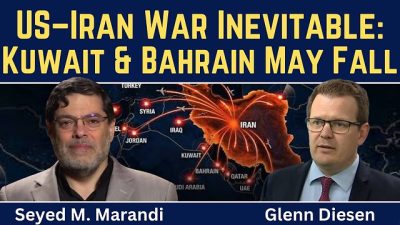
Seyed M. Marandi: US-Iran War Inevitable: Kuwait and Bahrain May Fall
or go to
Aletho News Archives – Video-Images
From the Archives
Oil and the Israel Lobby
Reknowned economist M. Shahid Alam offers this excellent critique of Noam Chomsky’s defective analysis of the relative influence of Oil versus the Israel lobby over US foreign policy: … continue
Blog Roll
 Aletho News
- ICC ignored ‘very well-documented’ NATO crimes – ex-Libyan minister
- SNSC secretary dismisses US response to Iran’s conditions as ‘inadequate’
- Sanaa says Taiz roads open, secure for residents, warns Saudi forces
- Iraqi resistance group urges Saudi leadership to admit defeat, lift Yemen siege
- Trump’s Retreat: How Al-Aqsa Flood Took Down the US Empire
- Israel’s Military Actions in Lebanon Grossly Violate International Law — Lavrov
- Seyed M. Marandi: US-Iran War Inevitable: Kuwait and Bahrain May Fall
- Leaders Condemn Ansarallah Attack on Saudi Arabia While Ignoring Illegal War Against Yemen
- Leaked: Britain’s Covert Iraqi Psyops Network
- Yemeni Armed Forces Warn Airlines Against Using Saudi Airports, Exempt Mecca and Medina
- If Americans Knew
- After Oct 7, IDF policy allowed civilian casualties for even the lowest-ranking targets
- Israel’s Destruction of Southern Lebanon Intensified After the Cease-Fire
- The Last-Minute Decision That Gave Israel Its Name
- The American Conservative: How Trump Made the World Go Nuclear
- Meet the US generals and admirals advancing Israeli policy
- Opinion: Why news organizations should boycott Israel
- The Israeli witch hunt of Sami Abu Shehadeh exposes the lie of the ‘Jewish and democratic’ state
- No state has a ‘right’ to exist – least of all Israel
- Testimonies about Gaza’s civilian death toll expose Israel’s atrocities – Daily Update
- How Israel Conquered the Latin American Right
- No Tricks Zone
- Germany’s Green Energy Debacle: High Energy Costs Force Kahla Porzellan to Close After 182 Years!
- New Study: 50 Years Of The Most Aggressive ‘Net Zero’ Policies Can Only Affect The Global Climate By 0.03°C
- US September “Heat” Was No Record…Many Records Set Decades Ago
- Latest European Green Energy Debacle; Portugal’s Largest Flagship Solar Park Insolvent!
- Green Energy Debacle: German Expert Professor Fritz Vahrenholt Warns Of Severe Economic And Social Consequences
- Two More Paleo Reconstructions Affirm Meters-Higher Sea Levels Across Ireland, Brazil 7000-6000 Years Ago
- New Study: Earth And Venus Surface Warmth Largely Explained By Convection And Lapse Rate, Not CO2 Or Radiation
- 2025 Nature Paper Claiming Worsening Global Drought Gets RETRACTED …Heavily Flawed
- New Study: ‘Global Drought Shows No Detectable Recent Acceleration Under Climate Warming’
- Economic Masterminds: German Socialists Suggest Taxing Productivity Gains Stemming From Using AI

