Even Realists Overstate the ‘China Threat’
By Joseph Solis-Mullen | The Libertarian Institute | March 26, 2025
Perusing the most recent edition of Foreign Affairs, which was typically dreadful, one piece caught my eye. In “The Taiwan Fixation,” Stephen Wertheim and Jennifer Kavanagh argued that a full-scale U.S. military intervention over Taiwan would be catastrophic, and that Washington should seek to balance building up Taiwan’s defense while insulating its own broader Indo-Pacific strategy from Taipei’s fate.
Their critique of full-blown interventionism is, of course, well-founded, and was a welcome sight, but their core assumptions remain unfortunately rooted in the flawed logic of American primacy. Even as they downplay alarmist rhetoric, they still accept an overstated vision of China’s potential threat and Washington’s supposed stake in Taiwan.
At its core, “The Taiwan Fixation” fails to escape the same errors that underpin most discussions on U.S.-China relations. It assumes that Taiwan is of critical strategic importance to American security, that China’s control of the island would be an unacceptable shift in the regional balance of power, and that some level of U.S. intervention remains necessary. But as I argued in The Fake China Threat, these claims are fundamentally weak. The United States has no compelling strategic interest in Taiwan, Beijing has little incentive to disrupt regional trade routes, and Taipei itself seems far more interested in lobbying Washington for protection than in seriously investing in its own defense.
Wertheim and Kavanagh attempt to position Taiwan as strategically valuable but stop short of the full-blown liberal internationalist and neoconservative argument that its loss would be a geopolitical catastrophe. Instead, they argue that while Beijing’s control over Taiwan wouldn’t transform China into an immediate hegemon, it would complicate U.S. military operations and potentially embolden China in the region.
This claim doesn’t hold up under scrutiny. Taiwan is not a vital interest of the United States. The U.S. does not need Taiwan for trade, military positioning, or economic security. As Wertheim himself concedes, Taiwan’s loss wouldn’t fundamentally alter the balance of power in Asia. The idea that China could use Taiwan as a springboard for wider expansion is speculative at best—especially when Japan, India, and other regional actors already have strong incentives to counterbalance China regardless of what happens in Taipei.
One of the article’s weakest points is its flirtation with the classic “credibility” argument—the notion that if the United States fails to defend Taiwan, allies like Japan or the Philippines will start doubting Washington’s commitments. This argument has been trotted out since the Cold War to justify interventions from Vietnam to Afghanistan, and it remains just as flimsy today.
Japan’s leaders have already signaled that Taiwan is not a make-or-break issue for them. Despite constant American warnings, no Asian country is poised to abandon its alliance with Washington over Taiwan’s fate. India and Japan, the two regional powers most capable of countering Beijing, already have their own deep-seated strategic reasons to oppose Chinese expansionism. Their security policies aren’t contingent on what Washington does in Taiwan.
If anything, it’s the United States that risks undermining its own credibility by committing to a fight over Taiwan. The more Washington signals an absolute commitment to Taipei’s defense, the more pressure it creates for itself to intervene—setting up a scenario where its own rhetoric forces it into an unnecessary war.
Wertheim and Kavanagh advocate for the “porcupine” strategy—arming Taiwan with asymmetric capabilities like sea mines, missile batteries, and drone fleets to make an invasion costly for China. Superficially, this seems like a clever alternative to direct U.S. intervention. In reality, it risks provoking the very war it is meant to prevent.
If Washington floods Taiwan with weapons and escalates military cooperation, Beijing may conclude that peaceful reunification is no longer viable. As Wertheim himself acknowledges, Taiwan arming itself “too well” could force China’s hand, making an invasion more likely rather than deterring it. This isn’t just theoretical. The logic follows from the same security dilemmas that have fueled arms races throughout history: the more one side hardens its defenses, the more the other feels compelled to strike before it loses its window of opportunity.
This isn’t just a U.S.-China issue—it’s also a question of Taipei’s own incentives. Taiwan has consistently underinvested in its own defense, spending only about 2.5% of its GDP on the military, despite claiming existential threats from Beijing. Why? Because it has calculated—correctly—that lobbying Washington is far cheaper than paying for its own defense. As Ben Freeman has pointed out, Taipei has spent tens of millions lobbying Congress and funding think tanks that push for greater U.S. military commitments. Why spend hundreds of billions on weapons when you can spend a fraction of that buying influence in Washington?
Wertheim and Kavanagh criticize Taiwan for failing to reorient its defense spending but still assume that Washington should step in and “encourage” (i.e., coerce) Taipei into adopting a more robust posture. But if Taiwan itself is unwilling to make the necessary sacrifices, why should American taxpayers foot the bill? The answer is simple: they shouldn’t.
Perhaps the most glaring omission in “The Taiwan Fixation”—one that even realists like Wertheim often overlook—is that Taiwan is not a separate state in the conventional sense. It remains, officially and historically, a part of China. The Chinese Civil War never formally ended, and U.S. intervention in the Taiwan issue has always been an act of interference in a domestic Chinese conflict.
Imagine if, at the height of the American Civil War, Britain had not only recognized the Confederacy but armed it and promised to fight the Union on its behalf. That’s essentially the position Washington has taken with Taiwan. The United States has no legitimate role in deciding the island’s future. Every time it sells weapons to Taipei or conducts military exercises in the Taiwan Strait, it is actively inserting itself into a conflict where it has no rightful place.
The logical conclusion of this reality should be clear: Taiwan is China’s problem, not Washington’s. Wertheim does acknowledge that American policy should aim for “competitive coexistence” rather than outright confrontation. But he stops short of drawing the real conclusion, one that follows naturally from his own arguments: the United States should be preparing to disengage from Taiwan entirely, not reinforcing its involvement.
Wertheim and Kavanagh offer a more grounded view of Taiwan policy than the usual Beltway hawks, but their analysis still rests on faulty assumptions. They recognize that Taiwan’s fate doesn’t justify war, yet they continue to insist that some American involvement is necessary. They acknowledge that China wouldn’t become a global hegemon even if it took Taiwan, yet they still assume that its loss would significantly damage U.S. interests. They see the dangers of arming Taiwan too aggressively, yet they continue to endorse the porcupine strategy.
Ultimately, their view of Taiwan remains a product of Washington’s obsession with maintaining primacy rather than accepting a multipolar reality. The United States does not need to “fix” Taiwan policy—it needs to let it go. The alternative is continued entanglement in a conflict that serves no vital American interest and risks dragging Washington into an unwinnable war.
The real China threat isn’t a military one—it’s the threat of policymakers manufacturing crises where none need exist. If the U.S. truly wants to avoid war, it should stop making Taiwan a battlefield of its own choosing.
Western support won’t secure victory for Kiev – US intelligence
RT | March 26, 2025
Western military aid to Kiev and sanctions against Russia cannot shift the balance of power in the Ukraine conflict, according to the US Intelligence Community’s 2025 Annual Threat Assessment.
The intelligence community’s official coordinated evaluation of an array of threats lists Russia, China, North Korea and Iran as countries which represent a challenge to US interests.
Moscow holds the advantage on the battlefield, having adapted to outside efforts to assist Ukraine, the report’s authors explain. The “grinding war of attrition” is expected to further weaken Kiev, “regardless of any US or allied attempts to impose new and greater costs on Moscow.”
While the conflict has taken a significant toll in terms of manpower, the assessment notes that it has also afforded Moscow “a wealth of lessons regarding combat against Western weapons and intelligence in a large-scale war.”
This experience probably will challenge future US defense planning, including against other adversaries with whom Moscow is sharing those lessons learned.
Russia has proven to be “adaptable and resilient” during what it views as a Western proxy war, enhancing its military capabilities across several domains, including unmanned systems, electronic warfare, and the integration of cyber operations with conventional military maneuvers, the report explains.
It warns that Western efforts to undermine the Russian economy “have accelerated its investments in alternative partnerships and use of various tools of statecraft to offset US power, with China’s backing and reinforcement.”
Beijing considers the US use of unilateral sanctions illegal under international law and rooted in a “Cold War mentality.” The US assessment states that major non-Western nations are poised to align with Russia in order to pursue policies that challenge American dominance, such as de-dollarization.
The continuation of the Ukraine conflict risks unintentional escalation, the document cautions. Russia is prepared for such scenarios, armed with a substantial strategic arsenal that includes both conventional and nuclear weapons, as well as cyber-warfare and anti-satellite operations capabilities.
“Russia’s air and naval forces remain intact, with the former being more modern and capable” than at the start of direct hostilities, the report states.
The US intelligence community posits that both Moscow and Kiev may have reasons to avoid a hasty resolution on unfavorable terms. Russian President Vladimir Putin perceives that “positive battlefield trends allow for some strategic patience,” while Ukraine’s Vladimir Zelensky likely fears that a clear defeat could “prompt domestic backlash.”
Russia and US agree to key maritime initiative – Kremlin
RT | March 25, 2025
Russia and the US have committed to advancing the Black Sea Initiative as a step towards settling the Ukraine conflict, according to a statement released by the Kremlin on Tuesday.
The agreement follows the 12-hour talks focused on the Ukraine conflict held on Monday in Saudi Arabia by expert groups from the two countries.
The sides discussed steps to ensure safe navigation in the Black Sea, including a pledge to avoid the use of force and prevent commercial vessels from being used for military purposes, while agreeing on control measures such as ship inspections.
The US has vowed to “help restore access for Russian agricultural and fertilizer exports to the world market, reduce the cost of insurance for maritime transportation, and enhance access to ports and payment systems for such transactions,” according to the Kremlin statement.
The agreement envisions lifting restrictions on Russian Agricultural Bank and other financial institutions involved in international trade of food and fertilizers, including reconnecting them to the SWIFT payment system. It also includes removing sanctions on Russian-flagged vessels, port services, and the supply of agricultural machinery and related goods to Russia.
According to the statement, Moscow and Washington have also agreed to develop measures to enforce the 30-day ban on strikes against energy infrastructure in Russia and Ukraine that was agreed last week. There would be an option to extend the arrangement or abandon it if either side fails to comply.
The two sides also welcomed the involvement of third countries in supporting agreements on energy and maritime matters.
The US and Russia “will continue efforts to achieve a lasting and sustainable peace,” the statement concludes.
Originally brokered in July 2022 by the UN and Türkiye, the Black Sea Grain Initiative aimed to ensure the safe passage of Ukrainian agricultural exports in return for the easing of Western restrictions on Russia’s grain and fertilizer trade. Moscow did not renew the deal in 2023, citing the West’s failure to uphold its commitments.
Kaja Kallas: The EU’s Struggling Foreign Affairs Chief and the Deepening Divide Over Ukraine
By Ricardo Martins | New Eastern Outlook | March 25, 2025
Kaja Kallas’ hardline stance on Russia and failure to unify EU nations have weakened her position as the EU’s Foreign Affairs chief. With the EU out of the negotiation table over Ukraine, internal divisions, diplomatic missteps, and failed Ukraine aid negotiations, is she still fit to lead Europe’s foreign policy?
Why Has the European Foreign Affairs Chief’s Position Weakened?
The position of the European Union’s Foreign Affairs chief has weakened under Kaja Kallas due to multiple diplomatic missteps, internal EU divisions, and a lack of broad strategic support. The most dramatic setback for EU diplomacy is its exclusion from the negotiating table on ending the war in Ukraine.
Kallas’ tenure has been marked by an anti-Russian stance, an aggressive push for military aid to Ukraine, and a failure to build consensus among EU member states. This has led to her increasing isolation, both within the EU and on the global diplomatic stage. When in Washington, a few days ago, Kallas was left in the waiting room and not received by U.S. Secretary of State Marco Rubio.
The German prestigious newspaper Frankfurter Allgemeine Zeitung has sounded the alarm on the EU top diplomat’s weak performance. One of the main reasons for this decline, according to ZAZ, is Kallas’ inability to secure the backing of key EU nations. Her proposal for a €40 billion aid package for Ukraine was met with resistance, not just from Hungary and Slovakia, but also from France, Italy, Spain, and Portugal. These countries, which have contributed less to Ukraine than Denmark alone, opposed increasing their financial commitment, revealing a deep divide within the EU regarding the war. Kallas also alienated many diplomats by dismissing high-ranking officials from Italy and Spain from the European External Action Service (EEAS), further reducing her influence.
Who is Kaja Kallas, and Why Did Her Anti-Russian Stance Lead to the EU’s Sidelining?
Kaja Kallas, the former Prime Minister of Estonia and a known critic of Russia, became the EU’s Foreign Affairs chief in December. Her strong anti-Russian rhetoric aligns with the Baltic States’ hardline stance, but this position has made her a controversial figure. Instead of facilitating diplomatic engagement, she has pushed for maximum pressure on the continuation of the war, alienating key EU partners that at this stage favour negotiation.
Her insistence on an uncompromising stance against Russia has sidelined the EU in international peace talks. By strongly criticizing Washington’s approach—especially U.S. President Donald Trump’s efforts to pressure Ukraine into a settlement—Kallas further isolated the EU. Her comments referring to a potential U.S.-brokered deal as a “dirty deal” led to a diplomatic snub in Washington, where meetings with key American officials, including Secretary of State Marco Rubio, were abruptly cancelled.
Why Did Kallas Fail to Secure the €40 Billion Ukraine Aid Package?
Kallas failed to secure the €40 billion military aid package for Ukraine due to opposition from several EU countries. While she claimed there was “broad political support,” the reality was different. The resistance came not only from Hungary, which has consistently opposed military aid to Ukraine, but also from France, Italy, Spain, and Portugal. These countries refused to make significantly larger contributions, likely due to domestic economic concerns and political calculations.
The aid package’s failure was also linked to Kallas’ poor strategic approach. She unexpectedly reintroduced the proposal after the Munich Security Conference, without adequately preparing the groundwork or securing commitments from key stakeholders. Her failure to engage Southern European countries, many of whom had closer ties with her predecessor Josep Borrell, weakened her position further.
How the North-South and East-West EU Divide Affects Ukraine Support
The EU remains divided on its Ukraine policy, with a noticeable split between Northern/Eastern European nations and Southern European countries. Countries like Estonia, Poland, and the Nordic states have strongly supported Ukraine, advocating for increased military aid and a hardline stance against Russia. Meanwhile, Southern European nations, led by France, Italy, Spain, and Portugal, have been reluctant to escalate support further.
This divide makes a unified EU approach to Ukraine difficult. Kallas’ failure to bridge these differences has weakened her effectiveness as Foreign Affairs chief, as her confrontational approach has alienated key players in both the EU and broader international diplomacy.
Kallas’ Controversial Tweet and Calls for European Leadership
On February 28, 2025, Kallas tweeted:
“Today, it became clear that the free world needs a new leader. It’s up to us, Europeans, to take this challenge.”
This tweet generated controversy because it was widely interpreted as a criticism of U.S. leadership, particularly in the context of Trump’s renewed approach to Ukraine. Given the EU’s limited ability to act independently in military and geopolitical affairs, Kallas’ call for Europe to take the lead was seen as unrealistic. Some analysts viewed her remarks as undermining further transatlantic relations at a time when European unity and cooperation with the U.S. were crucial.
Is Kallas Following a Strategy of Financial Attrition in Ukraine?
Kallas appears to be following a strategy based on the idea that the Ukraine war will end when no side can afford to continue. This is consistent with the belief expressed by EU diplomats that the conflict will only cease when economic and military exhaustion forces a resolution.
However, this approach carries significant risks. If EU financial support dwindles or political will weakens, Ukraine could find itself forced into a settlement unfavourable to its long-term security. The lack of a clear long-term EU strategy beyond financial and military aid suggests that Kallas’ approach is reactive rather than proactive.
Is Kallas’ Anti-Russia Stance Compromising Her Diplomatic Role?
Kallas’ intense dislike of Russia has undoubtedly compromised her effectiveness as the EU’s top diplomat. Kaja Kallas frequently expresses her personal views and a strong dislike of Putin and Russia in public, even during official events. On several occasions, she has openly stated that she does not trust Putin, overlooking the fact that, in such settings, she is speaking not for herself but on behalf of 27 EU countries and representing a prestigious institution. Such behaviour is widely seen as diplomatically unprofessional.
Diplomacy requires flexibility, negotiation, and relationship-building—qualities that her hardline approach has undermined. By sidelining herself from peace talks, clashing with key EU nations, and alienating Washington, she has weakened her ability to influence the direction of EU foreign policy.
Is Kallas Still Fit to Lead EU Foreign Policy?
There is growing speculation that Kallas may not be able to continue leading EU foreign policy effectively. Her diplomatic missteps, failure in Washington, her failure to unify EU nations, and inability to secure key policy goals have led to increasing criticism. Some EU officials are reportedly considering the appointment of a special envoy for Ukraine, which would effectively bypass her role in one of the EU’s most pressing foreign policy challenges.
Ultimately, while Kallas’ strong stance against Russia aligns with the policies of EU nations, her inability to build consensus and engage in effective diplomacy has weakened her authority. If she cannot adjust her approach, her tenure as EU Foreign Affairs chief may be short-lived.
Ricardo Martins ‒ PhD in Sociology, specializing in policies, European and world politics and geopolitics
Serbia between political destabilization and a new military front in the Balkans
By Lorenzo Maria Pacini | Strategic Culture Foundation | March 24, 2025
Bosnia’s dysfunctional political system, the result of the 1995 Dayton Accords that divided the country into two entities jointly governed by Serbs, Croats (a Catholic majority) and Muslims, with a rotating presidency under international supervision, is inexorably collapsing. In Serbia, protests against corruption and for regime change have been going on for months, and last weekend’s protests were the most impressive to date. Images of the human tide that invaded the streets of Belgrade went around the world in no time at all, but also caused a lot of confusion about the events.
In Bosnia, recent tensions have arisen from the issuance of arrest warrants by the central authorities against the president of the Republika Srpska Milorad Dodik, his prime minister and the president of the parliament. The measures stem from their refusal to comply with the directives of the “high representative” Christian Schmidt, whose appointment in 2021 by the Biden administration was not approved by the UN Security Council. Consequently, neither Dodik nor Russia recognize his authority, believing that his requests aim to reduce the autonomy of the Republika Srpska in order to favor the centralization of the Bosnian state for the political advantage of the Islamic component.
One of Schmidt’s main objectives would be to eliminate the Republika Srpska’s veto on Bosnia’s entry into NATO, which would explain the international pressure on Dodik and the attempt to remove him. Despite the differences between the Biden and Trump administrations, the latter does not seem to actively oppose this strategy. Secretary of State Marco Rubio has accused Dodik of undermining the stability of Bosnia and Herzegovina, stating that the country should not fragment; simultaneously, Dorothy Shea, the US chargé d’affaires at the UN, has expressed support for EUFOR (European Union Force in Bosnia and Herzegovina), hinting at the possibility of intervention against the leadership of Republika Srpska. Nothing new from the western Atlantic front.
In response to these unpleasant provocations, Dodik invited Rubio to a dialogue to present the Serbian point of view and made an interesting proposal: to grant American companies exclusive rights to extract rare earth minerals from the Republika Srpska, a deal with an estimated value of 100 billion dollars, which could attract the attention of the Potus, and emphasized that US policy in the Balkans is still influenced by the so-called Deep State, in particular by elements of the American embassy in Bosnia, historically hostile to Trump.
British involvement in Bosnian tensions cannot be ruled out, considering that the Russian Foreign Secret Service, the SVR, recently denounced the UK’s role in sabotaging Trump’s policy of rapprochement with Russia, almost coinciding with the accusation that Nikolai Patrushev, Putin’s advisor, made towards London, saying that he tried to destabilize the Baltic countries, hinting that he could act in a similar way in the Balkans.
Things are not much better in Serbia
The situation in Serbia is equally delicate. The country has been shaken by protests, which began after a train station incident in Novi Sad last November, fueled by discontent over corruption, with demands for accountability that could lead to a change of government. However, the protest movement is heterogeneous, including both Western-linked groups and Serbian nationalists.
Globalist liberals accuse President Aleksandr Vucic of being too pro-Russian for not having imposed sanctions on Moscow, while Serbian patriots consider him excessively pro-Western for his ambiguous positions on Kosovo, Russia and Ukraine. Vucic, for his part, claims that the protests against him are part of a Western strategy to destabilize him, and Russia itself has allegedly confirmed a supposed plot for a coup against him.
Despite accusations of Western interference, Vucic has maintained cooperation with NATO, signing a “Partnership for Peace” agreement in 2015 allowing the Alliance to transit through Serbia and in August 2024, while facing large-scale protests, he signed a three billion dollar deal with France for the supply of warplanes, raising doubts about the West’s real hostility towards him. Throughout all this, the United States continues to exert pressure on him through various channels.
The tensions in Bosnia and Serbia are not unrelated: the Western objective seems to be for Bosnia to join NATO and for Russian influence in the Balkans to be reduced. If Trump does not oppose the current policy or does not accept Dodik’s offer on rare earths, the risk of an escalation in Bosnia could increase.
Geopolitically speaking, the American doctrine of division and control continues to prevail in the Balkans, seeking to exclude any possible reunification of Bosnia and Serbia.
The only chance for the Serbs to improve their position will be close coordination between Serbia, the Republika Srpska and, if possible, Russia, to counter Western pressure and obtain the best possible result.
NATO takes advantage of the situation
Throughout all this, NATO doesn’t miss the opportunity to take advantage of the situation. The Secretary General, Mark Rutte, has declared that the actions of the Republika Srpska are unacceptable and that the United States will not offer any support to Dodik, a position also reiterated by the American Embassy in Bosnia.
EUFOR has announced that it will reinforce its contingent to deal with the growing tensions, sending reinforcements by land through the Svilaj and Bijaca passes and by air to Sarajevo airport. An excellent excuse to deploy a good number of soldiers to guard what increasingly seems to be a color revolution involving two countries.
Despite growing international pressure, the Republika Srpska can count not only on the support of Moscow and Belgrade, but also on the diplomatic support of Budapest and Bratislava, who have expressed their support for a peaceful resolution of the situation, avoiding participating in veiled military threats.
On March 10, the Chief of Staff of the Serbian Armed Forces, Milan Mojsilović, met his Hungarian counterpart, Gábor Böröndi, in Belgrade and they discussed regional and global security, as well as joint military activities aimed at strengthening stability in the area. The intensity of bilateral military cooperation was reaffirmed, with the intention of expanding it further. Particular attention was paid to joint operations between the land and air components of the two armies, as well as to the contribution of Hungarian forces to the international security mission in Kosovo and Metohija.
It seems clear that the only way for NATO to put an end to Serbian-Bosnian sovereignty is to trigger a new internal conflict, using local armed groups along the lines of what happened in Syria, or a sort of Maidan based on the 2014 Ukrainian model.
The military risk fueled by KFOR
The Kosovo Force (KFOR) is an international mission led by NATO, established in 1999 with the aim of ensuring security and stability in Kosovo, in accordance with United Nations Security Council Resolution 1244.
At the beginning of the operation, it had over 50,000 soldiers from 20 NATO member countries and partner nations. Over time, the presence has been reduced. As of March 2022, KFOR consisted of 3,770 soldiers from 28 contributing countries.
To give an idea of the type of deployment, consider that there are:
– Regional Command West (RC-W): unit based at “Villaggio Italia” near the city of Pec/Peja, currently consisting of the 62nd “Sicilia” Infantry Regiment of the “Aosta” Brigade. RC-W also includes military personnel from Albania, Bulgaria, Croatia, North Macedonia, Poland, Turkey, Austria, Moldova and Switzerland.
Multinational Specialized Unit (MSU): located in Pristina and commanded by Colonel Massimo Rosati of the Carabinieri, this highly specialized unit of the Carabinieri has been present in Kosovo since the beginning of the mission in 1999. The regiment has been employed mainly in the northern part of the country, characterized by a strong ethnic Serbian population, particularly in the city of Mitrovica.
The main operational activities of KFOR include:
– Patrolling and maintaining a presence in Kosovo through regular patrols;
The activity of the Liaison Monitoring Teams (LMT), which have the task of ensuring continuous contact with the local population, government institutions, national and international organizations, political parties and representatives of the different ethnic groups and religions present in the territory. The objective is to acquire information useful to the KFOR command for the carrying out of the mission;
– Support for local institutions, in an attempt not to give in to Serbia’s demands.
These are forces that are deployed and ready to intervene. This is a detail that must be taken into consideration. NATO is not neglecting the strategic importance of that key area of the Balkans.
With their backs to the wall, the governments of Serbia and Republika Srpska don’t have many options: they will soon have to face difficult choices, which could radically change the face of the Balkans.
In short, we are once again at risk of seeing the Balkans explode, as happened just over 100 years ago. Who will be responsible for the explosion this time?
Serbia Will Not Join NATO or CSTO – Deputy Prime Minister Vulin
Sputnik – 24.03.2025
BELGRADE – Serbia will not become a member of NATO or the CSTO, it must ensure its own security, although this is difficult, Serbian Deputy Prime Minister Aleksandar Vulin told Sputnik.
“Serbia strictly adheres to the policy of military neutrality. This means that we will not expand our participation in any military bloc. And we will try to maintain the best relations with everyone, first of all — with the countries in our neighborhood. So Serbia will not become a member of NATO, will not be a member of the CSTO,” Vulin said.
He admitted that for a country the size of Serbia, this is the hardest path.
“We must guarantee our own security, which is not easy. But this is the most honest path — to make decisions about ourselves,” he emphasized.
Currently, the parliament of Serbia is an observer in the CSTO Parliamentary Assembly.
Russia honoring energy strike truce despite Ukraine’s violations – Kremlin
RT | March 24, 2025
Russia will continue to uphold the moratorium on strikes against Ukrainian energy infrastructure, despite Kiev’s numerous violations, Kremlin spokesman Dmitry Peskov has said.
Speaking to reporters on Monday, Peskov stated that Moscow is still abiding by the partial ceasefire deal, despite Ukraine’s strikes on Russian energy facilities.
“There have been no new commands from [Russian President Vladimir Putin]. Our armed forces are following all instructions from the commander-in-chief,” he said.
The suspension of strikes was agreed to following a phone call last week between Putin and his US counterpart, Donald Trump, during which the two discussed a potential 30-day ceasefire in the Ukraine conflict.
While Russia did not agree to a full truce, citing the need for a monitoring mechanism and for Kiev to cease its rearmament and mobilization, Putin approved a month-long pause on strikes against energy facilities. Ukraine also signed on to the agreement.
Moscow, however, accused Kiev of violating the deal almost immediately. Russian officials said Ukrainian forces destroyed a gas metering station while retreating from the town of Sudzha in Kursk Region and struck an oil depot in Russia’s Krasnodar Region. Additionally, on Monday night, an armed Ukrainian drone was shot down near an oil pumping station in the same area. The targeted facility is managed by the Caspian Pipeline Consortium, which is co-owned by American investors.
Addressing the incidents, Peskov stated: “We are monitoring the situation very closely. Our American counterparts also have the opportunity to observe and draw appropriate conclusions.”
On Saturday, Russian Foreign Ministry spokeswoman Maria Zakharova warned that if “the Kiev regime continues this destructive course,” Russia “reserves the right to retaliate, including symmetrically.”
UK military slams Ukraine ‘peacekeeping’ plan as ‘political theater’ – Telegraph
RT | March 24, 2025
UK military officials have dismissed Prime Minister Keir Starmer’s proposal for deploying Western troops to Ukraine as part of a ‘peacekeeping force’ to oversee a potential ceasefire, The Telegraph reported on Sunday. Senior military sources told the outlet that Starmer had “got ahead of himself.”
Starmer announced the initiative earlier this month, aiming to build a “coalition of the willing” to support Ukraine militarily. Last week, he claimed that multiple countries backed the idea of sending in a peacekeeping force of up to 10,000 troops, despite Moscow’s opposition to any Western deployments in the conflict zone.
London hosted planning talks last week with military officials from partner nations. However, military sources dismissed the plans as premature and politically motivated.
“There is no defined military end-state or military-strategic planning assumptions. It’s all political theater,” one senior army official told the news outlet.
“Starmer got ahead of himself with talk of boots on the ground before he knew what he was talking about.”
The discussions have reportedly shifted their focus from boots on the ground to air and naval support. The Telegraph reported that RAF fighter jets could be deployed to patrol Ukrainian airspace, while British Typhoons could provide air cover for ground forces, though the size and role of any ground deployment remain unclear.
“It’s politics. There’s no military sense in it,” another defense source said, noting that neither Russia nor the US support the coalition. He also pointed to a lack of clarity on mission goals.
“What is a 10,000-international force based in the west of the country over 400km from the front line meant to do? It cannot even protect itself,” he argued. “What is the mission? What is its legitimacy? What are the rules of engagement? How is it commanded, supplied and housed? How long is it there for and why? No one knows.”
Further planning talks are expected in London on Monday between British and French defense officials. French President Emmanuel Macron is reportedly considering invoking the UN to authorize a European troop presence in Ukraine. However, Russia has repeatedly rejected the idea of Western peacekeepers in Ukraine, noting that it would require UN Security Council approval, where Moscow holds veto power.
US announcement of sixth-gen F-47 fighter draws analyses from Chinese expert
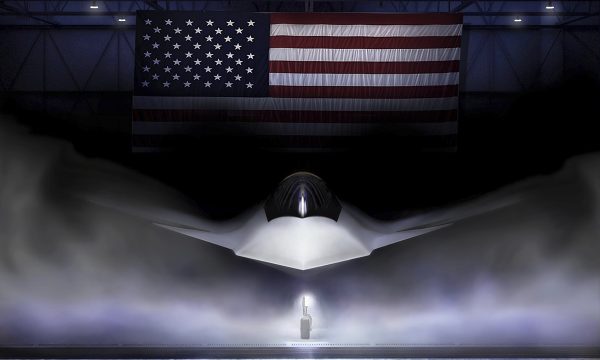
Graphical rendering shows the Next Generation Air Dominance (NGAD) Platform, the F-47. Photo: VCG
By Liu Xuanzun and Liang Rui | Global Times | March 23, 2025
The US’ recent announcement of the F-47 fighter jet has drawn intensive analyses from Chinese military affairs experts and observers, who acknowledged the aircraft being a real sixth-generation fighter jet for featuring typical characteristics such as a tailless design, but they also raised questions over its potentially limited stealth capability, relatively small size, and the US’ selection of Boeing to build the warplane.
The Pentagon has awarded the contract for the US Air Force’s Next Generation Air Dominance future fighter jet, known as NGAD, to Boeing, US President Donald Trump announced Friday, US news outlet Defense News reported on Saturday.
The sixth-generation fighter, which will replace the F-22 Raptor, will be designated the F-47, Trump said. It will have “state-of-the-art stealth technologies [making it] virtually unseeable,” and will fly alongside multiple autonomous drone wingmen, known as collaborative combat aircraft, Defense News reported.
After reviewing the artist renderings of the F-47 released by the US Air Force, Zhang Xuefeng, a Chinese military affairs expert, told the Global Times on Sunday that the F-47’s appearance conforms to the general development trend of the sixth-generation fighter jet concept. For example, it does not feature any vertical tails, which is an attempt to further improve its stealth capability in all directions. It has a flat nose and a lifting-body fuselage. These are all important characteristics of a sixth-generation fighter jet.
Zhang added that manned-unmanned teaming is a core sixth-generation feature, and one the F-47 includes.
However, a pair of canards can be observed in front of the F-47’s main wings, and this will more or less impact the aircraft’s stealth, Zhang noted. Reiterating that an important trend for sixth-generation fighter jets is to remove vertical tails and use a supersonic flying wing configuration to boost stealth, Zhang said that new mechanisms are needed to act in the place of vertical tails to control the aircraft, such as movable wingtip. But the F-47 opted to use canards, a relatively old technology often found on previous generations of aircraft. He suggested Boeing may lack the tech base to develop new control methods and relies on outdated design choices.
In December 2024, videos and photos emerged on social media allegedly showing two types aircraft with new designs have conducted test flights in China. Despite no official announcements, many called them China’s “sixth-generation fighter jets.” Both of them appear to have removed vertical tails and also do not have canards. One of them, resembling a ginkgo leaf in appearance, looked far larger than its J-20 escort.
Wang Ya’nan, chief editor of Beijing-based Aerospace Knowledge magazine, told the Global Times on Sunday that comparing with the size of the canopy and the front landing gear, it can be analyzed that the overall size of the F-47 is not likely much larger than the F-22. It means that the F-47 is still a tactical aircraft, rather than a large, multipurpose aerial platform capable of conducting campaign-scale missions like the “ginkgo leaf” aircraft.
Defense News, citing Air Force Chief Gen. Allvin, claimed that experimental versions of the NGAD have been flying for the last five years.
But Wang noted that there is no proof of this. Even the pictures depicting the F-47 are artists renderings rather than photos.
Wang also noted that Boeing has not won a major fighter jet program for decades. Its F-15 and F/A-18 fighter jets are from McDonnell Douglas which was merged into Boeing, and Boeing’s own X-32 fighter jet lost to the F-35 from Lockheed Martin in bidding. Boeing’s other projects, such as the 737 MAX airliner and KC-46 tanker aircraft also encountered many issues recently. “Having a company like this to lead a sixth-generation program is actually very risky,” he said.
In addition to US’ NGAD program, other countries are also developing sixth-generation fighter jets. France, Germany and Spain are in the Future Combat Air System program to develop a sixth-generation fighter jet, while the UK, Italy and Japan have a sixth-generation Global Combat Air Programme fighter project, according to Defense News. Russia’s sixth-generation efforts have also surfaced in TASS reports.
Wang said the US is moving fastest with the F-47, while other nations lag. With China’s own jets already spotted in the sky, the outside world is now seeing China and the US in advanced stages of sixth-generation fighter jet development.
Five Factors Behind the Decline of US Military Shipbuilding
By Ilya Tsukanov – Sputnik – 23.03.2025
US business media have cited the USS Constellation frigate as a prime example of problems plaguing the industry, with the warship, slated for delivery in 2026, just 10% complete and already over budget. Here’s why turning the situation around won’t be easy.
Post-Cold War Decline
American military shipbuilding peaked in the 1980s, with 150 major warships displacing over 1.2M tons added to the fleet during the decade, including three Nimitz-class carriers, Los Angeles-class attack subs, Ohio-class SSBNs and Ticonderoga, Arleigh Burke, Spruance and Perry-class destroyers, cruisers and frigates.
After the Cold War ended, the US cut its Navy in half, closed shipyards, and lost skilled workers against the background of the country’s broader deindustrialization and transition to a service economy.
Monopolization
In the 90s, large shipyards including Avondale, Fore River, Todd Pacific, Philadelphia, Charleston, and Mare Island were closed, downsized or converted for civilian use, creating monopolists among remaining producers like Huntington Ingalls Industries (HII) and General Dynamics, and jacking up contract costs.
For example, while $12.1B was allocated to shipbuilding in the 1984 Pentagon budget ($36B in 2024 dollars), last year’s budget was $32.8B, with far less to show for it.
Aging Infrastructure
Modern US shipyards are often straddled with aging infrastructure, impacting construction of new vessels, and the introduction of new technologies.
Skilled Labor Shortages
The loss of skilled tradesmen has taken a particularly heavy toll, with HII’s Newport News yard, building the Gerald Ford-class carriers, constantly facing a lack of welders, electricians, pipe and shipfitters.
A House Armed Services Committee hearing this month found that tough working conditions, and wages often just a couple dollars more than those at fast-food joints, are making it difficult for the industry to retain workers. Naval engineers are also underpaid and underappreciated.
Design Flaws, Red Tape
Design issues have turned some vessels, like the Zumwalt destroyer, Ford-class carriers and Littoral Combat Ships (LCSs) into costly nightmares, shrinking acquisition of Zumwalts from 32 to 3, and LCS warships being already being phased out after a decade or less of service.
The result? Major cost overruns, program delays and bureaucracy slowing acquisition to a crawl, even as manufacturers collect bigger and bigger paydays.
Europe Will Spend Itself Into ‘Bankruptcy’ If It Tries to Meet NATO’s Draconian New Defense Demands
By Ilya Tsukanov – Sputnik – 23.03.2025
NATO is planning to ask its European and Canadian members to boost their weaponry and equipment stocks by about 30% over the next several years, informed sources have told Bloomberg. Sputnik asked a pair of leading German and French observers what this would mean for a region already suffering economic malaise and industrial decline.
Key alliance members like Germany and France would amass an unsustainable fiscal burden, be forced into debt and have to slash social programs if they accept NATO’s call for a 30% bump in new arms and equipment spending, AfD MP Dr. Rainer Rothfuss told Sputnik.
“We can take the example of Germany, where we had a kind of financial policy coup d’état this week” after the Bundestag voted to change the Basic Law to lift debt restrictions for defense spending, Rothfuss, who is also a veteran geopolitical analyst and consultant, said.
“The budget restraints that were even inscribed into our Constitution needed to be changed to get the financial flexibility to invest so much in defense. That shows us that it’s not a matter of priority spending, [but] a matter of, I would say, bankruptcy should this kind of policy be followed in the coming years, not only by Germany but by other countries as well,” the politician warned.
“France, for example,” has “an even more restrained budgetary situation,” Rothfuss said, “struggling economically to keep industry jobs,” and like Italy, should be investing in the competitiveness of its industries, not throwing money away on defense at a time when the security crisis in Europe is potentially closer to a peace deal than ever.
As for Germany, if its industrial decline worsens, it won’t be able to fund the EU to the tune of 25% of bloc spending, which would have serious knock-on effects for other members, the MP warned.
Jacques Sapir, director of studies at the Paris-based School for Advanced Studies in the Social Sciences, says a 30% bump may not seem like a lot, and even manageable by some countries, like France, given the large-scale decline in NATO stockpiles of 40-60% after the end of the Cold War.
But others, like Italy, Belgium, Germany and the Netherlands may need between a 30%-50% increase in outlays, given the decline in defense production over the past three decades, he said, adding that this could take between three and five years to accomplish for countries like France, Germany and the UK, and probably more for Canada.
Last month, Bloomberg calculated that a European defense buildup and the continuation of the proxy war against Russia without US assistance could cost up to $3 trillion over ten years – a massive burden for a region suffering from perpetual economic stagnation and widespread deindustrialization.
Scorch Marks in the Sand

Yemeni Warrior Rejoicing over a Slain MQ-9 Reaper
By William Schryver – imetatronink – March 22, 2025
Javelin, Stinger, M-777 howitzer, HIMARS, Excalibur, Switchblade, all manner of electronic warfare gizmos and counter-battery radars, Bradley IFVs, Stryker, Leopard, Challenger, Abrams, Patriot, JDAMs, HARMS, Storm Shadow, ATACMS … I’m sure I’m forgetting some.
Oh, yeah … remember in early 2022 when the unveiling of the Bayraktar strike drones was hailed with great fanfare? They were predicted to be the bane of the Russian army. Instead, it was a major embarrassment for the Turks.
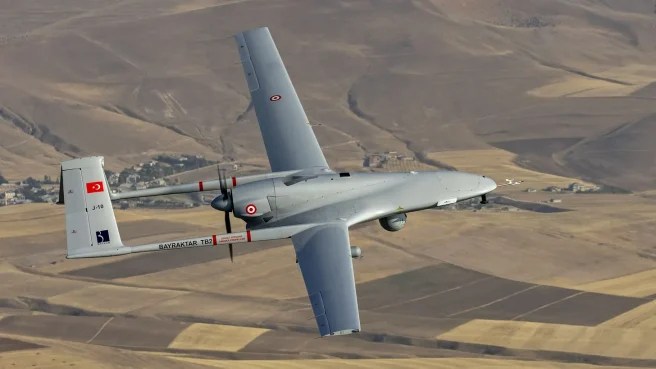
Turkish Bayraktar TB2 Surveillance and Attack Drone
That said, over the past year or so, those “savage barbarians” down in Yemen have shot-down a baker’s dozen of the once-vaunted US MQ-9 Reaper drones – supposedly vastly superior to the Bayraktar TB2.

US MQ-9 Reaper Surveillance and Attack Drone
In any case, all of these things represent top-shelf front-line US/NATO war stuff that has been objectively proven inferior in the crucible of protracted high-intensity warfare. Many are simply ill-suited for the current state-of-play in the military realm, as it has been revealed over the course of the war in Ukraine.
Before this war began, the almost-universal belief was that US/NATO weaponry and equipment were far and away superior to anything the Russians could put on the battlefield.
That unfounded faith in the unrivaled supremacy of western arms has now been shattered — although we already see the think-tank apologists fashioning their strained rationalizations.
Nevertheless, when one examines in aggregate the implements of war the US/NATO have provided to Ukraine, the overwhelming majority consists of the very stuff every military in NATO would field in a war against Russia, or anyone else, for that matter.
Here is a sobering truth: if the Armed Forces of Ukraine could make one wish, it would be to respawn as the army and abundant quantities of effective and durable Soviet equipment they had in February 2022. That was, all things considered, the strongest army they would ever have. And it was, in great measure, squandered on the altar of a misguided commitment to NATO field doctrines that repeatedly proved misconceived and ill-adaptive to the war that actually ensued, as well as the war as it has subsequently evolved.
So, in the case of the Ukraine War, we see attested two now-indisputable facts:
1) US/NATO weaponry and equipment is FAR LESS FEARSOME than was previously believed by the supposed “military experts” in the world. It has either failed abysmally or vastly underperformed in virtually every case.
2) US/NATO war doctrine has been demonstrated to be something quite a bit less than the greatest expression of the martial arts since Napoleon at the Battle of Austerlitz. The disastrous NATO/AFU “counteroffensive” in Zaporozhye in summer 2023 and the catastrophic blunder of the Kursk Kamikaze Incursion in summer 2024 have laid waste to the mythology of US/NATO military prowess.

Napoleon at Austerlitz Accepting the Surrender of Francis II
Now, here in the early spring of 2025, we see the United States, with Donald Trump again at the helm, trying to soothe the sting and obfuscate the reality of the resounding defeat its strategic designs and battlefield arms have suffered against Russia.
And, after weighing all options and considerations in the balance, the Masters of Declining Empire have decided beating up on Iran is the right medicine for what ails them.
I mean, after all, the Russians never had to face them, and the Iranians certainly cannot pose a credible threat to our decades-old F-15s, F-16s, F/A-18s, F-22s, F-35s, B-52s, B-1s, B-2s, Tomahawks, etc., not to mention the almighty US Navy.
Everybody KNOWS this to be true. Right?
And even though the Iranians have already proven to be able to defeat all manner of US and Israeli air defenses with their upper-tiers of ballistic missiles … well, if we just have Pete Hegseth give them a proper pep-talk, those interceptors that failed during the reign of the imbecile Joe Biden will strike down every single Muslim Missile they see. American air defense interceptors will be made great again. Hail to the Chief!
As for the Iranian air defenses … well, everyone also knows the Israelis already destroyed them. Right? They told us all about it – how the heroic Israeli F-35s and F-15s stormed across the Tigris into the heart of Iran and blew to smithereens all those S-300s and missile factories. They even showed pictures of scorch marks in the sand to prove it.
Anyway, the point is that America needs to go to war again in an attempt to erase the stain of having lost to the Russians, just as going to war against the Russians was meant to erase the stain of having lost to the Afghanis, just as going to war against Iraq and Afghanistan was meant to erase the stain of having lost to the Vietnamese. And … well, you know the drill by now.
You should also know what they say about the best laid plans of mice and men. Nothing ever goes as planned. And I strongly suspect the next war of American redemption will not be a reversal of the prevailing trend.
Featured Video

Seyed M. Marandi: U.S. Intel Warns Iran Is Preparing a MAJOR Escalation
or go to
Aletho News Archives – Video-Images
From the Archives
No Proof MMR Vaccine Is ‘Safer’ than Measles, Mumps or Rubella Infection, Physician Group Says
By Suzanne Burdick, Ph.D. | The Defender | January 14, 2025
The risk of permanent disability or death from the MMR vaccine may be greater than the risk posed by measles, mumps or rubella infection because large enough vaccine safety studies haven’t been done, according to a collection of new documents released by Physicians for Informed Consent (PIC).
The collection includes disease information statements for measles, mumps and rubella, and a vaccine risk statement for the MMR vaccine.
According to the Mayo Clinic, measles is a viral infection typically accompanied by a skin rash, fever, cough, runny nose, sore throat, inflamed eyes and tiny white spots on the inner cheek.
Mumps and rubella also are viral infections. According to PIC, all three viral infections typically resolve on their own with proper rest and hydration in almost all cases.
Dr. Shira Miller, PIC’s founder and president, told The Defender, “The main takeaway is that the MMR vaccine has not been proven safer than measles, mumps and rubella.”
PIC is a nonprofit that delivers data to doctors and the public so they can “evaluate the data on infectious diseases and vaccines objectively, and voluntarily engage in informed decision-making about vaccination.”
Miller explained that the MMR vaccine clinical trials didn’t include enough subjects to be able to prove that the risk of permanent disability or death from the vaccine is less than the risk of permanent disability or death from measles, mumps or rubella. … continue
Blog Roll
 Aletho News
- Lebanese man tells RT how Israeli strike killed his bride
- On deadly sectarianism pushed on Syria and elsewhere by NGOs and media
- Is America preparing a tactical nuke for Iran?
- “We Are Being Drawn Into a War We Don’t Want to Fight”: What Jordan’s Alliance with Washington Is Costing It
- Trump Slaughters Wedding Guests, Zelenskyy Threatens Airliners
- Climate Extremists Target, Attack Large-Scale Power Grid Infrastructure In Germany
- Seyed M. Marandi: U.S. Intel Warns Iran Is Preparing a MAJOR Escalation
- Anti-War Activists Are Getting ‘Debanked’ In The UK
- US approves $5 billion arms sale to Saudi Arabia as it renews aggression against Iran
- Israel’s destruction of Gaza’s sewage system triggers algal bloom, shutting down Israeli desalination plants
- If Americans Knew
- Israeli settlers are a menace across West Bank – Daily Update
- US rejects Israel’s plan to ethnically cleanse Gaza: Daily Update
- ‘What About Gaza’s Amputees?’ Adidas Under Fire Over Israeli Soldier’s Disability-Inclusive Shoe Ad
- ‘They Keep Beating Me’: Dr. Hussam Abu Safiya Gives New Testimony from Israeli Prison
- Palestinian American returns to besieged West Bank home but Israeli settlers remain
- US House passes bill penalizing universities that participate in boycott of Israel
- Israeli Defense Minister Ben Gvir posts Palestinians on conveyor belts to detention camps. The world is silent
- “Board of Peace” Billionaire Backs AIPAC Fund Targeting Pro-Palestine Candidates
- What do you do when you can’t hear the bombs? Being deaf during the Gaza genocide.
- Ben Gvir: After Gaza genocide, we ethnically cleanse the rest – Daily Update
- No Tricks Zone
- Climate Extremists Target, Attack Large-Scale Power Grid Infrastructure In Germany!
- New Study: Antarctic Ice Melt Has Contributed Less Than 1 Centimeter To Sea Level Rise In The Last 30 Years
- Fear Of Debate: Alarmist German Climate Scientist Calls On Mainstream Media To Discredit Skeptic Voices
- End-Of-August Arctic Sea Ice Extent Hasn’t Fallen In 20 Years, Official Data Show!
- News-Making Nepal Region Has Had As-Warm Or Warmer Periods Than The 2000s In The 1600s, 1700s, 1800s
- 2025 Study: ‘There Exists No Unequivocal Experimental Evidence For The CO2 Greenhouse Effect’
- 2026 Atlantic Cyclone Energy Index Running At 85% Below Normal!
- New Research Shows Soil Respiration And Temperature Drive CO2 Change, Not Humans
- Comparison Of Two German Weather Forecasts: From 25 Years Ago And From Today
- Veteran Swiss Meteorologist On Germany’s Recent Heat Wave: “You’re A Really Crazy Country”
 Aletho News