Threats of Strikes on Iran’s Nuclear Facilities Are ‘Unacceptable’ – IAEA Chief
Sputnik – 18.04.2025
International Atomic Energy Agency (IAEA) Director General Rafael Grossi called threats of strikes on Iran’s nuclear facilities “unacceptable.”
“The IAEA has always emphasized that threats against Iran’s nuclear facilities are unacceptable and that the attacks that are being discussed could not only worsen existing problems, but also create more serious environmental consequences,” Grossi was quoted as saying by the IRIB news agency on Thursday.
On Wednesday, The New York Times newspaper reported that US President Donald Trump did not allow Israel to attack Iranian nuclear facilities after he decided to pursue diplomacy with Tehran. Israeli officials were allegedly ready to attack Iran in May and counted on US support, promising to set back Tehran’s nuclear program by a year or more.
US proposes leaving former Ukrainian territories under Russian control – Bloomberg
RT | April 18, 2025
The US has presented its allies with the details of its peace plan to bring the conflict between Russia and Ukraine to an end, Bloomberg reported on Friday, citing European officials familiar with the matter.
The contours of the plan were outlined during a meeting in Paris on Thursday. The proposal reportedly includes easing sanctions on Russia, as well as terminating Ukraine’s aspirations to join NATO. The roadmap would effectively freeze the war, with the formerly Ukrainian territories held by Russia remaining under Moscow’s control, the sources suggested.
One of the officials told Bloomberg that the proposal still had to be discussed with Kiev, adding that the plan would not actually amount to a definitive settlement of the conflict. Moreover, Kiev’s European backers would not recognize the territories as Russian, the source suggested.
The Paris meetings involved senior officials from several countries. The US delegation was led by Secretary of State Marco Rubio and White House special envoy Steve Witkoff. They met with French President Emmanuel Macron and also held discussions with top officials and negotiators from France, Germany, the UK, and Ukraine.
Earlier on Friday, Rubio signaled Washington was ready to “move on” if a way to end the hostilities between Moscow and Kiev could not be found shortly.
“We need to figure out here now, within a matter of days, whether this is doable in the short term. Because if it’s not, then I think we’re just going to move on,” Rubio told reporters before departing from France.
Moscow has signaled a full ceasefire with Ukraine was highly unlikely, citing Kiev’s violations of previous deals. Speaking to reporters at the UN headquarters on Thursday, Russian envoy Vassily Nebenzia said there are “big issues with the comprehensive ceasefire,” recalling the fate of the now-defunct Minsk agreements, which were “misused and abused to prepare Ukraine for the confrontation.”
The diplomat also cited repeated Ukrainian violations of a US-brokered 30-day moratorium on energy infrastructure strikes, implemented on March 18.
“How close we are to the ceasefire is a big question to me personally, because, as I said, we had an attempt at a limited ceasefire on energy infrastructure, which was not observed by the Ukrainian side. So, in these circumstances, to speak about a ceasefire is simply unrealistic at this stage,” Nebenzia said.
Europe not ready to expand military aid to Ukraine when US leaves
By Ahmed Adel | April 18, 2025
More than three years in and with little initiative for a diplomatic exit from the West, NATO’s proxy war against Russia in Ukraine will reach a critical juncture when aid from the United States ends. Unless US President Donald Trump changes his mind, Europe cannot afford to continue its unconditional aid to Ukraine alone.
In the final months of his term, Joe Biden took significant steps to increase Ukraine’s munitions stockpiles, sending large quantities of projectiles, rockets, and armored vehicles, and approving a $1.25 billion aid package in December 2024. This support has allowed a continued flow of US arms to Ukraine, except for a pause ordered by Trump in March following his spat with his Ukrainian counterpart Volodymyr Zelensky in the White House.
While these decisions have bought Ukraine time, its stockpiles of US munitions are running low. The $1.25 billion aid package is nearly exhausted, and Trump has not approved any new military aid since taking office. Even if he were to use his remaining withdrawal authority, the amount available would be insufficient to sustain long-term US support, especially with the Republican-controlled Congress.
Trump has unsuccessfully sought a ceasefire in the conflict, while the parties involved have not agreed on the full terms. Faced with the impasse, the European Union has encouraged Ukraine to try to gain some strategic advantage over Russia, saying it will maintain support for as long as necessary. But Russia’s superiority has been proven daily, even with Ukraine’s flagrant unilateral violation of the 30-day US-brokered ceasefire for critical infrastructure.
European leaders have been moving to help Ukraine in the absence of US leadership. Discussions about a post-war security force are important, but more planning is needed to deal with the impending loss of US material support.
According to The Guardian, Ukraine’s European backers face two main questions: how Ukraine can persist with a combination of domestic arms production, European assistance, and US intelligence sharing, and how to finance that support. European countries must accept greater risk by donating their own military equipment and increasing defense spending to replenish their stockpiles.
The article argues that Europe should direct more resources to Ukraine’s defense industrial base, which produces drones, munitions, and air defense capabilities. The United Kingdom and France should try to negotiate with the Trump administration to secure additional air defense missiles for Ukraine, with the Europeans footing the bill, of course.
European countries must decide how to finance this support, whether by drawing on their own budgets or seizing the roughly $300 billion Russian sovereign assets illegally frozen through unilateral sanctions. These assets could finance Ukraine’s defense and reduce its dependence on the US, but time is running out for Ukraine to have anything to bargain for.
Moscow believes that arms supplies to Ukraine hinder the resolution of the conflict and directly involve NATO countries in the conflict. Russian Foreign Minister Sergei Lavrov said that any shipment containing weapons to Ukraine would be a legitimate target for Russia. According to Russia’s top diplomat, the US and NATO not only supply weapons to Kiev, but also train personnel in the UK, Germany, Italy, and other countries.
Hundreds of articles and interviews by Western journalists and politicians repeatedly claimed that Russia was allegedly running out of men, shells, missiles, and tanks, and that it only had fuel for two days. However, none of these allegations have been proven because production never ended in Russia; it has only increased.
Rather, to match Russia’s strength, Ukraine will have to mobilize everything it can and increase production several dozen times, an impossible task.
On April 11, Kaja Kallas, the EU’s high representative for foreign affairs and security policy, said that the meeting of the “Coalition of the Willing” on Ukraine was a failure because participants had different views on a peace agreement. French media quoted European officials as saying the day before Kallas’ statement that about six of the more than 30 countries participating in the “Coalition of the Willing” are ready to send troops to Ukraine. They include the United Kingdom, France, and the Baltic states. Evidently, the effort to mobilize Europe for this action failed.
Kallas also hoped to mobilize up to €40bln in military aid for Ukraine this year to shore up Kiev’s position and try to gain some strategic leverage for upcoming peace talks with Russia. This proposal has been stalled for weeks though, with EU diplomats criticizing the abstract nature of the plan, the way contributions would be calculated, and the lack of buy-in from most southern European countries.
Europe does not have the military might, economic prosperity, or unity to support Ukraine once US support has truly dried up. Yet, judging by the statements and actions of Kallas, the unelected EU technocrats continue to concoct new ideas to prolong war and suffering in Ukraine.
Ahmed Adel is a Cairo-based geopolitics and political economy researcher.
Full speed ahead for war preparations in Europe: What are French military cartographers doing in Romania?
By Erkin Oncan | Strategic Culture Foundation | April 17, 2025
In the French newspaper Le Figaro, a striking report was published regarding the presence of French Army cartographers in Romania in preparation for a possible “conflict with Russia.” The article, titled “French Army Cartographers Deployed on NATO’s Eastern Flank Amid Rising Tensions with Russia” and penned by Nicolas Barotte, details new military preparations being undertaken with the anticipation of a Russian attack.
According to the report, French Army cartographers are mapping regions along Romania’s borders with Moldova and Ukraine.
It is noted that soldiers are identifying elevated locations such as water towers or bell towers every five kilometers.
According to the French soldiers, these structures will be used as reference points for artillery targeting if necessary.
The French troops have also prepared an extremely detailed map that includes movement routes for military units and the axes along which the army can advance. The main purpose of the mapping effort is to facilitate orientation on the ground even if satellite signals are disrupted.
Who conducted the mapping?
The mapping operation was carried out by the 28th Geographic Group (28e Groupe Géographique).
Known by the abbreviation “28e GG,” this unit is stationed in the town of Haguenau near Strasbourg and is one of the smallest yet most strategic units of the French Army. The 28e GG provides geographical information, map production, and topographic analysis support to land forces. It was under the Intelligence Command for many years, but in the fall of 2023, it was reassigned to the Engineering Brigade (brigade du génie).
This unit, which plays a critical role in military operations, is responsible for map production in operational areas, 3D terrain mapping using methods such as LIDAR (a laser-based positioning method), drones, and mobile data collection tools. It also identifies passage routes for military targets and infrastructure, determines reference points for use in case satellite signals are cut off, and supports artillery with target identification and fire support planning. Comprising 350 soldiers, this unit actively participates not only in operations but also in planning processes.
French military presence in Romania
Meanwhile, the French Army’s presence in Romania is not new. When the Russia–Ukraine war began, France deployed a thousand troops to Cincu, located in the Transylvania region of central Romania, as part of NATO’s efforts to reinforce its eastern flank.
French soldiers also lead the NATO-established Multinational Battlegroup – Romania stationed there.
Why Romania?
According to Le Figaro, the unit has already hung the map it prepared in Romania on the wall of its headquarters in Haguenau.
On the map of Romania, the country’s topography is displayed in three dimensions. The 28e GG identified reference points every five kilometers and created a map of military mobility routes.
The map was created using a technology similar to Google’s Street View. A vehicle equipped with high-resolution cameras and laser sensors, used by the 28e GG, scanned the region in 3D.
The most critical aspect of this military preparation is the Focșani Gate.
The Focșani Gate
The Focșani Gate (or Focșani Pass) is located in eastern Romania and has historically been a region of great military strategic importance.
It is a narrow and flat passage between the Eastern Carpathians and the Danube Plain, serving as a corridor between Moldova, Transylvania, and the Danube region.
Unlike the mountainous terrain surrounding it, this flat region is difficult to defend and easy to attack.
Given NATO’s assumption that Russia may launch an attack through this route, it is predicted that a successful Russian invasion through Focșani could spread to the heart of Romania and even reach the Black Sea via Constanța.
Moreover, the historical use of Focșani for military purposes by the Ottomans, Russia, Germany, and the Soviets contributes to the strategic interest in the area.
What happens if Russia attacks through Focșani?
The emphasis on Focșani is undoubtedly part of the broader effort to militarize Europe under the narrative of a “Russian invasion.” But what if NATO’s assumptions prove true?
If Russia attacks through Focșani as expected, the first military forces it would encounter would be Romania’s 8th Division and the 2nd Infantry Division. The initial air response would come from Romanian aircraft based at the Fetești and Borcea air bases.
If NATO activates Article 5 and decides to fully confront Russia, the U.S. air base at Mihail Kogălniceanu on Romania’s Black Sea coast would also come into play.
If Russia were to attack through Focșani, the heavy NATO presence in the Baltic region would not have a primary impact. For example, due to the Carpathian Mountains, direct intervention in the Moldova–Romania axis by Poland and other Baltic countries would be logistically difficult. At most, these countries could apply a distraction strategy by opening a new front in the north against Russia.
In such a scenario, another key NATO force that comes to mind is the NATO Rapid Deployable Corps – Italy, established in 2001 as NATO’s Immediate Response Force.
Turkey’s position
Assuming Turkey sets aside its balancing diplomacy and fulfills its alliance obligations as the country with NATO’s second-largest land army, Turkey’s potential actions would include deploying its units to Romania within 72 hours.
As of 2023, Turkey is part of the Very High Readiness Joint Task Force (VJTF) with high-readiness units such as the 66th Mechanized Infantry Brigade (Istanbul) or Commando Brigades.
In this context, the 66th Mechanized Brigade in Istanbul and experienced commando brigades from Syria operations appear to be the fastest units that could provide ground support to Romania.
The Turkish Navy, also the largest NATO naval force in the Black Sea, contributes on a rotational basis to NATO’s Standing NATO Maritime Group-2 (SNMG2) and Standing NATO Mine Countermeasures Group-2 (SNMCMG2) with frigates, fast attack boats, and minehunters.
Likewise, Turkey’s air power can provide reinforcements of combat troops and ammunition to NATO bases in Romania by air; with UAVs and maritime patrol aircraft, it can carry out reconnaissance and deterrence missions. Amphibious units with landing capabilities and SAT/SAS commandos could also be deployed to Romanian territory under NATO’s operational plans.
Of course, direct military involvement by Turkey in such a scenario is seen as a possibility that falls outside the scope of Turkey’s traditionally balance-oriented foreign policy.
While the likelihood of such a simulation materializing under the current political circumstances is clearly remote, it would require Russia to first capture Odessa and reach the Moldovan border, then attempt to invade Romania via Moldova (Transnistria).
However, even though direct Turkish involvement in a war remains unlikely for now, the possibility of Turkey taking on new responsibilities within the current “deterrence” concept is increasingly being discussed out loud.
Especially in a political climate where U.S. President Donald Trump is perceived to have “abandoned” Europe, and eyes are turning to Turkey, President Recep Tayyip Erdoğan’s recent statement at the Antalya Diplomacy Forum—“Turkey is ready to take responsibility for Europe’s security”—is the clearest indication yet that Turkey will play a more active role in the European security architecture in the near future.
Although there is much talk lately about Turkish troops going to Ukraine, it would not be surprising to see Turkish units in Romania, a key focus area for NATO.
Conclusion
Alongside Eastern Europe, NATO also considers Southeastern Europe as a potential attack route for Russia and is tailoring its war preparations accordingly. While U.S.-Europe relations remain volatile during the Trump era, the ongoing preparations suggest that neither side truly believes the U.S. will withdraw troops from Europe in the short term. Indeed, NATO and U.S. officials have already started attempts to “reassure” on this matter.
On the other hand, while NATO considers Romania a strategic route in the event of a Russian attack and views the region as militarily critical, it is also evident that any anti-NATO or anti-EU shift in a country like Romania would cause severe damage to current strategies. This fact is already apparent from the first round of Romania’s presidential elections.
Although Romania currently plays a key role in NATO’s southeastern flank, signs of a potential shift in political preferences are beginning to emerge. In the first round of Romania’s 2024 presidential elections, pro-Western and pro-European Union parties lost significant ground, while nationalist and EU-skeptical tendencies gained momentum. This shift could pose serious challenges to NATO’s future plans in the region if it continues.
As NATO strengthens its eastern and southeastern flanks in anticipation of a long-term confrontation with Russia, it must also closely monitor the political transformations in its member states. Public discontent, nationalist rhetoric, and the rise of far-right political movements may undermine the alliance’s cohesion and operational capacity.
Moreover, it is becoming clear that the current U.S.-European alliance is not solely built on military arrangements. The sustainability of this alliance also depends on internal political stability and public support within member countries. In this context, the role that Turkey will play is of particular significance, both as a NATO member and as a regional power capable of influencing developments in Southeastern Europe and the Black Sea basin.
While the French military’s cartographic activities in Romania may seem like a routine technical operation, they are, in fact, part of a much broader preparation for war. The choice of mapping locations, the level of detail, and the focus on vulnerable corridors such as the Focșani Gate all point to a well-thought-out military contingency plan.
In summary, Europe is once again preparing for war—this time not against a distant enemy, but against a powerful and nuclear-armed neighbor. And countries like Romania, which sit at the intersection of these fault lines, are being rapidly militarized. Whether this is genuine preparation or a calculated form of deterrence, one thing is certain: the cartographers of war are already on the move.
European and British leaders are using the Sumy airstrike to push for the war in Ukraine to continue
By Ian Proud | Strategic Culture Foundation | April 16, 2025
The Sumy airstrike provides a reminder that civilians and children have been killed indiscriminately since the Ukraine crisis started in 2014. Rather than calling on Russia to accept a ceasefire on Ukraine’s terms and encouraging Zelensky to avoid dialogue, European and British leaders need to get behind real negotiations.
On 13 April, a Russian airstrike in the centre of Sumy in Ukraine lead to the deaths of 34 people and injury to 117 others, including children. The strike targeted a planned medal award ceremony organised by the Ukraine Armed Forces’ 117th Territorial Defence Brigade, although the vast majority of the casualties were civilians.
The decision to plan a military event in a built-up city centre has prompted internal concern within Ukraine that this invited a Russian attack. A Mayor of one town in Sumy called on the Governor and the regional head of Ukrainian Military intelligence to resign, for organising a military event in a civilian area.
Russian military bloggers have admitted that the second of two ballistic missiles used did not hit the intended target, causing widespread casualties.
But there was also a depressing sense of déjà vu in this latest tragedy. In an Amnesty International report of 4 August 2022, six months after the war started, the Secretary General, Agnès Callamard, remarked ‘we have documented a pattern of Ukrainian forces putting civilians at risk and violating the laws of war when they operate in populated areas.’
The strike in Sumy offers a timely reminder that civilians have regularly been caught in the cross-fire of a conflict in Ukraine that has been burning since 2014. Over 15,000 civilians have been killed during that eleven-year period, 3000 of those in the years of 2014 and 2015, as part of Ukraine’s so-called Anti-Terror Operation against the separatists in Donetsk and Lugansk.
The first official record of civilian deaths in the Ukraine conflict was in a report by the OSCE Special Monitoring Mission on 5 July, which said, ‘the military campaign of the Ukrainian army in the east of the country continued.. The UN stated that there were numerous reports of death of people due to the intensified security operations in Donetsk and Luhansk, including a killing of a five-year-old girl.’
A 2016 report by the Office of the UN High Commissioner for Human Rights, spoke about ‘rampant impunity’ within the Ukrainian anti-terror offensive across the period from 2014-2015, with ‘90 per cent of the conflict related civilian deaths.. caused by the indiscriminate shelling of residential areas.’ The remaining deaths were mostly caused by summary executions by groups on both sides of the conflict.
15,000 civilian deaths across eleven years is an appalling number. But that number pales against the more than one million total deaths and injuries to military personnel on both sides during the war, each one the child of someone.
Everyone should be striving with every sinew to end this needless bloodshed and finally bring peace. But they are not.
Performative accusations against Russia by the western media and politicians create an epic distraction from the real issue; that this would not be happening if there was peace between Russia and Ukraine.
A new propaganda narrative has formed that in this war, Russia is the aggressor and Ukraine is the victim. This is both a gross over-simplification and wilfully ignores Ukraine’s role as the other party to the war. It also infantilises casual western consumers of the mainstream news who, stripped of real information and analysis of the history of the conflict, are invited to accept the premise that Ukrainians are the good guys, and the Russians are the bad guys. That this is a fight between the righteous and the wicked. Between David and Goliath.
Antony Blinken, the grossly complicit former US Secretary of State, recently repeated this good versus evil line in an interview. But, when you look at it from the other perspective, you might realise that Russia considers NATO Goliath, and itself David.
Ursula von der Leyen, took to X after the attack in Sumy to amplify this attack line. ‘Russia was and remains the aggressor.’ She goes on to assert that, ‘Europe will continue to.. maintain strong pressure on Russia until the bloodshed ends and a just and lasting peace is achieved, on Ukraine’s terms and conditions.’ Prime Minister Keir Starmer posted on X that ‘Putin must now agree to a fully and immediate ceasefire without conditions.’
But this is deluded. Russia is slowly winning on the battlefield and has been for at least a year and a half. There is no rational world in which Russia will be pressured to accept a ceasefire on Ukraine’s terms. And Russia has conditions, the biggest one that Ukraine repudiate its claim to NATO membership. This has been the case, not since 2022, not since 2014, but since 2008.
A ceasefire will only happen when Ukraine engages in direct talks with Russia, something that President Zelensky steadfastly refuses to do. Calling for more pressure on Russia, and discouraging Zelensky from dialogue, is just delaying an end to hostilities and consigning more innocent people to die.
The EU and Britain, which have both avoided at all costs sending troops to fight, can’t produce enough weapons and are fast running out of money to support Ukraine’s failing state, are encouraging Zelensky to press for something that President Putin will never accept.
President Trump – with whom I disagree deeply on Middle East policy and on tariffs – has been measured in his response, referring to the Russian airstrike in Sumy as a mistake. Secretary of State Marco Rubio was also balanced in his statement, pointing out that, ‘this is a tragic reminder of why President Trump and his Administration are putting so much time and effort into trying to end this war and achieve a just and durable peace.’
Rather than falling back on the same old performative tropes and failed prescriptions, European and British leaders finally need to get behind ending the bloodshed. They must encourage Zelensky to negotiate, rather than humouring him with assurances that won’t reassure, and with promises we’ll never keep.
Belgium eyes welfare cuts to meet NATO target – minister
RT | April 16, 2025
Belgium is preparing to raise debt and cut welfare to meet NATO’s minimum military spending target, the EU country’s budget minister has said.
Vincent Van Peteghem told the Financial Times on Wednesday that Brussels recently agreed to lift its 2025 military budget to 2% of GDP through a mix of temporary cash injections, creative accounting, and structural reforms.
The planned hike in military spending could exacerbate the budget crisis as debt mounts. Recent government plans to cut social services have sparked protests, with over 100,000 people rallying in Brussels in February.
Belgium had previously planned to meet the 2% target only by 2029. Military spending currently stands at around 1.31% of GDP, or roughly €8 billion ($8.5 billion), according to Defense Minister Theo Francken.
The shift comes amid pressure from Washington and ahead of a NATO summit in June, where members are expected to consider raising the spending target to above 3% of GDP. US President Donald Trump has urged the bloc members to increase military spending to 5%, warning that countries that fail to do so may no longer be guaranteed American protection.
Higher spending on military budgets would take a toll on the EU’s welfare programs, Van Peteghem warned.
Last month, the European Commission proposed exempting military budgets from fiscal rules and offering €150 billion in loans as part of its ‘ReArm Europe’ plan, which aims to mobilize up to €800 billion through debt and tax incentives for the bloc’s military-industrial complex.
Van Peteghem said Belgium would tap both options to fund additional military spending this year.
To maintain the 2% level, the government plans to raise more debt and may privatize state-owned assets, the minister said. The remaining gap would be filled through spending cuts, including curbs on unemployment benefits, pension reforms, and tax changes.
“But of course, we will need to do more,” Van Peteghem, who also serves as deputy prime minister, said.
France has also announced plans to cut €5 billion from its budget, with some of the savings potentially redirected to military spending.
Moscow has condemned the EU’s military buildup. Kremlin spokesman Dmitry Peskov called it “a matter of deep concern,” noting that it was aimed at Russia.
Zelensky moves to delay election again
RT | April 15, 2025
Ukraine’s Vladimir Zelensky has submitted a bill to extend martial law in the country by another 90 days, which would rule out any chance of a new presidential election being held in the foreseeable future.
Zelensky – whose presidential term expired almost one year ago – has repeatedly cited martial law as a pretext for refusing to hold a new election. Russia has declared Zelensky “illegitimate” as a leader, insisting that the Ukrainian parliament remains the only legal authority in the country.
On Tuesday, Zelensky introduced draft legislation in the Ukrainian parliament proposing a three-month extension of martial law and general mobilization starting from May 9. According to Ukrainian law, elections cannot be held while martial law is in effect, meaning the presidential vote will remain suspended.
If martial law were lifted, parliamentary elections could be held within 60 days after the end of the restrictions, and presidential elections within 90 days.
The submitted bills are expected to be approved by parliament between April 15 and 18, Ukrainian MP Yaroslav Zheleznyak has said.
Zelensky’s potential run for reelection has been the subject of much media speculation, particularly after Steve Witkoff, US President Donald Trump’s special envoy to the Middle East and a key figure in negotiating a settlement of the Ukraine conflict, claimed in late March that “there will be elections” in the country, although without providing a timeline. His comments also came after Trump himself called Zelensky “a dictator without elections.”
A later report by The Economist claimed that Zelensky and his team were gearing up for a blitzkrieg election campaign to “catch [his] rivals off guard” and win the vote before the opposition could muster its strength.
However, Ukrainian officials have dismissed any plans to hold an election anytime soon. David Arakhamia, the head of Zelensky’s faction in the parliament, said that “all parliamentary parties and groups have agreed that elections should be held six months after the lifting of martial law.”
Russian Foreign Minister Sergey Lavrov has said that European NATO members are making every effort to make sure that Zelensky retains power. Even if he fails to do so, Kiev’s backers would seek to maintain “the same Nazi and overtly Russophobic regime” in Ukraine by installing a new “half-Fuhrer” in Zelensky’s stead, Lavrov stated.
Democrats’ Push for Ukraine Support Tries to Micro-Manage Trump’s Foreign Policy
Sputnik – 15.04.2025
Democrats in the US House of Representatives have introduced the Ukraine Support Act, aiming to force President Donald Trump’s administration to give Kiev security funding, reconstruction aid and slap heavy sanctions on Russia.
“It clearly appears to be an attempt seriously to encroach upon the President’s powers in the area of foreign relations,” says Stephen B. Presser, leading American legal historian and Professor of Law at Northwestern University.
The move is “an attempt to micro-manage what the President does in his efforts to arrive at a means of ending the conflict between Russia and Ukraine,” he adds.
The bill is unlikely to pass a Republican-controlled House or Senate and is “an abysmal idea,” the academic says.
“One can only guess what motivates the bill’s authors, but Ukraine lobbyists are likely involved,” Presser notes.
With peace talks at a delicate stage, the bill’s timing couldn’t be worse. But if it passes, the pundit expects the courts to overturn it.
Standing at the Edge of the Iran War Cliff
By Ron Paul | April 14, 2025
Millions of people around the world were at the edge of their seats over the weekend, waiting to hear whether Trump special envoy Steve Witkoff’s indirect talks with the Iranian foreign minister would ratchet down tensions or would break down and bring on a major Middle East war.
If it seems bizarre that the outcome of a meeting between a US president’s designated negotiator and a foreign government minister could determine whether we plunge into possibly our biggest war since World War II, that’s because it is bizarre. In fact, this is an excellent example of why our Founders were so determined to keep warmaking authority out of the Executive Branch of government. No one person – much less his aide – should have the power to take this country to war.
That is why the Constitution places the authority to go to war firmly and exclusively in the hands of the representatives of the people: the US Congress. After all, it is the US people who will be expected to fight the wars and to pay for the wars and to bear the burden of the outcome of the wars. When that incredible power is placed in the hands of one individual – even if that individual is elected – the temptation to use it is far too great. Our Founders recognized this weakness in the system they were rebelling against – the British monarchy – so they wisely corrected it when they drafted our Constitution.
Unless the US is under direct attack or is facing imminent direct attack, the Constitution requires Congress to deliberate, discuss, and decide whether a conflict or potential conflict is worth bringing the weight of the US military to bear. They wanted it harder, not easier, to take us to war.
When wars can be started by presidents with no authority granted by Congress, the results can be the kinds of endless military engagements with ever-shifting, unachievable objectives such as we’ve seen in Afghanistan and Iraq.
We are currently seeing another such endless conflict brewing with President Trump’s decision to start bombing Yemen last month. The stated objectives– to end Houthi interference with Israeli Red Sea shipping – are not being achieved so, as usually happens, the bombing expands and creates more death and destruction for the civilian population. In the last week or so, US bombs have struck the water supply facilities for 50,000 civilians and have apparently blown up a civilian tribal gathering.
Starting a war with Iran was the furthest thing from the minds of American voters last November, and certainly those who voted for Donald Trump were at least partly motivated by his promise to end current wars and start no new wars. However, there is a strange logic that to fulfill the promise of no new wars, the US must saber rattle around the world to intimidate others from crossing the White House. This is what the recycled phrase “peace through strength” seems to have come to mean. But the real strength that it takes to make and keep peace is the strength to just walk away. It is the strength to stop meddling in conflicts that have nothing to do with the United States.
That is where Congress comes in. Except they are not coming in. They are nowhere to be found. And that is not a good thing.
FSB accuses EU aspirant of ‘enabling Kiev’s terrorism’
RT | April 14, 2025
Russia’s Federal Security Service (FSB) says it has foiled several attempts to smuggle explosives and carry out terrorist acts in Russia, with all of the suspects allegedly recruited, trained, and coordinated by Ukraine’s military intelligence while Moldovan security services looked the other way.
In a series of press releases on Monday, the FSB said it had detained two Moldovan citizens and two Russians, accusing Chisinau of allowing Kiev to use its territory to orchestrate attacks against Russia.
“This is not the first time that the territory of Moldova, with the connivance of local authorities, is used by the Ukrainian special services to recruit and train agents, supply them with weapons of destruction, and then transfer them to Russian territory in order to commit acts of sabotage and terrorism,” the FSB said in the statement.
One of the suspects, 23-year-old Moldovan citizen Marius Pruneanu, was reportedly caught red-handed while trying to smuggle explosives hidden inside a car battery. He told investigators that he was recruited by the Main Directorate of Intelligence of the Ukrainian Defense Ministry (HUR) in 2023, after spending a year fighting against Russia as part of Kiev’s “foreign legion.”
“I was told to buy a car, then they gave me explosive devices in Moldova. I came to Russia and started my training in accordance with my cover story. Then they told me to bury one of the devices in Volgograd and also maybe in Saratov,” Pruneanu said. “Plus, they said they would give me a gun – I don’t know where or when – to kill someone, I don’t know who.”
Another Moldovan citizen, 32-year-old Evgeny Kurdoglu, was allegedly recruited by Ukrainian intelligence to scout Russian air defense positions and energy infrastructure in Crimea, and to report the results of missile strikes back to Kiev.
“The first task was to film a Ukrainian strike on a train ferry. After that, he called me to transfer coordinates for a serious task,” the suspect told investigators.
“The handler told me… I would have to bring the bomb to a pumping station and put it under a bridge,” he said. He later led investigators to a cache containing 400 grams of ‘Semtex 10’ plastic explosive, an electric detonator, and a timer intended to blow up a water pumping station in Kerch.
Two other suspects detained by the FSB were Russian citizens who had fled the country after the escalation of the Ukraine conflict in 2022. One of them, identified as Okrushko S., 43, was allegedly promised cash and Ukrainian citizenship. The other, Izmaylova I., 35, was reportedly threatened that her relatives in Ukraine would be harmed if she refused to comply.
Both were recruited and trained by Ukrainian handlers in Moldova and even passed a lie detector test in Chisinau before being sent to Russia to commit acts of sabotage, according to the FSB.
“An oil plant in Samara was looking for someone to do wiring work, so I was sent there. I rented a car, and through some coordinates I picked up an explosive and smuggled it into the plant. Then I set the charge, but the bomb went off almost immediately,” Okrushko told investigators. He was arrested at the border with Kazakhstan while trying to escape to Türkiye, and confessed to planting two more explosives, which were neutralized before their timers went off.
Moldova has pursued an anti-Russian course since 2020, when pro-EU President Maia Sandu came to power. Her government has been actively pushing for EU and NATO membership for the country, and Moldova was granted candidate status by Brussels in 2022. Last year, Sandu secured another term in a highly-contested election as Moscow accused her government of silencing opposition voices through a media crackdown and suppressing the voting of the Moldovan diaspora in Russia.
Sumy strike targeted meeting of Ukrainian commanders – MOD
RT | April 14, 2025
The Defense Ministry in Moscow has confirmed that Russian forces were behind the missile strike on the Ukrainian city of Sumy on Sunday, saying that it targeted a gathering of the country’s commanding officers.
The attack has left more than 60 Ukrainian servicemen dead, the ministry said in a statement on Monday.
It was carried out with the use of two Iskander-M short-range ballistic missiles despite “active counteraction by the Ukrainian military’s electronic warfare means and foreign-made air defense systems,” the statement read.
The target of the attack was “a meeting of the command staff of the Seversk operational-tactical group” of the Ukrainian Armed Forces, which was taking place in Sumy that day, the ministry said.
“The Kiev regime continues to use the Ukrainian population as a human shield, placing military facilities and holding events with the participation of servicemen in the center of a densely populated city,” the statement read.
The local authorities in Sumy said on Sunday that the Russian strike left over 20 dead and more than 80 wounded, all whom were civilians.
Sumy is a regional capital and a frontline city of over 250,000 people, located just 15 miles (25 kilometers) from the border with Russia. It has become a focal point of the Ukrainian retreat following Kiev’s failed incursion into Russia’s Kursk region.
Following the attack, Artyom Semenikhin, a mayor of the Ukrainian city of Konotop and member of the right-wing Svoboda party, blamed the head of Sumy’s military administration for the loss of life, claiming that he had been the one to organize an award ceremony for the troops so close to the line.
“He was warned that this should not be done,” Semenikhin insisted, adding that he was confident that Artyukh will be prosecuted for his conduct.
Ukrainian lawmaker Mariana Bezuglaya, a former member of Vladimir Zelensky’s political party, suggested that “the Russians had information about the gathering” in Sumy. She urged the Ukrainian military “not [to] gather the troops for award ceremonies, especially in civilian cities.”
Ukrainian journalist and former legislator Igor Mosiychuk also called for the arrest of Artyukh and Zelensky party legislator Mikhail Ananachenko, who, he claimed, “beside the soldiers, gathered civilians, including children” for the ceremony.
Diana Panchenko: How Zelensky Dismantled Ukraine’s Democracy
Glenn Diesen | April 13, 2025
Diana Panchenko was Ukraine’s “journalist of the year” in 2020 and ranked as the 7th most influential woman in the country. Panchenko has been a critic of both Russia’s invasion of Ukraine and Zelensky’s destruction of democracy in Ukraine.
Follow Prof. Glenn Diesen:
Substack: https://glenndiesen.substack.com/
Featured Video
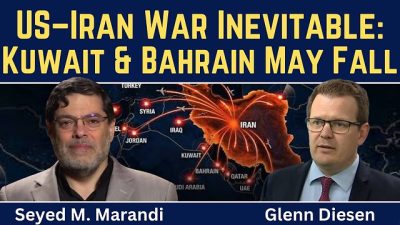
Seyed M. Marandi: US-Iran War Inevitable: Kuwait and Bahrain May Fall
or go to
Aletho News Archives – Video-Images
From the Archives
Oil and the Israel Lobby
Reknowned economist M. Shahid Alam offers this excellent critique of Noam Chomsky’s defective analysis of the relative influence of Oil versus the Israel lobby over US foreign policy: … continue
Blog Roll
 Aletho News
- ICC ignored ‘very well-documented’ NATO crimes – ex-Libyan minister
- SNSC secretary dismisses US response to Iran’s conditions as ‘inadequate’
- Sanaa says Taiz roads open, secure for residents, warns Saudi forces
- Iraqi resistance group urges Saudi leadership to admit defeat, lift Yemen siege
- Trump’s Retreat: How Al-Aqsa Flood Took Down the US Empire
- Israel’s Military Actions in Lebanon Grossly Violate International Law — Lavrov
- Seyed M. Marandi: US-Iran War Inevitable: Kuwait and Bahrain May Fall
- Leaders Condemn Ansarallah Attack on Saudi Arabia While Ignoring Illegal War Against Yemen
- Leaked: Britain’s Covert Iraqi Psyops Network
- Yemeni Armed Forces Warn Airlines Against Using Saudi Airports, Exempt Mecca and Medina
- If Americans Knew
- After Oct 7, IDF policy allowed civilian casualties for even the lowest-ranking targets
- Israel’s Destruction of Southern Lebanon Intensified After the Cease-Fire
- The Last-Minute Decision That Gave Israel Its Name
- The American Conservative: How Trump Made the World Go Nuclear
- Meet the US generals and admirals advancing Israeli policy
- Opinion: Why news organizations should boycott Israel
- The Israeli witch hunt of Sami Abu Shehadeh exposes the lie of the ‘Jewish and democratic’ state
- No state has a ‘right’ to exist – least of all Israel
- Testimonies about Gaza’s civilian death toll expose Israel’s atrocities – Daily Update
- How Israel Conquered the Latin American Right
- No Tricks Zone
- Germany’s Green Energy Debacle: High Energy Costs Force Kahla Porzellan to Close After 182 Years!
- New Study: 50 Years Of The Most Aggressive ‘Net Zero’ Policies Can Only Affect The Global Climate By 0.03°C
- US September “Heat” Was No Record…Many Records Set Decades Ago
- Latest European Green Energy Debacle; Portugal’s Largest Flagship Solar Park Insolvent!
- Green Energy Debacle: German Expert Professor Fritz Vahrenholt Warns Of Severe Economic And Social Consequences
- Two More Paleo Reconstructions Affirm Meters-Higher Sea Levels Across Ireland, Brazil 7000-6000 Years Ago
- New Study: Earth And Venus Surface Warmth Largely Explained By Convection And Lapse Rate, Not CO2 Or Radiation
- 2025 Nature Paper Claiming Worsening Global Drought Gets RETRACTED …Heavily Flawed
- New Study: ‘Global Drought Shows No Detectable Recent Acceleration Under Climate Warming’
- Economic Masterminds: German Socialists Suggest Taxing Productivity Gains Stemming From Using AI

