Polish PM plans to double size of army
RT | March 8, 2025
Polish Prime Minister Donald Tusk has unveiled plans to more than double the size of the country’s military to 500,000. Speaking in the Polish Parliament on Friday, Tusk said Poland must be prepared for future conflicts and strengthen its defenses.
Tusk reiterated his earlier claims that Russia poses a threat to Europe, saying Moscow could launch a “full-scale operation” against a “larger” target than Ukraine within three to four years – which Russia has repeatedly dismissed as unfounded. He argued that Poland must serve as a “bastion” to protect NATO’s eastern flank and should expand its military capabilities.
“We’re talking about the need to have an army of half-a-million in Poland, including the reservists,” he stated, noting that Poland’s current armed forces number around 200,000, which he compared to Russia’s estimated 1.3 million troops. Tusk said his government is drafting legislation that would require every adult male in Poland to undergo “large-scale military training” to prepare for a potential conflict with Russia.
“We will try to have a model ready by the end of this year so that every adult male in Poland is trained in the event of war, so that this reserve is comparable and adequate to the potential threats,” he said. He added that Polish women may also be required to undergo military training, though “war is still to a greater extent the domain of men.”
Tusk’s remarks came a day after EU leaders approved a major military spending plan to unlock billions of euros to build up defense capabilities. The initiative – ReArm Europe – which was adopted following an emergency summit in Brussels, hikes defense spending by up to €800 billion ($840 billion) – twice the total EU defense expenditures in 2024. The Kremlin condemned the bloc’s “militarization” plan, calling it a path towards confrontation that hinders peace efforts with Ukraine.
In addition to a larger army, Tusk said Poland must enhance its military capabilities, including through the acquisition of nuclear and “modern unconventional weapons.” Tusk’s speech followed his recent accusations that Moscow is fueling a new arms race, and calls for fellow EU nations to ramp up defense spending.
The Kremlin has criticized Tusk’s rhetoric as confrontational and militaristic. Moscow has rejected accusations that it poses a military threat to Europe, with President Vladimir Putin dismissing the claims as “nonsense” designed to justify increased military budgets.
Trump Floats Denuclearization Since US Can’t Win Arms Race With Russia, China Without Going Bankrupt
By Ilya Tsukanov – Sputnik – 07.03.2025
President Donald Trump has floated trilateral US-Russia-China talks on cuts to strategic nuclear weapons stockpiles. Sputnik reached out to one of Russia’s foremost experts on strategic security issues to discuss what’s behind the proposal, and its chances for success.
“Nuclear weapons are precisely one of the areas where competitors outpacing the United States is very visible,” says Dmitry Suslov, deputy director of research at the Russian Council on Foreign and Defense Policy.
“Chinese and Russian nuclear arsenals combined provide two times preponderance over the United States, or will make two times preponderance in the observable future,” Suslov stressed.
Nuclear talks are the “alternative” for the US to bankruptcy stemming from high defense spending and unsustainable debt, particularly as the US nuclear arsenal is stuck in the 80s and lags far behind competitors, especially Russia, and would take immense resources to modernize, the observer said.
Instead, Trump “wants to channel competition into some other areas, into the areas where the United States largely have advantages,” according to Suslov, from high-precision conventional arms to his “Golden Dome” proposal for a space-based SDI 2.0.
“This is an attempt to reduce competition in the area where the United States is not competitive and to channel the competition into the areas where the United States is competitive, has comparative advantages, technological advantages, in the opinion of the Trump administration,” the expert noted.
Will Trump’s Nuclear Negotiations Push Succeed?
- “Complete denuclearization is impossible,” Suslov stressed, since nuclear weapons serve as the “ultimate guarantee which prevents war among great powers.”
- “The only [reason] why NATO and the United States have not started a direct war against Russia yet in the context of the Ukraine war is nuclear weapons,” he said.
- Russia and China will be unlikely to agree to trilateral talks, the expert believes, since their relations are built on partnership, not deterrence.
- As for bilateral Russia-US talks, these are possible, “but also [face] huge impediments,” including the need to include the French and British nuclear arsenals into account.
- “Basically, Macron made it absolutely clear that the purpose of French nuclear weapons is to deter Russia. This is against Russia. The purpose of British nuclear weapons is also against Russia. And they plan explicitly nuclear operations, potential nuclear operations against Russia,” Suslov noted.
Accordingly, Russia’s strategy will continue revolving around insisting “on a comprehensive approach and taking all the factors which impact strategic stability into account,” Suslov predicts.
Trump: Everybody Should Get Rid of Their Nuclear Weapons
By Kyle Anzalone | The Libertarian Institute | March 6, 2025
President Donald Trump restated his desire to abolish nuclear weapons during a White House presser on Thursday.
“It would be great if everybody would get rid of their nuclear weapons. [I know] Russia and us have by far the most,” the president told reporters in the Oval Office. “China will have an equal amount within four to five years. It would be great if we could all de-nuclearize because the power of nuclear weapons is crazy.”
Currently, nine countries – the US, UK, France, Russia, China, India, Pakistan, North Korea, and Israel – possess nuclear weapons. With global tensions on the rise, several nations, including the US, are adding to their strategic capability.
According to the Defense Intelligence Agency, Beijing is working to ramp up its production of nuclear weapons. Last year, the agency predicted that China could have over 1,000 nuclear weapons. However, that would still give Beijing a far smaller arsenal than Washington and Moscow, which each have around 1,500 deployed nuclear weapons and thousands more in storage.
Shortly after returning to the White House in January, Trump said he spoke with President Vladimir Putin about denuclearization during his first term, and that the Russian leader was receptive to the idea. “We were talking about denuclearization of our two countries, and China would have come along. China right now has a much smaller nuclear armament than us, or field, than us, but they’re going to be catching [up] at some point,” Trump said.
“I will tell you that President Putin really liked the idea of cutting back on nuclear, and I think the rest of the world, we would have gotten them to follow, and China would have come along too. China also liked it,” he added. “Tremendous amounts of money are being spent on nuclear, and the destructive capability is something that we don’t even want to talk about. It’s too depressing.”
Trump has also discussed negotiating a deal with Moscow and Beijing that would see all three countries drastically cut military spending.
However, while Trump has at times voiced support for demilitarization and denuclearization, during his first term in office he scrapped two major arms control agreements, the Open Skies and the Intermediate Range Nuclear Force treaties.
Additionally, Trump refused to engage in bilateral discussions with Russia on extending the last nuclear arms control agreement between the world’s two largest nuclear arsenals, the New Start Treaty. He insisted that Moscow must pressure Beijing to make it a trilateral deal, a demand that almost led to the downfall of the landmark deal.
Though President Joe Biden was able to reach an agreement with Putin to extend the treaty for five more years in 2021, it is set to expire next year without another extension.
Kremlin responds to Polish PM’s ‘arms race’ call
RT | March 7, 2025
Moscow will not engage in an arms race with the EU, Kremlin spokesperson Dmitry Peskov has said. He was speaking after Polish Prime Minister Donald Tusk urged the bloc to ramp up its military spending.
Tusk on Wednesday accused Moscow of starting a new arms race and insisted that Western Europe must respond. “The war, the geopolitical uncertainty and the new arms race started by [Russian President Vladimir] Putin have left Europe with no choice,” he stated on social media.
Speaking to reporters on Thursday, Peskov said it was regrettable to hear such statements. “They will not win against us because we will not play with them; we will be busy ensuring our own interests,” he said.
“We regret the confrontational, even militaristic, statements coming from Warsaw and Paris, which show that Europe has yet to adjust to the new dynamic between Moscow and Washington,” Peskov said. He didn’t rule out, however, that European leaders would eventually “feel which way the wind is blowing.”
The Polish prime minister further claimed that “Europe must be ready for this race, and Russia will lose it like the Soviet Union 40 years ago,” arguing that the EU would arm itself faster than Russia.
Tusk’s comments follow statements by French President Emmanuel Macron during an address to the nation on Wednesday claiming that Russia poses a threat to the EU. Macron urged the bloc to boost defense spending and suggested extending France’s nuclear umbrella to other EU countries.
On Tuesday, European Commission President Ursula von der Leyen proposed a massive defense spending hike. As part of the ‘ReArm Europe Plan’, the bloc would spend about $840 billion on defense – double total EU defense expenditures in 2024.
The European leaders’ calls come as US President Donald Trump’s administration has recently signaled a major policy shift, urging European nations to take the lead in their own defense, as well as in supporting Kiev.
Last month, Pentagon chief Pete Hegseth said that Washington intended to refocus its military priorities on countering China, warning the EU not to assume that American forces would remain in the region indefinitely.
Moscow has rejected accusations that it poses a military threat to Europe, condemning Macron’s remarks as “highly confrontational.” Russian President Vladimir Putin dismissed Western claims of an imminent Russian attack as “nonsense” and accused European leaders of inflating the threat to justify higher military spending.
Putin earlier reiterated that Russia has no interest in being drawn into an arms race but stressed that Moscow would take all necessary steps to safeguard its own security and that of its allies.
Germany Doesn’t Have Money for Merz’s Defense Boost – Ex-AfD MEP
Sputnik – 07.03.2025
Berlin plans to change its fiscal rules and “invest” €500 billion ($543 billion) in infrastructure and defense, as explained by the chancellor-in-waiting, Friedrich Merz.
It’s alarming that Merz is prioritizing military spending because of the mythical Russian threat, especially amid efforts for peace in Ukraine, Gunnar Beck, a legal academic and former AfD MEP, tells Sputnik.
Merz has long pushed for higher defense spending. Last December, he stated the Bundeswehr would need at least $87 billion annually, up from the current $57 billion. German media also reported a proposed $433 billion defense fund.
“Germany hasn’t got the money,” Beck stresses. “It’s got to borrow the money. It’s at the expense of social spending and badly needed investments in infrastructure and research and development.”
“It’s not only Germany that’s proposing to increase military spending. The EU, under [Ursula] von der Leyen, has announced it will borrow another €800 billion ($866 billion) to support Ukraine. When you add up these figures, it’s already more than a trillion. And they are clearly coordinating their policies,” Beck concludes.
Ukraine cut off from US satellite imagery – media
RT | March 7, 2025
Ukraine has lost access to US satellite imagery after American space technology company Maxar blocked Kiev’s use of its services, a local media outlet reported on Friday. The move follows Washington’s recent decision to freeze military aid and intelligence sharing with Ukraine.
Ukrainian media outlet Militarnyi has claimed that several anonymous Maxar users have confirmed that they have been denied access to the service. The company has reportedly explained that the restriction had been introduced “in response to an administrative request.”
The outlet noted that the limit appears to apply to both government and private users, adding that the request cited by the company likely refers to US President Donald Trump’s order to cease all intelligence sharing with Ukraine.
Maxar, according to Militarnyi, has been one of the leading providers of high-resolution commercial satellite imagery to Ukraine’s armed forces who used it to track the movements of Russian troops, assess battlefield conditions and damage to key infrastructure. The US company has not yet confirmed the alleged restriction of services.
The report comes as Washington has halted the delivery of billions of dollars worth of military aid to Ukraine, while the CIA has confirmed that intelligence sharing with Kiev has been suspended. The decision to freeze military support for Ukraine follows last week’s heated meeting between Trump, US Vice President J.D. Vance and Zelensky at the White House. During the exchange, Trump accused Zelensky of ingratitude and “gambling with World War III” by refusing to seek peace with Russia. The Ukrainian leader was asked to leave the US capital and return only when he was ready for serious negotiations.
On Wednesday, during his address to the US Congress, Trump claimed that he had received a letter from Zelensky in which he had apparently agreed to come to the negotiating table in the near future in order to work towards a peace agreement.
Moscow has welcomed Washington’s suspension of military aid to Kiev, noting that such steps could potentially encourage Ukraine to seek a peaceful resolution to the conflict. At the same time, the Kremlin has expressed cautious optimism about Zelensky’s supposed U-turn on negotiations with Moscow, noting that the Ukrainian leader has yet to lift his legal ban on such contacts.
Hungary to be stripped of voting rights, demand MEPs from pro-EU Volt party
Remix News | March 7, 2025
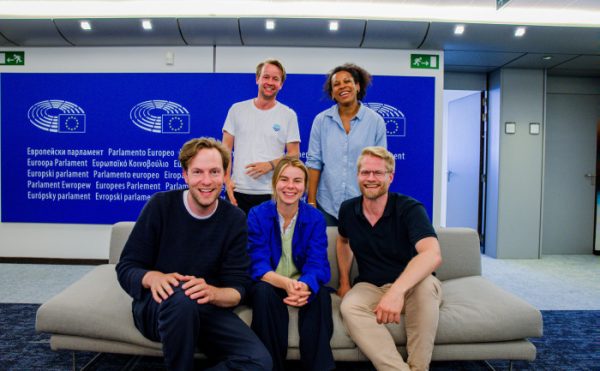
MEPs from the Volt party in the European Parliament submitted a proposed “action plan” earlier this week, as reported by Politico. Among the plan’s nine points is a call to strip Hungary of its guaranteed voting rights as a member of the European Union.
Volt is a pan-European federalist party that favors strengthening and centralizing the European Union’s authority over its member states.
Volt’s call to deprive Hungary of its right to veto all decisions made by the EU, which is a fundamental right guaranteed in the bloc’s founding treaties, is doubtless a response to Viktor Orbán’s veto of €20 billion in military aid that Brussels had wanted to send to Ukraine this week. This aid was intended to partially compensate for the United States’ recent suspension of aid to the country as part of the Trump administration’s attempts to force an end to the conflict.
Orbán has been strongly critical of the EU’s support for Ukraine from the outset of the current war. He has frequently used his country’s veto powers in an effort to pressure the bloc to stop arming Ukraine and instead force it to come to the negotiating table.
Other points in Volt’s proposal were a call for the formation of a European army, as is being discussed by others in the European Parliament, as well as a revision of the bloc’s treaties to give it greater authority in matters of defense. Also included is a suggestion to make Kaja Kallas, the European Commission’s current Vice President as well as its High Representative of the Union for Foreign Affairs and Security Policy, an official foreign minister for the EU.
Given that Volt has only five MEPs in the European Parliament, its suggestions are unlikely to have much effect. They nevertheless reflect the growing frustration in the bloc with Hungary’s ongoing efforts to stop the war.
This is not the first time that the idea of depriving Hungary of its voting rights has been floated in European circles. Last summer, 63 MEPs demanded that Hungary’s rights be suspended in response to Orbán’s diplomatic visits to Kyiv, Moscow, and Beijing while his country held the rotating Presidency of the Council of the European Union.
EU approves massive defense spending hike
RT | March 7, 2025
The EU has approved a large military spending plan to unlock billions of euros to build up defense capabilities. The initiative, which was adopted following an emergency summit in Brussels on Thursday, also aims to shore up aid for Ukraine after American military assistance to Kiev was halted.
Under the plan, which is called ReArm Europe, the bloc’s defense spending will be boosted by up to €800 billion ($840 billion) – double the total EU defense expenditures in 2024. The initiative was unveiled earlier this week by European Commission President Ursula von der Leyen, who said she will present legal proposals within the next two weeks.
The 27 EU leaders agreed to ease budget restrictions to allow member states to boost military outlays. They also called on the European Commission to explore new mechanisms “to facilitate significant defense spending at the national level across all Member States,” according to an official statement.
The EU’s executive arm estimates that the measure could unlock around €650 billion but it remains unclear if governments would fully utilize this financial leeway.
Additionally, the bloc’s leaders took note of a European Commission proposal for a €150 billion loan package for investment, including for air and missile defense, artillery and drones, and urged EU headquarters staff “to examine this proposal as a matter of urgency.”
The emergency summit was convened amid growing concerns among EU leaders over the impact of Washington’s recent policy shift on Ukraine. US President Donald Trump has signaled that European nations should take the lead in their own defense, as well as in supporting Kiev.
Von der Leyen claimed that the EU “is ready to assume its responsibilities,” describing the current geopolitical situation as the “most momentous and dangerous” of times.
French President Emmanuel Macron, who claimed in a speech to the nation on Wednesday that Russia poses a threat to the EU, said that this is just a first step.
“Whatever happens in Ukraine, we need to build autonomous defense capacities in Europe,” he told reporters after the summit.
Moscow has repeatedly dismissed claims that it poses a military threat to Europe, describing remarks emerging from Warsaw and Paris as “highly confrontational” and “militaristic.” Russian President Vladimir Putin called Western claims of an impending attack “nonsense,” accusing European leaders of exaggerating the threat to justify increased military spending. He reiterated that Russia does not seek to enter an arms race but will take the necessary measures to ensure its security and that of its allies.
How viable is Macron’s nuclear umbrella proposal?
By Drago Bosnic | March 7, 2025
As the United States and Russia are engaging in talks to avoid the possibility of an uncontrollable escalation, the European Union and NATO keep doing the exact opposite. Brussels wants the war to continue, including by pushing for the deployment of its troops in Ukraine. Worse yet, as the diverging interests of the new Trump administration and the EU/NATO become more evident, the latter is now trying to appease Washington DC by portraying this as a “peace initiative”.
On the other hand, Trump and his team understand that the world is drastically different to what it was in the aftermath of the (First) Cold War. This is precisely why they’re far less belligerent toward Moscow (at least in terms of rhetoric) than was the case with the previous administration.
The EU/NATO is terrified of the prospect of being left to face Russian military power in Ukraine (and possibly beyond) on its own. To prevent that, Western European powers are now looking to escalate tensions in hopes of drawing the US back into a crawling confrontation with the Kremlin. However, as the Trump administration is still showing no interest to get involved, the EU/NATO is now pushing for a strategic escalation.
This is particularly true for French President Emmanuel Macron who is now talking about placing the “old continent” under the French nuclear umbrella. On March 5, he tried to justify this by claiming that “[President Vladimir] Putin is now threatening all of Europe” and declared that “Russian aggression knows no borders”.
“We are entering a new era. If a country can invade its neighbour in Europe and go unpunished, nobody can be sure of anything. Beyond Ukraine, the Russian threat is real – it affects the European countries,” Macron stated in a televized address, adding: “President Putin is violating our borders to assassinate opponents, manipulate elections.”
For decades, “evil dictator and bloodthirsty tyrant Putin” has been the political West’s go-to bogeyman for both foreign and domestic policy issues. Whether it’s elections, political instability, price hikes or even personal problems, look no further than Vladimir Putin. The “evil, bear-riding Russians” are coming for you and “the only way” to prevent it is to go to war with them, preferably thermonuclear.
According to the mainstream propaganda machine, if you think this sounds like total madness, you must be a “Putin troll”. Unfortunately, this is how the EU/NATO is trying to portray the ongoing crisis, which is why it’s effectively impossible for Russia to find anyone remotely reasonable to talk to in Europe. And they keep proving this each passing day.
Macron insists that the EU/NATO “need to prepare”. It would seem he’s trying to fill the power vacuum as the US is looking to shift its strategic focus to the Asia-Pacific. The endemically and pathologically Russophobic United Kingdom seems to be supporting this initiative, as it falls perfectly in line with its strategy of pushing continental powers against each other.
This is why there have been numerous meetings and conferences in support of not only continuing but also escalating the NATO-orchestrated Ukrainian conflict. However, conventional capabilities of Western European powers are nowhere near enough to match that of Russia (not even in Ukraine, let alone when the entire Russian military is taken into account).
“I want to believe that the US will stand by our side, but we have to be ready for that not to be the case,” Macron complained, adding: “France has to recognize its special status – we have the most efficient, effective army in Europe.”
He then stressed that his country “has nuclear weapons to provide to the broader Western alliance if called upon”. Macron went on to explain that he’s considering the possibility of expanding the French nuclear umbrella to all of Europe. He also cited the words of Germany’s (most likely) upcoming chancellor, Friedrich Merz, who recently stated that he wanted to discuss the possibility of extending French and British nuclear umbrellas to also include Germany.
It should be noted that Berlin already has American nuclear weapons stationed on its territory as part of NATO’s nuclear sharing policy. However, with the recent shift initiated by the new US administration, European member states still loyal to the anti-Trump Deep State seem to be looking for viable alternatives.
“We need reforms, we need to make choices, and we need to be brave,” Macron stated, adding: “[Merz] has called for a strategic debate on providing that same protection to our European allies… whatever happens the decision will be in the hands of the president of the Republic and the heads of the army.”
He also said there will be a meeting of the EU/NATO army chiefs in Paris next week, hinting this could be one of the matters they will be discussing. Besides the US, the UK and France are the only member states who have their own nuclear weapons. It should be noted that this initiative also means that the EU/NATO is fully aware that nuclear weapons are the only way to “even the playing field” with Russia’s conventional military power.
However, what this also means is that Moscow would be forced to respond with its own nuclear arsenal – by far the largest and most powerful in the world. In fact, the difference between the number of thermonuclear warheads in Russia and the US is larger than the combined arsenal of the UK and France (around 500).
London and Paris both have SLBMs (submarine-launched ballistic missiles), with the latter also operating nuclear-capable aircraft. This is a lower level of deterrence than in countries like Russia, China, India and the US who have nuclear triads (aircraft, submarines and land-based missiles), without even considering the size of Moscow’s strategic arsenal which is upwards of a dozen times larger than the combined Franco-British stockpile.
It’s still unclear what exactly Macron has in mind when talking about extending this arsenal to the rest of the EU/NATO. If he’s talking about replicating (or even replacing) the US nuclear sharing policy, the Kremlin might not react immediately, as this would change little in terms of the strategic balance of power.
However, if Macron wants to deploy these weapons close to Russian borders, this changes the calculus entirely, as it would force Moscow to either reactivate some of the non-deployed warheads or make new ones (if not both, depending on how far the EU/NATO would go). What’s more, the Russian military also operates non-nuclear strategic weapons, specifically hypersonic missiles such as the new “Oreshnik”.
The entire political West lacks remotely similar systems, including the US (which, as previously mentioned, is slowly shifting its strategic focus away from Europe). In other words, the EU/NATO cannot match Russia even on a tactical or operational level, let alone strategic. However, it keeps poking the Bear and pushing for escalation on all three fronts.
Drago Bosnic is an independent geopolitical and military analyst.
Kremlin reacts to Macron’s ‘war’ speech
RT | March 6, 2025
French President Emmanuel Macron’s speech focusing on Russia earlier this week was “highly confrontational,” Kremlin spokesman Dmitry Peskov said on Thursday, arguing that it signals an intent to further escalate tensions.
In his address to the nation on Wednesday, Macron labeled Russia “a threat” to the EU and called for a significant increase in defense spending to counter the perceived danger posed by Moscow. He also said that France would be prepared to deploy troops to Ukraine should a truce be reached in the conflict.
Commenting on the remarks during a regular press briefing, Peskov stressed that it hardly conveyed a message of peace: “France apparently is contemplating war, a continuation of war.” This stance naturally elicits a negative reaction in Moscow, he suggested.
Macron’s address adhered to the conventional Western narrative portraying Russia as the unprovoked aggressor in the Ukraine conflict and claimed that Moscow has ambitions of conquest in Ukraine and beyond. However, according to Peskov, the French leader selectively ignored crucial events and circumstances that contributed to the current Ukraine crisis.
Among these, he pointed to NATO military infrastructure “encroaching, or rather making seven-mile strides” towards Russia’s borders, creating significant security concerns for Moscow. Peskov stated that Russia had no choice but to respond to this growing threat.
He also refuted Macron’s claims that Russia violated the Minsk Agreements, citing former French President Francois Hollande’s acknowledgment that the West never genuinely intended for them to succeed.
In 2015, Hollande and then-German Chancellor Angela Merkel co-mediated a roadmap purportedly aimed at peacefully reintegrating the then-breakaway regions in Donbass back into Ukraine. Following the 2022 escalation, both politicians admitted that the purpose of the accord from the West’s perspective had merely been to buy time for Kiev to strengthen its military with NATO support.
Peskov also remarked that in 2014 France and other European nations “deceived” then-Ukrainian President Viktor Yanukovich by endorsing his power-sharing agreement with Western-backed militants, who violated the deal within hours and forcibly removed the democratically elected leader, all without any protest from Paris.
The EU is currently promoting a substantial military buildup that would cost some $840 billion and be funded through debt. Brussels asserts that European security risks have been intensified by the shift in Washington’s policy under President Donald Trump, who is seeking a resolution to the Ukraine conflict while urging Europe to assume responsibility for future security guarantees for Kiev. Peskov observed that while this does not make the US a friend of Russia, it at least opens avenues for normalizing bilateral relations.
Zelensky changed his tune after Trump stopped (some) of the military aid to Kiev
By Ahmed Adel | March 6, 2025
Although US President Donald Trump announced the halt of military assistance to Ukraine, he cannot stop all the programs. Nonetheless, the threat of no longer receiving US military assistance was enough for Ukrainian President Volodymyr Zelensky to change his tune toward his American counterpart after their spat on February 28 by expressing “regret” and announcing his support for a peace process.
Aid to Ukraine is provided through a specific program for the supply of foreign military equipment, which is included in the US budget for the current fiscal year and continues. Other assistance is also provided through a special program for Ukraine.
Before leaving the post of US President, Joe Biden signed an order for the Pentagon to deliver surplus ammunition and equipment. Trump could stop this program, but he cannot stop the funds that are financed from the budget because Congress approved it.
Therefore, as in many other things, what is said aloud does not necessarily correlate with reality. In fact, Ukraine has enough weapons and ammunition for at least six months, meaning that combat operations are not decreasing. Real consequences for Ukraine may arise when the Americans stop providing them with intelligence and help in guiding missiles and other weapons at Russian forces.
Three days after the bitter clash between Trump and an ungrateful Zelensky in the White House, the US president ordered a freeze on military aid to Ukraine until the Kiev regime shows a “commitment to peace,” adding that the sending of all the military assistance that is not yet in Ukraine will be suspended, including weapons in transit on planes or ships, or located in warehouses in Poland.
Trump again sharply criticized Zelensky for his statement that an agreement to end the war with Russia is “still very, very far away.” On his Truth Social media network, Trump described it as “the worst statement that could have been made” and that “America will not put up with it for much longer,” in a threat that sounded as if regime change in Kiev was being considered.
“It is what I was saying, this guy doesn’t want there to be Peace as long as he has America’s backing,” Trump added.
US Vice President J.D. Vance, speaking about security guarantees for Kiev, said on March 3 that the best option is to give Americans an economic perspective for the future of Ukraine because it “is a way better security guarantee than 20,000 troops from some random country that hasn’t fought a war in 30 or 40 years.”
The offer Trump made to establish peace in Ukraine included various forms of pressure on those involved. For some, it was a ‘stick,’ like stopping arms deliveries to Ukraine, and for others, it was a ‘carrot,’ like promising Russia that some sanctions would be eased.
Russian President Vladimir Putin, in principle, said that talks are welcomed but that military operations will not end until peace talks come to fruition. Therefore, the possibility that peace negotiations could begin in the near future cannot be ruled out.
The US president mentioned an April 20th deadline and that his meeting with Putin would take place by then, too. However, that is a whole month and a half away, and much can happen between now and then.
It is estimated that the loss of American aid will increase the losses of the Ukrainian armed forces on the front. Ukrainian military experts say that the front can hold out for only another month or two without American military support.
For this reason, Zelensky said on March 4: “Our meeting in Washington, at the White House on Friday, did not go the way it was supposed to be. It is regrettable that it happened this way.”
He also claimed that Kiev wants to end the war and is “ready to come to the negotiating table as soon as possible to bring lasting peace closer,” stressing that “my team and I stand ready to work under President Trump’s strong leadership to get a peace that lasts. We are ready to work fast to end the war.”
What Trump’s decision to halt military aid shows is that the Biden administration always had the ability to force Zelensky to the negotiating table but refused to do so in the false belief that Ukraine would bleed Russia whilst Western sanctions would collapse the Russian economy.
As has been proven, it is Ukraine that has been bled and its economy collapsed, while now with the threat of military aid halting, Zelensky is seemingly being forced to begin negotiations with Moscow.
Ahmed Adel is a Cairo-based geopolitics and political economy researcher.
Featured Video
Seyed M. Marandi: US-Iran War Inevitable: Kuwait and Bahrain May Fall
or go to
Aletho News Archives – Video-Images
From the Archives
Oil and the Israel Lobby
Reknowned economist M. Shahid Alam offers this excellent critique of Noam Chomsky’s defective analysis of the relative influence of Oil versus the Israel lobby over US foreign policy: … continue
Blog Roll
 Aletho News
- ICC ignored ‘very well-documented’ NATO crimes – ex-Libyan minister
- SNSC secretary dismisses US response to Iran’s conditions as ‘inadequate’
- Sanaa says Taiz roads open, secure for residents, warns Saudi forces
- Iraqi resistance group urges Saudi leadership to admit defeat, lift Yemen siege
- Trump’s Retreat: How Al-Aqsa Flood Took Down the US Empire
- Israel’s Military Actions in Lebanon Grossly Violate International Law — Lavrov
- Seyed M. Marandi: US-Iran War Inevitable: Kuwait and Bahrain May Fall
- Leaders Condemn Ansarallah Attack on Saudi Arabia While Ignoring Illegal War Against Yemen
- Leaked: Britain’s Covert Iraqi Psyops Network
- Yemeni Armed Forces Warn Airlines Against Using Saudi Airports, Exempt Mecca and Medina
- If Americans Knew
- After Oct 7, IDF policy allowed civilian casualties for even the lowest-ranking targets
- Israel’s Destruction of Southern Lebanon Intensified After the Cease-Fire
- The Last-Minute Decision That Gave Israel Its Name
- The American Conservative: How Trump Made the World Go Nuclear
- Meet the US generals and admirals advancing Israeli policy
- Opinion: Why news organizations should boycott Israel
- The Israeli witch hunt of Sami Abu Shehadeh exposes the lie of the ‘Jewish and democratic’ state
- No state has a ‘right’ to exist – least of all Israel
- Testimonies about Gaza’s civilian death toll expose Israel’s atrocities – Daily Update
- How Israel Conquered the Latin American Right
- No Tricks Zone
- New Study Suggests Large Regions Of The Pacific Ocean Have Been Cooling For The Last 80 Years
- Germany’s Green Energy Debacle: High Energy Costs Force Kahla Porzellan to Close After 182 Years!
- New Study: 50 Years Of The Most Aggressive ‘Net Zero’ Policies Can Only Affect The Global Climate By 0.03°C
- US September “Heat” Was No Record…Many Records Set Decades Ago
- Latest European Green Energy Debacle; Portugal’s Largest Flagship Solar Park Insolvent!
- Green Energy Debacle: German Expert Professor Fritz Vahrenholt Warns Of Severe Economic And Social Consequences
- Two More Paleo Reconstructions Affirm Meters-Higher Sea Levels Across Ireland, Brazil 7000-6000 Years Ago
- New Study: Earth And Venus Surface Warmth Largely Explained By Convection And Lapse Rate, Not CO2 Or Radiation
- 2025 Nature Paper Claiming Worsening Global Drought Gets RETRACTED …Heavily Flawed
- New Study: ‘Global Drought Shows No Detectable Recent Acceleration Under Climate Warming’

