Hmm… interesting! https://t.co/oXjpx1keHX
— Alex (Sasha) Krainer (@NakedHedgie) April 7, 2024
New Order From Ukraine’s Top General Reveals Scale of Sabotage and Desertion in Army
By Svetlana Ekimenko – Sputnik – 13.04.2024
After the failure of last year’s much-heralded Ukrainian counteroffensive and mounting lack of ammunition and manpower, more and more Ukrainian troops are refusing to carry out combat missions. Others are even risking being shot in the back by units stationed behind them in an effort to prevent them from retreating.
The Kiev regime’s soldiers sabotage army orders, threaten their commanders, refuse to fire their weapons, leave the battlefield, and desert. This was revealed in a new order on strengthening discipline signed by Commander-in-Chief of Ukraine’s Armed Forces Oleksandr Syrsky and seen by Sputnik.
The document notes that army commanders, law enforcement, and other government agencies have faced new challenges that require an immediate response.
Among the military criminal offenses, the commander-in-chief listed “insubordination,” “failure to comply with an order,” “threat or violence against a superior,” “unauthorized abandonment of a military unit or place of service,” “desertion,” “evasion of military service by inflicting self-harm or in any other way,” and “unauthorized abandonment of the battlefield or refusal to use weapons.”
Syrsky’s order outlines the urgent need for the Armed Forces and representatives of law enforcement agencies to identify and put a stop to these offenses. The document presupposes that Ukrainian soldiers could be offered a chance to return to combat duty even after the abovementioned offenses.
The new order comes as the Ukrainian Armed Forces are struggling to replenish their ranks, with men increasingly unwilling to die for the Kiev regime and actively avoiding mobilization or deserting.
Following last year’s botched summer counteroffensive, which resulted in huge manpower losses, cases of desertion have soared. The Kiev regime’s army units are rife with cases of insubordination and desertion. Sputnik earlier obtained footage appearing to show Ukrainian troops being shot at and having grenades thrown at them by their own comrades during a Russian advance.
Ukraine’s President Volodymyr Zelensky recently deplored that such a case of desertion by a whole unit had resulted in Ukrainian forces being surrounded, and many soldiers being killed. He also spoke out against declaring a general amnesty for deserters in a video posted on his office’s YouTube channel.
On Wednesday, Verkhovna Rada lawmaker Irina Gerashchenko reported that the Ukrainian parliament had backed in the first reading a bill to tighten liability for military offenses, including desertion. The following day, the country’s parliament adopted a bill on mobilization aimed at replenishing Ukrainian forces depleted by two years of NATO’s proxy war against Russia. Zelensky also signed new mobilization measures into law on April 2, lowering the conscription age and authorizing the creation of an electronic database of military-age men as the issue of draft dodgers continues to persist.
Red Sea rising: Exposing the West’s diminishing naval power
By Ali Halawi | Al Mayadeen | April 12, 2024
The Red Sea has witnessed several developments that brought to light the West’s fading power, as its enemies simultaneously and continuously develop precision weapons and naval capabilities.
Although ongoing escort, air defense, and aerial attack operations in the Red Sea are viewed as uncostly, in terms of human capital, and training routines that will raise the preparedness of NATO forces in the region, they have also unveiled a quite unpleasant reality for Western navies. On the flip side, the aerial attacks of Yemeni Armed Forces (YAF) on Israeli-affiliated ships, which were later expanded to include US-UK-affiliated ships in the Red Sea, add to an extended bill that NATO countries pay for securing the Israeli genocide of the Palestinian people.
The weapons used in these operations are similar to Iranian-designed drones, ballistic missiles, and cruise missiles and have been described as “cheap” yet effective weapons by US CENTCOM commanders. These precise guided munitions have been disseminated across factions in the Axis of Resistance, via direct armament or technology sharing. When put to the correct use the weapons have proven challenging for some of the world’s most well-trained and equipped forces.
West Asia casts a shadow over NATO military industrial complexes
Some weapons could have been transferred with the blueprints for the production of their main compartments and assembly at their final destination, bringing costs down and production levels up, further deepening the hole for Western counterparts. In the case of Ansar Allah in Yemen, the YAF owns and announces to locally produce a wide array of anti-ship weapons, as well as missiles, and drones that have been appropriated for attacking seaborne targets; currently being put to use to tighten a naval blockade on “Israel” through the Red Sea.
On the other hand, flailing Western military hegemony over the seas pushed the US and its allies to embark on a poorly planned campaign to protect Israeli shipping routes, forcing them to deal with these relatively low-cost weapons in the Red Sea and the Arabian Sea, where the YAF has dealt direct hits to multiple non-military vessels and threatened near hits some of the most advanced American military ships. This has been the case in Iraq, Syria, and Jordan, where US military bases have suffered from the horrors of cheap low-flying, and ballistic weapons in more than 100 operations on US assets, which dealt precise hits to their targets on multiple occasions.
When countering these attacks, Western forces have utilized some of the most sophisticated anti-air surface-to-air missiles, which are estimated to cost millions of dollars of taxpayer money. In the Red Sea, the US-led Western alliance has relied on NATO-standard interceptors, each of which was developed to counter specific inbound aerial objects.
According to The Responsible Statecraft and news circulating on Western media outlets regarding the mishaps of air defense units, the Western coalition has depended on the use of a layered anti-air model, consisting of RIM-116 (RAM), RIM-66 (SM-2), RIM-174 (SM-6), RIM-162 (ESSM), and RIM-161 (SM-3) interceptors. Each interceptor has been developed to counter specific weaponry, however, they all share in common extremely pricey tags.
Price list for NATO’s Israeli maritime protection campaign
Below is a list of the cost of a single interceptor, excluding operational and battery costs, as of 2022:
- RIM-116 (RAM): $905,000
- RIM-66 (SM-2): $2,100,000
- RIM-174 (SM-6): $3,901,818
- RIM-162 (ESSM): $2,031,875
- RIM 161 (SM-3) Block IB: $9,698,617
- RIM-161 (SM-3) Block IIA: $27,915,625
The price list is retrieved from the US Department of Defense and military-industrial complexes’ official documents.
Germany’s Navy ridicules itself
Keeping the aforementioned price ranges in mind, an outrageous fluke that came as a result of a failed surface-to-air missile interception attempt by the German Navy’s Hessen frigate exposed the deep-lying issues for the US-led Naval alliance in the Red Sea.
What should have been a strike on a low-cost Yemeni drone turned into a shabby affair in which the German Navy misidentified the drone, launched a dual attack on an allied asset, failed to hit the aircraft, and suffered malfunctions that led to the destruction of two interceptors midflight.
At first glance, the attack underlines several glaring issues including, the under-preparedness of the German air defense crew, inadequate storage or production of interceptors, and poor communication between NATO allied forces at Sea. Some military-concerned outlets have attempted to shift the blame on outdated German comms, however, further investigation of the incident reveals an issue of economic cost that could tip the scale towards NATO’s enemies.
Germany’s embarrassing mishap would cost the country around $4.2 million, as the Hessen launched two SM-2s at a US MQ-9 reaper drone that it failed to identify.
No SM-2 batches produced since 2018
The cost of the failed operation should not be the only consideration here, as the last time Ratheon sold a batch of its SM-2 Block IIIA interceptors was in a deal it signed with Denmark back in 2018. The deal was worth $152 million for 46 SM-2 Block IIIA interceptors and corresponding equipment for a couple of vertical launch systems. Now, the company has stopped producing the system, and the interceptors for lack of international orders and plans to resume production in 2035.
However, conflict in Ukraine, the war on Gaza, and tensions in East Asia may prompt reconsideration, especially as the genocide of Palestinian people drags on while their allies in Yemen, Lebanon, and Iraq tie their operations to the status of the aggression on Gaza itself.
Large-scale confrontation might see selective engagement
The fact that Raethon has not received any major orders since 2018 brings up the possibility of Western shortages in air defense systems and interceptors, in case of larger-scale engagement erupting in the region. The phenomenon cannot be limited to SM-2 interceptors but could affect a range of staple NATO-developed and produced SAMs, including the infamous Patriot systems, THAAD, Israeil Iron Dome, and other anti-ballistic and cruise missile systems.
Large-scale engagement will most likely see the Colletive West prioritize assets and selectively down often low-cost but deadly targets.
One Yemeni strike was capable of sinking a bulk carrier in the Red Sea, while an attack on a secret US outpost on the Jordanian-Syrian border injured and killed more than a hundred US servicepeople.
In a war of attrition, the Axis of Resistance’s factions will have the economic advantages of pumping out low-cost munitions that target multi-million dollar systems and vehicles, and the morale advantage of deep-rooted ideological motives related to religion and nativity to the lands they defend.
Another blunder: Denmark’s unreported defensive failure gets chief sacked
More recently, Denmark sacked its defense chief Flemming Lentfer after major faults were discovered in air defense systems on a frigate that it sent to the Red Sea earlier. Lentfer was axed on Wednesday night after failing to report to the Danish Defense Minister, Troels Lund Poulsen, that the Iver Huitfeldt vessel had experienced a 30 minutes-long malfunction in one of its missile and radar systems, during a drone attack in the Red Sea. The malfunction led Danish authorities to recall the frigate from its mission, marking the gravity of the faults.
“I have lost trust in the chief of defense,” said Poulsen. Shockingly, he found out about the incident from a specialist military outlet, rather than any of his subordinates.
“We are facing a historic and necessary strengthening of Denmark’s defense forces. This places great demands on our organization and on the military advice at a political level,” he asserted.
Danish news website Olfi was the one to break the news to the Minister of Defense, explaining that the frigate was commanded by Commander Sune Lund, who complained about a problem with the ship’s active radar and C-Flex combat management system.
Unexplained outages to the systems were severe enough to prevent the frigate from launching its ESSM interceptors. The Danish frigate’s 76 mm guns were also reported to be defective on several occasions during deployment to the Red Sea. Other reports revealed other aspects of the commander’s message, in which he stated that the equipment problems reportedly had been known about for “years”, but that little had been done to address them.
Germany’s “Embarrassment” vs Yemen’s Victory
Back to Germany’s flop in the Red Sea, which was described by German media outlet BILD as an “Embarrassment to our (the German) Navy in the Red Sea”, the YAF had just marked another milestone by downing a US-operated MQ-9 Reaper Drone over Hodeidah a few days prior to the blunder.
Although both forces attempted to target different MQ-9-type drones using their own SAMs, the Yemeni Armed Forces were able to destroy the highly prized American drone with a “locally produced” air defense system while the Germans harrowingly failed. The Germans said that they mistakenly targeted a drone on February 28, 2024. However, their failure to down the then-unidentified object was due to unnamed technical malfunctions that led to the detonation of the two SM-2 missiles midflight, rather than active efforts to avert the disaster.
Interestingly, Sanaa had only unveiled two air defense systems capable of achieving such a hit. One of which is seemingly a copy of the Iranian-developed compact air-defense missile, dubbed Saqer-2. The missile can be easily transported and launched to take down close-range targets, flying at relatively slow speeds. The Saqer-2, a copycat of the Iranian so-called 358 surface-to-air missile reportedly functions like a one-way attack drone, reaching the required via a liquid fuel-propelled engine, to later hover near an aerial target, approaching it and detonating its warhead after being manually locked on to it by a ground operator, or by working in an autonomous mode.
However, footage published by the YAF’s Military Media indicated that the air defense system utilized in the incident was similar to traditional supersonic SAMs due to the speed at which it reached its target and the sound produced during its flight in the video.
Notably, the missile impacted the drone in a near direct trajectory and did not pause to hover nearby or for directions by operators. Examining the publicly revealed arsenal of the YAF, this likely indicates that the missile in use was the Bareq-1 or Bareq-2 SAM.
The missiles resemble the Iranian Taer line of missiles, which are used on a multitude of staple air defense systems. Digging deeper into the origin of the technology, it is clear that the Taer or Bareq lines of missiles are actually reverse-engineered models of the Soviet-era 3M9, incorporating certain elements from NATO Standard Missiles.
Presuming that the Bareq-2 was used by the YAF for the operation reveals an even deeper hole dug by Western military complexes for their own armies. Moreover, NATO’s SMs are much more developed than the YAF’s interceptors, as they incorporate a wide range of technological and hardware additions, putting them in a class of their own.
These additions allow for 360° scope for air defense teams allowing Hessen and other vessels to fire at any surrounding target within its range at any time without having to adjust their position while boosters on the SM-6 allow for longer-range targeting.
Still, the single-stage and aimed single launch conducted by the YAF achieved a direct hit to the 20 m-long US drone obliterating it to pieces that were scavenged by fighters on al-Hodeidah’s shore.
Yemen’s support to Palestine uncovers deep crises in NATO’s Naval power
Putting this series of unfolding events into the context of the Yemeni Armed Forces’ support to Palestine, as the Western-backed Israeli regime continues its genocidal war on Gaza, is key to not only regional security but global security as a whole.
The equations drawn by the YAF have been unprecedented in the history of the nation’s struggle against Western imperialism, as for the first time, an Arab nation has taken the responsibility of launching an expansive naval campaign to support a moral and national cause, whose result will alter the course of human history. By setting this historical precedent, Yemen has not only altered regional security to the favor of natives, but it has also exposed essential faults in NATO’s military and naval structure which can and will be taken advantage of by adversaries.
These events have not been limited to uncovering the flaws of Danish and German forces, but they have laid bare essential challenges for the far superior American and British navies.
For the US, issues have concentrated around logistics and the high cost of operating multiple strike groups, in order to maintain feeble objectives. The UK on the other hand has witnessed multiple accidents and complications during the period of its operations.
The Yemeni Armed Forces’ strategic engagements in the Red Sea highlight a significant shift in naval dynamics, exposing vulnerabilities in Western military prowess and logistical strategies. Despite maintaining relatively low-scale engagements, the YAF’s precision attacks on military vessels have yielded valuable experience and expanded their target list, aided by direct repercussions from the US’s involvement in the genocidal war on Gaza. This evolving scenario underscores the importance of the Axis of Resistance’s strategic foresight and adaptive responses in navigating the complexities of Western provocations, in the context of modern naval warfare, signaling a paradigmatic challenge for maintaining Western military hegemony in the region.
Switzerland to hold referendum on Russia sanctions
RT | April 12, 2024
Swiss activists backed by the country’s top political party have filed a petition with enough signatures to trigger a referendum that could enshrine Bern’s neutrality in the constitution and potentially restore the country’s economic ties with Moscow.
The so-called “Neutrality Initiative” signed by over 130,000 residents was officially filed on Thursday, according to Swissinfo. The proposal would define Switzerland’s neutrality as “perpetual and armed,” and explicitly prohibit the country from joining “any military or defense alliance,” unless directly attacked.
The proposed constitutional amendment would also prevent the government from imposing or joining any form of “non-military coercive measures” and sanctions, unless mandated by the UN Security Council. However, Bern would still reserve obligations to prevent circumvention of sanctions imposed by other states.
Switzerland has maintained a policy of neutrality since 1815, and did not take sides in either of the two world wars. While not officially a member of any international blocs, such as the EU or NATO, Switzerland has nevertheless joined nearly all of the Western sanctions imposed on Moscow, frozen billions of dollars’ worth of its assets, and actively supported Kiev following the launch of Russia’s offensive in Ukraine in 2022.
According to Russia’s top diplomat, Sergey Lavrov, the Swiss government has abandoned its neutrality by adopting a national security strategy that aims to develop European security “not with Russia, but against it.”
Since the start of the conflict in Ukraine, Bern has sent economic aid to Kiev, but has refused to supply weapons or allow other countries to send Swiss arms or ammunition. Some members of the Swiss government have been calling for the relaxation of this policy, but the Swiss People’s party (SVP) and the Social Democrats (SP) have been critical of such suggestions.
The SVP, which campaigned on a pro-neutrality and anti-immigration platform, emerged as the main winner in the general election in October, garnering 28.6% of the vote. The Social SP, which supports a less strict neutrality but firmly opposes entry into military blocs, trailed behind with 18%.
The SVP said on Thursday that sanctions against Russia “are endangering the internal peace and stability of our country,” welcoming news of the referendum. “If all states behaved like Switzerland, there would be no war,” the party said.
The neutrality initiative also calls on Switzerland to act as a mediator and use its “perpetual neutrality to prevent and resolve conflicts.” Bern wants to host a major peace conference on the Ukraine conflict sometime this year, reportedly inviting up to 100 nations, mostly from the Global South, to attend.
However, Moscow has called the conference that Bern is suggesting “pointless” and has indicated it has no intention of participating, even if officially invited. Russia said the forum as envisaged would be dedicated to the promotion of Ukrainian President Vladimir Zelensky’s ultimatum, which Moscow has panned as unrealistic. The Kremlin has repeatedly stressed it remains open to discussions, but only if Kiev recognizes the “reality on the ground.”
The Attack on Pearl Harbor Was No Surprise (Part IV)
Tales of the American Empire | April 11, 2024
The previous three parts of this series provide overwhelming evidence that American President Franklin Roosevelt knew a Japanese carrier force was sailing east to attack Hawaii in late 1941. Few Americans know about this shocking fact because their government controls informational sources. In 1989, the BBC produced a great documentary about the Pearl Harbor attack titled: “Sacrifice at Pearl Harbor.” Not only does this documentary expose the truth, the title says that President Franklin Roosevelt sacrificed 2,403 Americans at Pearl Harbor to trick Americans to support his goal of entering World War II. As a result of tighter government controls, this documentary can no longer be found on the BBC’s Timeline documentary website and it is blocked from posting at YouTube.
_______________________________________
“Operation Gladio”; BBC; 1992;  • Operation Gladio – Full 1992 document…
“USS Liberty: Dead in the Water”; BBC; 2002; • USS Liberty: Dead in the Water – BBC …
“Sacrifice at Pearl Harbor”; BBC; 1989; • Sacrifice at Pearl Harbor (BBC)
Related Tales: “The Attack on Pearl Harbor”; • The Attack on Pearl Harbor
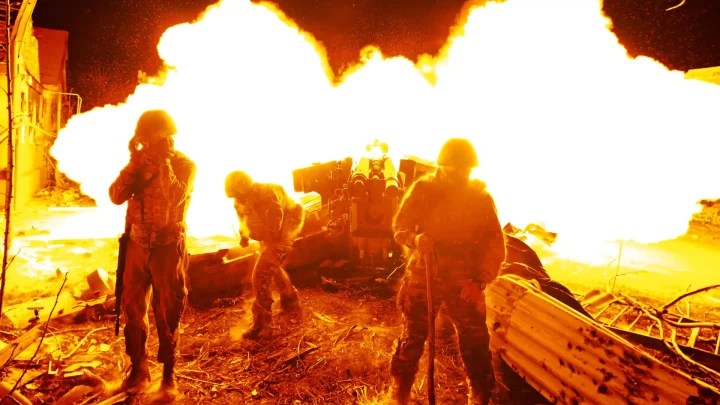
Zelensky’s New Counteroffensive Will Spell Disaster for Ukraine – Senior Russian MoD Source
Sputnik -11.04.2024
Ukraine’s Volodymyr Zelensky told German newspaper Bild on Tuesday that his country already has a new plan for a counteroffensive against Russian forces but needs more advanced Western weapons.
A high-ranking source in the Russian Ministry of Defense has stated that the new counteroffensive will end in complete disaster for Ukraine with the ultimate defeat of the Ukrainian Armed Forces.
“Due to such non-trivial approaches in military planning, there is no doubt that the implementation of Zelensky’s new plan for a counteroffensive will end in a complete disaster for Ukraine with the final defeat of the Armed Forces of Ukraine and the beginning of the path to peace on Russian terms,” a senior Ministry of Defense source told reporters.
According to the source, “In the absence of volunteers in Ukraine willing to further Zelensky’s madness with their lives and health, the Kiev regime is filling the huge personnel shortage in the Ukrainian Armed Forces with fresh cannon fodder, advancing a law on mass compulsory mobilization of citizens.”
Moreover, Zelensky fully relies on the West to provide the necessary weapons for hundreds of thousands of conscripts. There’s nothing left of their own in Ukraine for a long time. Besides, in the West, they’re already down to stripping their troops naked.
The outcome of President Zelensky’s previous counteroffensive plan in 2023, euphemistically referred to by him as “not so successful,” resulted in the deaths and serious injuries of over 166,000 Ukrainian soldiers, as well as the loss of 789 tanks, 2,400 other armored vehicles, and 132 aircraft.
EU state to give Ukraine fixed share of GDP annually
RT | April 11, 2024
Riga has resolved to supply Ukraine with military aid amounting to $120 million (€112 million) this year and will continue giving the equivalent of 0.25% of Latvia’s GDP in aid annually for the next three years, under a new agreement between the two nations.
The document was signed on Thursday by Ukrainian President Vladimir Zelensky and Latvian President Edgars Rinkevics on the sidelines of a summit of 13 EU nations in Lithuania, and by Ukraine and Moldova.
Under the agreement on “long-term support and security obligations,” Riga will allocate the same portion of its GDP for military assistance to Kiev in 2024, 2025 and 2026. The aid could come in the form of equipment, weapons or military training, according to the text of the document published by Kiev.
The Baltic nation also pledged to back Ukraine’s NATO and EU aspirations. Zelensky praised the development as a “concrete result” of his trip to Vilnius, host of the 15-nation summit. He also thanked Latvia for its “readiness to help” for as long as necessary. Riga has not commented on the agreement so far.
Earlier, another Baltic State, Estonia, vowed to spend the same share of its GDP on annual aid to Kiev. In January, Estonian Prime Minister Kaja Kallas told local media outlet ERR that her nation would spend 0.25% of its GDP on assistance for Ukraine for the next four years. She also called on other Western nations to follow suit.
However, Tallinn and Kiev have not yet signed any deals relating to the initiative. In early March, the Baltic nation said that the two states had begun developing a corresponding agreement. Later that same month, Ukrainian media reported that work on the treaty was “in its final stages.”
Estonia has been one of the most hawkish of Kiev’s backers amid its ongoing conflict with Russia. In March, Tallinn backed French President Emmanuel Macron after he raised the prospect of potentially sending NATO troops to Ukraine, with Kallas saying her country would not rule out deploying forces to Ukrainian territory.
Later in March, a poll showed that public trust in the Kallas-led government of Estonia stood at just 17%, down from 21% in February.
Latvia has taken a more moderate stance. In March, Prime Minister Evika Silina said that NATO was not ready for talks about sending troops to Ukraine and called for the focus to remain on military and financial assistance to Kiev instead.
Switzerland’s Largest Party Calls for Return to Neutrality in All Conflicts – Statement
Sputnik – 11.04.2024
The Swiss People’s Party (UDC), which holds the majority in parliament, has said on Thursday that the country should return to holding neutrality in all conflicts.
“Switzerland must strictly return to its perpetual and armed neutrality,” the statement said.
Armed neutrality means that Switzerland must be able to protect and defend itself, while the perpetual neutrality means that the country will be credible only if it remains neutral without any exceptions, the UDC explained.
The UDC also demands that all sanctions that have not been adopted by the UN Security Council are lifted, the statement said.
Star wars coming – top US general
RT | April 9, 2024
The possibility of a conflict in space is no longer just theoretical, General Stephen Whiting, head of the US Space Command, said on Tuesday.
Speaking at the 39th Space Symposium at the command’s headquarters in Colorado Springs, Whiting painted an alarming picture of Russian and Chinese orbital capabilities.
China has built a “kill web over the Pacific Ocean to find, fix, track and, yes, target US and allied military capabilities,” Whiting said, describing Beijing’s efforts as moving at “breathtaking speed.”
Since 2018, Russia has doubled and China has tripled the number of their intelligence, surveillance and reconnaissance (ISR) satellites in orbit, while also testing and fielding anti-satellite weapons. Meanwhile, the US has “the world’s best space architectures,” but its military constellations are “optimized for a benign environment,” he said.
Russian and Chinese space weapons “hold at risk our modern way of life and how we defend this nation, and we must be able to deter and counter these threats when called upon to achieve space superiority,” the general said.
Whiting described a possible armed conflict in space as “economically and environmentally devastating, perhaps for decades,” and said the US wishes to keep things in the state of “enduring competition” instead.
The US is already working with Canada, Australia and the UK on Operation Olympic Defender, a program intended to “optimize space operations,” according to the Space Command. Whiting announced that Germany, France and New Zealand have been invited to join as well.
He also revealed that the command’s new Capability Assessment and Validation Environment (CAVE) has achieved “minimum viable capability.” The modeling and simulation laboratory will enable the US military to “derive better ways of deterring and planning to conduct operations for a war that’s never happened, and a war we don’t want to happen,” he said.
Washington recently accused Moscow of having undisclosed anti-satellite capabilities, possibly nuclear in nature. Russian President Vladimir Putin said the US claims were “unfounded” and a ploy to manipulate arms control talks. The Russian embassy in Washington has also accused the US of using “Russophobic slogans” to mask its own plans to militarize space.
UK and France Talk of Reviving WWI Alliance Over ‘Fear’ of Trump Return
Sputnik – 09.04.2024
In an op-ed penned on the 120th anniversary of the Entente Cordiale, a landmark agreement signed between the British Empire and France in 1904, British Foreign Secretary David Cameron and his French counterpart Stephane Sejourne penned an op-ed essentially calling for the revival of the alliance.
The two ministers argued that NATO must mobilize to deny Russia a victory in Ukraine, claiming that the UK and France, two of the military bloc’s founders and nuclear powers, “have a responsibility in driving the alliance to deal with the challenges before it.”
“We must do even more to ensure we defeat Russia. The world is watching – and will judge us if we fail,” they wrote in a piece published by The Telegraph.
Commenting on this development, Dr. John Laughland, a lecturer in politics and history at the Catholic Institute of the Vendée (ICES) in France and specialist in international affairs, observed that the UK and France are “two principal military powers in Europe” and do enjoy “quite a high level” of bilateral military cooperation.
He did point out, however, that though London and Paris “have indeed been strengthening that cooperation for some years now,” as Cameron and Sejourne wrote, he does not see “any substantial new initiatives” in the article, which he dismissed as “essentially just propaganda.”
Whereas the Entente managed to prevail in World War I in no small part due to the Russian Empire’s contribution to the cause, Dr. Laughland suggested that this new British-French axis would inevitably lean on the United States, “because everything that they say about the British-French Entente is in the context of NATO.”
“The current war is a NATO war. And so they are leaning on the Americans,” he remarked.
He suggested that France and the UK may be driven by the fear of Donald Trump’s reelection as the president of the United States.
“I think that the European powers, including France and Britain, are trying to pre-empt that outcome because whether rightly or wrongly, they fear that Trump would want to make peace in Ukraine, make peace with Russia,” the scholar mused. “But again, I regard this as just a piece of gesture politics, this article and this commemoration.”
Dr. Laughland also recalled a previous attempt by Cameron to partially revive the Entente in 2010 by signing military defense agreements with France during his premiership, with one of the outcomes of said deal being “the attack on Libya in 2011, which, as far as we understand, was a Franco-British initiative.”
“It was a French initiative which the British immediately supported. And the attack on Libya in 2011, which, of course, the Americans also supported, and then became a NATO attack, was an absolutely catastrophic war. It showed once again that NATO is an aggressive alliance,” he remarked. “I say once again, because, of course, NATO had attacked Yugoslavia in 1999. So unfortunately, it’s a very bad precedent, the 2010 agreement.”
Meanwhile, Mikael Valtersson, former officer of the Swedish Armed Forces and chief of staff of the Sweden Democrats political party, argued that the real reason for this talk about reviving the Entente Cordiale is the UK’s and France’s desire to “take a larger role in international politics” coupled with them realizing that they are not “big enough to do it on their own.”
“Both United Kingdom and France are also united in their nearly fanatical hard-line approach towards Russia. As they say in the article, Russia must lose and Ukraine must win,” he added.
According to Valtersson, this “hardline approach” towards Russia may be the reason why Germany was not included in this scheme as Berlin and Paris do not see eye to eye on how to deal with Moscow.
“The difference is that the French leader, President Macron in France, belongs to the belligerent anti-Russian camp, while the German leader Chancellor Scholz belongs to a more moderate grouping,” he explained. “These facts make a new Entante very fragile. Macron might be replaced as French president by a more nationalistic and pragmatic successor. Then the so-called alliance with the UK will be over and done with.”
Another reason for not including Germany might be the UK and France’s concerns that the German economic prowess would afford Berlin “too much influence” in such an alliance, not to mention London and Paris’ fears about Trump’s possible return to the White House, he noted.
“This talk about a revived Entente Cordiale might be an attempt from the UK and France to take over, or at least to prepare to take over, the leadership of the belligerent anti-Russian camp in the West. [It could be] Preparations in case the US abandons Ukraine,” Valtersson postulated. “But as I said earlier, it’s a weak alliance since a large part of the French population isn’t aboard.”
“But as long as the UK and France are united and work together with other belligerent states as the Netherlands, Poland, the Baltic and Nordic states, they probably can force Germany to slowly follow their lead in creating a prewar mentality in large part of Europe,” he added.
Why Did Washington Insist on the Kosovo War?
By James George Jatras | Ron Paul Institute | April 9, 2024
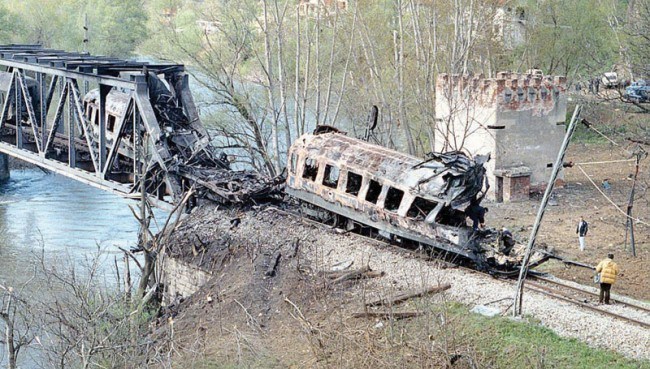
The following remarks were delivered at a conference marking the 25th anniversary of the NATO bombing of Serbia: “The 1999 Red-Green Bombing Terror against Serbia,” held on March 20, 2024, at the Bundestag in Berlin hosted by MdB Dr. Rainer Rothfuß and his Alternative for Germany parliamentary group.
In 2004, I appeared as the second defense witness called by Slobodan Milošević at his so-called “trial” before the so-called “International Criminal Tribunal for the former Yugoslavia” at The Hague My testimony was not as an expert witness but as a witness of fact concerning the formulation and implementation of US and western policy. I addressed one specific charge: that – beginning no later than October 1998 – Mr. Milošević was the initiator of a criminal conspiracy to drive the Albanians out of Kosovo and Metohija on the basis of their ethnicity.
There was one little problem with this accusation: there was absolutely zero direct evidence for it. No written order to this effect was ever produced. No person testified as to having received, transmitted, or even heard of such an instruction. Rather, the claim was based solely on circumstantial inferences of events starting from October 1998.
Thus, the heart of my testimony related to a paper I issued on August 12, 1998, as an analyst at the US Senate Republican Policy Committee, titled “Bosnia II: The Clinton Administration Sets Course for NATO Intervention in Kosovo.” In that paper, working solely from open sources, I detailed how, at that time – fully two months before the Milošević-led supposed “criminal conspiracy” came into effect —
“ … planning for a U.S.-led NATO intervention in Kosovo is now largely in place, …. The only missing element appears to be an event—with suitably vivid media coverage—that would make intervention politically salable, even imperative, in the same way that [the] Administration finally decided on intervention in Bosnia in 1995 after a series of ‘Serb mortar attacks’ took the lives of dozens of civilians—attacks, which, upon closer examination, may in fact have been the work of the Muslim regime in Sarajevo, the main beneficiary of the intervention. . . That the Administration is waiting for a similar ‘trigger’ in Kosovo is increasingly obvious: [As reported in the Washington Post, August 4, 1998], ‘A senior U.S. Defense Department official who briefed reporters on July 15 noted that “we’re not anywhere near making a decision for any kind of armed intervention in Kosovo right now, … [but] I think if some levels of atrocities were reached that would be intolerable, that would probably be a trigger”.’ ”
Now, if I was aware of this as early as August 1998, so were a lot of other people in Washington. I submitted to the “Tribunal” that in light of my paper, all interpretations of events would have to be drastically reevaluated. The issue wasn’t any longer whether Belgrade was planning an expulsion but that Washington was looking for a pretext for aggression.
(My cross-examination by prosecutor Geoffrey Nice (later Sir, based on his work at The Hague), asked me barely a word about my testimony. Rather, he interrogated me about my ethnic origins (Greek, from four Spartan grandparents), my religion (Orthodox Christian), and my opinions about the Islamic challenge to European, Christian civilization (negative).)
As we know, in due course the suitable “trigger” was found, with the so-called “Račak massacre” of January 1999. The key figure in “selling” Račak was William Walker. As described by Mark Ames and Matt Taibbi (now of Rolling Stone) in their article “Meet Mr. Massacre,” published in the now-defunct The Exile of February 10, 2000:
Years from now, when the war in Serbia is over and the dust has settled, historians will point to January 15, 1999 as the day the American Death Star became fully operational.
That was the date on which an American diplomat named William Walker brought his OSCE war crimes verification team to a tiny Kosovar village called Račak to investigate an alleged Serb massacre of ethnic Albanian peasants. After a brief review of the town’s 40-odd bullet-ridden corpses, Walker searched out the nearest television camera and essentially fired the starting gun for the war.
From what I saw, I do not hesitate to describe the crime as a massacre, a crime against humanity,’ he said. ‘Nor do I hesitate to accuse the government security forces of responsibility.’
We all know how Washington responded to Walker’s verdict; it quickly set its military machine in motion, and started sending out menacing invitations to its NATO friends to join the upcoming war party.
Focus on that phrase: “the American Death Star became fully operational.” Kosovo became the template that we then took on the road in one form or another in Afghanistan, Iraq, Libya, Syria, Yemen. Ukraine.
But the question still lingers: Why? Why was Washington so insistent that we and our NATO satelli– oops – “allies” needed to launch that war? Why did then-Secretary of State Madeleine Albright reveal in confidence, according to a reliable source, that at Rambouillet “We intentionally set the bar too high for the Serbs to comply. They need some bombing, and that’s what they are going to get”?
Some people will tell you it was about putting a NATO base, Camp Bondsteel, in a strategic location. Or that we wanted to clear the way for an East-West energy pipeline across the Balkans. Or that we coveted the mineral wealth of the Trepča mines. Or to secure the transit route for Afghan opium processed into heroin bound for Europe.
Certainly, all of our various interventions line a lot of a pockets, but in more than three decades of work in and around the Washington apparat, I never heard anyone point to such concrete and, frankly, normal if immoral imperial considerations.
Rather, answers must instead be sought within the larger perspective of American policy since the end of the first Cold War in 1991 and the development of the current one in the course of the 1990s: the American “unipolar moment,” as the bipartisan US policy nomenklatura sought to consolidate and perpetuate its hegemonic control over the entire planet, taking advantage of the vacuum left by the demise of the USSR. Perhaps the fullest expression of this was a 1996 Foreign Affairs article by neoconservative ideologists William Kristol and Robert Kagan (NOTE: Victoria Nuland’s husband), misleadingly titled “Toward a Neo-Reaganite Foreign Policy,” in which they called for the US to establish and maintain indefinitely “benevolent global hegemony” — in other words, perpetual American world domination.
Kristol and Kagan laid out virtually all of the elements that have guided US global policy during the ensuing years. It is no accident that Republican neoconservatives were enthusiastic supporters of Bill Clinton’s Balkan interventions of the 1990s, under the guidance of people like then-Secretary of State Madeleine Albright, who once opined regarding the sanctions-related deaths of a half million Iraqi children that “the price is worth it.” In the US establishment, there is little dissent on either side of the partisan aisle with Albright’s view that a militant United States has a special wisdom: “If we have to use force, it is because we are America; we are the indispensable nation. We stand tall and we see further than other countries into the future …”
The result is a kind of neo-Bolshevik ideology, where, as the vanguard of all progressive humanity, the US leadership class sees itself as the midwife of history. America took the path (as characterized by Russian Foreign Minister Sergey Lavrov) of the “replication of the experience of Bolshevism and Trotskyism”—morphing ourselves into a new Evil Empire in place of the old one. (Anyone familiar with the origins of America’s neoconservatives understands that the Trotskyite reference is not just rhetorical.)
Which brings us back to the “Why?” regarding Kosovo. When the dissolution of Yugoslavia kicked off in June 1991, largely at the initiative of Austria and Germany, official Washington was terrified that with the end of the Soviet bloc Europe might become “whole and free” – but without us. What then could be the future of Lord Hastings Lionel Ismay’s mission for NATO of keeping the Americans in Europe, the Russians out, and the Germans down? Europe, the crown jewel of the Global American Empire was slipping away.
Hence, as former Chairman of the Senate Foreign Relations Committee Richard Lugar (R-Indiana) indicated, NATO needed to go “out of area or out of business.” Starting in spring 1992, Washington moved swiftly to expand the conflict from Slovenia and Croatia (where it had been relatively contained) to Bosnia and Herzegovina. There the US became the vociferous champion of the Muslim faction, illegally shipping in al-Qaeda fighters and Iranian weapons via covert C-130 flights into Tuzla. We then engaged in a little demonstrative bombing of the Bosnian Serbs to set the stage for the Dayton Agreement. The arsonist sets the fire, so then he can be the hero rushing to the rescue: “See, you silly ‘dispensable’ European children? You just can’t get along without us …”
Following Dayton, Kosovo was the other shoe that needed to drop – with appropriate violence – to ensure that Europe was totally, abjectly, humiliatingly subservient to the United States through NATO, with the passive complicity of NATO’s concubine, the European Union. The corollary was that, just as the Serbs had no legitimate voice in determining post-Yugoslav structures, the Russians understood they had no legitimate voice in European security arrangements. These would be decided without them.
Now, of course, with defeat looming in Ukraine and with the broader Middle East on the edge of a regional conflagration, with many in Washington beating the drums for war with Iran or even China, the Global American Empire’s “unipolar” moment is coming to an end, one way or the other, either with a bang or with a whimper. Unfortunately, neither in Washington, nor in Berlin or other European capitals, with the exception of Budapest, are decisions made by people who can be regarded as mentally and morally healthy human beings, much less patriots.
The next few months and years promise to be a period of disorder and acute danger. The question is, can we – Americans and Europeans alike – find a path to governance that can secure a future for our peoples?
NATO kicks off Black Sea-Danube Delta exercise labeled Sea Shield 24
MAGYAR HÍRLAP | APRIL 9, 2024
NATO has launched its second major exercise this year in the vicinity of Ukraine, this time focusing on the Black Sea and the Danube Delta region.
The joint operation, Sea Shield 24, which runs until April 21, brings together more than 2,200 troops from Bulgaria, France, Greece, Italy, the U.K., Netherlands, Poland, Portugal, Romania, Turkey, the United States, Georgia and Moldova. The forces will include 27 river and naval warships, 17 aircraft, and 91 land-based military vehicles.
According to a Romanian Navy statement, Sea Shield is the most complex event of the 2024 training year, with scenarios focusing on missions to combat illegal activities, maritime and river control, the rescue of vessels in distress, and the protection of critical infrastructure in the Black Sea, along the coast, in the Danube, and in the Danube Delta.
The international exercise also aims to strengthen cooperation between the navies of the participating countries and with other forces.
The largest naval exercise organized by Romania was first held in 2015. Since then, Sea Shield scenarios have been continuously modified to enable the participating NATO forces to respond quickly and effectively to the full spectrum of threats to regional security and stability, according to the organizers.
In January, NATO launched “Steadfast Defender 2024,” a five-month exercise rehearsing the alliance’s response to a hypothetical aggression against a member state. All 32 NATO member states participated, with some 90,000 personnel, including the largest single contingent of 20,000 from the United Kingdom.
Featured Video

Laith Marouf: Hezbollah’s position on US-Iran ceasefire
or go to
Aletho News Archives – Video-Images
From the Archives
The Dirty Little Secret behind the “Global Terrorism Index”
The Omission of Israeli Terrorism in the Occupied Palestinian Territories
By Karin Brothers | Global Research | December 6, 2014
… The Israeli settlements — all of which are illegal – have been identified as a major impediment to peace. The refusal of a major “global” terrorism report to name the Israeli settlers as one of the groups most responsible for terrorism not only misrepresents a major source of regional violence but exposes the Global Terrorism Index as a propaganda tool that supports a U.S. agenda.
In recent years, governments have been attempting to thwart terrorism by blocking supportive fund-raising. When it comes to Israeli settlements, however, the US and Canada actually encourage fund-raising by giving organizations (such as Christian Friends of Israeli Communities (CFOIC) and the Jewish National Fund) financial support in the form of donor tax-deductions.
Charities which provide funds for the Israeli settlements should be regarded as terror-financing organizations. They should not only lose their tax-deductible status, but they should be banned because they support the violation of international humanitarian law. The terror-financing laws that are being strictly enforced for Muslim charities should be applied to Christian and Jewish charities as well. … Read full article
Blog Roll
 Aletho News
- How UK Regulator Ofcom Quietly Bypassed International Law to Police American Speech
- The Black Cube Files: How Former Mossad Operatives Flipped a Nation
- Laith Marouf: Hezbollah’s position on US-Iran ceasefire: What you’re not being told
- Israel’s priority lies in destroying chances of peace between Iran, US: Ex-UN nuclear chief
- Ceasefire for all or for none: Iran shuts Hormuz over Lebanon attacks
- Strait of Hormuz is Iran’s ‘nuclear weapon’ that forced US retreat: Medvedev
- Energy crisis will last for months – Kremlin envoy
- Europe’s quiet role in the war on Iran
- Forty days that shook the Empire: How Iran turned the tables on US and prevailed
- Netanyahu unilaterally declares Lebanon outside of ceasefire deal
- If Americans Knew
- Gazans face a triple crisis: severe shortages of water and bread, healthcare in tatters
- NY Times reports how Netanyahu took the US into Iran War
- A sigh of relief over Iran, but Gaza and Lebanon in dire straits – Daily Update
- Thousands dead and neighborhoods razed to the ground: Aid agencies fear southern Lebanon is becoming the new Gaza
- The war the US is fighting for Israel could cost trillions
- ‘Cigarette Burns, Nail Wounds’: Toddler Tortured in Gaza to Coerce Father
- Trump Says US Sent ‘a Lot of Guns’ to Protesters in Iran
- Israeli forces destroy 17 UN peacekeeper cameras in south Lebanon
- US-Israeli strikes ‘completely destroy’ synagogue in Tehran
- Archbishop for US Military Says Iran War Is Unjust Under Catholic Teaching
- No Tricks Zone
- An Inconvenient Tree: Uncovered In Alps… Europe Much Warmer Than Today 6000 Years Ago
- New Study Reports A 60% Slowdown In Greenland’s Ice Loss Rate In The Last Decade
- Low Intensity Tornado Wrecks Major Solar Farm, Creating A Potential Toxic Dump
- New Study Finds Warming Saves Lives…Cold Temperatures 12 Times More Deadly Than Excess Heat
- German Science Blog Accuses PIK Climate Institute Of Hallucinating Climate Tipping Points
- Devastating Assessment Of Comirnaty Vaccine By Former Senior Pfizer Europe Toxicologist
- New Study: CO2 Is ‘Effectively Negligible’ As An Explanatory Climate Change Factor Since 2000
- Former Pfizer Toxicologist Dr. Helmut Sterz Tells Bundestag Hearing Pfizer Vaccine Should Have Never Been Approved
- Energy Expert: Germany’s Nuclear Phaseout Was A “500 Billion Euro Mistake”
- New Research: South Australia’s Mid-Holocene Sea Surface Temperatures Were 4°C Warmer Than Today
 Aletho News