Illegal US Nuclear Weapons Handouts
By John Laforge | CounterPunch | September 27, 2018
The US military practice of placing nuclear weapons in five other countries (no other nuclear power does this) is a legal and political embarrassment for US diplomacy. That’s why all the governments involved refuse to “confirm or deny” the practice of “nuclear sharing” or the locations of the B61 free-fall gravity bombs in question.
Expert analysts and observers agree that the United States currently deploys 150-to-180 of these nuclear weapons at bases in Germany, Italy, The Netherlands, Turkey and Belgium. The authors of the January 2018 report “Building a Safe, Secure, and Credible NATO Nuclear Posture” take for granted the open secret that nuclear sharing is ongoing even though all six countries are signatory parties to the Treaty on the Nonproliferation of Nuclear Weapons (NPT).
In a paper for the journal Science for Democratic Action, German weapons expert Otfried Nassauer, director of Berlin’s Information Center for Transatlantic Security, concluded, “NATO’s program of ‘nuclear sharing’ with five European countries probably violates Articles I and II of the Treaty.”
Article I prohibits nuclear weapon states that are parties to the NPT from sharing their weapons. It says: “Each nuclear-weapon State Party to the Treaty undertakes not to transfer to any recipient whatsoever nuclear weapons or other nuclear explosive devices or control over such weapons or explosive devices directly, or indirectly….” Article II, the corollary commitment, states says: “Each non-nuclear weapon State Party to the Treaty undertakes not to receive the transfer from any transferor whatsoever of nuclear weapons or other nuclear explosive devices or of control over such weapons or explosive devices directly, or indirectly … or otherwise acquire nuclear weapons or other nuclear explosive devices….”
What nuclear sharing means in practice
The five NATO countries currently hosting US H-bombs on their air bases are officially “non-nuclear weapons states.” But as Nassauer reports, “Under NATO nuclear sharing in times of war, the US would hand control of these nuclear weapons over to the non-nuclear weapon states’ pilots for use with aircraft from non-nuclear weapon states. Once the bomb is loaded aboard, once the correct Permissive Action Link code has been entered by the US soldiers guarding the weapons, and once the aircraft begins its mission, control over the respective weapon(s) has been transferred. That is the operational, technical part of what is called ‘nuclear sharing.’”
This flaunting of the NPT is what peace activists on both sides of the Atlantic refer to when calling the US bombs in Europe “illegal.” Nassauer notes, “The pilots for these aircraft are provided with training specific to use nuclear weapons. The air force units to which these pilots and aircraft belong have the capability to play a part in NATO nuclear planning, including assigning a target, selecting the yield of the warhead for the target, and planning a specific mission for the use of the bombs.”
“NATO nuclear sharing,” Nassauer writes, “was described in 1964 by one member of the US National Security Council … as meaning that ‘the non-nuclear NATO-partners in effect become nuclear powers in time of war.’ The concern is that, at the moment the aircraft loaded with the bomb is on the runway ready to start, the control of the weapon is turned over from the US, a nuclear weapon state, to non-nuclear weapon states. … To my understanding, this is in violation of the spirit if not the text of Articles I and II of the NPT.”
How Do the US and its Allies Explain their Lawlessness?
An undated, 1960s-era letter from then-US Secretary of State Rusk explained the US ‘interpretation’ of the NPT. The pretext for ignoring the treaty’s plain language, the Rusk letter “argues that the NPT does not specify what is allowed, but only what is forbidden. In this view, everything that is not forbidden by the NPT is allowed,” Nassaure explained.
In its most absurd section, Rusk simply denies the treaty’s obvious purpose and intent. “Since the treaty doesn’t explicitly talk about the deployment of nuclear warheads in countries that are non-nuclear weapon states,” Nassaure writes, “such deployments are considered legal under the NPT.”
It is so easy to show that the United States and its nuclear sharing partners are in violation of the NPT, the governments involved work hard pretending there is nothing to worry about, no lawbreaking underway, no reason to demand answers. This is why so many activists across Europe have become nonviolently disobedient at the air bases involved.
The transparent unlawfulness of NATO’s nuclear war planning is also the reason why prosecutors in Germany don’t dare bring serious charges against civil resisters; even those who have cut fences and occupied hot weapons bunkers in broad daylight. Some Air Force witness might testify at trial that US nuclear weapons are on base.
John LaForge is a Co-director of Nukewatch, a peace and environmental justice group in Wisconsin, and edits its newsletter.
The Demise of Arms Control Draws Near: No Light at the End of the Tunnel
By Andrei AKULOV | Strategic Culture Foundation | 26.09.2018
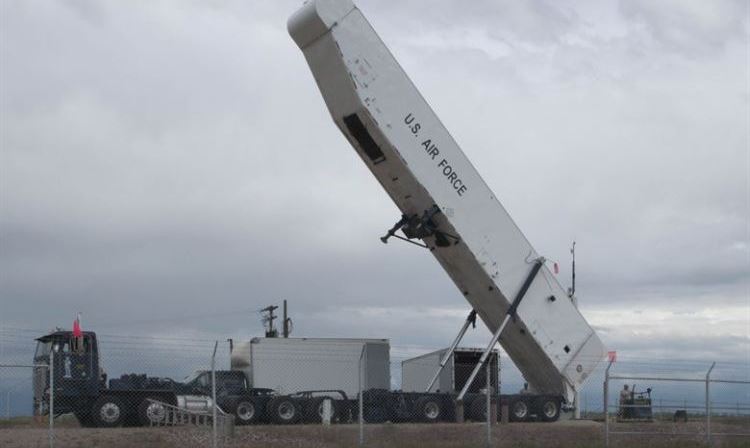
There have been ups and downs in the relationship between Russia (the Soviet Union) and the US, but both nations have become accustomed to the fact that their arsenals of offensive nuclear weapons are under the control of an agreement to prevent an arms race in this area. Some type of treaty has been in place since the Partial Nuclear Test Ban Treaty was concluded in 1963. Since 1972, when the first Strategic Arms Limitation Talks (SALT I) agreement was signed, there have always been negotiated constraints on nuclear arsenals. But today, there are ominous signs that the system that has worked so well to push the superpowers back from the brink of the nuclear abyss is being unraveled.
Andrea Thompson, Under Secretary for Arms Control and International Security, speaking before a Senate Foreign Relations Committee hearing on Sept. 18, claimed that Russia’s new strategic weapons that were announced by President Vladimir Putin last March were an obstacle to Washington’s agreement to extend the New START treaty. She also asserted that the issue has not been discussed through the formal New START process. She did not explain why not. The official said the final decision had not been made as yet and, “All options are on the table.” The same applies to the other remaining treaties that Washington is accusing Moscow of violating.
The options under consideration are: withdrawing from the New START; renegotiating the provisions related to the verification process; or signing another treaty instead, such as the 2002 Moscow Treaty or the Strategic Offensive Reductions Treaty (SORT). The undersecretary said that the US administration wanted Russia’s recently unveiled strategic nuclear weapons to be included in the count.
Negotiations are possible over the issue of the new weapons that are being tested or are already part of Russia’s arsenal. Moscow has been calling for a strategic dialog for quite some time, and Russia is not to blame because Washington is reluctant to start the process, whatever its motivation. A duplication of the 2002 treaty is unacceptable. It has already been finalized. No such radical reduction is possible without other nuclear states joining in, and they are not doing so. It’s really hard to understand why the undersecretary would bring this up, knowing perfectly well the proposal would have no chance.
David Trachtenberg, Deputy Undersecretary of Defense for Policy, also insists that the extension of New START was uncertain, despite the fact that on-site inspections and monitoring were useful.
The Senate hearings showed that the lawmakers are divided on the future of arms control and are prone to putting the blame on Russia for violating each and every agreement in existence without taking a proper look at what the US is doing. There is slim chance of an extension of the New START and hardly any prospects for a new deal.
The New START will expire in 2021 unless extended by agreement of the US and Russian presidents or replaced by a follow-on treaty. The US and Russian presidents discussed the New START during a phone conversation in January and at the Helsinki summit in July, where the Russian leader suggested that the parties thoroughly review all the components of the arms-control regime, including New START and the INF treaty, the 2011 Vienna Document on confidence-building measures in Europe, and the Open Skies Treaty. After meeting Nikolai Patrushev, the head of Russia’s Security Council, US National Security Adviser John Bolton said the extension of the New START was far from a slam-dunk decision. Meanwhile, the United States is moving ahead and designing a new ground-based missile that is in open violation of the 1987 Intermediate-Range Nuclear Force (INF) Treaty.
The long-range Kalibr sea-based cruise missile that was added to the arsenal of the Russian armed forces in late 2017 would violate the presidential nuclear initiatives (PNIs) of 1991 if it were equipped with a nuclear payload. Technically, it is capable of carrying a nuclear warhead but it does not. Russia’s non-strategic arsenal is large and sophisticated enough as it is — there is no need to violate its obligations under the PNIs. The US has a great numerical advantage in sea-based long-range missiles, and there is no verification mechanism in place to ascertain whether or not they are equipped with nuclear warheads.
The US has always been reluctant to discuss ways to enhance the PNIs by adding verification measures. The long-range cruise-missile capability demonstrated by Russia’s Navy during the Syrian conflict came as a surprise, but this does not mean it is a violation. Things change and it’s only natural to adapt to a new reality. It’s widely believed that the best way to tackle the problems related to national security is through talks, but the US administration and many people in Congress see it differently.
There is something important to remember — the US sea-based nuclear-tipped TLAM/N missiles are still part of the US arsenal, and there is no way to make sure they are not clandestinely installed on nuclear attack submarines. This issue could be discussed separately from the strategic nuclear agenda. The problem cannot be neglected. No one is standing in the way of launching a dialog. President Bush and President Gorbachev managed it. In theory, President Trump and President Putin could do the same thing, but the American leader should be prepared to be attacked for dealing with Russia. Those in America who stand in the way of an arms-control dialog between the two leading nuclear powers are actually undermining the country’s security, but they will do it anyway in order to pursue their own political ends, because they are filled with hatred against both the US president and Russia.
The 2018 Nuclear Posture Review states that the United States will pursue a nuclear-armed, submarine-launched cruise missile in order to “provide a needed nonstrategic regional presence, an assured response capability.” How does this jibe with the fact that the PNI is still in effect? It looks like the initiatives’ future is as uncertain as the fate of other treaties.
Of course Russian strategists have never forgotten that the US still has 50 empty silos ready to hold ICBMs, with several hundred additional warheads that are also in storage and could potentially be loaded.
There are only three years left until the New START expires. The experience of history demonstrates that that is hardly enough time to prepare a new treaty that actually has no chance of being ratified by the Senate in an era when the overall bilateral relationship is at its lowest ebb. The US still has no clear idea of what its future nuclear triad will be like. Discussions are underway. All we know is that it is investing more than $1.2 trillion over the next 30 years to modernize its aging nuclear forces, which will include new ground-based missiles, new missile submarines, and a new bomber.
No major arms-control treaty will be concluded until the administration and Congress know exactly what components will be included in the arsenal and what programs are to be implemented to achieve the established goals —once all the assessments and estimations are complete and the guideline documents in place. Thus, an automatic five-year extension is the only hope for the New START’s survival. That could be accomplished through a simple executive agreement. Without a New START in effect, other agreements, such as the INF Treaty and the PNIs, have no chance. The very real prospect of an end to arms control and the non-proliferation regime is looming. That’s something leading experts in Russia were warning about as far back as 2015. Very serious discussions must be launched right now in order to prevent such a scenario. It’s a scary prospect!
The good news is that the patient can still be saved. There is still a little time left, although not much. There are no options but for Russia and the US to put their differences aside, forget about Ukraine, Syria, trade wars, and other issues that divide the two nations and concentrate on ways to save arms control or whatever is left of it. With their relationship at its lowest point since the end of the Cold War, it is even more vital to keep the nuclear risks in check and prevent a new nuclear arms race. Russia (Soviet) and US officials have always emphasized that any plan that keeps nuclear weapons under control and subject to proper verification procedures is a better option than an unfettered arms race. The US administration and its lawmakers seem to disagree.
First principle of international relations should be ‘do no harm’
By Yves Engler · September 20, 2018
Many progressives call for Canada to “do more” around the world. The assumption is that this country is a force for good, a healer of humankind. But if we claim to be the “doctors without borders” of international relations, shouldn’t Canada swear to “first do no harm” like MDs before beginning practice? At a minimum shouldn’t the Left judge foreign policy decisions through the lens of the Hippocratic oath?
Libya illustrates the point. That North African nation looks set to miss a United Nations deadline to unify the country. An upsurge of militia violence in Tripoli and political wrangling makes it highly unlikely elections planned for December will take place.
Seven years after the foreign backed war Libya remains divided between two main political factions and hundreds of militias operate in the country of six million. Thousands have died in fighting since 2011.
The instability is not a surprise to Canadian military and political leaders who orchestrated Canada’s war on that country. Eight days before Canadian fighter jets began dropping bombs on Libya in 2011 military intelligence officers told Ottawa decision makers the country would likely descend into a lengthy civil war if foreign countries assisted rebels opposed to Muammar Gadhafi. An internal assessment obtained by the Ottawa Citizen noted, “there is the increasing possibility that the situation in Libya will transform into a long-term tribal/civil war… This is particularly probable if opposition forces received military assistance from foreign militaries.”
A year and a half before the war a Canadian intelligence report described eastern Libya as an “epicentre of Islamist extremism” and said “extremist cells” operated in the anti-Gadhafi stronghold. In fact, during the bombing, notes Ottawa Citizen military reporter David Pugliese,Canadian air force members privately joked they were part of “al-Qaida’s air force”. Lo and behold hardline Jihadists were the major beneficiaries of the war, taking control of significant portions of the country.
A Canadian general oversaw NATO’s 2011 war, seven CF-18s participated in bombing runs and two Royal Canadian Navy vessels patrolled Libya’s coast. Ottawa defied the UN Security Council resolution authorizing a no-fly zone to protect Libyan civilians by dispatching ground forces, delivering weaponry to the opposition and bombing in service of regime change. Additionally, Montréal-based private security firm Garda World aided the rebels in contravention of UN resolutions 1970 and 1973.
The NATO bombing campaign was justified based on exaggerations and outright lies about the Gaddafi regime’s human rights violations. Western media and politicians repeated the rebels’ outlandish (and racist) claims that sub-Saharan African mercenaries fuelled by Viagra given by Gaddafi, engaged in mass rape. Amnesty International’s senior crisis response adviser Donatella Rovera, who was in Libya for three months after the start of the uprising and Liesel Gerntholtz, head of women’s rights at Human Rights Watch, were unable to find any basis for these claims.
But, seduced by the need to “do something”, the NDP, Stephen Lewis, Walter Dorn and others associated with the Left supported the war on Libya. In my new book Left, Right: Marching to the Beat of Imperial Canada I question the “do more” mantra and borrow from healthcare to offer a simple foreign policy principle: First Do No Harm. As in the medical industry, responsible practitioners of foreign policy should be mindful that the “treatments” offered often include “side effects” that can cause serious harm or even kill.
Leftists should err on the side of caution when aligning with official/dominant media policy, particularly when NATO’s war drums are beating. Just because the politicians and dominant media say we have to “do something” doesn’t make it so. Libya and the Sahel region of Africa would almost certainly be better off had a “first do no harm” policy won over the interventionists in 2011.
While a “do more” ethos spans the political divide, a “first do no harm” foreign policy is rooted in international law. The concept of self-determination is a core principle of the UN Charter and International Covenant on Civil and Political Rights. Peoples’ inalienable right to shape their own destiny is based on the truism that they are best situated to run their own affairs.
Alongside the right to self-determination, the UN and Organization of American States prohibit interfering in the internal affairs of another state without consent. Article 2 (7) of the UN Charter states that “nothing should authorize intervention in matters essentially within the domestic jurisdiction of any state.”
A military intervention without UN approval is the “supreme international crime”. Created by the UN’s International Law Commission after World War II, the Nuremberg Principles describe aggression as the “supreme international crime, differing only from other war crimes in that it contains within itself the accumulated evil of the whole.” In other words, by committing an act of aggression against Libya in 2011 — notably bombing in service of regime change — Ottawa is responsible not only for rights violations it caused directly, but also those that flowed from its role in destabilizing that country and large swaths of Africa’s Sahel region.
If Canada is to truly be the “good doctor” of international relations it will be up to Left foreign policy practitioners to ensure that this country lives up to that part of the Hippocratic oath stating, “First do no harm”.
Is ‘deep state’ trying to block Corbyn government?
RT | September 20, 2018
Jeremy Corbyn’s top adviser has questioned whether the ‘deep state’ is maneuvering to block any possibility of a Labour government under his leadership, because the establishment deplores his approach to foreign policy.
Corbyn adviser Andrew Murray has not, to date, been granted a parliamentary security pass, and asks in an article he’s penned in the centre-left publication, the New Statesman, whether such a move is a “political stunt” committed by the “deep state,” in an attempt to prevent a Corbyn administration ever coming into power.
Murray has questioned whether the Mail on Sunday revelations he’s been refused “Commons security clearance” in addition to being “banned from entering Ukraine,” is all just a “curiously-timed episode.”
The Labour adviser writes: “We are often told that the days of secret state political chicanery are long past and we must hope so. But sometimes you have to wonder – this curiously timed episode seems less rooted in a Kiev security scare than in a political stunt closer to home.”
The former chair of Stop the War and current chief of staff to Unite general secretary Len McCluskey, references the Mail on Sunday, which claims a Ukrainian secret service officer told them Murray’s Ukraine ban is because he’s “part of Putin’s global propaganda network.”
Murray denies such a claim, suggesting the ban is in retaliation to a speech he “made more than four years ago protesting the takeover of Ukraine by ultra-nationalists.”
It’s Corbyn’s attitude to foreign affairs that Murray says the “deep state” cannot live with, claiming a prospective Labour government would put an end to acting aggressively on the world stage.
He says: “The powers-that-be can perhaps live with a renationalised water industry but not, it seems, with any challenge to their aggressive capacities, repeatedly deployed in disastrous wars, and their decaying Cold War world view.”
Tom Watson, Labour’s deputy leader, has told BBC Radio 4s ‘Today Programme’ that Murray’s “deep state” interference claims are “highly unlikely,” and called for Corbyn’s adviser to produce the evidence, “otherwise it’s just fake news.”
Watson said: “I genuinely don’t know why he has reached that conclusion and presumably he has more knowledge of that than me.”
Murray signs off his article with an apparent dig at the British intelligence services, stating: “Britain could soon have an anti-war government. Vet that, comrades.”
Iran urges UN to censure Israel’s nuclear threat, make it respect international rules
Press TV – September 20, 2018
Tehran has written to the United Nations, calling on the world body to condemn Israel for threatening Iran with a nuclear attack and bring the regime’s atomic weapons program under its supervision.
Standing right beside the Dimona nuclear facility late last month, Israeli Prime Minister Benjamin Netanyahu described Iran as a “threat” to the region and said Tel Aviv has the means to destroy its “enemies” in a veiled reference to Tel Aviv’s nuclear arsenal.
“Those who threaten to wipe us out put themselves in a similar danger, and in any event will not achieve their goal,” he said. “But our enemies know very well what Israel is capable of doing. They are familiar with our policy. Whoever tries to hurt us – we hurt them.”
In a letter addressed to the UN on Thursday, the Permanent Mission of the Islamic Republic of Iran to the world body said Netanyahu’s belligerent remarks poses “a serious threat to international peace and security.”
It also urged the UN to make Israel abide by international rules and the UN Charter.
The letter also highlighted Israel’s long history of aggression, occupation, militarism and state terrorism among other international crimes, urging the world community to take a firm position on the Zionist regime’s “unbridled actions and nuclear threat.”
In the letter, Iran further demanded that the UN condemn Israel’s anti-Iran threat, make the regime join the Nuclear Non-Proliferation Treaty (NPT) and bring its nuclear program under the supervesion of the International Atomic Energy Agency (IAEA).
It also reminded the UN that Iran is itself a victim of weapons of mass destruction, particularly chemical weapons.
The UN member states should not turn a blind eye to Israel’s threat and make efforts towards to the elimination of its entire nuclear stockpile, the letter read.
Responding to Netanyahu’s highly aggressive comments, Foreign Minister Mohammad Javad Zarif slammed the premier as “warmonger” and said the threat was “ beyond shameless.”
“Iran, a country without nuclear weapons, is threatened with atomic annihilation by a warmonger standing next to an actual nuclear weapons factory. Beyond shameless in the gall,” Zarif tweeted.
Israel is the only possessor of nuclear weapons in the Middle East, but its policy is to neither confirm nor deny that it has atomic bombs. The Tel Aviv regime is estimated to have 200 to 400 nuclear warheads in its arsenal.
Unlike Iran, the regime is not a member of the NPT — whose aim is to prevent the spread of nuclear arms and weapons technology – in defiance of international pressure.
Japanese Abu Town Mayor Opposes Aegis Ashore Deployment Nearby
Sputnik – 20.09.2018
Norihiko Hanada, the mayor of the Japanese town Abu, said on Thursday he was opposed to the deployment of Aegis Ashore component of the US ballistic missile defense system next to the town, NHK reported.
The mayor argued that such a deployment could be detrimental to the safety and security of the town residents, the NHK broadcaster reported.
According to the outlet, the town’s assembly has unanimously voted to back the residents’ petition against such a deployment.
The government wants to set up an Aegis Ashore unit at a military training range in the city of Hagi, next to Abu, while another unit is expected to be installed in the city of Akita.
In March, Japanese Foreign Minister Taro Kono said, in response to concerns voiced by Russia, that the system was needed to ensure Japan’s protection against North Korea’s missile and nuclear capabilities. Pyongyang has launched several missile and nuclear tests in the last few years. However, North Korea has not had one test since the beginning of 2018 as its relationship with South Korea began to improve.
U.S. Perversity on Peace in Korea
By Jacob G. Hornberger | FFF | September 19, 2018
Just when you think that the U.S. national-security state’s policy toward Korea can’t get more perverse, it does. The latest perversion? Opposing a peace agreement between North Korea and South Korea! Imagine that. And why would U.S. officials oppose such an agreement? Because it would inevitably lead to calls for U.S. troops in Korea to be sent packing home to the United States. After all, when a peace agreement is entered into, what would be the justification for keeping U.S. troops in that faraway land?
Don’t believe me? Well, take if from the New York Times, one of the most mainstream papers in the country:
President Moon Jae-in of South Korea arrived in Pyongyang Tuesday for his third summit with Kim Jong-un, North Korea’s leader, to work toward a common goal: fashioning a political statement this year declaring the end of the Korean War. Such a declaration, although not a legally binding treaty, could carry far-reaching repercussions, helping North Korea escalate its campaign for the withdrawal of American troops from the South, analysts said. For that and other reasons, the United States has strong reservations about such a breakthrough.
Why the strong reservations? Wouldn’t you think that U.S. officials would be ecstatic about the prospect of peace in Korea? Wouldn’t you expect that to be the response of any rational person?
Not for a regime that has come to view Korea as a constant flashpoint to keep people on edge and afraid, thereby assuring ever-increasing budgets for the Pentagon, the CIA, the NSA, and their army of contractors and sub-contractors. And not for a regime that has come to view Korea as a place that permanently bases tens of thousands of U.S. troops. And not for a regime that continues to target the North Korean regime for regime change.
A peace agreement between the two Koreas would threaten all of those things. Suddenly, the national-security state would lose one its principal flashpoints for crisis and fear, one that it has relied on since at least 1950. It would also mean having to bring all those troops home and trying to figure out what to do with them. And it would mean giving up its dream of regime change, at least through military force.
That’s why U.S. officials are so concerned about the ongoing improvement in relations between North and South Korea and the possibility that the two countries could enter into a peace agreement.
South Korean president Moon Jae-in and North Korea’s leader Kim Jong-un continue their efforts to improve relations between their two countries. They are currently holding their third summit, with Kim visiting Pyongyang, North Korea’s capital, for the first time ever. Kim was met by huge throngs of people, organized of course by the North Korean regime, cheering for Kim, waving flowers, and chanting “reunification of the fatherland.”
Left out of these negotiations are U.S. officials. But so what? Korea belongs to the Koreans, not to the Pentagon or the CIA. It’s their civil war, a civil war that the Pentagon and the CIA butted into more than 60 years ago, and without the constitutionally required congressional declaration of war. Koreans don’t need the permission of U.S. officials to resolve their war and their differences.
What is concerning U.S. officials is that the two leaders might reach an agreement that doesn’t involve “denuclearization” by North Korea. But the only reason that North Korea has nuclear weapons is to deter the Pentagon and the CIA from attacking and invading North Korea for the purpose of regime change. With no regime-change attack by the United States, North Korea’s nukes become irrelevant.
But there’s the rub: The Pentagon and the CIA refuse to give up their goal of regime change in North Korea. They don’t want U.S. troops to come home. They want to keep them in South Korea forever (just like they want to keep their wars in the Middle East and Afghanistan, their war on terrorism, and their war on drugs going on forever). In that way, there is always the chance that North Korea can be provoked into committing some provocative act that could serve as an excuse for bombing and destroying North Korea’s communist, anti-U.S. regime and replacing it with a pro-U.S. puppet regime.
Meanwhile, trying their best to ratchet up tensions and forcing North Korea to “denuclearize,” U.S. officials are doing everything they can to fortify their brutal systems of economic sanctions on the North Korea people, even lashing out against everyone they suspect is violating the sanctions, like Russia. They have to keep those North Korea citizens starving to death so that their public officials finally “denuclearize.”
In another perversity, South Koreans are being warned against violating U.S. sanctions by entering into mutually beneficial economic transactions with the North, such as working together to operate a passenger rail line between the two countries.
The best thing South Koreans could ever do for themselves and the American people would be to boot all U.S. troops out of their country, whether South and North arrive at a peace agreement or not. Korea remains no business of the Pentagon and the CIA. But at least the American people are getting to see the real truth about the U.S. national-security state and its perverse and destructive policies.
Idlib: Lull Before the Hurricane
By Peter FORD, former UK ambassador to Syria | September 17, 2018
It appears that the Russians have pressed the pause button on their plans for an offensive alongside the Syrian government to retake Idlib. By the time they return to play mode the martial music may have changed.
New US policies for Syria
Without fanfare the US has just reformulated its position to create the conditions for it to launch devastating strikes on Syria no longer just on the pretext of alleged use of chemical weapons but on any ‘humanitarian’ pretext the US sees fit. In an interview with the Washington Post on 6 September, James Jeffrey, the hawkish new Special Envoy for Syria fresh from the neocon incubator of the Washington Institute for Near East Policy, did not mince words:
“We’ve started using new language,” Jeffrey said, referring to previous warnings against the use of chemical weapons. Now, he said, the United States will not tolerate “an attack. Period.”
“Any offensive is to us objectionable as a reckless escalation” he said. “You add to that, if you use chemical weapons, or create refugee flows or attack innocent civilians.”
Jeffrey’s remarks were little noticed because he was that day announcing something else more immediately striking: a ‘new’ policy on Syria involving cancellation of Trump’s announced departure of US troops before the end of 2018 and in statement of a plan to stay on indefinitely until achievement of the twin goals of removing all trace of the Iranian presence in Syria and installation of a Syrian government which would meet US conditions – conditions which President Assad would by Jeffrey’s own admission not be likely to meet.
The headlines naturally focussed on this latest Washington folly – do they think Iran will up sticks as long as there is a single US soldier on Syrian soil, or that there is a Syrian Mandela waiting in the wings? – and the importance of the remarks about Idlib was missed. Yet those words may be about to bring the world to the brink of global war.
New doctrine for US intervention
What Jeffreys was saying was quite clear. That with or without alleged use of chemical weapons, a sudden exodus of frightened civilians from a part of Idlib, use of the fabled ‘barrel bombs’, or launch of a major offensive will be taken by the US as a trigger for drastic and probably sustained bombing aimed at bringing the government of Syria to its knees.
Until now successive US administrations have been careful to draw the red line for intervention in Syria at use of chemical weapons, presumably on the grounds that there is universal agreement and international law to the effect that use of prohibited weapons is taboo. WMD after all were the casus belli for Iraq, even if it turned out to be false. Now suddenly we have a new, broader and consequently more dangerous doctrine.
The State Department has not yet favoured the American public, Congress or anyone else with an explanation or justification for the change, but we can speculate. Can it be, for example, that US policy makers realise that when the next alleged use of chemical weapons occurs in Syria, as surely it will, it will be more difficult to sell intervention to the public than the first two times because the game has now been rumbled? Not only has the idea that the White Helmets might not be all they seem entered the bloodstream of media discourse, but the OPCW inspectors, able for once after Douma actually to visit a crime site, failed to find any proof of use of prohibited weapons. Add to that those pesky Russians unhelpfully telling the world exactly how and where the White Helmets were going to stage their next Oscar-winning performances. So why bother with all that rigmarole over chemical weapons when Western opinion is already sufficiently primed to accept any intervention whatever as long as it is somehow ‘humanitarian’ and doing down the evil Russians?
Responsibility to Protect
Step up ‘Responsibility to Protect’, the innocuous-sounding UN-approved doctrine beloved of interventionists of both Left and Right. Never mind that most legal scholars utterly reject the notion that this doctrine legalises armed aggression other than with Security Council approval or in self-defence. Was it not effectively invoked in the British government’s legal position statement provided at the time of the post-Douma strikes? (The US administration, knowing their audience, never bothered to provide any legal justification whatever.)
Slight snag: although the British government have preemptively sought with their legal statement to give themselves cover to commit acts of war on a whim, and without recourse to Parliament, as long as it can be dressed up as humanitarian, nevertheless there might be considerable disquiet in Parliament and possibly even among service chiefs were the government to appear to be about to launch strikes alongside the US had there not been even the appearance of a chemical weapons incident. For this reason it is likely that the British government will attempt to persuade the US not to give up just yet on chlorine.
Is it this new amplified threat – of strikes whether or not Assad obliges or appears to oblige with suicidal use of chlorine – which has given the Russians reasons to call off the dogs, pro tem at least? Probably not, because the Russians were taking it as read that fake chemical attacks were coming anyway. They will take note however that the US has just effectively lowered the bar on its own next heavy intervention in Syria and will not be deterred by any blowing of the gaff.
For those who naively but sincerely believed that if Assad laid off the chlorine he would not get bombed the world has suddenly become a lot more dangerous. For realists however the new doctrine merely removes a hypocrisy, or rather introduces an inflexion into the hypocrisy, whereby the itch felt by those salivating at the prospect of striking Syria, Russia and Iran can be masked as a humanitarian concern which goes beyond abhorrence of chemical weapons.
Featured Video
Iran’s Next Strike May Not Explode. It Could Shut You Down
or go to
Aletho News Archives – Video-Images
From the Archive
Zionism’s Violent Legacy
By Donald Neff | Washington Report On Middle East Affairs | January 1996
On January 4, 1948, Jewish terrorists drove a truck loaded with explosives into the center of the all Arab city of Jaffa and detonated it, killing 26 and wounding around 100 Palestinian men, women and children.[1] The attack was the work of the Irgun Zvai Leumi – the “National Military Organization,” also known by the Hebrew letters Etzel – the largest Jewish terrorist group in Palestine. The Irgun was headed by Revisionist Zionist Menachem Begin and had been killing and maiming Arabs, Britons and even Jews for the previous ten years in its efforts to establish a Jewish state.
This terror campaign meant that at the core of Revisionist Zionism there existed a philosophical embrace of violence. … continue
Blog Roll
 Aletho News
- Trump’s Iran war is on an Israeli leash
- Saudi oil boss issues global supply warning
- Riyadh Says Its Oil System Is Intact. The Numbers Say Otherwise.
- Trump and Netanyahu Want to “Finish the Job” on Iran
- US ‘one-sided dictation’ not Iran’s beliefs makes rational talks impossible: Baghaei
- Iran’s Next Strike May Not Explode. It Could Shut You Down /Col Doug Macgregor
- Iran: US political targets legitimate if assassinations return
- Iraq shuts key border crossing with Iran under US pressure: Report
- Undersea Internet cables could be targeted in retaliation for attacks on Iran: IRGC deputy chief
- EU sending ‘biased’ observers to interfere in Serbian election – president
- If Americans Knew
- The Israel Lobby’s Changing Fortunes
- AIPAC has become such a political liability that it’s shifting to a more “nimble” approach to buying politicians
- At least 160 Israeli settler attacks in 2 weeks
- Will Gaza’s Ancient Christian Community Disappear Forever?
- Israel’s vision of regional security rests on keeping Arab states weak
- Heidi Levine recounts how Palestinian youths helped save her in settler attack
- DAILY UPDATE: Latest essential news on Palestine, Israel, & region
- Trump’s Intensifying Sabotage of the ICC, for Israel’s Sake
- Israeli military detain US and UK volunteers in West Bank including Democratic NY politician Brad Lander
- Americans at National Conservatism Conference held in Israel this year criticize Israel
- No Tricks Zone
- E-Cars Reduce CO2 Emissions By Only 41% Compared To Internal Combustion Engine Vehicles
- Predictions Made By Renowned Climate Professor Over Past Decades Have Been Proven To Be Poor
- New Study Suggests Large Regions Of The Pacific Ocean Have Been Cooling For The Last 80 Years
- Germany’s Green Energy Debacle: High Energy Costs Force Kahla Porzellan to Close After 182 Years!
- New Study: 50 Years Of The Most Aggressive ‘Net Zero’ Policies Can Only Affect The Global Climate By 0.03°C
- US September “Heat” Was No Record…Many Records Set Decades Ago
- Latest European Green Energy Debacle; Portugal’s Largest Flagship Solar Park Insolvent!
- Green Energy Debacle: German Expert Professor Fritz Vahrenholt Warns Of Severe Economic And Social Consequences
- Two More Paleo Reconstructions Affirm Meters-Higher Sea Levels Across Ireland, Brazil 7000-6000 Years Ago
- New Study: Earth And Venus Surface Warmth Largely Explained By Convection And Lapse Rate, Not CO2 Or Radiation

